Alcoholic liver disease
Pharmacotherpeutics
Introduction
• Chronic and excessive ingestion of alcohol is one the major causes of
liver disease.
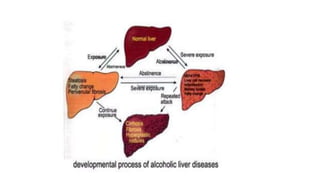
• Excessive ingestion of alcohol might lead to several liver diseases such as
alcoholic hepatitis, fatty liver, cirrhosis.
• Many people usually don’t develop any symptom in early stage.
• Major problem with low socio economic people.
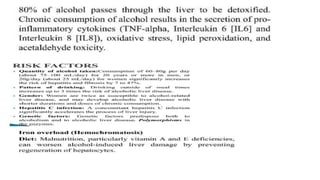
• Consumption of 75-100ml per day for 20 yrs for men and 25ml per day
for women will significantly increase risk of liver damange.
• Fatty liver is present in >90% of daily as well as binge drinker.
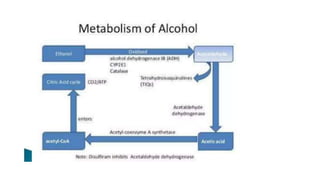
• Accumulation of fat within hepatocyte due to acetyl dehydrogenase
causes fatty liver
• 10-20% alcoholic will develop hepatitis.
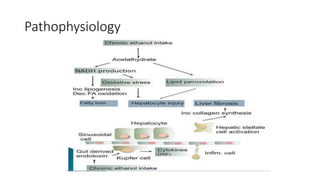
Pathophysiology
Clinical features
• Symptom depend on severity of damage in liver.
• In early stage there might not be any remarkable symptom. How ever
symptom tend to be worsen after chronic and heavy ingestion.
• G.I symptom: pain and swelling in abdomen, decrease in appetite,
weight loss, dry moth, increase thrust,
• Skin problem: Jaundice, dryness, itching.
• CNS: Problem with thinking, memory, headache
Investigations
• LFT: Elevation (2-7 times) ALT, AST, gGT.
• USG of liver
• Liver biopsy
• Other test…?
Complications
• Portal hypertension
• Varices(G.I bleeding)
• Ascites(fluid accumulation in peritoneal cavity)
• Hepatic encephalopathy.
Management
• Non pharmacological
• Remove offending material i.e alcohol.
• Bed rest,
• sodium restriction.
• Diet: Increase protein, vitamin A,D, thiamine, pyridoxine, zince
Surgical: Liver transplant
Pharmacological management
• Specific treatment according to clinical features and complications.
• Cirrhotic ascites:
• Diuretics: Spironolactone (100-400 mg/day), Frusemide (40-160mg/day)
• Hepatic encephalopathy: Lactulose,(15-40 ml BD/TDS), rifaxamin
(400mg TDS)
Hepatitis: Corticosteroid: Prednisolone: 40 mg daily
• Other medicines:
• Silymarin: Antioxidative and anti fibrotic property. Dose 140 mg
bd/TDS
• Pentoxyfylline: antioxiidative property,decreases cytokinine
• Self study: Fulminant hepatitis.

alcoholic liver diseases.pptx

  • 1.
  • 2.
    Introduction • Chronic andexcessive ingestion of alcohol is one the major causes of liver disease. • Excessive ingestion of alcohol might lead to several liver diseases such as alcoholic hepatitis, fatty liver, cirrhosis. • Many people usually don’t develop any symptom in early stage. • Major problem with low socio economic people.
  • 3.
    • Consumption of75-100ml per day for 20 yrs for men and 25ml per day for women will significantly increase risk of liver damange. • Fatty liver is present in >90% of daily as well as binge drinker. • Accumulation of fat within hepatocyte due to acetyl dehydrogenase causes fatty liver • 10-20% alcoholic will develop hepatitis.
  • 6.
  • 8.
    Clinical features • Symptomdepend on severity of damage in liver. • In early stage there might not be any remarkable symptom. How ever symptom tend to be worsen after chronic and heavy ingestion. • G.I symptom: pain and swelling in abdomen, decrease in appetite, weight loss, dry moth, increase thrust, • Skin problem: Jaundice, dryness, itching. • CNS: Problem with thinking, memory, headache
  • 9.
    Investigations • LFT: Elevation(2-7 times) ALT, AST, gGT. • USG of liver • Liver biopsy • Other test…?
  • 10.
    Complications • Portal hypertension •Varices(G.I bleeding) • Ascites(fluid accumulation in peritoneal cavity) • Hepatic encephalopathy.
  • 11.
    Management • Non pharmacological •Remove offending material i.e alcohol. • Bed rest, • sodium restriction. • Diet: Increase protein, vitamin A,D, thiamine, pyridoxine, zince Surgical: Liver transplant
  • 12.
    Pharmacological management • Specifictreatment according to clinical features and complications. • Cirrhotic ascites: • Diuretics: Spironolactone (100-400 mg/day), Frusemide (40-160mg/day) • Hepatic encephalopathy: Lactulose,(15-40 ml BD/TDS), rifaxamin (400mg TDS) Hepatitis: Corticosteroid: Prednisolone: 40 mg daily • Other medicines: • Silymarin: Antioxidative and anti fibrotic property. Dose 140 mg bd/TDS • Pentoxyfylline: antioxiidative property,decreases cytokinine
  • 13.
    • Self study:Fulminant hepatitis.