THE ROLE OF ARTIFICIAL INTELLIGENCE
IN RADIOLOGY IN PRIVATE HOSPITALS OF
PAKISTAN.
THE SQUAD
• ZOHAIB SANVI ( LEADER )
• ABDUL RAOUF
• AIZA KAMRAN
• SYEDA SUKAINA RAFIQ
• MAHEEN GUL
• SALMAN RIAZ
• ALI HASSAN
• NIMRA ABID
OUTLINE OF
PRESENTATION
. INTRODUCTION
. BACKGROUND
. RATIONALE
. OBJECTIVES OF STUDY
. METHODOLOGY
. REFERENCE
INTRODUCTION
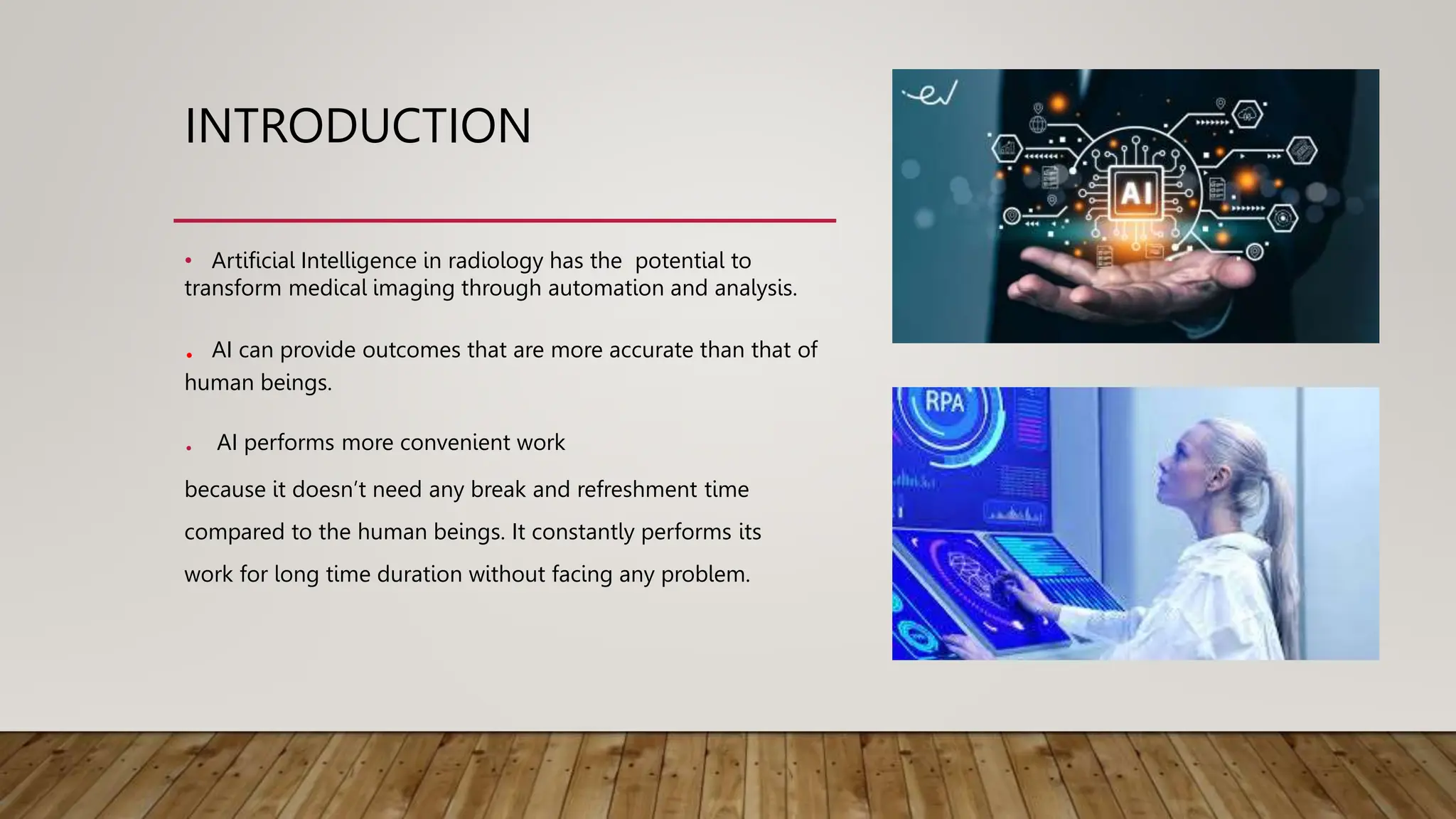
• Artificial Intelligence in radiology has the potential to
transform medical imaging through automation and analysis.
. AI can provide outcomes that are more accurate than that of
human beings.
. AI performs more convenient work
because it doesn’t need any break and refreshment time
compared to the human beings. It constantly performs its
work for long time duration without facing any problem.
BACKGROUND
• After the 1990s, several AI
approaches were used in the healthcare
sector, including artificial neural
networks, and deep learning, etc.
• After the successful deployment of
AI methods in a variety of sectors
including healthcare, a significant
investment was made specifically for
the development of AI-based
technologies for the healthcare sector.
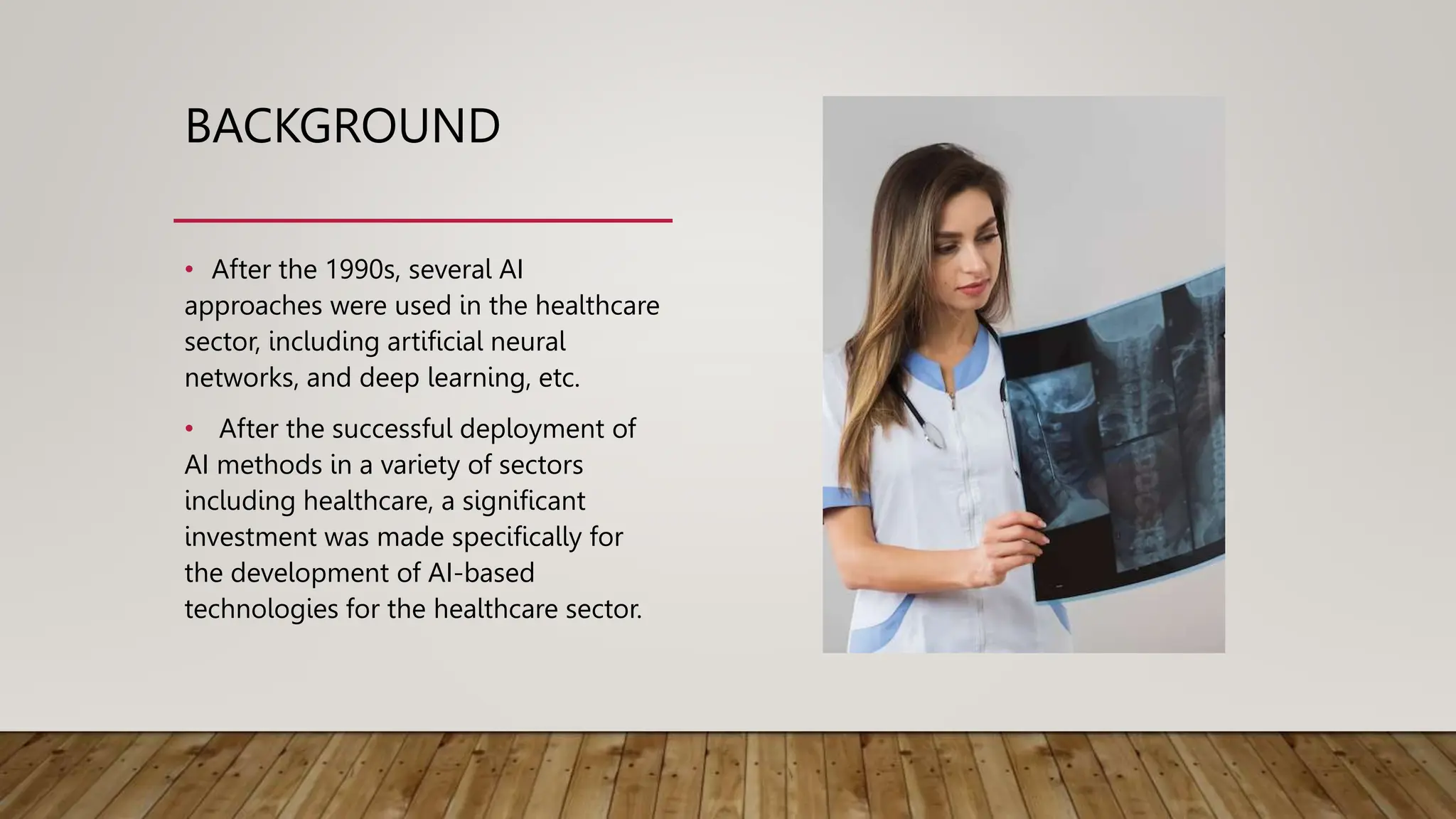
The integration of AI in radiology has revolutionized medical imaging interpretation and diagnosis.
Advances in artificial intelligence applied to diagnostic radiology are predicted to
have a major impact on this medical specialty.
.
.
RATIONALE
• This study investigate knowledge,
attitudes, and perceptions regarding the
future of artificial intelligence(AI) for
radiological diagnosis.
• Radiologists use deep learning
approach in imaged based diagnosis.
Studies can be done on making
appropriate models through CT scanner,
MRI, and x-ray for next generation
radiologist tool development.
OBJECTIVES OF
STUDY
• How AI in radiology can be
used to improve diagnostic
accuracy, efficiency, and patient
outcomes ?
• How AI algorithms can assist
radiologists in interpreting medical
images, detecting abnormalities,
and processing it faster ?
• How cost-effective AI in
Radiology is ?
METHODOLOGY • STUDY DESIGN
CROSS SECTIONAL STUDY
• STUDY POPULATION
DOCTORS, RADIOLOGISTS, TRAINEES AND OTHER
STAFF INVOLVED IN RADIOLOGY IN PRIVATE HOSPITALS
OF PAKISTAN.
• STUDY PERIOD
FROM AUGUST 2023 TO OCTOBER 2024. DATA WILL
BE COLLECTING DURING JUNE – JULY 2024 .
• STUDY TECHNIQUE
NON PROBABILITY CONVENIENT SAMPLING
STRATEGY.
METHODOLOGY • SAMPLE SIZE
A SAMPLE SIZE OF 200 OR MORE WILL BE INCLUDED.
• INCLUSION CRITERIA
DOCTORS , RADIOLOGISTS , TRAINEES IN PRIVATE HOSPITALS OF
PAKISTAN.
• EXCLUSION CRITERIA
THOSE WHO DON’T GIVE CONSENT
THOSE WHO ARE NOT INVOLVED IN THE FIELD OF RADIOLOGY.
. QUESTIONNAIRE
A WEB-BASED QUESTIONNAIRE ON THE TOPIC OF AI IN
RADIOLOGY WILL BE DESIGNED USING GOOGLE FORMS AND
DISTRIBUTED IN AN E-MAIL CONTAINING A NON-SERIALIZED
LINK TO ALL RESIDENTS, FELLOWS, AND ATTENDING
RADIOLOGISTS TO COLLECT A DATA.
REFERENCES • J.B. KRUSKAL ET AL.
• BIG DATA AND MACHINE LEARNING—STRATEGIES FOR DRIVING THIS BUS: A SUMMARY
OF THE 2016 INTERSOCIETY SUMMER CONFERENCE
• J AM COLL RADIOL
• (2017)
• M. RECHT ET AL.
• ARTIFICIAL INTELLIGENCE: THREAT OR BOON TO RADIOLOGISTS?
• J AM COLL RADIOL
• (2017)
• E.I. BLUTH ET AL.
• THE 2017 ACR COMMISSION ON HUMAN RESOURCES WORKFORCE SURVEY
• J AM COLL RADIOL
• (2017)
• NANALYZE. IS IBM READY TO DOMINATE RADIOLOGY WITH AI? AVAILABLE AT:...
• Z. OBERMEYER ET AL.
THANKS

AI in Radiology New.pptx bcvccvvdbhffvgffhg

  • 1.
    THE ROLE OFARTIFICIAL INTELLIGENCE IN RADIOLOGY IN PRIVATE HOSPITALS OF PAKISTAN.
  • 2.
    THE SQUAD • ZOHAIBSANVI ( LEADER ) • ABDUL RAOUF • AIZA KAMRAN • SYEDA SUKAINA RAFIQ • MAHEEN GUL • SALMAN RIAZ • ALI HASSAN • NIMRA ABID
  • 3.
    OUTLINE OF PRESENTATION . INTRODUCTION .BACKGROUND . RATIONALE . OBJECTIVES OF STUDY . METHODOLOGY . REFERENCE
  • 4.
    INTRODUCTION • Artificial Intelligencein radiology has the potential to transform medical imaging through automation and analysis. . AI can provide outcomes that are more accurate than that of human beings. . AI performs more convenient work because it doesn’t need any break and refreshment time compared to the human beings. It constantly performs its work for long time duration without facing any problem.
  • 5.
    BACKGROUND • After the1990s, several AI approaches were used in the healthcare sector, including artificial neural networks, and deep learning, etc. • After the successful deployment of AI methods in a variety of sectors including healthcare, a significant investment was made specifically for the development of AI-based technologies for the healthcare sector.
  • 6.
    The integration ofAI in radiology has revolutionized medical imaging interpretation and diagnosis. Advances in artificial intelligence applied to diagnostic radiology are predicted to have a major impact on this medical specialty. . .
  • 7.
    RATIONALE • This studyinvestigate knowledge, attitudes, and perceptions regarding the future of artificial intelligence(AI) for radiological diagnosis. • Radiologists use deep learning approach in imaged based diagnosis. Studies can be done on making appropriate models through CT scanner, MRI, and x-ray for next generation radiologist tool development.
  • 8.
    OBJECTIVES OF STUDY • HowAI in radiology can be used to improve diagnostic accuracy, efficiency, and patient outcomes ? • How AI algorithms can assist radiologists in interpreting medical images, detecting abnormalities, and processing it faster ? • How cost-effective AI in Radiology is ?
  • 10.
    METHODOLOGY • STUDYDESIGN CROSS SECTIONAL STUDY • STUDY POPULATION DOCTORS, RADIOLOGISTS, TRAINEES AND OTHER STAFF INVOLVED IN RADIOLOGY IN PRIVATE HOSPITALS OF PAKISTAN. • STUDY PERIOD FROM AUGUST 2023 TO OCTOBER 2024. DATA WILL BE COLLECTING DURING JUNE – JULY 2024 . • STUDY TECHNIQUE NON PROBABILITY CONVENIENT SAMPLING STRATEGY.
  • 11.
    METHODOLOGY • SAMPLESIZE A SAMPLE SIZE OF 200 OR MORE WILL BE INCLUDED. • INCLUSION CRITERIA DOCTORS , RADIOLOGISTS , TRAINEES IN PRIVATE HOSPITALS OF PAKISTAN. • EXCLUSION CRITERIA THOSE WHO DON’T GIVE CONSENT THOSE WHO ARE NOT INVOLVED IN THE FIELD OF RADIOLOGY. . QUESTIONNAIRE A WEB-BASED QUESTIONNAIRE ON THE TOPIC OF AI IN RADIOLOGY WILL BE DESIGNED USING GOOGLE FORMS AND DISTRIBUTED IN AN E-MAIL CONTAINING A NON-SERIALIZED LINK TO ALL RESIDENTS, FELLOWS, AND ATTENDING RADIOLOGISTS TO COLLECT A DATA.
  • 12.
    REFERENCES • J.B.KRUSKAL ET AL. • BIG DATA AND MACHINE LEARNING—STRATEGIES FOR DRIVING THIS BUS: A SUMMARY OF THE 2016 INTERSOCIETY SUMMER CONFERENCE • J AM COLL RADIOL • (2017) • M. RECHT ET AL. • ARTIFICIAL INTELLIGENCE: THREAT OR BOON TO RADIOLOGISTS? • J AM COLL RADIOL • (2017) • E.I. BLUTH ET AL. • THE 2017 ACR COMMISSION ON HUMAN RESOURCES WORKFORCE SURVEY • J AM COLL RADIOL • (2017) • NANALYZE. IS IBM READY TO DOMINATE RADIOLOGY WITH AI? AVAILABLE AT:... • Z. OBERMEYER ET AL.
  • 13.