African-Americans in Modern
Media
Lauren Garren
Social Media
The earliest of films historically
cast whites in non-white roles
Elizabeth Taylor in “Cleopatra”
One of the earliest films, Birth of the Nation
(1915) employed blackface on white
actors for African-American actors.
While these casting decision might have been expected during
an era of racial segregation and oppression, Hollywood has
continued to make casting decisions that prefer white actors
over minority actors.
In more recent movie memory…
In 2000's Pay it Forward, Spacey plays a character
named Eugene Simonet, the teacher who inspires
main character Trevor McKinney to change the world.
In the book on which the movie is based, Simonet’s
name is actually Reuben S. Claire, and he's a black
man.
In Oliver Stone’s World Trade Center film (2006), both of
the two characters who rescued the protagonist, Sgt.
Jason Thomas and Sgt. Dave Karnes, were cast as white
actors. Sergeant Thomas is played by William Mapother, a
white actor, however, in real life, he is an African-
American man.
The real Sgt. Thomas
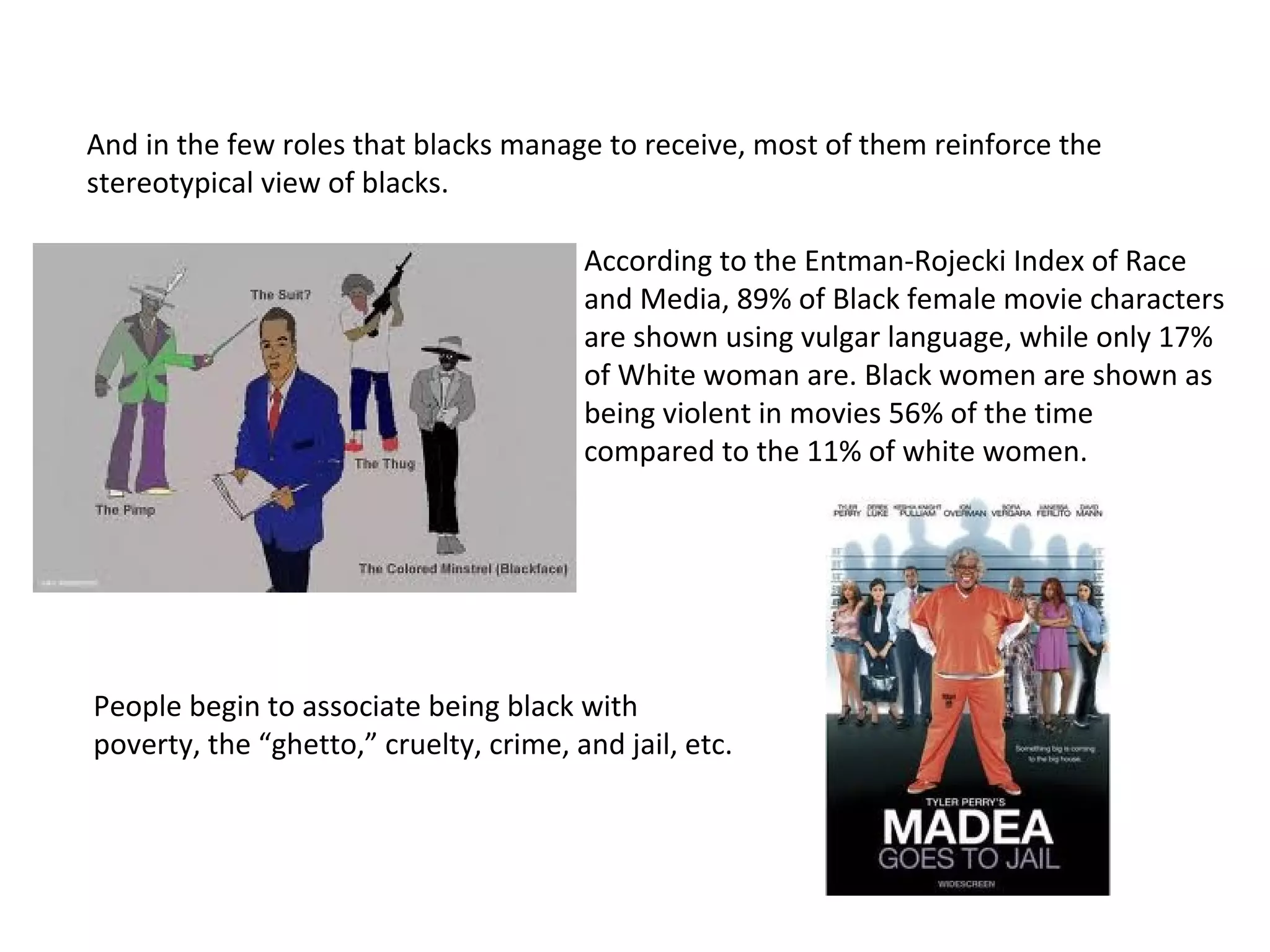
And in the few roles that blacks manage to receive, most of them reinforce the
stereotypical view of blacks.
According to the Entman-Rojecki Index of Race
and Media, 89% of Black female movie characters
are shown using vulgar language, while only 17%
of White woman are. Black women are shown as
being violent in movies 56% of the time
compared to the 11% of white women.
People begin to associate being black with
poverty, the “ghetto,” cruelty, crime, and jail, etc.
And even with “quality” movie with black portrayal, Hollywood
producers seem fixated on telling the “Ghetto” story, the “sports
story”, the “slavery” story, and the “racism” story in their movies.
And yes, while these movies
do allow for great artistic
ability to shine through, what
about the other stories?
At what age can their skin
color not become a plot
device, but just a part of
their character?
This problem isn’t only affecting African Americans
Broadway Shows
Even with the small steps Hollywood is taking, there is still resistance.
The recent casting of black actor, Michael B.
Jordan as Johnny Torch created controversy.
Black actress, Quvenzhané Wallis,
was cast into the iconic role of
“Annie”
Basically
In Conclusion
Black portrayal in media could seriously
use some improvement and a black Annie
is awesome
Cred, yo
• http://dancingwiththelight.com/2013/04/01/the-problem-that-must-be-solved/
• http://voices.yahoo.com/racial-stereotypes-media-38872.html
• http://www.dailykos.com/story/2012/08/05/1107128/-The-battle-against-whitewashing-and-racebending
• http://
www.policymic.com/articles/83309/what-if-people-reacted-to-these-10-roles-like-they-have-to-michael-b-jordan
• http://the-artifice.com/hollywood-white-washing/
• http://www.pbs.org/wnet/tavissmiley/features/blacks-in-hollywood-shut-out-or-missing-in-action/

African-Americans in Modern Media

  • 1.
  • 2.
    The earliest offilms historically cast whites in non-white roles Elizabeth Taylor in “Cleopatra” One of the earliest films, Birth of the Nation (1915) employed blackface on white actors for African-American actors. While these casting decision might have been expected during an era of racial segregation and oppression, Hollywood has continued to make casting decisions that prefer white actors over minority actors.
  • 3.
    In more recentmovie memory… In 2000's Pay it Forward, Spacey plays a character named Eugene Simonet, the teacher who inspires main character Trevor McKinney to change the world. In the book on which the movie is based, Simonet’s name is actually Reuben S. Claire, and he's a black man. In Oliver Stone’s World Trade Center film (2006), both of the two characters who rescued the protagonist, Sgt. Jason Thomas and Sgt. Dave Karnes, were cast as white actors. Sergeant Thomas is played by William Mapother, a white actor, however, in real life, he is an African- American man. The real Sgt. Thomas
  • 4.
    And in thefew roles that blacks manage to receive, most of them reinforce the stereotypical view of blacks. According to the Entman-Rojecki Index of Race and Media, 89% of Black female movie characters are shown using vulgar language, while only 17% of White woman are. Black women are shown as being violent in movies 56% of the time compared to the 11% of white women. People begin to associate being black with poverty, the “ghetto,” cruelty, crime, and jail, etc.
  • 5.
    And even with“quality” movie with black portrayal, Hollywood producers seem fixated on telling the “Ghetto” story, the “sports story”, the “slavery” story, and the “racism” story in their movies. And yes, while these movies do allow for great artistic ability to shine through, what about the other stories? At what age can their skin color not become a plot device, but just a part of their character?
  • 6.
    This problem isn’tonly affecting African Americans Broadway Shows
  • 7.
    Even with thesmall steps Hollywood is taking, there is still resistance. The recent casting of black actor, Michael B. Jordan as Johnny Torch created controversy.
  • 8.
    Black actress, QuvenzhanéWallis, was cast into the iconic role of “Annie” Basically
  • 9.
    In Conclusion Black portrayalin media could seriously use some improvement and a black Annie is awesome
  • 10.
    Cred, yo • http://dancingwiththelight.com/2013/04/01/the-problem-that-must-be-solved/ •http://voices.yahoo.com/racial-stereotypes-media-38872.html • http://www.dailykos.com/story/2012/08/05/1107128/-The-battle-against-whitewashing-and-racebending • http:// www.policymic.com/articles/83309/what-if-people-reacted-to-these-10-roles-like-they-have-to-michael-b-jordan • http://the-artifice.com/hollywood-white-washing/ • http://www.pbs.org/wnet/tavissmiley/features/blacks-in-hollywood-shut-out-or-missing-in-action/