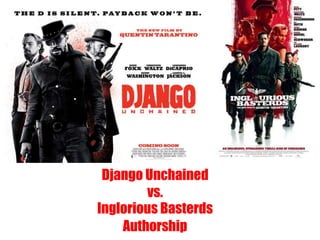
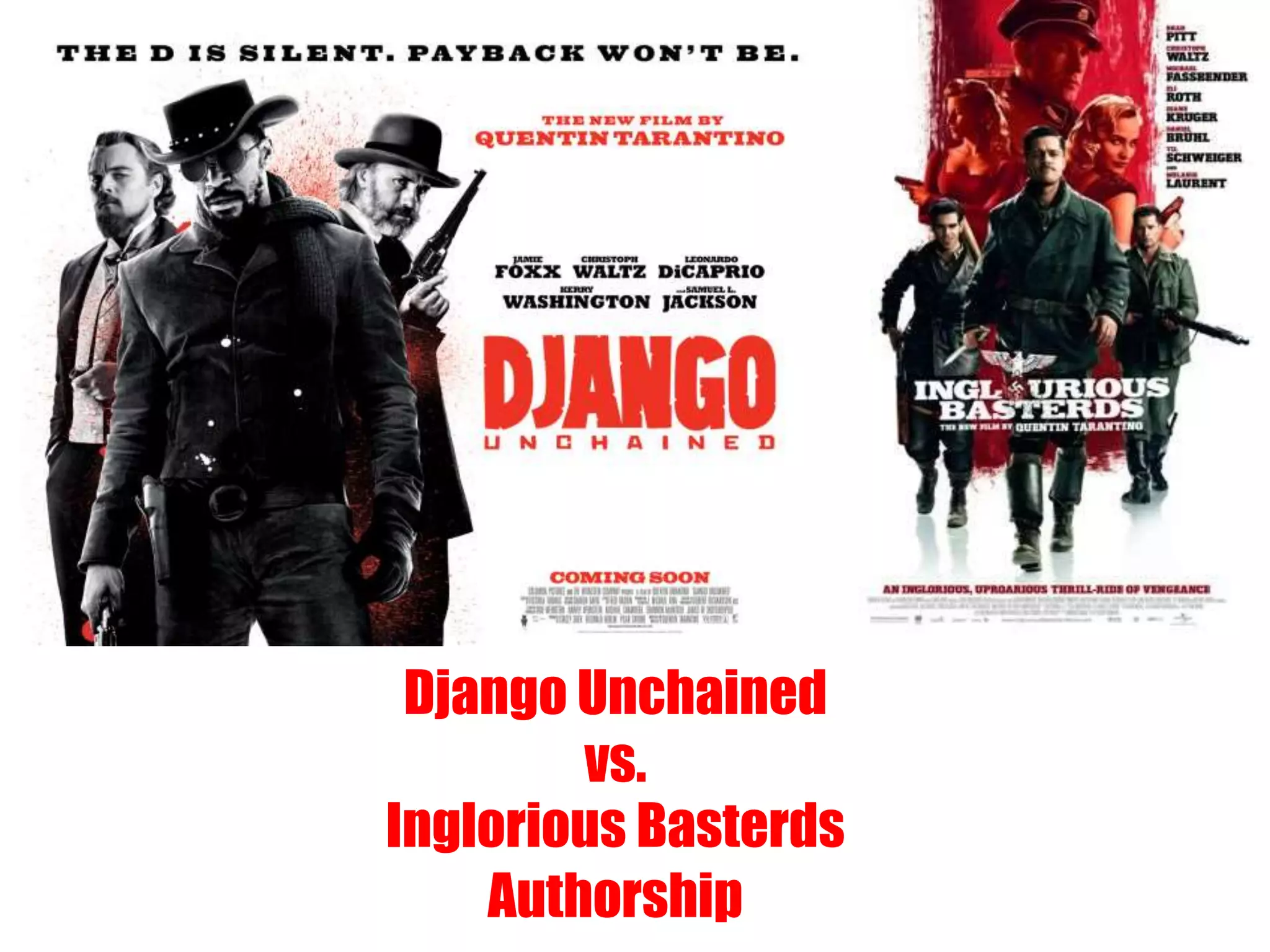
Django Unchained 
vs. 
Inglorious Basterds 
Authorship
What will I be discussing? 
I shall be looking at the themes and styles that 
Tarantino uses in both of the two films; Django 
Unchained and Inglorious Basterds. 
Both of the films incorporate a high level of 
violence and are based on real context; Slavery 
and Nazi Germany.
Brief Overview 
Django Unchained 
The film follows a slave named Django 
who is freed with the help of a German 
Bounty hunter, who sets out to free his 
Wife from a Mississippi plantation 
owner. 
Although both films are based in a 
Historical period, it is not based on 
Actual historical events, therefore one 
of styles of Tarantino’s films is unrealistic 
Inglorious Basterds 
The film is set in Nazi Germany, whilst it 
was under the rule of Hitler. Although both 
films are based in a historical period, it is 
not based on actual historical events. 
The film explores the Basterds, who are 
American, who set out to kill every Nazi 
they come across, including Hitler himself. 
The film is filled with revenge, Hitler is 
killed by Shoshanna, who’s family was 
murdered when she was younger.
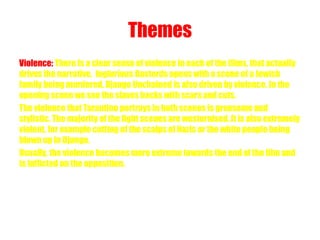
Themes 
Violence: There Is a clear sense of violence in each of the films, that actually 
drives the narrative. Inglorious Basterds opens with a scene of a Jewish 
family being murdered. Django Unchained is also driven by violence. In the 
opening scene we see the slaves backs with scars and cuts. 
The violence that Tarantino portrays in both scenes is gruesome and 
stylistic. The majority of the fight scenes are westernised. It is also extremely 
violent, for example cutting of the scalps of Nazis or the white people being 
blown up in Django. 
Usually, the violence becomes more extreme towards the end of the film and 
is inflicted on the opposition.
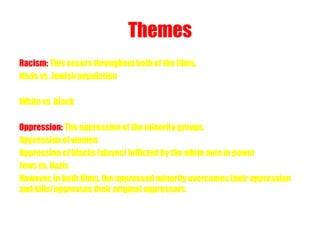
Themes 
Racism: This occurs throughout both of the films. 
Nazis vs. Jewish population 
White vs. black 
Oppression: The oppression of the minority groups. 
Oppression of women 
Oppression of blacks (slaves) inflicted by the white men in power 
Jews vs. Nazis 
However, in both films, the oppressed minority overcomes their oppression 
and kills/oppresses their original oppressors.

AS film studies proposal outline

  • 1.
    Django Unchained vs. Inglorious Basterds Authorship
  • 2.
    What will Ibe discussing? I shall be looking at the themes and styles that Tarantino uses in both of the two films; Django Unchained and Inglorious Basterds. Both of the films incorporate a high level of violence and are based on real context; Slavery and Nazi Germany.
  • 3.
    Brief Overview DjangoUnchained The film follows a slave named Django who is freed with the help of a German Bounty hunter, who sets out to free his Wife from a Mississippi plantation owner. Although both films are based in a Historical period, it is not based on Actual historical events, therefore one of styles of Tarantino’s films is unrealistic Inglorious Basterds The film is set in Nazi Germany, whilst it was under the rule of Hitler. Although both films are based in a historical period, it is not based on actual historical events. The film explores the Basterds, who are American, who set out to kill every Nazi they come across, including Hitler himself. The film is filled with revenge, Hitler is killed by Shoshanna, who’s family was murdered when she was younger.
  • 4.
    Themes Violence: ThereIs a clear sense of violence in each of the films, that actually drives the narrative. Inglorious Basterds opens with a scene of a Jewish family being murdered. Django Unchained is also driven by violence. In the opening scene we see the slaves backs with scars and cuts. The violence that Tarantino portrays in both scenes is gruesome and stylistic. The majority of the fight scenes are westernised. It is also extremely violent, for example cutting of the scalps of Nazis or the white people being blown up in Django. Usually, the violence becomes more extreme towards the end of the film and is inflicted on the opposition.
  • 5.
    Themes Racism: Thisoccurs throughout both of the films. Nazis vs. Jewish population White vs. black Oppression: The oppression of the minority groups. Oppression of women Oppression of blacks (slaves) inflicted by the white men in power Jews vs. Nazis However, in both films, the oppressed minority overcomes their oppression and kills/oppresses their original oppressors.