www.iita.orgA member of CGIAR consortium
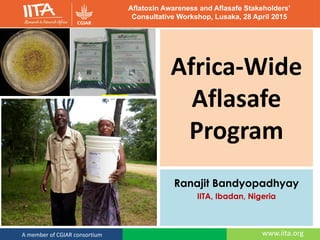
Africa-Wide
Aflasafe
Program
Ranajit Bandyopadhyay
IITA, Ibadan, Nigeria
Aflatoxin Awareness and Aflasafe Stakeholders’
Consultative Workshop, Lusaka, 28 April 2015
www.iita.org
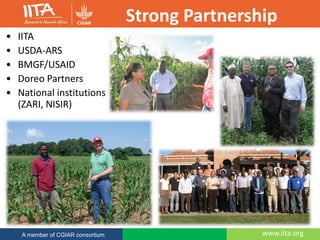
• IITA
• USDA-ARS
• BMGF/USAID
• Doreo Partners
• National institutions
(ZARI, NISIR)
Strong Partnership
www.iita.orgA member of CGIAR consortium
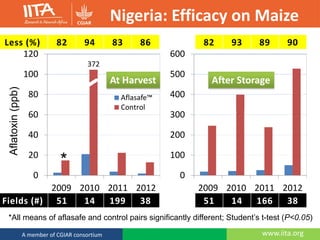
Nigeria: Efficacy on Maize
372
0
20
40
60
80
100
120
2009 2010 2011 2012
Aflasafe™
Control
0
100
200
300
400
500
600
2009 2010 2011 2012
82 94 83 86 82 93 89 90
51 14 199 38 51 14 166 38Fields (#)
Less (%)
At Harvest After Storage
*All means of aflasafe and control pairs significantly different; Student’s t-test (P<0.05)
*
Aflatoxin(ppb)
www.iita.orgA member of CGIAR consortium
Area Sample Treatment
Mean
Aflatox
(ppb)
Reduct.
(%)
Mean
Aflatox
(ppb)
Reduct.
(%)
Mean
Aflatox
(ppb)
Reduct.
(%)
Diourbel
Harvest
Treated 1.9
93
6.6
87
3.7
82
Control 29.7 50.1 20.3
Storage
Treated 4.4
86
2.1
91
6.9
81
Control 31.3 22.1 35.5
Nioro
Harvest
Treated 4.4
75
5.6
76
5.4
90
Control 17.6 23.1 55.7
Storage
Treated 3.5
95
2.8
94
11.5
84
Control 52.1 46.7 72.5
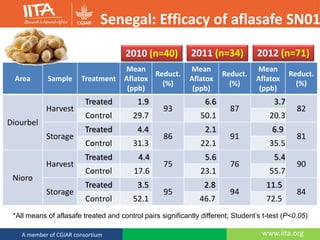
*All means of aflasafe treated and control pairs significantly different; Student’s t-test (P<0.05)
Senegal: Efficacy of aflasafe SN01
2010 (n=40) 2011 (n=34) 2012 (n=71)
www.iita.org
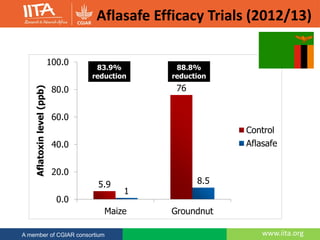
Aflasafe Efficacy Trials (2012/13)
www.iita.orgA member of CGIAR consortium
5.9
76
1
8.5
Maize Groundnut
0.0
20.0
40.0
60.0
80.0
100.0
Aflatoxinlevel(ppb)
Control
Aflasafe
83.9%
reduction
88.8%
reduction
www.iita.org
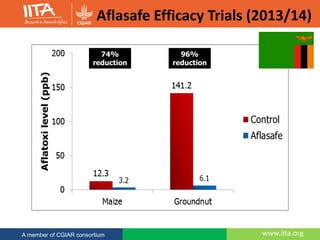
Aflasafe Efficacy Trials (2013/14)
www.iita.orgA member of CGIAR consortium
74%
reduction
96%
reduction
www.iita.orgA member of CGIAR consortium
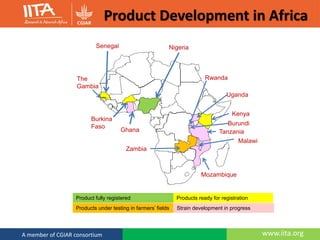
Product Development in Africa
Products ready for registration
Products under testing in farmers’ fields Strain development in progress
Senegal
Burkina
Faso
Ghana
Nigeria
Kenya
Tanzania
Mozambique
Zambia
Product fully registered
Rwanda
Malawi
Burundi
Uganda
The
Gambia
www.iita.orgA member of CGIAR consortium
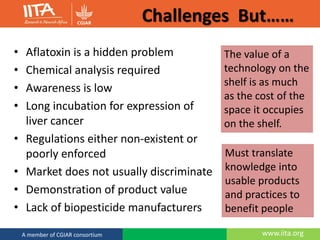
Challenges
• Aflatoxin is a hidden problem
• Chemical analysis required
• Awareness is low
• Long incubation for expression of
liver cancer
• Regulations either non-existent or
poorly enforced
• Market does not usually discriminate
• Demonstration of product value
• Lack of biopesticide manufacturers
The value of a
technology on the
shelf is as much
as the cost of the
space it occupies
on the shelf.
Must translate
knowledge into
usable products
and practices to
benefit people
But……
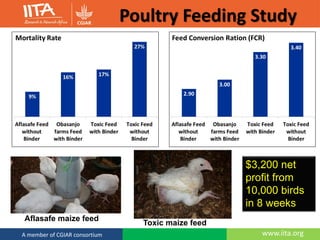
Poultry Feeding Study
$3,200 net
profit from
10,000 birds
in 8 weeks
www.iita.orgMycored Europe, 28 May, 2013A member of CGIAR consortium
Aflasafe maize feed
Toxic maize feed
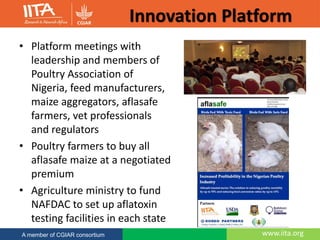
Innovation Platform
• Platform meetings with
leadership and members of
Poultry Association of
Nigeria, feed manufacturers,
maize aggregators, aflasafe
farmers, vet professionals
and regulators
• Poultry farmers to buy all
aflasafe maize at a negotiated
premium
• Agriculture ministry to fund
NAFDAC to set up aflatoxin
testing facilities in each state
www.iita.orgA member of CGIAR consortium
www.iita.orgwww.iita.orgA member of CGIAR consortium
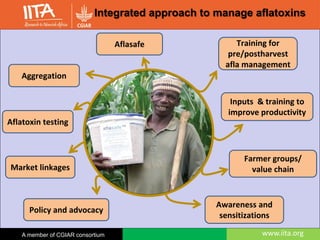
Integrated approach to manage aflatoxins
Aggregation
Aflasafe
Inputs & training to
improve productivity
Farmer groups/
value chain
Training for
pre/postharvest
afla management
Awareness and
sensitizations
Policy and advocacy
Market linkages
Aflatoxin testing
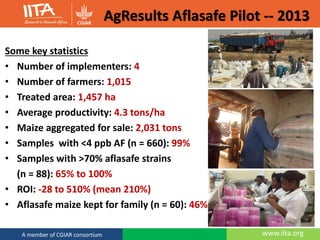
AgResults Aflasafe Pilot -- 2013
www.iita.orgA member of CGIAR consortium
Some key statistics
• Number of implementers: 4
• Number of farmers: 1,015
• Treated area: 1,457 ha
• Average productivity: 4.3 tons/ha
• Maize aggregated for sale: 2,031 tons
• Samples with <4 ppb AF (n = 660): 99%
• Samples with >70% aflasafe strains
(n = 88): 65% to 100%
• ROI: -28 to 510% (mean 210%)
• Aflasafe maize kept for family (n = 60): 46%
www.iita.orgA member of CGIAR consortium
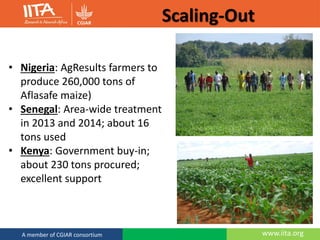
Scaling-Out
• Nigeria: AgResults farmers to
produce 260,000 tons of
Aflasafe maize)
• Senegal: Area-wide treatment
in 2013 and 2014; about 16
tons used
• Kenya: Government buy-in;
about 230 tons procured;
excellent support
www.iita.orgA member of CGIAR consortium
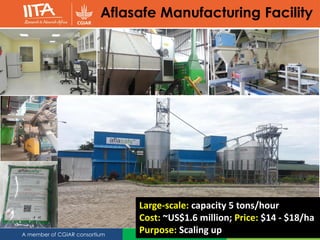
Aflasafe Manufacturing Facility
Large-scale: capacity 5 tons/hour
Cost: ~US$1.6 million; Price: $14 - $18/ha
Purpose: Scaling up
www.iita.orgA member of CGIAR consortium
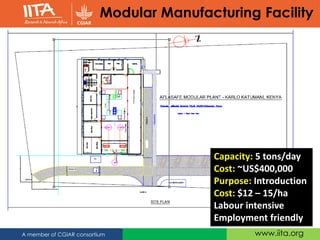
Modular Manufacturing Facility
Capacity: 5 tons/day
Cost: ~US$400,000
Purpose: Introduction
Cost: $12 – 15/ha
Labour intensive
Employment friendly
www.iita.orgA member of CGIAR consortium
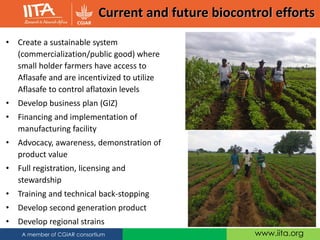
Current and future biocontrol efforts
• Create a sustainable system
(commercialization/public good) where
small holder farmers have access to
Aflasafe and are incentivized to utilize
Aflasafe to control aflatoxin levels
• Develop business plan (GIZ)
• Financing and implementation of
manufacturing facility
• Advocacy, awareness, demonstration of
product value
• Full registration, licensing and
stewardship
• Training and technical back-stopping
• Develop second generation product
• Develop regional strains
IITA
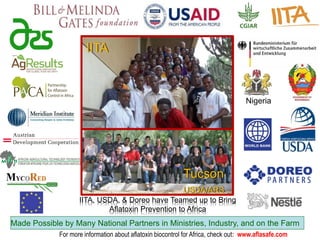
Tucson
USDA/ARS
IITA, USDA, & Doreo have Teamed up to Bring
Aflatoxin Prevention to Africa
Made Possible by Many National Partners in Ministries, Industry, and on the Farm
Nigeria
For more information about aflatoxin biocontrol for Africa, check out: www.aflasafe.com

Africa Wide Aflasafe program

  • 1.
    www.iita.orgA member ofCGIAR consortium Africa-Wide Aflasafe Program Ranajit Bandyopadhyay IITA, Ibadan, Nigeria Aflatoxin Awareness and Aflasafe Stakeholders’ Consultative Workshop, Lusaka, 28 April 2015
  • 2.
    www.iita.org • IITA • USDA-ARS •BMGF/USAID • Doreo Partners • National institutions (ZARI, NISIR) Strong Partnership www.iita.orgA member of CGIAR consortium
  • 3.
    www.iita.orgA member ofCGIAR consortium Nigeria: Efficacy on Maize 372 0 20 40 60 80 100 120 2009 2010 2011 2012 Aflasafe™ Control 0 100 200 300 400 500 600 2009 2010 2011 2012 82 94 83 86 82 93 89 90 51 14 199 38 51 14 166 38Fields (#) Less (%) At Harvest After Storage *All means of aflasafe and control pairs significantly different; Student’s t-test (P<0.05) * Aflatoxin(ppb)
  • 4.
    www.iita.orgA member ofCGIAR consortium Area Sample Treatment Mean Aflatox (ppb) Reduct. (%) Mean Aflatox (ppb) Reduct. (%) Mean Aflatox (ppb) Reduct. (%) Diourbel Harvest Treated 1.9 93 6.6 87 3.7 82 Control 29.7 50.1 20.3 Storage Treated 4.4 86 2.1 91 6.9 81 Control 31.3 22.1 35.5 Nioro Harvest Treated 4.4 75 5.6 76 5.4 90 Control 17.6 23.1 55.7 Storage Treated 3.5 95 2.8 94 11.5 84 Control 52.1 46.7 72.5 *All means of aflasafe treated and control pairs significantly different; Student’s t-test (P<0.05) Senegal: Efficacy of aflasafe SN01 2010 (n=40) 2011 (n=34) 2012 (n=71)
  • 5.
    www.iita.org Aflasafe Efficacy Trials(2012/13) www.iita.orgA member of CGIAR consortium 5.9 76 1 8.5 Maize Groundnut 0.0 20.0 40.0 60.0 80.0 100.0 Aflatoxinlevel(ppb) Control Aflasafe 83.9% reduction 88.8% reduction
  • 6.
    www.iita.org Aflasafe Efficacy Trials(2013/14) www.iita.orgA member of CGIAR consortium 74% reduction 96% reduction
  • 7.
    www.iita.orgA member ofCGIAR consortium Product Development in Africa Products ready for registration Products under testing in farmers’ fields Strain development in progress Senegal Burkina Faso Ghana Nigeria Kenya Tanzania Mozambique Zambia Product fully registered Rwanda Malawi Burundi Uganda The Gambia
  • 8.
    www.iita.orgA member ofCGIAR consortium Challenges • Aflatoxin is a hidden problem • Chemical analysis required • Awareness is low • Long incubation for expression of liver cancer • Regulations either non-existent or poorly enforced • Market does not usually discriminate • Demonstration of product value • Lack of biopesticide manufacturers The value of a technology on the shelf is as much as the cost of the space it occupies on the shelf. Must translate knowledge into usable products and practices to benefit people But……
  • 9.
    Poultry Feeding Study $3,200net profit from 10,000 birds in 8 weeks www.iita.orgMycored Europe, 28 May, 2013A member of CGIAR consortium Aflasafe maize feed Toxic maize feed
  • 10.
    Innovation Platform • Platformmeetings with leadership and members of Poultry Association of Nigeria, feed manufacturers, maize aggregators, aflasafe farmers, vet professionals and regulators • Poultry farmers to buy all aflasafe maize at a negotiated premium • Agriculture ministry to fund NAFDAC to set up aflatoxin testing facilities in each state www.iita.orgA member of CGIAR consortium
  • 11.
    www.iita.orgwww.iita.orgA member ofCGIAR consortium Integrated approach to manage aflatoxins Aggregation Aflasafe Inputs & training to improve productivity Farmer groups/ value chain Training for pre/postharvest afla management Awareness and sensitizations Policy and advocacy Market linkages Aflatoxin testing
  • 12.
    AgResults Aflasafe Pilot-- 2013 www.iita.orgA member of CGIAR consortium Some key statistics • Number of implementers: 4 • Number of farmers: 1,015 • Treated area: 1,457 ha • Average productivity: 4.3 tons/ha • Maize aggregated for sale: 2,031 tons • Samples with <4 ppb AF (n = 660): 99% • Samples with >70% aflasafe strains (n = 88): 65% to 100% • ROI: -28 to 510% (mean 210%) • Aflasafe maize kept for family (n = 60): 46%
  • 13.
    www.iita.orgA member ofCGIAR consortium Scaling-Out • Nigeria: AgResults farmers to produce 260,000 tons of Aflasafe maize) • Senegal: Area-wide treatment in 2013 and 2014; about 16 tons used • Kenya: Government buy-in; about 230 tons procured; excellent support
  • 14.
    www.iita.orgA member ofCGIAR consortium Aflasafe Manufacturing Facility Large-scale: capacity 5 tons/hour Cost: ~US$1.6 million; Price: $14 - $18/ha Purpose: Scaling up
  • 15.
    www.iita.orgA member ofCGIAR consortium Modular Manufacturing Facility Capacity: 5 tons/day Cost: ~US$400,000 Purpose: Introduction Cost: $12 – 15/ha Labour intensive Employment friendly
  • 16.
    www.iita.orgA member ofCGIAR consortium Current and future biocontrol efforts • Create a sustainable system (commercialization/public good) where small holder farmers have access to Aflasafe and are incentivized to utilize Aflasafe to control aflatoxin levels • Develop business plan (GIZ) • Financing and implementation of manufacturing facility • Advocacy, awareness, demonstration of product value • Full registration, licensing and stewardship • Training and technical back-stopping • Develop second generation product • Develop regional strains
  • 18.
    IITA Tucson USDA/ARS IITA, USDA, &Doreo have Teamed up to Bring Aflatoxin Prevention to Africa Made Possible by Many National Partners in Ministries, Industry, and on the Farm Nigeria For more information about aflatoxin biocontrol for Africa, check out: www.aflasafe.com