Tree Fruit Production
Part 1
Teryl R. Roper
And
Robert Tomesh
Dept. of Horticulture
University of Wisconsin-Madison
General Considerations
• Do you have:
–Time
–Space
–Expertise
–Realistic expectations
Backyard Fruit Tree Management
• Tree cultivar selection
– Select to extend the season
• Proper planting
• Training trunk and scaffold branches
• Pest Management
– Diseases: Scab, rust, fireblight
– Insects: Curculio (Pre-Bloom), apple maggot,
codling moth, leaf rollers, Japanese beetle
Site considerations
• Appropriate Soils
• Air and water drainage
• Wind protection
• Water
• Sunlight
• Previous crop
Soils for Tree Fruits
• Well drained loamy soils
• High organic matter
– Amend with compost, etc.
• pH between 6.0 and 7.0
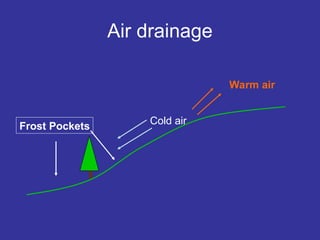
Air drainage
Frost Pockets
Cold air
Warm air
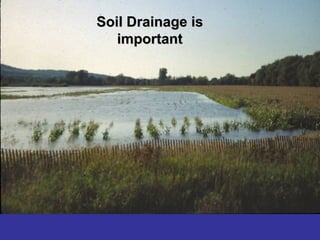
Soil Drainage is
Soil Drainage is
important
important
Site Preparation
• The most common mistake gardeners
make is to not begin soon enough to
prepare the site adequately for planting
fruit trees.
Site preparation
• Begin the year before planting
• Soil test & add P, K fertilizer if needed
• Adjust pH (if needed & possible)
• Control perennial weeds
– Cultivation
– Non-residual herbicides
• Add organic matter
– Manure, green manures, compost
Choosing a Crop
• Hardiness
• Productivity
• Taste, appearance, texture, season
• Intended use
• Ease of culture
• Pollination requirements
Tree Fruit Crops
• Apples
• Pears
• Quince
• Cherries
• Apricots
• Plums
• Peach??
Rootstock Selection
• Hardiness
• Size Control
• Precocity
• Anchorage & root strength
• Disease or insect resistance
Rootstocks
• Clonal
–Super dwarf
–Dwarf
–Semi-dwarf
–Semi-standard
• Seedling
Rootstocks
Tree fruit rootstocks
control tree size
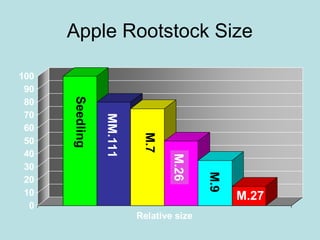
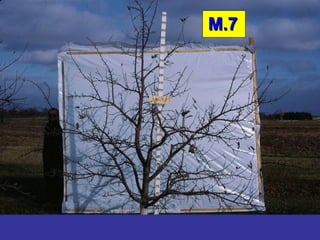
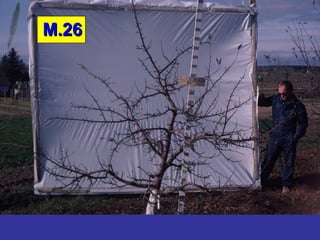
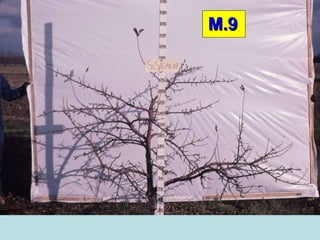
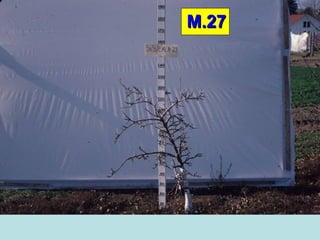
Apple Rootstock Size
0
10
20
30
40
50
60
70
80
90
100
Relative size
Seedling
MM.111
M.7
M.26
M.9
M.27
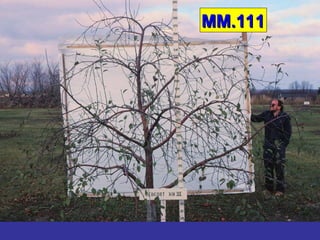
MM.111
MM.111
M.7
M.7
M.26
M.26
M.9
M.9
M.27
M.27
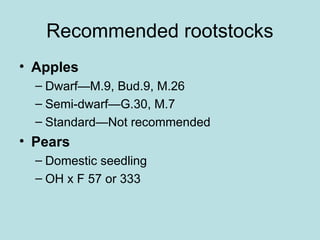
Recommended rootstocks
• Apples
– Dwarf—M.9, Bud.9, M.26
– Semi-dwarf—G.30, M.7
– Standard—Not recommended
• Pears
– Domestic seedling
– OH x F 57 or 333
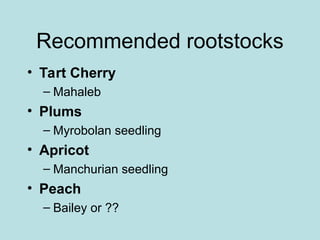
Recommended rootstocks
• Tart Cherry
– Mahaleb
• Plums
– Myrobolan seedling
• Apricot
– Manchurian seedling
• Peach
– Bailey or ??
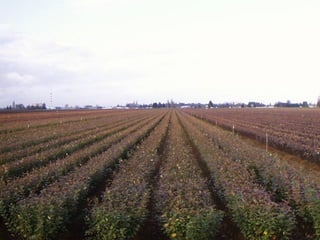
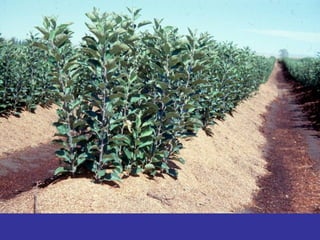
Propagation
• Don’t come true from seed
• Must be propagated asexually
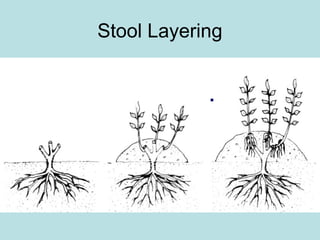
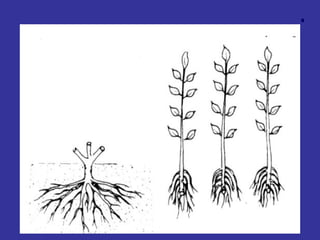
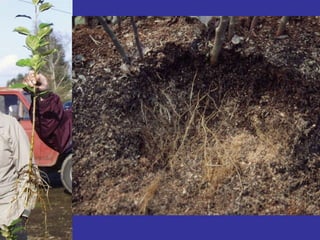
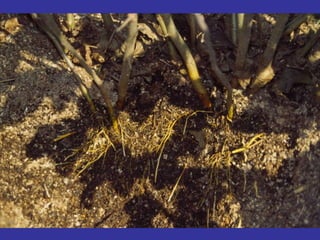
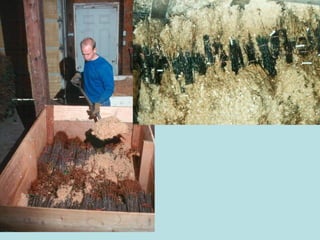
–Stool layering (rootstocks)
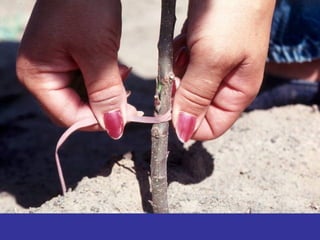
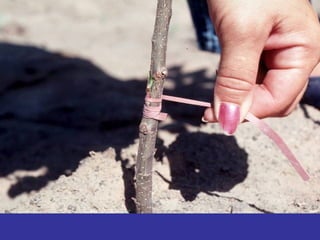
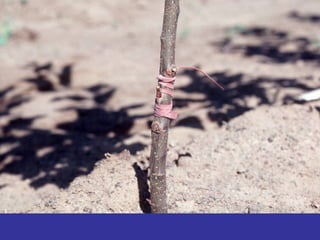
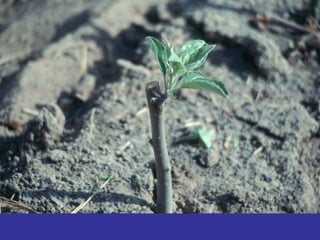
–Grafting & budding
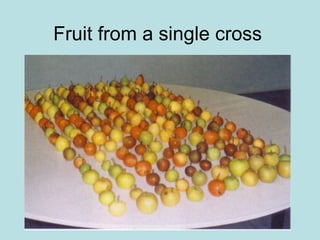
Fruit from a single cross
Stool Layering
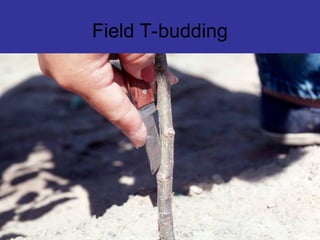
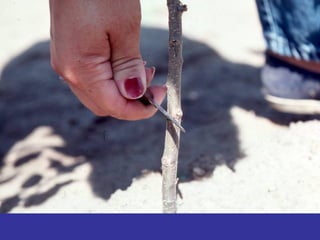
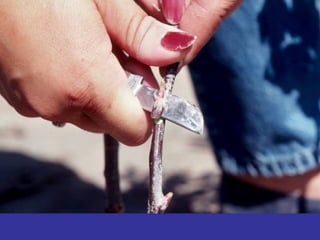
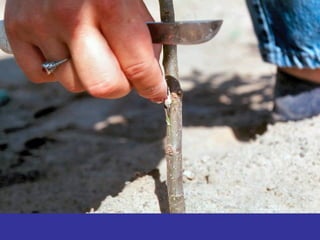
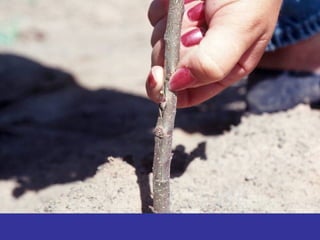
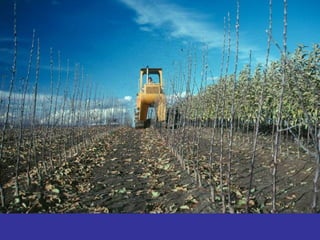
Field T-budding
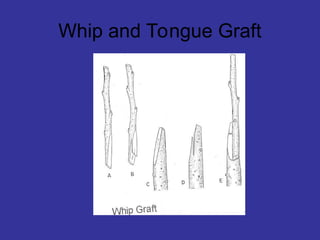
Whip and Tongue Graft
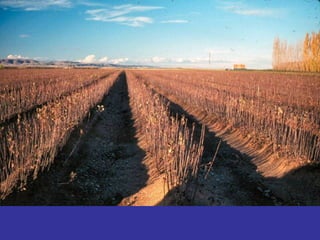
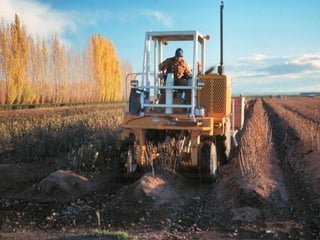
Propagation timeline
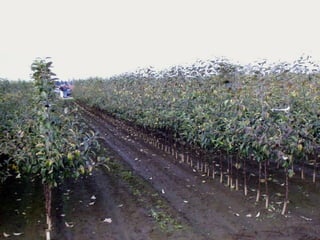
1. Liner produced in stoolbed
Dug and stored
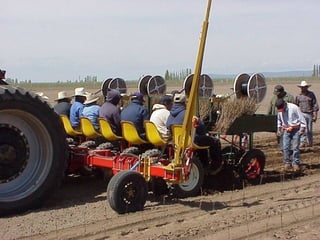
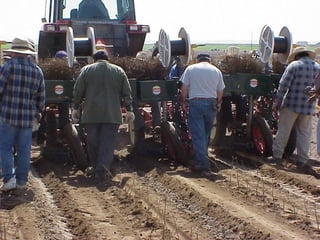
2. Liner set and budded
3. Tree grown in field
Dug, stored, shipped
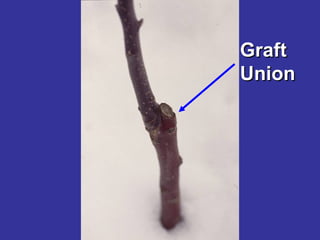
Graft
Graft
Union
Union
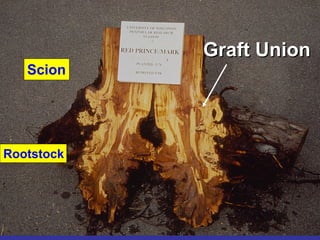
Graft Union
Graft Union
Rootstock
Scion
All fruit plants are perennial
• Buds produced one year
• Fruit produced the following year
• Plant and buds must overwinter
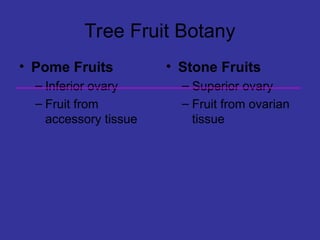
Tree Fruit Botany
• Pome Fruits
– Inferior ovary
– Fruit from
accessory tissue
• Stone Fruits
– Superior ovary
– Fruit from ovarian
tissue
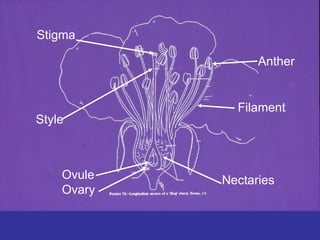
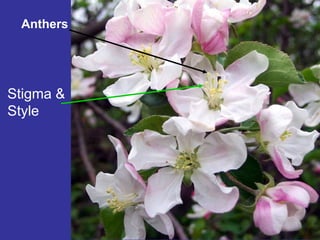
Stigma
Style
Anther
Filament
Ovule
Ovary
Nectaries
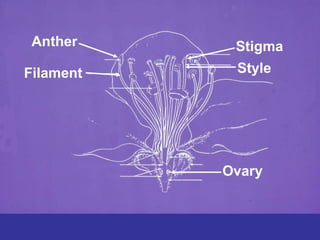
Anther
Filament
Stigma
Style
Ovary
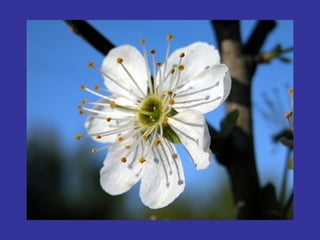
Anthers
Stigma &
Style
Fruit set requires:
• Flowers
• Pollination with compatible pollen
• Double fertilization
–Egg
–Central cell (endosperm)
Pollination issues
• Triploids (3n)
–Jonagold
–Gravenstein
• Season of bloom
–Early
–Late
• Sports
–Delicious
–McIntosh
–Cortland
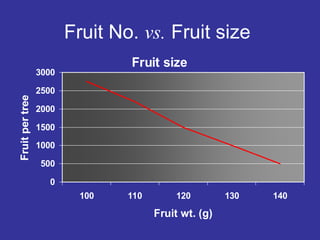
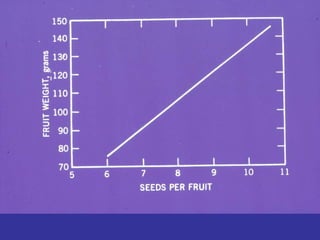
Fruit No. vs. Fruit size
Fruit size
0
500
1000
1500
2000
2500
3000
100 110 120 130 140
Fruit wt. (g)
Fruit
per
tree
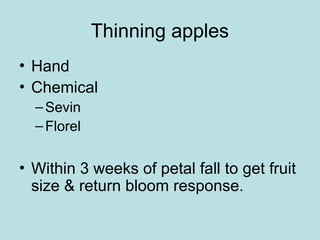
Thinning apples
• Hand
• Chemical
–Sevin
–Florel
• Within 3 weeks of petal fall to get fruit
size & return bloom response.
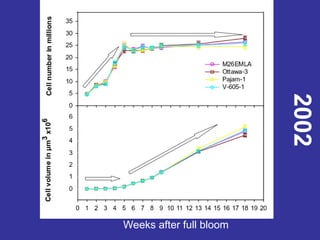
Weeks after full bloom
2002
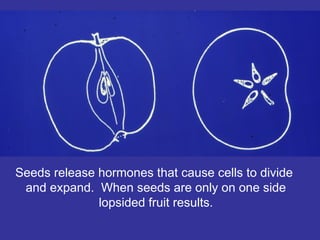
Seeds release hormones that cause cells to divide
and expand. When seeds are only on one side
lopsided fruit results.
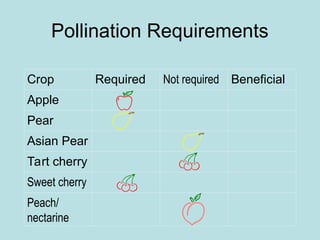
Pollination Requirements
Crop Required Not required Beneficial
Apple
Pear
Asian Pear
Tart cherry
Sweet cherry
Peach/
nectarine
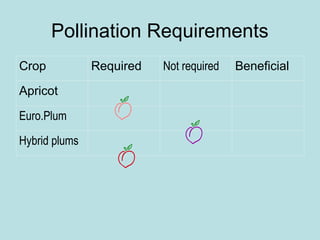
Pollination Requirements
Crop Required Not required Beneficial
Apricot
Euro.Plum
Hybrid plums
Cultural Practices
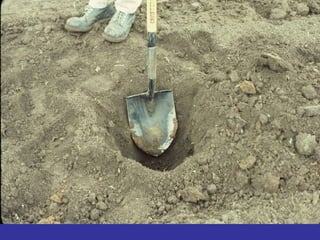
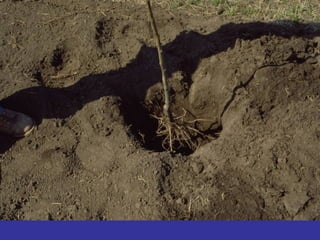
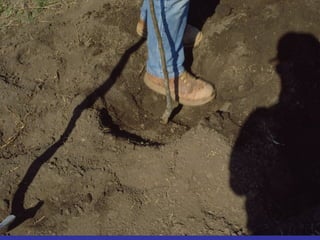
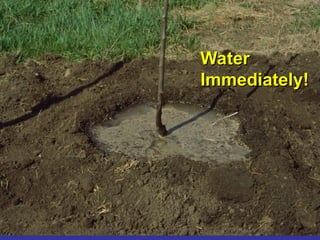
Steps in tree planting
• Wide shallow hole
• Prune off long or damaged roots
• The roots should be spread, not
circling
• Backfill with the original soil
• Graft union 2-3” above soil
• Water immediately
Water
Water
Immediately!
Immediately!
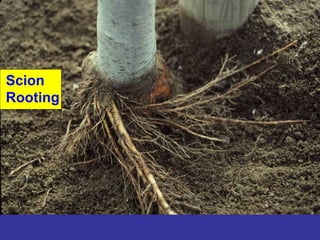
Scion
Rooting
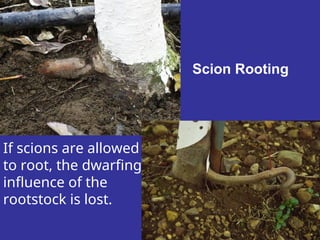
Scion Rooting
If scions are allowed
to root, the dwarfing
influence of the
rootstock is lost.
Nutrition Principles
• All nutrients don’t come from the soil
each year
–Perennial plant parts hold nutrients
• Soil test preplant
–Add required P & K preplant
• Tissue test
Mineral Nutrition
• 1 oz actual N per year of tree growth
– More for stone fruits
• < ½ lb actual N per tree per year
• 15-20 inches of new growth on young
trees
• 8-12 inches on bearing trees
Mineral Nutrition
• If the site was properly prepared you
should only need to add nitrogen
• Generally tree fruits don’t need
micronutrients or other expensive
nutrient materials
• Foliar applications alone usually are
not sufficient to meet the needs of the
trees
Tissue Testing
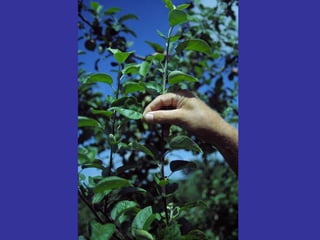
• Sample tree fruits midsummer
• Fully expanded leaves from the
middle of current season growth
• Sample throughout the planting
• Submit promptly to a lab
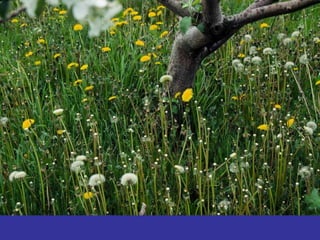
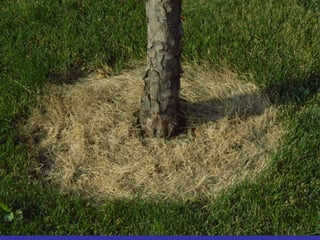
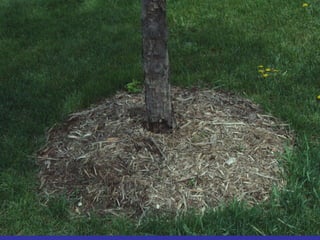
Weed Management
• What is a weed to a tree?
–Annual broadleaf weeds
–Woody perennials
–Grasses
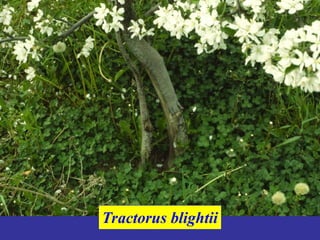
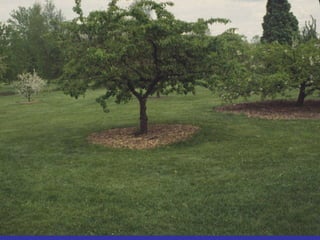
Tractorus blightii
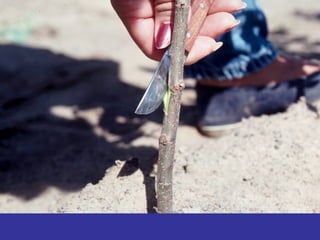
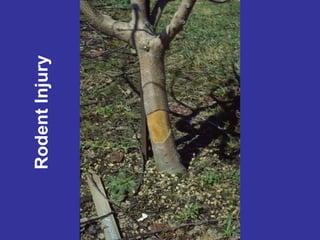
Rodent
Injury
Break

Advance Tree Fruit Production........ppt