ADHD
Myth or Cinical Reality?
presented by
Dr Mahendra Perera
Consultant Psychiatrist
MBBS, PhD, MD(Psych), MRCPsych, FRANZCP, MRACMA, FAChAM
Disclosure
• Sponsored by Eli Lilly
• Presented at drug company sponsored events
• Received Honoraria
• Includes this presentation
The past is our teacher,
the present our
opportunity and the
future our hope
Adult ADHD
Myth or Clinical
Reality
•Presenting Issues
•Diagnosis
•Management
Core Symptoms
Hyperactivity
Impulsivity
Inattention
ADHD
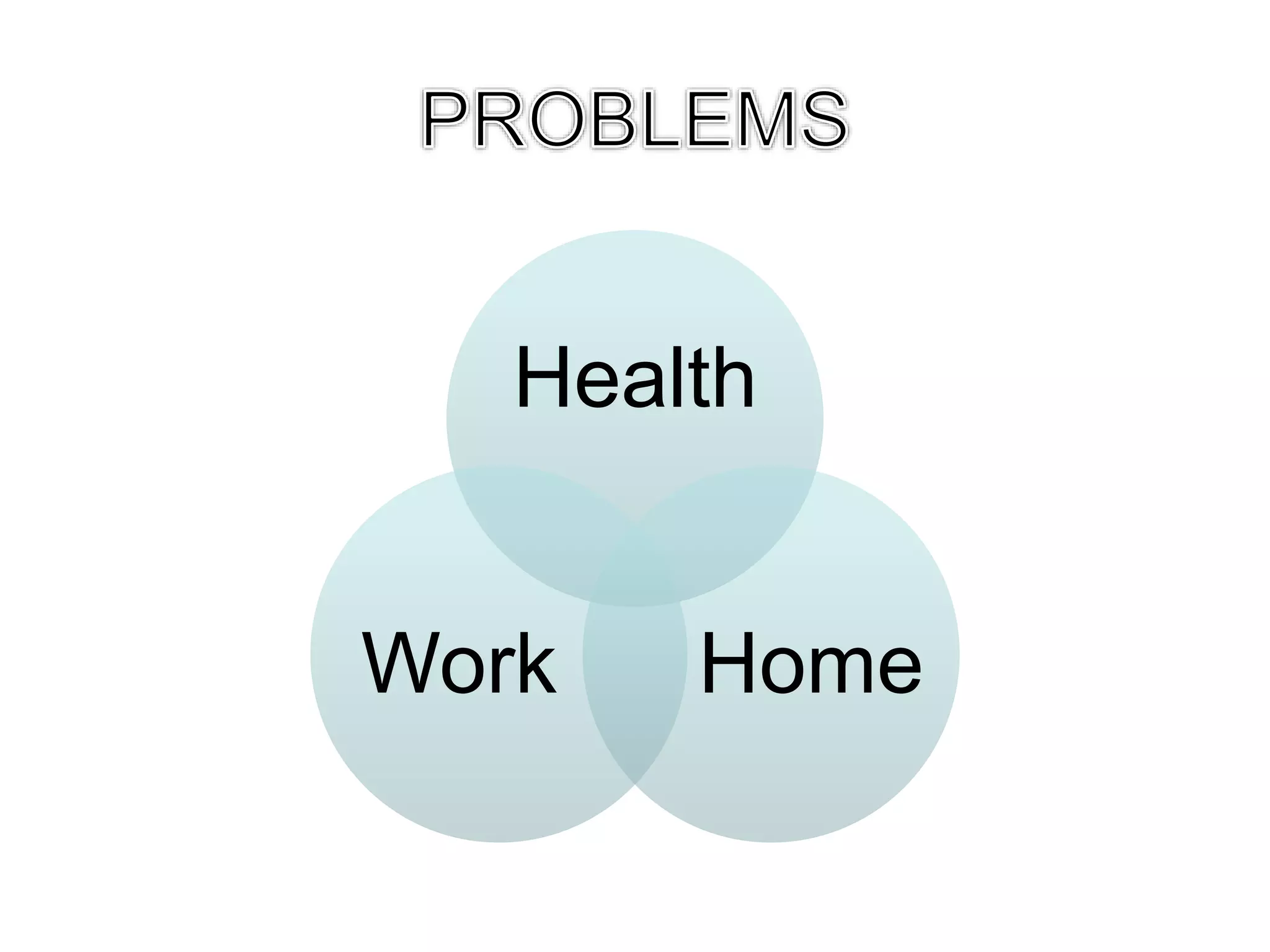
Health
HomeWork
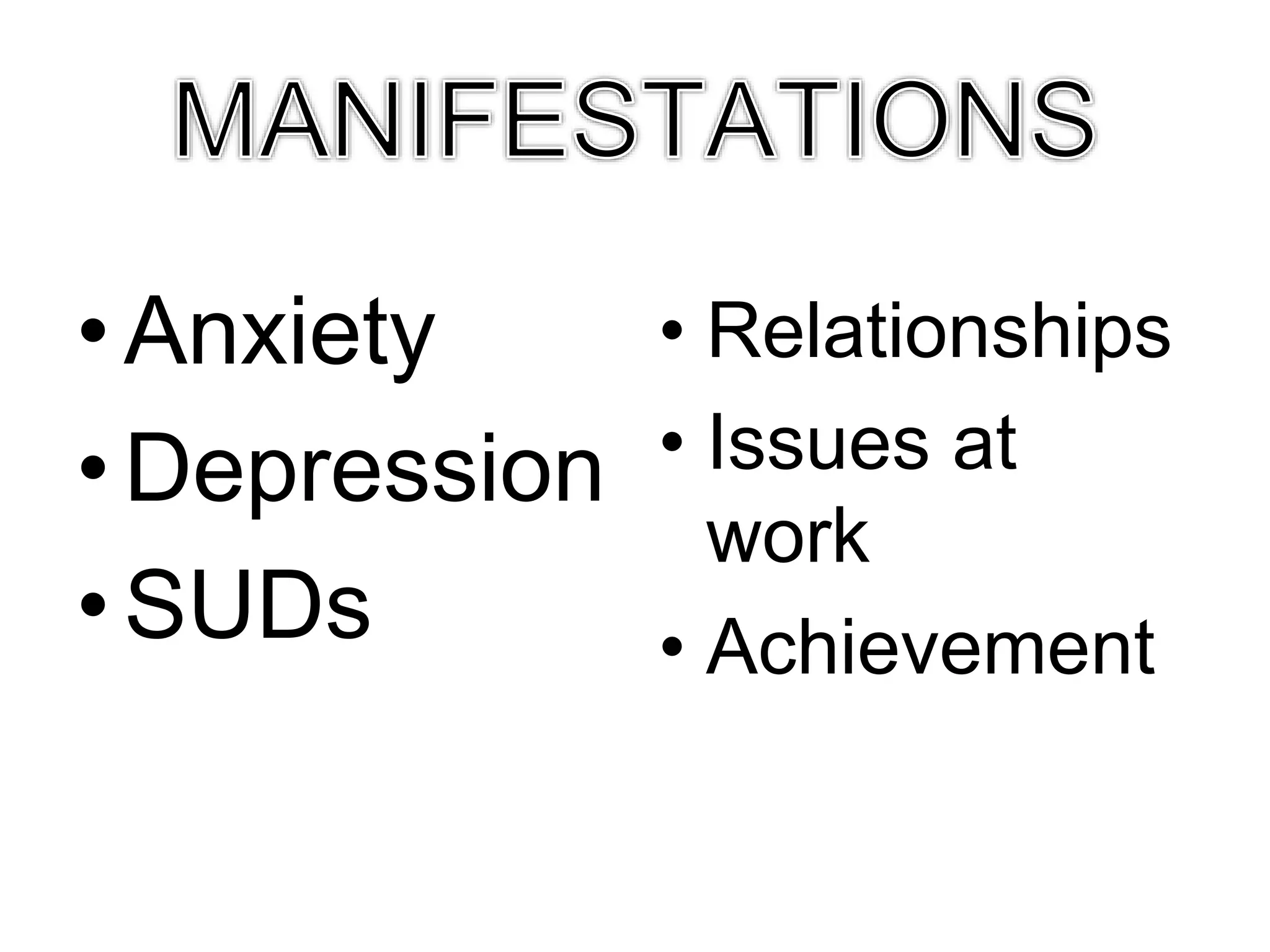
•Anxiety
•Depression
•SUDs
• Relationships
• Issues at
work
• Achievement
NARRATIVE
Diagnosis
 History – presenting complaints
Adult Sx vary
 History – past performance (school
reports, psychological assessments
Problems start in Childhood
 History – corroboration by reliable,
independent person
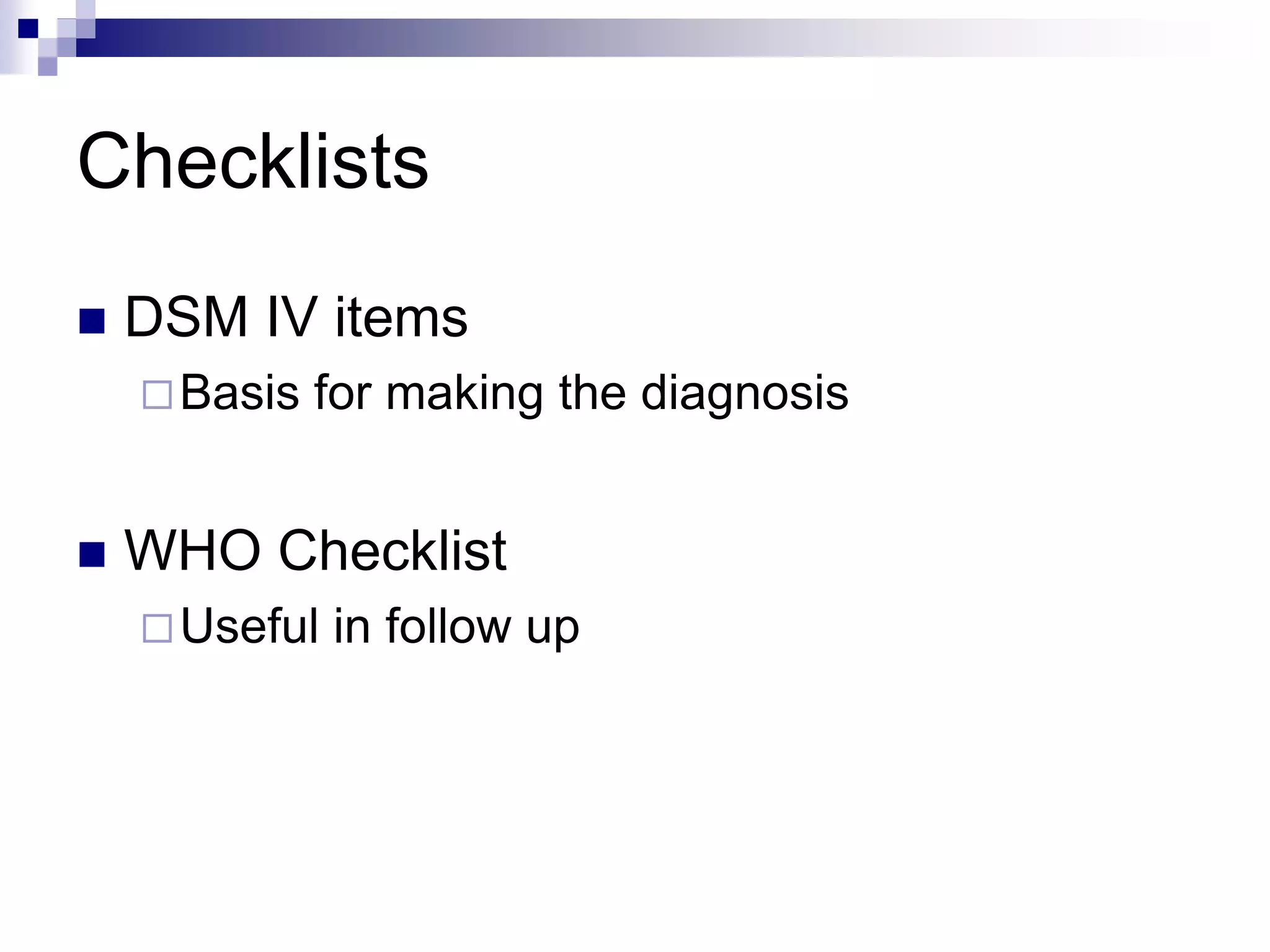
Checklists
 DSM IV items
Basis for making the diagnosis
 WHO Checklist
Useful in follow up
Tests
 IQ
Subscale Variations
 Continuous Performance Tracking
 Neuropsychological Evaluation
Related reading writing problems
 Biological Tests- MRI, EEG,
Co-morbid Conditions
 Bipolar Disorder
 Depression
 Substance Use Disorders
 Personality Disorders – rare
 Psychosis – due to SUD or independently
Co-morbidities
ADHD
BPAD
Substance
use
disorders
Psychosis
Conduct
problems
Language
disorder
Depression
Patients do not read the text Book!
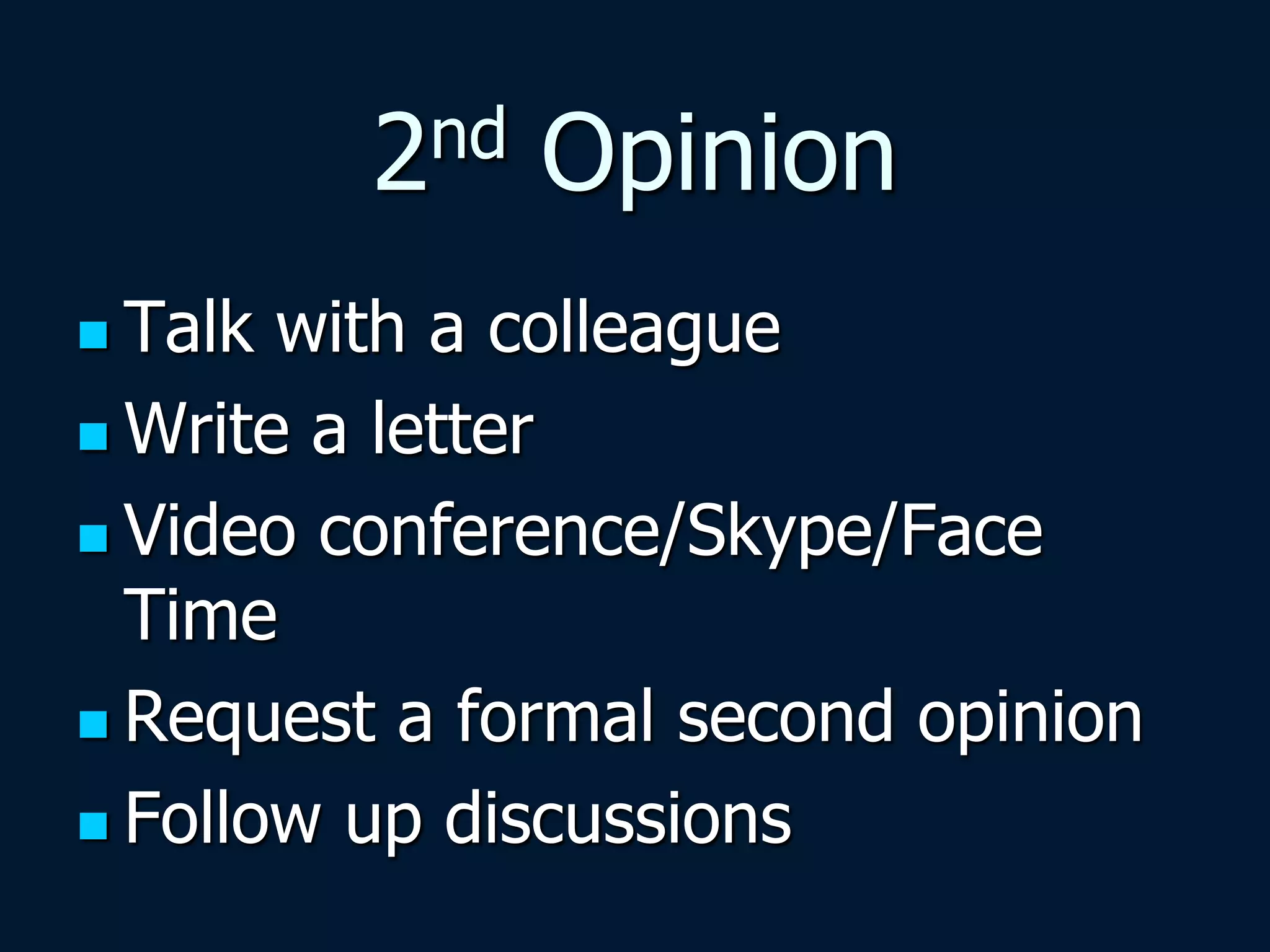
2nd Opinion
 Talk with a colleague
 Write a letter
 Video conference/Skype/Face
Time
 Request a formal second opinion
 Follow up discussions
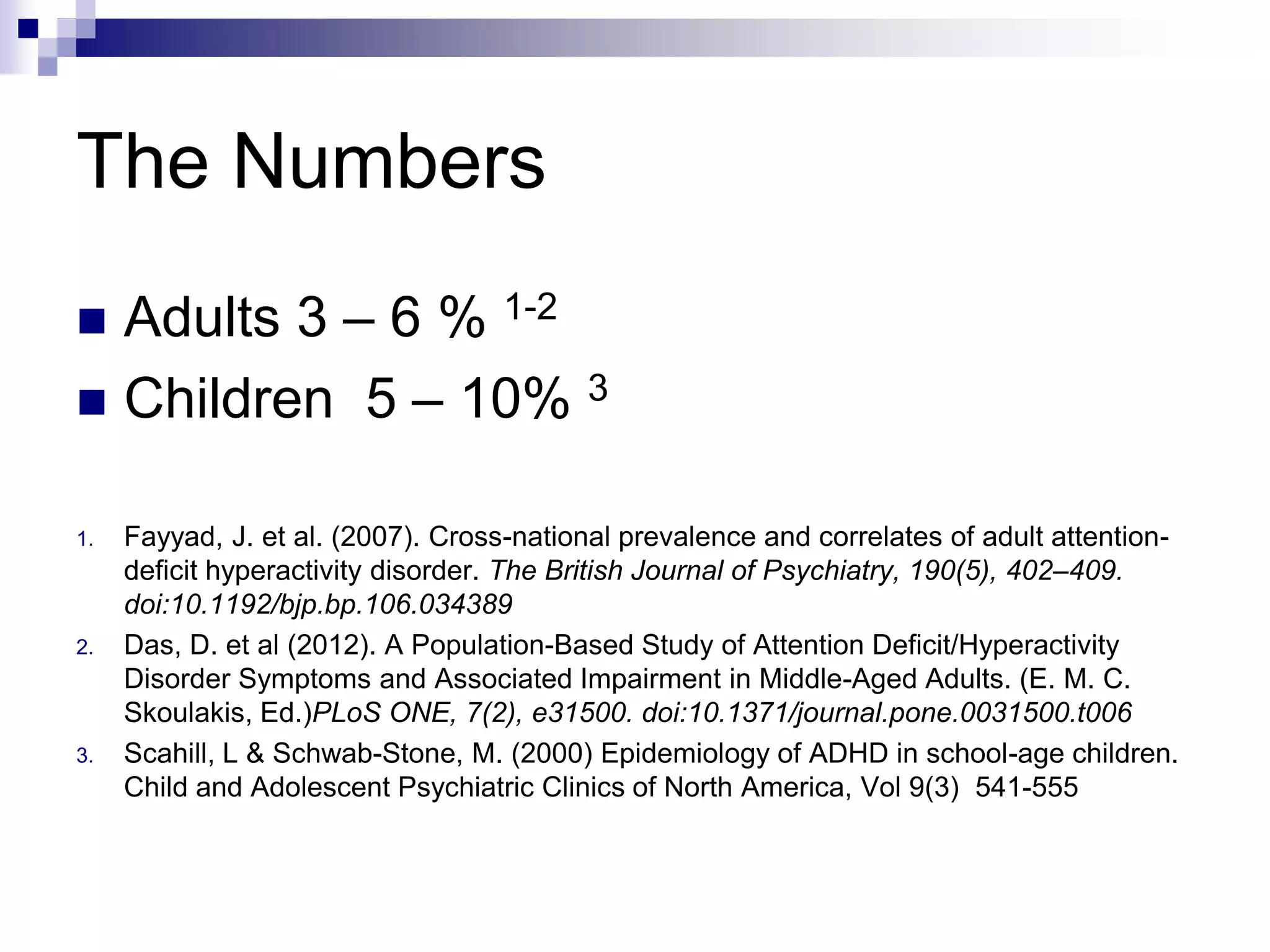
The Numbers
 Adults 3 – 6 % 1-2
 Children 5 – 10% 3
1. Fayyad, J. et al. (2007). Cross-national prevalence and correlates of adult attention-
deficit hyperactivity disorder. The British Journal of Psychiatry, 190(5), 402–409.
doi:10.1192/bjp.bp.106.034389
2. Das, D. et al (2012). A Population-Based Study of Attention Deficit/Hyperactivity
Disorder Symptoms and Associated Impairment in Middle-Aged Adults. (E. M. C.
Skoulakis, Ed.)PLoS ONE, 7(2), e31500. doi:10.1371/journal.pone.0031500.t006
3. Scahill, L & Schwab-Stone, M. (2000) Epidemiology of ADHD in school-age children.
Child and Adolescent Psychiatric Clinics of North America, Vol 9(3) 541-555
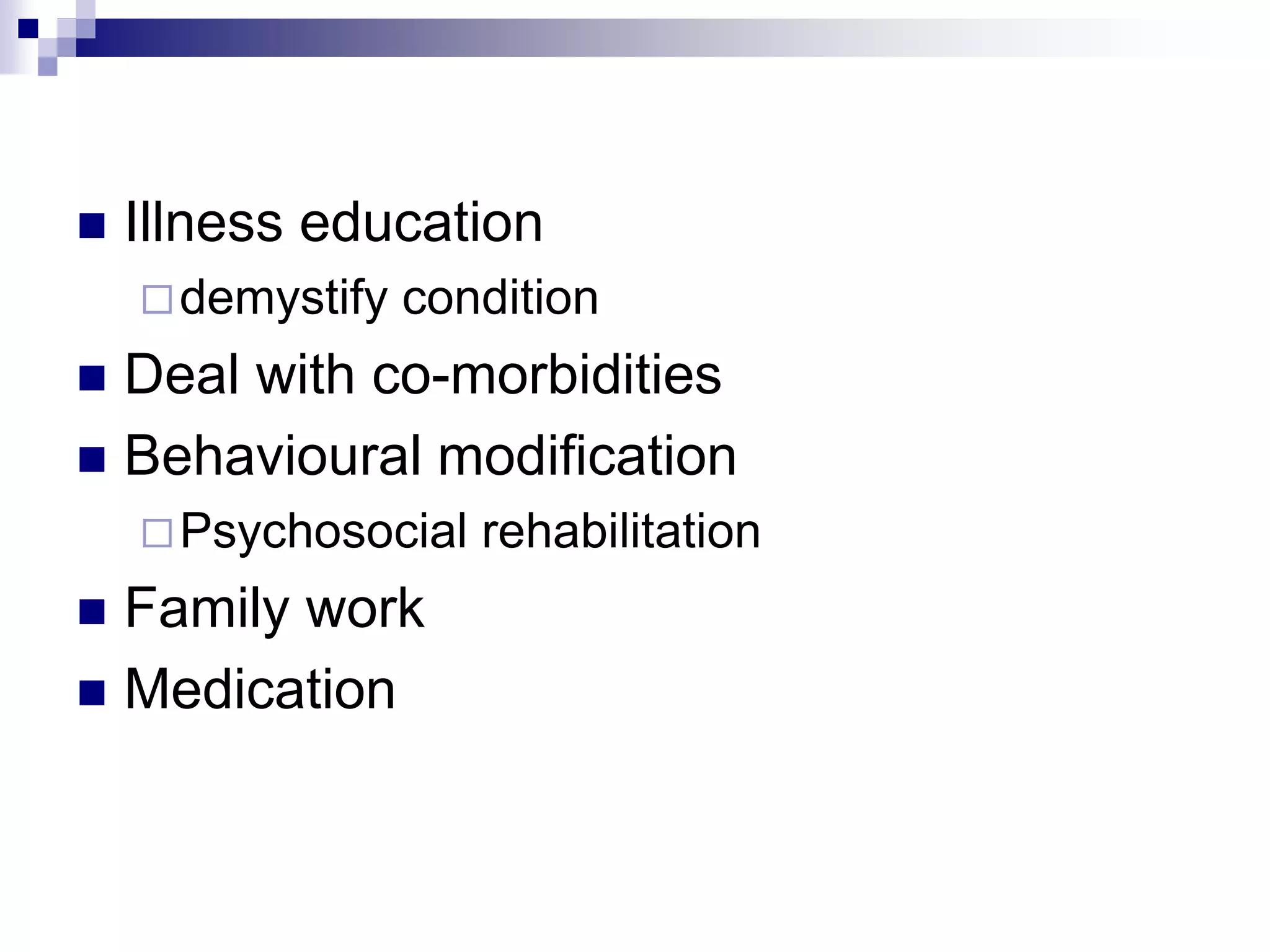
Management
is a
bio-behavioural
approach
 Illness education
demystify condition
 Deal with co-morbidities
 Behavioural modification
Psychosocial rehabilitation
 Family work
 Medication
Medications
 Stimulants
 Dexamphetamine
 Methylphenidate
 Non-Stimulant
 Atomoxetine
 Bupropion
 Anti-depressants
 Mood stabilisers
 Anxiolytics
 Hypnotics
 Melatonin
Precautions & Practice
 Keep copy of script
 Establish Pharmacy
 Rx at Pharmacy
 Note Rpt interval
 Calculate requirement
 Obtain PBS whenever
possible
 Inform GP, Rx Drs
 Psychiatrist Rx
 Permit
 Sch 8
 Follow Instructions
 GP’s can prescribe
 Renew permits
 Intersate
 Nightmare
Checklist
Conclusions
 ADHD is a lifetime illness
 Needs medical attention
 Psychiatrist are currently the major service
providers
 We need to Rx taking due precautions
A pain in the rear OR Someone
crying out for help
Conclusions
 ADHD is a lifetime illness
 These patients seek our help
 They need medical attention
 Psychiatrist are currently the major service
providers
 Multimodal approach is the key
Let us take the necessary risks
But remember we need to
keep
our eyes wide open

ADHD - Myth or Clinical Reality?