Renewable Energy Sources
By
V.Saravanan
Energy Management Cell
Thiagarajar College of
Engineering
Madurai
What is meant by
Sustainable Development?
“Development which meets the
needs of present, without
compromising the ability of the
future generation to meet their
own needs”
Why RES?
 Clean Source of Energy
 Abundant Sources – Do not get depleted
 No harmful waste products
 Many type can be generated at the
location of use – No transmission
 Maintain reliability of supplies
 Competitive markets
 Ending fuel poverty
 No Green House gases
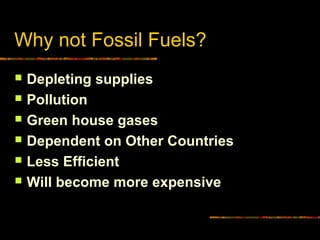
Why not Fossil Fuels?
 Depleting supplies
 Pollution
 Green house gases
 Dependent on Other Countries
 Less Efficient
 Will become more expensive
UK Renewable Target
 2010 10% of electricity generated from
renewable sources
 Doubled by 2020
 National targets backed up by regional
targets
Benefits of RES
 Most Renewable cost little more than
conventional sources – Wind
 Most renewable don’t have volatile price,
since the fuel cost is nil/negligible
 Most renewable have the advantage of
 Environmental benefits
 Waste Management benefits
 Economic Development benefits
Why Developed countries
Pursuing RES?
 Economic Development
 Price Stability
 Fuel diversity to increase reliability
 Environmental benefits
Limitations of RES
 Solar only in Daylight
 Wind speed highly variable
 Solutions not yet developed fully
 Storage technology being considered
Ad res1
Ad res1
Ad res1

Ad res1

  • 1.
    Renewable Energy Sources By V.Saravanan EnergyManagement Cell Thiagarajar College of Engineering Madurai
  • 2.
    What is meantby Sustainable Development? “Development which meets the needs of present, without compromising the ability of the future generation to meet their own needs”
  • 4.
    Why RES?  CleanSource of Energy  Abundant Sources – Do not get depleted  No harmful waste products  Many type can be generated at the location of use – No transmission  Maintain reliability of supplies  Competitive markets  Ending fuel poverty  No Green House gases
  • 5.
    Why not FossilFuels?  Depleting supplies  Pollution  Green house gases  Dependent on Other Countries  Less Efficient  Will become more expensive
  • 9.
    UK Renewable Target 2010 10% of electricity generated from renewable sources  Doubled by 2020  National targets backed up by regional targets
  • 10.
    Benefits of RES Most Renewable cost little more than conventional sources – Wind  Most renewable don’t have volatile price, since the fuel cost is nil/negligible  Most renewable have the advantage of  Environmental benefits  Waste Management benefits  Economic Development benefits
  • 11.
    Why Developed countries PursuingRES?  Economic Development  Price Stability  Fuel diversity to increase reliability  Environmental benefits
  • 12.
    Limitations of RES Solar only in Daylight  Wind speed highly variable  Solutions not yet developed fully  Storage technology being considered