3D Model Reviews
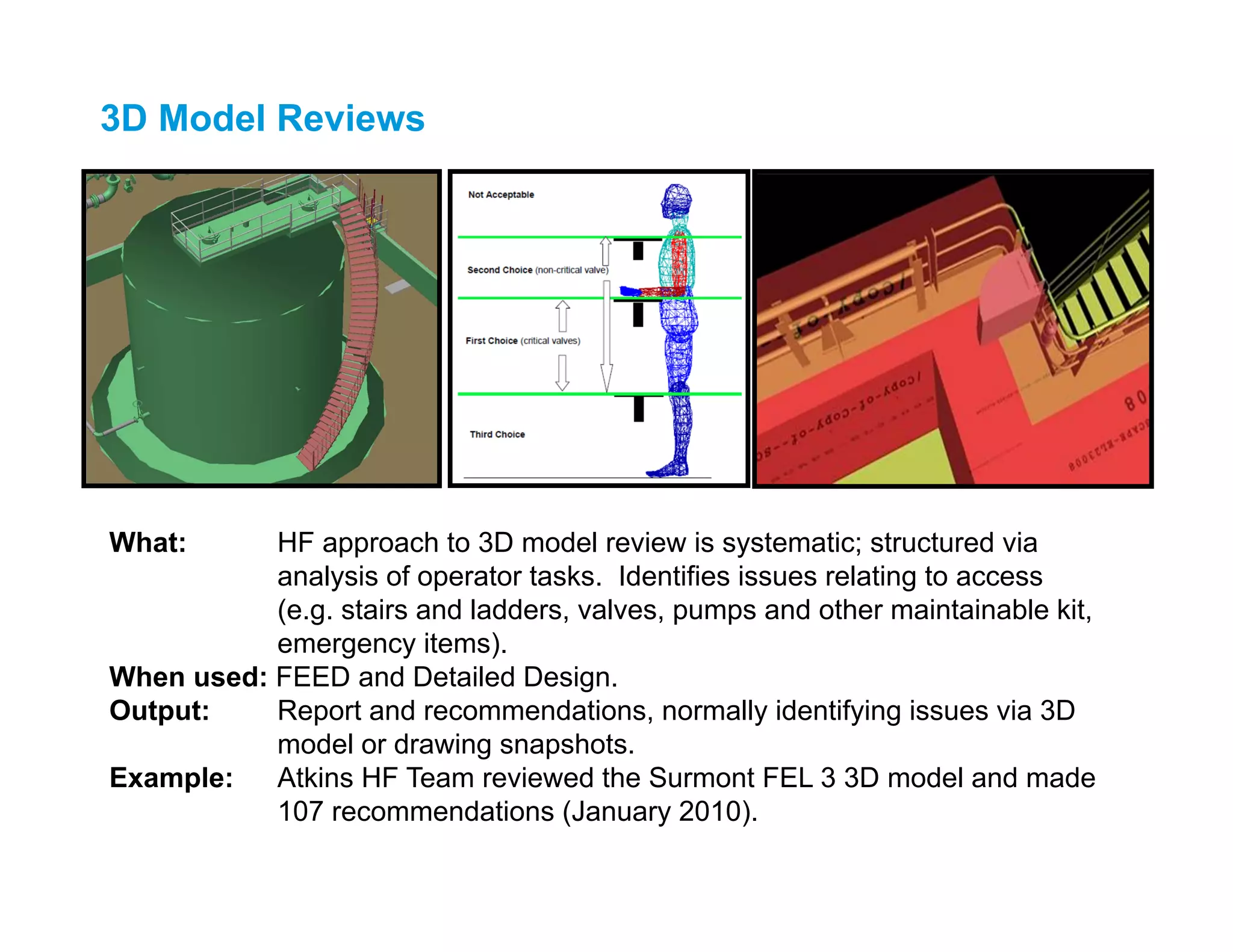
What: HF approach to 3D model review is systematic; structured via
analysis of operator tasks. Identifies issues relating to access
(e.g. stairs and ladders, valves, pumps and other maintainable kit,
emergency items).
When used: FEED and Detailed Design.
Output: Report and recommendations, normally identifying issues via 3D
model or drawing snapshots.
Example: Atkins HF Team reviewed the Surmont FEL 3 3D model and made
107 recommendations (January 2010).
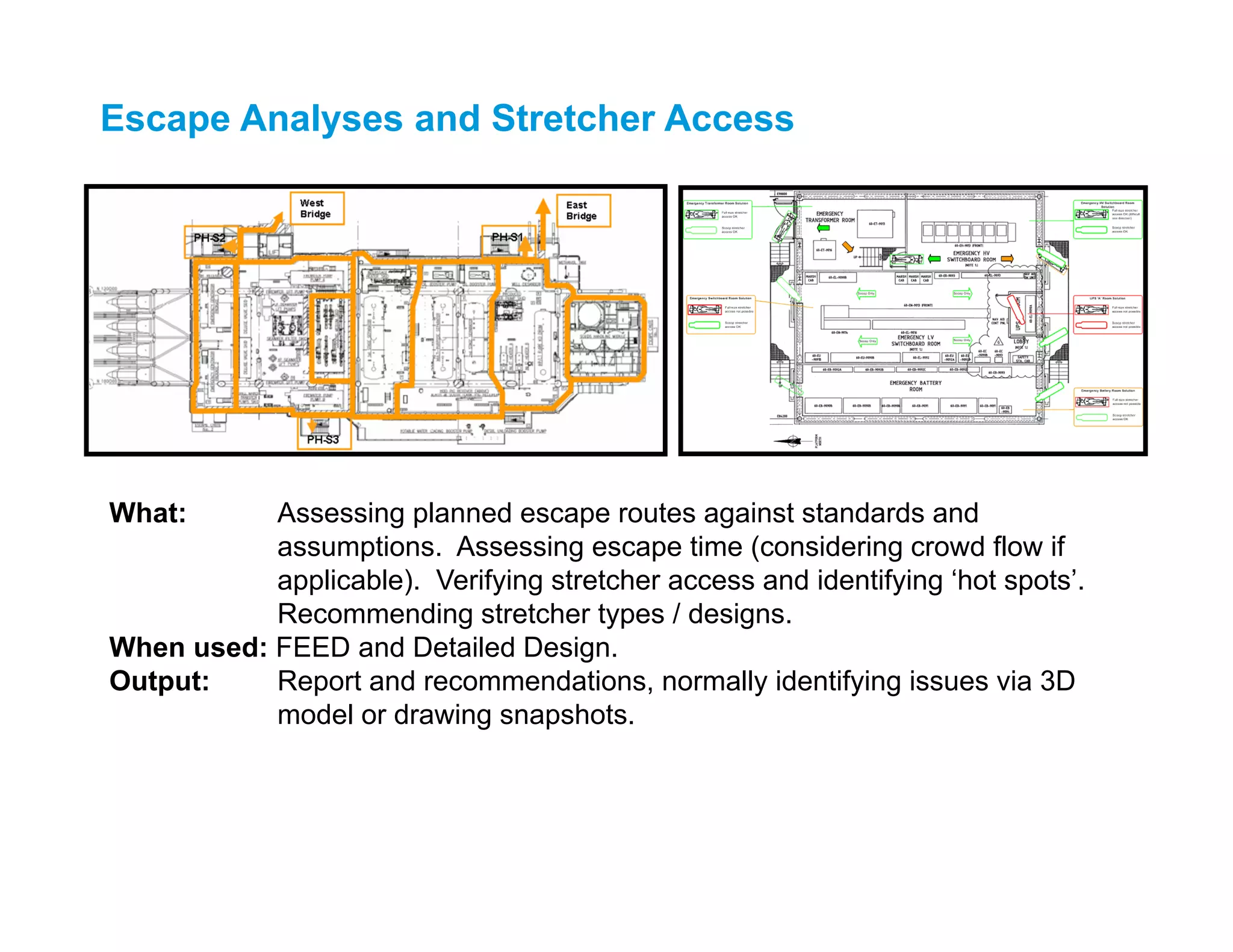
What: Assessing planned escape routes against standards and
assumptions. Assessing escape time (considering crowd flow if
applicable). Verifying stretcher access and identifying ‘hot spots’.
Recommending stretcher types / designs.
When used: FEED and Detailed Design.
Output: Report and recommendations, normally identifying issues via 3D
model or drawing snapshots.
Escape Analyses and Stretcher Access
Control Room Design
What: HF is necessary to achieve an integrated control room design.
Various methods are used to develop individual control stations and
the CR to layout to facilitate supervision, communication and
movement. Task, lighting, noise, display, ventilation and security
requirements are integrated into design.
When used: Concept (plant layout and sizing), FEED and Detailed Design.
Output: Improved operational performance, reduced operator fatigue,
improved communication and effective crisis response.
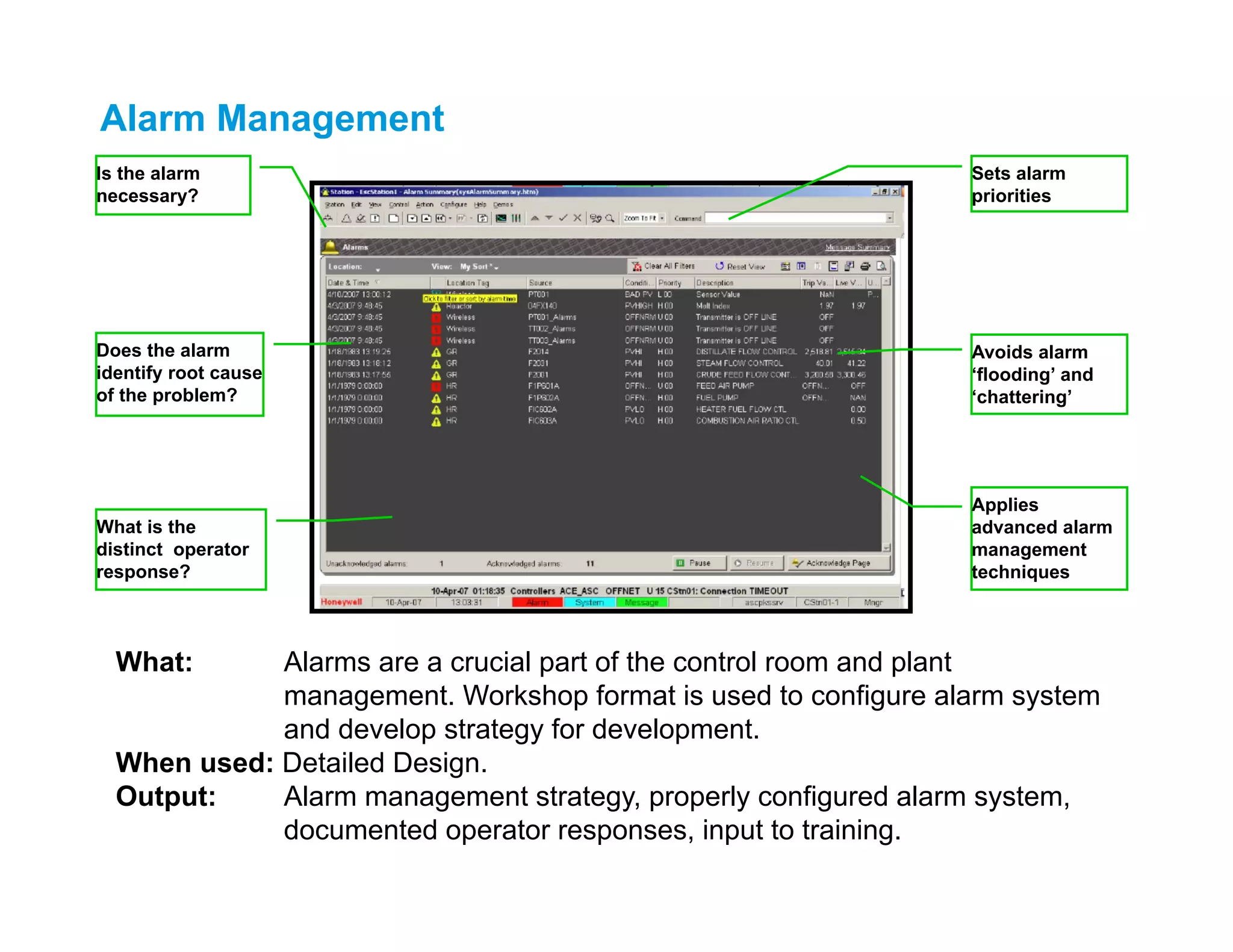
Is the alarm
necessary?
Does the alarm
identify root cause
of the problem?
Avoids alarm
‘flooding’ and
‘chattering’
What is the
distinct operator
response?
Applies
advanced alarm
management
techniques
Sets alarm
priorities
What: Alarms are a crucial part of the control room and plant
management. Workshop format is used to configure alarm system
and develop strategy for development.
When used: Detailed Design.
Output: Alarm management strategy, properly configured alarm system,
documented operator responses, input to training.
Alarm Management
What: CRIOP is a comprehensive method of evaluating crane cabin
design and layout including sight lines, controls, communication,
computer interaction, access and other hazards.
When used: During design or evaluation of crane, truck or excavator control
cabins. May be used to make a comparative assessment between
designs.
Output: Report and design recommendations.
Crane & Truck Cabin Assessments (CRIOP)
Hazard Identification (HAZID)
What: Task- and guideword-structured method used to identify hazards to
personnel. Identifies problems with equipment and procedures,
hazardous conditions and mismatches between human abilities
and job requirements.
When used: Detailed Design and Operations.
Output: Report and recommendations.
What: Guidance on effective control of fatigue.
Training on the effects of fatigue on
performance, design and scheduling
implications and effective shiftwork
design.
When used: Detailed Design and Operations.
Output: Report and recommendations.
Fatigue Management
Safety Culture
What: Developing an effective safety culture
via assessment and appropriate
interventions. Engaging the workforce
to think and behave safely.
When used: Detailed Design and Operations.
Output: Analysis, meetings and workforce
engagement.

Activities Summary 2010

  • 1.
    3D Model Reviews What:HF approach to 3D model review is systematic; structured via analysis of operator tasks. Identifies issues relating to access (e.g. stairs and ladders, valves, pumps and other maintainable kit, emergency items). When used: FEED and Detailed Design. Output: Report and recommendations, normally identifying issues via 3D model or drawing snapshots. Example: Atkins HF Team reviewed the Surmont FEL 3 3D model and made 107 recommendations (January 2010).
  • 2.
    What: Assessing plannedescape routes against standards and assumptions. Assessing escape time (considering crowd flow if applicable). Verifying stretcher access and identifying ‘hot spots’. Recommending stretcher types / designs. When used: FEED and Detailed Design. Output: Report and recommendations, normally identifying issues via 3D model or drawing snapshots. Escape Analyses and Stretcher Access
  • 3.
    Control Room Design What:HF is necessary to achieve an integrated control room design. Various methods are used to develop individual control stations and the CR to layout to facilitate supervision, communication and movement. Task, lighting, noise, display, ventilation and security requirements are integrated into design. When used: Concept (plant layout and sizing), FEED and Detailed Design. Output: Improved operational performance, reduced operator fatigue, improved communication and effective crisis response.
  • 4.
    Is the alarm necessary? Doesthe alarm identify root cause of the problem? Avoids alarm ‘flooding’ and ‘chattering’ What is the distinct operator response? Applies advanced alarm management techniques Sets alarm priorities What: Alarms are a crucial part of the control room and plant management. Workshop format is used to configure alarm system and develop strategy for development. When used: Detailed Design. Output: Alarm management strategy, properly configured alarm system, documented operator responses, input to training. Alarm Management
  • 5.
    What: CRIOP isa comprehensive method of evaluating crane cabin design and layout including sight lines, controls, communication, computer interaction, access and other hazards. When used: During design or evaluation of crane, truck or excavator control cabins. May be used to make a comparative assessment between designs. Output: Report and design recommendations. Crane & Truck Cabin Assessments (CRIOP)
  • 6.
    Hazard Identification (HAZID) What:Task- and guideword-structured method used to identify hazards to personnel. Identifies problems with equipment and procedures, hazardous conditions and mismatches between human abilities and job requirements. When used: Detailed Design and Operations. Output: Report and recommendations.
  • 7.
    What: Guidance oneffective control of fatigue. Training on the effects of fatigue on performance, design and scheduling implications and effective shiftwork design. When used: Detailed Design and Operations. Output: Report and recommendations. Fatigue Management Safety Culture What: Developing an effective safety culture via assessment and appropriate interventions. Engaging the workforce to think and behave safely. When used: Detailed Design and Operations. Output: Analysis, meetings and workforce engagement.