UXPA 2014 London
Acquired Disabilities
24th July 2014
Caleb Tang UX and Accessibility Consultant
UXPA UK | Treasurer
Accessibility?
Disability?
Reality
2 @calebtang
1 billion and more
people currently living with disability
2011 WHO World report on disability
USA
17%
UK
18%
5 @calebtang
The 1 in 5 you mention did
not seem to reflect people
around me
Many people with disability do not consider
themselves disabled
6 @calebtang
Many people with disability do not consider
themselves disabled
7 @calebtang
Disability can be hidden
Many people with disability do not consider
themselves disabled
8 @calebtang
Disability can be hidden
Many uncomfortable to admit
Many people with disability do not consider
themselves disabled
9 @calebtang
Disability can be hidden
Many uncomfortable to admit
Many unaware about their condition
We all know
Disability is categorised by vision, hearing,
motor, cognitive, speech etc
Blind people use screen readers, Deaf
people understand sign language etc
We have tools, guidelines,
policies and some design
patterns
We are doing great job… and
should continue to challenge
ourselves
Accessibility?
Disability?
Reality
13 @calebtang
14 @calebtang
I wasn’t aware of this
(accessibility) feature
15 @calebtang
It’s good that they have
these features, but it is still
hard to use…
Only 17% of disabled people
are born with their disability
Born vs. Acquired disability
Born
• Comfortable with their
access methods (formal
training)
• Expert and confident
Acquired
• Experience loss of abilities
(stages of grief)
• Have to learn alternative
access methods
• May not able to learn or
use access methods up
their potential
• May experience multiple
challenges as a result of
the loss
Acquired:
Gradual vs. Sudden
Gradual
• Unaware of the gradual
development of disability
• Start preparing and
learning new ways to live
• Trying to do as much as
possible while they can
• Swing between “abled”
and “disabled”
Sudden
• Takes longer to learn
• Comparing to the mental
model during the abled
days
• Frustrated, angry, lack of
patience, feeling hopeless
etc
Gradual:
Aware vs. Unaware
Aware
• May take action and
accept needs for their
condition
• May prepare for their
future (learn new skills)
Unaware
• Would not associate
themselves with
accessibility features
• May experience sudden
loss when they aware
Denial
Anger
Bargain
Depress
Accept
Model of grief
- Elisabeth Kübler-Ross
Denial
Anger
Bargain
Depress
Accept
I don’t believe this
Denial
Bargain
Depress
Accept
Why me? Not fair!! Anger
Denial
Depress
Accept
There may be way
to turn this around
Anger
Bargain
Denial
Accept
I’m just a useless
creature
Anger
Bargain
Depress
Denial
I’m not disabled,
I’m just doing things
differently
Anger
Bargain
Depress
Accept
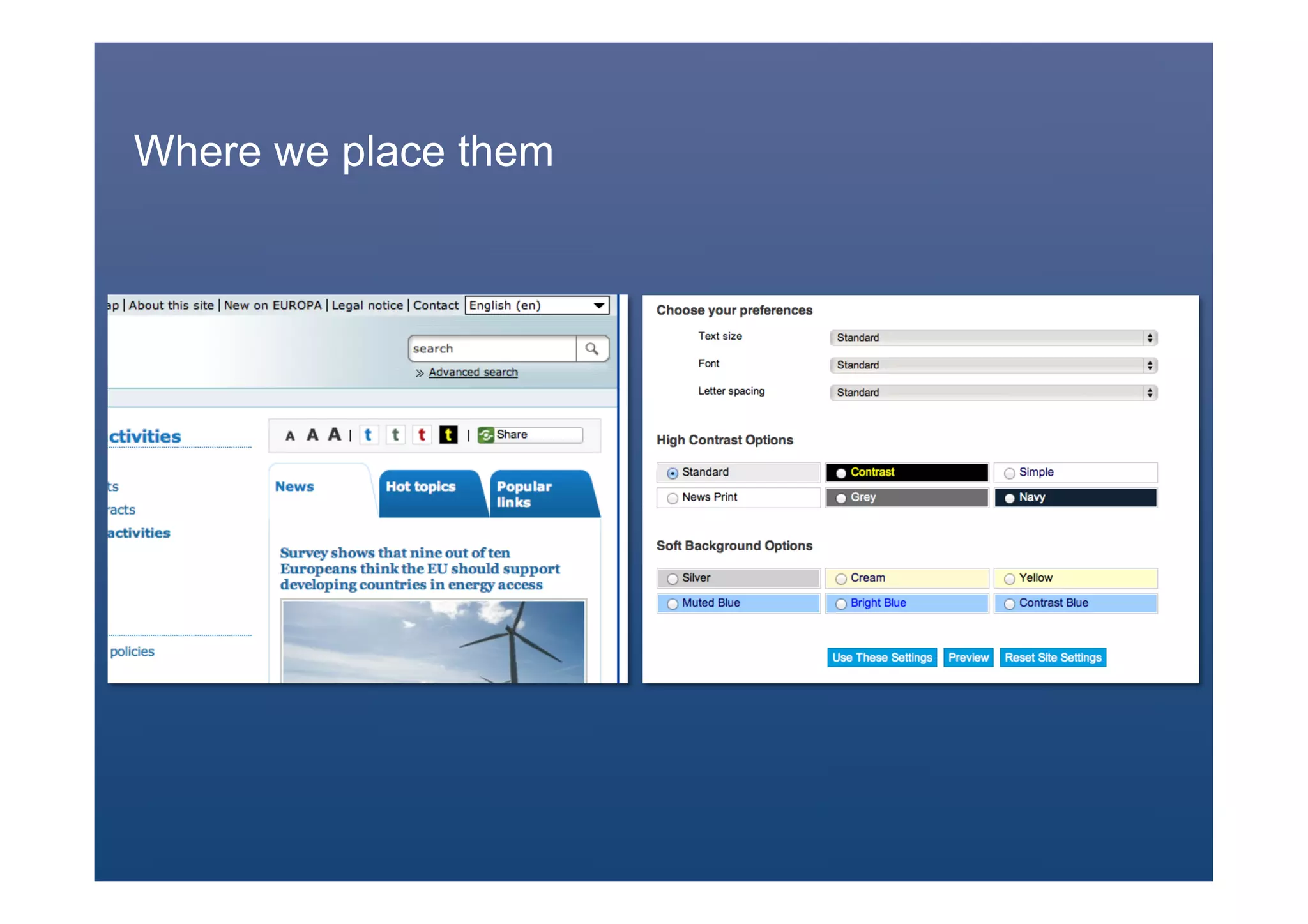
Where we place them
What we call them
How we present them
We should stop labelling
accessibility.
Think Preference.
Accessibility is good design.
Think accessible by default.
Think design to avoid barriers.
People acquire disabilities.
And it is journey full of
challenges.
Think design to impact.
Thank you.
36 @calebtang

Acquired disability