Cultural Diversity includes (but is not limited to): 
- Language 
- Race 
- Ethnicity 
- Dress 
-Values 
- Religion and Religious practices 
- Social and Community responsibilities 
- Family and family responsibility 
- Political Views
Language 
- Language become the medium of expression 
for their society. (Whorfian hypothesis) 
- Language is a key marker of membership of 
an ethnic group.
Language 
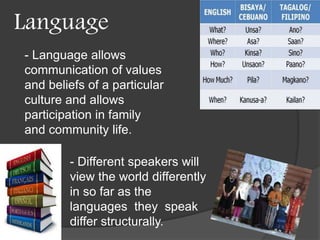
- Language allows 
communication of values 
and beliefs of a particular 
culture and allows 
participation in family 
and community life. 
- Different speakers will 
view the world differently 
in so far as the 
languages they speak 
differ structurally.
Race 
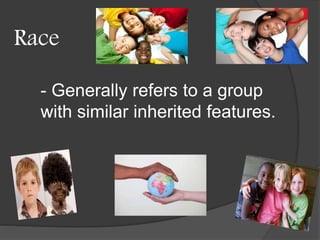
- Generally refers to a group 
with similar inherited features.
Race 
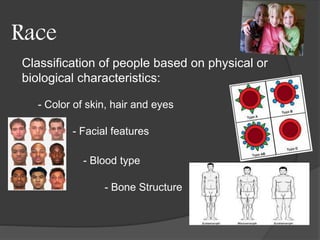
Classification of people based on physical or 
biological characteristics: 
- Color of skin, hair and eyes 
- Facial features 
- Blood type 
- Bone Structure
Ethnicity 
- The sense of identification that a 
cultural group collectively has, largely 
based on the group’s common heritage. 
- Every individual may not practice all of the 
beliefs of the group but is still influenced by 
other members of the group.
Ethnic Group 
- Refers to the group that shares language, 
national origin or religious tradition. 
- May define themselves as different because 
of their language, religion, geography, history, 
ancestry, or physical traits. 
- An ethnic group that is assumed to have a 
biological basis is called a race.
Ethnicity is based on cultural 
tradition while races are base mainly 
on biological traits.
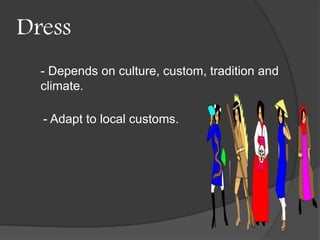
Dress 
- Depends on culture, custom, tradition and 
climate. 
- Adapt to local customs.
Cultural Diversity

Cultural Diversity

  • 2.
    Cultural Diversity includes(but is not limited to): - Language - Race - Ethnicity - Dress -Values - Religion and Religious practices - Social and Community responsibilities - Family and family responsibility - Political Views
  • 3.
    Language - Languagebecome the medium of expression for their society. (Whorfian hypothesis) - Language is a key marker of membership of an ethnic group.
  • 4.
    Language - Languageallows communication of values and beliefs of a particular culture and allows participation in family and community life. - Different speakers will view the world differently in so far as the languages they speak differ structurally.
  • 5.
    Race - Generallyrefers to a group with similar inherited features.
  • 6.
    Race Classification ofpeople based on physical or biological characteristics: - Color of skin, hair and eyes - Facial features - Blood type - Bone Structure
  • 7.
    Ethnicity - Thesense of identification that a cultural group collectively has, largely based on the group’s common heritage. - Every individual may not practice all of the beliefs of the group but is still influenced by other members of the group.
  • 8.
    Ethnic Group -Refers to the group that shares language, national origin or religious tradition. - May define themselves as different because of their language, religion, geography, history, ancestry, or physical traits. - An ethnic group that is assumed to have a biological basis is called a race.
  • 9.
    Ethnicity is basedon cultural tradition while races are base mainly on biological traits.
  • 10.
    Dress - Dependson culture, custom, tradition and climate. - Adapt to local customs.