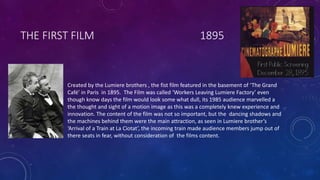
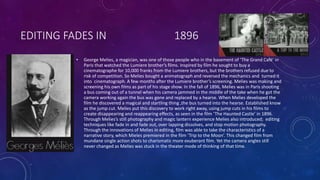
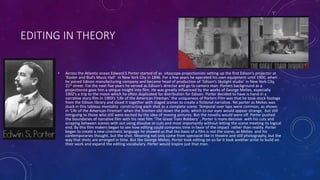
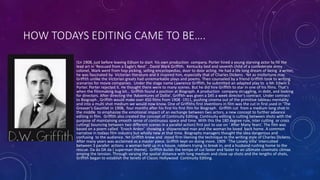
The document discusses the history and development of editing in film. It begins with the early films of the Lumiere brothers in 1895, which featured single shots without editing. George Melies then introduced early editing techniques like jump cuts and fades in 1896. Edward Porter further advanced narrative filmmaking with edited films like "The Life of an American Fireman" in 1903. However, D.W. Griffith is credited with developing modern continuity editing techniques between 1908-1911 at Biograph, including shot variation, parallel editing, and match cuts. Griffith's innovations like those in "After Many Years" established conventions of film language that are still used today.