Name________________________________						
READING COMPREHENSION: Abiotic and Biotic Factors
	In	general,	ecosystems	can	be	divided	into	two	types	
of	factors,	abiotic	factors	and	biotic	factors.	Both	types	
contribute	to	the	type	and	number	of	organisms	(living	
things),	which	can	inhabit	an	ecosystem.	But	what	is	the	
difference	between	them?	The	term	biotic	means	living	or	
having	lived.	Biotic	factors	are	basically	organisms	and	the	
remains	of	organisms.	Examples	of	biotic	factors	would	
include	a	frog,	a	leaf,	a	dead	tree,	or	a	piece	of	wood.	The	
term	abiotic	means	non-living,	or	never	having	lived;	abiotic	
factors	are	non-living,	non-cellular,	and	inorganic	materials	
which	contribute	to	an	environment.	Examples	of	abiotic	
factors	would	include	gold,	rock,	bicycle,	brick,	and	cement.	
	 Both	types	of	factors	affect	the	types	of	organisms	that	exist	in	an	environment.	For	instance,	in	the	desert,	the	
lack	of	water	(an	abiotic	factor)	prevents	the	existence	of	most	trees,	which	need	steady	rainfall.	On	the	other	hand,	the	
numerous	rodents,	(mice,	etc)	which	live	in	the	desert	(a	biotic	factor)	enable	a	population	of	predatory	coyotes	to	
survive	in	this	harsh	climate.		
Comprehension	Questions	
1. According	to	the	text,	what	is	an	abiotic	factor?	____________________________________________________		
	
___________________________________________________________________________________________	
	
2. According	to	the	text,	what	is	a	biotic	factor?		______________________________________________________		
	
___________________________________________________________________________________________	
	
3. Based	on	the	definitions	above,	identify	each	of	the	following	as	biotic	(B)	or	abiotic	(A).		
_______	The	sand	in	a	desert	 	 	 ________	Pollen	from	a	plant	
_______	The	bacteria	in	a	lake	 	 	 ________	Pollution	from	an	oil	refinery	
	
4. Explain	why	a	dead	tree	would	still	be	a	biotic	factor,	even	though	it	is	no	longer	alive._____________________		
	
___________________________________________________________________________________________		
	
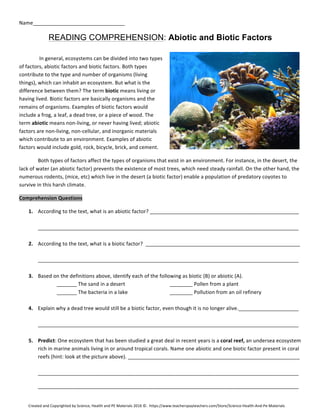
5. Predict:	One	ecosystem	that	has	been	studied	a	great	deal	in	recent	years	is	a	coral	reef,	an	undersea	ecosystem	
rich	in	marine	animals	living	in	or	around	tropical	corals.	Name	one	abiotic	and	one	biotic	factor	present	in	coral	
reefs	(hint:	look	at	the	picture	above).	____________________________________________________________		
	
___________________________________________________________________________________________		
___________________________________________________________________________________________	
			Created	and	Copyrighted	by	Science,	Health	and	PE	Materials	2016	©.		https://www.teacherspayteachers.com/Store/Science-Health-And-Pe-Materials

Abioticand bioticfactors 1

  • 1.
    Name________________________________ READING COMPREHENSION: Abioticand Biotic Factors In general, ecosystems can be divided into two types of factors, abiotic factors and biotic factors. Both types contribute to the type and number of organisms (living things), which can inhabit an ecosystem. But what is the difference between them? The term biotic means living or having lived. Biotic factors are basically organisms and the remains of organisms. Examples of biotic factors would include a frog, a leaf, a dead tree, or a piece of wood. The term abiotic means non-living, or never having lived; abiotic factors are non-living, non-cellular, and inorganic materials which contribute to an environment. Examples of abiotic factors would include gold, rock, bicycle, brick, and cement. Both types of factors affect the types of organisms that exist in an environment. For instance, in the desert, the lack of water (an abiotic factor) prevents the existence of most trees, which need steady rainfall. On the other hand, the numerous rodents, (mice, etc) which live in the desert (a biotic factor) enable a population of predatory coyotes to survive in this harsh climate. Comprehension Questions 1. According to the text, what is an abiotic factor? ____________________________________________________ ___________________________________________________________________________________________ 2. According to the text, what is a biotic factor? ______________________________________________________ ___________________________________________________________________________________________ 3. Based on the definitions above, identify each of the following as biotic (B) or abiotic (A). _______ The sand in a desert ________ Pollen from a plant _______ The bacteria in a lake ________ Pollution from an oil refinery 4. Explain why a dead tree would still be a biotic factor, even though it is no longer alive._____________________ ___________________________________________________________________________________________ 5. Predict: One ecosystem that has been studied a great deal in recent years is a coral reef, an undersea ecosystem rich in marine animals living in or around tropical corals. Name one abiotic and one biotic factor present in coral reefs (hint: look at the picture above). ____________________________________________________________ ___________________________________________________________________________________________ ___________________________________________________________________________________________ Created and Copyrighted by Science, Health and PE Materials 2016 ©. https://www.teacherspayteachers.com/Store/Science-Health-And-Pe-Materials