ABAC
Jasper Riane D Mendoza
1
August 20, 2020
Outline
● IAM Overview
● Definition of IAM terms
● ABAC
● Quick Demo
● Common IAM Usage Patterns (based on experience)
● Define metrics to measure scalability
● Scenarios
● Conclusion
2
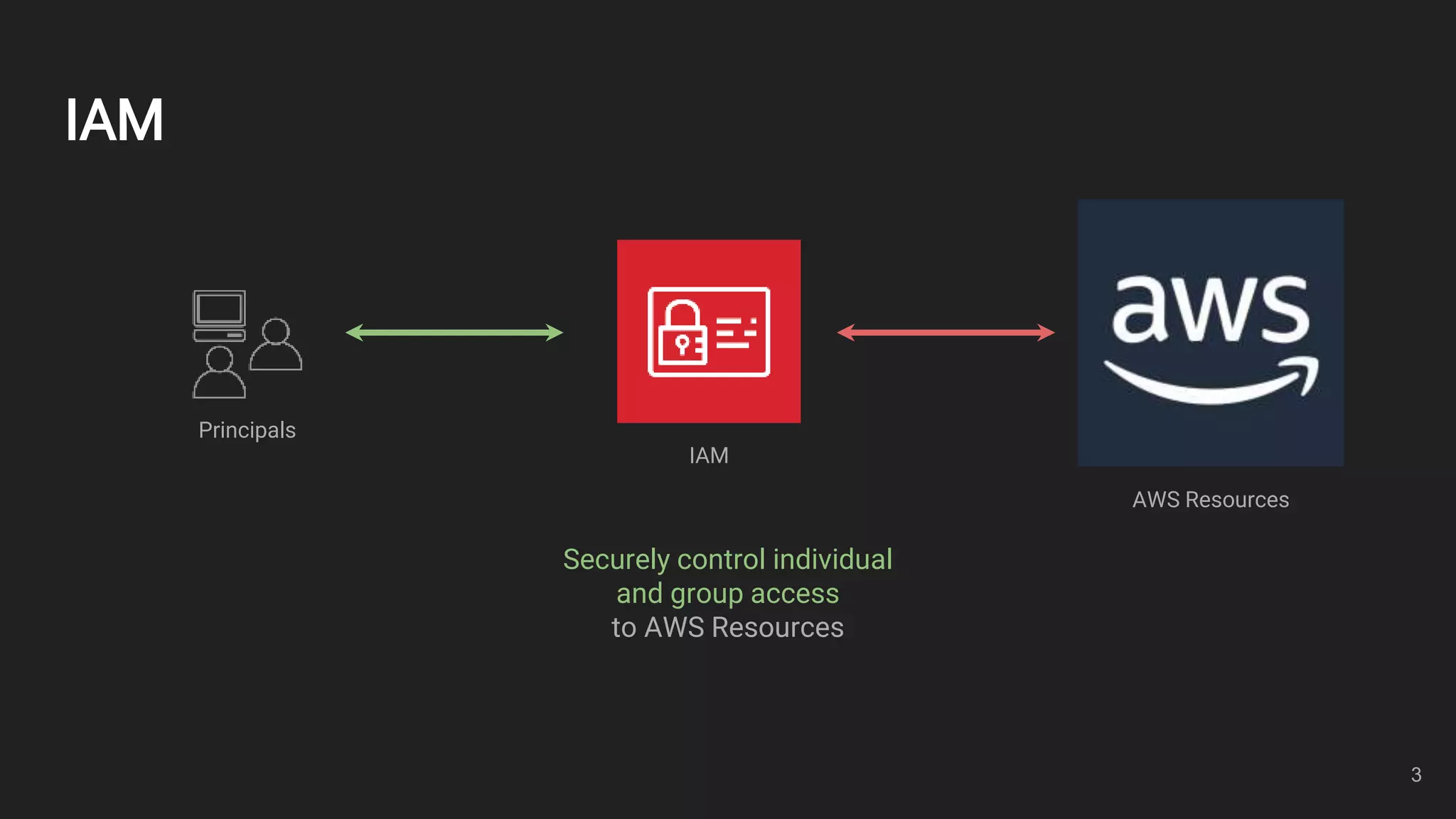
IAM
IAM
Principals
AWS Resources
Securely control individual
and group access
to AWS Resources
3
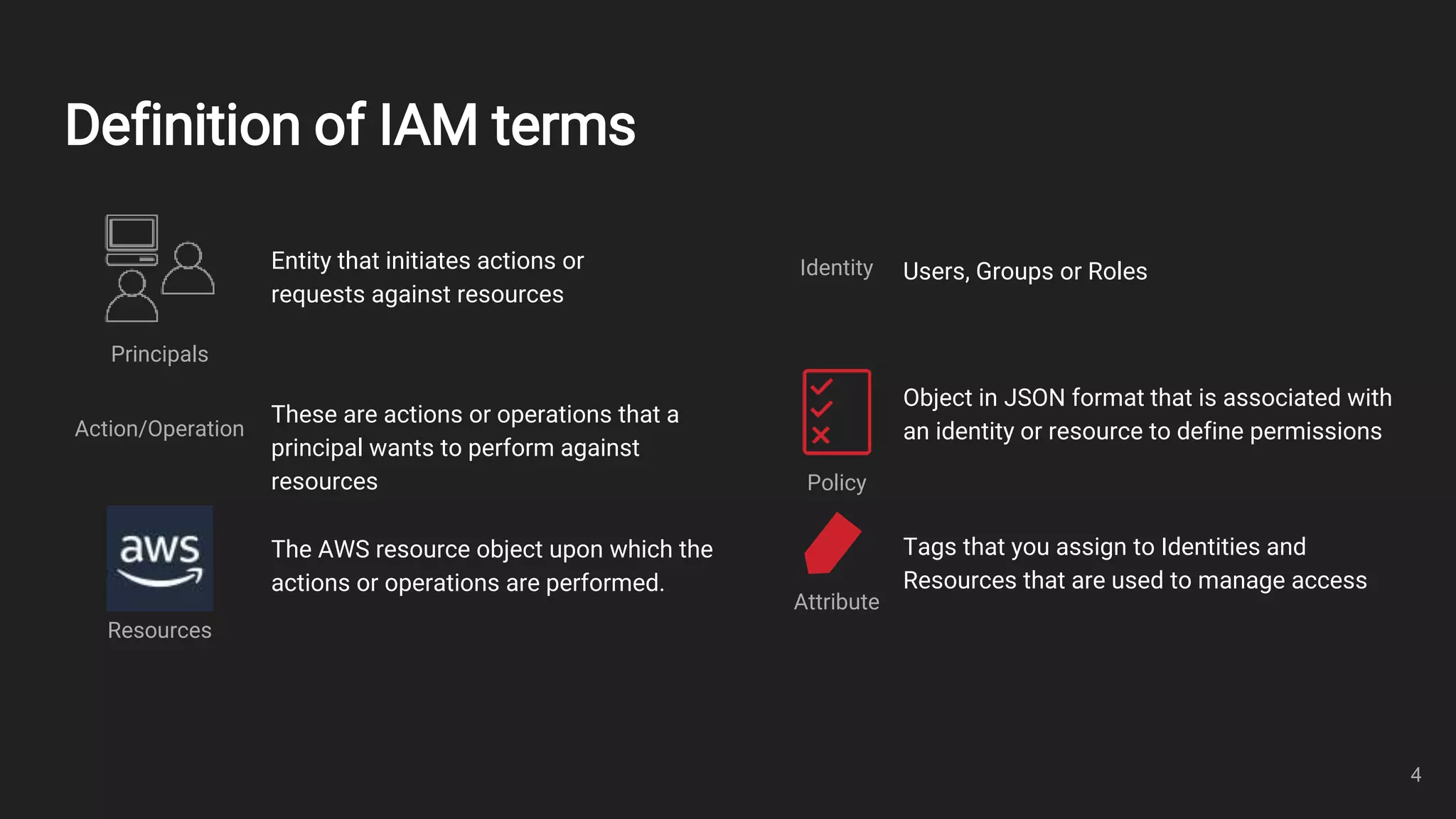
Tags that you assign to Identities and
Resources that are used to manage access
Definition of IAM terms
Principals
Entity that initiates actions or
requests against resources
Action/Operation
These are actions or operations that a
principal wants to perform against
resources
Resources
The AWS resource object upon which the
actions or operations are performed.
Identity Users, Groups or Roles
Policy
Object in JSON format that is associated with
an identity or resource to define permissions
Attribute
4
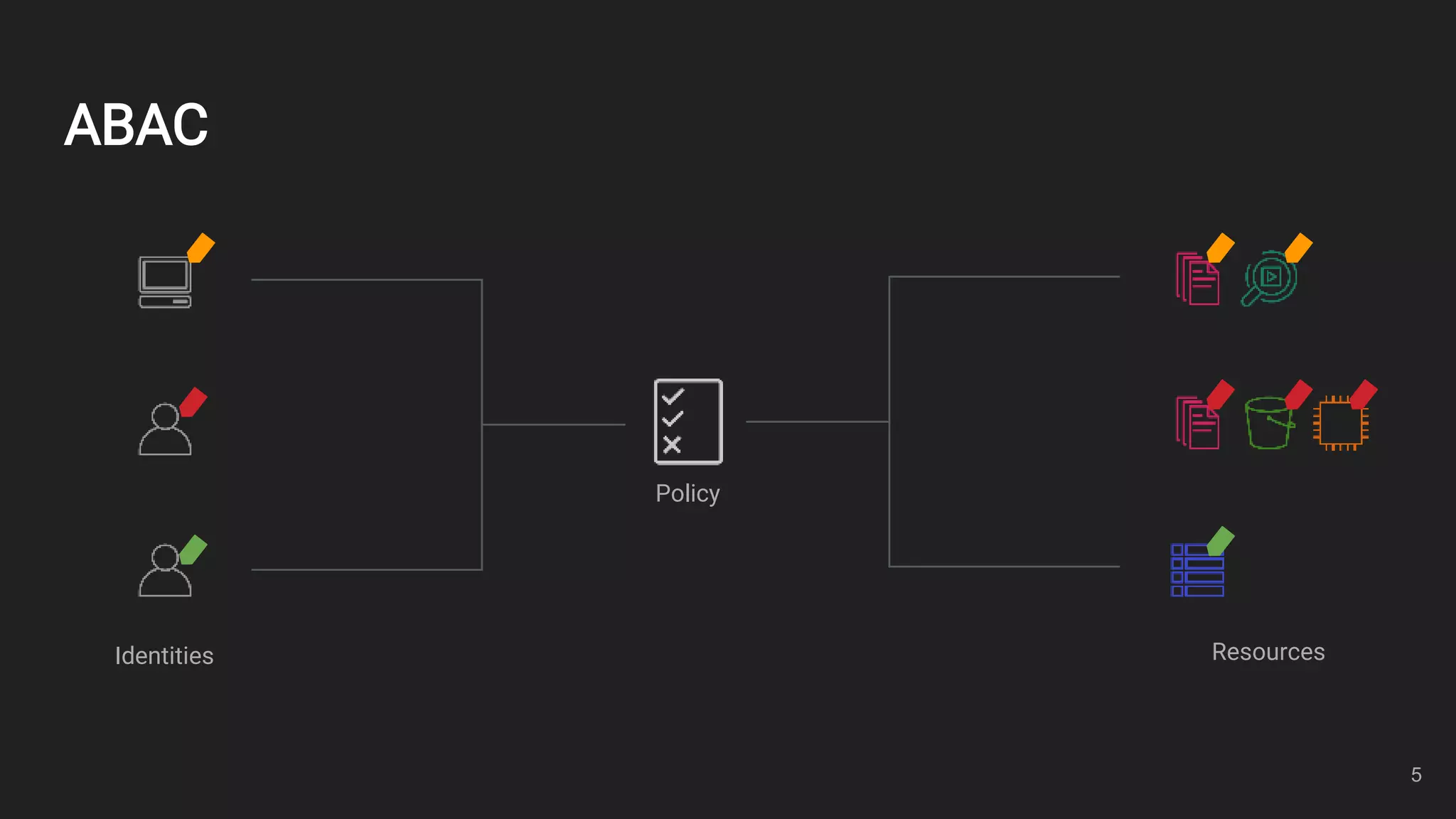
ABAC
Identities Resources
Policy
5
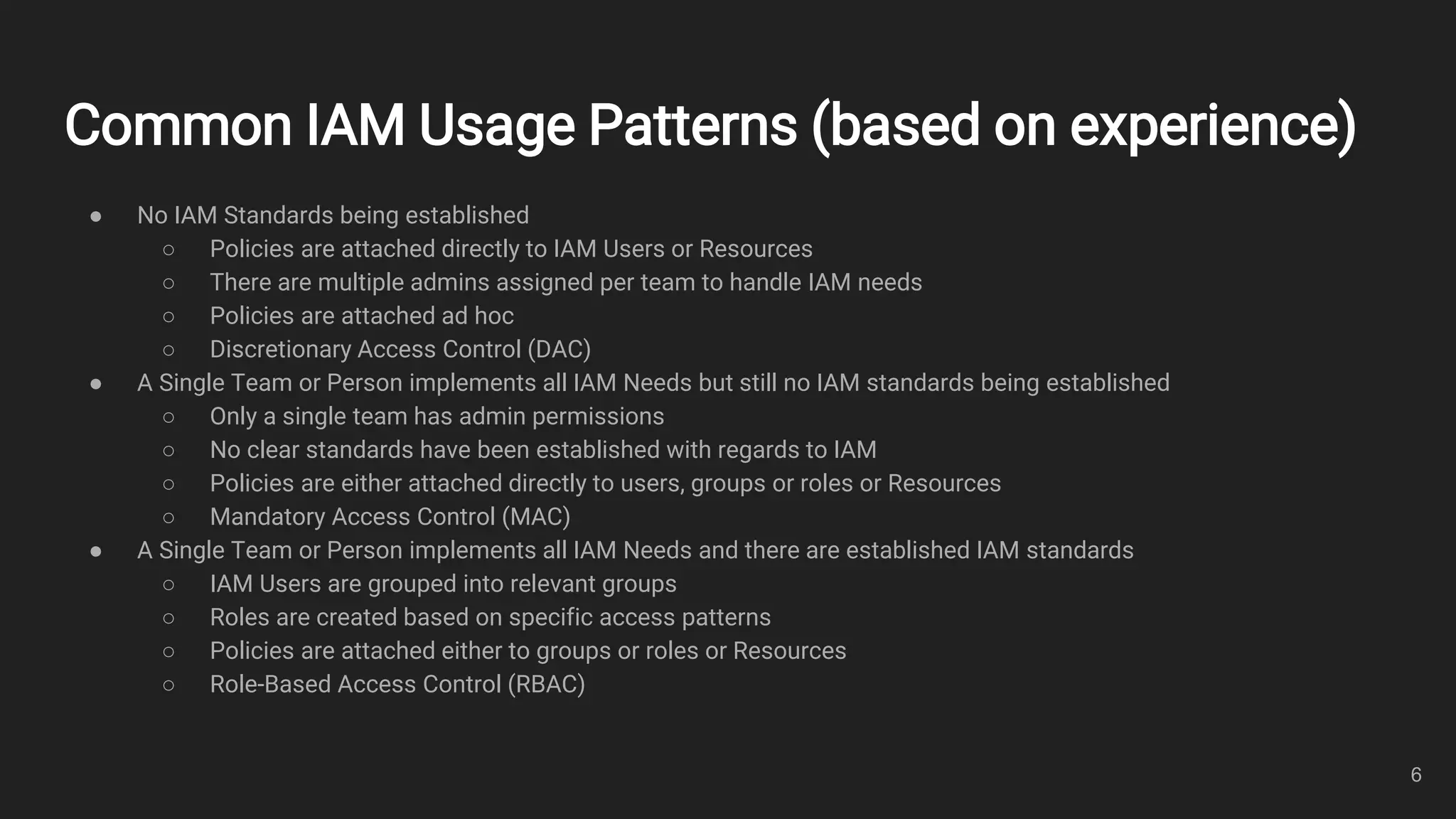
Common IAM Usage Patterns (based on experience)
● No IAM Standards being established
○ Policies are attached directly to IAM Users or Resources
○ There are multiple admins assigned per team to handle IAM needs
○ Policies are attached ad hoc
○ Discretionary Access Control (DAC)
● A Single Team or Person implements all IAM Needs but still no IAM standards being established
○ Only a single team has admin permissions
○ No clear standards have been established with regards to IAM
○ Policies are either attached directly to users, groups or roles or Resources
○ Mandatory Access Control (MAC)
● A Single Team or Person implements all IAM Needs and there are established IAM standards
○ IAM Users are grouped into relevant groups
○ Roles are created based on specific access patterns
○ Policies are attached either to groups or roles or Resources
○ Role-Based Access Control (RBAC)
6
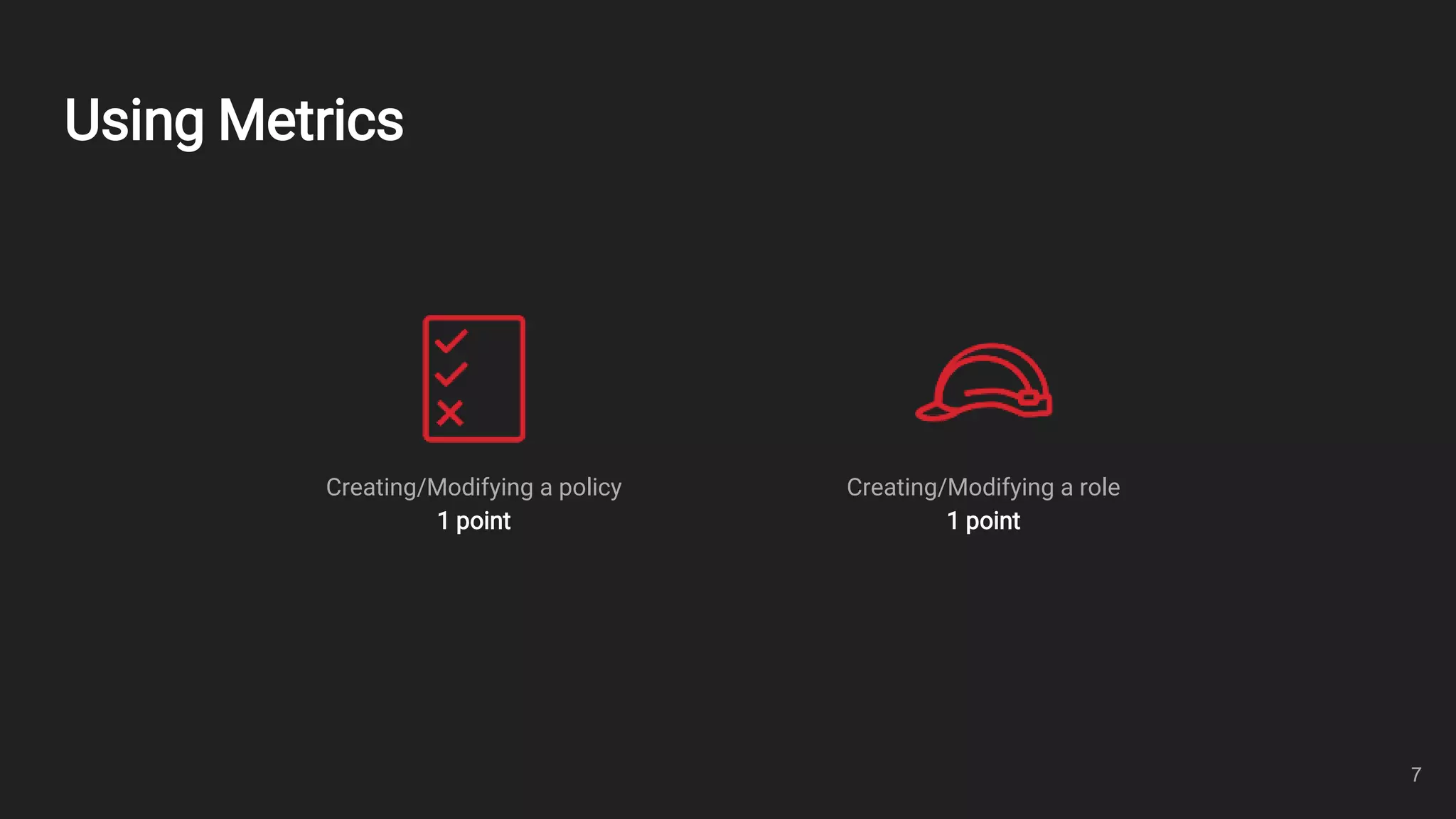
Using Metrics
Creating/Modifying a policy
1 point
Creating/Modifying a role
1 point
7
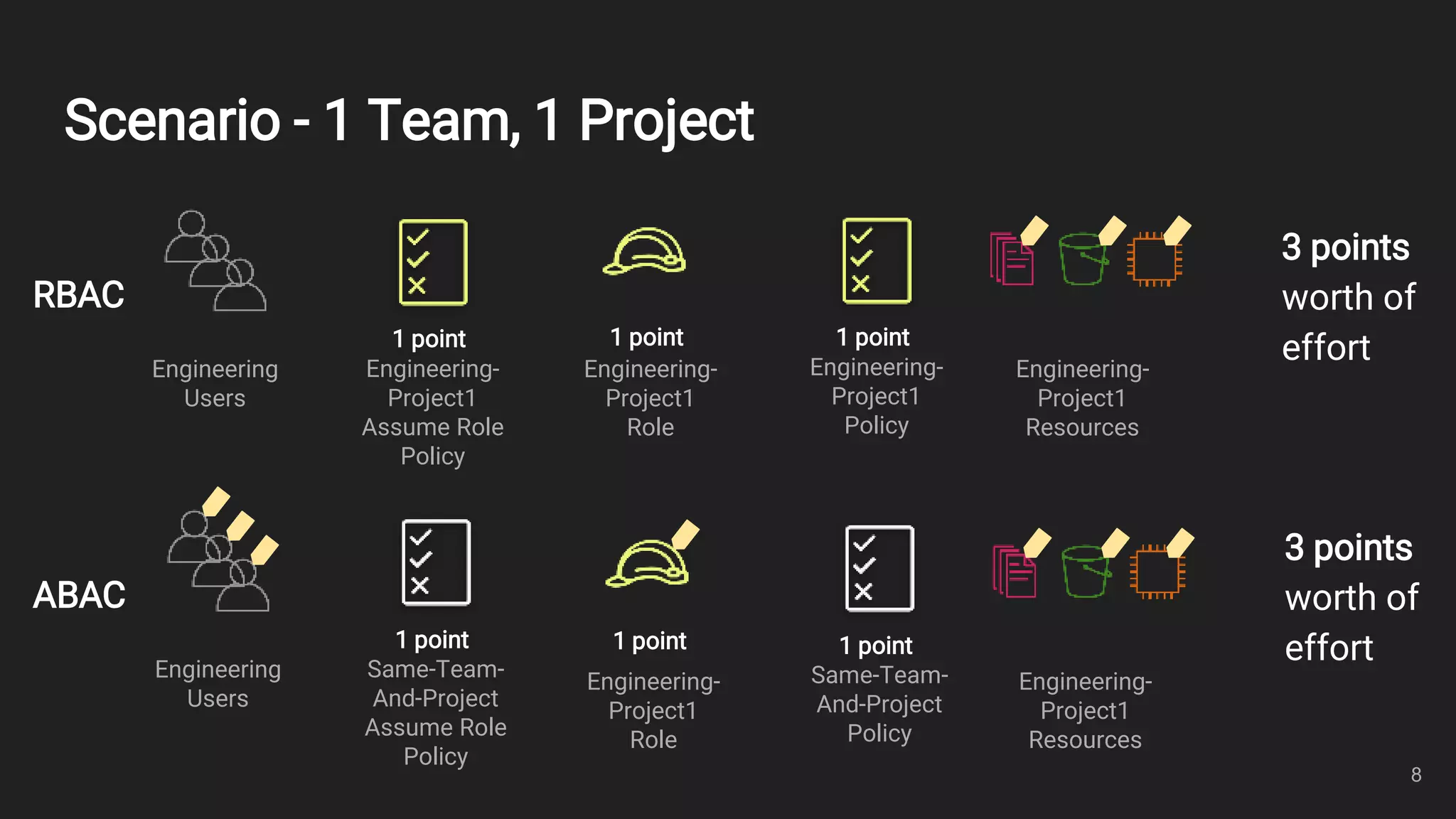
Scenario - 1 Team, 1 Project
8
Engineering
Users
Engineering-
Project1
Resources
Engineering-
Project1
Policy
Engineering-
Project1
Role
1 point 1 point
3 points
worth of
effort
RBAC
Engineering
Users
3 points
worth of
effort
ABAC
Engineering-
Project1
Assume Role
Policy
Engineering-
Project1
Resources
Same-Team-
And-Project
Policy
Engineering-
Project1
Role
1 point 1 point
1 point
Same-Team-
And-Project
Assume Role
Policy
1 point
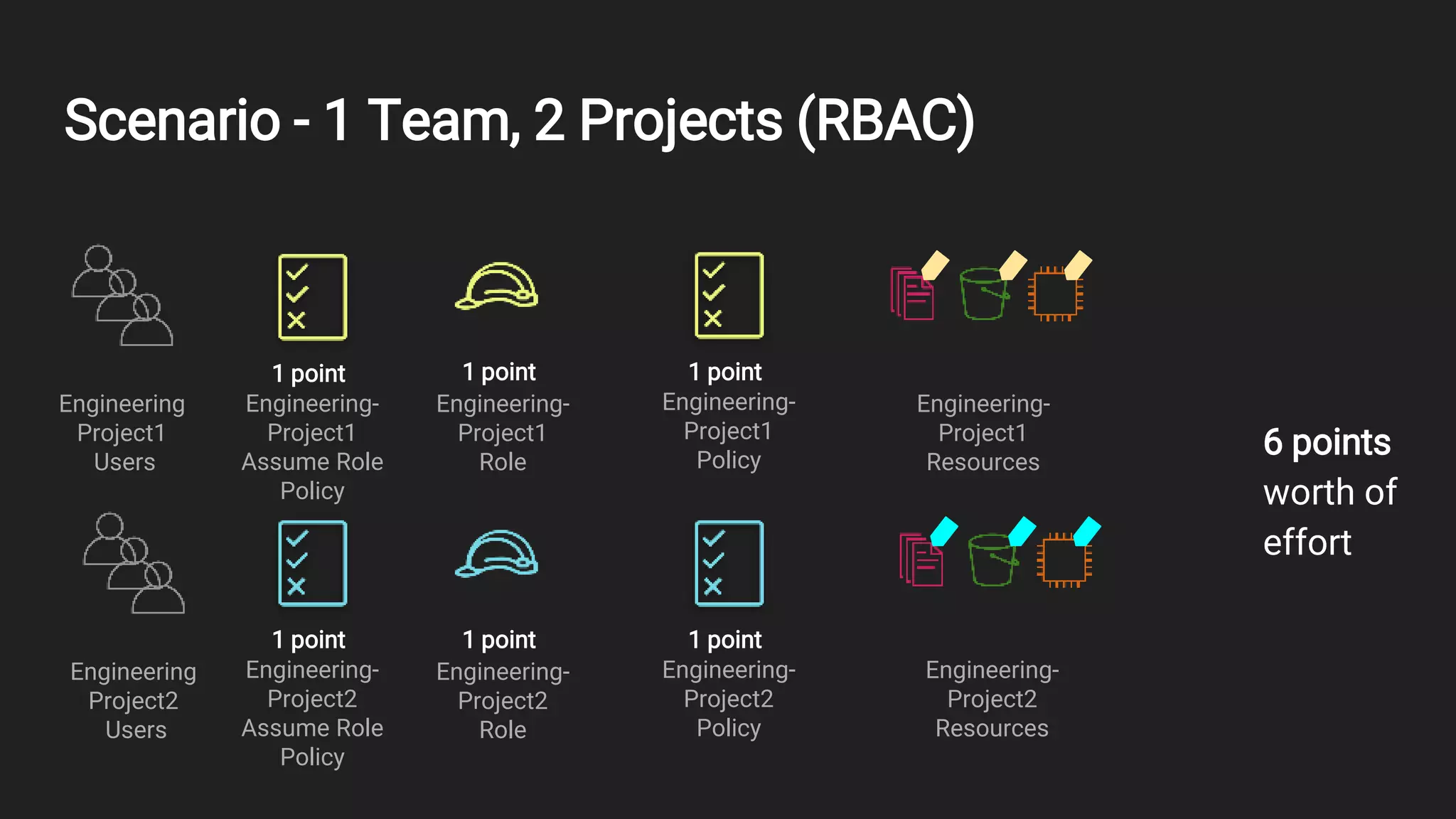
Scenario - 1 Team, 2 Projects (RBAC)
Engineering
Project1
Users
Engineering-
Project1
Resources
Engineering-
Project1
Policy
Engineering-
Project1
Role
1 point 1 point
6 points
worth of
effort
Engineering-
Project2
Policy
Engineering-
Project2
Role
1 point 1 point
Engineering-
Project2
Resources
Engineering-
Project1
Assume Role
Policy
1 point
Engineering-
Project2
Assume Role
Policy
1 point
Engineering
Project2
Users
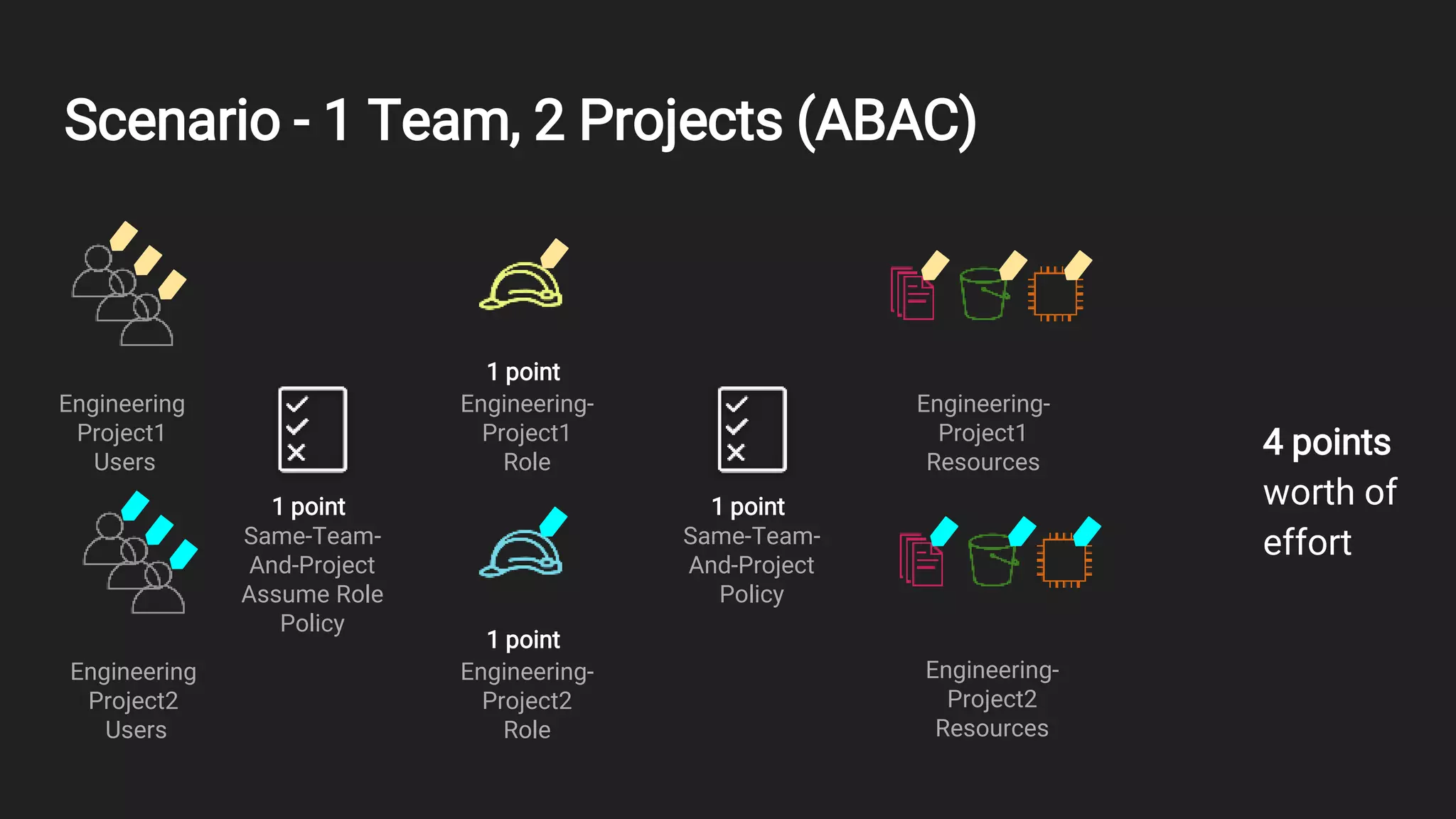
Scenario - 1 Team, 2 Projects (ABAC)
Engineering
Project1
Users
Engineering-
Project1
Resources
Engineering-
Project1
Role
1 point
4 points
worth of
effort
Engineering-
Project2
Role
1 point
Engineering-
Project2
Resources
Engineering
Project2
Users
Same-Team-
And-Project
Assume Role
Policy
1 point
Same-Team-
And-Project
Policy
1 point
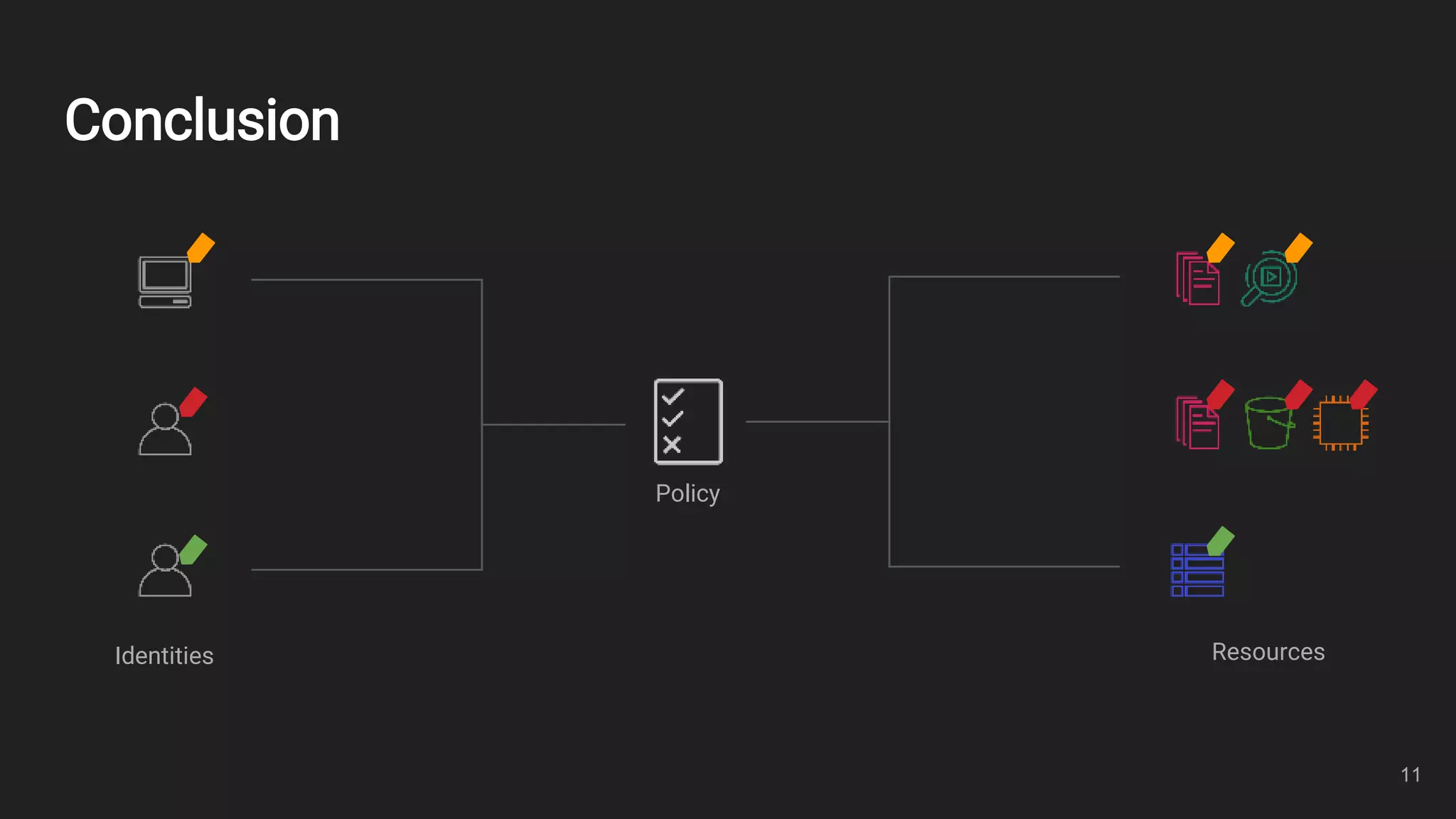
Conclusion
11
Identities Resources
Policy
Sources
https://nvlpubs.nist.gov/nistpubs/specialpublications/NIST.SP.800-162.pdf
https://docs.aws.amazon.com/IAM/latest/UserGuide/introduction_attribute-
based-access-control.html
https://www.youtube.com/watch?v=Iq_hDc385t4
https://www.slideshare.net/AmazonWebServices/scale-permissions-
management-in-aws-with-attributebased-access-control-sdd350r-aws-reinforce-
2019
https://docs.aws.amazon.com/IAM/latest/UserGuide/tutorial_attribute-based-
access-control.html#tutorial_abac_step2 12

ABAC in AWS

Editor's Notes

  • #4 Importance of Security Underrated based on experience Usually an afterthought, no planning and assessment efforts to ensure the architecture for IAM is scalable and manageable Securely control individual and group access to AWS Resources
  • #5 Principal - The person or application that used an entity (user or role) to send the request. Information about the principal includes the policies that are associated with the entity that the principal used to sign in. Action/Operation - The actions or operations that the principal wants to perform. This can be an action in the AWS Management Console, or an operation in the AWS CLI or AWS API. Resource - The AWS resource object upon which the actions or operations are performed. Identity - User, Group or Roles. Principals can be identified as either User (Login via console or access keys via cli or api) or Role (assume role and temporary access keys are provided by STS). And Users can be assigned to Groups. Policy - defines permissions that will either allow or deny an action to specific resources (JSON format) and can be attached to Identities or Resources Attributes - are tags that you assign to Identities and Resources that can be used by permission policies to evaluate access
  • #6 Principal - The person or application that used an entity (user or role) to send the request. Information about the principal includes the policies that are associated with the entity that the principal used to sign in. Action/Operation - The actions or operations that the principal wants to perform. This can be an action in the AWS Management Console, or an operation in the AWS CLI or AWS API. Resource - The AWS resource object upon which the actions or operations are performed. Identity - User, Group or Roles. Principals can be identified as either User (Login via console or access keys via cli or api) or Role (assume role and temporary access keys are provided by STS). And Users can be assigned to Groups. Policy - defines permissions that will either allow or deny an action to specific resources (JSON format) and can be attached to Identities or Resources Attributes - are tags that you assign to Identities and Resources that can be used by permission policies to evaluate access