Applied Behavior Analysis &
Autism: An Introduction
An Overview by Suzanne M.
Buchanan, Psy.D., BCBA-D and Mary
Jane Weiss, Ph.D., BCBA-D
First Bridge Centre, Published with
Permission
Introduction
• Overview of ABA
• Importance of evidence-based treatments
• Benefits for children with autism
Why ABA?
• Scientific evidence supporting ABA
• Key studies and findings
• Comparison with other treatments
What is ABA?
• Definition by Cooper, Heron, and Heward
• Key components: reinforcement, structured
and natural environments, breaking down
skills
• Goals of ABA
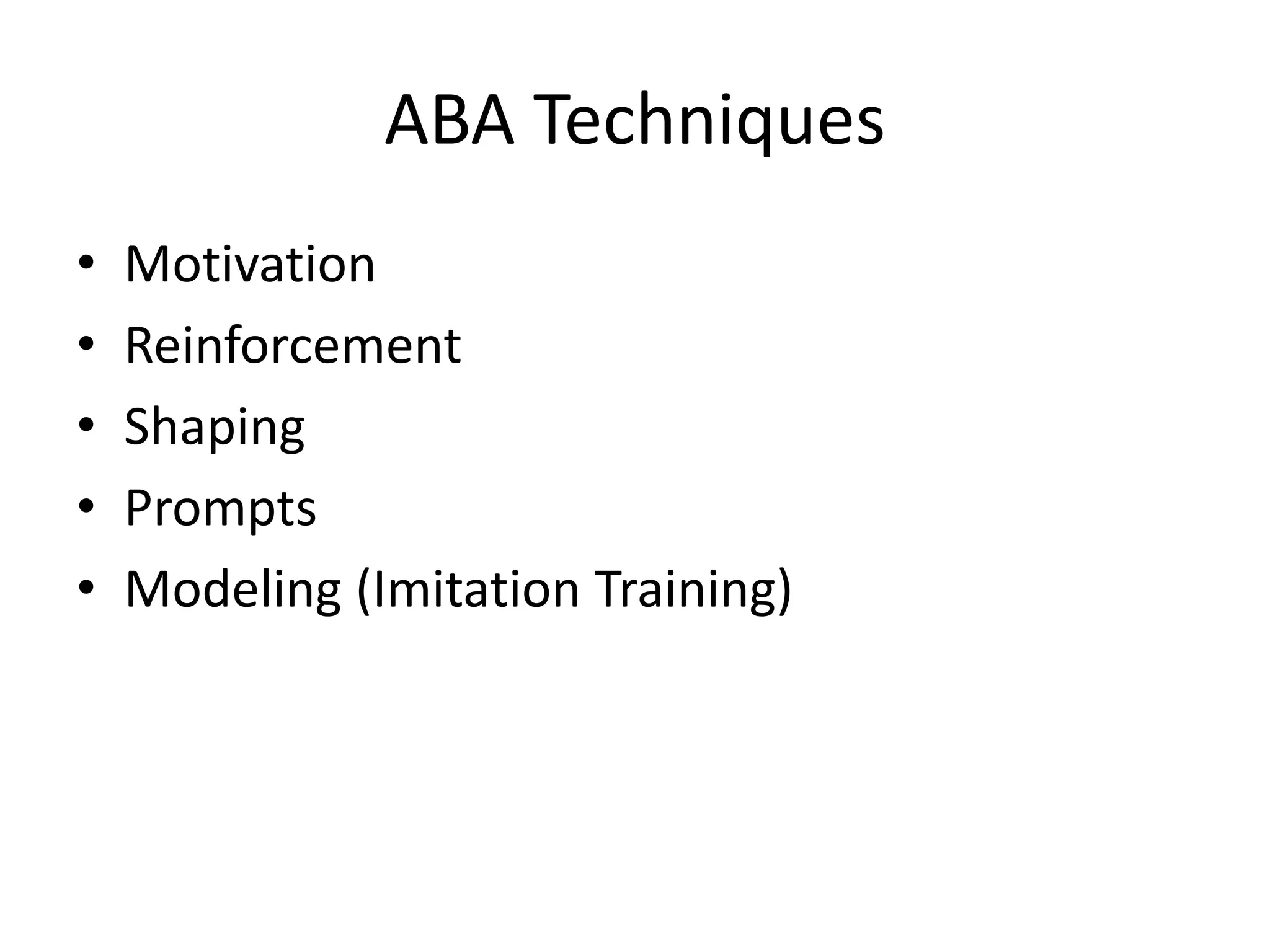
ABA Techniques
• Motivation
• Reinforcement
• Shaping
• Prompts
• Modeling (Imitation Training)
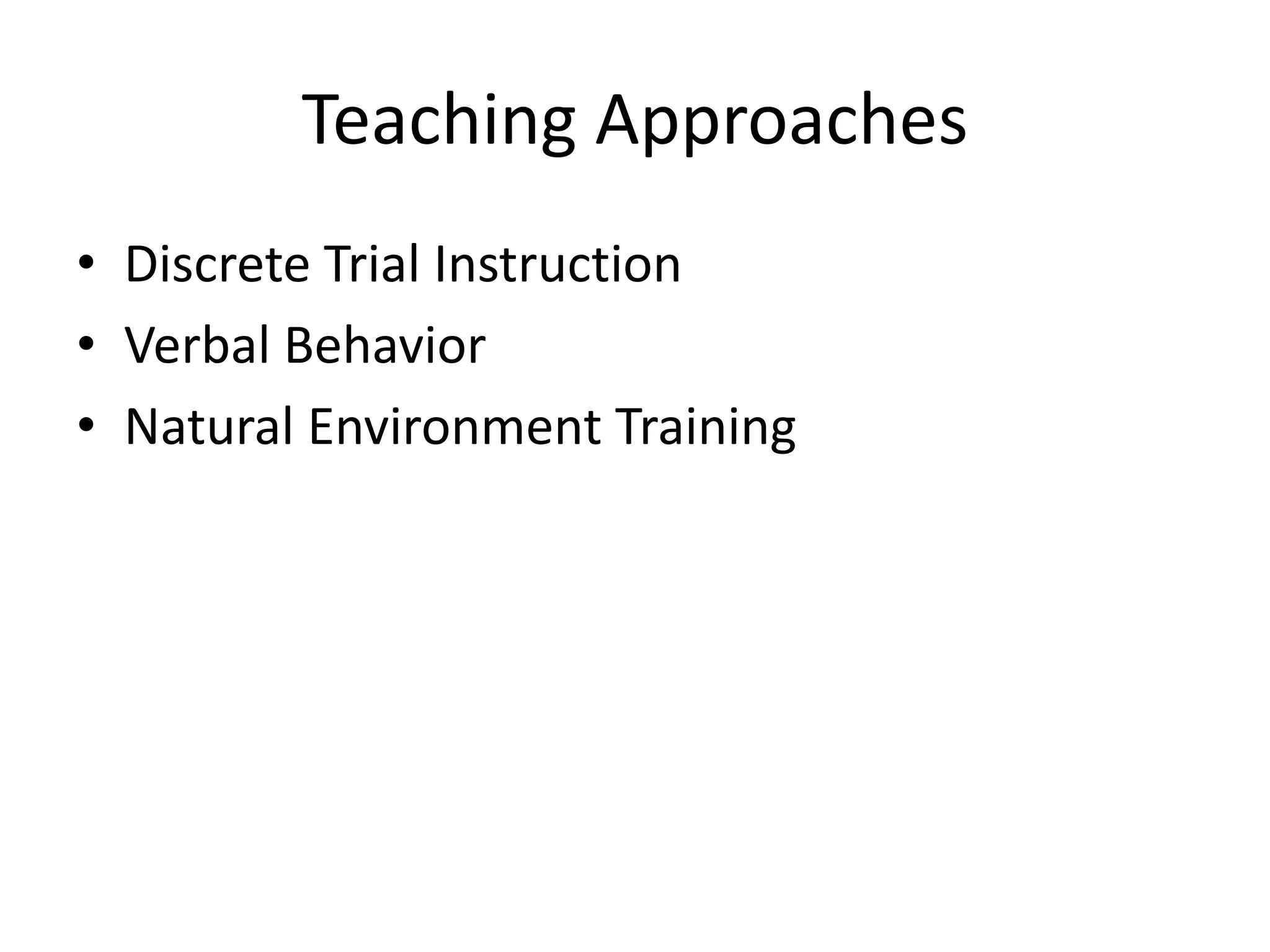
Teaching Approaches
• Discrete Trial Instruction
• Verbal Behavior
• Natural Environment Training
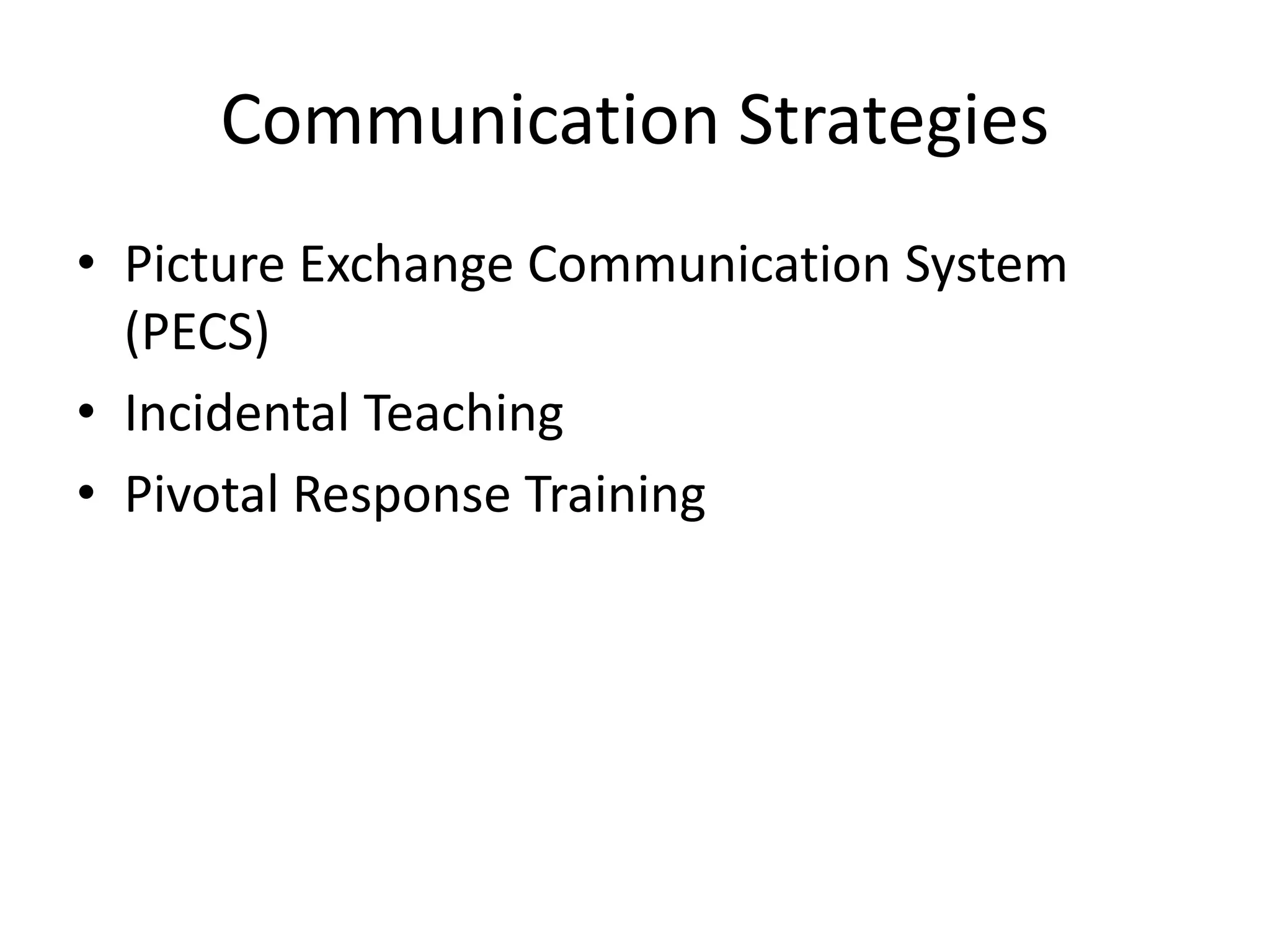
Communication Strategies
• Picture Exchange Communication System
(PECS)
• Incidental Teaching
• Pivotal Response Training
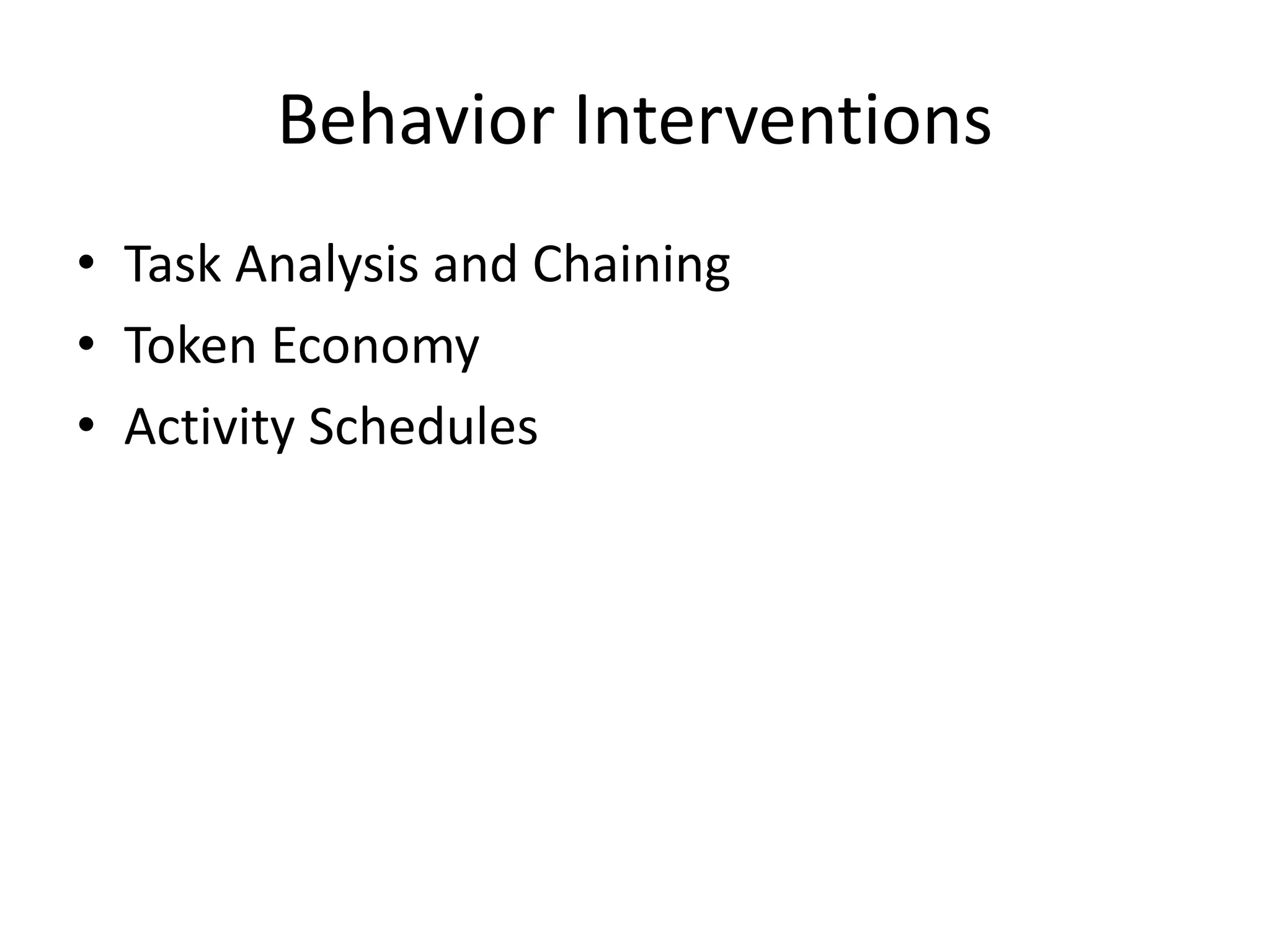
Behavior Interventions
• Task Analysis and Chaining
• Token Economy
• Activity Schedules
Assessment and Analysis
• Functional Assessment and Analysis
• Antecedent-Based Interventions
• Positive Behavior Support
Generalization and Maintenance
• Strategies for maintaining learned behaviors
• Importance of consistency across
environments
Running an ABA Program
• Components of an intensive ABA program
• Data collection and analysis
• Involvement of family
Conclusion
• Summary of ABA benefits
• Encouragement for evidence-based
interventions
• Resources for further information

ABA_Introduction_Presentation.pptx Tizaz