A WALK BY
MOONLIGHT-
BY HENRY
DEROZIO
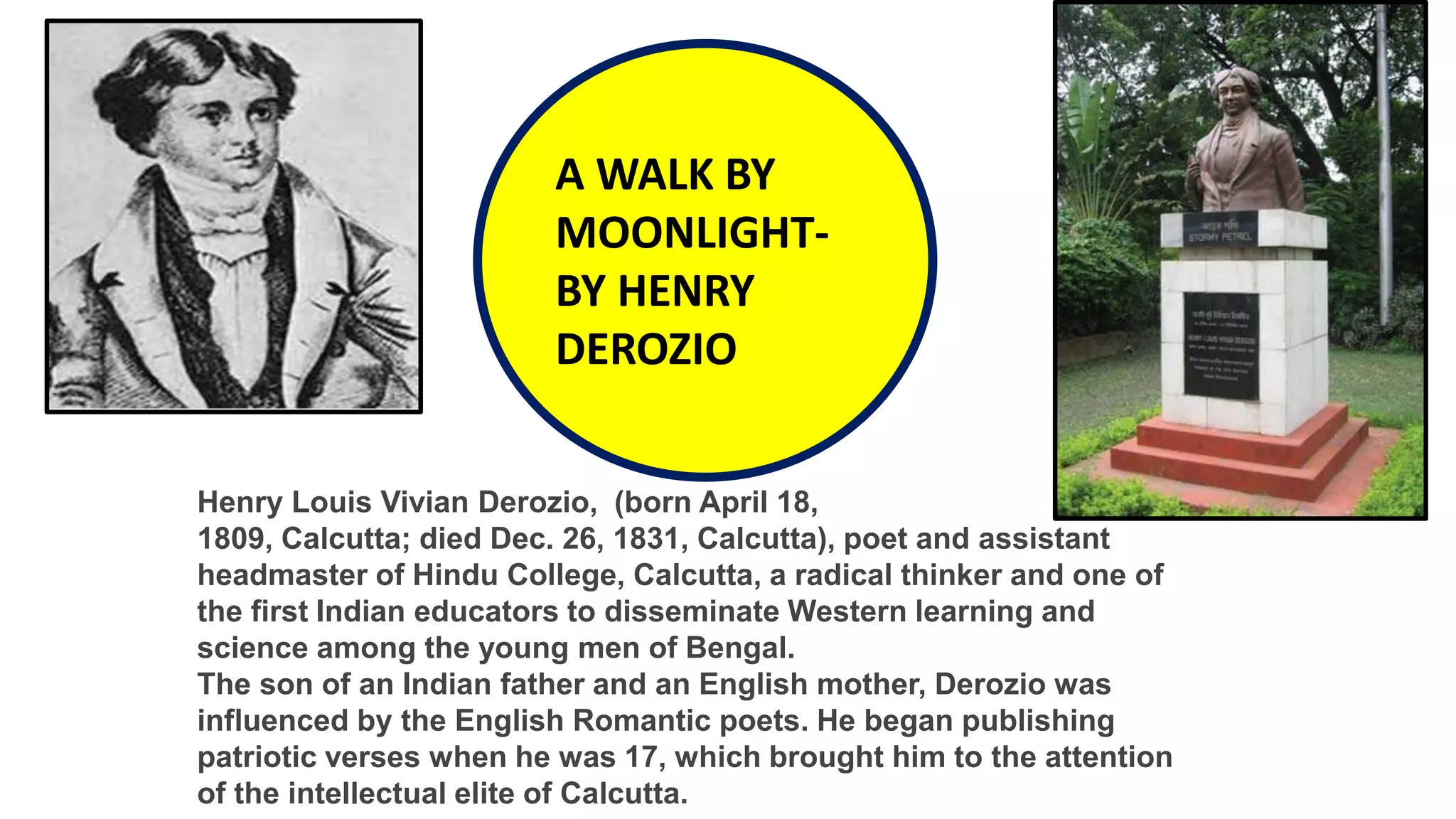
Henry Louis Vivian Derozio, (born April 18,
1809, Calcutta; died Dec. 26, 1831, Calcutta), poet and assistant
headmaster of Hindu College, Calcutta, a radical thinker and one of
the first Indian educators to disseminate Western learning and
science among the young men of Bengal.
The son of an Indian father and an English mother, Derozio was
influenced by the English Romantic poets. He began publishing
patriotic verses when he was 17, which brought him to the attention
of the intellectual elite of Calcutta.
WHAT THOUGHTS COME TO YOUR MIND WHEN YOU THINK
OF A MOONLIT NIGHT?
Last night — it was a lovely night,
And I was very blest —
Shall it not be for Memory
A happy spot to rest?
THE POET FEELS BLESSED BECAUSE WHEN HIS MIND IS ANXIOUS
AND IS IN STATE OF TURMOIL, HE CAN PONDER ON HAPPY
MOMENTS FROM HIS PAST
Yes; there are in the backward past
Soft hours to which we turn —
Hours which, at distance, mildly
shine,
Shine on, but never burn.
memoryPleasant times
Memories from distant past
Like to ponder/contemplate about
And some of these but yesternight
Across my path were thrown,
Which made my heart so very light,
I think it could have flown.
memories Previous night
Flashed in his mind
I had been out to see a friend
With whom I others saw:
Like minds to like minds ever tend —
An universal law.
Drawn towards each other
Like-minded people are bonded together
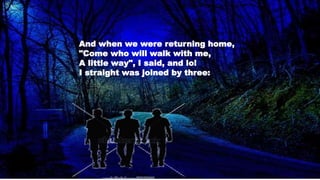
And when we were returning home,
"Come who will walk with me,
A little way", I said, and lo!
I straight was joined by three:
Three whom I loved — two had high thoughts
And were, in age, my peers;
And one was young, but oh! endeared
As much as youth endears.
Cherished the most
Profound/intellectual thoughts
loved
As young people are always lovable & are
close to one’s heart
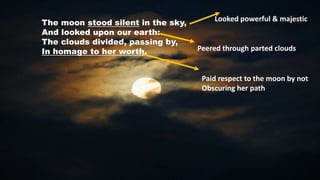
The moon stood silent in the sky,
And looked upon our earth:
The clouds divided, passing by,
In homage to her worth.
Looked powerful & majestic
Peered through parted clouds
Paid respect to the moon by not
Obscuring her path
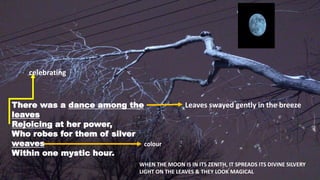
There was a dance among the
leaves
Rejoicing at her power,
Who robes for them of silver
weaves
Within one mystic hour.
Leaves swayed gently in the breeze
celebrating
colour
WHEN THE MOON IS IN ITS ZENITH, IT SPREADS ITS DIVINE SILVERY
LIGHT ON THE LEAVES & THEY LOOK MAGICAL
THE BEAUTY OF THE NIGHT TRANSFORMS THEIR THINKING &
REVIVES THEIR HEARTS WHICH HAD BECOME NUMB
& EMOTIONLESS. THE POET AND HIS FRIENDS WERE DEEPLY
TOUCHED BY EVEN THE SMALLEST MOVEMENT OF NATURE
& USES THEM METAPHORICALLY TO BRING OUT THE JOY &
THE ENLIGHTENMENT THAT THEY RECEIVED IN THE LAP OF
NATURE.
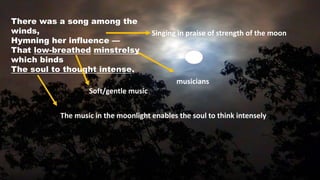
There was a song among the
winds,
Hymning her influence —
That low-breathed minstrelsy
which binds
The soul to thought intense.
Singing in praise of strength of the moon
Soft/gentle music
musicians
The music in the moonlight enables the soul to think intensely
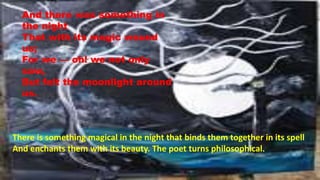
And there was something in
the night
That with its magic wound
us;
For we — oh! we not only
saw,
But felt the moonlight around
us.
There is something magical in the night that binds them together in its spell
And enchants them with its beauty. The poet turns philosophical.
How vague are all the mysteries
Which bind us to our earth;
How far they send into the heart
Their tones of holy mirth;
unclear
Divine joy
Poet turns philosophical here. He believes that there
is a mysterious relationship between man and nature.
When we realize it nature fills our
heart with divine joy
How lovely are the phantoms dim
Which bless that better sight,
That man enjoys when proud he
stands
In his own spirit's light;
Ghostly spirits
ELEMENTS OF NATURE ASSUME THE FORM OF DIM SPIRITS. THESE BLESS
MAN WHEN HE STANDS SPIRITUALLY CONNECTED WITH NATURE. HE
FEELS PROUD OF THIS UNIQUENESS WHEN HE IS TOUCHED AND
ENRICHED BY NATURE.
When, like a thing that is not ours.
This earthliness goes by,
And we behold the spiritualness
Of all that cannot die.
The scene brought about a mood which in turn made the poet’s mind alert and awake.
Such a mind, the poet thinks, is a ‘light’ to itself. It perceives better and everything
looks lovely. In such a state one apprehends the ‘ spiritualness’ or the permanence of
‘all that cannot die’ going beyond the ‘earthiness’ of the world of impermanent
matter.
'Tis then we understand the voice
Which in the night-wind sings,
And feel the mystic melody
Played on the forest's strings.
The silken language of the stars
Becomes the tongue we speak,
And then we read the sympathy
That pales the young moon's cheek.
WHEN WE ARE DIVINELY CONNECTED WITH THE UNIVERSAL
SPIRIT OF NATURE, WE START SPEAKING THE SILKEN
LANGUAGE OF THE STARS. WHEN WE FEEL THE DIVINE GLORY
WITHIN US, WE BECOME HIGHLY SYMPATHETIC AND GLOW
WITH DIVINITY. THIS MAKES THE YOUNG MOON’S LIGHT PALE
INTO INSIGNIFICANCE.
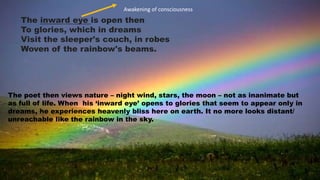
The inward eye is open then
To glories, which in dreams
Visit the sleeper's couch, in robes
Woven of the rainbow's beams.
The poet then views nature – night wind, stars, the moon – not as inanimate but
as full of life. When his ‘inward eye’ opens to glories that seem to appear only in
dreams, he experiences heavenly bliss here on earth. It no more looks distant/
unreachable like the rainbow in the sky.
Awakening of consciousness
I bless my nature that I am
Allied to all the bliss,
Which other worlds we're told afford,
But which I find in this.
It is said that such “bliss” (the happiness of getting connected
to God through nature)is received only in “other worlds” (after
Death/ world beyond this physical world). Derozio thanks
Nature for receiving this illumination in this life itself.
My heart is bettered when I feel
That even this human heart
To all around is gently bound,
And forms of all a part;
His heart fills with happiness and is “bettered” when he feels that he is a part of Nature
and Nature is a part of him. They are “gently bound”.
That, cold and lifeless as they seem,
The flowers, the stars, the sky
Have more than common minds may deem
To stir our sympathy.
However lifeless and separated the flowers the stars and the sky seem,
which ordinary minds may not understand, they too have their
objectives. Nature has the purpose to “stir our
sympathy” and move our hearts.
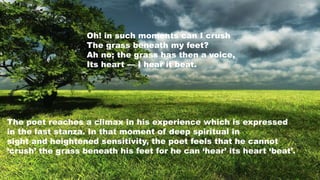
Oh! in such moments can I crush
The grass beneath my feet?
Ah no; the grass has then a voice,
Its heart — I hear it beat.
The poet reaches a climax in his experience which is expressed
in the last stanza. In that moment of deep spiritual in
sight and heightened sensitivity, the poet feels that he cannot
‘crush’ the grass beneath his feet for he can ‘hear’ its heart ‘beat’.

A walk by moonlight by Henry Derozio

  • 1.
    A WALK BY MOONLIGHT- BYHENRY DEROZIO Henry Louis Vivian Derozio, (born April 18, 1809, Calcutta; died Dec. 26, 1831, Calcutta), poet and assistant headmaster of Hindu College, Calcutta, a radical thinker and one of the first Indian educators to disseminate Western learning and science among the young men of Bengal. The son of an Indian father and an English mother, Derozio was influenced by the English Romantic poets. He began publishing patriotic verses when he was 17, which brought him to the attention of the intellectual elite of Calcutta.
  • 2.
    WHAT THOUGHTS COMETO YOUR MIND WHEN YOU THINK OF A MOONLIT NIGHT?
  • 3.
    Last night —it was a lovely night, And I was very blest — Shall it not be for Memory A happy spot to rest? THE POET FEELS BLESSED BECAUSE WHEN HIS MIND IS ANXIOUS AND IS IN STATE OF TURMOIL, HE CAN PONDER ON HAPPY MOMENTS FROM HIS PAST
  • 4.
    Yes; there arein the backward past Soft hours to which we turn — Hours which, at distance, mildly shine, Shine on, but never burn. memoryPleasant times Memories from distant past Like to ponder/contemplate about
  • 5.
    And some ofthese but yesternight Across my path were thrown, Which made my heart so very light, I think it could have flown. memories Previous night Flashed in his mind
  • 6.
    I had beenout to see a friend With whom I others saw: Like minds to like minds ever tend — An universal law. Drawn towards each other Like-minded people are bonded together
  • 7.
    And when wewere returning home, "Come who will walk with me, A little way", I said, and lo! I straight was joined by three:
  • 8.
    Three whom Iloved — two had high thoughts And were, in age, my peers; And one was young, but oh! endeared As much as youth endears. Cherished the most Profound/intellectual thoughts loved As young people are always lovable & are close to one’s heart
  • 9.
    The moon stoodsilent in the sky, And looked upon our earth: The clouds divided, passing by, In homage to her worth. Looked powerful & majestic Peered through parted clouds Paid respect to the moon by not Obscuring her path
  • 10.
    There was adance among the leaves Rejoicing at her power, Who robes for them of silver weaves Within one mystic hour. Leaves swayed gently in the breeze celebrating colour WHEN THE MOON IS IN ITS ZENITH, IT SPREADS ITS DIVINE SILVERY LIGHT ON THE LEAVES & THEY LOOK MAGICAL
  • 11.
    THE BEAUTY OFTHE NIGHT TRANSFORMS THEIR THINKING & REVIVES THEIR HEARTS WHICH HAD BECOME NUMB & EMOTIONLESS. THE POET AND HIS FRIENDS WERE DEEPLY TOUCHED BY EVEN THE SMALLEST MOVEMENT OF NATURE & USES THEM METAPHORICALLY TO BRING OUT THE JOY & THE ENLIGHTENMENT THAT THEY RECEIVED IN THE LAP OF NATURE.
  • 12.
    There was asong among the winds, Hymning her influence — That low-breathed minstrelsy which binds The soul to thought intense. Singing in praise of strength of the moon Soft/gentle music musicians The music in the moonlight enables the soul to think intensely
  • 13.
    And there wassomething in the night That with its magic wound us; For we — oh! we not only saw, But felt the moonlight around us. There is something magical in the night that binds them together in its spell And enchants them with its beauty. The poet turns philosophical.
  • 14.
    How vague areall the mysteries Which bind us to our earth; How far they send into the heart Their tones of holy mirth; unclear Divine joy Poet turns philosophical here. He believes that there is a mysterious relationship between man and nature. When we realize it nature fills our heart with divine joy
  • 15.
    How lovely arethe phantoms dim Which bless that better sight, That man enjoys when proud he stands In his own spirit's light; Ghostly spirits ELEMENTS OF NATURE ASSUME THE FORM OF DIM SPIRITS. THESE BLESS MAN WHEN HE STANDS SPIRITUALLY CONNECTED WITH NATURE. HE FEELS PROUD OF THIS UNIQUENESS WHEN HE IS TOUCHED AND ENRICHED BY NATURE.
  • 16.
    When, like athing that is not ours. This earthliness goes by, And we behold the spiritualness Of all that cannot die. The scene brought about a mood which in turn made the poet’s mind alert and awake. Such a mind, the poet thinks, is a ‘light’ to itself. It perceives better and everything looks lovely. In such a state one apprehends the ‘ spiritualness’ or the permanence of ‘all that cannot die’ going beyond the ‘earthiness’ of the world of impermanent matter.
  • 17.
    'Tis then weunderstand the voice Which in the night-wind sings, And feel the mystic melody Played on the forest's strings.
  • 18.
    The silken languageof the stars Becomes the tongue we speak, And then we read the sympathy That pales the young moon's cheek. WHEN WE ARE DIVINELY CONNECTED WITH THE UNIVERSAL SPIRIT OF NATURE, WE START SPEAKING THE SILKEN LANGUAGE OF THE STARS. WHEN WE FEEL THE DIVINE GLORY WITHIN US, WE BECOME HIGHLY SYMPATHETIC AND GLOW WITH DIVINITY. THIS MAKES THE YOUNG MOON’S LIGHT PALE INTO INSIGNIFICANCE.
  • 19.
    The inward eyeis open then To glories, which in dreams Visit the sleeper's couch, in robes Woven of the rainbow's beams. The poet then views nature – night wind, stars, the moon – not as inanimate but as full of life. When his ‘inward eye’ opens to glories that seem to appear only in dreams, he experiences heavenly bliss here on earth. It no more looks distant/ unreachable like the rainbow in the sky. Awakening of consciousness
  • 20.
    I bless mynature that I am Allied to all the bliss, Which other worlds we're told afford, But which I find in this. It is said that such “bliss” (the happiness of getting connected to God through nature)is received only in “other worlds” (after Death/ world beyond this physical world). Derozio thanks Nature for receiving this illumination in this life itself.
  • 21.
    My heart isbettered when I feel That even this human heart To all around is gently bound, And forms of all a part; His heart fills with happiness and is “bettered” when he feels that he is a part of Nature and Nature is a part of him. They are “gently bound”.
  • 22.
    That, cold andlifeless as they seem, The flowers, the stars, the sky Have more than common minds may deem To stir our sympathy. However lifeless and separated the flowers the stars and the sky seem, which ordinary minds may not understand, they too have their objectives. Nature has the purpose to “stir our sympathy” and move our hearts.
  • 23.
    Oh! in suchmoments can I crush The grass beneath my feet? Ah no; the grass has then a voice, Its heart — I hear it beat. The poet reaches a climax in his experience which is expressed in the last stanza. In that moment of deep spiritual in sight and heightened sensitivity, the poet feels that he cannot ‘crush’ the grass beneath his feet for he can ‘hear’ its heart ‘beat’.