AAS-PROVIDED PDF • OPEN ACCESS
A Two-month Mini-moon: 2024 PT5 Captured by Earth from September
to November
To cite this article: Carlos de la Fuente Marcos and Raúl de la Fuente Marcos 2024 Res. Notes AAS 8 224
Manuscript version: AAS-Provided PDF
This AAS-Provided PDF is © 2024 The Author(s). Published by the American Astronomical Society.
Original content from this work may be used under the terms of the Creative Commons Attribution 4.0 licence. Any further distribution of this work
must maintain attribution to the author(s) and the title of the work, journal citation and DOI.
Everyone is permitted to use all or part of the original content in this article, provided that they adhere to all the terms of the licence
https://creativecommons.org/licences/by/4.0
Before using any content from this article, please refer to the Version of Record on IOPscience once published for full citation and copyright
details, as permissions may be required.
View the article online for updates and enhancements.
This content was downloaded from IP address 45.134.189.17 on 17/09/2024 at 03:17
Draft version September 3, 2024
Typeset using L
A
TEX RNAAS style in AASTeX631
A Two-month Mini-moon: 2024 PT5 Captured by Earth from September to November
Carlos de la Fuente Marcos 1
and Raúl de la Fuente Marcos 2
1Universidad Complutense de Madrid
Ciudad Universitaria, E-28040 Madrid, Spain
2AEGORA Research Group
Facultad de Ciencias Matemáticas
Universidad Complutense de Madrid
Ciudad Universitaria, E-28040 Madrid, Spain
ABSTRACT
Near-Earth objects (NEOs) that follow horseshoe paths, and approach our planet at close range
and low relative velocity, may undergo mini-moon events in which their geocentric energy becomes
negative for hours, days or months, but without completing one revolution around Earth while bound.
An example of NEO experiencing such a temporarily-captured flyby is 2022 NX1, which was a short-
lived mini-moon in 1981 and 2022. Here, we show that the recently discovered small body 2024 PT5
follows a horseshoe path and it will become a mini-moon in 2024, from September 29 until November 25.
Keywords: Solar system, Asteroids
INTRODUCTION
Earth can regularly capture asteroids from the NEO population and pull them into orbit, making them mini-moons.
Sometimes, these temporary captures do not complete one revolution before droping out of orbit and returning to
their regular heliocentric trajectories. Following Fedorets et al. (2017), temporarily-captured flybys never complete
one revolution around Earth, while temporarily-captured orbiters complete one or more. Examples of the latter were
2006 RH120 that remained gravitationally bound to Earth from July 2006 to July 2007 (Kwiatkowski et al. 2009) and
2020 CD3 that escaped early in May 2020 after being bound to Earth for several years (Bolin et al. 2020; de la Fuente
Marcos & de la Fuente Marcos 2020; Fedorets et al. 2020; Naidu et al. 2021). As for the temporarily-captured flybys,
two examples are known: 1991 VG was briefly captured in February 1992 (Tancredi 1997; de la Fuente Marcos & de
la Fuente Marcos 2018) and 2022 NX1 was a short-lived mini-moon of Earth in 1981, 2022, and it will return as such
in 2051 (de la Fuente Marcos & de la Fuente Marcos 2022; de la Fuente Marcos et al. 2023). The recently discovered
Apollo-class NEO 2024 PT5 follows a path that resembles that of 2022 NX1 and may soon become a mini-moon.
ASTEROID 2024 PT5: DATA
Asteroid 2024 PT5 was discovered on 2024-August-7 by the Asteroid Terrestrial-impact Last Alert System (ATLAS,
Tonry et al. 2018) observing with the instrument located in Sutherland, South Africa (Tonry et al. 2024). It has
H = 27.6 ± 0.3 mag and, with a size of ∼ 10 m, is larger than 2020 CD3, 2006 RH120, 1991 VG, and 2022 NX1.
As of 2024-August-30, its heliocentric orbit determination (based on 122 observations spanning 21 d) is: semimajor
axis, a = 1.0123051 ± 0.0000002 au, eccentricity, e = 0.02147672 ± 0.00000005, inclination, i = 1.
◦
52051 ± 0.
◦
00004,
longitude of the ascending node, Ω = 305.
◦
5722 ± 0.
◦
0007, and argument of perihelion, ω = 116.
◦
2485 ± 0.
◦
0002.1
Such
orbital elements are consistent with those of the Arjunas, a sparsely resonant population of small NEOs (see, e.g., de
la Fuente Marcos & de la Fuente Marcos 2013, 2015) in a secondary asteroid belt found surrounding the path followed
by the Earth–Moon system (Rabinowitz et al. 1993).
Corresponding author: Carlos de la Fuente Marcos
nbplanet@ucm.es
1 Epoch 2460600.5 (2024-Oct-17.0) TDB
Research Notes of the AAS ©2024. Published by the American Astronomical Society
2
ASTEROID 2024 PT5: DYNAMICS
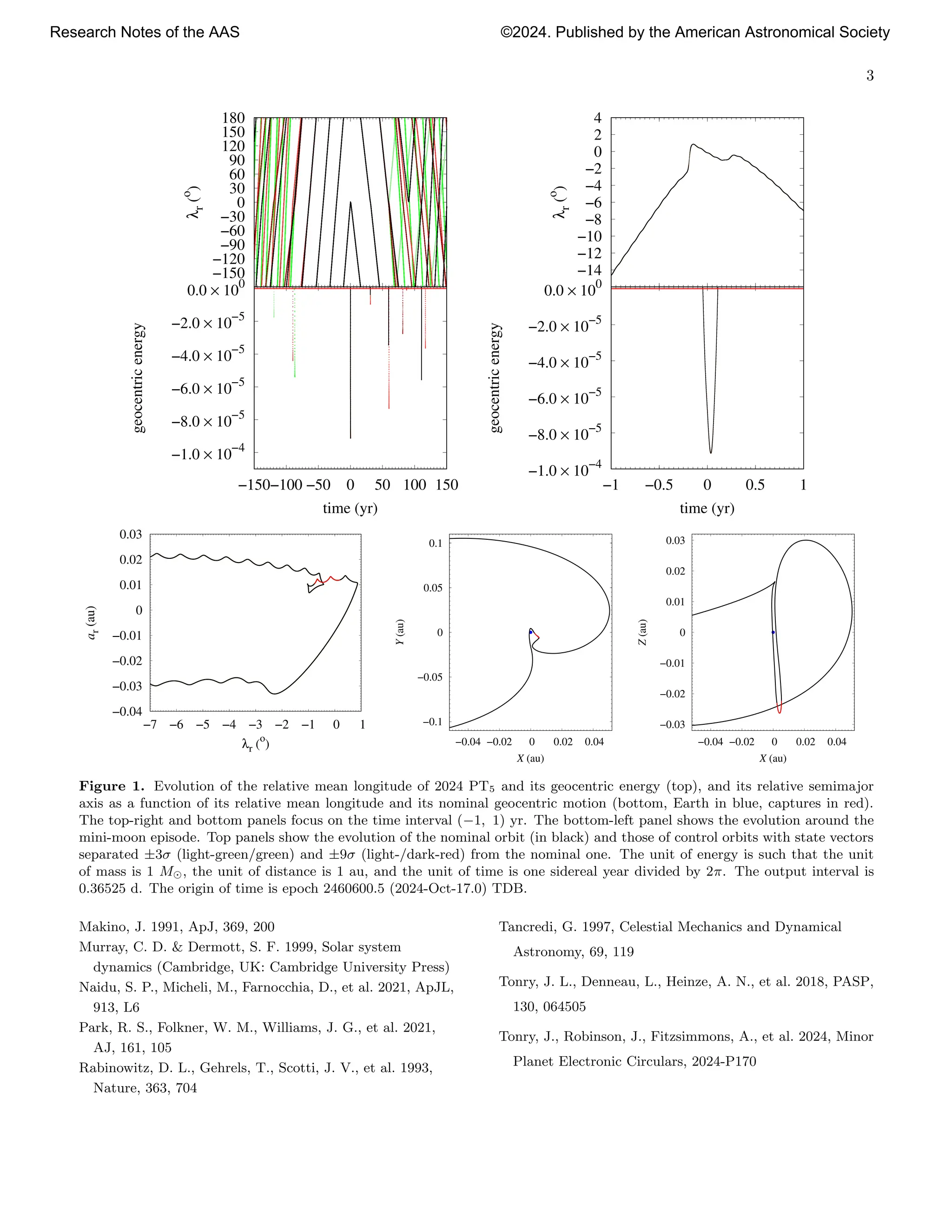
Figure 1 summarizes our results and provides an early assessment of the current status, and short-term past and
future orbital evolution of 2024 PT5. Our N-body calculations were carried out as detailed in de la Fuente Marcos & de
la Fuente Marcos (2012), using input data from Jet Propulsion Laboratory’s Small-Body Database2
and HORIZONS3
on-line solar system data and ephemeris computation service (Giorgini 2015), which are based on the DE440/441
planetary ephemeris (Park et al. 2021). Our computations were completed using software developed by Aarseth
(2003)4
that implements the Hermite integration scheme (Makino 1991).
Figure 1, top, shows the evolution of the relevant resonant angle or difference between the mean longitude of the
NEO and that of Earth, λr (Murray & Dermott 1999), whose value is currently oscillating about 180◦
. Therefore,
2024 PT5 is a transient co-orbital of the horseshoe type like 1991 VG (de la Fuente Marcos & de la Fuente Marcos
2018) or 2022 NX1 (de la Fuente Marcos & de la Fuente Marcos 2022; de la Fuente Marcos et al. 2023). In the figure,
we show the evolution of the nominal orbit and those of control orbits with state vectors (Cartesian coordinates and
velocities) well away from the nominal one. Figure 1, top, also shows at the bottom the evolution of the geocentric
energy, for which negative values signal capture. Figure 1, top-right, is a magnified version of the top-left panels
focusing on the time interval (−1, 1) yr. It shows that 2024 PT5 will become a mini-moon of Earth on September 29,
2024 (20:02), to return to a heliocentric path 56.6 d later, on November 25 (10:33). Figure 1, bottom-left, shows the
evolution of the difference between the semimajor axis of 2024 PT5 and that of Earth, ar, as a function of λr around
the epoch of the mini-moon episode. Figure 1, bottom-center and -right panels, shows the geocentric motion during
(−1, 1) yr. All the control orbits up to ±9σ from the nominal one confirm that 2024 PT5 is currently following a
horseshoe path and that its geocentric energy will remain negative for 56.6 d due to a temporarily-captured flyby. After
completing the mini-moon episode, it will approach Earth at ∼ 1 km s−1
, reaching a minimum distance of 0.012 au
on 2025-January-09, leaving the neighborhood of Earth shortly afterwards, until its next return in 2055. Differences
in the evolution of the control orbits appear beyond 60 yr into the past, but also after 30 yr into the future; close
encounters with the Earth–Moon system are the cause (in 1960 and 2055, respectively).
DISCUSSION AND CONCLUSIONS
The evolution of all the control orbits indicate that 2024 PT5 will experience a temporarily-captured flyby in 2024,
from September 29 until November 25. The object is unlikely to be artificial as its short-term dynamical evolution
closely resembles that of 2022 NX1, a confirmed natural object, see fig. 3 of de la Fuente Marcos et al. (2023).
We thank S. J. Aarseth for providing the code used. This work was supported by the Spanish ‘Agencia Estatal de In-
vestigación (Ministerio de Ciencia e Innovación)’ under grant PID2020-116726RB-I00 /AEI/10.13039/501100011033.
REFERENCES
Aarseth, S. J. 2003, Gravitational N-Body Simulations
(Cambridge: Cambridge University Press), 27
Bolin, B. T., Fremling, C., Holt, T. R., et al. 2020, ApJL,
900, L45
de la Fuente Marcos, C. & de la Fuente Marcos, R. 2012,
MNRAS, 427, 728
de la Fuente Marcos, C. & de la Fuente Marcos, R. 2013,
MNRAS, 434, L1
de la Fuente Marcos, C. & de la Fuente Marcos, R. 2015,
Astronomische Nachrichten, 336, 5
2 https://ssd.jpl.nasa.gov/sbdb.cgi
3 https://ssd.jpl.nasa.gov/?horizons
4 http://www.ast.cam.ac.uk/∼sverre/web/pages/nbody.htm
de la Fuente Marcos, C. & de la Fuente Marcos, R. 2018,
MNRAS, 473, 2939
de la Fuente Marcos, C. & de la Fuente Marcos, R. 2020,
MNRAS, 494, 1089
de la Fuente Marcos, C. & de la Fuente Marcos, R. 2022,
RNAAS, 6, 160
de la Fuente Marcos, R., de León, J., de la Fuente Marcos,
C., et al. 2023, A&A, 670, L10
Fedorets, G., Granvik, M., & Jedicke, R. 2017, Icarus, 285,
83
Fedorets, G., Micheli, M., Jedicke, R., et al. 2020, AJ, 160,
277
Giorgini, J. D. 2015, IAUGA, 22, 2256293
Kwiatkowski, T., Kryszczyńska, A., Polińska, M., et al.
2009, A&A, 495, 967
Research Notes of the AAS ©2024. Published by the American Astronomical Society
3
−150
−120
−90
−60
−30
0
30
60
90
120
150
180
λ
r
(
o
)
−1.0 × 10⁻⁴
−8.0 × 10⁻⁵
−6.0 × 10⁻⁵
−4.0 × 10⁻⁵
−2.0 × 10⁻⁵
0.0 × 100
−150−100 −50 0 50 100 150
geocentric
energy
time (yr)
−14
−12
−10
−8
−6
−4
−2
0
2
4
λ
r
(
o
)
−1.0 × 10⁻⁴
−8.0 × 10⁻⁵
−6.0 × 10
−5
−4.0 × 10⁻⁵
−2.0 × 10⁻⁵
0.0 × 100
−1 −0.5 0 0.5 1
geocentric
energy
time (yr)
−0.04
−0.03
−0.02
−0.01
0
0.01
0.02
0.03
−7 −6 −5 −4 −3 −2 −1 0 1
a
r
(au)
λr (o
)
−0.1
−0.05
0
0.05
0.1
−0.04 −0.02 0 0.02 0.04
Y
(au)
X (au)
−0.03
−0.02
−0.01
0
0.01
0.02
0.03
−0.04 −0.02 0 0.02 0.04
Z
(au)
X (au)
Figure 1. Evolution of the relative mean longitude of 2024 PT5 and its geocentric energy (top), and its relative semimajor
axis as a function of its relative mean longitude and its nominal geocentric motion (bottom, Earth in blue, captures in red).
The top-right and bottom panels focus on the time interval (−1, 1) yr. The bottom-left panel shows the evolution around the
mini-moon episode. Top panels show the evolution of the nominal orbit (in black) and those of control orbits with state vectors
separated ±3σ (light-green/green) and ±9σ (light-/dark-red) from the nominal one. The unit of energy is such that the unit
of mass is 1 M⊙, the unit of distance is 1 au, and the unit of time is one sidereal year divided by 2π. The output interval is
0.36525 d. The origin of time is epoch 2460600.5 (2024-Oct-17.0) TDB.
Makino, J. 1991, ApJ, 369, 200
Murray, C. D. & Dermott, S. F. 1999, Solar system
dynamics (Cambridge, UK: Cambridge University Press)
Naidu, S. P., Micheli, M., Farnocchia, D., et al. 2021, ApJL,
913, L6
Park, R. S., Folkner, W. M., Williams, J. G., et al. 2021,
AJ, 161, 105
Rabinowitz, D. L., Gehrels, T., Scotti, J. V., et al. 1993,
Nature, 363, 704
Tancredi, G. 1997, Celestial Mechanics and Dynamical
Astronomy, 69, 119
Tonry, J. L., Denneau, L., Heinze, A. N., et al. 2018, PASP,
130, 064505
Tonry, J., Robinson, J., Fitzsimmons, A., et al. 2024, Minor
Planet Electronic Circulars, 2024-P170
Research Notes of the AAS ©2024. Published by the American Astronomical Society

A Two-month Mini-moon: 2024 PT5 Captured by Earth from September to November

  • 1.
    AAS-PROVIDED PDF •OPEN ACCESS A Two-month Mini-moon: 2024 PT5 Captured by Earth from September to November To cite this article: Carlos de la Fuente Marcos and Raúl de la Fuente Marcos 2024 Res. Notes AAS 8 224 Manuscript version: AAS-Provided PDF This AAS-Provided PDF is © 2024 The Author(s). Published by the American Astronomical Society. Original content from this work may be used under the terms of the Creative Commons Attribution 4.0 licence. Any further distribution of this work must maintain attribution to the author(s) and the title of the work, journal citation and DOI. Everyone is permitted to use all or part of the original content in this article, provided that they adhere to all the terms of the licence https://creativecommons.org/licences/by/4.0 Before using any content from this article, please refer to the Version of Record on IOPscience once published for full citation and copyright details, as permissions may be required. View the article online for updates and enhancements. This content was downloaded from IP address 45.134.189.17 on 17/09/2024 at 03:17
  • 2.
    Draft version September3, 2024 Typeset using L A TEX RNAAS style in AASTeX631 A Two-month Mini-moon: 2024 PT5 Captured by Earth from September to November Carlos de la Fuente Marcos 1 and Raúl de la Fuente Marcos 2 1Universidad Complutense de Madrid Ciudad Universitaria, E-28040 Madrid, Spain 2AEGORA Research Group Facultad de Ciencias Matemáticas Universidad Complutense de Madrid Ciudad Universitaria, E-28040 Madrid, Spain ABSTRACT Near-Earth objects (NEOs) that follow horseshoe paths, and approach our planet at close range and low relative velocity, may undergo mini-moon events in which their geocentric energy becomes negative for hours, days or months, but without completing one revolution around Earth while bound. An example of NEO experiencing such a temporarily-captured flyby is 2022 NX1, which was a short- lived mini-moon in 1981 and 2022. Here, we show that the recently discovered small body 2024 PT5 follows a horseshoe path and it will become a mini-moon in 2024, from September 29 until November 25. Keywords: Solar system, Asteroids INTRODUCTION Earth can regularly capture asteroids from the NEO population and pull them into orbit, making them mini-moons. Sometimes, these temporary captures do not complete one revolution before droping out of orbit and returning to their regular heliocentric trajectories. Following Fedorets et al. (2017), temporarily-captured flybys never complete one revolution around Earth, while temporarily-captured orbiters complete one or more. Examples of the latter were 2006 RH120 that remained gravitationally bound to Earth from July 2006 to July 2007 (Kwiatkowski et al. 2009) and 2020 CD3 that escaped early in May 2020 after being bound to Earth for several years (Bolin et al. 2020; de la Fuente Marcos & de la Fuente Marcos 2020; Fedorets et al. 2020; Naidu et al. 2021). As for the temporarily-captured flybys, two examples are known: 1991 VG was briefly captured in February 1992 (Tancredi 1997; de la Fuente Marcos & de la Fuente Marcos 2018) and 2022 NX1 was a short-lived mini-moon of Earth in 1981, 2022, and it will return as such in 2051 (de la Fuente Marcos & de la Fuente Marcos 2022; de la Fuente Marcos et al. 2023). The recently discovered Apollo-class NEO 2024 PT5 follows a path that resembles that of 2022 NX1 and may soon become a mini-moon. ASTEROID 2024 PT5: DATA Asteroid 2024 PT5 was discovered on 2024-August-7 by the Asteroid Terrestrial-impact Last Alert System (ATLAS, Tonry et al. 2018) observing with the instrument located in Sutherland, South Africa (Tonry et al. 2024). It has H = 27.6 ± 0.3 mag and, with a size of ∼ 10 m, is larger than 2020 CD3, 2006 RH120, 1991 VG, and 2022 NX1. As of 2024-August-30, its heliocentric orbit determination (based on 122 observations spanning 21 d) is: semimajor axis, a = 1.0123051 ± 0.0000002 au, eccentricity, e = 0.02147672 ± 0.00000005, inclination, i = 1. ◦ 52051 ± 0. ◦ 00004, longitude of the ascending node, Ω = 305. ◦ 5722 ± 0. ◦ 0007, and argument of perihelion, ω = 116. ◦ 2485 ± 0. ◦ 0002.1 Such orbital elements are consistent with those of the Arjunas, a sparsely resonant population of small NEOs (see, e.g., de la Fuente Marcos & de la Fuente Marcos 2013, 2015) in a secondary asteroid belt found surrounding the path followed by the Earth–Moon system (Rabinowitz et al. 1993). Corresponding author: Carlos de la Fuente Marcos nbplanet@ucm.es 1 Epoch 2460600.5 (2024-Oct-17.0) TDB Research Notes of the AAS ©2024. Published by the American Astronomical Society
  • 3.
    2 ASTEROID 2024 PT5:DYNAMICS Figure 1 summarizes our results and provides an early assessment of the current status, and short-term past and future orbital evolution of 2024 PT5. Our N-body calculations were carried out as detailed in de la Fuente Marcos & de la Fuente Marcos (2012), using input data from Jet Propulsion Laboratory’s Small-Body Database2 and HORIZONS3 on-line solar system data and ephemeris computation service (Giorgini 2015), which are based on the DE440/441 planetary ephemeris (Park et al. 2021). Our computations were completed using software developed by Aarseth (2003)4 that implements the Hermite integration scheme (Makino 1991). Figure 1, top, shows the evolution of the relevant resonant angle or difference between the mean longitude of the NEO and that of Earth, λr (Murray & Dermott 1999), whose value is currently oscillating about 180◦ . Therefore, 2024 PT5 is a transient co-orbital of the horseshoe type like 1991 VG (de la Fuente Marcos & de la Fuente Marcos 2018) or 2022 NX1 (de la Fuente Marcos & de la Fuente Marcos 2022; de la Fuente Marcos et al. 2023). In the figure, we show the evolution of the nominal orbit and those of control orbits with state vectors (Cartesian coordinates and velocities) well away from the nominal one. Figure 1, top, also shows at the bottom the evolution of the geocentric energy, for which negative values signal capture. Figure 1, top-right, is a magnified version of the top-left panels focusing on the time interval (−1, 1) yr. It shows that 2024 PT5 will become a mini-moon of Earth on September 29, 2024 (20:02), to return to a heliocentric path 56.6 d later, on November 25 (10:33). Figure 1, bottom-left, shows the evolution of the difference between the semimajor axis of 2024 PT5 and that of Earth, ar, as a function of λr around the epoch of the mini-moon episode. Figure 1, bottom-center and -right panels, shows the geocentric motion during (−1, 1) yr. All the control orbits up to ±9σ from the nominal one confirm that 2024 PT5 is currently following a horseshoe path and that its geocentric energy will remain negative for 56.6 d due to a temporarily-captured flyby. After completing the mini-moon episode, it will approach Earth at ∼ 1 km s−1 , reaching a minimum distance of 0.012 au on 2025-January-09, leaving the neighborhood of Earth shortly afterwards, until its next return in 2055. Differences in the evolution of the control orbits appear beyond 60 yr into the past, but also after 30 yr into the future; close encounters with the Earth–Moon system are the cause (in 1960 and 2055, respectively). DISCUSSION AND CONCLUSIONS The evolution of all the control orbits indicate that 2024 PT5 will experience a temporarily-captured flyby in 2024, from September 29 until November 25. The object is unlikely to be artificial as its short-term dynamical evolution closely resembles that of 2022 NX1, a confirmed natural object, see fig. 3 of de la Fuente Marcos et al. (2023). We thank S. J. Aarseth for providing the code used. This work was supported by the Spanish ‘Agencia Estatal de In- vestigación (Ministerio de Ciencia e Innovación)’ under grant PID2020-116726RB-I00 /AEI/10.13039/501100011033. REFERENCES Aarseth, S. J. 2003, Gravitational N-Body Simulations (Cambridge: Cambridge University Press), 27 Bolin, B. T., Fremling, C., Holt, T. R., et al. 2020, ApJL, 900, L45 de la Fuente Marcos, C. & de la Fuente Marcos, R. 2012, MNRAS, 427, 728 de la Fuente Marcos, C. & de la Fuente Marcos, R. 2013, MNRAS, 434, L1 de la Fuente Marcos, C. & de la Fuente Marcos, R. 2015, Astronomische Nachrichten, 336, 5 2 https://ssd.jpl.nasa.gov/sbdb.cgi 3 https://ssd.jpl.nasa.gov/?horizons 4 http://www.ast.cam.ac.uk/∼sverre/web/pages/nbody.htm de la Fuente Marcos, C. & de la Fuente Marcos, R. 2018, MNRAS, 473, 2939 de la Fuente Marcos, C. & de la Fuente Marcos, R. 2020, MNRAS, 494, 1089 de la Fuente Marcos, C. & de la Fuente Marcos, R. 2022, RNAAS, 6, 160 de la Fuente Marcos, R., de León, J., de la Fuente Marcos, C., et al. 2023, A&A, 670, L10 Fedorets, G., Granvik, M., & Jedicke, R. 2017, Icarus, 285, 83 Fedorets, G., Micheli, M., Jedicke, R., et al. 2020, AJ, 160, 277 Giorgini, J. D. 2015, IAUGA, 22, 2256293 Kwiatkowski, T., Kryszczyńska, A., Polińska, M., et al. 2009, A&A, 495, 967 Research Notes of the AAS ©2024. Published by the American Astronomical Society
  • 4.
    3 −150 −120 −90 −60 −30 0 30 60 90 120 150 180 λ r ( o ) −1.0 × 10⁻⁴ −8.0× 10⁻⁵ −6.0 × 10⁻⁵ −4.0 × 10⁻⁵ −2.0 × 10⁻⁵ 0.0 × 100 −150−100 −50 0 50 100 150 geocentric energy time (yr) −14 −12 −10 −8 −6 −4 −2 0 2 4 λ r ( o ) −1.0 × 10⁻⁴ −8.0 × 10⁻⁵ −6.0 × 10 −5 −4.0 × 10⁻⁵ −2.0 × 10⁻⁵ 0.0 × 100 −1 −0.5 0 0.5 1 geocentric energy time (yr) −0.04 −0.03 −0.02 −0.01 0 0.01 0.02 0.03 −7 −6 −5 −4 −3 −2 −1 0 1 a r (au) λr (o ) −0.1 −0.05 0 0.05 0.1 −0.04 −0.02 0 0.02 0.04 Y (au) X (au) −0.03 −0.02 −0.01 0 0.01 0.02 0.03 −0.04 −0.02 0 0.02 0.04 Z (au) X (au) Figure 1. Evolution of the relative mean longitude of 2024 PT5 and its geocentric energy (top), and its relative semimajor axis as a function of its relative mean longitude and its nominal geocentric motion (bottom, Earth in blue, captures in red). The top-right and bottom panels focus on the time interval (−1, 1) yr. The bottom-left panel shows the evolution around the mini-moon episode. Top panels show the evolution of the nominal orbit (in black) and those of control orbits with state vectors separated ±3σ (light-green/green) and ±9σ (light-/dark-red) from the nominal one. The unit of energy is such that the unit of mass is 1 M⊙, the unit of distance is 1 au, and the unit of time is one sidereal year divided by 2π. The output interval is 0.36525 d. The origin of time is epoch 2460600.5 (2024-Oct-17.0) TDB. Makino, J. 1991, ApJ, 369, 200 Murray, C. D. & Dermott, S. F. 1999, Solar system dynamics (Cambridge, UK: Cambridge University Press) Naidu, S. P., Micheli, M., Farnocchia, D., et al. 2021, ApJL, 913, L6 Park, R. S., Folkner, W. M., Williams, J. G., et al. 2021, AJ, 161, 105 Rabinowitz, D. L., Gehrels, T., Scotti, J. V., et al. 1993, Nature, 363, 704 Tancredi, G. 1997, Celestial Mechanics and Dynamical Astronomy, 69, 119 Tonry, J. L., Denneau, L., Heinze, A. N., et al. 2018, PASP, 130, 064505 Tonry, J., Robinson, J., Fitzsimmons, A., et al. 2024, Minor Planet Electronic Circulars, 2024-P170 Research Notes of the AAS ©2024. Published by the American Astronomical Society