A SUMMER IN LA
GOULETTE
Ferid Boughedir
1996
DISCUSSION QUESTIONS
1. This film, like Silences of the Palace is structured
around the gaze. How does the gaze function in this
film? In what ways is it similar to or different from the
gaze in Silences of the Palace?
2. The film’s narration involves multiple points of view,
both male and female. Does this mean that the film
does or does not have a gendered gaze (the male gaze)?
Why? What in the film supports your view?
3. The film is in many ways a meditation on identity in
general and Tunisian identity in particular. What does
the film have to say about each of these? When “things
fall apart” at the end of the film, what does that say
about both identity in general and Tunisian identity in
particular? What role do “outside” influences play in this
“falling apart?”
CONTEXT
A retrospective look at Tunisia just after (10
years after) independence
Use of “Africanized” film aesthetics
In part based on Boughedir’s own childhood
(he is from La Goulette)
Looks at relations among Christians, Jews, and
Muslims before the “split” of 1967;
contemplates cause of that split
Sees Tunisia as a multicultural space connected
to both the Arab and the Western World
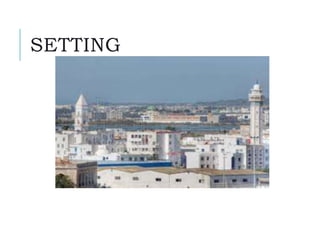
SETTING
HISTORICAL SETTING
Post-independence Tunisia
Multiethnic Area that is still intact post-
independence
Working Class
Homes (main characters are neighbors)
Beach (space of mixing, socializing)
Café
Train
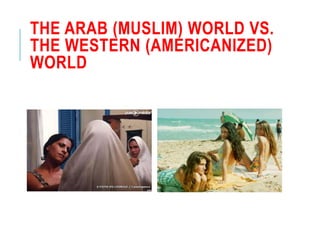
THE ARAB (MUSLIM) WORLD VS.
THE WESTERN (AMERICANIZED)
WORLD
MODERN SEARCH FOR IDENTITY
AMONG COMPETING
POSSIBILITIES
Girls in the film find themselves between
conflicting models of identity; they wish to
choose, but the society is unwilling to allow
this
We see conflicts among familial and cultural
identities (which are all traditional and
patriarchal) as well as those identities proposed
from abroad (by cinema for example)
Tunisian identity is composed of fusion of
multiple identities, and in the past this was
successful
However, in the modern / post-modern era
new external influences have disrupted this
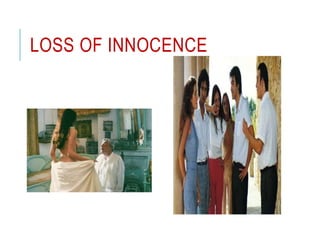
LOSS OF INNOCENCE
SEXUAL LIBERATION
INTERTWINED WITH
NATIONAL INDEPENDENCE
We see Tunisia in a moment of post-independent
optimism that is fleeting
Girls’ attempts to take control of their destiny is
thwarted / similarly Tunisia’s attempt to control its
destiny is thwarted
Both failures are tied to male, patriarchal authority,
according to the film
The film is inherently nostalgic, looking back at a time
and place that does not exist any longer and reflecting
on what “might have been”
AESTHETIC REVOLUTION IN
PLACE OF POLITICAL OR
SEXUAL ONE
CINEMA AS REVOLUTIONARY
SPACE
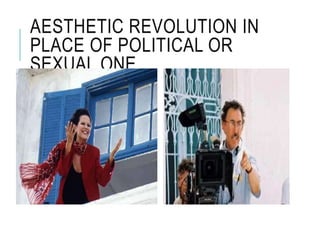
Intertwining of Claudia Cardinale is pointer to
power of cinema but also disrupts the fictive
world of the film (anachronistic—disrupts film’s
chronotope)
Highlights other “revolutionary” elements of
film—longer shots, non-standard editing and
sequencing, lacking of North African exotic
iconography
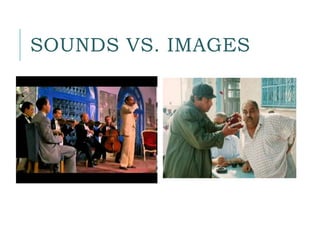
SOUNDS VS. IMAGES
THEMES
Failures of Independence
Legitimacy or Illegitimacy of Patriarchal Authority
Problem of Identity for Newly Independent,
Formerly Colonized Nations
Place of Women in Modern, Arab World
Corruption of Ruling Elites (Double Hadj)
Nostalgia
Unfulfilled Desire (for Independence, Revolution)
Rise of Tensions Between Arabs and Jews in Arab
World

A Summer in La Goulette

  • 1.
    A SUMMER INLA GOULETTE Ferid Boughedir 1996
  • 2.
    DISCUSSION QUESTIONS 1. Thisfilm, like Silences of the Palace is structured around the gaze. How does the gaze function in this film? In what ways is it similar to or different from the gaze in Silences of the Palace? 2. The film’s narration involves multiple points of view, both male and female. Does this mean that the film does or does not have a gendered gaze (the male gaze)? Why? What in the film supports your view? 3. The film is in many ways a meditation on identity in general and Tunisian identity in particular. What does the film have to say about each of these? When “things fall apart” at the end of the film, what does that say about both identity in general and Tunisian identity in particular? What role do “outside” influences play in this “falling apart?”
  • 3.
    CONTEXT A retrospective lookat Tunisia just after (10 years after) independence Use of “Africanized” film aesthetics In part based on Boughedir’s own childhood (he is from La Goulette) Looks at relations among Christians, Jews, and Muslims before the “split” of 1967; contemplates cause of that split Sees Tunisia as a multicultural space connected to both the Arab and the Western World
  • 4.
  • 5.
    HISTORICAL SETTING Post-independence Tunisia MultiethnicArea that is still intact post- independence Working Class Homes (main characters are neighbors) Beach (space of mixing, socializing) Café Train
  • 6.
    THE ARAB (MUSLIM)WORLD VS. THE WESTERN (AMERICANIZED) WORLD
  • 7.
    MODERN SEARCH FORIDENTITY AMONG COMPETING POSSIBILITIES Girls in the film find themselves between conflicting models of identity; they wish to choose, but the society is unwilling to allow this We see conflicts among familial and cultural identities (which are all traditional and patriarchal) as well as those identities proposed from abroad (by cinema for example) Tunisian identity is composed of fusion of multiple identities, and in the past this was successful However, in the modern / post-modern era new external influences have disrupted this
  • 8.
  • 9.
    SEXUAL LIBERATION INTERTWINED WITH NATIONALINDEPENDENCE We see Tunisia in a moment of post-independent optimism that is fleeting Girls’ attempts to take control of their destiny is thwarted / similarly Tunisia’s attempt to control its destiny is thwarted Both failures are tied to male, patriarchal authority, according to the film The film is inherently nostalgic, looking back at a time and place that does not exist any longer and reflecting on what “might have been”
  • 10.
    AESTHETIC REVOLUTION IN PLACEOF POLITICAL OR SEXUAL ONE
  • 11.
    CINEMA AS REVOLUTIONARY SPACE Intertwiningof Claudia Cardinale is pointer to power of cinema but also disrupts the fictive world of the film (anachronistic—disrupts film’s chronotope) Highlights other “revolutionary” elements of film—longer shots, non-standard editing and sequencing, lacking of North African exotic iconography
  • 12.
  • 13.
    THEMES Failures of Independence Legitimacyor Illegitimacy of Patriarchal Authority Problem of Identity for Newly Independent, Formerly Colonized Nations Place of Women in Modern, Arab World Corruption of Ruling Elites (Double Hadj) Nostalgia Unfulfilled Desire (for Independence, Revolution) Rise of Tensions Between Arabs and Jews in Arab World