


2
I. The Workshop
3
WHAT IS FORMA?
FORMA is an initiative to promote agent-based thinking among researchers from every
single discipline such as art, biology, maths, sociology, economics and urbanism.
Agent-based systems are used to study complex realities, which can hardly be
shaped by traditional methods. The aim of this special event is therefore, to provide
participants with a solid agent-based modelling expertise that will enhance their
understanding of complex processes within their field of research.
The workshop is organized around a limited number of case studies, selected among
proposals submitted by researchers from all over Spain. Each case study has a clear
target to be addressed during the three full-days of the event, and the authors of the
proposal are assigned an agent-based modelling expert plus a team of students,
typically from Computer Science and Mathematics, that are in the process of
developing modelling skills.
***
Forma provides an interdisciplinary space where students can work together to solve
real problems, while researchers from any field meet the opportunity to work hand in
hand with highly skilled programmers towards their research targets. This event
unfolds as a great networking tool, where minds with different assets meet to pursue
common interests. After this first edition, many of the teams have continued
developing their models, or established other kinds of collaboration, even sending
abstracts together for international conferences etc.
Apart from the "hands-on" work, the workshop includes top level speakers from the
European Network for Social Intelligence, as well as daily tutorials on "soft-learning-
curve" languages for agent-based modelling, such as NetLogo, and also Processing.
Researchers with no previous knowledge of these tools, will develop enough
understanding to prototype new case studies in the future through agent-based
modelling, even if only conceptually.
4
N2B. THE VALUE CREATION FRAMEWORK
Author:
Luisa Nenci - SustainValues
info@sustainvalues.net
Collaborators:
Teodoro González Manchón
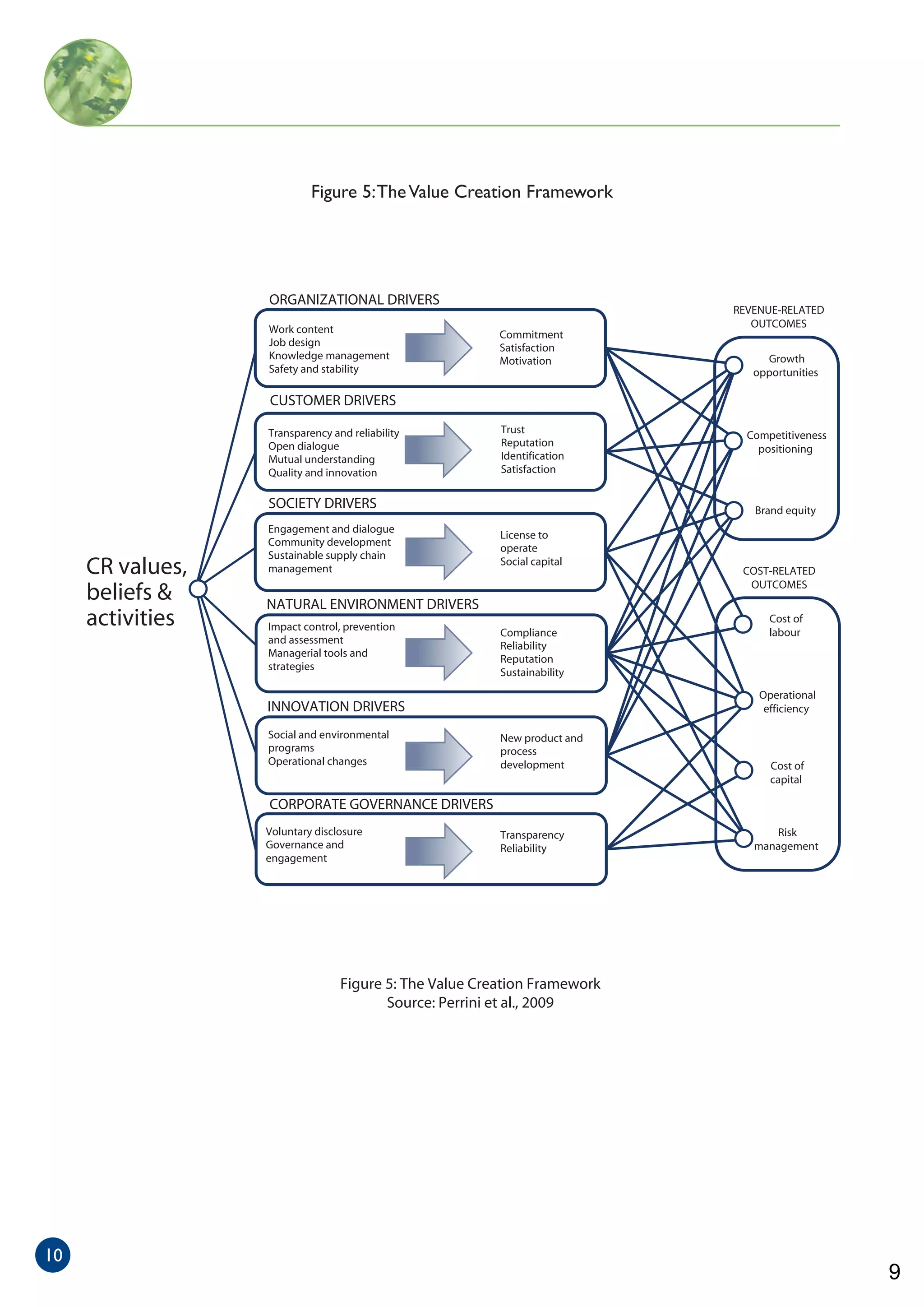
Brief: The Value Creation Framework (Perrini, 2006) helps companies and the
investment community to better understand how a more inclusive stakeholder-oriented
governance systems positively affects corporate performance. While firms values,
belief and activities have been already identified and classified into drivers, influencer
and influenced, variables specification their interaction mechanisms and rules have not
been evaluated yet.
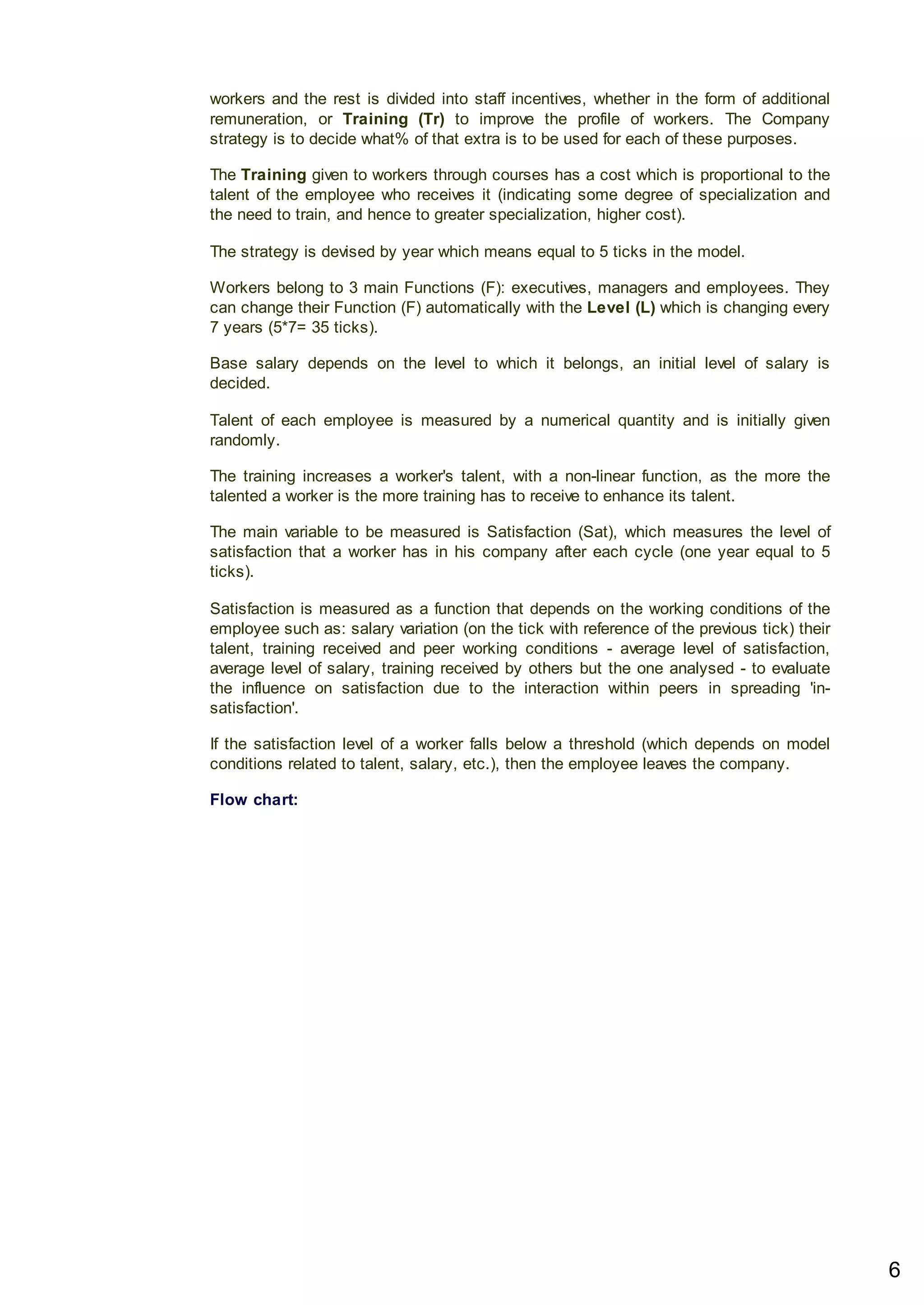
A simplified NetLogo model has been built to frame and analyse company's policy and
related actions on people values and consequential corporate performances impacts.
Satisfaction has been chosen as the main variable including in calculation: salary,
mobility and training variation, training and satisfaction variation against average.
Key question: With which level of decreasing satisfaction a talented worker will leave
the enterprise?
ODD Protocol:
1. Surrounding
The physical and social surrounding of the model is the enterprise department of HR
where HR policies are implemented and evaluated though financial and non-financial
indicators.
100 people are working in the company 6 executive (one each department) 18 middle
management managers and 76 employees. The relative share between functions
presume a manufacture company with a production chain where 70 people will turn
everyday with scheduled days off and holidays.
The company is based in Spain where the base salary is 15.500 euro (data INE 2011),
the senior salary is between 30-45 (data from internet job search) and executive 42-
75.000 (data from internet job search)
For the implementation or execution of this multi-agent social model a particular set of
parameters and initial values have been created. Different values of the parameters will
also be analysed as a result generated by the interactions emerging between these
agents while running the model though accessing to the rules list.
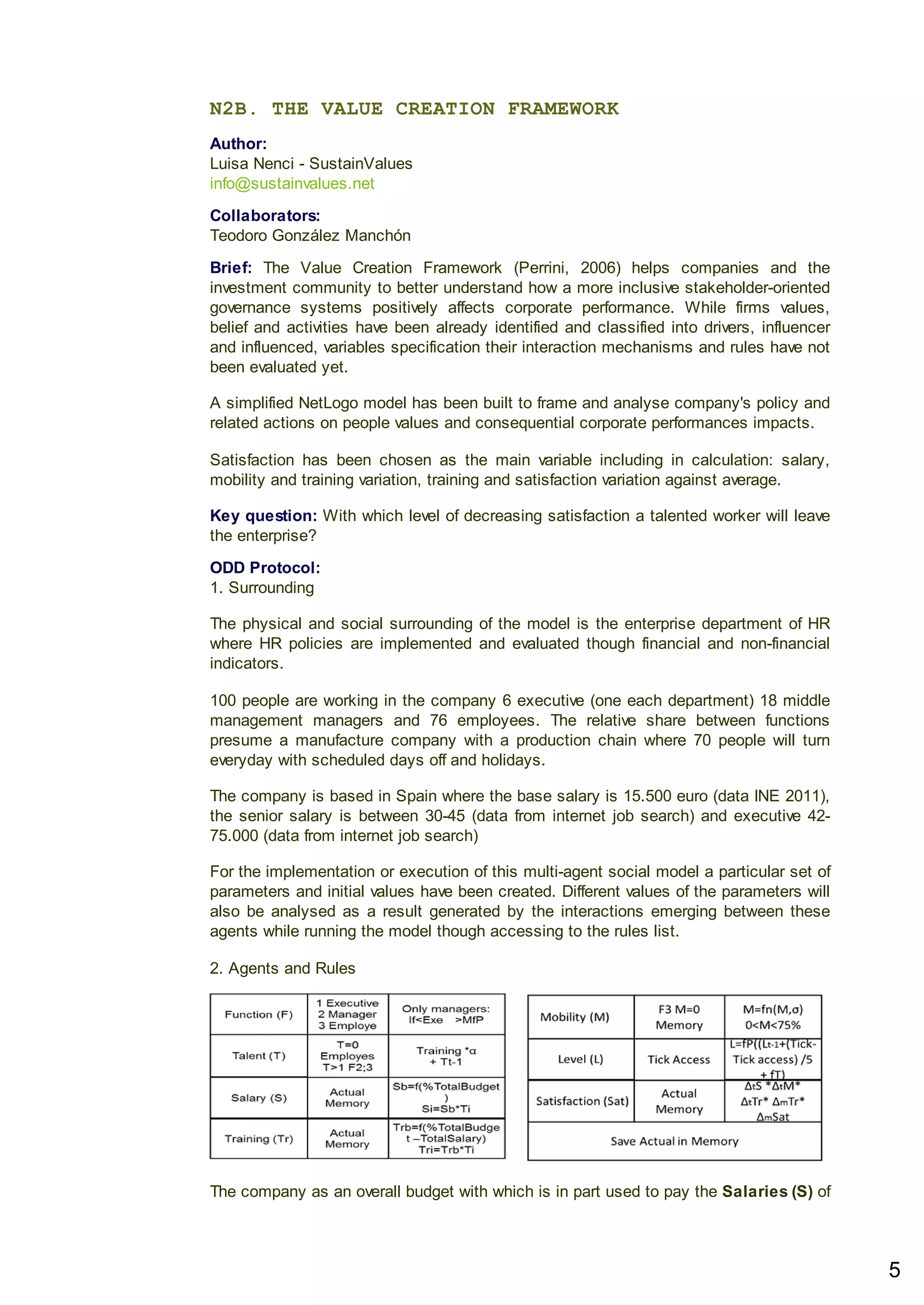
2. Agents and Rules
The company as an overall budget with which is in part used to pay the Salaries (S) of
5
workers and the rest is divided into staff incentives, whether in the form of additional
remuneration, or Training (Tr) to improve the profile of workers. The Company
strategy is to decide what% of that extra is to be used for each of these purposes.
The Training given to workers through courses has a cost which is proportional to the
talent of the employee who receives it (indicating some degree of specialization and
the need to train, and hence to greater specialization, higher cost).
The strategy is devised by year which means equal to 5 ticks in the model.
Workers belong to 3 main Functions (F): executives, managers and employees. They
can change their Function (F) automatically with the Level (L) which is changing every
7 years (5*7= 35 ticks).
Base salary depends on the level to which it belongs, an initial level of salary is
decided.
Talent of each employee is measured by a numerical quantity and is initially given
randomly.
The training increases a worker's talent, with a non-linear function, as the more the
talented a worker is the more training has to receive to enhance its talent.
The main variable to be measured is Satisfaction (Sat), which measures the level of
satisfaction that a worker has in his company after each cycle (one year equal to 5
ticks).
Satisfaction is measured as a function that depends on the working conditions of the
employee such as: salary variation (on the tick with reference of the previous tick) their
talent, training received and peer working conditions - average level of satisfaction,
average level of salary, training received by others but the one analysed - to evaluate
the influence on satisfaction due to the interaction within peers in spreading 'in-
satisfaction'.
If the satisfaction level of a worker falls below a threshold (which depends on model
conditions related to talent, salary, etc.), then the employee leaves the company.
Flow chart:
6
Code: N2b_code.nlogo
View it on Github: https://github.com/culturadigital/forma13/blob/master/N2b.nlogo
Model snapshots:
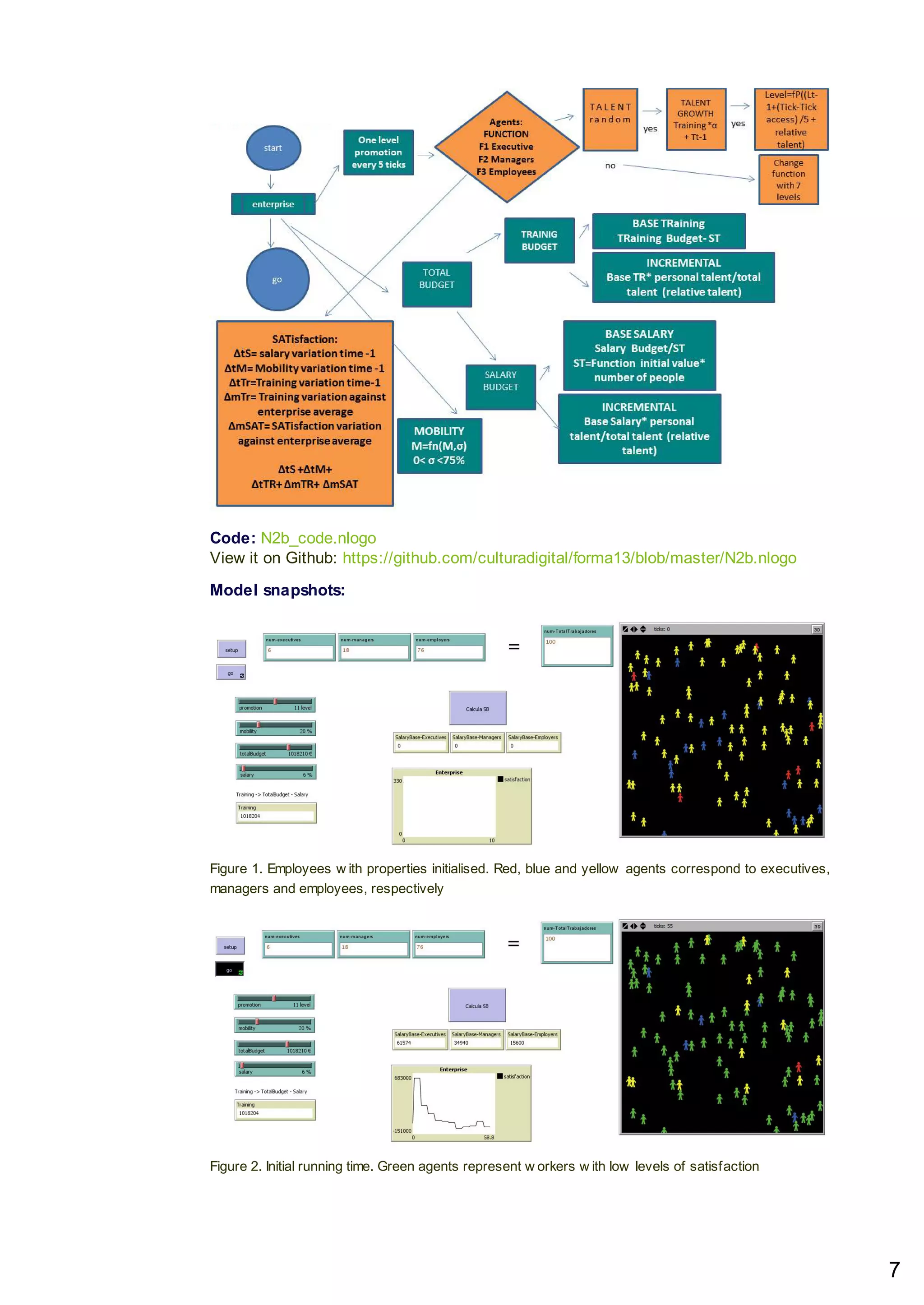
Figure 1. Employees w ith properties initialised. Red, blue and yellow agents correspond to executives,
managers and employees, respectively
Figure 2. Initial running time. Green agents represent w orkers w ith low levels of satisfaction
7
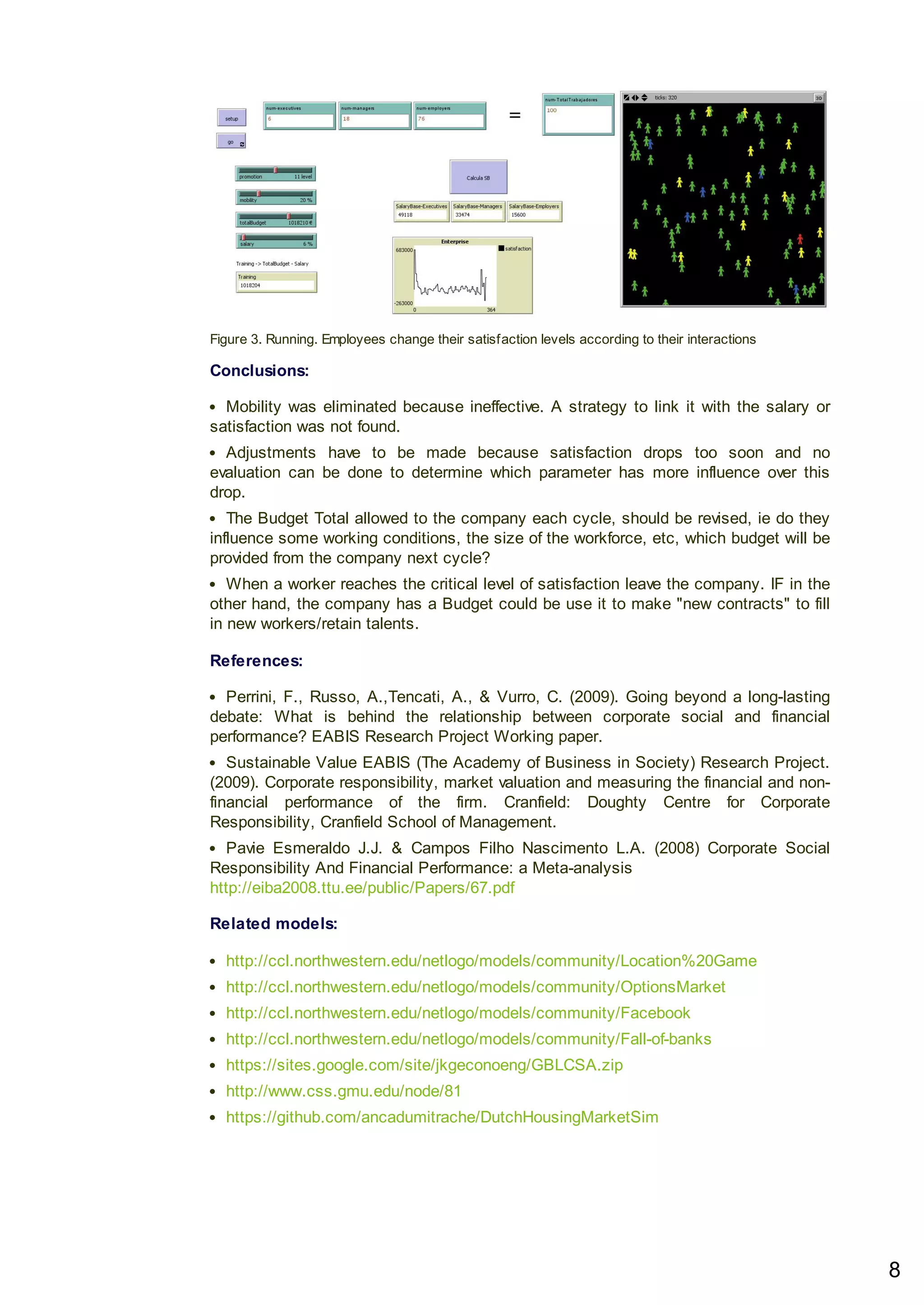
Figure 3. Running. Employees change their satisfaction levels according to their interactions
Conclusions:
Mobility was eliminated because ineffective. A strategy to link it with the salary or
satisfaction was not found.
Adjustments have to be made because satisfaction drops too soon and no
evaluation can be done to determine which parameter has more influence over this
drop.
The Budget Total allowed to the company each cycle, should be revised, ie do they
influence some working conditions, the size of the workforce, etc, which budget will be
provided from the company next cycle?
When a worker reaches the critical level of satisfaction leave the company. IF in the
other hand, the company has a Budget could be use it to make "new contracts" to fill
in new workers/retain talents.
References:
Perrini, F., Russo, A.,Tencati, A., & Vurro, C. (2009). Going beyond a long-lasting
debate: What is behind the relationship between corporate social and financial
performance? EABIS Research Project Working paper.
Sustainable Value EABIS (The Academy of Business in Society) Research Project.
(2009). Corporate responsibility, market valuation and measuring the financial and non-
financial performance of the firm. Cranfield: Doughty Centre for Corporate
Responsibility, Cranfield School of Management.
Pavie Esmeraldo J.J. & Campos Filho Nascimento L.A. (2008) Corporate Social
Responsibility And Financial Performance: a Meta-analysis
http://eiba2008.ttu.ee/public/Papers/67.pdf
Related models:
http://ccl.northwestern.edu/netlogo/models/community/Location%20Game
http://ccl.northwestern.edu/netlogo/models/community/OptionsMarket
http://ccl.northwestern.edu/netlogo/models/community/Facebook
http://ccl.northwestern.edu/netlogo/models/community/Fall-of-banks
https://sites.google.com/site/jkgeconoeng/GBLCSA.zip
http://www.css.gmu.edu/node/81
https://github.com/ancadumitrache/DutchHousingMarketSim
8
10
CR values,
beliefs &
activities
Work content
Job design
Knowledge management
Safety and stability
Commitment
Satisfaction
Motivation
Transparency and reliability
Open dialogue
Mutual understanding
Quality and innovation
Trust
Reputation
Identification
Satisfaction
Engagement and dialogue
Community development
Sustainable supply chain
management
License to
operate
Social capital
Growth
opportunities
Competitiveness
positioning
Brand equity
Risk
management
Operational
efficiency
Cost of
capital
Cost of
labour
ORGANIZATIONAL DRIVERS
Impact control, prevention
and assessment
Managerial tools and
strategies
Compliance
Reliability
Reputation
Sustainability
Social and environmental
programs
Operational changes
New product and
process
development
Voluntary disclosure
Governance and
engagement
Transparency
Reliability
CUSTOMER DRIVERS
SOCIETY DRIVERS
NATURAL ENVIRONMENT DRIVERS
INNOVATION DRIVERS
CORPORATE GOVERNANCE DRIVERS
REVENUE-RELATED
OUTCOMES
COST-RELATED
OUTCOMES
Figure 5: The Value Creation Framework
Source: Perrini et al., 2009
Figure 5:TheValue Creation Framework
9
CREDITS
Organized by:
Culturadigital
http://culturadigital.cc
Chair of Computer Science and Artificial Intelligence, Universidad de Sevilla
http://www.cs.us.es
Collaborators:
Laboratori de Simulació de Dinàmiques Socio-Històriques
http://sct.uab.cat/lsds
Chair of Information Technology, Universidad de Huelva
http://www.uhu.es/dti/
Support:
SINTELNET (European Network for Social Intelligence)
http://sintelnet.eu
eCompleXcity Project TIC-6064
http://ecomplexcity.org
Fidetia
10
Directors:
Joaquín Borrego Díaz. Chair of Computer Science and Artificial Intelligence,
Universidad de Sevilla
Fernando Sancho Caparrini. Chair of Computer Science and Artificial Intelligence,
Universidad de Sevilla
Gonzalo A. Aranda Corral. Chair of Information Technology, Universidad de Huelva
Coordination:
Jaime de Miguel Rodríguez
Ismael Domínguez Sánchez de la Blanca
Guest tutors:
Francesc Josep Miguel Quesada. Universitat Autònoma de Barcelona. Laboratori de
Simulació de Dinàmiques Socio-Històriques
Francisco Linares Martínez. Universidad de la Laguna. Laboratori de Simulació de
Dinàmiques Socio-Històriques
Modelling assistants:
Juan Galán Páez
Pedro Almagro Blanco
Jesús Horno Cobo
Fernando de la Matta Martín
Angel Linares García
Teodoro González Manchón
César Vergara Martín
José Manuel Camacho Sosa
Gabriel Muñoz Ríos
María Eugenia Villafañe
Jaime de Miguel Rodríguez
Graphic design:
Javier Aldarias Chinchilla
Special thanks:
To all the persons not listed above, involved in the coordination of the event, and to all
participants, especially students, whose enthusiasm and commitment gave life to the
workshop.
11
PARTICIPANTS
Daniel Márquez Quintanilla
Mª Del Carmen Romero Ternero
José Manuel Camacho Sosa
Gabriel Muñoz Ríos
Juan Galán Páez
Pedro Almagro Blanco
Maria Eugenia Cornejo Piñero
Eloisa Ramírez Poussa
Ricardo Hidalgo Pérez
Yago Fernández Rodríguez
Dalila Benkaddour
Ricardo Jimenez Odero
Carolina Caballero Lopez
David Solís Martín
Inmaculada Nuñez Garcia
Sergio Morales Casas
Lurdes Caleya Ortiz
Mercedes Gómez De La Rosa
Javier Atoche Ortega
Raúl García Bravo
Pablo Osuna Pérez
Antonia Chávez González
Antonio Rodríguez Rueda
Francisco Javier Borrego Cejudo
Javier Fernández López
Teodoro Gonzalez Manchon
Ivan Coronado Moreno
Samuel Martin Arenas
Cesar Vergara Martin
José Antonio Parejo Maestre
Pablo Pérez Ganfornina
José Manuel Calahorro Gómez
José ángel Campillo Bascón
Luis Caballero Pardillo
Francisco De Asís Gallardo Chamizo
Alejandro Barrios Falcon
Antonio Sobrino Badillo
Lorenzo Perea Lerate
Andres Borrallo
Miguel Angel Díaz Cabezas
Francisco Javier Ortiz
Mónica Rueda García
Lorena ávalos Rodríguez
Natividad González Blanco
Francisco Manuel Romero Romero
Patricia Raigada Romero
Mª Dolores Hernández Velazquez
Jaime de Miguel Rodríguez
Ismael Domínguez Sánchez de la Blanca
Javier Aldarias Chinchilla
Maria Eugenia Villafañe
Fernando de la Matta Martín
Simona Pecoraio
José Pérez de Lama
Antonio Piñero Valverde
Salas Mendoza Muro
Javier Sánchez Bravo
Sergio Rodríguez Estévez
Isidro Maya Jariego
Manuel Chica Serrano
Federico Cruz Ponce de León
Luisa Nenci
Pablo Araujo Granda
Carolina de Carvalho Cantergiani
Marta Ginovart Gisbert
Carla Andreia Carvalho Gómez
Cristina Varo Martín
María José Lera Rodríguez
Antonio Sáseta Velázquez
Oscar Cordón García
Pablo Pérez Ganfornina
12
Fotos:NashyraAllebrand
A Model for the Value Creation Framework

A Model for the Value Creation Framework

  • 2.
  • 3.
  • 4.
    WHAT IS FORMA? FORMAis an initiative to promote agent-based thinking among researchers from every single discipline such as art, biology, maths, sociology, economics and urbanism. Agent-based systems are used to study complex realities, which can hardly be shaped by traditional methods. The aim of this special event is therefore, to provide participants with a solid agent-based modelling expertise that will enhance their understanding of complex processes within their field of research. The workshop is organized around a limited number of case studies, selected among proposals submitted by researchers from all over Spain. Each case study has a clear target to be addressed during the three full-days of the event, and the authors of the proposal are assigned an agent-based modelling expert plus a team of students, typically from Computer Science and Mathematics, that are in the process of developing modelling skills. *** Forma provides an interdisciplinary space where students can work together to solve real problems, while researchers from any field meet the opportunity to work hand in hand with highly skilled programmers towards their research targets. This event unfolds as a great networking tool, where minds with different assets meet to pursue common interests. After this first edition, many of the teams have continued developing their models, or established other kinds of collaboration, even sending abstracts together for international conferences etc. Apart from the "hands-on" work, the workshop includes top level speakers from the European Network for Social Intelligence, as well as daily tutorials on "soft-learning- curve" languages for agent-based modelling, such as NetLogo, and also Processing. Researchers with no previous knowledge of these tools, will develop enough understanding to prototype new case studies in the future through agent-based modelling, even if only conceptually. 4
  • 5.
    N2B. THE VALUECREATION FRAMEWORK Author: Luisa Nenci - SustainValues info@sustainvalues.net Collaborators: Teodoro González Manchón Brief: The Value Creation Framework (Perrini, 2006) helps companies and the investment community to better understand how a more inclusive stakeholder-oriented governance systems positively affects corporate performance. While firms values, belief and activities have been already identified and classified into drivers, influencer and influenced, variables specification their interaction mechanisms and rules have not been evaluated yet. A simplified NetLogo model has been built to frame and analyse company's policy and related actions on people values and consequential corporate performances impacts. Satisfaction has been chosen as the main variable including in calculation: salary, mobility and training variation, training and satisfaction variation against average. Key question: With which level of decreasing satisfaction a talented worker will leave the enterprise? ODD Protocol: 1. Surrounding The physical and social surrounding of the model is the enterprise department of HR where HR policies are implemented and evaluated though financial and non-financial indicators. 100 people are working in the company 6 executive (one each department) 18 middle management managers and 76 employees. The relative share between functions presume a manufacture company with a production chain where 70 people will turn everyday with scheduled days off and holidays. The company is based in Spain where the base salary is 15.500 euro (data INE 2011), the senior salary is between 30-45 (data from internet job search) and executive 42- 75.000 (data from internet job search) For the implementation or execution of this multi-agent social model a particular set of parameters and initial values have been created. Different values of the parameters will also be analysed as a result generated by the interactions emerging between these agents while running the model though accessing to the rules list. 2. Agents and Rules The company as an overall budget with which is in part used to pay the Salaries (S) of 5
  • 6.
    workers and therest is divided into staff incentives, whether in the form of additional remuneration, or Training (Tr) to improve the profile of workers. The Company strategy is to decide what% of that extra is to be used for each of these purposes. The Training given to workers through courses has a cost which is proportional to the talent of the employee who receives it (indicating some degree of specialization and the need to train, and hence to greater specialization, higher cost). The strategy is devised by year which means equal to 5 ticks in the model. Workers belong to 3 main Functions (F): executives, managers and employees. They can change their Function (F) automatically with the Level (L) which is changing every 7 years (5*7= 35 ticks). Base salary depends on the level to which it belongs, an initial level of salary is decided. Talent of each employee is measured by a numerical quantity and is initially given randomly. The training increases a worker's talent, with a non-linear function, as the more the talented a worker is the more training has to receive to enhance its talent. The main variable to be measured is Satisfaction (Sat), which measures the level of satisfaction that a worker has in his company after each cycle (one year equal to 5 ticks). Satisfaction is measured as a function that depends on the working conditions of the employee such as: salary variation (on the tick with reference of the previous tick) their talent, training received and peer working conditions - average level of satisfaction, average level of salary, training received by others but the one analysed - to evaluate the influence on satisfaction due to the interaction within peers in spreading 'in- satisfaction'. If the satisfaction level of a worker falls below a threshold (which depends on model conditions related to talent, salary, etc.), then the employee leaves the company. Flow chart: 6
  • 7.
    Code: N2b_code.nlogo View iton Github: https://github.com/culturadigital/forma13/blob/master/N2b.nlogo Model snapshots: Figure 1. Employees w ith properties initialised. Red, blue and yellow agents correspond to executives, managers and employees, respectively Figure 2. Initial running time. Green agents represent w orkers w ith low levels of satisfaction 7
  • 8.
    Figure 3. Running.Employees change their satisfaction levels according to their interactions Conclusions: Mobility was eliminated because ineffective. A strategy to link it with the salary or satisfaction was not found. Adjustments have to be made because satisfaction drops too soon and no evaluation can be done to determine which parameter has more influence over this drop. The Budget Total allowed to the company each cycle, should be revised, ie do they influence some working conditions, the size of the workforce, etc, which budget will be provided from the company next cycle? When a worker reaches the critical level of satisfaction leave the company. IF in the other hand, the company has a Budget could be use it to make "new contracts" to fill in new workers/retain talents. References: Perrini, F., Russo, A.,Tencati, A., & Vurro, C. (2009). Going beyond a long-lasting debate: What is behind the relationship between corporate social and financial performance? EABIS Research Project Working paper. Sustainable Value EABIS (The Academy of Business in Society) Research Project. (2009). Corporate responsibility, market valuation and measuring the financial and non- financial performance of the firm. Cranfield: Doughty Centre for Corporate Responsibility, Cranfield School of Management. Pavie Esmeraldo J.J. & Campos Filho Nascimento L.A. (2008) Corporate Social Responsibility And Financial Performance: a Meta-analysis http://eiba2008.ttu.ee/public/Papers/67.pdf Related models: http://ccl.northwestern.edu/netlogo/models/community/Location%20Game http://ccl.northwestern.edu/netlogo/models/community/OptionsMarket http://ccl.northwestern.edu/netlogo/models/community/Facebook http://ccl.northwestern.edu/netlogo/models/community/Fall-of-banks https://sites.google.com/site/jkgeconoeng/GBLCSA.zip http://www.css.gmu.edu/node/81 https://github.com/ancadumitrache/DutchHousingMarketSim 8
  • 9.
    10 CR values, beliefs & activities Workcontent Job design Knowledge management Safety and stability Commitment Satisfaction Motivation Transparency and reliability Open dialogue Mutual understanding Quality and innovation Trust Reputation Identification Satisfaction Engagement and dialogue Community development Sustainable supply chain management License to operate Social capital Growth opportunities Competitiveness positioning Brand equity Risk management Operational efficiency Cost of capital Cost of labour ORGANIZATIONAL DRIVERS Impact control, prevention and assessment Managerial tools and strategies Compliance Reliability Reputation Sustainability Social and environmental programs Operational changes New product and process development Voluntary disclosure Governance and engagement Transparency Reliability CUSTOMER DRIVERS SOCIETY DRIVERS NATURAL ENVIRONMENT DRIVERS INNOVATION DRIVERS CORPORATE GOVERNANCE DRIVERS REVENUE-RELATED OUTCOMES COST-RELATED OUTCOMES Figure 5: The Value Creation Framework Source: Perrini et al., 2009 Figure 5:TheValue Creation Framework 9
  • 10.
    CREDITS Organized by: Culturadigital http://culturadigital.cc Chair ofComputer Science and Artificial Intelligence, Universidad de Sevilla http://www.cs.us.es Collaborators: Laboratori de Simulació de Dinàmiques Socio-Històriques http://sct.uab.cat/lsds Chair of Information Technology, Universidad de Huelva http://www.uhu.es/dti/ Support: SINTELNET (European Network for Social Intelligence) http://sintelnet.eu eCompleXcity Project TIC-6064 http://ecomplexcity.org Fidetia 10
  • 11.
    Directors: Joaquín Borrego Díaz.Chair of Computer Science and Artificial Intelligence, Universidad de Sevilla Fernando Sancho Caparrini. Chair of Computer Science and Artificial Intelligence, Universidad de Sevilla Gonzalo A. Aranda Corral. Chair of Information Technology, Universidad de Huelva Coordination: Jaime de Miguel Rodríguez Ismael Domínguez Sánchez de la Blanca Guest tutors: Francesc Josep Miguel Quesada. Universitat Autònoma de Barcelona. Laboratori de Simulació de Dinàmiques Socio-Històriques Francisco Linares Martínez. Universidad de la Laguna. Laboratori de Simulació de Dinàmiques Socio-Històriques Modelling assistants: Juan Galán Páez Pedro Almagro Blanco Jesús Horno Cobo Fernando de la Matta Martín Angel Linares García Teodoro González Manchón César Vergara Martín José Manuel Camacho Sosa Gabriel Muñoz Ríos María Eugenia Villafañe Jaime de Miguel Rodríguez Graphic design: Javier Aldarias Chinchilla Special thanks: To all the persons not listed above, involved in the coordination of the event, and to all participants, especially students, whose enthusiasm and commitment gave life to the workshop. 11
  • 12.
    PARTICIPANTS Daniel Márquez Quintanilla MªDel Carmen Romero Ternero José Manuel Camacho Sosa Gabriel Muñoz Ríos Juan Galán Páez Pedro Almagro Blanco Maria Eugenia Cornejo Piñero Eloisa Ramírez Poussa Ricardo Hidalgo Pérez Yago Fernández Rodríguez Dalila Benkaddour Ricardo Jimenez Odero Carolina Caballero Lopez David Solís Martín Inmaculada Nuñez Garcia Sergio Morales Casas Lurdes Caleya Ortiz Mercedes Gómez De La Rosa Javier Atoche Ortega Raúl García Bravo Pablo Osuna Pérez Antonia Chávez González Antonio Rodríguez Rueda Francisco Javier Borrego Cejudo Javier Fernández López Teodoro Gonzalez Manchon Ivan Coronado Moreno Samuel Martin Arenas Cesar Vergara Martin José Antonio Parejo Maestre Pablo Pérez Ganfornina José Manuel Calahorro Gómez José ángel Campillo Bascón Luis Caballero Pardillo Francisco De Asís Gallardo Chamizo Alejandro Barrios Falcon Antonio Sobrino Badillo Lorenzo Perea Lerate Andres Borrallo Miguel Angel Díaz Cabezas Francisco Javier Ortiz Mónica Rueda García Lorena ávalos Rodríguez Natividad González Blanco Francisco Manuel Romero Romero Patricia Raigada Romero Mª Dolores Hernández Velazquez Jaime de Miguel Rodríguez Ismael Domínguez Sánchez de la Blanca Javier Aldarias Chinchilla Maria Eugenia Villafañe Fernando de la Matta Martín Simona Pecoraio José Pérez de Lama Antonio Piñero Valverde Salas Mendoza Muro Javier Sánchez Bravo Sergio Rodríguez Estévez Isidro Maya Jariego Manuel Chica Serrano Federico Cruz Ponce de León Luisa Nenci Pablo Araujo Granda Carolina de Carvalho Cantergiani Marta Ginovart Gisbert Carla Andreia Carvalho Gómez Cristina Varo Martín María José Lera Rodríguez Antonio Sáseta Velázquez Oscar Cordón García Pablo Pérez Ganfornina 12
  • 13.