THE COMPARATIVE CLINICAL SCIENCE FOUNDATION (CCSF)SECOND COLLABORATIVE WORKSHOP 16 MARCH 2011THE WELLCOME TRUSTRefining in vitro Models of Articular Cartilage Inflammation for Comparative Studies on Biomarkers of OsteoarthritisAli Mobasheri, D.Phil.Musculoskeletal Research GroupSchool of Veterinary Medicine and Science
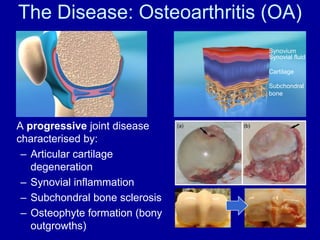
The Disease: Osteoarthritis (OA)SynoviumSynovial fluidCartilageSubchondral bone	A progressive joint disease characterised by:Articular cartilage degenerationSynovial inflammationSubchondral bone sclerosisOsteophyte formation (bony outgrowths)
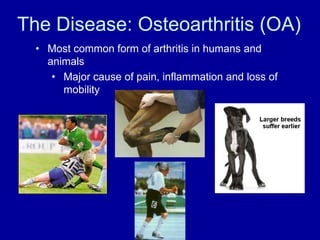
The Disease: Osteoarthritis (OA)Most common form of arthritis in humans and animals
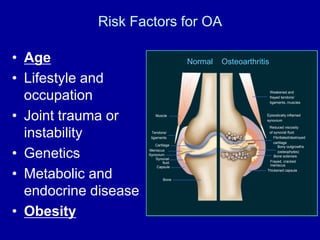
Major cause of pain, inflammation and loss of mobilityRisk Factors for OAAgeLifestyle and occupationJoint trauma or instabilityGeneticsMetabolic and endocrine diseaseObesityNormalOsteoarthritisWeakened andfrayed tendons/ligaments, musclesEpisodically inflamedsynoviumMuscleReduced viscosityof synovial fluidTendons/ligamentsFibrillated/destroyedcartilageCartilageBony outgrowths(osteophytes)MeniscusSynoviumBone sclerosisSynovial fluidFrayed, cracked meniscusCapsuleThickened capsuleBone
Rationale for Studying OAOA affects 1 in 6 adults (almost 5 out of 6 professors in the audience)Most OA patients suffer from pain and disabilityBy 2030 20% of Americans and Europeans will have OAThere are no disease modifying treatments for OAThere are no established biomarkers for OAExisting drugs (NSAIDs) only treat the symptoms of OA – reducing pain and inflammationTherefore OA represents a major opportunity for basic and clinical research, drug discovery and the development of novel disease modifying agents and therapeutic approachesSource: National Institute of Arthritis and Musculoskeletal and Skin Diseases, NIAMS/National Institutes of Health, Bethesda, MD
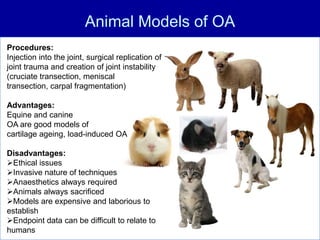
Animal Models of OAProcedures:Injection into the joint, surgical replication of joint trauma and creation of joint instability(cruciate transection, meniscal transection, carpal fragmentation)Advantages:Equine and canine OA are good models of cartilage ageing, load-induced OADisadvantages:Ethical issues
Invasive nature of techniques
Anaesthetics always required
Animals always sacrificed
Models are expensive and laborious to establish
Endpoint data can be difficult to relate to humansThe Question:Can we use explant and high-density culture models of equine and canine cartilage to identify new biomarkers of OA that may identify early disease and predict progression in humans and animals?
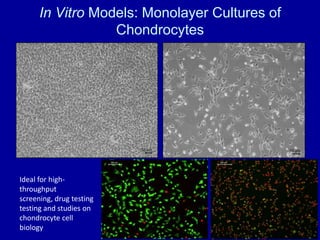
In Vitro Models: Monolayer Cultures of ChondrocytesIdeal for high-throughput screening, drug testing testing and studies on chondrocyte cell biology

A. Mobasheri

  • 1.
    THE COMPARATIVE CLINICALSCIENCE FOUNDATION (CCSF)SECOND COLLABORATIVE WORKSHOP 16 MARCH 2011THE WELLCOME TRUSTRefining in vitro Models of Articular Cartilage Inflammation for Comparative Studies on Biomarkers of OsteoarthritisAli Mobasheri, D.Phil.Musculoskeletal Research GroupSchool of Veterinary Medicine and Science
  • 2.
    The Disease: Osteoarthritis(OA)SynoviumSynovial fluidCartilageSubchondral bone A progressive joint disease characterised by:Articular cartilage degenerationSynovial inflammationSubchondral bone sclerosisOsteophyte formation (bony outgrowths)
  • 3.
    The Disease: Osteoarthritis(OA)Most common form of arthritis in humans and animals
  • 4.
    Major cause ofpain, inflammation and loss of mobilityRisk Factors for OAAgeLifestyle and occupationJoint trauma or instabilityGeneticsMetabolic and endocrine diseaseObesityNormalOsteoarthritisWeakened andfrayed tendons/ligaments, musclesEpisodically inflamedsynoviumMuscleReduced viscosityof synovial fluidTendons/ligamentsFibrillated/destroyedcartilageCartilageBony outgrowths(osteophytes)MeniscusSynoviumBone sclerosisSynovial fluidFrayed, cracked meniscusCapsuleThickened capsuleBone
  • 5.
    Rationale for StudyingOAOA affects 1 in 6 adults (almost 5 out of 6 professors in the audience)Most OA patients suffer from pain and disabilityBy 2030 20% of Americans and Europeans will have OAThere are no disease modifying treatments for OAThere are no established biomarkers for OAExisting drugs (NSAIDs) only treat the symptoms of OA – reducing pain and inflammationTherefore OA represents a major opportunity for basic and clinical research, drug discovery and the development of novel disease modifying agents and therapeutic approachesSource: National Institute of Arthritis and Musculoskeletal and Skin Diseases, NIAMS/National Institutes of Health, Bethesda, MD
  • 6.
    Animal Models ofOAProcedures:Injection into the joint, surgical replication of joint trauma and creation of joint instability(cruciate transection, meniscal transection, carpal fragmentation)Advantages:Equine and canine OA are good models of cartilage ageing, load-induced OADisadvantages:Ethical issues
  • 7.
  • 8.
  • 9.
  • 10.
    Models are expensiveand laborious to establish
  • 11.
    Endpoint data canbe difficult to relate to humansThe Question:Can we use explant and high-density culture models of equine and canine cartilage to identify new biomarkers of OA that may identify early disease and predict progression in humans and animals?
  • 12.
    In Vitro Models:Monolayer Cultures of ChondrocytesIdeal for high-throughput screening, drug testing testing and studies on chondrocyte cell biology