A Comprehensive
Guide To DevOps
By TechDogs
Next
Software development can be cumbersome, frustrating, time
consuming and often chaotic. We’re sure every software dev
reading this is nodding in agreement, while wiping a tear.
However, DevOps, a methodology that arose in the late
2010s, has helped address the inherent disconnect between
software development and operations. It’s an approach that
marries the traditionally siloed development and operations
teams into one all-powerful DevOps super team that leverages
processes and technologies to streamline the entire software
development lifecycle.
DevOps, in a nutshell, brings new software applications to the
market more quickly than ever before and hastens upgrades to
existing software. It gets the right people talking to each other,
automates various development tasks and makes business
leaders happy. What’s not to love?
Overview
What Is
DevOps?
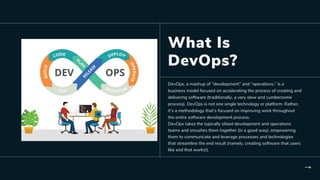
DevOps, a mashup of “development” and “operations,” is a
business model focused on accelerating the process of creating and
delivering software (traditionally, a very slow and cumbersome
process). DevOps is not one single technology or platform. Rather,
it’s a methodology that’s focused on improving work throughout
the entire software development process.
DevOps takes the typically siloed development and operations
teams and smushes them together (in a good way), empowering
them to communicate and leverage processes and technologies
that streamline the end result (namely, creating software that users
like and that works!).
Traditional software development involved a hierarchy of developers,
systems administrators, project managers and QA professionals.
Each player in this complex game washyper focused on their own
priorities. When problems arose (and they always did!), the entire
delicate cycle of coding, testing and releasing apps came to a halt
until the issue was fixed. The issue could be a server going down or a
bug in the code or a critical problem with the usability of the
software. Each team then scrambled to address the problem and/or
offload it to the appropriate team.
DevOps — A Brief History
Continuous Integration (CI)
focuses on immediate testing and reporting common, isolated changes
right when they’re added to the larger code base. This rapid feedback
helps identify and address defects in the code so they can be fixed
quickly.
Continuous Delivery (CD)
approach ensures that software development teams create and test code in
short, continuous cycles. Automation is often incorporated into this process,
speeding up development and reducing problems that might “break” the
product because the focus is on incremental changes rather than big,
sweeping upgrades.
Continuous Deployment
refers to the process of automatically releasing software updates to end
users once the new version passes the (automated) testing phase. This is
a slippery slope and is ill advised unless your CI/CD approaches are
buttoned up.
DevOps is not one single technology
but a combination of methodologies,
approaches and technologies that work
together to facilitate the rapid
deployment of new applications. The
practice of DevOps involves different
types of tools and methodologies.
How
Does
DevOps
Work?
As companies embrace digital
transformation, the DevOps approach
will become even more valuable to
business leaders. The trend fueling
increased DevOps adoption is,
inevitably, improving the customer
experience.
Launching new products and rolling out features for existing products quickly
(and effectively) requires a buttoned-up DevOps process with clear
communications across IT, operations, security and customer teams. Speaking
of security, it will play an increasingly critical role in the DevOps process
thanks to the rise of serverless and cloud-native technologies. This even has
its own (weird) term — DevSecOps (e.g., “development + security +
operations”).
The Future Of DevOps
www.techdogs.com
Thanks For Reading
Get in touch with us about reading
technology related article.

A Comprehensive Guide To DevOps

  • 1.
    A Comprehensive Guide ToDevOps By TechDogs Next
  • 2.
    Software development canbe cumbersome, frustrating, time consuming and often chaotic. We’re sure every software dev reading this is nodding in agreement, while wiping a tear. However, DevOps, a methodology that arose in the late 2010s, has helped address the inherent disconnect between software development and operations. It’s an approach that marries the traditionally siloed development and operations teams into one all-powerful DevOps super team that leverages processes and technologies to streamline the entire software development lifecycle. DevOps, in a nutshell, brings new software applications to the market more quickly than ever before and hastens upgrades to existing software. It gets the right people talking to each other, automates various development tasks and makes business leaders happy. What’s not to love? Overview
  • 3.
    What Is DevOps? DevOps, amashup of “development” and “operations,” is a business model focused on accelerating the process of creating and delivering software (traditionally, a very slow and cumbersome process). DevOps is not one single technology or platform. Rather, it’s a methodology that’s focused on improving work throughout the entire software development process. DevOps takes the typically siloed development and operations teams and smushes them together (in a good way), empowering them to communicate and leverage processes and technologies that streamline the end result (namely, creating software that users like and that works!).
  • 4.
    Traditional software developmentinvolved a hierarchy of developers, systems administrators, project managers and QA professionals. Each player in this complex game washyper focused on their own priorities. When problems arose (and they always did!), the entire delicate cycle of coding, testing and releasing apps came to a halt until the issue was fixed. The issue could be a server going down or a bug in the code or a critical problem with the usability of the software. Each team then scrambled to address the problem and/or offload it to the appropriate team. DevOps — A Brief History
  • 5.
    Continuous Integration (CI) focuseson immediate testing and reporting common, isolated changes right when they’re added to the larger code base. This rapid feedback helps identify and address defects in the code so they can be fixed quickly. Continuous Delivery (CD) approach ensures that software development teams create and test code in short, continuous cycles. Automation is often incorporated into this process, speeding up development and reducing problems that might “break” the product because the focus is on incremental changes rather than big, sweeping upgrades. Continuous Deployment refers to the process of automatically releasing software updates to end users once the new version passes the (automated) testing phase. This is a slippery slope and is ill advised unless your CI/CD approaches are buttoned up. DevOps is not one single technology but a combination of methodologies, approaches and technologies that work together to facilitate the rapid deployment of new applications. The practice of DevOps involves different types of tools and methodologies. How Does DevOps Work?
  • 6.
    As companies embracedigital transformation, the DevOps approach will become even more valuable to business leaders. The trend fueling increased DevOps adoption is, inevitably, improving the customer experience. Launching new products and rolling out features for existing products quickly (and effectively) requires a buttoned-up DevOps process with clear communications across IT, operations, security and customer teams. Speaking of security, it will play an increasingly critical role in the DevOps process thanks to the rise of serverless and cloud-native technologies. This even has its own (weird) term — DevSecOps (e.g., “development + security + operations”). The Future Of DevOps
  • 7.
    www.techdogs.com Thanks For Reading Getin touch with us about reading technology related article.