@EpiEllie
A cartoon guide
to causal
inference
Ellie Murray
Department of Epidemiology
www.scholar.harvard.edu/eleanorm
urray
B W H F o r u m f o r A d v a n c e d B i o m e d i c a l
C o m p u t a t i o n
2 0 1 9
What do we want to know?
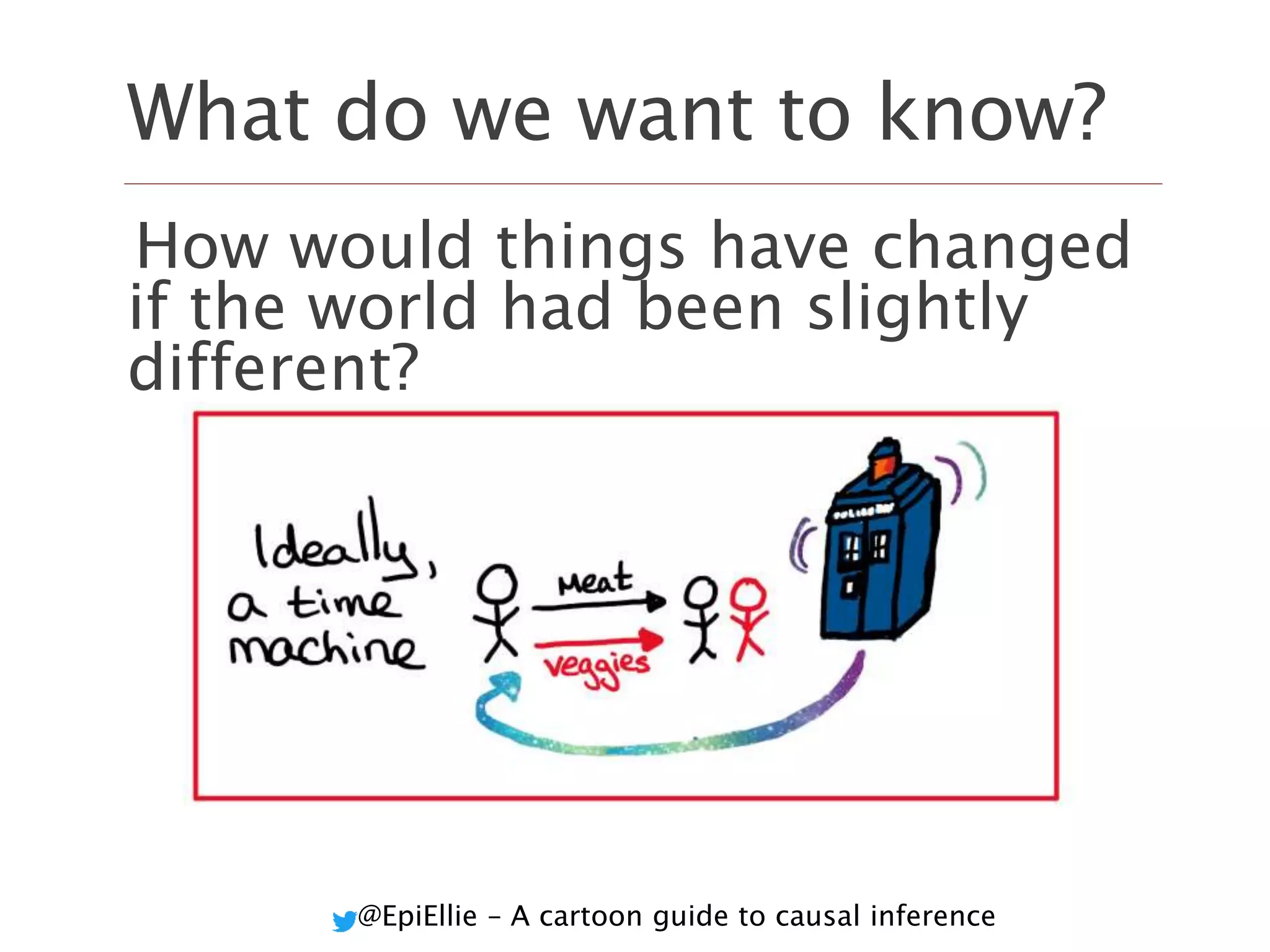
How would things have changed
if the world had been slightly
different?
@EpiEllie – A cartoon guide to causal inference
What do we want to know?
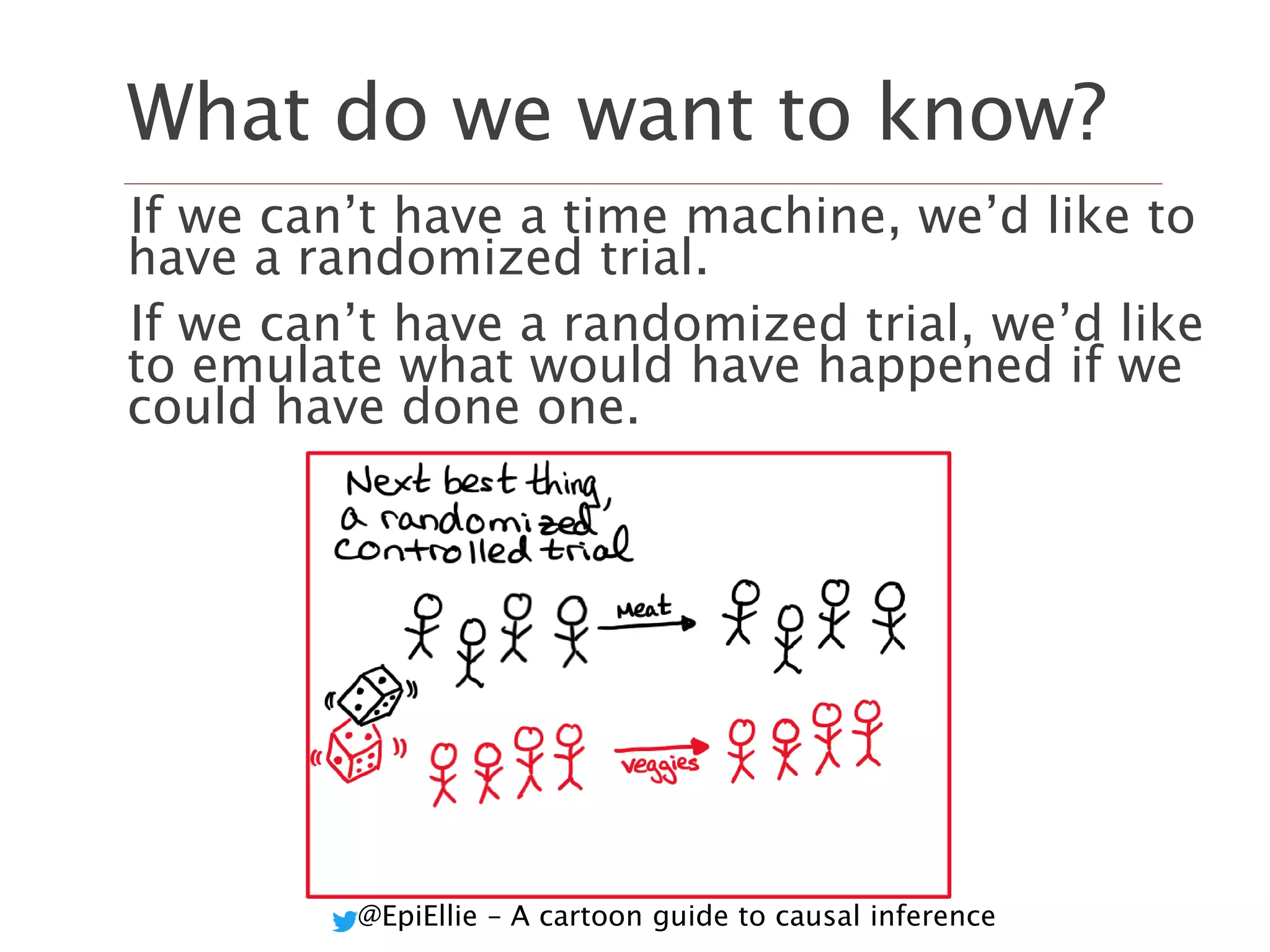
If we can’t have a time machine, we’d like to
have a randomized trial.
If we can’t have a randomized trial, we’d like
to emulate what would have happened if we
could have done one.
@EpiEllie – A cartoon guide to causal inference
What effects should we
estimate?
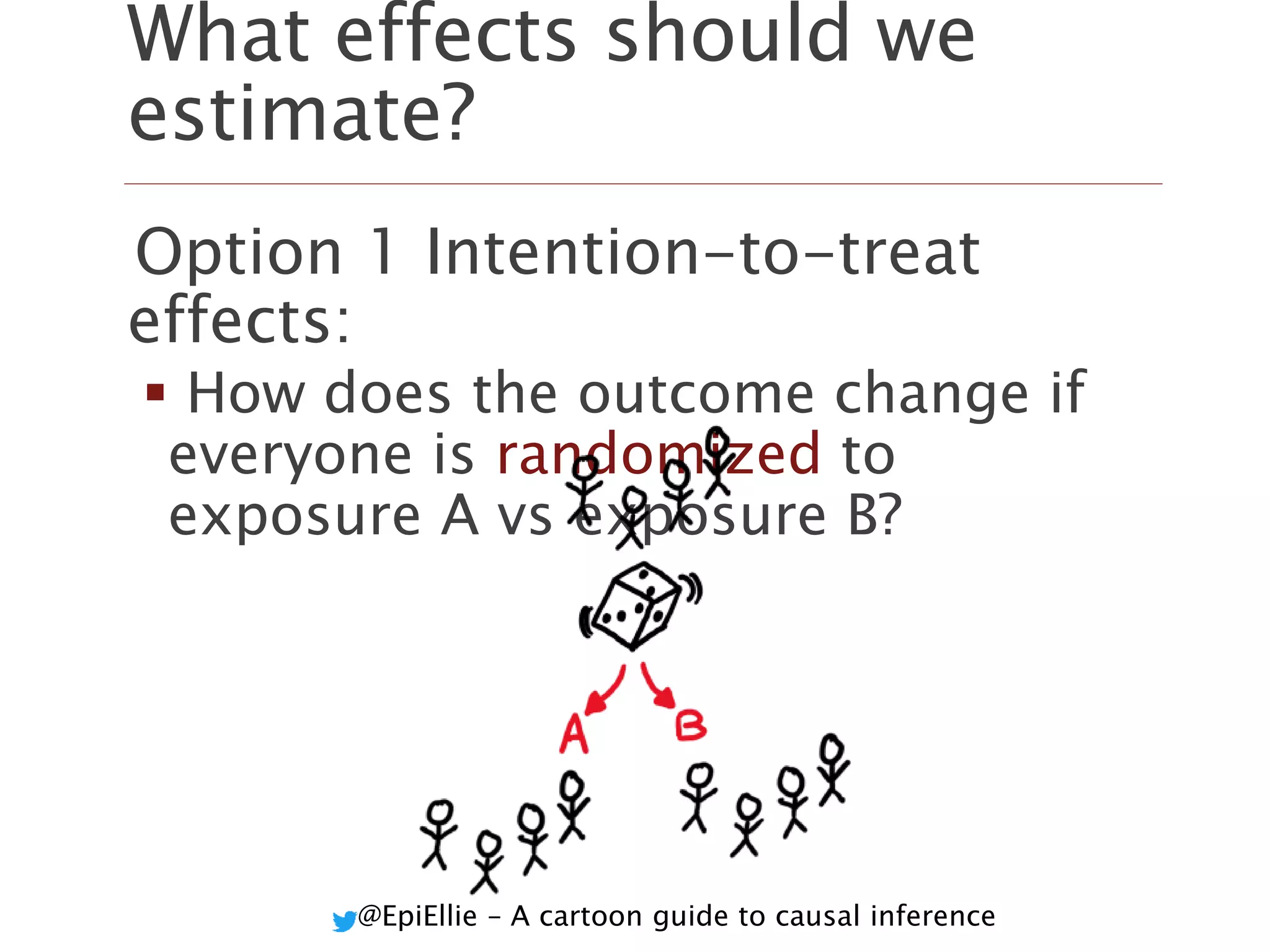
Option 1 Intention-to-treat
effects:
 How does the outcome change if
everyone is randomized to
exposure A vs exposure B?
@EpiEllie – A cartoon guide to causal inference
What effects should we
estimate?
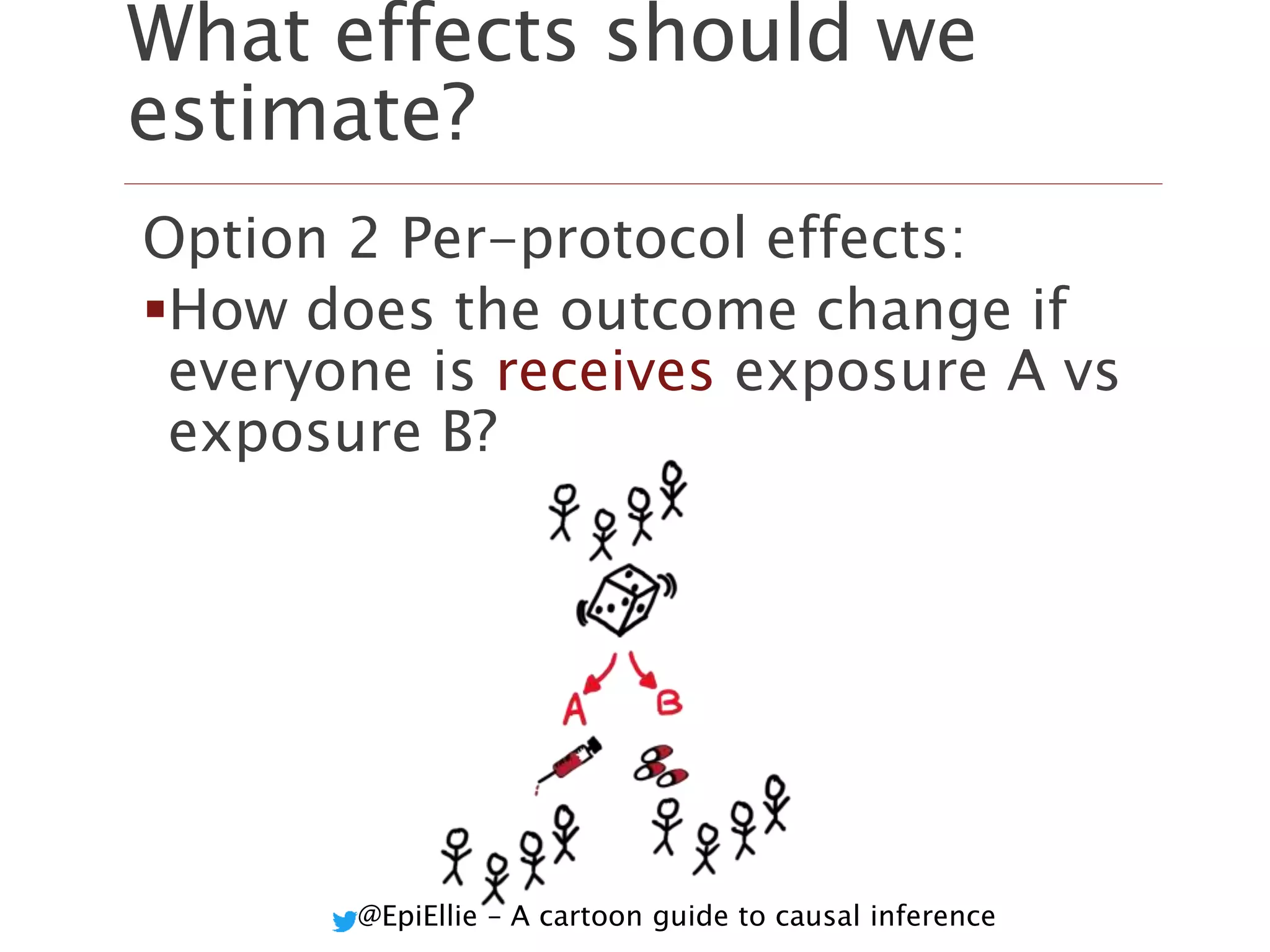
Option 2 Per-protocol effects:
How does the outcome change if
everyone is receives exposure A vs
exposure B?
@EpiEllie – A cartoon guide to causal inference
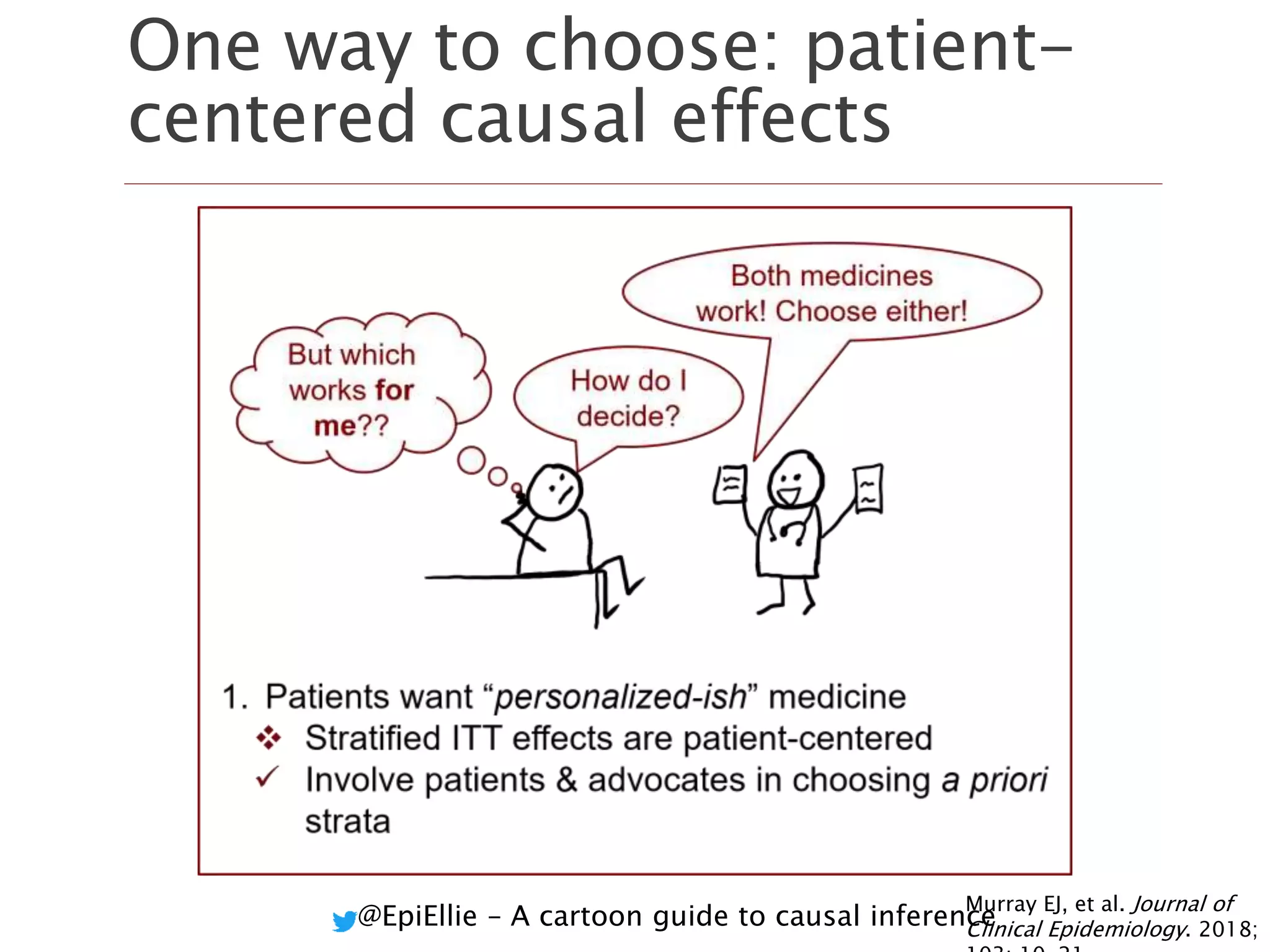
One way to choose: patient-
centered causal effects
Murray EJ, et al. Journal of
Clinical Epidemiology. 2018;
@EpiEllie – A cartoon guide to causal inference
One way to choose: patient-
centered causal effects
Murray EJ, et al. Journal of
Clinical Epidemiology. 2018;
@EpiEllie – A cartoon guide to causal inference
But we can’t just use the
data
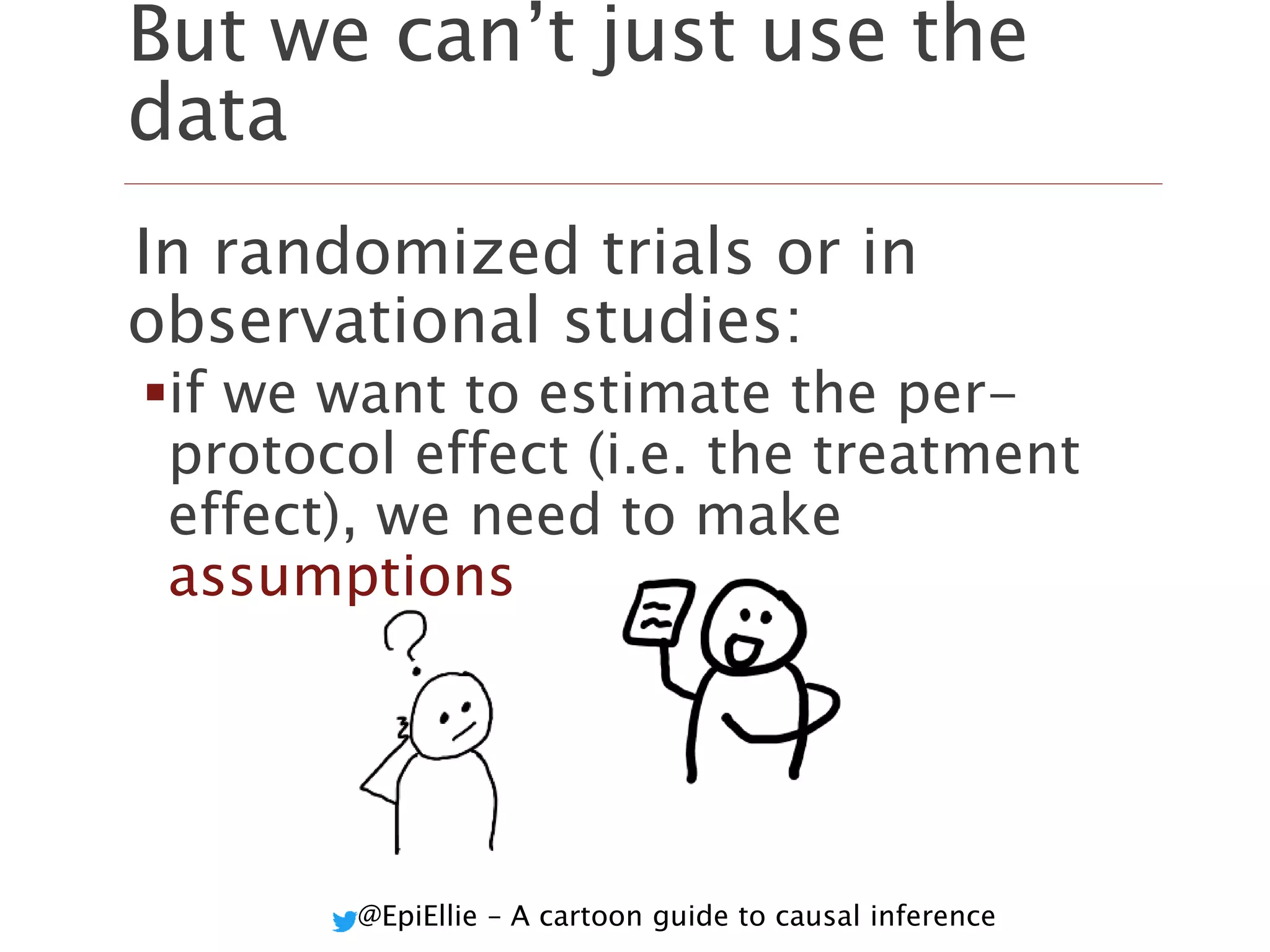
In randomized trials or in
observational studies:
if we want to estimate the per-
protocol effect (i.e. the treatment
effect), we need to make
assumptions
@EpiEllie – A cartoon guide to causal inference
What assumptions do we
need?
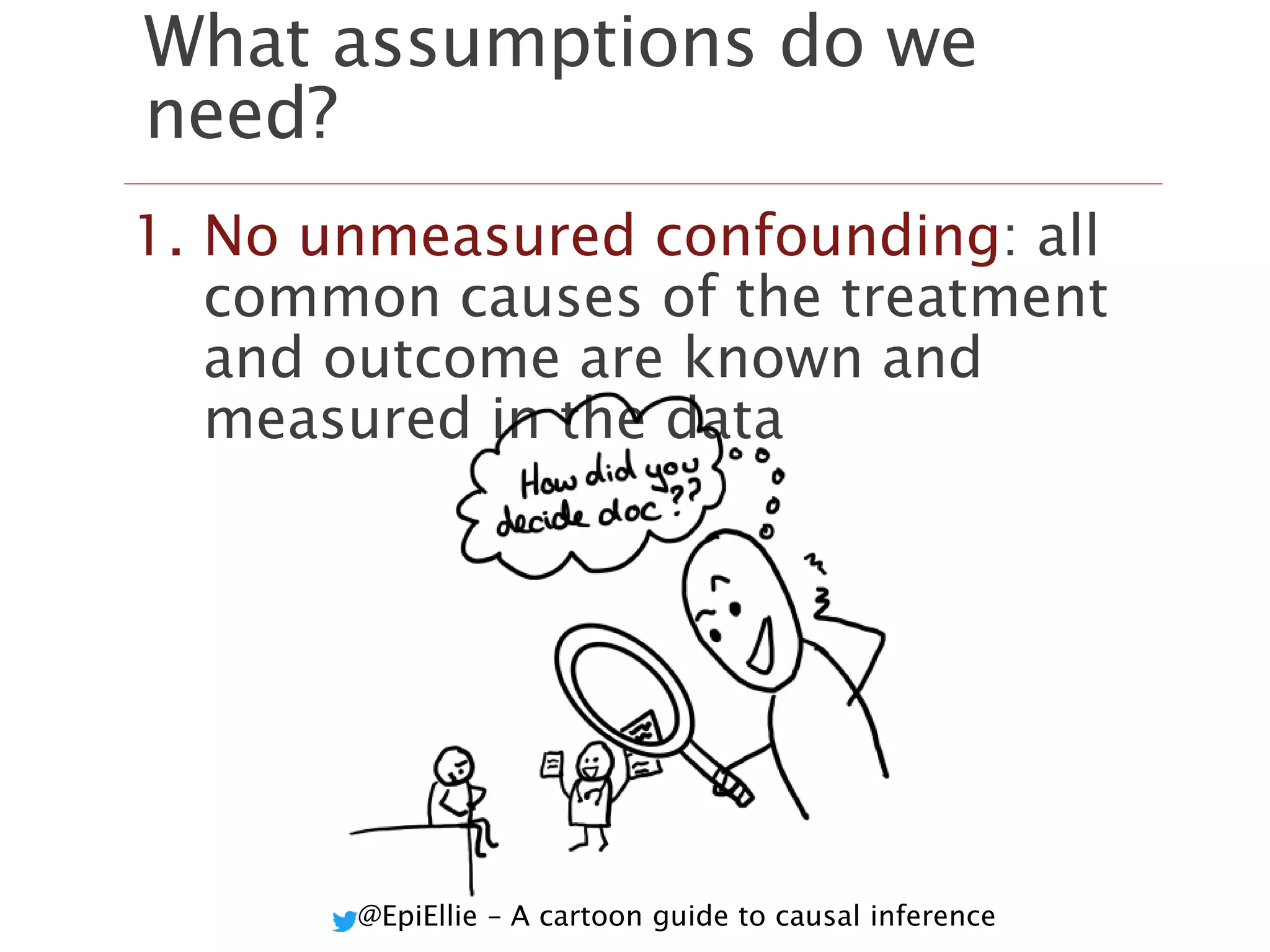
1. No unmeasured confounding: all
common causes of the treatment
and outcome are known and
measured in the data
@EpiEllie – A cartoon guide to causal inference
Intention-to-treat effect has
no unmeasured confounding
@EpiEllie – A cartoon guide to causal inference
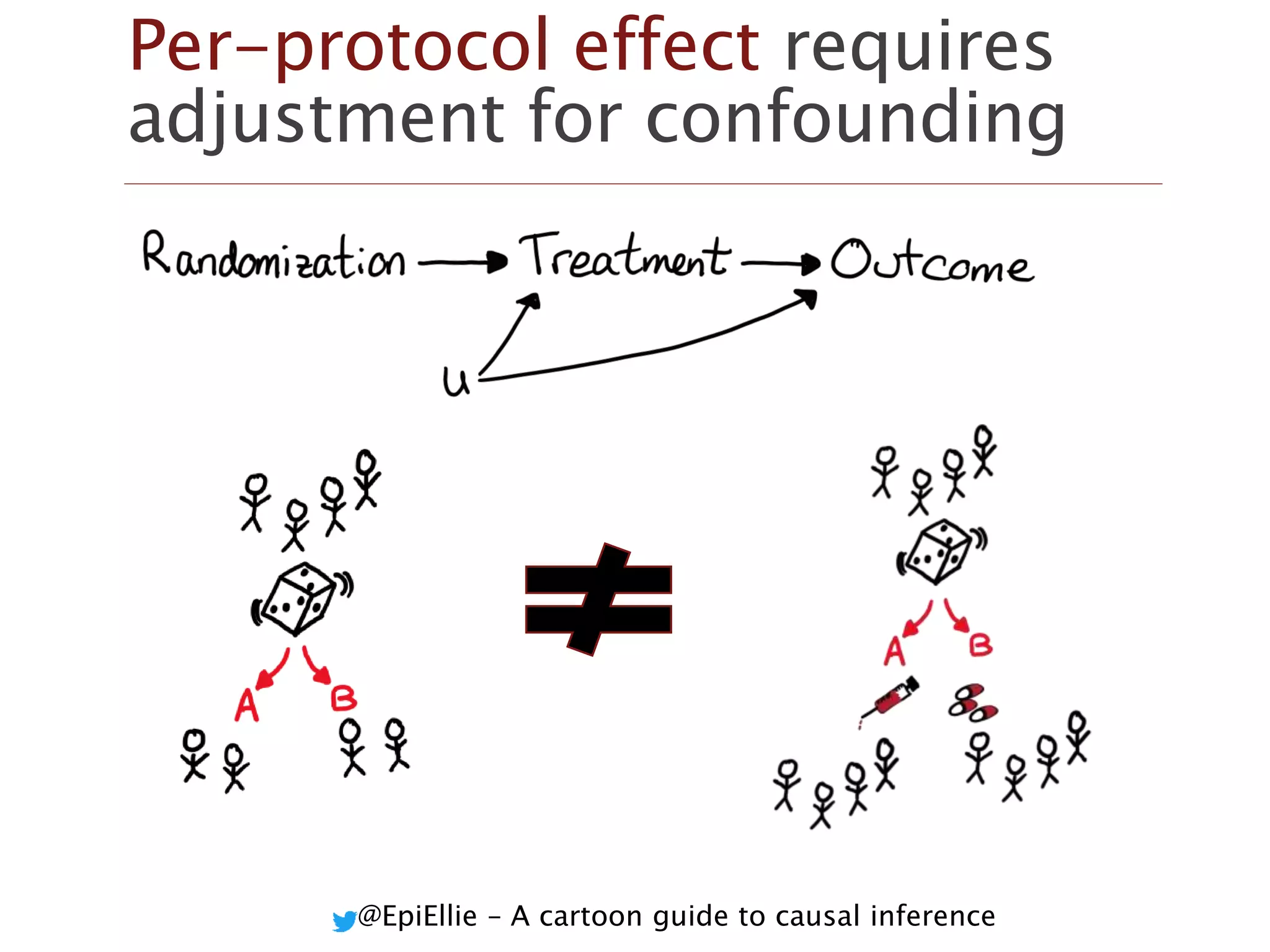
Per-protocol effect requires
adjustment for confounding
@EpiEllie – A cartoon guide to causal inference
What assumptions do we
need?
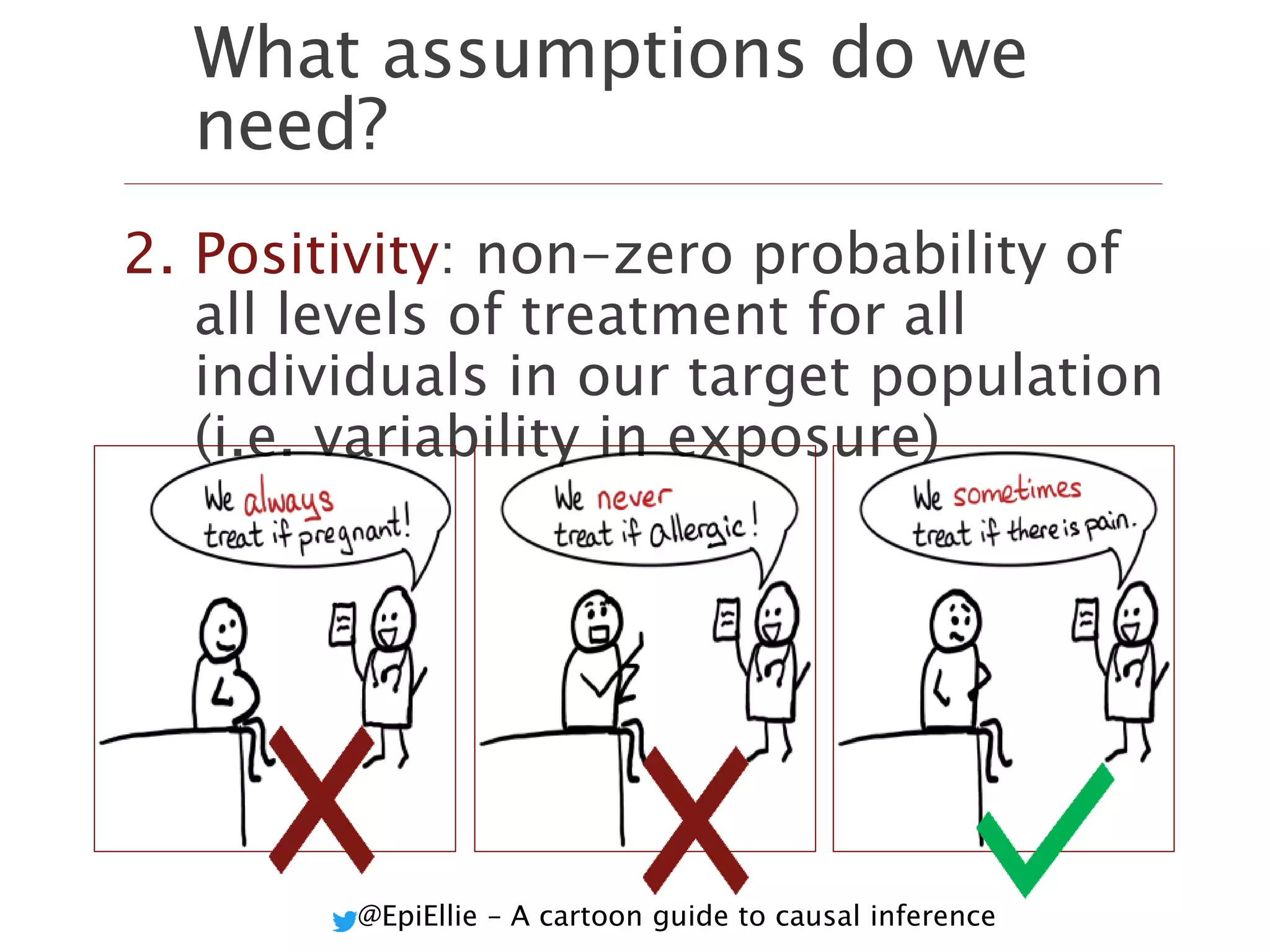
2. Positivity: non-zero probability of
all levels of treatment for all
individuals in our target population
(i.e. variability in exposure)
@EpiEllie – A cartoon guide to causal inference
Positivity can be a problem for
per-protocol effects in:
Randomized
controlled trials
Observation
al studies
@EpiEllie – A cartoon guide to causal inference
&
What assumptions do we
need?
@EpiEllie – A cartoon guide to causal inference
3. Consistency: our treatment levels
are clear and well-defined
 Are we asking a specific enough
question to get an answer we can
understand?
Why are well-defined
interventions important?
When there are multiple possible
‘interventions’ and we don’t specify
one, our answer is a weighted
average of all interventions but we
don’t know the weights
@EpiEllie – A cartoon guide to causal inference
Why are well-defined
interventions important?
But, if the intervention is ill-defined
the confounding is probably also ill-
defined!
@EpiEllie – A cartoon guide to causal inference
Summary
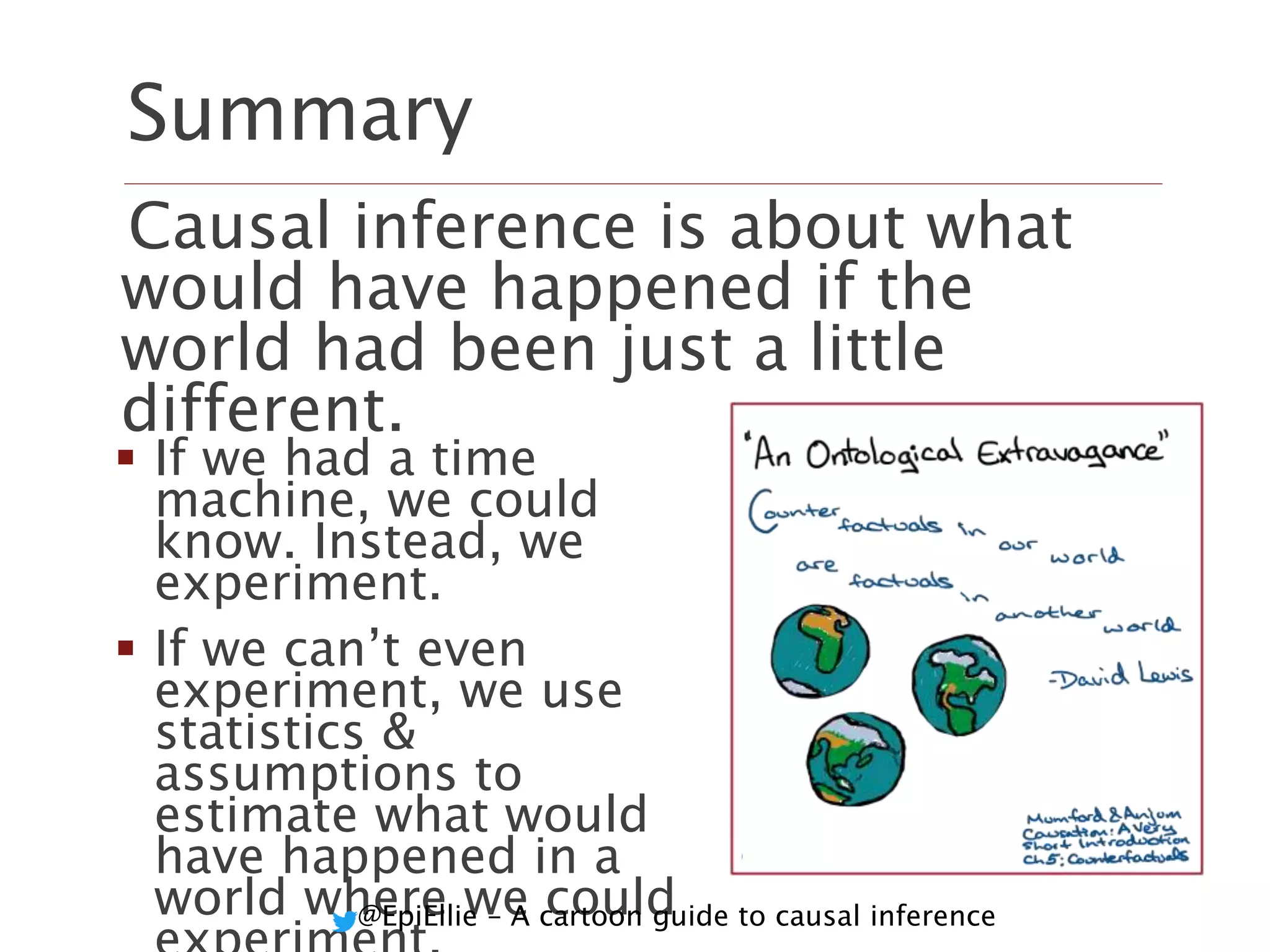
Causal inference is about what
would have happened if the
world had been just a little
different.
 If we had a time
machine, we could
know. Instead, we
experiment.
 If we can’t even
experiment, we use
statistics &
assumptions to
estimate what would
have happened in a
world where we could@EpiEllie – A cartoon guide to causal inference

A Cartoon Guide to Causal Inference

  • 1.
    @EpiEllie A cartoon guide tocausal inference Ellie Murray Department of Epidemiology www.scholar.harvard.edu/eleanorm urray B W H F o r u m f o r A d v a n c e d B i o m e d i c a l C o m p u t a t i o n 2 0 1 9
  • 2.
    What do wewant to know? How would things have changed if the world had been slightly different? @EpiEllie – A cartoon guide to causal inference
  • 3.
    What do wewant to know? If we can’t have a time machine, we’d like to have a randomized trial. If we can’t have a randomized trial, we’d like to emulate what would have happened if we could have done one. @EpiEllie – A cartoon guide to causal inference
  • 4.
    What effects shouldwe estimate? Option 1 Intention-to-treat effects:  How does the outcome change if everyone is randomized to exposure A vs exposure B? @EpiEllie – A cartoon guide to causal inference
  • 5.
    What effects shouldwe estimate? Option 2 Per-protocol effects: How does the outcome change if everyone is receives exposure A vs exposure B? @EpiEllie – A cartoon guide to causal inference
  • 6.
    One way tochoose: patient- centered causal effects Murray EJ, et al. Journal of Clinical Epidemiology. 2018; @EpiEllie – A cartoon guide to causal inference
  • 7.
    One way tochoose: patient- centered causal effects Murray EJ, et al. Journal of Clinical Epidemiology. 2018; @EpiEllie – A cartoon guide to causal inference
  • 8.
    But we can’tjust use the data In randomized trials or in observational studies: if we want to estimate the per- protocol effect (i.e. the treatment effect), we need to make assumptions @EpiEllie – A cartoon guide to causal inference
  • 9.
    What assumptions dowe need? 1. No unmeasured confounding: all common causes of the treatment and outcome are known and measured in the data @EpiEllie – A cartoon guide to causal inference
  • 10.
    Intention-to-treat effect has nounmeasured confounding @EpiEllie – A cartoon guide to causal inference
  • 11.
    Per-protocol effect requires adjustmentfor confounding @EpiEllie – A cartoon guide to causal inference
  • 12.
    What assumptions dowe need? 2. Positivity: non-zero probability of all levels of treatment for all individuals in our target population (i.e. variability in exposure) @EpiEllie – A cartoon guide to causal inference
  • 13.
    Positivity can bea problem for per-protocol effects in: Randomized controlled trials Observation al studies @EpiEllie – A cartoon guide to causal inference &
  • 14.
    What assumptions dowe need? @EpiEllie – A cartoon guide to causal inference 3. Consistency: our treatment levels are clear and well-defined  Are we asking a specific enough question to get an answer we can understand?
  • 15.
    Why are well-defined interventionsimportant? When there are multiple possible ‘interventions’ and we don’t specify one, our answer is a weighted average of all interventions but we don’t know the weights @EpiEllie – A cartoon guide to causal inference
  • 16.
    Why are well-defined interventionsimportant? But, if the intervention is ill-defined the confounding is probably also ill- defined! @EpiEllie – A cartoon guide to causal inference
  • 17.
    Summary Causal inference isabout what would have happened if the world had been just a little different.  If we had a time machine, we could know. Instead, we experiment.  If we can’t even experiment, we use statistics & assumptions to estimate what would have happened in a world where we could@EpiEllie – A cartoon guide to causal inference