PSALM 50 
VERSE BY VERSE COMMETARY EDITED BY GLE PEASE 
I quote many authors both old and new, and if any I quote do not want their wisdom shared in 
this way they can let me know and I will remove it. My e-mail is glenn_p86@yahoo.com 
If a commentator is blank, their comments are in a previous verse, or they had none. 
ITRODUCTIO 
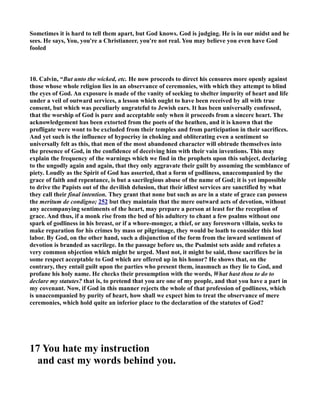
1. CALVI, “There have always been hypocrites in the Church, men who have placed religion in 
a mere observance of outward ceremonies, and among the Jews there were many who turned 
their attention entirely to the figures of the Law, without regarding the truth which was 
represented under them. They conceived that nothing more was demanded of them but their 
sacrifices and other rites. The following psalm is occupied with the reprehension of this gross 
error, and the prophet exposes in severe terms the dishonor which is cast upon the name of God 
by confounding ceremony with religion, showing that the worship of God is spiritual, and consists 
of two parts, prayer and thanksgiving. 
A Song of Asaph. 
The prophet holds up the ingratitude of such persons to our reprobation, as proving themselves 
unworthy of the honor which has been placed upon them, and debasing themselves by a 
degenerate use of this world. From this let us learn, that if we are miserable here, it must be by 
our own fault; for could we discern and properly improve the many mercies which God has 
bestowed upon us, we would not want, even on earth, a foretaste of eternal blessedness. Of this, 
however we fall short through our corruption. The wicked, even while on earth, have a pre-eminency 
over the beasts of the field in reason and intelligence, which form a part of the image of 
God; but in reference to the end which awaits them the prophet puts both upon a level, and 
declares, that being divested of all their vain-glory, they will eventually perish like the beasts. 
Their souls will indeed survive, but it is not the less true that death will consign them to 
everlasting disgrace. 
2. SPURGEO, “Title. A Psalm of Asaph. This is the first of the Psalms of Asaph, but whether 
the production of that eminent musician, or merely dedicated to him, we cannot tell. The titles of 
twelve Psalms bear his name, but it could not in all of them be meant to ascribe their authorship 
to him, for several of these Psalms are of too late a date to have been composed by the same 
writer as the others. There was an Asaph in David's time, who was one of David's chief 
musicians, and his family appear to have continued long after in their hereditary office of temple 
musicians. An Asaph is mentioned as a recorder or secretary in the days of Hezekiah 2 Kings 
18:18, and another was keeper of the royal forests under Artaxerxes. That Asaph did most 
certainly write some of the Psalms is clear from 2 Chronicles 29:30 , where it is recorded that the 
Levites were commanded to sing praises unto the Lord with the words of David, and of Asaph 
the seer, but that other Asaphic Psalms were not of his composition, but were only committed to 
his care as a musician, is equally certain from 1 Chronicles 16:7 , where David is said to have 
delivered a Psalm into the hand of Asaph and his brethren. It matters little to us whether he
wrote or sang, for poet and musician are near akin, and if one composes words and another sets 
them to music, they rejoice together before the Lord. 
Division. The Lord is represented as summoning the whole earth to hear his declaration, Psalms 
50:1-6; he then declares the nature of the worship which he accepts, Psalms 50:7-15, accuses the 
ungodly of breaches of the precepts of the second table, Psalms 50:16-21, and closes the court 
with a word of threatening, Psalms 50:22, and a direction of grace, Psalms 50:23. 
Whole Psalm. The exordium or beginning of this Psalm is the most grand and striking that can 
possibly be imagined -- the speaker GOD, the audience an assembled world! We cannot compare 
or assimilate the scene here presented to us with any human resemblance; nor do I imagine that 
earth will ever behold such a day till that hour when the trumpet of the archangel shall sound 
and shall gather all the nations of the earth from the four winds, from one end of heaven to the 
other; when the dead, small and great, shall stand before God, and the sea shall give up the dead 
which are in it, and death and hell shall deliver up the dead that are in them. Barton Bouchier. 
3. F. B. MEYER, “Asaph is named as the author of this Psalm. Perhaps he who is mentioned in 
1Chr 15:17, 18, 19, and in 2Chr 29:30. The Psalm contains a severe rebuke of the hypocrite who 
contents himself with giving a mere outward obedience to the ritual of God's house, but 
withholds the love and homage of his heart. 
In the earlier part God is represented as coming again, as once at Sinai, to vindicate and explain 
the spiritual requirements of his holy law (Psalm 50:1-6). Then the errors in observing the first 
table are discovered (Psalm 50:8-15), after which the Psalmist indicates the violations of the 
second table (Psalm 50:16-21). Finally there is an impressive conclusion (Psalm 50:22, 23). The 
Psalm is interesting, because it shows how the devout Israelites viewed the Levitical ritual as 
being only the vehicle and expression of the yearnings and worship of the spiritual life, but not of 
any value apart from a recognition of God's claims on the devotion of his people. 
4. MATTHEW STITH, “The arc of the sun, the fire of the divine presence, the radiant beauty of 
Zion, and especially the image of God shining forth offer points of connection to the radiance 
of Jesus, Moses, and Elijah in the Transfiguration story, and preachers whose interpretive focus 
is primarily on that story may find these visual associations valuable to illustrate the frequency 
with which God's presence is depicted in the Bible as being accompanied by bright light. 
However, if the Psalm reading is to be engaged wholly or primarily on its own terms, there are 
other aspects of the text that must be considered. 
The visual imagery of the passage is not invoked for its own sake, nor as a mere testament to the 
glory of the Lord. The blazing divine presence is the power behind an important and far-reaching 
summons. God is calling the heavens above and the earth from the rising of the sun to its 
setting to bear witness to God's actions as judge. God's radiance and power help to establish his 
right to sit in judgment, and the calling of heaven and earth to bear witness establish the scope of 
God's jurisdiction. This passage is more a subpoena than it is a hymn of praise. 
The judge is present and qualified, and the witnesses are summoned. The missing piece of the 
tableau is a defendant, and the identification of the charged party is soon offered, as the Psalmist 
declares that the witnesses were summoned that [God] may judge his people. Furthermore, 
this judgment will have to do with Israel's covenant obligations in some way, as is made clear in
the direct speech of the Lord, Gather to me my faithful ones, who made a covenant with me by 
sacrifice! 
If the interpreter engages only the selected verses, the particulars of the covenant violations with 
which Israel will be charged are not present. That being the case, there is opportunity for 
preaching the importance of covenant faithfulness on the part of God's people, and on the 
consequences of covenant violations, in any number of areas. Such flexibility might aid the 
preacher in bringing the text to bear on the life and context of a given community, but it also 
leaves open the possibility of forced readings that do violence to the sense and aims of the Psalm. 
To prevent such forcing of the text, it is highly advisable to consider the remaining verses of 
Psalm 50, whether or not they are read in worship. The Psalm as a whole offers two general 
indictments of Israel: 
In verses 7-15, Israel's worship practices are called into question. The message here shares many 
features with the common prophetic complaint that the offering of sacrifices has come to take the 
place of true worship of the living God, in a triumph of form over substance. Psalm 50 explicitly 
does not condemn sacrifice per se, but rather challenges a particular understanding of sacrificial 
observance. The Psalmist declares that God will not accept sacrifices from your house or from 
your folds, and then reminds the reader that all of creation, including those things brought for 
sacrifice, already belongs to God. Imagining that one's offerings are a gift to God, or that they 
fulfill some need of God's, is to claim ownership of what belongs only to the Lord. This attitude is 
here condemned as being contrary to Israel's faith and to Israel's covenant commitments. 
Instead, God's people are to treat their offerings as acts of thanksgiving for all that God has done 
and given. Such sacrifices alone, says the Psalm, are acceptable to God. 
In verses 16-21, a similar complaint is lodged against Israel. This time, though, instead of 
sacrifice, it is the recitation and citation of the covenant that is held up for inspection. Again, the 
practice itself is not condemned, but rather the empty and hypocritical speaking of devout words 
while living a rapacious and predatory life. To pay only lip service to God's decrees while living in 
a manner contrary to them is to act as if God is either powerless to enforce the divine will or, as 
the Psalm puts it, one just like yourself, whose words are not backed by actions. 
By following the lead of the whole of Psalm 50, the interpreter can offer specific direction to the 
call to covenant faithfulness issued in the first six verses. God's people, whether in ancient Israel 
or in the church today, are called to attend to the substance and meaning of their religious 
activities and proclamation, and not merely the forms of them. They are called to give offerings 
as an act of thanksgiving, rather than of grudging surrender of what they imagine to be their 
own. They are called to be disciplined and led by the words of the covenant, not merely to recite 
them. The message of Psalm 50 is that in seeking to follow these calls, the people give honor to 
God and are shown the way of God's salvation. 
5. Shauna Hannan, “How do you respond to the words, The boss would like to set up a meeting 
with you? 
Depending upon both your relationship with the boss and your recent performance at work, you 
may be one who is encouraged by this imminent meeting. Finally, a raise! Or you may get that 
proverbial pit in the stomach which screams, Oh oh!
The announcement that God is approaching as judge yields contrasting responses as well. ot 
unlike the way we talk about law and gospel in preaching (that is, the very same word can be 
heard as law to some and gospel to others), the effect of this announcement depends upon the 
stance of the recipient of such news. For some, the announcement that the mighty one, God the 
Lord, will appear is a longed-for event. Yet, for others, it is the impetus for trembling. Yes, it is 
clear that judgment takes center stage in the beginning of this Psalm, but is this welcomed or 
undesirable judgment? Of course, that depends upon what we know about who is doing the 
judging and, secondly, who is being judged. 
Before exploring these two areas (who is doing the judging and who is being judged), it is 
important to be aware that the remaining seventeen verses of Psalm 50 contain a speech made by 
God. Prior to God's actual speech, however, there is an introduction to the keynote speaker. The 
pericope we have before us this week (verses 1-6) is the introduction. From this introduction 
alone, what do we find out about the one who is doing the judging? 
We discover right away that the one who is about to speak is mighty. Also, one cannot miss the 
point that God is being introduced as one who is extremely verbal. In these few verses alone, we 
discover that God speaks, summons, does not keep silent, and calls. This is not a God who wishes 
to speak through others or remain distant. Rather, God brings news directly. God is God's own 
herald. 
In addition, there are two other characteristics of the forthcoming speaker worthy of the 
preacher's exploration. First, God comes out of the perfection of beauty, and second, God comes 
with some special effects; surrounded by devouring fire and encircled by a mighty tempest. 
Because the reputation and character of the one who speaks makes a difference in how that one is 
heard, it is worth exploring these characteristics. Even more, consider the extent to which these 
characteristics of God are consistent with the characteristics you or others in your congregation 
would highlight when introducing God. (That is assuming God is the planned keynote speaker for 
this Transfiguration Sunday!) 
ot only do these characteristics speak of who God is, but the heavens chime in to put in their 
good word. One cannot find a more trustworthy witness. The one who is about to speak comes 
with stellar recommendations. The forthcoming theophany is not to be missed; indeed, cannot be 
missed. 
Another way to discover whether or not the impending judgment is welcome or undesirable is by 
examining who is being judged. First, we hear that God summons the whole earth. Interestingly, 
the breadth of this summons is not described (as some translations would suggest) in spatial 
terms, but temporal. God does not beckon people from the East and West, orth and South, but 
instead, all people for all time, past, present, and future, from the rising of the sun to its setting. 
Therefore, immediately in the Psalm, we in the twenty-first century are drawn into this text. The 
stage is being set for a broadcast in its broadest sense, for no one is excluded or exempt from the 
forthcoming judgment. 
Eventually, however, we find that the intended audience is narrowed (verse 5). God appears to be 
calling specifically to God's faithful ones, the ones who made a covenant with God by sacrifice. 
We still do not know whether or not God's people have been faithful in their covenant with God. 
(It is worth noting, however, that God did not call them unfaithful ones.) All we know is that
the hearers being summoned will have one role, and that role will be to listen. 
If Psalm 50 were to be the focal point for the Sunday sermon, the Psalm would have to be treated 
in its entirety. It seems, however, that Transfiguration Sunday calls for this pericope to serve the 
sermon as it does the remainder of the Psalm. In other words, it acts as an introduction to a 
forthcoming appearance by God. ot only is Psalm 50:1-6 a suitable precursor to the theophany 
in Mark 9, the questions and concerns that arise out of this text might be appropriated in order 
to explore the Transfiguration of Jesus. 
6. Brenda Barrows, “The Larger Picture: 
This six-verse pericope introduces a prophetic psalm of judgment (see Mays), whose later verses 
lay out specific charges against God’s chosen people. Psalm 50 goes beyond rebuke and the threat 
of punishment, directing the faithful to reject mechanical worship and corrupt behavior and to 
offer sincere thanksgiving and praise for their creator. In this context, it has been pointed out that 
Psalm 51’s prayer for cleansing and pardon serves as an appropriate confession of sin and 
commitment to reform along the lines mapped out in Psalm 50 (see Schaefer). 
Some Details: 
Ecological setting: God calls the entire natural world to witness in the case. The scope of 
creation’s witness extends from sunrise to sunset (v.1) and from the height of the heavens down to 
the earth (v.4). Later in the psalm (vv. 10-12), it is pointed out that God owns all of creation, and 
does not need human sacrifice. 
God is not an outsider: It is from within this natural context that God’s glory shines forth in Zion 
(v. 2) (see “God’s Grandeur,” Gerard Manley Hopkins, http://www.bartleby.com/122/7.html). 
God uses the forces of nature (devouring fire, whirling tempest) not only to demonstrate power 
but also to communicate (does not keep silent) (v.3). It even appears that God requires this 
natural context “that he may judge” God’s people (v.4). It is the heavens that “declare [God’s] 
righteousness” – witnessing to God’s appropriate role as judge (v.6) 
God’s judgment is intimate: The verb translated as “summons” in v.1 of the RSV accurately 
reflects the psalm’s legal setting, but that same verb is more commonly translated simply as “calls 
to,” as in v.4. The God-that-summons calls out personally, “Gather to me my faithful ones, who 
made a covenant with me…” (v. 5) Further, the verb translated “judge” in v. 4 may carry the 
connotation of “pleading a case” in behalf of someone (see BDB). If a courtroom scene is depicted 
by Psalm 50, it is a family council where the judge knows everyone and prefers reformed 
behavior to vengeful punishment. 
Food for Thought 
Lectionary readings consistently snip out the hard words of the psalms, leaving only words of 
praise. There is nothing wrong with praise! However, Psalm 50 demonstrates that God requires
worshipers to struggle with the significance of their worship and to move away from 
mechanically tossed-off prayer, praise, and thanksgiving. By expurgating the hard facts laid out 
in later verses of Psalm 50, could the lectionary actually contribute to the very type of behavior 
against which we are being warned? 
Sink Your Teeth Into This 
Years ago, a new second-career student came to my office to discuss plans for life at seminary. 
The student remarked that he had already completed a successful career, and was now able to 
“give something back to God.” At the time, I thought of the parable of the rich young ruler, and 
wondered if the student knew exactly how much he might need to give up. Today’s work with 
Psalm 50 brings that past conversation to mind yet again. We have many high achievers at 
Union-PSCE, and it is a delight to see their varied gifts being polished to serve the church. At the 
same time, Psalm 50 offers a strong and helpful reminder that each of us owes everything – 
property, family, personal attributes, the very ground we stand on – to God. We have nothing of 
our own to give to God – except our gratitude. The astonishing good news is that gratitude is 
exactly what God has always wanted. 
7. Dr. Marshall C. St. John, Introduction: At one time or another in your life you will probably 
become interested in your genealogy. You may attempt to trace your family tree as far back as 
you can. But that's just the nuts and bolts of genealogy. A deeper question, and much more 
difficult to answer: what were my ancestors LIKE? What sort of man or woman was my great 
grandfather or great grandmother? It is hard enough to start with our own parents. What sort of 
person was my mother? My father? As Christians, we believe in God. But we want to know more. 
What sort of Person is my Heavenly Father? Theologians call this the study of THEOLOGY. 
Psalm 50 tells us a lot of basic truth about God, so I call this Psalm, THEOLOGY 101. Today I 
would like to highlight four facts about God that are brought out in this Psalm: 
I. God is Omnipotent (verse 1). 
Psa 50:1 The Mighty One, God, the LORD, speaks and summons the earth from the rising of the 
sun to the place where it sets. 
In this verse God is called The Mighty One. And an illustration of His power is given: His 
power over all the earth, from ultimate East to ultimate West. His power is universal. 
Theologians have three words to describe God that all begin with the word Omni, which is 
Latin for all. 
• God is omniscient = all knowing 
• God is omnipresent = He is everywhere simultaneously 
• God is omnipotent = He has ultimate power 
How powerful is God? Job caught a glimpse of God's power: 
Job 9:4 His wisdom is profound, his power is vast. Who has resisted him and come out 
unscathed? 
Job 9:5 He moves mountains without their knowing it and overturns them in his anger. 
Job 9:6 He shakes the earth from its place and makes its pillars tremble.
Job 9:7 He speaks to the sun and it does not shine; he seals off the light of the stars. 
Job 9:8 He alone stretches out the heavens and treads on the waves of the sea. 
Job 9:9 He is the Maker of the Bear and Orion, the Pleiades and the constellations of the south. 
Job 9:10 He performs wonders that cannot be fathomed, miracles that cannot be counted. 
Job 9:11 When he passes me, I cannot see him; when he goes by, I cannot perceive him. 
Job 9:12 If he snatches away, who can stop him? Who can say to him, 'What are you doing?' 
Jeremiah said: 
Jer 10:12 ...God made the earth by his power; He founded the world by His wisdom and 
stretched out the heavens by His understanding. 
God made all things, and He controls every human being, every animal, every act of history. It is 
all in God's almighty hands. His power is infinite. He is the Almighty One! 
II. God Speaks (Ps. 50:1, 3, 7) 
The Mighty One, God, the LORD, speaks and summons the earth from the rising of the sun to 
the place where it sets...Our God comes and will not be silent...Hear, O my people, and I will 
speak, O Israel... 
Theologians use the word REVELATIO when they consider how God communicates with us. 
They speak of General Revelation and Special Revelation. 
General Revelation teaches us that God has spoken all over the world by means of creation, and 
by means of conscience. Every human being everywhere has heard the voice of God through 
General Revelation. 
Psa 19:1 The heavens declare the glory of God; the skies proclaim the work of his hands. 
Psa 19:2 Day after day they pour forth speech; night after night they display knowledge. 
Psa 19:3 There is no speech or language where their voice is not heard. 
Psa 19:4 Their voice goes out into all the earth, their words to the ends of the world. 
Rom 1:18 The wrath of God is being revealed from heaven against all the godlessness and 
wickedness of men who suppress the truth by their wickedness, 
Rom 1:19 since what may be known about God is plain to them, because God has made it plain to 
them. 
Rom 1:20 For since the creation of the world God's invisible qualities--his eternal power and 
divine nature--have been clearly seen, being understood from what has been made, so that men 
are without excuse. 
Rom 2:14 (Indeed, when Gentiles, who do not have the law, do by nature things required by the 
law, they are a law for themselves, even though they do not have the law, 
Rom 2:15 since they show that the requirements of the law are written on their hearts, their 
consciences also bearing witness, and their thoughts now accusing, now even defending them.) 
God has spoken most fully to us in the person of His Son Jesus Christ, and in the written Word of 
God, whereby we learn of the living Word of God. The Bible is inspired by God. 2 Tim 3:16 All 
Scripture is God-breathed. It is the breath of God Himself, and when we read it the Holy Spirit 
illuminates our hearts, and makes us understand. 
1 Cor 2:9 However, as it is written: o eye has seen, no ear has heard, no mind has conceived 
what God has prepared for those who love him-- 
1 Cor 2:10 but God has revealed it to us by his Spirit. The Spirit searches all things, even the deep 
things of God.
III. God is Righteous (Psalm 50:6). 
...the heavens proclaim his righteousness. 
Psa 11:7 For the LORD is righteous, he loves justice; upright men will see his face. 
Psa 119:137 Righteous are you, O LORD, and your laws are right. 
Psa 119:138 The statutes you have laid down are righteous; they are fully trustworthy. 
Psa 145:17 The LORD is righteous in all his ways and loving toward all he has made. 
Rev 15:4 Who will not fear you, O Lord, and bring glory to your name? For you alone are holy. 
All nations will come and worship before you, for your righteous acts have been revealed. 
God is utterly holy in all His thoughts, words and deeds. There is no sin in God whatsoever. He is 
always just, always fair, always righteous, always holy, always good, in every possible way. He is 
so good that even the holy angels in Heaven cannot bear to see God. 
Isa 6:1 In the year that King Uzziah died, I saw the Lord seated on a throne, high and exalted, 
and the train of his robe filled the temple. 
Isa 6:2 Above him were seraphs, each with six wings: With two wings they covered their faces, 
with two they covered their feet, and with two they were flying. 
Isa 6:3 And they were calling to one another: Holy, holy, holy is the LORD Almighty; the whole 
earth is full of his glory. 
It is the holiness of God that accounts for the death of Jesus on the cross. God could not simply 
decree I forgive your sins. God could not just sweep our sins under the rug and not think about 
them. God was compelled by His own righteousness to DO SOMETHIG DRASTIC about our 
sins, in order that He might love us, and receive us to Himself. So He sent His Son to make the 
ultimate sacrifice, in order that our sins might be literally washed away and expunged by the 
blood of Jesus. 
IV. God invites us to worship Him (Psalm 50:5,8,14-15). 
Psa 50:5 Gather to me my consecrated ones, who made a covenant with me by sacrifice. 
Psa 50:8 I do not rebuke you for your sacrifices or your burnt offerings, which are ever before 
me. 
Psa 50:14 Sacrifice thank offerings to God, fulfill your vows to the Most High, 
Psa 50:15 and call upon me in the day of trouble; I will deliver you, and you will honor me. 
This morning we have gathered here in this place to worship God. I hope you have been 
worshipping Him. Worship isn't something that happens to you when you go to church. If you 
have no ITETIO to worship, you won't worship. If you MAKE O EFFORT to worship, 
you won't worship. When we enter this place, we must turn our thoughts toward God. When we 
pray, we must pray from the heart. When we sing our hymns, we must concentrate, and offer our 
singing to God. When we hear the special music, it is not just to be entertained. We must take 
that music and in our hearts adore the Lord, and offer Him our praise and adoration. When we 
hear the sermon, we must think hard about the meaning of God's Word, and offer our hearts, 
minds and wills to God. That's what worship is all about. But it is UP TO YOU. Worship doesn't 
happen to you. Worship is something you make up your mind to do, and you DO IT. 
Conclusion: What have we learned about God today in Theology 101? 
• 1. That God is Almighty. 
• 2. That God has spoken, and continues to speak in creation, by conscience, and in His 
written Word.
• 3. That God is utterly righteous and holy. 
• 4. That God graciously invites us to worship Him. 
8. BILL LOG, “I have given this exposition the colorful (I hope!) title of o Bull because of 
the (unintended) humorous translation of v. 9 in the Revised Standard Version and other older 
Bible translations. Perhaps that is why our reading stops at v. 8 after all. Verse 9 used to say, I 
will accept no bull from your house. ow, the RSV, without comment of course, has cleaned 
it up to say, I will not accept a bull from your house. I sort of preferred the old translation! 
Psalm 50 is a fine illustration of the point I have frequently made about the Psalms--that they are, 
in fact, orientation exhortations. That is, their primary purpose is not to tell a story or to 
declare Thus says the Lord, or to give instruction in wise dealing in life. Their primary 
purpose is to deal with a deep human emotion or spiritual need, and to exhort us to (re)orient 
ourselves to God. In this Psalm the emotion dealt with is thanksgiving or gratitude. We should 
offer sacrifices to God; but only those which are given with thanksgiving, with a heart directed 
rightly to God, will be acceptable to God. This theme is reflected throughout the Scriptures, with 
Paul being one of the best biblical writers on gratitude. So let each one give as he purposes in his 
heart, not grudgingly or of necessity; for God loves a cheerful giver (II Cor. 9:7). We are 
exhorted to gratitude because our tendency is not to be grateful. We like to whine, complain, and 
otherwise stress our victimization. But this Psalm won't let us go there. 
One of the arresting things about this Psalm is its literary form. Rather than beginning with a 
statement of gratitude, or distress, or a declaration of love, or a recital of God's deeds in the past, 
the author begins with a theophany--a description of God's coming. This theophany is 
wrapped in prophetic-type language. There is also the language of lawsuit. It is God the Lord, 
who shines forth from Zion, who is coming to speak to us. God is coming, and will God be 
pleased? Or, in the language of the reading from Luke for this week, will we be ready? Three 
points help us focus on the Psalm's lesson for us: (1) The Coming of God; (2) The Basic Principle 
of the Passage; and (3) a Warning. Each deserves brief mention. 
Three points about the divine coming or theophany are the language of lawsuit, God as light or 
fire, and natural world as witnesses to God's word. The opening words of the Psalm are 
reminiscent of the great prophetic lawsuit passages, where God is portrayed as initiating a suit 
with the people. One example will suffice. In Mic. 6, God is about to indict the people for 
faithlessness. We have: 
1 Hear what the Lord says: 
Rise, plead your case before the mountains, 
and let the hills hear your voice. 
2 Hear, you mountains, the controversy of the Lord, 
and you enduring foundations of the earth; 
for the Lord has a controversy with his people, 
and he will contend with Israel. 
God can bring a lawsuit (reeb in Hebrew) because of the covenant between God and the people. 
Disobedience to that covenant by either party allows the non-offending party to bring the other to 
book. This is what is happening here.
God shines forth out of Zion. Many biblical passages stress the light-like character of God. 
My favorite is from Ps. 104. 
You are clothed with honor and majesty, 
wrapped in light as with a garment (vv. 1-2). 
Sometimes God can be said to dwell in darkness or deep darkness (Ps. 18:11), but more 
frequently God's dwelling is in light. ote the biblical connection between light and fearlessness: 
The Lord is my light and my salvation; 
whom shall I fear? 
The Lord is the stronghold of my life; 
of whom shall I be afraid? (Ps. 27:1-2). 
The Psalmist is more precise here about the type of light in mind. It is fire. God is not just some 
5000 watt bulb shining from the heavens or coming to the earth. God appears in a fire. Perhaps 
the author is thinking of God's original theophany to Moses in the fire of the burning bush or in 
the smoke, clouds and fire of Sinai. He doesn't say. But the fire here is a devouring one. The 
language is reminiscent of Deut. 4 and 9. 
For the Lord your God is a devouring fire, a jealous God (4:24)....Has any people 
ever heard the voice of a god speaking out of a fire, as you have heard, and lived? 
(4:33)....Know then today that the Lord your God is the one who crosses over before 
you as a devouring fire... (9:3). 
Finally, when God comes, the divine will call creation to witness of the truth and seriousness of 
the divine words. 
He calls to the heavens above/ and to the earth, that he may judge his people (Ps. 
50:4). 
Calling upon inanimate nature to witness a covenant or a covenant lawsuit is also something that 
is known in the Bible and in Ancient ear Eastern literature generally. When Joshua sealed the 
covenant with the people of Israel before his death, he took a large stone, and set it up at the 
covenanting spot under the oak in the sanctuary of the Lord. Then he said: 
See, this stone shall be a witness against you, if you deal falsely with your God 
(24:26f.) 
God is coming, and is God serious! 
II. The Simple Message 
But God's message, upon arrival, is really quite simple. A child can understand it, but the most 
mature individual still has to put all his/her effort into it to realize it. God speaks about sacrifices, 
those little things we offer to God which say that we will do X for God or that we are fully 
dedicated to God's service. God wants to talk to us. Gather to me my faithful ones, who made a 
covenant with me by sacrifice (v. 5). This gathering is the accountability meeting. God will 
have a beef to pick with us. 
The central point of God's complaint is that our sacrifices are missing their chief ingredient-- 
gratitude. They might be made reluctantly or even bitterly, but they are given without the
requisite thanksgiving. Then, the passage (not in our reading) goes on to make God's complaint 
more precise. ot only do the ones sacrificing continue to practice deceit and laziness, but they 
seem to think that they are giving something to God from their possessions. It is as if the mind of 
the sacrificer works like this: I can afford to give God this sheep or this goat. It is not exactly 
the attitude which gives the damaged goods to God, the ones you can't eat anyway, but it is 
similar to it. God forestalls that attitude immediately: For every wild animal of the forest is 
mine, the cattle on a thousand hills. I know all the birds of the air, and all that moves in the field 
is mine (50:10-11). 
That is, it already is God's. It is not as if we are giving something to God which God doesn't 
already have. Thus, what is really in view in sacrifice is the offering of the heart, the heart turned 
in gratitude to God. But, and I stress this point, it would not be sufficient just to say, 'Well, God is 
only interested in the heart. Therefore, I will dispense with sacrifices. I will keep the goats and 
bulls, supping on them with friends, giving thanks to God the whole time.' ope, this won't work. 
We aren't really thankful to God unless we freely give to God what already belongs to God. But 
we need to part with things that are necessary to us in life. But give it with gratitute, with 
thanksgiving that we have something to give and that God is our God and will receive it and bless 
us. 
III. A Warning 
It would be nice if the Scriptures just ended with the exhortation or the good news. Just do X 
and you will be blessed. But there is often a warning appended. I don't really like warnings, but 
sometimes they are salutary. We need them because we are heedless of danger and we don't really 
see the serious consequences of a lot of what we do. We tend to focus too much on ourselves and 
the contours of our often-puny worlds. We ignore larger dimensions of the world in which we are 
placed. We don't think that our actions will have repercussions. 
But sometimes they do. And that is the purpose of v. 22 of the Psalm. otice the somberness of it: 
Mark this, then, you who forget God,/ or I will tear you apart, and there will be no 
one to deliver. 
Oops. It looks like God takes things very seriously, that the coming of God was not just to sidle 
up next to us to watch an HBO Special. The coming of God was filled with the fire that burns as 
well as warms. But here the language of fire has disappeared and we have an image from the 
animal kingdom. In view is the lion or wild beast that tears asunder. The image is also present in 
the prophecy of Hosea. When Israel (Ephraim in the passage) was in trouble, it sought help from 
foreign kings rather than from God. Here is what happened: 
When Ephraim saw his sickness, 
and Judah his wound, 
then Ephraim went to Assyria, 
and sent to the great king. 
But he is not able to cure you 
or heal your wound. 
For I will be like a lion to Ephraim, 
and like a young lion to the house of Judah. 
I myself will tear and go away; 
I will carry off, and no one shall rescue... (Hos. 5:13-14). 
God can speak through the Psalmist about tearing them limb from limb because God has already
rehearsed the divine lines in this Hosea passage. 
Conclusion 
The Scriptures will not let us avoid the point, even in our permissive age and time, that there are 
repercussions to our actions. There is a piper to pay, a toll that our actions take. Orienting 
ourselves rightly to God through thanksgiving and gratitude will go a long way, however, to 
making sure that the rhythms of our lives and the longings of our hearts will lead to good and not 
to the fearsome fire or tearing limbs of the divine judgment. 
A psalm of Asaph. 
1 The Mighty One, God, the LORD, 
speaks and summons the earth 
from the rising of the sun to where it sets. 
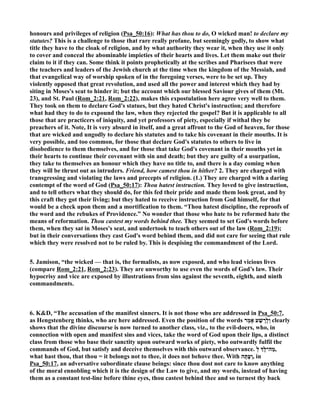
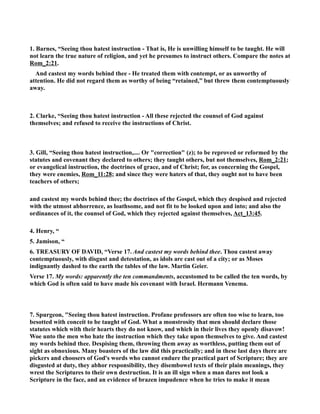
1. Barnes, “The mighty God, even the Lord - Even “Yahweh,” for this is the original word. The 
Septuagint and Vulgate render this “The God of gods, the Lord.” DeWette renders it, “God, God 
Jehovah, speaks.” Prof. Alexander, “The Almighty, God, Jehovah, speaks;” and remarks that the 
word “mighty” is not an adjective agreeing with the next word (“the mighty God”), but a 
substantive in apposition with it. The idea is, that he who speaks is the true God; the Supreme 
Ruler of the universe. It is “that” God who has a right to call the world to judgment, and who has 
power to execute his will. 
Hath spoken - Or rather, “speaks.” That is, the psalmist represents him as now speaking, and 
as calling the world to judgment. 
And called the earth - Addressed all the inhabitants of the world; all dwellers on the earth. 
From the rising of the sun unto the going down thereof - From the place where the sun seems to 
rise, to the place where it seems to set; that is, all the world. Compare the notes at Isa_59:19. See 
also Mal_1:11; Psa_113:3. The call is made to all the earth; to all the human race. The scene is 
imaginary as represented by the psalmist, but it is founded on a true representation of what will 
occur - of the universal judgment, when all nations shall be summoned to appear before the final 
Judge. See Mat_25:32; Rev_20:11-14. 
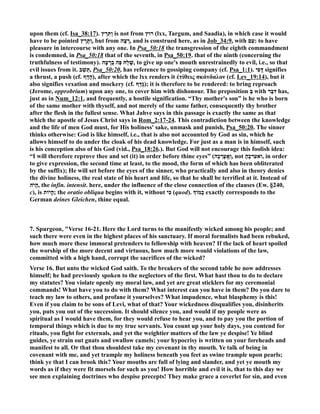
2. Clarke, “The mighty God, even the Lord, hath spoken - Here the essential names of God are 
used: אל אלהים יהוה El, Elohim, Yehovah, hath spoken. The six first verses of this Psalm seem to 
contain a description of the great judgment: to any minor consideration or fact it seems 
impossible, with any propriety, to restrain them. In this light I shall consider this part of the
Psalm, and show: - 
First, The preparatives to the coming of the great Judge. El Elohim Jehovah hath spoken, and 
called the earth - all the children of men from the rising of the sun unto the going down thereof. 
Out of Zion, the perfection of beauty, ( מכלל יפי michlal yophi, the beauty where all perfection is 
comprised), God hath shined, Psa_50:1, Psa_50:2. 
1. He has sent his Spirit to convince men of sin, righteousness, and judgment. 
2. He has sent his Word; has made a revelation of himself; and has declared both his law and 
his Gospel to mankind: “Out of Zion, the perfection of beauty, God hath shined,” Psa_50:2. 
For out of Zion the law was to go forth, and the word of the Lord from Jerusalem. Isa_2:3. 
Secondly, The accompaniments. 
1. His approach is proclaimed, Psa_50:3 : “Our God shall come.” 
2. The trumpet proclaims his approach: “He shall not keep silence.” 
3. Universal nature shall be shaken, and the earth and its works be burnt up: “A fire shall 
devour before him and it shall be very tempestuous round about him,” Psa_50:3. 
Thirdly, The witnesses are summoned and collected, and collected from all quarters; some 
from heaven, and some from earth. 
1. Guardian angels. 
2. Human associates: “He shall call to the heavens from above, and to the earth, that he may 
judge his people,” Psa_50:4. 
Fourthly, The procedure. As far as it respects the righteous, orders are issued: “Gather my 
saints,” those who are saved from their sins and made holy, “together unto me.” And that the 
word saints might not be misunderstood it is explained by “those that have made a covenant with 
me by sacrifice;” those who have entered into union with God, through the sacrificial offering of 
the Lord Jesus Christ. All the rest are passed over in silence. We are told who they are that shall 
enter into the joy of their Lord, viz., only the saints, those who have made a covenant with God 
by sacrifice. All, therefore, who do not answer this description are excluded from glory. 
Fifthly, The final issue: all the angelic hosts and all the redeemed of the Lord, join in 
applauding acclamation at the decision of the Supreme Judge. The heavens (for the earth is no 
more, it is burnt up) shall declare his righteousness, the exact justice of the whole procedure, 
where justice alone has been done without partiality, and without severity, nor could it be 
otherwise, for God is Judge himself. Thus the assembly is dissolved; the righteous are received 
into everlasting glory, and the wicked turned into hell, with all those who forget God. Some think 
that the sentence against the wicked is that which is contained, Psa_50:16-22. See the analysis at 
the end, and particularly on the six first verses, in which a somewhat different view of the subject 
is taken. 
3. Gill, “The mighty God,.... In the Hebrew text it is El, Elohim, which Jarchi renders the 
God of gods; that is, of angels, who are so called, Psa_8:5; so Christ, who is God over all, is 
over them; he is their Creator, and the object of their worship, Heb_1:6; or of kings, princes, 
judges, and all civil magistrates, called gods, Psa_82:1; and so Kimchi interprets the phrase here
Judge of judges. Christ is King of kings, and Lord of lords, by whom they reign and judge, and 
to whom they are accountable. The Targum renders it the mighty God; as we do; which is the 
title and name of Christ in Isa_9:6; and well agrees with him, as appears by his works of creation, 
providence, and redemption, and by his government of his church and people; by all the grace, 
strength, assistance, and preservation they have from him now, and by all that glory and 
happiness they will be brought unto by him hereafter, when raised from the dead, according to 
his mighty power. It is added, 
even the Lord, hath spoken: or Jehovah, Some have observed, that these three names, El, 
Elohim, Jehovah, here mentioned, have three very distinctive accents set to them, and which 
being joined to a verb singular, דבר , hath spoken, contains the mystery of the trinity of Persons 
in the unity of the divine Essence; see Jos_22:22; though rather all the names belong to Christ the 
Son of God, and who is Jehovah our righteousness, and to whom, he being the eternal Logos, 
speech is very properly ascribed. He hath spoken for the elect in the council and covenant of 
grace and peace, that they might be given to him; and on their behalf, that they might have grace 
and glory, and he might be their Surety, Saviour, and Redeemer. He hath spoken all things out of 
nothing in creation: he spoke with. Moses at the giving of the law on Mount Sinai: he, the Angel 
of God's presence, spoke for the Old Testament saints, and spoke good and comfortable words 
unto them: he hath spoken in his own person here on earth, and such words and with such 
authority as never man did; and he has spoken in his judgments and providences against the 
Jews; and he now speaks in his Gospel by his ministers: wherefore it follows, 
and called the earth from the rising of the sun unto the going down thereof; which may be 
considered as a preface, exciting attention to what is after spoken, as being of moment and 
importance; see Deu_32:1; or as calling the earth, and so the heavens, Psa_50:4, to be witnesses 
of the justness and equity of his dealings with the Jews, for their rejection of him and his Gospel; 
see Deu_4:26; or rather as a call to the inhabitants of the earth to hear the Gospel; which had its 
accomplishment in the times of the apostles; when Christ having a people, not in Judea only, but 
in the several parts of the world from east to west, sent them into all the world with his Gospel, 
and by it effectually called them through his grace; and churches were planted everywhere to the 
honour of his name; compare with this Mal_1:11. 
4. Henry, “It is probable that Asaph was not only the chief musician, who was to put a tune to this 
psalm, but that he was himself the penman of it; for we read that in Hezekiah's time they praised 
God in the words of David and of Asaph the seer, 2Ch_29:30. 
5. Jamison, “Psa_50:1-23. In the grandeur and solemnity of a divine judgment, God is introduced 
as instructing men in the nature of true worship, exposing hypocrisy, warning the wicked, and 
encouraging the pious. 
The description of this majestic appearance of God resembles that of His giving the law 
(compare Exo_19:16; Exo_20:18; Deu_32:1). 
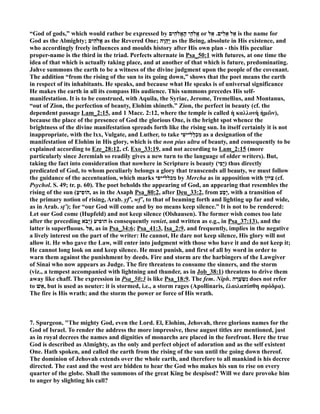
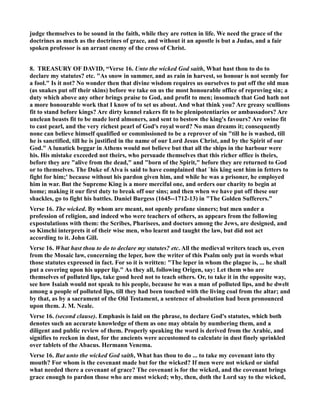
6. KD, “The theophany. The names of God are heaped up in Psa_50:1 in order to gain a 
thoroughly full-toned exordium for the description of God as the Judge of the world. Hupfeld 
considers this heaping up cold and stiff; but it is exactly in accordance with the taste of the 
Elohimic style. The three names are co-ordinate with one another; for הִים c אֵל אֱ does not mean
“God of gods,” which would rather be expressed by הִים c הֵי הָאֱ c אֱ or אֵל אֵלִים. אֵ ל is the name for 
God as the Almighty; הִים c אֱ as the Revered One; יַהֲֽוֶה as the Being, absolute in His existence, and 
who accordingly freely influences and moulds history after His own plan - this His peculiar 
proper-name is the third in the triad. Perfects alternate in Psa_50:1 with futures, at one time the 
idea of that which is actually taking place, and at another of that which is future, predominating. 
Jahve summons the earth to be a witness of the divine judgment upon the people of the covenant. 
The addition “from the rising of the sun to its going down,” shows that the poet means the earth 
in respect of its inhabitants. He speaks, and because what He speaks is of universal significance 
He makes the earth in all its compass His audience. This summons precedes His self-manifestation. 
It is to be construed, with Aquila, the Syriac, Jerome, Tremellius, and Montanus, 
“out of Zion, the perfection of beauty, Elohim shineth.” Zion, the perfect in beauty (cf. the 
dependent passage Lam_2:15, and 1 Macc. 2:12, where the temple is called ἡ καλλονὴ ἡμῶν), 
because the place of the presence of God the glorious One, is the bright spot whence the 
brightness of the divine manifestation spreads forth like the rising sun. In itself certainly it is not 
inappropriate, with the lxx, Vulgate, and Luther, to take מִכְלַל־יפִֹי as a designation of the 
manifestation of Elohim in His glory, which is the non pius ultra of beauty, and consequently to be 
explained according to Eze_28:12, cf. Exo_33:19, and not according to Lam_2:15 (more 
particularly since Jeremiah so readily gives a new turn to the language of older writers). But, 
taking the fact into consideration that nowhere in Scripture is beauty ( יֳפִי ) thus directly 
predicated of God, to whom peculiarly belongs a glory that transcends all beauty, we must follow 
the guidance of the accentuation, which marks מכלל־יפי by Mercha as in apposition with צִיּוֹן (cf. 
Psychol. S. 49; tr. p. 60). The poet beholds the appearing of God, an appearing that resembles the 
rising of the sun ( הוֹפִיעַ , as in the Asaph Psa_80:2, after Deu_33:2, from יָפַע , with a transition of 
the primary notion of rising, Arab. yf‛, wf‛, to that of beaming forth and lighting up far and wide, 
as in Arab. sṭ‛); for “our God will come and by no means keep silence.” It is not to be rendered: 
Let our God come (Hupfeld) and not keep silence (Olshausen). The former wish comes too late 
after the preceding הופיע (יָבֹ א is consequently veniet, and written as e.g., in Psa_37:13), and the 
latter is superfluous. אַ ל , as in Psa_34:6; Psa_41:3, Isa_2:9, and frequently, implies in the negative 
a lively interest on the part of the writer: He cannot, He dare not keep silence, His glory will not 
allow it. He who gave the Law, will enter into judgment with those who have it and do not keep it; 
He cannot long look on and keep silence. He must punish, and first of all by word in order to 
warn them against the punishment by deeds. Fire and storm are the harbingers of the Lawgiver 
of Sinai who now appears as Judge. The fire threatens to consume the sinners, and the storm 
(viz., a tempest accompanied with lightning and thunder, as in Job_38:1) threatens to drive them 
away like chaff. The expression in Psa_50:3 is like Psa_18:9. The fem. (iph. נִשְׂעֲרָה does not refer 
to אֵשׁ , but is used as neuter: it is stormed, i.e., a storm rages (Apollinaris, ἐλαιλαπίσθη σφόδρα). 
The fire is His wrath; and the storm the power or force of His wrath. 
7. Spurgeon, The mighty God, even the Lord. El, Elohim, Jehovah, three glorious names for the 
God of Israel. To render the address the more impressive, these august titles are mentioned, just 
as in royal decrees the names and dignities of monarchs are placed in the forefront. Here the true 
God is described as Almighty, as the only and perfect object of adoration and as the self existent 
One. Hath spoken, and called the earth from the rising of the sun until the going down thereof. 
The dominion of Jehovah extends over the whole earth, and therefore to all mankind is his decree 
directed. The east and the west are bidden to hear the God who makes his sun to rise on every 
quarter of the globe. Shall the summons of the great King be despised? Will we dare provoke him 
to anger by slighting his call?
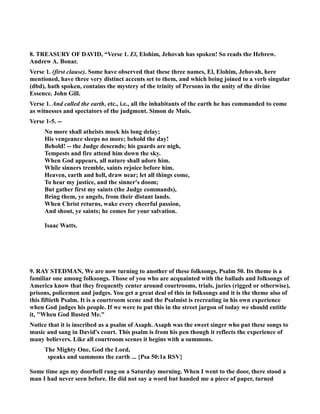
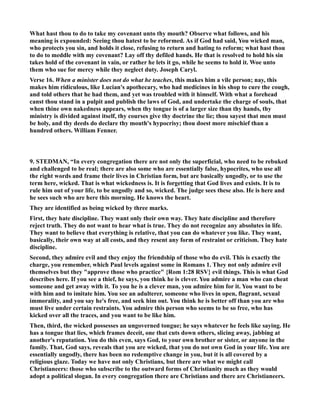
8. TREASURY OF DAVID, “Verse 1. El, Elohim, Jehovah has spoken! So reads the Hebrew. 
Andrew A. Bonar. 
Verse 1. (first clause). Some have observed that these three names, El, Elohim, Jehovah, here 
mentioned, have three very distinct accents set to them, and which being joined to a verb singular 
(dbd), hath spoken, contains the mystery of the trinity of Persons in the unity of the divine 
Essence. John Gill. 
Verse 1. And called the earth, etc., i.e., all the inhabitants of the earth he has commanded to come 
as witnesses and spectators of the judgment. Simon de Muis. 
Verse 1-5. -- 
o more shall atheists mock his long delay; 
His vengeance sleeps no more; behold the day! 
Behold! -- the Judge descends; his guards are nigh, 
Tempests and fire attend him down the sky. 
When God appears, all nature shall adore him. 
While sinners tremble, saints rejoice before him. 
Heaven, earth and hell, draw near; let all things come, 
To hear my justice, and the sinner's doom; 
But gather first my saints (the Judge commands), 
Bring them, ye angels, from their distant lands. 
When Christ returns, wake every cheerful passion, 
And shout, ye saints; he comes for your salvation. 
Isaac Watts. 
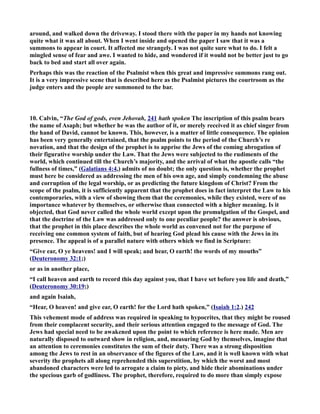
9. RAY STEDMA, We are now turning to another of these folksongs, Psalm 50. Its theme is a 
familiar one among folksongs. Those of you who are acquainted with the ballads and folksongs of 
America know that they frequently center around courtrooms, trials, juries (rigged or otherwise), 
prisons, policemen and judges. You get a great deal of this in folksongs and it is the theme also of 
this fiftieth Psalm. It is a courtroom scene and the Psalmist is recreating in his own experience 
when God judges his people. If we were to put this in the street jargon of today we should entitle 
it, When God Busted Me. 
otice that it is inscribed as a psalm of Asaph. Asaph was the sweet singer who put these songs to 
music and sang in David's court. This psalm is from his pen though it reflects the experience of 
many believers. Like all courtroom scenes it begins with a summons. 
The Mighty One, God the Lord, 
speaks and summons the earth ... {Psa 50:1a RSV} 
Some time ago my doorbell rang on a Saturday morning. When I went to the door, there stood a 
man I had never seen before. He did not say a word but handed me a piece of paper, turned
around, and walked down the driveway. I stood there with the paper in my hands not knowing 
quite what it was all about. When I went inside and opened the paper I saw that it was a 
summons to appear in court. It affected me strangely. I was not quite sure what to do. I felt a 
mingled sense of fear and awe. I wanted to hide, and wondered if it would not be better just to go 
back to bed and start all over again. 
Perhaps this was the reaction of the Psalmist when this great and impressive summons rang out. 
It is a very impressive scene that is described here as the Psalmist pictures the courtroom as the 
judge enters and the people are summoned to the bar. 
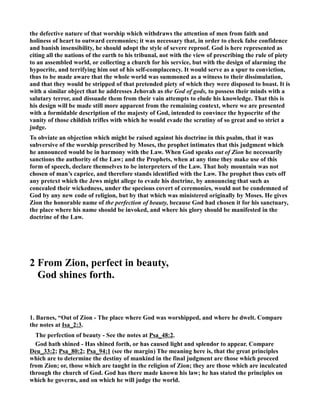
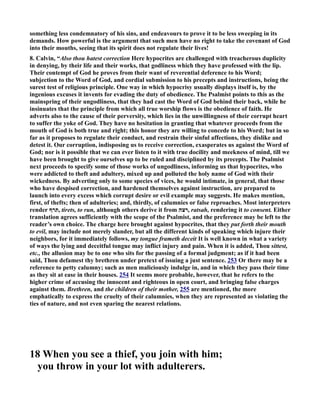
10. Calvin, “The God of gods, even Jehovah, 241 hath spoken The inscription of this psalm bears 
the name of Asaph; but whether he was the author of it, or merely received it as chief singer from 
the hand of David, cannot be known. This, however, is a matter of little consequence. The opinion 
has been very generally entertained, that the psalm points to the period of the Church’s re 
novation, and that the design of the prophet is to apprise the Jews of the coming abrogation of 
their figurative worship under the Law. That the Jews were subjected to the rudiments of the 
world, which continued till the Church’s majority, and the arrival of what the apostle calls “the 
fullness of times,” (Galatians 4:4,) admits of no doubt; the only question is, whether the prophet 
must here be considered as addressing the men of his own age, and simply condemning the abuse 
and corruption of the legal worship, or as predicting the future kingdom of Christ? From the 
scope of the psalm, it is sufficiently apparent that the prophet does in fact interpret the Law to his 
contemporaries, with a view of showing them that the ceremonies, while they existed, were of no 
importance whatever by themselves, or otherwise than connected with a higher meaning. Is it 
objected, that God never called the whole world except upon the promulgation of the Gospel, and 
that the doctrine of the Law was addressed only to one peculiar people? the answer is obvious, 
that the prophet in this place describes the whole world as convened not for the purpose of 
receiving one common system of faith, but of hearing God plead his cause with the Jews in its 
presence. The appeal is of a parallel nature with others which we find in Scripture: 
“Give ear, O ye heavens! and I will speak; and hear, O earth! the words of my mouths” 
(Deuteronomy 32:1;) 
or as in another place, 
“I call heaven and earth to record this day against you, that I have set before you life and death,” 
(Deuteronomy 30:19;) 
and again Isaiah, 
“Hear, O heaven! and give ear, O earth! for the Lord hath spoken,” (Isaiah 1:2.) 242 
This vehement mode of address was required in speaking to hypocrites, that they might be roused 
from their complacent security, and their serious attention engaged to the message of God. The 
Jews had special need to be awakened upon the point to which reference is here made. Men are 
naturally disposed to outward show in religion, and, measuring God by themselves, imagine that 
an attention to ceremonies constitutes the sum of their duty. There was a strong disposition 
among the Jews to rest in an observance of the figures of the Law, and it is well known with what 
severity the prophets all along reprehended this superstition, by which the worst and most 
abandoned characters were led to arrogate a claim to piety, and hide their abominations under 
the specious garb of godliness. The prophet, therefore, required to do more than simply expose
the defective nature of that worship which withdraws the attention of men from faith and 
holiness of heart to outward ceremonies; it was necessary that, in order to check false confidence 
and banish insensibility, he should adopt the style of severe reproof. God is here represented as 
citing all the nations of the earth to his tribunal, not with the view of prescribing the rule of piety 
to an assembled world, or collecting a church for his service, but with the design of alarming the 
hypocrite, and terrifying him out of his self-complacency. It would serve as a spur to conviction, 
thus to be made aware that the whole world was summoned as a witness to their dissimulation, 
and that they would be stripped of that pretended piety of which they were disposed to boast. It is 
with a similar object that he addresses Jehovah as the God of gods, to possess their minds with a 
salutary terror, and dissuade them from their vain attempts to elude his knowledge. That this is 
his design will be made still more apparent from the remaining context, where we are presented 
with a formidable description of the majesty of God, intended to convince the hypocrite of the 
vanity of those childish trifles with which he would evade the scrutiny of so great and so strict a 
judge. 
To obviate an objection which might be raised against his doctrine in this psalm, that it was 
subversive of the worship prescribed by Moses, the prophet intimates that this judgment which 
he announced would be in harmony with the Law. When God speaks out of Zion he necessarily 
sanctions the authority of the Law; and the Prophets, when at any time they make use of this 
form of speech, declare themselves to be interpreters of the Law. That holy mountain was not 
chosen of man’s caprice, and therefore stands identified with the Law. The prophet thus cuts off 
any pretext which the Jews might allege to evade his doctrine, by announcing that such as 
concealed their wickedness, under the specious covert of ceremonies, would not be condemned of 
God by any new code of religion, but by that which was ministered originally by Moses. He gives 
Zion the honorable name of the perfection of beauty, because God had chosen it for his sanctuary, 
the place where his name should be invoked, and where his glory should be manifested in the 
doctrine of the Law. 
2 From Zion, perfect in beauty, 
God shines forth. 
1. Barnes, “Out of Zion - The place where God was worshipped, and where he dwelt. Compare 
the notes at Isa_2:3. 
The perfection of beauty - See the notes at Psa_48:2. 
God hath shined - Has shined forth, or has caused light and splendor to appear. Compare 
Deu_33:2; Psa_80:2; Psa_94:1 (see the margin) The meaning here is, that the great principles 
which are to determine the destiny of mankind in the final judgment are those which proceed 
from Zion; or, those which are taught in the religion of Zion; they are those which are inculcated 
through the church of God. God has there made known his law; he has stated the principles on 
which he governs, and on which he will judge the world.
2. JOH PIPER, “I have two purposes in this message this morning. One is to begin a three part 
series on this great psalm. The other purpose is to pick up on last week's text in Hebrews 13:14 
which said, Here we have no lasting city, but we seek a city that is to come. We talked about 
singing about Zion city of our God last week, but decided that Zion and the heavenly 
Jerusalem and the city to come are foreign ideas to most Christians today. 
Seeing the Beauty of Zion in Scripture 
So we have decided to devote a message to this theme in Scripture, namely, the theme of Zion and 
the city of God and the ew Jerusalem. We've sung the hymn 
Glorious things of thee are spoken, 
Zion city of our God; 
He whose word cannot be broken 
Formed thee for His own abode. 
On the Rock of Ages founded, 
What can shake Thy sure repose? 
With salvation's walls surrounded, 
Thou mayest smile at all Thy foes. 
When I think about the man who wrote that hymn, I am encouraged that this biblical theme can 
become relevant and meaningful for the most secular, unchurched, modern person in America. It 
was written by John ewton, the same man who wrote Amazing Grace. He was, by his own 
confession, a very corrupt young man. He ran from his father and ran from the law and sailed 
the high seas. He ran a slave trading vessel in the 1750s from the coasts of Africa. Later on, he 
called himself the old African blasphemer. In other words, he is not the kind of person you 
would expect to use biblical words like Zion—or to make up a song like Glorious things of 
thee are spoken, Zion, city of our God. 
You'd think that ideas like Zion and the heavenly Jerusalem would be reserved for churchy 
types who spend all their time reading the Bible and don't know much about the world. But 
that's not true. It never has been true. It is not true today. The most irreligious, immoral person 
you know is probably more religious and more moral than John ewton was. Can you imagine 
that person falling in love with the language of Zion—unthinkable! Or is it? 
John ewton died December 31, 1807. He wrote his own epitaph for his gravestone. It says, 
John ewton, clerk, once an infidel and libertine, a servant of slaves in Africa, was, by the rich 
mercy of our Lord and Savior Jesus Christ, preserved, restored, pardoned, and appointed to 
preach the faith he had long labored to destroy. 
Amazing grace, how sweet the sound 
that saved a wretch like me, 
I once was lost but now am found, 
Was blind but now I see. 
And one of the things this African blasphemer saw when God saved him and opened his eyes was 
the beauty Zion. And I want you to see it too, whoever you are this morning.
What Is Zion? 
Verse 2 of our text says, Out of Zion, the perfection of beauty, God shines forth. We will talk 
more next week about the setting, the scene of judgment, and why God is calling the heavens and 
the earth to listen to his judgment over Israel. But today I want us just to focus on this term Zion. 
Out of Zion, the perfection of beauty, God shines forth. What is Zion? And why is it such a 
rich and hope-filled word for Christians? 
Let's begin back where the word is used for the first time in the Bible (2 Samuel 5:7). It says of 
David, The king and his men went to Jerusalem against the Jebusites . . . [and] David took the 
stronghold of Zion, that is, the city of David. So from the time of David, Zion was synonymous 
with the city of David. 
What begins to make this place so significant is that immediately (in 2 Samuel 6:12) David brings 
the ark of the covenant into to this stronghold of Zion. The ark of the covenant was the sacred 
seat of the holy of holies where God met his people in the tabernacle. So Zion becomes the center 
of worship and of God's presence. And when Solomon moves the arc of the covenant into the 
temple that he had built (1 Kings 8:1), the whole of Jerusalem came to be known as Zion. 
So most of the time (in its 150+ uses in the Old Testament) Zion refers to the city of Jerusalem, 
not just as another name, but because it is the city of God's presence and the city of great hope 
for God's people. 
The City of God's Presence and Salvation 
Let me illustrate this significance with some texts. 
• Psalm 51:18 , Do good to Zion in thy good pleasure; rebuild the walls of Jerusalem. 
(Zion is Jerusalem.) 
• Psalm 9:11 , Sing praises to the Lord, who dwells in Zion! Tell among the peoples his 
deeds. (So Zion is the place on earth where God has chosen to makes his presence 
especially known. Psalm 78:67f.) 
• Psalm 74:2 , Remember mount Zion, where thou hast dwelt. (It is called a mount 
because David's stronghold and then the temple were on mountains or hills in Jerusalem.) 
So Zion meant the place where God was present and near to his people. But that's not all. It 
follows that Zion became the place from which the people expected help. Zion became the source 
of deliverance and salvation. For example, 
• Psalm 20:2 , May the Lord send you help from the sanctuary, and give you support from 
Zion! 
• Psalm 3:4 , I cry aloud to the Lord, and he answers me from his holy hill—that is, 
Mount Zion. 
So Zion was the place of God's special presence among his people and it was the place where they 
could get help and deliverance. 
But because sin became rampant among the people and because divine judgment was inevitable, 
even on Zion (Lamentations 2:15), it became more and more obvious, especially to the prophets, 
that Zion, the city of David, the earthly Jerusalem, was not the ideal city. They began to see more 
clearly that this Zion pointed forward to a future Zion and upward to a heavenly Zion. Or to put 
it another way, if imperfect Zion is the place of God's presence on the earth, then there must be a 
perfect Zion where God dwells in heaven (cf. Acts 7:48f.). And if imperfect Zion is the place of 
God's presence on the earth now, then all the promises of complete and perfect reign on the earth
must mean that there will some day be a new and ideal Zion on the earth where God rules over 
all the nations. In other words the old Jerusalem points upward to a heavenly Zion, and forward 
to a future Zion. 
Pointers to a Future Zion 
Let me show you this from some Scriptures. First some pointers to the future Zion. 
• Isaiah 24:23 , The moon will be confounded, and the sun ashamed; for the Lord of hosts 
will reign on Mount Zion and in Jerusalem. The Lord will reign on Mount Zion! 
• Micah 4:6f ., In that day, says the Lord, I will assemble the lame . . . and the Lord will 
reign over them in Mount Zion from this time forth and for evermore. 
• Isaiah 2:2f ., It shall come to pass in the latter days that the mountain of the house of the 
Lord shall be established as the highest of the mountains . . . and all the nations shall flow 
to it . . . For out of Zion shall go forth the law, and the word of the Lord from Jerusalem. 
He shall judge between nations, and shall decide for many peoples; and they shall beat 
their swords into plowshares, and their spears into pruning hooks. 
So the Bible teaches that there is coming a day when the Lord will rule over the nations from his 
seat in Zion. And there will be peace and righteousness. I believe this is what the Bible means by 
the Millennium—a thousand year reign of God on the earth from Mount Zion. I have set my 
king on Zion, my holy hill (Psalm 2:6). So the old Jerusalem points forward to a glorious future 
Zion from which God will reign on earth. 
Pointing to a Heavenly Zion 
But the Old Testament points not only to a future, glorious Zion where God will reign on earth, it 
also points to a heavenly Zion where God already reigns now. This is not so easy to see, but once 
we see, it becomes really precious to us who live far from the earthly Jerusalem and are not even 
Jews. 
Psalm 87 
There are a few key passages that show this. One is Psalm 87. 
On the holy mount stands the city he founded; the Lord loves the gates of Zion more 
than all the dwelling places of Jacob. Glorious things are spoken of you, O city of God. 
[This is where John ewton got his song. ow the Lord himself speaks concerning the 
true citizens of Zion:] Among those who know me I mention Rahab [=Egypt] and 
Babylon; behold, Philistia and Tyre, with Ethiopia [So he foretells the day when these 
pagan nations will turn and know God. And then he describes them as natural born 
citizens of Zion]—This one was born there, they say. And of Zion it shall be said, 
This one and that one were born in her; for the Most High himself will establish 
her. The Lord records as he registers the peoples, This one was born there. 
This is an amazing psalm! If Zion is the place of God's presence, if Zion is the place of God's 
power and blessing and protection, if Zion is the hope of God's future rule over the earth, then 
what is the hope of us Gentiles? What about us who pay our taxes in Minneapolis and St. Paul 
and Roseville and Eagan and Bloomington and ew Brighton, and have never even seen 
Jerusalem, let alone become a citizen of God's city? What about us whom Paul says are separated 
from the commonwealth of Israel and have no citizenship in Zion the city of God (Ephesians 
2:12)?
This One Was Born in Zion 
The answer is that there is a Zion whose citizenship is not earthly. Psalm 87:5 says the Most High 
himself is establishing this Zion by declaring with sovereign freedom and with saving effect: 
This one was born there. This one in Minneapolis was born in Zion. This one in Moscow was 
born in Zion. This one in Jakarta was born in Zion. This one in Kankan was born in Zion. God is 
populating Zion with foreigners of every people and tribe and tongue and nation. 
But how can this be? What does it mean? It means that there is a true Zion in heaven, there is a 
heavenly Jerusalem. And the true people of God, whether Jew or Gentile, are citizens there. To 
belong to the people of God your birth certificate has to say, This one was born in Zion. 
In ew Testament Terms 
But what does this mean in ew Testament terms? Galatians 4:26 says something amazingly 
similar: The Jerusalem above is free, and she is our mother. We have been conceived and born 
in the heavenly Jerusalem. In other words we have all been born once in some earthly city. And 
that birth has simply made us flesh and blood and given us a citizenship in some country here on 
earth. But if we want to know God and be with God in his city, if we want to be a part of that 
future kingdom of peace and joy and love and righteousness where God rules from Zion, then we 
have to be born from above. We have to have a second, spiritual birth. We have to have our 
citizenship in heaven (Philippians 3:20) and in the Jerusalem above. Our second birth certificate 
has to say, This one was born in Zion. Truly, truly I say to you, unless a person is born from 
above he cannot see the kingdom of God (John 3:3). 
Hebrews 12:22 says to Christians, to those who trust Christ, You have come to Mount Zion and 
to the city of the living God, the heavenly Jerusalem, and to innumerable angels in festal 
gathering and to the assembly of the first born, who are enrolled in heaven. 
otice the verse says, You have come to Mount Zion . . .  ot: you will come. But you HAVE 
COME. One of the great things about being a Christian is that when you are born again, you 
don't have to wonder anymore if you are going to be a part of the city of God. Those who are 
born from above have ALREADY COME to Mount Zion; they are ALREADY enrolled in the 
heavenly Jerusalem; they are ALREADY citizens of the city of God. Paul said to those who had 
surrendered to Jesus, You have died and your life is hid with Christ in God. When Christ who is 
your life appears, then you will appear with him in glory (Colossians 3:3). 
So it is with the Zion, the city of God. If you trust Christ, you are already a permanent citizen of 
the heavenly Jerusalem. And when this new Jerusalem appears, you will be there too in glory. 
A Closing Invitation 
I want to close this message the way the Bible closes, with an invitation to any who have never 
come to Mount Zion, the city of God, the new Jerusalem—perhaps a John ewton in our midst. 
The last two chapters of the Bible describe the ew Jerusalem, coming down from heaven at the 
end of the age. 
• It is adorned like a bride for her husband. 
• In it every tear is wiped away, there is no more death, or crying or pain. 
• Its radiance is like a rare jewel, like a jasper, clear as crystal. 
• There is no temple in the city because the temple is the Lord God the Almighty and Jesus 
Christ the Lamb. 
• There is no sun or moon to shine, because the glory of God himself is its light and the lamp
is the Lamb. 
• At the center of the city is the throne of God and flowing out from the throne is a river of 
the water of life. 
• And on either side of the river is the tree of life that bears fruit forever. 
• And behold the dwelling of God is with men. He will dwell with them and they shall be his 
people and he will be their God and their light and their joy, and they shall reign forever 
and ever. 
The Spirit and the Bride say, 'Come.' And let him who hears say, 'Come.' And let him who is 
thirsty come, let him who desires take the water of life without price (Revelation 22:17). To the 
thirsty I will give from the fountain of the water of life without payment. (21:6). COME! 
Further otes 
• More on the idea of being born in Zion and the reach of Zion to all the nations: Isaiah 
66:8; Zechariah 2:11f. 
• More on the heavenly Zion in the Old Testament: Psalm 48:2; compare the phrase far 
north (not in IV!) to the same phrase in Isaiah 14:13f. Zion seems to be pictured here as 
in the very distant north, namely, in the heavenly realm. 
• For the great future rejoicing in Zion see Isaiah 35:10; 51:3, 11. 
• The hope of the city with foundations is a strong incentive to suffer and love here: 
Hebrews 13:13f.; 10:10, 16; Revelation 3:12. 
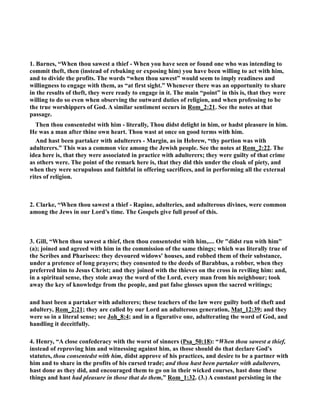
3. Gill, “Out of Zion, the perfection of beauty, God hath shined. Or shall shine (p); the past for 
the future, as Kimchi observes; or the perfection of the beauty of God hath shined out of Zion 
(q); that is, Christ; he is the perfection of beauty; he is fairer than the children of men; he is more 
glorious than the angels in heaven: as Mediator, he is full of grace and truth, which makes him 
very lovely and amiable to his people: he is the express image of his Father's person; and the 
glory of all the divine perfections is conspicuous in his work of salvation, as well as in himself: 
now as he was to come out of Zion, Psa_14:7; that is, not from the fort of Zion, or city of 
Jerusalem; for he was to be born at Bethlehem; only he was to be of the Jews, and spring from 
them; so he shone out, or his appearance and manifestation in Israel was like the rising sun; see 
Mal_4:2; and the love and kindness of God in the mission and gift of him appeared and shone out 
in like manner, Tit_3:4; or else the Gospel may be meant, which has a beauty in it: it is a glorious 
Gospel, and holds forth the beauty and glory of Christ. All truth is lovely and amiable, especially 
evangelical truth: it has a divine beauty on it; it comes from God, and bears his impress; yea, it is 
a perfection of beauty: it contains a perfect plan of truth, and is able to make the man of God 
perfect; and this was to come out of Zion, Isa_2:3; and which great light first arose in Judea, and 
from thence shone out in the Gentile world, like the sun in all its lustre and glory, Tit_2:11; or, 
according to our version, God hath shined out of Zion; which, as Ben Melech on the text 
observes, is the perfection of beauty; see Lam_2:15; by which is meant the church under the 
Gospel dispensation, Heb_12:22; which, as in Gospel order, is exceeding beautiful; and as its 
members are adorned with the graces of the Spirit, by which they are all glorious within; and 
especially as they are clothed with the righteousness of Christ, and so are perfectly comely 
through the comeliness he hath put upon them and here it is that Christ, who is the great God, 
and our Saviour, shines forth upon his people, grants his gracious presence, and manifests 
himself in his ordinances, to their great joy and pleasure.
4. Henry, “The court called, in the name of the King of kings (Psa_50:2): The mighty God, even 
the Lord, hath spoken - El, Elohim, Jehovah, the God of infinite power justice and mercy, Father, 
Son, and Holy Ghost. God is the Judge, the Son of God came for judgement into the world, and 
the Holy Ghost is the Spirit of judgment. All the earth is called to attend, not only because the 
controversy God had with his people Israel for their hypocrisy and ingratitude might safely be 
referred to any man of reason (nay, let the house of Israel itself judge between God and his 
vineyard, Isa_5:3), but because all the children of men are concerned to know the right way of 
worshipping God, in spirit and in truth, because when the kingdom of the Messiah should be set 
up all should be instructed in the evangelical worship, and invited to join in it (see Mal_1:11, 
Act_10:34), and because in the day of final judgment all nations shall be gathered together to 
receive their doom, and every man shall give an account of himself unto God. 
II. The judgment set, and the Judge taking his seat. As, when God gave the law to Israel in the 
wilderness, it is said, He came from Sinai, and rose up from Seir, and shone forth from Mount 
Paran, and came with ten thousands of his saints, and then from his right hand went a fiery law 
(Deu_33:2), so, with allusion to that, when God comes to reprove them for their hypocrisy, and to 
send forth his gospel to supersede the legal institutions, it is said here, 1. That he shall shine out 
of Zion, as then from the top of Sinai, Psa_50:2. Because in Zion his oracle was now fixed, thence 
his judgments upon that provoking people denounced, and thence the orders issued for the 
execution of them (Joe_2:1): Blow you the trumpet in Zion. Sometimes there are more than 
ordinary appearances of God's presence and power working with and by his word and 
ordinances, for the convincing of men's consciences and the reforming and refining of his church; 
and then God, who always dwells in Zion, may be said to shine out of Zion. Moreover, he may be 
said to shine out of Zion because the gospel, which set up spiritual worship, was to go forth from 
Mount Zion (Isa_2:3, Mic_4:2), and the preachers of it were to begin at Jerusalem (Luk_24:47), 
and Christians are said to come unto Mount Zion, to receive their instructions, Heb_12:22, 
Heb_12:28. Zion is here called the perfection of beauty, because it was the holy hill; and holiness is 
indeed the perfection of beauty. 2. That he shall come, and not keep silence, shall no longer seem 
to wink at the sins of men, as he had done (Psa_50:21), but shall show his displeasure at them, 
and shall also cause that mystery to be published to the world by his holy apostles which had long 
lain hid, that the Gentiles should be fellow-heirs (Eph_3:5, Eph_3:6) and that the partition-wall of 
the ceremonial law should be taken down; this shall now no longer be concealed. In the great day 
our God shall come and shall not keep silence, but shall make those to hear his judgment that 
would not hearken to his law. 
5. Jamison, “ 
6. STEDMA, “Sinai, of course, was where the Law was given. It was accompanied with 
thunderous judgment, with lightnings and the voice of a trumpet which waxed louder and louder 
until the people could not stand it. They cried out to Moses, You speak to us, ... but let not God 
speak to us lest we die! {Exod 20:19 RSV}. But here it is no longer Sinai but Zion. Zion is 
Jerusalem and stands for the mercy of God, the redemptive love of God, the grace of God. God is 
judging, but he is judging in mercy. It is well to remember that as we go on into this psalm. The 
judgment will be realistic but it will not be harsh. 
Because Zion refers to Jerusalem there have been some commentators who have taken this psalm 
to be a description of the second coming when the Lord Jesus Christ shall return to earth in 
power and great glory, (as he himself described it in Matthew 25), and will sit on his throne and 
gather the nations before him to judge them. That judgment is vividly detailed in Matthew 25. 
ow, it is true that Jesus Christ is going to return to earth. When he came the first time he came 
in weakness and humility, born in a cold and dirty cave on the side of a hill in Bethlehem. There
was no pomp, no circumstance, no power. But, when he comes again, he will come in great glory 
to judge the peoples of earth as they are summoned before him. This psalm is, in my judgment, a 
very beautiful description in the Old Testament of that event which is recorded in the ew 
Testament. It will occur when Jesus Christ comes again. But it would be a great mistake to take 
the psalm as limited only to that event. As often happens with many scriptural passages we have 
here a dual application. It not only looks forward to the time when, literally and physically, 
Christ will return to judge his people, but it is also describing a judgment that is going on right 
now. 
7. Spurgeon, Out of Zion, the perfection of beauty, God hath shined. The Lord is represented 
not only as speaking to the earth, but as coming forth to reveal the glory of his presence to an 
assembled universe. God of old dwelt in Zion among his chosen people, but here the beams of his 
splendour are described as shining forth upon all nations. The sun was spoken of in the first 
verse, but here is a far brighter sun. The majesty of God is most conspicuous among his own 
elect, but is not confined to them; the church is not a dark lantern, but a candlestick. God shines 
not only in Zion, but out of her. She is made perfect in beauty by his indwelling, and that beauty 
is seen by all observers when the Lord shines forth from her. 
Observe how with trumpet voice and flaming ensign the infinite Jehovah summons the heavens 
and the earth to hearken to his word. 
8. TREASURY OF DAVID, “Verse 2. Out of Zion, the perfection of God's beauty hath shined; or, 
God has caused the perfection of beauty to shine out of Zion. Martin Geier. 
Verse 2. God hath shined. Like the sun in his strength, sometimes for the comfort of his people, as 
Psalms 80:1; sometimes for the terror of evil doers, as Psalms 94:1, and here. But evermore God 
is terrible out of his holy places. Psalms 68:35 89:7. John Trapp. 
Verse 2. God hath shined. The proper meaning of ([py) is to scatter rays from afar, and from a 
lofty place, and to glitter. It is a word of a grand sound, says Ch. Schultens, which is always used 
of a magnificent and flashing light ... It is apparently used of the splendid symbol of God's 
presence, as in Deuteronomy 34:2, where he is said to scatter beams from Mount Paran. From 
which it is manifest that it may refer to the pillar of cloud and fire, the seat of the Divine Majesty 
conspicuous on Mount Sinai, or on the tabernacle, or the loftiest part of the temple. Hermann 
Venema. 
3 Our God comes 
and will not be silent; 
a fire devours before him, 
and around him a tempest rages.
1. Barnes, “Our God shall come - That is, he will come to judgment. This language is derived 
from the supposition that God “will” judge the world, and it shows that this doctrine was 
understood and believed by the Hebrews. The ew Testament has stated the fact that this will be 
done by the coming of his Son Jesus Christ to gather the nations before him, and to pronounce 
tile final sentence on mankind: Mat_25:31; Act_17:31; Act_10:42; Joh_5:22. 
And shall not keep silence - That is, the will come forth and “express” his judgment on the 
conduct of mankind. See the notes at Psa_28:1. He “seems” now to be silent. o voice is heard. 
o sentence is pronounced. But this will not always be the case. The time is coming when he will 
manifest himself, and will no longer be silent as to the conduct and character of people, but will 
pronounce a sentence, fixing their destiny according to their character. 
A fire shall devour before him - Compare the notes at 2Th_1:8; notes at Heb_10:27. The 
“language” here is undoubtedly taken from the representation of God as he manifested himself at 
Mount Sinai. Thus, in Exo_19:16, Exo_19:18, it is said, “And it came to pass on the third day in 
the morning, that there were thunders and lightnings, and a thick cloud upon the mount, and the 
voice of a trumpet exceeding loud; and Mount Sinai was altogether on a smoke, because the Lord 
descended upon it in fire: and the smoke thereof ascended as the smoke of a furnace, and the 
whole mount quaked greatly. 
And it shall be very tempestuous round about him - The word used here - שׂער śa‛ar - means 
properly to shudder; to shiver; and then it is employed to denote the commotion and raging of a 
tempest. The allusion is doubtless to the descent on Mount Sinai Exo_19:16, and to the storm 
accompanied by thunder and lightning which beat upon the mountain when God descended on it 
to give his law. The whole is designed to represent God as clothed with appropriate majesty when 
judgment is to be pronounced upon the world. 
2. STEDMA, “You who know the ew Testament well know that these two symbols are often 
used to describe God. Our God is a consuming fire, says the writer to the Hebrews {Heb 
12:29}. And the Spirit of God is in Acts described as a mighty rushing wind. The wind blows 
where it desires, said Jesus to icodemus, and you hear the sound thereof, but you cannot tell 
where it has come from or where it is going. So is he who is born of the Spirit, {John 3:8 RSV}. 
These are highly suggestive symbols. Fire is that which purifies. Purifying power is the concept 
here. Fire destroys all waste and trash, the garbage of life. As fire God will burn the dross, waste 
and trash of our lives, the garbage of the soul. 
But he is also wind. Wind is in some ways the mightiest force in nature. Some time ago I saw a 
picture taken after a tornado in the Southwest. It showed some straw that had been caught up in 
the wind and driven entirely through a telephone pole. If I gave you a weak piece of straw and 
told you to drive it through a telephone pole you would look at me in amazement. You do not 
drive straw through a telephone pole. But this straw had been driven through by the force of a 
mighty wind. Remember on the day of Pentecost when the disciples were gathered there was 
suddenly the sound of a mighty rushing wind. Caught up in the power of that wind the disciples 
did things they had never done before. Empowered by the wind of God they went out to do and 
say things that upset the world of their day. They startled and astonished men by the power that
was evidenced among them. 
What the Psalmist is telling us is that when God judges he will do two things: he will burn up the 
trash and garbage of life, and then he will empower us. He will catch us up in the greatness of his 
strength, and we will be able to do things we never could do before. 
3. Gill, “Our God shall come,.... That is, Christ, who is truly and properly God, and who was 
promised and expected as a divine Person; and which was necessary on account of the work he 
came about; and believers claim an interest in him as their God; and he is their God, in whom 
they trust, and whom they worship: and this coming of his is to be understood, not of his coming 
in the flesh; for though that was promised, believed, and prayed for, as these words are by some 
rendered, may our God come (r); yet at his first coming he was silent, his voice was not heard 
in the streets, Mat_12:19; nor did any fire or tempest attend that: nor is it to be interpreted of his 
second coming, or coming to judgment; for though that also is promised, believed, and prayed 
for; and when he will not be silent, but by his voice will raise the dead, summon all before him, 
and pronounce the sentence on all; and the world, and all that is therein, will be burnt with fire, 
and a horrible tempest rained upon the wicked; yet it is better to understand it of his coming to 
set up his kingdom in the world, and to punish his professing people for their disbelief and 
rejection of him; see Mat_16:28; 
and shall not keep silence; contain himself, bear with the Jews any longer, but come forth in his 
wrath against them; see Psa_50:21; and it may also denote the great sound of the Gospel, and the 
very public ministration of it in the Gentile world, at or before this time, for the enlargement of 
Christ's kingdom in it; 
a fire shall devour before him; meaning either the fire of the divine word making its way among 
the Gentiles, consuming their idolatry, superstition, c. or rather the fire of divine wrath coming 
upon the Jews to the uttermost and even it may be literally understood of the fire that consumed 
their city and temple, as was predicted, Zec_11:1; 
and it shall be very tempestuous round about him; the time of Jerusalem's destruction being such 
a time of trouble as has not been since the world began, Mat_24:21. 
4. Henry, “That his appearance should be very majestic and terrible: A fire shall devour before 
him. The fire of his judgments shall make way for the rebukes of his word, in order to the 
awakening of the hypocritical nation of the Jews, that the sinners in Zion, being afraid of that 
devouring fire (Isa_33:14), might be startled out of their sins. When his gospel kingdom was to be 
set up Christ came to send fire on the earth, Luk_12:49. The Spirit was given in cloven tongues as 
of fire, introduced by a rushing mighty wind, which was very tempestuous, Act_2:2, Act_2:3. And 
in the last judgment Christ shall come in flaming fire, 2Th_1:8. See Dan_7:9; Heb_10:27. 4. That 
as on Mount Sinai he came with ten thousands of his saints, so he shall now call to the heavens 
from above, to take notice of this solemn process (Psa_50:4), as Moses often called heaven and 
earth to witness against Israel (Deu_4:26, Deu_31:28, Deu_32:1), and God by his prophets, 
Isa_1:2; Mic_6:2. The equity of the judgment of the great day will be attested and applauded by 
heaven and earth, by saints and angels, even all the holy myriads. 
5. Jamison, “
6. TREASURY OF DAVID, “Verse 3. Our God shall come, and shall not keep silence. He kept 
silence that he might be judged, he will not keep silence when he begins to judge. It would not 
have been said, He shall come manifestly, unless at first he had come concealed; nor, He shall not 
keep silence, had he not at first kept silence. How did he keep silence? Ask Isaiah: He was 
brought as a lamb to the slaughter, and as a sheep before her shearers is dumb, so he openeth not 
his mouth. Isaiah 53:7. But he shall come manifestly, and shall not keep silence. How 
manifestly? A fire shall go before him, and round about him a mighty tempest. That tempest is to 
carry wholly away the chaff from the floor which is now in threshing; that fire, to consume what 
the tempest carries off. ow, however, he is silent; silent in judgment, but not in precept. For if 
Christ is silent, what mean these gospels? What the voices of the apostles? the canticles of the 
Psalms? the lofty utterances of the prophets? Truly in all these Christ is not silent. Howbeit he is 
silent for he present in not taking vengeance, not in not warning. But he will come in surpassing 
brightness to take vengeance, and will be seen of all, even of those who believe not on him; but 
now, forasmuch as although present he was not concealed, it behoved him to be despised: for 
unless he had been despised he would not have been crucified; if not crucified he would not have 
shed his blood, the price with which he redeemed us. But in order that he might give a price for 
us, he was crucified; that he might be crucified he was despised; that he might be despised, he 
appeared in humble guise. Augustine. 
Verse 3. (first clause). The future in the first clause may be rendered he is coming, as if the sound 
of his voice and the light of his glory had preceded his actual appearance. The imagery is 
borrowed from the giving of the law a Sinai. J. A. Alexander. 
Verse 3. (first clause). May our God come! (Version of Junius and Tremellius.) A prayer for the 
hastening of his advent, as in the Apocalypse, 22:20. Poole's Synopsis. 
Verse 3. A fire shall devour before him. As he gave his law in fire, so in fire shall he require it. John 
Trapp. 
7. Spurgeon, Our God shall come. The psalmist speaks of himself and his brethren as standing 
in immediate anticipation of the appearing of the Lord upon the scene. He comes, they say, 
our covenant God is coming; they can hear his voice from afar, and perceive the splendour of 
his attending train. Even thus should we await the long promised appearing of the Lord from 
heaven. And shall not keep silence. He comes to speak, to plead with his people, to accuse and 
judge the ungodly. He has been silent long in patience, but soon he will speak with power. What a 
moment of awe when the Omnipotent is expected to reveal himself! What will be the reverent joy 
and solemn expectation when the poetic scene of this Psalm becomes in the last great day an 
actual reality! A fire shall devour before him, and it shall be very tempestuous round about him. 
Flame and hurricane are frequently described as the attendants of the divine appearance. Our 
God is a consuming fire. At the brightness that was before him his thick clouds passed, 
hailstones and coals of fire. Psalms 18:12. He rode upon a cherub, and did fly; yea, he did fly 
upon the wings of the wind. The Lord Jesus shall be revealed from heaven with his mighty 
angels, in flaming fire taking vengeance on them that know not God. 2 Thessalonians 1:7-8 . Fire 
is the emblem of justice in action, and the tempest is a token of his overwhelming power. Who 
will not listen in solemn silence when such is the tribunal from which the judge pleads with 
heaven and earth?
8. Calvin, “Our God shall come, and shall not keep silence 243 He repeats that God would come, in 
order to confirm his doctrine, and more effectually arouse them. He would come, and should not 
always keep silence, lest they should be encouraged to presume upon his forbearance. Two 
reasons may be assigned why the prophet calls God our God He may be considered as setting 
himself, and the comparatively small number of the true fearers of the Lord, in opposition to the 
hypocrites whom he abhors, claiming God to be his God, and not theirs, as they were disposed to 
boast; or rather, he speaks as one of the people, and declares that the God who was coming to 
avenge the corruptions of his worship was the same God whom all the children of Abraham 
professed to serve. He who shall come, as if he had said, is our God, the same in whom we glory, 
who established his covenant with Abraham, and gave us his Law by the hand of Moses. He adds, 
that God would come with fire and tempest, in order to awaken a salutary fear in the secure 
hearts of the Jews, that they might learn to tremble at the judgments of God, which they had 
hitherto regarded with indifference and despised, and in allusion to the awful manifestation 
which God made of himself from Sinai, (Exodus 19:16; see also Hebrews 12:18.) The air upon 
that occasion resounded with thunders and the noise of trumpets, the heavens were illuminated 
with lightnings, and the mountain was in flames, it being the design of God to procure a 
reverential submission to the Law which he announced. And it is here intimated, that God would 
make a similarly terrific display of his power, in coming to avenge the gross abuses of his holy 
religion. 
4 He summons the heavens above, 
and the earth, that he may judge his people: 
1. Barnes, “He shall call to the heavens from above - He will call on all the universe; he will 
summon all worlds. The meaning here is, not that he will gather those who are in heaven to be 
judged, but that he will call on the inhabitants of all worlds to be his witnesses; to bear their 
attestation to the justice of his sentence. See Psa_50:6. The phrase “from above” does not, of 
course, refer to the heavens as being above God, but to the heavens as they appear to human 
beings to be above themselves. 
And to the earth - To all the dwellers upon the earth; “to the whole universe.” He makes this 
universal appeal with the confident assurance that his final sentence will be approved; that the 
universe will see and admit that it is just. See Rev_15:3; Rev_19:1-3. There can be no doubt that 
the universe, as such, will approve the ultimate sentence that will be pronounced on mankind. 
That he may judge his people - That is, all these arrangements - this coming with fire and 
tempest, and this universal appeal - will be prepatory to the judging of his people, or in order 
that the judgment may be conducted with due solemnity and propriety. The idea is, that an event 
so momentous should be conducted in a way suited to produce an appropriate impression; so 
conducted, that there would be a universal conviction of the justice and impartiality of the 
sentence. The reference here is particularly to his professed “people,” that is, to determine
whether they were truly his, for that is the main subject of the psalm, though the “language” is 
derived from the solemnities appropriate to the universal judgment. 
2. TREASURY OF DAVID, “Verse 4. He shall call to the heavens from above, and to the earth. 
That these dumb creatures may be as so many speaking evidences against an unworthy people, 
and witness of God's righteous dealings against them. See Deuteronomy 32:1 Isaiah 1:2 Micah 
6:2. The Chaldee thus paraphrases: He will call the high angels from above; and the just of the 
earth from beneath. John Trapp. 
3. Gill, “He shall call to the heavens from above, and to the earth,.... To hear what he shall say, 
when he will no longer keep silence; and to be witnesses of the justice of his proceedings; see 
Isa_1:2. The Targum interprets this of the angels above on high, and of the righteous on the earth 
below; and so Aben Ezra, Kimchi, and Ben Melech, explain it of the angels of heaven, and of the 
inhabitants of the earth; 
that he may judge his people; not that they, the heavens and the earth, the inhabitants of either, 
may judge his people; but the Lord himself, as in Psa_50:6; and this designs not the judgment of 
the whole world, nor that of his own covenant people, whom he judges when he corrects them in 
love, that they might not be condemned with the world; when he vindicates them, and avenges 
them on their enemies, and when he protects and saves them; but the judgment of the Jewish 
nation, his professing people, the same that Peter speaks of, 1Pe_4:17. 
4. STEDMA, “We are his people, are we not? Of old it was Israel. They are the ones who made 
a covenant with God by sacrifice. Of course he is referring to the animal sacrifice which Israel 
offered day by day. These were to reflect the relationship God had with his people. It was a 
covenant made in blood, in other words a life had been poured out on their behalf. But all these 
Old Testament sacrifices were but a picture of the sacrifice of the Lord Jesus Christ. Each one 
was, in a sense, Christ being offered. But, in Christ, we are the people who have made a covenant 
with God by sacrifice. We have entered into the benefit of the new arrangement for living made 
through the sacrifice of the Lord Jesus Christ. 
This psalm then is really describing what is going on right in this meeting at this very moment. It 
pictures God among his people and he has something to say to us. The God who comes from 
Zion, the God who loves, and who sees things the way they are, desires to speak to us. That is why 
this section ends with the little word, Selah. It means, pause, stop, look, listen, think! God the 
judge is in our midst, God is judging his people. ow the judge speaks, 
5. Jamison, “above — literally, “above” (Gen_1:7). 
heavens ... earth — For all creatures are witnesses (Deu_4:26; Deu_30:19; Isa_1:2). 
6. KD, “The judgment scene. To the heavens above ( מֵעָ ל , elsewhere a preposition, here, as in
Gen_27:39; Gen_49:25, an adverb, desuper, superne) and to the earth God calls ( קָרָא אֶ ל , as, e.g., 
Gen_28:1), to both לָדִין עַמּוֹ , in order to sit in judgment upon His people in their presence, and 
with them as witnesses of His doings. Or is it not that they are summoned to attend, but that the 
commission, Psa_50:5, is addressed to them (Olshausen, Hitzig)? Certainly not, for the act of 
gathering is not one that properly belongs to the heavens and the earth, which, however, because 
they exist from the beginning and will last for ever, are suited to be witnesses (Deu_4:26; 
Deu_32:1; Isa_1:2, 1 Macc. 2:37). The summons אִסְפוּ is addressed, as in Mat_24:31, and 
frequently in visions, to the celestial spirits, the servants of the God here appearing. The accused 
who are to be brought before the divine tribunal are mentioned by names which, without their 
state of mind and heart corresponding to them, express the relationship to Himself in which God 
has placed them (cf. Deu_32:15; Isa_42:19). They are called חֲסִידִים , as in the Asaph Psa_79:2. 
This contradiction between their relationship and their conduct makes an undesigned but bitter 
irony. In a covenant relationship, consecrated and ratified by a covenant sacrifice ( עֲלֵי־זָבַֽח similar 
to Psa_92:4; Psa_10:10), has God placed Himself towards them (Ex 24); and this covenant 
relationship is also maintained on their part by offering sacrifices as an expression of their 
obedience and of their fidelity. The participle כּֽרְֹתֵי here implies the constant continuance of that 
primary covenant-making. ow, while the accused are gathered up, the poet hears the heavens 
solemnly acknowledge the righteousness of the Judge beforehand. The participial construction 
שׁפֵֹט הוּא , which always, according to the connection, expresses the present (ah_1:2), or the past 
(Jdg_4:4), or the future (Jer_25:31), is in this instance an expression of that which is near at hand 
(fut. instans). הוּא has not the sense of ipse (Ew. §314, a), for it corresponds to the “I” in אֲנִי שׁפֵֹט or 
הִֽנְנִי שׁפֵֹ ט ; and כִּי is not to be translated by nam (Hitzig), for the fact that God intends to judge 
requires no further announcement. On the contrary, because God is just now in the act of sitting 
in judgment, the heavens, the witnesses most prominent and nearest to Him, bear witness to His 
righteousness. The earthly music, as the סלה directs, is here to join in with the celestial praise. 
othing further is now wanting to the completeness of the judgment scene; the action now begins. 
7. Spurgeon, He shall call to the heavens from above, and to the earth. Angels and men, the 
upper and the lower worlds, are called to witness the solemn scene. The whole creation shall 
stand in court to testify to the solemnity and the truth of the divine pleading. Both earth beneath 
and heaven above shall unite in condemning sin; the guilty shall have no appeal, though all are 
summoned that they may appeal if they dare. Both angels and men have seen the guilt of 
mankind and the goodness of the Lord, they shall therefore confess the justice of the divine 
utterance, and say Amen to the sentence of the supreme Judge. Alas, ye despisers! What will ye 
do and to whom will ye fly? That he may judge his people. Judgment begins at the house of God. 
The trial of the visible people of God will be a most awful ceremonial. He will thoroughly purge 
his floor. He will discern between his nominal and his real people, and that in open court, the 
whole universe looking on. My soul, when this actually takes place, how will it fare with thee? 
Canst thou endure the day of his coming? 
8. Calvin, “He shall call to the heavens from above It is plain from this verse for what purpose 
God, as he had already announced, would call upon the earth. This was to witness the settlement 
of his controversy with his own people the Jews, against whom judgment was to be pronounced, 
not in the ordinary manner as by his prophets, but with great solemnity before the whole world. 
The prophet warns the hypocritical that they must prepare to be driven from their hiding-place, 
that their cause would be decided in the presence of men and angels, and that they would he
dragged without excuse before that dreadful assembly. It may be asked, why the prophet 
represents the true fearers of the Lord as cited to his bar, when it is evident that the 
remonstrance which follows in the psalm is addressed to the hypocritical and degenerate portion 
of the Jews? To this I answer, that God here speaks of the whole Church, for though a great part 
of the race of Abraham had declined from the piety of their ancestors, yet he has a respect to the 
Jewish Church, as being his own institution. He speaks of them as his meek ones, to remind them 
of what they ought to be in consistency with their calling, and not as if they were all without 
exception patterns of godliness. The form of the address conveys a rebuke to those amongst them 
whose real character was far from corresponding with their profession. Others have suggested a 
more refined interpretation, as if the meaning were, Separate the small number of my sincere 
worshippers from the promiscuous multitude by whom my name is profaned, lest they too should 
afterwards be seduced to a vain religion of outward form. I do not deny that this agrees with the 
scope of the prophet. But I see no reason why a church, however universally corrupted, provided 
it contain a few godly members, should not be denominated, in honor of this remnant, the holy 
people of God. Interpreters have differed upon the last clause of the verse: Those who strike a 
covenant with me over sacrifices, Some think over is put for besides, or beyond, and that God 
commends his true servants for this, that they acknowledged something more to be required in 
his covenant than an observance of outward ceremonies, and were not chargeable with resting in 
the carnal figures of the Law. 244 Others think that the spiritual and true worship of God is here 
directly opposed to sacrifices; as if it had been said, Those who, instead of sacrifices, keep my 
covenant in the right and appointed manner, by yielding to me the sincere homage of their heart. 
But in my opinion, the prophet is here to be viewed as pointing out with commendation the true 
and genuine use of the legal worship; for it was of the utmost consequence that it should be 
known what was the real end for which God appointed sacrifices under the Law. The prophet 
here declares that sacrifices were of no value whatever except as seals of God’s covenant, an 
interpretative handwriting of submission to it, or in general as means employed for ratifying it. 
There is an allusion to the custom then universally prevalent of interposing sacrifices, that 
covenants might be made more solemn, and be more religiously observed. 245 In like manner, the 
design with which sacrifices were instituted by God was to bind his people more closely to 
himself, and to ratify and confirm his covenant. The passage is well worthy of our particular 
notice, as defining those who are to be considered the true members of the Church. They are 
such, on the one hand, as are characterised by the spirit of meekness, practising righteousness in 
their intercourse with the world; and such, on the other, as close in the exercise of a genuine faith 
with the covenant of adoption which God has proposed to them. This forms the true worship of 
God, as he has himself delivered it to us from heaven; and those who decline from it, whatever 
pretensions they may make to be considered a church of God, are excommunicated from it by the 
Holy Spirit. As to sacrifices or other ceremonies, they are of no value, except in so far as they seal 
to us the pure truth of God. All such rites, consequently, as have no foundation in the word of 
God, are unauthorised, and that worship which has not a distinct reference to the word is but a 
corruption of things sacred. 
5 “Gather to me this consecrated people, 
who made a covenant with me by sacrifice.”
1. Barnes, “Gather my saints together unto me - This is an address to the messengers employed 
for assembling those who are to be judged. Similar language is used by the Saviour Mat_24:31 : 
“And he (the Son of Man) shall send his angels with a great sound of a trumpet, and they shall 
gather together his elect from the four winds, from one end of heaven to the other.” The idea is, 
that God will bring them, or assemble them together. All this is language derived froth the notion 
of a universal judgment, “as if” the scattered people of God were thus gathered together by 
special messengers sent out for this purpose. The word “saints” here refers to those who are truly 
his people. The object - the purpose - of the judgment is to assemble in heaven those who are 
sincerely his friends; or, as the Saviour expresses it Mat_24:31, his “elect.” Yet in order to this, or 
in order to determine who “are” his true people, there will be a larger gathering - an assembling 
of all the dwellers on the earth. 
Those that have made a covenant with me by sacrifice - Exo_24:6-7. Compare the notes at 
Heb_9:19-22. The idea here is, that they are the professed people of God; that they have entered 
into a solemn covenant-relation to him, or have bound themselves in the most solemn manner to 
be his; that they have done this in connection with the sacrifices which accompany their worship; 
that they have brought their sacrifices or bloody offerings as a pledge that they mean to be his, 
and will be his. Over these solemn sacrifices made to him, they have bound themselves to be the 
Lord’s; and the purpose of the judgment now is, to determine whether this was sincere, and 
whether they have been faithful to their vows. As applied to professed believers under the 
Christian system, the “idea” here presented would be, that the vow to be the Lord’s has been 
made over the body and blood of the Redeemer once offered as a sacrifice, and that by partaking 
of the memorials of that sacrifice they have entered into a solemn “covenant” to be his. othing 
more solemn can be conceived than a “covenant” or pledge entered into in such a manner; and 
yet nothing is more painfully certain than that the process of a judgment will be necessary to 
determine in what cases it is genuine, for the mere outward act, no matter how solemn, does not 
of necessity decide the question whether he who performs it will enter into heaven. 
2. Clarke, “ 
3. Gill, “ Gather my saints together unto me,.... These words are spoken by Christ to the heavens 
and the earth; that is, to the angels, the ministers of the Gospel, to gather in, by the ministry of 
the word, his elect ones among the Gentiles; see Mat_24:30; called his saints, who had an 
interest in his favour and lovingkindness, and were sanctified or set apart for his service and 
glory; 
those that have made a covenant with me by sacrifice; or, who have made my covenant by, or on 
sacrifice (s); the covenant of grace, which was made with Christ from everlasting, and which 
was confirmed by his blood and sacrifice; this his people may be said to make with God in him, 
he being their head, surety, and representative: now these covenant ones he will have gathered in 
to himself by the effectual calling, which is usually done by the ministry of the word; for this is 
not to be understood of the gathering of all nations to him, before him as a Judge; but of his 
special people to him as a Saviour, the Shiloh, to whom the gathering of the people was to be,
Gen_49:10. 
4. Henry, “Gather my saints together unto me. This may be understood either, 1. Of saints indeed: 
“Let them be gathered to God through Christ; let the few pious Israelites be set by themselves;” 
for to them the following denunciations of wrath do not belong; rebukes to hypocrites ought not 
to be terrors to the upright. When God will reject the services of those that only offered sacrifice, 
resting in the outside of the performance, he will graciously accept those who, in sacrificing, 
make a covenant with him, and so attend to and answer the end of the institution of sacrifices. The 
design of the preaching of the gospel, and the setting up of Christ's kingdom, was to gather 
together in one the children of God, Joh_11:52. And at the second coming of Jesus Christ all his 
saints shall be gathered together unto him (2Th_2:1) to be assessors with him in the judgment; for 
the saints shall judge the world, 1Co_6:2. ow it is here given as a character of the saints that they 
have made a covenant with God by sacrifice. ote, (1.) Those only shall be gathered to God as his 
saints who have, in sincerity, covenanted with him, who have taken him to be their God and given 
up themselves to him to be his people, and thus have joined themselves unto the Lord. (2.) It is 
only by sacrifice, by Christ the great sacrifice (from whom all the legal sacrifices derived what 
value they had), that we poor sinners can covenant with God so as to be accepted of him. There 
must be an atonement made for the breach of the first covenant before we can be admitted again 
into covenant. Or, 2. It may be understood of saints in profession, such as the people of Israel 
were, who are called a kingdom of priests and a holy nation, Exo_19:6. They were, as a body 
politic, taken into covenant with God, the covenant of peculiarity; and it was done with great 
solemnity, by sacrifice, Exo_24:8. “Let them come and hear what God has to say to them; let them 
receive the reproofs God sends them now by his prophets, and the gospel he will, in due time, 
send them by his Son, which shall supersede the ceremonial law. If these be slighted, let them 
expect to hear from God another way, and to be judged by that word which they will not be ruled 
by.” 
5. Jamison, “my saints — (Psa_4:3). 
made — literally, “cut” 
a covenant, etc. — alluding to the dividing of a victim of sacrifice, by which covenants were 
ratified, the parties passing between the divided portions (compare Gen_15:10, Gen_15:18). 
6. KD, “ 
7. Spurgeon, Gather my saints together unto me. Go, ye swift winged messengers, and separate 
the precious from the vile. Gather out the wheat of the heavenly garner. Let the long scattered, 
but elect people, known by my separating grace to be my sanctified ones, be now assembled in 
one place. All are not saints who seem to be so -- a severance must be made; therefore let all who 
profess to be saints be gathered before my throne of judgment, and let them hear the word which 
will search and try the whole, that the false may be convicted and the true revealed. Those that 
have made a covenant with me by sacrifice; this is the grand test, and yet some have dared to 
imitate it. The covenant was ratified by the slaying of victims, the cutting and dividing of 
offerings; this the righteous have done by accepting with true faith the great propitiatory 
sacrifice, and this the pretenders have done in merely outward form. Let them be gathered before 
the throne for trial and testing, and as many as have really ratified the covenant by faith in the
Lord Jesus shall be attested before all worlds as the objects of distinguishing grace, while 
formalists shall learn that outward sacrifices are all in vain. Oh, solemn assize, how does my soul 
bow in awe at the prospect thereof! 
8. TREASURY OF DAVVID, “Verse 5. Gather, etc. To whom are these words addressed? Many 
suppose to the angels, as the ministers of God's will; but it is unnecessary to make the expression 
more definite than it is in the Psalm. J. J. Stewart Perowne. 
Verse 5. My saints, the objects of my mercy, those whom I have called and specially distinguished. 
The term is here descriptive of a relation, not of an intrinsic quality. J. A. Alexander. 
Verse 5. Gather my saints together unto me. There is a double or twofold gathering to Christ. 
There is a gathering unto Christ by faith, a gathering within the bond of the covenant, a 
gathering into the family of God, a gathering unto the root of Jesse, standing up for an ensign of 
the people. In that day there shall be a root of Jesse, which shall stand for an ensign of the 
people; to it shall the Gentiles seek; and his rest shall be glorious. Isaiah 11:10. This is the main 
end of the gospel, the great work of ministers, the gathering of sinners unto Christ. But then 
there is a gathering at the general judgment; and this is the fathering that is here spoken of. This 
gathering is consequential to the other. Christ will gather none to him at the last day but those 
that are gathered to him by faith here; he will give orders to gather together unto him all these, 
and none but these, that have taken hold of his covenant ... 
I would speak of Christ's owning and acknowledging the saints at his second coming. His owning 
and acknowledging them is imported in his giving these orders: Gather my saints together unto 
me. ... ow upon this head I mention the things following: -- 
1. Saintship will be the only mark of distinction in that day. There are many marks of 
distinction now; but these will all cease, and this only will remain. 
2. Saintship will then be Christ's badge of honour. Beware of mocking at saintship, or 
sanctity, holiness and purity; for it is Christ's badge of honour, the garments with which 
his followers are clothed, and will be the only badge of honour at the great day. 
3. Christ will forget and mistake none of the saints. Many of the saints are forgotten here, it 
is forgotten that such persons were in the world, but Christ will forget and mistake none 
of them at the great day; he will give forth a list of all his saints, and give orders to gather 
them all unto him. 
4. He will confess, own, and acknowledge them before his Father, and his holy angels. 
Matthew 10:32 Luke 12:8 Revelation 3:5. They are to go to my Father's house, and they 
are to go thither in my name, in my right, and at my back; and so it is necessary I should 
own and acknowledge them before my Father. But what need is there for his owning them 
before the angels? Answer. They are to be the angel's companions, and so it is necessary he 
should own them before the angels. This will be like a testimonial for them unto the angels. 
Lastly. The evidences of his right to and propriety in them, will then be made to appear. 
Malachi 3:17: And they shall be mine, saith the Lord of hosts, in that day when I make 
up my jewels. It is too late for persons to become his then; so the meaning is, they shall 
evidently appear to be mine. James Scot, 
5. 
Verse 
a. Gather my saints together unto me. Our text may be considered as the commission given 
by the great Judge to his angels -- those ministering spirits who do his will, hearkening to 
the voice of his power. The language of the text is in accordance with that which was 
uttered by our Lord when, alluding to the coming of the Son of Man, he says, And he
shall send his angels with a great sound of a trumpet, and they shall gather together his 
elect from the four winds, from one end of heaven to the other. But previous to this final, 
this general gathering together of his saints to judgment, Jehovah gathers them together in 
various ways, in various places, and by various means, both of providence and of grace. 
Previous to his being seated on a throne of judgment, we behold him sitting on a throne of 
mercy, and we hear him saying, Gather my saints together unto me. These words lead us 
to notice -- 
1. The characters described, My saints. 
2. The command issued, Gather my saints together unto me. 
3. THE CHARACTERS HERE DESCRIBED -- my saints, we are to understand my 
holy ones -- those who have been sanctified and set apart by God. one of us 
possess this character by nature. We are born sinners, and there is no difference; 
but by divine grace we experience a change of nature, and consequently a change of 
name. The title of saint is frequently given to the people of God in derision. Such 
an one, says a man of the world, is one of your saints. But, my brethren, no 
higher honour can be conferred upon us than to be denominated saints, if we truly 
deserve that character; but in what way do we become saints? We become saints -- 
4. By divine choice. The saints are the objects of everlasting love; their names are 
written in the Lamb's book of life; and it is worthy of remark that wherever the 
people of God are spoken of in sacred Scripture, as the objects of that everlasting 
love, it is in connection with their personal sanctification. Observe, they are not 
chosen because they are saints, nor because it is foreseen that they will be so, but 
they are chosen to be saints; sanctification is the effect and the only evidence of 
election. We become saints -- 
5. By a divine change which is the necessary consequence of this election. An inward, 
spiritual, supernatural, universal change is effected in the saints by the power of 
the Holy Ghost. Thus they are renewed in the spirit of their minds, and made 
partakers of a divine nature ... Remember, then, this important truth, that 
Christians are called by the gospel to be saints; that you are Christians, not so 
much by your orthodoxy as by your holiness; that you are saints no further than as 
you are holy in all manner of conversation. 
6. The people of God furnish an evidence of being saints by their godly conduct. By 
their fruits, not by their feelings; not by their lips, not by their general profession, 
but, by their fruits shall ye know them. 
7. The character of the saints is evidenced by divine consecration. The people of God 
are called holy inasmuch as they are dedicated to God. It is the duty and the 
privilege of saints to consecrate themselves to the service of God. Even a heathen 
philosopher could say, I lend myself to the world, but I give myself to the gods. 
But we possess more light and knowledge, and are therefore laid under greater 
obligation than was Seneca. 
1. THE COMMAD ISSUED. Gather my saints together unto me. Jehovah gathers his 
saints to himself in various ways. 
a. He gathers them to himself in their conversion. The commission given by Christ to 
his ministers is, Go ye forth into all the world, and preach the gospel to every 
creature, or in other words, Gather my saints together unto me. The gospel is to be 
preached to sinners in order that they may become saints. 
b. Saints are gathered together by God in public worship ... 
c. He gathers his saints together to himself in times of danger. When storms appear to
be gathering around them, he is desirous to screen them from the blast. He say to 
them, in the language of Isaiah, Come, my people, and enter into thy chamber -- 
the chamber of my perfections and my promises -- enter into thy chamber and shut 
the doors about thee, and hide thyself until the calamity is overpast. 
d. God gathers his saints together in the service of his church. Thus Christ collected 
his apostles together to give them their apostolic commission to go and teach all 
nations. At the period of the Reformation, the great Head of the church raised up 
Luther and Calvin, together with other eminent reformers, in order that they might 
light up a flame in Europe, yea, throughout the world, that the breath of popery 
should never be able to blow out. 
e. God gathers his saints together in death, and at the resurrection. Precious in the 
sight of the Lord is the death of his saints. This is the commission which death is 
habitually receiving -- Go, death, and gather such and such of my saints unto me. 
As the gardener enters the garden, and plucks up the full blown flower and the 
ripened fruit, so Jesus Christ enters the garden of his church and gathers his saints 
to himself; for he says, Father, I will that all they whom thou hast given me may 
be with me, where I am, and behold my glory. Condensed from J. Sibree's 
Sermon preached at the reopening of Surrey Chapel, August 29th, 1830. 
Verse 5. (second clause). Made, or ratifying a covenant; literally, cutting, striking, perhaps in 
allusion to the practice of slaying and dividing victims as a religious rite, accompanying solemn 
compacts. (See Genesis 15:10-18.) The same usage may be referred to in the following words, over 
sacrifice, i.e., standing over it: or on sacrifice, i.e., founding the engagement on a previous appeal 
to God. There is probably allusion to the great covenant transaction recorded in Exodus 24:4-8. 
This reference to sacrifice shows clearly that what follows was not intended to discredit or 
repudiate that essential symbol of the typical or ceremonial system. J. A. Alexander. 
Verse 5. Made a covenant with me. Formerly soldiers used to take an oath not to flinch from their 
colours, but faithfully to cleave to their leaders; thus they called sacramentum militaire, a 
military oath; such an oath lies upon every Christian. It is so essential to the being of a saint, that 
they are described by this, Gather together unto me; those that have made a covenant with me. 
We are not Christians till we have subscribed this covenant, and that without any reservation. 
When we take upon us the profession of Christ's name, we enlist ourselves in his muster roll, and 
by it do promise that we will live and die with him in opposition to all his enemies ... He will not 
entertain us till we resign up ourselves freely to his disposal, that there may be no disputing with 
is commands afterwards, but, as one under his authority, go and come at his word. William 
Gurnall. 
9. SPURGEO, ““Gather my saints together unto me, those that have made a covenant with me 
by sacrifice.” — Psalm 50:5. 
JUST a few sentences must suffice concerning the first meaning of the text. I think there can be 
little doubt that we have here a prophecy of our Lord’s second advent, and of the gathering 
together in one assembly of all the chosen people of God, both those who shall then be in heaven 
and those who shall then be alive and remaining upon the earth. Having made a covenant with 
Christ by sacrifice, these shall all be gathered together unto him, to be partakers of his glory 
when he reigns at the latter day in all the splendor of his millennial kingdom here below.
The text, however, seems to me to have two other meanings. I believe that it relates, first, to the 
gathering together of all God’s chosen people by the preaching of the Word, and by other means; 
and that, secondly, it has also a bearing upon the great gathering of all the chosen around the 
throne of Christ in everlasting glory. 
————— 
I. So, first, I have to speak concerning The Gathering Together Of All God’s, Chosen People By 
The Preaching Of The Word, And By Other Means. 
The text appears to me to be a message to God’s people from the living lips of him who redeemed 
us by his blood. He speaks to the heavens as though he would make all the providences of God to 
be his servants for this great work, and to the earth as though the willing hearts of his people 
there would gladly obey the summons, 
“Gather my saints together unto me; those that have made a covenant with me by sacrifice.” 
My first question will be, who are to be gathered? I think we must understand the text as relating 
to all the chosen people of God, including those who, as yet, have not been called and quickened, 
and have not, in the strict, sense of the term, by faith made a personal covenant with God. Our 
Lord Jesus Christ is the divinely-appointed Representative of all the elect; whatever he did, he 
did as their covenant Head, their Sponsor, Surety, and Substitute. When he made a covenant with 
God on behalf of his people, they virtually made that covenant too. As Adam’s covenant 
concerned us all, and was practically our covenant, with God, so Christ’s covenant concerns all 
who are in him, and is reckoned as the covenant that they also have made with his Father; and I 
believe that the mission of the gospel is to gather out from among the rest of mankind all those 
whose names are written on the roll of the everlasting covenant, those who were given to. Christ 
by his Father before the foundation of the world. 
I know, of course, that the gospel is to be proclaimed to all, and you know that I have not 
shunned to declare, it in all its freeness and fullness. When we are giving the invitations of the 
gospel that we find in the Scriptures, we never think of limiting them. Though we believe the 
special purpose of Christ’s atonement was the redemption of his Church, yet we know that his 
sacrifice was infinite in value, and therefore we set the wicket gate as wide, open as we can, and 
we repeat Christ’s own invitation, “Whosoever will, let him take the wafer of life freely.” Yet we 
do not flinch from the solemn truth that none will ever be saved but those whom God foreknew 
and predestinated, whom in due time he calls, justifies, and glorifies; and the great object of the 
gospel, whatever other ends it may have, is to gather together unto Christ these chosen ones who 
are to be his in the day when he makes up his jewels. I come into this pulpit, and I trust that you, 
dear friends, go forth to your various spheres of service, with the comforting thought that we are 
not laboring in vain, or spending our strength for nought, because there are some who must be 
saved, or, to use the expressive words of Paul concerning the rest which so many missed, “it 
remaineth that some must enter therein.” We read concerning our Lord Jesus Christ, “He must 
needs go through Samaria,” because there was one poor sinning woman there who was ordained
unto eternal life, as well as many others who, through her instrumentality, were to be brought to 
Christ, and to believe on him. We also must needs preach, or teach, or serve the Lord in other 
ways, because; it is written concerning Christ, “He shall see of the travail of his soul, and shall be 
satisfied.” The gospel is to be preached to every creature in order that Christ’s chosen ones may 
be gathered unto him. We cast the net into the sea, for we do not know where the fish are; but 
God knows, and he guides into the net those he means us to catch for him. You know that a 
magnet will attract steel to itself, and the gospel attracts souls that have an affinity to itself, and 
thus Christ draws his chosen ones unto himself with the cords of a man, and bands of love. 
My next enquiry is, Who is to do this work of gathering Christ’s chosen ones unto himself? 
Brothers and sisters in Christ, you know that every true child of God is to be employed in this 
blessed service. Some seem to think that this work devolves upon ministers only, or upon them 
and their brethren in office, their deacons and elders, but that it is to extend no further. We hear 
much, about “lay agency” nowadays, but we know nothing of any distinction between “clergy” 
and “laity” in this matter. All God’s people are God’s kleros God’s clergy or if there be any laity, 
any common people, all God’s people are the laity, “a, peculiar people, zealous of good works.” 
othing has been more disastrous to the cause of Christianity than the leaving of the service of 
Christ to comparatively few of his professed followers. We shall never see the world turned 
upside down as it was in apostolic times until we get back to the apostolic practice, and all the 
saints are filled with the Holy Ghost, and speak for Christ as the Spirit gives them utterance. My 
dear brother, surely you will not say, “I pray thee, have me excused from serving Christ.” 
Remember your Lord’s own word, “The Spirit and the bride say, Come. And let him that heareth 
say, Come.” Every one who has heard and heeded the gospel invitation is under a solemn 
obligation to repeat that invitation to others. Every Christian, whatever his talents, or abilities, or 
circumstances, or opportunities may be, should realize that he has a commission to help in 
gathering together Christ’s saints unto him. All are not required to do the same work, but each 
believer is bound to do some work for the Master who, has done so much for him, and every one 
should enquire, “Lord, what wilt thou have me to do.” 
Some of you can distribute tracts, and there are some tracts that are worth distributing. I met 
with two, this afternoon, which, will help me in my sermon presently; and if you get such tracts, 
and give them away discreetly, they may be read, and may benefit the readers. Some tracts are 
never likely to be read; but good, pithy, striking narratives, tracts with much of Christ and the 
gospel in them, may be distributed with the prayerful confidence that a blessing will rest upon 
their perusal. There are some people who have special qualifications for this kind of work for 
Christ. While travelling, last week, I was delighted to see, at every station where the train 
stopped, a gentleman moving from carriage to carriage, and offering a tract with the air of a man 
who was a practiced hand at the business. At a junction where some of us had to change, there 
were no less than four trains, and he was as busy as he could be giving his tracts to passengers in 
each train. I watched an American gentleman get out on to the platform, and go up to the tract-distributor, 
and begin to balk about the war, and other topics; but, very soon, the earnest servant 
of Christ had brought the conversation round to the subject of personal godliness. By-and-by, he 
came to me, he was glad to see, a minister of the gospel, and I was glad to see him, and I hoped 
that I might be as faithful in my sphere of service as that good man was in his. 
But some of you can go a little beyond tract-distributing; you can stand up at the corner of the 
street, and preach the gospel in a simple but earnest style. I thank God every time I recollect the
scores of young men we have here whose mouths have been opened to speak for Christ. Go, on, 
my brave sons, bearing your testimony for the Master. Even if the police should sometimes move 
you off, be content to be moved, and go and blow the gospel trumpet somewhere else; but take 
care still to proclaim the good tidings of salvation, for you have your Lord’s commission to do so. 
When a man receives a commission from the Queen, he is not a little, proud of it; but you have a 
commission from the King of kings, empowering you to gather together unto him all who are 
included in the covenant of his grace. 
Those of you who are not able to preach may find opportunities of talking to individuals one by 
one. There is great power in “button-holing” people, and speaking to them personally about their 
souls. Some of you can visit the sick, and read and pray with them; or you can look out, for those 
in distress, the brokenhearted and hopeless ones, who need to be directed to him who alone can 
deliver and heal them. Try to say something for your Master wherever you go, remembering that 
he has sent even the humblest and feeblest of you to gather together unto himself those, who have 
made a covenant with him by sacrifice. 
My third question is, Where are they to be gathered? The Lord says, “Gather my saints together 
unto me.” We are not told to gather them into the Baptist denomination, or into the Presbyterian 
kirk, or into the Episcopal establishment, or into any particular church, our Lord’s command is, 
“Gather my saints together unto me.” I have never been ashamed of being called a Baptist since I 
became one; and if I did not believe that the Lord Jesus Christ ordained the immersion of 
believers on profession of their faith, I would not preach and practice it; but, dear as Christ’s 
own ordinances ought always to be to all Christians, our main business is not to bring men and 
women to baptism, but to bring them to Christ. Our principal object is not even to bring people 
into church-membership, and to communion at the Lord’s table, but to bring them, by faith, to 
Calvary, where the one great sacrifice for sin was offered, where the precious blood of Jesus was 
shed, where his perfect righteousness was for ever completed, where the tearful eye may see the 
suffering Savior, and where the broken heart may find healing and salvation in his grievous 
wounds. Labour, my beloved brethren and sisters in Christ, in all that, you do or say, in your 
personal dealings with sinners, in your tracts, in your preaching, in your teaching, to set forth the 
finished work Go the Lord Jesus Christ, for so will you best obey your Lord’s command, “Gather 
my saints together unto me; those that have made a covenant with me by sacrifice.” 
Perhaps someone asks, “Where are the chosen ones that are to be gathered unto Christ?” Where 
are they? Why, some of them may be sitting in the same pew where you now are; if you really 
want to gather Christ’s saints together unto him, begin with those who are close beside you now. 
If you want to bring Christ’s chosen ones to him, you can find some of them, just outside this 
Tabernacle, you can find some of them as you are walking to your homes, you can find some of 
them in the streets, and courts, and alleys all around us, you can find some of them, in 
Whitechapel and others of them in the West End. I verily believe that missionaries of the cross 
are just as much needed in Belgravia as in Shoreditch, and perhaps some who live in the biggest 
houses in the wealthiest parts of London are less likely to have the message of salvation carried to 
them than are multitudes of the poorer citizens of this great city. Then there are the people in our 
suburban towns and villages, where so many neglect the ordinances of God’s house, or have not 
the religious privileges which abound in this metropolis; and beyond them are great, masses in 
the country for whom few or none are caring, and the almost innumerable hosts of heathens, 
Mohammedans, and others in distant lands who have never yet even heard the name of Jesus, 
and know nothing of the glorious gospel which he commanded his servants to preach to them in 
his name. So dear friends, wherever you may be, seek to gather some to Christ. Begin with those
who, are in this congregation now, or with those who are in your own household and then cease 
not from this blessed work as long as you live. As long as there is another jewel to be found to 
adorn Christ’s crown, as long as there is another wandering sheep to be brought back to the good 
Shepherd who bought it, with his own blood, keep on at this blessed work in obedience to your 
Lord’s command, 
“Gather my saints together unto me, those that have made a covenant with me by sacrifice.” 
————— 
II. ow, secondly, I want to show you that the text has a bearing upon The Great Gathering Of 
All The Chosen Around The Throne Of Christ In Glory. 
In his intercessory prayer before he suffered, our Lord Jesus Christ prayed “Father, I will that 
they also, whom thou hast given me, be with me where I am, that they may behold my glory, 
which thou hast given me” and in the text Christ saith to his servants in the heavens above and 
on the earth beneath, “Gather my saints together unto me, those that have made a covenant with 
me by sacrifice.” 
I ask again, as I asked in the previous part of my discourse Who are to be gathered? They are 
these that have made a covenant with the Lord by sacrifice, and here I take the text to mean 
those who have made a personal covenant, with God in Christ, Jesus, those who, by an act of 
faith, have accepted the covenant which Christ made with his Father on their behalf. This 
covenant, has been made by sacrifice, and through the mediation of the crucified Savior they 
have joined hands with the reconciled God. By his one offering Christ has perfected for ever then 
that are sanctified,” those who are set apart unto him, to be his sanctified ones, or as the text calls 
them, his “saints.” All of us who have been thus sanctified may boldly “enter into the holiest by 
the blood of Jesus by a new and living way, which he hath consecrated for us, through the veil, 
that is to say; his flesh.” 
Dear friend, have you entered into this personal covenant, with God in Christ Jesus Have you, by 
faith, made a personal appropriation of what Christ did upon the cross when he suffered and 
died as the Substitute and Surety of all who trust in him? If you are one of Christ’s chosen ones, 
you will accept him as your Savior. As long as you are content with your own doings, and trust in 
them, you cannot be numbered amongst his saints. So, — 
“Cast your deadly ’doing’ down, 
Down at Jesu’s feet, 
Stand in him, in him alone 
Gloriously complete!” 
“He that believeth on him is not condemned;” so do you believe on him? If you do, you are not 
condemned, and therefore you are justified, and you shall in due time be glorified, and so you
shall be among those who shall be gathered together unto Christ at the last. But the Lord 
expressly says, “Gather my saints together unto me,” those who have repented of their sin, and 
turned from it those who have been constrained by his grace to live holy lives, and who have 
entered into a covenant with him to hate the sin that cost him so much to redeem them from it. 
ow I retreat another question that I asked before, Where are these chosen ones to be gathered? 
Let me beg you again to look at that little, all-important word “me” in the text, “Gather my 
saints together unto me.” The Lord does not say, “Gather my saints together unto heaven, to the 
general assembly and church of the firstborn.” They are to be gathered there, but he does not say 
so here; he says, “Gather my saints together unto me.” Is it not the very joy of heaven, the 
quintessence of its bliss, that we are to be gathered unto Christ? It is very delightful to think of 
heaven as the place of the perfect communion of saints, as the place of perfect worship, as the 
place of perfect rest and at the same time of constant unwearied activity; but, after all, though it 
may be a great comfort to us to think of heaven under any of these aspects, yet it is a far sweeter 
thought to us to remember that heaven is the place where Jesus is, and where his saints are to be 
gathered together unto him. So with delight we sing, — 
“There shall we see his face, 
And never, never sin; 
There from the rivers of his grace, 
Drink endless pleasures in.” 
The very glory of heaven is that we shall see him, that same Christ who once died upon Calvary’s 
cross, that we shall fall down, and worship at his feet, nay more, that he shall kiss us with the 
kisses of his mouth, and welcome us to dwell with him for ever. There are ineffable delights in the 
very name of Jesus, it is indeed like ointment poured forth; then what unspeakable delights must 
there be in his presence in glory! If all his garments smell of myrrh, and aloes, and cassia, what 
must Christ himself be? For one glimpse of him, I would give a life of broken bones, fever, ague, 
and every conceivable pang; nay more, I think I may even venture to say, with Rutherford, that if 
there were seven hells between my soul and Christ, and he should bid me dash through them all, 
I would count the distance all too short if I might but get to him at the last, to behold his face, and 
to dwell with him, for ever. I do not know whether there are any degrees in glory, and I do not 
trouble about whether there are or are not; but this I do know, that all the saints shall be 
gathered together unto Christ, and that degree is high enough for any of them. 
How are these chosen ones to be gathered? The verse before our text tells us that the Lord shall 
call to the heavens from above, and to the earth beneath, so we may he sure that the work which 
he commands shall be accomplished. We sometimes say of a man, when he is very determined to 
do a certain thing, “He will move heaven and earth to do it;” and Christ will move heaven and 
earth to accomplish his great purpose of gathering together unto himself all those that have made 
a covenant with him by sacrifice. Heaven shall have a part in this great work. The angels are 
intensely interested in the saints who, are to be their companions in glory for ever, for “are they 
not all ministering spirits, sent forth to minister for them who shall be heirs of salvation?” God 
gives the holy angels charge over his saints, to keep them in all their ways, and to bear them up in 
their hands, lest they should dash their feet against the stones; and they act at last as a spiritual 
convoy escorting them to heaven even as Lazarus “was carried by the angels into Abraham’s
bosom.” Even the devil himself and all his hosts are under the supreme control of Christ, and he 
can use them as he pleases in the accomplishment of his purposes concerning his saints; at all 
events, they shall not be able to frustrate those purposes, but they shall most certainly he fulfilled. 
Earth too shall have its share in gathering Christ’s chosen ones unto him. Every wind that blows 
will speed them to their goal. Every wave shall wash them towards their desired haven. 
Everything that happens shall be over-ruled to the same end, the gathering of Christ’s saints 
together unto him, in glory. 
Sometimes you and lament when Christ’s saints are gathered unto him by death, but is not this 
wrong? They must go home to Christ, at some time or other, so why not go when God pleases, 
and as God pleases? I do not know that I would pray for sudden death, though sudden death is, 
to a believer in Christ, sudden glory, but I certainly would not pray that I might not be called 
home suddenly. So far as I am personally concerned, I would like to have a similar experience to 
that of good Dr. Beaumont, who was preaching the Word on earth, and just as he finished 
uttering a sentence of his sermon was singing the praises of God in heaven; or an experience like 
that of another minister, Brother Flood, whom I knew. He had just give out that verse, — 
“Father, I long, I faint to see 
The place of thine abode; 
I’d leave thy earthly courts and flee 
Up to thy seat, my God;” — 
when he fell back, for his desire was granted and he had gone from the earthly courts of the 
Lord’s house up to the seat of God on high. 
Still, it does not matter how or when the saints are gathered unto Christ, — whether by plague, 
or fever, or long lingering affliction, whether by accident on land or on the sea, or in any other 
way, — they shall all be gathered together unto him in due time, and when the muster-roll is 
called at the last, not one will be missing of all those that have made a covenant with him by 
sacrifice. The great question for all of us is, shall we be among them? In order to answer that 
question, we must ask a few others. Have we entered into personal covenant relationship with 
God through relying upon Christ’s sacrifice upon the cross I have we repented of sin, and trusted 
in Christ as our own personal Savior? Does he count us among his saints, those who are seeking, 
by his grace, to live in righteousness and holiness before him all our days? If so, then we may rest 
assured that we too shall be gathered unto him with all those whom he has redeemed with his 
most precious blood. 
But what am I to say to those who cannot answer these questions satisfactorily? Possibly, the 
tracts I mentioned in the earlier part of my discourse will help to give me a message to them. 
There may be some people here who have no hope, no good hope, concerning the hereafter. 
Perhaps you do not even believe in any hereafter; if so, just listen to this little narrative. Some 
time ago, there lived in a certain market town a watchmaker, an honest, sober, and industrious 
man, but he was an infidel. He did not believe in the Bible, he said that it was a book that was 
only fit for old women. As for what some said concerning the terrors of hell, they never alarmed 
him; and as for what they said concerning the glories of heaven, he reckoned they were only
fancies or dreams. Suddenly, in the midst of life, he was stricken down, and it was soon manifest 
that he was dying, and dying rapidly. On the day of his death, early in the morning, he began to 
say, “I’m going, I’m going, — I don’t know where;” and then, as rapidly as he could speak, he 
continued, for the space of twelve or thirteen hours, to say the same words over and over and 
over again, “I’m going, I’m going, — I don’t know where; I’m going, I’m going, — I don’t know 
where.” As his strength failed him, his voice became more weak and tremulous, but still his 
utterance was just the same, ’I’m going, I’m going, — I don’t know where;” and, at last, he died 
with those words upon his lips, “I’m going, I’m going, — I don’t know where.” O my dear 
hearers, I do pray that this may not be the dying cry of any one of you, for if it is, the dreadful 
sequel is given in our Lord’s declaration concerning the rich man, “in hell he lift up his eyes, 
being in torments.” I cannot imagine anything, in the whole work of the ministry that is more, 
painful than trying to talk to those, who have neglected Christ until the last hours of their lives, 
and who, even then, feel no sorrow for sin, but pass out of this world into the next without the 
least ray of hope. There is, in my memory, a scene of this character which comes to me very 
vividly at this moment. Many years ago, when the cholera was raging in London, I was 
summoned, at three o’clock one morning, to go to a house near London Bridge, where a man was 
very ill. He had been attacked by the cholera, and knew that he must die; but although he was a 
godless, blasphemous man, he could think of no one but he whom he would like to see, so I had to 
be sent for in hot haste. I went to him, but he could do little more than express his horror at what 
was before him, and his utter despair of any hope of escape. He asked me to pray, and I did so; 
but, before I had finished, he was unconscious, soon he was in the pangs of death, and I left him a 
corpse. I remember that, for long afterwards, I felt sag and grieved concerning the state of that 
man’s soul. Yet, by nature, we wore the children of wrath even as that man was; and but for 
divine grace, we might have spent our last day on earth, as he did, in sabbath-breaking, and our 
last hour of life in despair. God grant that we may ever feel devoutly thankful for the sovereign 
grace that has made us to differ from others whom once we resembled, at least as far as; this, that 
we were all alike the children of wrath! 
In the other tract, I read about a working-man, who was passing by an infidel lecture hall. He 
stepped in, although he was a Christian man, and as he entered, someone on the platform, who 
had the appearance of a gentleman, was saying that it was all nonsense for anyone to say that 
infidels died a miserable death. He had just been to see one of their number, and he could assure 
them, on the word of a gentleman, that he had died very happily. When the speech was over, the 
working-man asked whether he might be allowed to say something. “Yes,” said the chairman, 
“certainly you may.” So he rose, and said, “I have just heard something that has greatly 
surprised me, I have heard of an infidel who has died happily. I have never before heard of such 
a thing as that happening, but as the speaker assured us, on the word of a gentleman, that it is 
true, I must not question the statement. I am, therefore, under the necessity of admitting, that one 
infidel has died happily; but I feel sure that he must have lived a very miserable life, or else he 
could not have died so happily. ow I have a dear, loving wife, who makes my home right and 
cheerful; and when I come back from work, she always receives me with a smiling face, and with 
my meals tastefully prepared; so I am sure that, if I had to die and leave her, and to go I know not 
where, I could not die happily. I have four children, as smiling and happy children as you ever 
saw, and I love to hear their musical voices and their pretty prattle; but if I had to die and leave 
them, and to go I know not where, I could not die happily. So the only supposition that I can 
draw from the life of the man of whom this gentleman has told us is that he and his wife lived a 
cat-and-do life, so that he was glad to be free from her at any cost; and that his children must 
have been so wicked or tiresome that he was glad to get away from them even though he did not
know where he was going. My wife and children make me so happy that I do not want to leave 
them, and the only thing which makes me look forward to death without sorrow is the thought 
that I am going to a better world than this where there is One who loves me even more than my 
wife and children do, and where I hope one day to meet my dear ones again, to be parted from 
them no more for ever.” 
When I read that tract, I thought that the working-man’s reasoning was perfectly sound; and I 
wish that all of you, dear friends, had just as good cause as he had to live happily, and to die 
happily. You will have that if you will only trust in the same Savior in whom he trusted; may God 
the Holy Spirit enable you to do so now! This is the way of salvation. “All have sinned and come 
short of the glory of God.” Christ Jesus came into the world to save sinners.” He saves all who 
put their trust, in him. “Believe on the Lord Jesus Christ, and thou shalt be saved.” All who 
believe on him are his chosen ones, his saints, as our text calls them; and those who truly trust 
him are known by the holiness and graciousness of their lives; they are gathered unto him here as 
they are, by his grace, called out from the mass of mankind; and, in God’s good time, they shall 
all be gathered unto him in that great general assembly and church of the firstborn which are 
written in heaven. May God grant that every one of us may be there, for Jesus Christ’s sake! 
Amen. 
6 And the heavens proclaim his righteousness, 
for he is a God of justice.[a][b] 
1. Barnes, “And the heavens shall declare his righteousness - Shall make it known, or announce 
it. That is, the heavens - the heavenly inhabitants - will bear witness to the justness of the 
sentence, or will approve the sentence. See the notes at Psa_50:4. Compare Psa_97:6. 
For God is judge himself - The judgment is not committed to mortal men, or even to angels. 
Creatures, even the most exalted and pure, might err in such a work as that of judging the world. 
That judgment, to be correct, must be founded on a perfect knowledge of the heart, and on a 
clear and complete understanding of all the thoughts, the motives, the words, the deeds of all 
people. It cannot be supposed that any created being, however exalted, could possess all this 
knowledge, and it cannot be supposed that any created being, however pure, could be so endowed 
as to be secure against error in pronouncing a judgment on the countless millions of people. But 
God combines all these in himself; a perfect knowledge of all that has ever occurred on earth, and 
of the motives and feelings of every creature - and, at the same time, absolute purity and 
impartiality; therefore his judgment must be such that the universe will see that it is just. It may 
be added here that as the ew Testament has stated (see the notes at Psa_50:3) that the judgment 
of the world in the last day will be committed to the Lord Jesus Christ, the considerations just 
suggested prove that he is Divine. The immediate point in the passage before us is, that the fact 
that “God” will preside in the judgment, demonstrates that the acts of judgment will be “right,”
and will be such as the “heavens” - the universe - will approve; such, that all worlds will proclaim 
them to be right. There is no higher evidence that a thing is right, and that it ought to be done, 
than the fact that God has done it. Compare Gen_18:25; Psa_39:9. 
2. STEDMA, “The most awesome thing about this description is the last words, God himself is 
judge! This is a courtroom in which God sits to judge his people. In verse one he describes 
himself in a three-fold way: the Mighty One, God, the Lord. In Hebrew they are three names: El, 
Elohim, Jehovah. These three names are most impressive for they gather up the major 
characteristics of God. He is first, El, the Mighty One, the All-powerful One, the One of authority 
and strength. Then he is Elohim, the One of majesty, of greatness, the Supreme One, sovereign 
over all else. But, as Jehovah, he is the God of mercy, the One who graciously enters into full 
understanding of his people's needs. Thus in this scene we have God the Judge introducing 
himself to us as God of Might, Majesty, and Mercy, holding all three characteristics in perfect 
balance. He is the One of authority, of sovereignty and majesty, but also the One of grace, love, 
and tender concern. 
3. Gill, “And the heavens shall declare his righteousness,.... That is, either the heavens shall bear 
witness to his justice and equity in judging his people; or the angels, the ministers of the Gospel, 
shall declare his justifying righteousness, which is revealed in it, to the saints and covenant ones 
they shall be a means of gathering in: or rather the justice of Christ in the destruction of the Jews 
shall be attested and applauded by angels and men, just as the righteousness of God in the 
destruction of the antichristian powers is celebrated by the angel of the waters, Rev_16:5; 
for God is Judge himself. And not another, or by another; and therefore his judgments must be 
just and righteous, seeing he is just and true, loves righteousness, and is righteous in all his ways 
and works. 
4. Henry, “ The issue of this solemn trial foretold (Psa_50:6): The heavens shall declare his 
righteousness, those heavens that were called to be witnesses to the trial (Psa_50:4); the people in 
heaven shall say, Hallelujah. True and righteous are his judgments, Rev_19:1, Rev_19:2. The 
righteousness of God in all the rebukes of his word and providence, in the establishment of his 
gospel (which brings in an everlasting righteousness, and in which the righteousness of God is 
revealed), and especially in the judgment of the great day, is what the heavens will declare; that is, 
1. It will be universally known, and proclaimed to all the world. As the heavens declare the glory, 
the wisdom and power, of God the Creator (Psa_19:1), so they shall no less openly declare the 
glory, the justice and righteousness, of God the Judge; and so loudly do they proclaim both that 
there is no speech nor language where their voice is not heard, as it follows there, Psa_50:3. 2. It 
will be incontestably owned and proved; who can deny what the heavens declare? Even sinners' 
own consciences will subscribe to it, and hell as well as heaven will be forced to acknowledge the 
righteousness of God. The reason given is, for God is Judge himself, and therefore, (1.) He will be 
just; for it is impossible he should do any wrong to any of his creatures, he never did, nor ever 
will. When men are employed to judge for him they may do unjustly; but, when he is Judge 
himself, there can be no injustice done. Is God unrighteous, who takes vengeance? The apostle, for 
this reason, startles at the thought of it; God forbid! for then how shall God judge the world? 
Rom_3:5, Rom_3:6. These decisions will be perfectly just, for against them there will lie no 
exception, and from them there will lie no appeal. (2.) He will be justified; God is Judge, and
therefore he will not only execute justice, but he will oblige all to own it; for he will be clear when 
he judges, Psa_51:4. 
5. Jamison, “The inhabitants of heaven, who well know God’s character, attest His righteousness 
as a judge. 
6. TREASURY OF DAVID, “Verse 6. The heavens shall declare his righteousness. It is the manner 
of Scripture to commit the teaching of that which it desires should be most noticeable and 
important to the heavens and the earth: for the heavens are seen by all, and their light discovers 
all things. Here it speaks of the heavens, not the earth, because these are everlasting, but not the 
earth. Geier and Muis, in Poole's Synopsis. 
7. Spurgeon, And the heavens shall declare his righteousness. Celestial intelligences and the 
spirits of just men made perfect, shall magnify the infallible judgment of the divine tribunal. ow 
they doubtless wonder at the hypocrisy of men; then they shall equally marvel at the exactness of 
the severance between the true and the false. For God is judge himself. This is the reason for the 
correctness of the judgment. Priests of old, and churches of later times, were readily deceived, but 
not so the all discerning Lord. o deputy judge sits on the great white throne; the injured Lord of 
all himself weighs the evidence and allots the vengeance or reward. The scene in the Psalm is a 
grand poetical conception, but it is also an inspired prophecy of that day which shall burn as an 
oven, when the Lord shall discern between him that feareth and him that feareth him not. Selah. 
Here we may well pause in reverent prostration, in deep searching of heart, in humble prayer, 
and in awe struck expectation. 
8. Maurice Roberts, Inverness, The Larger Picture: 
“This six-verse pericope introduces a prophetic psalm of judgment (see Mays), whose later verses 
lay out specific charges against God’s chosen people. Psalm 50 goes beyond rebuke and the threat 
of punishment, directing the faithful to reject mechanical worship and corrupt behavior and to 
offer sincere thanksgiving and praise for their creator. In this context, it has been pointed out that 
Psalm 51’s prayer for cleansing and pardon serves as an appropriate confession of sin and 
commitment to reform along the lines mapped out in Psalm 50 (see Schaefer). 
Some Details: 
Ecological setting: God calls the entire natural world to witness in the case. The scope of 
creation’s witness extends from sunrise to sunset (v.1) and from the height of the heavens down to 
the earth (v.4). Later in the psalm (vv. 10-12), it is pointed out that God owns all of creation, and 
does not need human sacrifice. 
God is not an outsider: It is from within this natural context that God’s glory shines forth in Zion 
(v. 2) (see “God’s Grandeur,” Gerard Manley Hopkins, http://www.bartleby.com/122/7.html). 
God uses the forces of nature (devouring fire, whirling tempest) not only to demonstrate power
but also to communicate (does not keep silent) (v.3). It even appears that God requires this 
natural context “that he may judge” God’s people (v.4). It is the heavens that “declare [God’s] 
righteousness” – witnessing to God’s appropriate role as judge (v.6) 
God’s judgment is intimate: The verb translated as “summons” in v.1 of the RSV accurately 
reflects the psalm’s legal setting, but that same verb is more commonly translated simply as “calls 
to,” as in v.4. The God-that-summons calls out personally, “Gather to me my faithful ones, who 
made a covenant with me…” (v. 5) Further, the verb translated “judge” in v. 4 may carry the 
connotation of “pleading a case” in behalf of someone (see BDB). If a courtroom scene is depicted 
by Psalm 50, it is a family council where the judge knows everyone and prefers reformed 
behavior to vengeful punishment. 
Food for Thought 
Lectionary readings consistently snip out the hard words of the psalms, leaving only words of 
praise. There is nothing wrong with praise! However, Psalm 50 demonstrates that God requires 
worshipers to struggle with the significance of their worship and to move away from 
mechanically tossed-off prayer, praise, and thanksgiving. By expurgating the hard facts laid out 
in later verses of Psalm 50, could the lectionary actually contribute to the very type of behavior 
against which we are being warned? 
Sink Your Teeth Into This 
Years ago, a new second-career student came to my office to discuss plans for life at seminary. 
The student remarked that he had already completed a successful career, and was now able to 
“give something back to God.” At the time, I thought of the parable of the rich young ruler, and 
wondered if the student knew exactly how much he might need to give up. Today’s work with 
Psalm 50 brings that past conversation to mind yet again. We have many high achievers at 
Union-PSCE, and it is a delight to see their varied gifts being polished to serve the church. At the 
same time, Psalm 50 offers a strong and helpful reminder that each of us owes everything – 
property, family, personal attributes, the very ground we stand on – to God. We have nothing of 
our own to give to God – except our gratitude. The astonishing good news is that gratitude is 
exactly what God has always wanted. 
9. Calvin, “And the heavens shall declare his righteousness. The Jews were vain enough to imagine 
that their idle and fantastic service was the perfection of righteousness; but they are here warned 
by the prophet, that God, who had seemed to connive at their folly, was about to reveal his own 
righteousness from heaven, and expose their miserable devices. “Think you,” as if he had said, 
“that God can take delight in the mockery of your deluded services? Though you send up the 
smoke of them to heaven, God will make known his righteousness in due time from above, and 
vindicate it from the dishonors done to it by your wicked inventions. The heavens themselves will 
attest your perfidy in despising true holiness, and corrupting the pure worship of God. He will no 
longer suffer your gratuitous aspersions of his character, as if he took no notice of the enmity 
which lurks under your pretended friendship.” There is thus a cogency in the prophet’s manner
of treating his subject. Men are disposed to admit that God is judge, but, at the same time, to 
fabricate excuses for evading his judgment, and it was therefore necessary that the sentence 
which God was about to pronounce should be vindicated from the vain cavils which might be 
brought against it. 
7 “Listen, my people, and I will speak; 
I will testify against you, Israel: 
I am God, your God. 
1. Barnes, “Hear, O my people, and I will speak - God himself is now introduced as speaking, and 
as stating the principles on which the judgment will proceed. The previous verses are 
introductory, or are designed to bring the scene of the judgment before the mind. The solemn 
scene now opens, and God himself speaks, especially as rebuking the disposition to rely on the 
mere forms of religion, while its spirituality and its power are denied. The purpose of the whole 
is, by asking how these things will appear in the judgment, to imply the vanity of “mere” forms of 
religion now. The particular address is made to the “people” of God, or to “Israel,” because the 
purpose of the psalmist was to rebuke the prevailing tendency to rely on outward forms. 
O Israel, and I will testify against thee - In the judgment. In view of those scenes, and as “at” 
that time, I will “now” bear this solemn testimony against the views which you entertain on the 
subject of religion, and the practices which prevail in your worship. 
I am God, even thy God - I am the true God, and therefore I have a right to speak; I am “thy” 
God - the God who has been the Protector of thy people - acknowledged as the God of the nation 
- and therefore I claim the right to declare the great principles which pertain to true worship, and 
which constitute true religion. 
2. Clarke, “Hear, O my people - As they were now amply informed concerning the nature and 
certainty of the general judgment, and were still in a state of probation, Asaph proceeds to show 
them the danger to which they were exposed, and the necessity of repentance and amendment, 
that when that great day should arrive, they might be found among those who had made a 
covenant with God by sacrifice. And he shows them that the sacrifice with which God would be 
well pleased was quite different from the bullocks, he-goats, etc., which they were in the habit of 
offering. In short, he shows here that God has intended to abrogate those sacrifices, as being no 
longer of any service: for when the people began to trust in them, without looking to the thing 
signified, it was time to put them away. When the people began to pay Divine honors to the 
brazen serpent, though it was originally an ordinance of God’s appointment for the healing of the 
Israelites, it was ordered to be taken away; called nehushtan, a bit of brass; and broken to pieces.
The sacrifices under the Jewish law were of God’s appointment; but now that the people began to 
put their trust in them, God despised them. 
3. Gill, “Hear, O my people,.... This is an address to the people of the Jews, whom God had chosen 
to be his people above all others, and who professed themselves to be his people; but now a 
loammi, Hos_1:9, was about to be written upon them, being a people uncircumcised in heart 
and ears, refusing to hear the great Prophet of the church, him that spake from heaven; 
and I will speak: by way of accusation and charge, and in judgment against them for their sins 
and transgressions; 
O Israel, and I will testify against thee; or to thee (t); to thy face produce witnesses, and bring 
sufficient evidence to prove the things laid to thy charge, 
I am God, even thy God; which is an aggravation of their sin against him, and is the reason why 
they should hearken to him; see Psa_81:10. 
4. Henry, “God is here dealing with those that placed all their religion in the observances of the 
ceremonial law, and thought those sufficient. 
I. He lays down the original contract between him and Israel, in which they had avouched him 
to be their God, and he them to be his people, and so both parties were agreed (Psa_50:7): Hear, 
O my people! and I will speak. ote, It is justly expected that whatever others doe, when he 
speaks, his people should give ear; who will, if they do not? And then we may comfortably expect 
that God will speak to us when we are ready to hear what he says; even when he testifies against 
us in the rebukes and threatenings of his word and providences we must be forward to hear what 
he says, to hear even the rod and him that has appointed it. 
II. He puts a slight upon the legal sacrifices, Psa_50:8, etc. ow, 
1. This may be considered as looking back to the use of these under the law. God had a 
controversy with the Jews; but what was the ground of the controversy? ot their neglect of the 
ceremonial institutions; no, they had not been wanting in the observance of them, their burnt-offerings 
had been continually before God, they took a pride in them, and hoped by their 
offerings to procure a dispensation for their lusts, as the adulterous woman, Pro_7:14. Their 
constant sacrifices, they thought, would both expiate and excuse their neglect of the weightier 
matters of the law. ay, if they had, in some degree, neglected these institutions, yet that should 
not have been the cause of God's quarrel with them, for it was but a small offence in comparison 
with the immoralities of their conversation. They thought God was mightily beholden to them for 
the many sacrifices they had brought to his altar, and that they had made him very much their 
debtor by them, as if he could not h have maintained his numerous family of priests without their 
contributions; but God here shows them the contrary, (1.) That he did not need their sacrifices. 
What occasion had he for their bullocks and goats who has the command of all the beasts of the 
forest, and the cattle upon a thousand hills (Psa_50:9, Psa_50:10), has an incontestable propriety 
in them and dominion over them, has them all always under his eye and within his reach, and can 
make what use he pleases of them; they all wait on him, and are all at his disposal? Psa_104:27- 
29. Can we add any thing to his store whose all the wild fowl and wild beasts are, the world itself
and the fulness thereof? Psa_50:11, Psa_50:12. God's infinite self-sufficiency proves our utter 
insufficiency to add any thing to him. (2.) That he could not be benefited by their sacrifices. Their 
goodness, of this kind, could not possibly extend to him, nor, if they were in this matter righteous, 
was he the better (Psa_50:13): Will I eat the flesh of bulls? It is as absurd to think that their 
sacrifices could, of themselves, and by virtue of any innate excellency in them, add any pleasure 
of praise to God, as it would be to imagine that an infinite Spirit could be supported by meat and 
drink, as our bodies are. It is said indeed of the demons whom the Gentiles worshipped that they 
did eat the fat of their sacrifices, and drink the wine of their drink-offerings (Deu_32:38): they 
regaled themselves in the homage they robbed the true God of; but will the great Jehovah be thus 
entertained? o; to obey is better than sacrifice, and to love God and our neighbour better than all 
burnt-offerings, so much better that God by his prophets often told them that their sacrifices were 
not only not acceptable, but abominable, to him, while they lived in sin; instead of pleasing him, 
he looked upon them as a mockery, and therefore an affront and provocation to him; see 
Pro_15:8; Isa_1:11, etc.; Isa_66:3; Jer_6:20; Amo_5:21. They are therefore here warned not to 
rest in these performances; but to conduct themselves, in all other instances, towards God as 
their God. 
5. Jamison, “I will testify — that is, for failure to worship aught. 
thy God — and so, by covenant as well as creation, entitled to a pure worship. 
6. KD, “Exposition of the sacrificial Tôra for the good of those whose holiness consists in 
outward works. The forms strengthened by ah, in Psa_50:7, describe God's earnest desire to have 
Israel for willing hearers as being quite as strong as His desire to speak and to bear witness. הֵעִיד 
בְּ , obtestari aliquem, to come forward as witness, either solemnly assuring, or, as here and in the 
Psalm of Asaph, Psa_81:9, earnestly warning and punishing (cf. Arab. šahida with b, to bear 
witness against any one). On the Dagesh forte conjunctive in œ בָּ, vid., Ges. §20, 2, a. He who is 
speaking has a right thus to stand face to face with Israel, for he is Elohim, the God of Israel - by 
which designation reference is made to the words אנכי יהוה אלהיך (Exo_20:2), with which begins 
the Law as given from Sinai, and which here take the Elohimic form (whereas in Psa_81:11 they 
remain unaltered) and are inverted in accordance with the context. As Psa_50:8 states, it is not 
the material sacrifices, which Israel continually, without cessation, offers, that are the object of 
the censuring testimony. ž תֶי c וְעוֹ , even if it has Mugrash, as in Baer, is not on this account, 
according to the interpretation given by the accentuation, equivalent to ועל־עולותיך (cf. on the 
other hand Psa_38:18); it is a simple assertory substantival clause: thy burnt-offerings are, 
without intermission, continually before Me. God will not dispute about sacrifices in their 
outward characteristics; for - so Psa_50:9 go on to say-He does not need sacrifices for the sake of 
receiving from Israel what He does not otherwise possess. His is every wild beast ( חַיְתוֹ , as in the 
Asaph Psa_79:2) of the forest, His the cattle בְּהַֽרֲרֵי אָֽלֶ ף , upon the mountains of a thousand, i.e., 
upon the thousand (and myriad) mountains (similar to מְתֵי מִסְפָּר or מְתֵי מְעַט ), or: where they live 
by thousands (a similar combination to נֶבֶל עָשׂוֹר ). Both explanations of the genitive are 
unsupported by any perfectly analogous instance so far as language is concerned; the former, 
however, is to be preferred on account of the singular, which is better suited to it. He knows every 
bird that makes its home on the mountains; יָדַע , as usually, of a knowledge which masters a 
subject, compasses it and makes it its own. Whatever moves about the fields if with Him, i.e., is 
within the range of His knowledge (cf. Job_27:11; Psa_10:13), and therefore of His power; זִיז 
(here and in the Asaph Psa_80:14) from זִאזְ א = זִעְזֵעַ , to move to and fro, like טִיט from טִיטֵ ע , to
swept out, cf. κινώπετον, κνώδαλον, from κινεῖν. But just as little as God requires sacrifices in 
order thereby to enrich Himself, is there any need on His part that might be satisfied by 
sacrifices, Psa_50:12. If God should hunger, He would not stand in need of man's help in order to 
satisfy Himself; but He is never hungry, for He is the Being raised above all carnal wants. Just on 
this account, what God requires is not by any means the outward worship of sacrifice, but a 
spiritual offering, the worship of the heart, Psa_50:14. Instead of the שׁלמים , and more 
particularly זֶבַח תּוֹדָה , Lev_7:11-15, and שַׁלְמֵי נֶדֶר , Lev_7:16 (under the generic idea of which are 
also included, strictly speaking, vowed thank-offerings), God desires the thanksgiving of the 
heart and the performance of that which has been vowed in respect of our moral relationship to 
Himself and to men; and instead of the עוֹלָה in its manifold forms of devotion, the prayer of the 
heart, which shall not remain unanswered, so that in the round of this λογικὴ λατρεία everything 
proceeds from and ends in εὐχαριστία. It is not the sacrifices offered in a becoming spirit that are 
contrasted with those offered without the heart (as, e.g., Sir. 32 [35]:1-9), but the outward 
sacrifice appears on the whole to be rejected in comparison with the spiritual sacrifice. This 
entire turning away from the outward form of the legal ceremonial is, in the Old Testament, 
already a predictive turning towards that worship of God in spirit and in truth which the new 
covenant makes alone of avail, after the forms of the Law have served as swaddling clothes to the 
ew Testament life which was coming into being in the old covenant. This “becoming” begins 
even in the Tôra itself, especially in Deuteronomy. Our Psalm, like the Chokma (Pro_21:3), and 
prophecy in the succeeding age (cf. Hos_6:6; Mic_6:6-8; Isa_1:11-15, and other passages), stands 
upon the standpoint of this concluding book of the Tôra, which traces back all the requirements 
of the Law to the fundamental command of love. 
7. Spurgeon, The address which follows is directed to the professed people of God. It is clearly, 
in the first place, meant for Israel; but is equally applicable to the visible church of God in every 
age. It declares the futility of external worship when spiritual faith is absent, and the mere 
outward ceremonial is rested in. 
Verse 7. Hear, O my people, and I will speak. Because Jehovah speaks and they are avowedly his 
own people, they are bound to give earnest heed. Let me speak, saith the great I AM. The 
heavens and earth are but listeners, the Lord is about both to testify and to judge. O Israel, and I 
will testify against thee. Their covenant name is mentioned to give point to the address; it was a 
double evil that the chosen nation should become so carnal, so unspiritual, so false, so heartless to 
their God. God himself, whose eyes sleep not, who is not misled by rumour, but sees for himself, 
enters on the scene as witness against his favoured nation. Alas! for us when God, even our 
fathers' God, testifies to the hypocrisy of the visible church. I am God, even thy God. He had 
taken them to be his peculiar people above all other nations, and they had in the most solemn 
manner avowed that he was their God. Hence the special reason for calling them to account. The 
law began with, I am the Lord thy God, which brought thee up out of the land of Egypt, and 
now the session of their judgment opens with the same reminder of their singular position, 
privilege, and responsibility. It is not only that Jehovah is God, but thy God, O Israel; this is that 
makes thee so amenable to his searching reproofs. 
8. STEDMA, “What a remarkable piece of irony that is! It has a sardonic twist to it. God is 
saying, first, I do not reprove you for your sacrifices, i.e., there are certain things you are 
doing which are right. Israel brought every day, punctiliously, the sacrifices which the Law 
prescribed. God says that is perfectly right, it is proper to do that. I do not reprove you for 
that, he says, there are certain things you are doing which are fundamentally right. But what
was wrong was that they thought the act of sacrificing was all God wanted, that for some reason 
he needed bulls' flesh and goats' blood. It revealed the tremendously low concept of God they 
held. God is saying to them, How absurd can you get? Do you really think I am that kind of a 
God? Do you think I need flesh and blood? Why, I own the cattle on a thousand hills. I own the 
wild beasts of the forests, the elk, the bison, and all the other animals. Also I know all the birds of 
the air. They're all mine and I can do with them as I will. If hunger were my motive in asking you 
to bring sacrifices then I could heap up mountains of flesh. What do you take me for, anyway? A 
kind of cosmic Meat Grinder? 
Do you see the parallel to this today? Many people come to church and think that God wants 
them to sing hymns, bow in prayer, utter certain words and go through certain forms, and that is 
what he is after. How absurd! It is all perfectly right, there is nothing wrong with it, but that is 
not what he is after. It is not what God desires. 
A young pastor came to me this very week to talk to me about his ministry. He said, Tell me, 
what is wrong with the evangelical Church today, anyhow? I have been trying to answer that 
question for quite a while but, being challenged to put it in a brief form, I had to think it through 
and answer his question. I said, finally, that I thought two things were wrong with the evangelical 
Church. There is a lot right about it. Our doctrine is right, it is scriptural. Our emphasis upon the 
authority of Scripture is right, it is good, it is solid. Our concern lest we get away from the 
authority of the Bible and the teaching of the Scripture is right. There is nothing wrong with that. 
But what is wrong with the average evangelical church is first, it is dead! There is no real 
demonstration of life in many evangelical Christians. Their words are wonderful but their lives 
leave something greatly to be desired. 
Some years ago when Averill Harriman was first appointed Ambassador to France someone said 
to him, How's your French? He said, Oh, my French is excellent; all but the verbs! That is a 
good description of evangelical Christianity. We have wonderful nouns: joy, peace, faith, 
redemption, salvation, justification. Oh, these nouns! But the verbs -- loving, forgiving, healing, 
restoring -- that is where we are weak, are we not? That is what God is finding fault with. He 
says, your sacrifices are fine, but where are your hearts. 
The second thing I see wrong with the evangelical Church is its remoteness. It is far removed 
from life as it is. It tends to withdraw from the really gut issues of life and will not involve itself 
where people are bleeding, struggling, fighting, and facing terrible problems. We tend to excuse 
that by saying, Well, getting in and helping outwardly doesn't solve anything ultimately. Of 
course, we are quite right about that. That is not how the real solution comes. But it is wrong for 
us not to be involved. That remoteness is what is turning off so many young people today from 
the evangelical Church. We do not want to touch anyone, like the Levite in the parable of the 
Good Samaritan, who gathered his robe about him and crossed over to the other side leaving the 
wounded man without help. So God is judging his people. He is saying, You observe the form 
but there is something missing. 
9. Calvin, “Hear, O my people! and I will speak. Hitherto the prophet has spoken as the herald of 
God, throwing out several expressions designed to alarm the minds of those whom he addressed. 
But from this to the end of the psalm God himself is introduced as the speaker; and to show the 
importance of the subject, he uses additional terms to awaken attention, calling them his own 
people, that he might challenge the higher authority to his words, and intimating, that the 
following address is not of a mere ordinary description, but an expostulation with them for the
infraction of his covenant. Some read, I will testify against thee. But the reference, as we may 
gather from the common usage of Scripture, seems rather to be to a discussion of mutual claims. 
God would remind them of his covenant, and solemnly exact from them, as his chosen people, 
what was due according to the terms of it. He announces himself to be the God of Israel, that he 
may recall them to allegiance and subjection, and the repetition of his name is emphatical: as if 
he had said, When you would have me to submit to your inventions, how far is this audacity from 
that honor and reverence which belong to me? I am God, and therefore my majesty ought to 
repress presumption, and make all flesh keep silence when I speak; and among you, to whom I 
have made myself known as your God, I have still stronger claims to homage. 
8 I bring no charges against you concerning your 
sacrifices 
or concerning your burnt offerings, which are ever 
before me. 
1. Barnes, “I will not reprove thee for thy sacrifices or thy burnt-offerings - On the words 
“sacrifices” and “burnt-offerings” here used, see the notes at Isa_1:11. The meaning is, “I do not 
reprove or rebuke you in respect to the withholding of sacrifices. I do not charge you with 
neglecting the offering of such sacrifices. I do not accuse the nation of indifference in regard to 
the external rites or duties of religion. It is not on this ground that you are to be blamed or 
condemned, for that duty is outwardly and publicly performed. I do not say that such offerings 
are wrong; I do not say that there has been any failure in the external duties of worship. The 
charge - the reproof - relates to other matters; to the want of a proper spirit, to the withholding of 
the heart, in connection with such offerings.” 
To have been continually before me - The words “to have been” are inserted by the translators, 
and weaken the sense. The simple idea is, that their offerings “were” continually before him; that 
is, they were constantly made. He had no charge of neglect in this respect to bring against them. 
The insertion of the words “to have been” would seem to imply that though they had neglected 
this external rite, it was a matter of no consequence; whereas the simple meaning is, that they 
were “not” chargeable with this neglect, or that there was “no” cause of complaint on this point. 
It was on other grounds altogether that a charge was brought against them. It was, as the 
following verses show, because they supposed there was special “merit” in such offerings; because 
they supposed that they laid God under obligation by so constant and so expensive offerings, as if 
they did not already belong to him, or as if he needed them; and because, while they did this, they 
withheld the very offering which he required, and without which all other sacrifices would be 
vain and worthless - a sincere, humble, thankful heart.
2. Clarke, “I will not reprove thee - I do not mean to find fault with you for not offering 
sacrifices; you have offered them, they have been continually before me: but you have not offered 
them in the proper way. 
3. Gill, “I will not reprove thee for thy sacrifices,.... For the neglect of them; this they were not 
chargeable with; and had they omitted them, a charge would not have been brought against them 
on that account, since these were not what God commanded when he brought them out of Egypt, 
Jer_7:22; and were now abrogated; and when they were in force, acts of mercy, kindness, and 
beneficence, were preferred unto them, Hos_6:6; 
or thy burnt offerings, to have been continually before me; or, for thy burnt offerings are 
continually before me (u); so far were they from being reprovable for not bringing their 
sacrifices, that they were continually offering up before the Lord even multitudes of them, though 
to no purpose, being offered up without faith, and in hypocrisy; and could not take away sin, and 
make atonement for it; and besides, ought now to have ceased to be offered, Christ the great 
sacrifice being now offered up, as he was in the times to which this psalm belongs; see Isa_1:14; 
wherefore it follows: 
4. Henry, “This may be considered as looking forward to the abolishing of these by the gospel of 
Christ. Thus Dr. Hammond understands it. When God shall set up the kingdom of the Messiah 
he shall abolish the old way of worship by sacrifice and offerings; he will no more have those to 
be continually before him (Psa_50:8); he will no more require of his worshippers to bring him 
their bullocks and their goats, to be burnt upon his altar, Psa_50:9. For indeed he never 
appointed this as that which he had any need of, or took any pleasure in, for, besides that all we 
have is his already, he has far more beasts in the forest and upon the mountains, which we know 
nothing of nor have any property in, than we have in our folds; but he instituted it to prefigure 
the great sacrifice which his own Son should in the fulness of time offer upon the cross, to make 
atonement for sin, and all the other spiritual sacrifices of acknowledgment with which God, 
through Christ, will be well pleased. 
5. Jamison, “However scrupulous in external worship, it was offered as if they conferred an 
obligation in giving God His own, and with a degrading view of Him as needing it [Psa_50:9-13]. 
Reproving them for such foolish and blasphemous notions, He teaches them to offer, or literally, 
“sacrifice,” thanksgiving, and pay, or perform, their vows - that is, to bring, with the external 
symbolical service, the homage of the heart, and faith, penitence, and love. To this is added an 
invitation to seek, and a promise to afford, all needed help in trouble. 
6. TREASURY OF DAVID, “Verse 8. I will not reprove thee for thy sacrifices; i.e., for thy neglect 
of them, but for thy resting in them, sticking in the bark, bringing me the bare shell without the 
kernel, not referring to the right end and use, but satisfying thyself in the work done. John 
Trapp. 
Verse 8. I will not reprove thee for thy sacrifices or thy burnt offerings continually before me. Those 
words to have been, which our translators supply, may be left out, and the sense remain perfect:
or if those words be continued, then the negative particle not, is to be reassumed out of the first 
part of the verse, and the whole read thus, I will not reprove thee for thy sacrifices, or thy burnt 
offerings not to have been continually before me. That is, I will not charge thee with a neglect of 
outward duty or worship, the inward or spiritual (of which he speaks, Psalms 50:14), being that 
which is most pleasing unto me. Joseph Caryl. 
Verse 8-9. It is the very remonstrance which our Lord himself makes against the Pharisees of his 
days, for laying so much stress on the outward observance of their own traditions, the washing of 
pots and cups and other such like things; the paying of tithes of anise and mint and cummin; the 
ostentatious fulfilment of all ceremonious observances in the eyes of men, the exalting the shadow 
to the exclusion of the substance. And have we not seen the like in our own days, even to the very 
vestment of the minister, the obeisance of the knee, and the posture of the body? as if the material 
church were all in all, and God were not Spirit, that demanded of those that worshipped him that 
they should worship him in spirit and in truth; as if the gold and ornaments of the temple were 
far beyond the hidden man of the heart in that which is incorruptible, even the ornament of a 
meek and quiet spirit, which is in the sight of God of great price. Barton Bouchier. 
7. Spurgeon, I will not reprove thee for thy sacrifices or thy burnt offerings, to have been ever 
before me. Though they had not failed in maintaining his outward worship, or even if they had, 
he was not about to call them to account for this: a more weighty matter was now under 
consideration. They thought the daily sacrifices and the abounding burnt offerings to be 
everything: he counted them nothing if the inner sacrifice of heart devotion had been neglected. 
What was greatest with them was least with God. It is even so today. Sacraments (so called) and 
sacred rites are them main concern with unconverted but religious men, but with the Most High 
the spiritual worship which they forget is the sole matter. Let the external be maintained by all 
means, according to the divine command, but if the secret and spiritual be not in them, they are a 
vain oblation, a dead ritual, and even an abomination before the Lord. 
8. Calvin, “I will not reprove thee for thy sacrifices, etc. God now proceeds to state the charge 
which he adduced against them. He declares, that he attached no value whatsoever to sacrifices in 
themselves considered. ot that he asserts this rite of the Jews to have been vain and useless, for 
in that case it never would have been instituted by God; but there is this difference betwixt 
religious exercises and others, that they can only meet the approbation of God when performed 
in their true spirit and meaning. On any other supposition they are deservedly rejected. Similar 
language we will find employed again and again by the prophets, as I have remarked in other 
places, and particularly in connection with the fortieth psalm. Mere outward ceremonies being 
therefore possessed of no value, God repudiates the idea that he had ever insisted upon them as 
the main thing in religion, or designed that they should be viewed in any other light than as helps 
to spiritual worship. Thus in Jeremiah 7:22, he denies that he had issued any commandment 
regarding sacrifices; and the prophet Micah says, 
“Will the Lord be pleased with thousands of rams, or with ten thousands of rivers of oil? and 
what doth the Lord require of thee, but to do justly, and to love mercy?” — (Micah 6:7) 
“I desire mercy,” he says in another place, (Hosea 6:6,) “and not sacrifice.” The same doctrine is 
every where declared by the prophets. I might refer especially to the prophecies of Isaiah, chapter
1:12; 58:1, 2; 66:3. The sacrifices of the ungodly are not only represented as worthless and 
rejected by the Lord, but as peculiarly calculated to provoke his anger. Where a right use has 
been made of the institution, and they have been observed merely as ceremonies for the 
confirmation and increase of faith, then they are described as being essentially connected with 
true religion; but when offered without faith, or, what is still worse, under the impression of their 
meriting the favor of God for such as continue in their sins, they are reprobated as a mere 
profanation of divine worship. It is evident, then, what God means when he says, I will not 
reprove thee for thy sacrifices; he looked to something beyond these. The last clause of the verse 
may be understood as asserting that their burnt-offerings were before the eyes of the Lord to the 
producing even of satiety and disgust, as we find him saying, (Isaiah 1:13,) that they were “an 
abomination unto him.” There are some, however, who consider the negative in the beginning of 
the verse as applying to both clauses, and that God here declares that he did not design to reckon 
with them for any want of regularity in the observance of their sacrifices. It has been well 
suggested by some, that the relative may be understood, Thy burnt-offerings which are continually 
before me; as if he had said, According to the Law these are imperative; but I will bring no 
accusation against you at this time for omitting your sacrifices. 
9 I have no need of a bull from your stall 
or of goats from your pens, 
1. Barnes, “I will take no bullock out of thy house - Bullocks were offered regularly in the 
Hebrew service and sacrifice Exo_29:11, Exo_29:36; Lev_4:4; 1Ki_18:23, 1Ki_18:33; and it is 
with reference to this that the language is used here. In obedience to the law it was right and 
proper to offer such sacrifices; and the design here is not to express disapprobation of these 
offerings in themselves considered. On this subject - on the external compliance with the law in 
this respect - God says Psa_50:8 that he had no cause to complain against them. It was only with 
respect to the design and the spirit with which they did this, that the language in this verse and 
the following verses is used. The idea which it is the purpose of these verses to suggest is, that 
God did not “need” such offerings; that they were not to be made “as if” he needed them; and 
that if he needed such he was not “dependent” on them, for all the beasts of the earth and all the 
fowls of the mountains were his, and could be taken for that purpose; and that if he took what 
was claimed to be theirs - the bullocks and the goats - he did not wrong them, for all were his, and 
he claimed only his own. 
or he-goats out of thy folds - Goats were also offered in sacrifice. Lev_3:12; Lev_4:24; 
Lev_10:16 : um_15:27. 
2. Clarke, “
3. Gill, “ I will take no bullock out of thy house,.... That is, will accept of none; such sacrifices 
being no more agreeable to the will of God, Heb_10:5; the bullock is mentioned, that being a 
principal creature used in sacrifice; as also the following, 
nor he goats out of thy folds; the reasons follow. 
4. Henry, “ 
5. Jamison, “ 
6. TREASURY OF DAVID, “Verse 8-9. It is the very remonstrance which our Lord himself makes 
against the Pharisees of his days, for laying so much stress on the outward observance of their 
own traditions, the washing of pots and cups and other such like things; the paying of tithes of 
anise and mint and cummin; the ostentatious fulfilment of all ceremonious observances in the 
eyes of men, the exalting the shadow to the exclusion of the substance. And have we not seen the 
like in our own days, even to the very vestment of the minister, the obeisance of the knee, and the 
posture of the body? as if the material church were all in all, and God were not Spirit, that 
demanded of those that worshipped him that they should worship him in spirit and in truth; as if 
the gold and ornaments of the temple were far beyond the hidden man of the heart in that which 
is incorruptible, even the ornament of a meek and quiet spirit, which is in the sight of God of 
great price. Barton Bouchier. 
7. Spurgeon, I will take no bullock out of thy house. Foolishly they dreamed that bullocks with 
horns and hoofs could please the Lord, when indeed he sought for hearts and souls. Impiously 
they fancied that Jehovah needed these supplies, and that if they fed his altar with their fat 
beasts, he would be content. What he intended for their instruction, they made their confidence. 
They remembered not that to obey is better than sacrifice, and to hearken than the fat of rams. 
or he goats out of thy folds. He mentions these lesser victims as if to rouse their common sense 
to see that the great Creator could find not satisfaction in mere animal offerings. If he needed 
these, he would not appeal to their scanty stalls and folds; in fact, he here refuses to take so much 
as one, if they brought them under the false and dishonouring view, that they were in themselves 
pleasing to him. This shows that the sacrifices of the law were symbolical of higher and spiritual 
things, and were not pleasing to God except under their typical aspect. The believing worshipper 
looking beyond the outward was accepted, the unspiritual who had no respect to their meaning 
was wasting his substance, and blaspheming the God of heaven. 
8. Calvin, “ 
I will take no calf out thy house Two reasons are given in this and the succeeding verses to prove 
that he cannot set any value upon sacrifices. The first is, that supposing him to depend upon 
these, he needs not to be indebted for them to man, having all the fullness of the earth at his 
command; and the second, that he requires neither food nor drink as we do for the support of our 
infirm natures. Upon the first of these he insists in the ninth and three following verses, where he 
adverts to his own boundless possessions, that he may show his absolute independence of human 
offerings. He then points at the wide distinction betwixt himself and man, the latter being
dependent for a frail subsistence upon meat and drink, while he is the self-existent One, and 
communicates life to all beside. There may be nothing new in the truths here laid down by the 
Psalmist; but, considering the strong propensity we have by nature to form our estimate of God 
from ourselves, and to degenerate into a carnal worship, they convey a lesson by no means 
unnecessary, and which contains profound wisdom, that man can never benefit God by any of his 
services, as we have seen in Psalm 16:2, “My goodness extendeth not unto thee.” In the second 
place, God says that he does not require any thing for his own us but that, as he is sufficient in his 
own perfection, he has consulted the good of man in all that he has enjoined. We have a passage 
in Isaiah to a similar effect, 
“The heaven is my throne, and the earth is my footstool: where is the house that ye build unto 
me, and where is the place of my rest? For all these things hath mine hand made.” — (Isaiah 
66:1, 2,) 
In these words 
God asserts his absolute independence; for while the world had a beginning, he himself was from 
eternity. From this it follows, that as he subsisted when there was nothing without him which 
could contribute to his fullness, he must have in himself a glorious all-sufficiency. 
10 for every animal of the forest is mine, 
and the cattle on a thousand hills. 
1. Barnes, “For every beast of the forest is mine - All the beasts that roam at large in the 
wilderness; all that are untamed and unclaimed by man. The idea is, that even if God “needed” 
such offerings, he was not dependent on them - for the numberless beasts that roamed at large as 
his own would yield an ample supply. 
And the cattle upon a thousand hills - This may mean either the cattle that roamed by 
thousands on the hills, or the cattle on numberless hills. The Hebrew will bear either 
construction. The former is most likely to be the meaning. The allusion is probably to the animals 
that were pastured in great numbers on the hills, and that were claimed by men. The idea is, that 
all - whether wild or tame - belonged to God, and he had a right to them, to dispose of them as he 
pleased. He was not, therefore, in any way dependent on sacrifices. It is a beautiful and 
impressive thought, that the “property” in all these animals - in all living things on the earth - is 
in God, and that he has a right to dispose of them as he pleases. What man owns, he owns under 
God, and has no right to complain when God comes and asserts his superior claim to dispose of it 
at his pleasure. God has never given to man the absolute proprietorship in “any” thing; nor does 
he invade our rights when he comes and claims what we possess, or when in any way he removes 
what is most valuable to us. Compare Job_1:21.
2. Clarke, “Every beast of the forest is mine - Can ye suppose that ye are laying me under 
obligation to you, when ye present me with a part of my own property? 
3. Gill, “For every beast of the forest is mine,.... By creation and preservation; and therefore he 
stood in no need of their bullocks and he goats; 
and the cattle upon a thousand hills; meaning all the cattle in the whole world. 
4. Henry, “ 
5. Jamison, “ 
6. KD, “ 
7. Spurgeon, For every beast of the forest is mine. How could they imagine that the Most High 
God, possessor of heaven and earth, had need of beasts, when all the countless hordes that find 
shelter in a thousand forests and wildernesses belong to him? And the cattle upon a thousand 
hills. ot alone the wild beasts, but also the tamer creatures are all his own. Even if God cared for 
these things, he could supply himself. Their cattle were not, after all, their own, but were still the 
great Creator's property, why then should he be beholden to them. From Dan to Beersheba, from 
ebaioth to Lebanon, there fed not a beast which was not marked with the name of the great 
Shepherd; why, then, should he crave oblations of Israel? What a slight is here put even upon 
sacrifices of divine appointment when wrongly viewed as in themselves pleasing to God! And all 
this to be so expressly stated under the law! How much more is this clear under the gospel, when 
it is so much more plainly revealed, that God is a Spirit, and they that worship him must 
worship him in spirit and in truth? Ye Ritualists, ye Sacramentarians, ye modern Pharisees, 
what say ye to this? 
8. TREASURY OF DAVID, “Verse 10. For to me (belongs) every beast of the forest, the cattle in 
hills of a thousand. This last idiomatic phrase may either mean a thousand hills, or hills where 
the cattle rove by thousands, with probable allusion to the hilly grounds of Bashan beyond 
Jordan. According to etymology, the noun in the first clause means an animal, and that in the 
second beasts or brutes in general. But when placed in antithesis, the first denotes a wild beast, 
and the second domesticated animals or cattle. Both words were necessary to express God's 
sovereign propriety in the whole animal creation. Thus understood, the verse assigns a reason for 
the negative assertion in the one before it. Even if God could stand in need of animal oblations, 
for his own sake, or for their sake, he would not be under the necessity of coming to man for 
them, since the whole animal creation is his property and perfectly at his disposal. J. A. 
Alexander. 
11. know every bird in the mountains,
and the insects in the fields are mine. 
1. Barnes, “I know all the fowls of the mountains - That is, I am fully acquainted with their 
numbers; their nature; their habits; their residence. I have such a knowledge of them that I could 
appropriate them to my own use if I were in need of them. I am not, therefore, dependent on 
people to offer them, for I can use them as I please. 
And the wild beasts of the field are mine - Margin, “with me.” That is, they are before me. 
They are never out of my presence. At any time, therefore, I could use them as I might need them. 
The word rendered “wild beasts” - זיז zı̂yz - means any moving thing; and the idea here is, 
whatever moves in the field, or roams abroad. Everything is his - whether on the mountains, in 
the forest, or in the cultivated field. 
2. Clarke, “ 
3. Gill, “ I know all the fowls of the mountains,.... God not only knows them, but takes care of 
them; not a sparrow fails to the ground without his knowledge, and all the fowls of the air are fed 
by him, Mat_10:29; and therefore needed not their turtledoves and young pigeons, which were 
the only fowls used in sacrifice; 
and the wild beasts of the field are mine; which are mentioned in opposition to domestic ones, 
such as they had in their houses or folds, Psa_50:9. 
4. Henry, “ 
5. Jamison, “ 
6. TREASURY OF DAVID, “Verse 11-12. We show our scorn of God's sufficiency, by secret 
thoughts of meriting from him by any religious act, as though God could be indebted to us, and 
obliged by us. As though our devotions could bring a blessedness to God more than he essentially 
hath; when indeed our goodness extends not to him. Psalms 16:2. Our services to God are 
rather services to ourselves, and bring a happiness to us, not to God. This secret opinion of merit 
(though disputed among the Papists, yet) is natural to man; and this secret self pleasing, when we 
have performed any duty, and upon that account expect some fair compensation from God, as 
having been profitable to him; God intimates this: The wild beasts of the field are mine. If I 
were hungry, I would not tell thee; for the world is mine, and the fulness thereof. He implies, 
that they wronged his infinite fulness, by thinking that he stood in need of their sacrifices and 
services, and that he was beholden to them for their adoration of him. All merit implies a moral 
or natural insufficiency in the person of whom we merit, and our doing something for him, which 
he could not, or at least so well do for himself. It is implied in our murmuring at God's dealing 
with us as a course of cross providences, wherein men think they have deserved better at the 
hands of God by their service, than to be cast aside and degraded by him. In our prosperity we 
are apt to have secret thoughts that our enjoyments were the debts God owes us, rather than gifts 
freely bestowed upon us. Hence it is that men are more unwilling to part with their righteousness
than with their sins, and are apt to challenge salvation as a due, rather than beg it as an act of 
grace. Stephen Charnock. 
7. Spurgeon, I know all the fowls of the mountain. All the winged creatures are under my 
inspection and near my hand; what then can be the value of your pairs of turtledoves, and your 
two young pigeons? The great Lord not only feeds all his creatures, but is well acquainted with 
each one; how wondrous is this knowledge! And the wild beasts of the fields are mine. The whole 
population moving over the plain belongs to me; why then should I seek you beeves and rams? In 
me all things live and move; how mad are you to suppose that I desire your living things! A 
spiritual God demands other life than that which is seen in animals; he looks for spiritual 
sacrifice; for the love, the trust, the praise, the life of your hearts. 
12 If I were hungry I would not tell you, 
for the world is mine, and all that is in it. 
1. Barnes, “If I were hungry, I would not tell thee - I should not have occasion to apply to you; I 
should not be dependent on you. 
For the world is mine - The earth; all that has been created. 
And the fulness thereof - All that fills the world; all that exists upon it. The whole is at his 
disposal; to all that the earth produces he has a right. This language is used to show the absurdity 
of the supposition that he was in any way dependent on man, or that the offering of sacrifice 
could be supposed in any way to lay him under obligation. 
2. Clarke, “The world is mine, and the fullness thereof - Ye cannot, therefore, give me any thing 
that is not my own. 
3. Gill, “If I were hungry, I would not tell thee,.... Or say to thee (w); ask for anything 
for the world is mine, and the fulness thereof; with which, was the former his case, he could 
satisfy himself; see Psa_24:1.
4. Henry, “ 
5. Jamison, “ 
6. TREASURY OF DAVID, “ 
7. Spurgeon, If I were hungry, I would not tell thee. Strange conception, a hungry God! Yet if 
such an absurd ideal could be truth, and if the Lord hungered for meat, he would not ask it of 
men. He could provide for himself out of his own possessions; he would not turn suppliant to his 
own creatures. Even under the grossest ideal of God, faith in outward ceremonies is ridiculous. 
Do men fancy that the Lord needs banners, and music, and incense, and fine linen? If he did, the 
stars would emblazon his standard, the winds and the waves become his orchestra, ten thousand 
times ten thousand flowers would breathe forth perfume, the snow should be his alb, the rainbow 
his girdle, the clouds of light his mantle. O fools and slow of heart, ye worship ye know not what! 
For the world is mine, and the fulness thereof. What can he need who is owner of all things and 
able to create as he wills? Thus overwhelmingly does the Lord pour forth his arguments upon 
formalists. 
13 Do I eat the flesh of bulls 
or drink the blood of goats? 
1. Barnes, “Will I eat the flesh of bulls, or drink the blood of goats? - This is said to show still 
further the absurdity of the views which seem to have prevailed among those who offered 
sacrifices. They offered them “as if” they were needed by God; “as if” they laid him under 
obligation; “as if” in some way they contributed to his happiness, or were essential to his welfare. 
The only supposition on which this could be true was, that he needed the flesh of the one for food, 
and the blood of the other for drink; or that he was sustained as creatures are. Yet this was a 
supposition, which, when it was stated in a formal manner, must be at once seen to be absurd; 
and hence the emphatic question in this verse. It may serve to illustrate this, also, to remark, that, 
among the pagan, the opinion did undoubtedly prevail that the gods ate and drank what was 
offered to them in sacrifice; whereas the truth was, that these things were consumed by the 
priests who attended on pagan altars, and conducted the devotions of pagan temples, and who 
found that it contributed much to their own support, and did much to secure the liberality of the 
people, to keep up the impression that what was thus offered was consumed by the gods. God 
appeals here to his own people in this earnest manner because it was to be presumed that “they” 
had higher conceptions of him than the pagan had; and that, enlightened as they were, they could 
not for a moment suppose these offerings necessary for him. This is one of the passages in the Old 
Testament which imply that God is a Spirit, and that, as such, he is to be worshipped in spirit and
in truth. Compare Joh_4:24. 
2. Clarke, “Will I eat the flesh of bulls - Can ye be so simple as to suppose that I appointed such 
sacrifices for my own gratification? All these were significative of a spiritual worship, and of the 
sacrifice of that Lamb of God which, in the fullness of time, was to take away, in an atoning 
manner, the sin of the world. 
3. Gill, “Will I eat the flesh of bulls, or drink the blood of goats? That is, express a pleasure, take 
delight and satisfaction, in such kind of sacrifices, which can never take away sin: no, I will not; 
wherefore other sacrifices, more agreeable to his nature, mind, and will, and to the Gospel 
dispensation, are next mentioned. 
4. Henry, “ 
5. Jamison, “ 
6. TREASURY OF DAVID, “Verse 13. Will I eat the flesh of bulls, or drink the blood of goats? 
That is, did I want anything I would not tell thee; but hast thou indeed such gross notions of me, 
as to imagine that I have appointed and required the blood and flesh of animals for their own 
sake and not with some design? Dost thou think I am pleased with these, when they are offered 
without faith, love, and gratitude? ay, offer the sacrifice of praise, etc. Render to me a spiritual 
and reasonable service, performing thy engagements, and then thou wilt find me a very present 
help in trouble. B. Boothroyd. 
7. Spurgeon, Will I eat the flesh of bulls, or drink the blood of goats? Are you so infatuated as to 
think this? Is the great I AM subject to corporeal wants, and are they to be thus grossly satisfied? 
Heathens thought thus of their idols, but dare ye think thus of the God who made the heavens 
and the earth? Can ye have fallen so low as to think thus of me, O Israel? What vivid reasoning is 
here! How the fire flashes dart into the idiot faces of trusters in outward forms! Ye dupes of 
Rome, can ye read this and be unmoved? The expostulation is indignant; the questions utterly 
confound; the conclusion is inevitable; heart worship only can be acceptable with the true God. It 
is inconceivable that outward things can gratify him, except so far as through them our faith and 
love express themselves. 
14 “Sacrifice thank offerings to God, 
fulfill your vows to the Most High,
1. Barnes, “Offer unto God thanksgiving - The word rendered “offer” in this place - זבח zâbach - 
means properly “sacrifice.” So it is rendered by the Septuagint, θῦσον thuson - and by the 
Vulgate, “immola.” The word is used, doubtless, with design - to show what was the “kind” of 
sacrifice with which God would be pleased, and which he would approve. It was not the mere 
“sacrifice” of animals, as they commonly understood the term; it was not the mere presentation 
of the bodies and the blood of slain beasts; it was an offering which proceeded from the heart, 
and which was expressive of gratitude and praise. This is not to be understood as implying that 
God did not require or approve of the offering of bloody sacrifices, but as implying that a higher 
sacrifice was necessary; that these would be vain and worthless unless they were accompanied 
with the offerings of the heart; and that his worship, even amidst outward forms, was to be a 
spiritual worship. 
And pay thy vows unto the Most High - To the true God, the most exalted Being in the 
universe. The word “vows” here - נדר neder - means properly a vow or promise; and then, a thing 
vowed; a votive offering, a sacrifice. The idea seems to be, that the true notion to be attached to 
the sacrifices which were prescribed and required was, that they were to be regarded as 
expressions of internal feelings and purposes; of penitence; of a deep sense of sin; of gratitude 
and love; and that the design of such sacrifices was not fulfilled unless the “vows” or pious 
purposes implied in the very nature of sacrifices and offerings were carried out in the life and 
conduct. They were not, therefore, to come merely with these offerings, and then feel that all the 
purpose of worship was accomplished. They were to carry out the true design of them by lives 
corresponding with the idea intended by such sacrifices - lives full of penitence, gratitude, love, 
obedience, submission, devotion. This only could be acceptable worship. Compare the notes at 
Isa_1:11-17. See also Psa_76:11; Ecc_5:5. 
2. Clarke, “Offer unto God thanksgiving; and pay thy vows unto the Most High - זבח zebach, 
“sacrifice unto God, אלהים Elohim, the תודה todah, thank-offering,” which was the same as the 
sin-offering, viz. a bullock, or a ram, without blemish; only there were, in addition, “unleavened 
cakes mingled with oil, and unleavened wafers anointed with oil; and cakes of fine flour mingled 
with oil and fried,” Lev_7:12. 
And pay thy vows - נדריך nedareycha, “thy vow-offering, to the Most High.” The neder or vow-offering 
was a male without blemish, taken from among the beeves, the sheep, or the goats. 
Compare Lev_22:19 with Psa_50:22. ow these were offerings, in their spiritual and proper 
meaning, which God required of the people: and as the sacrificial system was established for an 
especial end - to show the sinfulness of sin, and the purity of Jehovah, and to show how sin could 
be atoned for, forgiven, and removed; this system was now to end in the thing that it signified, - 
the grand sacrifice of Christ, which was to make atonement, feed, nourish, and save the souls of 
believers unto eternal life; to excite their praise and thanksgiving; bind them to God Almighty by 
the most solemn vows to live to him in the spirit of gratitude and obedience all the days of their 
life. And, in order that they might be able to hold fast faith and a good conscience, they were to 
make continual prayer to God, who promised to hear and deliver them, that they might glorify 
him, Psa_50:15. 
From the Psa_50:16 to the Psa_50:22 Asaph appears to refer to the final rejection of the Jews
from having any part in the true covenant sacrifice. 
3. Gill, “ Offer unto God thanksgiving,.... Which is a sacrifice, Psa_50:23; and the Jews say (x), 
that all sacrifices will cease in future time, the times of the Messiah, but the sacrifice of praise; 
and this should be offered up for all mercies, temporal and spiritual; and unto God, because they 
all come from him; and because such sacrifices are well pleasing to him, and are no other than 
our reasonable service, and agreeably to his will; and then are they offered up aright when they 
are offered up through Christ, the great High Priest, by whom they are acceptable unto God, and 
upon him the altar, which sanctifies every gift, and by faith in him, without which it is impossible 
to please God. Some render the word confession (y); and in all thanksgivings it is necessary 
that men should confess their sins and unworthiness, and acknowledge the goodness of God, and 
ascribe all the glory to him; for to him, and him only, is this sacrifice to be offered: not to man; 
for that would be to sacrifice to his own net, and burn incense to his drag; 
and pay thy vows unto the most High: meaning not ceremonial ones, as the vow of the azarite; 
nor to offer such and such a sacrifice, since these are distinguished from and opposed unto the 
sacrifices of the ceremonial law before mentioned; and much less monastic ones, as the vow of 
celibacy, and abstinence from certain meats at certain times; but moral, or spiritual and 
evangelical ones; such as devoting one's self to the Lord and to his service and worship, under the 
influence and in the strength of grace; signified by saying, I am the Lord's, and the giving up 
ourselves to him and to his churches, to walk with them in all his commands and ordinances, to 
which his love and grace constrain and oblige; see Isa_44:5; and particularly by them may be 
meant giving God the glory and praise of every mercy and deliverance, as was promised previous 
to it; hence those are put together, Psa_65:1. This Scripture does not oblige to the making of 
vows, but to the payment of them when made; see Ecc_5:4; and may refer to everything a man 
lays himself in a solemn manner under obligation to perform, especially in religious affairs. 
4. Henry, “He directs to the best sacrifices of prayer and praise as those which, under the law, 
were preferred before all burnt-offerings and sacrifices, and on which then the greatest stress was 
laid, and which now, under the gospel, come in the room of those carnal ordinances which were 
imposed until the times of reformation. He shows us here (Psa_50:14, Psa_50:15) what is good, 
and what the Lord our God requires of us, and will accept, when sacrifices are slighted and 
superseded. 1. We must make a penitent acknowledgment of our sins: Offer to God confession, so 
some read it, and understand it of the confession of sin, in order to our giving glory to God and 
taking shame to ourselves, that we may never return to it. A broken and contrite heart is the 
sacrifice which God will not despise, Psa_51:17. If the sin was not abandoned the sin-offering was 
not accepted. 2. We must give God thanks for his mercies to us: Offer to God thanksgiving, every 
day, often every day (seven times a day will I praise thee), and upon special occasions; and this 
shall please the Lord, if it come from a humble thankful heart, full of love to him and joy in him, 
better than an ox or bullock that has horns and hoofs, Psa_69:30, Psa_69:31. 3. We must make 
conscience of performing our covenants with him: Pay thy vows to the Most High, forsake thy sins, 
and do thy duty better, pursuant to the solemn promises thou has made him to that purport. 
When we give God thanks for any mercy we have received we must be sure to pay the vows we 
made to him when we were in the pursuit of the mercy, else our thanksgivings will not be 
accepted. Dr. Hammond applies this to the great gospel ordinance of the eucharist, in which we 
are to give thanks to God for his great love in sending his Son to save us, and to pay our vows of
love and duty to him, and to give alms. Instead of all the Old Testament types of a Christ to come, 
we have that blessed memorial of a Christ already come. 4. In the day of distress we must address 
ourselves to God by faithful and fervent prayer (Psa_50:15): Call upon me in the day of trouble, 
and not upon any other god. Our troubles, though we see them coming from God's hand, must 
drive us to him, and not drive us from him. We must thus acknowledge him in all our ways, 
depend upon his wisdom, power, and goodness, and refer ourselves entirely to him, and so give 
him glory. This is a cheaper, easier, readier way of seeking his favour than by a peace-offering, 
and yet more acceptable. 5. When he, in answer to our prayers, delivers us, as he has promised to 
do in such way and time as he shall think fit, we must glorify him, not only by a grateful mention 
of his favour, but by living to his praise. Thus must we keep up our communion with God, 
meeting him with our prayers when he afflicts us and with our praises when he delivers us. 
5. RAY STEDMA, “What does God want from us? He does not want mere hymn singing, 
although that is fine. or does He want only prayer, although that too is fine. He does not simply 
want our attendance, although that is fine. What He wants, first, is a thankful heart. That is what 
He seeks, a thankful heart. Each one of us is to offer to Him the sacrifice of thanksgiving. A 
sacrifice is something into which we put effort; it costs us. Have you ever asked yourself why the 
Scriptures stress thanksgiving so much? Both the Old and ew Testaments emphasize that above 
everything else, God wants thankfulness. Give thanks in all circumstances, says the apostle Paul, 
for this is God's will for you in Christ Jesus (1 Thessalonians 5:18). Why is this? It is because 
thanksgiving only comes as a result of having received something. You do not give thanks until 
you have received something that comes from someone else. Therefore thanksgiving is the proper 
expression of Christianity, because Christianity is receiving something constantly from God. 
Of course if you have not received anything from God, then you have nothing to thank Him for. 
Though you come to the service, you really have nothing to say. God is a realist. He does not want 
fake thanksgiving. I know there are certain people (and they are awfully hard to live with) who 
think that Christianity consists of pretending to be thankful. They think it means screwing a 
smile on your face and going around pretending that troubles do not bother you. That is a most 
painful form of Christianity. God does not want you to go around shouting, Hallelujah! I've got 
cancer! But there is something about having cancer to be thankful for. That is what He wants you 
to see. There are aspects of it that no one can possibly enjoy, but there are other aspects that 
reveal purpose, meaning, and reason. God wants you to see this--what He can do with that 
situation and how you can be thankful. Thanksgiving is the first thing He wants in worship. 
The second thing is an obedient will. Fulfill your vows to the Most High. otice the kind of 
obedience it is. It is not something forced upon you; it is something you have chosen for yourself. 
A vow is something you decide to give, a promise you make because of truth you have seen. You 
say, I never saw it like that before. I really ought to do something about it. God helping me, I'm 
going to do such and such. That is a vow. God says, I'm not asking you to do things you have not 
yet learned are important. But when you have vowed something, then do it. Act on it. Obey it. 
6. TREASURY OF DAVID, “ 
7. Spurgeon, Offer unto God thanksgiving. o longer look at your sacrifices as in themselves 
gifts pleasing to me, but present them as the tributes of your gratitude; it is then that I will accept 
them, but not while your poor souls have no love and no thankfulness to offer me. The sacrifices,
as considered in themselves, are contemned, but the internal emotions of love consequent upon a 
remembrance of divine goodness, are commended as the substance, meaning, and soul of 
sacrifice. Even when the legal ceremonials were not abolished, this was true, and when they came 
to an end, this truth was more than ever made manifest. ot for want of bullocks on the altar was 
Israel blamed, but for want of thankful adoration before the Lord. She excelled in the visible, but 
in the inward grace, which is the one thing needful, she sadly failed. Too many in these days are 
in the same condemnation. And pay thy vows unto the most High. Let the sacrifice be really 
presented to the God who seeth the heart, pay to him the love you promised, the service you 
covenanted to render, the loyalty of heart you have vowed to maintain. O for grace to do this! O 
that we may be graciously enabled to love God, and live up to our profession! To be, indeed, the 
servants of the Lord, the lovers of Jesus, this is our main concern. What avails our baptism, to 
what end our gatherings at the Lord's table, to what purpose our solemn assemblies, if we have 
not the fear of the Lord, and vital godliness reigning within our bosoms? 
8. STEDMA, “What does God want from us this morning? Well, he does not want mere hymn 
singing, although that is fine. or does he want only prayer, although that too is fine. He does not 
simply want our attendance here, although that is fine. What he wants is, first, a thankful heart. 
That is what he seeks, a thankful heart. Each one of us is to offer to him the sacrifice of 
thanksgiving. A sacrifice is something we put effort into, it costs us. Have you ever asked yourself, 
why do the Scriptures stress thanksgiving so much? Both in the Old and ew Testaments you 
find the emphasis that above everything else God wants thankfulness. In everything, says the 
Apostle Paul, give thanks, for this is the will of God in Christ Jesus concerning you, {1 Th 5:18 
KJV}. Why is this? Well, it is because thanksgiving only comes as a result of having received 
something. You do not give thanks until you have received something. You only say Thank you 
when somebody has given you something that you did not have yourself. It all comes from 
another. Therefore thanksgiving is the proper expression of Christianity because Christianity is 
receiving something constantly from God. 
Of course if you have not received anything from God then you have nothing to thank him for. 
Though you come to the service you really have nothing to say. It is better that you do not come, 
really, because worship is for those who have received something. God is a realist. He does not 
want fake thanksgiving. I know there are certain people (and they are awfully hard to live with) 
who think that Christianity consists of pretending to be thankful. They think it means screwing a 
smile on your face and going around pretending that troubles do not bother you. That is a most 
painful form of Christianity. God does not want you to go around shouting, Hallelujah! I've got 
cancer! But there is something about having cancer to be thankful for. That is what he wants 
you to see. There are aspects of it that no one can possibly enjoy, but there are other aspects 
which reveal purpose, meaning, and reason. God wants you to see this -- what he can do with that 
situation, and be thankful. Thanksgiving is the first thing he wants in worship. A thankful heart. 
The second thing is, an obedient will. Pay your vows to the Most High. otice the kind of 
obedience it is. It is not something forced upon you; it is something you have chosen for yourself. 
A vow is something you decide to give, a promise you make because of truth you have seen. You 
say, I never saw it like that before. I really ought to do something about it. God helping me, I'm 
going to do such and such. That is a vow. God says, I'm not asking you to do things you have 
not yet learned are important. But when you have vowed something, then do it. Act on it. Obey 
it. That's the name of the game of Christianity: obeying the truth.
9. Calvin, “These verses cast light upon the preceding context. Had it been stated in unqualified 
terms that sacrifices were of no value, we might have been perplexed to know why in that case 
they were instituted by God; but the difficulty disappears when we perceive that they are spoken 
of only in comparison with the true worship of God. From this we infer, that when properly 
observed, they were far from incurring divine condemnation. There is in all men by nature a 
strong and ineffaceable conviction that they ought to worship God. Indisposed to worship him in 
a pure and spiritual manner, it becomes necessary that they should invent some specious 
appearance as a substitute; and however clearly they may be persuaded of the vanity of such 
conduct, they persist in it to the last, because they shrink from a total renunciation of the service 
of God. Men have always, accordingly, been found addicted to ceremonies until they have been 
brought to the knowledge of that which constitutes true and acceptable religion. Praise and 
prayer are here to be considered as representing the whole of the worship of God, according to 
the figure synecdoche. The Psalmist specifies only one part of divine worship, when he enjoins us 
to acknowledge God as the Author of all our mercies, and to ascribe to him the praise which is 
justly due unto his name: and adds, that we should betake ourselves to his goodness, cast all our 
cares into his bosom, and seek by prayer that deliverance which he alone can give, and thanks for 
which must afterwards be rendered to him. Faith, self-denial, a holy life, and patient endurance 
of the cross, are all sacrifices which please God. But as prayer is the offspring of faith, and 
uniformly accompanied with patience and mortification of sin, while praise, where it is genuine, 
indicates holiness of heart, we need not wonder that these two points of worship should here be 
employed to represent the whole. Praise and prayer are set in opposition to ceremonies and mere 
external observances of religion, to teach us, that the worship of God is spiritual. Praise is first 
mentioned, and this might seem an inversion of natural order. But in reality it may be ranked 
first without any violation of propriety. An ascription to God of the honor due unto his name lies 
at the foundation of all prayer, and application to him as the fountain of goodness is the most 
elementary exercise of faith. Testimonies of his goodness await us ere yet we are born into the 
world, and we may therefore be said to owe the debt of gratitude before we are called to the 
necessity of supplication. Could we suppose men to come into the world in the full exercise of 
reason and judgment, their first act of spiritual sacrifice should be that of thanksgiving. There is 
no necessity, however, for exercising our ingenuity in defense of the order here adopted by the 
Psalmist, it being quite sufficient to hold that he here, in a general and popular manner, describes 
the spiritual worship of God as consisting in praise, prayer, and thanksgiving. In the injunction 
here given, to pay our vows, there is an allusion to what was in use under the ancient dispensation, 
“What shall I render unto the Lord for all his benefits towards me? I will take the cup of 
salvation, and call upon the name of the Lord.” Psalm 116:12, 13 
What the words inculcate upon the Lord’s people is, in short, gratitude, which they were then in 
the habit of testifying by solemn sacrifices. But we shall now direct our attention more 
particularly to the important point of the doctrine which is set before us in this passage. And the 
first thing deserving our notice is, that the Jews, as well as ourselves, were enjoined to yield a 
spiritual worship to God. Our Lord, when he taught that this was the only acceptable species of 
worship, rested his proof upon the one argument, that “God is a spirit,” (John 4:24.) He was no 
less a spirit, however, under the period of the legal ceremonies than after they were abolished; 
and must, therefore, have demanded then the same mode of worship which he now enjoins. It is 
true that he subjected the Jews to the ceremonial yoke, but in this he had a respect to the age of 
the Church; as afterwards, in the abrogation of it, he had an eye to our advantage. In every
essential respect the worship was the same. The distinction was one entirely of outward form, 
God accommodating himself to their weaker and unripe apprehensions by the rudiments of 
ceremony, while he has extended a simple form of worship to us who have attained a maturer age 
since the coming of Christ. In himself there is no alteration. The idea entertained by the 
Manicheans, that the change of dispensation necessarily inferred a change in God himself, was as 
absurd as it would be to arrive at a similar conclusion from the periodical alterations of the 
seasons. These outward rites are, therefore, in themselves of no importance, and acquire it only in 
so far as they are useful in confirming our faith, so that we may call upon the name of the Lord 
with a pure heart. The Psalmist, therefore, justly denounces the hypocrites who gloried in their 
ostentatious services, and declares that they observed them in vain. It may occur to some, that as 
sacrifices sustained a necessary place under the Law, they could not be warrantably neglected by 
the Jewish worshipper; but by attending to the scope of the Psalmist, we may easily discover that 
he does not propose to abrogate them so far as they were helps to piety, but to correct that 
erroneous view of them, which was fraught with the deepest injury to religion. 
In the fifteenth verse we have first an injunction to prayer, then a promise of its being answered, 
and afterwards a call to thanksgiving. We are enjoined to pray in the day of trouble, but not with 
the understanding that we are to pray only then, for prayer is a duty incumbent upon us every 
day, and every moment of our lives. Be our situation ever so comfortable and exempt from 
disquietude, we must never cease to engage in the exercise of supplication, remembering that, if 
God should withdraw his favor for a moment, we would be undone. In affliction, however our 
faith is more severely tried, and there is a propriety in specifying it as the season of prayer; the 
prophet pointing us to God as the only resort and means of safety in the day of our urgent 
necessity. A promise is subjoined to animate us in the duty, disposed as we are to be overwhelmed 
by a sense of the majesty of God, or of our own unworthiness. Gratitude is next enjoined, in 
consideration of God’s answer to our prayers. Invocation of the name of God being represented 
in this passage as constituting a principal part of divine worship, all who make pretensions to 
piety will feel how necessary it is to preserve the pure and uncorrupted form of it. We are forcibly 
taught the detestable nature of the error upon this point entertained by the Papists, who transfer 
to angels and to men an honor which belongs exclusively to God. They may pretend to view these 
in no other light than as patrons, who pray for them to God. But it is evident that these patrons 
are impiously substituted by them in the room of Christ, whose mediation they reject. It is 
apparent, besides, from the form of their prayers, that they recognize no distinction between God 
and the very least of their saints. They ask the same things from Saint Claudius which they ask 
from the Almighty, and offer the prayer of our Lord to the image of Catherine. I am aware that 
the Papists justify their invocation of the dead, by denying that their prayers to them amount to 
divine worship. They talk so much about the kind of worship which they call latria, that is, the 
worship which they give to God alone, as to make it appear, that in the invocation of angels and 
saints they give none of it to them. 250 But it is impossible to read the words of the Psalmist, now 
under our consideration, without perceiving that all true religion is gone unless God alone is 
called upon. Were the Papists asked whether it were lawful to offer sacrifices to the dead, they 
would immediately reply in the negative. They grant to this day that sacrifice could not lawfully 
be offered to Peter or to Paul, for the common sense of mankind would dictate the profanity of 
such an act. And when we here see God preferring the invocation of his name to all sacrifices, is it 
not plain to demonstration, that those who call upon the dead are chargeable with the grossest 
impiety? From this it follows, that the Papists, let them abound as they may in their genuflections 
before God, rob him of the chief part of his glory when they direct their supplications to the 
saints. 251 The express mention which is made in these verses of affliction is fitted to comfort the 
weak and the fearful believer. When God has withdrawn the outward marks of his favor, a doubt
is apt to steal into our minds whether he really cares for our salvation. So far is this from being 
well founded, that adversity is sent to us by God, just to stir us up to seek him and to call upon his 
name. or should we overlook the fact, that our prayers are only acceptable when we offer them 
in compliance with the commandment of God, and are animated to them by a consideration of 
the promise which he has extended. The argument which the Papists have drawn from the 
passage, in support of their multiplied vows, is idle and unwarrantable. The Psalmist, as we have 
already hinted, when he enjoins the payment of their vows, refers only to solemn thanksgiving, 
whereas they trust in their vows as meriting salvation. They contract vows, beside, which have no 
divine warrant, but, on the contrary, are explicitly condemned by the word of God. 
10. SPURGEO, ““Offer unto God thanksgiving; and pay thy vows unto the Most High: and call 
upon me in the day of trouble I will deliver thee, and thou shalt glorify me.” — Psalm 50:14, 15. 
EVE in the Christian Church we have great diversities of opinion as to what is the true form of 
worship. One stoutly cries, “Lo here,” and another as earnestly says, “Lo there!” There are some 
who think that the more simple and plain the outward worship can be, the better; others think 
the more gorgeous and resplendent it can be, the better. Some are for the quietude of the Friends’ 
meeting-house, some are for the stormy music of the cathedral. Some will have it that God is best 
praised in silence; others that he is best honored with flute, harp, sackbut, psaltery, and I know 
not what kinds of music. Is it so difficult, then, to know what kind of worship God will accept? It 
is very difficult if it be left to the guesses of men; it is not at all difficult if we turn to the Word of 
God. There we shall find, I think, great room for diversities of mode, but we shall find ourselves 
shut up by a consecrated intolerance to a few netters of spirit. We shall there be bold what is not 
essential, but we shall be certainly assured of what is essential to the two worship of God. And I 
suppose it will be enough for any one of us who are sincerely anxious to worship God, ourselves, 
if we find out for ourselves by the teaching of God’s Spirit the way to do it, and we shall be 
content to let others find out the way also for themselves, satisfied if we be approved of God 
ourselves — for we have very little to do with sitting on the throne of judgment, and either 
condemning or approving others. ow on turning to this Psalm we shall find out what worship is 
not acceptable with God, and we shall find out what is; and these will make the main of our 
sermon this evening. In reading this Psalm to you, you must all have noticed: — 
I. What Sort Of Offerings Are ot Acceptable To God. 
You noticed with me, I dare say, that, first, those are not accepted in which men place the reliance 
upon the form itself; and are contented when they have gone through the form, though their 
hearts have had no communion with God, and they have brought to the Most High no spiritual 
sacrifice whatever. Lay it down, then, beyond all question, that formal worship which is not 
attended with the heart, which is not the worship of the spirit, can never be ,acceptable with the 
Most High. 
And here we will remind ourselves, too, that even when the form is actually prescribed of God, 
yet without the heart it is not a worship of God at all in the two sense of language. With what 
indignation of eloquence doth God here speak to the Israelitish people, who imagined that when 
they had brought their bulls and their goats — when they had kept their holy days, consecrated 
their priests, presented their offerings, been obedient to the ritual, then that all this was enough.
He puts it to them: he Inquires of them whether they can be so foolish as to think that there is 
anything in sacrifices of bulls and rams that could content the mind of the Most High. If he 
wanted bullocks and rams, he says, he has enough of them: all living creatures are his, and he has 
infinite power to make as many more as he would. Do they fancy that if he wanted bulls and 
goats he would come to them for them that the Creator would crave and turn beggar to his own 
creatures, and ask for bullocks out of their houses and goats out of their field? He puts it to them, 
do they really think that he, the Infinite God, who made the heavens and the earth, the great I 
AM, actually eats the flesh of bulls and drinks the blood of goats? And yet their idea was that the 
mere outward sacrifice contented him. Was God as gross as that, and what was involved in that? 
ow I All put it to you, you who profess to be Christians, and yet in your worship, whatever it 
may be rest in it. Do you really believe that Gad is honored by your eating a piece of bread and 
drinking few drops of wine? The thousand of creatures that he has in the world eat more bread 
and drink more wine. Do you really believe that your sitting at a table brings any satisfaction to 
him who is in the company of angels, and who has choicer spirits than you are to enter into 
fellowship with him? o, sirs; if you rest in the outward form, what you do can bring no mount 
of entertainment to him. He might say to those priests who think that they offer unto God a 
sacrifice in the Mass, “Do I eat bread that is noble by the baker, leavened or unleavened? Do you 
think that I drink wine, expressed from the grape?” Fancy you, you that find satisfaction in these 
things — oh! fools, and slow of heart — that the infinite Jehovah taketh any delight in these 
matters? And if you come to baptism as God himself commands it — if you trust in that, might 
he not say to you, “Do you think that I am pleased with water, when the rivers, and the lakes, and 
the seas, deeps that lie beneath are all my own? Does that immersion in water bring any 
satisfaction to me, in itself considered? What can there be in it that can delight my infinite mind 
or satisfy my soul? If we rest in any outward form, though God prescribes it, we must have a very 
gross and carnal idea of God indeed if we conceive that he is served or glorified thereby. It cannot 
be so. If men were not idiotic, they would shake off from themselves all idea of sacramental 
efficacy and everything that is akin to it. They would see that what God wants is the heart, the 
soul, the love, the trust, the confidence of rational, intelligent beings — not the going through of 
certain forms. The forms are useful enough when they teach us the truth of which they are the 
emblems. The forms are precious, and, as ordains of God, to be reverently used by those who can 
see what they mean, and who are helped by the emblem to see the inner meaning, but by none 
besides. The mere outward thing is but the shell, the husk — useless, unless there be within it the 
living kernel, the embryo which the shell protects. The mere form of outward worship is just 
nothing: it is not ,acceptable with God. 
ow if this be true — and we know it is — of even ordinances ordained of God, how much more 
must it be true of ceremonies that are not of God’s ordaining? I am not about to jute, but I will 
say of all ceremonies and absence of ceremony, if there be no divine prescription, we feel certain 
that there cannot be a divine acceptance, and even if that could be supposed, yet if the heart were 
not there, and there, were reliance in these outward things of man’s devising, it were utter folly to 
suppose that God accepts them. For instance, there are certain people who think that God is 
glorified by banners, by processions, by acolytes, by persons in white, in blue, in scarlet — (I 
know not what colors) — by golden crucifixes, or brass, or ivory — by very sweet music, by 
painting, by incense. ow what an idea they must have of God! What a thought they must have of 
him! I remember standing on the Monte Cenis one afternoon on a very broiling summer’s day, in 
a cool place where I could look all over the wide plains of Italy and see the blue sky — such a blue 
as we never see, and the innumerable flowers, and all the land fair as a dream; and then I Looked 
to my right hand and there stood: a shrine — a shrine to which there came a worshipper. There
was a doll: they called it “the Blessed Virgin.” It was adorned with all sorts of trinkets — just 
such things as I have seen sold at a country fair for children. It had little sprigs of faded artificial 
flowers — little bits of paint; and I said to myself, “The God that made this glorious landscape in 
which everything is true and real — do they fancy that he is honored by this kind of thing — 
these baubles? What an idea they must have of God.” Sirs, if he wanted banners, he would deck 
his escutcheon with the stars. If he wanted incense, ten thousand thousand flowers would shed 
their sweet perfume, upon the air. If he wants music, the wind shall sound it, and the woods shall 
clap their hands, and every forest tree shall give out its note, and angelic harpers standing on the 
glassy sea shall give such music as your ears and mine have never conceived. If he wants an alb, 
behold the snow! If he wants your many-coloured raiments, see how he decks the meads with 
flowers, and strews with both his hands, rainbow hues on every side. If he wanted garments, he 
would bind the sky’s azure round him with a belt of rainbows, and come forth in his glory; but 
your dolls, and your boys and men, and all their millinery! Sirs, do you know what you are at? I 
Have you got souls? If you worshipped a calf, calves, like you, might well worship him in such in 
style, but the great I AM, that builded heaven and earth, dwelleth not in temples made with 
hands, that is to say, in these buildings; and he is not worshipped by such trumpery as this. All 
this, of men’s inventing, never can be acceptable to the Most High. Common-sense tells us so — 
much more the revelation of God. 
But, mark you, my censure does not tell alone against them. Suppose a man should say, “Well, I 
am for enough from that. On the morning of the first day of tile week I resort to a meeting-house 
— whitewashed, a few forms, a raised desk at the end of it; and I sit down there. I have not any 
minister — nobody to speak, unless he believes the Spirit moves him. We all sit still many times 
sit still the whole morning. We worship God.” Do you believe you have. If your heart was there — 
if your soul was there am the last man to complain of the absence of form. I love your simplicity, I 
admire it; but if you trust it, I believe your simplicity will as certainly ruin you as the 
gorgeousness that goes to the opposite extreme; for if there be any reliance in that sitting still — if 
there be any reliance in that waiting — (take our own case) if there be any reliance in your 
coming up to these pews, and listening to me, do you think you have served God merely by 
coming here to sing those hymns, and cover your faces during prayer, and so on? I tell you, you 
have not worshipped God. You are mistaken if you suppose the mere act tells for anything. You 
know not what you think: you know not what your mind is drifting to. It is the heart that gets to 
God — it is the eye that pours out penitential tears — it is the soul that loves and blesses, and 
praises — this is the sacrifice. But all the outward, whether God himself ordained it, or man 
devised it — or whether it be a matter of mere convenience, it cannot be received by the Most 
High. 
So let me add, beloved friends, a matter which may touch some of you. The mare repetition of 
holy words can never be acceptable sacrifices to God. There are some who from their childhood 
have been taught to say a form of prayer. I shall neither commend nor censure, but I will say this: 
you may repeat that form of prayer for twenty, forty, fifty years, and yet never have prayed a 
single word in all your life. I am not judging the words: they may be the best you could possibly 
put together: they may be the words of inspiration; but the mere saying of words is not prayer, 
neither does God receive it as such. You might just as well say the Lord’s Prayer backwards as 
forwards for the matter of its acceptance with God, except you say it with your heart. I believe 
some people fancy that the reading of prayers in the family, and especially that the reading of 
prayers at the bedside of this sick, has a kind of charm — that it somehow or other has a 
mysterious influence, helps to prepare men for life or for death. Believe me, no grosser error
could exist. When the soul talks with God, it matters not what language it uses. If it finds a form 
convenient, and it uses it with its heart, let it use it if so it will; but if, on the other hand, the 
words come bubbling up, and come never so strangely and irregularly, yet if the heart speaks, 
God accepts the prayer, and that is worship. So, too, in singing. If we have the sweetest hymn that 
ever was written — yea, though it were an inspired hymn, and if we sang it to the noblest tune 
that ever composer wrote, yet we do not praise God by the mere repetition of the words and the 
production of those sounds. Ah! no; the whole of it lies in the soul after all. “God is a Spirit, and 
they that worship him must worship him in spirit and in truth, for the Father seeketh such to 
worship him.” Let there be good music by all means, and noble words, for these are congruous to 
noble thoughts; but Oh! let the thoughts be there; let the song be there; let the flames of love 
burn on the altar of the heart. Be the outward expression what it may, let the praise be winged by 
the ardent affections of the soul; otherwise far from you be the thought that you have worshipped 
God when you have used solemn words with thoughtless hearts. Does not this touch some of you? 
You have never prayed in all your lives. You have said a prayer, but never talked with God. You 
have been to the house of God, perhaps, from your infancy, but never worshipped God. Though 
oftentimes the preacher said, “Let us worship God,” yet have you never done so. O sirs, what! — 
all these formalities, all these routines, all these outward forms and yet no heart, no soul? — 
nothing acceptable with God? Alas! for you! and will you go on so far ever? You will, so long as 
you rest contented with the outward. I do pray that God may put in you a sacred discontent with 
the merely outward worship, and make you long and cry that you may offer unto him the 
sacrifice of a broken and a contrite heart through Jesus Christ the Savior, by the power of the 
eternal Spirit, for that will the Lord accept. 
Thus I have mentioned one forms of sacrifice that God does not accept, namely, that of 
formalists. ow this Psalm shows us that: — 
II. There Are Other Sacrifices Which God Rejects, namely, those offered by persons who 
continue their wicked lives. 
ow some will preach and yet live in an ungodly manner. Some can lead prayers in the prayer-meeting, 
and yet can lie and thieve. There be those that, for a pretense, make long prayers. Their 
minds me occupied upon the widow’s house, and how they shall devour it, while their lips are 
uttering consecrated words. ow observe no man’s praying Is accepted with God who is a hater 
of instruction. Turn to the seventeenth verse of the Psalm: “Seeing thou hatest instruction, and 
casteth my wow behind thy back.” Let me look a man in the face who never reads the Bible — 
who does not want to know what is in it — who has no care about what God s Word is: I see there 
a man that cannot worship God. If he says, “Oh! I am sincere in my own way” — sir, your “own 
way” — but that way is sure to be the way of rebellion. A servant does not have his own way, but 
his master’s way. You are not a servant of God while you think that your will and your fancy are 
to settle what God would have you do. “To the law and to the testimony.” Every devout mind 
should say, “I will search and see what God would have me to do.” What does he say to me? Does 
he tell me that I am by nature lost and ruined? Lord, help me to feel it! Does he tell me that only 
by faith in a crucified Savior own I be saved? Lord, work that faith in me! Does he tell me that 
they who are justified must also be sanctified and made pure in life? Lord, sanctify me by thy 
Spirit, and work in me purity of life! The really accepted, man desires to know the divine will, 
and to that man there is not one part of Scripture that he would wish not to know, nor one part of 
God’s teaching that he would wish to be ignorant of. The Lord does not expect you, beloved while
you are in this world at, any rate, to know everything, but he does expect that you who call 
yourselves his people should also be as little children, who are quite willing to learn. Oh! it is an 
ill-sign with us when there are some chapters that we would like to see pasted over — when there 
are some passages of Scripture that grate on our ears — when we do not want to be too wise in 
what is written — do not want to know too well what the Lord’s will is. If thou shuttest thine ear 
to God’s instruction willfully, and wilt not listen to his will, neither will he listen to thy prayer, 
nor canst thou expect that thy sacrifice will be received by the Most High. Such things are not 
acceptable, and yet, how large a proportion of Christendom has never recognised the duty of 
learning the will of God from God’s own Spirit! They take it from their party leaders: one 
borrows from this body of divinity, another from his Prayer Book; one borrows from his parents, 
and must needs be what his father was; and another borrows from his friend, or thinks that the 
ational Church must necessarily be the right one. But the genuine spirit says, “Lord, I would 
have that which is thy mind — not mine, nor man’s. Oh! teach thou me.” And though he Judgeth 
not others, he desireth ever to be judged of God himself — to stand before the Most High, and 
say, “Search me, O God, and try me, and know my way, and see if there be any wicked way in 
me, and lead me in the right way everlasting.” 
The Psalm goes on to say that God does not accept the sacrifices of dishonest men. “When thou 
sawest the thief, thou consentedst with him.” When a man’s common trade is dishonesty — when 
frequently he excuses himself, as some servants do, in little pilferings — as some masters do in 
false markings of their goods — when the man knows he is not walking uprightly before his 
fellow-men, he comes to the altar of God and brings a sacrifice which he pollutes with every 
touch of his hand. o, sir! no; say not that thou hast fellowship with God when thy fellowship is 
with a thief. Thinkest thou to have God on one side, and the thief on the other? Surely thou 
knowest not who he is. If we be not perfect, yet at least let us be sincere; and if there be sins into 
which we fall through inadvertence and surprise, yet at least uprightness before our fellow-men is 
one thing that must not be lacking — cannot be lacking in a gracious soul — in a true child of 
God whom God accepts. 
So next, the sin of unchastity prevents our worshipping God. You come and say, “Lord, have 
mercy upon us! Christ have mercy upon us!”; or you say, “We praise thee, O God: we 
acknowledge thee to be the Lord”; or you stand up here and sing, “All hail the power of Jesu’s 
name,” and you have come from lascivious talking — perhaps from worse than talking. You have 
even now upon your mind some scheme of what is called “pleasure,” and you think that “life” 
means what in this assembly and in the assembly of God’s people it were best not to mention, for 
you count it no shame to do what believers count it shame, even to think of. Polluted hands! 
polluted hands! how can you be lifted up before God? Use what forms you may, your praises are 
an abomination; your prays, while you continue as you are, are a loathing ,and a stench in the 
nostrils of God. Turn ye; repent ye; seek washing in the Savior’s blood, and then may ye offer 
acceptable praises, but not till then. 
The Psalmist goes on to say that so it is with slanderers. Slanderers cannot be accepted with God 
— those (and oh! how many these are) who count it sport to ruin other people’s characters — 
who seem to take a joy and a delight in finding fault with the people of God. How canst thou 
expect that God will bless thee when thou art, cursing thy fellow-men; and while thy mouth is full 
of bitterness, how can it also be full of praise? ow these are not things that will cheer and 
comfort the people of God. I trust in my own ministry it is a main point with me to comfort God’s
people, but the axe Also must be laid to the root of the tree; and let it be known to all who come 
into these courts, that if they come here with defilement in their spirits and with lust or 
unrighteousness in their daily practice, and love to have it so, from this pulpit they shall find no 
apologies and gather no comfort, and from God’s Word, too, they shall have denunciation, but 
not consolation; they shall have threatening and judgment, but not the promised blessing. ow 
we must have a few minutes on the next part of our subject, on which I hope to enlarge on 
another occasion, which is: — 
III. What Sacrifices Abe Acceptable With God? 
The text tells us, first, thanksgiving. “Offer unto God thanksgiving.” Let us come and worship 
then, brethren: let us come and worship. We were lost, but Jesus came to seek the lost. Blessed he 
his name. We were foul and filthy, but his mercy brought us to the fountain filled with blood. 
“Worthy is the Lamb that was slain, to receive honor, and glory, and majesty, and power, and 
dominion, and might.” Since that very day in which he washed us he has given us all things richly 
in his. covenant. “He maketh us to lie down in green pastures; he leadeth us beside the still 
waters.” “Bless the Lord, O my soul, and all that is within me bless his holy name.” ow if that 
be your spirit if you can even keep up that spirit when the husband sickens, when the child dies, 
when the property melts away, and you can say, “The Lord gave, and the Lord bath taken away: 
blessed be the name of the Lord” — what if there be no hymn from your lips, if there be no bull 
on the altar, yet these are the calves of your lips — the offering of your heart; and they are a 
sacrifice of a sweet smell if they are presented through Jesus Christ, the great atoning High 
Priest. This is a sacrifice that God accepts, and I dare say it is often offered to him in a garret — 
often presented to him in a cellar — often, I hope, by you when your hands are grimy at your 
work, and, perhaps, even when your cheeks are scalding with tears you yet can say, “I am his 
child: I have innumerable mercies. When he smites me, yet it is in tenderness. Glory be to his 
name! Blessed be his name!” That is the sacrifice for a spiritual God: that is spiritual worship. 
Have you ever offered it, dear hearer, or have you been living on God’s favor and yet never 
thanked him? Have you had your life preserved, and your daily food constantly given, and yet 
have you never blessed God for it? Oh! then you have never worshipped him. I do not mind 
though you are a good singer — although you put on a chasuble, or whatever you have done; if 
you have not thanked him from your soul, devoutly and intensely, you know not what the 
worship of Jehovah is. 
ext the text tells us that performance of our vows is worship. “Pay thy vows unto the Most 
High.” ow I shell interpret that not after the Jewish form, but adapt it to our own. You, beloved, 
profess to be a Christian. Live as a Christian. Say, “The vows of the Lord are upon me. How can 
I do this great wickedness and sin against God? I am a servant of Jesus: I am not my own: I am 
bought with a price. What can I do to praise him to-day? How can I win another soul far him 
who bought me with his precious blood? I declared myself, when I joined his Church, to be one of 
his, and, therefore, a cross bearer. Let me take up my cross today, whatever it is, though I may be 
ridiculed, separated, and laughed at. Let me do it — bear it cheerfully for his truth, and let me 
say: — 
“If on my face, for thy dear name, 
Shame and reproach shall be;
I’ll hail reproach, and welcome shame, 
If thou’lt remember me.” 
Let me do everything as in his sight. I was in outward form buried in baptism: I profess then to 
be dead to the world. Oh! let me try to be so! Let not its pleasures cheat me: let not its gains 
enchant me. I profess to be even risen with Christ. Oh! God, help me to lead a risen life — the life 
of one who is risen from the dead with Jesus Christ, and quickened with his spirit. “ow if that 
be your thought, that is true worship, that is real sacrifice to the Most High — when a soul 
desires to walk before the Lord in conformity with its vows and gracious obligations, not with a 
view of merit; for it lays all its hope upon Jesus, and finds all its merit there, but simply cries, “I 
am his, and I wish to live as one that bears a blood-bought ame.” 
We are told, too, in the text — and that is a very sweet part of it — (I wish I had an hour or two 
to talk of it.) — that prayer in time of trouble is also a very sweet form of worship. Men are 
looking for rubrics, and they are contending whether the rubric is “so-and-so according to the 
use of Serum.” ow here is a rubric according to the use of the whole Church of God bought with 
Jesu’s blood,” Call upon me in the day of trouble: I will deliver thee, and thou shalt glorify me.” 
You are in great distress of mind: now you have an opportunity of worshipping God. Trust him 
with your distress: call to him as a child calls to its mother. Show how you honor him — how you 
love him — how you trust him. You shall honor him even in that; but when you get; the answer to 
your prayer, which will be a sure proof that God has accepted your offering, then you will honor 
him again a second time by devoutly thanking him that he has heard your prayer. O sinner, this is 
a way in which you can worship God. Does your sin lie heavy upon your conscience? Call upon 
God in the day off trouble, “God, be merciful to me a sinner!” That is true worship. Have you 
brought yourself to poverty for your sin? Say, “Lord, help me.” That is prayer. Worship, then, 
can never go up from all the pealing organs in the world if men’s hearts go not therewith. Are you 
a Christian just now under a cloud? Have you lost the light of Jesu’s face? Call upon him now in 
the day of trouble. Believe that he will appear for you. Say, “I shall praise him. His countenance 
is my aid”; and you will be bringing better sacrifice than if you brought he-goats, and bullocks, 
and rams. This is what the Lord loves — the trust, the child-like confidence, the loving seeking 
after sympathy which is in his children’s hearts. Oh! bring him this! 
Then he adds — if you will turn to the last part of the Psalm, which I must incorporate in the text 
— “Whoso offereth praise glorifieth him.” True praise glorifieth God. I must confess that I do 
not particularly like to hear voices that jar in the singing, but I should not like to stop one voice, 
certainly not if it stopped one heart. I think it is said of Mr. Rowland Hill, that an old lady once 
sat upon his pulpit-stairs who sang so very bad a voice that the good gentleman really could not 
feel that he could worship while he had her voice in his ear, and he said, “Do be quiet, my good 
soul.” She answered, “I sing from my heart, Mr. Hill.” “Sing away!” said he, “and I beg your 
pardon. I will not stop you.” And I think I could beg the pardon of the most cracked voice I ever 
heard if it is really accompanied with a real loving, grateful heart. God gets same of his richest 
praise amidst dying groans, and he gets delightful music from his people’s triumphant ones. 
“Though he slay me, yet will I trust in him.” “O death, where is thy sting? O grave, where is thy 
victory?” To praise God — to sing an excelsis in extremis — to give him the highest praise when 
we are in the deepest waters! this is acceptable with him! The best worship comes from the 
Christian that is most tried at least in this case. When the soul is most bowed down with trouble, 
if he can say, “I will praise him: I will praise him in the fire: I will praise him in the jaws of death
itself “ — ah! these are sacrifices better than hecatombs of bulls, and better than the blood of fed 
beasts. ot your architecture, not your musics not your array, not your ordinations or your 
forms, but your hearts prostrate, your souls with veiled faces, worshipping the mysterious, the 
unseen, but everywhere present great I AM — this is worship. Through Jesus Christ, it is 
accepted: it is of the Spirit’s own creation: it only comes from truly spiritual, regenerate men, 
and wherever it comes it reaches the Majesty on high, and God smiles and accepts it. 
ow, brethren, I send you home with this reflection. Some of you have never worshipped God. 
Then think of that, and God help you to begin! Others of us who have worshipped him ought to 
consider how large a proportion of our worship is good for nothing. Oh! how often you come and 
hear now on Thursday night! Why, have not you built a ship in the pew sometimes — mended a 
plough — darned your husband’s stockings — seen to the sick child — done all sorts of things, 
when you should be worshipping God? ow these distracting thoughts mar worship, and I do 
pray God that you as a people never may get to think that coming here is of any use if you do not 
bring your hearts with you. Thomas Manton says that if we sent on the Sabbath day a man 
stuffed with straw to sit in our pews for us, and thought that was worshipping God, it would be 
very absurd, but not one whit more than when we bring ourselves stuffed with evil thoughts or 
dead, cold thoughts that cannot rise to God. I cannot always got to God, I know, but I at least 
hope I may groan until I do. Oh! it does seem an awful thought that come of us may have no 
more feeling than the pews we sit on — no more worship God than those iron columns and those 
lamp-glasses. Oh! may you never be that sort of slumbering congregation, with whom it is all 
form! We have read a strange pa em of one who has pictured a ship manned all by dead men. 
Dead men pulled the sails, a dead man steered, and a skeleton eye kept a look-out. I am afraid 
there are congregations like that, where all is dead and all is form. Oh! may it not be so with you 
or me, but may we all realize, through Jesus Christ, who stands at the throne, and through the 
power of the Holy Spirit, “have fellowship with the Father and with his Son, Jesus Christ,” and 
that evermore to God’s glory! Amen. I speak on this theme but very feebly, but I do feel it from 
my very heart. I do pray that we may all be accepted worshippers because the heart is found in 
us. It was always a bad sign — by the Roman augurs it was pretended to be the worst sign — 
when they found no heart in the victim. It is a dreadful sign when in all our worship there is no 
heart. God forbid that it may be so! Amen 
15 and call on me in the day of trouble; 
I will deliver you, and you will honor me.” 
1. Barnes, “And call upon me in the day of trouble - This is a part of real religion as truly as 
praise is, Psa_50:14. This is also the duty and the privilege of all the true worshippers of God. To 
do this shows where the heart is, as really as direct acts of praise and thanksgiving. The purpose 
of all that is said here is to show that true religion - the proper service of God - does not consist in
the mere offering of sacrifice, but that it is of a spiritual nature, and that the offering of sacrifice 
is of no value unless it is accompanied by corresponding acts of spiritual religion, showing that 
the heart has a proper appreciation of the mercies of God, and that it truly confides in him. Such 
spirituality in religion is expressed by acts of praise Psa_50:14; but it is also as clearly expressed 
Psa_50:15 by going to God in times of trouble, and rolling the burdens of life on his arm, and 
seeking consolation in him. 
I will deliver thee - I will deliver thee from trouble. This will occur 
(a) either in this life, in accordance with the frequent promises of his word (compare the notes 
at Psa_46:1); or 
(b) wholly in the future world, where all who love God will be completely and forever delivered 
from all forms of sorrow. 
And thou shalt glorify me - That is, Thou wilt honor me, or do me honor, by thus coming to me 
with confidence in the day of calamity. There is no way in which we can honor God more, or 
show more clearly that we truly confide in him, than by going to him when everything seems to 
be dark; when his own ways and dealings are wholly incomprehensible to us, and committing all 
into his hands. 
2. Clarke, “ 
3. Gill, “And call upon me in the day of trouble,.... This is another part of spiritual sacrifice or 
worship, which is much more acceptable to God than legal sacrifices. Invocation of God includes 
all parts of religious worship, and particularly designs prayer, as it does here, of which God, and 
he only, is the object; and which should be performed in faith, in sincerity, and with fervency; 
and though it should be made at all times, in private and in public, yet more especially should be 
attended to in a time of affliction, whether of soul or body, whether of a personal, family, or 
public kind, Jam_5:13; and the encouragement to it is, 
I will deliver thee: that is, out of trouble: as he is able, so faithful is he that hath promised, and 
will do it. The obligation follows, 
and thou shall glorify me; by offering praise, Psa_50:23; ascribing the glory of the deliverance to 
God, and serving him in righteousness and true holiness continually. 
4. Henry, “ 
5. Jamison, “ 
6. TREASURY OF DAVID, “Verse 15. Call upon me, etc. Prayer is like the ring which Queen 
Elizabeth gave to the Earl of Essex, bidding him if he were in any distress send that ring to her, 
and she would help him. God commandeth his people if they be in any perplexity to send this ring 
to him: Call upon me in the day of trouble: I will deliver thee, and thou shalt glorify me. George 
Swinnock. 
Verse 15. Call upon me in the day of trouble, etc. Who will scrape to a keeper for a piece of venison 
who may have free access to the master of the game to ask and have? Hanker not after other 
helpers, rely on him only, fully trusting him in the use of such means as he prescribes and affords. 
God is jealous, will have no co-rival, nor allow thee (in this case) two strings to thy bow. He who
worketh all in all must be unto thee all in all; of, through, and to whom are all things, to him be 
all praise for ever. Romans 11:36. George Gipps, in A Sermon preached (before God, and from 
him) to the Honourable House of Commons, 1645. 
Verse 15. Call upon me in the day of trouble, etc. The Lord hath promised his children supply of 
all good things, yet they must use the means of impetration; by prayer. He feed the young ravens 
when they call upon him. Psalms 147:9. He feeds the young ravens, but first they call upon him. 
God withholds from them that ask not, lest he should give to them that desire not. (Augustine.) 
David was confident that by God's power he should spring over a wall; yet not without putting 
his own strength and agility to it. Those things we pray for, we must work for. (Augustine.) The 
carter in Isidore, when his cart was overthrown, would needs have his god Hercules come down 
from heaven, to help him up with it; but whilst he forbore to set his own shoulder to it, his cart 
lay still. Abraham was as rich as any of our aldermen, David as valiant as any of our gentlemen, 
Solomon as wise as any of our deepest naturians, Susanna as fair as any of our painted pieces. Yet 
none of them thought that their riches, valour, policy, beauty, or excellent parts could save them; 
but they stirred the sparks of grace, and bestirred themselves in pious work. And this is our 
means, if our meaning be to be saved. Thomas Adams. 
Verse 15. I will deliver thee: properly, I will draw forth with my own mighty hand, and plant thee 
in liberty and prosperity. Hermann Venema. 
7. Spurgeon, And call upon me in the day of trouble. Oh blessed verse! Is this then true 
sacrifice? Is it an offering to ask an alms of heaven? It is even so. The King himself so regards it. 
For herein is faith manifested, herein is love proved, for in the hour of peril we fly to those we 
love. It seems a small think to pray to God when we are distressed, yet is it a more acceptable 
worship than the mere heartless presentation of bullocks and he goats. This is a voice from the 
throne, and how full of mercy it is! It is very tempestuous round about Jehovah, and yet what soft 
drops of mercy's rain drop from the bosom of the storm! Who would not offer such sacrifices? 
Troubled one, haste to present it now! Who shall say that Old Testament saints did not know the 
gospel? Its very spirit and essence breathes like frankincense all around this holy Psalm. I will 
deliver thee. The reality of thy sacrifice of prayer shall be seen in its answer. Whether the smoke 
of burning bulls be sweet to me or no, certainly thy humble prayer shall be, and I will prove it so 
by my gracious reply to thy supplication. This promise is very large, and may refer both to 
temporal and eternal deliverances; faith can turn it every way, like the sword of the cherubim. 
And thou shalt glorify me. Thy prayer will honour me, and thy grateful perception of my 
answering mercy will also glorify me. The goats and bullocks would prove a failure, but the true 
sacrifice never could. The calves of the stall might be a vain oblation, but not the calves of sincere 
lips. 
Thus we see what is true ritual. Here we read inspired rubrics. Spiritual worship is the great, the 
essential matter; all else without it is rather provoking than pleasing to God. As helps to the soul, 
outward offerings were precious, but when men went not beyond them, even their hallowed 
things were profaned in the view of heaven. 
8. SPURGEO, “Call upon me in the day of trouble: I will deliver thee, and thou shalt glorify 
me.—Psalm 50:15.
E book charmed us all in the days of our youth. Is there a boy alive who has not read 
it? Robinson Crusoe was a wealth of wonders to me: I could have read it over a 
score times, and never have wearied. I am not ashamed to confess that I can read it 
even now with ever fresh delight. Robinson and his man Friday, though mere inventions of 
fiction, are wonderfully real to the most of us. But why am I running on in this way on a Sabbath 
evening? Is not this talk altogether out of order? I hope not. A passage in that book comes vividly 
before my recollection to-night as I read my text; and in it I find something more than an excuse. 
Robinson Crusoe has been wrecked. He is left in the desert island all alone. His case is a very 
pitiable one. He goes to his bed, and he is smitten with fever. This fever lasts upon him long, and 
he has no one to wait upon him—none even to bring him a drink of cold water. He is ready to 
perish. He had been accustomed to sin, and had all the vices of a sailor; but his hard case brought 
him to think. He opens a Bible which he finds in his chest, and he lights upon this passage, Call 
upon me in the day of trouble: I will deliver thee, and thou shalt glorify me. That night he prayed 
for the first time in his life, and ever after there was in him a hope in God, which marked the 
birth of the heavenly life. 
De Foe, who composed the story, was, as you know, a Presbyterian minister; and 
though not overdone with spirituality, he knew enough of religion to be able to describe very 
vividly the experience of a man who is in despair, and who finds peace by casting himself upon 
his God. As a novelist, he had a keen eye for the probable, and he could think of no passage more 
likely to impress a poor broken spirit than this. Instinctively he perceived the mine of comfort 
which lies within these words. 
ow I have everybody's attention, and this is one reason why I thus commenced my 
discourse. But I have a further purpose; for although Robinson Crusoe is not here, nor his man 
Friday either, yet there may be somebody here very like him, a person who has suffered 
shipwreck in life, and who has now become a drifting, solitary creature. He remembers better 
days, but by his sins he has become a castaway, whom no man seeks after. He is here to-night, 
washed up on shore without a friend, suffering in body, broken in estate, and crushed in spirit. In 
the midst of a city full of people, he has not a friend, nor one who would wish to own that he has 
ever known him. He has come to the bare bone of existence now. othing lies before him but 
poverty, misery, and death. 
Thus saith the Lord unto thee, my friend, this night, Call upon me in the day of 
trouble: I will deliver thee, and thou shalt glorify me. You have come here half hoping that there 
might be a word from God to your soul; half-hoping, I said; for you are as much under the 
influence of dread as of hope. You are filled with despair. To you it seems that God has forgotten 
to be gracious, and that he has in anger shut up the bowels of his compassion. The lying fiend has 
persuaded thee that there is no hope, on purpose that he may bind thee with the fetters of 
despair, and hold thee as a captive to work in the mill of ungodliness as thou livest. Thou writest 
bitter things against thyself, but they are as false as they are bitter. The Lord's mercies fail not. 
His mercy endureth for ever; and thus in mercy does he speak to thee, poor troubled spirit, even 
to thee—Call upon me in the day of trouble: I will deliver thee, and thou shalt glorify me. 
I have the feeling upon me that I shall at this time speak home, God helping me, to 
some poor burdened spirit. In such a congregation as this, it is not everybody that can receive a 
blessing by the word that is spoken, but certain minds are prepared for it of the Lord. He 
prepares the seed to be sown, and the ground to receive it. He gives a sense of need, and this is the
best preparation for the promise. Of what use is comfort to those who are not in distress? The 
word tonight will be of no avail, and have but little interest in it, to those who have no distress of 
heart. But, however badly I may speak, those hearts will dance for joy which need the cheering 
assurance of a gracious God, and are enabled to receive it as it shines forth in this golden text. 
Call upon me in the day of trouble: I will deliver thee and thou shalt glorify me. It is a text which 
I would have written in stars across the sky, or sounded forth with trumpet at noon from the top 
of every tower, or printed on every sheet of paper which passes through the post. It should be 
known and read of all mankind. 
Four things suggest themselves to me. May the Holy Ghost bless what I am able to say 
upon them! 
I. The first observation is not so much in my text alone as in this text and the context. 
REALISM IS PREFERRED TO RITUALISM. If you will carefully read the rest of the Psalm 
you will see that the Lord is speaking of the rites and ceremonies of Israel, and he is showing that 
he has little care about formalities of worship when the heart is absent from them. I think we 
must read the whole passage: I will not reprove thee for thy sacrifices or thy burnt offerings, to 
have been continually before me. I will take no bullock out of thy house, nor he goats out of thy 
folds. For every beast of the forest is mine, and the cattle upon a thousand hills. I know all the 
fowls of the mountains: and the wild beasts of the field are mine. If I were hungry, I would not 
tell thee: for the world is mine, and the fullness thereof. Will I eat the flesh of bulls, or drink the 
blood of goats? Offer unto God thanksgiving; and pay thy vows unto the Most High: and call 
upon me in the day of trouble: I will deliver thee, and thou shalt glorify me. Thus praise and 
prayer are accepted in preference to every form of offering which it was possible for the Jew to 
present before the Lord. Why is this? 
First of all I would answer, real prayer is far better than mere ritual, because there is 
meaning in it, and when grace is absent, there is no meaning in ritual; it is as senseless as an 
idiot's game. 
Did you ever stand in some Romish cathedral and see the daily service, especially if it 
happened to be upon a high day? What with the boys in white, and the men in violet, or pink, or 
red, or black, there were performers enough to stock a decent village. What with those who 
carried candlesticks, and those who carried crosses, and those who carried pots and pans, and 
cushions and books, and those who rang bells, and those who made a smoke, and those who 
sprinkled water, and those who bobbed their heads, and those who bowed their knees, the whole 
concern was very wonderful to look at, very amazing, very amusing, very childish. One wonders, 
when he sees it, whatever it is all about, and what kind of people those must be who are really 
made better by it. One marvels also what an idea pious Romanists must have of God if they 
imagine that he is pleased with such performances. Do you not wonder how the good Lord 
endures it? What must his glorious mind think of it all? 
Albeit that the incense is sweet, and the flowers are pretty, and the ornaments are fine, 
and everything is according to ancient rubric; what is there in it? To what purpose that 
procession? To what end that decorated priest?—that gorgeous altar? Do these things mean 
anything? Are they not a senseless show?
The glorious God cares nothing for pomp and show; but when you call upon him in 
the day of trouble, and ask him to deliver you, there is meaning in your groan of anguish. This is 
no empty form; there is heart in it, is there not? There is meaning in the appeal of sorrow, and 
therefore God prefers the prayer of a broken heart to the finest service that ever was performed 
by priests and choirs. There is meaning in the soul's bitter cry, and there is no meaning in the 
pompous ceremony. In the poor man's prayer there are mind, heart, and soul; and hence it is real 
unto the Lord. Here is a living soul seeking contact with the living God in reality and in truth 
Here is a breaking heart crying out to the compassionate Spirit. Ah! you may bid the organ peal 
forth its sweetest and its loudest notes, but what is the meaning of mere wind passing through 
pipes? A child cries, and there is meaning in that. A man standing up in yonder corner groans out, 
O God, my heart will break! There is more force in his moan than in a thousand of the biggest 
trumpets, drums, cymbals, tambourines, or any other instruments of music wherewith men seek 
to please God nowadays. What madness to think that God cares for musical sounds, or ordered 
marchings, or variegated garments! In a tear, or a sob, or a cry, there is meaning, but in mere 
sound there is no sense, and God cares not for the meaningless. He cares for that which hath 
thought and feeling in it. 
Why does God prefer realism to Ritualism? It is for this reason also that there is 
something spiritual in the cry of a troubled heart; and God is a Spirit: and they that worship him 
must worship him in spirit and in truth. Suppose I were to repeat to-night the finest creed for 
accuracy that was ever composed by learned and orthodox men; yet, if I had no faith in it, and 
you had none, what were the use of the repetition of the words? There is nothing spiritual in mere 
orthodox statement if we have no real belief therein: we might as well repeat the alphabet, and 
call it devotion. And if we were to burst forth to-night in the grandest hallelujah that ever pealed 
from mortal lips, and we did not mean it, there would be nothing spiritual in it, and it would be 
nothing to God. But when a poor soul gets away into its chamber, and bows its knee and cries, 
God, be merciful to me! God save me! God help me in this day of trouble! there is spiritual life 
in such a cry and therefore God approves it and answers it! Spiritual worship is that what he 
wants, and he will have it, or he will have nothing. They that worship him must worship him in 
spirit and in truth. He has abolished the ceremonial law, destroyed the one altar at Jerusalem, 
burned the Temple, abolished the Aaronic priesthood, and ended for ever all ritualistic 
performance; for he seeketh only true worshippers, who worship him in spirit and in truth. 
Further, the Lord loves the cry of the broken heart because it distinctly recognizes 
himself as this living God, in very deed sought after in prayer. From much of outward devotion 
God is absent. But how we mock God when we do not discern him as present, and do not come 
nigh unto his very self! When the heart, the mind, the soul, breaks through itself to get to its God, 
then it is that God is glorified, but not by any bodily exercises in which he is forgotten. Oh, how 
real God is to a man who is perishing, and feels that only God can save him! He believes that God 
is, or else he would not make so piteous a prayer to him. He said his prayers before, and little 
cared whether God heard or not; but he prays now, and God's hearing is his chief anxiety. 
Besides, dear friends, God takes great delight in our crying to him in the day of 
trouble because there is sincerity in it. I am afraid that in the hour of our mirth and the day of our 
prosperity many of our prayers and our thanksgivings are hypocrisy. Too many of us are like 
boys' tops, that cease to spin except they are whipped. Certainly we pray with a deep intensity 
when we get into great trouble. A man is very poor: he is out of a situation; he has worn his shoes
out in trying to find work; he does not know where the next meal is coming from for his children; 
and if he prays now it is likely to be very sincere prayer, for he is in real earnest on account of 
real trouble. I have sometimes wished for some very gentlemanly Christian people, who seem to 
treat religion as if it were all kid gloves, that they could have just a little time of the roughing 
of it, and really come into actual difficulties. A life of ease breeds hosts of falsehoods and 
pretences, which would soon vanish in the presence of matter-of fact trials. Many a man has been 
converted to God in the bush of Australia by hunger, and weariness, and loneliness, who, when he 
was a wealthy man, surrounded by gay flatterers, never thought of God at all. Many a man on 
board ship on yon Atlantic has learned to pray in the cold chill of an iceberg, or in the horrors of 
the trough of the wave out of which the vessel could not rise. When the mast has gone by the 
board, and every timber has been strained, and the ship has seemed doomed, then have hearts 
begun to pray in sincerity; and God loves sincerity. When we mean it; when the soul melts in 
prayer; when it is I must have it, or be lost; when it is no sham, no vain performance, but a 
real heart-breaking, agonizing cry, then God accepts it. Hence he says, Call upon me in the day 
of trouble. Such a cry is the kind of worship that he cares for, because there is sincerity in it, and 
this is acceptable with the God of truth. 
Again, in the cry of the troubled one there is humility. We may go through a highly 
brilliant performance of religion, after the rites of some gaudy church; or we may go through our 
own rites, which are as simple as they can be; and we may be all the while saying to ourselves, 
This is very nicely done. The preacher may be thinking, Am I not preaching well? The 
brother at the prayer-meeting may feel within himself, How delightfully fluent I am! Whenever 
there is that spirit in us, God cannot accept our worship. Worship is not acceptable if it be devoid 
of humility. ow, when in the day of trouble a man goes to God, and says, Lord, help me! I 
cannot help myself, but do thou interpose for me, there is humility in that confession and cry, 
and hence the Lord takes delight in them. You, poor woman over here, deserted by your husband, 
and ready to wish that you could die, I exhort you to call upon God in the day of trouble, for I 
know that you will pray a humble prayer. You, poor trembler over yonder; you have done very 
wrong, and are likely to be found out and disgraced for it, but I charge you to cry to God in 
prayer, for I am sure there will be no pride about your petition. You will be broken in spirit, and 
humble before God, and a broken and a contrite heart, O God, thou wilt not despise. 
Once more, the Lord loves such pleadings because there is a measure of faith in them. 
When the man in trouble cries, Lord deliver me! he is looking away from himself. You see, he 
is driven out of himself because of the famine that is in the land. He cannot find hope or help on 
earth, and therefore he looks towards heaven. Perhaps he has been to friends, and they have 
failed him, and therefore, in sheer despair, he seeks his truest Friend. At last he comes to God; 
and though he cannot say that he believes in God's goodness as he ought, yet he has some dim 
and shadowy faith in it, or else he would not be coming to God in this his time of extremity. God 
loves to discover even the shadow of faith in his unbelieving creature. When faith does as it were, 
only cross over the field of the camera, so that across the photograph there is a dim trace of its 
having been there, God can spy it out, and he can and will accept prayer for the sake of that little 
faith. Oh, dear heart, where art thou? Art thou torn with anguish? Art thou sore distressed? Art 
thou lonely? Art thou cast away? Then cry to God. one else can help thee; now art thou shut up 
to him. Blessed shutting up! Cry to him, for he can help thee; and I tell thee, in that cry of thine 
there will be a pure and true worship, such as God desires, far more than the slaughter of ten 
thousand bullocks, or the pouring out of rivers of oil. It is true, assuredly, from Scripture, that 
the groan of a burdened spirit is among the sweetest sounds that are ever heard by the ear of the
Most High. Plaintive cries are anthems with him, to whom all mere arrangements of sound must 
be as child's-play. 
See then, poor, weeping, and distracted ones, that it is not Ritualism; it is not the 
performance of pompous ceremonies, it is not bowing and scraping, it is not using sacred words; 
but it is crying to God in the hour of your trouble; which is the most acceptable sacrifice your 
spirit can bring before the throne of God. 
II. Come we now to our second observation. May God impress it upon us all! In our 
text we have ADVERSITY TURED TO ADVATAGE. Call upon me in the day of trouble: I 
will deliver thee. 
We say it with all reverence, but God himself cannot deliver a man who is not in 
trouble, and therefore it is some advantage to be in distress, because God can then deliver you. 
Even Jesus Christ, the Healer of men, cannot heal a man who is not sick; so that it turns to our 
advantage to be sick, in order that Christ may heal us. Thus, my hearer, your adversity may 
prove your advantage by offering occasion and opportunity for the display of divine grace. It is 
great wisdom to learn the art of making honey out of gall, and the text teaches us how to do that; 
it shows how trouble can become gain. When you are in adversity, then call upon God, and you 
shall experience a deliverance which will be a richer and sweeter experience for your soul than if 
you had never known trouble. Here is the art and science of making gains out of losses, and 
advantages out of adversities. 
ow let me suppose that there is some person here in trouble. Perhaps another 
deserted Robinson Crusoe is among us. I am not idly supposing that a tried individual is here; he 
is so. Well now, when you pray—and oh! I wish you would pray now—do you not see what a plea 
you have? You have first a plea from the time: Call upon me in the day of trouble. You can 
plead, Lord, this is a day of trouble! I am in great affliction, and my case is urgent at this hour. 
Then state what your trouble is—that sick wife, that dying child, that sinking business, that 
failing health, that situation which you have lost—that poverty which stares you in the face. Say 
unto the Lord of mercy, My Lord, if ever a man was in a day of trouble, I am that man; and 
therefore I take leave and license to pray to thee now, because thou hast said, 'Call upon me in 
the day of trouble.' This is the hour which thou hast appointed for appealing to thee: this dark, 
this stormy day. If ever there was a man that had a right given him to pray by thy own word, I 
am that man, for I am in trouble, and therefore I will make use of the very time as a plea with 
thee. Do, I beseech thee, hear thy servant's cry in this midnight hour. 
ext, you can not only make use of the time as a plea; but you may urge the trouble 
itself. You may argue thus, Thou hast said, 'Call upon me in the day of trouble.' O Lord, thou 
seest how great my trouble is. It is a very heavy one. I cannot bear it, or get rid of it. It follows me 
to my bed; it will not let me sleep. When I rise up it is still with me, I cannot shake it off. Lord, 
my trouble is an unusual one: few are afflicted as I am; therefore give me extraordinary succor! 
Lord, my trouble is a crushing one; if thou do not help me, I shall soon be broken up by it! That 
is good reasoning and prevalent pleading. 
Further, turn your adversity to advantage by pleading this command. You can go to 
the Lord now, at this precise instant, and say, Lord, do hear me, for thou hast commanded me to
pray! I, though I am evil, would not tell a man to ask a thing of me, if I intended to deny him; I 
would not urge him to ask help, if I meant to refuse it. Do you not know, brethren, that we often 
impute to the good Lord conduct which we should be ashamed of in ourselves? This must not be. 
If you said to a poor man, You are in very sad circumstances; write to me to-morrow, and I will 
see to your affairs for you; and if he did write to you, you would not treat his letter with 
contempt. You would be bound to consider his case. When you told him to write, you meant that 
you would help him if you could. And when God tells you to call upon him, he does not mock you: 
he means that he will deal kindly with you. You are not urged to pray in the hour of trouble, that 
you may experience all the deeper disappointment. God knows that you have trouble enough 
without the new one of unanswered prayer. The Lord will not unnecessarily add even a quarter of 
an ounce to your burden; and if he bids you call upon him, you may call upon him without fear of 
failure. I do not know who you are. You may be Robinson Crusoe, for aught I know, but you may 
call on the Lord, for he bids you call; and, if you do call upon him, you can put this argument into 
your prayer: 
Lord, thou hast bid me seek thy face, 
And shall I seek in vain? 
And shall the ear of sovereign grace 
Be deaf when I complain? 
So plead the time, and plead the trouble, and plead the command; and then plead with 
God his own character. Speak with him reverently, but believingly, in this fashion, Lord, it is 
thou thyself to whom I appeal. Thou hast said, 'Call upon me.' If my neighbor had bidden me do 
so, I might have feared that perhaps he would not hear me, but would change his mind; but thou 
art too great and good to change. Lord, by thy truth and by thy faithfulness, by thy immutability 
and by thy love, I, a poor sinner, heart-broken and crushed, call upon thee in the day of trouble! 
Oh, help thou me, and help me soon; or else I die! Surely you that are in trouble have many and 
mighty pleas. You are on firm ground with the angel of the covenant, and may bravely seize the 
blessing. I do not feel to-night as if the text encouraged me one-half so much as it must encourage 
others of you, for I am not in trouble just now, and you are. I thank God I am full of joy and rest; 
but I am half inclined to see if I cannot patch up a little bit of trouble for myself: surely if I were 
in trouble, and sitting in those pews, I would open my mouth, and drink in this text, and pray like 
David, or Elias, or Daniel, in the power of this promise, Call upon me in the day of trouble: I 
will deliver thee, and thou shalt glorify me. 
O, you troubled ones, leap up at the sound of this word! Believe it. Let it go down into 
your souls. The Lord looseth the prisoners. He has come to loose you. I can see my Master 
arrayed in his silken garments, his countenance is joyous as heaven, his face is bright as morning 
without clouds, and in his hand he bears a silver key. Whither away, my Master, with that silver 
key of thine? I go, saith he, to open the door to the captive, and to loosen every one that is 
bound. Blessed Master, fulfill thy errand; but pass not these prisoners of hope! We will not 
hinder thee for a moment; but do not forget these mourners! Go up these galleries, and down 
these aisles, and set free the prisoners of Giant Despair, and make their hearts to sing for joy 
because they have called upon thee in the day of trouble, and thou hast delivered them, and they 
shall glorify thee! 
III. My third head is clearly in the text. Here we have FREE GRACE LAID UDER 
BODS.
othing in heaven or earth can be freer than grace, but here is grace putting itself 
under bonds of promise and covenant. Listen. Call upon me in the day of trouble: I will deliver 
thee. If a person has once said to you, I will, you hold him; he has placed himself at the 
command of his own declaration. If he is a true man, and has plainly said, I will, you have him 
in your hand. He is not free after giving a promise as he was before it; he has set himself a certain 
way, and he must keep to it. Is it not so? I say so with the deepest reverence towards my Lord and 
Master, he has bound himself in the text with cords that he cannot break. He must now hear and 
help those who call upon him in the day of trouble. He has solemnly promised, and he will fully 
perform. 
otice that this text is unconditional as to the persons. It contains the gist of that other 
promise—Whosoever calleth upon the name of the Lord shall be saved. The people who are 
specially addressed in the text had mocked God; they had presented their sacrifices without a 
true heart; but yet the Lord said to each of them, Call upon me in the day of trouble: I will 
deliver thee. Hence I gather that he excludes none from the promise. Thou atheist, thou 
blasphemer, thou unchaste and impure one, if thou callest upon the Lord now, in this the day of 
thy trouble, he will deliver thee! Come and try him. If there be a God, sayest thou; But there is 
a God, say I; come, put him to the test, and see. He saith, Call upon me in the day of trouble: I 
will deliver thee. Will you not prove him now? Come hither, ye bondaged ones, and see if he 
doth not free you! Come ye to Christ, all ye that labor, and are heavy laden, and he will give you 
rest! In temporals and in spirituals, but specially in spiritual things, call upon him in the day of 
trouble, and he will deliver you. He is bound by this great unrestricted word of his, about which 
he has put neither ditch nor hedge; whosoever will call upon him in the day of trouble, shall be 
delivered. 
Moreover, notice that this I will includes all needful power which may be required 
for deliverance. Call upon me in the day of trouble: I will deliver thee. But how can this be? 
cries one. Ah! that I cannot tell you, and I do not feel bound to tell you: it rests with the Lord to 
find suitable ways and means. God says, I will. Let him do it in his own way. If he says, I 
will, depend upon it he will keep his word. If it be needful to shake heaven and earth, he will do 
it; for he cannot lack power, and he certainly does not lack honesty; and an honest man will keep 
his word at all costs, and so will a faithful God. Hear him say, I will deliver thee, and ask no 
more questions. I do not suppose that Daniel knew how God would deliver him out of the den of 
lions. I do not suppose that Joseph knew how he would be delivered out of the prison when his 
mistress had slandered his character so shamefully. I do not suppose that these ancient believers 
dreamed of the way of the Lord's deliverance; but they left themselves in God's hands. They 
rested upon God, and he delivered them in the best possible manner. He will do the like for you; 
only call upon him, and then stand still, and see the salvation of God. 
otice, the text does not say exactly when. I will deliver thee is plain enough; but 
whether it shall be to-morrow, or next week, or next year, is not so clear. You are in a great hurry; 
but the Lord is not. Your trial may not yet have wrought all the good to you that it was sent to do, 
and therefore it most last longer. When the gold is cast into the fining-pot, it might cry to the 
goldsmith, Let me out. o, saith he, you have not yet lost your dross. You must tarry in the 
fire till I have purified you. God may therefore subject us to many trials; and yet if he says, I 
will deliver thee, depend upon it he will keep his word. The Lord's promise is like a good bill 
from a substantial firm. A bill may be dated for three months ahead; but anybody will discount it
if it bears a trusted-name. When you get God's I will, you may always cash it by faith; and no 
discount need be taken from it, for it is current money of the merchant even when it is only I 
will. God's promise for the future is good bona fide stuff for the present, if thou hast but faith to 
use it, Call upon me in the day of trouble: I will deliver thee, is tantamount to deliverance 
already received. It means, If I do not deliver thee now, I will deliver thee at a time that is better 
than now, when, if thou wert as wise as I am, thou wouldst prefer to be delivered rather than 
now. 
But promptitude is implied, for else deliverance would not be wrought. Ah! says one, 
I am in such a trouble that if I do not get deliverance soon I shall die. Rest assured that you 
shall not die. You shall be delivered, and therefore you shall be delivered before you quite die of 
despair. He will deliver you in the best possible time. The Lord is always punctual. You never 
were kept waiting by him. You have kept him waiting long enough; but he is prompt to the 
instant. He never keeps his servants waiting one single tick of the clock beyond his own 
appointed, fitting, wise, and proper moment. I will deliver thee, implies that his delays will not 
be too protracted, lest the spirit of man should fail because of hope deferred. The Lord rideth on 
the wings of the wind when he comes to the rescue of those who seek him. Wherefore, be of good 
courage! 
Oh, this is a blessed text! and yet what can I do with it? I cannot carry it home to 
those of you who want it most. Spirit of the living God, come thou, and apply these rich 
consolations to those hearts which are bleeding and ready to die! 
Do notice this text once again. Let me repeat it, putting the emphasis in a different 
way: Call upon me in the day of trouble, and I will deliver thee. Pick up the threads of those 
two words. I will deliver thee; men would not; angels could not; but I will. God himself will set 
about the rescue of the man that calls upon him. It is yours to call: and it is God's to answer. Poor 
trembler, you begin to try to answer your own prayers! Why did you pray to God then? When 
you have prayed, leave it to God to fulfill his own promise. He says, Do thou call upon me, and I 
will deliver thee. 
ow take up that other word: I will deliver thee. I know what you are thinking, Mr. 
John. You murmur, God will deliver everybody, I believe, but not me. But the text saith, I will 
deliver the thee. It is the man that calls that shall get the answer. Mary, where art thou? If thou 
callest upon God he will answer thee. He will give thee the blessing even to thy own heart and 
spirit, in thy own personal experience. Call upon me, says he, in the day of trouble: I will 
deliver thee. Oh, for grace to take that personal pronoun home to one's soul, and to make sure 
of it as though you could see it with your own eyes! The apostle tells us, Through faith we 
understand that the worlds were framed by the Word of God. Assuredly I know that the worlds 
were made by God. I am sure of it; and yet I did not see him making them. I did not see him 
when the light came because he said, Let there be light. I did not see him divide the light from 
the darkness, and the waters that are beneath the firmament from the waters that are above the 
firmament, but I am quite sure that he did all this. All the evolution gentlemen in the world 
cannot shake my conviction that creation was wrought by God, though I was not there to see him 
make even a bird, or a flower. Why should I not have just the same kind of faith to-night about 
God's answer to my prayer if I am in trouble? If I cannot see how he will deliver me, why should 
I wish to see? He created the world well enough without my knowing how he was to do it, and he 
will deliver me without my having a finger in it. It is no business of mine to see how he works. My
business is to trust in my God, and glorify him by believing that what he has promised he is able 
to perform. 
IV. Thus we have had three sweet things to remember; and we close with a fourth, 
which is this: here are GOD AD THE PRAYIG MA TAKE SHARES. 
That is an odd word to close with, but I want you to notice it. Here are the shares. 
First, here is your share: Call upon me in the day of trouble. Secondly, here is God's share: I 
will deliver thee. Again, you take a share —for you shall be delivered. And then again it is the 
Lord's turn—Thou shalt glorify me. Here is a compact, a covenant that God enters into with 
you who pray to him, and whom he helps. He says, You shall have the deliverance, but I must 
have the glory. You shall pray; I will bless, and then you shall honor my holy name. Here is a 
delightful partnership: we obtain that which we so greatly need, and all that God getteth is the 
glory which is due unto his name. 
Poor troubled heart! I am sure you do not demur to these terms, Sinners, saith the 
Lord, I will give you pardon, but you must give me the honor of it. Our only answer is, Ay, 
Lord, that we will, for ever and ever. 
Who is a pardoning God like thee? 
Or who has grace so rich and free? 
Come, souls, says he, I will justify you, but I must have the glory of it. And our answer is, 
Where is boasting, then? It is excluded. By the law of works? ay, but by the law of faith. God 
must have the glory if we are justified by Christ. 
Come, says he, I will put you into my family, but my grace must have the glory of 
it; and we say, Ay, that it shall, good Lord! Behold, what manner of love the Father hath 
bestowed upon us that we should be called the sons of God. 
ow, says he, I will sanctify you, and make you holy, but I must have the glory of 
it; and our answer is, Yes, we will sing for ever—'We have washed our robes, and made them 
white in the blood of the Lamb. Therefore will we serve him day and night in his temple, giving 
him all praise.' 
I will take you home to heaven, says God: I will deliver you from sin and death 
and hell; but I must have the glory of it. Truly, say we, Thou shalt be magnified. For ever 
and for ever we will sing 'Blessing, and honor, and glory, and power be unto him that sitteth upon 
the throne, and unto the Lamb, for ever and ever.' 
Stop, you thief, there! What are you at? Running away with a portion of God's glory? 
What a villain he must be! Here is a man that was lately a drunkard, and God has loved him and 
made him sober, and he is wonderfully proud because he is sober. What folly! Have done, sir! 
Have done! Give God the glory of your deliverance from the degrading vice, or else you are still 
degraded by ingratitude. Here is another man. He used to swear once; but he has been praying 
now; he even delivered a sermon the other night, or at least an open-air address. He has been as 
proud about this as any peacock. O bird of pride, when you look at your fine feathers, remember 
your black feet, and your hideous voice! O reclaimed sinner, remember your former character,
and be ashamed! Give God the glory if you have ceased to be profane. Give God the glory for 
every part of your salvation. 
Alas! even some divines will give man a little of the glory. He has a free will, has he 
not? Oh, that Dagon of free will! How men will worship it! The man did something towards his 
salvation, by virtue of which he ought to receive some measure of honor! Do you really think so? 
Then say as you think. But we will have it from this pulpit, and we will declare it to the whole 
world, that when a man reached heaven there shall not a particle of the glory be due to himself; 
he shall in no wise ascribe honor to his own feeble efforts; but unto God alone shall be the glory. 
Give unto the Lord, O ye mighty, give unto the Lord glory and strength. Give unto the Lord the 
glory due unto his name. 
Call upon me in the day of trouble. I will deliver thee—that is your part. But Thou 
shalt glorify me—that is God's part. He must have all the honor from first to last. 
Go out henceforth, you saved ones, and tell out what the Lord has done for you. An 
aged woman once said that if the Lord Jesus Christ really did save her, he should never hear the 
last of it. Join with her in that resolve. Truly my soul vows that my delivering Lord shall never 
hear the last of my salvation. 
I'll praise him in life, and praise him in death, 
And praise him as long as he lendeth me breath; 
And say when the death-dew lies cold on my brow, 
If ever I loved thee, my Jesus, 'tis now.' 
Come, poor soul, you that came in here to-night in the deepest of trouble, God means to 
glorify himself by you! The day shall yet come when you shall comfort other mourners by the 
rehearsal of your happy experience. The day may yet come when you that were a castaway shall 
preach the gospel to castaways. The day shall yet come, poor fallen woman, when you shall lead 
other sinners to the Savior's feet, where now you stand weeping! Thou abandoned of the devil, 
whom even Satan is tired of, whom the world rejects because thou art worn out and stale—the 
day shall yet come when, renewed in heart, and washed in the blood of the Lamb, thou shalt 
shine like a star in the firmament, to the praise of the glory of his grace who hath made thee to be 
accepted in the Beloved! O desponding sinner, come to Jesus! Do call upon him, I entreat you! Be 
persuaded to call upon Your God and Father. If you can do no more than groan, groan unto God. 
Drop a tear, heave a sigh, and let your heart say to the Lord, O God, deliver me, for Christ's 
sake! Save me from my sin and the consequences of it. As surely as you thus pray, he will hear 
you, and say, Thy sins be forgiven thee. Go in peace. So may it be. Amen. 
9. SPURGEO, “THE Lord God in this Psalm is described as having a controversy with His 
people. He summons Heaven and earth to 
hear Him while He utters His reproof. This indictment will show us what it is that the Lord sets 
the greatest store by, for 
His complaint will evidently touch upon that point. We are informed most plainly that the Lord 
had no controversy with 
His people concerning the
externals of His worship. He does not reprove them for their sacrifices and burnt offerings. He 
even speaks of these symbolic sacrifices and says—“I will take no bullock out of your house, nor 
he goats out of your 
folds.” His complaint was not concerning visible ceremony and outward ritual and this shows 
that He does not attach so 
much importance to outward things as most men suppose Him to do. 
His complaint was concerning inner worship, soul worship, spiritual worship! His reproof was 
that His people did 
not offer thanksgiving and prayer and that their conduct was so inconsistent with their 
professions that, clearly, their 
hearts went not with their outward formalities. This was the essence of the charge against them. 
They were faulty, not in 
visible religiousness, but in the 
internal and vital part of godliness—they had no true communion with God though they 
kept up the appearance of it. We see, then, that heart worship is the most precious thing in the 
sight of the Lord. We 
learn what is that priceless jewel which must be set in the gold ring of religion if the Lord is to 
accept it. 
or is it hard to see why it is so, for it is plain that if a man had kept the ritual of the old Law to 
the very fullest, he 
still might not be, in sincerity, a worshipper of God at all. He might drive whole flocks of his 
sheep to the Temple door 
for sacrifice and yet he might feel no spiritual reverence for the Most High. It has been proven 
times without number that 
the most careful and zealous attention to external ceremonies is quite consistent with the absolute 
absence of any true 
apprehension of God and hearty love for Him. Habit may keep a man outwardly religious long 
after his mind has 
forgotten the Lord! Yes, the conscious lack of inward and vital Grace may drive a man to a more 
intense zeal in 
formalities in order to conceal his defect. 
It is written, “Israel has forsaken his Maker and builds temples.” You would think if he built 
temples he must 
recognize his God, but it was not so. Within those buildings he hid himself from Him who dwells 
not in temples made 
with hands. Beneath the folds of vestments, men smother up their hearts so that they come not to 
God. Fine music 
drowns the cry of the contrite soul and the smoke of incense becomes a cloud which conceals the 
face of the Most High! 
Great sacrifices might often be an offering made to a rich man’s personal pride. o doubt certain 
kings that gave great 
contributions to the house of God did it to show their wealth or to display their generosity, 
somewhat in the spirit of 
Jehu, who said to Jehonadab, the son of Rechab, “Come with me and see my zeal for the Lord.” 
A great sacrifice might be nothing more than a bid for popularity and so an offering to 
selfishness and vanity. With 
such sacrifices God would not be well pleased. Alas, how easy it is to defile the worship of God 
and nullify its quality till, 
like milk which is soured, it may be utterly rejected. I am sure you know right well that it may be
so in the simplest form 
of public worship such as our own. Bare as is our mode of service, there is room for self. Singers 
may lift up their sweet 
voices that others may hear how charmingly they sing. Ministers may preach with graceful 
eloquence that they may be 
admired as men who are models of exquisite speech. Believers may even pray devoutly that their 
fellow Christians may see 
how gracious they are. 
Alas, this blight of self may come into any and every part of outward service and turn the 
worship of God into an 
occasion for self-glorification! Thus does Belshazzar drink out of the vessels of the sanctuary 
while the buyers and sellers 
turn the temple into a den of thieves. Wonder not, therefore, that God looks with but scant 
complacency—I was about 
to say with bare tolerance—upon the abundance of outward worship because He sees how easy it 
is for it not to be His 
Volume 25 www.spurgeongems.org 1 
2 
Prayer to God in Trouble an Acceptable Sacrifice Sermon #1505 
worship at all, but a mere exhibition of man’s carnal glorying. Many, too, have performed 
outward worship with a view 
to merit somewhat of the Lord—they have supposed that God would be their 
debtor if they were zealous in furnishing 
His altars and frequenting His courts. If they have not put it in that coarse form, it has certainly 
come to that, that they 
hoped to be held worthy of particular regard if they were zealous above others. 
Some have superstitiously dreamed of obtaining prosperity in this world by observing holy days 
and seasons. And 
many more have hoped to have it set to their account at the Last Great Day that they have 
heaped up the offertory, or 
given a painted window, or built an almshouse, or attended daily service year by year! ow, what 
is this but an offering 
to selfishness? The man performs pious and charitable deeds for his own good and this motive 
flavors the whole of his life 
so that the taint of self is in every particle of it! The Jew might offer bullocks or sheep for his own 
salvation and what 
would this be but the manifest worship of 
self? It brought no glory to God and did not mean His praise. Wonder not, 
therefore, if the Lord speaks thus slightingly of it all. 
What the Lord missed in His people was not temple rites and offerings, for in those they 
abounded. He missed the 
fruit of the lips giving glory to His name! He missed, first, their thankfulness, for He says unto 
them, “Offer unto God 
thanksgiving; and pay your vows unto the Most High.” And next He missed in them that holy, 
trustful confidence which 
would lead them to resort to Him in the hour of their need—therefore He says, “Call upon Me in 
the day of trouble; I 
will deliver you, and you shall glorify Me.” Brothers and Sisters, have you failed in these two 
precious things? Do you
fail in thankfulness? The Lord multiplies His favors to many of us—do we multiply our thanks? 
The earth gives back a 
flower for every dewdrop—are we, alike, responsive to plenteous mercy? Do the bounties of His 
Providence and the 
favors of His Grace teach us how to sing Psalms unto the Ever-Merciful? 
Do we not too often permit Divine mercies to come and go in silence as if they were not worthy of 
a thankful word? 
Have we a time and season for God’s praise? Is it not too often huddled into a corner? We have a 
closet for our prayers, 
but no chamber for our praises! Do we make it a point in life that whatever is neglected, the 
praises of God shall have full 
expression? Do you, my Brothers and Sisters, give thanks in everything? Do you carry out to the 
fullest this sentence— 
“From the rising of the sun to the going down of the same the Lord’s name is to be praised”? 
May I also venture to ask 
whether you pay your vows to Him? In times of sickness and sorrow you say, “Gracious Lord, if I 
am recovered, or if I 
am brought out of this condition, I will be more believing, I will be more consecrated. I will 
devote myself only to You, O 
my Savior, if You will now restore me.” 
Are you mindful of these vows? It is a delicate question, but I put it pointedly because a vow 
unredeemed is a wound 
in the heart. If you have failed in your grateful acknowledgments, remember that these are the 
things which God looks 
for more than for any ceremonial observance or religious service. He would have you bring your 
daily thankfulness and 
your faithful vows to Him, for He is worthy to be praised and it is meet that unto Him should the 
vow be performed. It is 
not to thankfulness, however, that I am going to ask attention, this morning, as much as to the 
other sacrifice—namely, 
prayer in the day of trouble. 
Let me say at the outset that I am struck with wonder that God should regard it as being one of 
the most acceptable 
forms of worship—that we should call upon Him in the day of trouble! Such prayers seem to be 
all for ourselves and are 
forced from us by our necessities—and yet such is His condescending love that He puts them 
down as being choice 
sacrifices and places them side by side with the thankful paying of our vows. He tells us that our 
call for His help in the 
hour of distress will be more acceptable to Him than the oblations which His own Law ordained 
—more pleasing than all 
the bullocks and rams which liberal princes could present at His altars! Be not backward then, 
Beloved, to cry to Him in 
your hour of need! If it pleases Him and profits you, you ought not to need a single word from me 
to excite you to do 
what seems so natural, so comforting, so beneficial! 
Are our cries of anguish and our appeals of hope acceptable to God? Then let us cry mightily to 
Him! Are any of you 
in the black waters? Call upon Him! Are you in the hungry desert? Call upon Him! Are you in
the lions’ dens and among 
the mountains of the leopards? Call upon Him! Whether you are in peril as to your souls or your 
bodies, do not hesitate 
to pray at once, but say to yourself, “Why should I linger? Let me tell the Lord of my grief right 
speedily, for if He 
counts my call a worthy sacrifice, assuredly I will present it with my whole heart!” Let us look to 
this matter and see the 
value of this form of adoration. 
www.spurgeongems.org Volume 25 
2 
Sermon #1505 Prayer to God in Trouble an Acceptable Sacrifice 
Our first head shall be that calling upon God in the day of trouble brings honor to God in the 
very act. Secondly, it 
brings honor to God 
in His answer, for there is coupled with such a prayer the blessed assurance, “I will deliver you.” 
And thirdly, it brings honor to God in our later conduct, for it is written, “You shall glorify Me.” 
I. May the Holy Spirit, the Comforter, enable us to see that CALLIG UPO GOD I THE 
DAY OF TROUBLE 
BRIGS GLORY TO HIM I ITSELF. I beg you to notice the time that is specially mentioned. 
Calling upon God at 
any time honors Him, but calling upon Him in the 
day of trouble has a special mark set against it as peculiarly pleasing 
to the Lord because it yields peculiar Glory to His name. ote then, first, that when a man calls 
upon God, sincerely, in 
the day of trouble, 
it is a truthful recognition of God. 
Outward devotions suppose a God, but prayer in the day of trouble proves that God is a 
fact to the supplicant. The 
tried pleader has no doubt that there is a God, for he is calling upon Him when mere form can 
yield no comfort. He 
wants practical matter-of-fact help and he so realizes God that he treats Him as real and appeals 
to Him to be his Helper. 
God is not a mere name or a superstition to him—he is sure that there is a God, for he is calling 
upon Him in an hour 
when a farce would be a tragedy and an imposture would be a bitter mockery. The afflicted 
supplicant perceives that God 
is near him, for he would not call upon one who was not within hearing. He has a perception of 
God’s Omnipotence by 
which He 
can help and of God’s goodness which will lead Him to help. 
You can see that he believes in God’s hearing prayer, for a man does not call upon one whom he 
judges to be a deaf 
Deity, or upon one whose palsied hand is never outstretched to help. The man who calls upon 
God in the day of trouble 
evidently possesses a real and sincere belief in the existence of God, in His personality, in His 
power, in His condescension 
and in His continual active interposition in the affairs of men. Otherwise he would not call upon 
Him! Many of your 
beliefs in God are a sort of religious parade and not the actual walk of faith. Many have a holiday
faith which enables 
them to repeat the creed and say with the congregation, “I believe in God the Father Almighty,” 
but in very deed they 
have no such belief. 
Do you, my Hearer, believe in God, the Father Almighty, when you are in trouble? Do you go to 
the great Father at 
such times and expect help from Him? This is real work and not hypocritical play! There is solid 
metal about the faith 
which follows the Lord in the dark, cries to Him when the rod is in His hand and looks to Him, 
not for sentimental 
comforts in prosperity, but for substantial help in bitter adversities! What we need are facts—and 
trial is the test of fact. 
Sharp furnace work does away with mere pretense and this is one of its great uses, for that Grace 
which, like the 
salamander, lives in the fire, is Grace, indeed. I say again, that very many publicly declared creed 
faiths are mere shams 
which, like the leaves of autumn’s trees, would wither and fall if one sharp winter’s frost should 
pass over them. 
It is not so when a man, in the dire hour of his distress, casts himself upon God and believes He is 
able to succor and 
to help him. Then there is 
evidence of true reliance and real confidence in a real God, whom the mind’s eye sees and 
rejoices in. It is this actuality, this making God real to the soul which makes our calling upon God 
in the day of trouble 
so acceptable to Him. There is more here, however, than this first good thing. When a man calls 
upon God in the day of 
trouble it is because he seeks and, in some measure, enjoys 
a spiritual communion with God. 
“Call upon Me in the day of trouble.” That call is heart language addressed to God! It is the soul 
really speaking to 
the great Father beyond all question! How easy it is to say a prayer without coming into any 
contact with God! Year 
after year the tongue repeats pious language, just as a barrel organ grinds out the old tunes—but 
there may be no more 
converse with the Lord than if the man had muttered to the ghosts of the slain! Many prayers 
might as well be said 
backwards as forwards, for there would be as much in them one way as the other. The 
abracadabra of the magician has 
quite as much virtue in it as any other set of mere words. The Lord’s Prayer, if it is merely 
rehearsed as a form, may be a 
solemn mockery. But prayer in the day of trouble is honest speech with God, or at least a sincere 
desire in that direction. 
Many are the words which pass between the Lord and the afflicted saint. He cries, “Make haste 
to help me, O Lord, 
my Salvation. Be pleased, O Lord, to deliver me. Hide not Your face from me, for I am in trouble. 
Hear my cry, O God, 
attend unto my prayer!” With multiplied entreaties does the heart thus hold converse with the 
Lord and the Lord takes 
pleasure in it. He loves to have His people draw near to Him in spirit and in truth. And, because
calling upon Him in the 
day of trouble is an undoubted form of fellowship, therefore He regards it with complacency. 
ow, as I have already said, 
in the sacrifice of bullocks there was no communion with God in the case of a great many—and 
in external devotion, 
whether it is performed in a cathedral or in a humble barn—there is frequently no coming near 
to God. 
Volume 25 www.spurgeongems.org 
3 
3 
4 
Prayer to God in Trouble an Acceptable Sacrifice Sermon #1505 
But when we believingly call upon God in the day of trouble, then there is no mistake in the 
matter—we are holding 
converse with God—“the righteous cry and the Lord hears.” Union with the unseen, spiritual 
Father, is genuine, 
indeed, when it is carried on against wind and tide, under pressure of sorrow and weight of 
distress. May the Lord give us 
Divine Grace to carry it on whatever may happen to us! Yet is there more than this, for the soul 
not only comes into 
God’s Presence, but in calling upon God in the day of trouble it is 
filled with a manifest hope in God. It hopes in God for 
His goodness, for it is a belief in that goodness which is the reason why it feels able to pray at all. 
The soul hopes in His 
mercy, or it would dwell in silence and never lift up another cry to Heaven. 
Amid a sense of deserved wrath, the heart has a trust in infinite Grace and therefore its call. A 
soul calling upon God 
honors His condescension. The troubled one says within himself, “I am less than the least of all 
His creatures, yet He will 
regard 
me. When I consider the heavens, the work of His fingers, I am amazed that He should visit man, 
but I believe that 
He will do so and that He will condescend to look upon the contrite and humble and deliver them 
out of their distresses.” 
There is a hope, then, in such a prayer which honors God’s goodness and condescension and 
equally pays tribute to His 
faithfulness and His all-sufficiency. He has promised to help those that call upon Him, therefore 
do we call upon Him! 
And He has all power to keep His promise, therefore do we come to Him and spread our case 
before Him. 
Little as the act of calling upon God in the day of trouble seems to be, it puts crowns upon all the 
attributes of God 
in proportion to the spiritual knowledge of the supplicant. I venture to say that if the greatest 
king of Israel had 
presented before God, on some solemn day, 10,000 of the fattest of fed beasts and poured out 
rivers of oil, it might be 
highly possible that God would not be so well pleased with all that royal zeal as with the cry of a 
poor humble woman 
whose husband was dead and whose two sons were about to be taken for slaves—who had
nothing in the house except a 
little oil and then in her extremity cried—“O God, the Father of the fatherless and the Judge of 
the widow, out of the 
depths deliver me!” 
There may be more honoring of the Lord in a plowboy’s tears than in a princely endowment! 
More homage to the 
Lord in the humble hope of a dying pauper than in the pealing anthems of the cathedral or the 
great shout of our own 
mighty congregation! The publican’s confession and his hope in the mercy of God had more 
worship in it than the blast 
of the silver trumpets and the ringing out of the golden harps! And the songs of the white-robed 
choristers who stood in 
the courts of the Lord’s house and led the far-sounding hallelujahs of Israel could not match the 
publican’s prayer! This 
calling upon God in the day of trouble, again, pleases the Lord because it exhibits a clinging 
affection to Him. When an 
ungodly man professes religion, as such men often do, he is all very well with God as long as God 
pleases him. 
Sunshiny weather makes such a man bless the sun. If God smiles upon him, he says that God is 
good. Yes, but a true 
child of God loves a 
chastening God. He does not turn his back when the Lord seems angry with him—it is then that 
he 
falls prostrate in humble supplication and cries, “Show me why You contend with me! I will not 
believe You to have any 
real spite against me. If You smite me there must be some wise and good cause for it, therefore 
show me, I beseech You.” 
It is very sweet, Brothers and Sisters, when God sends you a great deal of trouble, to love Him all 
the more for it. This is 
a sure way of proving that ours is not a hireling love which abides while it gets its price and 
disappears when wages fail. 
God forbid that we should have Balaam’s love of reward and Judas’s treacherous greed! A dog 
will follow a man as 
long as he throws him a bone, but that is a man’s own dog which will follow him when he strikes 
him with the whip and 
will even wag its tail when he speaks roughly to him! Such Christians ought we to be who will 
keep close to God when He 
is robed in thunder. It is ours to will that God shall do what He wills and ours to call upon Him in 
the day of trouble and 
not to call out against Him when times are hard. 
I would trust my God as unreservedly as Alexander trusted his friend who was also his 
physician. The physician had 
mixed a medicine for Alexander, who was sick, and the potion stood by Alexander’s bed for him 
to drink. Just before he 
was to drink, a letter was delivered to him in which he was warned that his physician had been 
bribed to poison him and 
had mingled poison with the medicine. Alexander read the letter and summoned the physician 
into his presence. When he 
came in, Alexander at once drank up the cup of medicine and then handed his friend the letter.
What grand confidence 
was this! To risk his life upon his friend’s fidelity! Such a man might well have friends! He would 
not let the accused know 
of the libel till he had proved beyond all disputes that he did not believe a word of it! 
Is not our heavenly Father in Christ Jesus worthy of even a grander faith? Shall I always 
mistrust Him? The devil 
tells me, O Master, that this affliction which I am suffering will work me ill. I do not believe it! 
ot for a moment do I 
www.spurgeongems.org Volume 25 
4 
Sermon #1505 Prayer to God in Trouble an Acceptable Sacrifice 
believe it and to prove that I have no suspicion, I accept it joyfully at Your hands. I joy and 
rejoice in it because You have 
ordained it and I call upon You to make it work to my lasting good. I will take bitter at Your hand 
as well as sweet and 
the gall shall be honey to me! If we act thus we shall be imitating the patience of Job. When his 
wife told him to curse 
God and die, what did he say? “You speak as one of the foolish women speaks. What? Shall we 
receive good at the hand 
of God and shall we not receive evil?” It seems to me we cannot glorify God better than by thus 
calling upon Him in the 
day of trouble and thus showing that we do not believe ill of Him, or suspect Him of error or 
unkindness. We go further 
and are assured that Infallible Wisdom and Infinite Love are at the bottom of every trial which 
afflicts our spirit—thus 
we glorify the Lord. 
There is in connection with this clinging affection a most 
steadfast confidence. They who call upon God in the day of 
trouble become quiet, unshaken and abide in full assurance as to the Lord on whom they rely. O 
troubled one, do not be 
agitated! Do not run away to others, but call upon God in calm faith! Do not sit down in silent 
despair and fretfulness, 
but call upon God! Do not be soured into a morose state of mind, nor go into the sulks, but call 
upon the Lord as one 
who cannot be driven to curse or to be in a passion, but gives himself to prayer. It is a blessed 
thing when we can say, 
“Though He slay me, yet will I trust in Him” and can feel that whatever happens to us, we never 
will start aside from our 
firm conviction that the Lord is good and His mercy endures forever. 
It was a brave speech of Zwingli when, amid furious persecutions, he said, “Had I not perceived 
that the Lord was 
preserving the vessel, I should long ago have abandoned the helm. I behold Him through the 
tempest strengthening the 
cordage, adjusting the yards, spreading the sails and commanding the very winds. Should I not, 
then, be a coward and 
unworthy the name of a man, were I to abandon my post? I commit myself wholly to His 
sovereign goodness. Let Him 
govern. Let Him hasten or delay. Let Him plunge us into the bottom of the abyss—we will fear 
nothing.” Those are the
words which I admire—“Let Him plunge us into the bottom of the abyss—we will fear nothing.” 
This is the bravery of 
a child who knows no dread because he is in his father’s hands and his trust in his father cannot 
admit a fear. 
Calling upon God enables men to face trouble and play the man since they doubt not of a blessed 
outcome from all 
things, however contrary they may seem to be. Our business is to be as confident in God at one 
time as at another since 
He is the same evermore and mere changes in circumstances are matters unworthy to be taken 
into the estimate. What are 
circumstances while Almighty God has the rule of them? In fine, this it is which God accepts as 
honoring Him, that in the 
day of trouble we should take all our troubles to Him, pour out our hearts before Him and then 
leave the whole case in 
His hands! The childlike uncovering of the heart to God, alone, is very precious to Him. 
There are times when it is wise to advise a troubled heart to be quiet before men— 
“Bear and forbear and silent be, 
Tell no man your misery.” 
But it is always wise to bare the bosom to the Lord’s eyes. Is the slander too vile to be 
communicated even to a single 
friend? Then follow the example of Hezekiah and spread Rabshakeh’s letter before the Lord! Is 
the trial too severe, 
inasmuch as others are obliged to suffer with you and are, therefore, turned to speak bitterly 
against you? Then imitate 
David at Ziklag and encourage yourself in the Lord your God! Hide nothing! Reserve nothing! 
Tell it all and then trust 
about it all. When you have once put the burden before the Lord, leave it with Him. Do all that 
lies in you, that prudence 
can dictate, or common sense suggest, or industry effect—but still make the Lord your mainstay, 
your buckler, your 
shield, your fortress and high tower. Say to yourself, “My Soul, wait only upon God, for my 
expectation is from Him.” 
If you can do this, not once and again, but throughout your whole life, you will glorify the Lord 
greatly and in your 
holy confidence and childlike faith the Lord will take as much delight as in the golden harps 
which ring out His perfect 
praises before His eternal Throne! If we could reproduce Job and Enoch in one person, the 
patient saint continually 
walking with God, we should, indeed, show forth the Glory of our heavenly Father. And why not? 
Blessed Spirit of God, 
You can work us to this thing! A critic may sneeringly say, “It is a very natural thing for a man to 
cry out to God in the 
day of trouble. And certainly a selfish thing to run to the Lord because you need His help.” 
“Besides,” says another, “it 
must be a very distracted prayer that such a person offers. And anyway, faith under troublous 
circumstances is a very 
elementary virtue.” 
But, my good Sirs, listen! Surely the Lord knows best what pleases Him and if He declares His 
delight in our calling
upon Him in the day of trouble, why should we dispute Him? It is so, for He has said it! As for us 
who dare not raise such 
Volume 25 www.spurgeongems.org 
5 
5 
6 
Prayer to God in Trouble an Acceptable Sacrifice Sermon #1505 
quibbles, let us not be moved by them, but continue to call upon Him in the day of trouble and we 
shall certainly glorify 
His name. 
II. When we call upon God in the day of trouble IT BRIGS HOOR TO GOD THROUGH 
THE ASWER which 
the prayer obtains. “I will deliver you.” I ask you, troubled saints, to follow me while I repeat the 
text with variations, 
for that is about all I shall attempt. “Call upon Me in the day of trouble”—there is the prayer 
commanded. “I will 
deliver you”—there is the answer promised. In these words we have 
a practical answer. It is not merely, “I will think 
about you, I will hear you, I will propose plans for you and somewhat aid you in working them 
out.” o, it is, “I will 
deliver you. You shall have solid, substantial aid. Either I will keep you out of the trouble of 
which you are afraid—you 
shall be delivered by never having to endure it—the Egyptians that you see today you shall see no 
more forever. You 
dread the stone at the mouth of the sepulcher, but you shall find it rolled away. 
“Or else, if you must come into the trouble, I will deliver you while you are in it. Like oah, you 
shall be surrounded 
by the deluge, but the floods shall not overflow you. Like the three holy children, you shall be in 
the furnace, but the fire 
shall not burn you. You shall go through the trouble triumphantly, as Israel went through the 
Red Sea on foot. You 
shall have such sustaining Grace that you shall glory in tribulation and rejoice in affliction. I will 
also bring you out of it 
altogether—for these things have an appointed end. Like Joseph, you shall come forth out of 
prison to sit upon the 
throne. Like David, you shall leave the caves and the rocks of the wild goats and I will set your 
feet in a large room. Like 
Daniel, you shall be taken from among lions and set among princes.” The promise may be kept in 
several forms, but in 
one shape or another it must be carried out, for He who cannot lie has said, “I will deliver you.” 
Dear Friend, grips those words and never let them go! You troubled ones, the Lord says, “Call 
upon Me.” Have you 
already been in much supplication? ow, then, take to yourselves what the Lord Himself gives 
you—“I will deliver 
you.” Somehow or other a way of escape must be made, for God’s Word never fails and He has 
said, “I will deliver you.” 
otice, next, that it is 
a positive answer. It is not, “I may, perhaps, deliver you,” but, “I will.” It is not, “I will endeavor 
to do it,” but, “I will deliver you.” Did unbelief say, “But how?” Friend, leave the “how” with
God! Ways and means 
are with Him! He says, “I will deliver you.” To turn round and ask, “How?” is to forget that He is 
God All Sufficient!— 
www.spurgeongems.org Volume 25 
6 
“Remember that Omnipotence 
Has servants everywhere.” 
Unbelief is very ready with its questions and too often it enquires, “When?” Friend, leave the 
“when” with God! He 
does not tell us when, but the deliverance must come at the right time because if He were not to 
deliver us till after we had 
perished, it would be no deliverance at all! If deliverance came too late, it would be a mere 
mockery. The promise 
comprehends within itself the implied condition that it shall be a timely deliverance, for otherwise 
how should the 
delivered one live to glorify the name of the Lord? Again I would say to you, dear Friend, get a 
grip of this promise, “I 
will deliver you.” Do not let my Master’s promise be blown away like the sere leaves from the 
trees, but hold it fast as for 
life! Wave this before you and your foes will flee as from a two-edged sword! Quote the Divine 
words, “I will deliver 
you,” and legions of devils will flee before you! Remember how Paul put it—“Who delivered us 
from so great a death 
and does deliver: in whom we trust; that He will yet deliver us.” 
otice next, that the promise 
is personal. “I will deliver you.” It is not said, “My angels shall do it,” but, “I will 
deliver you.” The Lord God Himself undertakes to rescue His people. “I will be a wall of fire 
round about them.” “I the 
Lord do keep it; I will water it every moment: lest any hurt it, I will keep it night and day.” Then, 
too, it is personal to 
its object—it is the same man who calls upon God in trouble who shall be a partaker of the 
blessing! “Call upon Me in 
the day of trouble, I will deliver 
you.” It is personal, personal to you! Therefore, dear Friend, personally believe in this 
personal promise of your God! 
Remember, also, that it is permanent. You pleaded this promise, some of you, 50 years ago—it is 
as sure today as it 
was then. If you have a banknote and take it to the bank and get the cash, it is done with. But my 
Master’s banknotes are 
self-renewing. You can plead His promise hundreds of times over, for His Word abides forever. It 
is fulfilled only to be 
fulfilled again! Like a springing well, which is always full and flowing, so my Lord’s Grace-words 
abide and continue in 
all their wealth of blessing. God’s promise made 2,000 years ago is as valid as if it had been 
uttered this morning and 
never yet expended upon a single soul. “Call upon Me in the day of trouble and I will deliver 
you” is a word for this very 
hour. 
Sermon #1505 Prayer to God in Trouble an Acceptable Sacrifice
Where are you at this moment, you troubled, downcast one? You said just now, “I shall never be 
happy any more.” 
Recall those words. Eat them with bitter herbs of repentance—“Trust in the Lord forever, for in 
the Lord Jehovah is 
everlasting strength.” You said, “That blow has crushed me. I could have borne anything else, but 
this trial I cannot 
bear.” Tush! Do you know what you can bear? What did the Apostle say? “I can do all things 
through Christ which 
strengthens me.” Only have faith in God and obey and believe the text—“Call upon Me in the 
day of trouble; I will 
deliver you.” 
Can you not take God at His Word? If you can, you shall find His promise true and God will be 
glorified in 
delivering you. What praise will come to His name if He lifts you up out of the low dungeon! If 
He snaps your fetters! If 
He tears away your entanglements! If He makes plain your intricate path! If He brings you 
through difficulties which 
now seem to be impossibilities and gives you to rejoice in Him through them all! Why, then, His 
name will be glorified 
far more than by the offering of 10,000 bullocks and rivers of oil! 
III. Lastly, if you trust your God in your distress and are, therefore, delivered, THE LORD 
WILL BE GLORIFIED 
I YOUR CODUCT AFTERWARDS. When a man prays to God in the hour of trouble and 
gets deliverance, as he is 
sure to get it, then he honors his great Helper by admiring the way in which the promise has been 
kept and by 
adoring 
and blessing the loving Lord for such a gracious interposition 
. I know some of you have seen enough of the hand of the 
Lord in your own cases to make you wonder and admire forever and ever. 
ext, you will honor Him by the gratitude of your heart in which the memory of His goodness 
will forever be 
recorded. This devout gratitude of yours will lead you, in due season, to bear testimony to His 
faithfulness. You will be 
indignant at unbelief and will war against it by personal witnessing. You will be very tender 
towards those who are now 
in trouble, as you once were, and you will long to tell them of the blessed rescue which God is 
prepared to perform for 
them as He did for you. Your mouth will be open; your witness will be enlarged; you will speak as 
a man who has tasted 
and handled these things for himself. Others will be impressed as you tell the story of what the 
Lord has done for your 
soul. 
At the same time, you will 
personally grow in faith by the experience of your heavenly Father’s love and power. And 
in days to come you will glorify Him by increased patience and confidence. You will say, “He has 
been with me in six 
troubles and He will be with me in the seventh. I have tried and proven my God and I dare not 
doubt Him.” Your
serenity of mind will be more deep and lasting and you will be able to defy the power of Satan to 
drive you out of your 
joy in God. I know, also, that you will try to 
live more to His praise. As you see Him bring you out of one difficulty and 
then another you will feel bound to His service by fresh bonds. You will become a more 
consecrated man than you ever 
have been. You will jealously protect your remaining days from being wasted by sloth or 
desecrated by sin. 
And let me tell you that even when you die and come up the banks of Jordan on the other side, 
you will long to 
glorify your God! When the angels meet you, I should not wonder but what one of the first things 
you will do will be to 
say, “Bright spirits, I long to tell you what the Lord has done for me!” Even as you are going up 
towards the celestial 
gates, as Bunyan pictures, I should not wonder if you began to say to your guide, “Help me to 
sing! I cannot be silent. I 
feel I must— 
“Sing with rapture and surprise 
His loving kindness in the skies.” 
Should the bright spirit remind you that you are climbing to the choirs where all the singers 
meet, you may answer, 
“Yes, but I am a special case! I came through such deep waters! I was greatly afflicted. If one in 
Heaven can praise Him 
more than another, I am just that one.” The angel will smile and say, “I have escorted many a 
score up to Glory who said 
just the same thing.” 
We each one owe most to God’s Grace and hope to praise Him best. Some of you may think that 
you are love’s 
deepest debtors, but I know better. I am not going to quarrel with you, but I know one who is so 
undeserving and yet 
receives such mercy that he claims to take the lowest place and most humbly to reverence 
boundless Grace. Yes, I myself, 
less than the least of all saints, claim to have received most at His hands! I would gladly love Him 
most, for towards me 
He has shown the utmost love in treating me as He has done. 
Am I not saying for myself that which you each would say for yourself? I know it is so and, 
therefore, it is that God is 
glorified by the reverence and love of those whom He delivers in answer to prayer. I want you to 
notice with care the 
Volume 25 www.spurgeongems.org 
7 
7 
8 
Prayer to God in Trouble an Acceptable Sacrifice Sermon #1505 
persons mentioned in the first clause of the text. You do not see yourself—you only hear of 
yourself. It is “Call upon 
Me.” God is there. There is no direct mention of you—you are hidden. You are such a poor, 
broken, dispirited creature 
that all you can do is to utter a cry and lie in the dust! There stands the mighty God and you call
upon Him! ow, look at 
the next clause, “ 
I will deliver you.” 
Here are two persons! The Lord stands first, the Ever Glorious and Blessed “I.” And way down 
there are you. “I will 
deliver 
you,” poor, humble, but grateful “you.” Thus we see the Lord unites with His poor servant and 
the link is 
deliverance. When you come to the third clause, do you see where you are? You are placed first, 
for the Lord now calls 
you into action—“ 
You shall glorify Me.” What a wonderful thing it is! For God to put glory upon us is easy enough, 
but for 
us to put glory upon Him? This is a miracle of condescension on the part of our God! “You shall 
glorify Me.” 
“But,” says one in this place, “I love the Lord, but I cannot glorify Him. I wish I could preach, I 
wish I could write sweet 
hymns, I wish I had a clear voice with which to sing out the Redeemer’s praises—but I have no 
gifts or talents and, 
therefore, 
I shall never be able to glorify Him.” 
Listen! You will be cast into trouble one of these days and when you are in trouble you will find 
out how to glorify 
Him! Your extremity will be your opportunity! Like a lamp which shines not by day, you will 
blaze up in the dark! When 
the day of trouble is come you will cry, “Lord, I could not do anything for You, but You can do 
everything for me. I am 
nothing, but Lord, in my nothingness, I, poor I, do trust You and fling myself upon You.” 
Then you shall find that you 
have glorified Him by your faith! I think you might almost be content to have the trouble, might 
you not? It seems as if 
you could not glorify Him any other way and to glorify Him is the main object of your existence. 
Some Christians would scarcely have brought any glory to God if they had not been led by paths 
of sorrow and made 
to wade through seas of grief. God gets very little glory out of many professors and He would 
have still less if they had 
been allowed to rust their souls away in comfort. The brightest of the saints owe much of their 
clearness to the fire and 
the file. It is by the sharp needle of sorrow that we are embroidered with the praises of the Lord. 
We must be tried that 
the Lord may be glorified! We cannot call upon Him in the day of trouble if we have no such day 
—and He cannot deliver 
us if we have no trouble to be delivered from! And we cannot glorify Him if we are not made to 
see the danger and the 
need in which He displays His love. 
I leave the blessed subject of the text with you, as a souvenir, till we meet again. The Lord be 
with you till the day 
breaks and the shadows flee away. Pray, also, that He may abide with me and with all my 
Brothers in the ministry. And
may we all, in yonder world of rest, glorify Him who will then have delivered us completely from 
all evil, to whom be 
glory forever! Amen. 
16 But to the wicked person, God says: 
“What right have you to recite my laws 
or take my covenant on your lips? 
1. Barnes, “But unto the wicked God saith - This commences a second part of the subject. See the 
introduction. Thus far the psalm had reference to those who were merely external worshippers, 
or mere formalists, as showing that such could not be approved and accepted in the day of 
judgment; that spiritual religion - the offering of the “heart” - was necessary in order to 
acceptance with God. In this part of the psalm the same principles are applied to those who 
actually “violate” the law which they profess to receive as prescribing the rules of true religion, 
and which they profess to teach to others. The design of the psalm is not merely to reprove the 
mass of the people as mere formalists in religion, but especially to reprove the leaders and 
teachers of the people, who, under the form of religion, gave themselves up to a course of life 
wholly inconsistent with the true service of God. The address here, therefore, is to those who, 
while they professed to be teachers of religion, and to lead the devotions of others, gave 
themselves up to abandoned lives. 
What hast thou to do - What right hast thou to do this? How can people, who lead such lives, 
consistently and properly do this? The idea is, that they who profess to declare the law of a holy 
God should be themselves holy; that they who profess to teach the principles and doctrines of 
true religion should themselves be examples of purity and holiness. 
To declare my statutes - My laws. This evidently refers rather to the teaching of others than to 
the profession of their own faith. The language would be applicable to the priests under the 
Jewish system, who were expected not only to conduct the outward services of religion, but also 
to instruct the people; to explain the principles of religion; to be the guides and teachers of 
others. Compare Mal_2:7. There is a striking resemblance between the language used in this part 
of the psalm Psa_50:16-20 and the language of the apostle Paul in Rom_2:17-23; and it would 
seem probable that the apostle in that passage had this portion of the psalm in his eye. See the 
notes at that passage. 
Or that thou shouldest take my covenant in thy mouth - Either as professing faith in it, and a 
purpose to be governed by it - or, more probably, as explaining it to others. The ““covenant””
here is equivalent to the “law” of God, or the principles of his religion; and the idea is, that he 
who undertakes to explain that to others, should himself be a holy man. He can have no “right” 
to attempt to explain it, if he is otherwise; he cannot hope to be “able” to explain it, unless he 
himself sees and appreciates its truth and beauty. This is as true now of the Gospel as it was of 
the law. A wicked man can have no right to undertake the work of the Christian ministry, nor can 
he be able to explain to others what he himself does not understand. 
2. Clarke, “But unto the wicked - The bloodthirsty priests, proud Pharisees, and ignorant scribes 
of the Jewish people. 
3. Gill, “ But unto the wicked God saith,.... By whom are meant, not openly profane sinners; but 
men under a profession of religion, and indeed who were teachers of others, as appears from the 
following expostulation with them: the Scribes, Pharisees, and doctors among the Jews, are 
designed; and so Kimchi interprets it of their wise men, who learnt and taught the law, but did 
not act according to it. It seems as if the preceding verses respected the truly godly among the 
Jews, who believed in Christ, and yet were zealous of the law; and retained legal sacrifices; as 
such there were, Act_21:20; and that these words, and what follow, are spoken to hypocrites 
among them, who sat in Moses's chair, and said, and did not; were outwardly righteous before 
men, but inwardly full of wickedness, destitute of the grace of God and righteousness of Christ; 
what hast thou to do to declare my statutes; the laws of God, which were given to the people of 
Israel; some of which were of a moral, others of a ceremonial, and others of a judicial nature; 
and there were persons appointed to teach and explain these to the people, as the priests and 
Levites: now some of these were abrogated, and not to be declared at all in the times this psalm 
refers to; and as for others, those persons were very improper to teach and urge the observance 
of them, when they themselves did not keep them; and especially it was wrong in them to declare 
them to the people, for such purposes as they did, namely, to obtain life and righteousness by 
them; 
or that thou shouldest take my covenant in thy mouth? which is to be understood, not of the 
covenant of works made with Adam, and now broke; nor of the pure covenant of grace, as 
administered under the Gospel dispensation, of which Christ is the Mediator, and the Gospel a 
transcript, since both were rejected by these persons; but the covenant at Mount Sinai, which was 
a typical one; and being in some sense faulty, was now antiquated, and ought to have ceased; and 
therefore these men are blamed for taking it in their mouths, and urging it on the people: and 
besides, they had no true sight of and faith in the thing exhibited by it; and moreover were not 
steadfast, nor did they continue in it, like their fathers before them, Psa_78:37, Heb_8:7. 
4. Henry, “God, by the psalmist, having instructed his people in the right way of worshipping him 
and keeping up their communion with him, here directs his speech to the wicked, to hypocrites, 
whether they were such as professed the Jewish or the Christian religion: hypocrisy is wickedness 
for which God will judge. Observe here, 
I. The charge drawn up against them. 1. They are charged with invading and usurping the
honours and privileges of religion (Psa_50:16): What has thou to do, O wicked man! to declare my 
statutes? This is a challenge to those that rare really profane, but seemingly godly, to show what 
title they have to the cloak of religion, and by what authority they wear it, when they use it only 
to cover and conceal the abominable impieties of their hearts and lives. Let them make out their 
claim to it if they can. Some think it points prophetically at the scribes and Pharisees that were 
the teachers and leaders of the Jewish church at the time when the kingdom of the Messiah, and 
that evangelical way of worship spoken of in the foregoing verses, were to be set up. They 
violently opposed that great revolution, and used all the power and interest which they had by 
siting in Moses's seat to hinder it; but the account which our blessed Saviour gives of them (Mt. 
23), and St. Paul (Rom_2:21, Rom_2:22), makes this expostulation here agree very well to them. 
They took on them to declare God's statues, but they hated Christ's instruction; and therefore 
what had they to do to expound the law, when they rejected the gospel? But it is applicable to all 
those that are practicers of iniquity, and yet professors of piety, especially if withal they be 
preachers of it. ote, It is very absurd in itself, and a great affront to the God of heaven, for those 
that are wicked and ungodly to declare his statutes and to take his covenant in their mouths. It is 
very possible, and too common, for those that declare God's statutes to others to live in 
disobedience to them themselves, and for those that take God's covenant in their mouths yet in 
their hearts to continue their covenant with sin and death; but they are guilty of a usurpation, 
they take to themselves an honour which they have no title to, and there is a day coming when 
they will be thrust out as intruders. Friend, how camest thou in hither? 2. They are charged with 
transgressing and violating the laws and precepts of religion. (1.) They are charged with a daring 
contempt of the word of God (Psa_50:17): Thou hatest instruction. They loved to give instruction, 
and to tell others what they should do, for this fed their pride and made them look great, and by 
this craft they got their living; but they hated to receive instruction from God himself, for that 
would be a check upon them and a mortification to them. “Thou hatest discipline, the reproofs of 
the word and the rebukes of Providence.” o wonder that those who hate to be reformed hate the 
means of reformation. Thou castest my words behind thee. They seemed to set God's words before 
them, when they sat in Moses's seat, and undertook to teach others out of the law (Rom_2:19); 
but in their conversations they cast God's word behind them, and did not care for seeing that rule 
which they were resolved not to be ruled by. This is despising the commandment of the Lord. 
5. Jamison, “the wicked — that is, the formalists, as now exposed, and who lead vicious lives 
(compare Rom_2:21, Rom_2:23). They are unworthy to use even the words of God’s law. Their 
hypocrisy and vice are exposed by illustrations from sins against the seventh, eighth, and ninth 
commandments. 
6. KD, “The accusation of the manifest sinners. It is not those who are addressed in Psa_50:7, 
as Hengstenberg thinks, who are here addressed. Even the position of the words וְלָרָשָׁע אָמַר clearly 
shows that the divine discourse is now turned to another class, viz., to the evil-doers, who, in 
connection with open and manifest sins and vices, take the word of God upon their lips, a distinct 
class from those who base their sanctity upon outward works of piety, who outwardly fulfil the 
commands of God, but satisfy and deceive themselves with this outward observance. ל œ ,מַה־לָּ 
what hast thou, that thou = it belongs not to thee, it does not behove thee. With וְעָתָּה , in 
Psa_50:17, an adversative subordinate clause beings: since thou dost not care to know anything 
of the moral ennobling which it is the design of the Law to give, and my words, instead of having 
them as a constant test-line before thine eyes, thou castest behind thee and so turnest thy back
upon them (cf. Isa_38:17). וַתִּרֶץ is not from רוּץ (lxx, Targum, and Saadia), in which case it would 
have to be pointed וַתָּרָץ , but from רָצָה , and is construed here, as in Job_34:9, with עִם : to have 
pleasure in intercourse with any one. In Psa_50:18 the transgression of the eighth commandment 
is condemned, in Psa_50:18 that of the seventh, in Psa_50:19. that of the ninth (concerning the 
truthfulness of testimony). שָׁלַח פֶּה בְרָעָה , to give up one's mouth unrestrainedly to evil, i.e., so that 
evil issues from it. תֵּשֵׁ ב , Psa_50:20, has reference to gossiping company (cf. Psa_1:1). דֳּפִי signifies 
a thrust, a push (cf. הָדַף ), after which the lxx renders it ἐτίθεις σκάνδαλον (cf. Lev_19:14), but it 
also signifies vexation and mockery (cf. גָּדַף ); it is therefore to be rendered: to bring reproach 
(Jerome, opprobrium) upon any one, to cover him with dishonour. The preposition בְּ with דִּבֶּר has, 
just as in um_12:1, and frequently, a hostile signification. “Thy mother's son” is he who is born 
of the same mother with thyself, and not merely of the same father, consequently thy brother 
after the flesh in the fullest sense. What Jahve says in this passage is exactly the same as that 
which the apostle of Jesus Christ says in Rom_2:17-24. This contradiction between the knowledge 
and the life of men God must, for His holiness' sake, unmask and punish, Psa_50:20. The sinner 
thinks otherwise: God is like himself, i.e., that is also not accounted by God as sin, which he 
allows himself to do under the cloak of his dead knowledge. For just as a man is in himself, such 
is his conception also of his God (vid., Psa_18:26.). But God will not encourage this foolish idea: 
“I will therefore reprove thee and set (it) in order before thine eyes” ( וְאֶֽעֶרְכָ ה , not ואערכֶהָ , in order 
to give expression, the second time at least, to the mood, the form of which has been obliterated 
by the suffix); He will set before the eyes of the sinner, who practically and also in theory denies 
the divine holiness, the real state of his heart and life, so that he shall be terrified at it. Instead of 
הָיהֹ , the infin. intensit. here, under the influence of the close connection of the clauses (Ew. §240, 
c), is הֱיוֹת ; the oratio obliqua begins with it, without כִּי (quod). ž כָמוֹ exactly corresponds to the 
German deines Gleichen, thine equal. 
7. Spurgeon, Verse 16-21. Here the Lord turns to the manifestly wicked among his people; and 
such there were even in the highest places of his sanctuary. If moral formalists had been rebuked, 
how much more these immoral pretenders to fellowship with heaven? If the lack of heart spoiled 
the worship of the more decent and virtuous, how much more would violations of the law, 
committed with a high hand, corrupt the sacrifices of the wicked? 
Verse 16. But unto the wicked God saith. To the breakers of the second table he now addresses 
himself; he had previously spoken to the neglectors of the first. What hast thou to do to declare 
my statutes? You violate openly my moral law, and yet are great sticklers for my ceremonial 
commands! What have you to do with them? What interest can you have in them? Do you dare to 
teach my law to others, and profane it yourselves? What impudence, what blasphemy is this! 
Even if you claim to be sons of Levi, what of that? Your wickedness disqualifies you, disinherits 
you, puts you out of the succession. It should silence you, and would if my people were as 
spiritual as I would have them, for they would refuse to hear you, and to pay you the portion of 
temporal things which is due to my true servants. You count up your holy days, you contend for 
rituals, you fight for externals, and yet the weightier matters of the law ye despise! Ye blind 
guides, ye strain out gnats and swallow camels; your hypocrisy is written on your foreheads and 
manifest to all. Or that thou shouldest take my covenant in thy mouth. Ye talk of being in 
covenant with me, and yet trample my holiness beneath you feet as swine trample upon pearls; 
think ye that I can brook this? Your mouths are full of lying and slander, and yet ye mouth my 
words as if they were fit morsels for such as you! How horrible and evil it is, that to this day we 
see men explaining doctrines who despise precepts! They make grace a coverlet for sin, and even
judge themselves to be sound in the faith, while they are rotten in life. We need the grace of the 
doctrines as much as the doctrines of grace, and without it an apostle is but a Judas, and a fair 
spoken professor is an arrant enemy of the cross of Christ. 
8. TREASURY OF DAVID, “Verse 16. Unto the wicked God saith, What hast thou to do to 
declare my statutes? etc. As snow in summer, and as rain in harvest, so honour is not seemly for 
a fool. Is it not? o wonder then that divine wisdom requires us ourselves to put off the old man 
(as snakes put off their skins) before we take on us the most honourable office of reproving sin; a 
duty which above any other brings praise to God, and profit to men; insomuch that God hath not 
a more honourable work that I know of to set us about. And what think you? Are greasy scullions 
fit to stand before kings? Are dirty kennel rakers fit to be plenipotentiaries or ambassadors? Are 
unclean beasts fit to be made lord almoners, and sent to bestow the king's favours? Are swine fit 
to cast pearl, and the very richest pearl of God's royal word? o man dreams it; consequently 
none can believe himself qualified or commissioned to be a reprover of sin till he is washed, till 
he is sanctified, till he is justified in the name of our Lord Jesus Christ, and by the Spirit of our 
God. A lunatick beggar in Athens would not believe but that all the ships in the harbour were 
his. His mistake exceeded not theirs, who persuade themselves that this richer office is theirs, 
before they are alive from the dead, and born of the Spirit, before they are returned to God 
or to themselves. The Duke of Alva is said to have complained that `his king sent him in fetters to 
fight for him;' because without his pardon given him, and while he was a prisoner, he employed 
him in war. But the Supreme King is a more merciful one, and orders our charity to begin at 
home; making it our first duty to break off our sins; and then when we have put off these our 
shackles, go to fight his battles. Daniel Burgess (1645--1712-13) in The Golden Sufferers. 
Verse 16. The wicked. By whom are meant, not openly profane sinners; but men under a 
profession of religion, and indeed who were teachers of others, as appears from the following 
expostulations with them: the Scribes, Pharisees, and doctors among the Jews, are designed, and 
so Kimchi interprets it of their wise men, who learnt and taught the law, but did not act 
according to it. John Gill. 
Verse 16. What hast thou to do to declare my statutes? etc. All the medieval writers teach us, even 
from the Mosaic law, concerning the leper, how the writer of this Psalm only put in words what 
those statutes expressed in fact. For so it is written: The leper in whom the plague is, ... he shall 
put a covering upon his upper lip. As they all, following Origen, say: Let them who are 
themselves of polluted lips, take good heed not to teach others. Or, to take it in the opposite way, 
see how Isaiah would not speak to his people, because he was a man of polluted lips, and he dwelt 
among a people of polluted lips, till they had been touched with the living coal from the altar; and 
by that, as by a sacrament of the Old Testament, a sentence of absolution had been pronounced 
upon them. J. M. eale. 
Verse 16. (second clause). Emphasis is laid on the phrase, to declare God's statutes, which both 
denotes such an accurate knowledge of them as one may obtain by numbering them, and a 
diligent and public review of them. Properly speaking the word is derived from the Arabic, and 
signifies to reckon in dust, for the ancients were accustomed to calculate in dust finely sprinkled 
over tablets of the Abacus. Hermann Venema. 
Verse 16. But unto the wicked God saith, What has thou to do ... to take my covenant into thy 
mouth? For whom is the covenant made but for the wicked? If men were not wicked or sinful 
what needed there a covenant of grace? The covenant is for the wicked, and the covenant brings 
grace enough to pardon those who are most wicked; why, then, doth the Lord say to the wicked,
What hast thou to do to take my covenant unto thy mouth? Observe what follows, and his 
meaning is expounded: Seeing thou hatest to be reformed. As if God had said, You wicked man, 
who protects you sin, and holds it close, refusing to return and hating to reform; what hast thou 
to do to meddle with my covenant? Lay off thy defiled hands. He that is resolved to hold his sin 
takes hold of the covenant in vain, or rather he lets it go, while he seems to hold it. Woe unto 
them who sue for mercy while they neglect duty. Joseph Caryl. 
Verse 16. When a minister does not do what he teaches, this makes him a vile person; nay, this 
makes him ridiculous, like Lucian's apothecary, who had medicines in his shop to cure the cough, 
and told others that he had them, and yet was troubled with it himself. With what a forehead 
canst thou stand in a pulpit and publish the laws of God, and undertake the charge of souls, that 
when thine own nakedness appears, when thy tongue is of a larger size than thy hands, thy 
ministry is divided against itself, thy courses give thy doctrine the lie; thou sayest that men must 
be holy, and thy deeds do declare thy mouth's hypocrisy; thou doest more mischief than a 
hundred others. William Fenner. 
9. STEDMA, “In every congregation there are not only the superficial, who need to be rebuked 
and challenged to be real; there are also some who are essentially false, hypocrites, who use all 
the right words and frame their lives in Christian form, but are basically ungodly, or to use the 
term here, wicked. That is what wickedness is. It is forgetting that God lives and exists. It is to 
rule him out of your life, to be ungodly and so, wicked. The judge sees these also. He is here and 
he sees such who are here this morning. He knows the heart. 
They are identified as being wicked by three marks. 
First, they hate discipline. They want only their own way. They hate discipline and therefore 
reject truth. They do not want to hear what is true. They do not recognize any absolutes in life. 
They want to believe that everything is relative, that you can do whatever you like. They want, 
basically, their own way at all costs, and they resent any form of restraint or criticism. They hate 
discipline. 
Second, they admire evil and they enjoy the friendship of those who do evil. This is exactly the 
charge, you remember, which Paul levels against some in Romans 1. They not only admire evil 
themselves but they approve those who practice {Rom 1:28 RSV} evil things. This is what God 
describes here. If you see a thief, he says, you think he is clever. You admire a man who can cheat 
someone and get away with it. To you he is a clever man, you admire him for it. You want to be 
with him and to imitate him. You see an adulterer, someone who lives in open, flagrant, sexual 
immorality, and you say he's free, and seek him out. You think he is better off than you are who 
must live under certain restraints. You admire this person who seems to be so free, who has 
kicked over all the traces, and you want to be like him. 
Then, third, the wicked possesses an ungoverned tongue; he says whatever he feels like saying. He 
has a tongue that lies, which frames deceit, one that cuts down others, slicing away, jabbing at 
another's reputation. You do this even, says God, to your own brother or sister, or anyone in the 
family. That, God says, reveals that you are wicked, that you do not own God in your life. You are 
essentially ungodly, there has been no redemptive change in you, but it is all covered by a 
religious glaze. Today we have not only Christians, but there are what we might call 
Christianeers: those who subscribe to the outward forms of Christianity much as they would 
adopt a political slogan. In every congregation there are Christians and there are Christianeers.
Sometimes it is hard to tell them apart, but God knows. God is judging. He is in our midst and he 
sees. He says, You, you're a Christianeer, you're not real. You may believe you even have God 
fooled 
10. Calvin, “But unto the wicked, etc. He now proceeds to direct his censures more openly against 
those whose whole religion lies in an observance of ceremonies, with which they attempt to blind 
the eyes of God. An exposure is made of the vanity of seeking to shelter impurity of heart and life 
under a veil of outward services, a lesson which ought to have been received by all with true 
consent, but which was peculiarly ungrateful to Jewish ears. It has been universally confessed, 
that the worship of God is pure and acceptable only when it proceeds from a sincere heart. The 
acknowledgement has been extorted from the poets of the heathen, and it is known that the 
profligate were wont to be excluded from their temples and from participation in their sacrifices. 
And yet such is the influence of hypocrisy in choking and obliterating even a sentiment so 
universally felt as this, that men of the most abandoned character will obtrude themselves into 
the presence of God, in the confidence of deceiving him with their vain inventions. This may 
explain the frequency of the warnings which we find in the prophets upon this subject, declaring 
to the ungodly again and again, that they only aggravate their guilt by assuming the semblance of 
piety. Loudly as the Spirit of God has asserted, that a form of godliness, unaccompanied by the 
grace of faith and repentance, is but a sacrilegious abuse of the name of God; it is yet impossible 
to drive the Papists out of the devilish delusion, that their idlest services are sanctified by what 
they call their final intention. They grant that none but such as are in a state of grace can possess 
the meritum de condigno; 252 but they maintain that the mere outward acts of devotion, without 
any accompanying sentiments of the heart, may prepare a person at least for the reception of 
grace. And thus, if a monk rise from the bed of his adultery to chant a few psalms without one 
spark of godliness in his breast, or if a whore-monger, a thief, or any foresworn villain, seeks to 
make reparation for his crimes by mass or pilgrimage, they would be loath to consider this lost 
labor. By God, on the other hand, such a disjunction of the form from the inward sentiment of 
devotion is branded as sacrilege. In the passage before us, the Psalmist sets aside and refutes a 
very common objection which might be urged. Must not, it might be said, those sacrifices be in 
some respect acceptable to God which are offered up in his honor? He shows that, on the 
contrary, they entail guilt upon the parties who present them, inasmuch as they lie to God, and 
profane his holy name. He checks their presumption with the words, What hast thou to do to 
declare my statutes? that is, to pretend that you are one of my people, and that you have a part in 
my covenant. ow, if God in this manner rejects the whole of that profession of godliness, which 
is unaccompanied by purity of heart, how shall we expect him to treat the observance of mere 
ceremonies, which hold quite an inferior place to the declaration of the statutes of God? 
17 You hate my instruction 
and cast my words behind you.
1. Barnes, “Seeing thou hatest instruction - That is, He is unwilling himself to be taught. He will 
not learn the true nature of religion, and yet he presumes to instruct others. Compare the notes at 
Rom_2:21. 
And castest my words behind thee - He treated them with contempt, or as unworthy of 
attention. He did not regard them as worthy of being “retained,” but threw them contemptuously 
away. 
2. Clarke, “Seeing thou hatest instruction - All these rejected the counsel of God against 
themselves; and refused to receive the instructions of Christ. 
3. Gill, “Seeing thou hatest instruction,.... Or correction (z); to be reproved or reformed by the 
statutes and covenant they declared to others; they taught others, but not themselves, Rom_2:21; 
or evangelical instruction, the doctrines of grace, and of Christ; for, as concerning the Gospel, 
they were enemies, Rom_11:28; and since they were haters of that, they ought not to have been 
teachers of others; 
and castest my words behind thee; the doctrines of the Gospel, which they despised and rejected 
with the utmost abhorrence, as loathsome, and not fit to be looked upon and into; and also the 
ordinances of it, the counsel of God, which they rejected against themselves, Act_13:45. 
4. Henry, “ 
5. Jamison, “ 
6. TREASURY OF DAVID, “Verse 17. And castest my words behind thee. Thou castest away 
contemptuously, with disgust and detestation, as idols are cast out of a city; or as Moses 
indignantly dashed to the earth the tables of the law. Martin Geier. 
Verse 17. My words: apparently the ten commandments, accustomed to be called the ten words, by 
which God is often said to have made his covenant with Israel. Hermann Venema. 
7. Spurgeon, Seeing thou hatest instruction. Profane professors are often too wise to learn, too 
besotted with conceit to be taught of God. What a monstrosity that men should declare those 
statutes which with their hearts they do not know, and which in their lives they openly disavow! 
Woe unto the men who hate the instruction which they take upon themselves to give. And castest 
my words behind thee. Despising them, throwing them away as worthless, putting them out of 
sight as obnoxious. Many boasters of the law did this practically; and in these last days there are 
pickers and choosers of God's words who cannot endure the practical part of Scripture; they are 
disgusted at duty, they abhor responsibility, they disembowel texts of their plain meanings, they 
wrest the Scriptures to their own destruction. It is an ill sign when a man dares not look a 
Scripture in the face, and an evidence of brazen impudence when he tries to make it mean
something less condemnatory of his sins, and endeavours to prove it to be less sweeping in its 
demands. How powerful is the argument that such men have no right to take the covenant of God 
into their mouths, seeing that its spirit does not regulate their lives! 
8. Calvin, “Also thou hatest correction Here hypocrites are challenged with treacherous duplicity 
in denying, by their life and their works, that godliness which they have professed with the lip. 
Their contempt of God he proves from their want of reverential deference to his Word; 
subjection to the Word of God, and cordial submission to his precepts and instructions, being the 
surest test of religious principle. One way in which hypocrisy usually displays itself is, by the 
ingenious excuses it invents for evading the duty of obedience. The Psalmist points to this as the 
mainspring of their ungodliness, that they had cast the Word of God behind their back, while he 
insinuates that the principle from which all true worship flows is the obedience of faith. He 
adverts also to the cause of their perversity, which lies in the unwillingness of their corrupt heart 
to suffer the yoke of God. They have no hesitation in granting that whatever proceeds from the 
mouth of God is both true and right; this honor they are willing to concede to his Word; but in so 
far as it proposes to regulate their conduct, and restrain their sinful affections, they dislike and 
detest it. Our corruption, indisposing us to receive correction, exasperates us against the Word of 
God; nor is it possible that we can ever listen to it with true docility and meekness of mind, till we 
have been brought to give ourselves up to be ruled and disciplined by its precepts. The Psalmist 
next proceeds to specify some of those works of ungodliness, informing us that hypocrites, who 
were addicted to theft and adultery, mixed up and polluted the holy name of God with their 
wickedness. By adverting only to some species of vices, he would intimate, in general, that those 
who have despised correction, and hardened themselves against instruction, are prepared to 
launch into every excess which corrupt desire or evil example may suggests. He makes mention, 
first, of thefts; then of adulteries; and, thirdly, of calumnies or false reproaches. Most interpreters 
render תרף , tirets, to run, although others derive it from רצה , ratsah, rendering it to consent. Either 
translation agrees sufficiently with the scope of the Psalmist, and the preference may be left to the 
reader’s own choice. The charge here brought against hypocrites, that they put forth their mouth 
to evil, may include not merely slander, but all the different kinds of speaking which injure their 
neighbors, for it immediately follows, my tongue frameth deceit It is well known in what a variety 
of ways the lying and deceitful tongue may inflict injury and pain. When it is added, Thou sittest, 
etc., the allusion may be to one who sits for the passing of a formal judgment; as if it had been 
said, Thou defamest thy brethren under pretext of issuing a just sentence. 253 Or there may be a 
reference to petty calumny; such as men maliciously indulge in, and in which they pass their time 
as they sit at ease in their houses. 254 It seems more probable, however, that he refers to the 
higher crime of accusing the innocent and righteous in open court, and bringing false charges 
against them. Brethren, and the children of their mother, 255 are mentioned, the more 
emphatically to express the cruelty of their calumnies, when they are represented as violating the 
ties of nature, and not even sparing the nearest relations. 
18 When you see a thief, you join with him; 
you throw in your lot with adulterers.
1. Barnes, “When thou sawest a thief - When you have seen or found one who was intending to 
commit theft, then (instead of rebuking or exposing him) you have been willing to act with him, 
and to divide the profits. The words “when thou sawest” would seem to imply readiness and 
willingness to engage with them, as “at first sight.” Whenever there was an opportunity to share 
in the results of theft, they were ready to engage in it. The main “point” in this is, that they were 
willing to do so even when observing the outward duties of religion, and when professing to be 
the true worshippers of God. A similar sentiment occurs in Rom_2:21. See the notes at that 
passage. 
Then thou consentedst with him - literally, Thou didst delight in him, or hadst pleasure in him. 
He was a man after thine own heart. Thou wast at once on good terms with him. 
And hast been partaker with adulterers - Margin, as in Hebrew, “thy portion was with 
adulterers.” This was a common vice among the Jewish people. See the notes at Rom_2:22. The 
idea here is, that they were associated in practice with adulterers; they were guilty of that crime 
as others were. The point of the remark here is, that they did this under the cloak of piety, and 
when they were scrupulous and faithful in offering sacrifices, and in performing all the external 
rites of religion. 
2. Clarke, “When thou sawest a thief - Rapine, adulteries, and adulterous divines, were common 
among the Jews in our Lord’s time. The Gospels give full proof of this. 
3. Gill, “When thou sawest a thief, then thou consentedst with him,.... Or didst run with him 
(a); joined and agreed with him in the commission of the same things; which was literally true of 
the Scribes and Pharisees: they devoured widows' houses, and robbed them of their substance, 
under a pretence of long prayers; they consented to the deeds of Barabbas, a robber, when they 
preferred him to Jesus Christ; and they joined with the thieves on the cross in reviling him: and, 
in a spiritual sense, they stole away the word of the Lord, every man from his neighbour; took 
away the key of knowledge from the people, and put false glosses upon the sacred writings; 
and hast been a partaker with adulterers; these teachers of the law were guilty both of theft and 
adultery, Rom_2:21; they are called by our Lord an adulterous generation, Mat_12:39; and they 
were so in a literal sense; see Joh_8:4; and in a figurative one, adulterating the word of God, and 
handling it deceitfully. 
4. Henry, “A close confederacy with the worst of sinners (Psa_50:18): “When thou sawest a thief, 
instead of reproving him and witnessing against him, as those should do that declare God's 
statutes, thou consentedst with him, didst approve of his practices, and desire to be a partner with 
him and to share in the profits of his cursed trade; and thou hast been partaker with adulterers, 
hast done as they did, and encouraged them to go on in their wicked courses, hast done these 
things and hast had pleasure in those that do them,” Rom_1:32. (3.) A constant persisting in the
worst of tongue-sins (Psa_50:19): “Thou givest thy mouth to evil, not only allowest thyself in, but 
addictest thyself wholly to, all manner of evil-speaking.” [1.] Lying: Thy tongue frames deceit, 
which denotes contrivance and deliberation in lying. It knits or links deceit, so some. One lie 
begets another, and one fraud requires another to cover it. [2.] Slandering (Psa_50:20): “Thou 
sittest, and speakest against thy brother, dost basely abuse and misrepresent him, magisterially 
judge and censure him, and pass sentence upon him, as if you wert his master to whom he must 
stand or fall, whereas he is thy brother, as good as thou art, and upon the level with thee, for he is 
thy own mother's son. He is thy near relation, whom thou oughtest to love, to vindicate, and stand 
up for, if others abused him; yet thou dost thyself abuse him, whose faults thou oughtest to cover 
and make the best of; if really he had done amiss, yet thou dost most falsely and unjustly charge 
him with that which he is innocent of; thou sittest and doest this, as a judge upon the bench, with 
authority; thou sittest in the seat of the scornful, to deride and backbite those whom thou 
oughtest to respect and be kind to.” Those that do ill themselves commonly delight in speaking ill 
of others. 
5. Jamison, “ 
6. TREASURY OF DAVID, “Verse 18. When thou sawest a thief, then thou consentedst with him; 
or didst run with him. This was literally true of the Scribes and Pharisees; they devoured widow's 
houses, and robbed them of their substance, under a pretext of long prayers; they consented to 
the deeds of Barabbas, a robber, when they preferred him to Jesus Christ; and they joined with 
the thieves on the cross in reviling him; and, in a spiritual sense, they stole away the word of the 
Lord, every man from his neighbour; took away the key of knowledge from the people, and put 
false glosses upon the sacred writings. John Gill. 
Verse 18. Thou consentedst with him; became his accomplice. Sunetreces. LXX, i.e., you helped 
him to carry off his booty and to make his escape. Samuel Horsley. 
Verse 18. Thou consentedst with him. Or, thou runnest along with him. Hast been partaker with; 
namely, thou art his companion; a term taken from commerce of merchants, or from banquets 
made after the ancient manner, to which divers did contribute, and had their shares therein. John 
Diodati. 
Verse 18. (last clause). To give entertainment to them we know to be dissolute, is to communicate 
with their sins. Thomas Adams. 
7. Spurgeon, When thou sawest a thief, then thou consentedst with him. Moral honesty cannot 
be absent where true grace is present. Those who excuse others in trickery are guilty themselves; 
those who use others to do unjust actions for them are doubly so. If a man be ever so religious, if 
his own actions do not rebuke dishonesty, he is an accomplice with thieves. If we can acquiesce in 
anything which is not upright, we are not upright ourselves, and our religion is a lie. And hast 
been partaker with adulterers. One by one the moral precepts are thus broken by the sinners in 
Zion. Under the cloak of piety, unclean livers conceal themselves. We may do this by smiling at 
unchaste jests, listening to indelicate expressions, and conniving at licentious behaviour in our 
presence; and if we thus act, how dare we preach, or lead public prayer, or wear the Christian 
name? See how the Lord lays righteousness to the plummet. How plainly all this declares that 
without holiness no man shall see the Lord! o amount of ceremonial or theological accuracy can 
cover dishonesty and fornication: these filthy things must be either purged from us by the blood 
of Jesus, or they will kindle a fire in God's anger which will burn even to the lowest hell.
19 You use your mouth for evil 
and harness your tongue to deceit. 
1. Barnes, “Thou givest thy mouth to evil - Margin, as in Hebrew, “thou sendest.” That is, they 
gave it up to evil; they employed it in evil: in falsehood, malice, deceit, slander, deception, 
detraction. 
And thy tongue frameth deceit - The word rendered “frameth” means properly to bind, to 
fasten; and then, to contrive, to frame. The meaning is, that it was employed in the work of 
deceit; that is, it was employed in devising and executing purposes of fraud and falsehood. 
2. Clarke, “ 
3. Gill, “Thou givest thy mouth to evil,.... To speak evil things against Christ, his doctrines, 
ordinances, ministers and people; and to deliver out evil doctrines, pernicious to the souls of men; 
and thy tongue frameth deceit; puts and joins together deceitful words in a very artful manner, 
by which simple and unstable minds are beguiled. 
4. Henry, “ 
5. Jamison, “ 
6. TREASURY OF DAVID, “Verse 19. Thou givest thy mouth to evil, etc. Thou givest. Hebrew, 
thou sendest forth; to wit, free; for the word is used of men dismissing their wives or their 
servants, whom they left to their freedom. Thou hast an unbridled tongue, and castest off all 
restraints of God's law, and of thine own conscience, and givest thy tongue liberty to speak what 
you please, though it be offensive and dishonourable to God, and injurious to thy neighbour, or to 
thy own soul; which is justly produced as an evidence of their hypocrisy. To evil, either to sinful 
or mischievous speeches. Frameth deceit, i.e., uttereth lies or fair words, wherewith to circumvent 
those who deal with them. Matthew Poole. 
Verse 19. The ninth commandment is now added to the other two, as being habitually violated by 
the person here addressed. J. A. Alexander. 
7. Spurgeon, Thou givest thy mouth to evil. Sins against the ninth commandment are here
mentioned. The man who surrenders himself to the habit of slander is a vile hypocrite if he 
associates himself with the people of God. A man's health is readily judged by his tongue. A foul 
mouth, a foul heart. Some slander almost as often as they breathe, and yet are great upholders of 
the church, and great sticklers for holiness. To what depths will not they go in evil, who delight in 
spreading it with their tongues? And thy tongue frameth deceit. This is a more deliberate sort of 
slander, where the man dexterously elaborates false witness, and concocts methods of defamation. 
There is an ingenuity of calumny in some men, and, alas! even in some who are thought to be 
followers of the Lord Jesus. They manufacture falsehoods, weave them in their loom, hammer 
them on their anvil, and then retail their wares in every company. Are these accepted with God? 
Though they bring their wealth to the altar, and speak eloquently of truth and of salvation, have 
they any favour with God? We should blaspheme the holy God if we were to think so. They are 
corrupt in his sight, a stench in his nostrils. He will cast all liars into hell. Let them preach, and 
pray, and sacrifice as they will; till they become truthful, the God of truth loathes them utterly. 
20 You sit and testify against your brother 
and slander your own mother’s son. 
1. Barnes, “Thou sittest and speakest against thy brother - To the general character of falsehood 
and slander there is now added the fact that they were guilty of this in the most aggravated 
manner conceivable - against their nearest relations, the members of their own families. They 
were not only guilty of the crime against neighbors - against strangers - against persons to whom 
they sustained no near relationship; but against those of their own households - those whose 
characters, on that account, ought to have been especially dear to them. The words ““thou 
sittest”” probably refer to the fact that they would do this when enjoying social contact with 
them; in confidential conversation; when words of peace, and not of slander, might be properly 
expected. The word “brother” “might” be used as denoting any other man, or any one of the 
same nation; but the phrase which is added, “thine own mother’s son,” shows that it is here to be 
taken in the strictest sense. 
Thou slanderest - literally, “Thou givest to ruin.” Prof. Alexander renders it, “Thou wilt aim a 
blow.” The Septuagint, the Vulgate, Luther, and DeWette understand it of slander. 
Thine own mother’s son - It is to be remembered that where polygamy prevailed there would 
be many children in the same family who had the same father, but not the same mother. The 
nearest relationship, therefore, was where there was the same mother as well as the same father. 
To speak of a brother, in the strictest sense, and as implying the nearest relationship, it would be 
natural to speak of one as having the same mother. The idea here is, that while professing 
religion, and performing its external rites with the most scrupulous care, they were guilty of the 
basest crimes, and showed an entire want of moral principle and of natural affection. External 
worship, however zealously performed, could not be acceptable in such circumstances to a holy
God. 
2. Clarke, “ 
3. Gill, “Thou sittest,.... Either in the chair of Moses, or on the seat of judgment, in the great 
sanhedrim of the nation; or, as Aben Ezra paraphrases it, in the seat of the scornful; 
and speakest against thy brother; even to pass sentence upon him, to put him to death for 
professing faith in Christ, Mat_10:21; 
thou slanderest thine own mother's son; the apostles and disciples of Christ, who were their 
brethren and kinsmen according to the flesh; and even our Lord Jesus Christ himself, who was 
bone of their bone, and flesh of their flesh. 
4. Henry, “ 
5. Jamison, “ 
6. TREASURY OF DAVID, “Verse 20. Thou sittest and speakest, etc. A man may both speak and 
do evil while he sits still and doth nothing; an idle posture may serve the turn for such work as 
that. Joseph Caryl. 
Verse 20. Thou sittest and speakest against thy brother, etc. When you are sitting still, and have 
nothing else to do, you are ever injuring your neighbour with your slanderous speech. Your table 
talk is abuse of your nearest friends. Samuel Horsley. 
Verse 20. Thine own mother's son. To understand the force of this expression, it is necessary to 
bear in mind that polygamy was allowed amongst the Israelites. Those who were born to the 
same father were all brethren, but a yet more intimate relationship subsisted between those who 
had the same mother, as well as the same father. French and Skinner. 
7. Spurgeon, Thou sittest and speakest against thy brother. He sits down to it, makes it his meat, 
studies it, resolves upon it, becomes a master of defamation, occupies the chair of calumny. His 
nearest friend is not safe, his dearest relative escapes not. Thou slanderest thine own mother's 
son. He ought to love him best, but he has an ill word for him. The son of one's own mother was 
to the Oriental a very tender relation; but the wretched slanderer knows no claims of kindred. He 
stabs his brother in the dark, and aims a blow at him who came forth of the same womb; yet he 
wraps himself in the robe of hypocrisy, and dreams that he is a favourite of heaven, an accepted 
worshipper of the Lord. Are such monsters to be met with nowadays? Alas! they pollute our 
churches still, and are roots of bitterness, spots on our solemn feasts, wandering stars for whom is 
reserved the blackness of darkness for ever. Perhaps some such may read these lines, but they 
will probably read them in vain; their eyes are too dim to see their own condition, their hearts are 
waxen gross, their ears are dull of hearing; they are given up to a strong delusion to believe a lie, 
that they may be damned.
21 When you did these things and I kept silent, 
you thought I was exactly[c] like you. 
But I now arraign you 
and set my accusations before you. 
1. Barnes, “These things hast thou done, and I kept silence - Compare the notes at Isa_18:4. The 
meaning is, that while they did these things - while they committed these abominations - he did 
not interfere. He did not come forth in his anger to destroy them. He had borne all this with 
patience. He had borne this until it was now time that he should interpose Isa_18:3, and state the 
true principles of his government, and warn then of the consequences of such a course of sin and 
hypocrisy. Compare the notes at Act_17:30. 
Thou thoughtest that I was altogether such an one as thyself - The idea here is, that they 
thought or imagined that God was just like themselves in the matter under consideration, and 
they acted under this impression; or, in other words, the fair interpretation of their conduct was 
that they thus regarded God. That is, they supposed that “God” would be satisfied with the 
“forms” of religion, as “they” were; that all he required was the proper offering of sacrifice, 
according to “their” views of the nature of religion; that he did not regard principle, justice, pure 
morality, sincerity, even as they themselves did not; and that he would not be strict to punish sin, 
or to reprove them for it, if these forms were kept up, even as “they” were not disposed to be 
rigid on the subject of sin. 
But I will reprove thee - I will rebuke thee alike for thy sins, and for this view of the nature of 
religion. 
And set them in order - literally, I will “array” them; that is, I will draw them out to view in 
their appropriate ranks and orders, as soldiers are drawn up in martial array. They shall be so 
arranged and classified that they may be seen distinctly. 
Before thine eyes - So that they may be plainly seen. The meaning is, that they would have a 
clear and impressive view of them: they would be made to see them as they were. This might be 
done then, as it is done now, either 
(a) by their being set before their minds and hearts, so that they would see and feel the 
enormity of sin, to wit, by conviction for it; or 
(b) by sending such punishment on them for their sins that they might “measure” the guilt and 
the number of their transgressions by the penalties which would be inflicted. 
In some way all sinners will yet be made to see the nature and the extent of their guilt before 
God.
2. Clarke, “These things hast thou done - My eye has been continually upon you, though my 
judgments have not been poured out: and because I was silent, thou didst suppose I was such as 
thyself; but I will reprove thee, etc. I will visit for these things. 
3. Gill, “These things hast thou done,.... These evil works, as the Targum; which they had done 
over and over again without remorse, with the greatest pleasure, and with promises of impunity 
to themselves. This is a confirmation of the charge made by the omniscient God, who saw and 
knew all their actions; 
and I kept silence; spoke not by terrible things in righteousness, deferred the execution of 
judgment, exercised forbearance and patience, and gave space to repent; which being despised, 
they were hardened yet more and more in sin; see Ecc_8:11. This refers to the space of time 
between the crucifixion of Christ and the destruction of Jerusalem; 
thou thoughtest that I was altogether such an one as thyself; either that he did not see the things 
committed by them in secret, as the things before mentioned, theft, adultery, slander, and 
detraction, commonly are; because they could not see such actions done by others: or that he took 
pleasure in them, as they did, and that he approved of their crucifixion of Jesus of azareth, and 
of their contempt of his Gospel, and of the persecution of his followers; 
but I will reprove thee: not verbally by the ministry of the word, much less effectually and 
savingly by his Spirit; nor in a way of fatherly correction and chastisement; but by sore 
judgments; by sending the Roman armies to burn their city and temple, and carry them captive; 
and set them in order before thine eyes; that is, their sins, and thereby fully confute their vain 
imagination, that either he did not take notice of them, or else approved of them. This signifies a 
formal process against them, as in a court of judicature; bringing in a regular charge and 
accusation against them, and an orderly disposition of their sins, as to time, place, and 
circumstances, committed by them, and a strong evidence or thorough conviction of them, so as 
not to be denied and gainsaid by them: or a setting them in battle array, as in Job_6:4; in rank 
and file; sins being what war against men, and bring upon them utter ruin and destruction; as 
the sins of the Jews fought against them, and destroyed them; see Jer_2:19. 
4. Henry, “he proof of this charge (Psa_50:21): “These things thou hast done; the fact is too plain 
to be denied, the fault too bad to be excused; these things God knows, and thy own heart knows, 
thou hast done.” The sins of sinners will be proved upon them, beyond contradiction, in the 
judgment of the great day: “I will reprove thee, or convince thee, so that thou shalt have not one 
word to say for thyself.” The day is coming when impenitent sinners will have their mouths for 
ever stopped and be struck speechless. What confusion will they be filled with when God shall set 
their sins in order before their eyes! They would not see their sins to their humiliation, but cast 
them behind their backs, covered them, and endeavoured to forget them, nor would they suffer 
their own consciences to put them in mind of them; but the day is coming when God will make 
them see their sins to their everlasting shame and terror; he will set them in order, original sin, 
actual sins, sins against the law, sins against the gospel, against the first table, against the second 
table, sins of childhood and youth, of riper age, and old age. He will set them in order, as the 
witnesses are set in order, and called in order, against the criminal, and asked what they have to
say against him. 
The Judge's patience, and the sinner's abuse of that patience: “I kept silence, did not give thee 
any disturbance in thy sinful way, but let thee alone to take thy course; sentence against thy evil 
works was respited, and not executed speedily.” ote, The patience of God is very great towards 
provoking sinners. He sees their sins and hates them; it would be neither difficulty nor damage to 
him to punish them, and yet he waits to be gracious and gives them space to repent, that he may 
render them inexcusable if they repent not. His patience is the more wonderful because the sinner 
makes such an ill use of it: “Thou thoughtest that I was altogether such a one as thyself, as weak 
and forgetful as thyself, as false to my word as thyself, nay, as much a friend to sin as thyself.” 
Sinners take God's silence for consent and his patience for connivance; and therefore the longer 
they are reprieved the more are their hearts hardened; but, if they turn not, they shall be made to 
see their error when it is too late, and that the God they provoke is just, and holy, and terrible, 
and not such a one as themselves. 
5. Jamison, “God, no longer (even in appearance) disregarding such, exposes their sins and 
threatens a terrible punishment. 
6. TREASURY OF DAVID, “Verse 21. These things hast thou done, and I kept silence. either 
sleep nor slumber, nor connivance, nor neglect of anything can be incident to God. Because he 
doth not execute present judgment and visible destruction upon sinners, therefore blasphemy 
presumptuously infers -- will God trouble himself about such petty matters? So they imagined of 
their imaginary Jupiter. on vacat exiguis rebus adesse Jovem. What a narrow and finite 
apprehension this is of God! He that causes and produces every action -- shall he not be present 
at every action? What can we do without him, that cannot move but in him? He that taketh 
notice of sparrows, and numbers the seeds which the very ploughman thrusts in the ground, can 
any action of man escape his knowledge, or slip from his contemplation? He may seem to wink at 
things, but never shuts his eyes. He doth not always manifest a reprehensive knowledge, yet he 
always retains an apprehensive knowledge. Though David smote not Shimei cursing, yet he heard 
Shimei cursing. As judges often determine to hear, but do not hear to determine; so though God 
does not see to like, ye he likes to see. Thomas Adams. 
Verse 21. Thou thoughtest that I was altogether such an one as thyself. Such is the blindness and 
corruption of our nature, that we have very deformed and misshapen thoughts of him, till with 
the eye of faith we see his face in the glass of the word; and therefore Mr. Perkins affirms, that all 
men who ever came of Adam (Christ alone excepted) are by nature atheists; because at the same 
time that they acknowledge God, they deny his power, presence, and justice, and allow him to be 
only what pleaseth themselves. Indeed, it is natural for every man to desire to accommodate his 
lusts with a conception of God as may be most favourable to and suit best with them. God 
charges some for this: Thou thoughtest that I was altogether such an one as thyself. Sinners do 
with God as the Ethiopians do with angels, whom they picture with black faces that they may be 
like themselves. William Gurnall. 
Verse 21. Thou thoughtest that I was altogether such an one as thyself. This men do when they 
plead for sins as little, as venial, as that which is below God to take notice of; because they 
themselves think it so, therefore God must think it so too. Man, with a giant like pride, would
climb into the throne of the Almighty, and establish a contradiction to the will of God by making 
his own will, and not God's, the square and rule of his actions. This principle commenced and 
took date in Paradise, where Adam would not depend upon the will of God revealed to him, but 
upon himself and his own will, and thereby makes himself as God. Stephen Charnock. 
Verse 21. I will set them in order before thine eyes. This is to be understood more militari, when 
sins shall be set in rank and file, in bloody array against thy soul; or more forensi, when they 
shall be set in order as so many indictments for thy rebellion and treason. Stephen Charnock. 
Verse 21. And set them in order before thine eyes: as if he should say, Thou thoughtest all thy sins 
were scattered and dispersed; that there was not a sin to be found; that they should never be 
rallied and brought together; but I assure thee I will make an army of those sins, a complete 
army of them, I will set them in rank and file before thine eyes; and see how thou canst behold, 
much less contend with, such an host as they. Take heed therefore you do not levy war against 
your own souls; that's the worst of all civil or interstine wars. If an army of divine terrors be so 
fearful, what will an army of black, hellish sins be? when God shall bring whole regiments of sins 
against you -- here a regiment of oaths, there a regiment of lies, there a third of false dealings, 
here a troop of filthy actions, and there a legion of unclean or profane thoughts, all at once 
fighting against thy life and everlasting peace. Joseph Caryl. 
Verse 21. Atheists do mock at those Scriptures which tell us that we shall give account of all our 
deeds; but God shall make them find the truth of it in that day of their reckoning. It is as easy for 
him to make their forgetful minds remember as to create the minds in them. When he applies his 
register to their forgetful spirits they shall see all their forgotten sins. When the printer presseth 
clean paper upon his oiled irons, it receiveth the print of every letter: so when God shall stamp 
their minds with his register, they shall see all their former sins in a view. The hand was ever 
writing against Belshazzar, as he was ever sinning, though he saw it not till the cup was filled: so 
is it to the wicked; their sins are numbered, and themselves weighed, and see not till they be 
divided by a fearful wakening. William Struther. 
Verse 21. (last clause). God setteth his sins in order before his eyes. Imprimis, the sin of his 
conception. Item, the sins of his childhood. Item, of his youth. Item, of his man's estate, etc. Or, 
Imprimis, sins against the first table. Item, sins against the second; so many of ignorance, so 
many of knowledge, so many of presumption, severally sorted by themselves. He committed sins 
confusedly, huddling them up in heaps; but God sets them in order, and methodizes them to his 
hands. Thomas Fuller. 
7. Spurgeon, These things hast thou done, and I kept silence. o swift judgment overthrew the 
sinner -- longsuffering reigned; no thunder was heard in threatening, and no bolt of fire was 
hurled in execution. Thou thoughtest that I was altogether such an one as thyself. The inference 
drawn from the Lord's patience was infamous; the respited culprit thought his judge to be one of 
the same order as himself. He offered sacrifice, and deemed it accepted; he continued in sin, and 
remained unpunished, and therefore he rudely said, Why need believe these crazy prophets? 
God cares not how we live so long as we pay our tithes. Little does he consider how we get the 
plunder, so long as we bring a bullock to his altar. What will not men imagine of the Lord? At 
one time they liken the glory of Israel to a calf, and anon unto their brutish selves. But I will 
reprove thee. At last I will break silence and let them know my mind. And set them in order 
before thine eyes. I will marshall thy sins in battle array. I will make thee see them, I will put 
them down item by item, classified and arranged. Thou shalt know that if silent awhile, I was
never blind or deaf. I will make thee perceive what thou hast tried to deny. I will leave the seat of 
mercy for the throne of judgment, and there I will let thee see how great the difference between 
thee and me. 
8. STEDMA, “God is saying, ow don't fool yourself. I am patient. I do not always act 
immediately. I do not always strike people with judgment the minute they do anything wrong. 
Surely it is well for us to remember that. Sometimes we hear people say, Why doesn't God kill 
Mao Tse-tung and get rid of him? But what we need to ask is, Why didn't God cause my hand 
to shrivel when I took something that didn't belong to me yesterday? Why didn't he cut off my 
tongue when I said that sharp and caustic word to my friend this morning? Why didn't he blind 
my eyes when I let them dwell on something I shouldn't have, and played with my lust in my 
mind? You see, if God is going to judge he must judge all. 
But God says, I am patient. Remember, friend, that I have let you go on because I want to reach 
you. I don't want you to be this way. I want to change you, I want to redeem you, I want to call 
you back from this. But do not misread my patience as indifference. You thought I was like you; 
that I didn't give a fig for these things. But friend, there comes a time when I must lay the charge 
clearly before you, put the cards right on the table. You can't go on this way. I offer you 
redemption, salvation. And remember, if you refuse it there will come a time when I must become 
your enemy. And if I, God, who wants to be your friend, ultimately is made your enemy by the 
way you act toward me, then tell me, who will be your friend in that day? 
God has a thousand ways of leveling accounts, of settling up issues, and who can defend against 
him? Who can take on God? Who can outwit his purposes? God is an utter realist. I wish we 
could get that into our minds. He is not fooled by anything or anyone. He sees us exactly as we 
are. And he is no mere pimple-squeezer, either. He is not dealing with superficial things; he goes 
right for the jugular, right to the issues of life. 
9. Calvin, “These things hast thou done Hypocrites, until they feel the hand of God against them, 
are ever ready to surrender themselves to a state of security, and nothing is more difficult than to 
awaken their apprehensions. By this alarming language the Psalmist aims at convincing them of 
the certainty of destruction should they longer presume upon the forbearance of God, and thus 
provoke his anger the more, by imagining that he can favor the practice of sin. The greatest 
dishonor which any can cast upon his name is that of impeaching his justice. This hypocrites may 
not venture to do in an open manner, but in their secret and corrupt imagination they figure God 
to be different from what he is, that they may take occasion from his conceived forbearance to 
indulge a false peace of mind, and escape the disquietude which they could not fail to feel were 
they seriously persuaded that God was the avenger of sin. We have a sufficient proof in the 
supine security which hypocrites display, that they must have formed such false conceptions of 
God. They not only exclude from their thoughts his judicial character, but think of him as the 
patron and approver of their sins. The Psalmist reprehends them for abusing the goodness and 
clemency of God, in the way of cherishing a vain hope that they may transgress with impunity. 
He warns them, that ere long they will be dragged into the light, and that those sins which they 
would have hidden from the eyes of God would be set in all their enormity before their view. He 
will set the whole list of their sins in distinct order, for so I understand the expression, to set in
order, before their view, and force them upon their observation. 
10`. SPURGEO, ““Thou thoughtest that I was altogether such an one as thyself.” — Psalm 
50:21 
GOD is here speaking to a bad man, who had been committing all sorts of evil deeds. Even while 
professing to declare God’s statutes he had been casting God’s words behind him, he had been 
the accomplice of thieves, and had been uttering falsehood and slander; yet, all the while, God 
did not interfere with him, but suffered him to run on in his wicked way, and the man gathered 
from that noninterference that God did not mind what he was doing, and that, in fact, he was 
such an one as himself. But if we begin to think, in a right manner, about God and ourselves, it 
will strike us at once that there must always have been an infinite disparity between the eternal 
God and the very noblest of his creatures. It is true that man was made in the image of God, and 
that, when he was in his perfect state, he could have learned more from what he then was as to 
what God might be than he could learn from all the rest of creation. His moral qualities, before 
sin had tainted his nature, rendered him akin to the Most High. Yet, even then, although man was 
in the image of God, it must have been a very tiny miniature of the Infinite One. Manhood is not 
a mirror broad enough or long enough to reflect the majesty of the Eternal. We are like him as a 
spark of fire is like the sun, or as a tiny raindrop may be like the sea, but the resemblance cannot 
go any farther than that, and perhaps not so far. We are but creatures of a day, and he is the 
Everlasting. Even if we had still remained as pure as the holy angels that adore the thrice-holy 
One, we must have felt ourselves to be less than nothing in his eyes. But now that man has fallen 
from his first estate, how unlike God he is! Man fallen is only the image of God so far as a 
miniature dashed to pieces could be said to be a likeness at all. There are touches of the divine 
about man even in his lost estate. Manhood is a palace, but it is like a palace after a siege, or a 
conflagration, or long decay, a ruin, like some ancient palace or temple that is now the haunt of 
dragons and owls, with just enough to show us what it once was, but much more to show us how 
changed it has become. And if man fallen is unlike God, man further debased by gross sin 
becomes, not merely unlike God, but the very opposite of God, so that you may sooner learn, 
from a man who has degraded himself by vice, what God is not than what God is; and it becomes 
a monstrous mistake, and far worse than a mistake, when such a man as that looks at himself, 
and says, “God is like me.” “Thou thoughtest” — and it was a most blasphemous thought — 
“thou thoughtest that, I was altogether such an one as thyself.” 
It is my sorrowful task to have to show you that this great sin is very common among three 
classes of persons. First, it is very common for the ungodly to fall into this error, secondly, 
returning sinners often make the same mistake; and, thirdly, even the children of God are not 
always free from this error. 
————— 
I. First, then, It Is A Common Thing For The Ungodly To Fall Into This Error: “Thou thoughtest 
that I was altogether such an one as thyself.” 
God is very long-suffering to men; this is not the place of judgment. Sinners are not, as a general
rule, punished here; their sentence is reserved until the day of judgment. Some people regard 
every accident as a judgment, but we do not agree with them at all, else should we have very 
frequently to condemn the innocent. Our Lord has very expressly told us that those upon whom 
the tower in Siloam fell were not greater sinners than the rest of those who dwelt in Jerusalem at 
that time, and that the Galileans whom Pilate slew, and whose blood he mingled with their 
sacrifices, were no worse than the other Galileans who went up to the temple, and came away 
unharmed. God does sometimes startle the world with his judgments, but not often. This is not 
the time of judgment; judgment is yet to come. The object of God in thus keeping his sword 
sheathed when, oftentimes, we are inclined to think that it might fairly be drawn, and used, is to 
lead those who are thus spared to repentance and salvation. “I will spare them yet a little while 
longer,” says the long-suffering Lord, and so the trees that only cumber the ground are not hewn 
down; and the inference that wicked men draw is, not that God wishes them to repent, and turn 
to him, but that he is like themselves. 
Wicked men imagine that God is like themselves in the following ways. First, in an insensibility to 
moral emotion. They do not care whether a thing is right or wrong; to have done right gives them 
no joy; to have done wrong gives their hardened hearts no pain. Some of them can curse and 
blaspheme; the words that make a child of God shudder with horror seem to be their usual 
language. In fact, you cannot now stand in our streets, where there are two or three working-men; 
without hearing such filthy language, much of is utterly unmeaning, that you wonder how 
their companions can endure it; yet none of them seem to mind it; and they will commit deeds 
which it would be wrong for me to mention, but when they have committed them, they seem to 
forget all about them; and they suppose, because God does not strike them dead, or punish them 
immediately for their transgressions, that he is just as impervious to moral emotion as they are,- 
that he never grows angry at sin, and that he bakes no delight whatsoever in excellence. How 
grossly do they mistake God in this supposition! He feels sin most sensitively. To him, it is 
“exceeding sinful.” Is touches the very apple of his eye: it grieves him at the heart; it vexes his 
Holy Spirit; yet the ungodly think not so. 
They also are utterly careless about how they perform their own duties in relation to God, and 
they suppose that God is equally careless as to the discharge of the office which he sustains. If 
these ungodly men were made judges, they would neither fear God nor regard man; and they 
suppose that God, the Judge of all, has no respect for his own moral government, no care for the 
vindication of his law, that he lets things go just as they please, and will not interfere with men, 
but will let them act as they like. If they are servants, they are only eye servants, and are not 
careful to do that which is right. If they are masters, they seek only to do the best they can for 
themselves. The mass of mankind seldom look round to see the general bearings of a question; 
they only enquire, “How will this affect me?” Each man joins that party in politics, or that 
particular club, or goes in for the defense of that particular Act of Parliament which he regards 
as most likely to advance his own interests. As to the general equity of the whole concern, only a 
few eclectic spirits will be found who will consider that; and that God should ever be a God of 
equity, that he should look into the motives of men’s actions, and especially that he should punish 
every sinful action, and word, and thought, and act with the utmost scrupulousness as a Judge,- 
all this ungodly men do not understand. They think that God is as loose and lax as they are, that 
he plays battledore and shuttlecock with moralities, and will let men do just as they like, never 
calling them to account. At least, they seem to think that, if there should be any account to be 
rendered to God at the last, it will be a very small matter, which will soon be over, and that there 
is for them no everlasting punishment no dreadful terrors of the wrath to come.
They think that God is altogether such an one as they are, and they themselves are indifferent to 
the condition of others. If they hear that a man has become a drunkard, it does not greatly 
concern them. If they hear that a man has been committing an act of uncleanness, very likely 
they make fun of it, but it never troubles them. If they were informed that hundreds had passed 
into hell within the last few days, they would regard it as no matter of concern to them; and they 
suppose that God is just as indifferent as they are. O sirs, why will ye so defame your Maker as to 
think is possible that he can be like yourselves? God is concerned about the character of the 
poorest man and woman living on the face of the earth. The honesty of that poor work-girl, or the 
chastity of that young man whose name will never be published before the world, is a matter of 
intense interest to him. The right that is done, or the wrong that is perpetrated, in every place 
beneath the sun, is a matter of the deepest concern to him; he knows it all, writes is all down in 
his book of remembrance, and feels glad or sad concerning it all. He is not a God of stone or of 
wood; he is a God-I know not how to speak of him with due honor, for he is altogether beyond the 
range of human imagination or description; but I know that he is a God of wondrous 
sensitiveness with regard to sin. He cannot bear even to look upon iniquity, his whole being 
loathes it. We know that he is not indifferent to sin because the inspired psalmist tells us that 
“God is angry with the wicked every day. If he turn not, he will whet his sword; he hath bent his 
bow, and made is ready.” 
Ungodly men also seem to imagine that God, like themselves, is easily deceived by appearances. 
They go to church or to chapel, and they seem so think that, by doing so, they have wiped off all 
their old scores. What if they have broken God’s law, in different ways, for many years? Have 
they not been to hear a sermon? Have they not even been to a prayer-meeting? Have they not 
repeated, night and morning, a prayer that their mother taught them when they were children? 
As for sin, they regard that as a small matter. When they are about so die, they can send for some 
good man to pray with them, and so everything can easily be made all right. That is their notion. 
Ah, but God is not deceived by outward appearances; he looks to the heart, and requires that 
there should be in the heart purity, a love to the right, and a hatred to the wrong, and these 
beings never are in the heart apart from the new birth which is always accompanied by faith in 
Jesus. 
We have known some go to the length of thinking, or pretending to think, that God was an 
accomplice in their sins. Because he sat still, and did not at once interfere, and smite them, they 
have said, after the commission of a certain sinful action, that providence seemed to have put 
them in circumstances where it was necessary for them to do wrong. We have constantly heard 
men try to make excuse for their sins by reason of the peculiar position or the very remarkable 
circumstances in which they were placed. Even a murderer has pleaded his necessities as a reason 
why he felt that he might burgle, and steal, and even kill to supply his needs. Men will actually 
say that God has put them where they cannot help doing wrong, and that “fate” decreed it, and 
God ordained it, and so they seek to shift the blame from themselves. This is indeed thinking and 
saying that God is such an one as themselves, and it is the height of impudent blasphemy when a 
man reaches that point. O thou pure and holy God, who utterly abhorrest everything that is evil, 
how far has the sinner gone in sin when, instead of confessing his iniquity with shamefacedness 
and humiliation, he dares to speak as if thou wert as sinful as he is himself! 
This condition of heart in which men think that God is like themselves, prevents their feeling any
reverence for him. Hence, many of them render to him no kind of worship, set apart no day 
specially as his, and even ridicule the idea of there being any Lord’s day in the week, and have a 
League of their own for the special purpose of desecrating the day that most of his people regard 
as his beyond all the other days of the week. This takes away from them all desire to pray to God. 
They say, “If we pray unto him what profit shall it be to us?” His inspired Word is to them no 
more than any other book; indeed, they even venture to criticize it with a severity which they do 
not show towards the works of their own poets or historians. They utterly reject both God and his 
salvation. 
This mistaken notion concerning God also keeps sinners from repentance. As long as a man 
thinks that God is as bad as he himself is, he will never repent of his sin. It is often the holiness of 
God that breaks men down under a sense of their own guilt. This mistaken idea of the character 
of God also prevents the exercise of faith, for a man cannot have faith in one whose character he 
does not respect; and if I am wicked enough to drag God down to my level in my estimation of 
him, of course I cannot trust him, because I have enough sense left to enable me to feel that I 
could not trust him if he is like myself. If he is indeed such as my depraved imagination pictures 
him, faith in him becomes an absurdity, and well may the man who thinks this of God say that it 
is not possible for him to believe in him. Of course, he could not believe in such a god as he sets 
up in his own imagination; but, O thou ever-blessed Jehovah, when we know how holy, and pure, 
and good, and true, and perfect thou art, and see how opposite to thee we are in every respect, we 
do, like Job, abhor ourselves, and repent in dust and ashes, but we find it easy to put our trust in 
thee. When thy blessed Spirit has opened our eyes to see thee, how can we keep from trusting 
thee? When we know thee, we must rely upon thee. When we see the beauties of everlasting love 
gleaming in the face of the Lord Jesus Christ, every power of our being siseems to say, “I must 
trust in him, and rest in him alone.” May God bless these words to any ungodly ones who have 
been thinking that he is such an one as themselves! 
————— 
II. ow, secondly, I am going to speak of the same sin from another point of view, and to show 
you that Returning Sinners Often Make The Same Mistake Concerning God. 
umbers of persons are kept from peace of mind through mistaken ideas of God. They think that 
he is like themselves, and so they do not receive the gospel. For instance, it is not the easiest thing 
in the world to forgive those who have trespassed against us. There are some people who find this 
duty to be one of the hardest that they have to perform. Consequently, when a man with such a 
disposition as that is conscious of having offended God, he thinks it is quite as hard for God to 
forgive him as it is for him to forgive his fellow-man; and judging God by himself, he says, 
“Surely he cannot forgive me.” Looking at his innumerable provocations, thinking of the twenty, 
or perhaps forty, fifty, or sixty years or more in which he has hardened his heart against God, he 
says to himself, “I could not forgive a man who had held out so long against me, so how is it 
possible for God to forgive me?” Well might the Lord answer him out of the excellent glory, 
“Thou thinkest that I am such an one as thyself, but as high as the heavens are above the earth so 
high are my ways above your ways, and my thoughts above your thoughts.” I have never found a 
text which says, “Who is a man like unto thee, that pardoneth iniquity, and passeth by 
transgression?” for that is not characteristic of man; but I do find this text, “Who is a God like 
unto thee, that pardoneth iniquity, and passeth by the transgression of the remnant of his
heritage?” Yes, the Lord loves to forgive, he delights to pardon. His justice has been fully 
vindicated by the death of his Son, the Substitute for sinners. That was necessary, for he could 
not tarnish his justice even for the sake of his mercy; but now that the righteous Judge sees that 
the foundations of his moral government will not be shaken by his forgiveness of repenting 
sinners, he can freely dispense the mercy in which he delights. His mercy endureth for ever, and 
whomever confesseth and forsaketh his sin shall find mercy. It is not difficult for God to forgive 
though it may be difficult for us to do so. 
The awakened sinner often imagines that, since he would not bestow favors upon the 
undeserving, therefore God will not. He hears of the great blessings that are promised in the 
Word of God to those who believe in Jesus, and he says, “This news is too good to be true.” 
Contrasting his own deservings with the fullness of this divine promise, he says, “How can I 
believe this promise? That one surpasses all credence. How can I accept that other one as true?” 
The best reply is that given by God in our text, “Thou thoughtest that I was altogether such an 
one as thyself.” What if the gift seems so be too great for thee to receive? Is it also too great for 
God to give? What if it seems to be too lavish to be given by one man so another? It is not too 
lavish to be given by him who is King of kings, and Lord of lords. Like as a king giveth,-nay, like 
as a God giveth, doth he give unto thee. The greatness of the divine promises, instead of 
staggering our faith, ought to be the evidence of their truthfulness. Is it reasonable to suppose 
that God would promise to do only little things for those who trust him? Oh, judge not so! He 
“doeth great things past finding out; yea, and wonders without number.” His mercies are high as 
heaven, and wide as the East is from the West. 
The convinced sinner is also often troubled with the thought that God cannot mean what he says. 
“What!” he asks, “can I be pardoned in a moment, be justified in a moment, be saved from hell 
and made an heir of heaven all in a moment?” He thinks it cannot really be so, and he thinks so 
because he often says what he does not mean, and he therefore thinks that God speaks in the 
same style. But, sir, I pray you not to measure God’s corn by your bushel. If you play with words, 
Jehovah never does. Hath he spoken, and will he not do as he hath said? Hath he promised, and 
shall it not come to pass? 
The sinner next thinks that surely God cannot mean to give him all this mercy freely. He says to 
himself, “If a man had offended me, I should expect him to make some reparation before I 
forgave him. I should look for something at his hands; and is God’s mercy to be given to the 
undeserving, and nothing to be asked of him before it is given? How can that be?” He thinks that 
God cannot mean it, and that the Scriptural declaration concerning the freeness of salvation 
cannot be meant to be taken literally as it stands. When this invitation sounds in a man’s ears, 
“Come now, and let us reason together, saith the Lord: though your sins be as scarlet, they shall 
be as white as snow; though they be red like crimson, they shall be as wool;” he says, “They are 
beautiful words, but they cannot apply to me, just as I am, without anything to recommend me.” 
So he practically thinks that God talks as he does himself, without meaning what he says. But, 
verily it is not so, for every promise of God is true, and shall be fulfilled to the letter. 
This poor convinced sinner next says, “But, surely, you do not mean to say that God will give me 
all this mercy now.” Yes I do, for he saith, “I have heard thee in a time accepted, and in the day of 
salvation have I succored thee: behold, now is the accepted time; behold, now is the day of 
salvation.” Yet, because this sinner has himself been dilly-dallying, and procrastinating, and
postponing, he thinks that God will act in the same manner, and will say to him, “You must wait 
now; you have waited for your own pleasure, now you may wait for mine.” But there is nothing in 
Scripture to warrant such an idea as this. It is only our trying to drag God down to the level of 
our narrowness and littleness that makes us think so. It is immediate salvation, instantaneous 
pardon that God delights to give. He asks, and it is done; he commands, and it stands fast. There 
stands the sinner in his rags, filthy from head to foot, degraded and debased; but the command 
comes from the excellent glory, “Take away his filthy garments from him,” and they are gone in a 
moment. “Wash him from his defilement,” and he is at once clean. “Aray him in white 
garments,” and he is so arrayed. “Set a fair mitre upon his brow,” and the mitre is there. What 
the Lord does, requires no time. We need weeks, months, years, to do what we have so do; but 
when Christ had even to raise the dead, he did it in a moment. He simply said, “Lazarus, come 
forth,” and there was Lazarus. He touched the bier on which the dead young man lay, and the 
young man at once sat up, and began to speak. He said to the little maiden, “Talitha cumi;” and 
she opened her eyes at once, and rose from her bed ready to eat the refreshment which the Savior 
commanded her parents to bring her. O poor sinners, I pray you do not doubt that the great 
mercy, the free mercy of Jesus Christ is to be given even now, if your hand is but stretched out to 
receive it! 
I have known some get into their heads the notion that simply to trust in Christ cannot be the 
right thing for them to do. They say, “Surely, there is a great deal more to do besides that.” Yes, 
there is much more to do after you have believed, but the gospel command says, “Believe on the 
Lord Jesus Christ, and thou shalt be saved.” One says, “I will go home and pray;” another says, 
“I will read the Scriptures;” and there are some who, in their despair of finding peace, resolve to 
do nothing at all. Some time ago, a young man, who had been greatly concerned about his soul, 
came to the conclusion that he must be lost, and he determined not to read the Bible, nor to 
attend a place of worship, for twelve months. But this very resolve made him still more wretched; 
and, one day, a Christian woman, to whom he told his feelings, was much grieved at his decision, 
and she said to him, “What a pity it is that you cannot take Jesus Christ!” As he walked home, 
that remark stuck in his mind, “What a pity it is that you cannot take Jesus Christ!” Is that all 
we have to do,-to take Jesus Christ? Yes, that is all. “Believe on the Lord Jesus Christ, and thou 
shalt be saved,” comprehends the whole case; and where faith is exercised by us, we are saved. 
But we think that there must be something behind the promise because we ourselves often keep 
something behind in our promises, so again the test is true, “Thou thoughtest that I was 
altogether such an one as thyself,” but it is not so. If you come just as you are, with all your sin 
and hardness of heart and just rest your guilty soul upon the person and the work of the Lord 
Jesus Christ, resolved that, if you perish, you will perish trusting alone in him, your heavenly 
Father will give you a kiss of acceptance, lift the burden from your weary shoulders, and send 
you home in peace. “Look unto me, and be ye saved, all the ends of the earth,” is no lie, no 
exaggeration, no straining of the truth; put it to the test, sinner. God help you so so do, and he 
shall have all the praise. 
————— 
III. Before I close, I must have a few words with you who love the Lord, for There Are Children 
Of God Who Make This Same Mistake. 
They begin thinking that God is such an one as themselves. ow I am going to find some of you
out; I know where you are for I have been that way myself, I am sorry to say. 
Sometimes, we are afraid that God will overlook us, because we are so insignificant. If we walk 
through a wood, possibly we say, “What a lonely place this is; there is nobody here!” Yet, just at 
our feet perhaps, there are fifty thousand little ants. “Oh, but we do not reckon them!” Why not? 
They are living creatures, and God reckons them, and he takes care to supply their needs as well 
as the needs of the people in that great city over there. And those birds in the trees, ay, and the 
tiny insects that hide away under the bark, that those woodpeckers are seeking after, or those 
little midges that dance up and down in the air around you, God takes notice of them all, and 
provides for them all, even as he provides for you. You think, because you the insects, that God 
also ignores them, but he does not. If the Queen were to come down ewington Butts, it would 
soon be reported in all the papers; but if there is a poor beggar going past our gates just now, 
with no shoes or stockings on, that will not be noted in “The Times” to-morrow morning; but 
God takes notice of beggars as well as of queens. You do not know that poor man who is just 
going into the casyal ward a the workhouse; he is of no consequence to you, is he? But he is of 
consequence to God, for there is not a human being who is beneath God’s notice, nor yet an 
animal nor an insect. If you take the tiniest insect in the world, and put it under a microscope, 
and examine is carefully, you will see that there are upon is marks of divine skill and forethought, 
and if you are able to learn all about that little creature which will only live a single day, you will 
find that the arrangements concerning it are truly wonderful. Yes, God thinks of little things; so 
you little one, believe that God thinks of you; and whenever you harbour the notion that you are 
too poor and to obscure for God to care about you, say to yourself, “Ah, that is because I am 
thinking that God is like myself. I tread on a beetle, and think nothing of it; yet, though I might 
be far more insignificant in comparison with the great God than a beetle can be in comparison 
with me, God will not crush-me. o, he loves me, and he is continually thinking of me.” 
We also are apt to grow weary of the sad and the sorrowful. “Oh!” says one, “I cannot bear to 
talk to Mr. So-and-so; he has such a gloomy countenance and he speaks in such dolorous tones.” 
Another says, “Really, my poor sister quite wears me out. I used to nurse her with a great deal 
more pleasure than I do now, for I think she has less patience than see used to have.” We get 
weary of those who cannot cheer us, those whose lives are full of sadness and then we think that 
God gets as weary of us, but he never does. o, O sad ones; the Lord comforteth the mourners, 
and cheereth those that are cast down. You especially who are sad on account of sin may rest 
assured that your sadness and dependency will never weary your God; your friends may get tired 
of you but your God never will. 
We also sometimes forget our promises. In the multiplicity of things that some of us have to do, it 
is possible that we occasionally fail to keep our promise, and we are very grieved when, quite 
unintentionally, it so happens. But God never forgets any one of his promises, so let no one of us 
ever say, “My God has forgotten me.” It cannot be; there never was such a thing as a slip of 
memory with God. Every promise of his will be kept to the second when it comes due. 
We also sometimes find ourselves loth to give to those who ask of us. After we have given to 
several, we feel that we really cannot give to everybody who asks us for help; but it is never so 
with God. If we have gone to him a hundred times, let us be all the bolder to go to him again; and 
if we know that he has been helping a thousand other poor saints like ourselves, or poor sinners 
either, let us go to him again, and go right boldly, for his bounty of mercy is not exhausted, nor
his store of grace diminished. 
We know, too, dear friends, that we are often unwise. What man is there on the face of the earth 
who does not make mistakes? The pope, who is called infallible, makes more mistakes than 
anyone else ever does. We all make mistakes; and, therefore, we imagine that God does the same. 
When we get into a little trouble, we begin to suspect that there is some mistake in the 
arrangements of divine providence. We do not say so much as that; we should be ashamed to say 
it, especially if anybody heard it, but that is what we think. It seems to us that God has brought 
us into a difficulty out of which it will not be possible for him to extricate us. We do not say as 
much as that, except in our hearts; but, beloved, when we even think anything like that, we are 
really imagining that God is such an one as ourselves. 
We know also that we are sometimes harsh in our judgments, and that we expect more of people 
than we ought to, and do not make allowances for their infirmities; and we fancy that God is like 
we are. But to his dear children he is ever generous and kind, even as Jesus made allowance for 
his sleeping disciples when he said, “The spirit truly is willing, but the flesh is weak.” I think that 
we sometimes represent God as being even worse than we ourselves are. When I was ill, some 
little time ago, I found that I could not keep my thoughts fixed upon any subject as I wanted to 
do; when I tried to meditate upon holy themes, my mind rambled because the pain I was 
suffering quite distracted me. I said to a friend who came to visit me that I wished I could 
concentrate my thoughts, and that I felt as a Christian, I ought to do so. He said, “Well now, if 
your boy was as ill as you are, and he, said to you, ’Father, I cannot think as much about you as I 
would like to do, my pain is so great,’ you would say, ’My dear son, I do not expect you to do 
anything of the kind;’ you would sit down by his bedside, and try to comfort him; and you would 
tell him that, while his poor body was so racked with pain, you would not be so unreasonable as 
to expect him to act in any other way.” I saw at once that my friend was right, and then he said to 
me, “Do you think that you are kinder to your son than God is to us?” If our opinion of God is 
that he is harsher and sterner to us than we are to our children, it is a very erroneous notion. 
Some Christian people seem to be afraid to rejoice, yet we love to see our children full of joy, so 
we may be sure that our heavenly Father loves so see his children happy. 
Further, we know that we ourselves are weak, and therefore we dream that God also is weak. 
When the furnace of affliction is very hot, and we feel that we cannot endure its heat, we foolishly 
think that God cannot uphold us under the fiery trial. If our labor is very hard, and we feel that 
we cannot accomplish it, we are very unwise to dream that God cannot give us all the strength we 
need for our task. How can we be so foolish as to estimate the omnipotence of Jehovah by our 
weakness, for I will not venture to call it strength? 
We also know that we constantly change. We are as fickle as the weather,-fair to-day, and foul to-morrow; 
and therefore we fancy that God changes as often as we do. Some talk about his loving 
his children to-day and hating them to-morrow, but that is not true. Listen to these texts, “I am 
the Lord, I change not; therefore ye sons of Jacob are not consumed.” “God is not a man, that he 
should lie; neither the son of man, that he should repent.” “Every good gift and every perfect gift, 
is from above, and cometh down from the Father of lights, with whom is no variableness, neither 
shadow of burning.” Judge not the Lord, then by your fickleness as if he were such an one as 
yourselves.
The mischief of this mistake on the part of Christians is that we narrow the possibility of our 
attainments. We think that we cannot overcome sin, we think that we cannot walk in the light as 
God is in the light, we think that we cannot enjoy abiding fellowship with our Lord, we think that 
we cannot be holy; and all this is because we only think of what we can do, not of what God can 
do for us and in us. ow, as far as the poles are asunder should be our estimate of ourselves and 
our estimate of God. Christ not only says to us, “Without me ye can do nothing,” but also, “All 
things are possible to him that believeth,” to him who thus links himself with the omnipotence of 
God. 
And I believe, brethren, by thinking that God is like ourselves, we also limit the probabilities of 
success in his work. If we could have the management of the affairs of the kingdom of God upon 
the earth, and the power to convert a hundred thousand sinners to-morrow should be put into 
our hands, we should be wise if we asked God to take back that power, for I am quite certain that 
God will save a hundred thousand sinners in a day when things are ripe for it,-ay, and he will 
save a nation in a day when the right time comes. But if there were to be a thousand persons 
saved under one sermon, or three thousand, as on the day of Pentecost, in any place in London, 
there is not a church on the face of the earth that would believe in the reality of the work, and the 
result would be that those who were convened would not be added to the church as the three 
thousand were on the day of Pentecost. Even professing Christians would say, “This is wildfire 
that will do more harm than good; we do not believe in it.” If they were told that one person, or 
perhaps two, had heaven saved, they might believe that;-possibly not the two, though they might 
half believe in the one; but if there were three thousand who professed to be saved, they would 
say, “Oh, that could not be!” the reason for this unbelief is that members and ministers alike have 
the mistaken notion that God is such an one as we are. Many ministers feel very happy if they 
have a dozen conversions in a year, and some are quite content if there is one conversion in a 
dozen years. A brother-minister said to me, the other day, “We have had a baptism at our chapel 
this year, bless the Lord.” “Oh!” I said, “how many have you baptized?” “There were two,” he 
replied, “and one of them was my own son.” I said, “Yes, bless the Lord for those two, but what 
are we to say about those in your congregation who are not converted to God?” When we judge 
the Lord by what we ourselves are, our belief is like that which prevented the Master from doing 
many mighty works in his own city of azareth. May the Lord be pleased to give us a far higher 
conception of what he really is, for that will enable us to do much more for him. It is because of 
this mistaken notion of ours concerning God that we limit our desires, and slacken our 
endeavors, and are satisfied to have everything on the pigmy scale when it might be gigantic. We 
are content with pence when we might have pounds of grace. We are satisfied with the very 
imperfect cultivation of a tiny plot of land when the broad acres of God’s bounty lie before us. We 
win an inch or two of the enemy’s territory, and we throw up our caps, and cry, “What mighty 
conquerors we are!” while whole provinces lie unconquered, and whole nations remain ignorant 
of the gospel. Then we keep on straitening ourselves more and more, contracting our conceptions 
and our ideas, the older we grow, till the zealous youth gets to be a “prudent” old men, whose 
“prudence” consists in chilling everybody he meets, carrying wet blankets to cover up everyone 
who has a little life in him, snuffing everybody’s candle, and generally managing to snuff all the 
candles out. We must, most of us, be conscious of this chilling process; I seem to myself to be 
continually feeling it. I think I am not altogether destitute of earnestness even now, but I wish I 
could keep at blood heat always, for blood heat is the heat of health, the heat of true life. May 
God keep us up to that mark, and it will help to keep us so if we have true notions of what God 
can do, and will do, and for ever give up thinking that he is such an one as ourselves. May God’s 
blessing rest upon you, for Jesus’ sake! Amen.
22 “Consider this, you who forget God, 
or I will tear you to pieces, with no one to rescue you: 
1. Barnes, “ow consider this - Understand this; give attention to this. The word “now” does not 
well express the force of the original. The Hebrew word is not an adverb of “time,” but a particle 
denoting “entreaty,” and would be better rendered by, “Oh, consider this;” or, “Consider this, I 
beseech you.” The matter is presented to them as that which deserved their most solemn 
attention. 
Ye that forget God - Who really forget him though you are professedly engaged in his worship; 
who, amidst the forms of religion, are actually living in entire forgetfulness of the just claims and 
of the true character of God. 
Lest I tear you in pieces - Language derived from the fury of a ravenous beast tearing his 
victim from limb to limb. 
And there be none to deliver - As none can do when God rises up in his wrath to inflict 
vengeance. one would “venture” to Interpose; none “could” rescue from his hand. There “is” a 
point of time in relation to all sinners when no one, not even the Redeemer - the great and 
merciful Mediator - will interpose to save; when the sinner will be left to be dealt with by simple, 
pure, unmixed and unmitigated “justice;” when mercy and kindness will have done their work in 
regard to them in vain; and when they will be left to the “mere desert” of their sins. At that point 
there is no power that can deliver them. 
2. Clarke, “ow consider this - Ye have forgotten your God, and sinned against him. He has 
marked down all your iniquities, and has them in order to exhibit against you. Beware, therefore, 
lest he tear you to pieces, when there is none to deliver; for none can deliver you but the Christ 
you reject. And how can ye escape, if ye neglect so great a salvation? 
3. Gill, “ow consider this,.... The evils that had been committed, and repent of them; for 
repentance is an after thought and reconsideration of sin, and humiliation for it; that the Lord, 
was not like them, not an approver of sin, but a reprover for it; and what would be their latter 
end, what all this would issue in, in case of impenitence; 
ye that forget God; that there is a God, his being, perfections, word, works, and benefits; 
lest I tear you in pieces; as a lion, leopard, or bear; see Hos_13:7; which was accomplished in the
destruction of Jerusalem; when both their civil and ecclesiastical state were torn in pieces; their 
city and temple levelled with the ground, and not one stone left upon another; and they scattered 
about in the earth; 
and there be none to deliver; which denotes their utter and irreparable ruin, till the time comes 
they shall turn to the Lord; see Isa_42:22. 
4. Henry, “The fair warning given of the dreadful doom of hypocrites (Psa_50:22): “(ow consider 
this, you that forget God, consider that God knows and keeps account of all your sins, that he will 
call you to an account for them, that patience abused will turn into the greater wrath, that though 
you forget God and your duty to him he will not forget you and your rebellions against him: 
consider this in time, before it be too late; for if these things be not considered, and the 
consideration of them improved, he will tear you in pieces, and there will be none to deliver.” It is 
the doom of hypocrites to be cut asunder, Mat_24:51. ote, 1. Forgetfulness of God is at the 
bottom of all the wickedness of the wicked. Those that know God, and yet do not obey him, do 
certainly forget him. 2. Those that forget God forget themselves; and it will never be right with 
them till they consider, and so recover themselves. Consideration is the first step towards 
conversion. 3. Those that will not consider the warnings of God's word will certainly be torn in 
pieces by the executions of his wrath. 4. When God comes to tear sinners in pieces, there is no 
delivering them out of his hand. They cannot deliver themselves, nor can any friend they have in 
the world deliver them. 
5. Jamison, “ 
6. TREASURY OF DAVID, “ow or oh! it is a word of entreaty, for the Lord is loath even to let 
the most ungodly run on to destruction. Consider this; take these truths to heart, ye who trust in 
ceremonies and ye who live in vice, for both of you sin in that ye forget God. Bethink you how 
unaccepted you are, and turn unto the Lord. See how you have mocked the eternal, and repent of 
your iniquities. Lest I tear you in pieces, as the lion rends his prey, and there be none to deliver, 
no Saviour, no refuge, no hope. Ye reject the Mediator: beware, for ye will sorely need one in the 
day of wrath, and none will be near to plead for you. How terrible, how complete, how painful, 
how humiliating, will be the destruction of the wicked! God uses no soft words, or velvet 
metaphors, nor may his servants do so when they speak of the wrath to come. O reader, consider 
this. 
7. Spurgeon, ow or oh! it is a word of entreaty, for the Lord is loath even to let the most 
ungodly run on to destruction. Consider this; take these truths to heart, ye who trust in 
ceremonies and ye who live in vice, for both of you sin in that ye forget God. Bethink you how 
unaccepted you are, and turn unto the Lord. See how you have mocked the eternal, and repent of 
your iniquities. Lest I tear you in pieces, as the lion rends his prey, and there be none to deliver, 
no Saviour, no refuge, no hope. Ye reject the Mediator: beware, for ye will sorely need one in the 
day of wrath, and none will be near to plead for you. How terrible, how complete, how painful, 
how humiliating, will be the destruction of the wicked! God uses no soft words, or velvet 
metaphors, nor may his servants do so when they speak of the wrath to come. O reader, consider 
this.
8. Calvin, “(ow consider this, ye that forget God Here we have more of that severe expostulation 
which is absolutely necessary in dealing with hardened hypocrites, who otherwise will only deride 
all instruction. While, however, the Psalmist threatens and intends to alarm them, he would, at 
the same time, hold out to them the hope of pardon, upon their hastening to avail themselves of it. 
But to prevent them from giving way to delay, he warns them of the severity, as well as the 
suddenness, of the divine judgments. He also charges them with base ingratitude, in having 
forgotten God. And here what a remarkable proof have we of the grace of God in extending the 
hope of mercy to those corrupt men, who had so impiously profaned his worship, who had so 
audaciously and sacrilegiously mocked at his forbearance, and who had abandoned themselves to 
such scandalous crimes! In calling them to repentance, without all doubt he extends to them the 
hope of God being reconciled to them, that they may venture to appear in the presence of his 
majesty. And can we conceive of greater clemency than this, thus to invite to himself, and into the 
bosom of the Church, such perfidious apostates and violators of his covenant, who had departed 
from the doctrine of godliness in which they had been brought up? Great as it is, we would do 
well to reflect that it is no greater than what we have ourselves experienced. We, too, had 
apostatized from the Lord, and in his singular mercy has he brought us again into his fold. It 
should not escape our notice, that the Psalmist urges them to hasten their return, as the door of 
mercy will not always stand open for their admission — a needful lesson to us all! lest we allow 
the day of our merciful visitation to pass by, and be left, like Esau, to indulge in unavailing 
lamentations, (Genesis 27:34.) So much is implied when it is said, God shall seize upon you, and 
there shall be none to deliver 257 
23 Those who sacrifice thank offerings honor me, 
and to the blameless[d] I will show my salvation.” 
1. Barnes, “Whoso offereth praise glorifieth me - That is, he truly honors me; he is a true 
worshipper; he meets with my approbation. The word here rendered ““offereth”” is the same 
which is used in Psa_50:14, and means “he that sacrifices:” here meaning, he that presents the 
sacrifice of praise. So the Septuagint: “the sacrifice of praise glorifies me.” So the Vulgate. The 
idea is, that the worship which God requires is “praise;” it is not the mere external act of 
homage; it is not the presentation of a bloody sacrifice; it is not the mere bending of the knee; it is 
not a mere outward form: it is that which proceeds from the heart, and which shows that there is 
there a spirit of true thankfulness, adoration, and love. 
And to him that ordereth his conversation aright - Margin, as in Hebrew, “that disposeth his 
way.” Or, more literally, “To him that “prepares” or “plans” his way;” that is, to him who is 
attentive to his going; who seeks to walk in the right path; who is anxious to go in the road that
leads to a happier world; who is careful that all his conduct shall be in accordance with the rules 
which God has prescribed. 
Will I show the salvation of God - This may mean either, “I, the author of the psalm as a 
teacher” (compare Psa_32:8); or, “I” as referring to God - as a promise that “He” would instruct 
such an one. The latter is the probable meaning, as it is God that has been speaking in the 
previous verse. The “salvation of God” is the salvation of which God is the author; or, which he 
alone can give. The “idea” here is, that where there is a true desire to find the way of truth and 
salvation, God will impart needful instruction. He will not suffer such an one to wander away and 
be lost. See the notes at Psa_25:9. 
The general ideas in the psalm, therefore, are 
(1) that there is to be a solemn judgment of mankind; 
(2) that the issues of that judgment will not be determined by the observance of the external 
forms of religion; 
(3) that God will judge people impartially for their sins, though they observe those forms of 
religion; and 
(4) that no worship of God can be acceptable which does not spring from the heart. 
2. Clarke, “Whoso offereth praise - These are the very same words as those in Psa_50:14, זבח 
תודה ; and should be read the same way independently of the points, zebach todah, “sacrifice the 
thank-offering.” Jesus is the great eucharistic sacrifice; offer him up to God in your faith and 
prayers. By this sacrifice is God glorified, for in him is God well pleased; and it was by the grace 
or good pleasure of God that he tasted death for every man. 
Ordereth his conversation - שם דרך sam derech, Disposeth his way. - Margin. Has his way 
There, שם דרך sham derech, as many MSS. and old editions have it; or makes that his custom. 
Will I show the salvation of God - אראנו arennu, I will cause him to see בישע beyesha, into the 
salvation of God; into God’s method of saving sinners by Christ. He shall witness my saving 
power even to the uttermost; such a salvation as it became a God to bestow, and as a fallen soul 
needs to receive; the salvation from all sin, which Christ has purchased by his death. I sall scheu 
til him, the hele of God; that es Jeshu, that he se him in the fairehed of his majeste - Old Psalter. 
3. Gill, “Whoso offereth praise,...., Which is exhorted to; See Gill on Psa_50:14; 
glorifieth me; celebrates the divine perfections, gives God the glory of all mercies; which honours 
him, and is more grateful and well pleasing to him than all burnt offerings and sacrifices; 
and to him that ordereth his conversation aright; according to the rule of God's word, and as 
becomes the Gospel of Christ; who walks inoffensively to all, circumspectly and wisely in the 
world, and in love to the saints; in wisdom towards them that are without, and in peace with 
them that are within; who is a follower of God, of Christ, and of his people; and who lives so as to 
glorify God, and cause others to glorify him likewise: or that chooses for himself the right way, as 
Aben Ezra, the right way to eternal life; and the sense is, he that puts or sets his heart upon it, 
and is in pursuit after the evangelical way of life. To him
will I show the salvation of God; or, cause to see or enjoy it (b); not only temporal salvation 
from time to time, but spiritual and eternal salvation; to see interest in it, and to possess it; and 
particularly Christ, the author of it, who is the salvation of God's providing, appointing, and 
sending, and whose glory is greatly concerned therein; see Isa_52:10. 
4. Henry, “Full instructions given to us all how to prevent this fearful doom. Let us hear the 
conclusion of the whole matter; we have it, Psa_50:23, which directs us what to do that we may 
attain our chief end. 1. Man's chief end is to glorify God, and we are here told that whoso offers 
praise glorifies him; whether he be Jew or Gentile, those spiritual sacrifices shall be accepted 
from him. We must praise God, and we must sacrifice praise, direct it to God, as every sacrifice 
was directed; put it into the hands of the priest, our Lord Jesus, who is also the altar; see that it 
be made by fire, sacred fire, that it be kindled with the flame of holy and devout affection; we 
must be fervent in spirit, praising the Lord. This he is pleased, in infinite condescension, to 
interpret as glorifying him. Hereby we give him the glory due to his name and do what we can to 
advance the interests of his kingdom among men. 2. Man's chief end, in conjunction with this, is 
to enjoy God; and we are here told that those who order their conversation aright shall see his 
salvation. (1.) It is not enough for us to offer praise, but we must withal order our conversation 
aright. Thanksgiving is good, but thanks-living is better. (2.) Those that would have their 
conversation right must take care and pains to order it, to dispose it according to rule, to 
understand their way and to direct it. (3.) Those that take care of their conversation make sure 
their salvation; them God will make to see his salvation, for it is a salvation ready to be revealed; 
he will make them to see it and enjoy it, to see it, and to see themselves happy for ever in it. ote, 
The right ordering of the conversation is the only way, and it is a sure way, to obtain the great 
salvation. 
5. Jamison, “offereth praise — (Psa_50:14), so that the external worship is a true index of the 
heart. 
ordereth ... aright — acts in a straight, right manner, opposed to turning aside (Psa_25:5). In 
such, pure worship and a pure life evince their true piety, and they will enjoy God’s presence and 
favor. 
6. TREASURY OF DAVID, “Verse 23. Whoso offereth praise glorifieth me. Thanksgiving is a God 
exalting work. Though nothing can add the least cubit to God's essential glory, yet praise exalts 
him in the eyes of others. Praise is a setting forth of God's honour, a lifting up of his name, a 
displaying the trophy of his goodness, a proclaiming his excellency, a spreading his renown, a 
breaking open the box of ointment, whereby the sweet savour and perfume of God's name is sent 
abroad into the world. To him that ordereth his conversation aright. Though the main work of 
religion lies within, yet our light must so shine, that others may behold it; the foundation of 
sincerity is in the heart, yet its beautiful front piece appears in the conversation. The saints are 
called jewels, because they cast a sparkling lustre in the eyes of others. An upright Christian is 
like Solomon's temple, gold within and without: sincerity is a holy leaven, which if it be in the 
heart will work itself into the life, and make it swell and rise as high as heaven. Philippians 3:20. 
Thomas Watson.
7. Spurgeon, Whoso offereth praise glorifieth me. Praise is the best sacrifice; true, hearty, 
gracious thanksgiving from a renewed mind. ot the lowing of bullocks bound to the altar, but 
the songs of redeemed men are the music which the ear of Jehovah delights in. Sacrifice your 
loving gratitude, and God is honoured thereby. And to him that ordereth his conversation aright 
will I shew the salvation of God. Holy living is a choice evidence of salvation. He who submits his 
whole way to divine guidance, and is careful to honour God in his life, brings an offering which 
the Lord accepts through his dear Son; and such a one shall be more and more instructed, and 
made experimentally to know the Lord's salvation. He needs salvation, for the best ordering of 
the life cannot save us, but that salvation he shall have. ot to ceremonies, not to unpurified lips, 
is the blessing promised, but to grateful hearts and holy lives. 
O Lord, give us to stand in the judgment with those who have worshipped thee aright and have 
seen thy salvation. 
8. STEDMA, “Such a man is not always able to follow through as he desires, God knows that. 
But he wants to, he orders his way aright. To him, God says, I will show the salvation of 
God. That word, salvation, is a great word. It is a word that gathers up all God wants to do for 
us, in us, through us, and by us. All that he has to give us is included in that great word, salvation. 
God is offering to do this. God offers to produce men who are not for sale, men who are honest, 
who are sound from center to circumference, and true to the heart's core. God is offering to 
produce men with consciences as steady as the needle is to the pole; men who will stand for the 
right even though the heavens totter and the earth reels; men who can tell the truth and look the 
world right in the eye; men who neither brag nor run, who neither flag nor flinch; men who can 
have courage without shouting about it; men in whom the courage of everlasting life runs still 
and deep and strong; men who know their message and tell it, men who know their place and fill 
it, who know their business and stand for it and attend to it; men who will not lie or shirk or 
dodge, who are not too lazy to work and not too proud to be poor; men who are willing to eat 
what they have earned and wear what they have paid for. That is what God is after. Men who are 
not ashamed to say, 'o!' with emphatic tones; who are also not ashamed to say, I won't do it, or I 
can't afford it. 
That is what God wants, men and women, boys and girls, who have found strength in the only 
place where man can find it -- in the God who provides salvation for them. God wants to show us 
how it can be done. There is where we start -- every Sunday morning. 
9. Calvin, “Whoso offereth praise will glorify me This is the third time that the Psalmist has 
inculcated the truth, that the most acceptable sacrifice in God’s sight is praise, by which we 
express to him the gratitude of our hearts for his blessings. The repetition is not a needless one, 
and that on two accounts. In the first place, there is nothing with which we are more frequently 
chargeable than forgetfulness of the benefits of the Lord. Scarcely one out of a thousand attracts 
our notice; and if it does, it is only slightly, and, as it were, in passing. And, secondly, we do not 
assign that importance to the duty of praise which it deserves. We are apt to neglect it as 
something trivial, and altogether commonplace; whereas it constitutes the chief exercise of 
godliness, in which God would have us to be engaged during the whole of our life. In the words 
before us, the sacrifice of praise is asserted to form the true and proper worship of God. The
words, will glorify me, imply that God is then truly and properly worshipped, and the glory which 
he requires yielded to him, when his goodness is celebrated with a sincere and grateful heart; but 
that all the other sacrifices to which hypocrites attach such importance are worthless in his 
estimation, and no part whatsoever of his worship. Under the word praise, however, is 
comprehended, as I have already noticed, both faith and prayer. There must be an experience of 
the goodness of the Lord before our mouths can be opened to praise him for it, and this goodness 
can only be experienced by faith. Hence it follows, that the whole of spiritual worship is 
comprehended under what is either presupposed in the exercise of praise, or flows from it. 
Accordingly, in the words which immediately follow, the Psalmist calls upon those who desired 
that their services should be approved of God, to order their way aright By the expression here 
used of ordering one’s way, some understand repentance or confession of sin to be meant; others, 
the taking out of the way such things as may prove grounds of offense, or obstacles in the way of 
others. It seems more probable that the Psalmist enjoins them to walk in the right way as 
opposed to that in which hypocrites are found, and intimates that God is only to be approached 
by those who seek him with a sincere heart and in an upright manner. By the salvation of God, I 
do not, with some, understand a great or signal salvation. God speaks of himself in the third 
person, the more clearly to satisfy them of the fact, that he would eventually prove to all his 
genuine worshipers how truly he sustained the character of their Savior. 
Isaac Watts, The last judgment. 
The God of glory sends his summons forth, 
Calls the south nations, and awakes the north; 
From east to west the sov'reign orders spread, 
Thro' distant worlds, and regions of the dead: 
The trumpet sounds; hell trembles; heaven rejoices; 
Lift up your heads, ye saints, with cheerful voices. 
o more shall atheists mock his long delay; 
His vengeance sleeps no more; behold the day; 
Behold the Judge descends; his guards are nigh; 
Tempests and fire attend him down the sky. 
When God appears, all nature shall adore him; 
While sinners tremble, saints rejoice before him, 
Heaven, earth, and hell, draw near; let all things come 
To hear my justice and the sinner's doom; 
But gather first my saints, the Judge commands, 
Bring them, ye angels from their distant lands: 
When Christ returns, wake every cheerful passion, 
And shout, ye saints; he comes for your salvation. 
Behold my covenant stands for ever good, 
Seal'd by th' eternal sacrifice in blood,
And sign'd with all their names, the Greek, the Jew, 
That paid the ancient worship or the new. 
There's no distinction here: join all your voices, 
And raise your heads, ye saints, for heaven rejoices. 
Here (saith the Lord) ye angels, spread their thrones: 
And near me seat my favorites and my sons: 
Come, my redeem'd, possess the joys prepar'd 
Ere time began! 'tis your divine reward: 
When Christ returns, wake every cheerful passion, 
And shout, ye saints; he comes for your salvation. 
PAUSE THE FIRST. 
I am the Saviour, I th' almighty God, 
I am the Judge: ye heavens, proclaim abroad 
My just eternal sentence, and declare 
Those awful truths that sinners dread to hear, 
When God appears all nature shall adore him; 
While sinners tremble, saints rejoice before him. 
7 Stand forth, thou bold blasphemer and profane, 
ow feel my wrath, nor call my threatenings vain, 
Thou hypocrite, once drest in saint's attire, 
I doom the painted hypocrite to fire. 
Judgment proceeds; hell trembles; heaven rejoices; 
Lift up your heads, ye saints, with cheerful voices. 
ot for the want of goats or bullocks slain 
Do I condemn thee; bulls and goats are vain 
Without the flames of love; in vain the store 
Of brutal offerings that were mine before: 
Earth is the Lord's; all nature shall adore him; 
While sinners tremble, saints rejoice before him. 
If I were hungry, would I ask thee food? 
When did I thirst, or drink thy bullocks blood? 
Mine are the tamer beasts and savage breed, 
Flocks, herds, and fields, and forests where they feed: 
All is the Lord's; he rules the wide creation: 
Gives sinners vengeance, and the saints salvation. 
Can I be flatter'd with thy cringing bows, 
Thy solemn chatterings and fantastic vows? 
Are my eyes charm'd thy vestments to behold, 
Glaring in gems, and gay in woven gold? 
God is the judge of hearts; no fair disguises 
Can screen the guilty when his vengeance rises. 
PAUSE THE SECOD. 
Unthinking wretch! how couldst thou hope to please 
A God, a spirit with such toys as these! 
While with my grace and statutes on thy tongue,
Thou lov'st deceit, and dost thy brother wrong! 
Judgment proceeds; hell trembles; heaven rejoices: 
Lift up your heads, ye saints, with cheerful voices. 
In vain to pious forms thy zeal pretends, 
Thieves and adulterers are thy chosen friends; 
While the false flatterer at my altar waits, 
His harden'd soul divine instruction hates. 
God is the judge of hearts; no fair disguises 
Can screen the guilty when his vengeance rises. 
Silent I waited with long suffering love; 
But didst thou hope that I should ne'er reprove? 
And cherish such an impious thought within, 
That the All-Holy would indulge thy sin? 
See, God appears; all nature joins t' adore him; 
Judgment proceeds, and sinners fall before him. 
Behold my terrors now; my thunders roll, 
And thy own crimes affright thy guilty soul; 
ow like a lion shall my vengeance tear 
Thy bleeding heart, and no deliverer near: 
Judgment concludes; hell trembles; heaven rejoices; 
Lift up your heads, ye saints, with cheerful voices.. 
EPIPHOEMA. 
Sinners, awake betimes; ye fools, be wise; 
Awake before this dreadful morning rise: 
Change your vain thoughts, your crooked works amend, 
Fly to the Saviour, make the Judge your friend: 
Then join the saints: wake every cheerful passion; 
When Christ returns, he comes for your salvation. 
Footnotes: 
a. Psalm 50:6 With a different word division of the Hebrew; Masoretic Text for God himself is 
judge 
b. Psalm 50:6 The Hebrew has Selah (a word of uncertain meaning) here. 
c. Psalm 50:21 Or thought the ‘I AM’ was 
d. Psalm 50:23 Probable reading of the original Hebrew text; the meaning of the Masoretic Text 
for this phrase is uncertain. 
1. 68 FREE BOOKS 
http://www.scribd.com/doc/21800308/Free-Christian-Books
2. ALL WRITINGS 
http://www.scribd.com/glennpease/documents?page=315

87857414 psalm-50

  • 1.
    PSALM 50 VERSEBY VERSE COMMETARY EDITED BY GLE PEASE I quote many authors both old and new, and if any I quote do not want their wisdom shared in this way they can let me know and I will remove it. My e-mail is glenn_p86@yahoo.com If a commentator is blank, their comments are in a previous verse, or they had none. ITRODUCTIO 1. CALVI, “There have always been hypocrites in the Church, men who have placed religion in a mere observance of outward ceremonies, and among the Jews there were many who turned their attention entirely to the figures of the Law, without regarding the truth which was represented under them. They conceived that nothing more was demanded of them but their sacrifices and other rites. The following psalm is occupied with the reprehension of this gross error, and the prophet exposes in severe terms the dishonor which is cast upon the name of God by confounding ceremony with religion, showing that the worship of God is spiritual, and consists of two parts, prayer and thanksgiving. A Song of Asaph. The prophet holds up the ingratitude of such persons to our reprobation, as proving themselves unworthy of the honor which has been placed upon them, and debasing themselves by a degenerate use of this world. From this let us learn, that if we are miserable here, it must be by our own fault; for could we discern and properly improve the many mercies which God has bestowed upon us, we would not want, even on earth, a foretaste of eternal blessedness. Of this, however we fall short through our corruption. The wicked, even while on earth, have a pre-eminency over the beasts of the field in reason and intelligence, which form a part of the image of God; but in reference to the end which awaits them the prophet puts both upon a level, and declares, that being divested of all their vain-glory, they will eventually perish like the beasts. Their souls will indeed survive, but it is not the less true that death will consign them to everlasting disgrace. 2. SPURGEO, “Title. A Psalm of Asaph. This is the first of the Psalms of Asaph, but whether the production of that eminent musician, or merely dedicated to him, we cannot tell. The titles of twelve Psalms bear his name, but it could not in all of them be meant to ascribe their authorship to him, for several of these Psalms are of too late a date to have been composed by the same writer as the others. There was an Asaph in David's time, who was one of David's chief musicians, and his family appear to have continued long after in their hereditary office of temple musicians. An Asaph is mentioned as a recorder or secretary in the days of Hezekiah 2 Kings 18:18, and another was keeper of the royal forests under Artaxerxes. That Asaph did most certainly write some of the Psalms is clear from 2 Chronicles 29:30 , where it is recorded that the Levites were commanded to sing praises unto the Lord with the words of David, and of Asaph the seer, but that other Asaphic Psalms were not of his composition, but were only committed to his care as a musician, is equally certain from 1 Chronicles 16:7 , where David is said to have delivered a Psalm into the hand of Asaph and his brethren. It matters little to us whether he
  • 2.
    wrote or sang,for poet and musician are near akin, and if one composes words and another sets them to music, they rejoice together before the Lord. Division. The Lord is represented as summoning the whole earth to hear his declaration, Psalms 50:1-6; he then declares the nature of the worship which he accepts, Psalms 50:7-15, accuses the ungodly of breaches of the precepts of the second table, Psalms 50:16-21, and closes the court with a word of threatening, Psalms 50:22, and a direction of grace, Psalms 50:23. Whole Psalm. The exordium or beginning of this Psalm is the most grand and striking that can possibly be imagined -- the speaker GOD, the audience an assembled world! We cannot compare or assimilate the scene here presented to us with any human resemblance; nor do I imagine that earth will ever behold such a day till that hour when the trumpet of the archangel shall sound and shall gather all the nations of the earth from the four winds, from one end of heaven to the other; when the dead, small and great, shall stand before God, and the sea shall give up the dead which are in it, and death and hell shall deliver up the dead that are in them. Barton Bouchier. 3. F. B. MEYER, “Asaph is named as the author of this Psalm. Perhaps he who is mentioned in 1Chr 15:17, 18, 19, and in 2Chr 29:30. The Psalm contains a severe rebuke of the hypocrite who contents himself with giving a mere outward obedience to the ritual of God's house, but withholds the love and homage of his heart. In the earlier part God is represented as coming again, as once at Sinai, to vindicate and explain the spiritual requirements of his holy law (Psalm 50:1-6). Then the errors in observing the first table are discovered (Psalm 50:8-15), after which the Psalmist indicates the violations of the second table (Psalm 50:16-21). Finally there is an impressive conclusion (Psalm 50:22, 23). The Psalm is interesting, because it shows how the devout Israelites viewed the Levitical ritual as being only the vehicle and expression of the yearnings and worship of the spiritual life, but not of any value apart from a recognition of God's claims on the devotion of his people. 4. MATTHEW STITH, “The arc of the sun, the fire of the divine presence, the radiant beauty of Zion, and especially the image of God shining forth offer points of connection to the radiance of Jesus, Moses, and Elijah in the Transfiguration story, and preachers whose interpretive focus is primarily on that story may find these visual associations valuable to illustrate the frequency with which God's presence is depicted in the Bible as being accompanied by bright light. However, if the Psalm reading is to be engaged wholly or primarily on its own terms, there are other aspects of the text that must be considered. The visual imagery of the passage is not invoked for its own sake, nor as a mere testament to the glory of the Lord. The blazing divine presence is the power behind an important and far-reaching summons. God is calling the heavens above and the earth from the rising of the sun to its setting to bear witness to God's actions as judge. God's radiance and power help to establish his right to sit in judgment, and the calling of heaven and earth to bear witness establish the scope of God's jurisdiction. This passage is more a subpoena than it is a hymn of praise. The judge is present and qualified, and the witnesses are summoned. The missing piece of the tableau is a defendant, and the identification of the charged party is soon offered, as the Psalmist declares that the witnesses were summoned that [God] may judge his people. Furthermore, this judgment will have to do with Israel's covenant obligations in some way, as is made clear in
  • 3.
    the direct speechof the Lord, Gather to me my faithful ones, who made a covenant with me by sacrifice! If the interpreter engages only the selected verses, the particulars of the covenant violations with which Israel will be charged are not present. That being the case, there is opportunity for preaching the importance of covenant faithfulness on the part of God's people, and on the consequences of covenant violations, in any number of areas. Such flexibility might aid the preacher in bringing the text to bear on the life and context of a given community, but it also leaves open the possibility of forced readings that do violence to the sense and aims of the Psalm. To prevent such forcing of the text, it is highly advisable to consider the remaining verses of Psalm 50, whether or not they are read in worship. The Psalm as a whole offers two general indictments of Israel: In verses 7-15, Israel's worship practices are called into question. The message here shares many features with the common prophetic complaint that the offering of sacrifices has come to take the place of true worship of the living God, in a triumph of form over substance. Psalm 50 explicitly does not condemn sacrifice per se, but rather challenges a particular understanding of sacrificial observance. The Psalmist declares that God will not accept sacrifices from your house or from your folds, and then reminds the reader that all of creation, including those things brought for sacrifice, already belongs to God. Imagining that one's offerings are a gift to God, or that they fulfill some need of God's, is to claim ownership of what belongs only to the Lord. This attitude is here condemned as being contrary to Israel's faith and to Israel's covenant commitments. Instead, God's people are to treat their offerings as acts of thanksgiving for all that God has done and given. Such sacrifices alone, says the Psalm, are acceptable to God. In verses 16-21, a similar complaint is lodged against Israel. This time, though, instead of sacrifice, it is the recitation and citation of the covenant that is held up for inspection. Again, the practice itself is not condemned, but rather the empty and hypocritical speaking of devout words while living a rapacious and predatory life. To pay only lip service to God's decrees while living in a manner contrary to them is to act as if God is either powerless to enforce the divine will or, as the Psalm puts it, one just like yourself, whose words are not backed by actions. By following the lead of the whole of Psalm 50, the interpreter can offer specific direction to the call to covenant faithfulness issued in the first six verses. God's people, whether in ancient Israel or in the church today, are called to attend to the substance and meaning of their religious activities and proclamation, and not merely the forms of them. They are called to give offerings as an act of thanksgiving, rather than of grudging surrender of what they imagine to be their own. They are called to be disciplined and led by the words of the covenant, not merely to recite them. The message of Psalm 50 is that in seeking to follow these calls, the people give honor to God and are shown the way of God's salvation. 5. Shauna Hannan, “How do you respond to the words, The boss would like to set up a meeting with you? Depending upon both your relationship with the boss and your recent performance at work, you may be one who is encouraged by this imminent meeting. Finally, a raise! Or you may get that proverbial pit in the stomach which screams, Oh oh!
  • 4.
    The announcement thatGod is approaching as judge yields contrasting responses as well. ot unlike the way we talk about law and gospel in preaching (that is, the very same word can be heard as law to some and gospel to others), the effect of this announcement depends upon the stance of the recipient of such news. For some, the announcement that the mighty one, God the Lord, will appear is a longed-for event. Yet, for others, it is the impetus for trembling. Yes, it is clear that judgment takes center stage in the beginning of this Psalm, but is this welcomed or undesirable judgment? Of course, that depends upon what we know about who is doing the judging and, secondly, who is being judged. Before exploring these two areas (who is doing the judging and who is being judged), it is important to be aware that the remaining seventeen verses of Psalm 50 contain a speech made by God. Prior to God's actual speech, however, there is an introduction to the keynote speaker. The pericope we have before us this week (verses 1-6) is the introduction. From this introduction alone, what do we find out about the one who is doing the judging? We discover right away that the one who is about to speak is mighty. Also, one cannot miss the point that God is being introduced as one who is extremely verbal. In these few verses alone, we discover that God speaks, summons, does not keep silent, and calls. This is not a God who wishes to speak through others or remain distant. Rather, God brings news directly. God is God's own herald. In addition, there are two other characteristics of the forthcoming speaker worthy of the preacher's exploration. First, God comes out of the perfection of beauty, and second, God comes with some special effects; surrounded by devouring fire and encircled by a mighty tempest. Because the reputation and character of the one who speaks makes a difference in how that one is heard, it is worth exploring these characteristics. Even more, consider the extent to which these characteristics of God are consistent with the characteristics you or others in your congregation would highlight when introducing God. (That is assuming God is the planned keynote speaker for this Transfiguration Sunday!) ot only do these characteristics speak of who God is, but the heavens chime in to put in their good word. One cannot find a more trustworthy witness. The one who is about to speak comes with stellar recommendations. The forthcoming theophany is not to be missed; indeed, cannot be missed. Another way to discover whether or not the impending judgment is welcome or undesirable is by examining who is being judged. First, we hear that God summons the whole earth. Interestingly, the breadth of this summons is not described (as some translations would suggest) in spatial terms, but temporal. God does not beckon people from the East and West, orth and South, but instead, all people for all time, past, present, and future, from the rising of the sun to its setting. Therefore, immediately in the Psalm, we in the twenty-first century are drawn into this text. The stage is being set for a broadcast in its broadest sense, for no one is excluded or exempt from the forthcoming judgment. Eventually, however, we find that the intended audience is narrowed (verse 5). God appears to be calling specifically to God's faithful ones, the ones who made a covenant with God by sacrifice. We still do not know whether or not God's people have been faithful in their covenant with God. (It is worth noting, however, that God did not call them unfaithful ones.) All we know is that
  • 5.
    the hearers beingsummoned will have one role, and that role will be to listen. If Psalm 50 were to be the focal point for the Sunday sermon, the Psalm would have to be treated in its entirety. It seems, however, that Transfiguration Sunday calls for this pericope to serve the sermon as it does the remainder of the Psalm. In other words, it acts as an introduction to a forthcoming appearance by God. ot only is Psalm 50:1-6 a suitable precursor to the theophany in Mark 9, the questions and concerns that arise out of this text might be appropriated in order to explore the Transfiguration of Jesus. 6. Brenda Barrows, “The Larger Picture: This six-verse pericope introduces a prophetic psalm of judgment (see Mays), whose later verses lay out specific charges against God’s chosen people. Psalm 50 goes beyond rebuke and the threat of punishment, directing the faithful to reject mechanical worship and corrupt behavior and to offer sincere thanksgiving and praise for their creator. In this context, it has been pointed out that Psalm 51’s prayer for cleansing and pardon serves as an appropriate confession of sin and commitment to reform along the lines mapped out in Psalm 50 (see Schaefer). Some Details: Ecological setting: God calls the entire natural world to witness in the case. The scope of creation’s witness extends from sunrise to sunset (v.1) and from the height of the heavens down to the earth (v.4). Later in the psalm (vv. 10-12), it is pointed out that God owns all of creation, and does not need human sacrifice. God is not an outsider: It is from within this natural context that God’s glory shines forth in Zion (v. 2) (see “God’s Grandeur,” Gerard Manley Hopkins, http://www.bartleby.com/122/7.html). God uses the forces of nature (devouring fire, whirling tempest) not only to demonstrate power but also to communicate (does not keep silent) (v.3). It even appears that God requires this natural context “that he may judge” God’s people (v.4). It is the heavens that “declare [God’s] righteousness” – witnessing to God’s appropriate role as judge (v.6) God’s judgment is intimate: The verb translated as “summons” in v.1 of the RSV accurately reflects the psalm’s legal setting, but that same verb is more commonly translated simply as “calls to,” as in v.4. The God-that-summons calls out personally, “Gather to me my faithful ones, who made a covenant with me…” (v. 5) Further, the verb translated “judge” in v. 4 may carry the connotation of “pleading a case” in behalf of someone (see BDB). If a courtroom scene is depicted by Psalm 50, it is a family council where the judge knows everyone and prefers reformed behavior to vengeful punishment. Food for Thought Lectionary readings consistently snip out the hard words of the psalms, leaving only words of praise. There is nothing wrong with praise! However, Psalm 50 demonstrates that God requires
  • 6.
    worshipers to strugglewith the significance of their worship and to move away from mechanically tossed-off prayer, praise, and thanksgiving. By expurgating the hard facts laid out in later verses of Psalm 50, could the lectionary actually contribute to the very type of behavior against which we are being warned? Sink Your Teeth Into This Years ago, a new second-career student came to my office to discuss plans for life at seminary. The student remarked that he had already completed a successful career, and was now able to “give something back to God.” At the time, I thought of the parable of the rich young ruler, and wondered if the student knew exactly how much he might need to give up. Today’s work with Psalm 50 brings that past conversation to mind yet again. We have many high achievers at Union-PSCE, and it is a delight to see their varied gifts being polished to serve the church. At the same time, Psalm 50 offers a strong and helpful reminder that each of us owes everything – property, family, personal attributes, the very ground we stand on – to God. We have nothing of our own to give to God – except our gratitude. The astonishing good news is that gratitude is exactly what God has always wanted. 7. Dr. Marshall C. St. John, Introduction: At one time or another in your life you will probably become interested in your genealogy. You may attempt to trace your family tree as far back as you can. But that's just the nuts and bolts of genealogy. A deeper question, and much more difficult to answer: what were my ancestors LIKE? What sort of man or woman was my great grandfather or great grandmother? It is hard enough to start with our own parents. What sort of person was my mother? My father? As Christians, we believe in God. But we want to know more. What sort of Person is my Heavenly Father? Theologians call this the study of THEOLOGY. Psalm 50 tells us a lot of basic truth about God, so I call this Psalm, THEOLOGY 101. Today I would like to highlight four facts about God that are brought out in this Psalm: I. God is Omnipotent (verse 1). Psa 50:1 The Mighty One, God, the LORD, speaks and summons the earth from the rising of the sun to the place where it sets. In this verse God is called The Mighty One. And an illustration of His power is given: His power over all the earth, from ultimate East to ultimate West. His power is universal. Theologians have three words to describe God that all begin with the word Omni, which is Latin for all. • God is omniscient = all knowing • God is omnipresent = He is everywhere simultaneously • God is omnipotent = He has ultimate power How powerful is God? Job caught a glimpse of God's power: Job 9:4 His wisdom is profound, his power is vast. Who has resisted him and come out unscathed? Job 9:5 He moves mountains without their knowing it and overturns them in his anger. Job 9:6 He shakes the earth from its place and makes its pillars tremble.
  • 7.
    Job 9:7 Hespeaks to the sun and it does not shine; he seals off the light of the stars. Job 9:8 He alone stretches out the heavens and treads on the waves of the sea. Job 9:9 He is the Maker of the Bear and Orion, the Pleiades and the constellations of the south. Job 9:10 He performs wonders that cannot be fathomed, miracles that cannot be counted. Job 9:11 When he passes me, I cannot see him; when he goes by, I cannot perceive him. Job 9:12 If he snatches away, who can stop him? Who can say to him, 'What are you doing?' Jeremiah said: Jer 10:12 ...God made the earth by his power; He founded the world by His wisdom and stretched out the heavens by His understanding. God made all things, and He controls every human being, every animal, every act of history. It is all in God's almighty hands. His power is infinite. He is the Almighty One! II. God Speaks (Ps. 50:1, 3, 7) The Mighty One, God, the LORD, speaks and summons the earth from the rising of the sun to the place where it sets...Our God comes and will not be silent...Hear, O my people, and I will speak, O Israel... Theologians use the word REVELATIO when they consider how God communicates with us. They speak of General Revelation and Special Revelation. General Revelation teaches us that God has spoken all over the world by means of creation, and by means of conscience. Every human being everywhere has heard the voice of God through General Revelation. Psa 19:1 The heavens declare the glory of God; the skies proclaim the work of his hands. Psa 19:2 Day after day they pour forth speech; night after night they display knowledge. Psa 19:3 There is no speech or language where their voice is not heard. Psa 19:4 Their voice goes out into all the earth, their words to the ends of the world. Rom 1:18 The wrath of God is being revealed from heaven against all the godlessness and wickedness of men who suppress the truth by their wickedness, Rom 1:19 since what may be known about God is plain to them, because God has made it plain to them. Rom 1:20 For since the creation of the world God's invisible qualities--his eternal power and divine nature--have been clearly seen, being understood from what has been made, so that men are without excuse. Rom 2:14 (Indeed, when Gentiles, who do not have the law, do by nature things required by the law, they are a law for themselves, even though they do not have the law, Rom 2:15 since they show that the requirements of the law are written on their hearts, their consciences also bearing witness, and their thoughts now accusing, now even defending them.) God has spoken most fully to us in the person of His Son Jesus Christ, and in the written Word of God, whereby we learn of the living Word of God. The Bible is inspired by God. 2 Tim 3:16 All Scripture is God-breathed. It is the breath of God Himself, and when we read it the Holy Spirit illuminates our hearts, and makes us understand. 1 Cor 2:9 However, as it is written: o eye has seen, no ear has heard, no mind has conceived what God has prepared for those who love him-- 1 Cor 2:10 but God has revealed it to us by his Spirit. The Spirit searches all things, even the deep things of God.
  • 8.
    III. God isRighteous (Psalm 50:6). ...the heavens proclaim his righteousness. Psa 11:7 For the LORD is righteous, he loves justice; upright men will see his face. Psa 119:137 Righteous are you, O LORD, and your laws are right. Psa 119:138 The statutes you have laid down are righteous; they are fully trustworthy. Psa 145:17 The LORD is righteous in all his ways and loving toward all he has made. Rev 15:4 Who will not fear you, O Lord, and bring glory to your name? For you alone are holy. All nations will come and worship before you, for your righteous acts have been revealed. God is utterly holy in all His thoughts, words and deeds. There is no sin in God whatsoever. He is always just, always fair, always righteous, always holy, always good, in every possible way. He is so good that even the holy angels in Heaven cannot bear to see God. Isa 6:1 In the year that King Uzziah died, I saw the Lord seated on a throne, high and exalted, and the train of his robe filled the temple. Isa 6:2 Above him were seraphs, each with six wings: With two wings they covered their faces, with two they covered their feet, and with two they were flying. Isa 6:3 And they were calling to one another: Holy, holy, holy is the LORD Almighty; the whole earth is full of his glory. It is the holiness of God that accounts for the death of Jesus on the cross. God could not simply decree I forgive your sins. God could not just sweep our sins under the rug and not think about them. God was compelled by His own righteousness to DO SOMETHIG DRASTIC about our sins, in order that He might love us, and receive us to Himself. So He sent His Son to make the ultimate sacrifice, in order that our sins might be literally washed away and expunged by the blood of Jesus. IV. God invites us to worship Him (Psalm 50:5,8,14-15). Psa 50:5 Gather to me my consecrated ones, who made a covenant with me by sacrifice. Psa 50:8 I do not rebuke you for your sacrifices or your burnt offerings, which are ever before me. Psa 50:14 Sacrifice thank offerings to God, fulfill your vows to the Most High, Psa 50:15 and call upon me in the day of trouble; I will deliver you, and you will honor me. This morning we have gathered here in this place to worship God. I hope you have been worshipping Him. Worship isn't something that happens to you when you go to church. If you have no ITETIO to worship, you won't worship. If you MAKE O EFFORT to worship, you won't worship. When we enter this place, we must turn our thoughts toward God. When we pray, we must pray from the heart. When we sing our hymns, we must concentrate, and offer our singing to God. When we hear the special music, it is not just to be entertained. We must take that music and in our hearts adore the Lord, and offer Him our praise and adoration. When we hear the sermon, we must think hard about the meaning of God's Word, and offer our hearts, minds and wills to God. That's what worship is all about. But it is UP TO YOU. Worship doesn't happen to you. Worship is something you make up your mind to do, and you DO IT. Conclusion: What have we learned about God today in Theology 101? • 1. That God is Almighty. • 2. That God has spoken, and continues to speak in creation, by conscience, and in His written Word.
  • 9.
    • 3. ThatGod is utterly righteous and holy. • 4. That God graciously invites us to worship Him. 8. BILL LOG, “I have given this exposition the colorful (I hope!) title of o Bull because of the (unintended) humorous translation of v. 9 in the Revised Standard Version and other older Bible translations. Perhaps that is why our reading stops at v. 8 after all. Verse 9 used to say, I will accept no bull from your house. ow, the RSV, without comment of course, has cleaned it up to say, I will not accept a bull from your house. I sort of preferred the old translation! Psalm 50 is a fine illustration of the point I have frequently made about the Psalms--that they are, in fact, orientation exhortations. That is, their primary purpose is not to tell a story or to declare Thus says the Lord, or to give instruction in wise dealing in life. Their primary purpose is to deal with a deep human emotion or spiritual need, and to exhort us to (re)orient ourselves to God. In this Psalm the emotion dealt with is thanksgiving or gratitude. We should offer sacrifices to God; but only those which are given with thanksgiving, with a heart directed rightly to God, will be acceptable to God. This theme is reflected throughout the Scriptures, with Paul being one of the best biblical writers on gratitude. So let each one give as he purposes in his heart, not grudgingly or of necessity; for God loves a cheerful giver (II Cor. 9:7). We are exhorted to gratitude because our tendency is not to be grateful. We like to whine, complain, and otherwise stress our victimization. But this Psalm won't let us go there. One of the arresting things about this Psalm is its literary form. Rather than beginning with a statement of gratitude, or distress, or a declaration of love, or a recital of God's deeds in the past, the author begins with a theophany--a description of God's coming. This theophany is wrapped in prophetic-type language. There is also the language of lawsuit. It is God the Lord, who shines forth from Zion, who is coming to speak to us. God is coming, and will God be pleased? Or, in the language of the reading from Luke for this week, will we be ready? Three points help us focus on the Psalm's lesson for us: (1) The Coming of God; (2) The Basic Principle of the Passage; and (3) a Warning. Each deserves brief mention. Three points about the divine coming or theophany are the language of lawsuit, God as light or fire, and natural world as witnesses to God's word. The opening words of the Psalm are reminiscent of the great prophetic lawsuit passages, where God is portrayed as initiating a suit with the people. One example will suffice. In Mic. 6, God is about to indict the people for faithlessness. We have: 1 Hear what the Lord says: Rise, plead your case before the mountains, and let the hills hear your voice. 2 Hear, you mountains, the controversy of the Lord, and you enduring foundations of the earth; for the Lord has a controversy with his people, and he will contend with Israel. God can bring a lawsuit (reeb in Hebrew) because of the covenant between God and the people. Disobedience to that covenant by either party allows the non-offending party to bring the other to book. This is what is happening here.
  • 10.
    God shines forthout of Zion. Many biblical passages stress the light-like character of God. My favorite is from Ps. 104. You are clothed with honor and majesty, wrapped in light as with a garment (vv. 1-2). Sometimes God can be said to dwell in darkness or deep darkness (Ps. 18:11), but more frequently God's dwelling is in light. ote the biblical connection between light and fearlessness: The Lord is my light and my salvation; whom shall I fear? The Lord is the stronghold of my life; of whom shall I be afraid? (Ps. 27:1-2). The Psalmist is more precise here about the type of light in mind. It is fire. God is not just some 5000 watt bulb shining from the heavens or coming to the earth. God appears in a fire. Perhaps the author is thinking of God's original theophany to Moses in the fire of the burning bush or in the smoke, clouds and fire of Sinai. He doesn't say. But the fire here is a devouring one. The language is reminiscent of Deut. 4 and 9. For the Lord your God is a devouring fire, a jealous God (4:24)....Has any people ever heard the voice of a god speaking out of a fire, as you have heard, and lived? (4:33)....Know then today that the Lord your God is the one who crosses over before you as a devouring fire... (9:3). Finally, when God comes, the divine will call creation to witness of the truth and seriousness of the divine words. He calls to the heavens above/ and to the earth, that he may judge his people (Ps. 50:4). Calling upon inanimate nature to witness a covenant or a covenant lawsuit is also something that is known in the Bible and in Ancient ear Eastern literature generally. When Joshua sealed the covenant with the people of Israel before his death, he took a large stone, and set it up at the covenanting spot under the oak in the sanctuary of the Lord. Then he said: See, this stone shall be a witness against you, if you deal falsely with your God (24:26f.) God is coming, and is God serious! II. The Simple Message But God's message, upon arrival, is really quite simple. A child can understand it, but the most mature individual still has to put all his/her effort into it to realize it. God speaks about sacrifices, those little things we offer to God which say that we will do X for God or that we are fully dedicated to God's service. God wants to talk to us. Gather to me my faithful ones, who made a covenant with me by sacrifice (v. 5). This gathering is the accountability meeting. God will have a beef to pick with us. The central point of God's complaint is that our sacrifices are missing their chief ingredient-- gratitude. They might be made reluctantly or even bitterly, but they are given without the
  • 11.
    requisite thanksgiving. Then,the passage (not in our reading) goes on to make God's complaint more precise. ot only do the ones sacrificing continue to practice deceit and laziness, but they seem to think that they are giving something to God from their possessions. It is as if the mind of the sacrificer works like this: I can afford to give God this sheep or this goat. It is not exactly the attitude which gives the damaged goods to God, the ones you can't eat anyway, but it is similar to it. God forestalls that attitude immediately: For every wild animal of the forest is mine, the cattle on a thousand hills. I know all the birds of the air, and all that moves in the field is mine (50:10-11). That is, it already is God's. It is not as if we are giving something to God which God doesn't already have. Thus, what is really in view in sacrifice is the offering of the heart, the heart turned in gratitude to God. But, and I stress this point, it would not be sufficient just to say, 'Well, God is only interested in the heart. Therefore, I will dispense with sacrifices. I will keep the goats and bulls, supping on them with friends, giving thanks to God the whole time.' ope, this won't work. We aren't really thankful to God unless we freely give to God what already belongs to God. But we need to part with things that are necessary to us in life. But give it with gratitute, with thanksgiving that we have something to give and that God is our God and will receive it and bless us. III. A Warning It would be nice if the Scriptures just ended with the exhortation or the good news. Just do X and you will be blessed. But there is often a warning appended. I don't really like warnings, but sometimes they are salutary. We need them because we are heedless of danger and we don't really see the serious consequences of a lot of what we do. We tend to focus too much on ourselves and the contours of our often-puny worlds. We ignore larger dimensions of the world in which we are placed. We don't think that our actions will have repercussions. But sometimes they do. And that is the purpose of v. 22 of the Psalm. otice the somberness of it: Mark this, then, you who forget God,/ or I will tear you apart, and there will be no one to deliver. Oops. It looks like God takes things very seriously, that the coming of God was not just to sidle up next to us to watch an HBO Special. The coming of God was filled with the fire that burns as well as warms. But here the language of fire has disappeared and we have an image from the animal kingdom. In view is the lion or wild beast that tears asunder. The image is also present in the prophecy of Hosea. When Israel (Ephraim in the passage) was in trouble, it sought help from foreign kings rather than from God. Here is what happened: When Ephraim saw his sickness, and Judah his wound, then Ephraim went to Assyria, and sent to the great king. But he is not able to cure you or heal your wound. For I will be like a lion to Ephraim, and like a young lion to the house of Judah. I myself will tear and go away; I will carry off, and no one shall rescue... (Hos. 5:13-14). God can speak through the Psalmist about tearing them limb from limb because God has already
  • 12.
    rehearsed the divinelines in this Hosea passage. Conclusion The Scriptures will not let us avoid the point, even in our permissive age and time, that there are repercussions to our actions. There is a piper to pay, a toll that our actions take. Orienting ourselves rightly to God through thanksgiving and gratitude will go a long way, however, to making sure that the rhythms of our lives and the longings of our hearts will lead to good and not to the fearsome fire or tearing limbs of the divine judgment. A psalm of Asaph. 1 The Mighty One, God, the LORD, speaks and summons the earth from the rising of the sun to where it sets. 1. Barnes, “The mighty God, even the Lord - Even “Yahweh,” for this is the original word. The Septuagint and Vulgate render this “The God of gods, the Lord.” DeWette renders it, “God, God Jehovah, speaks.” Prof. Alexander, “The Almighty, God, Jehovah, speaks;” and remarks that the word “mighty” is not an adjective agreeing with the next word (“the mighty God”), but a substantive in apposition with it. The idea is, that he who speaks is the true God; the Supreme Ruler of the universe. It is “that” God who has a right to call the world to judgment, and who has power to execute his will. Hath spoken - Or rather, “speaks.” That is, the psalmist represents him as now speaking, and as calling the world to judgment. And called the earth - Addressed all the inhabitants of the world; all dwellers on the earth. From the rising of the sun unto the going down thereof - From the place where the sun seems to rise, to the place where it seems to set; that is, all the world. Compare the notes at Isa_59:19. See also Mal_1:11; Psa_113:3. The call is made to all the earth; to all the human race. The scene is imaginary as represented by the psalmist, but it is founded on a true representation of what will occur - of the universal judgment, when all nations shall be summoned to appear before the final Judge. See Mat_25:32; Rev_20:11-14. 2. Clarke, “The mighty God, even the Lord, hath spoken - Here the essential names of God are used: אל אלהים יהוה El, Elohim, Yehovah, hath spoken. The six first verses of this Psalm seem to contain a description of the great judgment: to any minor consideration or fact it seems impossible, with any propriety, to restrain them. In this light I shall consider this part of the
  • 13.
    Psalm, and show:- First, The preparatives to the coming of the great Judge. El Elohim Jehovah hath spoken, and called the earth - all the children of men from the rising of the sun unto the going down thereof. Out of Zion, the perfection of beauty, ( מכלל יפי michlal yophi, the beauty where all perfection is comprised), God hath shined, Psa_50:1, Psa_50:2. 1. He has sent his Spirit to convince men of sin, righteousness, and judgment. 2. He has sent his Word; has made a revelation of himself; and has declared both his law and his Gospel to mankind: “Out of Zion, the perfection of beauty, God hath shined,” Psa_50:2. For out of Zion the law was to go forth, and the word of the Lord from Jerusalem. Isa_2:3. Secondly, The accompaniments. 1. His approach is proclaimed, Psa_50:3 : “Our God shall come.” 2. The trumpet proclaims his approach: “He shall not keep silence.” 3. Universal nature shall be shaken, and the earth and its works be burnt up: “A fire shall devour before him and it shall be very tempestuous round about him,” Psa_50:3. Thirdly, The witnesses are summoned and collected, and collected from all quarters; some from heaven, and some from earth. 1. Guardian angels. 2. Human associates: “He shall call to the heavens from above, and to the earth, that he may judge his people,” Psa_50:4. Fourthly, The procedure. As far as it respects the righteous, orders are issued: “Gather my saints,” those who are saved from their sins and made holy, “together unto me.” And that the word saints might not be misunderstood it is explained by “those that have made a covenant with me by sacrifice;” those who have entered into union with God, through the sacrificial offering of the Lord Jesus Christ. All the rest are passed over in silence. We are told who they are that shall enter into the joy of their Lord, viz., only the saints, those who have made a covenant with God by sacrifice. All, therefore, who do not answer this description are excluded from glory. Fifthly, The final issue: all the angelic hosts and all the redeemed of the Lord, join in applauding acclamation at the decision of the Supreme Judge. The heavens (for the earth is no more, it is burnt up) shall declare his righteousness, the exact justice of the whole procedure, where justice alone has been done without partiality, and without severity, nor could it be otherwise, for God is Judge himself. Thus the assembly is dissolved; the righteous are received into everlasting glory, and the wicked turned into hell, with all those who forget God. Some think that the sentence against the wicked is that which is contained, Psa_50:16-22. See the analysis at the end, and particularly on the six first verses, in which a somewhat different view of the subject is taken. 3. Gill, “The mighty God,.... In the Hebrew text it is El, Elohim, which Jarchi renders the God of gods; that is, of angels, who are so called, Psa_8:5; so Christ, who is God over all, is over them; he is their Creator, and the object of their worship, Heb_1:6; or of kings, princes, judges, and all civil magistrates, called gods, Psa_82:1; and so Kimchi interprets the phrase here
  • 14.
    Judge of judges.Christ is King of kings, and Lord of lords, by whom they reign and judge, and to whom they are accountable. The Targum renders it the mighty God; as we do; which is the title and name of Christ in Isa_9:6; and well agrees with him, as appears by his works of creation, providence, and redemption, and by his government of his church and people; by all the grace, strength, assistance, and preservation they have from him now, and by all that glory and happiness they will be brought unto by him hereafter, when raised from the dead, according to his mighty power. It is added, even the Lord, hath spoken: or Jehovah, Some have observed, that these three names, El, Elohim, Jehovah, here mentioned, have three very distinctive accents set to them, and which being joined to a verb singular, דבר , hath spoken, contains the mystery of the trinity of Persons in the unity of the divine Essence; see Jos_22:22; though rather all the names belong to Christ the Son of God, and who is Jehovah our righteousness, and to whom, he being the eternal Logos, speech is very properly ascribed. He hath spoken for the elect in the council and covenant of grace and peace, that they might be given to him; and on their behalf, that they might have grace and glory, and he might be their Surety, Saviour, and Redeemer. He hath spoken all things out of nothing in creation: he spoke with. Moses at the giving of the law on Mount Sinai: he, the Angel of God's presence, spoke for the Old Testament saints, and spoke good and comfortable words unto them: he hath spoken in his own person here on earth, and such words and with such authority as never man did; and he has spoken in his judgments and providences against the Jews; and he now speaks in his Gospel by his ministers: wherefore it follows, and called the earth from the rising of the sun unto the going down thereof; which may be considered as a preface, exciting attention to what is after spoken, as being of moment and importance; see Deu_32:1; or as calling the earth, and so the heavens, Psa_50:4, to be witnesses of the justness and equity of his dealings with the Jews, for their rejection of him and his Gospel; see Deu_4:26; or rather as a call to the inhabitants of the earth to hear the Gospel; which had its accomplishment in the times of the apostles; when Christ having a people, not in Judea only, but in the several parts of the world from east to west, sent them into all the world with his Gospel, and by it effectually called them through his grace; and churches were planted everywhere to the honour of his name; compare with this Mal_1:11. 4. Henry, “It is probable that Asaph was not only the chief musician, who was to put a tune to this psalm, but that he was himself the penman of it; for we read that in Hezekiah's time they praised God in the words of David and of Asaph the seer, 2Ch_29:30. 5. Jamison, “Psa_50:1-23. In the grandeur and solemnity of a divine judgment, God is introduced as instructing men in the nature of true worship, exposing hypocrisy, warning the wicked, and encouraging the pious. The description of this majestic appearance of God resembles that of His giving the law (compare Exo_19:16; Exo_20:18; Deu_32:1). 6. KD, “The theophany. The names of God are heaped up in Psa_50:1 in order to gain a thoroughly full-toned exordium for the description of God as the Judge of the world. Hupfeld considers this heaping up cold and stiff; but it is exactly in accordance with the taste of the Elohimic style. The three names are co-ordinate with one another; for הִים c אֵל אֱ does not mean
  • 15.
    “God of gods,”which would rather be expressed by הִים c הֵי הָאֱ c אֱ or אֵל אֵלִים. אֵ ל is the name for God as the Almighty; הִים c אֱ as the Revered One; יַהֲֽוֶה as the Being, absolute in His existence, and who accordingly freely influences and moulds history after His own plan - this His peculiar proper-name is the third in the triad. Perfects alternate in Psa_50:1 with futures, at one time the idea of that which is actually taking place, and at another of that which is future, predominating. Jahve summons the earth to be a witness of the divine judgment upon the people of the covenant. The addition “from the rising of the sun to its going down,” shows that the poet means the earth in respect of its inhabitants. He speaks, and because what He speaks is of universal significance He makes the earth in all its compass His audience. This summons precedes His self-manifestation. It is to be construed, with Aquila, the Syriac, Jerome, Tremellius, and Montanus, “out of Zion, the perfection of beauty, Elohim shineth.” Zion, the perfect in beauty (cf. the dependent passage Lam_2:15, and 1 Macc. 2:12, where the temple is called ἡ καλλονὴ ἡμῶν), because the place of the presence of God the glorious One, is the bright spot whence the brightness of the divine manifestation spreads forth like the rising sun. In itself certainly it is not inappropriate, with the lxx, Vulgate, and Luther, to take מִכְלַל־יפִֹי as a designation of the manifestation of Elohim in His glory, which is the non pius ultra of beauty, and consequently to be explained according to Eze_28:12, cf. Exo_33:19, and not according to Lam_2:15 (more particularly since Jeremiah so readily gives a new turn to the language of older writers). But, taking the fact into consideration that nowhere in Scripture is beauty ( יֳפִי ) thus directly predicated of God, to whom peculiarly belongs a glory that transcends all beauty, we must follow the guidance of the accentuation, which marks מכלל־יפי by Mercha as in apposition with צִיּוֹן (cf. Psychol. S. 49; tr. p. 60). The poet beholds the appearing of God, an appearing that resembles the rising of the sun ( הוֹפִיעַ , as in the Asaph Psa_80:2, after Deu_33:2, from יָפַע , with a transition of the primary notion of rising, Arab. yf‛, wf‛, to that of beaming forth and lighting up far and wide, as in Arab. sṭ‛); for “our God will come and by no means keep silence.” It is not to be rendered: Let our God come (Hupfeld) and not keep silence (Olshausen). The former wish comes too late after the preceding הופיע (יָבֹ א is consequently veniet, and written as e.g., in Psa_37:13), and the latter is superfluous. אַ ל , as in Psa_34:6; Psa_41:3, Isa_2:9, and frequently, implies in the negative a lively interest on the part of the writer: He cannot, He dare not keep silence, His glory will not allow it. He who gave the Law, will enter into judgment with those who have it and do not keep it; He cannot long look on and keep silence. He must punish, and first of all by word in order to warn them against the punishment by deeds. Fire and storm are the harbingers of the Lawgiver of Sinai who now appears as Judge. The fire threatens to consume the sinners, and the storm (viz., a tempest accompanied with lightning and thunder, as in Job_38:1) threatens to drive them away like chaff. The expression in Psa_50:3 is like Psa_18:9. The fem. (iph. נִשְׂעֲרָה does not refer to אֵשׁ , but is used as neuter: it is stormed, i.e., a storm rages (Apollinaris, ἐλαιλαπίσθη σφόδρα). The fire is His wrath; and the storm the power or force of His wrath. 7. Spurgeon, The mighty God, even the Lord. El, Elohim, Jehovah, three glorious names for the God of Israel. To render the address the more impressive, these august titles are mentioned, just as in royal decrees the names and dignities of monarchs are placed in the forefront. Here the true God is described as Almighty, as the only and perfect object of adoration and as the self existent One. Hath spoken, and called the earth from the rising of the sun until the going down thereof. The dominion of Jehovah extends over the whole earth, and therefore to all mankind is his decree directed. The east and the west are bidden to hear the God who makes his sun to rise on every quarter of the globe. Shall the summons of the great King be despised? Will we dare provoke him to anger by slighting his call?
  • 16.
    8. TREASURY OFDAVID, “Verse 1. El, Elohim, Jehovah has spoken! So reads the Hebrew. Andrew A. Bonar. Verse 1. (first clause). Some have observed that these three names, El, Elohim, Jehovah, here mentioned, have three very distinct accents set to them, and which being joined to a verb singular (dbd), hath spoken, contains the mystery of the trinity of Persons in the unity of the divine Essence. John Gill. Verse 1. And called the earth, etc., i.e., all the inhabitants of the earth he has commanded to come as witnesses and spectators of the judgment. Simon de Muis. Verse 1-5. -- o more shall atheists mock his long delay; His vengeance sleeps no more; behold the day! Behold! -- the Judge descends; his guards are nigh, Tempests and fire attend him down the sky. When God appears, all nature shall adore him. While sinners tremble, saints rejoice before him. Heaven, earth and hell, draw near; let all things come, To hear my justice, and the sinner's doom; But gather first my saints (the Judge commands), Bring them, ye angels, from their distant lands. When Christ returns, wake every cheerful passion, And shout, ye saints; he comes for your salvation. Isaac Watts. 9. RAY STEDMA, We are now turning to another of these folksongs, Psalm 50. Its theme is a familiar one among folksongs. Those of you who are acquainted with the ballads and folksongs of America know that they frequently center around courtrooms, trials, juries (rigged or otherwise), prisons, policemen and judges. You get a great deal of this in folksongs and it is the theme also of this fiftieth Psalm. It is a courtroom scene and the Psalmist is recreating in his own experience when God judges his people. If we were to put this in the street jargon of today we should entitle it, When God Busted Me. otice that it is inscribed as a psalm of Asaph. Asaph was the sweet singer who put these songs to music and sang in David's court. This psalm is from his pen though it reflects the experience of many believers. Like all courtroom scenes it begins with a summons. The Mighty One, God the Lord, speaks and summons the earth ... {Psa 50:1a RSV} Some time ago my doorbell rang on a Saturday morning. When I went to the door, there stood a man I had never seen before. He did not say a word but handed me a piece of paper, turned
  • 17.
    around, and walkeddown the driveway. I stood there with the paper in my hands not knowing quite what it was all about. When I went inside and opened the paper I saw that it was a summons to appear in court. It affected me strangely. I was not quite sure what to do. I felt a mingled sense of fear and awe. I wanted to hide, and wondered if it would not be better just to go back to bed and start all over again. Perhaps this was the reaction of the Psalmist when this great and impressive summons rang out. It is a very impressive scene that is described here as the Psalmist pictures the courtroom as the judge enters and the people are summoned to the bar. 10. Calvin, “The God of gods, even Jehovah, 241 hath spoken The inscription of this psalm bears the name of Asaph; but whether he was the author of it, or merely received it as chief singer from the hand of David, cannot be known. This, however, is a matter of little consequence. The opinion has been very generally entertained, that the psalm points to the period of the Church’s re novation, and that the design of the prophet is to apprise the Jews of the coming abrogation of their figurative worship under the Law. That the Jews were subjected to the rudiments of the world, which continued till the Church’s majority, and the arrival of what the apostle calls “the fullness of times,” (Galatians 4:4,) admits of no doubt; the only question is, whether the prophet must here be considered as addressing the men of his own age, and simply condemning the abuse and corruption of the legal worship, or as predicting the future kingdom of Christ? From the scope of the psalm, it is sufficiently apparent that the prophet does in fact interpret the Law to his contemporaries, with a view of showing them that the ceremonies, while they existed, were of no importance whatever by themselves, or otherwise than connected with a higher meaning. Is it objected, that God never called the whole world except upon the promulgation of the Gospel, and that the doctrine of the Law was addressed only to one peculiar people? the answer is obvious, that the prophet in this place describes the whole world as convened not for the purpose of receiving one common system of faith, but of hearing God plead his cause with the Jews in its presence. The appeal is of a parallel nature with others which we find in Scripture: “Give ear, O ye heavens! and I will speak; and hear, O earth! the words of my mouths” (Deuteronomy 32:1;) or as in another place, “I call heaven and earth to record this day against you, that I have set before you life and death,” (Deuteronomy 30:19;) and again Isaiah, “Hear, O heaven! and give ear, O earth! for the Lord hath spoken,” (Isaiah 1:2.) 242 This vehement mode of address was required in speaking to hypocrites, that they might be roused from their complacent security, and their serious attention engaged to the message of God. The Jews had special need to be awakened upon the point to which reference is here made. Men are naturally disposed to outward show in religion, and, measuring God by themselves, imagine that an attention to ceremonies constitutes the sum of their duty. There was a strong disposition among the Jews to rest in an observance of the figures of the Law, and it is well known with what severity the prophets all along reprehended this superstition, by which the worst and most abandoned characters were led to arrogate a claim to piety, and hide their abominations under the specious garb of godliness. The prophet, therefore, required to do more than simply expose
  • 18.
    the defective natureof that worship which withdraws the attention of men from faith and holiness of heart to outward ceremonies; it was necessary that, in order to check false confidence and banish insensibility, he should adopt the style of severe reproof. God is here represented as citing all the nations of the earth to his tribunal, not with the view of prescribing the rule of piety to an assembled world, or collecting a church for his service, but with the design of alarming the hypocrite, and terrifying him out of his self-complacency. It would serve as a spur to conviction, thus to be made aware that the whole world was summoned as a witness to their dissimulation, and that they would be stripped of that pretended piety of which they were disposed to boast. It is with a similar object that he addresses Jehovah as the God of gods, to possess their minds with a salutary terror, and dissuade them from their vain attempts to elude his knowledge. That this is his design will be made still more apparent from the remaining context, where we are presented with a formidable description of the majesty of God, intended to convince the hypocrite of the vanity of those childish trifles with which he would evade the scrutiny of so great and so strict a judge. To obviate an objection which might be raised against his doctrine in this psalm, that it was subversive of the worship prescribed by Moses, the prophet intimates that this judgment which he announced would be in harmony with the Law. When God speaks out of Zion he necessarily sanctions the authority of the Law; and the Prophets, when at any time they make use of this form of speech, declare themselves to be interpreters of the Law. That holy mountain was not chosen of man’s caprice, and therefore stands identified with the Law. The prophet thus cuts off any pretext which the Jews might allege to evade his doctrine, by announcing that such as concealed their wickedness, under the specious covert of ceremonies, would not be condemned of God by any new code of religion, but by that which was ministered originally by Moses. He gives Zion the honorable name of the perfection of beauty, because God had chosen it for his sanctuary, the place where his name should be invoked, and where his glory should be manifested in the doctrine of the Law. 2 From Zion, perfect in beauty, God shines forth. 1. Barnes, “Out of Zion - The place where God was worshipped, and where he dwelt. Compare the notes at Isa_2:3. The perfection of beauty - See the notes at Psa_48:2. God hath shined - Has shined forth, or has caused light and splendor to appear. Compare Deu_33:2; Psa_80:2; Psa_94:1 (see the margin) The meaning here is, that the great principles which are to determine the destiny of mankind in the final judgment are those which proceed from Zion; or, those which are taught in the religion of Zion; they are those which are inculcated through the church of God. God has there made known his law; he has stated the principles on which he governs, and on which he will judge the world.
  • 19.
    2. JOH PIPER,“I have two purposes in this message this morning. One is to begin a three part series on this great psalm. The other purpose is to pick up on last week's text in Hebrews 13:14 which said, Here we have no lasting city, but we seek a city that is to come. We talked about singing about Zion city of our God last week, but decided that Zion and the heavenly Jerusalem and the city to come are foreign ideas to most Christians today. Seeing the Beauty of Zion in Scripture So we have decided to devote a message to this theme in Scripture, namely, the theme of Zion and the city of God and the ew Jerusalem. We've sung the hymn Glorious things of thee are spoken, Zion city of our God; He whose word cannot be broken Formed thee for His own abode. On the Rock of Ages founded, What can shake Thy sure repose? With salvation's walls surrounded, Thou mayest smile at all Thy foes. When I think about the man who wrote that hymn, I am encouraged that this biblical theme can become relevant and meaningful for the most secular, unchurched, modern person in America. It was written by John ewton, the same man who wrote Amazing Grace. He was, by his own confession, a very corrupt young man. He ran from his father and ran from the law and sailed the high seas. He ran a slave trading vessel in the 1750s from the coasts of Africa. Later on, he called himself the old African blasphemer. In other words, he is not the kind of person you would expect to use biblical words like Zion—or to make up a song like Glorious things of thee are spoken, Zion, city of our God. You'd think that ideas like Zion and the heavenly Jerusalem would be reserved for churchy types who spend all their time reading the Bible and don't know much about the world. But that's not true. It never has been true. It is not true today. The most irreligious, immoral person you know is probably more religious and more moral than John ewton was. Can you imagine that person falling in love with the language of Zion—unthinkable! Or is it? John ewton died December 31, 1807. He wrote his own epitaph for his gravestone. It says, John ewton, clerk, once an infidel and libertine, a servant of slaves in Africa, was, by the rich mercy of our Lord and Savior Jesus Christ, preserved, restored, pardoned, and appointed to preach the faith he had long labored to destroy. Amazing grace, how sweet the sound that saved a wretch like me, I once was lost but now am found, Was blind but now I see. And one of the things this African blasphemer saw when God saved him and opened his eyes was the beauty Zion. And I want you to see it too, whoever you are this morning.
  • 20.
    What Is Zion? Verse 2 of our text says, Out of Zion, the perfection of beauty, God shines forth. We will talk more next week about the setting, the scene of judgment, and why God is calling the heavens and the earth to listen to his judgment over Israel. But today I want us just to focus on this term Zion. Out of Zion, the perfection of beauty, God shines forth. What is Zion? And why is it such a rich and hope-filled word for Christians? Let's begin back where the word is used for the first time in the Bible (2 Samuel 5:7). It says of David, The king and his men went to Jerusalem against the Jebusites . . . [and] David took the stronghold of Zion, that is, the city of David. So from the time of David, Zion was synonymous with the city of David. What begins to make this place so significant is that immediately (in 2 Samuel 6:12) David brings the ark of the covenant into to this stronghold of Zion. The ark of the covenant was the sacred seat of the holy of holies where God met his people in the tabernacle. So Zion becomes the center of worship and of God's presence. And when Solomon moves the arc of the covenant into the temple that he had built (1 Kings 8:1), the whole of Jerusalem came to be known as Zion. So most of the time (in its 150+ uses in the Old Testament) Zion refers to the city of Jerusalem, not just as another name, but because it is the city of God's presence and the city of great hope for God's people. The City of God's Presence and Salvation Let me illustrate this significance with some texts. • Psalm 51:18 , Do good to Zion in thy good pleasure; rebuild the walls of Jerusalem. (Zion is Jerusalem.) • Psalm 9:11 , Sing praises to the Lord, who dwells in Zion! Tell among the peoples his deeds. (So Zion is the place on earth where God has chosen to makes his presence especially known. Psalm 78:67f.) • Psalm 74:2 , Remember mount Zion, where thou hast dwelt. (It is called a mount because David's stronghold and then the temple were on mountains or hills in Jerusalem.) So Zion meant the place where God was present and near to his people. But that's not all. It follows that Zion became the place from which the people expected help. Zion became the source of deliverance and salvation. For example, • Psalm 20:2 , May the Lord send you help from the sanctuary, and give you support from Zion! • Psalm 3:4 , I cry aloud to the Lord, and he answers me from his holy hill—that is, Mount Zion. So Zion was the place of God's special presence among his people and it was the place where they could get help and deliverance. But because sin became rampant among the people and because divine judgment was inevitable, even on Zion (Lamentations 2:15), it became more and more obvious, especially to the prophets, that Zion, the city of David, the earthly Jerusalem, was not the ideal city. They began to see more clearly that this Zion pointed forward to a future Zion and upward to a heavenly Zion. Or to put it another way, if imperfect Zion is the place of God's presence on the earth, then there must be a perfect Zion where God dwells in heaven (cf. Acts 7:48f.). And if imperfect Zion is the place of God's presence on the earth now, then all the promises of complete and perfect reign on the earth
  • 21.
    must mean thatthere will some day be a new and ideal Zion on the earth where God rules over all the nations. In other words the old Jerusalem points upward to a heavenly Zion, and forward to a future Zion. Pointers to a Future Zion Let me show you this from some Scriptures. First some pointers to the future Zion. • Isaiah 24:23 , The moon will be confounded, and the sun ashamed; for the Lord of hosts will reign on Mount Zion and in Jerusalem. The Lord will reign on Mount Zion! • Micah 4:6f ., In that day, says the Lord, I will assemble the lame . . . and the Lord will reign over them in Mount Zion from this time forth and for evermore. • Isaiah 2:2f ., It shall come to pass in the latter days that the mountain of the house of the Lord shall be established as the highest of the mountains . . . and all the nations shall flow to it . . . For out of Zion shall go forth the law, and the word of the Lord from Jerusalem. He shall judge between nations, and shall decide for many peoples; and they shall beat their swords into plowshares, and their spears into pruning hooks. So the Bible teaches that there is coming a day when the Lord will rule over the nations from his seat in Zion. And there will be peace and righteousness. I believe this is what the Bible means by the Millennium—a thousand year reign of God on the earth from Mount Zion. I have set my king on Zion, my holy hill (Psalm 2:6). So the old Jerusalem points forward to a glorious future Zion from which God will reign on earth. Pointing to a Heavenly Zion But the Old Testament points not only to a future, glorious Zion where God will reign on earth, it also points to a heavenly Zion where God already reigns now. This is not so easy to see, but once we see, it becomes really precious to us who live far from the earthly Jerusalem and are not even Jews. Psalm 87 There are a few key passages that show this. One is Psalm 87. On the holy mount stands the city he founded; the Lord loves the gates of Zion more than all the dwelling places of Jacob. Glorious things are spoken of you, O city of God. [This is where John ewton got his song. ow the Lord himself speaks concerning the true citizens of Zion:] Among those who know me I mention Rahab [=Egypt] and Babylon; behold, Philistia and Tyre, with Ethiopia [So he foretells the day when these pagan nations will turn and know God. And then he describes them as natural born citizens of Zion]—This one was born there, they say. And of Zion it shall be said, This one and that one were born in her; for the Most High himself will establish her. The Lord records as he registers the peoples, This one was born there. This is an amazing psalm! If Zion is the place of God's presence, if Zion is the place of God's power and blessing and protection, if Zion is the hope of God's future rule over the earth, then what is the hope of us Gentiles? What about us who pay our taxes in Minneapolis and St. Paul and Roseville and Eagan and Bloomington and ew Brighton, and have never even seen Jerusalem, let alone become a citizen of God's city? What about us whom Paul says are separated from the commonwealth of Israel and have no citizenship in Zion the city of God (Ephesians 2:12)?
  • 22.
    This One WasBorn in Zion The answer is that there is a Zion whose citizenship is not earthly. Psalm 87:5 says the Most High himself is establishing this Zion by declaring with sovereign freedom and with saving effect: This one was born there. This one in Minneapolis was born in Zion. This one in Moscow was born in Zion. This one in Jakarta was born in Zion. This one in Kankan was born in Zion. God is populating Zion with foreigners of every people and tribe and tongue and nation. But how can this be? What does it mean? It means that there is a true Zion in heaven, there is a heavenly Jerusalem. And the true people of God, whether Jew or Gentile, are citizens there. To belong to the people of God your birth certificate has to say, This one was born in Zion. In ew Testament Terms But what does this mean in ew Testament terms? Galatians 4:26 says something amazingly similar: The Jerusalem above is free, and she is our mother. We have been conceived and born in the heavenly Jerusalem. In other words we have all been born once in some earthly city. And that birth has simply made us flesh and blood and given us a citizenship in some country here on earth. But if we want to know God and be with God in his city, if we want to be a part of that future kingdom of peace and joy and love and righteousness where God rules from Zion, then we have to be born from above. We have to have a second, spiritual birth. We have to have our citizenship in heaven (Philippians 3:20) and in the Jerusalem above. Our second birth certificate has to say, This one was born in Zion. Truly, truly I say to you, unless a person is born from above he cannot see the kingdom of God (John 3:3). Hebrews 12:22 says to Christians, to those who trust Christ, You have come to Mount Zion and to the city of the living God, the heavenly Jerusalem, and to innumerable angels in festal gathering and to the assembly of the first born, who are enrolled in heaven. otice the verse says, You have come to Mount Zion . . . ot: you will come. But you HAVE COME. One of the great things about being a Christian is that when you are born again, you don't have to wonder anymore if you are going to be a part of the city of God. Those who are born from above have ALREADY COME to Mount Zion; they are ALREADY enrolled in the heavenly Jerusalem; they are ALREADY citizens of the city of God. Paul said to those who had surrendered to Jesus, You have died and your life is hid with Christ in God. When Christ who is your life appears, then you will appear with him in glory (Colossians 3:3). So it is with the Zion, the city of God. If you trust Christ, you are already a permanent citizen of the heavenly Jerusalem. And when this new Jerusalem appears, you will be there too in glory. A Closing Invitation I want to close this message the way the Bible closes, with an invitation to any who have never come to Mount Zion, the city of God, the new Jerusalem—perhaps a John ewton in our midst. The last two chapters of the Bible describe the ew Jerusalem, coming down from heaven at the end of the age. • It is adorned like a bride for her husband. • In it every tear is wiped away, there is no more death, or crying or pain. • Its radiance is like a rare jewel, like a jasper, clear as crystal. • There is no temple in the city because the temple is the Lord God the Almighty and Jesus Christ the Lamb. • There is no sun or moon to shine, because the glory of God himself is its light and the lamp
  • 23.
    is the Lamb. • At the center of the city is the throne of God and flowing out from the throne is a river of the water of life. • And on either side of the river is the tree of life that bears fruit forever. • And behold the dwelling of God is with men. He will dwell with them and they shall be his people and he will be their God and their light and their joy, and they shall reign forever and ever. The Spirit and the Bride say, 'Come.' And let him who hears say, 'Come.' And let him who is thirsty come, let him who desires take the water of life without price (Revelation 22:17). To the thirsty I will give from the fountain of the water of life without payment. (21:6). COME! Further otes • More on the idea of being born in Zion and the reach of Zion to all the nations: Isaiah 66:8; Zechariah 2:11f. • More on the heavenly Zion in the Old Testament: Psalm 48:2; compare the phrase far north (not in IV!) to the same phrase in Isaiah 14:13f. Zion seems to be pictured here as in the very distant north, namely, in the heavenly realm. • For the great future rejoicing in Zion see Isaiah 35:10; 51:3, 11. • The hope of the city with foundations is a strong incentive to suffer and love here: Hebrews 13:13f.; 10:10, 16; Revelation 3:12. 3. Gill, “Out of Zion, the perfection of beauty, God hath shined. Or shall shine (p); the past for the future, as Kimchi observes; or the perfection of the beauty of God hath shined out of Zion (q); that is, Christ; he is the perfection of beauty; he is fairer than the children of men; he is more glorious than the angels in heaven: as Mediator, he is full of grace and truth, which makes him very lovely and amiable to his people: he is the express image of his Father's person; and the glory of all the divine perfections is conspicuous in his work of salvation, as well as in himself: now as he was to come out of Zion, Psa_14:7; that is, not from the fort of Zion, or city of Jerusalem; for he was to be born at Bethlehem; only he was to be of the Jews, and spring from them; so he shone out, or his appearance and manifestation in Israel was like the rising sun; see Mal_4:2; and the love and kindness of God in the mission and gift of him appeared and shone out in like manner, Tit_3:4; or else the Gospel may be meant, which has a beauty in it: it is a glorious Gospel, and holds forth the beauty and glory of Christ. All truth is lovely and amiable, especially evangelical truth: it has a divine beauty on it; it comes from God, and bears his impress; yea, it is a perfection of beauty: it contains a perfect plan of truth, and is able to make the man of God perfect; and this was to come out of Zion, Isa_2:3; and which great light first arose in Judea, and from thence shone out in the Gentile world, like the sun in all its lustre and glory, Tit_2:11; or, according to our version, God hath shined out of Zion; which, as Ben Melech on the text observes, is the perfection of beauty; see Lam_2:15; by which is meant the church under the Gospel dispensation, Heb_12:22; which, as in Gospel order, is exceeding beautiful; and as its members are adorned with the graces of the Spirit, by which they are all glorious within; and especially as they are clothed with the righteousness of Christ, and so are perfectly comely through the comeliness he hath put upon them and here it is that Christ, who is the great God, and our Saviour, shines forth upon his people, grants his gracious presence, and manifests himself in his ordinances, to their great joy and pleasure.
  • 24.
    4. Henry, “Thecourt called, in the name of the King of kings (Psa_50:2): The mighty God, even the Lord, hath spoken - El, Elohim, Jehovah, the God of infinite power justice and mercy, Father, Son, and Holy Ghost. God is the Judge, the Son of God came for judgement into the world, and the Holy Ghost is the Spirit of judgment. All the earth is called to attend, not only because the controversy God had with his people Israel for their hypocrisy and ingratitude might safely be referred to any man of reason (nay, let the house of Israel itself judge between God and his vineyard, Isa_5:3), but because all the children of men are concerned to know the right way of worshipping God, in spirit and in truth, because when the kingdom of the Messiah should be set up all should be instructed in the evangelical worship, and invited to join in it (see Mal_1:11, Act_10:34), and because in the day of final judgment all nations shall be gathered together to receive their doom, and every man shall give an account of himself unto God. II. The judgment set, and the Judge taking his seat. As, when God gave the law to Israel in the wilderness, it is said, He came from Sinai, and rose up from Seir, and shone forth from Mount Paran, and came with ten thousands of his saints, and then from his right hand went a fiery law (Deu_33:2), so, with allusion to that, when God comes to reprove them for their hypocrisy, and to send forth his gospel to supersede the legal institutions, it is said here, 1. That he shall shine out of Zion, as then from the top of Sinai, Psa_50:2. Because in Zion his oracle was now fixed, thence his judgments upon that provoking people denounced, and thence the orders issued for the execution of them (Joe_2:1): Blow you the trumpet in Zion. Sometimes there are more than ordinary appearances of God's presence and power working with and by his word and ordinances, for the convincing of men's consciences and the reforming and refining of his church; and then God, who always dwells in Zion, may be said to shine out of Zion. Moreover, he may be said to shine out of Zion because the gospel, which set up spiritual worship, was to go forth from Mount Zion (Isa_2:3, Mic_4:2), and the preachers of it were to begin at Jerusalem (Luk_24:47), and Christians are said to come unto Mount Zion, to receive their instructions, Heb_12:22, Heb_12:28. Zion is here called the perfection of beauty, because it was the holy hill; and holiness is indeed the perfection of beauty. 2. That he shall come, and not keep silence, shall no longer seem to wink at the sins of men, as he had done (Psa_50:21), but shall show his displeasure at them, and shall also cause that mystery to be published to the world by his holy apostles which had long lain hid, that the Gentiles should be fellow-heirs (Eph_3:5, Eph_3:6) and that the partition-wall of the ceremonial law should be taken down; this shall now no longer be concealed. In the great day our God shall come and shall not keep silence, but shall make those to hear his judgment that would not hearken to his law. 5. Jamison, “ 6. STEDMA, “Sinai, of course, was where the Law was given. It was accompanied with thunderous judgment, with lightnings and the voice of a trumpet which waxed louder and louder until the people could not stand it. They cried out to Moses, You speak to us, ... but let not God speak to us lest we die! {Exod 20:19 RSV}. But here it is no longer Sinai but Zion. Zion is Jerusalem and stands for the mercy of God, the redemptive love of God, the grace of God. God is judging, but he is judging in mercy. It is well to remember that as we go on into this psalm. The judgment will be realistic but it will not be harsh. Because Zion refers to Jerusalem there have been some commentators who have taken this psalm to be a description of the second coming when the Lord Jesus Christ shall return to earth in power and great glory, (as he himself described it in Matthew 25), and will sit on his throne and gather the nations before him to judge them. That judgment is vividly detailed in Matthew 25. ow, it is true that Jesus Christ is going to return to earth. When he came the first time he came in weakness and humility, born in a cold and dirty cave on the side of a hill in Bethlehem. There
  • 25.
    was no pomp,no circumstance, no power. But, when he comes again, he will come in great glory to judge the peoples of earth as they are summoned before him. This psalm is, in my judgment, a very beautiful description in the Old Testament of that event which is recorded in the ew Testament. It will occur when Jesus Christ comes again. But it would be a great mistake to take the psalm as limited only to that event. As often happens with many scriptural passages we have here a dual application. It not only looks forward to the time when, literally and physically, Christ will return to judge his people, but it is also describing a judgment that is going on right now. 7. Spurgeon, Out of Zion, the perfection of beauty, God hath shined. The Lord is represented not only as speaking to the earth, but as coming forth to reveal the glory of his presence to an assembled universe. God of old dwelt in Zion among his chosen people, but here the beams of his splendour are described as shining forth upon all nations. The sun was spoken of in the first verse, but here is a far brighter sun. The majesty of God is most conspicuous among his own elect, but is not confined to them; the church is not a dark lantern, but a candlestick. God shines not only in Zion, but out of her. She is made perfect in beauty by his indwelling, and that beauty is seen by all observers when the Lord shines forth from her. Observe how with trumpet voice and flaming ensign the infinite Jehovah summons the heavens and the earth to hearken to his word. 8. TREASURY OF DAVID, “Verse 2. Out of Zion, the perfection of God's beauty hath shined; or, God has caused the perfection of beauty to shine out of Zion. Martin Geier. Verse 2. God hath shined. Like the sun in his strength, sometimes for the comfort of his people, as Psalms 80:1; sometimes for the terror of evil doers, as Psalms 94:1, and here. But evermore God is terrible out of his holy places. Psalms 68:35 89:7. John Trapp. Verse 2. God hath shined. The proper meaning of ([py) is to scatter rays from afar, and from a lofty place, and to glitter. It is a word of a grand sound, says Ch. Schultens, which is always used of a magnificent and flashing light ... It is apparently used of the splendid symbol of God's presence, as in Deuteronomy 34:2, where he is said to scatter beams from Mount Paran. From which it is manifest that it may refer to the pillar of cloud and fire, the seat of the Divine Majesty conspicuous on Mount Sinai, or on the tabernacle, or the loftiest part of the temple. Hermann Venema. 3 Our God comes and will not be silent; a fire devours before him, and around him a tempest rages.
  • 26.
    1. Barnes, “OurGod shall come - That is, he will come to judgment. This language is derived from the supposition that God “will” judge the world, and it shows that this doctrine was understood and believed by the Hebrews. The ew Testament has stated the fact that this will be done by the coming of his Son Jesus Christ to gather the nations before him, and to pronounce tile final sentence on mankind: Mat_25:31; Act_17:31; Act_10:42; Joh_5:22. And shall not keep silence - That is, the will come forth and “express” his judgment on the conduct of mankind. See the notes at Psa_28:1. He “seems” now to be silent. o voice is heard. o sentence is pronounced. But this will not always be the case. The time is coming when he will manifest himself, and will no longer be silent as to the conduct and character of people, but will pronounce a sentence, fixing their destiny according to their character. A fire shall devour before him - Compare the notes at 2Th_1:8; notes at Heb_10:27. The “language” here is undoubtedly taken from the representation of God as he manifested himself at Mount Sinai. Thus, in Exo_19:16, Exo_19:18, it is said, “And it came to pass on the third day in the morning, that there were thunders and lightnings, and a thick cloud upon the mount, and the voice of a trumpet exceeding loud; and Mount Sinai was altogether on a smoke, because the Lord descended upon it in fire: and the smoke thereof ascended as the smoke of a furnace, and the whole mount quaked greatly. And it shall be very tempestuous round about him - The word used here - שׂער śa‛ar - means properly to shudder; to shiver; and then it is employed to denote the commotion and raging of a tempest. The allusion is doubtless to the descent on Mount Sinai Exo_19:16, and to the storm accompanied by thunder and lightning which beat upon the mountain when God descended on it to give his law. The whole is designed to represent God as clothed with appropriate majesty when judgment is to be pronounced upon the world. 2. STEDMA, “You who know the ew Testament well know that these two symbols are often used to describe God. Our God is a consuming fire, says the writer to the Hebrews {Heb 12:29}. And the Spirit of God is in Acts described as a mighty rushing wind. The wind blows where it desires, said Jesus to icodemus, and you hear the sound thereof, but you cannot tell where it has come from or where it is going. So is he who is born of the Spirit, {John 3:8 RSV}. These are highly suggestive symbols. Fire is that which purifies. Purifying power is the concept here. Fire destroys all waste and trash, the garbage of life. As fire God will burn the dross, waste and trash of our lives, the garbage of the soul. But he is also wind. Wind is in some ways the mightiest force in nature. Some time ago I saw a picture taken after a tornado in the Southwest. It showed some straw that had been caught up in the wind and driven entirely through a telephone pole. If I gave you a weak piece of straw and told you to drive it through a telephone pole you would look at me in amazement. You do not drive straw through a telephone pole. But this straw had been driven through by the force of a mighty wind. Remember on the day of Pentecost when the disciples were gathered there was suddenly the sound of a mighty rushing wind. Caught up in the power of that wind the disciples did things they had never done before. Empowered by the wind of God they went out to do and say things that upset the world of their day. They startled and astonished men by the power that
  • 27.
    was evidenced amongthem. What the Psalmist is telling us is that when God judges he will do two things: he will burn up the trash and garbage of life, and then he will empower us. He will catch us up in the greatness of his strength, and we will be able to do things we never could do before. 3. Gill, “Our God shall come,.... That is, Christ, who is truly and properly God, and who was promised and expected as a divine Person; and which was necessary on account of the work he came about; and believers claim an interest in him as their God; and he is their God, in whom they trust, and whom they worship: and this coming of his is to be understood, not of his coming in the flesh; for though that was promised, believed, and prayed for, as these words are by some rendered, may our God come (r); yet at his first coming he was silent, his voice was not heard in the streets, Mat_12:19; nor did any fire or tempest attend that: nor is it to be interpreted of his second coming, or coming to judgment; for though that also is promised, believed, and prayed for; and when he will not be silent, but by his voice will raise the dead, summon all before him, and pronounce the sentence on all; and the world, and all that is therein, will be burnt with fire, and a horrible tempest rained upon the wicked; yet it is better to understand it of his coming to set up his kingdom in the world, and to punish his professing people for their disbelief and rejection of him; see Mat_16:28; and shall not keep silence; contain himself, bear with the Jews any longer, but come forth in his wrath against them; see Psa_50:21; and it may also denote the great sound of the Gospel, and the very public ministration of it in the Gentile world, at or before this time, for the enlargement of Christ's kingdom in it; a fire shall devour before him; meaning either the fire of the divine word making its way among the Gentiles, consuming their idolatry, superstition, c. or rather the fire of divine wrath coming upon the Jews to the uttermost and even it may be literally understood of the fire that consumed their city and temple, as was predicted, Zec_11:1; and it shall be very tempestuous round about him; the time of Jerusalem's destruction being such a time of trouble as has not been since the world began, Mat_24:21. 4. Henry, “That his appearance should be very majestic and terrible: A fire shall devour before him. The fire of his judgments shall make way for the rebukes of his word, in order to the awakening of the hypocritical nation of the Jews, that the sinners in Zion, being afraid of that devouring fire (Isa_33:14), might be startled out of their sins. When his gospel kingdom was to be set up Christ came to send fire on the earth, Luk_12:49. The Spirit was given in cloven tongues as of fire, introduced by a rushing mighty wind, which was very tempestuous, Act_2:2, Act_2:3. And in the last judgment Christ shall come in flaming fire, 2Th_1:8. See Dan_7:9; Heb_10:27. 4. That as on Mount Sinai he came with ten thousands of his saints, so he shall now call to the heavens from above, to take notice of this solemn process (Psa_50:4), as Moses often called heaven and earth to witness against Israel (Deu_4:26, Deu_31:28, Deu_32:1), and God by his prophets, Isa_1:2; Mic_6:2. The equity of the judgment of the great day will be attested and applauded by heaven and earth, by saints and angels, even all the holy myriads. 5. Jamison, “
  • 28.
    6. TREASURY OFDAVID, “Verse 3. Our God shall come, and shall not keep silence. He kept silence that he might be judged, he will not keep silence when he begins to judge. It would not have been said, He shall come manifestly, unless at first he had come concealed; nor, He shall not keep silence, had he not at first kept silence. How did he keep silence? Ask Isaiah: He was brought as a lamb to the slaughter, and as a sheep before her shearers is dumb, so he openeth not his mouth. Isaiah 53:7. But he shall come manifestly, and shall not keep silence. How manifestly? A fire shall go before him, and round about him a mighty tempest. That tempest is to carry wholly away the chaff from the floor which is now in threshing; that fire, to consume what the tempest carries off. ow, however, he is silent; silent in judgment, but not in precept. For if Christ is silent, what mean these gospels? What the voices of the apostles? the canticles of the Psalms? the lofty utterances of the prophets? Truly in all these Christ is not silent. Howbeit he is silent for he present in not taking vengeance, not in not warning. But he will come in surpassing brightness to take vengeance, and will be seen of all, even of those who believe not on him; but now, forasmuch as although present he was not concealed, it behoved him to be despised: for unless he had been despised he would not have been crucified; if not crucified he would not have shed his blood, the price with which he redeemed us. But in order that he might give a price for us, he was crucified; that he might be crucified he was despised; that he might be despised, he appeared in humble guise. Augustine. Verse 3. (first clause). The future in the first clause may be rendered he is coming, as if the sound of his voice and the light of his glory had preceded his actual appearance. The imagery is borrowed from the giving of the law a Sinai. J. A. Alexander. Verse 3. (first clause). May our God come! (Version of Junius and Tremellius.) A prayer for the hastening of his advent, as in the Apocalypse, 22:20. Poole's Synopsis. Verse 3. A fire shall devour before him. As he gave his law in fire, so in fire shall he require it. John Trapp. 7. Spurgeon, Our God shall come. The psalmist speaks of himself and his brethren as standing in immediate anticipation of the appearing of the Lord upon the scene. He comes, they say, our covenant God is coming; they can hear his voice from afar, and perceive the splendour of his attending train. Even thus should we await the long promised appearing of the Lord from heaven. And shall not keep silence. He comes to speak, to plead with his people, to accuse and judge the ungodly. He has been silent long in patience, but soon he will speak with power. What a moment of awe when the Omnipotent is expected to reveal himself! What will be the reverent joy and solemn expectation when the poetic scene of this Psalm becomes in the last great day an actual reality! A fire shall devour before him, and it shall be very tempestuous round about him. Flame and hurricane are frequently described as the attendants of the divine appearance. Our God is a consuming fire. At the brightness that was before him his thick clouds passed, hailstones and coals of fire. Psalms 18:12. He rode upon a cherub, and did fly; yea, he did fly upon the wings of the wind. The Lord Jesus shall be revealed from heaven with his mighty angels, in flaming fire taking vengeance on them that know not God. 2 Thessalonians 1:7-8 . Fire is the emblem of justice in action, and the tempest is a token of his overwhelming power. Who will not listen in solemn silence when such is the tribunal from which the judge pleads with heaven and earth?
  • 29.
    8. Calvin, “OurGod shall come, and shall not keep silence 243 He repeats that God would come, in order to confirm his doctrine, and more effectually arouse them. He would come, and should not always keep silence, lest they should be encouraged to presume upon his forbearance. Two reasons may be assigned why the prophet calls God our God He may be considered as setting himself, and the comparatively small number of the true fearers of the Lord, in opposition to the hypocrites whom he abhors, claiming God to be his God, and not theirs, as they were disposed to boast; or rather, he speaks as one of the people, and declares that the God who was coming to avenge the corruptions of his worship was the same God whom all the children of Abraham professed to serve. He who shall come, as if he had said, is our God, the same in whom we glory, who established his covenant with Abraham, and gave us his Law by the hand of Moses. He adds, that God would come with fire and tempest, in order to awaken a salutary fear in the secure hearts of the Jews, that they might learn to tremble at the judgments of God, which they had hitherto regarded with indifference and despised, and in allusion to the awful manifestation which God made of himself from Sinai, (Exodus 19:16; see also Hebrews 12:18.) The air upon that occasion resounded with thunders and the noise of trumpets, the heavens were illuminated with lightnings, and the mountain was in flames, it being the design of God to procure a reverential submission to the Law which he announced. And it is here intimated, that God would make a similarly terrific display of his power, in coming to avenge the gross abuses of his holy religion. 4 He summons the heavens above, and the earth, that he may judge his people: 1. Barnes, “He shall call to the heavens from above - He will call on all the universe; he will summon all worlds. The meaning here is, not that he will gather those who are in heaven to be judged, but that he will call on the inhabitants of all worlds to be his witnesses; to bear their attestation to the justice of his sentence. See Psa_50:6. The phrase “from above” does not, of course, refer to the heavens as being above God, but to the heavens as they appear to human beings to be above themselves. And to the earth - To all the dwellers upon the earth; “to the whole universe.” He makes this universal appeal with the confident assurance that his final sentence will be approved; that the universe will see and admit that it is just. See Rev_15:3; Rev_19:1-3. There can be no doubt that the universe, as such, will approve the ultimate sentence that will be pronounced on mankind. That he may judge his people - That is, all these arrangements - this coming with fire and tempest, and this universal appeal - will be prepatory to the judging of his people, or in order that the judgment may be conducted with due solemnity and propriety. The idea is, that an event so momentous should be conducted in a way suited to produce an appropriate impression; so conducted, that there would be a universal conviction of the justice and impartiality of the sentence. The reference here is particularly to his professed “people,” that is, to determine
  • 30.
    whether they weretruly his, for that is the main subject of the psalm, though the “language” is derived from the solemnities appropriate to the universal judgment. 2. TREASURY OF DAVID, “Verse 4. He shall call to the heavens from above, and to the earth. That these dumb creatures may be as so many speaking evidences against an unworthy people, and witness of God's righteous dealings against them. See Deuteronomy 32:1 Isaiah 1:2 Micah 6:2. The Chaldee thus paraphrases: He will call the high angels from above; and the just of the earth from beneath. John Trapp. 3. Gill, “He shall call to the heavens from above, and to the earth,.... To hear what he shall say, when he will no longer keep silence; and to be witnesses of the justice of his proceedings; see Isa_1:2. The Targum interprets this of the angels above on high, and of the righteous on the earth below; and so Aben Ezra, Kimchi, and Ben Melech, explain it of the angels of heaven, and of the inhabitants of the earth; that he may judge his people; not that they, the heavens and the earth, the inhabitants of either, may judge his people; but the Lord himself, as in Psa_50:6; and this designs not the judgment of the whole world, nor that of his own covenant people, whom he judges when he corrects them in love, that they might not be condemned with the world; when he vindicates them, and avenges them on their enemies, and when he protects and saves them; but the judgment of the Jewish nation, his professing people, the same that Peter speaks of, 1Pe_4:17. 4. STEDMA, “We are his people, are we not? Of old it was Israel. They are the ones who made a covenant with God by sacrifice. Of course he is referring to the animal sacrifice which Israel offered day by day. These were to reflect the relationship God had with his people. It was a covenant made in blood, in other words a life had been poured out on their behalf. But all these Old Testament sacrifices were but a picture of the sacrifice of the Lord Jesus Christ. Each one was, in a sense, Christ being offered. But, in Christ, we are the people who have made a covenant with God by sacrifice. We have entered into the benefit of the new arrangement for living made through the sacrifice of the Lord Jesus Christ. This psalm then is really describing what is going on right in this meeting at this very moment. It pictures God among his people and he has something to say to us. The God who comes from Zion, the God who loves, and who sees things the way they are, desires to speak to us. That is why this section ends with the little word, Selah. It means, pause, stop, look, listen, think! God the judge is in our midst, God is judging his people. ow the judge speaks, 5. Jamison, “above — literally, “above” (Gen_1:7). heavens ... earth — For all creatures are witnesses (Deu_4:26; Deu_30:19; Isa_1:2). 6. KD, “The judgment scene. To the heavens above ( מֵעָ ל , elsewhere a preposition, here, as in
  • 31.
    Gen_27:39; Gen_49:25, anadverb, desuper, superne) and to the earth God calls ( קָרָא אֶ ל , as, e.g., Gen_28:1), to both לָדִין עַמּוֹ , in order to sit in judgment upon His people in their presence, and with them as witnesses of His doings. Or is it not that they are summoned to attend, but that the commission, Psa_50:5, is addressed to them (Olshausen, Hitzig)? Certainly not, for the act of gathering is not one that properly belongs to the heavens and the earth, which, however, because they exist from the beginning and will last for ever, are suited to be witnesses (Deu_4:26; Deu_32:1; Isa_1:2, 1 Macc. 2:37). The summons אִסְפוּ is addressed, as in Mat_24:31, and frequently in visions, to the celestial spirits, the servants of the God here appearing. The accused who are to be brought before the divine tribunal are mentioned by names which, without their state of mind and heart corresponding to them, express the relationship to Himself in which God has placed them (cf. Deu_32:15; Isa_42:19). They are called חֲסִידִים , as in the Asaph Psa_79:2. This contradiction between their relationship and their conduct makes an undesigned but bitter irony. In a covenant relationship, consecrated and ratified by a covenant sacrifice ( עֲלֵי־זָבַֽח similar to Psa_92:4; Psa_10:10), has God placed Himself towards them (Ex 24); and this covenant relationship is also maintained on their part by offering sacrifices as an expression of their obedience and of their fidelity. The participle כּֽרְֹתֵי here implies the constant continuance of that primary covenant-making. ow, while the accused are gathered up, the poet hears the heavens solemnly acknowledge the righteousness of the Judge beforehand. The participial construction שׁפֵֹט הוּא , which always, according to the connection, expresses the present (ah_1:2), or the past (Jdg_4:4), or the future (Jer_25:31), is in this instance an expression of that which is near at hand (fut. instans). הוּא has not the sense of ipse (Ew. §314, a), for it corresponds to the “I” in אֲנִי שׁפֵֹט or הִֽנְנִי שׁפֵֹ ט ; and כִּי is not to be translated by nam (Hitzig), for the fact that God intends to judge requires no further announcement. On the contrary, because God is just now in the act of sitting in judgment, the heavens, the witnesses most prominent and nearest to Him, bear witness to His righteousness. The earthly music, as the סלה directs, is here to join in with the celestial praise. othing further is now wanting to the completeness of the judgment scene; the action now begins. 7. Spurgeon, He shall call to the heavens from above, and to the earth. Angels and men, the upper and the lower worlds, are called to witness the solemn scene. The whole creation shall stand in court to testify to the solemnity and the truth of the divine pleading. Both earth beneath and heaven above shall unite in condemning sin; the guilty shall have no appeal, though all are summoned that they may appeal if they dare. Both angels and men have seen the guilt of mankind and the goodness of the Lord, they shall therefore confess the justice of the divine utterance, and say Amen to the sentence of the supreme Judge. Alas, ye despisers! What will ye do and to whom will ye fly? That he may judge his people. Judgment begins at the house of God. The trial of the visible people of God will be a most awful ceremonial. He will thoroughly purge his floor. He will discern between his nominal and his real people, and that in open court, the whole universe looking on. My soul, when this actually takes place, how will it fare with thee? Canst thou endure the day of his coming? 8. Calvin, “He shall call to the heavens from above It is plain from this verse for what purpose God, as he had already announced, would call upon the earth. This was to witness the settlement of his controversy with his own people the Jews, against whom judgment was to be pronounced, not in the ordinary manner as by his prophets, but with great solemnity before the whole world. The prophet warns the hypocritical that they must prepare to be driven from their hiding-place, that their cause would be decided in the presence of men and angels, and that they would he
  • 32.
    dragged without excusebefore that dreadful assembly. It may be asked, why the prophet represents the true fearers of the Lord as cited to his bar, when it is evident that the remonstrance which follows in the psalm is addressed to the hypocritical and degenerate portion of the Jews? To this I answer, that God here speaks of the whole Church, for though a great part of the race of Abraham had declined from the piety of their ancestors, yet he has a respect to the Jewish Church, as being his own institution. He speaks of them as his meek ones, to remind them of what they ought to be in consistency with their calling, and not as if they were all without exception patterns of godliness. The form of the address conveys a rebuke to those amongst them whose real character was far from corresponding with their profession. Others have suggested a more refined interpretation, as if the meaning were, Separate the small number of my sincere worshippers from the promiscuous multitude by whom my name is profaned, lest they too should afterwards be seduced to a vain religion of outward form. I do not deny that this agrees with the scope of the prophet. But I see no reason why a church, however universally corrupted, provided it contain a few godly members, should not be denominated, in honor of this remnant, the holy people of God. Interpreters have differed upon the last clause of the verse: Those who strike a covenant with me over sacrifices, Some think over is put for besides, or beyond, and that God commends his true servants for this, that they acknowledged something more to be required in his covenant than an observance of outward ceremonies, and were not chargeable with resting in the carnal figures of the Law. 244 Others think that the spiritual and true worship of God is here directly opposed to sacrifices; as if it had been said, Those who, instead of sacrifices, keep my covenant in the right and appointed manner, by yielding to me the sincere homage of their heart. But in my opinion, the prophet is here to be viewed as pointing out with commendation the true and genuine use of the legal worship; for it was of the utmost consequence that it should be known what was the real end for which God appointed sacrifices under the Law. The prophet here declares that sacrifices were of no value whatever except as seals of God’s covenant, an interpretative handwriting of submission to it, or in general as means employed for ratifying it. There is an allusion to the custom then universally prevalent of interposing sacrifices, that covenants might be made more solemn, and be more religiously observed. 245 In like manner, the design with which sacrifices were instituted by God was to bind his people more closely to himself, and to ratify and confirm his covenant. The passage is well worthy of our particular notice, as defining those who are to be considered the true members of the Church. They are such, on the one hand, as are characterised by the spirit of meekness, practising righteousness in their intercourse with the world; and such, on the other, as close in the exercise of a genuine faith with the covenant of adoption which God has proposed to them. This forms the true worship of God, as he has himself delivered it to us from heaven; and those who decline from it, whatever pretensions they may make to be considered a church of God, are excommunicated from it by the Holy Spirit. As to sacrifices or other ceremonies, they are of no value, except in so far as they seal to us the pure truth of God. All such rites, consequently, as have no foundation in the word of God, are unauthorised, and that worship which has not a distinct reference to the word is but a corruption of things sacred. 5 “Gather to me this consecrated people, who made a covenant with me by sacrifice.”
  • 33.
    1. Barnes, “Gathermy saints together unto me - This is an address to the messengers employed for assembling those who are to be judged. Similar language is used by the Saviour Mat_24:31 : “And he (the Son of Man) shall send his angels with a great sound of a trumpet, and they shall gather together his elect from the four winds, from one end of heaven to the other.” The idea is, that God will bring them, or assemble them together. All this is language derived froth the notion of a universal judgment, “as if” the scattered people of God were thus gathered together by special messengers sent out for this purpose. The word “saints” here refers to those who are truly his people. The object - the purpose - of the judgment is to assemble in heaven those who are sincerely his friends; or, as the Saviour expresses it Mat_24:31, his “elect.” Yet in order to this, or in order to determine who “are” his true people, there will be a larger gathering - an assembling of all the dwellers on the earth. Those that have made a covenant with me by sacrifice - Exo_24:6-7. Compare the notes at Heb_9:19-22. The idea here is, that they are the professed people of God; that they have entered into a solemn covenant-relation to him, or have bound themselves in the most solemn manner to be his; that they have done this in connection with the sacrifices which accompany their worship; that they have brought their sacrifices or bloody offerings as a pledge that they mean to be his, and will be his. Over these solemn sacrifices made to him, they have bound themselves to be the Lord’s; and the purpose of the judgment now is, to determine whether this was sincere, and whether they have been faithful to their vows. As applied to professed believers under the Christian system, the “idea” here presented would be, that the vow to be the Lord’s has been made over the body and blood of the Redeemer once offered as a sacrifice, and that by partaking of the memorials of that sacrifice they have entered into a solemn “covenant” to be his. othing more solemn can be conceived than a “covenant” or pledge entered into in such a manner; and yet nothing is more painfully certain than that the process of a judgment will be necessary to determine in what cases it is genuine, for the mere outward act, no matter how solemn, does not of necessity decide the question whether he who performs it will enter into heaven. 2. Clarke, “ 3. Gill, “ Gather my saints together unto me,.... These words are spoken by Christ to the heavens and the earth; that is, to the angels, the ministers of the Gospel, to gather in, by the ministry of the word, his elect ones among the Gentiles; see Mat_24:30; called his saints, who had an interest in his favour and lovingkindness, and were sanctified or set apart for his service and glory; those that have made a covenant with me by sacrifice; or, who have made my covenant by, or on sacrifice (s); the covenant of grace, which was made with Christ from everlasting, and which was confirmed by his blood and sacrifice; this his people may be said to make with God in him, he being their head, surety, and representative: now these covenant ones he will have gathered in to himself by the effectual calling, which is usually done by the ministry of the word; for this is not to be understood of the gathering of all nations to him, before him as a Judge; but of his special people to him as a Saviour, the Shiloh, to whom the gathering of the people was to be,
  • 34.
    Gen_49:10. 4. Henry,“Gather my saints together unto me. This may be understood either, 1. Of saints indeed: “Let them be gathered to God through Christ; let the few pious Israelites be set by themselves;” for to them the following denunciations of wrath do not belong; rebukes to hypocrites ought not to be terrors to the upright. When God will reject the services of those that only offered sacrifice, resting in the outside of the performance, he will graciously accept those who, in sacrificing, make a covenant with him, and so attend to and answer the end of the institution of sacrifices. The design of the preaching of the gospel, and the setting up of Christ's kingdom, was to gather together in one the children of God, Joh_11:52. And at the second coming of Jesus Christ all his saints shall be gathered together unto him (2Th_2:1) to be assessors with him in the judgment; for the saints shall judge the world, 1Co_6:2. ow it is here given as a character of the saints that they have made a covenant with God by sacrifice. ote, (1.) Those only shall be gathered to God as his saints who have, in sincerity, covenanted with him, who have taken him to be their God and given up themselves to him to be his people, and thus have joined themselves unto the Lord. (2.) It is only by sacrifice, by Christ the great sacrifice (from whom all the legal sacrifices derived what value they had), that we poor sinners can covenant with God so as to be accepted of him. There must be an atonement made for the breach of the first covenant before we can be admitted again into covenant. Or, 2. It may be understood of saints in profession, such as the people of Israel were, who are called a kingdom of priests and a holy nation, Exo_19:6. They were, as a body politic, taken into covenant with God, the covenant of peculiarity; and it was done with great solemnity, by sacrifice, Exo_24:8. “Let them come and hear what God has to say to them; let them receive the reproofs God sends them now by his prophets, and the gospel he will, in due time, send them by his Son, which shall supersede the ceremonial law. If these be slighted, let them expect to hear from God another way, and to be judged by that word which they will not be ruled by.” 5. Jamison, “my saints — (Psa_4:3). made — literally, “cut” a covenant, etc. — alluding to the dividing of a victim of sacrifice, by which covenants were ratified, the parties passing between the divided portions (compare Gen_15:10, Gen_15:18). 6. KD, “ 7. Spurgeon, Gather my saints together unto me. Go, ye swift winged messengers, and separate the precious from the vile. Gather out the wheat of the heavenly garner. Let the long scattered, but elect people, known by my separating grace to be my sanctified ones, be now assembled in one place. All are not saints who seem to be so -- a severance must be made; therefore let all who profess to be saints be gathered before my throne of judgment, and let them hear the word which will search and try the whole, that the false may be convicted and the true revealed. Those that have made a covenant with me by sacrifice; this is the grand test, and yet some have dared to imitate it. The covenant was ratified by the slaying of victims, the cutting and dividing of offerings; this the righteous have done by accepting with true faith the great propitiatory sacrifice, and this the pretenders have done in merely outward form. Let them be gathered before the throne for trial and testing, and as many as have really ratified the covenant by faith in the
  • 35.
    Lord Jesus shallbe attested before all worlds as the objects of distinguishing grace, while formalists shall learn that outward sacrifices are all in vain. Oh, solemn assize, how does my soul bow in awe at the prospect thereof! 8. TREASURY OF DAVVID, “Verse 5. Gather, etc. To whom are these words addressed? Many suppose to the angels, as the ministers of God's will; but it is unnecessary to make the expression more definite than it is in the Psalm. J. J. Stewart Perowne. Verse 5. My saints, the objects of my mercy, those whom I have called and specially distinguished. The term is here descriptive of a relation, not of an intrinsic quality. J. A. Alexander. Verse 5. Gather my saints together unto me. There is a double or twofold gathering to Christ. There is a gathering unto Christ by faith, a gathering within the bond of the covenant, a gathering into the family of God, a gathering unto the root of Jesse, standing up for an ensign of the people. In that day there shall be a root of Jesse, which shall stand for an ensign of the people; to it shall the Gentiles seek; and his rest shall be glorious. Isaiah 11:10. This is the main end of the gospel, the great work of ministers, the gathering of sinners unto Christ. But then there is a gathering at the general judgment; and this is the fathering that is here spoken of. This gathering is consequential to the other. Christ will gather none to him at the last day but those that are gathered to him by faith here; he will give orders to gather together unto him all these, and none but these, that have taken hold of his covenant ... I would speak of Christ's owning and acknowledging the saints at his second coming. His owning and acknowledging them is imported in his giving these orders: Gather my saints together unto me. ... ow upon this head I mention the things following: -- 1. Saintship will be the only mark of distinction in that day. There are many marks of distinction now; but these will all cease, and this only will remain. 2. Saintship will then be Christ's badge of honour. Beware of mocking at saintship, or sanctity, holiness and purity; for it is Christ's badge of honour, the garments with which his followers are clothed, and will be the only badge of honour at the great day. 3. Christ will forget and mistake none of the saints. Many of the saints are forgotten here, it is forgotten that such persons were in the world, but Christ will forget and mistake none of them at the great day; he will give forth a list of all his saints, and give orders to gather them all unto him. 4. He will confess, own, and acknowledge them before his Father, and his holy angels. Matthew 10:32 Luke 12:8 Revelation 3:5. They are to go to my Father's house, and they are to go thither in my name, in my right, and at my back; and so it is necessary I should own and acknowledge them before my Father. But what need is there for his owning them before the angels? Answer. They are to be the angel's companions, and so it is necessary he should own them before the angels. This will be like a testimonial for them unto the angels. Lastly. The evidences of his right to and propriety in them, will then be made to appear. Malachi 3:17: And they shall be mine, saith the Lord of hosts, in that day when I make up my jewels. It is too late for persons to become his then; so the meaning is, they shall evidently appear to be mine. James Scot, 5. Verse a. Gather my saints together unto me. Our text may be considered as the commission given by the great Judge to his angels -- those ministering spirits who do his will, hearkening to the voice of his power. The language of the text is in accordance with that which was uttered by our Lord when, alluding to the coming of the Son of Man, he says, And he
  • 36.
    shall send hisangels with a great sound of a trumpet, and they shall gather together his elect from the four winds, from one end of heaven to the other. But previous to this final, this general gathering together of his saints to judgment, Jehovah gathers them together in various ways, in various places, and by various means, both of providence and of grace. Previous to his being seated on a throne of judgment, we behold him sitting on a throne of mercy, and we hear him saying, Gather my saints together unto me. These words lead us to notice -- 1. The characters described, My saints. 2. The command issued, Gather my saints together unto me. 3. THE CHARACTERS HERE DESCRIBED -- my saints, we are to understand my holy ones -- those who have been sanctified and set apart by God. one of us possess this character by nature. We are born sinners, and there is no difference; but by divine grace we experience a change of nature, and consequently a change of name. The title of saint is frequently given to the people of God in derision. Such an one, says a man of the world, is one of your saints. But, my brethren, no higher honour can be conferred upon us than to be denominated saints, if we truly deserve that character; but in what way do we become saints? We become saints -- 4. By divine choice. The saints are the objects of everlasting love; their names are written in the Lamb's book of life; and it is worthy of remark that wherever the people of God are spoken of in sacred Scripture, as the objects of that everlasting love, it is in connection with their personal sanctification. Observe, they are not chosen because they are saints, nor because it is foreseen that they will be so, but they are chosen to be saints; sanctification is the effect and the only evidence of election. We become saints -- 5. By a divine change which is the necessary consequence of this election. An inward, spiritual, supernatural, universal change is effected in the saints by the power of the Holy Ghost. Thus they are renewed in the spirit of their minds, and made partakers of a divine nature ... Remember, then, this important truth, that Christians are called by the gospel to be saints; that you are Christians, not so much by your orthodoxy as by your holiness; that you are saints no further than as you are holy in all manner of conversation. 6. The people of God furnish an evidence of being saints by their godly conduct. By their fruits, not by their feelings; not by their lips, not by their general profession, but, by their fruits shall ye know them. 7. The character of the saints is evidenced by divine consecration. The people of God are called holy inasmuch as they are dedicated to God. It is the duty and the privilege of saints to consecrate themselves to the service of God. Even a heathen philosopher could say, I lend myself to the world, but I give myself to the gods. But we possess more light and knowledge, and are therefore laid under greater obligation than was Seneca. 1. THE COMMAD ISSUED. Gather my saints together unto me. Jehovah gathers his saints to himself in various ways. a. He gathers them to himself in their conversion. The commission given by Christ to his ministers is, Go ye forth into all the world, and preach the gospel to every creature, or in other words, Gather my saints together unto me. The gospel is to be preached to sinners in order that they may become saints. b. Saints are gathered together by God in public worship ... c. He gathers his saints together to himself in times of danger. When storms appear to
  • 37.
    be gathering aroundthem, he is desirous to screen them from the blast. He say to them, in the language of Isaiah, Come, my people, and enter into thy chamber -- the chamber of my perfections and my promises -- enter into thy chamber and shut the doors about thee, and hide thyself until the calamity is overpast. d. God gathers his saints together in the service of his church. Thus Christ collected his apostles together to give them their apostolic commission to go and teach all nations. At the period of the Reformation, the great Head of the church raised up Luther and Calvin, together with other eminent reformers, in order that they might light up a flame in Europe, yea, throughout the world, that the breath of popery should never be able to blow out. e. God gathers his saints together in death, and at the resurrection. Precious in the sight of the Lord is the death of his saints. This is the commission which death is habitually receiving -- Go, death, and gather such and such of my saints unto me. As the gardener enters the garden, and plucks up the full blown flower and the ripened fruit, so Jesus Christ enters the garden of his church and gathers his saints to himself; for he says, Father, I will that all they whom thou hast given me may be with me, where I am, and behold my glory. Condensed from J. Sibree's Sermon preached at the reopening of Surrey Chapel, August 29th, 1830. Verse 5. (second clause). Made, or ratifying a covenant; literally, cutting, striking, perhaps in allusion to the practice of slaying and dividing victims as a religious rite, accompanying solemn compacts. (See Genesis 15:10-18.) The same usage may be referred to in the following words, over sacrifice, i.e., standing over it: or on sacrifice, i.e., founding the engagement on a previous appeal to God. There is probably allusion to the great covenant transaction recorded in Exodus 24:4-8. This reference to sacrifice shows clearly that what follows was not intended to discredit or repudiate that essential symbol of the typical or ceremonial system. J. A. Alexander. Verse 5. Made a covenant with me. Formerly soldiers used to take an oath not to flinch from their colours, but faithfully to cleave to their leaders; thus they called sacramentum militaire, a military oath; such an oath lies upon every Christian. It is so essential to the being of a saint, that they are described by this, Gather together unto me; those that have made a covenant with me. We are not Christians till we have subscribed this covenant, and that without any reservation. When we take upon us the profession of Christ's name, we enlist ourselves in his muster roll, and by it do promise that we will live and die with him in opposition to all his enemies ... He will not entertain us till we resign up ourselves freely to his disposal, that there may be no disputing with is commands afterwards, but, as one under his authority, go and come at his word. William Gurnall. 9. SPURGEO, ““Gather my saints together unto me, those that have made a covenant with me by sacrifice.” — Psalm 50:5. JUST a few sentences must suffice concerning the first meaning of the text. I think there can be little doubt that we have here a prophecy of our Lord’s second advent, and of the gathering together in one assembly of all the chosen people of God, both those who shall then be in heaven and those who shall then be alive and remaining upon the earth. Having made a covenant with Christ by sacrifice, these shall all be gathered together unto him, to be partakers of his glory when he reigns at the latter day in all the splendor of his millennial kingdom here below.
  • 38.
    The text, however,seems to me to have two other meanings. I believe that it relates, first, to the gathering together of all God’s chosen people by the preaching of the Word, and by other means; and that, secondly, it has also a bearing upon the great gathering of all the chosen around the throne of Christ in everlasting glory. ————— I. So, first, I have to speak concerning The Gathering Together Of All God’s, Chosen People By The Preaching Of The Word, And By Other Means. The text appears to me to be a message to God’s people from the living lips of him who redeemed us by his blood. He speaks to the heavens as though he would make all the providences of God to be his servants for this great work, and to the earth as though the willing hearts of his people there would gladly obey the summons, “Gather my saints together unto me; those that have made a covenant with me by sacrifice.” My first question will be, who are to be gathered? I think we must understand the text as relating to all the chosen people of God, including those who, as yet, have not been called and quickened, and have not, in the strict, sense of the term, by faith made a personal covenant with God. Our Lord Jesus Christ is the divinely-appointed Representative of all the elect; whatever he did, he did as their covenant Head, their Sponsor, Surety, and Substitute. When he made a covenant with God on behalf of his people, they virtually made that covenant too. As Adam’s covenant concerned us all, and was practically our covenant, with God, so Christ’s covenant concerns all who are in him, and is reckoned as the covenant that they also have made with his Father; and I believe that the mission of the gospel is to gather out from among the rest of mankind all those whose names are written on the roll of the everlasting covenant, those who were given to. Christ by his Father before the foundation of the world. I know, of course, that the gospel is to be proclaimed to all, and you know that I have not shunned to declare, it in all its freeness and fullness. When we are giving the invitations of the gospel that we find in the Scriptures, we never think of limiting them. Though we believe the special purpose of Christ’s atonement was the redemption of his Church, yet we know that his sacrifice was infinite in value, and therefore we set the wicket gate as wide, open as we can, and we repeat Christ’s own invitation, “Whosoever will, let him take the wafer of life freely.” Yet we do not flinch from the solemn truth that none will ever be saved but those whom God foreknew and predestinated, whom in due time he calls, justifies, and glorifies; and the great object of the gospel, whatever other ends it may have, is to gather together unto Christ these chosen ones who are to be his in the day when he makes up his jewels. I come into this pulpit, and I trust that you, dear friends, go forth to your various spheres of service, with the comforting thought that we are not laboring in vain, or spending our strength for nought, because there are some who must be saved, or, to use the expressive words of Paul concerning the rest which so many missed, “it remaineth that some must enter therein.” We read concerning our Lord Jesus Christ, “He must needs go through Samaria,” because there was one poor sinning woman there who was ordained
  • 39.
    unto eternal life,as well as many others who, through her instrumentality, were to be brought to Christ, and to believe on him. We also must needs preach, or teach, or serve the Lord in other ways, because; it is written concerning Christ, “He shall see of the travail of his soul, and shall be satisfied.” The gospel is to be preached to every creature in order that Christ’s chosen ones may be gathered unto him. We cast the net into the sea, for we do not know where the fish are; but God knows, and he guides into the net those he means us to catch for him. You know that a magnet will attract steel to itself, and the gospel attracts souls that have an affinity to itself, and thus Christ draws his chosen ones unto himself with the cords of a man, and bands of love. My next enquiry is, Who is to do this work of gathering Christ’s chosen ones unto himself? Brothers and sisters in Christ, you know that every true child of God is to be employed in this blessed service. Some seem to think that this work devolves upon ministers only, or upon them and their brethren in office, their deacons and elders, but that it is to extend no further. We hear much, about “lay agency” nowadays, but we know nothing of any distinction between “clergy” and “laity” in this matter. All God’s people are God’s kleros God’s clergy or if there be any laity, any common people, all God’s people are the laity, “a, peculiar people, zealous of good works.” othing has been more disastrous to the cause of Christianity than the leaving of the service of Christ to comparatively few of his professed followers. We shall never see the world turned upside down as it was in apostolic times until we get back to the apostolic practice, and all the saints are filled with the Holy Ghost, and speak for Christ as the Spirit gives them utterance. My dear brother, surely you will not say, “I pray thee, have me excused from serving Christ.” Remember your Lord’s own word, “The Spirit and the bride say, Come. And let him that heareth say, Come.” Every one who has heard and heeded the gospel invitation is under a solemn obligation to repeat that invitation to others. Every Christian, whatever his talents, or abilities, or circumstances, or opportunities may be, should realize that he has a commission to help in gathering together Christ’s saints unto him. All are not required to do the same work, but each believer is bound to do some work for the Master who, has done so much for him, and every one should enquire, “Lord, what wilt thou have me to do.” Some of you can distribute tracts, and there are some tracts that are worth distributing. I met with two, this afternoon, which, will help me in my sermon presently; and if you get such tracts, and give them away discreetly, they may be read, and may benefit the readers. Some tracts are never likely to be read; but good, pithy, striking narratives, tracts with much of Christ and the gospel in them, may be distributed with the prayerful confidence that a blessing will rest upon their perusal. There are some people who have special qualifications for this kind of work for Christ. While travelling, last week, I was delighted to see, at every station where the train stopped, a gentleman moving from carriage to carriage, and offering a tract with the air of a man who was a practiced hand at the business. At a junction where some of us had to change, there were no less than four trains, and he was as busy as he could be giving his tracts to passengers in each train. I watched an American gentleman get out on to the platform, and go up to the tract-distributor, and begin to balk about the war, and other topics; but, very soon, the earnest servant of Christ had brought the conversation round to the subject of personal godliness. By-and-by, he came to me, he was glad to see, a minister of the gospel, and I was glad to see him, and I hoped that I might be as faithful in my sphere of service as that good man was in his. But some of you can go a little beyond tract-distributing; you can stand up at the corner of the street, and preach the gospel in a simple but earnest style. I thank God every time I recollect the
  • 40.
    scores of youngmen we have here whose mouths have been opened to speak for Christ. Go, on, my brave sons, bearing your testimony for the Master. Even if the police should sometimes move you off, be content to be moved, and go and blow the gospel trumpet somewhere else; but take care still to proclaim the good tidings of salvation, for you have your Lord’s commission to do so. When a man receives a commission from the Queen, he is not a little, proud of it; but you have a commission from the King of kings, empowering you to gather together unto him all who are included in the covenant of his grace. Those of you who are not able to preach may find opportunities of talking to individuals one by one. There is great power in “button-holing” people, and speaking to them personally about their souls. Some of you can visit the sick, and read and pray with them; or you can look out, for those in distress, the brokenhearted and hopeless ones, who need to be directed to him who alone can deliver and heal them. Try to say something for your Master wherever you go, remembering that he has sent even the humblest and feeblest of you to gather together unto himself those, who have made a covenant with him by sacrifice. My third question is, Where are they to be gathered? The Lord says, “Gather my saints together unto me.” We are not told to gather them into the Baptist denomination, or into the Presbyterian kirk, or into the Episcopal establishment, or into any particular church, our Lord’s command is, “Gather my saints together unto me.” I have never been ashamed of being called a Baptist since I became one; and if I did not believe that the Lord Jesus Christ ordained the immersion of believers on profession of their faith, I would not preach and practice it; but, dear as Christ’s own ordinances ought always to be to all Christians, our main business is not to bring men and women to baptism, but to bring them to Christ. Our principal object is not even to bring people into church-membership, and to communion at the Lord’s table, but to bring them, by faith, to Calvary, where the one great sacrifice for sin was offered, where the precious blood of Jesus was shed, where his perfect righteousness was for ever completed, where the tearful eye may see the suffering Savior, and where the broken heart may find healing and salvation in his grievous wounds. Labour, my beloved brethren and sisters in Christ, in all that, you do or say, in your personal dealings with sinners, in your tracts, in your preaching, in your teaching, to set forth the finished work Go the Lord Jesus Christ, for so will you best obey your Lord’s command, “Gather my saints together unto me; those that have made a covenant with me by sacrifice.” Perhaps someone asks, “Where are the chosen ones that are to be gathered unto Christ?” Where are they? Why, some of them may be sitting in the same pew where you now are; if you really want to gather Christ’s saints together unto him, begin with those who are close beside you now. If you want to bring Christ’s chosen ones to him, you can find some of them, just outside this Tabernacle, you can find some of them as you are walking to your homes, you can find some of them in the streets, and courts, and alleys all around us, you can find some of them, in Whitechapel and others of them in the West End. I verily believe that missionaries of the cross are just as much needed in Belgravia as in Shoreditch, and perhaps some who live in the biggest houses in the wealthiest parts of London are less likely to have the message of salvation carried to them than are multitudes of the poorer citizens of this great city. Then there are the people in our suburban towns and villages, where so many neglect the ordinances of God’s house, or have not the religious privileges which abound in this metropolis; and beyond them are great, masses in the country for whom few or none are caring, and the almost innumerable hosts of heathens, Mohammedans, and others in distant lands who have never yet even heard the name of Jesus, and know nothing of the glorious gospel which he commanded his servants to preach to them in his name. So dear friends, wherever you may be, seek to gather some to Christ. Begin with those
  • 41.
    who, are inthis congregation now, or with those who are in your own household and then cease not from this blessed work as long as you live. As long as there is another jewel to be found to adorn Christ’s crown, as long as there is another wandering sheep to be brought back to the good Shepherd who bought it, with his own blood, keep on at this blessed work in obedience to your Lord’s command, “Gather my saints together unto me, those that have made a covenant with me by sacrifice.” ————— II. ow, secondly, I want to show you that the text has a bearing upon The Great Gathering Of All The Chosen Around The Throne Of Christ In Glory. In his intercessory prayer before he suffered, our Lord Jesus Christ prayed “Father, I will that they also, whom thou hast given me, be with me where I am, that they may behold my glory, which thou hast given me” and in the text Christ saith to his servants in the heavens above and on the earth beneath, “Gather my saints together unto me, those that have made a covenant with me by sacrifice.” I ask again, as I asked in the previous part of my discourse Who are to be gathered? They are these that have made a covenant with the Lord by sacrifice, and here I take the text to mean those who have made a personal covenant, with God in Christ, Jesus, those who, by an act of faith, have accepted the covenant which Christ made with his Father on their behalf. This covenant, has been made by sacrifice, and through the mediation of the crucified Savior they have joined hands with the reconciled God. By his one offering Christ has perfected for ever then that are sanctified,” those who are set apart unto him, to be his sanctified ones, or as the text calls them, his “saints.” All of us who have been thus sanctified may boldly “enter into the holiest by the blood of Jesus by a new and living way, which he hath consecrated for us, through the veil, that is to say; his flesh.” Dear friend, have you entered into this personal covenant, with God in Christ Jesus Have you, by faith, made a personal appropriation of what Christ did upon the cross when he suffered and died as the Substitute and Surety of all who trust in him? If you are one of Christ’s chosen ones, you will accept him as your Savior. As long as you are content with your own doings, and trust in them, you cannot be numbered amongst his saints. So, — “Cast your deadly ’doing’ down, Down at Jesu’s feet, Stand in him, in him alone Gloriously complete!” “He that believeth on him is not condemned;” so do you believe on him? If you do, you are not condemned, and therefore you are justified, and you shall in due time be glorified, and so you
  • 42.
    shall be amongthose who shall be gathered together unto Christ at the last. But the Lord expressly says, “Gather my saints together unto me,” those who have repented of their sin, and turned from it those who have been constrained by his grace to live holy lives, and who have entered into a covenant with him to hate the sin that cost him so much to redeem them from it. ow I retreat another question that I asked before, Where are these chosen ones to be gathered? Let me beg you again to look at that little, all-important word “me” in the text, “Gather my saints together unto me.” The Lord does not say, “Gather my saints together unto heaven, to the general assembly and church of the firstborn.” They are to be gathered there, but he does not say so here; he says, “Gather my saints together unto me.” Is it not the very joy of heaven, the quintessence of its bliss, that we are to be gathered unto Christ? It is very delightful to think of heaven as the place of the perfect communion of saints, as the place of perfect worship, as the place of perfect rest and at the same time of constant unwearied activity; but, after all, though it may be a great comfort to us to think of heaven under any of these aspects, yet it is a far sweeter thought to us to remember that heaven is the place where Jesus is, and where his saints are to be gathered together unto him. So with delight we sing, — “There shall we see his face, And never, never sin; There from the rivers of his grace, Drink endless pleasures in.” The very glory of heaven is that we shall see him, that same Christ who once died upon Calvary’s cross, that we shall fall down, and worship at his feet, nay more, that he shall kiss us with the kisses of his mouth, and welcome us to dwell with him for ever. There are ineffable delights in the very name of Jesus, it is indeed like ointment poured forth; then what unspeakable delights must there be in his presence in glory! If all his garments smell of myrrh, and aloes, and cassia, what must Christ himself be? For one glimpse of him, I would give a life of broken bones, fever, ague, and every conceivable pang; nay more, I think I may even venture to say, with Rutherford, that if there were seven hells between my soul and Christ, and he should bid me dash through them all, I would count the distance all too short if I might but get to him at the last, to behold his face, and to dwell with him, for ever. I do not know whether there are any degrees in glory, and I do not trouble about whether there are or are not; but this I do know, that all the saints shall be gathered together unto Christ, and that degree is high enough for any of them. How are these chosen ones to be gathered? The verse before our text tells us that the Lord shall call to the heavens from above, and to the earth beneath, so we may he sure that the work which he commands shall be accomplished. We sometimes say of a man, when he is very determined to do a certain thing, “He will move heaven and earth to do it;” and Christ will move heaven and earth to accomplish his great purpose of gathering together unto himself all those that have made a covenant with him by sacrifice. Heaven shall have a part in this great work. The angels are intensely interested in the saints who, are to be their companions in glory for ever, for “are they not all ministering spirits, sent forth to minister for them who shall be heirs of salvation?” God gives the holy angels charge over his saints, to keep them in all their ways, and to bear them up in their hands, lest they should dash their feet against the stones; and they act at last as a spiritual convoy escorting them to heaven even as Lazarus “was carried by the angels into Abraham’s
  • 43.
    bosom.” Even thedevil himself and all his hosts are under the supreme control of Christ, and he can use them as he pleases in the accomplishment of his purposes concerning his saints; at all events, they shall not be able to frustrate those purposes, but they shall most certainly he fulfilled. Earth too shall have its share in gathering Christ’s chosen ones unto him. Every wind that blows will speed them to their goal. Every wave shall wash them towards their desired haven. Everything that happens shall be over-ruled to the same end, the gathering of Christ’s saints together unto him, in glory. Sometimes you and lament when Christ’s saints are gathered unto him by death, but is not this wrong? They must go home to Christ, at some time or other, so why not go when God pleases, and as God pleases? I do not know that I would pray for sudden death, though sudden death is, to a believer in Christ, sudden glory, but I certainly would not pray that I might not be called home suddenly. So far as I am personally concerned, I would like to have a similar experience to that of good Dr. Beaumont, who was preaching the Word on earth, and just as he finished uttering a sentence of his sermon was singing the praises of God in heaven; or an experience like that of another minister, Brother Flood, whom I knew. He had just give out that verse, — “Father, I long, I faint to see The place of thine abode; I’d leave thy earthly courts and flee Up to thy seat, my God;” — when he fell back, for his desire was granted and he had gone from the earthly courts of the Lord’s house up to the seat of God on high. Still, it does not matter how or when the saints are gathered unto Christ, — whether by plague, or fever, or long lingering affliction, whether by accident on land or on the sea, or in any other way, — they shall all be gathered together unto him in due time, and when the muster-roll is called at the last, not one will be missing of all those that have made a covenant with him by sacrifice. The great question for all of us is, shall we be among them? In order to answer that question, we must ask a few others. Have we entered into personal covenant relationship with God through relying upon Christ’s sacrifice upon the cross I have we repented of sin, and trusted in Christ as our own personal Savior? Does he count us among his saints, those who are seeking, by his grace, to live in righteousness and holiness before him all our days? If so, then we may rest assured that we too shall be gathered unto him with all those whom he has redeemed with his most precious blood. But what am I to say to those who cannot answer these questions satisfactorily? Possibly, the tracts I mentioned in the earlier part of my discourse will help to give me a message to them. There may be some people here who have no hope, no good hope, concerning the hereafter. Perhaps you do not even believe in any hereafter; if so, just listen to this little narrative. Some time ago, there lived in a certain market town a watchmaker, an honest, sober, and industrious man, but he was an infidel. He did not believe in the Bible, he said that it was a book that was only fit for old women. As for what some said concerning the terrors of hell, they never alarmed him; and as for what they said concerning the glories of heaven, he reckoned they were only
  • 44.
    fancies or dreams.Suddenly, in the midst of life, he was stricken down, and it was soon manifest that he was dying, and dying rapidly. On the day of his death, early in the morning, he began to say, “I’m going, I’m going, — I don’t know where;” and then, as rapidly as he could speak, he continued, for the space of twelve or thirteen hours, to say the same words over and over and over again, “I’m going, I’m going, — I don’t know where; I’m going, I’m going, — I don’t know where.” As his strength failed him, his voice became more weak and tremulous, but still his utterance was just the same, ’I’m going, I’m going, — I don’t know where;” and, at last, he died with those words upon his lips, “I’m going, I’m going, — I don’t know where.” O my dear hearers, I do pray that this may not be the dying cry of any one of you, for if it is, the dreadful sequel is given in our Lord’s declaration concerning the rich man, “in hell he lift up his eyes, being in torments.” I cannot imagine anything, in the whole work of the ministry that is more, painful than trying to talk to those, who have neglected Christ until the last hours of their lives, and who, even then, feel no sorrow for sin, but pass out of this world into the next without the least ray of hope. There is, in my memory, a scene of this character which comes to me very vividly at this moment. Many years ago, when the cholera was raging in London, I was summoned, at three o’clock one morning, to go to a house near London Bridge, where a man was very ill. He had been attacked by the cholera, and knew that he must die; but although he was a godless, blasphemous man, he could think of no one but he whom he would like to see, so I had to be sent for in hot haste. I went to him, but he could do little more than express his horror at what was before him, and his utter despair of any hope of escape. He asked me to pray, and I did so; but, before I had finished, he was unconscious, soon he was in the pangs of death, and I left him a corpse. I remember that, for long afterwards, I felt sag and grieved concerning the state of that man’s soul. Yet, by nature, we wore the children of wrath even as that man was; and but for divine grace, we might have spent our last day on earth, as he did, in sabbath-breaking, and our last hour of life in despair. God grant that we may ever feel devoutly thankful for the sovereign grace that has made us to differ from others whom once we resembled, at least as far as; this, that we were all alike the children of wrath! In the other tract, I read about a working-man, who was passing by an infidel lecture hall. He stepped in, although he was a Christian man, and as he entered, someone on the platform, who had the appearance of a gentleman, was saying that it was all nonsense for anyone to say that infidels died a miserable death. He had just been to see one of their number, and he could assure them, on the word of a gentleman, that he had died very happily. When the speech was over, the working-man asked whether he might be allowed to say something. “Yes,” said the chairman, “certainly you may.” So he rose, and said, “I have just heard something that has greatly surprised me, I have heard of an infidel who has died happily. I have never before heard of such a thing as that happening, but as the speaker assured us, on the word of a gentleman, that it is true, I must not question the statement. I am, therefore, under the necessity of admitting, that one infidel has died happily; but I feel sure that he must have lived a very miserable life, or else he could not have died so happily. ow I have a dear, loving wife, who makes my home right and cheerful; and when I come back from work, she always receives me with a smiling face, and with my meals tastefully prepared; so I am sure that, if I had to die and leave her, and to go I know not where, I could not die happily. I have four children, as smiling and happy children as you ever saw, and I love to hear their musical voices and their pretty prattle; but if I had to die and leave them, and to go I know not where, I could not die happily. So the only supposition that I can draw from the life of the man of whom this gentleman has told us is that he and his wife lived a cat-and-do life, so that he was glad to be free from her at any cost; and that his children must have been so wicked or tiresome that he was glad to get away from them even though he did not
  • 45.
    know where hewas going. My wife and children make me so happy that I do not want to leave them, and the only thing which makes me look forward to death without sorrow is the thought that I am going to a better world than this where there is One who loves me even more than my wife and children do, and where I hope one day to meet my dear ones again, to be parted from them no more for ever.” When I read that tract, I thought that the working-man’s reasoning was perfectly sound; and I wish that all of you, dear friends, had just as good cause as he had to live happily, and to die happily. You will have that if you will only trust in the same Savior in whom he trusted; may God the Holy Spirit enable you to do so now! This is the way of salvation. “All have sinned and come short of the glory of God.” Christ Jesus came into the world to save sinners.” He saves all who put their trust, in him. “Believe on the Lord Jesus Christ, and thou shalt be saved.” All who believe on him are his chosen ones, his saints, as our text calls them; and those who truly trust him are known by the holiness and graciousness of their lives; they are gathered unto him here as they are, by his grace, called out from the mass of mankind; and, in God’s good time, they shall all be gathered unto him in that great general assembly and church of the firstborn which are written in heaven. May God grant that every one of us may be there, for Jesus Christ’s sake! Amen. 6 And the heavens proclaim his righteousness, for he is a God of justice.[a][b] 1. Barnes, “And the heavens shall declare his righteousness - Shall make it known, or announce it. That is, the heavens - the heavenly inhabitants - will bear witness to the justness of the sentence, or will approve the sentence. See the notes at Psa_50:4. Compare Psa_97:6. For God is judge himself - The judgment is not committed to mortal men, or even to angels. Creatures, even the most exalted and pure, might err in such a work as that of judging the world. That judgment, to be correct, must be founded on a perfect knowledge of the heart, and on a clear and complete understanding of all the thoughts, the motives, the words, the deeds of all people. It cannot be supposed that any created being, however exalted, could possess all this knowledge, and it cannot be supposed that any created being, however pure, could be so endowed as to be secure against error in pronouncing a judgment on the countless millions of people. But God combines all these in himself; a perfect knowledge of all that has ever occurred on earth, and of the motives and feelings of every creature - and, at the same time, absolute purity and impartiality; therefore his judgment must be such that the universe will see that it is just. It may be added here that as the ew Testament has stated (see the notes at Psa_50:3) that the judgment of the world in the last day will be committed to the Lord Jesus Christ, the considerations just suggested prove that he is Divine. The immediate point in the passage before us is, that the fact that “God” will preside in the judgment, demonstrates that the acts of judgment will be “right,”
  • 46.
    and will besuch as the “heavens” - the universe - will approve; such, that all worlds will proclaim them to be right. There is no higher evidence that a thing is right, and that it ought to be done, than the fact that God has done it. Compare Gen_18:25; Psa_39:9. 2. STEDMA, “The most awesome thing about this description is the last words, God himself is judge! This is a courtroom in which God sits to judge his people. In verse one he describes himself in a three-fold way: the Mighty One, God, the Lord. In Hebrew they are three names: El, Elohim, Jehovah. These three names are most impressive for they gather up the major characteristics of God. He is first, El, the Mighty One, the All-powerful One, the One of authority and strength. Then he is Elohim, the One of majesty, of greatness, the Supreme One, sovereign over all else. But, as Jehovah, he is the God of mercy, the One who graciously enters into full understanding of his people's needs. Thus in this scene we have God the Judge introducing himself to us as God of Might, Majesty, and Mercy, holding all three characteristics in perfect balance. He is the One of authority, of sovereignty and majesty, but also the One of grace, love, and tender concern. 3. Gill, “And the heavens shall declare his righteousness,.... That is, either the heavens shall bear witness to his justice and equity in judging his people; or the angels, the ministers of the Gospel, shall declare his justifying righteousness, which is revealed in it, to the saints and covenant ones they shall be a means of gathering in: or rather the justice of Christ in the destruction of the Jews shall be attested and applauded by angels and men, just as the righteousness of God in the destruction of the antichristian powers is celebrated by the angel of the waters, Rev_16:5; for God is Judge himself. And not another, or by another; and therefore his judgments must be just and righteous, seeing he is just and true, loves righteousness, and is righteous in all his ways and works. 4. Henry, “ The issue of this solemn trial foretold (Psa_50:6): The heavens shall declare his righteousness, those heavens that were called to be witnesses to the trial (Psa_50:4); the people in heaven shall say, Hallelujah. True and righteous are his judgments, Rev_19:1, Rev_19:2. The righteousness of God in all the rebukes of his word and providence, in the establishment of his gospel (which brings in an everlasting righteousness, and in which the righteousness of God is revealed), and especially in the judgment of the great day, is what the heavens will declare; that is, 1. It will be universally known, and proclaimed to all the world. As the heavens declare the glory, the wisdom and power, of God the Creator (Psa_19:1), so they shall no less openly declare the glory, the justice and righteousness, of God the Judge; and so loudly do they proclaim both that there is no speech nor language where their voice is not heard, as it follows there, Psa_50:3. 2. It will be incontestably owned and proved; who can deny what the heavens declare? Even sinners' own consciences will subscribe to it, and hell as well as heaven will be forced to acknowledge the righteousness of God. The reason given is, for God is Judge himself, and therefore, (1.) He will be just; for it is impossible he should do any wrong to any of his creatures, he never did, nor ever will. When men are employed to judge for him they may do unjustly; but, when he is Judge himself, there can be no injustice done. Is God unrighteous, who takes vengeance? The apostle, for this reason, startles at the thought of it; God forbid! for then how shall God judge the world? Rom_3:5, Rom_3:6. These decisions will be perfectly just, for against them there will lie no exception, and from them there will lie no appeal. (2.) He will be justified; God is Judge, and
  • 47.
    therefore he willnot only execute justice, but he will oblige all to own it; for he will be clear when he judges, Psa_51:4. 5. Jamison, “The inhabitants of heaven, who well know God’s character, attest His righteousness as a judge. 6. TREASURY OF DAVID, “Verse 6. The heavens shall declare his righteousness. It is the manner of Scripture to commit the teaching of that which it desires should be most noticeable and important to the heavens and the earth: for the heavens are seen by all, and their light discovers all things. Here it speaks of the heavens, not the earth, because these are everlasting, but not the earth. Geier and Muis, in Poole's Synopsis. 7. Spurgeon, And the heavens shall declare his righteousness. Celestial intelligences and the spirits of just men made perfect, shall magnify the infallible judgment of the divine tribunal. ow they doubtless wonder at the hypocrisy of men; then they shall equally marvel at the exactness of the severance between the true and the false. For God is judge himself. This is the reason for the correctness of the judgment. Priests of old, and churches of later times, were readily deceived, but not so the all discerning Lord. o deputy judge sits on the great white throne; the injured Lord of all himself weighs the evidence and allots the vengeance or reward. The scene in the Psalm is a grand poetical conception, but it is also an inspired prophecy of that day which shall burn as an oven, when the Lord shall discern between him that feareth and him that feareth him not. Selah. Here we may well pause in reverent prostration, in deep searching of heart, in humble prayer, and in awe struck expectation. 8. Maurice Roberts, Inverness, The Larger Picture: “This six-verse pericope introduces a prophetic psalm of judgment (see Mays), whose later verses lay out specific charges against God’s chosen people. Psalm 50 goes beyond rebuke and the threat of punishment, directing the faithful to reject mechanical worship and corrupt behavior and to offer sincere thanksgiving and praise for their creator. In this context, it has been pointed out that Psalm 51’s prayer for cleansing and pardon serves as an appropriate confession of sin and commitment to reform along the lines mapped out in Psalm 50 (see Schaefer). Some Details: Ecological setting: God calls the entire natural world to witness in the case. The scope of creation’s witness extends from sunrise to sunset (v.1) and from the height of the heavens down to the earth (v.4). Later in the psalm (vv. 10-12), it is pointed out that God owns all of creation, and does not need human sacrifice. God is not an outsider: It is from within this natural context that God’s glory shines forth in Zion (v. 2) (see “God’s Grandeur,” Gerard Manley Hopkins, http://www.bartleby.com/122/7.html). God uses the forces of nature (devouring fire, whirling tempest) not only to demonstrate power
  • 48.
    but also tocommunicate (does not keep silent) (v.3). It even appears that God requires this natural context “that he may judge” God’s people (v.4). It is the heavens that “declare [God’s] righteousness” – witnessing to God’s appropriate role as judge (v.6) God’s judgment is intimate: The verb translated as “summons” in v.1 of the RSV accurately reflects the psalm’s legal setting, but that same verb is more commonly translated simply as “calls to,” as in v.4. The God-that-summons calls out personally, “Gather to me my faithful ones, who made a covenant with me…” (v. 5) Further, the verb translated “judge” in v. 4 may carry the connotation of “pleading a case” in behalf of someone (see BDB). If a courtroom scene is depicted by Psalm 50, it is a family council where the judge knows everyone and prefers reformed behavior to vengeful punishment. Food for Thought Lectionary readings consistently snip out the hard words of the psalms, leaving only words of praise. There is nothing wrong with praise! However, Psalm 50 demonstrates that God requires worshipers to struggle with the significance of their worship and to move away from mechanically tossed-off prayer, praise, and thanksgiving. By expurgating the hard facts laid out in later verses of Psalm 50, could the lectionary actually contribute to the very type of behavior against which we are being warned? Sink Your Teeth Into This Years ago, a new second-career student came to my office to discuss plans for life at seminary. The student remarked that he had already completed a successful career, and was now able to “give something back to God.” At the time, I thought of the parable of the rich young ruler, and wondered if the student knew exactly how much he might need to give up. Today’s work with Psalm 50 brings that past conversation to mind yet again. We have many high achievers at Union-PSCE, and it is a delight to see their varied gifts being polished to serve the church. At the same time, Psalm 50 offers a strong and helpful reminder that each of us owes everything – property, family, personal attributes, the very ground we stand on – to God. We have nothing of our own to give to God – except our gratitude. The astonishing good news is that gratitude is exactly what God has always wanted. 9. Calvin, “And the heavens shall declare his righteousness. The Jews were vain enough to imagine that their idle and fantastic service was the perfection of righteousness; but they are here warned by the prophet, that God, who had seemed to connive at their folly, was about to reveal his own righteousness from heaven, and expose their miserable devices. “Think you,” as if he had said, “that God can take delight in the mockery of your deluded services? Though you send up the smoke of them to heaven, God will make known his righteousness in due time from above, and vindicate it from the dishonors done to it by your wicked inventions. The heavens themselves will attest your perfidy in despising true holiness, and corrupting the pure worship of God. He will no longer suffer your gratuitous aspersions of his character, as if he took no notice of the enmity which lurks under your pretended friendship.” There is thus a cogency in the prophet’s manner
  • 49.
    of treating hissubject. Men are disposed to admit that God is judge, but, at the same time, to fabricate excuses for evading his judgment, and it was therefore necessary that the sentence which God was about to pronounce should be vindicated from the vain cavils which might be brought against it. 7 “Listen, my people, and I will speak; I will testify against you, Israel: I am God, your God. 1. Barnes, “Hear, O my people, and I will speak - God himself is now introduced as speaking, and as stating the principles on which the judgment will proceed. The previous verses are introductory, or are designed to bring the scene of the judgment before the mind. The solemn scene now opens, and God himself speaks, especially as rebuking the disposition to rely on the mere forms of religion, while its spirituality and its power are denied. The purpose of the whole is, by asking how these things will appear in the judgment, to imply the vanity of “mere” forms of religion now. The particular address is made to the “people” of God, or to “Israel,” because the purpose of the psalmist was to rebuke the prevailing tendency to rely on outward forms. O Israel, and I will testify against thee - In the judgment. In view of those scenes, and as “at” that time, I will “now” bear this solemn testimony against the views which you entertain on the subject of religion, and the practices which prevail in your worship. I am God, even thy God - I am the true God, and therefore I have a right to speak; I am “thy” God - the God who has been the Protector of thy people - acknowledged as the God of the nation - and therefore I claim the right to declare the great principles which pertain to true worship, and which constitute true religion. 2. Clarke, “Hear, O my people - As they were now amply informed concerning the nature and certainty of the general judgment, and were still in a state of probation, Asaph proceeds to show them the danger to which they were exposed, and the necessity of repentance and amendment, that when that great day should arrive, they might be found among those who had made a covenant with God by sacrifice. And he shows them that the sacrifice with which God would be well pleased was quite different from the bullocks, he-goats, etc., which they were in the habit of offering. In short, he shows here that God has intended to abrogate those sacrifices, as being no longer of any service: for when the people began to trust in them, without looking to the thing signified, it was time to put them away. When the people began to pay Divine honors to the brazen serpent, though it was originally an ordinance of God’s appointment for the healing of the Israelites, it was ordered to be taken away; called nehushtan, a bit of brass; and broken to pieces.
  • 50.
    The sacrifices underthe Jewish law were of God’s appointment; but now that the people began to put their trust in them, God despised them. 3. Gill, “Hear, O my people,.... This is an address to the people of the Jews, whom God had chosen to be his people above all others, and who professed themselves to be his people; but now a loammi, Hos_1:9, was about to be written upon them, being a people uncircumcised in heart and ears, refusing to hear the great Prophet of the church, him that spake from heaven; and I will speak: by way of accusation and charge, and in judgment against them for their sins and transgressions; O Israel, and I will testify against thee; or to thee (t); to thy face produce witnesses, and bring sufficient evidence to prove the things laid to thy charge, I am God, even thy God; which is an aggravation of their sin against him, and is the reason why they should hearken to him; see Psa_81:10. 4. Henry, “God is here dealing with those that placed all their religion in the observances of the ceremonial law, and thought those sufficient. I. He lays down the original contract between him and Israel, in which they had avouched him to be their God, and he them to be his people, and so both parties were agreed (Psa_50:7): Hear, O my people! and I will speak. ote, It is justly expected that whatever others doe, when he speaks, his people should give ear; who will, if they do not? And then we may comfortably expect that God will speak to us when we are ready to hear what he says; even when he testifies against us in the rebukes and threatenings of his word and providences we must be forward to hear what he says, to hear even the rod and him that has appointed it. II. He puts a slight upon the legal sacrifices, Psa_50:8, etc. ow, 1. This may be considered as looking back to the use of these under the law. God had a controversy with the Jews; but what was the ground of the controversy? ot their neglect of the ceremonial institutions; no, they had not been wanting in the observance of them, their burnt-offerings had been continually before God, they took a pride in them, and hoped by their offerings to procure a dispensation for their lusts, as the adulterous woman, Pro_7:14. Their constant sacrifices, they thought, would both expiate and excuse their neglect of the weightier matters of the law. ay, if they had, in some degree, neglected these institutions, yet that should not have been the cause of God's quarrel with them, for it was but a small offence in comparison with the immoralities of their conversation. They thought God was mightily beholden to them for the many sacrifices they had brought to his altar, and that they had made him very much their debtor by them, as if he could not h have maintained his numerous family of priests without their contributions; but God here shows them the contrary, (1.) That he did not need their sacrifices. What occasion had he for their bullocks and goats who has the command of all the beasts of the forest, and the cattle upon a thousand hills (Psa_50:9, Psa_50:10), has an incontestable propriety in them and dominion over them, has them all always under his eye and within his reach, and can make what use he pleases of them; they all wait on him, and are all at his disposal? Psa_104:27- 29. Can we add any thing to his store whose all the wild fowl and wild beasts are, the world itself
  • 51.
    and the fulnessthereof? Psa_50:11, Psa_50:12. God's infinite self-sufficiency proves our utter insufficiency to add any thing to him. (2.) That he could not be benefited by their sacrifices. Their goodness, of this kind, could not possibly extend to him, nor, if they were in this matter righteous, was he the better (Psa_50:13): Will I eat the flesh of bulls? It is as absurd to think that their sacrifices could, of themselves, and by virtue of any innate excellency in them, add any pleasure of praise to God, as it would be to imagine that an infinite Spirit could be supported by meat and drink, as our bodies are. It is said indeed of the demons whom the Gentiles worshipped that they did eat the fat of their sacrifices, and drink the wine of their drink-offerings (Deu_32:38): they regaled themselves in the homage they robbed the true God of; but will the great Jehovah be thus entertained? o; to obey is better than sacrifice, and to love God and our neighbour better than all burnt-offerings, so much better that God by his prophets often told them that their sacrifices were not only not acceptable, but abominable, to him, while they lived in sin; instead of pleasing him, he looked upon them as a mockery, and therefore an affront and provocation to him; see Pro_15:8; Isa_1:11, etc.; Isa_66:3; Jer_6:20; Amo_5:21. They are therefore here warned not to rest in these performances; but to conduct themselves, in all other instances, towards God as their God. 5. Jamison, “I will testify — that is, for failure to worship aught. thy God — and so, by covenant as well as creation, entitled to a pure worship. 6. KD, “Exposition of the sacrificial Tôra for the good of those whose holiness consists in outward works. The forms strengthened by ah, in Psa_50:7, describe God's earnest desire to have Israel for willing hearers as being quite as strong as His desire to speak and to bear witness. הֵעִיד בְּ , obtestari aliquem, to come forward as witness, either solemnly assuring, or, as here and in the Psalm of Asaph, Psa_81:9, earnestly warning and punishing (cf. Arab. šahida with b, to bear witness against any one). On the Dagesh forte conjunctive in œ בָּ, vid., Ges. §20, 2, a. He who is speaking has a right thus to stand face to face with Israel, for he is Elohim, the God of Israel - by which designation reference is made to the words אנכי יהוה אלהיך (Exo_20:2), with which begins the Law as given from Sinai, and which here take the Elohimic form (whereas in Psa_81:11 they remain unaltered) and are inverted in accordance with the context. As Psa_50:8 states, it is not the material sacrifices, which Israel continually, without cessation, offers, that are the object of the censuring testimony. ž תֶי c וְעוֹ , even if it has Mugrash, as in Baer, is not on this account, according to the interpretation given by the accentuation, equivalent to ועל־עולותיך (cf. on the other hand Psa_38:18); it is a simple assertory substantival clause: thy burnt-offerings are, without intermission, continually before Me. God will not dispute about sacrifices in their outward characteristics; for - so Psa_50:9 go on to say-He does not need sacrifices for the sake of receiving from Israel what He does not otherwise possess. His is every wild beast ( חַיְתוֹ , as in the Asaph Psa_79:2) of the forest, His the cattle בְּהַֽרֲרֵי אָֽלֶ ף , upon the mountains of a thousand, i.e., upon the thousand (and myriad) mountains (similar to מְתֵי מִסְפָּר or מְתֵי מְעַט ), or: where they live by thousands (a similar combination to נֶבֶל עָשׂוֹר ). Both explanations of the genitive are unsupported by any perfectly analogous instance so far as language is concerned; the former, however, is to be preferred on account of the singular, which is better suited to it. He knows every bird that makes its home on the mountains; יָדַע , as usually, of a knowledge which masters a subject, compasses it and makes it its own. Whatever moves about the fields if with Him, i.e., is within the range of His knowledge (cf. Job_27:11; Psa_10:13), and therefore of His power; זִיז (here and in the Asaph Psa_80:14) from זִאזְ א = זִעְזֵעַ , to move to and fro, like טִיט from טִיטֵ ע , to
  • 52.
    swept out, cf.κινώπετον, κνώδαλον, from κινεῖν. But just as little as God requires sacrifices in order thereby to enrich Himself, is there any need on His part that might be satisfied by sacrifices, Psa_50:12. If God should hunger, He would not stand in need of man's help in order to satisfy Himself; but He is never hungry, for He is the Being raised above all carnal wants. Just on this account, what God requires is not by any means the outward worship of sacrifice, but a spiritual offering, the worship of the heart, Psa_50:14. Instead of the שׁלמים , and more particularly זֶבַח תּוֹדָה , Lev_7:11-15, and שַׁלְמֵי נֶדֶר , Lev_7:16 (under the generic idea of which are also included, strictly speaking, vowed thank-offerings), God desires the thanksgiving of the heart and the performance of that which has been vowed in respect of our moral relationship to Himself and to men; and instead of the עוֹלָה in its manifold forms of devotion, the prayer of the heart, which shall not remain unanswered, so that in the round of this λογικὴ λατρεία everything proceeds from and ends in εὐχαριστία. It is not the sacrifices offered in a becoming spirit that are contrasted with those offered without the heart (as, e.g., Sir. 32 [35]:1-9), but the outward sacrifice appears on the whole to be rejected in comparison with the spiritual sacrifice. This entire turning away from the outward form of the legal ceremonial is, in the Old Testament, already a predictive turning towards that worship of God in spirit and in truth which the new covenant makes alone of avail, after the forms of the Law have served as swaddling clothes to the ew Testament life which was coming into being in the old covenant. This “becoming” begins even in the Tôra itself, especially in Deuteronomy. Our Psalm, like the Chokma (Pro_21:3), and prophecy in the succeeding age (cf. Hos_6:6; Mic_6:6-8; Isa_1:11-15, and other passages), stands upon the standpoint of this concluding book of the Tôra, which traces back all the requirements of the Law to the fundamental command of love. 7. Spurgeon, The address which follows is directed to the professed people of God. It is clearly, in the first place, meant for Israel; but is equally applicable to the visible church of God in every age. It declares the futility of external worship when spiritual faith is absent, and the mere outward ceremonial is rested in. Verse 7. Hear, O my people, and I will speak. Because Jehovah speaks and they are avowedly his own people, they are bound to give earnest heed. Let me speak, saith the great I AM. The heavens and earth are but listeners, the Lord is about both to testify and to judge. O Israel, and I will testify against thee. Their covenant name is mentioned to give point to the address; it was a double evil that the chosen nation should become so carnal, so unspiritual, so false, so heartless to their God. God himself, whose eyes sleep not, who is not misled by rumour, but sees for himself, enters on the scene as witness against his favoured nation. Alas! for us when God, even our fathers' God, testifies to the hypocrisy of the visible church. I am God, even thy God. He had taken them to be his peculiar people above all other nations, and they had in the most solemn manner avowed that he was their God. Hence the special reason for calling them to account. The law began with, I am the Lord thy God, which brought thee up out of the land of Egypt, and now the session of their judgment opens with the same reminder of their singular position, privilege, and responsibility. It is not only that Jehovah is God, but thy God, O Israel; this is that makes thee so amenable to his searching reproofs. 8. STEDMA, “What a remarkable piece of irony that is! It has a sardonic twist to it. God is saying, first, I do not reprove you for your sacrifices, i.e., there are certain things you are doing which are right. Israel brought every day, punctiliously, the sacrifices which the Law prescribed. God says that is perfectly right, it is proper to do that. I do not reprove you for that, he says, there are certain things you are doing which are fundamentally right. But what
  • 53.
    was wrong wasthat they thought the act of sacrificing was all God wanted, that for some reason he needed bulls' flesh and goats' blood. It revealed the tremendously low concept of God they held. God is saying to them, How absurd can you get? Do you really think I am that kind of a God? Do you think I need flesh and blood? Why, I own the cattle on a thousand hills. I own the wild beasts of the forests, the elk, the bison, and all the other animals. Also I know all the birds of the air. They're all mine and I can do with them as I will. If hunger were my motive in asking you to bring sacrifices then I could heap up mountains of flesh. What do you take me for, anyway? A kind of cosmic Meat Grinder? Do you see the parallel to this today? Many people come to church and think that God wants them to sing hymns, bow in prayer, utter certain words and go through certain forms, and that is what he is after. How absurd! It is all perfectly right, there is nothing wrong with it, but that is not what he is after. It is not what God desires. A young pastor came to me this very week to talk to me about his ministry. He said, Tell me, what is wrong with the evangelical Church today, anyhow? I have been trying to answer that question for quite a while but, being challenged to put it in a brief form, I had to think it through and answer his question. I said, finally, that I thought two things were wrong with the evangelical Church. There is a lot right about it. Our doctrine is right, it is scriptural. Our emphasis upon the authority of Scripture is right, it is good, it is solid. Our concern lest we get away from the authority of the Bible and the teaching of the Scripture is right. There is nothing wrong with that. But what is wrong with the average evangelical church is first, it is dead! There is no real demonstration of life in many evangelical Christians. Their words are wonderful but their lives leave something greatly to be desired. Some years ago when Averill Harriman was first appointed Ambassador to France someone said to him, How's your French? He said, Oh, my French is excellent; all but the verbs! That is a good description of evangelical Christianity. We have wonderful nouns: joy, peace, faith, redemption, salvation, justification. Oh, these nouns! But the verbs -- loving, forgiving, healing, restoring -- that is where we are weak, are we not? That is what God is finding fault with. He says, your sacrifices are fine, but where are your hearts. The second thing I see wrong with the evangelical Church is its remoteness. It is far removed from life as it is. It tends to withdraw from the really gut issues of life and will not involve itself where people are bleeding, struggling, fighting, and facing terrible problems. We tend to excuse that by saying, Well, getting in and helping outwardly doesn't solve anything ultimately. Of course, we are quite right about that. That is not how the real solution comes. But it is wrong for us not to be involved. That remoteness is what is turning off so many young people today from the evangelical Church. We do not want to touch anyone, like the Levite in the parable of the Good Samaritan, who gathered his robe about him and crossed over to the other side leaving the wounded man without help. So God is judging his people. He is saying, You observe the form but there is something missing. 9. Calvin, “Hear, O my people! and I will speak. Hitherto the prophet has spoken as the herald of God, throwing out several expressions designed to alarm the minds of those whom he addressed. But from this to the end of the psalm God himself is introduced as the speaker; and to show the importance of the subject, he uses additional terms to awaken attention, calling them his own people, that he might challenge the higher authority to his words, and intimating, that the following address is not of a mere ordinary description, but an expostulation with them for the
  • 54.
    infraction of hiscovenant. Some read, I will testify against thee. But the reference, as we may gather from the common usage of Scripture, seems rather to be to a discussion of mutual claims. God would remind them of his covenant, and solemnly exact from them, as his chosen people, what was due according to the terms of it. He announces himself to be the God of Israel, that he may recall them to allegiance and subjection, and the repetition of his name is emphatical: as if he had said, When you would have me to submit to your inventions, how far is this audacity from that honor and reverence which belong to me? I am God, and therefore my majesty ought to repress presumption, and make all flesh keep silence when I speak; and among you, to whom I have made myself known as your God, I have still stronger claims to homage. 8 I bring no charges against you concerning your sacrifices or concerning your burnt offerings, which are ever before me. 1. Barnes, “I will not reprove thee for thy sacrifices or thy burnt-offerings - On the words “sacrifices” and “burnt-offerings” here used, see the notes at Isa_1:11. The meaning is, “I do not reprove or rebuke you in respect to the withholding of sacrifices. I do not charge you with neglecting the offering of such sacrifices. I do not accuse the nation of indifference in regard to the external rites or duties of religion. It is not on this ground that you are to be blamed or condemned, for that duty is outwardly and publicly performed. I do not say that such offerings are wrong; I do not say that there has been any failure in the external duties of worship. The charge - the reproof - relates to other matters; to the want of a proper spirit, to the withholding of the heart, in connection with such offerings.” To have been continually before me - The words “to have been” are inserted by the translators, and weaken the sense. The simple idea is, that their offerings “were” continually before him; that is, they were constantly made. He had no charge of neglect in this respect to bring against them. The insertion of the words “to have been” would seem to imply that though they had neglected this external rite, it was a matter of no consequence; whereas the simple meaning is, that they were “not” chargeable with this neglect, or that there was “no” cause of complaint on this point. It was on other grounds altogether that a charge was brought against them. It was, as the following verses show, because they supposed there was special “merit” in such offerings; because they supposed that they laid God under obligation by so constant and so expensive offerings, as if they did not already belong to him, or as if he needed them; and because, while they did this, they withheld the very offering which he required, and without which all other sacrifices would be vain and worthless - a sincere, humble, thankful heart.
  • 55.
    2. Clarke, “Iwill not reprove thee - I do not mean to find fault with you for not offering sacrifices; you have offered them, they have been continually before me: but you have not offered them in the proper way. 3. Gill, “I will not reprove thee for thy sacrifices,.... For the neglect of them; this they were not chargeable with; and had they omitted them, a charge would not have been brought against them on that account, since these were not what God commanded when he brought them out of Egypt, Jer_7:22; and were now abrogated; and when they were in force, acts of mercy, kindness, and beneficence, were preferred unto them, Hos_6:6; or thy burnt offerings, to have been continually before me; or, for thy burnt offerings are continually before me (u); so far were they from being reprovable for not bringing their sacrifices, that they were continually offering up before the Lord even multitudes of them, though to no purpose, being offered up without faith, and in hypocrisy; and could not take away sin, and make atonement for it; and besides, ought now to have ceased to be offered, Christ the great sacrifice being now offered up, as he was in the times to which this psalm belongs; see Isa_1:14; wherefore it follows: 4. Henry, “This may be considered as looking forward to the abolishing of these by the gospel of Christ. Thus Dr. Hammond understands it. When God shall set up the kingdom of the Messiah he shall abolish the old way of worship by sacrifice and offerings; he will no more have those to be continually before him (Psa_50:8); he will no more require of his worshippers to bring him their bullocks and their goats, to be burnt upon his altar, Psa_50:9. For indeed he never appointed this as that which he had any need of, or took any pleasure in, for, besides that all we have is his already, he has far more beasts in the forest and upon the mountains, which we know nothing of nor have any property in, than we have in our folds; but he instituted it to prefigure the great sacrifice which his own Son should in the fulness of time offer upon the cross, to make atonement for sin, and all the other spiritual sacrifices of acknowledgment with which God, through Christ, will be well pleased. 5. Jamison, “However scrupulous in external worship, it was offered as if they conferred an obligation in giving God His own, and with a degrading view of Him as needing it [Psa_50:9-13]. Reproving them for such foolish and blasphemous notions, He teaches them to offer, or literally, “sacrifice,” thanksgiving, and pay, or perform, their vows - that is, to bring, with the external symbolical service, the homage of the heart, and faith, penitence, and love. To this is added an invitation to seek, and a promise to afford, all needed help in trouble. 6. TREASURY OF DAVID, “Verse 8. I will not reprove thee for thy sacrifices; i.e., for thy neglect of them, but for thy resting in them, sticking in the bark, bringing me the bare shell without the kernel, not referring to the right end and use, but satisfying thyself in the work done. John Trapp. Verse 8. I will not reprove thee for thy sacrifices or thy burnt offerings continually before me. Those words to have been, which our translators supply, may be left out, and the sense remain perfect:
  • 56.
    or if thosewords be continued, then the negative particle not, is to be reassumed out of the first part of the verse, and the whole read thus, I will not reprove thee for thy sacrifices, or thy burnt offerings not to have been continually before me. That is, I will not charge thee with a neglect of outward duty or worship, the inward or spiritual (of which he speaks, Psalms 50:14), being that which is most pleasing unto me. Joseph Caryl. Verse 8-9. It is the very remonstrance which our Lord himself makes against the Pharisees of his days, for laying so much stress on the outward observance of their own traditions, the washing of pots and cups and other such like things; the paying of tithes of anise and mint and cummin; the ostentatious fulfilment of all ceremonious observances in the eyes of men, the exalting the shadow to the exclusion of the substance. And have we not seen the like in our own days, even to the very vestment of the minister, the obeisance of the knee, and the posture of the body? as if the material church were all in all, and God were not Spirit, that demanded of those that worshipped him that they should worship him in spirit and in truth; as if the gold and ornaments of the temple were far beyond the hidden man of the heart in that which is incorruptible, even the ornament of a meek and quiet spirit, which is in the sight of God of great price. Barton Bouchier. 7. Spurgeon, I will not reprove thee for thy sacrifices or thy burnt offerings, to have been ever before me. Though they had not failed in maintaining his outward worship, or even if they had, he was not about to call them to account for this: a more weighty matter was now under consideration. They thought the daily sacrifices and the abounding burnt offerings to be everything: he counted them nothing if the inner sacrifice of heart devotion had been neglected. What was greatest with them was least with God. It is even so today. Sacraments (so called) and sacred rites are them main concern with unconverted but religious men, but with the Most High the spiritual worship which they forget is the sole matter. Let the external be maintained by all means, according to the divine command, but if the secret and spiritual be not in them, they are a vain oblation, a dead ritual, and even an abomination before the Lord. 8. Calvin, “I will not reprove thee for thy sacrifices, etc. God now proceeds to state the charge which he adduced against them. He declares, that he attached no value whatsoever to sacrifices in themselves considered. ot that he asserts this rite of the Jews to have been vain and useless, for in that case it never would have been instituted by God; but there is this difference betwixt religious exercises and others, that they can only meet the approbation of God when performed in their true spirit and meaning. On any other supposition they are deservedly rejected. Similar language we will find employed again and again by the prophets, as I have remarked in other places, and particularly in connection with the fortieth psalm. Mere outward ceremonies being therefore possessed of no value, God repudiates the idea that he had ever insisted upon them as the main thing in religion, or designed that they should be viewed in any other light than as helps to spiritual worship. Thus in Jeremiah 7:22, he denies that he had issued any commandment regarding sacrifices; and the prophet Micah says, “Will the Lord be pleased with thousands of rams, or with ten thousands of rivers of oil? and what doth the Lord require of thee, but to do justly, and to love mercy?” — (Micah 6:7) “I desire mercy,” he says in another place, (Hosea 6:6,) “and not sacrifice.” The same doctrine is every where declared by the prophets. I might refer especially to the prophecies of Isaiah, chapter
  • 57.
    1:12; 58:1, 2;66:3. The sacrifices of the ungodly are not only represented as worthless and rejected by the Lord, but as peculiarly calculated to provoke his anger. Where a right use has been made of the institution, and they have been observed merely as ceremonies for the confirmation and increase of faith, then they are described as being essentially connected with true religion; but when offered without faith, or, what is still worse, under the impression of their meriting the favor of God for such as continue in their sins, they are reprobated as a mere profanation of divine worship. It is evident, then, what God means when he says, I will not reprove thee for thy sacrifices; he looked to something beyond these. The last clause of the verse may be understood as asserting that their burnt-offerings were before the eyes of the Lord to the producing even of satiety and disgust, as we find him saying, (Isaiah 1:13,) that they were “an abomination unto him.” There are some, however, who consider the negative in the beginning of the verse as applying to both clauses, and that God here declares that he did not design to reckon with them for any want of regularity in the observance of their sacrifices. It has been well suggested by some, that the relative may be understood, Thy burnt-offerings which are continually before me; as if he had said, According to the Law these are imperative; but I will bring no accusation against you at this time for omitting your sacrifices. 9 I have no need of a bull from your stall or of goats from your pens, 1. Barnes, “I will take no bullock out of thy house - Bullocks were offered regularly in the Hebrew service and sacrifice Exo_29:11, Exo_29:36; Lev_4:4; 1Ki_18:23, 1Ki_18:33; and it is with reference to this that the language is used here. In obedience to the law it was right and proper to offer such sacrifices; and the design here is not to express disapprobation of these offerings in themselves considered. On this subject - on the external compliance with the law in this respect - God says Psa_50:8 that he had no cause to complain against them. It was only with respect to the design and the spirit with which they did this, that the language in this verse and the following verses is used. The idea which it is the purpose of these verses to suggest is, that God did not “need” such offerings; that they were not to be made “as if” he needed them; and that if he needed such he was not “dependent” on them, for all the beasts of the earth and all the fowls of the mountains were his, and could be taken for that purpose; and that if he took what was claimed to be theirs - the bullocks and the goats - he did not wrong them, for all were his, and he claimed only his own. or he-goats out of thy folds - Goats were also offered in sacrifice. Lev_3:12; Lev_4:24; Lev_10:16 : um_15:27. 2. Clarke, “
  • 58.
    3. Gill, “I will take no bullock out of thy house,.... That is, will accept of none; such sacrifices being no more agreeable to the will of God, Heb_10:5; the bullock is mentioned, that being a principal creature used in sacrifice; as also the following, nor he goats out of thy folds; the reasons follow. 4. Henry, “ 5. Jamison, “ 6. TREASURY OF DAVID, “Verse 8-9. It is the very remonstrance which our Lord himself makes against the Pharisees of his days, for laying so much stress on the outward observance of their own traditions, the washing of pots and cups and other such like things; the paying of tithes of anise and mint and cummin; the ostentatious fulfilment of all ceremonious observances in the eyes of men, the exalting the shadow to the exclusion of the substance. And have we not seen the like in our own days, even to the very vestment of the minister, the obeisance of the knee, and the posture of the body? as if the material church were all in all, and God were not Spirit, that demanded of those that worshipped him that they should worship him in spirit and in truth; as if the gold and ornaments of the temple were far beyond the hidden man of the heart in that which is incorruptible, even the ornament of a meek and quiet spirit, which is in the sight of God of great price. Barton Bouchier. 7. Spurgeon, I will take no bullock out of thy house. Foolishly they dreamed that bullocks with horns and hoofs could please the Lord, when indeed he sought for hearts and souls. Impiously they fancied that Jehovah needed these supplies, and that if they fed his altar with their fat beasts, he would be content. What he intended for their instruction, they made their confidence. They remembered not that to obey is better than sacrifice, and to hearken than the fat of rams. or he goats out of thy folds. He mentions these lesser victims as if to rouse their common sense to see that the great Creator could find not satisfaction in mere animal offerings. If he needed these, he would not appeal to their scanty stalls and folds; in fact, he here refuses to take so much as one, if they brought them under the false and dishonouring view, that they were in themselves pleasing to him. This shows that the sacrifices of the law were symbolical of higher and spiritual things, and were not pleasing to God except under their typical aspect. The believing worshipper looking beyond the outward was accepted, the unspiritual who had no respect to their meaning was wasting his substance, and blaspheming the God of heaven. 8. Calvin, “ I will take no calf out thy house Two reasons are given in this and the succeeding verses to prove that he cannot set any value upon sacrifices. The first is, that supposing him to depend upon these, he needs not to be indebted for them to man, having all the fullness of the earth at his command; and the second, that he requires neither food nor drink as we do for the support of our infirm natures. Upon the first of these he insists in the ninth and three following verses, where he adverts to his own boundless possessions, that he may show his absolute independence of human offerings. He then points at the wide distinction betwixt himself and man, the latter being
  • 59.
    dependent for afrail subsistence upon meat and drink, while he is the self-existent One, and communicates life to all beside. There may be nothing new in the truths here laid down by the Psalmist; but, considering the strong propensity we have by nature to form our estimate of God from ourselves, and to degenerate into a carnal worship, they convey a lesson by no means unnecessary, and which contains profound wisdom, that man can never benefit God by any of his services, as we have seen in Psalm 16:2, “My goodness extendeth not unto thee.” In the second place, God says that he does not require any thing for his own us but that, as he is sufficient in his own perfection, he has consulted the good of man in all that he has enjoined. We have a passage in Isaiah to a similar effect, “The heaven is my throne, and the earth is my footstool: where is the house that ye build unto me, and where is the place of my rest? For all these things hath mine hand made.” — (Isaiah 66:1, 2,) In these words God asserts his absolute independence; for while the world had a beginning, he himself was from eternity. From this it follows, that as he subsisted when there was nothing without him which could contribute to his fullness, he must have in himself a glorious all-sufficiency. 10 for every animal of the forest is mine, and the cattle on a thousand hills. 1. Barnes, “For every beast of the forest is mine - All the beasts that roam at large in the wilderness; all that are untamed and unclaimed by man. The idea is, that even if God “needed” such offerings, he was not dependent on them - for the numberless beasts that roamed at large as his own would yield an ample supply. And the cattle upon a thousand hills - This may mean either the cattle that roamed by thousands on the hills, or the cattle on numberless hills. The Hebrew will bear either construction. The former is most likely to be the meaning. The allusion is probably to the animals that were pastured in great numbers on the hills, and that were claimed by men. The idea is, that all - whether wild or tame - belonged to God, and he had a right to them, to dispose of them as he pleased. He was not, therefore, in any way dependent on sacrifices. It is a beautiful and impressive thought, that the “property” in all these animals - in all living things on the earth - is in God, and that he has a right to dispose of them as he pleases. What man owns, he owns under God, and has no right to complain when God comes and asserts his superior claim to dispose of it at his pleasure. God has never given to man the absolute proprietorship in “any” thing; nor does he invade our rights when he comes and claims what we possess, or when in any way he removes what is most valuable to us. Compare Job_1:21.
  • 60.
    2. Clarke, “Everybeast of the forest is mine - Can ye suppose that ye are laying me under obligation to you, when ye present me with a part of my own property? 3. Gill, “For every beast of the forest is mine,.... By creation and preservation; and therefore he stood in no need of their bullocks and he goats; and the cattle upon a thousand hills; meaning all the cattle in the whole world. 4. Henry, “ 5. Jamison, “ 6. KD, “ 7. Spurgeon, For every beast of the forest is mine. How could they imagine that the Most High God, possessor of heaven and earth, had need of beasts, when all the countless hordes that find shelter in a thousand forests and wildernesses belong to him? And the cattle upon a thousand hills. ot alone the wild beasts, but also the tamer creatures are all his own. Even if God cared for these things, he could supply himself. Their cattle were not, after all, their own, but were still the great Creator's property, why then should he be beholden to them. From Dan to Beersheba, from ebaioth to Lebanon, there fed not a beast which was not marked with the name of the great Shepherd; why, then, should he crave oblations of Israel? What a slight is here put even upon sacrifices of divine appointment when wrongly viewed as in themselves pleasing to God! And all this to be so expressly stated under the law! How much more is this clear under the gospel, when it is so much more plainly revealed, that God is a Spirit, and they that worship him must worship him in spirit and in truth? Ye Ritualists, ye Sacramentarians, ye modern Pharisees, what say ye to this? 8. TREASURY OF DAVID, “Verse 10. For to me (belongs) every beast of the forest, the cattle in hills of a thousand. This last idiomatic phrase may either mean a thousand hills, or hills where the cattle rove by thousands, with probable allusion to the hilly grounds of Bashan beyond Jordan. According to etymology, the noun in the first clause means an animal, and that in the second beasts or brutes in general. But when placed in antithesis, the first denotes a wild beast, and the second domesticated animals or cattle. Both words were necessary to express God's sovereign propriety in the whole animal creation. Thus understood, the verse assigns a reason for the negative assertion in the one before it. Even if God could stand in need of animal oblations, for his own sake, or for their sake, he would not be under the necessity of coming to man for them, since the whole animal creation is his property and perfectly at his disposal. J. A. Alexander. 11. know every bird in the mountains,
  • 61.
    and the insectsin the fields are mine. 1. Barnes, “I know all the fowls of the mountains - That is, I am fully acquainted with their numbers; their nature; their habits; their residence. I have such a knowledge of them that I could appropriate them to my own use if I were in need of them. I am not, therefore, dependent on people to offer them, for I can use them as I please. And the wild beasts of the field are mine - Margin, “with me.” That is, they are before me. They are never out of my presence. At any time, therefore, I could use them as I might need them. The word rendered “wild beasts” - זיז zı̂yz - means any moving thing; and the idea here is, whatever moves in the field, or roams abroad. Everything is his - whether on the mountains, in the forest, or in the cultivated field. 2. Clarke, “ 3. Gill, “ I know all the fowls of the mountains,.... God not only knows them, but takes care of them; not a sparrow fails to the ground without his knowledge, and all the fowls of the air are fed by him, Mat_10:29; and therefore needed not their turtledoves and young pigeons, which were the only fowls used in sacrifice; and the wild beasts of the field are mine; which are mentioned in opposition to domestic ones, such as they had in their houses or folds, Psa_50:9. 4. Henry, “ 5. Jamison, “ 6. TREASURY OF DAVID, “Verse 11-12. We show our scorn of God's sufficiency, by secret thoughts of meriting from him by any religious act, as though God could be indebted to us, and obliged by us. As though our devotions could bring a blessedness to God more than he essentially hath; when indeed our goodness extends not to him. Psalms 16:2. Our services to God are rather services to ourselves, and bring a happiness to us, not to God. This secret opinion of merit (though disputed among the Papists, yet) is natural to man; and this secret self pleasing, when we have performed any duty, and upon that account expect some fair compensation from God, as having been profitable to him; God intimates this: The wild beasts of the field are mine. If I were hungry, I would not tell thee; for the world is mine, and the fulness thereof. He implies, that they wronged his infinite fulness, by thinking that he stood in need of their sacrifices and services, and that he was beholden to them for their adoration of him. All merit implies a moral or natural insufficiency in the person of whom we merit, and our doing something for him, which he could not, or at least so well do for himself. It is implied in our murmuring at God's dealing with us as a course of cross providences, wherein men think they have deserved better at the hands of God by their service, than to be cast aside and degraded by him. In our prosperity we are apt to have secret thoughts that our enjoyments were the debts God owes us, rather than gifts freely bestowed upon us. Hence it is that men are more unwilling to part with their righteousness
  • 62.
    than with theirsins, and are apt to challenge salvation as a due, rather than beg it as an act of grace. Stephen Charnock. 7. Spurgeon, I know all the fowls of the mountain. All the winged creatures are under my inspection and near my hand; what then can be the value of your pairs of turtledoves, and your two young pigeons? The great Lord not only feeds all his creatures, but is well acquainted with each one; how wondrous is this knowledge! And the wild beasts of the fields are mine. The whole population moving over the plain belongs to me; why then should I seek you beeves and rams? In me all things live and move; how mad are you to suppose that I desire your living things! A spiritual God demands other life than that which is seen in animals; he looks for spiritual sacrifice; for the love, the trust, the praise, the life of your hearts. 12 If I were hungry I would not tell you, for the world is mine, and all that is in it. 1. Barnes, “If I were hungry, I would not tell thee - I should not have occasion to apply to you; I should not be dependent on you. For the world is mine - The earth; all that has been created. And the fulness thereof - All that fills the world; all that exists upon it. The whole is at his disposal; to all that the earth produces he has a right. This language is used to show the absurdity of the supposition that he was in any way dependent on man, or that the offering of sacrifice could be supposed in any way to lay him under obligation. 2. Clarke, “The world is mine, and the fullness thereof - Ye cannot, therefore, give me any thing that is not my own. 3. Gill, “If I were hungry, I would not tell thee,.... Or say to thee (w); ask for anything for the world is mine, and the fulness thereof; with which, was the former his case, he could satisfy himself; see Psa_24:1.
  • 63.
    4. Henry, “ 5. Jamison, “ 6. TREASURY OF DAVID, “ 7. Spurgeon, If I were hungry, I would not tell thee. Strange conception, a hungry God! Yet if such an absurd ideal could be truth, and if the Lord hungered for meat, he would not ask it of men. He could provide for himself out of his own possessions; he would not turn suppliant to his own creatures. Even under the grossest ideal of God, faith in outward ceremonies is ridiculous. Do men fancy that the Lord needs banners, and music, and incense, and fine linen? If he did, the stars would emblazon his standard, the winds and the waves become his orchestra, ten thousand times ten thousand flowers would breathe forth perfume, the snow should be his alb, the rainbow his girdle, the clouds of light his mantle. O fools and slow of heart, ye worship ye know not what! For the world is mine, and the fulness thereof. What can he need who is owner of all things and able to create as he wills? Thus overwhelmingly does the Lord pour forth his arguments upon formalists. 13 Do I eat the flesh of bulls or drink the blood of goats? 1. Barnes, “Will I eat the flesh of bulls, or drink the blood of goats? - This is said to show still further the absurdity of the views which seem to have prevailed among those who offered sacrifices. They offered them “as if” they were needed by God; “as if” they laid him under obligation; “as if” in some way they contributed to his happiness, or were essential to his welfare. The only supposition on which this could be true was, that he needed the flesh of the one for food, and the blood of the other for drink; or that he was sustained as creatures are. Yet this was a supposition, which, when it was stated in a formal manner, must be at once seen to be absurd; and hence the emphatic question in this verse. It may serve to illustrate this, also, to remark, that, among the pagan, the opinion did undoubtedly prevail that the gods ate and drank what was offered to them in sacrifice; whereas the truth was, that these things were consumed by the priests who attended on pagan altars, and conducted the devotions of pagan temples, and who found that it contributed much to their own support, and did much to secure the liberality of the people, to keep up the impression that what was thus offered was consumed by the gods. God appeals here to his own people in this earnest manner because it was to be presumed that “they” had higher conceptions of him than the pagan had; and that, enlightened as they were, they could not for a moment suppose these offerings necessary for him. This is one of the passages in the Old Testament which imply that God is a Spirit, and that, as such, he is to be worshipped in spirit and
  • 64.
    in truth. CompareJoh_4:24. 2. Clarke, “Will I eat the flesh of bulls - Can ye be so simple as to suppose that I appointed such sacrifices for my own gratification? All these were significative of a spiritual worship, and of the sacrifice of that Lamb of God which, in the fullness of time, was to take away, in an atoning manner, the sin of the world. 3. Gill, “Will I eat the flesh of bulls, or drink the blood of goats? That is, express a pleasure, take delight and satisfaction, in such kind of sacrifices, which can never take away sin: no, I will not; wherefore other sacrifices, more agreeable to his nature, mind, and will, and to the Gospel dispensation, are next mentioned. 4. Henry, “ 5. Jamison, “ 6. TREASURY OF DAVID, “Verse 13. Will I eat the flesh of bulls, or drink the blood of goats? That is, did I want anything I would not tell thee; but hast thou indeed such gross notions of me, as to imagine that I have appointed and required the blood and flesh of animals for their own sake and not with some design? Dost thou think I am pleased with these, when they are offered without faith, love, and gratitude? ay, offer the sacrifice of praise, etc. Render to me a spiritual and reasonable service, performing thy engagements, and then thou wilt find me a very present help in trouble. B. Boothroyd. 7. Spurgeon, Will I eat the flesh of bulls, or drink the blood of goats? Are you so infatuated as to think this? Is the great I AM subject to corporeal wants, and are they to be thus grossly satisfied? Heathens thought thus of their idols, but dare ye think thus of the God who made the heavens and the earth? Can ye have fallen so low as to think thus of me, O Israel? What vivid reasoning is here! How the fire flashes dart into the idiot faces of trusters in outward forms! Ye dupes of Rome, can ye read this and be unmoved? The expostulation is indignant; the questions utterly confound; the conclusion is inevitable; heart worship only can be acceptable with the true God. It is inconceivable that outward things can gratify him, except so far as through them our faith and love express themselves. 14 “Sacrifice thank offerings to God, fulfill your vows to the Most High,
  • 65.
    1. Barnes, “Offerunto God thanksgiving - The word rendered “offer” in this place - זבח zâbach - means properly “sacrifice.” So it is rendered by the Septuagint, θῦσον thuson - and by the Vulgate, “immola.” The word is used, doubtless, with design - to show what was the “kind” of sacrifice with which God would be pleased, and which he would approve. It was not the mere “sacrifice” of animals, as they commonly understood the term; it was not the mere presentation of the bodies and the blood of slain beasts; it was an offering which proceeded from the heart, and which was expressive of gratitude and praise. This is not to be understood as implying that God did not require or approve of the offering of bloody sacrifices, but as implying that a higher sacrifice was necessary; that these would be vain and worthless unless they were accompanied with the offerings of the heart; and that his worship, even amidst outward forms, was to be a spiritual worship. And pay thy vows unto the Most High - To the true God, the most exalted Being in the universe. The word “vows” here - נדר neder - means properly a vow or promise; and then, a thing vowed; a votive offering, a sacrifice. The idea seems to be, that the true notion to be attached to the sacrifices which were prescribed and required was, that they were to be regarded as expressions of internal feelings and purposes; of penitence; of a deep sense of sin; of gratitude and love; and that the design of such sacrifices was not fulfilled unless the “vows” or pious purposes implied in the very nature of sacrifices and offerings were carried out in the life and conduct. They were not, therefore, to come merely with these offerings, and then feel that all the purpose of worship was accomplished. They were to carry out the true design of them by lives corresponding with the idea intended by such sacrifices - lives full of penitence, gratitude, love, obedience, submission, devotion. This only could be acceptable worship. Compare the notes at Isa_1:11-17. See also Psa_76:11; Ecc_5:5. 2. Clarke, “Offer unto God thanksgiving; and pay thy vows unto the Most High - זבח zebach, “sacrifice unto God, אלהים Elohim, the תודה todah, thank-offering,” which was the same as the sin-offering, viz. a bullock, or a ram, without blemish; only there were, in addition, “unleavened cakes mingled with oil, and unleavened wafers anointed with oil; and cakes of fine flour mingled with oil and fried,” Lev_7:12. And pay thy vows - נדריך nedareycha, “thy vow-offering, to the Most High.” The neder or vow-offering was a male without blemish, taken from among the beeves, the sheep, or the goats. Compare Lev_22:19 with Psa_50:22. ow these were offerings, in their spiritual and proper meaning, which God required of the people: and as the sacrificial system was established for an especial end - to show the sinfulness of sin, and the purity of Jehovah, and to show how sin could be atoned for, forgiven, and removed; this system was now to end in the thing that it signified, - the grand sacrifice of Christ, which was to make atonement, feed, nourish, and save the souls of believers unto eternal life; to excite their praise and thanksgiving; bind them to God Almighty by the most solemn vows to live to him in the spirit of gratitude and obedience all the days of their life. And, in order that they might be able to hold fast faith and a good conscience, they were to make continual prayer to God, who promised to hear and deliver them, that they might glorify him, Psa_50:15. From the Psa_50:16 to the Psa_50:22 Asaph appears to refer to the final rejection of the Jews
  • 66.
    from having anypart in the true covenant sacrifice. 3. Gill, “ Offer unto God thanksgiving,.... Which is a sacrifice, Psa_50:23; and the Jews say (x), that all sacrifices will cease in future time, the times of the Messiah, but the sacrifice of praise; and this should be offered up for all mercies, temporal and spiritual; and unto God, because they all come from him; and because such sacrifices are well pleasing to him, and are no other than our reasonable service, and agreeably to his will; and then are they offered up aright when they are offered up through Christ, the great High Priest, by whom they are acceptable unto God, and upon him the altar, which sanctifies every gift, and by faith in him, without which it is impossible to please God. Some render the word confession (y); and in all thanksgivings it is necessary that men should confess their sins and unworthiness, and acknowledge the goodness of God, and ascribe all the glory to him; for to him, and him only, is this sacrifice to be offered: not to man; for that would be to sacrifice to his own net, and burn incense to his drag; and pay thy vows unto the most High: meaning not ceremonial ones, as the vow of the azarite; nor to offer such and such a sacrifice, since these are distinguished from and opposed unto the sacrifices of the ceremonial law before mentioned; and much less monastic ones, as the vow of celibacy, and abstinence from certain meats at certain times; but moral, or spiritual and evangelical ones; such as devoting one's self to the Lord and to his service and worship, under the influence and in the strength of grace; signified by saying, I am the Lord's, and the giving up ourselves to him and to his churches, to walk with them in all his commands and ordinances, to which his love and grace constrain and oblige; see Isa_44:5; and particularly by them may be meant giving God the glory and praise of every mercy and deliverance, as was promised previous to it; hence those are put together, Psa_65:1. This Scripture does not oblige to the making of vows, but to the payment of them when made; see Ecc_5:4; and may refer to everything a man lays himself in a solemn manner under obligation to perform, especially in religious affairs. 4. Henry, “He directs to the best sacrifices of prayer and praise as those which, under the law, were preferred before all burnt-offerings and sacrifices, and on which then the greatest stress was laid, and which now, under the gospel, come in the room of those carnal ordinances which were imposed until the times of reformation. He shows us here (Psa_50:14, Psa_50:15) what is good, and what the Lord our God requires of us, and will accept, when sacrifices are slighted and superseded. 1. We must make a penitent acknowledgment of our sins: Offer to God confession, so some read it, and understand it of the confession of sin, in order to our giving glory to God and taking shame to ourselves, that we may never return to it. A broken and contrite heart is the sacrifice which God will not despise, Psa_51:17. If the sin was not abandoned the sin-offering was not accepted. 2. We must give God thanks for his mercies to us: Offer to God thanksgiving, every day, often every day (seven times a day will I praise thee), and upon special occasions; and this shall please the Lord, if it come from a humble thankful heart, full of love to him and joy in him, better than an ox or bullock that has horns and hoofs, Psa_69:30, Psa_69:31. 3. We must make conscience of performing our covenants with him: Pay thy vows to the Most High, forsake thy sins, and do thy duty better, pursuant to the solemn promises thou has made him to that purport. When we give God thanks for any mercy we have received we must be sure to pay the vows we made to him when we were in the pursuit of the mercy, else our thanksgivings will not be accepted. Dr. Hammond applies this to the great gospel ordinance of the eucharist, in which we are to give thanks to God for his great love in sending his Son to save us, and to pay our vows of
  • 67.
    love and dutyto him, and to give alms. Instead of all the Old Testament types of a Christ to come, we have that blessed memorial of a Christ already come. 4. In the day of distress we must address ourselves to God by faithful and fervent prayer (Psa_50:15): Call upon me in the day of trouble, and not upon any other god. Our troubles, though we see them coming from God's hand, must drive us to him, and not drive us from him. We must thus acknowledge him in all our ways, depend upon his wisdom, power, and goodness, and refer ourselves entirely to him, and so give him glory. This is a cheaper, easier, readier way of seeking his favour than by a peace-offering, and yet more acceptable. 5. When he, in answer to our prayers, delivers us, as he has promised to do in such way and time as he shall think fit, we must glorify him, not only by a grateful mention of his favour, but by living to his praise. Thus must we keep up our communion with God, meeting him with our prayers when he afflicts us and with our praises when he delivers us. 5. RAY STEDMA, “What does God want from us? He does not want mere hymn singing, although that is fine. or does He want only prayer, although that too is fine. He does not simply want our attendance, although that is fine. What He wants, first, is a thankful heart. That is what He seeks, a thankful heart. Each one of us is to offer to Him the sacrifice of thanksgiving. A sacrifice is something into which we put effort; it costs us. Have you ever asked yourself why the Scriptures stress thanksgiving so much? Both the Old and ew Testaments emphasize that above everything else, God wants thankfulness. Give thanks in all circumstances, says the apostle Paul, for this is God's will for you in Christ Jesus (1 Thessalonians 5:18). Why is this? It is because thanksgiving only comes as a result of having received something. You do not give thanks until you have received something that comes from someone else. Therefore thanksgiving is the proper expression of Christianity, because Christianity is receiving something constantly from God. Of course if you have not received anything from God, then you have nothing to thank Him for. Though you come to the service, you really have nothing to say. God is a realist. He does not want fake thanksgiving. I know there are certain people (and they are awfully hard to live with) who think that Christianity consists of pretending to be thankful. They think it means screwing a smile on your face and going around pretending that troubles do not bother you. That is a most painful form of Christianity. God does not want you to go around shouting, Hallelujah! I've got cancer! But there is something about having cancer to be thankful for. That is what He wants you to see. There are aspects of it that no one can possibly enjoy, but there are other aspects that reveal purpose, meaning, and reason. God wants you to see this--what He can do with that situation and how you can be thankful. Thanksgiving is the first thing He wants in worship. The second thing is an obedient will. Fulfill your vows to the Most High. otice the kind of obedience it is. It is not something forced upon you; it is something you have chosen for yourself. A vow is something you decide to give, a promise you make because of truth you have seen. You say, I never saw it like that before. I really ought to do something about it. God helping me, I'm going to do such and such. That is a vow. God says, I'm not asking you to do things you have not yet learned are important. But when you have vowed something, then do it. Act on it. Obey it. 6. TREASURY OF DAVID, “ 7. Spurgeon, Offer unto God thanksgiving. o longer look at your sacrifices as in themselves gifts pleasing to me, but present them as the tributes of your gratitude; it is then that I will accept them, but not while your poor souls have no love and no thankfulness to offer me. The sacrifices,
  • 68.
    as considered inthemselves, are contemned, but the internal emotions of love consequent upon a remembrance of divine goodness, are commended as the substance, meaning, and soul of sacrifice. Even when the legal ceremonials were not abolished, this was true, and when they came to an end, this truth was more than ever made manifest. ot for want of bullocks on the altar was Israel blamed, but for want of thankful adoration before the Lord. She excelled in the visible, but in the inward grace, which is the one thing needful, she sadly failed. Too many in these days are in the same condemnation. And pay thy vows unto the most High. Let the sacrifice be really presented to the God who seeth the heart, pay to him the love you promised, the service you covenanted to render, the loyalty of heart you have vowed to maintain. O for grace to do this! O that we may be graciously enabled to love God, and live up to our profession! To be, indeed, the servants of the Lord, the lovers of Jesus, this is our main concern. What avails our baptism, to what end our gatherings at the Lord's table, to what purpose our solemn assemblies, if we have not the fear of the Lord, and vital godliness reigning within our bosoms? 8. STEDMA, “What does God want from us this morning? Well, he does not want mere hymn singing, although that is fine. or does he want only prayer, although that too is fine. He does not simply want our attendance here, although that is fine. What he wants is, first, a thankful heart. That is what he seeks, a thankful heart. Each one of us is to offer to him the sacrifice of thanksgiving. A sacrifice is something we put effort into, it costs us. Have you ever asked yourself, why do the Scriptures stress thanksgiving so much? Both in the Old and ew Testaments you find the emphasis that above everything else God wants thankfulness. In everything, says the Apostle Paul, give thanks, for this is the will of God in Christ Jesus concerning you, {1 Th 5:18 KJV}. Why is this? Well, it is because thanksgiving only comes as a result of having received something. You do not give thanks until you have received something. You only say Thank you when somebody has given you something that you did not have yourself. It all comes from another. Therefore thanksgiving is the proper expression of Christianity because Christianity is receiving something constantly from God. Of course if you have not received anything from God then you have nothing to thank him for. Though you come to the service you really have nothing to say. It is better that you do not come, really, because worship is for those who have received something. God is a realist. He does not want fake thanksgiving. I know there are certain people (and they are awfully hard to live with) who think that Christianity consists of pretending to be thankful. They think it means screwing a smile on your face and going around pretending that troubles do not bother you. That is a most painful form of Christianity. God does not want you to go around shouting, Hallelujah! I've got cancer! But there is something about having cancer to be thankful for. That is what he wants you to see. There are aspects of it that no one can possibly enjoy, but there are other aspects which reveal purpose, meaning, and reason. God wants you to see this -- what he can do with that situation, and be thankful. Thanksgiving is the first thing he wants in worship. A thankful heart. The second thing is, an obedient will. Pay your vows to the Most High. otice the kind of obedience it is. It is not something forced upon you; it is something you have chosen for yourself. A vow is something you decide to give, a promise you make because of truth you have seen. You say, I never saw it like that before. I really ought to do something about it. God helping me, I'm going to do such and such. That is a vow. God says, I'm not asking you to do things you have not yet learned are important. But when you have vowed something, then do it. Act on it. Obey it. That's the name of the game of Christianity: obeying the truth.
  • 69.
    9. Calvin, “Theseverses cast light upon the preceding context. Had it been stated in unqualified terms that sacrifices were of no value, we might have been perplexed to know why in that case they were instituted by God; but the difficulty disappears when we perceive that they are spoken of only in comparison with the true worship of God. From this we infer, that when properly observed, they were far from incurring divine condemnation. There is in all men by nature a strong and ineffaceable conviction that they ought to worship God. Indisposed to worship him in a pure and spiritual manner, it becomes necessary that they should invent some specious appearance as a substitute; and however clearly they may be persuaded of the vanity of such conduct, they persist in it to the last, because they shrink from a total renunciation of the service of God. Men have always, accordingly, been found addicted to ceremonies until they have been brought to the knowledge of that which constitutes true and acceptable religion. Praise and prayer are here to be considered as representing the whole of the worship of God, according to the figure synecdoche. The Psalmist specifies only one part of divine worship, when he enjoins us to acknowledge God as the Author of all our mercies, and to ascribe to him the praise which is justly due unto his name: and adds, that we should betake ourselves to his goodness, cast all our cares into his bosom, and seek by prayer that deliverance which he alone can give, and thanks for which must afterwards be rendered to him. Faith, self-denial, a holy life, and patient endurance of the cross, are all sacrifices which please God. But as prayer is the offspring of faith, and uniformly accompanied with patience and mortification of sin, while praise, where it is genuine, indicates holiness of heart, we need not wonder that these two points of worship should here be employed to represent the whole. Praise and prayer are set in opposition to ceremonies and mere external observances of religion, to teach us, that the worship of God is spiritual. Praise is first mentioned, and this might seem an inversion of natural order. But in reality it may be ranked first without any violation of propriety. An ascription to God of the honor due unto his name lies at the foundation of all prayer, and application to him as the fountain of goodness is the most elementary exercise of faith. Testimonies of his goodness await us ere yet we are born into the world, and we may therefore be said to owe the debt of gratitude before we are called to the necessity of supplication. Could we suppose men to come into the world in the full exercise of reason and judgment, their first act of spiritual sacrifice should be that of thanksgiving. There is no necessity, however, for exercising our ingenuity in defense of the order here adopted by the Psalmist, it being quite sufficient to hold that he here, in a general and popular manner, describes the spiritual worship of God as consisting in praise, prayer, and thanksgiving. In the injunction here given, to pay our vows, there is an allusion to what was in use under the ancient dispensation, “What shall I render unto the Lord for all his benefits towards me? I will take the cup of salvation, and call upon the name of the Lord.” Psalm 116:12, 13 What the words inculcate upon the Lord’s people is, in short, gratitude, which they were then in the habit of testifying by solemn sacrifices. But we shall now direct our attention more particularly to the important point of the doctrine which is set before us in this passage. And the first thing deserving our notice is, that the Jews, as well as ourselves, were enjoined to yield a spiritual worship to God. Our Lord, when he taught that this was the only acceptable species of worship, rested his proof upon the one argument, that “God is a spirit,” (John 4:24.) He was no less a spirit, however, under the period of the legal ceremonies than after they were abolished; and must, therefore, have demanded then the same mode of worship which he now enjoins. It is true that he subjected the Jews to the ceremonial yoke, but in this he had a respect to the age of the Church; as afterwards, in the abrogation of it, he had an eye to our advantage. In every
  • 70.
    essential respect theworship was the same. The distinction was one entirely of outward form, God accommodating himself to their weaker and unripe apprehensions by the rudiments of ceremony, while he has extended a simple form of worship to us who have attained a maturer age since the coming of Christ. In himself there is no alteration. The idea entertained by the Manicheans, that the change of dispensation necessarily inferred a change in God himself, was as absurd as it would be to arrive at a similar conclusion from the periodical alterations of the seasons. These outward rites are, therefore, in themselves of no importance, and acquire it only in so far as they are useful in confirming our faith, so that we may call upon the name of the Lord with a pure heart. The Psalmist, therefore, justly denounces the hypocrites who gloried in their ostentatious services, and declares that they observed them in vain. It may occur to some, that as sacrifices sustained a necessary place under the Law, they could not be warrantably neglected by the Jewish worshipper; but by attending to the scope of the Psalmist, we may easily discover that he does not propose to abrogate them so far as they were helps to piety, but to correct that erroneous view of them, which was fraught with the deepest injury to religion. In the fifteenth verse we have first an injunction to prayer, then a promise of its being answered, and afterwards a call to thanksgiving. We are enjoined to pray in the day of trouble, but not with the understanding that we are to pray only then, for prayer is a duty incumbent upon us every day, and every moment of our lives. Be our situation ever so comfortable and exempt from disquietude, we must never cease to engage in the exercise of supplication, remembering that, if God should withdraw his favor for a moment, we would be undone. In affliction, however our faith is more severely tried, and there is a propriety in specifying it as the season of prayer; the prophet pointing us to God as the only resort and means of safety in the day of our urgent necessity. A promise is subjoined to animate us in the duty, disposed as we are to be overwhelmed by a sense of the majesty of God, or of our own unworthiness. Gratitude is next enjoined, in consideration of God’s answer to our prayers. Invocation of the name of God being represented in this passage as constituting a principal part of divine worship, all who make pretensions to piety will feel how necessary it is to preserve the pure and uncorrupted form of it. We are forcibly taught the detestable nature of the error upon this point entertained by the Papists, who transfer to angels and to men an honor which belongs exclusively to God. They may pretend to view these in no other light than as patrons, who pray for them to God. But it is evident that these patrons are impiously substituted by them in the room of Christ, whose mediation they reject. It is apparent, besides, from the form of their prayers, that they recognize no distinction between God and the very least of their saints. They ask the same things from Saint Claudius which they ask from the Almighty, and offer the prayer of our Lord to the image of Catherine. I am aware that the Papists justify their invocation of the dead, by denying that their prayers to them amount to divine worship. They talk so much about the kind of worship which they call latria, that is, the worship which they give to God alone, as to make it appear, that in the invocation of angels and saints they give none of it to them. 250 But it is impossible to read the words of the Psalmist, now under our consideration, without perceiving that all true religion is gone unless God alone is called upon. Were the Papists asked whether it were lawful to offer sacrifices to the dead, they would immediately reply in the negative. They grant to this day that sacrifice could not lawfully be offered to Peter or to Paul, for the common sense of mankind would dictate the profanity of such an act. And when we here see God preferring the invocation of his name to all sacrifices, is it not plain to demonstration, that those who call upon the dead are chargeable with the grossest impiety? From this it follows, that the Papists, let them abound as they may in their genuflections before God, rob him of the chief part of his glory when they direct their supplications to the saints. 251 The express mention which is made in these verses of affliction is fitted to comfort the weak and the fearful believer. When God has withdrawn the outward marks of his favor, a doubt
  • 71.
    is apt tosteal into our minds whether he really cares for our salvation. So far is this from being well founded, that adversity is sent to us by God, just to stir us up to seek him and to call upon his name. or should we overlook the fact, that our prayers are only acceptable when we offer them in compliance with the commandment of God, and are animated to them by a consideration of the promise which he has extended. The argument which the Papists have drawn from the passage, in support of their multiplied vows, is idle and unwarrantable. The Psalmist, as we have already hinted, when he enjoins the payment of their vows, refers only to solemn thanksgiving, whereas they trust in their vows as meriting salvation. They contract vows, beside, which have no divine warrant, but, on the contrary, are explicitly condemned by the word of God. 10. SPURGEO, ““Offer unto God thanksgiving; and pay thy vows unto the Most High: and call upon me in the day of trouble I will deliver thee, and thou shalt glorify me.” — Psalm 50:14, 15. EVE in the Christian Church we have great diversities of opinion as to what is the true form of worship. One stoutly cries, “Lo here,” and another as earnestly says, “Lo there!” There are some who think that the more simple and plain the outward worship can be, the better; others think the more gorgeous and resplendent it can be, the better. Some are for the quietude of the Friends’ meeting-house, some are for the stormy music of the cathedral. Some will have it that God is best praised in silence; others that he is best honored with flute, harp, sackbut, psaltery, and I know not what kinds of music. Is it so difficult, then, to know what kind of worship God will accept? It is very difficult if it be left to the guesses of men; it is not at all difficult if we turn to the Word of God. There we shall find, I think, great room for diversities of mode, but we shall find ourselves shut up by a consecrated intolerance to a few netters of spirit. We shall there be bold what is not essential, but we shall be certainly assured of what is essential to the two worship of God. And I suppose it will be enough for any one of us who are sincerely anxious to worship God, ourselves, if we find out for ourselves by the teaching of God’s Spirit the way to do it, and we shall be content to let others find out the way also for themselves, satisfied if we be approved of God ourselves — for we have very little to do with sitting on the throne of judgment, and either condemning or approving others. ow on turning to this Psalm we shall find out what worship is not acceptable with God, and we shall find out what is; and these will make the main of our sermon this evening. In reading this Psalm to you, you must all have noticed: — I. What Sort Of Offerings Are ot Acceptable To God. You noticed with me, I dare say, that, first, those are not accepted in which men place the reliance upon the form itself; and are contented when they have gone through the form, though their hearts have had no communion with God, and they have brought to the Most High no spiritual sacrifice whatever. Lay it down, then, beyond all question, that formal worship which is not attended with the heart, which is not the worship of the spirit, can never be ,acceptable with the Most High. And here we will remind ourselves, too, that even when the form is actually prescribed of God, yet without the heart it is not a worship of God at all in the two sense of language. With what indignation of eloquence doth God here speak to the Israelitish people, who imagined that when they had brought their bulls and their goats — when they had kept their holy days, consecrated their priests, presented their offerings, been obedient to the ritual, then that all this was enough.
  • 72.
    He puts itto them: he Inquires of them whether they can be so foolish as to think that there is anything in sacrifices of bulls and rams that could content the mind of the Most High. If he wanted bullocks and rams, he says, he has enough of them: all living creatures are his, and he has infinite power to make as many more as he would. Do they fancy that if he wanted bulls and goats he would come to them for them that the Creator would crave and turn beggar to his own creatures, and ask for bullocks out of their houses and goats out of their field? He puts it to them, do they really think that he, the Infinite God, who made the heavens and the earth, the great I AM, actually eats the flesh of bulls and drinks the blood of goats? And yet their idea was that the mere outward sacrifice contented him. Was God as gross as that, and what was involved in that? ow I All put it to you, you who profess to be Christians, and yet in your worship, whatever it may be rest in it. Do you really believe that Gad is honored by your eating a piece of bread and drinking few drops of wine? The thousand of creatures that he has in the world eat more bread and drink more wine. Do you really believe that your sitting at a table brings any satisfaction to him who is in the company of angels, and who has choicer spirits than you are to enter into fellowship with him? o, sirs; if you rest in the outward form, what you do can bring no mount of entertainment to him. He might say to those priests who think that they offer unto God a sacrifice in the Mass, “Do I eat bread that is noble by the baker, leavened or unleavened? Do you think that I drink wine, expressed from the grape?” Fancy you, you that find satisfaction in these things — oh! fools, and slow of heart — that the infinite Jehovah taketh any delight in these matters? And if you come to baptism as God himself commands it — if you trust in that, might he not say to you, “Do you think that I am pleased with water, when the rivers, and the lakes, and the seas, deeps that lie beneath are all my own? Does that immersion in water bring any satisfaction to me, in itself considered? What can there be in it that can delight my infinite mind or satisfy my soul? If we rest in any outward form, though God prescribes it, we must have a very gross and carnal idea of God indeed if we conceive that he is served or glorified thereby. It cannot be so. If men were not idiotic, they would shake off from themselves all idea of sacramental efficacy and everything that is akin to it. They would see that what God wants is the heart, the soul, the love, the trust, the confidence of rational, intelligent beings — not the going through of certain forms. The forms are useful enough when they teach us the truth of which they are the emblems. The forms are precious, and, as ordains of God, to be reverently used by those who can see what they mean, and who are helped by the emblem to see the inner meaning, but by none besides. The mere outward thing is but the shell, the husk — useless, unless there be within it the living kernel, the embryo which the shell protects. The mere form of outward worship is just nothing: it is not ,acceptable with God. ow if this be true — and we know it is — of even ordinances ordained of God, how much more must it be true of ceremonies that are not of God’s ordaining? I am not about to jute, but I will say of all ceremonies and absence of ceremony, if there be no divine prescription, we feel certain that there cannot be a divine acceptance, and even if that could be supposed, yet if the heart were not there, and there, were reliance in these outward things of man’s devising, it were utter folly to suppose that God accepts them. For instance, there are certain people who think that God is glorified by banners, by processions, by acolytes, by persons in white, in blue, in scarlet — (I know not what colors) — by golden crucifixes, or brass, or ivory — by very sweet music, by painting, by incense. ow what an idea they must have of God! What a thought they must have of him! I remember standing on the Monte Cenis one afternoon on a very broiling summer’s day, in a cool place where I could look all over the wide plains of Italy and see the blue sky — such a blue as we never see, and the innumerable flowers, and all the land fair as a dream; and then I Looked to my right hand and there stood: a shrine — a shrine to which there came a worshipper. There
  • 73.
    was a doll:they called it “the Blessed Virgin.” It was adorned with all sorts of trinkets — just such things as I have seen sold at a country fair for children. It had little sprigs of faded artificial flowers — little bits of paint; and I said to myself, “The God that made this glorious landscape in which everything is true and real — do they fancy that he is honored by this kind of thing — these baubles? What an idea they must have of God.” Sirs, if he wanted banners, he would deck his escutcheon with the stars. If he wanted incense, ten thousand thousand flowers would shed their sweet perfume, upon the air. If he wants music, the wind shall sound it, and the woods shall clap their hands, and every forest tree shall give out its note, and angelic harpers standing on the glassy sea shall give such music as your ears and mine have never conceived. If he wants an alb, behold the snow! If he wants your many-coloured raiments, see how he decks the meads with flowers, and strews with both his hands, rainbow hues on every side. If he wanted garments, he would bind the sky’s azure round him with a belt of rainbows, and come forth in his glory; but your dolls, and your boys and men, and all their millinery! Sirs, do you know what you are at? I Have you got souls? If you worshipped a calf, calves, like you, might well worship him in such in style, but the great I AM, that builded heaven and earth, dwelleth not in temples made with hands, that is to say, in these buildings; and he is not worshipped by such trumpery as this. All this, of men’s inventing, never can be acceptable to the Most High. Common-sense tells us so — much more the revelation of God. But, mark you, my censure does not tell alone against them. Suppose a man should say, “Well, I am for enough from that. On the morning of the first day of tile week I resort to a meeting-house — whitewashed, a few forms, a raised desk at the end of it; and I sit down there. I have not any minister — nobody to speak, unless he believes the Spirit moves him. We all sit still many times sit still the whole morning. We worship God.” Do you believe you have. If your heart was there — if your soul was there am the last man to complain of the absence of form. I love your simplicity, I admire it; but if you trust it, I believe your simplicity will as certainly ruin you as the gorgeousness that goes to the opposite extreme; for if there be any reliance in that sitting still — if there be any reliance in that waiting — (take our own case) if there be any reliance in your coming up to these pews, and listening to me, do you think you have served God merely by coming here to sing those hymns, and cover your faces during prayer, and so on? I tell you, you have not worshipped God. You are mistaken if you suppose the mere act tells for anything. You know not what you think: you know not what your mind is drifting to. It is the heart that gets to God — it is the eye that pours out penitential tears — it is the soul that loves and blesses, and praises — this is the sacrifice. But all the outward, whether God himself ordained it, or man devised it — or whether it be a matter of mere convenience, it cannot be received by the Most High. So let me add, beloved friends, a matter which may touch some of you. The mare repetition of holy words can never be acceptable sacrifices to God. There are some who from their childhood have been taught to say a form of prayer. I shall neither commend nor censure, but I will say this: you may repeat that form of prayer for twenty, forty, fifty years, and yet never have prayed a single word in all your life. I am not judging the words: they may be the best you could possibly put together: they may be the words of inspiration; but the mere saying of words is not prayer, neither does God receive it as such. You might just as well say the Lord’s Prayer backwards as forwards for the matter of its acceptance with God, except you say it with your heart. I believe some people fancy that the reading of prayers in the family, and especially that the reading of prayers at the bedside of this sick, has a kind of charm — that it somehow or other has a mysterious influence, helps to prepare men for life or for death. Believe me, no grosser error
  • 74.
    could exist. Whenthe soul talks with God, it matters not what language it uses. If it finds a form convenient, and it uses it with its heart, let it use it if so it will; but if, on the other hand, the words come bubbling up, and come never so strangely and irregularly, yet if the heart speaks, God accepts the prayer, and that is worship. So, too, in singing. If we have the sweetest hymn that ever was written — yea, though it were an inspired hymn, and if we sang it to the noblest tune that ever composer wrote, yet we do not praise God by the mere repetition of the words and the production of those sounds. Ah! no; the whole of it lies in the soul after all. “God is a Spirit, and they that worship him must worship him in spirit and in truth, for the Father seeketh such to worship him.” Let there be good music by all means, and noble words, for these are congruous to noble thoughts; but Oh! let the thoughts be there; let the song be there; let the flames of love burn on the altar of the heart. Be the outward expression what it may, let the praise be winged by the ardent affections of the soul; otherwise far from you be the thought that you have worshipped God when you have used solemn words with thoughtless hearts. Does not this touch some of you? You have never prayed in all your lives. You have said a prayer, but never talked with God. You have been to the house of God, perhaps, from your infancy, but never worshipped God. Though oftentimes the preacher said, “Let us worship God,” yet have you never done so. O sirs, what! — all these formalities, all these routines, all these outward forms and yet no heart, no soul? — nothing acceptable with God? Alas! for you! and will you go on so far ever? You will, so long as you rest contented with the outward. I do pray that God may put in you a sacred discontent with the merely outward worship, and make you long and cry that you may offer unto him the sacrifice of a broken and a contrite heart through Jesus Christ the Savior, by the power of the eternal Spirit, for that will the Lord accept. Thus I have mentioned one forms of sacrifice that God does not accept, namely, that of formalists. ow this Psalm shows us that: — II. There Are Other Sacrifices Which God Rejects, namely, those offered by persons who continue their wicked lives. ow some will preach and yet live in an ungodly manner. Some can lead prayers in the prayer-meeting, and yet can lie and thieve. There be those that, for a pretense, make long prayers. Their minds me occupied upon the widow’s house, and how they shall devour it, while their lips are uttering consecrated words. ow observe no man’s praying Is accepted with God who is a hater of instruction. Turn to the seventeenth verse of the Psalm: “Seeing thou hatest instruction, and casteth my wow behind thy back.” Let me look a man in the face who never reads the Bible — who does not want to know what is in it — who has no care about what God s Word is: I see there a man that cannot worship God. If he says, “Oh! I am sincere in my own way” — sir, your “own way” — but that way is sure to be the way of rebellion. A servant does not have his own way, but his master’s way. You are not a servant of God while you think that your will and your fancy are to settle what God would have you do. “To the law and to the testimony.” Every devout mind should say, “I will search and see what God would have me to do.” What does he say to me? Does he tell me that I am by nature lost and ruined? Lord, help me to feel it! Does he tell me that only by faith in a crucified Savior own I be saved? Lord, work that faith in me! Does he tell me that they who are justified must also be sanctified and made pure in life? Lord, sanctify me by thy Spirit, and work in me purity of life! The really accepted, man desires to know the divine will, and to that man there is not one part of Scripture that he would wish not to know, nor one part of God’s teaching that he would wish to be ignorant of. The Lord does not expect you, beloved while
  • 75.
    you are inthis world at, any rate, to know everything, but he does expect that you who call yourselves his people should also be as little children, who are quite willing to learn. Oh! it is an ill-sign with us when there are some chapters that we would like to see pasted over — when there are some passages of Scripture that grate on our ears — when we do not want to be too wise in what is written — do not want to know too well what the Lord’s will is. If thou shuttest thine ear to God’s instruction willfully, and wilt not listen to his will, neither will he listen to thy prayer, nor canst thou expect that thy sacrifice will be received by the Most High. Such things are not acceptable, and yet, how large a proportion of Christendom has never recognised the duty of learning the will of God from God’s own Spirit! They take it from their party leaders: one borrows from this body of divinity, another from his Prayer Book; one borrows from his parents, and must needs be what his father was; and another borrows from his friend, or thinks that the ational Church must necessarily be the right one. But the genuine spirit says, “Lord, I would have that which is thy mind — not mine, nor man’s. Oh! teach thou me.” And though he Judgeth not others, he desireth ever to be judged of God himself — to stand before the Most High, and say, “Search me, O God, and try me, and know my way, and see if there be any wicked way in me, and lead me in the right way everlasting.” The Psalm goes on to say that God does not accept the sacrifices of dishonest men. “When thou sawest the thief, thou consentedst with him.” When a man’s common trade is dishonesty — when frequently he excuses himself, as some servants do, in little pilferings — as some masters do in false markings of their goods — when the man knows he is not walking uprightly before his fellow-men, he comes to the altar of God and brings a sacrifice which he pollutes with every touch of his hand. o, sir! no; say not that thou hast fellowship with God when thy fellowship is with a thief. Thinkest thou to have God on one side, and the thief on the other? Surely thou knowest not who he is. If we be not perfect, yet at least let us be sincere; and if there be sins into which we fall through inadvertence and surprise, yet at least uprightness before our fellow-men is one thing that must not be lacking — cannot be lacking in a gracious soul — in a true child of God whom God accepts. So next, the sin of unchastity prevents our worshipping God. You come and say, “Lord, have mercy upon us! Christ have mercy upon us!”; or you say, “We praise thee, O God: we acknowledge thee to be the Lord”; or you stand up here and sing, “All hail the power of Jesu’s name,” and you have come from lascivious talking — perhaps from worse than talking. You have even now upon your mind some scheme of what is called “pleasure,” and you think that “life” means what in this assembly and in the assembly of God’s people it were best not to mention, for you count it no shame to do what believers count it shame, even to think of. Polluted hands! polluted hands! how can you be lifted up before God? Use what forms you may, your praises are an abomination; your prays, while you continue as you are, are a loathing ,and a stench in the nostrils of God. Turn ye; repent ye; seek washing in the Savior’s blood, and then may ye offer acceptable praises, but not till then. The Psalmist goes on to say that so it is with slanderers. Slanderers cannot be accepted with God — those (and oh! how many these are) who count it sport to ruin other people’s characters — who seem to take a joy and a delight in finding fault with the people of God. How canst thou expect that God will bless thee when thou art, cursing thy fellow-men; and while thy mouth is full of bitterness, how can it also be full of praise? ow these are not things that will cheer and comfort the people of God. I trust in my own ministry it is a main point with me to comfort God’s
  • 76.
    people, but theaxe Also must be laid to the root of the tree; and let it be known to all who come into these courts, that if they come here with defilement in their spirits and with lust or unrighteousness in their daily practice, and love to have it so, from this pulpit they shall find no apologies and gather no comfort, and from God’s Word, too, they shall have denunciation, but not consolation; they shall have threatening and judgment, but not the promised blessing. ow we must have a few minutes on the next part of our subject, on which I hope to enlarge on another occasion, which is: — III. What Sacrifices Abe Acceptable With God? The text tells us, first, thanksgiving. “Offer unto God thanksgiving.” Let us come and worship then, brethren: let us come and worship. We were lost, but Jesus came to seek the lost. Blessed he his name. We were foul and filthy, but his mercy brought us to the fountain filled with blood. “Worthy is the Lamb that was slain, to receive honor, and glory, and majesty, and power, and dominion, and might.” Since that very day in which he washed us he has given us all things richly in his. covenant. “He maketh us to lie down in green pastures; he leadeth us beside the still waters.” “Bless the Lord, O my soul, and all that is within me bless his holy name.” ow if that be your spirit if you can even keep up that spirit when the husband sickens, when the child dies, when the property melts away, and you can say, “The Lord gave, and the Lord bath taken away: blessed be the name of the Lord” — what if there be no hymn from your lips, if there be no bull on the altar, yet these are the calves of your lips — the offering of your heart; and they are a sacrifice of a sweet smell if they are presented through Jesus Christ, the great atoning High Priest. This is a sacrifice that God accepts, and I dare say it is often offered to him in a garret — often presented to him in a cellar — often, I hope, by you when your hands are grimy at your work, and, perhaps, even when your cheeks are scalding with tears you yet can say, “I am his child: I have innumerable mercies. When he smites me, yet it is in tenderness. Glory be to his name! Blessed be his name!” That is the sacrifice for a spiritual God: that is spiritual worship. Have you ever offered it, dear hearer, or have you been living on God’s favor and yet never thanked him? Have you had your life preserved, and your daily food constantly given, and yet have you never blessed God for it? Oh! then you have never worshipped him. I do not mind though you are a good singer — although you put on a chasuble, or whatever you have done; if you have not thanked him from your soul, devoutly and intensely, you know not what the worship of Jehovah is. ext the text tells us that performance of our vows is worship. “Pay thy vows unto the Most High.” ow I shell interpret that not after the Jewish form, but adapt it to our own. You, beloved, profess to be a Christian. Live as a Christian. Say, “The vows of the Lord are upon me. How can I do this great wickedness and sin against God? I am a servant of Jesus: I am not my own: I am bought with a price. What can I do to praise him to-day? How can I win another soul far him who bought me with his precious blood? I declared myself, when I joined his Church, to be one of his, and, therefore, a cross bearer. Let me take up my cross today, whatever it is, though I may be ridiculed, separated, and laughed at. Let me do it — bear it cheerfully for his truth, and let me say: — “If on my face, for thy dear name, Shame and reproach shall be;
  • 77.
    I’ll hail reproach,and welcome shame, If thou’lt remember me.” Let me do everything as in his sight. I was in outward form buried in baptism: I profess then to be dead to the world. Oh! let me try to be so! Let not its pleasures cheat me: let not its gains enchant me. I profess to be even risen with Christ. Oh! God, help me to lead a risen life — the life of one who is risen from the dead with Jesus Christ, and quickened with his spirit. “ow if that be your thought, that is true worship, that is real sacrifice to the Most High — when a soul desires to walk before the Lord in conformity with its vows and gracious obligations, not with a view of merit; for it lays all its hope upon Jesus, and finds all its merit there, but simply cries, “I am his, and I wish to live as one that bears a blood-bought ame.” We are told, too, in the text — and that is a very sweet part of it — (I wish I had an hour or two to talk of it.) — that prayer in time of trouble is also a very sweet form of worship. Men are looking for rubrics, and they are contending whether the rubric is “so-and-so according to the use of Serum.” ow here is a rubric according to the use of the whole Church of God bought with Jesu’s blood,” Call upon me in the day of trouble: I will deliver thee, and thou shalt glorify me.” You are in great distress of mind: now you have an opportunity of worshipping God. Trust him with your distress: call to him as a child calls to its mother. Show how you honor him — how you love him — how you trust him. You shall honor him even in that; but when you get; the answer to your prayer, which will be a sure proof that God has accepted your offering, then you will honor him again a second time by devoutly thanking him that he has heard your prayer. O sinner, this is a way in which you can worship God. Does your sin lie heavy upon your conscience? Call upon God in the day off trouble, “God, be merciful to me a sinner!” That is true worship. Have you brought yourself to poverty for your sin? Say, “Lord, help me.” That is prayer. Worship, then, can never go up from all the pealing organs in the world if men’s hearts go not therewith. Are you a Christian just now under a cloud? Have you lost the light of Jesu’s face? Call upon him now in the day of trouble. Believe that he will appear for you. Say, “I shall praise him. His countenance is my aid”; and you will be bringing better sacrifice than if you brought he-goats, and bullocks, and rams. This is what the Lord loves — the trust, the child-like confidence, the loving seeking after sympathy which is in his children’s hearts. Oh! bring him this! Then he adds — if you will turn to the last part of the Psalm, which I must incorporate in the text — “Whoso offereth praise glorifieth him.” True praise glorifieth God. I must confess that I do not particularly like to hear voices that jar in the singing, but I should not like to stop one voice, certainly not if it stopped one heart. I think it is said of Mr. Rowland Hill, that an old lady once sat upon his pulpit-stairs who sang so very bad a voice that the good gentleman really could not feel that he could worship while he had her voice in his ear, and he said, “Do be quiet, my good soul.” She answered, “I sing from my heart, Mr. Hill.” “Sing away!” said he, “and I beg your pardon. I will not stop you.” And I think I could beg the pardon of the most cracked voice I ever heard if it is really accompanied with a real loving, grateful heart. God gets same of his richest praise amidst dying groans, and he gets delightful music from his people’s triumphant ones. “Though he slay me, yet will I trust in him.” “O death, where is thy sting? O grave, where is thy victory?” To praise God — to sing an excelsis in extremis — to give him the highest praise when we are in the deepest waters! this is acceptable with him! The best worship comes from the Christian that is most tried at least in this case. When the soul is most bowed down with trouble, if he can say, “I will praise him: I will praise him in the fire: I will praise him in the jaws of death
  • 78.
    itself “ —ah! these are sacrifices better than hecatombs of bulls, and better than the blood of fed beasts. ot your architecture, not your musics not your array, not your ordinations or your forms, but your hearts prostrate, your souls with veiled faces, worshipping the mysterious, the unseen, but everywhere present great I AM — this is worship. Through Jesus Christ, it is accepted: it is of the Spirit’s own creation: it only comes from truly spiritual, regenerate men, and wherever it comes it reaches the Majesty on high, and God smiles and accepts it. ow, brethren, I send you home with this reflection. Some of you have never worshipped God. Then think of that, and God help you to begin! Others of us who have worshipped him ought to consider how large a proportion of our worship is good for nothing. Oh! how often you come and hear now on Thursday night! Why, have not you built a ship in the pew sometimes — mended a plough — darned your husband’s stockings — seen to the sick child — done all sorts of things, when you should be worshipping God? ow these distracting thoughts mar worship, and I do pray God that you as a people never may get to think that coming here is of any use if you do not bring your hearts with you. Thomas Manton says that if we sent on the Sabbath day a man stuffed with straw to sit in our pews for us, and thought that was worshipping God, it would be very absurd, but not one whit more than when we bring ourselves stuffed with evil thoughts or dead, cold thoughts that cannot rise to God. I cannot always got to God, I know, but I at least hope I may groan until I do. Oh! it does seem an awful thought that come of us may have no more feeling than the pews we sit on — no more worship God than those iron columns and those lamp-glasses. Oh! may you never be that sort of slumbering congregation, with whom it is all form! We have read a strange pa em of one who has pictured a ship manned all by dead men. Dead men pulled the sails, a dead man steered, and a skeleton eye kept a look-out. I am afraid there are congregations like that, where all is dead and all is form. Oh! may it not be so with you or me, but may we all realize, through Jesus Christ, who stands at the throne, and through the power of the Holy Spirit, “have fellowship with the Father and with his Son, Jesus Christ,” and that evermore to God’s glory! Amen. I speak on this theme but very feebly, but I do feel it from my very heart. I do pray that we may all be accepted worshippers because the heart is found in us. It was always a bad sign — by the Roman augurs it was pretended to be the worst sign — when they found no heart in the victim. It is a dreadful sign when in all our worship there is no heart. God forbid that it may be so! Amen 15 and call on me in the day of trouble; I will deliver you, and you will honor me.” 1. Barnes, “And call upon me in the day of trouble - This is a part of real religion as truly as praise is, Psa_50:14. This is also the duty and the privilege of all the true worshippers of God. To do this shows where the heart is, as really as direct acts of praise and thanksgiving. The purpose of all that is said here is to show that true religion - the proper service of God - does not consist in
  • 79.
    the mere offeringof sacrifice, but that it is of a spiritual nature, and that the offering of sacrifice is of no value unless it is accompanied by corresponding acts of spiritual religion, showing that the heart has a proper appreciation of the mercies of God, and that it truly confides in him. Such spirituality in religion is expressed by acts of praise Psa_50:14; but it is also as clearly expressed Psa_50:15 by going to God in times of trouble, and rolling the burdens of life on his arm, and seeking consolation in him. I will deliver thee - I will deliver thee from trouble. This will occur (a) either in this life, in accordance with the frequent promises of his word (compare the notes at Psa_46:1); or (b) wholly in the future world, where all who love God will be completely and forever delivered from all forms of sorrow. And thou shalt glorify me - That is, Thou wilt honor me, or do me honor, by thus coming to me with confidence in the day of calamity. There is no way in which we can honor God more, or show more clearly that we truly confide in him, than by going to him when everything seems to be dark; when his own ways and dealings are wholly incomprehensible to us, and committing all into his hands. 2. Clarke, “ 3. Gill, “And call upon me in the day of trouble,.... This is another part of spiritual sacrifice or worship, which is much more acceptable to God than legal sacrifices. Invocation of God includes all parts of religious worship, and particularly designs prayer, as it does here, of which God, and he only, is the object; and which should be performed in faith, in sincerity, and with fervency; and though it should be made at all times, in private and in public, yet more especially should be attended to in a time of affliction, whether of soul or body, whether of a personal, family, or public kind, Jam_5:13; and the encouragement to it is, I will deliver thee: that is, out of trouble: as he is able, so faithful is he that hath promised, and will do it. The obligation follows, and thou shall glorify me; by offering praise, Psa_50:23; ascribing the glory of the deliverance to God, and serving him in righteousness and true holiness continually. 4. Henry, “ 5. Jamison, “ 6. TREASURY OF DAVID, “Verse 15. Call upon me, etc. Prayer is like the ring which Queen Elizabeth gave to the Earl of Essex, bidding him if he were in any distress send that ring to her, and she would help him. God commandeth his people if they be in any perplexity to send this ring to him: Call upon me in the day of trouble: I will deliver thee, and thou shalt glorify me. George Swinnock. Verse 15. Call upon me in the day of trouble, etc. Who will scrape to a keeper for a piece of venison who may have free access to the master of the game to ask and have? Hanker not after other helpers, rely on him only, fully trusting him in the use of such means as he prescribes and affords. God is jealous, will have no co-rival, nor allow thee (in this case) two strings to thy bow. He who
  • 80.
    worketh all inall must be unto thee all in all; of, through, and to whom are all things, to him be all praise for ever. Romans 11:36. George Gipps, in A Sermon preached (before God, and from him) to the Honourable House of Commons, 1645. Verse 15. Call upon me in the day of trouble, etc. The Lord hath promised his children supply of all good things, yet they must use the means of impetration; by prayer. He feed the young ravens when they call upon him. Psalms 147:9. He feeds the young ravens, but first they call upon him. God withholds from them that ask not, lest he should give to them that desire not. (Augustine.) David was confident that by God's power he should spring over a wall; yet not without putting his own strength and agility to it. Those things we pray for, we must work for. (Augustine.) The carter in Isidore, when his cart was overthrown, would needs have his god Hercules come down from heaven, to help him up with it; but whilst he forbore to set his own shoulder to it, his cart lay still. Abraham was as rich as any of our aldermen, David as valiant as any of our gentlemen, Solomon as wise as any of our deepest naturians, Susanna as fair as any of our painted pieces. Yet none of them thought that their riches, valour, policy, beauty, or excellent parts could save them; but they stirred the sparks of grace, and bestirred themselves in pious work. And this is our means, if our meaning be to be saved. Thomas Adams. Verse 15. I will deliver thee: properly, I will draw forth with my own mighty hand, and plant thee in liberty and prosperity. Hermann Venema. 7. Spurgeon, And call upon me in the day of trouble. Oh blessed verse! Is this then true sacrifice? Is it an offering to ask an alms of heaven? It is even so. The King himself so regards it. For herein is faith manifested, herein is love proved, for in the hour of peril we fly to those we love. It seems a small think to pray to God when we are distressed, yet is it a more acceptable worship than the mere heartless presentation of bullocks and he goats. This is a voice from the throne, and how full of mercy it is! It is very tempestuous round about Jehovah, and yet what soft drops of mercy's rain drop from the bosom of the storm! Who would not offer such sacrifices? Troubled one, haste to present it now! Who shall say that Old Testament saints did not know the gospel? Its very spirit and essence breathes like frankincense all around this holy Psalm. I will deliver thee. The reality of thy sacrifice of prayer shall be seen in its answer. Whether the smoke of burning bulls be sweet to me or no, certainly thy humble prayer shall be, and I will prove it so by my gracious reply to thy supplication. This promise is very large, and may refer both to temporal and eternal deliverances; faith can turn it every way, like the sword of the cherubim. And thou shalt glorify me. Thy prayer will honour me, and thy grateful perception of my answering mercy will also glorify me. The goats and bullocks would prove a failure, but the true sacrifice never could. The calves of the stall might be a vain oblation, but not the calves of sincere lips. Thus we see what is true ritual. Here we read inspired rubrics. Spiritual worship is the great, the essential matter; all else without it is rather provoking than pleasing to God. As helps to the soul, outward offerings were precious, but when men went not beyond them, even their hallowed things were profaned in the view of heaven. 8. SPURGEO, “Call upon me in the day of trouble: I will deliver thee, and thou shalt glorify me.—Psalm 50:15.
  • 81.
    E book charmedus all in the days of our youth. Is there a boy alive who has not read it? Robinson Crusoe was a wealth of wonders to me: I could have read it over a score times, and never have wearied. I am not ashamed to confess that I can read it even now with ever fresh delight. Robinson and his man Friday, though mere inventions of fiction, are wonderfully real to the most of us. But why am I running on in this way on a Sabbath evening? Is not this talk altogether out of order? I hope not. A passage in that book comes vividly before my recollection to-night as I read my text; and in it I find something more than an excuse. Robinson Crusoe has been wrecked. He is left in the desert island all alone. His case is a very pitiable one. He goes to his bed, and he is smitten with fever. This fever lasts upon him long, and he has no one to wait upon him—none even to bring him a drink of cold water. He is ready to perish. He had been accustomed to sin, and had all the vices of a sailor; but his hard case brought him to think. He opens a Bible which he finds in his chest, and he lights upon this passage, Call upon me in the day of trouble: I will deliver thee, and thou shalt glorify me. That night he prayed for the first time in his life, and ever after there was in him a hope in God, which marked the birth of the heavenly life. De Foe, who composed the story, was, as you know, a Presbyterian minister; and though not overdone with spirituality, he knew enough of religion to be able to describe very vividly the experience of a man who is in despair, and who finds peace by casting himself upon his God. As a novelist, he had a keen eye for the probable, and he could think of no passage more likely to impress a poor broken spirit than this. Instinctively he perceived the mine of comfort which lies within these words. ow I have everybody's attention, and this is one reason why I thus commenced my discourse. But I have a further purpose; for although Robinson Crusoe is not here, nor his man Friday either, yet there may be somebody here very like him, a person who has suffered shipwreck in life, and who has now become a drifting, solitary creature. He remembers better days, but by his sins he has become a castaway, whom no man seeks after. He is here to-night, washed up on shore without a friend, suffering in body, broken in estate, and crushed in spirit. In the midst of a city full of people, he has not a friend, nor one who would wish to own that he has ever known him. He has come to the bare bone of existence now. othing lies before him but poverty, misery, and death. Thus saith the Lord unto thee, my friend, this night, Call upon me in the day of trouble: I will deliver thee, and thou shalt glorify me. You have come here half hoping that there might be a word from God to your soul; half-hoping, I said; for you are as much under the influence of dread as of hope. You are filled with despair. To you it seems that God has forgotten to be gracious, and that he has in anger shut up the bowels of his compassion. The lying fiend has persuaded thee that there is no hope, on purpose that he may bind thee with the fetters of despair, and hold thee as a captive to work in the mill of ungodliness as thou livest. Thou writest bitter things against thyself, but they are as false as they are bitter. The Lord's mercies fail not. His mercy endureth for ever; and thus in mercy does he speak to thee, poor troubled spirit, even to thee—Call upon me in the day of trouble: I will deliver thee, and thou shalt glorify me. I have the feeling upon me that I shall at this time speak home, God helping me, to some poor burdened spirit. In such a congregation as this, it is not everybody that can receive a blessing by the word that is spoken, but certain minds are prepared for it of the Lord. He prepares the seed to be sown, and the ground to receive it. He gives a sense of need, and this is the
  • 82.
    best preparation forthe promise. Of what use is comfort to those who are not in distress? The word tonight will be of no avail, and have but little interest in it, to those who have no distress of heart. But, however badly I may speak, those hearts will dance for joy which need the cheering assurance of a gracious God, and are enabled to receive it as it shines forth in this golden text. Call upon me in the day of trouble: I will deliver thee and thou shalt glorify me. It is a text which I would have written in stars across the sky, or sounded forth with trumpet at noon from the top of every tower, or printed on every sheet of paper which passes through the post. It should be known and read of all mankind. Four things suggest themselves to me. May the Holy Ghost bless what I am able to say upon them! I. The first observation is not so much in my text alone as in this text and the context. REALISM IS PREFERRED TO RITUALISM. If you will carefully read the rest of the Psalm you will see that the Lord is speaking of the rites and ceremonies of Israel, and he is showing that he has little care about formalities of worship when the heart is absent from them. I think we must read the whole passage: I will not reprove thee for thy sacrifices or thy burnt offerings, to have been continually before me. I will take no bullock out of thy house, nor he goats out of thy folds. For every beast of the forest is mine, and the cattle upon a thousand hills. I know all the fowls of the mountains: and the wild beasts of the field are mine. If I were hungry, I would not tell thee: for the world is mine, and the fullness thereof. Will I eat the flesh of bulls, or drink the blood of goats? Offer unto God thanksgiving; and pay thy vows unto the Most High: and call upon me in the day of trouble: I will deliver thee, and thou shalt glorify me. Thus praise and prayer are accepted in preference to every form of offering which it was possible for the Jew to present before the Lord. Why is this? First of all I would answer, real prayer is far better than mere ritual, because there is meaning in it, and when grace is absent, there is no meaning in ritual; it is as senseless as an idiot's game. Did you ever stand in some Romish cathedral and see the daily service, especially if it happened to be upon a high day? What with the boys in white, and the men in violet, or pink, or red, or black, there were performers enough to stock a decent village. What with those who carried candlesticks, and those who carried crosses, and those who carried pots and pans, and cushions and books, and those who rang bells, and those who made a smoke, and those who sprinkled water, and those who bobbed their heads, and those who bowed their knees, the whole concern was very wonderful to look at, very amazing, very amusing, very childish. One wonders, when he sees it, whatever it is all about, and what kind of people those must be who are really made better by it. One marvels also what an idea pious Romanists must have of God if they imagine that he is pleased with such performances. Do you not wonder how the good Lord endures it? What must his glorious mind think of it all? Albeit that the incense is sweet, and the flowers are pretty, and the ornaments are fine, and everything is according to ancient rubric; what is there in it? To what purpose that procession? To what end that decorated priest?—that gorgeous altar? Do these things mean anything? Are they not a senseless show?
  • 83.
    The glorious Godcares nothing for pomp and show; but when you call upon him in the day of trouble, and ask him to deliver you, there is meaning in your groan of anguish. This is no empty form; there is heart in it, is there not? There is meaning in the appeal of sorrow, and therefore God prefers the prayer of a broken heart to the finest service that ever was performed by priests and choirs. There is meaning in the soul's bitter cry, and there is no meaning in the pompous ceremony. In the poor man's prayer there are mind, heart, and soul; and hence it is real unto the Lord. Here is a living soul seeking contact with the living God in reality and in truth Here is a breaking heart crying out to the compassionate Spirit. Ah! you may bid the organ peal forth its sweetest and its loudest notes, but what is the meaning of mere wind passing through pipes? A child cries, and there is meaning in that. A man standing up in yonder corner groans out, O God, my heart will break! There is more force in his moan than in a thousand of the biggest trumpets, drums, cymbals, tambourines, or any other instruments of music wherewith men seek to please God nowadays. What madness to think that God cares for musical sounds, or ordered marchings, or variegated garments! In a tear, or a sob, or a cry, there is meaning, but in mere sound there is no sense, and God cares not for the meaningless. He cares for that which hath thought and feeling in it. Why does God prefer realism to Ritualism? It is for this reason also that there is something spiritual in the cry of a troubled heart; and God is a Spirit: and they that worship him must worship him in spirit and in truth. Suppose I were to repeat to-night the finest creed for accuracy that was ever composed by learned and orthodox men; yet, if I had no faith in it, and you had none, what were the use of the repetition of the words? There is nothing spiritual in mere orthodox statement if we have no real belief therein: we might as well repeat the alphabet, and call it devotion. And if we were to burst forth to-night in the grandest hallelujah that ever pealed from mortal lips, and we did not mean it, there would be nothing spiritual in it, and it would be nothing to God. But when a poor soul gets away into its chamber, and bows its knee and cries, God, be merciful to me! God save me! God help me in this day of trouble! there is spiritual life in such a cry and therefore God approves it and answers it! Spiritual worship is that what he wants, and he will have it, or he will have nothing. They that worship him must worship him in spirit and in truth. He has abolished the ceremonial law, destroyed the one altar at Jerusalem, burned the Temple, abolished the Aaronic priesthood, and ended for ever all ritualistic performance; for he seeketh only true worshippers, who worship him in spirit and in truth. Further, the Lord loves the cry of the broken heart because it distinctly recognizes himself as this living God, in very deed sought after in prayer. From much of outward devotion God is absent. But how we mock God when we do not discern him as present, and do not come nigh unto his very self! When the heart, the mind, the soul, breaks through itself to get to its God, then it is that God is glorified, but not by any bodily exercises in which he is forgotten. Oh, how real God is to a man who is perishing, and feels that only God can save him! He believes that God is, or else he would not make so piteous a prayer to him. He said his prayers before, and little cared whether God heard or not; but he prays now, and God's hearing is his chief anxiety. Besides, dear friends, God takes great delight in our crying to him in the day of trouble because there is sincerity in it. I am afraid that in the hour of our mirth and the day of our prosperity many of our prayers and our thanksgivings are hypocrisy. Too many of us are like boys' tops, that cease to spin except they are whipped. Certainly we pray with a deep intensity when we get into great trouble. A man is very poor: he is out of a situation; he has worn his shoes
  • 84.
    out in tryingto find work; he does not know where the next meal is coming from for his children; and if he prays now it is likely to be very sincere prayer, for he is in real earnest on account of real trouble. I have sometimes wished for some very gentlemanly Christian people, who seem to treat religion as if it were all kid gloves, that they could have just a little time of the roughing of it, and really come into actual difficulties. A life of ease breeds hosts of falsehoods and pretences, which would soon vanish in the presence of matter-of fact trials. Many a man has been converted to God in the bush of Australia by hunger, and weariness, and loneliness, who, when he was a wealthy man, surrounded by gay flatterers, never thought of God at all. Many a man on board ship on yon Atlantic has learned to pray in the cold chill of an iceberg, or in the horrors of the trough of the wave out of which the vessel could not rise. When the mast has gone by the board, and every timber has been strained, and the ship has seemed doomed, then have hearts begun to pray in sincerity; and God loves sincerity. When we mean it; when the soul melts in prayer; when it is I must have it, or be lost; when it is no sham, no vain performance, but a real heart-breaking, agonizing cry, then God accepts it. Hence he says, Call upon me in the day of trouble. Such a cry is the kind of worship that he cares for, because there is sincerity in it, and this is acceptable with the God of truth. Again, in the cry of the troubled one there is humility. We may go through a highly brilliant performance of religion, after the rites of some gaudy church; or we may go through our own rites, which are as simple as they can be; and we may be all the while saying to ourselves, This is very nicely done. The preacher may be thinking, Am I not preaching well? The brother at the prayer-meeting may feel within himself, How delightfully fluent I am! Whenever there is that spirit in us, God cannot accept our worship. Worship is not acceptable if it be devoid of humility. ow, when in the day of trouble a man goes to God, and says, Lord, help me! I cannot help myself, but do thou interpose for me, there is humility in that confession and cry, and hence the Lord takes delight in them. You, poor woman over here, deserted by your husband, and ready to wish that you could die, I exhort you to call upon God in the day of trouble, for I know that you will pray a humble prayer. You, poor trembler over yonder; you have done very wrong, and are likely to be found out and disgraced for it, but I charge you to cry to God in prayer, for I am sure there will be no pride about your petition. You will be broken in spirit, and humble before God, and a broken and a contrite heart, O God, thou wilt not despise. Once more, the Lord loves such pleadings because there is a measure of faith in them. When the man in trouble cries, Lord deliver me! he is looking away from himself. You see, he is driven out of himself because of the famine that is in the land. He cannot find hope or help on earth, and therefore he looks towards heaven. Perhaps he has been to friends, and they have failed him, and therefore, in sheer despair, he seeks his truest Friend. At last he comes to God; and though he cannot say that he believes in God's goodness as he ought, yet he has some dim and shadowy faith in it, or else he would not be coming to God in this his time of extremity. God loves to discover even the shadow of faith in his unbelieving creature. When faith does as it were, only cross over the field of the camera, so that across the photograph there is a dim trace of its having been there, God can spy it out, and he can and will accept prayer for the sake of that little faith. Oh, dear heart, where art thou? Art thou torn with anguish? Art thou sore distressed? Art thou lonely? Art thou cast away? Then cry to God. one else can help thee; now art thou shut up to him. Blessed shutting up! Cry to him, for he can help thee; and I tell thee, in that cry of thine there will be a pure and true worship, such as God desires, far more than the slaughter of ten thousand bullocks, or the pouring out of rivers of oil. It is true, assuredly, from Scripture, that the groan of a burdened spirit is among the sweetest sounds that are ever heard by the ear of the
  • 85.
    Most High. Plaintivecries are anthems with him, to whom all mere arrangements of sound must be as child's-play. See then, poor, weeping, and distracted ones, that it is not Ritualism; it is not the performance of pompous ceremonies, it is not bowing and scraping, it is not using sacred words; but it is crying to God in the hour of your trouble; which is the most acceptable sacrifice your spirit can bring before the throne of God. II. Come we now to our second observation. May God impress it upon us all! In our text we have ADVERSITY TURED TO ADVATAGE. Call upon me in the day of trouble: I will deliver thee. We say it with all reverence, but God himself cannot deliver a man who is not in trouble, and therefore it is some advantage to be in distress, because God can then deliver you. Even Jesus Christ, the Healer of men, cannot heal a man who is not sick; so that it turns to our advantage to be sick, in order that Christ may heal us. Thus, my hearer, your adversity may prove your advantage by offering occasion and opportunity for the display of divine grace. It is great wisdom to learn the art of making honey out of gall, and the text teaches us how to do that; it shows how trouble can become gain. When you are in adversity, then call upon God, and you shall experience a deliverance which will be a richer and sweeter experience for your soul than if you had never known trouble. Here is the art and science of making gains out of losses, and advantages out of adversities. ow let me suppose that there is some person here in trouble. Perhaps another deserted Robinson Crusoe is among us. I am not idly supposing that a tried individual is here; he is so. Well now, when you pray—and oh! I wish you would pray now—do you not see what a plea you have? You have first a plea from the time: Call upon me in the day of trouble. You can plead, Lord, this is a day of trouble! I am in great affliction, and my case is urgent at this hour. Then state what your trouble is—that sick wife, that dying child, that sinking business, that failing health, that situation which you have lost—that poverty which stares you in the face. Say unto the Lord of mercy, My Lord, if ever a man was in a day of trouble, I am that man; and therefore I take leave and license to pray to thee now, because thou hast said, 'Call upon me in the day of trouble.' This is the hour which thou hast appointed for appealing to thee: this dark, this stormy day. If ever there was a man that had a right given him to pray by thy own word, I am that man, for I am in trouble, and therefore I will make use of the very time as a plea with thee. Do, I beseech thee, hear thy servant's cry in this midnight hour. ext, you can not only make use of the time as a plea; but you may urge the trouble itself. You may argue thus, Thou hast said, 'Call upon me in the day of trouble.' O Lord, thou seest how great my trouble is. It is a very heavy one. I cannot bear it, or get rid of it. It follows me to my bed; it will not let me sleep. When I rise up it is still with me, I cannot shake it off. Lord, my trouble is an unusual one: few are afflicted as I am; therefore give me extraordinary succor! Lord, my trouble is a crushing one; if thou do not help me, I shall soon be broken up by it! That is good reasoning and prevalent pleading. Further, turn your adversity to advantage by pleading this command. You can go to the Lord now, at this precise instant, and say, Lord, do hear me, for thou hast commanded me to
  • 86.
    pray! I, thoughI am evil, would not tell a man to ask a thing of me, if I intended to deny him; I would not urge him to ask help, if I meant to refuse it. Do you not know, brethren, that we often impute to the good Lord conduct which we should be ashamed of in ourselves? This must not be. If you said to a poor man, You are in very sad circumstances; write to me to-morrow, and I will see to your affairs for you; and if he did write to you, you would not treat his letter with contempt. You would be bound to consider his case. When you told him to write, you meant that you would help him if you could. And when God tells you to call upon him, he does not mock you: he means that he will deal kindly with you. You are not urged to pray in the hour of trouble, that you may experience all the deeper disappointment. God knows that you have trouble enough without the new one of unanswered prayer. The Lord will not unnecessarily add even a quarter of an ounce to your burden; and if he bids you call upon him, you may call upon him without fear of failure. I do not know who you are. You may be Robinson Crusoe, for aught I know, but you may call on the Lord, for he bids you call; and, if you do call upon him, you can put this argument into your prayer: Lord, thou hast bid me seek thy face, And shall I seek in vain? And shall the ear of sovereign grace Be deaf when I complain? So plead the time, and plead the trouble, and plead the command; and then plead with God his own character. Speak with him reverently, but believingly, in this fashion, Lord, it is thou thyself to whom I appeal. Thou hast said, 'Call upon me.' If my neighbor had bidden me do so, I might have feared that perhaps he would not hear me, but would change his mind; but thou art too great and good to change. Lord, by thy truth and by thy faithfulness, by thy immutability and by thy love, I, a poor sinner, heart-broken and crushed, call upon thee in the day of trouble! Oh, help thou me, and help me soon; or else I die! Surely you that are in trouble have many and mighty pleas. You are on firm ground with the angel of the covenant, and may bravely seize the blessing. I do not feel to-night as if the text encouraged me one-half so much as it must encourage others of you, for I am not in trouble just now, and you are. I thank God I am full of joy and rest; but I am half inclined to see if I cannot patch up a little bit of trouble for myself: surely if I were in trouble, and sitting in those pews, I would open my mouth, and drink in this text, and pray like David, or Elias, or Daniel, in the power of this promise, Call upon me in the day of trouble: I will deliver thee, and thou shalt glorify me. O, you troubled ones, leap up at the sound of this word! Believe it. Let it go down into your souls. The Lord looseth the prisoners. He has come to loose you. I can see my Master arrayed in his silken garments, his countenance is joyous as heaven, his face is bright as morning without clouds, and in his hand he bears a silver key. Whither away, my Master, with that silver key of thine? I go, saith he, to open the door to the captive, and to loosen every one that is bound. Blessed Master, fulfill thy errand; but pass not these prisoners of hope! We will not hinder thee for a moment; but do not forget these mourners! Go up these galleries, and down these aisles, and set free the prisoners of Giant Despair, and make their hearts to sing for joy because they have called upon thee in the day of trouble, and thou hast delivered them, and they shall glorify thee! III. My third head is clearly in the text. Here we have FREE GRACE LAID UDER BODS.
  • 87.
    othing in heavenor earth can be freer than grace, but here is grace putting itself under bonds of promise and covenant. Listen. Call upon me in the day of trouble: I will deliver thee. If a person has once said to you, I will, you hold him; he has placed himself at the command of his own declaration. If he is a true man, and has plainly said, I will, you have him in your hand. He is not free after giving a promise as he was before it; he has set himself a certain way, and he must keep to it. Is it not so? I say so with the deepest reverence towards my Lord and Master, he has bound himself in the text with cords that he cannot break. He must now hear and help those who call upon him in the day of trouble. He has solemnly promised, and he will fully perform. otice that this text is unconditional as to the persons. It contains the gist of that other promise—Whosoever calleth upon the name of the Lord shall be saved. The people who are specially addressed in the text had mocked God; they had presented their sacrifices without a true heart; but yet the Lord said to each of them, Call upon me in the day of trouble: I will deliver thee. Hence I gather that he excludes none from the promise. Thou atheist, thou blasphemer, thou unchaste and impure one, if thou callest upon the Lord now, in this the day of thy trouble, he will deliver thee! Come and try him. If there be a God, sayest thou; But there is a God, say I; come, put him to the test, and see. He saith, Call upon me in the day of trouble: I will deliver thee. Will you not prove him now? Come hither, ye bondaged ones, and see if he doth not free you! Come ye to Christ, all ye that labor, and are heavy laden, and he will give you rest! In temporals and in spirituals, but specially in spiritual things, call upon him in the day of trouble, and he will deliver you. He is bound by this great unrestricted word of his, about which he has put neither ditch nor hedge; whosoever will call upon him in the day of trouble, shall be delivered. Moreover, notice that this I will includes all needful power which may be required for deliverance. Call upon me in the day of trouble: I will deliver thee. But how can this be? cries one. Ah! that I cannot tell you, and I do not feel bound to tell you: it rests with the Lord to find suitable ways and means. God says, I will. Let him do it in his own way. If he says, I will, depend upon it he will keep his word. If it be needful to shake heaven and earth, he will do it; for he cannot lack power, and he certainly does not lack honesty; and an honest man will keep his word at all costs, and so will a faithful God. Hear him say, I will deliver thee, and ask no more questions. I do not suppose that Daniel knew how God would deliver him out of the den of lions. I do not suppose that Joseph knew how he would be delivered out of the prison when his mistress had slandered his character so shamefully. I do not suppose that these ancient believers dreamed of the way of the Lord's deliverance; but they left themselves in God's hands. They rested upon God, and he delivered them in the best possible manner. He will do the like for you; only call upon him, and then stand still, and see the salvation of God. otice, the text does not say exactly when. I will deliver thee is plain enough; but whether it shall be to-morrow, or next week, or next year, is not so clear. You are in a great hurry; but the Lord is not. Your trial may not yet have wrought all the good to you that it was sent to do, and therefore it most last longer. When the gold is cast into the fining-pot, it might cry to the goldsmith, Let me out. o, saith he, you have not yet lost your dross. You must tarry in the fire till I have purified you. God may therefore subject us to many trials; and yet if he says, I will deliver thee, depend upon it he will keep his word. The Lord's promise is like a good bill from a substantial firm. A bill may be dated for three months ahead; but anybody will discount it
  • 88.
    if it bearsa trusted-name. When you get God's I will, you may always cash it by faith; and no discount need be taken from it, for it is current money of the merchant even when it is only I will. God's promise for the future is good bona fide stuff for the present, if thou hast but faith to use it, Call upon me in the day of trouble: I will deliver thee, is tantamount to deliverance already received. It means, If I do not deliver thee now, I will deliver thee at a time that is better than now, when, if thou wert as wise as I am, thou wouldst prefer to be delivered rather than now. But promptitude is implied, for else deliverance would not be wrought. Ah! says one, I am in such a trouble that if I do not get deliverance soon I shall die. Rest assured that you shall not die. You shall be delivered, and therefore you shall be delivered before you quite die of despair. He will deliver you in the best possible time. The Lord is always punctual. You never were kept waiting by him. You have kept him waiting long enough; but he is prompt to the instant. He never keeps his servants waiting one single tick of the clock beyond his own appointed, fitting, wise, and proper moment. I will deliver thee, implies that his delays will not be too protracted, lest the spirit of man should fail because of hope deferred. The Lord rideth on the wings of the wind when he comes to the rescue of those who seek him. Wherefore, be of good courage! Oh, this is a blessed text! and yet what can I do with it? I cannot carry it home to those of you who want it most. Spirit of the living God, come thou, and apply these rich consolations to those hearts which are bleeding and ready to die! Do notice this text once again. Let me repeat it, putting the emphasis in a different way: Call upon me in the day of trouble, and I will deliver thee. Pick up the threads of those two words. I will deliver thee; men would not; angels could not; but I will. God himself will set about the rescue of the man that calls upon him. It is yours to call: and it is God's to answer. Poor trembler, you begin to try to answer your own prayers! Why did you pray to God then? When you have prayed, leave it to God to fulfill his own promise. He says, Do thou call upon me, and I will deliver thee. ow take up that other word: I will deliver thee. I know what you are thinking, Mr. John. You murmur, God will deliver everybody, I believe, but not me. But the text saith, I will deliver the thee. It is the man that calls that shall get the answer. Mary, where art thou? If thou callest upon God he will answer thee. He will give thee the blessing even to thy own heart and spirit, in thy own personal experience. Call upon me, says he, in the day of trouble: I will deliver thee. Oh, for grace to take that personal pronoun home to one's soul, and to make sure of it as though you could see it with your own eyes! The apostle tells us, Through faith we understand that the worlds were framed by the Word of God. Assuredly I know that the worlds were made by God. I am sure of it; and yet I did not see him making them. I did not see him when the light came because he said, Let there be light. I did not see him divide the light from the darkness, and the waters that are beneath the firmament from the waters that are above the firmament, but I am quite sure that he did all this. All the evolution gentlemen in the world cannot shake my conviction that creation was wrought by God, though I was not there to see him make even a bird, or a flower. Why should I not have just the same kind of faith to-night about God's answer to my prayer if I am in trouble? If I cannot see how he will deliver me, why should I wish to see? He created the world well enough without my knowing how he was to do it, and he will deliver me without my having a finger in it. It is no business of mine to see how he works. My
  • 89.
    business is totrust in my God, and glorify him by believing that what he has promised he is able to perform. IV. Thus we have had three sweet things to remember; and we close with a fourth, which is this: here are GOD AD THE PRAYIG MA TAKE SHARES. That is an odd word to close with, but I want you to notice it. Here are the shares. First, here is your share: Call upon me in the day of trouble. Secondly, here is God's share: I will deliver thee. Again, you take a share —for you shall be delivered. And then again it is the Lord's turn—Thou shalt glorify me. Here is a compact, a covenant that God enters into with you who pray to him, and whom he helps. He says, You shall have the deliverance, but I must have the glory. You shall pray; I will bless, and then you shall honor my holy name. Here is a delightful partnership: we obtain that which we so greatly need, and all that God getteth is the glory which is due unto his name. Poor troubled heart! I am sure you do not demur to these terms, Sinners, saith the Lord, I will give you pardon, but you must give me the honor of it. Our only answer is, Ay, Lord, that we will, for ever and ever. Who is a pardoning God like thee? Or who has grace so rich and free? Come, souls, says he, I will justify you, but I must have the glory of it. And our answer is, Where is boasting, then? It is excluded. By the law of works? ay, but by the law of faith. God must have the glory if we are justified by Christ. Come, says he, I will put you into my family, but my grace must have the glory of it; and we say, Ay, that it shall, good Lord! Behold, what manner of love the Father hath bestowed upon us that we should be called the sons of God. ow, says he, I will sanctify you, and make you holy, but I must have the glory of it; and our answer is, Yes, we will sing for ever—'We have washed our robes, and made them white in the blood of the Lamb. Therefore will we serve him day and night in his temple, giving him all praise.' I will take you home to heaven, says God: I will deliver you from sin and death and hell; but I must have the glory of it. Truly, say we, Thou shalt be magnified. For ever and for ever we will sing 'Blessing, and honor, and glory, and power be unto him that sitteth upon the throne, and unto the Lamb, for ever and ever.' Stop, you thief, there! What are you at? Running away with a portion of God's glory? What a villain he must be! Here is a man that was lately a drunkard, and God has loved him and made him sober, and he is wonderfully proud because he is sober. What folly! Have done, sir! Have done! Give God the glory of your deliverance from the degrading vice, or else you are still degraded by ingratitude. Here is another man. He used to swear once; but he has been praying now; he even delivered a sermon the other night, or at least an open-air address. He has been as proud about this as any peacock. O bird of pride, when you look at your fine feathers, remember your black feet, and your hideous voice! O reclaimed sinner, remember your former character,
  • 90.
    and be ashamed!Give God the glory if you have ceased to be profane. Give God the glory for every part of your salvation. Alas! even some divines will give man a little of the glory. He has a free will, has he not? Oh, that Dagon of free will! How men will worship it! The man did something towards his salvation, by virtue of which he ought to receive some measure of honor! Do you really think so? Then say as you think. But we will have it from this pulpit, and we will declare it to the whole world, that when a man reached heaven there shall not a particle of the glory be due to himself; he shall in no wise ascribe honor to his own feeble efforts; but unto God alone shall be the glory. Give unto the Lord, O ye mighty, give unto the Lord glory and strength. Give unto the Lord the glory due unto his name. Call upon me in the day of trouble. I will deliver thee—that is your part. But Thou shalt glorify me—that is God's part. He must have all the honor from first to last. Go out henceforth, you saved ones, and tell out what the Lord has done for you. An aged woman once said that if the Lord Jesus Christ really did save her, he should never hear the last of it. Join with her in that resolve. Truly my soul vows that my delivering Lord shall never hear the last of my salvation. I'll praise him in life, and praise him in death, And praise him as long as he lendeth me breath; And say when the death-dew lies cold on my brow, If ever I loved thee, my Jesus, 'tis now.' Come, poor soul, you that came in here to-night in the deepest of trouble, God means to glorify himself by you! The day shall yet come when you shall comfort other mourners by the rehearsal of your happy experience. The day may yet come when you that were a castaway shall preach the gospel to castaways. The day shall yet come, poor fallen woman, when you shall lead other sinners to the Savior's feet, where now you stand weeping! Thou abandoned of the devil, whom even Satan is tired of, whom the world rejects because thou art worn out and stale—the day shall yet come when, renewed in heart, and washed in the blood of the Lamb, thou shalt shine like a star in the firmament, to the praise of the glory of his grace who hath made thee to be accepted in the Beloved! O desponding sinner, come to Jesus! Do call upon him, I entreat you! Be persuaded to call upon Your God and Father. If you can do no more than groan, groan unto God. Drop a tear, heave a sigh, and let your heart say to the Lord, O God, deliver me, for Christ's sake! Save me from my sin and the consequences of it. As surely as you thus pray, he will hear you, and say, Thy sins be forgiven thee. Go in peace. So may it be. Amen. 9. SPURGEO, “THE Lord God in this Psalm is described as having a controversy with His people. He summons Heaven and earth to hear Him while He utters His reproof. This indictment will show us what it is that the Lord sets the greatest store by, for His complaint will evidently touch upon that point. We are informed most plainly that the Lord had no controversy with His people concerning the
  • 91.
    externals of Hisworship. He does not reprove them for their sacrifices and burnt offerings. He even speaks of these symbolic sacrifices and says—“I will take no bullock out of your house, nor he goats out of your folds.” His complaint was not concerning visible ceremony and outward ritual and this shows that He does not attach so much importance to outward things as most men suppose Him to do. His complaint was concerning inner worship, soul worship, spiritual worship! His reproof was that His people did not offer thanksgiving and prayer and that their conduct was so inconsistent with their professions that, clearly, their hearts went not with their outward formalities. This was the essence of the charge against them. They were faulty, not in visible religiousness, but in the internal and vital part of godliness—they had no true communion with God though they kept up the appearance of it. We see, then, that heart worship is the most precious thing in the sight of the Lord. We learn what is that priceless jewel which must be set in the gold ring of religion if the Lord is to accept it. or is it hard to see why it is so, for it is plain that if a man had kept the ritual of the old Law to the very fullest, he still might not be, in sincerity, a worshipper of God at all. He might drive whole flocks of his sheep to the Temple door for sacrifice and yet he might feel no spiritual reverence for the Most High. It has been proven times without number that the most careful and zealous attention to external ceremonies is quite consistent with the absolute absence of any true apprehension of God and hearty love for Him. Habit may keep a man outwardly religious long after his mind has forgotten the Lord! Yes, the conscious lack of inward and vital Grace may drive a man to a more intense zeal in formalities in order to conceal his defect. It is written, “Israel has forsaken his Maker and builds temples.” You would think if he built temples he must recognize his God, but it was not so. Within those buildings he hid himself from Him who dwells not in temples made with hands. Beneath the folds of vestments, men smother up their hearts so that they come not to God. Fine music drowns the cry of the contrite soul and the smoke of incense becomes a cloud which conceals the face of the Most High! Great sacrifices might often be an offering made to a rich man’s personal pride. o doubt certain kings that gave great contributions to the house of God did it to show their wealth or to display their generosity, somewhat in the spirit of Jehu, who said to Jehonadab, the son of Rechab, “Come with me and see my zeal for the Lord.” A great sacrifice might be nothing more than a bid for popularity and so an offering to selfishness and vanity. With such sacrifices God would not be well pleased. Alas, how easy it is to defile the worship of God and nullify its quality till, like milk which is soured, it may be utterly rejected. I am sure you know right well that it may be
  • 92.
    so in thesimplest form of public worship such as our own. Bare as is our mode of service, there is room for self. Singers may lift up their sweet voices that others may hear how charmingly they sing. Ministers may preach with graceful eloquence that they may be admired as men who are models of exquisite speech. Believers may even pray devoutly that their fellow Christians may see how gracious they are. Alas, this blight of self may come into any and every part of outward service and turn the worship of God into an occasion for self-glorification! Thus does Belshazzar drink out of the vessels of the sanctuary while the buyers and sellers turn the temple into a den of thieves. Wonder not, therefore, that God looks with but scant complacency—I was about to say with bare tolerance—upon the abundance of outward worship because He sees how easy it is for it not to be His Volume 25 www.spurgeongems.org 1 2 Prayer to God in Trouble an Acceptable Sacrifice Sermon #1505 worship at all, but a mere exhibition of man’s carnal glorying. Many, too, have performed outward worship with a view to merit somewhat of the Lord—they have supposed that God would be their debtor if they were zealous in furnishing His altars and frequenting His courts. If they have not put it in that coarse form, it has certainly come to that, that they hoped to be held worthy of particular regard if they were zealous above others. Some have superstitiously dreamed of obtaining prosperity in this world by observing holy days and seasons. And many more have hoped to have it set to their account at the Last Great Day that they have heaped up the offertory, or given a painted window, or built an almshouse, or attended daily service year by year! ow, what is this but an offering to selfishness? The man performs pious and charitable deeds for his own good and this motive flavors the whole of his life so that the taint of self is in every particle of it! The Jew might offer bullocks or sheep for his own salvation and what would this be but the manifest worship of self? It brought no glory to God and did not mean His praise. Wonder not, therefore, if the Lord speaks thus slightingly of it all. What the Lord missed in His people was not temple rites and offerings, for in those they abounded. He missed the fruit of the lips giving glory to His name! He missed, first, their thankfulness, for He says unto them, “Offer unto God thanksgiving; and pay your vows unto the Most High.” And next He missed in them that holy, trustful confidence which would lead them to resort to Him in the hour of their need—therefore He says, “Call upon Me in the day of trouble; I will deliver you, and you shall glorify Me.” Brothers and Sisters, have you failed in these two precious things? Do you
  • 93.
    fail in thankfulness?The Lord multiplies His favors to many of us—do we multiply our thanks? The earth gives back a flower for every dewdrop—are we, alike, responsive to plenteous mercy? Do the bounties of His Providence and the favors of His Grace teach us how to sing Psalms unto the Ever-Merciful? Do we not too often permit Divine mercies to come and go in silence as if they were not worthy of a thankful word? Have we a time and season for God’s praise? Is it not too often huddled into a corner? We have a closet for our prayers, but no chamber for our praises! Do we make it a point in life that whatever is neglected, the praises of God shall have full expression? Do you, my Brothers and Sisters, give thanks in everything? Do you carry out to the fullest this sentence— “From the rising of the sun to the going down of the same the Lord’s name is to be praised”? May I also venture to ask whether you pay your vows to Him? In times of sickness and sorrow you say, “Gracious Lord, if I am recovered, or if I am brought out of this condition, I will be more believing, I will be more consecrated. I will devote myself only to You, O my Savior, if You will now restore me.” Are you mindful of these vows? It is a delicate question, but I put it pointedly because a vow unredeemed is a wound in the heart. If you have failed in your grateful acknowledgments, remember that these are the things which God looks for more than for any ceremonial observance or religious service. He would have you bring your daily thankfulness and your faithful vows to Him, for He is worthy to be praised and it is meet that unto Him should the vow be performed. It is not to thankfulness, however, that I am going to ask attention, this morning, as much as to the other sacrifice—namely, prayer in the day of trouble. Let me say at the outset that I am struck with wonder that God should regard it as being one of the most acceptable forms of worship—that we should call upon Him in the day of trouble! Such prayers seem to be all for ourselves and are forced from us by our necessities—and yet such is His condescending love that He puts them down as being choice sacrifices and places them side by side with the thankful paying of our vows. He tells us that our call for His help in the hour of distress will be more acceptable to Him than the oblations which His own Law ordained —more pleasing than all the bullocks and rams which liberal princes could present at His altars! Be not backward then, Beloved, to cry to Him in your hour of need! If it pleases Him and profits you, you ought not to need a single word from me to excite you to do what seems so natural, so comforting, so beneficial! Are our cries of anguish and our appeals of hope acceptable to God? Then let us cry mightily to Him! Are any of you in the black waters? Call upon Him! Are you in the hungry desert? Call upon Him! Are you in
  • 94.
    the lions’ densand among the mountains of the leopards? Call upon Him! Whether you are in peril as to your souls or your bodies, do not hesitate to pray at once, but say to yourself, “Why should I linger? Let me tell the Lord of my grief right speedily, for if He counts my call a worthy sacrifice, assuredly I will present it with my whole heart!” Let us look to this matter and see the value of this form of adoration. www.spurgeongems.org Volume 25 2 Sermon #1505 Prayer to God in Trouble an Acceptable Sacrifice Our first head shall be that calling upon God in the day of trouble brings honor to God in the very act. Secondly, it brings honor to God in His answer, for there is coupled with such a prayer the blessed assurance, “I will deliver you.” And thirdly, it brings honor to God in our later conduct, for it is written, “You shall glorify Me.” I. May the Holy Spirit, the Comforter, enable us to see that CALLIG UPO GOD I THE DAY OF TROUBLE BRIGS GLORY TO HIM I ITSELF. I beg you to notice the time that is specially mentioned. Calling upon God at any time honors Him, but calling upon Him in the day of trouble has a special mark set against it as peculiarly pleasing to the Lord because it yields peculiar Glory to His name. ote then, first, that when a man calls upon God, sincerely, in the day of trouble, it is a truthful recognition of God. Outward devotions suppose a God, but prayer in the day of trouble proves that God is a fact to the supplicant. The tried pleader has no doubt that there is a God, for he is calling upon Him when mere form can yield no comfort. He wants practical matter-of-fact help and he so realizes God that he treats Him as real and appeals to Him to be his Helper. God is not a mere name or a superstition to him—he is sure that there is a God, for he is calling upon Him in an hour when a farce would be a tragedy and an imposture would be a bitter mockery. The afflicted supplicant perceives that God is near him, for he would not call upon one who was not within hearing. He has a perception of God’s Omnipotence by which He can help and of God’s goodness which will lead Him to help. You can see that he believes in God’s hearing prayer, for a man does not call upon one whom he judges to be a deaf Deity, or upon one whose palsied hand is never outstretched to help. The man who calls upon God in the day of trouble evidently possesses a real and sincere belief in the existence of God, in His personality, in His power, in His condescension and in His continual active interposition in the affairs of men. Otherwise he would not call upon Him! Many of your beliefs in God are a sort of religious parade and not the actual walk of faith. Many have a holiday
  • 95.
    faith which enables them to repeat the creed and say with the congregation, “I believe in God the Father Almighty,” but in very deed they have no such belief. Do you, my Hearer, believe in God, the Father Almighty, when you are in trouble? Do you go to the great Father at such times and expect help from Him? This is real work and not hypocritical play! There is solid metal about the faith which follows the Lord in the dark, cries to Him when the rod is in His hand and looks to Him, not for sentimental comforts in prosperity, but for substantial help in bitter adversities! What we need are facts—and trial is the test of fact. Sharp furnace work does away with mere pretense and this is one of its great uses, for that Grace which, like the salamander, lives in the fire, is Grace, indeed. I say again, that very many publicly declared creed faiths are mere shams which, like the leaves of autumn’s trees, would wither and fall if one sharp winter’s frost should pass over them. It is not so when a man, in the dire hour of his distress, casts himself upon God and believes He is able to succor and to help him. Then there is evidence of true reliance and real confidence in a real God, whom the mind’s eye sees and rejoices in. It is this actuality, this making God real to the soul which makes our calling upon God in the day of trouble so acceptable to Him. There is more here, however, than this first good thing. When a man calls upon God in the day of trouble it is because he seeks and, in some measure, enjoys a spiritual communion with God. “Call upon Me in the day of trouble.” That call is heart language addressed to God! It is the soul really speaking to the great Father beyond all question! How easy it is to say a prayer without coming into any contact with God! Year after year the tongue repeats pious language, just as a barrel organ grinds out the old tunes—but there may be no more converse with the Lord than if the man had muttered to the ghosts of the slain! Many prayers might as well be said backwards as forwards, for there would be as much in them one way as the other. The abracadabra of the magician has quite as much virtue in it as any other set of mere words. The Lord’s Prayer, if it is merely rehearsed as a form, may be a solemn mockery. But prayer in the day of trouble is honest speech with God, or at least a sincere desire in that direction. Many are the words which pass between the Lord and the afflicted saint. He cries, “Make haste to help me, O Lord, my Salvation. Be pleased, O Lord, to deliver me. Hide not Your face from me, for I am in trouble. Hear my cry, O God, attend unto my prayer!” With multiplied entreaties does the heart thus hold converse with the Lord and the Lord takes pleasure in it. He loves to have His people draw near to Him in spirit and in truth. And, because
  • 96.
    calling upon Himin the day of trouble is an undoubted form of fellowship, therefore He regards it with complacency. ow, as I have already said, in the sacrifice of bullocks there was no communion with God in the case of a great many—and in external devotion, whether it is performed in a cathedral or in a humble barn—there is frequently no coming near to God. Volume 25 www.spurgeongems.org 3 3 4 Prayer to God in Trouble an Acceptable Sacrifice Sermon #1505 But when we believingly call upon God in the day of trouble, then there is no mistake in the matter—we are holding converse with God—“the righteous cry and the Lord hears.” Union with the unseen, spiritual Father, is genuine, indeed, when it is carried on against wind and tide, under pressure of sorrow and weight of distress. May the Lord give us Divine Grace to carry it on whatever may happen to us! Yet is there more than this, for the soul not only comes into God’s Presence, but in calling upon God in the day of trouble it is filled with a manifest hope in God. It hopes in God for His goodness, for it is a belief in that goodness which is the reason why it feels able to pray at all. The soul hopes in His mercy, or it would dwell in silence and never lift up another cry to Heaven. Amid a sense of deserved wrath, the heart has a trust in infinite Grace and therefore its call. A soul calling upon God honors His condescension. The troubled one says within himself, “I am less than the least of all His creatures, yet He will regard me. When I consider the heavens, the work of His fingers, I am amazed that He should visit man, but I believe that He will do so and that He will condescend to look upon the contrite and humble and deliver them out of their distresses.” There is a hope, then, in such a prayer which honors God’s goodness and condescension and equally pays tribute to His faithfulness and His all-sufficiency. He has promised to help those that call upon Him, therefore do we call upon Him! And He has all power to keep His promise, therefore do we come to Him and spread our case before Him. Little as the act of calling upon God in the day of trouble seems to be, it puts crowns upon all the attributes of God in proportion to the spiritual knowledge of the supplicant. I venture to say that if the greatest king of Israel had presented before God, on some solemn day, 10,000 of the fattest of fed beasts and poured out rivers of oil, it might be highly possible that God would not be so well pleased with all that royal zeal as with the cry of a poor humble woman whose husband was dead and whose two sons were about to be taken for slaves—who had
  • 97.
    nothing in thehouse except a little oil and then in her extremity cried—“O God, the Father of the fatherless and the Judge of the widow, out of the depths deliver me!” There may be more honoring of the Lord in a plowboy’s tears than in a princely endowment! More homage to the Lord in the humble hope of a dying pauper than in the pealing anthems of the cathedral or the great shout of our own mighty congregation! The publican’s confession and his hope in the mercy of God had more worship in it than the blast of the silver trumpets and the ringing out of the golden harps! And the songs of the white-robed choristers who stood in the courts of the Lord’s house and led the far-sounding hallelujahs of Israel could not match the publican’s prayer! This calling upon God in the day of trouble, again, pleases the Lord because it exhibits a clinging affection to Him. When an ungodly man professes religion, as such men often do, he is all very well with God as long as God pleases him. Sunshiny weather makes such a man bless the sun. If God smiles upon him, he says that God is good. Yes, but a true child of God loves a chastening God. He does not turn his back when the Lord seems angry with him—it is then that he falls prostrate in humble supplication and cries, “Show me why You contend with me! I will not believe You to have any real spite against me. If You smite me there must be some wise and good cause for it, therefore show me, I beseech You.” It is very sweet, Brothers and Sisters, when God sends you a great deal of trouble, to love Him all the more for it. This is a sure way of proving that ours is not a hireling love which abides while it gets its price and disappears when wages fail. God forbid that we should have Balaam’s love of reward and Judas’s treacherous greed! A dog will follow a man as long as he throws him a bone, but that is a man’s own dog which will follow him when he strikes him with the whip and will even wag its tail when he speaks roughly to him! Such Christians ought we to be who will keep close to God when He is robed in thunder. It is ours to will that God shall do what He wills and ours to call upon Him in the day of trouble and not to call out against Him when times are hard. I would trust my God as unreservedly as Alexander trusted his friend who was also his physician. The physician had mixed a medicine for Alexander, who was sick, and the potion stood by Alexander’s bed for him to drink. Just before he was to drink, a letter was delivered to him in which he was warned that his physician had been bribed to poison him and had mingled poison with the medicine. Alexander read the letter and summoned the physician into his presence. When he came in, Alexander at once drank up the cup of medicine and then handed his friend the letter.
  • 98.
    What grand confidence was this! To risk his life upon his friend’s fidelity! Such a man might well have friends! He would not let the accused know of the libel till he had proved beyond all disputes that he did not believe a word of it! Is not our heavenly Father in Christ Jesus worthy of even a grander faith? Shall I always mistrust Him? The devil tells me, O Master, that this affliction which I am suffering will work me ill. I do not believe it! ot for a moment do I www.spurgeongems.org Volume 25 4 Sermon #1505 Prayer to God in Trouble an Acceptable Sacrifice believe it and to prove that I have no suspicion, I accept it joyfully at Your hands. I joy and rejoice in it because You have ordained it and I call upon You to make it work to my lasting good. I will take bitter at Your hand as well as sweet and the gall shall be honey to me! If we act thus we shall be imitating the patience of Job. When his wife told him to curse God and die, what did he say? “You speak as one of the foolish women speaks. What? Shall we receive good at the hand of God and shall we not receive evil?” It seems to me we cannot glorify God better than by thus calling upon Him in the day of trouble and thus showing that we do not believe ill of Him, or suspect Him of error or unkindness. We go further and are assured that Infallible Wisdom and Infinite Love are at the bottom of every trial which afflicts our spirit—thus we glorify the Lord. There is in connection with this clinging affection a most steadfast confidence. They who call upon God in the day of trouble become quiet, unshaken and abide in full assurance as to the Lord on whom they rely. O troubled one, do not be agitated! Do not run away to others, but call upon God in calm faith! Do not sit down in silent despair and fretfulness, but call upon God! Do not be soured into a morose state of mind, nor go into the sulks, but call upon the Lord as one who cannot be driven to curse or to be in a passion, but gives himself to prayer. It is a blessed thing when we can say, “Though He slay me, yet will I trust in Him” and can feel that whatever happens to us, we never will start aside from our firm conviction that the Lord is good and His mercy endures forever. It was a brave speech of Zwingli when, amid furious persecutions, he said, “Had I not perceived that the Lord was preserving the vessel, I should long ago have abandoned the helm. I behold Him through the tempest strengthening the cordage, adjusting the yards, spreading the sails and commanding the very winds. Should I not, then, be a coward and unworthy the name of a man, were I to abandon my post? I commit myself wholly to His sovereign goodness. Let Him govern. Let Him hasten or delay. Let Him plunge us into the bottom of the abyss—we will fear nothing.” Those are the
  • 99.
    words which Iadmire—“Let Him plunge us into the bottom of the abyss—we will fear nothing.” This is the bravery of a child who knows no dread because he is in his father’s hands and his trust in his father cannot admit a fear. Calling upon God enables men to face trouble and play the man since they doubt not of a blessed outcome from all things, however contrary they may seem to be. Our business is to be as confident in God at one time as at another since He is the same evermore and mere changes in circumstances are matters unworthy to be taken into the estimate. What are circumstances while Almighty God has the rule of them? In fine, this it is which God accepts as honoring Him, that in the day of trouble we should take all our troubles to Him, pour out our hearts before Him and then leave the whole case in His hands! The childlike uncovering of the heart to God, alone, is very precious to Him. There are times when it is wise to advise a troubled heart to be quiet before men— “Bear and forbear and silent be, Tell no man your misery.” But it is always wise to bare the bosom to the Lord’s eyes. Is the slander too vile to be communicated even to a single friend? Then follow the example of Hezekiah and spread Rabshakeh’s letter before the Lord! Is the trial too severe, inasmuch as others are obliged to suffer with you and are, therefore, turned to speak bitterly against you? Then imitate David at Ziklag and encourage yourself in the Lord your God! Hide nothing! Reserve nothing! Tell it all and then trust about it all. When you have once put the burden before the Lord, leave it with Him. Do all that lies in you, that prudence can dictate, or common sense suggest, or industry effect—but still make the Lord your mainstay, your buckler, your shield, your fortress and high tower. Say to yourself, “My Soul, wait only upon God, for my expectation is from Him.” If you can do this, not once and again, but throughout your whole life, you will glorify the Lord greatly and in your holy confidence and childlike faith the Lord will take as much delight as in the golden harps which ring out His perfect praises before His eternal Throne! If we could reproduce Job and Enoch in one person, the patient saint continually walking with God, we should, indeed, show forth the Glory of our heavenly Father. And why not? Blessed Spirit of God, You can work us to this thing! A critic may sneeringly say, “It is a very natural thing for a man to cry out to God in the day of trouble. And certainly a selfish thing to run to the Lord because you need His help.” “Besides,” says another, “it must be a very distracted prayer that such a person offers. And anyway, faith under troublous circumstances is a very elementary virtue.” But, my good Sirs, listen! Surely the Lord knows best what pleases Him and if He declares His delight in our calling
  • 100.
    upon Him inthe day of trouble, why should we dispute Him? It is so, for He has said it! As for us who dare not raise such Volume 25 www.spurgeongems.org 5 5 6 Prayer to God in Trouble an Acceptable Sacrifice Sermon #1505 quibbles, let us not be moved by them, but continue to call upon Him in the day of trouble and we shall certainly glorify His name. II. When we call upon God in the day of trouble IT BRIGS HOOR TO GOD THROUGH THE ASWER which the prayer obtains. “I will deliver you.” I ask you, troubled saints, to follow me while I repeat the text with variations, for that is about all I shall attempt. “Call upon Me in the day of trouble”—there is the prayer commanded. “I will deliver you”—there is the answer promised. In these words we have a practical answer. It is not merely, “I will think about you, I will hear you, I will propose plans for you and somewhat aid you in working them out.” o, it is, “I will deliver you. You shall have solid, substantial aid. Either I will keep you out of the trouble of which you are afraid—you shall be delivered by never having to endure it—the Egyptians that you see today you shall see no more forever. You dread the stone at the mouth of the sepulcher, but you shall find it rolled away. “Or else, if you must come into the trouble, I will deliver you while you are in it. Like oah, you shall be surrounded by the deluge, but the floods shall not overflow you. Like the three holy children, you shall be in the furnace, but the fire shall not burn you. You shall go through the trouble triumphantly, as Israel went through the Red Sea on foot. You shall have such sustaining Grace that you shall glory in tribulation and rejoice in affliction. I will also bring you out of it altogether—for these things have an appointed end. Like Joseph, you shall come forth out of prison to sit upon the throne. Like David, you shall leave the caves and the rocks of the wild goats and I will set your feet in a large room. Like Daniel, you shall be taken from among lions and set among princes.” The promise may be kept in several forms, but in one shape or another it must be carried out, for He who cannot lie has said, “I will deliver you.” Dear Friend, grips those words and never let them go! You troubled ones, the Lord says, “Call upon Me.” Have you already been in much supplication? ow, then, take to yourselves what the Lord Himself gives you—“I will deliver you.” Somehow or other a way of escape must be made, for God’s Word never fails and He has said, “I will deliver you.” otice, next, that it is a positive answer. It is not, “I may, perhaps, deliver you,” but, “I will.” It is not, “I will endeavor to do it,” but, “I will deliver you.” Did unbelief say, “But how?” Friend, leave the “how” with
  • 101.
    God! Ways andmeans are with Him! He says, “I will deliver you.” To turn round and ask, “How?” is to forget that He is God All Sufficient!— www.spurgeongems.org Volume 25 6 “Remember that Omnipotence Has servants everywhere.” Unbelief is very ready with its questions and too often it enquires, “When?” Friend, leave the “when” with God! He does not tell us when, but the deliverance must come at the right time because if He were not to deliver us till after we had perished, it would be no deliverance at all! If deliverance came too late, it would be a mere mockery. The promise comprehends within itself the implied condition that it shall be a timely deliverance, for otherwise how should the delivered one live to glorify the name of the Lord? Again I would say to you, dear Friend, get a grip of this promise, “I will deliver you.” Do not let my Master’s promise be blown away like the sere leaves from the trees, but hold it fast as for life! Wave this before you and your foes will flee as from a two-edged sword! Quote the Divine words, “I will deliver you,” and legions of devils will flee before you! Remember how Paul put it—“Who delivered us from so great a death and does deliver: in whom we trust; that He will yet deliver us.” otice next, that the promise is personal. “I will deliver you.” It is not said, “My angels shall do it,” but, “I will deliver you.” The Lord God Himself undertakes to rescue His people. “I will be a wall of fire round about them.” “I the Lord do keep it; I will water it every moment: lest any hurt it, I will keep it night and day.” Then, too, it is personal to its object—it is the same man who calls upon God in trouble who shall be a partaker of the blessing! “Call upon Me in the day of trouble, I will deliver you.” It is personal, personal to you! Therefore, dear Friend, personally believe in this personal promise of your God! Remember, also, that it is permanent. You pleaded this promise, some of you, 50 years ago—it is as sure today as it was then. If you have a banknote and take it to the bank and get the cash, it is done with. But my Master’s banknotes are self-renewing. You can plead His promise hundreds of times over, for His Word abides forever. It is fulfilled only to be fulfilled again! Like a springing well, which is always full and flowing, so my Lord’s Grace-words abide and continue in all their wealth of blessing. God’s promise made 2,000 years ago is as valid as if it had been uttered this morning and never yet expended upon a single soul. “Call upon Me in the day of trouble and I will deliver you” is a word for this very hour. Sermon #1505 Prayer to God in Trouble an Acceptable Sacrifice
  • 102.
    Where are youat this moment, you troubled, downcast one? You said just now, “I shall never be happy any more.” Recall those words. Eat them with bitter herbs of repentance—“Trust in the Lord forever, for in the Lord Jehovah is everlasting strength.” You said, “That blow has crushed me. I could have borne anything else, but this trial I cannot bear.” Tush! Do you know what you can bear? What did the Apostle say? “I can do all things through Christ which strengthens me.” Only have faith in God and obey and believe the text—“Call upon Me in the day of trouble; I will deliver you.” Can you not take God at His Word? If you can, you shall find His promise true and God will be glorified in delivering you. What praise will come to His name if He lifts you up out of the low dungeon! If He snaps your fetters! If He tears away your entanglements! If He makes plain your intricate path! If He brings you through difficulties which now seem to be impossibilities and gives you to rejoice in Him through them all! Why, then, His name will be glorified far more than by the offering of 10,000 bullocks and rivers of oil! III. Lastly, if you trust your God in your distress and are, therefore, delivered, THE LORD WILL BE GLORIFIED I YOUR CODUCT AFTERWARDS. When a man prays to God in the hour of trouble and gets deliverance, as he is sure to get it, then he honors his great Helper by admiring the way in which the promise has been kept and by adoring and blessing the loving Lord for such a gracious interposition . I know some of you have seen enough of the hand of the Lord in your own cases to make you wonder and admire forever and ever. ext, you will honor Him by the gratitude of your heart in which the memory of His goodness will forever be recorded. This devout gratitude of yours will lead you, in due season, to bear testimony to His faithfulness. You will be indignant at unbelief and will war against it by personal witnessing. You will be very tender towards those who are now in trouble, as you once were, and you will long to tell them of the blessed rescue which God is prepared to perform for them as He did for you. Your mouth will be open; your witness will be enlarged; you will speak as a man who has tasted and handled these things for himself. Others will be impressed as you tell the story of what the Lord has done for your soul. At the same time, you will personally grow in faith by the experience of your heavenly Father’s love and power. And in days to come you will glorify Him by increased patience and confidence. You will say, “He has been with me in six troubles and He will be with me in the seventh. I have tried and proven my God and I dare not doubt Him.” Your
  • 103.
    serenity of mindwill be more deep and lasting and you will be able to defy the power of Satan to drive you out of your joy in God. I know, also, that you will try to live more to His praise. As you see Him bring you out of one difficulty and then another you will feel bound to His service by fresh bonds. You will become a more consecrated man than you ever have been. You will jealously protect your remaining days from being wasted by sloth or desecrated by sin. And let me tell you that even when you die and come up the banks of Jordan on the other side, you will long to glorify your God! When the angels meet you, I should not wonder but what one of the first things you will do will be to say, “Bright spirits, I long to tell you what the Lord has done for me!” Even as you are going up towards the celestial gates, as Bunyan pictures, I should not wonder if you began to say to your guide, “Help me to sing! I cannot be silent. I feel I must— “Sing with rapture and surprise His loving kindness in the skies.” Should the bright spirit remind you that you are climbing to the choirs where all the singers meet, you may answer, “Yes, but I am a special case! I came through such deep waters! I was greatly afflicted. If one in Heaven can praise Him more than another, I am just that one.” The angel will smile and say, “I have escorted many a score up to Glory who said just the same thing.” We each one owe most to God’s Grace and hope to praise Him best. Some of you may think that you are love’s deepest debtors, but I know better. I am not going to quarrel with you, but I know one who is so undeserving and yet receives such mercy that he claims to take the lowest place and most humbly to reverence boundless Grace. Yes, I myself, less than the least of all saints, claim to have received most at His hands! I would gladly love Him most, for towards me He has shown the utmost love in treating me as He has done. Am I not saying for myself that which you each would say for yourself? I know it is so and, therefore, it is that God is glorified by the reverence and love of those whom He delivers in answer to prayer. I want you to notice with care the Volume 25 www.spurgeongems.org 7 7 8 Prayer to God in Trouble an Acceptable Sacrifice Sermon #1505 persons mentioned in the first clause of the text. You do not see yourself—you only hear of yourself. It is “Call upon Me.” God is there. There is no direct mention of you—you are hidden. You are such a poor, broken, dispirited creature that all you can do is to utter a cry and lie in the dust! There stands the mighty God and you call
  • 104.
    upon Him! ow,look at the next clause, “ I will deliver you.” Here are two persons! The Lord stands first, the Ever Glorious and Blessed “I.” And way down there are you. “I will deliver you,” poor, humble, but grateful “you.” Thus we see the Lord unites with His poor servant and the link is deliverance. When you come to the third clause, do you see where you are? You are placed first, for the Lord now calls you into action—“ You shall glorify Me.” What a wonderful thing it is! For God to put glory upon us is easy enough, but for us to put glory upon Him? This is a miracle of condescension on the part of our God! “You shall glorify Me.” “But,” says one in this place, “I love the Lord, but I cannot glorify Him. I wish I could preach, I wish I could write sweet hymns, I wish I had a clear voice with which to sing out the Redeemer’s praises—but I have no gifts or talents and, therefore, I shall never be able to glorify Him.” Listen! You will be cast into trouble one of these days and when you are in trouble you will find out how to glorify Him! Your extremity will be your opportunity! Like a lamp which shines not by day, you will blaze up in the dark! When the day of trouble is come you will cry, “Lord, I could not do anything for You, but You can do everything for me. I am nothing, but Lord, in my nothingness, I, poor I, do trust You and fling myself upon You.” Then you shall find that you have glorified Him by your faith! I think you might almost be content to have the trouble, might you not? It seems as if you could not glorify Him any other way and to glorify Him is the main object of your existence. Some Christians would scarcely have brought any glory to God if they had not been led by paths of sorrow and made to wade through seas of grief. God gets very little glory out of many professors and He would have still less if they had been allowed to rust their souls away in comfort. The brightest of the saints owe much of their clearness to the fire and the file. It is by the sharp needle of sorrow that we are embroidered with the praises of the Lord. We must be tried that the Lord may be glorified! We cannot call upon Him in the day of trouble if we have no such day —and He cannot deliver us if we have no trouble to be delivered from! And we cannot glorify Him if we are not made to see the danger and the need in which He displays His love. I leave the blessed subject of the text with you, as a souvenir, till we meet again. The Lord be with you till the day breaks and the shadows flee away. Pray, also, that He may abide with me and with all my Brothers in the ministry. And
  • 105.
    may we all,in yonder world of rest, glorify Him who will then have delivered us completely from all evil, to whom be glory forever! Amen. 16 But to the wicked person, God says: “What right have you to recite my laws or take my covenant on your lips? 1. Barnes, “But unto the wicked God saith - This commences a second part of the subject. See the introduction. Thus far the psalm had reference to those who were merely external worshippers, or mere formalists, as showing that such could not be approved and accepted in the day of judgment; that spiritual religion - the offering of the “heart” - was necessary in order to acceptance with God. In this part of the psalm the same principles are applied to those who actually “violate” the law which they profess to receive as prescribing the rules of true religion, and which they profess to teach to others. The design of the psalm is not merely to reprove the mass of the people as mere formalists in religion, but especially to reprove the leaders and teachers of the people, who, under the form of religion, gave themselves up to a course of life wholly inconsistent with the true service of God. The address here, therefore, is to those who, while they professed to be teachers of religion, and to lead the devotions of others, gave themselves up to abandoned lives. What hast thou to do - What right hast thou to do this? How can people, who lead such lives, consistently and properly do this? The idea is, that they who profess to declare the law of a holy God should be themselves holy; that they who profess to teach the principles and doctrines of true religion should themselves be examples of purity and holiness. To declare my statutes - My laws. This evidently refers rather to the teaching of others than to the profession of their own faith. The language would be applicable to the priests under the Jewish system, who were expected not only to conduct the outward services of religion, but also to instruct the people; to explain the principles of religion; to be the guides and teachers of others. Compare Mal_2:7. There is a striking resemblance between the language used in this part of the psalm Psa_50:16-20 and the language of the apostle Paul in Rom_2:17-23; and it would seem probable that the apostle in that passage had this portion of the psalm in his eye. See the notes at that passage. Or that thou shouldest take my covenant in thy mouth - Either as professing faith in it, and a purpose to be governed by it - or, more probably, as explaining it to others. The ““covenant””
  • 106.
    here is equivalentto the “law” of God, or the principles of his religion; and the idea is, that he who undertakes to explain that to others, should himself be a holy man. He can have no “right” to attempt to explain it, if he is otherwise; he cannot hope to be “able” to explain it, unless he himself sees and appreciates its truth and beauty. This is as true now of the Gospel as it was of the law. A wicked man can have no right to undertake the work of the Christian ministry, nor can he be able to explain to others what he himself does not understand. 2. Clarke, “But unto the wicked - The bloodthirsty priests, proud Pharisees, and ignorant scribes of the Jewish people. 3. Gill, “ But unto the wicked God saith,.... By whom are meant, not openly profane sinners; but men under a profession of religion, and indeed who were teachers of others, as appears from the following expostulation with them: the Scribes, Pharisees, and doctors among the Jews, are designed; and so Kimchi interprets it of their wise men, who learnt and taught the law, but did not act according to it. It seems as if the preceding verses respected the truly godly among the Jews, who believed in Christ, and yet were zealous of the law; and retained legal sacrifices; as such there were, Act_21:20; and that these words, and what follow, are spoken to hypocrites among them, who sat in Moses's chair, and said, and did not; were outwardly righteous before men, but inwardly full of wickedness, destitute of the grace of God and righteousness of Christ; what hast thou to do to declare my statutes; the laws of God, which were given to the people of Israel; some of which were of a moral, others of a ceremonial, and others of a judicial nature; and there were persons appointed to teach and explain these to the people, as the priests and Levites: now some of these were abrogated, and not to be declared at all in the times this psalm refers to; and as for others, those persons were very improper to teach and urge the observance of them, when they themselves did not keep them; and especially it was wrong in them to declare them to the people, for such purposes as they did, namely, to obtain life and righteousness by them; or that thou shouldest take my covenant in thy mouth? which is to be understood, not of the covenant of works made with Adam, and now broke; nor of the pure covenant of grace, as administered under the Gospel dispensation, of which Christ is the Mediator, and the Gospel a transcript, since both were rejected by these persons; but the covenant at Mount Sinai, which was a typical one; and being in some sense faulty, was now antiquated, and ought to have ceased; and therefore these men are blamed for taking it in their mouths, and urging it on the people: and besides, they had no true sight of and faith in the thing exhibited by it; and moreover were not steadfast, nor did they continue in it, like their fathers before them, Psa_78:37, Heb_8:7. 4. Henry, “God, by the psalmist, having instructed his people in the right way of worshipping him and keeping up their communion with him, here directs his speech to the wicked, to hypocrites, whether they were such as professed the Jewish or the Christian religion: hypocrisy is wickedness for which God will judge. Observe here, I. The charge drawn up against them. 1. They are charged with invading and usurping the
  • 107.
    honours and privilegesof religion (Psa_50:16): What has thou to do, O wicked man! to declare my statutes? This is a challenge to those that rare really profane, but seemingly godly, to show what title they have to the cloak of religion, and by what authority they wear it, when they use it only to cover and conceal the abominable impieties of their hearts and lives. Let them make out their claim to it if they can. Some think it points prophetically at the scribes and Pharisees that were the teachers and leaders of the Jewish church at the time when the kingdom of the Messiah, and that evangelical way of worship spoken of in the foregoing verses, were to be set up. They violently opposed that great revolution, and used all the power and interest which they had by siting in Moses's seat to hinder it; but the account which our blessed Saviour gives of them (Mt. 23), and St. Paul (Rom_2:21, Rom_2:22), makes this expostulation here agree very well to them. They took on them to declare God's statues, but they hated Christ's instruction; and therefore what had they to do to expound the law, when they rejected the gospel? But it is applicable to all those that are practicers of iniquity, and yet professors of piety, especially if withal they be preachers of it. ote, It is very absurd in itself, and a great affront to the God of heaven, for those that are wicked and ungodly to declare his statutes and to take his covenant in their mouths. It is very possible, and too common, for those that declare God's statutes to others to live in disobedience to them themselves, and for those that take God's covenant in their mouths yet in their hearts to continue their covenant with sin and death; but they are guilty of a usurpation, they take to themselves an honour which they have no title to, and there is a day coming when they will be thrust out as intruders. Friend, how camest thou in hither? 2. They are charged with transgressing and violating the laws and precepts of religion. (1.) They are charged with a daring contempt of the word of God (Psa_50:17): Thou hatest instruction. They loved to give instruction, and to tell others what they should do, for this fed their pride and made them look great, and by this craft they got their living; but they hated to receive instruction from God himself, for that would be a check upon them and a mortification to them. “Thou hatest discipline, the reproofs of the word and the rebukes of Providence.” o wonder that those who hate to be reformed hate the means of reformation. Thou castest my words behind thee. They seemed to set God's words before them, when they sat in Moses's seat, and undertook to teach others out of the law (Rom_2:19); but in their conversations they cast God's word behind them, and did not care for seeing that rule which they were resolved not to be ruled by. This is despising the commandment of the Lord. 5. Jamison, “the wicked — that is, the formalists, as now exposed, and who lead vicious lives (compare Rom_2:21, Rom_2:23). They are unworthy to use even the words of God’s law. Their hypocrisy and vice are exposed by illustrations from sins against the seventh, eighth, and ninth commandments. 6. KD, “The accusation of the manifest sinners. It is not those who are addressed in Psa_50:7, as Hengstenberg thinks, who are here addressed. Even the position of the words וְלָרָשָׁע אָמַר clearly shows that the divine discourse is now turned to another class, viz., to the evil-doers, who, in connection with open and manifest sins and vices, take the word of God upon their lips, a distinct class from those who base their sanctity upon outward works of piety, who outwardly fulfil the commands of God, but satisfy and deceive themselves with this outward observance. ל œ ,מַה־לָּ what hast thou, that thou = it belongs not to thee, it does not behove thee. With וְעָתָּה , in Psa_50:17, an adversative subordinate clause beings: since thou dost not care to know anything of the moral ennobling which it is the design of the Law to give, and my words, instead of having them as a constant test-line before thine eyes, thou castest behind thee and so turnest thy back
  • 108.
    upon them (cf.Isa_38:17). וַתִּרֶץ is not from רוּץ (lxx, Targum, and Saadia), in which case it would have to be pointed וַתָּרָץ , but from רָצָה , and is construed here, as in Job_34:9, with עִם : to have pleasure in intercourse with any one. In Psa_50:18 the transgression of the eighth commandment is condemned, in Psa_50:18 that of the seventh, in Psa_50:19. that of the ninth (concerning the truthfulness of testimony). שָׁלַח פֶּה בְרָעָה , to give up one's mouth unrestrainedly to evil, i.e., so that evil issues from it. תֵּשֵׁ ב , Psa_50:20, has reference to gossiping company (cf. Psa_1:1). דֳּפִי signifies a thrust, a push (cf. הָדַף ), after which the lxx renders it ἐτίθεις σκάνδαλον (cf. Lev_19:14), but it also signifies vexation and mockery (cf. גָּדַף ); it is therefore to be rendered: to bring reproach (Jerome, opprobrium) upon any one, to cover him with dishonour. The preposition בְּ with דִּבֶּר has, just as in um_12:1, and frequently, a hostile signification. “Thy mother's son” is he who is born of the same mother with thyself, and not merely of the same father, consequently thy brother after the flesh in the fullest sense. What Jahve says in this passage is exactly the same as that which the apostle of Jesus Christ says in Rom_2:17-24. This contradiction between the knowledge and the life of men God must, for His holiness' sake, unmask and punish, Psa_50:20. The sinner thinks otherwise: God is like himself, i.e., that is also not accounted by God as sin, which he allows himself to do under the cloak of his dead knowledge. For just as a man is in himself, such is his conception also of his God (vid., Psa_18:26.). But God will not encourage this foolish idea: “I will therefore reprove thee and set (it) in order before thine eyes” ( וְאֶֽעֶרְכָ ה , not ואערכֶהָ , in order to give expression, the second time at least, to the mood, the form of which has been obliterated by the suffix); He will set before the eyes of the sinner, who practically and also in theory denies the divine holiness, the real state of his heart and life, so that he shall be terrified at it. Instead of הָיהֹ , the infin. intensit. here, under the influence of the close connection of the clauses (Ew. §240, c), is הֱיוֹת ; the oratio obliqua begins with it, without כִּי (quod). ž כָמוֹ exactly corresponds to the German deines Gleichen, thine equal. 7. Spurgeon, Verse 16-21. Here the Lord turns to the manifestly wicked among his people; and such there were even in the highest places of his sanctuary. If moral formalists had been rebuked, how much more these immoral pretenders to fellowship with heaven? If the lack of heart spoiled the worship of the more decent and virtuous, how much more would violations of the law, committed with a high hand, corrupt the sacrifices of the wicked? Verse 16. But unto the wicked God saith. To the breakers of the second table he now addresses himself; he had previously spoken to the neglectors of the first. What hast thou to do to declare my statutes? You violate openly my moral law, and yet are great sticklers for my ceremonial commands! What have you to do with them? What interest can you have in them? Do you dare to teach my law to others, and profane it yourselves? What impudence, what blasphemy is this! Even if you claim to be sons of Levi, what of that? Your wickedness disqualifies you, disinherits you, puts you out of the succession. It should silence you, and would if my people were as spiritual as I would have them, for they would refuse to hear you, and to pay you the portion of temporal things which is due to my true servants. You count up your holy days, you contend for rituals, you fight for externals, and yet the weightier matters of the law ye despise! Ye blind guides, ye strain out gnats and swallow camels; your hypocrisy is written on your foreheads and manifest to all. Or that thou shouldest take my covenant in thy mouth. Ye talk of being in covenant with me, and yet trample my holiness beneath you feet as swine trample upon pearls; think ye that I can brook this? Your mouths are full of lying and slander, and yet ye mouth my words as if they were fit morsels for such as you! How horrible and evil it is, that to this day we see men explaining doctrines who despise precepts! They make grace a coverlet for sin, and even
  • 109.
    judge themselves tobe sound in the faith, while they are rotten in life. We need the grace of the doctrines as much as the doctrines of grace, and without it an apostle is but a Judas, and a fair spoken professor is an arrant enemy of the cross of Christ. 8. TREASURY OF DAVID, “Verse 16. Unto the wicked God saith, What hast thou to do to declare my statutes? etc. As snow in summer, and as rain in harvest, so honour is not seemly for a fool. Is it not? o wonder then that divine wisdom requires us ourselves to put off the old man (as snakes put off their skins) before we take on us the most honourable office of reproving sin; a duty which above any other brings praise to God, and profit to men; insomuch that God hath not a more honourable work that I know of to set us about. And what think you? Are greasy scullions fit to stand before kings? Are dirty kennel rakers fit to be plenipotentiaries or ambassadors? Are unclean beasts fit to be made lord almoners, and sent to bestow the king's favours? Are swine fit to cast pearl, and the very richest pearl of God's royal word? o man dreams it; consequently none can believe himself qualified or commissioned to be a reprover of sin till he is washed, till he is sanctified, till he is justified in the name of our Lord Jesus Christ, and by the Spirit of our God. A lunatick beggar in Athens would not believe but that all the ships in the harbour were his. His mistake exceeded not theirs, who persuade themselves that this richer office is theirs, before they are alive from the dead, and born of the Spirit, before they are returned to God or to themselves. The Duke of Alva is said to have complained that `his king sent him in fetters to fight for him;' because without his pardon given him, and while he was a prisoner, he employed him in war. But the Supreme King is a more merciful one, and orders our charity to begin at home; making it our first duty to break off our sins; and then when we have put off these our shackles, go to fight his battles. Daniel Burgess (1645--1712-13) in The Golden Sufferers. Verse 16. The wicked. By whom are meant, not openly profane sinners; but men under a profession of religion, and indeed who were teachers of others, as appears from the following expostulations with them: the Scribes, Pharisees, and doctors among the Jews, are designed, and so Kimchi interprets it of their wise men, who learnt and taught the law, but did not act according to it. John Gill. Verse 16. What hast thou to do to declare my statutes? etc. All the medieval writers teach us, even from the Mosaic law, concerning the leper, how the writer of this Psalm only put in words what those statutes expressed in fact. For so it is written: The leper in whom the plague is, ... he shall put a covering upon his upper lip. As they all, following Origen, say: Let them who are themselves of polluted lips, take good heed not to teach others. Or, to take it in the opposite way, see how Isaiah would not speak to his people, because he was a man of polluted lips, and he dwelt among a people of polluted lips, till they had been touched with the living coal from the altar; and by that, as by a sacrament of the Old Testament, a sentence of absolution had been pronounced upon them. J. M. eale. Verse 16. (second clause). Emphasis is laid on the phrase, to declare God's statutes, which both denotes such an accurate knowledge of them as one may obtain by numbering them, and a diligent and public review of them. Properly speaking the word is derived from the Arabic, and signifies to reckon in dust, for the ancients were accustomed to calculate in dust finely sprinkled over tablets of the Abacus. Hermann Venema. Verse 16. But unto the wicked God saith, What has thou to do ... to take my covenant into thy mouth? For whom is the covenant made but for the wicked? If men were not wicked or sinful what needed there a covenant of grace? The covenant is for the wicked, and the covenant brings grace enough to pardon those who are most wicked; why, then, doth the Lord say to the wicked,
  • 110.
    What hast thouto do to take my covenant unto thy mouth? Observe what follows, and his meaning is expounded: Seeing thou hatest to be reformed. As if God had said, You wicked man, who protects you sin, and holds it close, refusing to return and hating to reform; what hast thou to do to meddle with my covenant? Lay off thy defiled hands. He that is resolved to hold his sin takes hold of the covenant in vain, or rather he lets it go, while he seems to hold it. Woe unto them who sue for mercy while they neglect duty. Joseph Caryl. Verse 16. When a minister does not do what he teaches, this makes him a vile person; nay, this makes him ridiculous, like Lucian's apothecary, who had medicines in his shop to cure the cough, and told others that he had them, and yet was troubled with it himself. With what a forehead canst thou stand in a pulpit and publish the laws of God, and undertake the charge of souls, that when thine own nakedness appears, when thy tongue is of a larger size than thy hands, thy ministry is divided against itself, thy courses give thy doctrine the lie; thou sayest that men must be holy, and thy deeds do declare thy mouth's hypocrisy; thou doest more mischief than a hundred others. William Fenner. 9. STEDMA, “In every congregation there are not only the superficial, who need to be rebuked and challenged to be real; there are also some who are essentially false, hypocrites, who use all the right words and frame their lives in Christian form, but are basically ungodly, or to use the term here, wicked. That is what wickedness is. It is forgetting that God lives and exists. It is to rule him out of your life, to be ungodly and so, wicked. The judge sees these also. He is here and he sees such who are here this morning. He knows the heart. They are identified as being wicked by three marks. First, they hate discipline. They want only their own way. They hate discipline and therefore reject truth. They do not want to hear what is true. They do not recognize any absolutes in life. They want to believe that everything is relative, that you can do whatever you like. They want, basically, their own way at all costs, and they resent any form of restraint or criticism. They hate discipline. Second, they admire evil and they enjoy the friendship of those who do evil. This is exactly the charge, you remember, which Paul levels against some in Romans 1. They not only admire evil themselves but they approve those who practice {Rom 1:28 RSV} evil things. This is what God describes here. If you see a thief, he says, you think he is clever. You admire a man who can cheat someone and get away with it. To you he is a clever man, you admire him for it. You want to be with him and to imitate him. You see an adulterer, someone who lives in open, flagrant, sexual immorality, and you say he's free, and seek him out. You think he is better off than you are who must live under certain restraints. You admire this person who seems to be so free, who has kicked over all the traces, and you want to be like him. Then, third, the wicked possesses an ungoverned tongue; he says whatever he feels like saying. He has a tongue that lies, which frames deceit, one that cuts down others, slicing away, jabbing at another's reputation. You do this even, says God, to your own brother or sister, or anyone in the family. That, God says, reveals that you are wicked, that you do not own God in your life. You are essentially ungodly, there has been no redemptive change in you, but it is all covered by a religious glaze. Today we have not only Christians, but there are what we might call Christianeers: those who subscribe to the outward forms of Christianity much as they would adopt a political slogan. In every congregation there are Christians and there are Christianeers.
  • 111.
    Sometimes it ishard to tell them apart, but God knows. God is judging. He is in our midst and he sees. He says, You, you're a Christianeer, you're not real. You may believe you even have God fooled 10. Calvin, “But unto the wicked, etc. He now proceeds to direct his censures more openly against those whose whole religion lies in an observance of ceremonies, with which they attempt to blind the eyes of God. An exposure is made of the vanity of seeking to shelter impurity of heart and life under a veil of outward services, a lesson which ought to have been received by all with true consent, but which was peculiarly ungrateful to Jewish ears. It has been universally confessed, that the worship of God is pure and acceptable only when it proceeds from a sincere heart. The acknowledgement has been extorted from the poets of the heathen, and it is known that the profligate were wont to be excluded from their temples and from participation in their sacrifices. And yet such is the influence of hypocrisy in choking and obliterating even a sentiment so universally felt as this, that men of the most abandoned character will obtrude themselves into the presence of God, in the confidence of deceiving him with their vain inventions. This may explain the frequency of the warnings which we find in the prophets upon this subject, declaring to the ungodly again and again, that they only aggravate their guilt by assuming the semblance of piety. Loudly as the Spirit of God has asserted, that a form of godliness, unaccompanied by the grace of faith and repentance, is but a sacrilegious abuse of the name of God; it is yet impossible to drive the Papists out of the devilish delusion, that their idlest services are sanctified by what they call their final intention. They grant that none but such as are in a state of grace can possess the meritum de condigno; 252 but they maintain that the mere outward acts of devotion, without any accompanying sentiments of the heart, may prepare a person at least for the reception of grace. And thus, if a monk rise from the bed of his adultery to chant a few psalms without one spark of godliness in his breast, or if a whore-monger, a thief, or any foresworn villain, seeks to make reparation for his crimes by mass or pilgrimage, they would be loath to consider this lost labor. By God, on the other hand, such a disjunction of the form from the inward sentiment of devotion is branded as sacrilege. In the passage before us, the Psalmist sets aside and refutes a very common objection which might be urged. Must not, it might be said, those sacrifices be in some respect acceptable to God which are offered up in his honor? He shows that, on the contrary, they entail guilt upon the parties who present them, inasmuch as they lie to God, and profane his holy name. He checks their presumption with the words, What hast thou to do to declare my statutes? that is, to pretend that you are one of my people, and that you have a part in my covenant. ow, if God in this manner rejects the whole of that profession of godliness, which is unaccompanied by purity of heart, how shall we expect him to treat the observance of mere ceremonies, which hold quite an inferior place to the declaration of the statutes of God? 17 You hate my instruction and cast my words behind you.
  • 112.
    1. Barnes, “Seeingthou hatest instruction - That is, He is unwilling himself to be taught. He will not learn the true nature of religion, and yet he presumes to instruct others. Compare the notes at Rom_2:21. And castest my words behind thee - He treated them with contempt, or as unworthy of attention. He did not regard them as worthy of being “retained,” but threw them contemptuously away. 2. Clarke, “Seeing thou hatest instruction - All these rejected the counsel of God against themselves; and refused to receive the instructions of Christ. 3. Gill, “Seeing thou hatest instruction,.... Or correction (z); to be reproved or reformed by the statutes and covenant they declared to others; they taught others, but not themselves, Rom_2:21; or evangelical instruction, the doctrines of grace, and of Christ; for, as concerning the Gospel, they were enemies, Rom_11:28; and since they were haters of that, they ought not to have been teachers of others; and castest my words behind thee; the doctrines of the Gospel, which they despised and rejected with the utmost abhorrence, as loathsome, and not fit to be looked upon and into; and also the ordinances of it, the counsel of God, which they rejected against themselves, Act_13:45. 4. Henry, “ 5. Jamison, “ 6. TREASURY OF DAVID, “Verse 17. And castest my words behind thee. Thou castest away contemptuously, with disgust and detestation, as idols are cast out of a city; or as Moses indignantly dashed to the earth the tables of the law. Martin Geier. Verse 17. My words: apparently the ten commandments, accustomed to be called the ten words, by which God is often said to have made his covenant with Israel. Hermann Venema. 7. Spurgeon, Seeing thou hatest instruction. Profane professors are often too wise to learn, too besotted with conceit to be taught of God. What a monstrosity that men should declare those statutes which with their hearts they do not know, and which in their lives they openly disavow! Woe unto the men who hate the instruction which they take upon themselves to give. And castest my words behind thee. Despising them, throwing them away as worthless, putting them out of sight as obnoxious. Many boasters of the law did this practically; and in these last days there are pickers and choosers of God's words who cannot endure the practical part of Scripture; they are disgusted at duty, they abhor responsibility, they disembowel texts of their plain meanings, they wrest the Scriptures to their own destruction. It is an ill sign when a man dares not look a Scripture in the face, and an evidence of brazen impudence when he tries to make it mean
  • 113.
    something less condemnatoryof his sins, and endeavours to prove it to be less sweeping in its demands. How powerful is the argument that such men have no right to take the covenant of God into their mouths, seeing that its spirit does not regulate their lives! 8. Calvin, “Also thou hatest correction Here hypocrites are challenged with treacherous duplicity in denying, by their life and their works, that godliness which they have professed with the lip. Their contempt of God he proves from their want of reverential deference to his Word; subjection to the Word of God, and cordial submission to his precepts and instructions, being the surest test of religious principle. One way in which hypocrisy usually displays itself is, by the ingenious excuses it invents for evading the duty of obedience. The Psalmist points to this as the mainspring of their ungodliness, that they had cast the Word of God behind their back, while he insinuates that the principle from which all true worship flows is the obedience of faith. He adverts also to the cause of their perversity, which lies in the unwillingness of their corrupt heart to suffer the yoke of God. They have no hesitation in granting that whatever proceeds from the mouth of God is both true and right; this honor they are willing to concede to his Word; but in so far as it proposes to regulate their conduct, and restrain their sinful affections, they dislike and detest it. Our corruption, indisposing us to receive correction, exasperates us against the Word of God; nor is it possible that we can ever listen to it with true docility and meekness of mind, till we have been brought to give ourselves up to be ruled and disciplined by its precepts. The Psalmist next proceeds to specify some of those works of ungodliness, informing us that hypocrites, who were addicted to theft and adultery, mixed up and polluted the holy name of God with their wickedness. By adverting only to some species of vices, he would intimate, in general, that those who have despised correction, and hardened themselves against instruction, are prepared to launch into every excess which corrupt desire or evil example may suggests. He makes mention, first, of thefts; then of adulteries; and, thirdly, of calumnies or false reproaches. Most interpreters render תרף , tirets, to run, although others derive it from רצה , ratsah, rendering it to consent. Either translation agrees sufficiently with the scope of the Psalmist, and the preference may be left to the reader’s own choice. The charge here brought against hypocrites, that they put forth their mouth to evil, may include not merely slander, but all the different kinds of speaking which injure their neighbors, for it immediately follows, my tongue frameth deceit It is well known in what a variety of ways the lying and deceitful tongue may inflict injury and pain. When it is added, Thou sittest, etc., the allusion may be to one who sits for the passing of a formal judgment; as if it had been said, Thou defamest thy brethren under pretext of issuing a just sentence. 253 Or there may be a reference to petty calumny; such as men maliciously indulge in, and in which they pass their time as they sit at ease in their houses. 254 It seems more probable, however, that he refers to the higher crime of accusing the innocent and righteous in open court, and bringing false charges against them. Brethren, and the children of their mother, 255 are mentioned, the more emphatically to express the cruelty of their calumnies, when they are represented as violating the ties of nature, and not even sparing the nearest relations. 18 When you see a thief, you join with him; you throw in your lot with adulterers.
  • 114.
    1. Barnes, “Whenthou sawest a thief - When you have seen or found one who was intending to commit theft, then (instead of rebuking or exposing him) you have been willing to act with him, and to divide the profits. The words “when thou sawest” would seem to imply readiness and willingness to engage with them, as “at first sight.” Whenever there was an opportunity to share in the results of theft, they were ready to engage in it. The main “point” in this is, that they were willing to do so even when observing the outward duties of religion, and when professing to be the true worshippers of God. A similar sentiment occurs in Rom_2:21. See the notes at that passage. Then thou consentedst with him - literally, Thou didst delight in him, or hadst pleasure in him. He was a man after thine own heart. Thou wast at once on good terms with him. And hast been partaker with adulterers - Margin, as in Hebrew, “thy portion was with adulterers.” This was a common vice among the Jewish people. See the notes at Rom_2:22. The idea here is, that they were associated in practice with adulterers; they were guilty of that crime as others were. The point of the remark here is, that they did this under the cloak of piety, and when they were scrupulous and faithful in offering sacrifices, and in performing all the external rites of religion. 2. Clarke, “When thou sawest a thief - Rapine, adulteries, and adulterous divines, were common among the Jews in our Lord’s time. The Gospels give full proof of this. 3. Gill, “When thou sawest a thief, then thou consentedst with him,.... Or didst run with him (a); joined and agreed with him in the commission of the same things; which was literally true of the Scribes and Pharisees: they devoured widows' houses, and robbed them of their substance, under a pretence of long prayers; they consented to the deeds of Barabbas, a robber, when they preferred him to Jesus Christ; and they joined with the thieves on the cross in reviling him: and, in a spiritual sense, they stole away the word of the Lord, every man from his neighbour; took away the key of knowledge from the people, and put false glosses upon the sacred writings; and hast been a partaker with adulterers; these teachers of the law were guilty both of theft and adultery, Rom_2:21; they are called by our Lord an adulterous generation, Mat_12:39; and they were so in a literal sense; see Joh_8:4; and in a figurative one, adulterating the word of God, and handling it deceitfully. 4. Henry, “A close confederacy with the worst of sinners (Psa_50:18): “When thou sawest a thief, instead of reproving him and witnessing against him, as those should do that declare God's statutes, thou consentedst with him, didst approve of his practices, and desire to be a partner with him and to share in the profits of his cursed trade; and thou hast been partaker with adulterers, hast done as they did, and encouraged them to go on in their wicked courses, hast done these things and hast had pleasure in those that do them,” Rom_1:32. (3.) A constant persisting in the
  • 115.
    worst of tongue-sins(Psa_50:19): “Thou givest thy mouth to evil, not only allowest thyself in, but addictest thyself wholly to, all manner of evil-speaking.” [1.] Lying: Thy tongue frames deceit, which denotes contrivance and deliberation in lying. It knits or links deceit, so some. One lie begets another, and one fraud requires another to cover it. [2.] Slandering (Psa_50:20): “Thou sittest, and speakest against thy brother, dost basely abuse and misrepresent him, magisterially judge and censure him, and pass sentence upon him, as if you wert his master to whom he must stand or fall, whereas he is thy brother, as good as thou art, and upon the level with thee, for he is thy own mother's son. He is thy near relation, whom thou oughtest to love, to vindicate, and stand up for, if others abused him; yet thou dost thyself abuse him, whose faults thou oughtest to cover and make the best of; if really he had done amiss, yet thou dost most falsely and unjustly charge him with that which he is innocent of; thou sittest and doest this, as a judge upon the bench, with authority; thou sittest in the seat of the scornful, to deride and backbite those whom thou oughtest to respect and be kind to.” Those that do ill themselves commonly delight in speaking ill of others. 5. Jamison, “ 6. TREASURY OF DAVID, “Verse 18. When thou sawest a thief, then thou consentedst with him; or didst run with him. This was literally true of the Scribes and Pharisees; they devoured widow's houses, and robbed them of their substance, under a pretext of long prayers; they consented to the deeds of Barabbas, a robber, when they preferred him to Jesus Christ; and they joined with the thieves on the cross in reviling him; and, in a spiritual sense, they stole away the word of the Lord, every man from his neighbour; took away the key of knowledge from the people, and put false glosses upon the sacred writings. John Gill. Verse 18. Thou consentedst with him; became his accomplice. Sunetreces. LXX, i.e., you helped him to carry off his booty and to make his escape. Samuel Horsley. Verse 18. Thou consentedst with him. Or, thou runnest along with him. Hast been partaker with; namely, thou art his companion; a term taken from commerce of merchants, or from banquets made after the ancient manner, to which divers did contribute, and had their shares therein. John Diodati. Verse 18. (last clause). To give entertainment to them we know to be dissolute, is to communicate with their sins. Thomas Adams. 7. Spurgeon, When thou sawest a thief, then thou consentedst with him. Moral honesty cannot be absent where true grace is present. Those who excuse others in trickery are guilty themselves; those who use others to do unjust actions for them are doubly so. If a man be ever so religious, if his own actions do not rebuke dishonesty, he is an accomplice with thieves. If we can acquiesce in anything which is not upright, we are not upright ourselves, and our religion is a lie. And hast been partaker with adulterers. One by one the moral precepts are thus broken by the sinners in Zion. Under the cloak of piety, unclean livers conceal themselves. We may do this by smiling at unchaste jests, listening to indelicate expressions, and conniving at licentious behaviour in our presence; and if we thus act, how dare we preach, or lead public prayer, or wear the Christian name? See how the Lord lays righteousness to the plummet. How plainly all this declares that without holiness no man shall see the Lord! o amount of ceremonial or theological accuracy can cover dishonesty and fornication: these filthy things must be either purged from us by the blood of Jesus, or they will kindle a fire in God's anger which will burn even to the lowest hell.
  • 116.
    19 You useyour mouth for evil and harness your tongue to deceit. 1. Barnes, “Thou givest thy mouth to evil - Margin, as in Hebrew, “thou sendest.” That is, they gave it up to evil; they employed it in evil: in falsehood, malice, deceit, slander, deception, detraction. And thy tongue frameth deceit - The word rendered “frameth” means properly to bind, to fasten; and then, to contrive, to frame. The meaning is, that it was employed in the work of deceit; that is, it was employed in devising and executing purposes of fraud and falsehood. 2. Clarke, “ 3. Gill, “Thou givest thy mouth to evil,.... To speak evil things against Christ, his doctrines, ordinances, ministers and people; and to deliver out evil doctrines, pernicious to the souls of men; and thy tongue frameth deceit; puts and joins together deceitful words in a very artful manner, by which simple and unstable minds are beguiled. 4. Henry, “ 5. Jamison, “ 6. TREASURY OF DAVID, “Verse 19. Thou givest thy mouth to evil, etc. Thou givest. Hebrew, thou sendest forth; to wit, free; for the word is used of men dismissing their wives or their servants, whom they left to their freedom. Thou hast an unbridled tongue, and castest off all restraints of God's law, and of thine own conscience, and givest thy tongue liberty to speak what you please, though it be offensive and dishonourable to God, and injurious to thy neighbour, or to thy own soul; which is justly produced as an evidence of their hypocrisy. To evil, either to sinful or mischievous speeches. Frameth deceit, i.e., uttereth lies or fair words, wherewith to circumvent those who deal with them. Matthew Poole. Verse 19. The ninth commandment is now added to the other two, as being habitually violated by the person here addressed. J. A. Alexander. 7. Spurgeon, Thou givest thy mouth to evil. Sins against the ninth commandment are here
  • 117.
    mentioned. The manwho surrenders himself to the habit of slander is a vile hypocrite if he associates himself with the people of God. A man's health is readily judged by his tongue. A foul mouth, a foul heart. Some slander almost as often as they breathe, and yet are great upholders of the church, and great sticklers for holiness. To what depths will not they go in evil, who delight in spreading it with their tongues? And thy tongue frameth deceit. This is a more deliberate sort of slander, where the man dexterously elaborates false witness, and concocts methods of defamation. There is an ingenuity of calumny in some men, and, alas! even in some who are thought to be followers of the Lord Jesus. They manufacture falsehoods, weave them in their loom, hammer them on their anvil, and then retail their wares in every company. Are these accepted with God? Though they bring their wealth to the altar, and speak eloquently of truth and of salvation, have they any favour with God? We should blaspheme the holy God if we were to think so. They are corrupt in his sight, a stench in his nostrils. He will cast all liars into hell. Let them preach, and pray, and sacrifice as they will; till they become truthful, the God of truth loathes them utterly. 20 You sit and testify against your brother and slander your own mother’s son. 1. Barnes, “Thou sittest and speakest against thy brother - To the general character of falsehood and slander there is now added the fact that they were guilty of this in the most aggravated manner conceivable - against their nearest relations, the members of their own families. They were not only guilty of the crime against neighbors - against strangers - against persons to whom they sustained no near relationship; but against those of their own households - those whose characters, on that account, ought to have been especially dear to them. The words ““thou sittest”” probably refer to the fact that they would do this when enjoying social contact with them; in confidential conversation; when words of peace, and not of slander, might be properly expected. The word “brother” “might” be used as denoting any other man, or any one of the same nation; but the phrase which is added, “thine own mother’s son,” shows that it is here to be taken in the strictest sense. Thou slanderest - literally, “Thou givest to ruin.” Prof. Alexander renders it, “Thou wilt aim a blow.” The Septuagint, the Vulgate, Luther, and DeWette understand it of slander. Thine own mother’s son - It is to be remembered that where polygamy prevailed there would be many children in the same family who had the same father, but not the same mother. The nearest relationship, therefore, was where there was the same mother as well as the same father. To speak of a brother, in the strictest sense, and as implying the nearest relationship, it would be natural to speak of one as having the same mother. The idea here is, that while professing religion, and performing its external rites with the most scrupulous care, they were guilty of the basest crimes, and showed an entire want of moral principle and of natural affection. External worship, however zealously performed, could not be acceptable in such circumstances to a holy
  • 118.
    God. 2. Clarke,“ 3. Gill, “Thou sittest,.... Either in the chair of Moses, or on the seat of judgment, in the great sanhedrim of the nation; or, as Aben Ezra paraphrases it, in the seat of the scornful; and speakest against thy brother; even to pass sentence upon him, to put him to death for professing faith in Christ, Mat_10:21; thou slanderest thine own mother's son; the apostles and disciples of Christ, who were their brethren and kinsmen according to the flesh; and even our Lord Jesus Christ himself, who was bone of their bone, and flesh of their flesh. 4. Henry, “ 5. Jamison, “ 6. TREASURY OF DAVID, “Verse 20. Thou sittest and speakest, etc. A man may both speak and do evil while he sits still and doth nothing; an idle posture may serve the turn for such work as that. Joseph Caryl. Verse 20. Thou sittest and speakest against thy brother, etc. When you are sitting still, and have nothing else to do, you are ever injuring your neighbour with your slanderous speech. Your table talk is abuse of your nearest friends. Samuel Horsley. Verse 20. Thine own mother's son. To understand the force of this expression, it is necessary to bear in mind that polygamy was allowed amongst the Israelites. Those who were born to the same father were all brethren, but a yet more intimate relationship subsisted between those who had the same mother, as well as the same father. French and Skinner. 7. Spurgeon, Thou sittest and speakest against thy brother. He sits down to it, makes it his meat, studies it, resolves upon it, becomes a master of defamation, occupies the chair of calumny. His nearest friend is not safe, his dearest relative escapes not. Thou slanderest thine own mother's son. He ought to love him best, but he has an ill word for him. The son of one's own mother was to the Oriental a very tender relation; but the wretched slanderer knows no claims of kindred. He stabs his brother in the dark, and aims a blow at him who came forth of the same womb; yet he wraps himself in the robe of hypocrisy, and dreams that he is a favourite of heaven, an accepted worshipper of the Lord. Are such monsters to be met with nowadays? Alas! they pollute our churches still, and are roots of bitterness, spots on our solemn feasts, wandering stars for whom is reserved the blackness of darkness for ever. Perhaps some such may read these lines, but they will probably read them in vain; their eyes are too dim to see their own condition, their hearts are waxen gross, their ears are dull of hearing; they are given up to a strong delusion to believe a lie, that they may be damned.
  • 119.
    21 When youdid these things and I kept silent, you thought I was exactly[c] like you. But I now arraign you and set my accusations before you. 1. Barnes, “These things hast thou done, and I kept silence - Compare the notes at Isa_18:4. The meaning is, that while they did these things - while they committed these abominations - he did not interfere. He did not come forth in his anger to destroy them. He had borne all this with patience. He had borne this until it was now time that he should interpose Isa_18:3, and state the true principles of his government, and warn then of the consequences of such a course of sin and hypocrisy. Compare the notes at Act_17:30. Thou thoughtest that I was altogether such an one as thyself - The idea here is, that they thought or imagined that God was just like themselves in the matter under consideration, and they acted under this impression; or, in other words, the fair interpretation of their conduct was that they thus regarded God. That is, they supposed that “God” would be satisfied with the “forms” of religion, as “they” were; that all he required was the proper offering of sacrifice, according to “their” views of the nature of religion; that he did not regard principle, justice, pure morality, sincerity, even as they themselves did not; and that he would not be strict to punish sin, or to reprove them for it, if these forms were kept up, even as “they” were not disposed to be rigid on the subject of sin. But I will reprove thee - I will rebuke thee alike for thy sins, and for this view of the nature of religion. And set them in order - literally, I will “array” them; that is, I will draw them out to view in their appropriate ranks and orders, as soldiers are drawn up in martial array. They shall be so arranged and classified that they may be seen distinctly. Before thine eyes - So that they may be plainly seen. The meaning is, that they would have a clear and impressive view of them: they would be made to see them as they were. This might be done then, as it is done now, either (a) by their being set before their minds and hearts, so that they would see and feel the enormity of sin, to wit, by conviction for it; or (b) by sending such punishment on them for their sins that they might “measure” the guilt and the number of their transgressions by the penalties which would be inflicted. In some way all sinners will yet be made to see the nature and the extent of their guilt before God.
  • 120.
    2. Clarke, “Thesethings hast thou done - My eye has been continually upon you, though my judgments have not been poured out: and because I was silent, thou didst suppose I was such as thyself; but I will reprove thee, etc. I will visit for these things. 3. Gill, “These things hast thou done,.... These evil works, as the Targum; which they had done over and over again without remorse, with the greatest pleasure, and with promises of impunity to themselves. This is a confirmation of the charge made by the omniscient God, who saw and knew all their actions; and I kept silence; spoke not by terrible things in righteousness, deferred the execution of judgment, exercised forbearance and patience, and gave space to repent; which being despised, they were hardened yet more and more in sin; see Ecc_8:11. This refers to the space of time between the crucifixion of Christ and the destruction of Jerusalem; thou thoughtest that I was altogether such an one as thyself; either that he did not see the things committed by them in secret, as the things before mentioned, theft, adultery, slander, and detraction, commonly are; because they could not see such actions done by others: or that he took pleasure in them, as they did, and that he approved of their crucifixion of Jesus of azareth, and of their contempt of his Gospel, and of the persecution of his followers; but I will reprove thee: not verbally by the ministry of the word, much less effectually and savingly by his Spirit; nor in a way of fatherly correction and chastisement; but by sore judgments; by sending the Roman armies to burn their city and temple, and carry them captive; and set them in order before thine eyes; that is, their sins, and thereby fully confute their vain imagination, that either he did not take notice of them, or else approved of them. This signifies a formal process against them, as in a court of judicature; bringing in a regular charge and accusation against them, and an orderly disposition of their sins, as to time, place, and circumstances, committed by them, and a strong evidence or thorough conviction of them, so as not to be denied and gainsaid by them: or a setting them in battle array, as in Job_6:4; in rank and file; sins being what war against men, and bring upon them utter ruin and destruction; as the sins of the Jews fought against them, and destroyed them; see Jer_2:19. 4. Henry, “he proof of this charge (Psa_50:21): “These things thou hast done; the fact is too plain to be denied, the fault too bad to be excused; these things God knows, and thy own heart knows, thou hast done.” The sins of sinners will be proved upon them, beyond contradiction, in the judgment of the great day: “I will reprove thee, or convince thee, so that thou shalt have not one word to say for thyself.” The day is coming when impenitent sinners will have their mouths for ever stopped and be struck speechless. What confusion will they be filled with when God shall set their sins in order before their eyes! They would not see their sins to their humiliation, but cast them behind their backs, covered them, and endeavoured to forget them, nor would they suffer their own consciences to put them in mind of them; but the day is coming when God will make them see their sins to their everlasting shame and terror; he will set them in order, original sin, actual sins, sins against the law, sins against the gospel, against the first table, against the second table, sins of childhood and youth, of riper age, and old age. He will set them in order, as the witnesses are set in order, and called in order, against the criminal, and asked what they have to
  • 121.
    say against him. The Judge's patience, and the sinner's abuse of that patience: “I kept silence, did not give thee any disturbance in thy sinful way, but let thee alone to take thy course; sentence against thy evil works was respited, and not executed speedily.” ote, The patience of God is very great towards provoking sinners. He sees their sins and hates them; it would be neither difficulty nor damage to him to punish them, and yet he waits to be gracious and gives them space to repent, that he may render them inexcusable if they repent not. His patience is the more wonderful because the sinner makes such an ill use of it: “Thou thoughtest that I was altogether such a one as thyself, as weak and forgetful as thyself, as false to my word as thyself, nay, as much a friend to sin as thyself.” Sinners take God's silence for consent and his patience for connivance; and therefore the longer they are reprieved the more are their hearts hardened; but, if they turn not, they shall be made to see their error when it is too late, and that the God they provoke is just, and holy, and terrible, and not such a one as themselves. 5. Jamison, “God, no longer (even in appearance) disregarding such, exposes their sins and threatens a terrible punishment. 6. TREASURY OF DAVID, “Verse 21. These things hast thou done, and I kept silence. either sleep nor slumber, nor connivance, nor neglect of anything can be incident to God. Because he doth not execute present judgment and visible destruction upon sinners, therefore blasphemy presumptuously infers -- will God trouble himself about such petty matters? So they imagined of their imaginary Jupiter. on vacat exiguis rebus adesse Jovem. What a narrow and finite apprehension this is of God! He that causes and produces every action -- shall he not be present at every action? What can we do without him, that cannot move but in him? He that taketh notice of sparrows, and numbers the seeds which the very ploughman thrusts in the ground, can any action of man escape his knowledge, or slip from his contemplation? He may seem to wink at things, but never shuts his eyes. He doth not always manifest a reprehensive knowledge, yet he always retains an apprehensive knowledge. Though David smote not Shimei cursing, yet he heard Shimei cursing. As judges often determine to hear, but do not hear to determine; so though God does not see to like, ye he likes to see. Thomas Adams. Verse 21. Thou thoughtest that I was altogether such an one as thyself. Such is the blindness and corruption of our nature, that we have very deformed and misshapen thoughts of him, till with the eye of faith we see his face in the glass of the word; and therefore Mr. Perkins affirms, that all men who ever came of Adam (Christ alone excepted) are by nature atheists; because at the same time that they acknowledge God, they deny his power, presence, and justice, and allow him to be only what pleaseth themselves. Indeed, it is natural for every man to desire to accommodate his lusts with a conception of God as may be most favourable to and suit best with them. God charges some for this: Thou thoughtest that I was altogether such an one as thyself. Sinners do with God as the Ethiopians do with angels, whom they picture with black faces that they may be like themselves. William Gurnall. Verse 21. Thou thoughtest that I was altogether such an one as thyself. This men do when they plead for sins as little, as venial, as that which is below God to take notice of; because they themselves think it so, therefore God must think it so too. Man, with a giant like pride, would
  • 122.
    climb into thethrone of the Almighty, and establish a contradiction to the will of God by making his own will, and not God's, the square and rule of his actions. This principle commenced and took date in Paradise, where Adam would not depend upon the will of God revealed to him, but upon himself and his own will, and thereby makes himself as God. Stephen Charnock. Verse 21. I will set them in order before thine eyes. This is to be understood more militari, when sins shall be set in rank and file, in bloody array against thy soul; or more forensi, when they shall be set in order as so many indictments for thy rebellion and treason. Stephen Charnock. Verse 21. And set them in order before thine eyes: as if he should say, Thou thoughtest all thy sins were scattered and dispersed; that there was not a sin to be found; that they should never be rallied and brought together; but I assure thee I will make an army of those sins, a complete army of them, I will set them in rank and file before thine eyes; and see how thou canst behold, much less contend with, such an host as they. Take heed therefore you do not levy war against your own souls; that's the worst of all civil or interstine wars. If an army of divine terrors be so fearful, what will an army of black, hellish sins be? when God shall bring whole regiments of sins against you -- here a regiment of oaths, there a regiment of lies, there a third of false dealings, here a troop of filthy actions, and there a legion of unclean or profane thoughts, all at once fighting against thy life and everlasting peace. Joseph Caryl. Verse 21. Atheists do mock at those Scriptures which tell us that we shall give account of all our deeds; but God shall make them find the truth of it in that day of their reckoning. It is as easy for him to make their forgetful minds remember as to create the minds in them. When he applies his register to their forgetful spirits they shall see all their forgotten sins. When the printer presseth clean paper upon his oiled irons, it receiveth the print of every letter: so when God shall stamp their minds with his register, they shall see all their former sins in a view. The hand was ever writing against Belshazzar, as he was ever sinning, though he saw it not till the cup was filled: so is it to the wicked; their sins are numbered, and themselves weighed, and see not till they be divided by a fearful wakening. William Struther. Verse 21. (last clause). God setteth his sins in order before his eyes. Imprimis, the sin of his conception. Item, the sins of his childhood. Item, of his youth. Item, of his man's estate, etc. Or, Imprimis, sins against the first table. Item, sins against the second; so many of ignorance, so many of knowledge, so many of presumption, severally sorted by themselves. He committed sins confusedly, huddling them up in heaps; but God sets them in order, and methodizes them to his hands. Thomas Fuller. 7. Spurgeon, These things hast thou done, and I kept silence. o swift judgment overthrew the sinner -- longsuffering reigned; no thunder was heard in threatening, and no bolt of fire was hurled in execution. Thou thoughtest that I was altogether such an one as thyself. The inference drawn from the Lord's patience was infamous; the respited culprit thought his judge to be one of the same order as himself. He offered sacrifice, and deemed it accepted; he continued in sin, and remained unpunished, and therefore he rudely said, Why need believe these crazy prophets? God cares not how we live so long as we pay our tithes. Little does he consider how we get the plunder, so long as we bring a bullock to his altar. What will not men imagine of the Lord? At one time they liken the glory of Israel to a calf, and anon unto their brutish selves. But I will reprove thee. At last I will break silence and let them know my mind. And set them in order before thine eyes. I will marshall thy sins in battle array. I will make thee see them, I will put them down item by item, classified and arranged. Thou shalt know that if silent awhile, I was
  • 123.
    never blind ordeaf. I will make thee perceive what thou hast tried to deny. I will leave the seat of mercy for the throne of judgment, and there I will let thee see how great the difference between thee and me. 8. STEDMA, “God is saying, ow don't fool yourself. I am patient. I do not always act immediately. I do not always strike people with judgment the minute they do anything wrong. Surely it is well for us to remember that. Sometimes we hear people say, Why doesn't God kill Mao Tse-tung and get rid of him? But what we need to ask is, Why didn't God cause my hand to shrivel when I took something that didn't belong to me yesterday? Why didn't he cut off my tongue when I said that sharp and caustic word to my friend this morning? Why didn't he blind my eyes when I let them dwell on something I shouldn't have, and played with my lust in my mind? You see, if God is going to judge he must judge all. But God says, I am patient. Remember, friend, that I have let you go on because I want to reach you. I don't want you to be this way. I want to change you, I want to redeem you, I want to call you back from this. But do not misread my patience as indifference. You thought I was like you; that I didn't give a fig for these things. But friend, there comes a time when I must lay the charge clearly before you, put the cards right on the table. You can't go on this way. I offer you redemption, salvation. And remember, if you refuse it there will come a time when I must become your enemy. And if I, God, who wants to be your friend, ultimately is made your enemy by the way you act toward me, then tell me, who will be your friend in that day? God has a thousand ways of leveling accounts, of settling up issues, and who can defend against him? Who can take on God? Who can outwit his purposes? God is an utter realist. I wish we could get that into our minds. He is not fooled by anything or anyone. He sees us exactly as we are. And he is no mere pimple-squeezer, either. He is not dealing with superficial things; he goes right for the jugular, right to the issues of life. 9. Calvin, “These things hast thou done Hypocrites, until they feel the hand of God against them, are ever ready to surrender themselves to a state of security, and nothing is more difficult than to awaken their apprehensions. By this alarming language the Psalmist aims at convincing them of the certainty of destruction should they longer presume upon the forbearance of God, and thus provoke his anger the more, by imagining that he can favor the practice of sin. The greatest dishonor which any can cast upon his name is that of impeaching his justice. This hypocrites may not venture to do in an open manner, but in their secret and corrupt imagination they figure God to be different from what he is, that they may take occasion from his conceived forbearance to indulge a false peace of mind, and escape the disquietude which they could not fail to feel were they seriously persuaded that God was the avenger of sin. We have a sufficient proof in the supine security which hypocrites display, that they must have formed such false conceptions of God. They not only exclude from their thoughts his judicial character, but think of him as the patron and approver of their sins. The Psalmist reprehends them for abusing the goodness and clemency of God, in the way of cherishing a vain hope that they may transgress with impunity. He warns them, that ere long they will be dragged into the light, and that those sins which they would have hidden from the eyes of God would be set in all their enormity before their view. He will set the whole list of their sins in distinct order, for so I understand the expression, to set in
  • 124.
    order, before theirview, and force them upon their observation. 10`. SPURGEO, ““Thou thoughtest that I was altogether such an one as thyself.” — Psalm 50:21 GOD is here speaking to a bad man, who had been committing all sorts of evil deeds. Even while professing to declare God’s statutes he had been casting God’s words behind him, he had been the accomplice of thieves, and had been uttering falsehood and slander; yet, all the while, God did not interfere with him, but suffered him to run on in his wicked way, and the man gathered from that noninterference that God did not mind what he was doing, and that, in fact, he was such an one as himself. But if we begin to think, in a right manner, about God and ourselves, it will strike us at once that there must always have been an infinite disparity between the eternal God and the very noblest of his creatures. It is true that man was made in the image of God, and that, when he was in his perfect state, he could have learned more from what he then was as to what God might be than he could learn from all the rest of creation. His moral qualities, before sin had tainted his nature, rendered him akin to the Most High. Yet, even then, although man was in the image of God, it must have been a very tiny miniature of the Infinite One. Manhood is not a mirror broad enough or long enough to reflect the majesty of the Eternal. We are like him as a spark of fire is like the sun, or as a tiny raindrop may be like the sea, but the resemblance cannot go any farther than that, and perhaps not so far. We are but creatures of a day, and he is the Everlasting. Even if we had still remained as pure as the holy angels that adore the thrice-holy One, we must have felt ourselves to be less than nothing in his eyes. But now that man has fallen from his first estate, how unlike God he is! Man fallen is only the image of God so far as a miniature dashed to pieces could be said to be a likeness at all. There are touches of the divine about man even in his lost estate. Manhood is a palace, but it is like a palace after a siege, or a conflagration, or long decay, a ruin, like some ancient palace or temple that is now the haunt of dragons and owls, with just enough to show us what it once was, but much more to show us how changed it has become. And if man fallen is unlike God, man further debased by gross sin becomes, not merely unlike God, but the very opposite of God, so that you may sooner learn, from a man who has degraded himself by vice, what God is not than what God is; and it becomes a monstrous mistake, and far worse than a mistake, when such a man as that looks at himself, and says, “God is like me.” “Thou thoughtest” — and it was a most blasphemous thought — “thou thoughtest that, I was altogether such an one as thyself.” It is my sorrowful task to have to show you that this great sin is very common among three classes of persons. First, it is very common for the ungodly to fall into this error, secondly, returning sinners often make the same mistake; and, thirdly, even the children of God are not always free from this error. ————— I. First, then, It Is A Common Thing For The Ungodly To Fall Into This Error: “Thou thoughtest that I was altogether such an one as thyself.” God is very long-suffering to men; this is not the place of judgment. Sinners are not, as a general
  • 125.
    rule, punished here;their sentence is reserved until the day of judgment. Some people regard every accident as a judgment, but we do not agree with them at all, else should we have very frequently to condemn the innocent. Our Lord has very expressly told us that those upon whom the tower in Siloam fell were not greater sinners than the rest of those who dwelt in Jerusalem at that time, and that the Galileans whom Pilate slew, and whose blood he mingled with their sacrifices, were no worse than the other Galileans who went up to the temple, and came away unharmed. God does sometimes startle the world with his judgments, but not often. This is not the time of judgment; judgment is yet to come. The object of God in thus keeping his sword sheathed when, oftentimes, we are inclined to think that it might fairly be drawn, and used, is to lead those who are thus spared to repentance and salvation. “I will spare them yet a little while longer,” says the long-suffering Lord, and so the trees that only cumber the ground are not hewn down; and the inference that wicked men draw is, not that God wishes them to repent, and turn to him, but that he is like themselves. Wicked men imagine that God is like themselves in the following ways. First, in an insensibility to moral emotion. They do not care whether a thing is right or wrong; to have done right gives them no joy; to have done wrong gives their hardened hearts no pain. Some of them can curse and blaspheme; the words that make a child of God shudder with horror seem to be their usual language. In fact, you cannot now stand in our streets, where there are two or three working-men; without hearing such filthy language, much of is utterly unmeaning, that you wonder how their companions can endure it; yet none of them seem to mind it; and they will commit deeds which it would be wrong for me to mention, but when they have committed them, they seem to forget all about them; and they suppose, because God does not strike them dead, or punish them immediately for their transgressions, that he is just as impervious to moral emotion as they are,- that he never grows angry at sin, and that he bakes no delight whatsoever in excellence. How grossly do they mistake God in this supposition! He feels sin most sensitively. To him, it is “exceeding sinful.” Is touches the very apple of his eye: it grieves him at the heart; it vexes his Holy Spirit; yet the ungodly think not so. They also are utterly careless about how they perform their own duties in relation to God, and they suppose that God is equally careless as to the discharge of the office which he sustains. If these ungodly men were made judges, they would neither fear God nor regard man; and they suppose that God, the Judge of all, has no respect for his own moral government, no care for the vindication of his law, that he lets things go just as they please, and will not interfere with men, but will let them act as they like. If they are servants, they are only eye servants, and are not careful to do that which is right. If they are masters, they seek only to do the best they can for themselves. The mass of mankind seldom look round to see the general bearings of a question; they only enquire, “How will this affect me?” Each man joins that party in politics, or that particular club, or goes in for the defense of that particular Act of Parliament which he regards as most likely to advance his own interests. As to the general equity of the whole concern, only a few eclectic spirits will be found who will consider that; and that God should ever be a God of equity, that he should look into the motives of men’s actions, and especially that he should punish every sinful action, and word, and thought, and act with the utmost scrupulousness as a Judge,- all this ungodly men do not understand. They think that God is as loose and lax as they are, that he plays battledore and shuttlecock with moralities, and will let men do just as they like, never calling them to account. At least, they seem to think that, if there should be any account to be rendered to God at the last, it will be a very small matter, which will soon be over, and that there is for them no everlasting punishment no dreadful terrors of the wrath to come.
  • 126.
    They think thatGod is altogether such an one as they are, and they themselves are indifferent to the condition of others. If they hear that a man has become a drunkard, it does not greatly concern them. If they hear that a man has been committing an act of uncleanness, very likely they make fun of it, but it never troubles them. If they were informed that hundreds had passed into hell within the last few days, they would regard it as no matter of concern to them; and they suppose that God is just as indifferent as they are. O sirs, why will ye so defame your Maker as to think is possible that he can be like yourselves? God is concerned about the character of the poorest man and woman living on the face of the earth. The honesty of that poor work-girl, or the chastity of that young man whose name will never be published before the world, is a matter of intense interest to him. The right that is done, or the wrong that is perpetrated, in every place beneath the sun, is a matter of the deepest concern to him; he knows it all, writes is all down in his book of remembrance, and feels glad or sad concerning it all. He is not a God of stone or of wood; he is a God-I know not how to speak of him with due honor, for he is altogether beyond the range of human imagination or description; but I know that he is a God of wondrous sensitiveness with regard to sin. He cannot bear even to look upon iniquity, his whole being loathes it. We know that he is not indifferent to sin because the inspired psalmist tells us that “God is angry with the wicked every day. If he turn not, he will whet his sword; he hath bent his bow, and made is ready.” Ungodly men also seem to imagine that God, like themselves, is easily deceived by appearances. They go to church or to chapel, and they seem so think that, by doing so, they have wiped off all their old scores. What if they have broken God’s law, in different ways, for many years? Have they not been to hear a sermon? Have they not even been to a prayer-meeting? Have they not repeated, night and morning, a prayer that their mother taught them when they were children? As for sin, they regard that as a small matter. When they are about so die, they can send for some good man to pray with them, and so everything can easily be made all right. That is their notion. Ah, but God is not deceived by outward appearances; he looks to the heart, and requires that there should be in the heart purity, a love to the right, and a hatred to the wrong, and these beings never are in the heart apart from the new birth which is always accompanied by faith in Jesus. We have known some go to the length of thinking, or pretending to think, that God was an accomplice in their sins. Because he sat still, and did not at once interfere, and smite them, they have said, after the commission of a certain sinful action, that providence seemed to have put them in circumstances where it was necessary for them to do wrong. We have constantly heard men try to make excuse for their sins by reason of the peculiar position or the very remarkable circumstances in which they were placed. Even a murderer has pleaded his necessities as a reason why he felt that he might burgle, and steal, and even kill to supply his needs. Men will actually say that God has put them where they cannot help doing wrong, and that “fate” decreed it, and God ordained it, and so they seek to shift the blame from themselves. This is indeed thinking and saying that God is such an one as themselves, and it is the height of impudent blasphemy when a man reaches that point. O thou pure and holy God, who utterly abhorrest everything that is evil, how far has the sinner gone in sin when, instead of confessing his iniquity with shamefacedness and humiliation, he dares to speak as if thou wert as sinful as he is himself! This condition of heart in which men think that God is like themselves, prevents their feeling any
  • 127.
    reverence for him.Hence, many of them render to him no kind of worship, set apart no day specially as his, and even ridicule the idea of there being any Lord’s day in the week, and have a League of their own for the special purpose of desecrating the day that most of his people regard as his beyond all the other days of the week. This takes away from them all desire to pray to God. They say, “If we pray unto him what profit shall it be to us?” His inspired Word is to them no more than any other book; indeed, they even venture to criticize it with a severity which they do not show towards the works of their own poets or historians. They utterly reject both God and his salvation. This mistaken notion concerning God also keeps sinners from repentance. As long as a man thinks that God is as bad as he himself is, he will never repent of his sin. It is often the holiness of God that breaks men down under a sense of their own guilt. This mistaken idea of the character of God also prevents the exercise of faith, for a man cannot have faith in one whose character he does not respect; and if I am wicked enough to drag God down to my level in my estimation of him, of course I cannot trust him, because I have enough sense left to enable me to feel that I could not trust him if he is like myself. If he is indeed such as my depraved imagination pictures him, faith in him becomes an absurdity, and well may the man who thinks this of God say that it is not possible for him to believe in him. Of course, he could not believe in such a god as he sets up in his own imagination; but, O thou ever-blessed Jehovah, when we know how holy, and pure, and good, and true, and perfect thou art, and see how opposite to thee we are in every respect, we do, like Job, abhor ourselves, and repent in dust and ashes, but we find it easy to put our trust in thee. When thy blessed Spirit has opened our eyes to see thee, how can we keep from trusting thee? When we know thee, we must rely upon thee. When we see the beauties of everlasting love gleaming in the face of the Lord Jesus Christ, every power of our being siseems to say, “I must trust in him, and rest in him alone.” May God bless these words to any ungodly ones who have been thinking that he is such an one as themselves! ————— II. ow, secondly, I am going to speak of the same sin from another point of view, and to show you that Returning Sinners Often Make The Same Mistake Concerning God. umbers of persons are kept from peace of mind through mistaken ideas of God. They think that he is like themselves, and so they do not receive the gospel. For instance, it is not the easiest thing in the world to forgive those who have trespassed against us. There are some people who find this duty to be one of the hardest that they have to perform. Consequently, when a man with such a disposition as that is conscious of having offended God, he thinks it is quite as hard for God to forgive him as it is for him to forgive his fellow-man; and judging God by himself, he says, “Surely he cannot forgive me.” Looking at his innumerable provocations, thinking of the twenty, or perhaps forty, fifty, or sixty years or more in which he has hardened his heart against God, he says to himself, “I could not forgive a man who had held out so long against me, so how is it possible for God to forgive me?” Well might the Lord answer him out of the excellent glory, “Thou thinkest that I am such an one as thyself, but as high as the heavens are above the earth so high are my ways above your ways, and my thoughts above your thoughts.” I have never found a text which says, “Who is a man like unto thee, that pardoneth iniquity, and passeth by transgression?” for that is not characteristic of man; but I do find this text, “Who is a God like unto thee, that pardoneth iniquity, and passeth by the transgression of the remnant of his
  • 128.
    heritage?” Yes, theLord loves to forgive, he delights to pardon. His justice has been fully vindicated by the death of his Son, the Substitute for sinners. That was necessary, for he could not tarnish his justice even for the sake of his mercy; but now that the righteous Judge sees that the foundations of his moral government will not be shaken by his forgiveness of repenting sinners, he can freely dispense the mercy in which he delights. His mercy endureth for ever, and whomever confesseth and forsaketh his sin shall find mercy. It is not difficult for God to forgive though it may be difficult for us to do so. The awakened sinner often imagines that, since he would not bestow favors upon the undeserving, therefore God will not. He hears of the great blessings that are promised in the Word of God to those who believe in Jesus, and he says, “This news is too good to be true.” Contrasting his own deservings with the fullness of this divine promise, he says, “How can I believe this promise? That one surpasses all credence. How can I accept that other one as true?” The best reply is that given by God in our text, “Thou thoughtest that I was altogether such an one as thyself.” What if the gift seems so be too great for thee to receive? Is it also too great for God to give? What if it seems to be too lavish to be given by one man so another? It is not too lavish to be given by him who is King of kings, and Lord of lords. Like as a king giveth,-nay, like as a God giveth, doth he give unto thee. The greatness of the divine promises, instead of staggering our faith, ought to be the evidence of their truthfulness. Is it reasonable to suppose that God would promise to do only little things for those who trust him? Oh, judge not so! He “doeth great things past finding out; yea, and wonders without number.” His mercies are high as heaven, and wide as the East is from the West. The convinced sinner is also often troubled with the thought that God cannot mean what he says. “What!” he asks, “can I be pardoned in a moment, be justified in a moment, be saved from hell and made an heir of heaven all in a moment?” He thinks it cannot really be so, and he thinks so because he often says what he does not mean, and he therefore thinks that God speaks in the same style. But, sir, I pray you not to measure God’s corn by your bushel. If you play with words, Jehovah never does. Hath he spoken, and will he not do as he hath said? Hath he promised, and shall it not come to pass? The sinner next thinks that surely God cannot mean to give him all this mercy freely. He says to himself, “If a man had offended me, I should expect him to make some reparation before I forgave him. I should look for something at his hands; and is God’s mercy to be given to the undeserving, and nothing to be asked of him before it is given? How can that be?” He thinks that God cannot mean it, and that the Scriptural declaration concerning the freeness of salvation cannot be meant to be taken literally as it stands. When this invitation sounds in a man’s ears, “Come now, and let us reason together, saith the Lord: though your sins be as scarlet, they shall be as white as snow; though they be red like crimson, they shall be as wool;” he says, “They are beautiful words, but they cannot apply to me, just as I am, without anything to recommend me.” So he practically thinks that God talks as he does himself, without meaning what he says. But, verily it is not so, for every promise of God is true, and shall be fulfilled to the letter. This poor convinced sinner next says, “But, surely, you do not mean to say that God will give me all this mercy now.” Yes I do, for he saith, “I have heard thee in a time accepted, and in the day of salvation have I succored thee: behold, now is the accepted time; behold, now is the day of salvation.” Yet, because this sinner has himself been dilly-dallying, and procrastinating, and
  • 129.
    postponing, he thinksthat God will act in the same manner, and will say to him, “You must wait now; you have waited for your own pleasure, now you may wait for mine.” But there is nothing in Scripture to warrant such an idea as this. It is only our trying to drag God down to the level of our narrowness and littleness that makes us think so. It is immediate salvation, instantaneous pardon that God delights to give. He asks, and it is done; he commands, and it stands fast. There stands the sinner in his rags, filthy from head to foot, degraded and debased; but the command comes from the excellent glory, “Take away his filthy garments from him,” and they are gone in a moment. “Wash him from his defilement,” and he is at once clean. “Aray him in white garments,” and he is so arrayed. “Set a fair mitre upon his brow,” and the mitre is there. What the Lord does, requires no time. We need weeks, months, years, to do what we have so do; but when Christ had even to raise the dead, he did it in a moment. He simply said, “Lazarus, come forth,” and there was Lazarus. He touched the bier on which the dead young man lay, and the young man at once sat up, and began to speak. He said to the little maiden, “Talitha cumi;” and she opened her eyes at once, and rose from her bed ready to eat the refreshment which the Savior commanded her parents to bring her. O poor sinners, I pray you do not doubt that the great mercy, the free mercy of Jesus Christ is to be given even now, if your hand is but stretched out to receive it! I have known some get into their heads the notion that simply to trust in Christ cannot be the right thing for them to do. They say, “Surely, there is a great deal more to do besides that.” Yes, there is much more to do after you have believed, but the gospel command says, “Believe on the Lord Jesus Christ, and thou shalt be saved.” One says, “I will go home and pray;” another says, “I will read the Scriptures;” and there are some who, in their despair of finding peace, resolve to do nothing at all. Some time ago, a young man, who had been greatly concerned about his soul, came to the conclusion that he must be lost, and he determined not to read the Bible, nor to attend a place of worship, for twelve months. But this very resolve made him still more wretched; and, one day, a Christian woman, to whom he told his feelings, was much grieved at his decision, and she said to him, “What a pity it is that you cannot take Jesus Christ!” As he walked home, that remark stuck in his mind, “What a pity it is that you cannot take Jesus Christ!” Is that all we have to do,-to take Jesus Christ? Yes, that is all. “Believe on the Lord Jesus Christ, and thou shalt be saved,” comprehends the whole case; and where faith is exercised by us, we are saved. But we think that there must be something behind the promise because we ourselves often keep something behind in our promises, so again the test is true, “Thou thoughtest that I was altogether such an one as thyself,” but it is not so. If you come just as you are, with all your sin and hardness of heart and just rest your guilty soul upon the person and the work of the Lord Jesus Christ, resolved that, if you perish, you will perish trusting alone in him, your heavenly Father will give you a kiss of acceptance, lift the burden from your weary shoulders, and send you home in peace. “Look unto me, and be ye saved, all the ends of the earth,” is no lie, no exaggeration, no straining of the truth; put it to the test, sinner. God help you so so do, and he shall have all the praise. ————— III. Before I close, I must have a few words with you who love the Lord, for There Are Children Of God Who Make This Same Mistake. They begin thinking that God is such an one as themselves. ow I am going to find some of you
  • 130.
    out; I knowwhere you are for I have been that way myself, I am sorry to say. Sometimes, we are afraid that God will overlook us, because we are so insignificant. If we walk through a wood, possibly we say, “What a lonely place this is; there is nobody here!” Yet, just at our feet perhaps, there are fifty thousand little ants. “Oh, but we do not reckon them!” Why not? They are living creatures, and God reckons them, and he takes care to supply their needs as well as the needs of the people in that great city over there. And those birds in the trees, ay, and the tiny insects that hide away under the bark, that those woodpeckers are seeking after, or those little midges that dance up and down in the air around you, God takes notice of them all, and provides for them all, even as he provides for you. You think, because you the insects, that God also ignores them, but he does not. If the Queen were to come down ewington Butts, it would soon be reported in all the papers; but if there is a poor beggar going past our gates just now, with no shoes or stockings on, that will not be noted in “The Times” to-morrow morning; but God takes notice of beggars as well as of queens. You do not know that poor man who is just going into the casyal ward a the workhouse; he is of no consequence to you, is he? But he is of consequence to God, for there is not a human being who is beneath God’s notice, nor yet an animal nor an insect. If you take the tiniest insect in the world, and put it under a microscope, and examine is carefully, you will see that there are upon is marks of divine skill and forethought, and if you are able to learn all about that little creature which will only live a single day, you will find that the arrangements concerning it are truly wonderful. Yes, God thinks of little things; so you little one, believe that God thinks of you; and whenever you harbour the notion that you are too poor and to obscure for God to care about you, say to yourself, “Ah, that is because I am thinking that God is like myself. I tread on a beetle, and think nothing of it; yet, though I might be far more insignificant in comparison with the great God than a beetle can be in comparison with me, God will not crush-me. o, he loves me, and he is continually thinking of me.” We also are apt to grow weary of the sad and the sorrowful. “Oh!” says one, “I cannot bear to talk to Mr. So-and-so; he has such a gloomy countenance and he speaks in such dolorous tones.” Another says, “Really, my poor sister quite wears me out. I used to nurse her with a great deal more pleasure than I do now, for I think she has less patience than see used to have.” We get weary of those who cannot cheer us, those whose lives are full of sadness and then we think that God gets as weary of us, but he never does. o, O sad ones; the Lord comforteth the mourners, and cheereth those that are cast down. You especially who are sad on account of sin may rest assured that your sadness and dependency will never weary your God; your friends may get tired of you but your God never will. We also sometimes forget our promises. In the multiplicity of things that some of us have to do, it is possible that we occasionally fail to keep our promise, and we are very grieved when, quite unintentionally, it so happens. But God never forgets any one of his promises, so let no one of us ever say, “My God has forgotten me.” It cannot be; there never was such a thing as a slip of memory with God. Every promise of his will be kept to the second when it comes due. We also sometimes find ourselves loth to give to those who ask of us. After we have given to several, we feel that we really cannot give to everybody who asks us for help; but it is never so with God. If we have gone to him a hundred times, let us be all the bolder to go to him again; and if we know that he has been helping a thousand other poor saints like ourselves, or poor sinners either, let us go to him again, and go right boldly, for his bounty of mercy is not exhausted, nor
  • 131.
    his store ofgrace diminished. We know, too, dear friends, that we are often unwise. What man is there on the face of the earth who does not make mistakes? The pope, who is called infallible, makes more mistakes than anyone else ever does. We all make mistakes; and, therefore, we imagine that God does the same. When we get into a little trouble, we begin to suspect that there is some mistake in the arrangements of divine providence. We do not say so much as that; we should be ashamed to say it, especially if anybody heard it, but that is what we think. It seems to us that God has brought us into a difficulty out of which it will not be possible for him to extricate us. We do not say as much as that, except in our hearts; but, beloved, when we even think anything like that, we are really imagining that God is such an one as ourselves. We know also that we are sometimes harsh in our judgments, and that we expect more of people than we ought to, and do not make allowances for their infirmities; and we fancy that God is like we are. But to his dear children he is ever generous and kind, even as Jesus made allowance for his sleeping disciples when he said, “The spirit truly is willing, but the flesh is weak.” I think that we sometimes represent God as being even worse than we ourselves are. When I was ill, some little time ago, I found that I could not keep my thoughts fixed upon any subject as I wanted to do; when I tried to meditate upon holy themes, my mind rambled because the pain I was suffering quite distracted me. I said to a friend who came to visit me that I wished I could concentrate my thoughts, and that I felt as a Christian, I ought to do so. He said, “Well now, if your boy was as ill as you are, and he, said to you, ’Father, I cannot think as much about you as I would like to do, my pain is so great,’ you would say, ’My dear son, I do not expect you to do anything of the kind;’ you would sit down by his bedside, and try to comfort him; and you would tell him that, while his poor body was so racked with pain, you would not be so unreasonable as to expect him to act in any other way.” I saw at once that my friend was right, and then he said to me, “Do you think that you are kinder to your son than God is to us?” If our opinion of God is that he is harsher and sterner to us than we are to our children, it is a very erroneous notion. Some Christian people seem to be afraid to rejoice, yet we love to see our children full of joy, so we may be sure that our heavenly Father loves so see his children happy. Further, we know that we ourselves are weak, and therefore we dream that God also is weak. When the furnace of affliction is very hot, and we feel that we cannot endure its heat, we foolishly think that God cannot uphold us under the fiery trial. If our labor is very hard, and we feel that we cannot accomplish it, we are very unwise to dream that God cannot give us all the strength we need for our task. How can we be so foolish as to estimate the omnipotence of Jehovah by our weakness, for I will not venture to call it strength? We also know that we constantly change. We are as fickle as the weather,-fair to-day, and foul to-morrow; and therefore we fancy that God changes as often as we do. Some talk about his loving his children to-day and hating them to-morrow, but that is not true. Listen to these texts, “I am the Lord, I change not; therefore ye sons of Jacob are not consumed.” “God is not a man, that he should lie; neither the son of man, that he should repent.” “Every good gift and every perfect gift, is from above, and cometh down from the Father of lights, with whom is no variableness, neither shadow of burning.” Judge not the Lord, then by your fickleness as if he were such an one as yourselves.
  • 132.
    The mischief ofthis mistake on the part of Christians is that we narrow the possibility of our attainments. We think that we cannot overcome sin, we think that we cannot walk in the light as God is in the light, we think that we cannot enjoy abiding fellowship with our Lord, we think that we cannot be holy; and all this is because we only think of what we can do, not of what God can do for us and in us. ow, as far as the poles are asunder should be our estimate of ourselves and our estimate of God. Christ not only says to us, “Without me ye can do nothing,” but also, “All things are possible to him that believeth,” to him who thus links himself with the omnipotence of God. And I believe, brethren, by thinking that God is like ourselves, we also limit the probabilities of success in his work. If we could have the management of the affairs of the kingdom of God upon the earth, and the power to convert a hundred thousand sinners to-morrow should be put into our hands, we should be wise if we asked God to take back that power, for I am quite certain that God will save a hundred thousand sinners in a day when things are ripe for it,-ay, and he will save a nation in a day when the right time comes. But if there were to be a thousand persons saved under one sermon, or three thousand, as on the day of Pentecost, in any place in London, there is not a church on the face of the earth that would believe in the reality of the work, and the result would be that those who were convened would not be added to the church as the three thousand were on the day of Pentecost. Even professing Christians would say, “This is wildfire that will do more harm than good; we do not believe in it.” If they were told that one person, or perhaps two, had heaven saved, they might believe that;-possibly not the two, though they might half believe in the one; but if there were three thousand who professed to be saved, they would say, “Oh, that could not be!” the reason for this unbelief is that members and ministers alike have the mistaken notion that God is such an one as we are. Many ministers feel very happy if they have a dozen conversions in a year, and some are quite content if there is one conversion in a dozen years. A brother-minister said to me, the other day, “We have had a baptism at our chapel this year, bless the Lord.” “Oh!” I said, “how many have you baptized?” “There were two,” he replied, “and one of them was my own son.” I said, “Yes, bless the Lord for those two, but what are we to say about those in your congregation who are not converted to God?” When we judge the Lord by what we ourselves are, our belief is like that which prevented the Master from doing many mighty works in his own city of azareth. May the Lord be pleased to give us a far higher conception of what he really is, for that will enable us to do much more for him. It is because of this mistaken notion of ours concerning God that we limit our desires, and slacken our endeavors, and are satisfied to have everything on the pigmy scale when it might be gigantic. We are content with pence when we might have pounds of grace. We are satisfied with the very imperfect cultivation of a tiny plot of land when the broad acres of God’s bounty lie before us. We win an inch or two of the enemy’s territory, and we throw up our caps, and cry, “What mighty conquerors we are!” while whole provinces lie unconquered, and whole nations remain ignorant of the gospel. Then we keep on straitening ourselves more and more, contracting our conceptions and our ideas, the older we grow, till the zealous youth gets to be a “prudent” old men, whose “prudence” consists in chilling everybody he meets, carrying wet blankets to cover up everyone who has a little life in him, snuffing everybody’s candle, and generally managing to snuff all the candles out. We must, most of us, be conscious of this chilling process; I seem to myself to be continually feeling it. I think I am not altogether destitute of earnestness even now, but I wish I could keep at blood heat always, for blood heat is the heat of health, the heat of true life. May God keep us up to that mark, and it will help to keep us so if we have true notions of what God can do, and will do, and for ever give up thinking that he is such an one as ourselves. May God’s blessing rest upon you, for Jesus’ sake! Amen.
  • 133.
    22 “Consider this,you who forget God, or I will tear you to pieces, with no one to rescue you: 1. Barnes, “ow consider this - Understand this; give attention to this. The word “now” does not well express the force of the original. The Hebrew word is not an adverb of “time,” but a particle denoting “entreaty,” and would be better rendered by, “Oh, consider this;” or, “Consider this, I beseech you.” The matter is presented to them as that which deserved their most solemn attention. Ye that forget God - Who really forget him though you are professedly engaged in his worship; who, amidst the forms of religion, are actually living in entire forgetfulness of the just claims and of the true character of God. Lest I tear you in pieces - Language derived from the fury of a ravenous beast tearing his victim from limb to limb. And there be none to deliver - As none can do when God rises up in his wrath to inflict vengeance. one would “venture” to Interpose; none “could” rescue from his hand. There “is” a point of time in relation to all sinners when no one, not even the Redeemer - the great and merciful Mediator - will interpose to save; when the sinner will be left to be dealt with by simple, pure, unmixed and unmitigated “justice;” when mercy and kindness will have done their work in regard to them in vain; and when they will be left to the “mere desert” of their sins. At that point there is no power that can deliver them. 2. Clarke, “ow consider this - Ye have forgotten your God, and sinned against him. He has marked down all your iniquities, and has them in order to exhibit against you. Beware, therefore, lest he tear you to pieces, when there is none to deliver; for none can deliver you but the Christ you reject. And how can ye escape, if ye neglect so great a salvation? 3. Gill, “ow consider this,.... The evils that had been committed, and repent of them; for repentance is an after thought and reconsideration of sin, and humiliation for it; that the Lord, was not like them, not an approver of sin, but a reprover for it; and what would be their latter end, what all this would issue in, in case of impenitence; ye that forget God; that there is a God, his being, perfections, word, works, and benefits; lest I tear you in pieces; as a lion, leopard, or bear; see Hos_13:7; which was accomplished in the
  • 134.
    destruction of Jerusalem;when both their civil and ecclesiastical state were torn in pieces; their city and temple levelled with the ground, and not one stone left upon another; and they scattered about in the earth; and there be none to deliver; which denotes their utter and irreparable ruin, till the time comes they shall turn to the Lord; see Isa_42:22. 4. Henry, “The fair warning given of the dreadful doom of hypocrites (Psa_50:22): “(ow consider this, you that forget God, consider that God knows and keeps account of all your sins, that he will call you to an account for them, that patience abused will turn into the greater wrath, that though you forget God and your duty to him he will not forget you and your rebellions against him: consider this in time, before it be too late; for if these things be not considered, and the consideration of them improved, he will tear you in pieces, and there will be none to deliver.” It is the doom of hypocrites to be cut asunder, Mat_24:51. ote, 1. Forgetfulness of God is at the bottom of all the wickedness of the wicked. Those that know God, and yet do not obey him, do certainly forget him. 2. Those that forget God forget themselves; and it will never be right with them till they consider, and so recover themselves. Consideration is the first step towards conversion. 3. Those that will not consider the warnings of God's word will certainly be torn in pieces by the executions of his wrath. 4. When God comes to tear sinners in pieces, there is no delivering them out of his hand. They cannot deliver themselves, nor can any friend they have in the world deliver them. 5. Jamison, “ 6. TREASURY OF DAVID, “ow or oh! it is a word of entreaty, for the Lord is loath even to let the most ungodly run on to destruction. Consider this; take these truths to heart, ye who trust in ceremonies and ye who live in vice, for both of you sin in that ye forget God. Bethink you how unaccepted you are, and turn unto the Lord. See how you have mocked the eternal, and repent of your iniquities. Lest I tear you in pieces, as the lion rends his prey, and there be none to deliver, no Saviour, no refuge, no hope. Ye reject the Mediator: beware, for ye will sorely need one in the day of wrath, and none will be near to plead for you. How terrible, how complete, how painful, how humiliating, will be the destruction of the wicked! God uses no soft words, or velvet metaphors, nor may his servants do so when they speak of the wrath to come. O reader, consider this. 7. Spurgeon, ow or oh! it is a word of entreaty, for the Lord is loath even to let the most ungodly run on to destruction. Consider this; take these truths to heart, ye who trust in ceremonies and ye who live in vice, for both of you sin in that ye forget God. Bethink you how unaccepted you are, and turn unto the Lord. See how you have mocked the eternal, and repent of your iniquities. Lest I tear you in pieces, as the lion rends his prey, and there be none to deliver, no Saviour, no refuge, no hope. Ye reject the Mediator: beware, for ye will sorely need one in the day of wrath, and none will be near to plead for you. How terrible, how complete, how painful, how humiliating, will be the destruction of the wicked! God uses no soft words, or velvet metaphors, nor may his servants do so when they speak of the wrath to come. O reader, consider this.
  • 135.
    8. Calvin, “(owconsider this, ye that forget God Here we have more of that severe expostulation which is absolutely necessary in dealing with hardened hypocrites, who otherwise will only deride all instruction. While, however, the Psalmist threatens and intends to alarm them, he would, at the same time, hold out to them the hope of pardon, upon their hastening to avail themselves of it. But to prevent them from giving way to delay, he warns them of the severity, as well as the suddenness, of the divine judgments. He also charges them with base ingratitude, in having forgotten God. And here what a remarkable proof have we of the grace of God in extending the hope of mercy to those corrupt men, who had so impiously profaned his worship, who had so audaciously and sacrilegiously mocked at his forbearance, and who had abandoned themselves to such scandalous crimes! In calling them to repentance, without all doubt he extends to them the hope of God being reconciled to them, that they may venture to appear in the presence of his majesty. And can we conceive of greater clemency than this, thus to invite to himself, and into the bosom of the Church, such perfidious apostates and violators of his covenant, who had departed from the doctrine of godliness in which they had been brought up? Great as it is, we would do well to reflect that it is no greater than what we have ourselves experienced. We, too, had apostatized from the Lord, and in his singular mercy has he brought us again into his fold. It should not escape our notice, that the Psalmist urges them to hasten their return, as the door of mercy will not always stand open for their admission — a needful lesson to us all! lest we allow the day of our merciful visitation to pass by, and be left, like Esau, to indulge in unavailing lamentations, (Genesis 27:34.) So much is implied when it is said, God shall seize upon you, and there shall be none to deliver 257 23 Those who sacrifice thank offerings honor me, and to the blameless[d] I will show my salvation.” 1. Barnes, “Whoso offereth praise glorifieth me - That is, he truly honors me; he is a true worshipper; he meets with my approbation. The word here rendered ““offereth”” is the same which is used in Psa_50:14, and means “he that sacrifices:” here meaning, he that presents the sacrifice of praise. So the Septuagint: “the sacrifice of praise glorifies me.” So the Vulgate. The idea is, that the worship which God requires is “praise;” it is not the mere external act of homage; it is not the presentation of a bloody sacrifice; it is not the mere bending of the knee; it is not a mere outward form: it is that which proceeds from the heart, and which shows that there is there a spirit of true thankfulness, adoration, and love. And to him that ordereth his conversation aright - Margin, as in Hebrew, “that disposeth his way.” Or, more literally, “To him that “prepares” or “plans” his way;” that is, to him who is attentive to his going; who seeks to walk in the right path; who is anxious to go in the road that
  • 136.
    leads to ahappier world; who is careful that all his conduct shall be in accordance with the rules which God has prescribed. Will I show the salvation of God - This may mean either, “I, the author of the psalm as a teacher” (compare Psa_32:8); or, “I” as referring to God - as a promise that “He” would instruct such an one. The latter is the probable meaning, as it is God that has been speaking in the previous verse. The “salvation of God” is the salvation of which God is the author; or, which he alone can give. The “idea” here is, that where there is a true desire to find the way of truth and salvation, God will impart needful instruction. He will not suffer such an one to wander away and be lost. See the notes at Psa_25:9. The general ideas in the psalm, therefore, are (1) that there is to be a solemn judgment of mankind; (2) that the issues of that judgment will not be determined by the observance of the external forms of religion; (3) that God will judge people impartially for their sins, though they observe those forms of religion; and (4) that no worship of God can be acceptable which does not spring from the heart. 2. Clarke, “Whoso offereth praise - These are the very same words as those in Psa_50:14, זבח תודה ; and should be read the same way independently of the points, zebach todah, “sacrifice the thank-offering.” Jesus is the great eucharistic sacrifice; offer him up to God in your faith and prayers. By this sacrifice is God glorified, for in him is God well pleased; and it was by the grace or good pleasure of God that he tasted death for every man. Ordereth his conversation - שם דרך sam derech, Disposeth his way. - Margin. Has his way There, שם דרך sham derech, as many MSS. and old editions have it; or makes that his custom. Will I show the salvation of God - אראנו arennu, I will cause him to see בישע beyesha, into the salvation of God; into God’s method of saving sinners by Christ. He shall witness my saving power even to the uttermost; such a salvation as it became a God to bestow, and as a fallen soul needs to receive; the salvation from all sin, which Christ has purchased by his death. I sall scheu til him, the hele of God; that es Jeshu, that he se him in the fairehed of his majeste - Old Psalter. 3. Gill, “Whoso offereth praise,...., Which is exhorted to; See Gill on Psa_50:14; glorifieth me; celebrates the divine perfections, gives God the glory of all mercies; which honours him, and is more grateful and well pleasing to him than all burnt offerings and sacrifices; and to him that ordereth his conversation aright; according to the rule of God's word, and as becomes the Gospel of Christ; who walks inoffensively to all, circumspectly and wisely in the world, and in love to the saints; in wisdom towards them that are without, and in peace with them that are within; who is a follower of God, of Christ, and of his people; and who lives so as to glorify God, and cause others to glorify him likewise: or that chooses for himself the right way, as Aben Ezra, the right way to eternal life; and the sense is, he that puts or sets his heart upon it, and is in pursuit after the evangelical way of life. To him
  • 137.
    will I showthe salvation of God; or, cause to see or enjoy it (b); not only temporal salvation from time to time, but spiritual and eternal salvation; to see interest in it, and to possess it; and particularly Christ, the author of it, who is the salvation of God's providing, appointing, and sending, and whose glory is greatly concerned therein; see Isa_52:10. 4. Henry, “Full instructions given to us all how to prevent this fearful doom. Let us hear the conclusion of the whole matter; we have it, Psa_50:23, which directs us what to do that we may attain our chief end. 1. Man's chief end is to glorify God, and we are here told that whoso offers praise glorifies him; whether he be Jew or Gentile, those spiritual sacrifices shall be accepted from him. We must praise God, and we must sacrifice praise, direct it to God, as every sacrifice was directed; put it into the hands of the priest, our Lord Jesus, who is also the altar; see that it be made by fire, sacred fire, that it be kindled with the flame of holy and devout affection; we must be fervent in spirit, praising the Lord. This he is pleased, in infinite condescension, to interpret as glorifying him. Hereby we give him the glory due to his name and do what we can to advance the interests of his kingdom among men. 2. Man's chief end, in conjunction with this, is to enjoy God; and we are here told that those who order their conversation aright shall see his salvation. (1.) It is not enough for us to offer praise, but we must withal order our conversation aright. Thanksgiving is good, but thanks-living is better. (2.) Those that would have their conversation right must take care and pains to order it, to dispose it according to rule, to understand their way and to direct it. (3.) Those that take care of their conversation make sure their salvation; them God will make to see his salvation, for it is a salvation ready to be revealed; he will make them to see it and enjoy it, to see it, and to see themselves happy for ever in it. ote, The right ordering of the conversation is the only way, and it is a sure way, to obtain the great salvation. 5. Jamison, “offereth praise — (Psa_50:14), so that the external worship is a true index of the heart. ordereth ... aright — acts in a straight, right manner, opposed to turning aside (Psa_25:5). In such, pure worship and a pure life evince their true piety, and they will enjoy God’s presence and favor. 6. TREASURY OF DAVID, “Verse 23. Whoso offereth praise glorifieth me. Thanksgiving is a God exalting work. Though nothing can add the least cubit to God's essential glory, yet praise exalts him in the eyes of others. Praise is a setting forth of God's honour, a lifting up of his name, a displaying the trophy of his goodness, a proclaiming his excellency, a spreading his renown, a breaking open the box of ointment, whereby the sweet savour and perfume of God's name is sent abroad into the world. To him that ordereth his conversation aright. Though the main work of religion lies within, yet our light must so shine, that others may behold it; the foundation of sincerity is in the heart, yet its beautiful front piece appears in the conversation. The saints are called jewels, because they cast a sparkling lustre in the eyes of others. An upright Christian is like Solomon's temple, gold within and without: sincerity is a holy leaven, which if it be in the heart will work itself into the life, and make it swell and rise as high as heaven. Philippians 3:20. Thomas Watson.
  • 138.
    7. Spurgeon, Whosooffereth praise glorifieth me. Praise is the best sacrifice; true, hearty, gracious thanksgiving from a renewed mind. ot the lowing of bullocks bound to the altar, but the songs of redeemed men are the music which the ear of Jehovah delights in. Sacrifice your loving gratitude, and God is honoured thereby. And to him that ordereth his conversation aright will I shew the salvation of God. Holy living is a choice evidence of salvation. He who submits his whole way to divine guidance, and is careful to honour God in his life, brings an offering which the Lord accepts through his dear Son; and such a one shall be more and more instructed, and made experimentally to know the Lord's salvation. He needs salvation, for the best ordering of the life cannot save us, but that salvation he shall have. ot to ceremonies, not to unpurified lips, is the blessing promised, but to grateful hearts and holy lives. O Lord, give us to stand in the judgment with those who have worshipped thee aright and have seen thy salvation. 8. STEDMA, “Such a man is not always able to follow through as he desires, God knows that. But he wants to, he orders his way aright. To him, God says, I will show the salvation of God. That word, salvation, is a great word. It is a word that gathers up all God wants to do for us, in us, through us, and by us. All that he has to give us is included in that great word, salvation. God is offering to do this. God offers to produce men who are not for sale, men who are honest, who are sound from center to circumference, and true to the heart's core. God is offering to produce men with consciences as steady as the needle is to the pole; men who will stand for the right even though the heavens totter and the earth reels; men who can tell the truth and look the world right in the eye; men who neither brag nor run, who neither flag nor flinch; men who can have courage without shouting about it; men in whom the courage of everlasting life runs still and deep and strong; men who know their message and tell it, men who know their place and fill it, who know their business and stand for it and attend to it; men who will not lie or shirk or dodge, who are not too lazy to work and not too proud to be poor; men who are willing to eat what they have earned and wear what they have paid for. That is what God is after. Men who are not ashamed to say, 'o!' with emphatic tones; who are also not ashamed to say, I won't do it, or I can't afford it. That is what God wants, men and women, boys and girls, who have found strength in the only place where man can find it -- in the God who provides salvation for them. God wants to show us how it can be done. There is where we start -- every Sunday morning. 9. Calvin, “Whoso offereth praise will glorify me This is the third time that the Psalmist has inculcated the truth, that the most acceptable sacrifice in God’s sight is praise, by which we express to him the gratitude of our hearts for his blessings. The repetition is not a needless one, and that on two accounts. In the first place, there is nothing with which we are more frequently chargeable than forgetfulness of the benefits of the Lord. Scarcely one out of a thousand attracts our notice; and if it does, it is only slightly, and, as it were, in passing. And, secondly, we do not assign that importance to the duty of praise which it deserves. We are apt to neglect it as something trivial, and altogether commonplace; whereas it constitutes the chief exercise of godliness, in which God would have us to be engaged during the whole of our life. In the words before us, the sacrifice of praise is asserted to form the true and proper worship of God. The
  • 139.
    words, will glorifyme, imply that God is then truly and properly worshipped, and the glory which he requires yielded to him, when his goodness is celebrated with a sincere and grateful heart; but that all the other sacrifices to which hypocrites attach such importance are worthless in his estimation, and no part whatsoever of his worship. Under the word praise, however, is comprehended, as I have already noticed, both faith and prayer. There must be an experience of the goodness of the Lord before our mouths can be opened to praise him for it, and this goodness can only be experienced by faith. Hence it follows, that the whole of spiritual worship is comprehended under what is either presupposed in the exercise of praise, or flows from it. Accordingly, in the words which immediately follow, the Psalmist calls upon those who desired that their services should be approved of God, to order their way aright By the expression here used of ordering one’s way, some understand repentance or confession of sin to be meant; others, the taking out of the way such things as may prove grounds of offense, or obstacles in the way of others. It seems more probable that the Psalmist enjoins them to walk in the right way as opposed to that in which hypocrites are found, and intimates that God is only to be approached by those who seek him with a sincere heart and in an upright manner. By the salvation of God, I do not, with some, understand a great or signal salvation. God speaks of himself in the third person, the more clearly to satisfy them of the fact, that he would eventually prove to all his genuine worshipers how truly he sustained the character of their Savior. Isaac Watts, The last judgment. The God of glory sends his summons forth, Calls the south nations, and awakes the north; From east to west the sov'reign orders spread, Thro' distant worlds, and regions of the dead: The trumpet sounds; hell trembles; heaven rejoices; Lift up your heads, ye saints, with cheerful voices. o more shall atheists mock his long delay; His vengeance sleeps no more; behold the day; Behold the Judge descends; his guards are nigh; Tempests and fire attend him down the sky. When God appears, all nature shall adore him; While sinners tremble, saints rejoice before him, Heaven, earth, and hell, draw near; let all things come To hear my justice and the sinner's doom; But gather first my saints, the Judge commands, Bring them, ye angels from their distant lands: When Christ returns, wake every cheerful passion, And shout, ye saints; he comes for your salvation. Behold my covenant stands for ever good, Seal'd by th' eternal sacrifice in blood,
  • 140.
    And sign'd withall their names, the Greek, the Jew, That paid the ancient worship or the new. There's no distinction here: join all your voices, And raise your heads, ye saints, for heaven rejoices. Here (saith the Lord) ye angels, spread their thrones: And near me seat my favorites and my sons: Come, my redeem'd, possess the joys prepar'd Ere time began! 'tis your divine reward: When Christ returns, wake every cheerful passion, And shout, ye saints; he comes for your salvation. PAUSE THE FIRST. I am the Saviour, I th' almighty God, I am the Judge: ye heavens, proclaim abroad My just eternal sentence, and declare Those awful truths that sinners dread to hear, When God appears all nature shall adore him; While sinners tremble, saints rejoice before him. 7 Stand forth, thou bold blasphemer and profane, ow feel my wrath, nor call my threatenings vain, Thou hypocrite, once drest in saint's attire, I doom the painted hypocrite to fire. Judgment proceeds; hell trembles; heaven rejoices; Lift up your heads, ye saints, with cheerful voices. ot for the want of goats or bullocks slain Do I condemn thee; bulls and goats are vain Without the flames of love; in vain the store Of brutal offerings that were mine before: Earth is the Lord's; all nature shall adore him; While sinners tremble, saints rejoice before him. If I were hungry, would I ask thee food? When did I thirst, or drink thy bullocks blood? Mine are the tamer beasts and savage breed, Flocks, herds, and fields, and forests where they feed: All is the Lord's; he rules the wide creation: Gives sinners vengeance, and the saints salvation. Can I be flatter'd with thy cringing bows, Thy solemn chatterings and fantastic vows? Are my eyes charm'd thy vestments to behold, Glaring in gems, and gay in woven gold? God is the judge of hearts; no fair disguises Can screen the guilty when his vengeance rises. PAUSE THE SECOD. Unthinking wretch! how couldst thou hope to please A God, a spirit with such toys as these! While with my grace and statutes on thy tongue,
  • 141.
    Thou lov'st deceit,and dost thy brother wrong! Judgment proceeds; hell trembles; heaven rejoices: Lift up your heads, ye saints, with cheerful voices. In vain to pious forms thy zeal pretends, Thieves and adulterers are thy chosen friends; While the false flatterer at my altar waits, His harden'd soul divine instruction hates. God is the judge of hearts; no fair disguises Can screen the guilty when his vengeance rises. Silent I waited with long suffering love; But didst thou hope that I should ne'er reprove? And cherish such an impious thought within, That the All-Holy would indulge thy sin? See, God appears; all nature joins t' adore him; Judgment proceeds, and sinners fall before him. Behold my terrors now; my thunders roll, And thy own crimes affright thy guilty soul; ow like a lion shall my vengeance tear Thy bleeding heart, and no deliverer near: Judgment concludes; hell trembles; heaven rejoices; Lift up your heads, ye saints, with cheerful voices.. EPIPHOEMA. Sinners, awake betimes; ye fools, be wise; Awake before this dreadful morning rise: Change your vain thoughts, your crooked works amend, Fly to the Saviour, make the Judge your friend: Then join the saints: wake every cheerful passion; When Christ returns, he comes for your salvation. Footnotes: a. Psalm 50:6 With a different word division of the Hebrew; Masoretic Text for God himself is judge b. Psalm 50:6 The Hebrew has Selah (a word of uncertain meaning) here. c. Psalm 50:21 Or thought the ‘I AM’ was d. Psalm 50:23 Probable reading of the original Hebrew text; the meaning of the Masoretic Text for this phrase is uncertain. 1. 68 FREE BOOKS http://www.scribd.com/doc/21800308/Free-Christian-Books
  • 142.
    2. ALL WRITINGS http://www.scribd.com/glennpease/documents?page=315