Polyaromatic
Hydrocarbons
By: Leonar Jun Gabiana
What are polyaromatic
hydrocarbons or PAH?
• Polyaromatic hydrocarbons (PAHs), also
known as polycylic aromatic
hydrocarbons or polynuclear aromatic
hydrocarbons, are potent atmospheric
pollutants that consist of fused
aromatic rings and do not
contain heteroatoms or carry substituents.

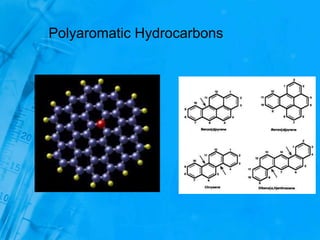
Polyaromatic Hydrocarbons
How are they produced?
• Most of them are formed by a process of thermal
decomposition (pyrolysis) and subsequent recombination
(pyrosynthesis) of organic molecules
• Automobile exhaust, industrial emissions and smoke from
burning wood, charcoal and tobacco contain high levels
of PAHs
• combustion processes produce a mixture of chemicals
with soot being a well known example
Chemical characteristics
• high melting and boiling points
• low vapor pressure
• very low aqueous solubility
• highly lipophilic
• very soluble in organicsolvents
Sources
Natural Sources
• forest and grass fires
• oil seeps
• volcanoes
• chlorophyllous plants,
fungi, and bacteria
Anthropogenic Sources
• petroleum
• electric power generation
• refuse incineration
• home heating
• production of coke,
carbon black, coal tar,
and asphalt
• internal combustion
engines
Uses
• intermediaries in
pharmaceuticals,
• agricultural products
• photographic
products
• thermosetting
plastics
• lubricating materials
Some of the PAH used in the
industry
• Acenaphthene: manufacture of
dyes, plastics,
pigments, pharmaceuticals and pesticides
• Anthracene: manufacture of dyes and
pigments;diluent for wood preservatives;
• Fluoranthene: manufacture of dyes,
pharmaceuticals and agrochemicals.

• Fluorene: manufacture of dyes, pigments,
pesticides, thermoset plastic and
pharmaceuticals;
• Phenanthrene: manufacture of pesticides
and resins
• Pyrene: manufacture of pigments
How are we exposed?
Routes Of Exposure
• breathing ambient and indoor air
• handling contaminated soil or bathing
in contaminated water
• eating food containing PAHs
• smoking cigarettes
• breathing smoke from open fireplaces
• Drinking contaminated water
Sources of PAH’s in the diet
• Barbecue
• Smoked foods
• Coffee and tea
• Human milk
• Vegetable oils
Metabolism
• Due to the high lipophilicity of this class of
compounds, their bioavailability after
ingestion and inhalation is significant
• Scientific investigations have shown that
detectable levels of PAH occur in almost
all internal organs, particularly in organs
that are rich in adipose tissue
• . The enzyme system primarily responsible
for PAH metabolism is the mixed-function
oxidase system.
The mechanism
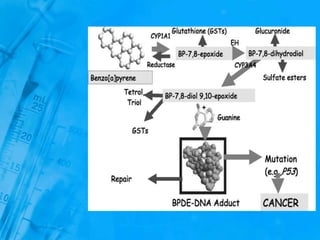
• The first reaction is an epoxidation
• PAH epoxides can then be conjugated
with glutathione and this is regarded as a
true detoxification reaction.
• The epoxides that are not conjugated with
glutathione are converted into phenols and
diols
• These PAH metabolites, however, are
sometimes not sufficiently polar to be
excreted and are therefore have to be
conjugated with glucuronic or sulfuric
acids to enable excretion
Short term health effects
• eye irritation
• nausea
• vomiting
• diarrhea
• Confusion
• Skin irritation
Chronic health effects
• decreased immune function,
• cataracts,
• kidney and liver damage (e.g. jaundice),
• breathing problems,
• asthma-like symptoms
• lung function abnormalities
• repeated contact with skin may induce
redness and skin inflammation
Carcinogenicity
• ability of the reactive metabolites, such as
epoxides and dihydrodiols, of some PAHs
to bind to cellular proteins and DNA
-which leads to:
*mutation
*formation of tumor
*cancer
*developmental malformations
Common cancers caused by
PAH’s
• lung cancer from inhalation,
• stomach cancer from ingesting PAHs in
food,
• skin cancer from skin contact.
**Benzo(a)pyrene is the most common PAH
to cause cancer in animals and this
compound is notable for being the first
chemical carcinogen to be discovered.
Teratogenicity
• Embryotoxic effects of PAHs have been
described in experimental animals
exposed to PAH
• Laboratory studies conducted on mice
have demonstrated that ingestion of high
levels of benzo(a)pyrene during pregnancy
resulted in birth defects and decreased
body weight in the offspring
Teratogenicity
• exposure to PAH pollution during
pregnancy is related to adverse birth
outcomes, this includes
• low birth weight
• premature delivery
• heart malformations
• lower IQ at age three
• increased behavorial problems at ages six
and eight
• and childhood asthma
Genotoxicity
• Genotoxic effects for some PAH have
been demonstrated both in rodents and in
vitro tests using mammalian (including
human) cell lines
• Most of the PAHs are not genotoxic by
themselves and they need to be
metabolised to the diol epoxides which
react with DNA
• Genotoxicity plays important role in the
carcinogenicity process and maybe in
some forms of developmental toxicity as
well.
Immunotoxicity
• PAHs have also been reported to
suppress immune reaction in rodents
• immunosuppression may be involved in
the mechanisms by which PAH induce
cancer
• Early immunotoxicology studies of PAHs
such as BaP,DMBA,and 3-
methylcholanthrene demonstrated
suppression of the antibody response to a
variety of T-cell-dependent and T-cell
independent antigens
Teratogenicity
How are we exposed?
Human Health Effects
Sources
85357909-Polyaromatic-Hydrocayyyyrbons.pptx

85357909-Polyaromatic-Hydrocayyyyrbons.pptx

  • 1.
  • 2.
    What are polyaromatic hydrocarbonsor PAH? • Polyaromatic hydrocarbons (PAHs), also known as polycylic aromatic hydrocarbons or polynuclear aromatic hydrocarbons, are potent atmospheric pollutants that consist of fused aromatic rings and do not contain heteroatoms or carry substituents.
  • 3.
  • 4.
    How are theyproduced? • Most of them are formed by a process of thermal decomposition (pyrolysis) and subsequent recombination (pyrosynthesis) of organic molecules • Automobile exhaust, industrial emissions and smoke from burning wood, charcoal and tobacco contain high levels of PAHs • combustion processes produce a mixture of chemicals with soot being a well known example
  • 5.
    Chemical characteristics • highmelting and boiling points • low vapor pressure • very low aqueous solubility • highly lipophilic • very soluble in organicsolvents
  • 6.
    Sources Natural Sources • forestand grass fires • oil seeps • volcanoes • chlorophyllous plants, fungi, and bacteria Anthropogenic Sources • petroleum • electric power generation • refuse incineration • home heating • production of coke, carbon black, coal tar, and asphalt • internal combustion engines
  • 7.
    Uses • intermediaries in pharmaceuticals, •agricultural products • photographic products • thermosetting plastics • lubricating materials
  • 8.
    Some of thePAH used in the industry • Acenaphthene: manufacture of dyes, plastics, pigments, pharmaceuticals and pesticides • Anthracene: manufacture of dyes and pigments;diluent for wood preservatives; • Fluoranthene: manufacture of dyes, pharmaceuticals and agrochemicals. • Fluorene: manufacture of dyes, pigments, pesticides, thermoset plastic and pharmaceuticals; • Phenanthrene: manufacture of pesticides and resins • Pyrene: manufacture of pigments
  • 9.
    How are weexposed?
  • 10.
    Routes Of Exposure •breathing ambient and indoor air • handling contaminated soil or bathing in contaminated water • eating food containing PAHs • smoking cigarettes • breathing smoke from open fireplaces • Drinking contaminated water
  • 11.
    Sources of PAH’sin the diet • Barbecue • Smoked foods • Coffee and tea • Human milk • Vegetable oils
  • 12.
    Metabolism • Due tothe high lipophilicity of this class of compounds, their bioavailability after ingestion and inhalation is significant • Scientific investigations have shown that detectable levels of PAH occur in almost all internal organs, particularly in organs that are rich in adipose tissue • . The enzyme system primarily responsible for PAH metabolism is the mixed-function oxidase system.
  • 13.
    The mechanism • Thefirst reaction is an epoxidation • PAH epoxides can then be conjugated with glutathione and this is regarded as a true detoxification reaction. • The epoxides that are not conjugated with glutathione are converted into phenols and diols • These PAH metabolites, however, are sometimes not sufficiently polar to be excreted and are therefore have to be conjugated with glucuronic or sulfuric acids to enable excretion
  • 15.
    Short term healtheffects • eye irritation • nausea • vomiting • diarrhea • Confusion • Skin irritation
  • 16.
    Chronic health effects •decreased immune function, • cataracts, • kidney and liver damage (e.g. jaundice), • breathing problems, • asthma-like symptoms • lung function abnormalities • repeated contact with skin may induce redness and skin inflammation
  • 17.
    Carcinogenicity • ability ofthe reactive metabolites, such as epoxides and dihydrodiols, of some PAHs to bind to cellular proteins and DNA -which leads to: *mutation *formation of tumor *cancer *developmental malformations
  • 18.
    Common cancers causedby PAH’s • lung cancer from inhalation, • stomach cancer from ingesting PAHs in food, • skin cancer from skin contact. **Benzo(a)pyrene is the most common PAH to cause cancer in animals and this compound is notable for being the first chemical carcinogen to be discovered.
  • 19.
    Teratogenicity • Embryotoxic effectsof PAHs have been described in experimental animals exposed to PAH • Laboratory studies conducted on mice have demonstrated that ingestion of high levels of benzo(a)pyrene during pregnancy resulted in birth defects and decreased body weight in the offspring
  • 20.
    Teratogenicity • exposure toPAH pollution during pregnancy is related to adverse birth outcomes, this includes • low birth weight • premature delivery • heart malformations • lower IQ at age three • increased behavorial problems at ages six and eight • and childhood asthma
  • 21.
    Genotoxicity • Genotoxic effectsfor some PAH have been demonstrated both in rodents and in vitro tests using mammalian (including human) cell lines • Most of the PAHs are not genotoxic by themselves and they need to be metabolised to the diol epoxides which react with DNA • Genotoxicity plays important role in the carcinogenicity process and maybe in some forms of developmental toxicity as well.
  • 22.
    Immunotoxicity • PAHs havealso been reported to suppress immune reaction in rodents • immunosuppression may be involved in the mechanisms by which PAH induce cancer • Early immunotoxicology studies of PAHs such as BaP,DMBA,and 3- methylcholanthrene demonstrated suppression of the antibody response to a variety of T-cell-dependent and T-cell independent antigens
  • 28.
  • 35.
    How are weexposed?
  • 38.
  • 46.