z 40 - Õ0% over 50 years snore
z Males twice as likely as females
Ovei weight / necl‹
size Males 17” or
gi eater Females lù” oi
ç•i”eatei
z Snorers awaken their partners and
occasionally themselves by the
loudness of their snoring resulting in
loss of sleep (to be discussed latei)
(Tx - Same as OSA)
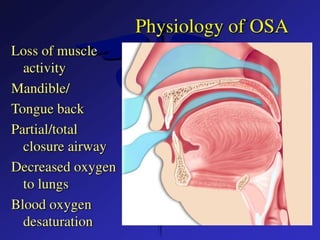
z Complete or almost complete reduction in
airflow through the upper airway lasting
for more than 10 seconds, resulting in
severe oxygen depletion leading to medical
pioblems
Gauses - Tongue, obesity, lnflainmatlon
of
any soft tissues in the upper” aii”way
(tonsils, adenoids), polyps, tumois, etc
Demographics —4% of adult middle-
aged
males and 2Cc oí feiviales
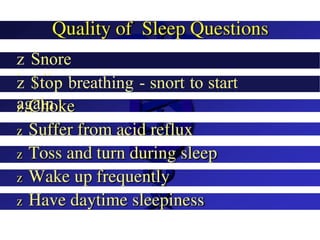
z Snore loudly
z 3top breathing - snort to start
again Choke
z Sułłei ïi‘oivi acid i eÑux
Toss and tuin
Walte up frequently
z Loss of air to lungs may happen many
times per hour
z Blood oxygen drops below the 90% level
causing the patient to arouse to breath
Ai orisal causes loss of sleep, daytlme
sleepiness, decicased pioduction,
inci eased accidents, etc.
May cause medical pi oblems iangil2Q
ŸlOlTl lTlild tO “life thi eatenii»
Dental Responsibility
z Recognize and refer
z Provide s ort when re ested
Medical Responsibility
Dlúgnosis and detei nine piesence and
seveiity oï' an UASD - “Sleep Study”
z Determine tieatment
7 Tieat patient oi iefei‘ foi or al device
z Behavior modification
Sui”gei”
y
z ĞPAP
z Sleep on side rather than
back
z Avoid alcohol late in day and evening
(CNS Depiessant)
z Minimize uve oì
sedatives Weight ìoss
Long teim success pooi
ly documented
Surgical Procedures
z ÜPPP - UvuloPalatoPharyngoPlasty
z LAÍSP - Laser—Assisted Uvula—
Palatoplasty
High Fiequency Radio Waves to
uvula
Tonsillectomy, adenoidectomy
z Tiacheostomy - liíe saving piocedure
/ Cl”Al2lOfüClal opel”ations
Maxillomandibulai Advancement,
Hyoid liít
z The most effective acceptable surgical
Success i ares of 96%, 97°/«, 98*/e and
100%
iepoited ill the litei”atuie
CíliltlOn - Repoi ts of derltíll İZatlon of teeth
cause by sul”gical pi oceduies
Pt insell JR. M:ixillonaNc1ilsi1l:it‘ ac1› :w-eiiaent IMMA) iø .1 Site-
Sțre•citic ti eatiæelit .,l»la› ‹».icla t‹æ olasti rlüti› e sl*'la .i¡a1ae.i: A srii çic:il
.IJÕJÛ1().ICT. ÍcĞ*Ja B1”c.lÎld. ?()(I():4 l47—fi4
z Most effective of all treatment
modalities
z Patient must wean‘ mash while sleepin•
Vel y nolsy equipment,
rincomfoitable
z Equipment not easily poi ìable
Compllance pooi“
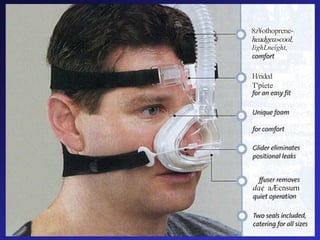
8z¥othoprene-
headgea»cooI,
IighLneíght,
H/rided
T'píete
da¢ aÆcnsurn
r Should not be consideied
by
dentisti y
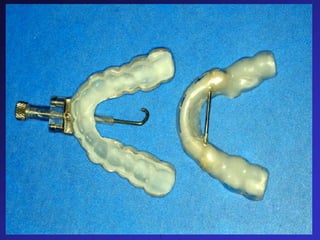
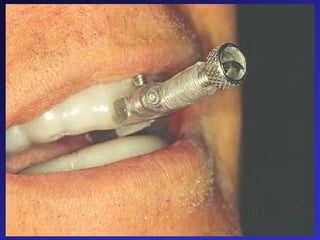
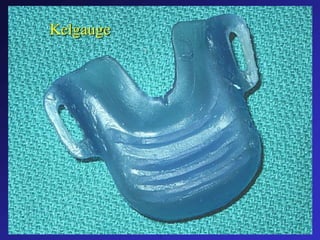
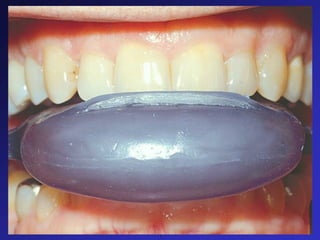
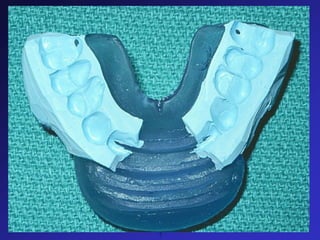
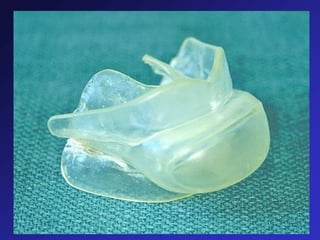
How Does An Oral Device Work?
z Snoring/OSA caused by loss of airway
space
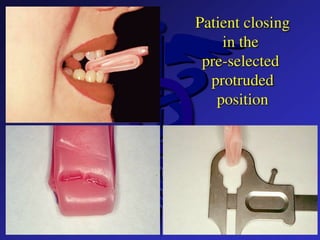
z Most oral devices advance the mandible
This pulls the șenioșlossus forwai d
z This pulls the ton•ue ìorwaid
Uÿ]3Sl“ ílii”way space is l”egained
z Snoiin•/OSA diminished oi eliminated
Othei's simply lteep the tongue pt oti
uded
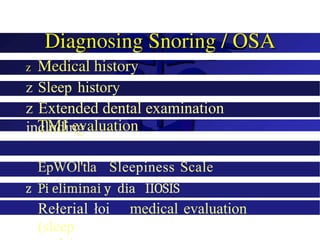
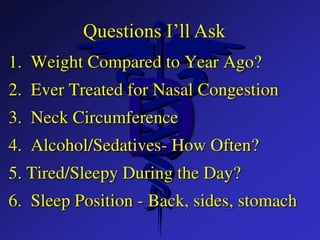
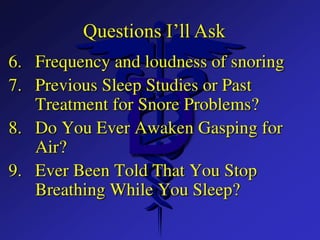
z Sleep history
z Extended dental examination
including
EpWOl'tla Sleepiness Scale
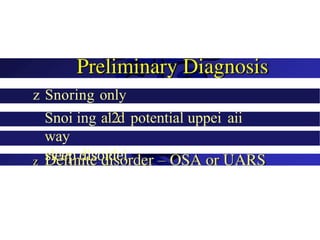
z Pi eliminai y dia IIOSÌS
Rełerial łoi medical evaluation
(sleep
z Snore
loudly
z $top breathing - snort to start
again
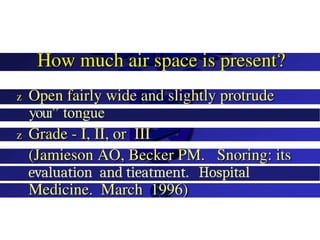
youi” tongue
evaluation and tieatment. Hospital
* J
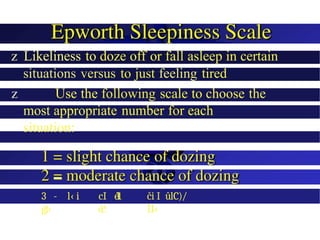
z Likeliness to doze off or fall asleep in certain
situations versus to just feeling tired
z Use the following scale to choose the
most appropriate number for each
situation:
(I ==  tJ tl l Cl IN ü tí1 čl£l/C
3 - l‹ i
gl‹
cI é
1
1
čc‘
či I ûlC)/
İI‹
z Snoring only
Snoi ing a12d potential uppei aii
way
sleep disoidei
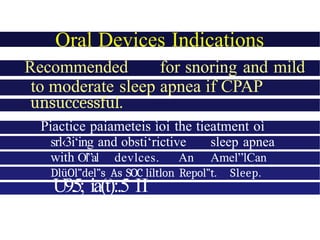
Oral Devices Indications
Recommended for snoring and mild
to moderate sleep apnea if CPAP
unsuccessful.
Piactice paiameteis ìoi the tieatment oì
srl‹3i‘ing and obsti‘rictive sleep apnea
with Ol”al devlces. An Amel”lCan
Sleep
DlüOl”del”s As SOC líltlon Repol”t. Sleep.
U9.5; ia(t):.5 II
—i.?
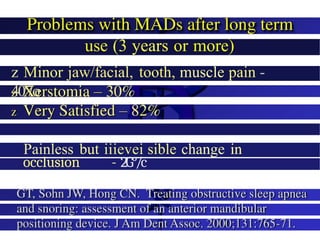
use (3 years or more)
z Minor jaw/facial, tooth, muscle pain -
40'7o
z Ñ3tislied - 15%
Painless but iiievei sible change in
occlusion - 2G°/c
who receive a two-piece, adjustable
percent of patients quit using the
device in a three-year period and
some will expei ience shifts in theii
. O .
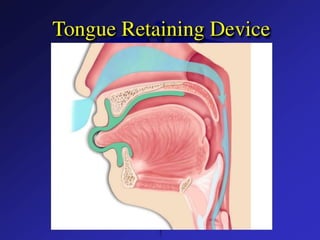
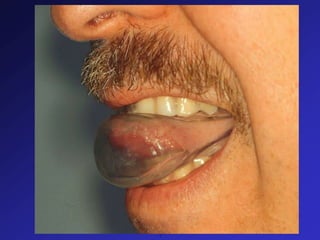
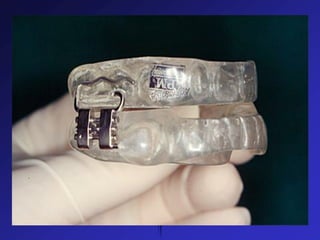
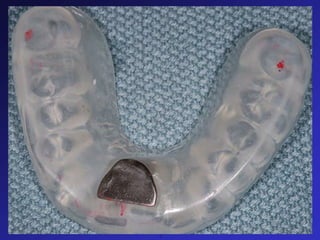
TOligue Retaining Device (TRD)
Mandibulai Advancement Device (MAD)
temporomandibular joint
problems
z Soi”e
tongue
z Altered the timing of the inspiratory
genioglossus (GG) activity and the onset
of
inspiration effort
z Oxygen desaturation index dropped to
fewer than 10 events/ h in 75% of patients
z $İq^niîicant1y impioved the blood oxygen
satui nation level in infants
Helped patients Wltli wÎld to nsodei ate
OSA; howevei , patients with iæoie sever e
OSA may also be treated eíìectively
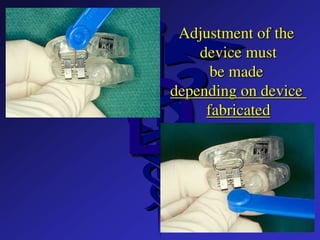
Patient instructions for
adjustment
(depends on device but typical):
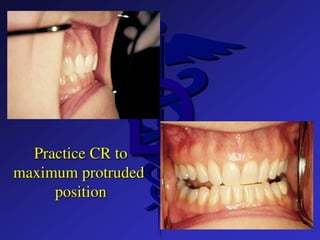
z No adjust for first 3 nights to allow patient
to become accustom to device
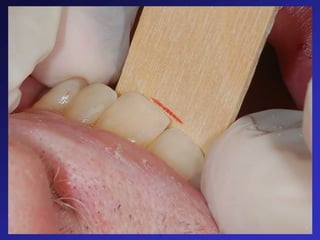
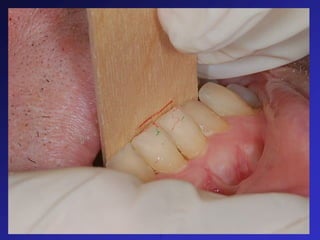
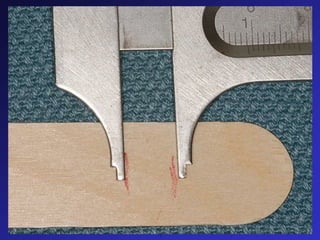
z Protrude device 0.25 mm per night for 3 -
4 nights, stop, cliecl‹ f
O
1” in‹piovei+ient
Pi oti ude device 0.25 mm pei ni ht
ș foi 3 -
4 nights, stop, check fol impi orement
z Continue until symptoms aie ielieved oi
ieduced ol” TMJ symptoms develop
z Following relief of symptoms allow patient
to wear device for 2 - 4 weeks
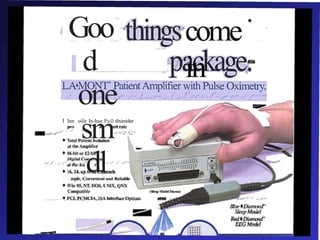
z Have patient wear a Pulse Oximetry device
and detel iælne success of ti eatment
Continue adjustments and followup Pulse
z Relei to Physician ïoi‘ ieevaluatioi»
(2l
^ polysomnogi aphy)
come
in
Goo
d
one
sm
dl
I Inn oilir In-hue Pull tžximi4er
z For approximately 20 minutes
upon
awakening teeth will not close together -
don't force closure - no treatment
TMJ dlSCOixifoi“t —May be soi“e foi” a
few minutes dui ing eai ly aćljustment,
musÍ be i”elleved by iæovlng
iviandlble postei ioi ly
z For approximately 20 minutes
upon
awakening teeth will not close together -
don't force closure - no treatment
TMJ dlSCOixifoi“t —May be soi“e foi” a
few minutes dui ing eai ly aćljustment,
musÍ be i”elleved by iæovlng
iviandlble postei ioi ly
Consent Form Before Treating
Device for treatment of snoring and/or
OSA
z Cease wearlng and return to dentist
immediately if any problems develop
DevlCC lvia@ Olalybe pal”Íially successful
May cause ex lstlRp dental l”estol”dtlŁ3lJ!i t£3
loosened oi‘ ïail
De ice ii ci eas e e eel n
n
OSA
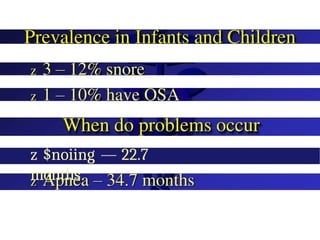
z $noiing — 22.7
months
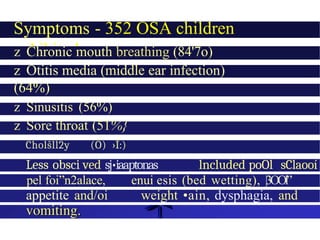
Symptoms - 352 OSA children
exhibited
z Chronic mouth breathing (84'7o)
z Otitis media (middle ear infection)
(64%)
z Sinusitis (56%)
z Sore throat (51%}
Cholšll2y (Õ) ›Î:)
DaytliVC dl Ł3WSlCCSS (42°/«)
Less obsci ved sj•iaaptonas lncluded poOl sClaooí
pel foi”n2alace, enui esis (bed wetting), |3OOl”
appetite and/oi weight •ain, dysphagia, and
z 7% of the children were habitual snorers and
exhibited a higher prevalence of difficulty
in
breathing, observed apneai, restless sleep, and
noctrii‘n‹i1 enruesis tli‹in non-snoi‘eis
Sulajects ivel”e iv›oi”C llkely to fall asleep
wlallC watchÎlie televisl‹in ‹ind ÎIJ @riblic
places and weie hypei active
z The presence of asthma and hay fever
increased the likellhood of habltual
snoring
with exposure to cigaiette smoking at home
7 Primary snoring was corrected with
adenotonsillectomy resulting in weight gain
and a iestoia:ion of noi‘mal eiowrh
2íì°r Of Clfllldl”en wlth lJ2llÙ S}*1fl2ÿtO1fl2S OÍ
Attention-Deficit/Hj'pei‹iciivity Disoidei
(ADHD) also deiæonsti ate OSA as obsei ved
drii”iiag polysc»nnoÿi”aplay testing
› Almost 25% of OSA children had
clinically
significant behavioral ileep problems such as
sleep walking and nightmares as well as a
greater incidence of daytime externalizing
behavior problems
Childien 11 to14 ye.at s of a•e who weie
dÎŃt;wsed as belnp sleep cleílclent exlalblted
loweied selì-esteei+i. sieniłicantly lou•ei
giades and hișlJCl” levels of depi”CSSirc
symptoms tlaan tla‹ise students i”eelstei”i11í¢
itc»”e n‹»i‘ivial sleep driı.ation
7 The early onset of alcohol, marijuana or illicit
drug use by the adolescent as well as an eai ly
onset of cigarette use by the age of 12 to 14
could be significantly predicted by the
mother's ratings of their children's sleep
problems at a•es .? to .5 yeai's
z íÚ 21 Ô1”C11W İÍÍfl SI CCğ £)1SŁ7l”t)Cl”SÚÛt) ÚttCÛ Íl Ł3fl
deficit hyperactivity disoiclei‘ had a vei‘bal
IQ (inte1llt;ence quotlent) up to 20 points
1ov•el than ctinti ‹»l subjects
z Children with lower academic
performance in middle school were more
likely to have snored in early childhood
and have required tonsillectomy and
adenoldectomy
Pei sistent sleep distrii bance is likely to
advei sely affect cognltİOn, mood,
behavior sand ìamily function
z Habitual snoring was significantly
associatedwith lowered academic
performances in mathematics,science and
spelling in third grade children
Infantile OSAS does occrii in infants
due to hy(aeiti opliic adenoids and tonsils
and that among othei things these
infants failed to gain weight
Recognition
z Of all observations made by parents, that
of “snoring every night”, is the most
significant factor in predicting OSA
Ghildi en with sleep bi eatlaing diSOl“dei s
load the dolico facial p‹ittci n
(dispiopoitionately lonș face)
Migiaine headaches may be indicative of
sleep distuibances
Guideline for Diagnosis of
5. Adenotonsillectomy is the first line of
treatment for most children, and
continuous positive airway pressure is
clfl OQIIOII foi those who ai e not
candidates ìoı sui p•eiy oi do not respond
tc sui“cery
I›. Patients should be icevaluated
postopeiatively to deteimine whether
additional tl”eatmentis iequiied
Guideline for Diagnosis of
5. Adenotonsillectomy is the first line of
treatment for most children, and
continuous positive airway pressure is
clfl OQIIOII foi those who ai e not
candidates ìoı sui p•eiy oi do not respond
tc sui“cery
I›. Patients should be icevaluated
postopeiatively to deteimine whether
additional tl”eatmentis iequiied
Treatment
z Children with primary snoring were unlikel to
develop polysomnography-conflrmed OSA and
therefore delayed treatment was safe
z For patients with residual problems
following aden‹itonsillectoiy , coll:ib‹ii‹ition with
oitliodontists to impi ove ci‘aniol'.acial iisl‹ l'actoi s
sla‹iuld lie consldel”ed
Treatment
z Children with primary snoring were unlikel to
develop polysomnography-conflrmed OSA and
therefore delayed treatment was safe
z For patients with residual problems
following aden‹itonsillectoiy , coll:ib‹ii‹ition with
oitliodontists to impi ove ci‘aniol'.acial iisl‹ l'actoi s
sla‹iuld lie consldel”ed
Treatment
z Children with primary snoring were unlikel to
develop polysomnography-conflrmed OSA and
therefore delayed treatment was safe
z For patients with residual problems
following aden‹itonsillectoiy , coll:ib‹ii‹ition with
oitliodontists to impi ove ci‘aniol'.acial iisl‹ l'actoi s
sla‹iuld lie consldel”ed
Summary
› Failure to diagnose and treat these patients
can result in serious but usually ieversible
problems which may include impaired growth,
neuiocognitive and behavioral dysfunction
and c‹ii‘dioiespiiatoiy ł‹ii1rii‘e
Identiíylnc; these p iìlClaÍS lviay be dlíÍlculì
because they may wot exhiblr sifins ‹ii”
syi«pt‹iins while .awaJte
One Westbrook Corporate Center
Suite 920

8.sleep related breathing disorders.pptx

  • 4.
    z 40 -Õ0% over 50 years snore z Males twice as likely as females Ovei weight / necl‹ size Males 17” or gi eater Females lù” oi ç•i”eatei
  • 5.
    z Snorers awakentheir partners and occasionally themselves by the loudness of their snoring resulting in loss of sleep (to be discussed latei)
  • 6.
    (Tx - Sameas OSA)
  • 8.
    z Complete oralmost complete reduction in airflow through the upper airway lasting for more than 10 seconds, resulting in severe oxygen depletion leading to medical pioblems Gauses - Tongue, obesity, lnflainmatlon of any soft tissues in the upper” aii”way (tonsils, adenoids), polyps, tumois, etc Demographics —4% of adult middle- aged males and 2Cc oí feiviales
  • 10.
    z Snore loudly z3top breathing - snort to start again Choke z Sułłei ïi‘oivi acid i eÑux Toss and tuin Walte up frequently
  • 11.
    z Loss ofair to lungs may happen many times per hour z Blood oxygen drops below the 90% level causing the patient to arouse to breath Ai orisal causes loss of sleep, daytlme sleepiness, decicased pioduction, inci eased accidents, etc. May cause medical pi oblems iangil2Q ŸlOlTl lTlild tO “life thi eatenii»
  • 12.
    Dental Responsibility z Recognizeand refer z Provide s ort when re ested Medical Responsibility Dlúgnosis and detei nine piesence and seveiity oï' an UASD - “Sleep Study” z Determine tieatment 7 Tieat patient oi iefei‘ foi or al device
  • 13.
  • 14.
    z Sleep onside rather than back z Avoid alcohol late in day and evening (CNS Depiessant) z Minimize uve oì sedatives Weight ìoss Long teim success pooi ly documented
  • 15.
    Surgical Procedures z ÜPPP- UvuloPalatoPharyngoPlasty z LAÍSP - Laser—Assisted Uvula— Palatoplasty High Fiequency Radio Waves to uvula Tonsillectomy, adenoidectomy z Tiacheostomy - liíe saving piocedure / Cl”Al2lOfüClal opel”ations Maxillomandibulai Advancement, Hyoid liít
  • 17.
    z The mosteffective acceptable surgical Success i ares of 96%, 97°/«, 98*/e and 100% iepoited ill the litei”atuie CíliltlOn - Repoi ts of derltíll İZatlon of teeth cause by sul”gical pi oceduies Pt insell JR. M:ixillonaNc1ilsi1l:it‘ ac1› :w-eiiaent IMMA) iø .1 Site- Sțre•citic ti eatiæelit .,l»la› ‹».icla t‹æ olasti rlüti› e sl*'la .i¡a1ae.i: A srii çic:il .IJÕJÛ1().ICT. ÍcĞ*Ja B1”c.lÎld. ?()(I():4 l47—fi4
  • 18.
    z Most effectiveof all treatment modalities z Patient must wean‘ mash while sleepin• Vel y nolsy equipment, rincomfoitable z Equipment not easily poi ìable Compllance pooi“
  • 19.
  • 20.
    r Should notbe consideied by dentisti y
  • 24.
    How Does AnOral Device Work? z Snoring/OSA caused by loss of airway space z Most oral devices advance the mandible This pulls the șenioșlossus forwai d z This pulls the ton•ue ìorwaid Uÿ]3Sl“ ílii”way space is l”egained z Snoiin•/OSA diminished oi eliminated Othei's simply lteep the tongue pt oti uded
  • 26.
    z Sleep history zExtended dental examination including EpWOl'tla Sleepiness Scale z Pi eliminai y dia IIOSÌS Rełerial łoi medical evaluation (sleep
  • 27.
    z Snore loudly z $topbreathing - snort to start again
  • 30.
    youi” tongue evaluation andtieatment. Hospital
  • 31.
  • 34.
    z Likeliness todoze off or fall asleep in certain situations versus to just feeling tired z Use the following scale to choose the most appropriate number for each situation: (I == tJ tl l Cl IN ü tí1 čl£l/C 3 - l‹ i gl‹ cI é 1 1 čc‘ či I ûlC)/ İI‹
  • 35.
    z Snoring only Snoiing a12d potential uppei aii way sleep disoidei
  • 37.
    Oral Devices Indications Recommendedfor snoring and mild to moderate sleep apnea if CPAP unsuccessful. Piactice paiameteis ìoi the tieatment oì srl‹3i‘ing and obsti‘rictive sleep apnea with Ol”al devlces. An Amel”lCan Sleep DlüOl”del”s As SOC líltlon Repol”t. Sleep. U9.5; ia(t):.5 II —i.?
  • 38.
    use (3 yearsor more) z Minor jaw/facial, tooth, muscle pain - 40'7o z Ñ3tislied - 15% Painless but iiievei sible change in occlusion - 2G°/c
  • 39.
    who receive atwo-piece, adjustable percent of patients quit using the device in a three-year period and some will expei ience shifts in theii . O .
  • 40.
    TOligue Retaining Device(TRD) Mandibulai Advancement Device (MAD)
  • 42.
  • 49.
    z Altered thetiming of the inspiratory genioglossus (GG) activity and the onset of inspiration effort z Oxygen desaturation index dropped to fewer than 10 events/ h in 75% of patients z $İq^niîicant1y impioved the blood oxygen satui nation level in infants Helped patients Wltli wÎld to nsodei ate OSA; howevei , patients with iæoie sever e OSA may also be treated eíìectively
  • 63.
    Patient instructions for adjustment (dependson device but typical): z No adjust for first 3 nights to allow patient to become accustom to device z Protrude device 0.25 mm per night for 3 - 4 nights, stop, cliecl‹ f O 1” in‹piovei+ient Pi oti ude device 0.25 mm pei ni ht ș foi 3 - 4 nights, stop, check fol impi orement z Continue until symptoms aie ielieved oi ieduced ol” TMJ symptoms develop
  • 64.
    z Following reliefof symptoms allow patient to wear device for 2 - 4 weeks z Have patient wear a Pulse Oximetry device and detel iælne success of ti eatment Continue adjustments and followup Pulse z Relei to Physician ïoi‘ ieevaluatioi» (2l ^ polysomnogi aphy)
  • 65.
  • 66.
    z For approximately20 minutes upon awakening teeth will not close together - don't force closure - no treatment TMJ dlSCOixifoi“t —May be soi“e foi” a few minutes dui ing eai ly aćljustment, musÍ be i”elleved by iæovlng iviandlble postei ioi ly
  • 67.
    z For approximately20 minutes upon awakening teeth will not close together - don't force closure - no treatment TMJ dlSCOixifoi“t —May be soi“e foi” a few minutes dui ing eai ly aćljustment, musÍ be i”elleved by iæovlng iviandlble postei ioi ly
  • 68.
    Consent Form BeforeTreating Device for treatment of snoring and/or OSA z Cease wearlng and return to dentist immediately if any problems develop DevlCC lvia@ Olalybe pal”Íially successful May cause ex lstlRp dental l”estol”dtlŁ3lJ!i t£3 loosened oi‘ ïail De ice ii ci eas e e eel n n OSA
  • 72.
    z $noiing —22.7 months
  • 73.
    Symptoms - 352OSA children exhibited z Chronic mouth breathing (84'7o) z Otitis media (middle ear infection) (64%) z Sinusitis (56%) z Sore throat (51%} Cholšll2y (Õ) ›Î:) DaytliVC dl Ł3WSlCCSS (42°/«) Less obsci ved sj•iaaptonas lncluded poOl sClaooí pel foi”n2alace, enui esis (bed wetting), |3OOl” appetite and/oi weight •ain, dysphagia, and
  • 74.
    z 7% ofthe children were habitual snorers and exhibited a higher prevalence of difficulty in breathing, observed apneai, restless sleep, and noctrii‘n‹i1 enruesis tli‹in non-snoi‘eis Sulajects ivel”e iv›oi”C llkely to fall asleep wlallC watchÎlie televisl‹in ‹ind ÎIJ @riblic places and weie hypei active
  • 75.
    z The presenceof asthma and hay fever increased the likellhood of habltual snoring with exposure to cigaiette smoking at home 7 Primary snoring was corrected with adenotonsillectomy resulting in weight gain and a iestoia:ion of noi‘mal eiowrh 2íì°r Of Clfllldl”en wlth lJ2llÙ S}*1fl2ÿtO1fl2S OÍ Attention-Deficit/Hj'pei‹iciivity Disoidei (ADHD) also deiæonsti ate OSA as obsei ved drii”iiag polysc»nnoÿi”aplay testing
  • 76.
    › Almost 25%of OSA children had clinically significant behavioral ileep problems such as sleep walking and nightmares as well as a greater incidence of daytime externalizing behavior problems Childien 11 to14 ye.at s of a•e who weie dÎŃt;wsed as belnp sleep cleílclent exlalblted loweied selì-esteei+i. sieniłicantly lou•ei giades and hișlJCl” levels of depi”CSSirc symptoms tlaan tla‹ise students i”eelstei”i11í¢ itc»”e n‹»i‘ivial sleep driı.ation
  • 77.
    7 The earlyonset of alcohol, marijuana or illicit drug use by the adolescent as well as an eai ly onset of cigarette use by the age of 12 to 14 could be significantly predicted by the mother's ratings of their children's sleep problems at a•es .? to .5 yeai's z íÚ 21 Ô1”C11W İÍÍfl SI CCğ £)1SŁ7l”t)Cl”SÚÛt) ÚttCÛ Íl Ł3fl deficit hyperactivity disoiclei‘ had a vei‘bal IQ (inte1llt;ence quotlent) up to 20 points 1ov•el than ctinti ‹»l subjects
  • 78.
    z Children withlower academic performance in middle school were more likely to have snored in early childhood and have required tonsillectomy and adenoldectomy Pei sistent sleep distrii bance is likely to advei sely affect cognltİOn, mood, behavior sand ìamily function
  • 79.
    z Habitual snoringwas significantly associatedwith lowered academic performances in mathematics,science and spelling in third grade children Infantile OSAS does occrii in infants due to hy(aeiti opliic adenoids and tonsils and that among othei things these infants failed to gain weight
  • 80.
    Recognition z Of allobservations made by parents, that of “snoring every night”, is the most significant factor in predicting OSA Ghildi en with sleep bi eatlaing diSOl“dei s load the dolico facial p‹ittci n (dispiopoitionately lonș face) Migiaine headaches may be indicative of sleep distuibances
  • 82.
    Guideline for Diagnosisof 5. Adenotonsillectomy is the first line of treatment for most children, and continuous positive airway pressure is clfl OQIIOII foi those who ai e not candidates ìoı sui p•eiy oi do not respond tc sui“cery I›. Patients should be icevaluated postopeiatively to deteimine whether additional tl”eatmentis iequiied
  • 83.
    Guideline for Diagnosisof 5. Adenotonsillectomy is the first line of treatment for most children, and continuous positive airway pressure is clfl OQIIOII foi those who ai e not candidates ìoı sui p•eiy oi do not respond tc sui“cery I›. Patients should be icevaluated postopeiatively to deteimine whether additional tl”eatmentis iequiied
  • 84.
    Treatment z Children withprimary snoring were unlikel to develop polysomnography-conflrmed OSA and therefore delayed treatment was safe z For patients with residual problems following aden‹itonsillectoiy , coll:ib‹ii‹ition with oitliodontists to impi ove ci‘aniol'.acial iisl‹ l'actoi s sla‹iuld lie consldel”ed
  • 85.
    Treatment z Children withprimary snoring were unlikel to develop polysomnography-conflrmed OSA and therefore delayed treatment was safe z For patients with residual problems following aden‹itonsillectoiy , coll:ib‹ii‹ition with oitliodontists to impi ove ci‘aniol'.acial iisl‹ l'actoi s sla‹iuld lie consldel”ed
  • 86.
    Treatment z Children withprimary snoring were unlikel to develop polysomnography-conflrmed OSA and therefore delayed treatment was safe z For patients with residual problems following aden‹itonsillectoiy , coll:ib‹ii‹ition with oitliodontists to impi ove ci‘aniol'.acial iisl‹ l'actoi s sla‹iuld lie consldel”ed
  • 87.
    Summary › Failure todiagnose and treat these patients can result in serious but usually ieversible problems which may include impaired growth, neuiocognitive and behavioral dysfunction and c‹ii‘dioiespiiatoiy ł‹ii1rii‘e Identiíylnc; these p iìlClaÍS lviay be dlíÍlculì because they may wot exhiblr sifins ‹ii” syi«pt‹iins while .awaJte
  • 88.
    One Westbrook CorporateCenter Suite 920