Chapter 7.2 
Regulations 
Protection Business 
and the Public 
JARED NEUGEBAUER
Patents 
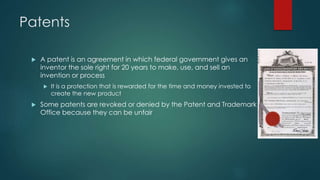
 A patent is an agreement in which federal government gives an 
inventor the sole right for 20 years to make, use, and sell an 
invention or process 
 It is a protection that is rewarded for the time and money invested to 
create the new product 
 Some patents are revoked or denied by the Patent and Trademark 
Office because they can be unfair
Copyrights 
 Copyrights are similar to a patent in that the federal government 
gives an author the sole right to reproduce, publish, and sell literary 
or artistic work for the life of the author, typically, plus 70 years 
 Can’t publish/reproduce this work without permission 
 Can have photocopying of copyright material for fair use 
 Also covers electronic methods for distributing creative work 
 They are regulated by the federal Copyright Office
Trademarks 
 Trademarks are a distinguishing name, symbol, or special mark 
placed on a good or service that is legally reserved for the sole use 
of the owner 
 Eamples: 
 Nike “swoosh” 
 McDonald’s “golden arches” 
 Sony “Walkman” 
 Nintendo’s “Game Boy”
Food and Drug Regulations 
 The Food and Drug Administration administers the Federal Food, 
Drug, and Cosmetic Act 
 These are laws that prohibit sales of impure, improperly labeled, 
falsely guaranteed, and unhealthful food, drugs, and cosmetics 
 If a product violates this they may have to stop their sales or notify the 
public of the potential harm
Nonfood Product Regulations 
 Laws require labels on many products if danger exists from product 
use 
 Example: 
 Health warning message on cigarette packages 
 Consumer Product Safety Act 
 When products already sold are found to have a dangerous defect, 
businesses are legally required to recall, repair, or stop selling the 
products 
 Warranty Act 
 What sellers will do if their product is defective
Information Regulations 
 Information liability is the responsible for physical or economic injury 
arising from incorrect data or wrongful use of data 
 Similar to product liability 
 Electronic Communications Privacy Act make it a crime for any 
unauthorized person to access a major computer system and view, use, 
or change data 
 Cookies are files of information about the user that some Web sites 
create and store on the user’s computer
State and Local Regulations 
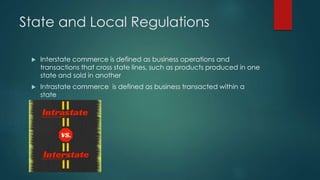
 Interstate commerce is defined as business operations and 
transactions that cross state lines, such as products produced in one 
state and sold in another 
 Intrastate commerce is defined as business transacted within a 
state
Licensing 
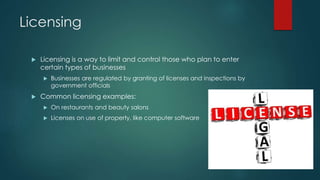
 Licensing is a way to limit and control those who plan to enter 
certain types of businesses 
 Businesses are regulated by granting of licenses and inspections by 
government officials 
 Common licensing examples: 
 On restaurants and beauty salons 
 Licenses on use of property, like computer software
Public franchising 
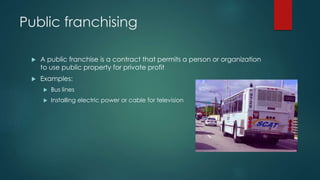
 A public franchise is a contract that permits a person or organization 
to use public property for private profit 
 Examples: 
 Bus lines 
 Installing electric power or cable for television
Building Codes and Zoning 
 Building codes control the physical features of structures 
 May specify: 
 Max height 
 Min square feet of space 
 And types of materials that can be used 
 Zoning regulations specify which land areas may be used for homes 
and which areas may be used for different types of businesses
7.2

7.2

  • 1.
    Chapter 7.2 Regulations Protection Business and the Public JARED NEUGEBAUER
  • 2.
    Patents  Apatent is an agreement in which federal government gives an inventor the sole right for 20 years to make, use, and sell an invention or process  It is a protection that is rewarded for the time and money invested to create the new product  Some patents are revoked or denied by the Patent and Trademark Office because they can be unfair
  • 3.
    Copyrights  Copyrightsare similar to a patent in that the federal government gives an author the sole right to reproduce, publish, and sell literary or artistic work for the life of the author, typically, plus 70 years  Can’t publish/reproduce this work without permission  Can have photocopying of copyright material for fair use  Also covers electronic methods for distributing creative work  They are regulated by the federal Copyright Office
  • 4.
    Trademarks  Trademarksare a distinguishing name, symbol, or special mark placed on a good or service that is legally reserved for the sole use of the owner  Eamples:  Nike “swoosh”  McDonald’s “golden arches”  Sony “Walkman”  Nintendo’s “Game Boy”
  • 5.
    Food and DrugRegulations  The Food and Drug Administration administers the Federal Food, Drug, and Cosmetic Act  These are laws that prohibit sales of impure, improperly labeled, falsely guaranteed, and unhealthful food, drugs, and cosmetics  If a product violates this they may have to stop their sales or notify the public of the potential harm
  • 6.
    Nonfood Product Regulations  Laws require labels on many products if danger exists from product use  Example:  Health warning message on cigarette packages  Consumer Product Safety Act  When products already sold are found to have a dangerous defect, businesses are legally required to recall, repair, or stop selling the products  Warranty Act  What sellers will do if their product is defective
  • 7.
    Information Regulations Information liability is the responsible for physical or economic injury arising from incorrect data or wrongful use of data  Similar to product liability  Electronic Communications Privacy Act make it a crime for any unauthorized person to access a major computer system and view, use, or change data  Cookies are files of information about the user that some Web sites create and store on the user’s computer
  • 8.
    State and LocalRegulations  Interstate commerce is defined as business operations and transactions that cross state lines, such as products produced in one state and sold in another  Intrastate commerce is defined as business transacted within a state
  • 9.
    Licensing  Licensingis a way to limit and control those who plan to enter certain types of businesses  Businesses are regulated by granting of licenses and inspections by government officials  Common licensing examples:  On restaurants and beauty salons  Licenses on use of property, like computer software
  • 10.
    Public franchising A public franchise is a contract that permits a person or organization to use public property for private profit  Examples:  Bus lines  Installing electric power or cable for television
  • 11.
    Building Codes andZoning  Building codes control the physical features of structures  May specify:  Max height  Min square feet of space  And types of materials that can be used  Zoning regulations specify which land areas may be used for homes and which areas may be used for different types of businesses