Protecting Yourself
from Fraud
including Identity Theft
6.04
© Take Charge Today – August 2013 – Protecting Yourself From Fraud– Slide 2
Funded by a grant from Take Charge America, Inc. to the Norton School of Family and Consumer Sciences Take Charge America Institute at the University of Arizona
2.6.4.G1
Fraud
Arrests for
crimes not
committed
Damaged
financial
security
Tarnished
credit
reports
Fraud – an intentional effort to deceive another
individual for personal gain
Compromised
health
© Take Charge Today – August 2013 – Protecting Yourself From Fraud– Slide 3
Funded by a grant from Take Charge America, Inc. to the Norton School of Family and Consumer Sciences Take Charge America Institute at the University of Arizona
2.6.4.G1
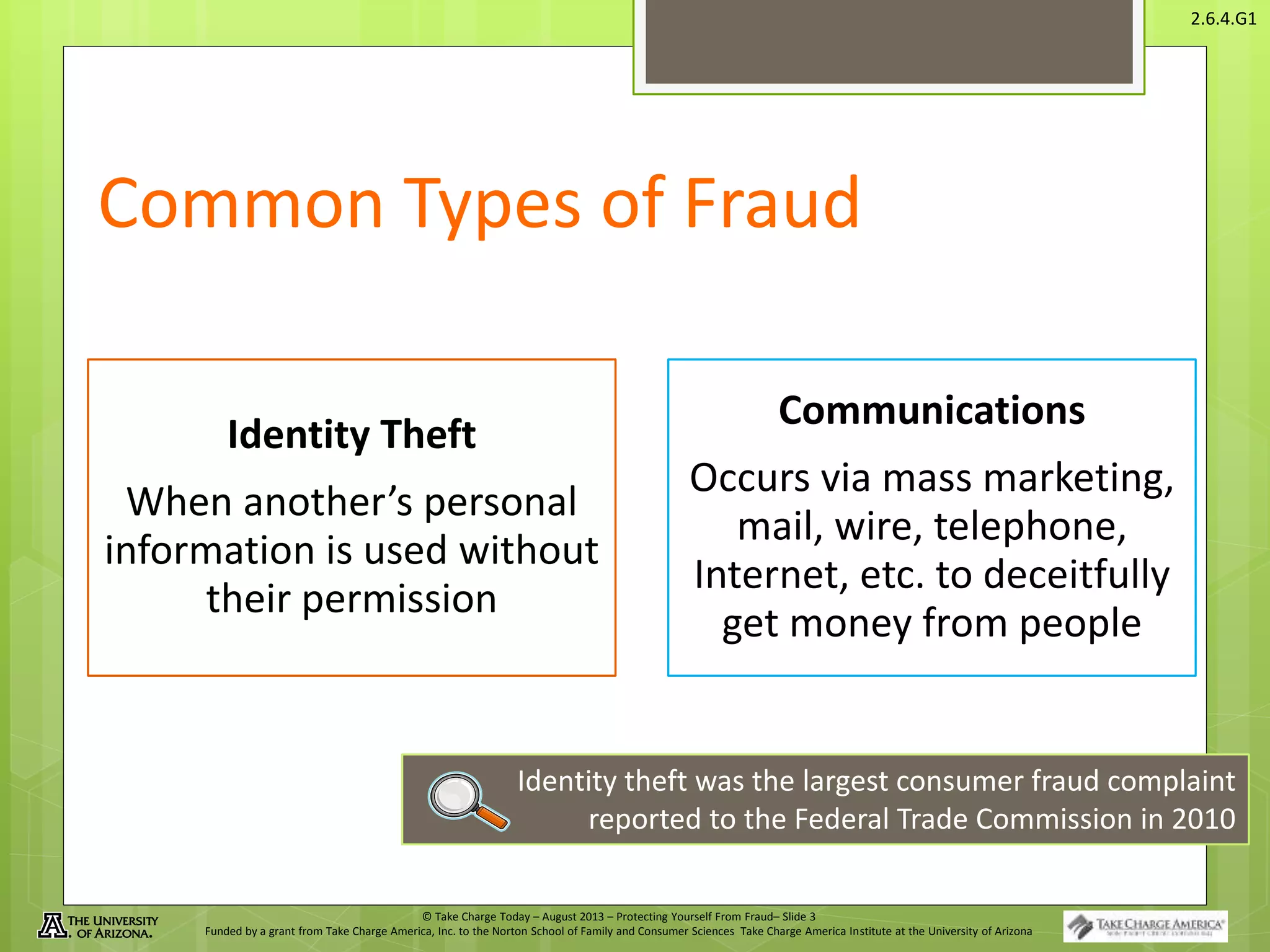
Common Types of Fraud
Identity Theft
When another’s personal
information is used without
their permission
Communications
Occurs via mass marketing,
mail, wire, telephone,
Internet, etc. to deceitfully
get money from people
Identity theft was the largest consumer fraud complaint
reported to the Federal Trade Commission in 2010
© Take Charge Today – August 2013 – Protecting Yourself From Fraud– Slide 4
Funded by a grant from Take Charge America, Inc. to the Norton School of Family and Consumer Sciences Take Charge America Institute at the University of Arizona
2.6.4.G1
Common Types of Fraud
Credit
Applying for and modifying
credit (most common involves
mortgages)
Investment
Investors are deceived by
individuals claiming to be
financial advisors or have an
investment guaranteed to
make money
Tax
Scammers making claims that
a person may be exempt from
paying taxes
Do you know anyone that has been a victim of fraud?
© Take Charge Today – August 2013 – Protecting Yourself From Fraud– Slide 5
Funded by a grant from Take Charge America, Inc. to the Norton School of Family and Consumer Sciences Take Charge America Institute at the University of Arizona
2.6.4.G1
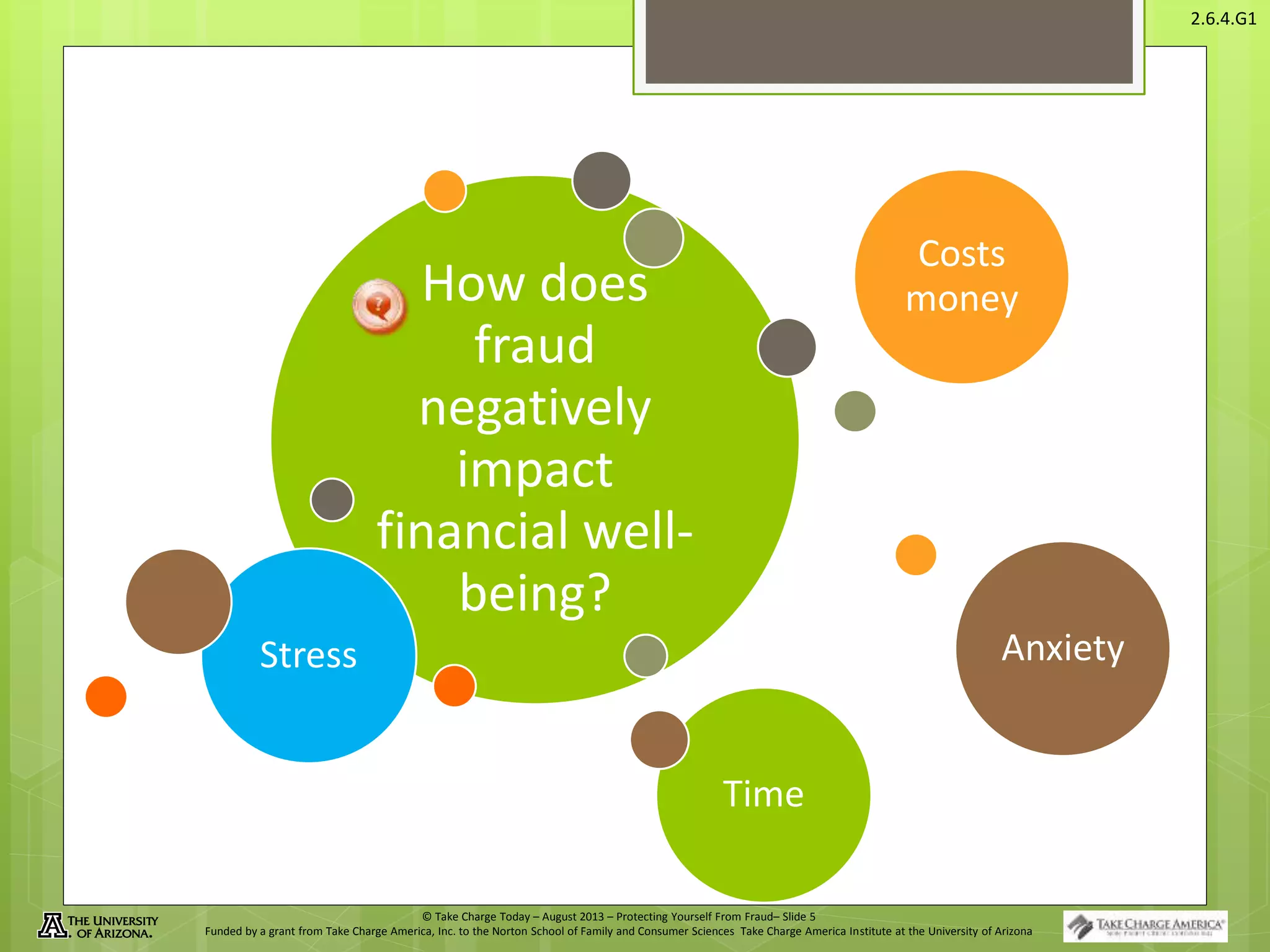
Time
How does
fraud
negatively
impact
financial well-
being?
Stress
Costs
money
Anxiety
© Take Charge Today – August 2013 – Protecting Yourself From Fraud– Slide 6
Funded by a grant from Take Charge America, Inc. to the Norton School of Family and Consumer Sciences Take Charge America Institute at the University of Arizona
2.6.4.G1
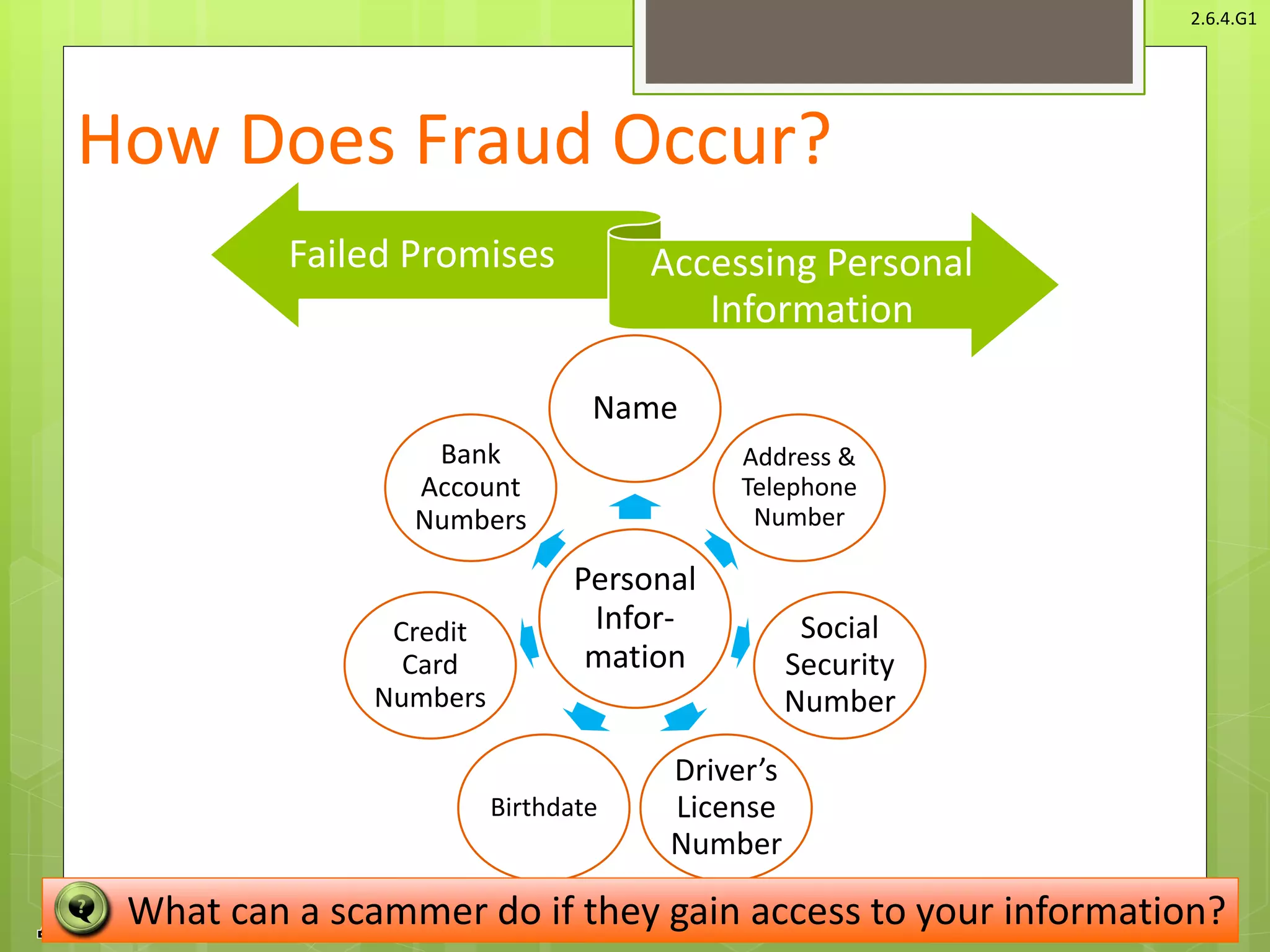
How Does Fraud Occur?
Failed Promises Accessing Personal
Information
Personal
Infor-
mation
Name
Address &
Telephone
Number
Social
Security
Number
Driver’s
License
Number
Birthdate
Credit
Card
Numbers
Bank
Account
Numbers
What can a scammer do if they gain access to your information?
© Take Charge Today – August 2013 – Protecting Yourself From Fraud– Slide 7
Funded by a grant from Take Charge America, Inc. to the Norton School of Family and Consumer Sciences Take Charge America Institute at the University of Arizona
2.6.4.G1
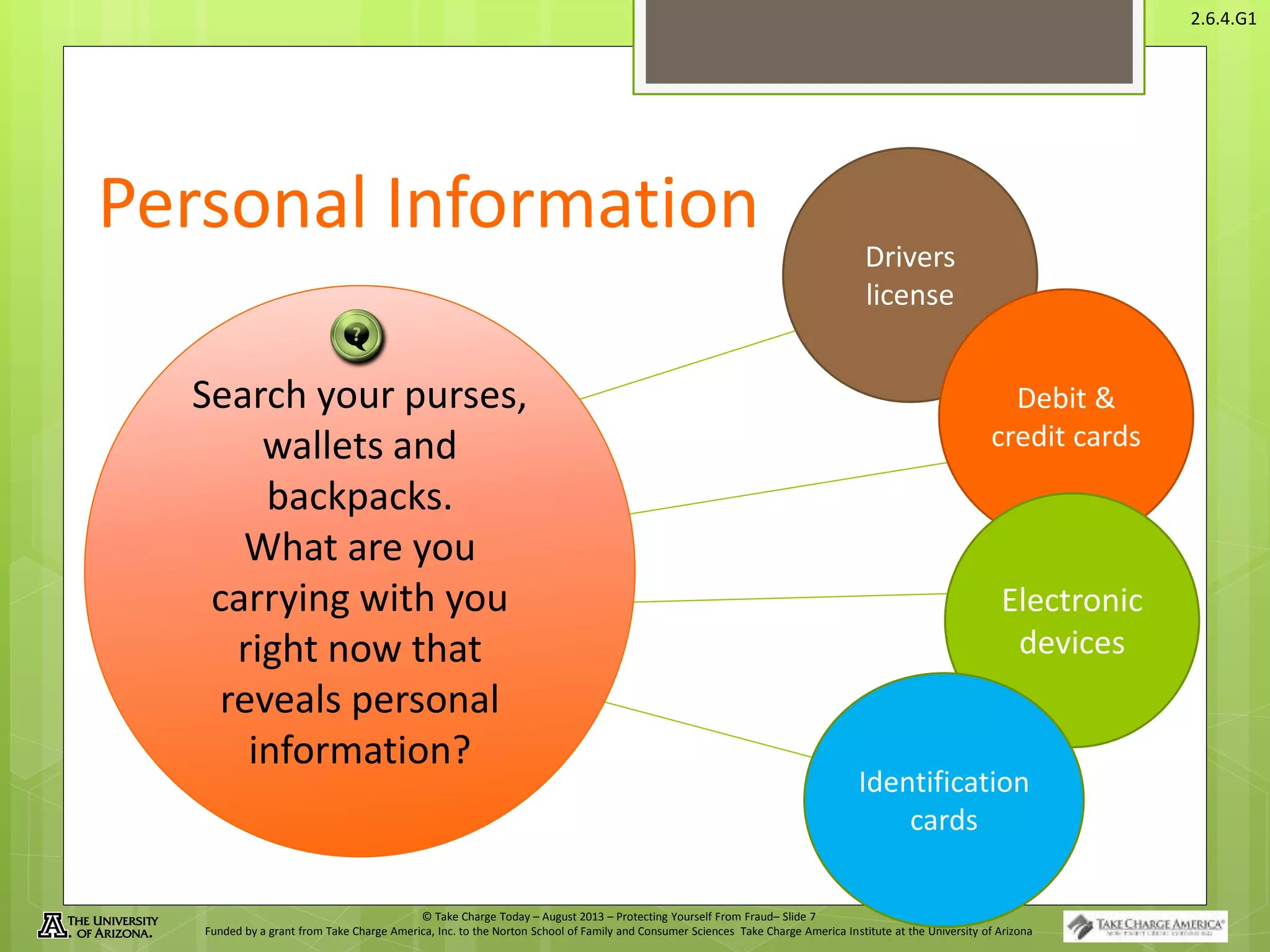
Personal Information
Search your purses,
wallets and
backpacks.
What are you
carrying with you
right now that
reveals personal
information?
Drivers
license
Debit &
credit cards
Electronic
devices
Identification
cards
© Take Charge Today – August 2013 – Protecting Yourself From Fraud– Slide 8
Funded by a grant from Take Charge America, Inc. to the Norton School of Family and Consumer Sciences Take Charge America Institute at the University of Arizona
2.6.4.G1
How Thieves Access
Personal Information
Stealing a purse, wallet, financial records, mail, etc.
Diverting mail
Skimming credit and debit card information
Phishing for personal information via email
Hacking a computer to install spyware
How did the scammer access Lucy’s information?
© Take Charge Today – August 2013 – Protecting Yourself From Fraud– Slide 9
Funded by a grant from Take Charge America, Inc. to the Norton School of Family and Consumer Sciences Take Charge America Institute at the University of Arizona
2.6.4.G1
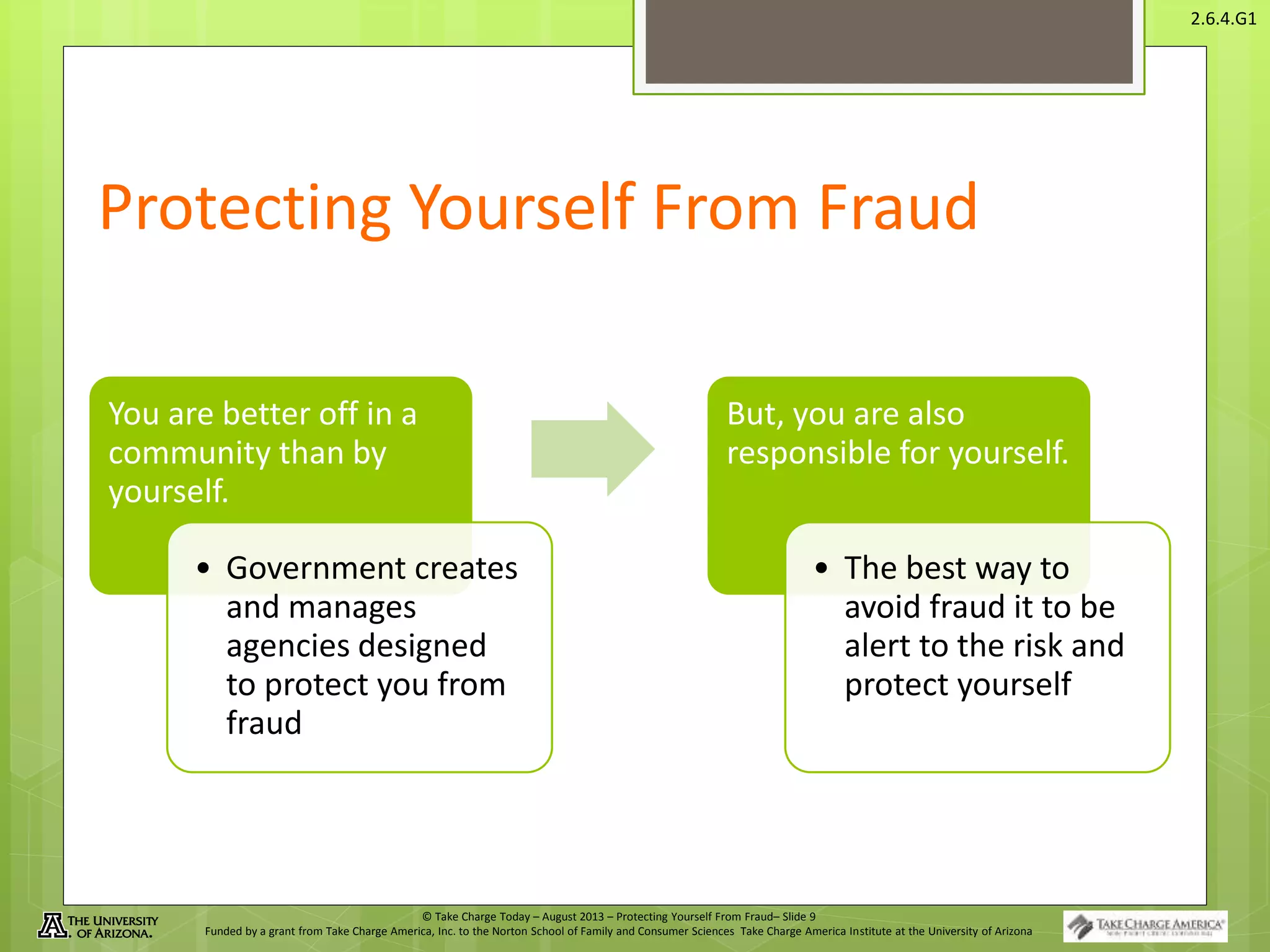
Protecting Yourself From Fraud
You are better off in a
community than by
yourself.
• Government creates
and manages
agencies designed
to protect you from
fraud
But, you are also
responsible for yourself.
• The best way to
avoid fraud it to be
alert to the risk and
protect yourself
© Take Charge Today – August 2013 – Protecting Yourself From Fraud– Slide 10
Funded by a grant from Take Charge America, Inc. to the Norton School of Family and Consumer Sciences Take Charge America Institute at the University of Arizona
2.6.4.G1
Protect Your Personal Information
Don’t carry your Social Security Card
Sign credit and debit cards with signature and “Please See ID”
Memorize and use difficult PIN numbers
Shred personal documents before discarding them
Keep personal records in a secure location
Deposit outgoing mail in a secure post office collection box
Be careful of what personal information is posted on the Internet
© Take Charge Today – August 2013 – Protecting Yourself From Fraud– Slide 11
Funded by a grant from Take Charge America, Inc. to the Norton School of Family and Consumer Sciences Take Charge America Institute at the University of Arizona
2.6.4.G1
• Immediately dispute errors
Check Your Credit Reports
• Verify sources requesting information
Evaluate Situations
• Consistently monitor information such as credit
statements, depository institution statements, etc
Monitor Financial Information
© Take Charge Today – August 2013 – Protecting Yourself From Fraud– Slide 12
Funded by a grant from Take Charge America, Inc. to the Norton School of Family and Consumer Sciences Take Charge America Institute at the University of Arizona
2.6.4.G1
Be Careful When Using the Internet
Look for
“https” or a
picture of a
lock
Keep
usernames
and
passwords
safe
Use a credit
card when
making online
purchases
Search for
your name
Once
information is
posted online,
it can’t be
taken back!
Use privacy
settings on
social
networking
sites
© Take Charge Today – August 2013 – Protecting Yourself From Fraud– Slide 13
Funded by a grant from Take Charge America, Inc. to the Norton School of Family and Consumer Sciences Take Charge America Institute at the University of Arizona
2.6.4.G1
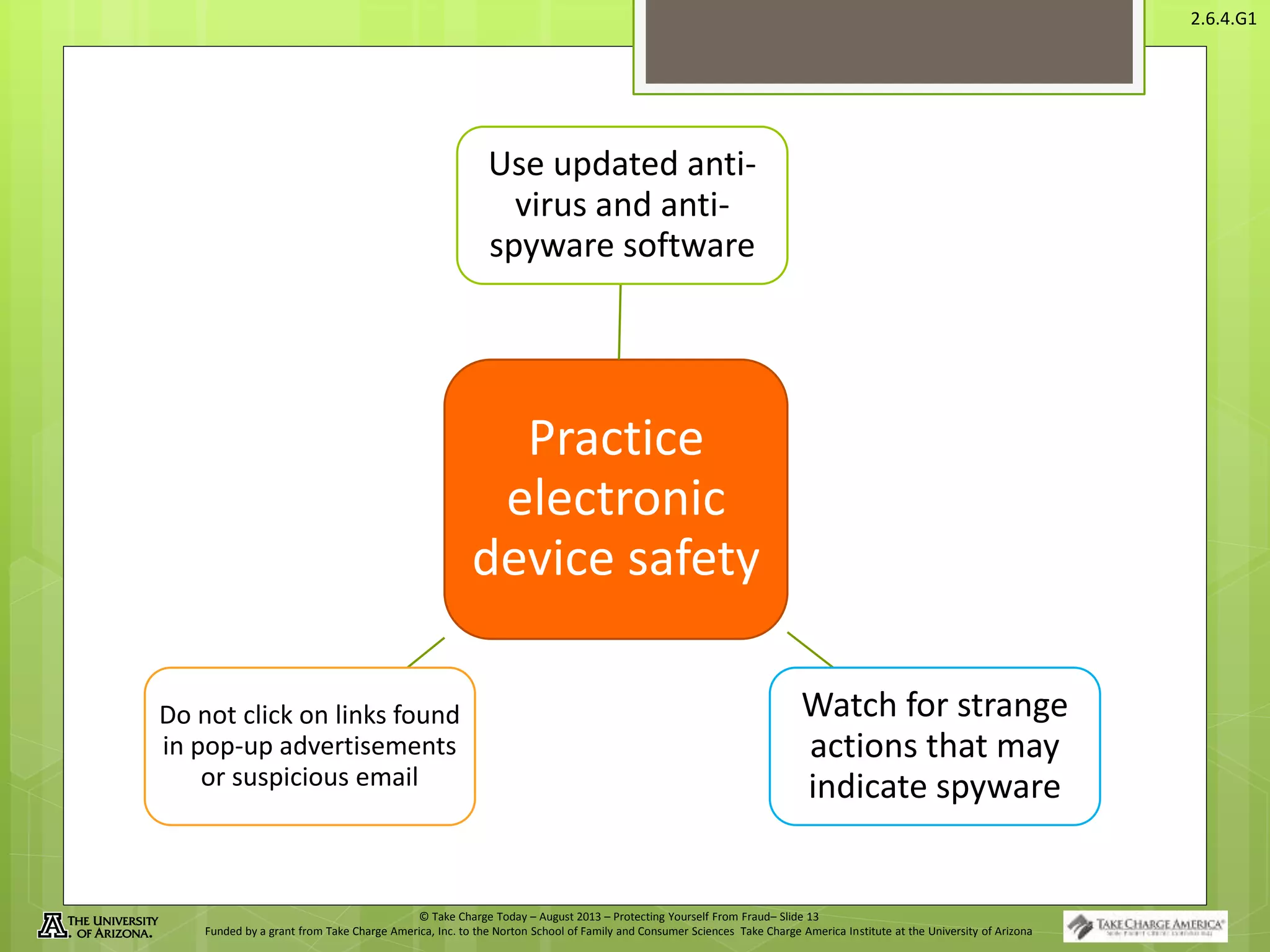
Practice
electronic
device safety
Use updated anti-
virus and anti-
spyware software
Watch for strange
actions that may
indicate spyware
Do not click on links found
in pop-up advertisements
or suspicious email
© Take Charge Today – August 2013 – Protecting Yourself From Fraud– Slide 14
Funded by a grant from Take Charge America, Inc. to the Norton School of Family and Consumer Sciences Take Charge America Institute at the University of Arizona
2.6.4.G1
Credit and Debit Cards
Credit Cards
Maximum liability is $50
No liability if a lost card is reported
before being fraudulently used
No liability if the card number is
used, but not the card itself
Debit Cards
Liability depends on how quickly
the card is reported and depository
institution policies
Ranges from $0-unlimited!
Use a credit
card instead
of a debit card for
online purchases!
© Take Charge Today – August 2013 – Protecting Yourself From Fraud– Slide 15
Funded by a grant from Take Charge America, Inc. to the Norton School of Family and Consumer Sciences Take Charge America Institute at the University of Arizona
2.6.4.G1
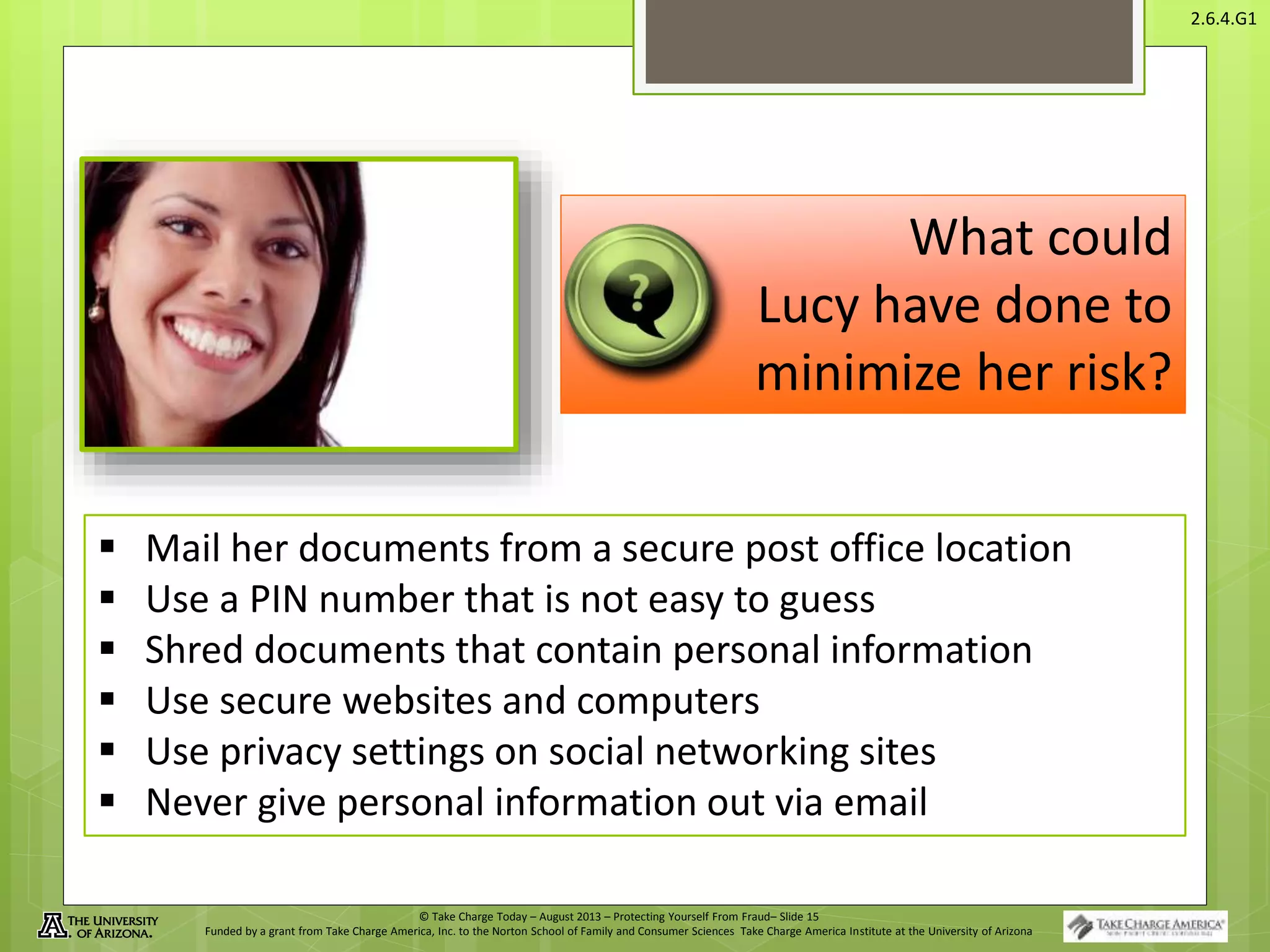
What could
Lucy have done to
minimize her risk?
 Mail her documents from a secure post office location
 Use a PIN number that is not easy to guess
 Shred documents that contain personal information
 Use secure websites and computers
 Use privacy settings on social networking sites
 Never give personal information out via email
© Take Charge Today – August 2013 – Protecting Yourself From Fraud– Slide 16
Funded by a grant from Take Charge America, Inc. to the Norton School of Family and Consumer Sciences Take Charge America Institute at the University of Arizona
2.6.4.G1
Fraud Protection Services
Fraud
monitoring
and
detection
Cost
recovery if
fraud
occurs
Legal
counsel if
fraud
occurs
Companies may offer various types of services including:
You are your best advocate! Closely evaluate
services to
know what is
covered, fees and
company reputation
© Take Charge Today – August 2013 – Protecting Yourself From Fraud– Slide 17
Funded by a grant from Take Charge America, Inc. to the Norton School of Family and Consumer Sciences Take Charge America Institute at the University of Arizona
2.6.4.G1
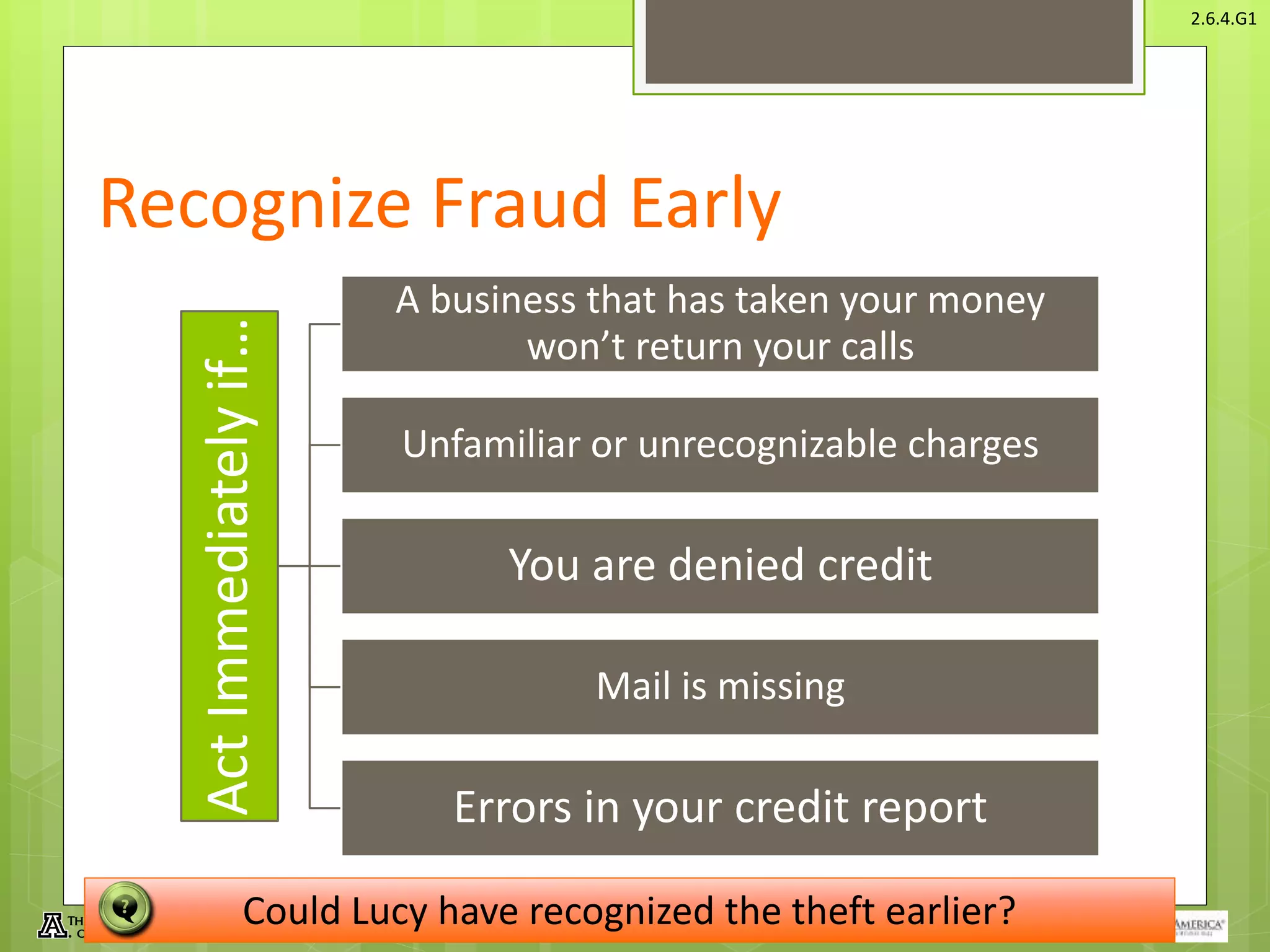
Recognize Fraud EarlyActImmediatelyif…
A business that has taken your money
won’t return your calls
Unfamiliar or unrecognizable charges
You are denied credit
Mail is missing
Errors in your credit report
Could Lucy have recognized the theft earlier?
© Take Charge Today – August 2013 – Protecting Yourself From Fraud– Slide 18
Funded by a grant from Take Charge America, Inc. to the Norton School of Family and Consumer Sciences Take Charge America Institute at the University of Arizona
2.6.4.G1
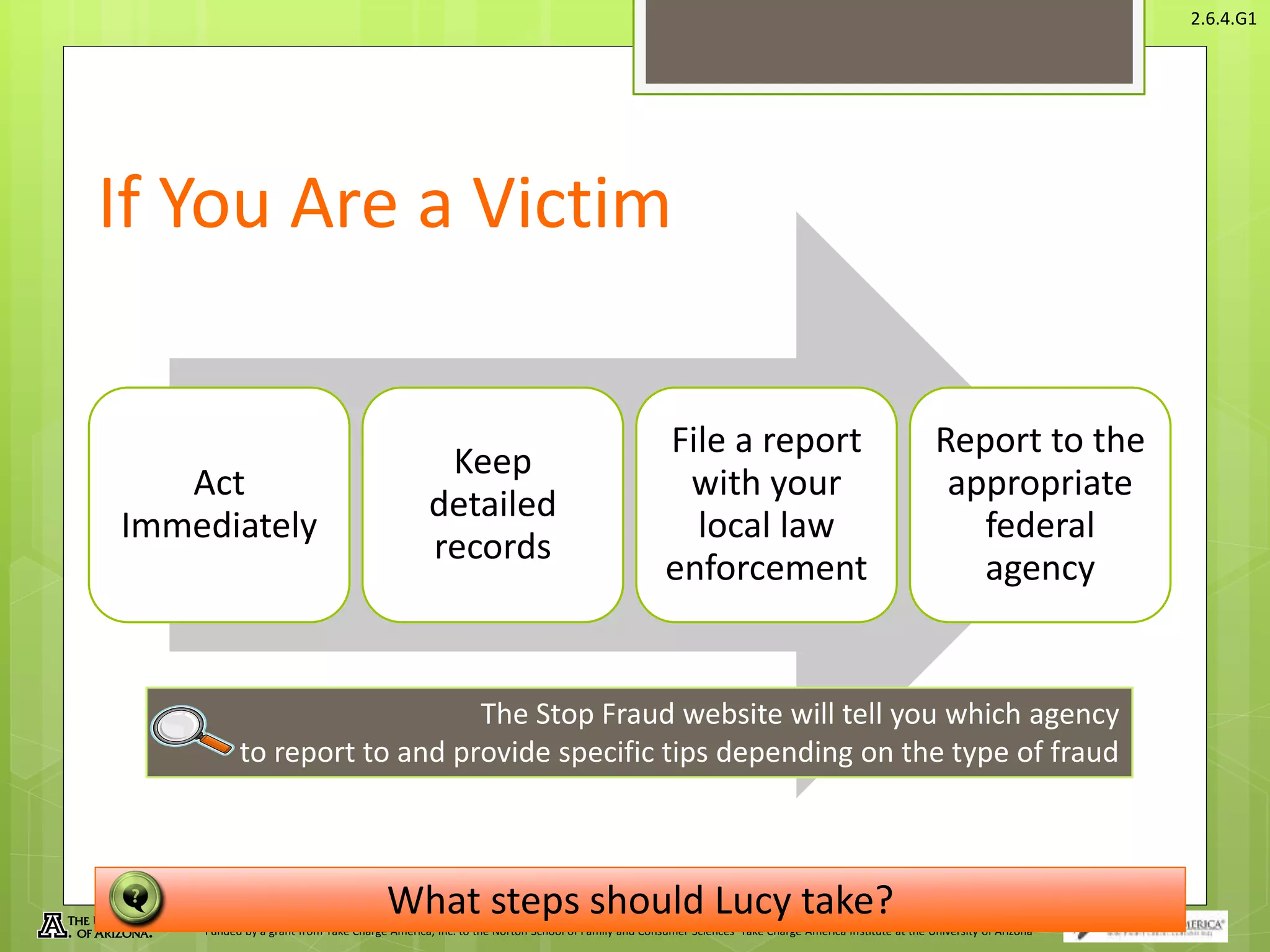
If You Are a Victim
Act
Immediately
Keep
detailed
records
File a report
with your
local law
enforcement
Report to the
appropriate
federal
agency
The Stop Fraud website will tell you which agency
to report to and provide specific tips depending on the type of fraud
What steps should Lucy take?
© Take Charge Today – August 2013 – Protecting Yourself From Fraud– Slide 19
Funded by a grant from Take Charge America, Inc. to the Norton School of Family and Consumer Sciences Take Charge America Institute at the University of Arizona
2.6.4.G1
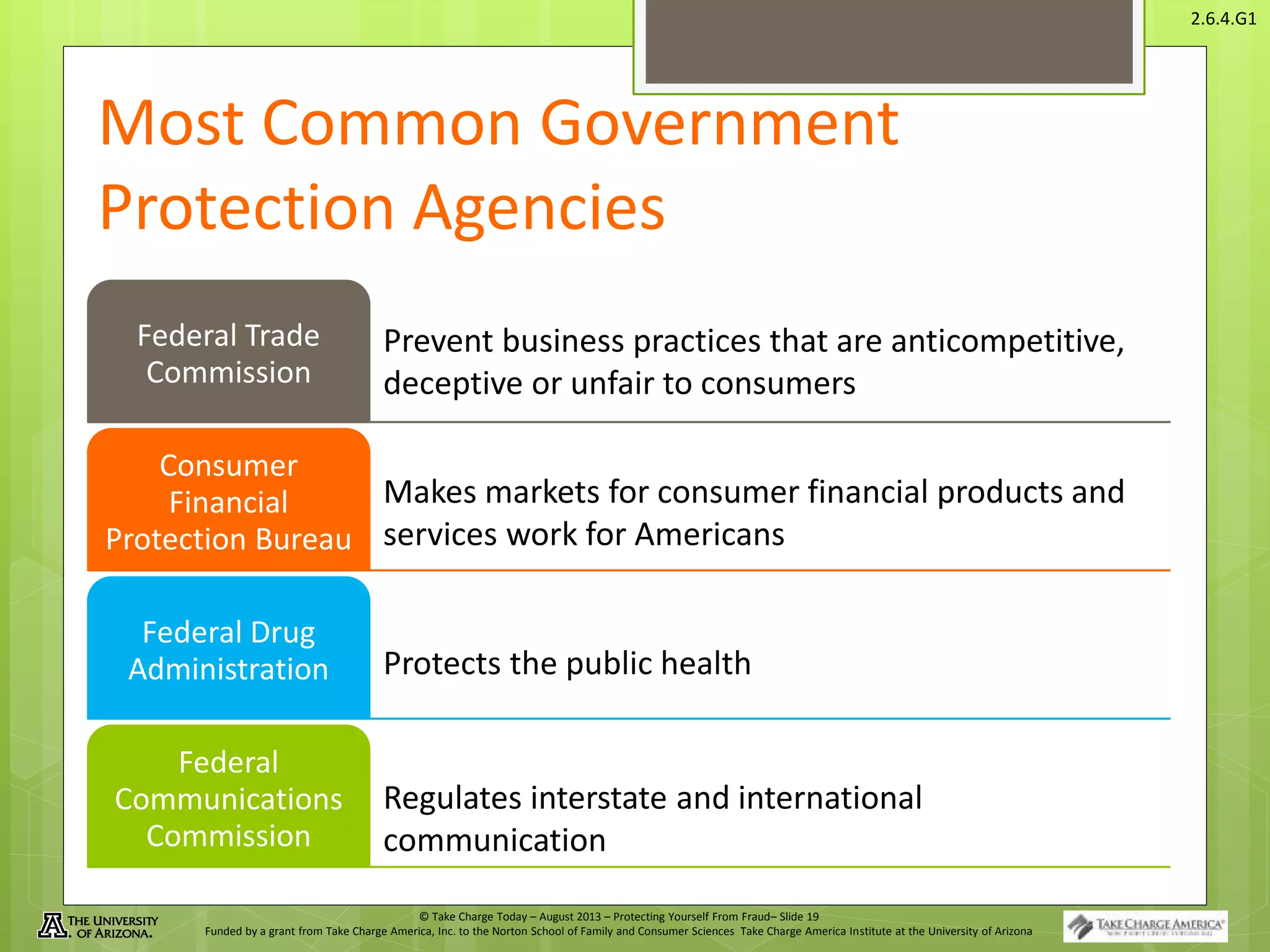
Most Common Government
Protection Agencies
Federal Trade
Commission
Consumer
Financial
Protection Bureau
Federal Drug
Administration
Federal
Communications
Commission
Protects the public health
Regulates interstate and international
communication
Makes markets for consumer financial products and
services work for Americans
Prevent business practices that are anticompetitive,
deceptive or unfair to consumers
© Take Charge Today – August 2013 – Protecting Yourself From Fraud– Slide 20
Funded by a grant from Take Charge America, Inc. to the Norton School of Family and Consumer Sciences Take Charge America Institute at the University of Arizona
2.6.4.G1
Most Common Government
Protection Agencies
US Securities
and Exchange
Commission
Internal
Revenue
Service
Federal
Bureau of
Investigation
Protects the United States and its citizens
Enforce tax laws
Protect investors and maintain fair, orderly and
efficient financial markets

6.04 protecting yourself from fraud

  • 1.
  • 2.
    © Take ChargeToday – August 2013 – Protecting Yourself From Fraud– Slide 2 Funded by a grant from Take Charge America, Inc. to the Norton School of Family and Consumer Sciences Take Charge America Institute at the University of Arizona 2.6.4.G1 Fraud Arrests for crimes not committed Damaged financial security Tarnished credit reports Fraud – an intentional effort to deceive another individual for personal gain Compromised health
  • 3.
    © Take ChargeToday – August 2013 – Protecting Yourself From Fraud– Slide 3 Funded by a grant from Take Charge America, Inc. to the Norton School of Family and Consumer Sciences Take Charge America Institute at the University of Arizona 2.6.4.G1 Common Types of Fraud Identity Theft When another’s personal information is used without their permission Communications Occurs via mass marketing, mail, wire, telephone, Internet, etc. to deceitfully get money from people Identity theft was the largest consumer fraud complaint reported to the Federal Trade Commission in 2010
  • 4.
    © Take ChargeToday – August 2013 – Protecting Yourself From Fraud– Slide 4 Funded by a grant from Take Charge America, Inc. to the Norton School of Family and Consumer Sciences Take Charge America Institute at the University of Arizona 2.6.4.G1 Common Types of Fraud Credit Applying for and modifying credit (most common involves mortgages) Investment Investors are deceived by individuals claiming to be financial advisors or have an investment guaranteed to make money Tax Scammers making claims that a person may be exempt from paying taxes Do you know anyone that has been a victim of fraud?
  • 5.
    © Take ChargeToday – August 2013 – Protecting Yourself From Fraud– Slide 5 Funded by a grant from Take Charge America, Inc. to the Norton School of Family and Consumer Sciences Take Charge America Institute at the University of Arizona 2.6.4.G1 Time How does fraud negatively impact financial well- being? Stress Costs money Anxiety
  • 6.
    © Take ChargeToday – August 2013 – Protecting Yourself From Fraud– Slide 6 Funded by a grant from Take Charge America, Inc. to the Norton School of Family and Consumer Sciences Take Charge America Institute at the University of Arizona 2.6.4.G1 How Does Fraud Occur? Failed Promises Accessing Personal Information Personal Infor- mation Name Address & Telephone Number Social Security Number Driver’s License Number Birthdate Credit Card Numbers Bank Account Numbers What can a scammer do if they gain access to your information?
  • 7.
    © Take ChargeToday – August 2013 – Protecting Yourself From Fraud– Slide 7 Funded by a grant from Take Charge America, Inc. to the Norton School of Family and Consumer Sciences Take Charge America Institute at the University of Arizona 2.6.4.G1 Personal Information Search your purses, wallets and backpacks. What are you carrying with you right now that reveals personal information? Drivers license Debit & credit cards Electronic devices Identification cards
  • 8.
    © Take ChargeToday – August 2013 – Protecting Yourself From Fraud– Slide 8 Funded by a grant from Take Charge America, Inc. to the Norton School of Family and Consumer Sciences Take Charge America Institute at the University of Arizona 2.6.4.G1 How Thieves Access Personal Information Stealing a purse, wallet, financial records, mail, etc. Diverting mail Skimming credit and debit card information Phishing for personal information via email Hacking a computer to install spyware How did the scammer access Lucy’s information?
  • 9.
    © Take ChargeToday – August 2013 – Protecting Yourself From Fraud– Slide 9 Funded by a grant from Take Charge America, Inc. to the Norton School of Family and Consumer Sciences Take Charge America Institute at the University of Arizona 2.6.4.G1 Protecting Yourself From Fraud You are better off in a community than by yourself. • Government creates and manages agencies designed to protect you from fraud But, you are also responsible for yourself. • The best way to avoid fraud it to be alert to the risk and protect yourself
  • 10.
    © Take ChargeToday – August 2013 – Protecting Yourself From Fraud– Slide 10 Funded by a grant from Take Charge America, Inc. to the Norton School of Family and Consumer Sciences Take Charge America Institute at the University of Arizona 2.6.4.G1 Protect Your Personal Information Don’t carry your Social Security Card Sign credit and debit cards with signature and “Please See ID” Memorize and use difficult PIN numbers Shred personal documents before discarding them Keep personal records in a secure location Deposit outgoing mail in a secure post office collection box Be careful of what personal information is posted on the Internet
  • 11.
    © Take ChargeToday – August 2013 – Protecting Yourself From Fraud– Slide 11 Funded by a grant from Take Charge America, Inc. to the Norton School of Family and Consumer Sciences Take Charge America Institute at the University of Arizona 2.6.4.G1 • Immediately dispute errors Check Your Credit Reports • Verify sources requesting information Evaluate Situations • Consistently monitor information such as credit statements, depository institution statements, etc Monitor Financial Information
  • 12.
    © Take ChargeToday – August 2013 – Protecting Yourself From Fraud– Slide 12 Funded by a grant from Take Charge America, Inc. to the Norton School of Family and Consumer Sciences Take Charge America Institute at the University of Arizona 2.6.4.G1 Be Careful When Using the Internet Look for “https” or a picture of a lock Keep usernames and passwords safe Use a credit card when making online purchases Search for your name Once information is posted online, it can’t be taken back! Use privacy settings on social networking sites
  • 13.
    © Take ChargeToday – August 2013 – Protecting Yourself From Fraud– Slide 13 Funded by a grant from Take Charge America, Inc. to the Norton School of Family and Consumer Sciences Take Charge America Institute at the University of Arizona 2.6.4.G1 Practice electronic device safety Use updated anti- virus and anti- spyware software Watch for strange actions that may indicate spyware Do not click on links found in pop-up advertisements or suspicious email
  • 14.
    © Take ChargeToday – August 2013 – Protecting Yourself From Fraud– Slide 14 Funded by a grant from Take Charge America, Inc. to the Norton School of Family and Consumer Sciences Take Charge America Institute at the University of Arizona 2.6.4.G1 Credit and Debit Cards Credit Cards Maximum liability is $50 No liability if a lost card is reported before being fraudulently used No liability if the card number is used, but not the card itself Debit Cards Liability depends on how quickly the card is reported and depository institution policies Ranges from $0-unlimited! Use a credit card instead of a debit card for online purchases!
  • 15.
    © Take ChargeToday – August 2013 – Protecting Yourself From Fraud– Slide 15 Funded by a grant from Take Charge America, Inc. to the Norton School of Family and Consumer Sciences Take Charge America Institute at the University of Arizona 2.6.4.G1 What could Lucy have done to minimize her risk?  Mail her documents from a secure post office location  Use a PIN number that is not easy to guess  Shred documents that contain personal information  Use secure websites and computers  Use privacy settings on social networking sites  Never give personal information out via email
  • 16.
    © Take ChargeToday – August 2013 – Protecting Yourself From Fraud– Slide 16 Funded by a grant from Take Charge America, Inc. to the Norton School of Family and Consumer Sciences Take Charge America Institute at the University of Arizona 2.6.4.G1 Fraud Protection Services Fraud monitoring and detection Cost recovery if fraud occurs Legal counsel if fraud occurs Companies may offer various types of services including: You are your best advocate! Closely evaluate services to know what is covered, fees and company reputation
  • 17.
    © Take ChargeToday – August 2013 – Protecting Yourself From Fraud– Slide 17 Funded by a grant from Take Charge America, Inc. to the Norton School of Family and Consumer Sciences Take Charge America Institute at the University of Arizona 2.6.4.G1 Recognize Fraud EarlyActImmediatelyif… A business that has taken your money won’t return your calls Unfamiliar or unrecognizable charges You are denied credit Mail is missing Errors in your credit report Could Lucy have recognized the theft earlier?
  • 18.
    © Take ChargeToday – August 2013 – Protecting Yourself From Fraud– Slide 18 Funded by a grant from Take Charge America, Inc. to the Norton School of Family and Consumer Sciences Take Charge America Institute at the University of Arizona 2.6.4.G1 If You Are a Victim Act Immediately Keep detailed records File a report with your local law enforcement Report to the appropriate federal agency The Stop Fraud website will tell you which agency to report to and provide specific tips depending on the type of fraud What steps should Lucy take?
  • 19.
    © Take ChargeToday – August 2013 – Protecting Yourself From Fraud– Slide 19 Funded by a grant from Take Charge America, Inc. to the Norton School of Family and Consumer Sciences Take Charge America Institute at the University of Arizona 2.6.4.G1 Most Common Government Protection Agencies Federal Trade Commission Consumer Financial Protection Bureau Federal Drug Administration Federal Communications Commission Protects the public health Regulates interstate and international communication Makes markets for consumer financial products and services work for Americans Prevent business practices that are anticompetitive, deceptive or unfair to consumers
  • 20.
    © Take ChargeToday – August 2013 – Protecting Yourself From Fraud– Slide 20 Funded by a grant from Take Charge America, Inc. to the Norton School of Family and Consumer Sciences Take Charge America Institute at the University of Arizona 2.6.4.G1 Most Common Government Protection Agencies US Securities and Exchange Commission Internal Revenue Service Federal Bureau of Investigation Protects the United States and its citizens Enforce tax laws Protect investors and maintain fair, orderly and efficient financial markets