VARIATION ORDER and PRICE
ADJUSTMENT
Valuation of VO and getting it approval
In construction contracts, VO stands for Variation Order (also known as a Change Order).
A Variation Order is a formal document issued during the construction phase to authorize
changes or modifications to the original contract terms, scope of work, or project
specifications.
These changes can arise due to various reasons, such as unforeseen conditions, design changes,
or client requests.
Valuation of VO and getting it approval
Key Aspects of a Variation Order (VO):
Purpose:
• The VO allows for flexibility in the construction process by accommodating
necessary changes without invalidating the original contract.
• It ensures that all parties agree on the changes, including adjustments to the project
cost, schedule, and scope.
Types of Variations:
• Additions: Additional work or materials that were not included in the original
contract.
• Omissions: Removal or reduction of work or materials that were initially planned.
• Substitutions: Replacing specified materials, methods, or designs with alternatives.
• Alterations: Modifications to the design, layout, or construction methods.
Valuation of VO and getting it approval
Key Aspects of a Variation Order (VO):
Process of Issuing a VO:
• Identification of Need: A need for a change is identified by the client, contractor, or
project manager. This could be due to site conditions, design updates, or client
preferences.
• Proposal Submission: The contractor typically submits a proposal outlining the
nature of the change, including detailed descriptions, cost implications, and impact
on the project schedule.
• Review and Approval: The proposed VO is reviewed by the relevant stakeholders,
including the client, architect, and project manager. Once all parties agree on the
terms, the VO is approved.
• Documentation: The approved VO is documented and added to the project records,
ensuring that the change is officially recognized and enforceable.
• Implementation: The contractor proceeds with implementing the changes as
specified in the VO.
Valuation of VO and getting it approval
Key Aspects of a Variation Order (VO):
Impact of a VO:
• Cost Impact: The VO may increase or decrease the overall project cost, depending on
whether the change involves additional work or the omission of planned work.
• Schedule Impact: Changes might extend or shorten the project timeline, especially if
they involve significant alterations to the original plan.
• Scope Impact: The scope of the project is directly affected, which can alter the project's
deliverables, functionality, or design.
Risks and Considerations:
• Disputes: Variation Orders can sometimes lead to disputes, particularly if there is
disagreement over the cost or necessity of the changes.
• Contractual Clauses: Contracts typically include clauses that outline the process for
handling variations, including who can authorize them and how they should be priced.
• Documentation: Proper documentation and approval of VOs are essential to avoid legal
and financial issues later in the project.
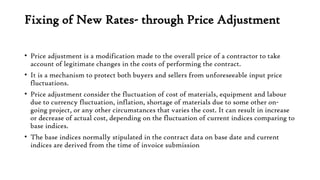
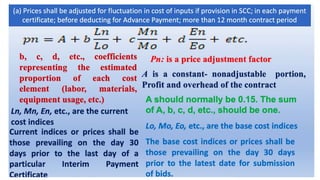
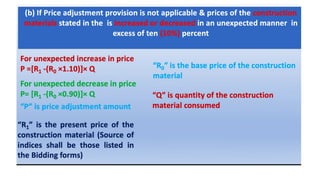
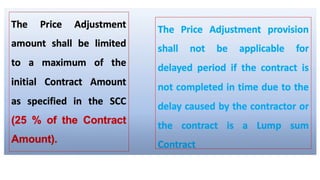
Fixing of New Rates- through Price Adjustment
• Price adjustment is a modification made to the overall price of a contractor to take
account of legitimate changes in the costs of performing the contract.
• It is a mechanism to protect both buyers and sellers from unforeseeable input price
fluctuations.
• Price adjustment consider the fluctuation of cost of materials, equipment and labour
due to currency fluctuation, inflation, shortage of materials due to some other on-
going project, or any other circumstances that varies the cost. It can result in increase
or decrease of actual cost, depending on the fluctuation of current indices comparing to
base indices.
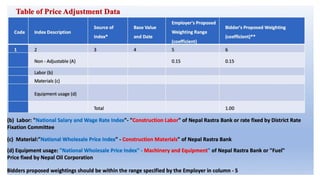
• The base indices normally stipulated in the contract data on base date and current
indices are derived from the time of invoice submission
6.VARIATION ORDER and PRICE ADJUSTMENT.pptx

6.VARIATION ORDER and PRICE ADJUSTMENT.pptx

  • 1.
    VARIATION ORDER andPRICE ADJUSTMENT
  • 3.
    Valuation of VOand getting it approval In construction contracts, VO stands for Variation Order (also known as a Change Order). A Variation Order is a formal document issued during the construction phase to authorize changes or modifications to the original contract terms, scope of work, or project specifications. These changes can arise due to various reasons, such as unforeseen conditions, design changes, or client requests.
  • 4.
    Valuation of VOand getting it approval Key Aspects of a Variation Order (VO): Purpose: • The VO allows for flexibility in the construction process by accommodating necessary changes without invalidating the original contract. • It ensures that all parties agree on the changes, including adjustments to the project cost, schedule, and scope. Types of Variations: • Additions: Additional work or materials that were not included in the original contract. • Omissions: Removal or reduction of work or materials that were initially planned. • Substitutions: Replacing specified materials, methods, or designs with alternatives. • Alterations: Modifications to the design, layout, or construction methods.
  • 5.
    Valuation of VOand getting it approval Key Aspects of a Variation Order (VO): Process of Issuing a VO: • Identification of Need: A need for a change is identified by the client, contractor, or project manager. This could be due to site conditions, design updates, or client preferences. • Proposal Submission: The contractor typically submits a proposal outlining the nature of the change, including detailed descriptions, cost implications, and impact on the project schedule. • Review and Approval: The proposed VO is reviewed by the relevant stakeholders, including the client, architect, and project manager. Once all parties agree on the terms, the VO is approved. • Documentation: The approved VO is documented and added to the project records, ensuring that the change is officially recognized and enforceable. • Implementation: The contractor proceeds with implementing the changes as specified in the VO.
  • 6.
    Valuation of VOand getting it approval Key Aspects of a Variation Order (VO): Impact of a VO: • Cost Impact: The VO may increase or decrease the overall project cost, depending on whether the change involves additional work or the omission of planned work. • Schedule Impact: Changes might extend or shorten the project timeline, especially if they involve significant alterations to the original plan. • Scope Impact: The scope of the project is directly affected, which can alter the project's deliverables, functionality, or design. Risks and Considerations: • Disputes: Variation Orders can sometimes lead to disputes, particularly if there is disagreement over the cost or necessity of the changes. • Contractual Clauses: Contracts typically include clauses that outline the process for handling variations, including who can authorize them and how they should be priced. • Documentation: Proper documentation and approval of VOs are essential to avoid legal and financial issues later in the project.
  • 12.
    Fixing of NewRates- through Price Adjustment • Price adjustment is a modification made to the overall price of a contractor to take account of legitimate changes in the costs of performing the contract. • It is a mechanism to protect both buyers and sellers from unforeseeable input price fluctuations. • Price adjustment consider the fluctuation of cost of materials, equipment and labour due to currency fluctuation, inflation, shortage of materials due to some other on- going project, or any other circumstances that varies the cost. It can result in increase or decrease of actual cost, depending on the fluctuation of current indices comparing to base indices. • The base indices normally stipulated in the contract data on base date and current indices are derived from the time of invoice submission