6 steps to 
energy efficient homes
Keep in mind that each of these 
steps is an investment. So while 
they may cut into your savings 
initially, in the long run, you have 
the potential to come out on top.
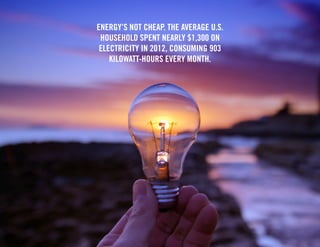
Energy’s not cheap. The average U.S. 
household spent nearly $1,300 on 
electricity in 2012, consuming 903 
kilowatt-hours every month.
Fortunately, today’s technology can help you 
lower your energy consumption and energy costs. 
Check out these six energy efficient appliances, 
gadgets, and devices designed to increase your 
home’s energy efficiency.
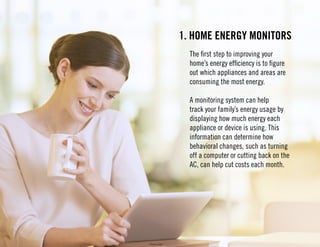
1. Home energy monitors 
The first step to improving your 
home’s energy efficiency is to figure 
out which appliances and areas are 
consuming the most energy. 
A monitoring system can help 
track your family’s energy usage by 
displaying how much energy each 
appliance or device is using. This 
information can determine how 
behavioral changes, such as turning 
off a computer or cutting back on the 
AC, can help cut costs each month.
2. Smart Power Strips 
Devices plugged into the wall continue to consume 
small amounts of electricity even when powered off. 
“Smart” power strips allow you to plug in more devices 
while also cutting off the excess power when they aren’t 
in use. Smart power strips shut down based on a timer, 
an occupancy sensor or when a “master” device like a 
computer is turned off.
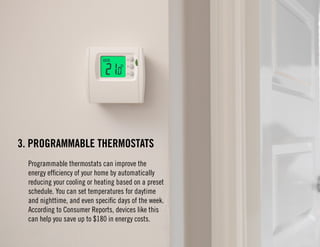
3. Programmable Thermostats 
Programmable thermostats can improve the 
energy efficiency of your home by automatically 
reducing your cooling or heating based on a preset 
schedule. You can set temperatures for daytime 
and nighttime, and even specific days of the week. 
According to Consumer Reports, devices like this 
can help you save up to $180 in energy costs.
4. Energy-Efficient Lighting 
A simple way to increase your home’s energy efficiency is to 
replace conventional incandescent light bulbs with compact 
fluorescent ones. You could also opt for lower wattage bulbs. 
And for the outdoors, consider using solar-powered lighting.
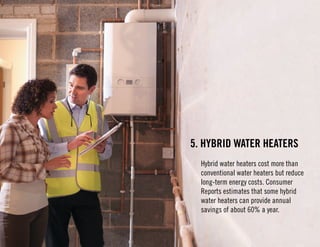
5. Hybrid Water Heaters 
Hybrid water heaters cost more than 
conventional water heaters but reduce 
long-term energy costs. Consumer 
Reports estimates that some hybrid 
water heaters can provide annual 
savings of about 60% a year.
6. Water-Efficient Showerheads 
Showering not only uses a significant amount of water, but 
also uses energy to heat and pump the water. 
High-efficiency showerheads with the WaterSense label provide 
a lower flow of water to help reduce both water and energy 
use. The EPA estimates the average family could save 2,900 
gallons of water and 370 kilowatt-hours of electricity each 
year, simply by switching to a high-efficiency showerhead.
Whether you opt for one of these devices or 
try all six, simple updates can put you on the 
road to improving the energy efficiency of 
your home and cutting your utility bills.
For more information, check out 10 tips for increasing 
your energy efficiency in our How to Save Energy Checklist. 
This information is general in nature, is provided for educational purposes only, and should 
not be relied on or interpreted as accounting, financial planning, investment, legal or tax 
advice. Regions neither endorses nor guarantees this information, and encourages you to 
consult a professional for advice applicable to your specific situation.

6 Steps to Energy Efficient Homes

  • 1.
    6 steps to energy efficient homes
  • 2.
    Keep in mindthat each of these steps is an investment. So while they may cut into your savings initially, in the long run, you have the potential to come out on top.
  • 3.
    Energy’s not cheap.The average U.S. household spent nearly $1,300 on electricity in 2012, consuming 903 kilowatt-hours every month.
  • 4.
    Fortunately, today’s technologycan help you lower your energy consumption and energy costs. Check out these six energy efficient appliances, gadgets, and devices designed to increase your home’s energy efficiency.
  • 5.
    1. Home energymonitors The first step to improving your home’s energy efficiency is to figure out which appliances and areas are consuming the most energy. A monitoring system can help track your family’s energy usage by displaying how much energy each appliance or device is using. This information can determine how behavioral changes, such as turning off a computer or cutting back on the AC, can help cut costs each month.
  • 6.
    2. Smart PowerStrips Devices plugged into the wall continue to consume small amounts of electricity even when powered off. “Smart” power strips allow you to plug in more devices while also cutting off the excess power when they aren’t in use. Smart power strips shut down based on a timer, an occupancy sensor or when a “master” device like a computer is turned off.
  • 7.
    3. Programmable Thermostats Programmable thermostats can improve the energy efficiency of your home by automatically reducing your cooling or heating based on a preset schedule. You can set temperatures for daytime and nighttime, and even specific days of the week. According to Consumer Reports, devices like this can help you save up to $180 in energy costs.
  • 8.
    4. Energy-Efficient Lighting A simple way to increase your home’s energy efficiency is to replace conventional incandescent light bulbs with compact fluorescent ones. You could also opt for lower wattage bulbs. And for the outdoors, consider using solar-powered lighting.
  • 9.
    5. Hybrid WaterHeaters Hybrid water heaters cost more than conventional water heaters but reduce long-term energy costs. Consumer Reports estimates that some hybrid water heaters can provide annual savings of about 60% a year.
  • 10.
    6. Water-Efficient Showerheads Showering not only uses a significant amount of water, but also uses energy to heat and pump the water. High-efficiency showerheads with the WaterSense label provide a lower flow of water to help reduce both water and energy use. The EPA estimates the average family could save 2,900 gallons of water and 370 kilowatt-hours of electricity each year, simply by switching to a high-efficiency showerhead.
  • 11.
    Whether you optfor one of these devices or try all six, simple updates can put you on the road to improving the energy efficiency of your home and cutting your utility bills.
  • 12.
    For more information,check out 10 tips for increasing your energy efficiency in our How to Save Energy Checklist. This information is general in nature, is provided for educational purposes only, and should not be relied on or interpreted as accounting, financial planning, investment, legal or tax advice. Regions neither endorses nor guarantees this information, and encourages you to consult a professional for advice applicable to your specific situation.