Learning
Capabilities
Learning
Capabilities
Determined learner
Adaptable learner
Self-reliant learner
28 September 2017
 You can Identify key hazards of a volcano.
 You use a limited range of specialist geography words.
 You have a reasonable accuracy in the use of spelling, punctuation
and grammar.
You can Identify key hazards of a volcano
You use a good range of specialist geography words.
You can compare the volcanic hazards and rank them in order of
severity.
You can Identify key hazards of a volcano
You use a good range of specialist geography words.
You can explain the differences between different types of hazards
and rank them in order of severity.
Learning Outcomes – Success Criteria
Volcanoes can produce a
variety of deadly hazards.
It is for this reason that
they are studied by
scientists in an attempt to
lower the risk of harm to
people living nearby.
You will need this
sheet. Using your
devices, you are going
to research each
hazard. Firstly draw a
quick sketch to help
you remember what
the hazard looks like.
Then describe the
hazard. Use facts and
figures (e.g. How hot
is it, how fast does it
travel, examples etc)
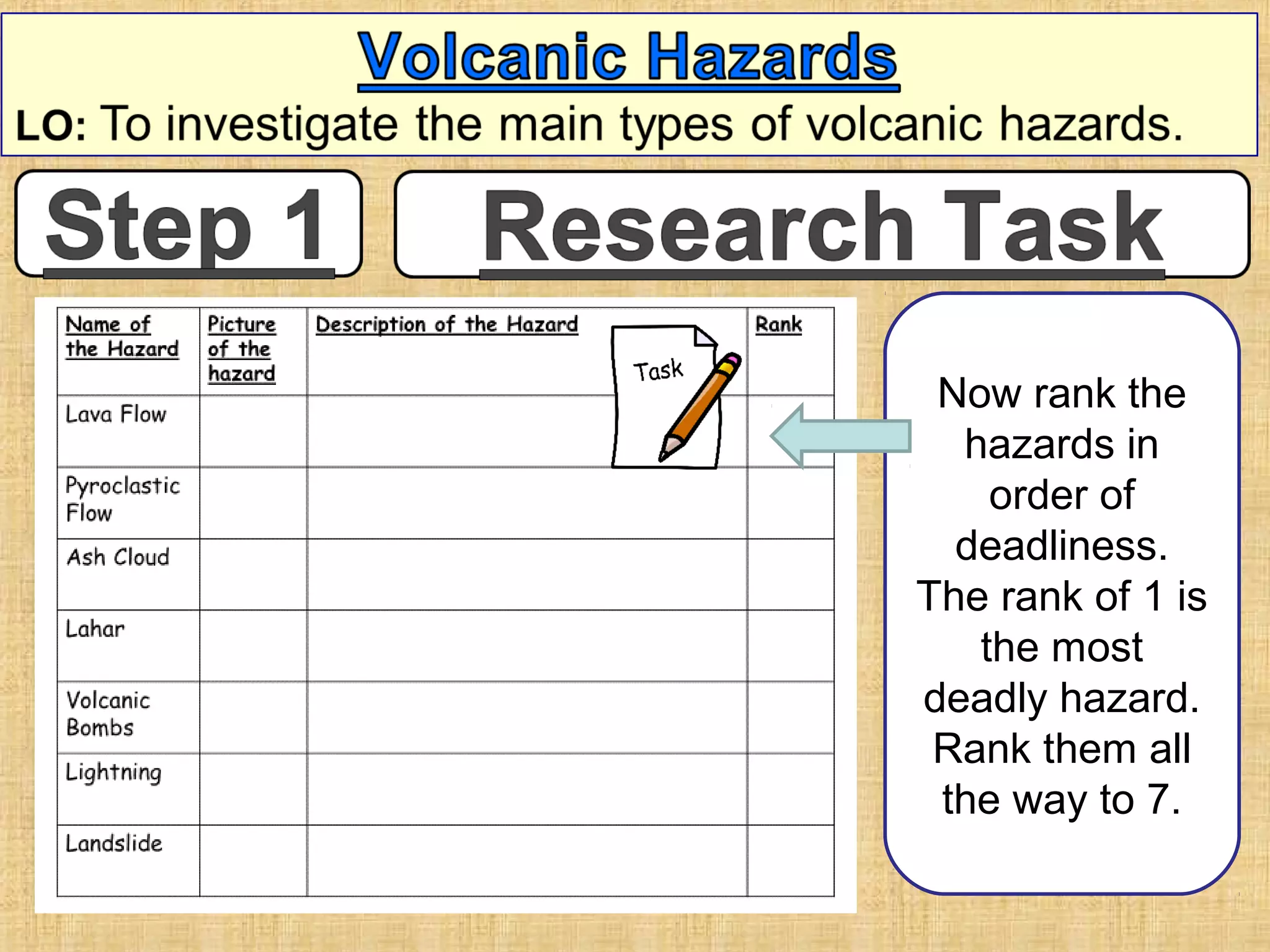
Now rank the
hazards in
order of
deadliness.
The rank of 1 is
the most
deadly hazard.
Rank them all
the way to 7.
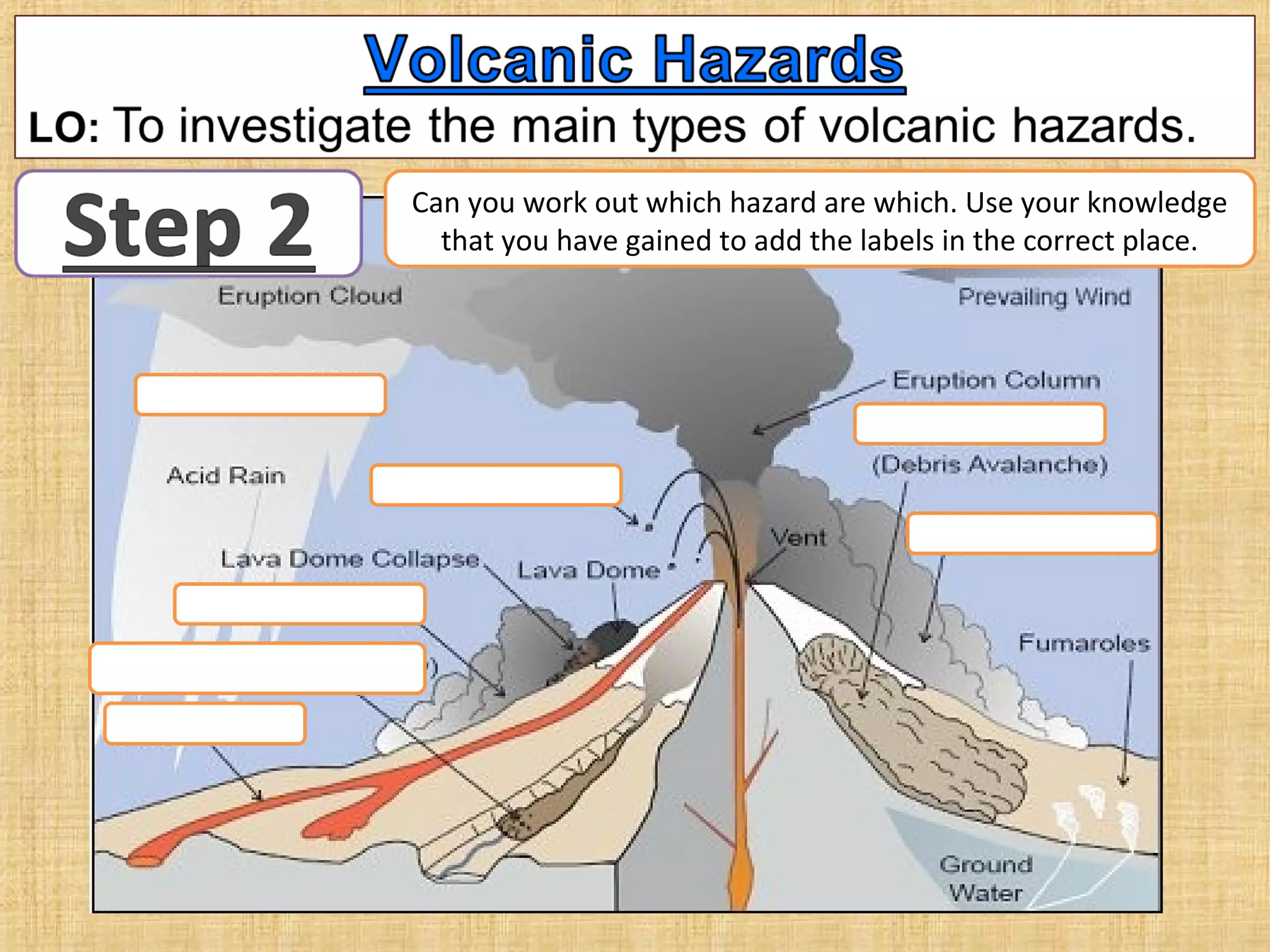
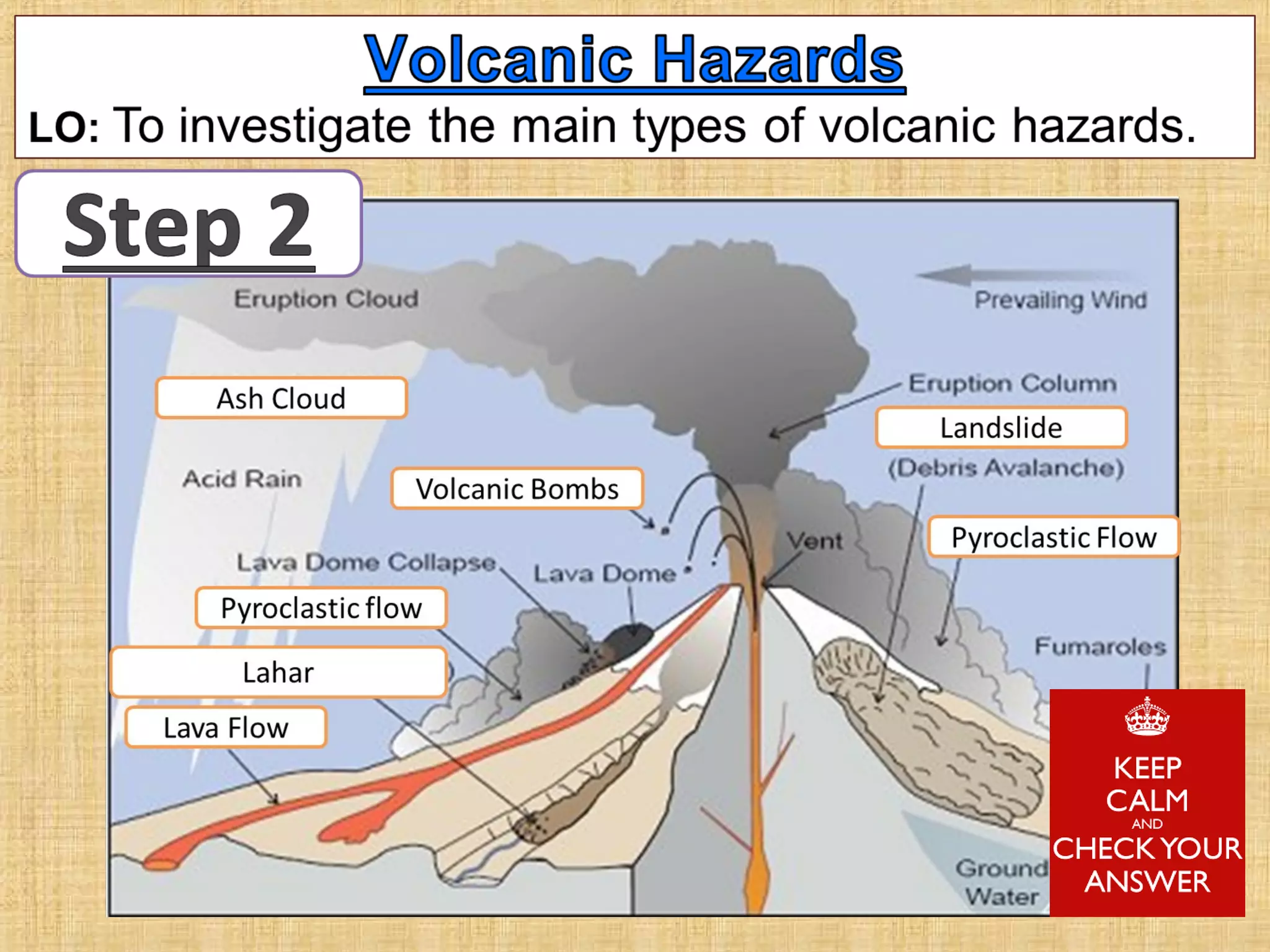
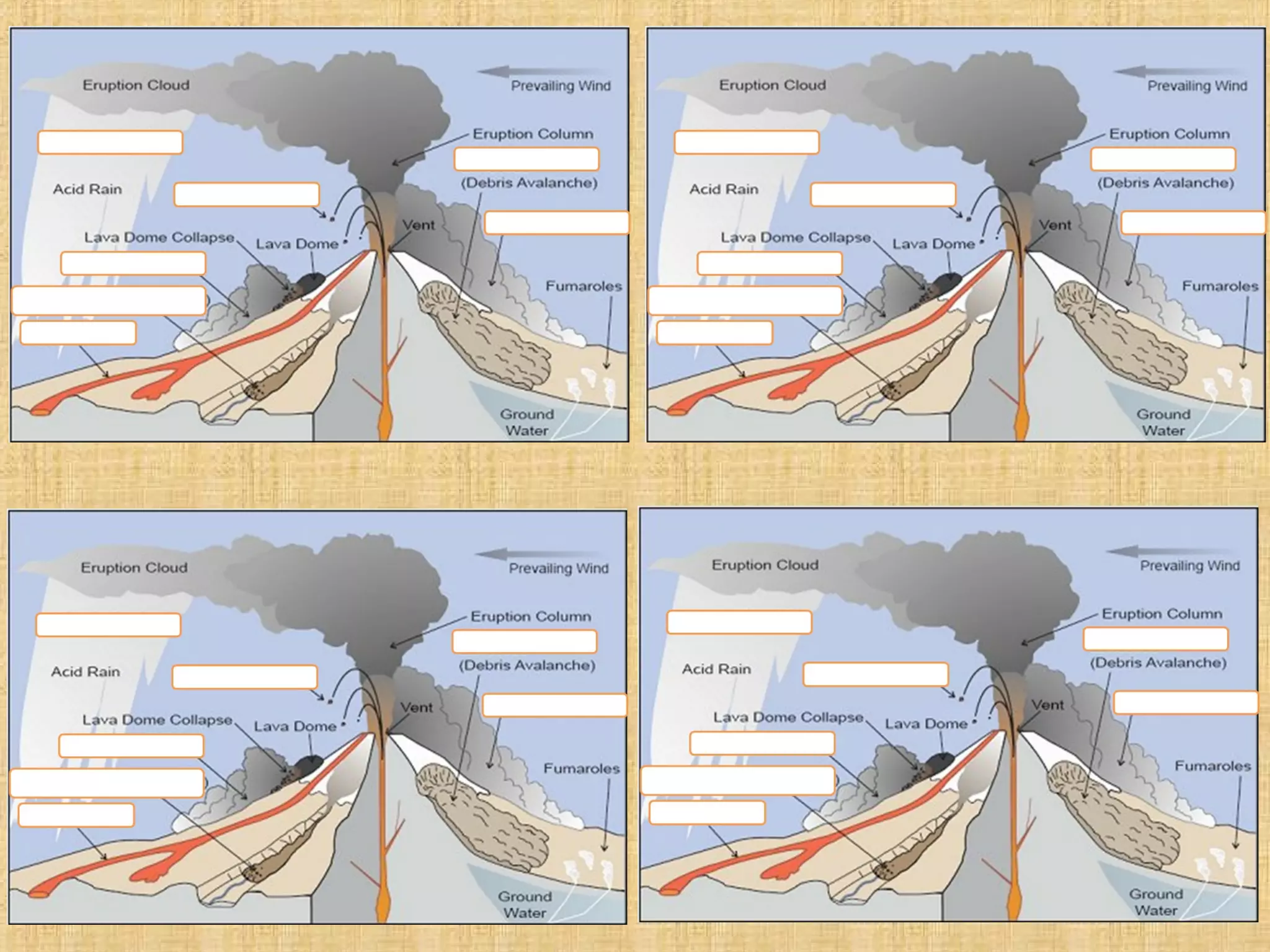
Can you work out which hazard are which. Use your knowledge
that you have gained to add the labels in the correct place.
You are going to
research a famous
volcanic eruption.
In your books you
are going to write
about the eruption
and what hazards
the volcano
produced. The
more facts and
figures the better.
Some eruptions you might want to have
a look at.
Mount St Helens: USA
Mount Ontake: Japan
Mount Vesuvius: Italy
Eyjafjallajokull: Iceland
Don’t forget to put a subheading!
Name of the
Hazard
Picture of the
hazard
Description of the Hazard Rank
Lava Flow
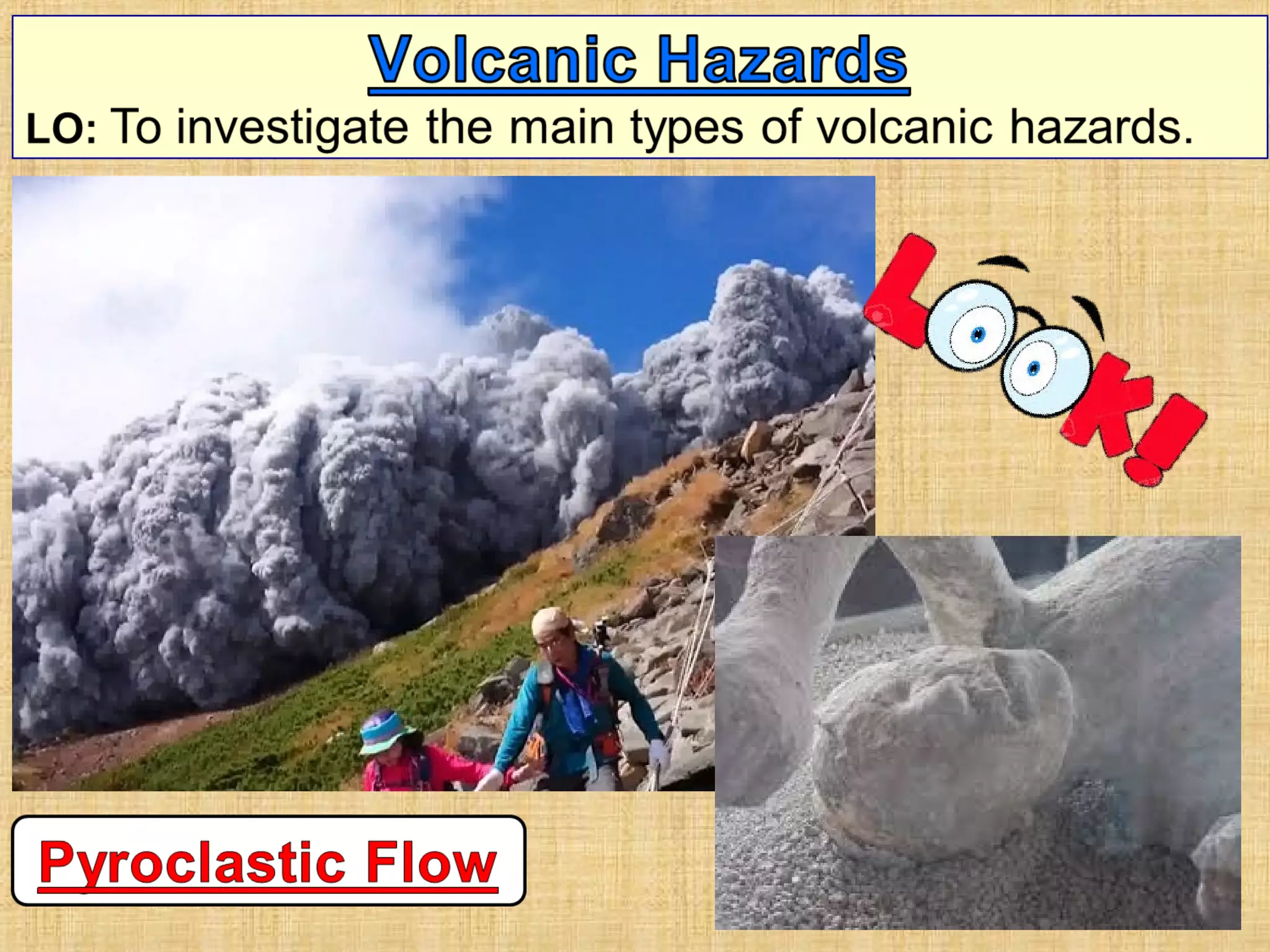
Pyroclastic Flow
Ash Cloud
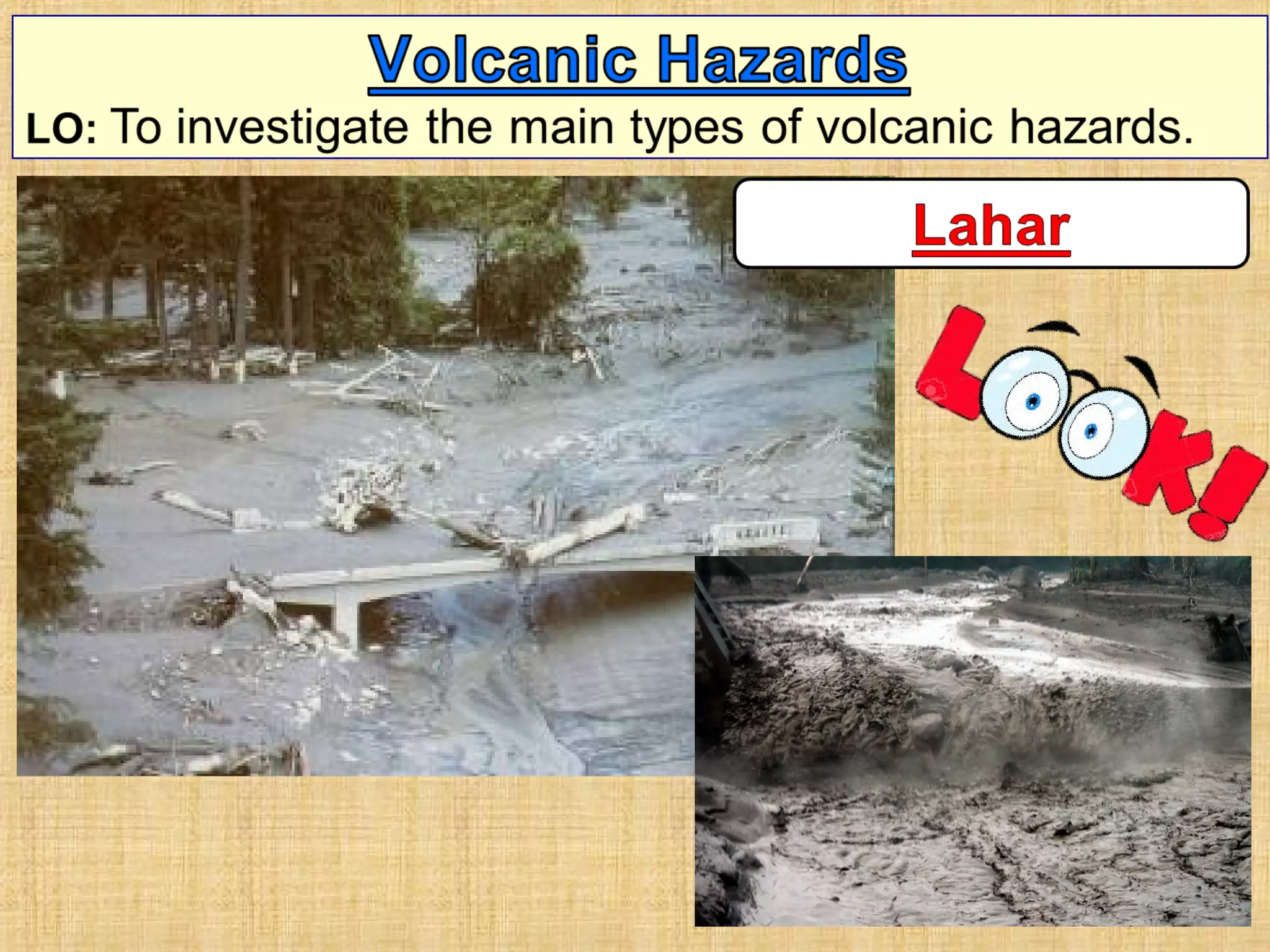
Lahar
Volcanic Bombs
Lightning
Landslide

5. volcanic hazards

  • 1.
  • 2.
     You canIdentify key hazards of a volcano.  You use a limited range of specialist geography words.  You have a reasonable accuracy in the use of spelling, punctuation and grammar. You can Identify key hazards of a volcano You use a good range of specialist geography words. You can compare the volcanic hazards and rank them in order of severity. You can Identify key hazards of a volcano You use a good range of specialist geography words. You can explain the differences between different types of hazards and rank them in order of severity. Learning Outcomes – Success Criteria
  • 3.
    Volcanoes can producea variety of deadly hazards. It is for this reason that they are studied by scientists in an attempt to lower the risk of harm to people living nearby.
  • 6.
    You will needthis sheet. Using your devices, you are going to research each hazard. Firstly draw a quick sketch to help you remember what the hazard looks like. Then describe the hazard. Use facts and figures (e.g. How hot is it, how fast does it travel, examples etc)
  • 7.
    Now rank the hazardsin order of deadliness. The rank of 1 is the most deadly hazard. Rank them all the way to 7.
  • 8.
    Can you workout which hazard are which. Use your knowledge that you have gained to add the labels in the correct place.
  • 10.
    You are goingto research a famous volcanic eruption. In your books you are going to write about the eruption and what hazards the volcano produced. The more facts and figures the better. Some eruptions you might want to have a look at. Mount St Helens: USA Mount Ontake: Japan Mount Vesuvius: Italy Eyjafjallajokull: Iceland Don’t forget to put a subheading!
  • 12.
    Name of the Hazard Pictureof the hazard Description of the Hazard Rank Lava Flow Pyroclastic Flow Ash Cloud Lahar Volcanic Bombs Lightning Landslide