5 R’s
TO SAVE
ENVIRONMENT
PRESENTED BY-
(your name)
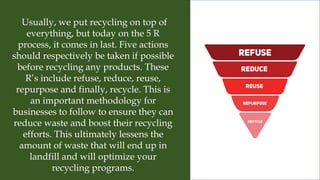
Usually, we put recycling on top of
everything, but today on the 5 R
process, it comes in last. Five actions
should respectively be taken if possible
before recycling any products. These
R’s include refuse, reduce, reuse,
repurpose and finally, recycle. This is
an important methodology for
businesses to follow to ensure they can
reduce waste and boost their recycling
efforts. This ultimately lessens the
amount of waste that will end up in
landfill and will optimize your
recycling programs.
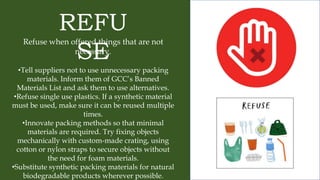
Refuse when offered things that are not
necessary.
•Tell suppliers not to use unnecessary packing
materials. Inform them of GCC’s Banned
Materials List and ask them to use alternatives.
•Refuse single use plastics. If a synthetic material
must be used, make sure it can be reused multiple
times.
•Innovate packing methods so that minimal
materials are required. Try fixing objects
mechanically with custom-made crating, using
cotton or nylon straps to secure objects without
the need for foam materials.
•Substitute synthetic packing materials for natural
biodegradable products wherever possible.
REFU
SE
REDUC
E
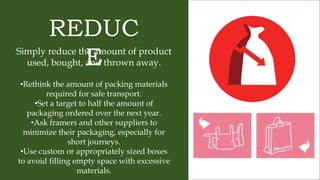
Simply reduce the amount of product
used, bought, and thrown away.
•Rethink the amount of packing materials
required for safe transport.
•Set a target to half the amount of
packaging ordered over the next year.
•Ask framers and other suppliers to
minimize their packaging, especially for
short journeys.
•Use custom or appropriately sized boxes
to avoid filling empty space with excessive
materials.
REUSE
Try using old bottles as vases, use silicone
wraps for food, plastic containers for next food
purchases. Engaging feelings with things or
products is also effective when reusing the
products.
• Old clothes? Transform it magically into convenient
reusable bags or cute pet clothes.
•Food scraps? Convert them into an easy Quiche, tasty
fried rice mix, or flavorful soup stock.
•Plastic container? Let your indoor garden have it.
•Take a second look carefully before throwing your
things out. What you might discard away today would
be your regret of tomorrow.
REPURP
OSE
This means when a product can no
more be used for the original
purpose, think carefully and use it
for some other useful purpose. For
example, crack crockery, or cups
with broken handles can use to grow
small plants and I'm feeding vessels
for birds.
RECYC
LE
Go to thrift stores, recycle shops or
donate your old unwanted items to
people who need it. You can as well
as get new items to fill up your
house.
In recycling any plastic, paper, glass,
or metal, always clean them
thoroughly before throwing them
into the blue bin. This would increase
your recyclables’ chances of being
processed as you just lessened the
risk of contamination from dirt.
THA
NK

5 R's.pptx

  • 1.
  • 2.
    Usually, we putrecycling on top of everything, but today on the 5 R process, it comes in last. Five actions should respectively be taken if possible before recycling any products. These R’s include refuse, reduce, reuse, repurpose and finally, recycle. This is an important methodology for businesses to follow to ensure they can reduce waste and boost their recycling efforts. This ultimately lessens the amount of waste that will end up in landfill and will optimize your recycling programs.
  • 3.
    Refuse when offeredthings that are not necessary. •Tell suppliers not to use unnecessary packing materials. Inform them of GCC’s Banned Materials List and ask them to use alternatives. •Refuse single use plastics. If a synthetic material must be used, make sure it can be reused multiple times. •Innovate packing methods so that minimal materials are required. Try fixing objects mechanically with custom-made crating, using cotton or nylon straps to secure objects without the need for foam materials. •Substitute synthetic packing materials for natural biodegradable products wherever possible. REFU SE
  • 4.
    REDUC E Simply reduce theamount of product used, bought, and thrown away. •Rethink the amount of packing materials required for safe transport. •Set a target to half the amount of packaging ordered over the next year. •Ask framers and other suppliers to minimize their packaging, especially for short journeys. •Use custom or appropriately sized boxes to avoid filling empty space with excessive materials.
  • 5.
    REUSE Try using oldbottles as vases, use silicone wraps for food, plastic containers for next food purchases. Engaging feelings with things or products is also effective when reusing the products. • Old clothes? Transform it magically into convenient reusable bags or cute pet clothes. •Food scraps? Convert them into an easy Quiche, tasty fried rice mix, or flavorful soup stock. •Plastic container? Let your indoor garden have it. •Take a second look carefully before throwing your things out. What you might discard away today would be your regret of tomorrow.
  • 6.
    REPURP OSE This means whena product can no more be used for the original purpose, think carefully and use it for some other useful purpose. For example, crack crockery, or cups with broken handles can use to grow small plants and I'm feeding vessels for birds.
  • 7.
    RECYC LE Go to thriftstores, recycle shops or donate your old unwanted items to people who need it. You can as well as get new items to fill up your house. In recycling any plastic, paper, glass, or metal, always clean them thoroughly before throwing them into the blue bin. This would increase your recyclables’ chances of being processed as you just lessened the risk of contamination from dirt.
  • 8.