Five Common
Problems to Avoid
When starting a Dental or Optometric Practice
Brought to you by
Starting a dental or optometric
practice is challenging, and at
times, completely overwhelming.
We want to briefly outline five
common problems to avoid.
Not accurately
evaluating
location.
1
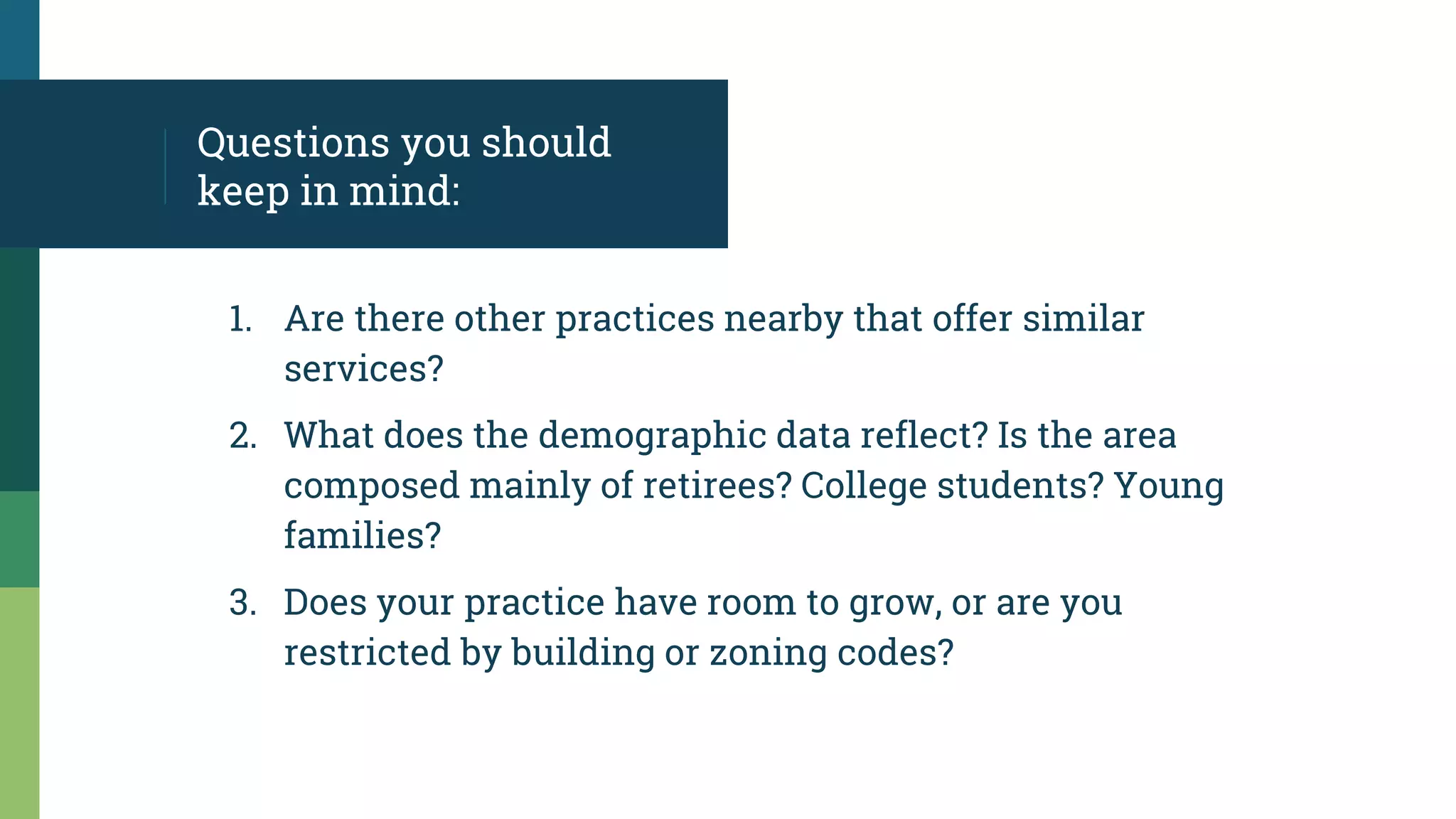
Questions you should
keep in mind:
1. Are there other practices nearby that offer similar
services?
2. What does the demographic data reflect? Is the area
composed mainly of retirees? College students? Young
families?
3. Does your practice have room to grow, or are you
restricted by building or zoning codes?
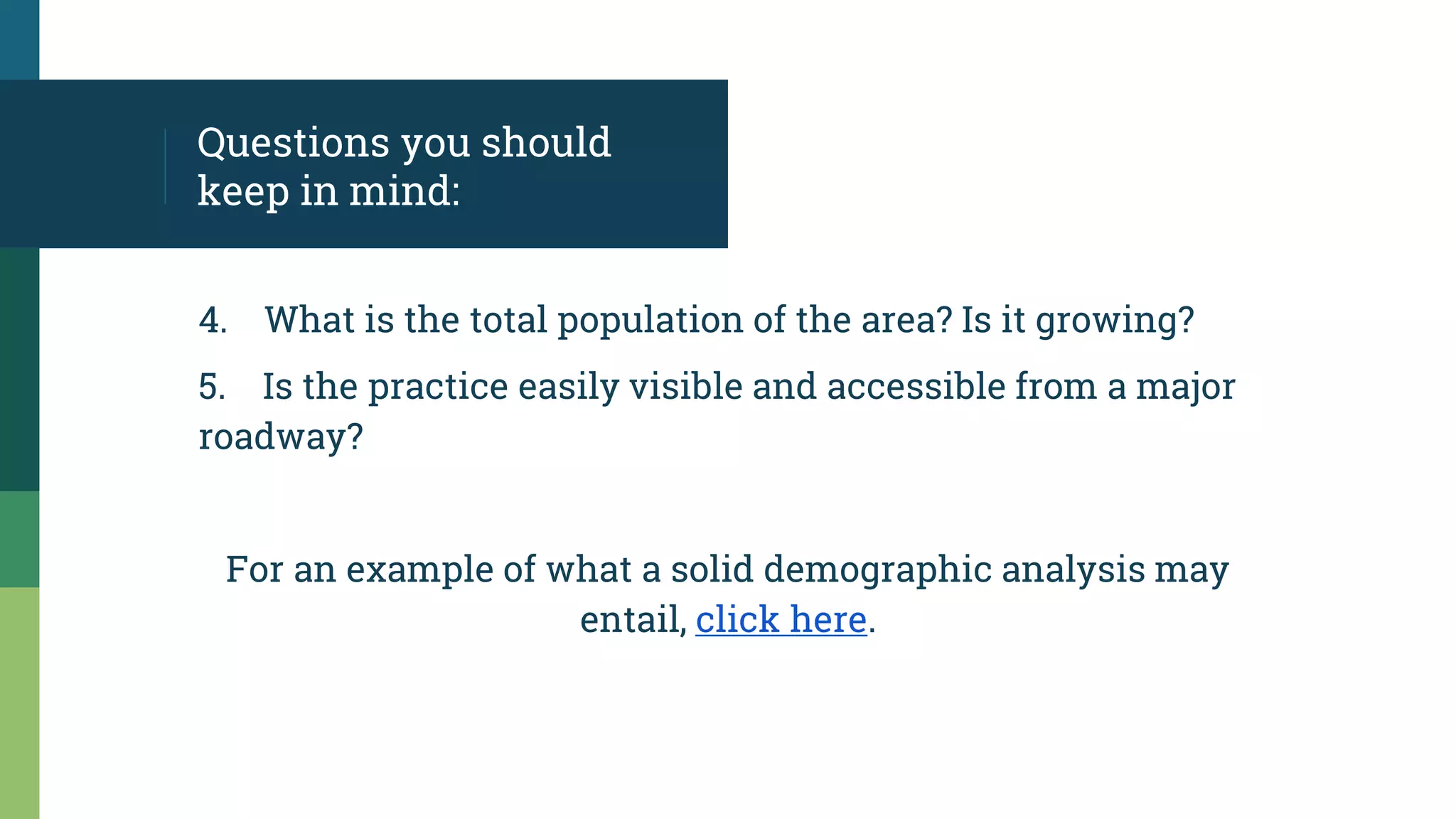
Questions you should
keep in mind:
4. What is the total population of the area? Is it growing?
5. Is the practice easily visible and accessible from a major
roadway?
For an example of what a solid demographic analysis may
entail, click here.
MAIN
IDEA
Real estate professionals preach
“location, location, location” for a reason:
It is vital to have a thorough
understanding of the area in which you
wish to locate long before you open the
doors to your practice.
Failure to plan
for future
growth.
2
In a competitive
marketplace, determining
your practice’s future
success depends upon
having clear goals in mind
from the very beginning.
Working with a marketing team
contributes to brand
development and extends the
value of the practice. Realize
that in order to remain
profitable, a business must
continue to expand.
Not knowing
what you don’t
know.
3
It’s often more efficient to
work with a firm that
specializes in providing
expertise in a variety of
business-specific areas.
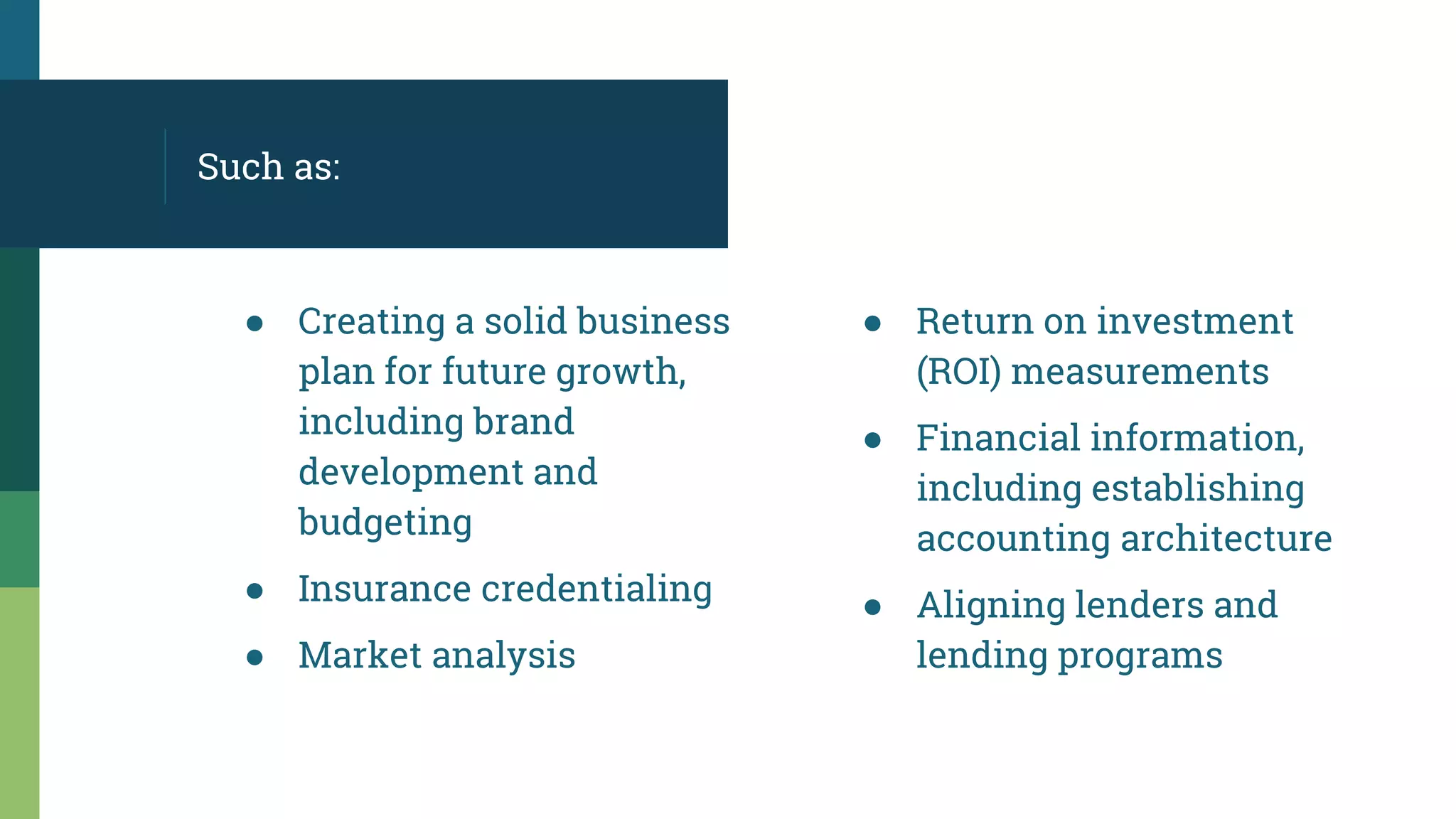
● Creating a solid business
plan for future growth,
including brand
development and
budgeting
● Insurance credentialing
● Market analysis
Such as:
● Return on investment
(ROI) measurements
● Financial information,
including establishing
accounting architecture
● Aligning lenders and
lending programs
MAIN
IDEA
The key to starting an effective and
successful practice is an
understanding of where you need
assistance and where it makes
economic sense to outsource.
Failure to
invest in
employees.
4
With the myriad of legal and
financial documents
involved in starting a dental
or optometric practice, it
can be easy to overlook one
of the most important
investments for your
business: your employees.
Make sure that your
team:
▪ Is comprised of
effective
communicators.
Solid communication
skills foster
efficiency.
▪ Is trustworthy.
● Has received extensive
training. A well-trained
team will provide more
consistent, high-quality
customer service.
● Has a strong commitment
and worth ethic.
Make sure that your
team:
▪ Feels valued:
employees who have
high job satisfaction
rates tend to be more
positive in their
interactions with
patients.
▪ Works with you to
set clear, specific
goals for the
practice.
● Shares your vision
and goals for the
practice.
Forgetting
your first love.
5
Did you become a dentist to look at
spreadsheets? Was your vision of
becoming an optometrist linked to
project management checklists?
From visiting a potential site to selecting lenders
to negotiating contracts, it is easy to become
overwhelmed by the details and fail to see the
larger picture.
01
Don’t lose sight of the reason you
wanted to start your practice in the
first place.
02
Consider outsourcing projects to
firms who may have greater
expertise.
03
Concentrate on the bigger picture:
where do you see your business in 5
years? In 10 years?
04 Don’t spend your valuable time trying to become
an expert in everything.
Starting your practice will be one of
the most rewarding things you have
ever done.
Embrace this exciting adventure by
solidifying your practice philosophy
and communicate it to all those
involved in this venture.
Brought to
you by
www.practiceadvisors360.com

5 Problems to Avoid When Starting a Practice

  • 1.
    Five Common Problems toAvoid When starting a Dental or Optometric Practice Brought to you by
  • 2.
    Starting a dentalor optometric practice is challenging, and at times, completely overwhelming. We want to briefly outline five common problems to avoid.
  • 3.
  • 4.
    Questions you should keepin mind: 1. Are there other practices nearby that offer similar services? 2. What does the demographic data reflect? Is the area composed mainly of retirees? College students? Young families? 3. Does your practice have room to grow, or are you restricted by building or zoning codes?
  • 5.
    Questions you should keepin mind: 4. What is the total population of the area? Is it growing? 5. Is the practice easily visible and accessible from a major roadway? For an example of what a solid demographic analysis may entail, click here.
  • 6.
    MAIN IDEA Real estate professionalspreach “location, location, location” for a reason: It is vital to have a thorough understanding of the area in which you wish to locate long before you open the doors to your practice.
  • 7.
    Failure to plan forfuture growth. 2
  • 8.
    In a competitive marketplace,determining your practice’s future success depends upon having clear goals in mind from the very beginning.
  • 9.
    Working with amarketing team contributes to brand development and extends the value of the practice. Realize that in order to remain profitable, a business must continue to expand.
  • 10.
    Not knowing what youdon’t know. 3
  • 11.
    It’s often moreefficient to work with a firm that specializes in providing expertise in a variety of business-specific areas.
  • 12.
    ● Creating asolid business plan for future growth, including brand development and budgeting ● Insurance credentialing ● Market analysis Such as: ● Return on investment (ROI) measurements ● Financial information, including establishing accounting architecture ● Aligning lenders and lending programs
  • 13.
    MAIN IDEA The key tostarting an effective and successful practice is an understanding of where you need assistance and where it makes economic sense to outsource.
  • 14.
  • 15.
    With the myriadof legal and financial documents involved in starting a dental or optometric practice, it can be easy to overlook one of the most important investments for your business: your employees.
  • 16.
    Make sure thatyour team: ▪ Is comprised of effective communicators. Solid communication skills foster efficiency. ▪ Is trustworthy. ● Has received extensive training. A well-trained team will provide more consistent, high-quality customer service. ● Has a strong commitment and worth ethic.
  • 17.
    Make sure thatyour team: ▪ Feels valued: employees who have high job satisfaction rates tend to be more positive in their interactions with patients. ▪ Works with you to set clear, specific goals for the practice. ● Shares your vision and goals for the practice.
  • 18.
  • 19.
    Did you becomea dentist to look at spreadsheets? Was your vision of becoming an optometrist linked to project management checklists?
  • 20.
    From visiting apotential site to selecting lenders to negotiating contracts, it is easy to become overwhelmed by the details and fail to see the larger picture. 01 Don’t lose sight of the reason you wanted to start your practice in the first place. 02 Consider outsourcing projects to firms who may have greater expertise. 03 Concentrate on the bigger picture: where do you see your business in 5 years? In 10 years? 04 Don’t spend your valuable time trying to become an expert in everything.
  • 21.
    Starting your practicewill be one of the most rewarding things you have ever done. Embrace this exciting adventure by solidifying your practice philosophy and communicate it to all those involved in this venture.
  • 22.