PARKINSON’S DISEASE
OLORO JOSEPH
(DCM, BSc. MSc. Pharm, PhD Tox. Fellow)
References
• A chronic progressive neuro-degenarative
disease
• Affects the dopamine producing neurone of
the basal ganglia at the area called substantia
nigra
• Due to imbalance in two neurotransmitters
– Dopamine
– Acetylcholine
• Dopamine low, Ach high
• Dopamine play inhibitory role on cholinergic
neurons in the area
• ↓sed dopamine → elevated conc. Of Ach
• elevated conc. Of Ach → unctrolled muscle
contraction.
• PKD is characterized by;
– Tremors
– Muscular rigidity
– Bradykinesia (slowness in initiating and carrying
out voluntary movements), and
– Postural and gait abnormalities.
Treatment aims
• Elevating activity of dopaminergic neurons
– Replacing dopamine
– Stimulating dopamine production
– Preventing dopamine breakdown
• Reducing activity of Ach
– Blocking receptors
Dopamine replacement
Levodopa [lee-voe-DOE-pa]
• Is a metabolic precursor of dopamine
MOA
• levodopa, is actively transported into the CNS and
is converted to dopamine in the brain
• Large doses of levodopa are required, because
much of the drug is decarboxylated to dopamine
in the periphery.
Carbidopa [kar-bi-DOE-pa]
• The effects of levodopa on the CNS can be greatly
enhanced by coadministering carbidopa a dopa
decarboxylase inhibitor that does not cross the
blood-brain barrier.
• Carbidopa diminishes the metabolism of
levodopa in the gastrointestinal tract and
peripheral tissues; thus, it increases the
availability of levodopa to the CNS
• The addition of carbidopa lowers the dose of
levodopa needed by
• four- to five-fold and, consequently, decreases
the severity of the side effects arising from
peripherally formed dopamine.
• Actions: Levodopa decreases the rigidity, tremors, and
other symptoms of parkinsonism.
• Therapeutic uses: Levodopa in combination with
carbidopa is a potent and efficacious drug regimen
currently
• available to treat Parkinson's disease. In approximately
two-thirds of patients with Parkinson's disease,
• levodopa–carbidopa treatment substantially reduces
the severity of the disease for the first few years of
• treatment. Patients then typically experience a decline
in response during the third to fifth year of therapy.
• PK
• Absorption and metabolism: The drug is absorbed
rapidly from the small intestine (when empty of
food).
• Levodopa has an extremely short half-life (1 to 2
hours), which causes fluctuations in plasma
concentration.
• Ingestion of meals, particularly if high in protein,
interferes with the transport of levodopa into the
CNS.
• Large, neutral amino acids (for example, leucine and
isoleucine) compete with levodopa for absorption
from the gut and for transport across the blood-brain
barrier.
• Thus, levodopa should be taken on an empty
stomach, typically 45 minutes before a meal.
• Withdrawal from the drug must be gradual.
Selegiline [seh-LEDGE-ah-leen]
• also called deprenyl [DE-pre-nill],
MOA
• Selectively inhibits MAO Type B (which
metabolizes dopamine) at low to moderate
doses
• Does not inhibit MAO Type A (which
metabolizes norepinephrine and serotonin)
• By decreasing the metabolism of dopamine,
selegiline increase dopamine levels in the
brain
• Administered orally
• Metabolized to Methamphetamine and
amphetamine, whose stimulating properties
may produce insomnia if the drug is
administered later than mid afternoon.
Adverse effects
• severe hypertension.
Rasagiline [ra-SA-gi-leen]
• Irreversible and selective inhibitor of brain
monoamine oxidase Type B.
• Has five times the potency of selegiline.
• Unlike selegiline, rasagiline is not metabolized
to an amphetamine like substance.
Catechol-O-methyltransferase
inhibitors
• methylation of levodopa by catechol-O-
methyltransferase (COMT) to 3-O-methyldopa is a
minor pathway for levodopa metabolism.
• when peripheral dopamine decarboxylase activity
is inhibited by carbidopa, a significant
concentration of 3-O-methyldopa is formed that
competes with levodopa for active transport into
the CNS
• Entacapone [en-TA-ka-pone] or Tolcapone
[TOLE-ka-pone]
• Are nitrocatechol derivatives that selectively
and reversibly inhibit COMT
• Inhibits COMT → ↓sed plasma con. of 3-O-
methyldopa, increased central uptake of
levodopa, and greater concentrations of brain
dopamine
• Reduce the symptoms of “wearing-off ”
phenomena seen in patients on levodopa–
carbidopa
• Pharmacokinetics:
• Administered orally
• Absorption occurs readily and is not influenced by
food.
• Are extensively bound to plasma albumin (>98
percent), with limited volumes of distribution.
• Tolcapone but not entacapone penetrates the blood-
brain barrier and inhibits COMT in the CNS.
• Tolcapone has a relatively long duration of action
(probably due to its affinity for the enzyme) compared
to entacapone, which requires more frequent dosing.
• Both drugs are extensively metabolized and eliminated
in feces and urine.
• Dosage may need to be adjusted in patients with
moderate or severe cirrhosis.
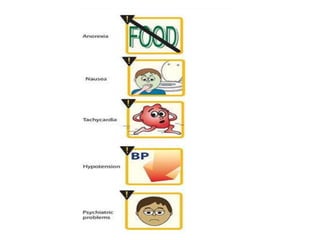
Adverse effects:
• Diarrhea
• Postural hypotension,
• Nausea & anorexia,
• Dyskinesias
• Hallucination
• Sleep disorders.
• Fulminating hepatic necrosis is associated
with tolcapone use.
Dopamine-receptor agonists
Include;
• Pramipexole & ropinirole
• Apormorphine & Rotigotine
• Amantadine
• Pramipexole [pra-mi-PEX-ole] and ropinirole
[roe-PIN-i-role] are agonists at dopamine
receptors.
• Apomorphine [A-po-mor-feen] and rotigotine
[ro-TI-go-teen] are newer dopamine agonists
available in injectable and transdermal
delivery systems, respectively
Amantadine
• Amantadine has several effects on a number
of neurotransmitters implicated in causing
parkinsonism, including;
– Increasing the release of dopamine,
– Blockading cholinergic receptors, and
– Inhibiting the N-methyl-D-aspartate (NMDA) type
of glutamate receptors.
• Current evidence supports an action at NMDA
receptors as the primary action at therapeutic
concentrations
Adverse effects
• Agitation
• Confusion
• Hallucinations
• At high doses, it may induce acute toxic
psychosis.
• Orthostatic hypotension
• Urinary retention
• Peripheral edema
• Dry mouth also may occur.
Antimuscarinic agents
• Benztropine [BENZ-tro-peen]
• Trihexyphenidyl [tri-hex-ee FEN-i-dill]
• Procyclidine [pro-CY-cli-deen]
• Biperiden [bi-PER-i den]
MOA
• Blocks cholinergic transmission producing
effects similar to augmentation of
dopaminergic transmission
Adverse effects
• pupillary dilation,
• confusion,
• hallucination, sinus
• tachycardia,
• urinary retention,
• constipation, and
• dry mouth.

5. PARKINSON'S DISEASE.pptx

  • 1.
    PARKINSON’S DISEASE OLORO JOSEPH (DCM,BSc. MSc. Pharm, PhD Tox. Fellow)
  • 2.
  • 3.
    • A chronicprogressive neuro-degenarative disease • Affects the dopamine producing neurone of the basal ganglia at the area called substantia nigra • Due to imbalance in two neurotransmitters – Dopamine – Acetylcholine • Dopamine low, Ach high
  • 4.
    • Dopamine playinhibitory role on cholinergic neurons in the area • ↓sed dopamine → elevated conc. Of Ach • elevated conc. Of Ach → unctrolled muscle contraction. • PKD is characterized by; – Tremors – Muscular rigidity – Bradykinesia (slowness in initiating and carrying out voluntary movements), and – Postural and gait abnormalities.
  • 5.
    Treatment aims • Elevatingactivity of dopaminergic neurons – Replacing dopamine – Stimulating dopamine production – Preventing dopamine breakdown • Reducing activity of Ach – Blocking receptors
  • 6.
    Dopamine replacement Levodopa [lee-voe-DOE-pa] •Is a metabolic precursor of dopamine MOA • levodopa, is actively transported into the CNS and is converted to dopamine in the brain • Large doses of levodopa are required, because much of the drug is decarboxylated to dopamine in the periphery.
  • 7.
    Carbidopa [kar-bi-DOE-pa] • Theeffects of levodopa on the CNS can be greatly enhanced by coadministering carbidopa a dopa decarboxylase inhibitor that does not cross the blood-brain barrier. • Carbidopa diminishes the metabolism of levodopa in the gastrointestinal tract and peripheral tissues; thus, it increases the availability of levodopa to the CNS • The addition of carbidopa lowers the dose of levodopa needed by • four- to five-fold and, consequently, decreases the severity of the side effects arising from peripherally formed dopamine.
  • 8.
    • Actions: Levodopadecreases the rigidity, tremors, and other symptoms of parkinsonism. • Therapeutic uses: Levodopa in combination with carbidopa is a potent and efficacious drug regimen currently • available to treat Parkinson's disease. In approximately two-thirds of patients with Parkinson's disease, • levodopa–carbidopa treatment substantially reduces the severity of the disease for the first few years of • treatment. Patients then typically experience a decline in response during the third to fifth year of therapy.
  • 9.
    • PK • Absorptionand metabolism: The drug is absorbed rapidly from the small intestine (when empty of food). • Levodopa has an extremely short half-life (1 to 2 hours), which causes fluctuations in plasma concentration. • Ingestion of meals, particularly if high in protein, interferes with the transport of levodopa into the CNS. • Large, neutral amino acids (for example, leucine and isoleucine) compete with levodopa for absorption from the gut and for transport across the blood-brain barrier. • Thus, levodopa should be taken on an empty stomach, typically 45 minutes before a meal. • Withdrawal from the drug must be gradual.
  • 11.
    Selegiline [seh-LEDGE-ah-leen] • alsocalled deprenyl [DE-pre-nill], MOA • Selectively inhibits MAO Type B (which metabolizes dopamine) at low to moderate doses • Does not inhibit MAO Type A (which metabolizes norepinephrine and serotonin) • By decreasing the metabolism of dopamine, selegiline increase dopamine levels in the brain
  • 12.
    • Administered orally •Metabolized to Methamphetamine and amphetamine, whose stimulating properties may produce insomnia if the drug is administered later than mid afternoon. Adverse effects • severe hypertension.
  • 13.
    Rasagiline [ra-SA-gi-leen] • Irreversibleand selective inhibitor of brain monoamine oxidase Type B. • Has five times the potency of selegiline. • Unlike selegiline, rasagiline is not metabolized to an amphetamine like substance.
  • 14.
    Catechol-O-methyltransferase inhibitors • methylation oflevodopa by catechol-O- methyltransferase (COMT) to 3-O-methyldopa is a minor pathway for levodopa metabolism. • when peripheral dopamine decarboxylase activity is inhibited by carbidopa, a significant concentration of 3-O-methyldopa is formed that competes with levodopa for active transport into the CNS
  • 15.
    • Entacapone [en-TA-ka-pone]or Tolcapone [TOLE-ka-pone] • Are nitrocatechol derivatives that selectively and reversibly inhibit COMT • Inhibits COMT → ↓sed plasma con. of 3-O- methyldopa, increased central uptake of levodopa, and greater concentrations of brain dopamine • Reduce the symptoms of “wearing-off ” phenomena seen in patients on levodopa– carbidopa
  • 16.
    • Pharmacokinetics: • Administeredorally • Absorption occurs readily and is not influenced by food. • Are extensively bound to plasma albumin (>98 percent), with limited volumes of distribution. • Tolcapone but not entacapone penetrates the blood- brain barrier and inhibits COMT in the CNS. • Tolcapone has a relatively long duration of action (probably due to its affinity for the enzyme) compared to entacapone, which requires more frequent dosing. • Both drugs are extensively metabolized and eliminated in feces and urine. • Dosage may need to be adjusted in patients with moderate or severe cirrhosis.
  • 17.
    Adverse effects: • Diarrhea •Postural hypotension, • Nausea & anorexia, • Dyskinesias • Hallucination • Sleep disorders. • Fulminating hepatic necrosis is associated with tolcapone use.
  • 18.
    Dopamine-receptor agonists Include; • Pramipexole& ropinirole • Apormorphine & Rotigotine • Amantadine
  • 19.
    • Pramipexole [pra-mi-PEX-ole]and ropinirole [roe-PIN-i-role] are agonists at dopamine receptors. • Apomorphine [A-po-mor-feen] and rotigotine [ro-TI-go-teen] are newer dopamine agonists available in injectable and transdermal delivery systems, respectively
  • 20.
    Amantadine • Amantadine hasseveral effects on a number of neurotransmitters implicated in causing parkinsonism, including; – Increasing the release of dopamine, – Blockading cholinergic receptors, and – Inhibiting the N-methyl-D-aspartate (NMDA) type of glutamate receptors. • Current evidence supports an action at NMDA receptors as the primary action at therapeutic concentrations
  • 21.
    Adverse effects • Agitation •Confusion • Hallucinations • At high doses, it may induce acute toxic psychosis. • Orthostatic hypotension • Urinary retention • Peripheral edema • Dry mouth also may occur.
  • 22.
    Antimuscarinic agents • Benztropine[BENZ-tro-peen] • Trihexyphenidyl [tri-hex-ee FEN-i-dill] • Procyclidine [pro-CY-cli-deen] • Biperiden [bi-PER-i den] MOA • Blocks cholinergic transmission producing effects similar to augmentation of dopaminergic transmission
  • 23.
    Adverse effects • pupillarydilation, • confusion, • hallucination, sinus • tachycardia, • urinary retention, • constipation, and • dry mouth.