Download to read offline

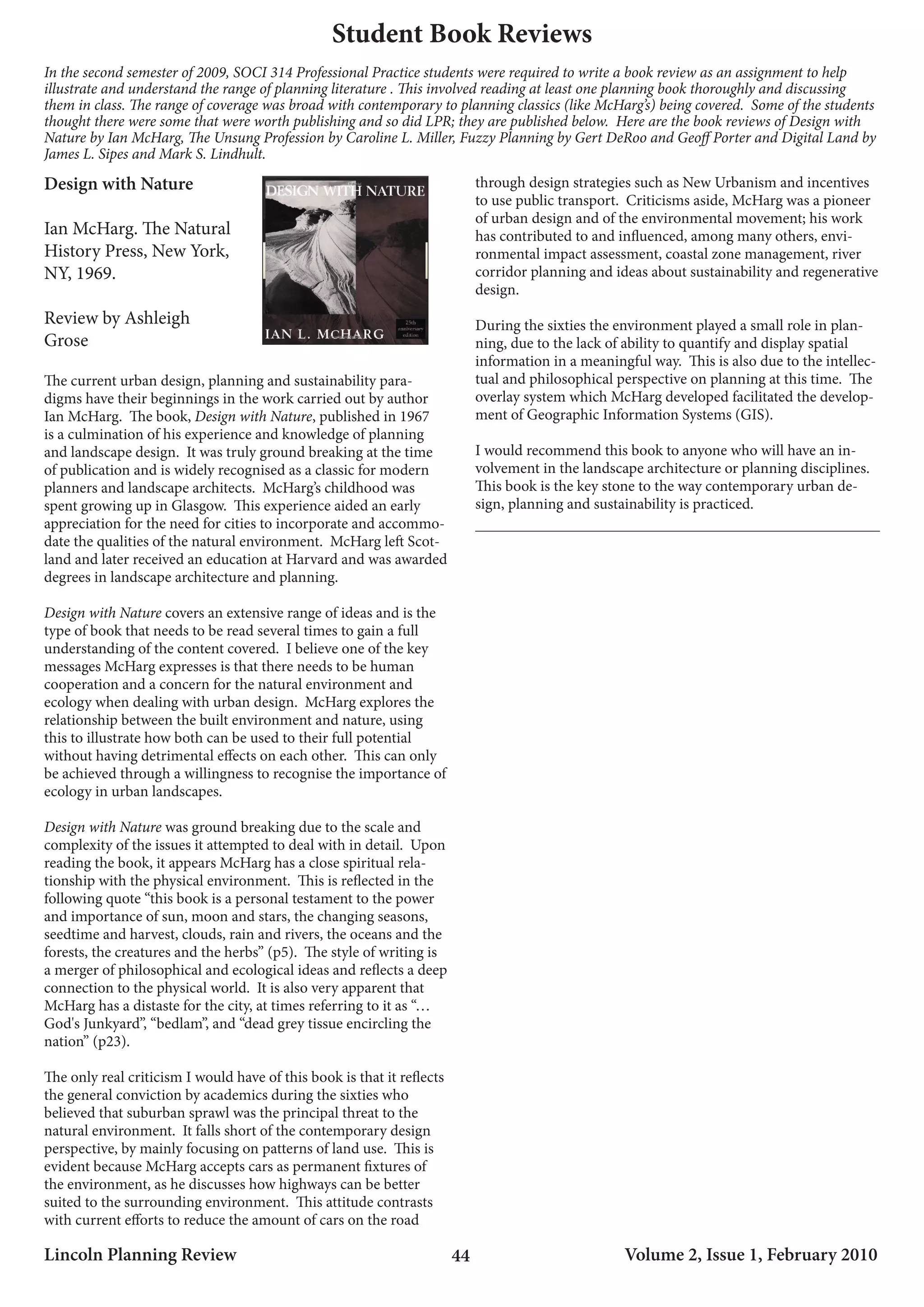

Ian McHarg's 1969 book "Design with Nature" pioneered the integration of ecology and land use planning. It argued for recognizing the importance of environmental factors in urban planning and design. McHarg drew on his experience in landscape architecture and planning to explore the relationship between the built and natural environments. He believed cities must accommodate nature to avoid detrimental effects. While groundbreaking, the book reflected the view of the time that suburban sprawl was the main threat, and accepted highways as permanent rather than promoting alternatives like public transit. Nonetheless, "Design with Nature" was highly influential and contributed to fields like environmental impact assessments and sustainability. It established McHarg as a leader of the environmental movement and changed how planning considers ecology


