Automatic Features:
The Next Chapter of the 401k
JAKE BREKELBAUM
From Pensions to 401(k)s
 Pension: a retirement
account maintained by your
employer that gives a fixed
monthly payout
 Rapidly replaced by the
401(k) starting in 1980
 Increased mobility
 Shift of responsibility and risk
Risk and Responsibility
Type of Risk Who Assumes It?
Defined Benefit Defined Contribution (401k type)
Investment Employer Employee
Inflation Employee
Longevity Employer Employee
Market Timing Employer Employee
Vesting Employee Employee
Salary Replacement Employer Employee
Employer & Employee
Retirement Saving Today
 More than half (55%) of Americans are not on track to meet essential
expenditures (Fidelity)
 Wealthiest 10% responsible for 56% of retirement assets
How Can Plan Design Help?
 Auto-enrollment
 Auto-escalation
 Take into account:
 Procrastination
 Inertia
Auto Enrollment
 Employees enrolled unless they opt out of plan
 A 3% auto-enrollment rate has become popular
 Nearly doubles new employee participation (Vanguard)
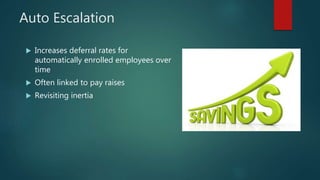
Auto Escalation
 Increases deferral rates for
automatically enrolled employees over
time
 Often linked to pay raises
 Revisiting inertia
Problems and Roadblocks
 Participants
 Employers
 Administration
Problems Affecting Participants
 Auto-enrollment without auto-escalation
 Workers get stuck at low deferral rates
 Existing employees left behind
 Could come at the cost of consultations and communication
 Retirement savings is not a one-size fits all matter
Problems Affecting Employers and
Administration
 Higher costs to employer
 More employer match payouts
 Increased administrative burden
 Compliance and more checkups
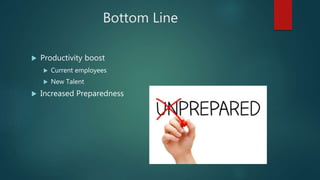
Bottom Line
 Productivity boost
 Current employees
 New Talent
 Increased Preparedness

401k Presentation

  • 1.
    Automatic Features: The NextChapter of the 401k JAKE BREKELBAUM
  • 2.
    From Pensions to401(k)s  Pension: a retirement account maintained by your employer that gives a fixed monthly payout  Rapidly replaced by the 401(k) starting in 1980  Increased mobility  Shift of responsibility and risk
  • 3.
    Risk and Responsibility Typeof Risk Who Assumes It? Defined Benefit Defined Contribution (401k type) Investment Employer Employee Inflation Employee Longevity Employer Employee Market Timing Employer Employee Vesting Employee Employee Salary Replacement Employer Employee Employer & Employee
  • 4.
    Retirement Saving Today More than half (55%) of Americans are not on track to meet essential expenditures (Fidelity)  Wealthiest 10% responsible for 56% of retirement assets
  • 5.
    How Can PlanDesign Help?  Auto-enrollment  Auto-escalation  Take into account:  Procrastination  Inertia
  • 6.
    Auto Enrollment  Employeesenrolled unless they opt out of plan  A 3% auto-enrollment rate has become popular  Nearly doubles new employee participation (Vanguard)
  • 7.
    Auto Escalation  Increasesdeferral rates for automatically enrolled employees over time  Often linked to pay raises  Revisiting inertia
  • 8.
    Problems and Roadblocks Participants  Employers  Administration
  • 9.
    Problems Affecting Participants Auto-enrollment without auto-escalation  Workers get stuck at low deferral rates  Existing employees left behind  Could come at the cost of consultations and communication  Retirement savings is not a one-size fits all matter
  • 10.
    Problems Affecting Employersand Administration  Higher costs to employer  More employer match payouts  Increased administrative burden  Compliance and more checkups
  • 11.
    Bottom Line  Productivityboost  Current employees  New Talent  Increased Preparedness