Headache / Migraine
Hussein Hallak Ph.D.
Al-Quds University
Migraine Cluster Tension
Familial Yes No Yes
Sex Female Male Female
Onset Variable During Sleep Stress
Location Unilateral Behind Eyes Bilateral,
Around Head
Character Pulsating,
Throbbing
Excruciating,
Sharp, Steady
Dull, Persistent
Duration 2-72 hrs 15-19 min Up to 7 Days
Symptoms Visual Aura,
Sensitivity to
light and
sound, Pale
face, nausea,
vomiting
Sweating,
facial flushing,
nasal
congestion,
lacrimation
Mild tolerance
to light and
noise, anorexia
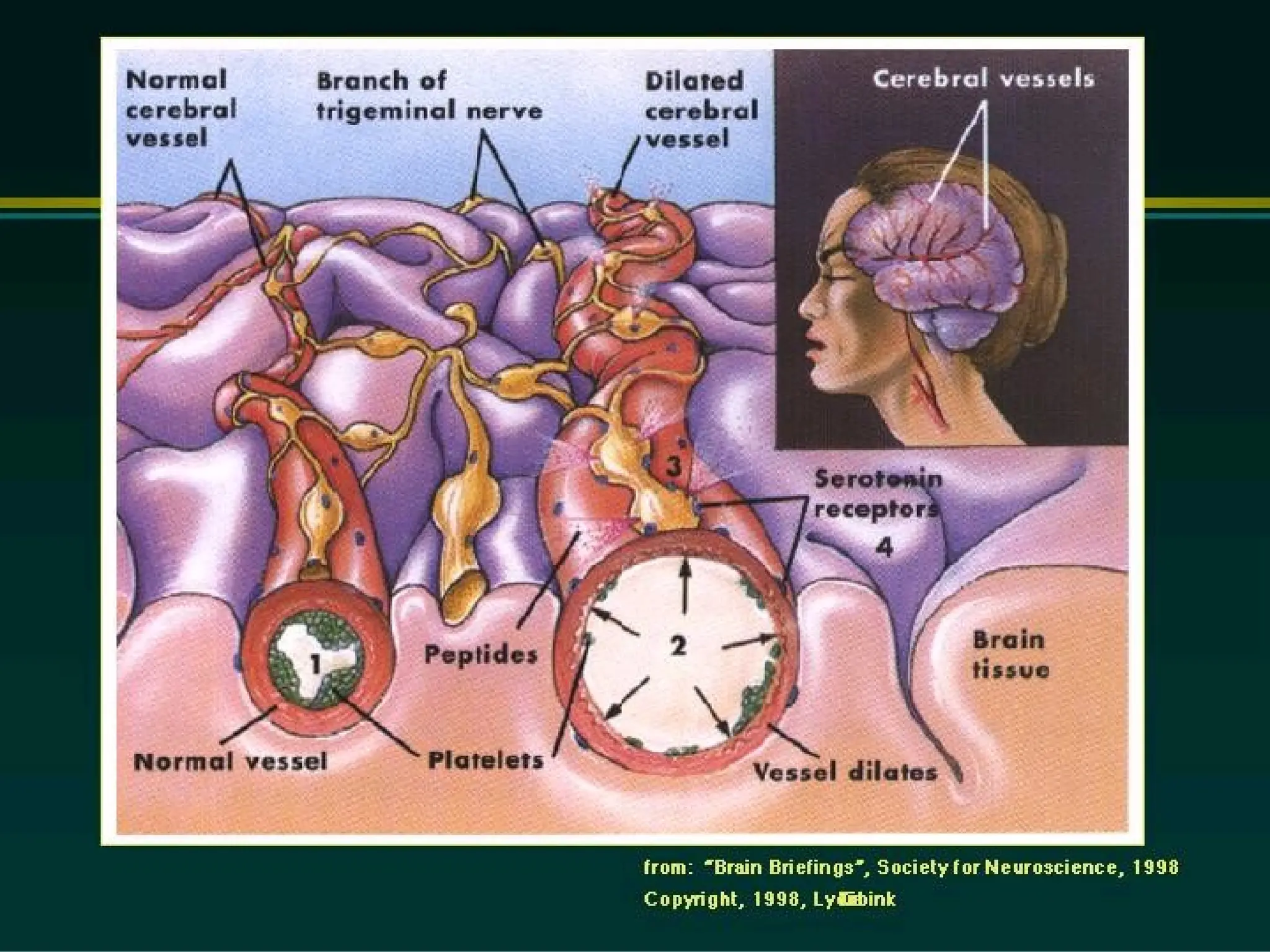
Cause of Migraine Headache:
Theories Not Facts
 Evidence strongly suggests that:
 Low levels of Serotonin are involved.
 Get vasodilation
 Release of vasoactive and inflammatory
peptides: substance P, neurokinin A, bradykinin,
from trigeminal fibers
 Cause inflammation  activation of nociceptive
pain
Treatment Strategies
 Acute management:
 Block vasodilation, release of inflammatory
mediators, and activation of trigeminal neurons,
you can abort the attack.
 Prophylactic agents:
 If you can figure out how to stop the generator
or abnormal activation of these systems, you
can prevent migraine attacks.
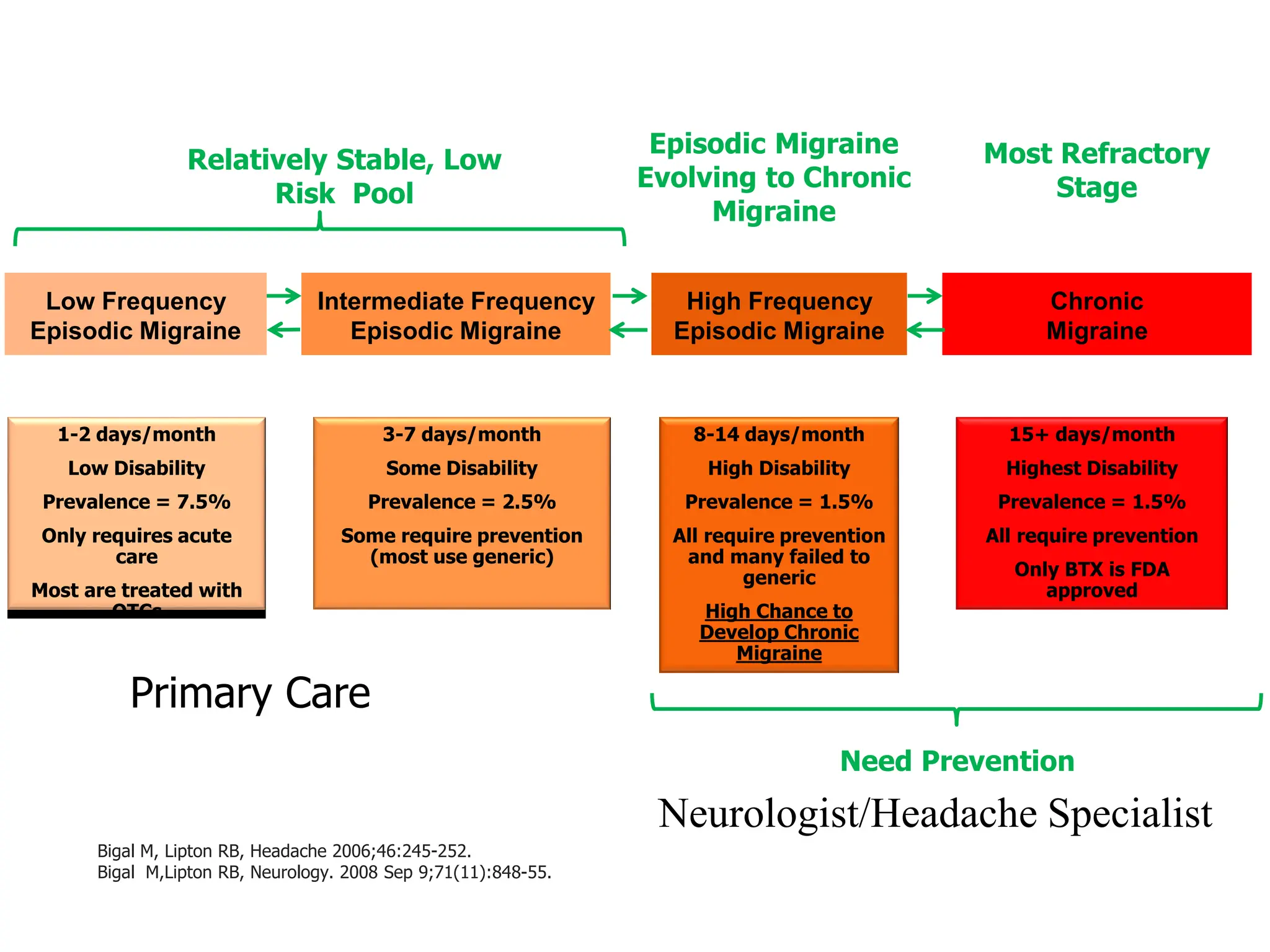
Migraine is a Progressive
Disease
Low Frequency
Episodic Migraine
Low Frequency
Episodic Migraine
1-2 days/month
Low Disability
Prevalence = 7.5%
Only requires acute
care
Most are treated with
OTCs
Intermediate Frequency
Episodic Migraine
Intermediate Frequency
Episodic Migraine
High Frequency
Episodic Migraine
High Frequency
Episodic Migraine
Chronic
Migraine
Chronic
Migraine
3-7 days/month
Some Disability
Prevalence = 2.5%
Some require prevention
(most use generic)
8-14 days/month
High Disability
Prevalence = 1.5%
All require prevention
and many failed to
generic
High Chance to
Develop Chronic
Migraine
15+ days/month
Highest Disability
Prevalence = 1.5%
All require prevention
Only BTX is FDA
approved
Relatively Stable, Low
Risk Pool
Episodic Migraine
Evolving to Chronic
Migraine
Most Refractory
Stage
Bigal M, Lipton RB, Headache 2006;46:245-252.
Bigal M,Lipton RB, Neurology. 2008 Sep 9;71(11):848-55.
Need Prevention
Primary Care
Neurologist/Headache Specialist
Acute Management -- Treat
Nausea and Vomiting
 Anti-emetic agents:
 Prochlorperazine
 Metoclopramide
 Chlorpromazine
Acute Management: Analgesics
 Aspirin, acetaminophen
 Non-steroidal anti-inflammatory agents
 Ibuprofen
 Naproxen sodium
 Indomethacin
 Ketorolac
 Inhibit cyclooxygenase activity, so decrease
prostaglandin formation
 Prostaglandins sensitize pain receptors
 Prostaglandins are involved in inflammation
FDA Approved Products
 Excedrine Migraine: Contains Acetaminophen,
Aspirin, and caffeine.
 Not clear what caffeine does, but National
Headache Foundation 1999 consensus is
that caffeine increases the effectiveness of
headache treatment by up to 40%.
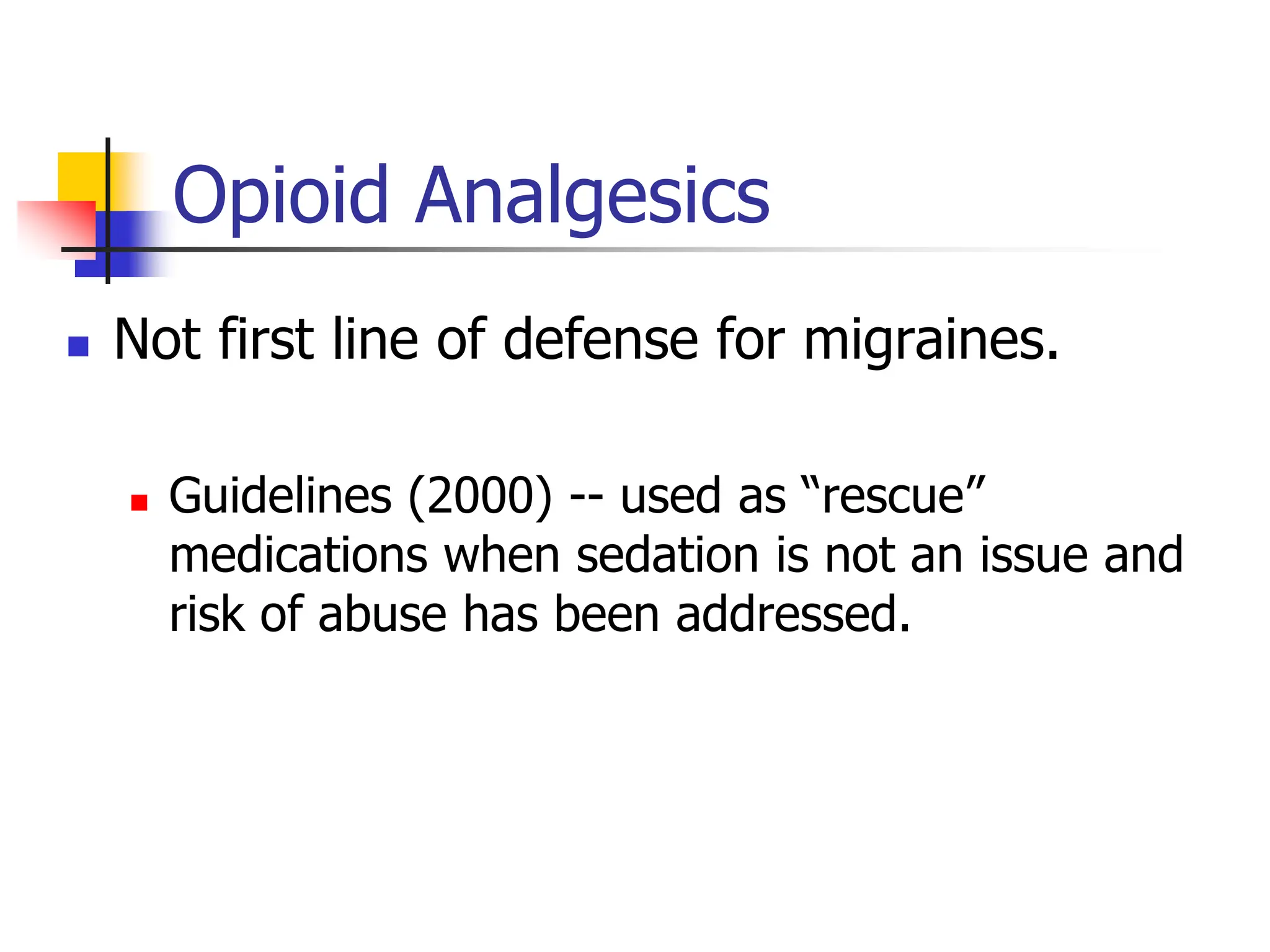
Opioid Analgesics
 Not first line of defense for migraines.
 Guidelines (2000) -- used as “rescue”
medications when sedation is not an issue and
risk of abuse has been addressed.
Acute Management: 5-HT1B/D
Agonists: “Triptans”
Drugs:
 Sumatriptan (Imitrex)*
 Naratriptan (Amerge)*
 Zolmitriptan (Zomig)
 Rizatriptan (Maxalt)
 Almotriptan (Axert)
 Frovatriptan succinate (Frova)
Acute Management: 5-HT1B/D
Agonists
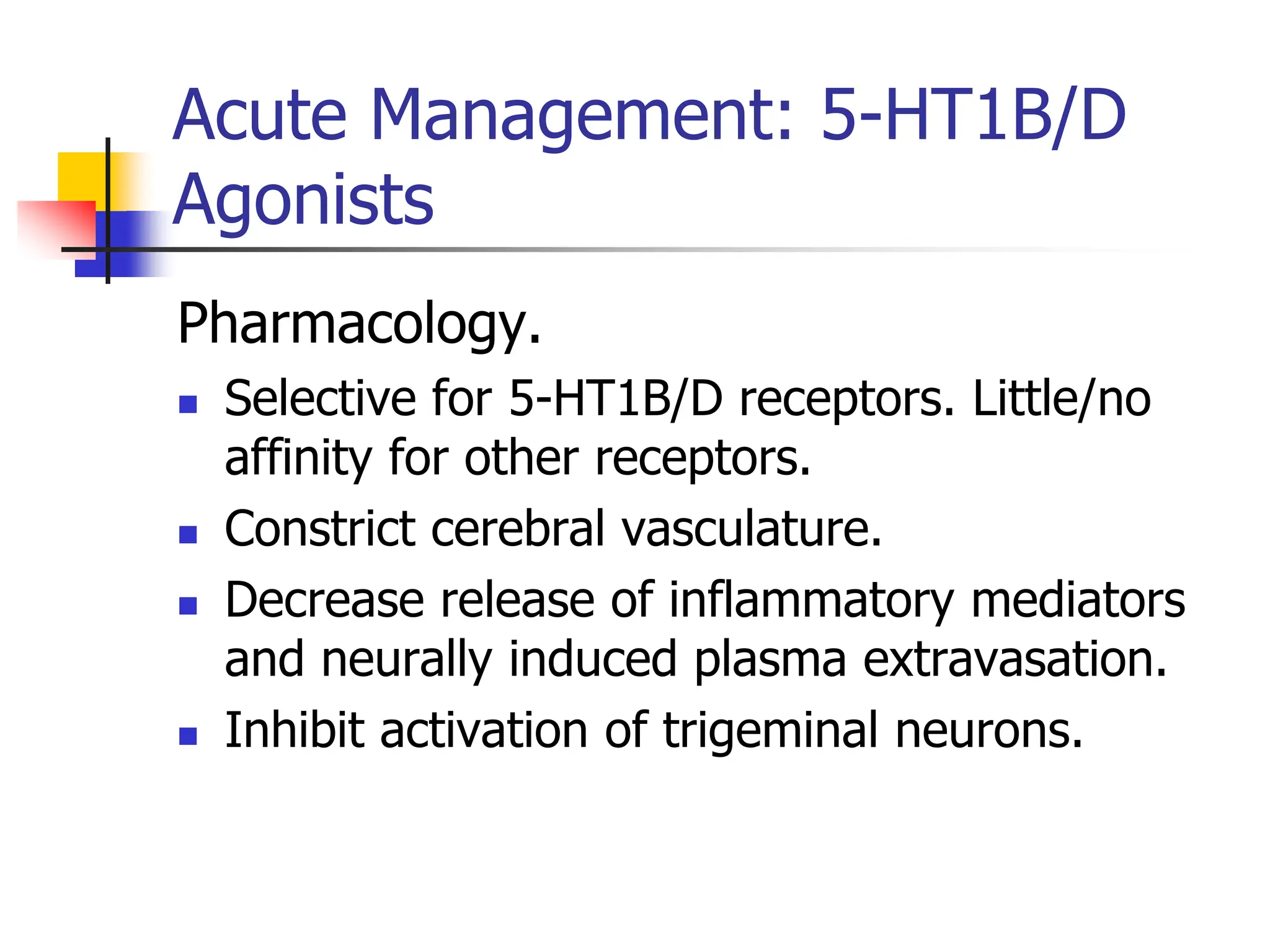
Pharmacology.
 Selective for 5-HT1B/D receptors. Little/no
affinity for other receptors.
 Constrict cerebral vasculature.
 Decrease release of inflammatory mediators
and neurally induced plasma extravasation.
 Inhibit activation of trigeminal neurons.
5-HT1B/D Agonists, contíd
Pharmacokinetics.
 Use of triptans with longer half-lives may be
better, especially for patients with rebound
headaches (eg. Naratriptan (~6 hr),
Frovatriptan ~ 26 hr)).
 Metabolism of sumatriptan, zolmitriptan,
rizatriptan, and almotriptan all involve MAO.
5-HT1B/D Agonists, Cont’d
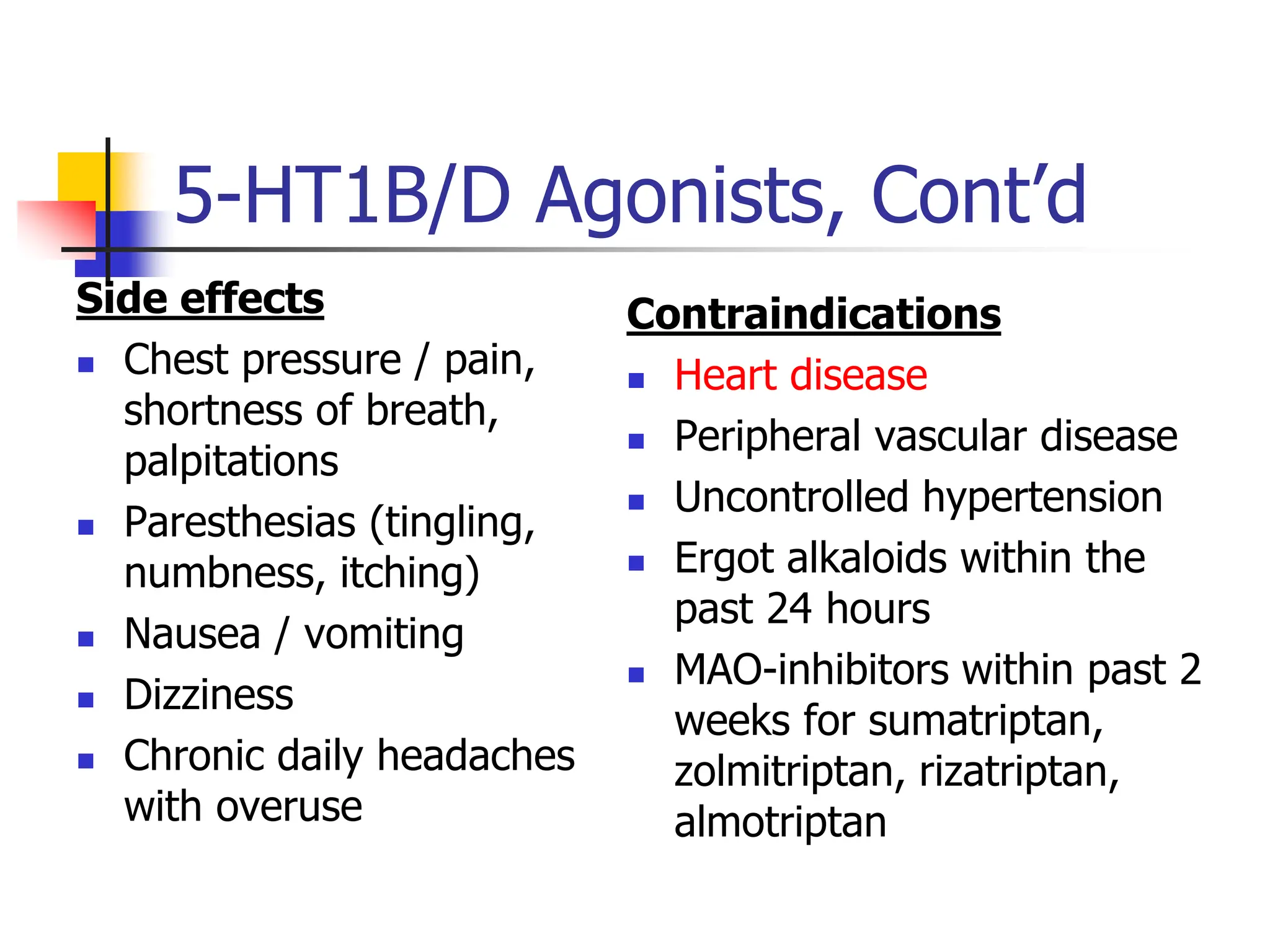
Side effects
 Chest pressure / pain,
shortness of breath,
palpitations
 Paresthesias (tingling,
numbness, itching)
 Nausea / vomiting
 Dizziness
 Chronic daily headaches
with overuse
Contraindications
 Heart disease
 Peripheral vascular disease
 Uncontrolled hypertension
 Ergot alkaloids within the
past 24 hours
 MAO-inhibitors within past 2
weeks for sumatriptan,
zolmitriptan, rizatriptan,
almotriptan
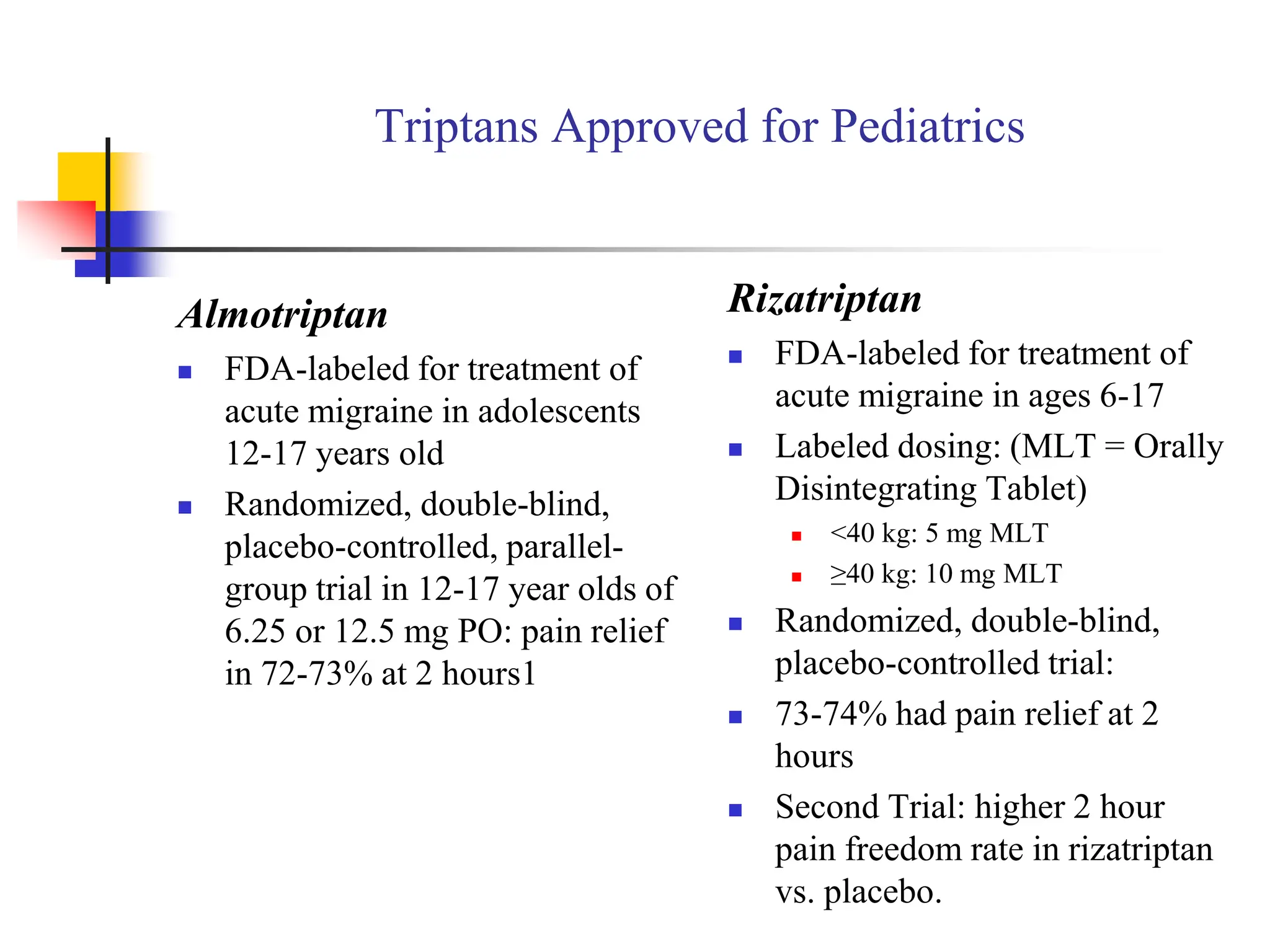
Triptans Approved for Pediatrics
Almotriptan
 FDA-labeled for treatment of
acute migraine in adolescents
12-17 years old
 Randomized, double-blind,
placebo-controlled, parallel-
group trial in 12-17 year olds of
6.25 or 12.5 mg PO: pain relief
in 72-73% at 2 hours1
Rizatriptan
 FDA-labeled for treatment of
acute migraine in ages 6-17
 Labeled dosing: (MLT = Orally
Disintegrating Tablet)
 <40 kg: 5 mg MLT
 ≥40 kg: 10 mg MLT
 Randomized, double-blind,
placebo-controlled trial:
 73-74% had pain relief at 2
hours
 Second Trial: higher 2 hour
pain freedom rate in rizatriptan
vs. placebo.
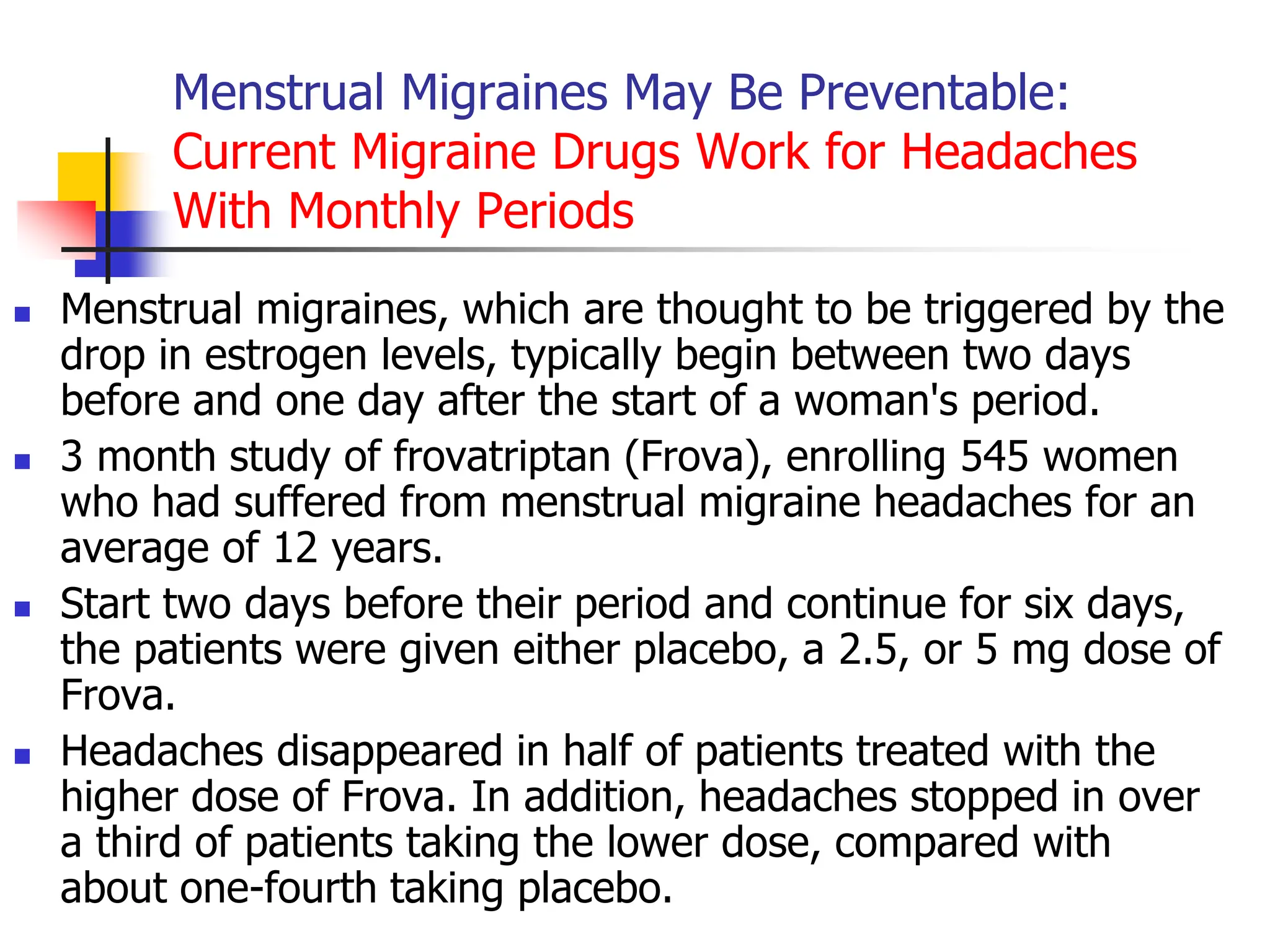
Menstrual Migraines May Be Preventable:
Current Migraine Drugs Work for Headaches
With Monthly Periods
 Menstrual migraines, which are thought to be triggered by the
drop in estrogen levels, typically begin between two days
before and one day after the start of a woman's period.
 3 month study of frovatriptan (Frova), enrolling 545 women
who had suffered from menstrual migraine headaches for an
average of 12 years.
 Start two days before their period and continue for six days,
the patients were given either placebo, a 2.5, or 5 mg dose of
Frova.
 Headaches disappeared in half of patients treated with the
higher dose of Frova. In addition, headaches stopped in over
a third of patients taking the lower dose, compared with
about one-fourth taking placebo.
Acute Management: Ergot Alkaloids
 Ergotamine (Ergostat; Ergomar)
 Not used much anymore
 Dihydroergotamine (Injection D.H.E 45;
Nasal Spray (Migranal®)
 Used for Emergency Room / in-patient
management of intractable headache
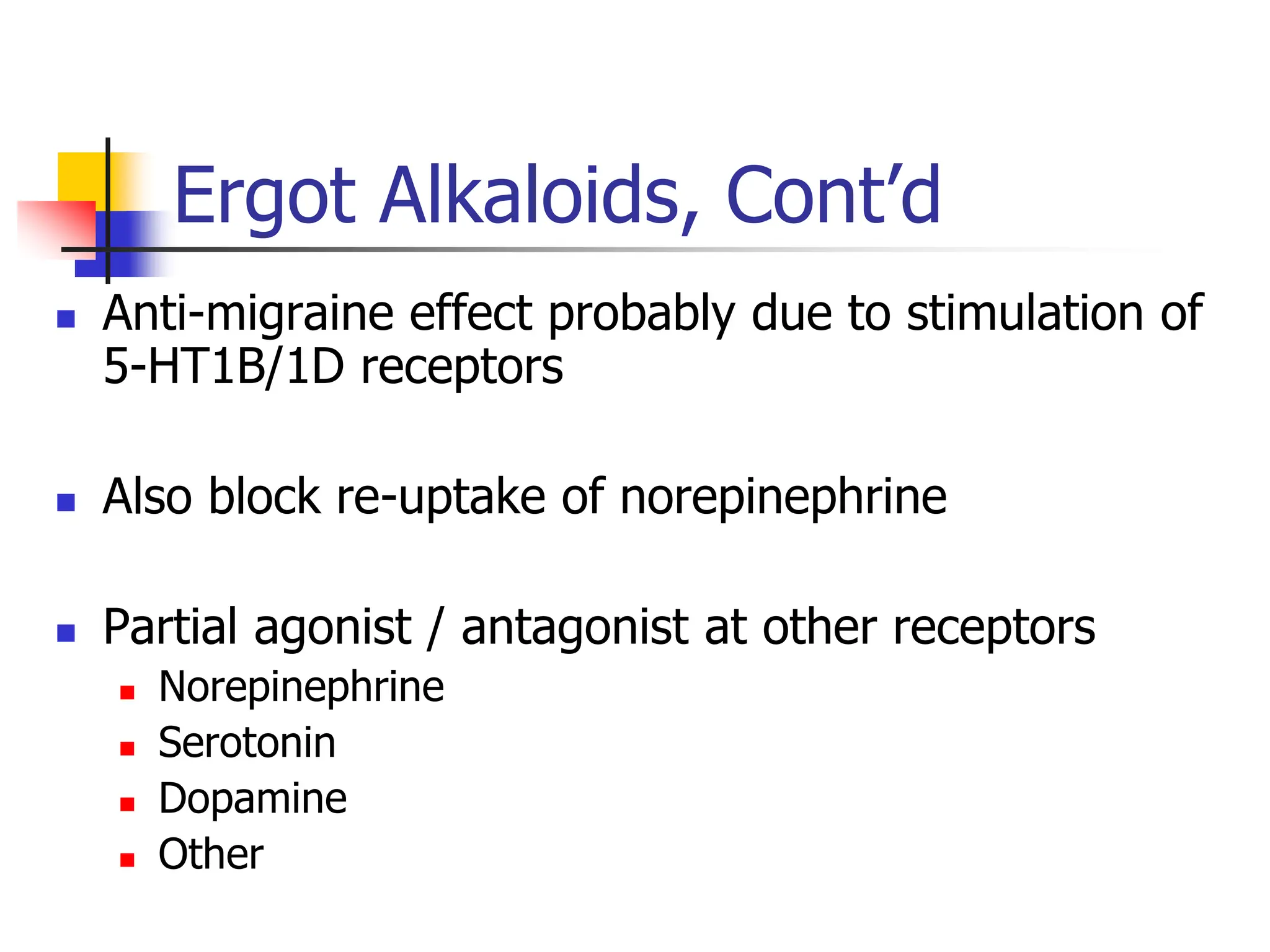
Ergot Alkaloids, Cont’d
 Anti-migraine effect probably due to stimulation of
5-HT1B/1D receptors
 Also block re-uptake of norepinephrine
 Partial agonist / antagonist at other receptors
 Norepinephrine
 Serotonin
 Dopamine
 Other
Ergot Alkaloids, Cont’d
Side effects.
 nausea / vomiting.
 Contraindications -- due to vasoconstrictive and
oxytocic properties.
 Oxytocic: Agents promoting uterine contractions
 Drug interactions / precautions: profound
vasospasm.
 Macrolide antibiotics (eg. Erythromycin).
 Methysergide / other vasoconstrictors.
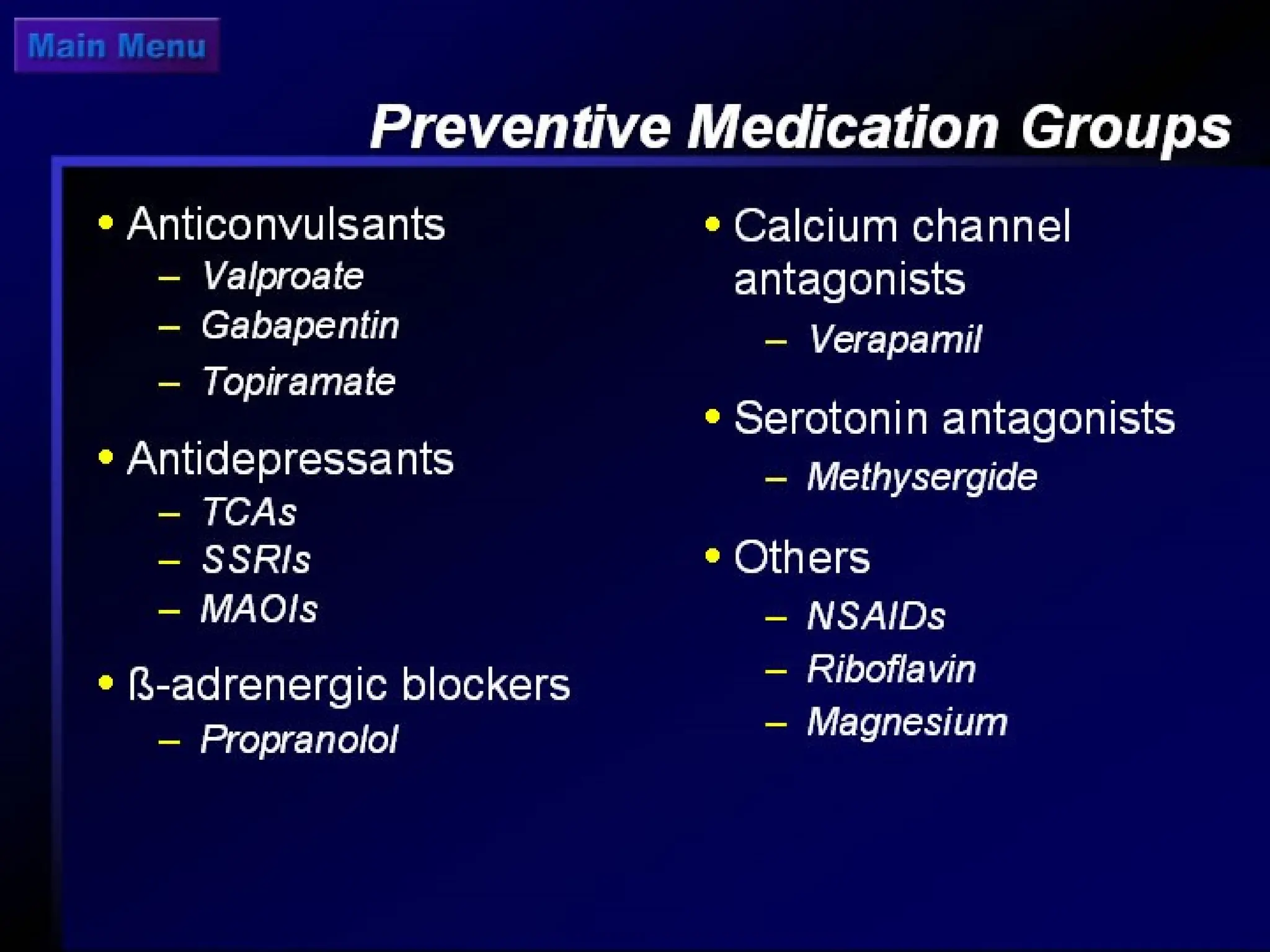
Prophylactic Management of Migraine
 Beta blockers -- Propranolol (Inderal), Nadolol.
 Not apparently due to beta receptor block.
 Contraindications as expected for beta blockers.
 Tricyclic antidepressants -- Amitriptyline (Elavil).
 Not FDA approved, but often used.
 Works well in patients with mixed muscle tension/migraine
headaches.
 Helps people sleep.
 Divalproex sodium (Depakote, Depakote-ER).
 Inhibits sustained, repetitive firing of neurons.
Preventive Treatment needs dose titration
 Topiramate dose titration phase for around 1 month
Titration
Week
1
Week
2
Week
3
AM
Dose
PM
Dose
Prescription
Week 4 and
beyond
+
25 25 25
25
25
25
50
50
 Medications need to be taken three times a day (propranolol), twice a
day (propranolol ER, topiramate) or once daily (TADs)
Prophylactic Management of Migraine
 Ca2+ channel blockers
 Verapamil
 Stabilizes neuronal membranes, decreases
neurotransmitter release
 SSRIs and “atypical anti-depressants”
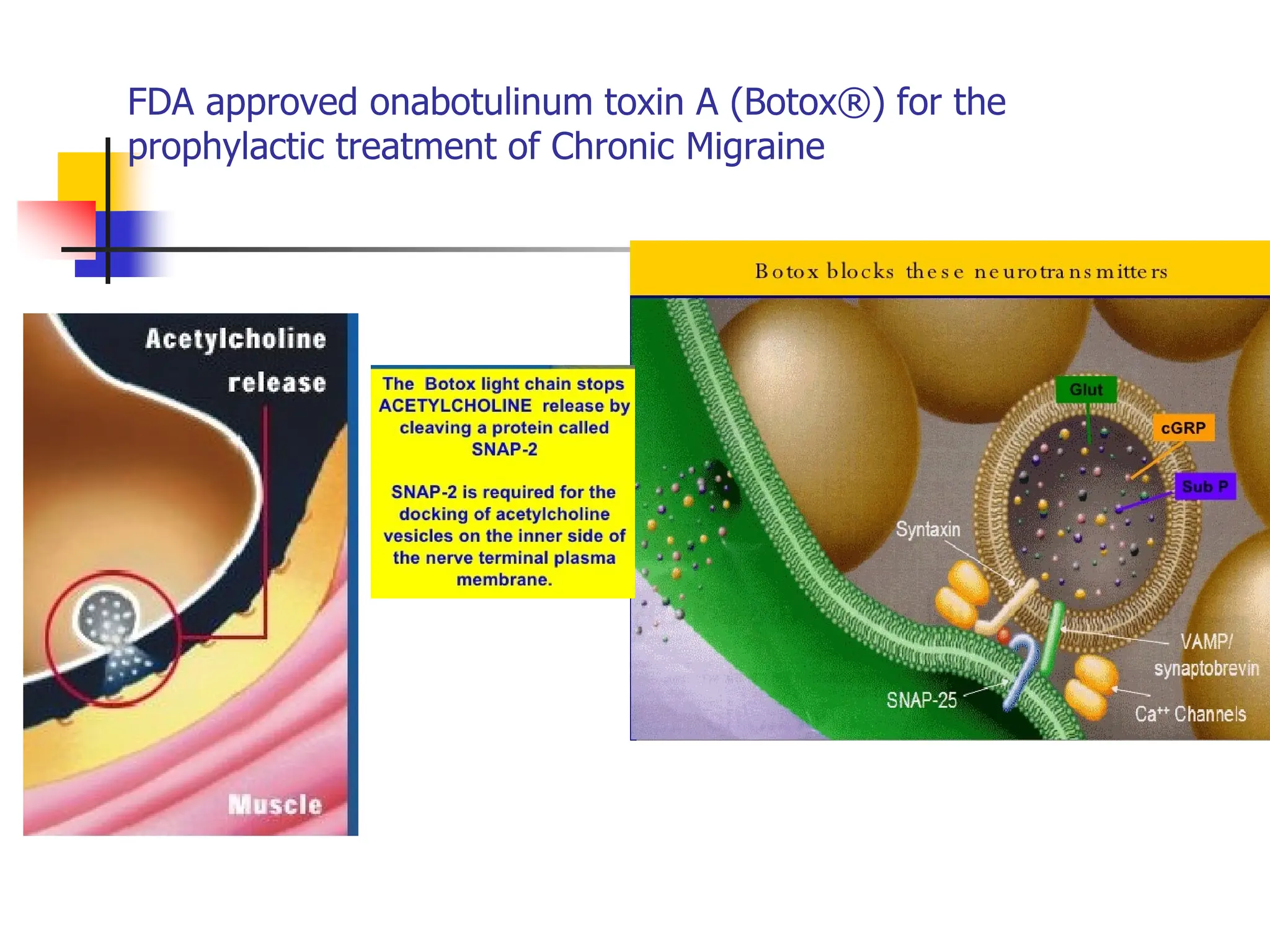
FDA approved onabotulinum toxin A (Botox®) for the
prophylactic treatment of Chronic Migraine
Acute Treatment of Cluster Headache
 Lidocaine (Xylocaine)
 Local anesthetic. Given nasally provides
sphenopalatine ganglionic block
 Oxygen -- 100% for 15 min
 Triptans
 Effective in acute treatment of patients
with episodic cluster headache
When activated, the trigeminal nerve causes the eye pain
associated with cluster headaches. The trigeminal nerve also
stimulates another group of nerves that causes the eye tearing and
redness, nasal congestion and discharge associated with cluster
attacks
Prophylactic Treatment of Cluster
Headache
 Verapamil
 Methysergide
 Lithium (Eskalith, Cibalith)
 Affects phosphoinositide-based signaling
 May stabilize membranes
 Toxicity can be a concern
 Prednisone (Deltasone)
 Gabapentin (Neurontin)
Major Points to Know
 Vascular dilation and peri-vascular inflammation are
associated with acute migraine attacks
 Trigeminal system and serotonin implicated
 Acute management associated with controlling pain,
nausea, and vomiting
 Analgesics / anti-inflammatories
 Vasoconstrictors
 Serotonin 1B/D agonists
 Prophylactic management associated with stabilizing
membranes, modulating 5-HT levels, affecting
neuroinflammatory processes
 Treatment of cluster headache -- acute &
prophylactic

4. Headache & Migraine drugs

  • 1.
    Headache / Migraine HusseinHallak Ph.D. Al-Quds University
  • 2.
    Migraine Cluster Tension FamilialYes No Yes Sex Female Male Female Onset Variable During Sleep Stress Location Unilateral Behind Eyes Bilateral, Around Head Character Pulsating, Throbbing Excruciating, Sharp, Steady Dull, Persistent Duration 2-72 hrs 15-19 min Up to 7 Days Symptoms Visual Aura, Sensitivity to light and sound, Pale face, nausea, vomiting Sweating, facial flushing, nasal congestion, lacrimation Mild tolerance to light and noise, anorexia
  • 4.
    Cause of MigraineHeadache: Theories Not Facts  Evidence strongly suggests that:  Low levels of Serotonin are involved.  Get vasodilation  Release of vasoactive and inflammatory peptides: substance P, neurokinin A, bradykinin, from trigeminal fibers  Cause inflammation  activation of nociceptive pain
  • 5.
    Treatment Strategies  Acutemanagement:  Block vasodilation, release of inflammatory mediators, and activation of trigeminal neurons, you can abort the attack.  Prophylactic agents:  If you can figure out how to stop the generator or abnormal activation of these systems, you can prevent migraine attacks.
  • 6.
    Migraine is aProgressive Disease Low Frequency Episodic Migraine Low Frequency Episodic Migraine 1-2 days/month Low Disability Prevalence = 7.5% Only requires acute care Most are treated with OTCs Intermediate Frequency Episodic Migraine Intermediate Frequency Episodic Migraine High Frequency Episodic Migraine High Frequency Episodic Migraine Chronic Migraine Chronic Migraine 3-7 days/month Some Disability Prevalence = 2.5% Some require prevention (most use generic) 8-14 days/month High Disability Prevalence = 1.5% All require prevention and many failed to generic High Chance to Develop Chronic Migraine 15+ days/month Highest Disability Prevalence = 1.5% All require prevention Only BTX is FDA approved Relatively Stable, Low Risk Pool Episodic Migraine Evolving to Chronic Migraine Most Refractory Stage Bigal M, Lipton RB, Headache 2006;46:245-252. Bigal M,Lipton RB, Neurology. 2008 Sep 9;71(11):848-55. Need Prevention Primary Care Neurologist/Headache Specialist
  • 7.
    Acute Management --Treat Nausea and Vomiting  Anti-emetic agents:  Prochlorperazine  Metoclopramide  Chlorpromazine
  • 8.
    Acute Management: Analgesics Aspirin, acetaminophen  Non-steroidal anti-inflammatory agents  Ibuprofen  Naproxen sodium  Indomethacin  Ketorolac  Inhibit cyclooxygenase activity, so decrease prostaglandin formation  Prostaglandins sensitize pain receptors  Prostaglandins are involved in inflammation
  • 9.
    FDA Approved Products Excedrine Migraine: Contains Acetaminophen, Aspirin, and caffeine.  Not clear what caffeine does, but National Headache Foundation 1999 consensus is that caffeine increases the effectiveness of headache treatment by up to 40%.
  • 10.
    Opioid Analgesics  Notfirst line of defense for migraines.  Guidelines (2000) -- used as “rescue” medications when sedation is not an issue and risk of abuse has been addressed.
  • 11.
    Acute Management: 5-HT1B/D Agonists:“Triptans” Drugs:  Sumatriptan (Imitrex)*  Naratriptan (Amerge)*  Zolmitriptan (Zomig)  Rizatriptan (Maxalt)  Almotriptan (Axert)  Frovatriptan succinate (Frova)
  • 12.
    Acute Management: 5-HT1B/D Agonists Pharmacology. Selective for 5-HT1B/D receptors. Little/no affinity for other receptors.  Constrict cerebral vasculature.  Decrease release of inflammatory mediators and neurally induced plasma extravasation.  Inhibit activation of trigeminal neurons.
  • 13.
    5-HT1B/D Agonists, contíd Pharmacokinetics. Use of triptans with longer half-lives may be better, especially for patients with rebound headaches (eg. Naratriptan (~6 hr), Frovatriptan ~ 26 hr)).  Metabolism of sumatriptan, zolmitriptan, rizatriptan, and almotriptan all involve MAO.
  • 14.
    5-HT1B/D Agonists, Cont’d Sideeffects  Chest pressure / pain, shortness of breath, palpitations  Paresthesias (tingling, numbness, itching)  Nausea / vomiting  Dizziness  Chronic daily headaches with overuse Contraindications  Heart disease  Peripheral vascular disease  Uncontrolled hypertension  Ergot alkaloids within the past 24 hours  MAO-inhibitors within past 2 weeks for sumatriptan, zolmitriptan, rizatriptan, almotriptan
  • 15.
    Triptans Approved forPediatrics Almotriptan  FDA-labeled for treatment of acute migraine in adolescents 12-17 years old  Randomized, double-blind, placebo-controlled, parallel- group trial in 12-17 year olds of 6.25 or 12.5 mg PO: pain relief in 72-73% at 2 hours1 Rizatriptan  FDA-labeled for treatment of acute migraine in ages 6-17  Labeled dosing: (MLT = Orally Disintegrating Tablet)  <40 kg: 5 mg MLT  ≥40 kg: 10 mg MLT  Randomized, double-blind, placebo-controlled trial:  73-74% had pain relief at 2 hours  Second Trial: higher 2 hour pain freedom rate in rizatriptan vs. placebo.
  • 16.
    Menstrual Migraines MayBe Preventable: Current Migraine Drugs Work for Headaches With Monthly Periods  Menstrual migraines, which are thought to be triggered by the drop in estrogen levels, typically begin between two days before and one day after the start of a woman's period.  3 month study of frovatriptan (Frova), enrolling 545 women who had suffered from menstrual migraine headaches for an average of 12 years.  Start two days before their period and continue for six days, the patients were given either placebo, a 2.5, or 5 mg dose of Frova.  Headaches disappeared in half of patients treated with the higher dose of Frova. In addition, headaches stopped in over a third of patients taking the lower dose, compared with about one-fourth taking placebo.
  • 17.
    Acute Management: ErgotAlkaloids  Ergotamine (Ergostat; Ergomar)  Not used much anymore  Dihydroergotamine (Injection D.H.E 45; Nasal Spray (Migranal®)  Used for Emergency Room / in-patient management of intractable headache
  • 18.
    Ergot Alkaloids, Cont’d Anti-migraine effect probably due to stimulation of 5-HT1B/1D receptors  Also block re-uptake of norepinephrine  Partial agonist / antagonist at other receptors  Norepinephrine  Serotonin  Dopamine  Other
  • 19.
    Ergot Alkaloids, Cont’d Sideeffects.  nausea / vomiting.  Contraindications -- due to vasoconstrictive and oxytocic properties.  Oxytocic: Agents promoting uterine contractions  Drug interactions / precautions: profound vasospasm.  Macrolide antibiotics (eg. Erythromycin).  Methysergide / other vasoconstrictors.
  • 21.
    Prophylactic Management ofMigraine  Beta blockers -- Propranolol (Inderal), Nadolol.  Not apparently due to beta receptor block.  Contraindications as expected for beta blockers.  Tricyclic antidepressants -- Amitriptyline (Elavil).  Not FDA approved, but often used.  Works well in patients with mixed muscle tension/migraine headaches.  Helps people sleep.  Divalproex sodium (Depakote, Depakote-ER).  Inhibits sustained, repetitive firing of neurons.
  • 22.
    Preventive Treatment needsdose titration  Topiramate dose titration phase for around 1 month Titration Week 1 Week 2 Week 3 AM Dose PM Dose Prescription Week 4 and beyond + 25 25 25 25 25 25 50 50  Medications need to be taken three times a day (propranolol), twice a day (propranolol ER, topiramate) or once daily (TADs)
  • 23.
    Prophylactic Management ofMigraine  Ca2+ channel blockers  Verapamil  Stabilizes neuronal membranes, decreases neurotransmitter release  SSRIs and “atypical anti-depressants”
  • 24.
    FDA approved onabotulinumtoxin A (Botox®) for the prophylactic treatment of Chronic Migraine
  • 27.
    Acute Treatment ofCluster Headache  Lidocaine (Xylocaine)  Local anesthetic. Given nasally provides sphenopalatine ganglionic block  Oxygen -- 100% for 15 min  Triptans  Effective in acute treatment of patients with episodic cluster headache
  • 28.
    When activated, thetrigeminal nerve causes the eye pain associated with cluster headaches. The trigeminal nerve also stimulates another group of nerves that causes the eye tearing and redness, nasal congestion and discharge associated with cluster attacks
  • 29.
    Prophylactic Treatment ofCluster Headache  Verapamil  Methysergide  Lithium (Eskalith, Cibalith)  Affects phosphoinositide-based signaling  May stabilize membranes  Toxicity can be a concern  Prednisone (Deltasone)  Gabapentin (Neurontin)
  • 30.
    Major Points toKnow  Vascular dilation and peri-vascular inflammation are associated with acute migraine attacks  Trigeminal system and serotonin implicated  Acute management associated with controlling pain, nausea, and vomiting  Analgesics / anti-inflammatories  Vasoconstrictors  Serotonin 1B/D agonists  Prophylactic management associated with stabilizing membranes, modulating 5-HT levels, affecting neuroinflammatory processes  Treatment of cluster headache -- acute & prophylactic