The Cell Cycle
The Cell Cycle
 The sequence of
growth and division of a
cell
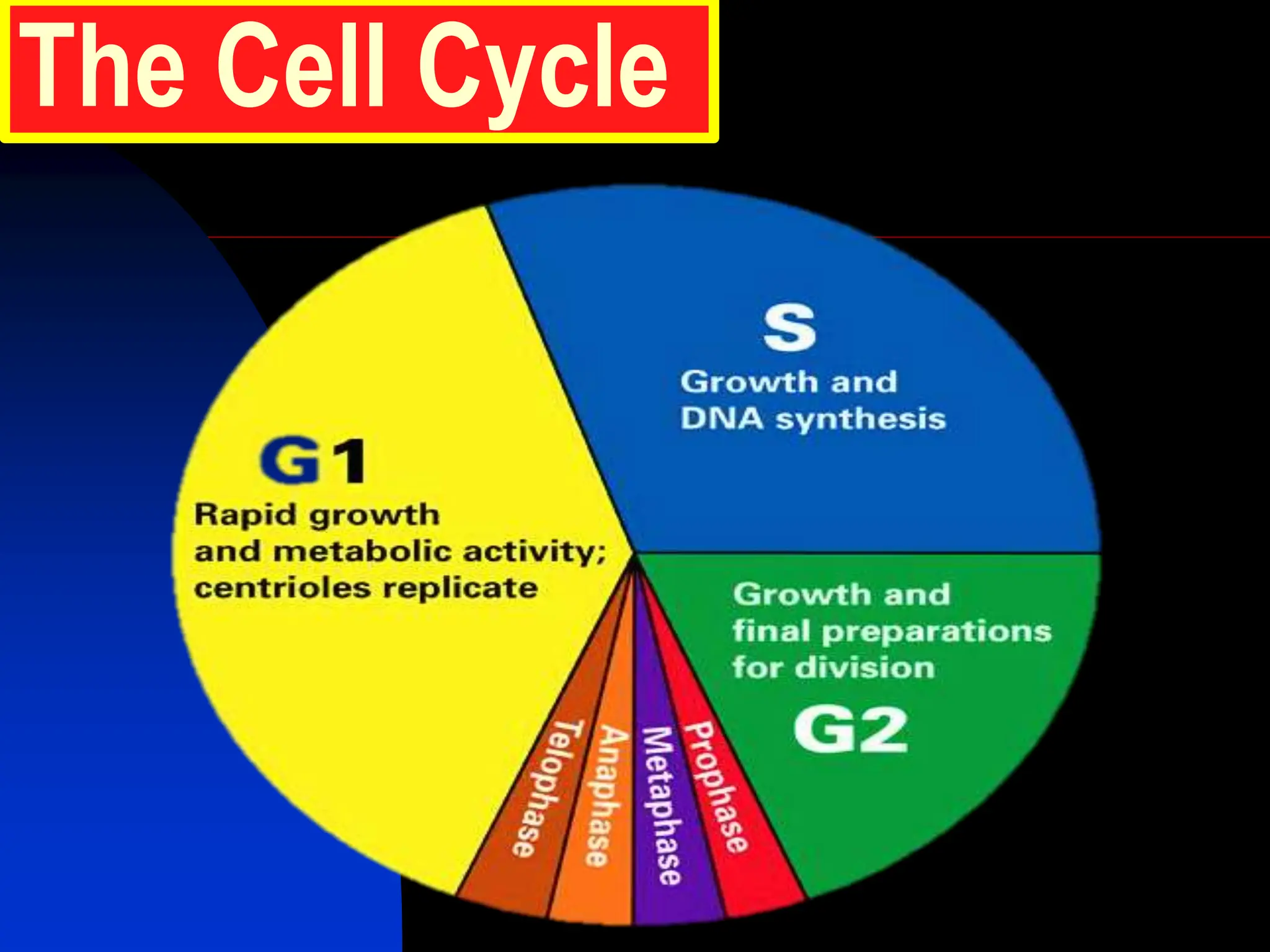
Interphase = G1, S, G2
 Interphase is when the cell grows,
and the organelles double prior to
the actual splitting of the nucleus.
 93% of a cell’s life is spent in
interphase.
 Interphase has three parts
Growth 1 (G1)
Synthesis (S)
Growth 2 (G2)
G1, S, G2
 G1 is when organelles double.
Remember each new cell needs a
complete set of organelles.
 S when DNA is replicated.
Each cell needs a complete and
identical set of DNA
 G2 Proteins needed for Mitosis
are produced.
MITOSIS
 The process by which the cell nucleus divides
into two identical cell nuclei.
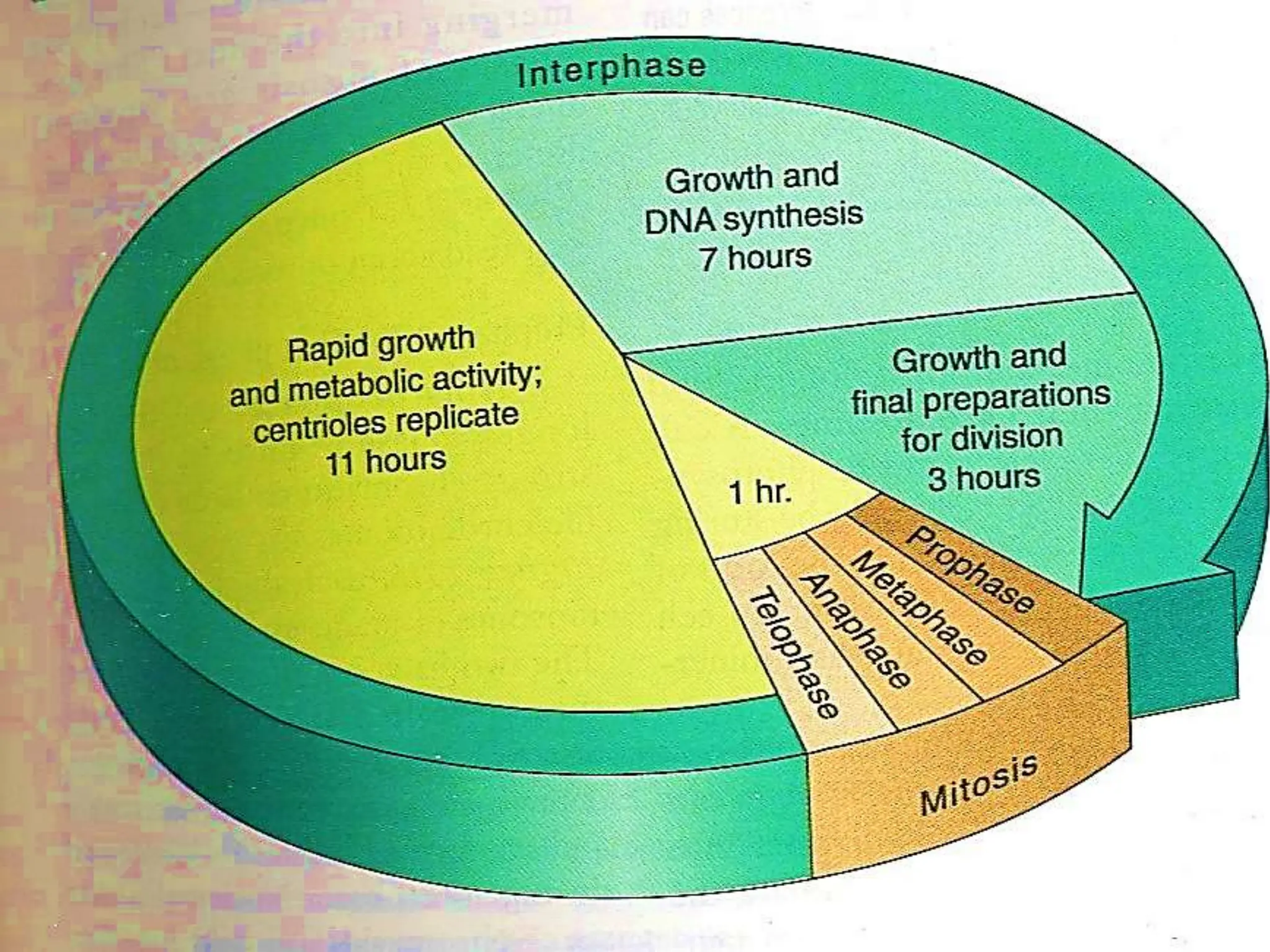
 In some Human cells interphases lasts 15.3
hours, while mitosis lasts only .7 hours.
 Occurs in a series of steps
 Prophase
 Metaphase
 Anaphase
 Telophase
Cytokinesis
CHROMOSOMES
 Structures of the tightly packaged
DNA
 Must duplicate and separate
during Mitosis
 DNA is tangled up into a substance
of chromatin
 The chromatin is packaged on the
chromosome
Chromosomal structure
PROPHASE
 Chromosomes now called chromatids
because they doubled to form short thick
rods which pair up and line up in the center
of the nucleus.
 A centromere connects the two halves of
the doubled chromatids.
 Spindle fibers begin to form.
 Spindle fiber – a fibrous structure from the
cytoplasm which forms to the centriole.
 Centrioles move to opposite sides of the
cell.
 The nuclear membrane breaks down.
Prophase
METAPHASE
 Centromeres of the chromatid
pairs line up in the middle of the
cell.
 Metaphase plate- location where
the centromeres line up in the
center of the cell.
 By the end of metaphase each
chromatid has attached to spindle
fibers.
Metaphase
ANAPHASE
 The spindle fibers pull the
chromatids apart.
 This separates each one from
its duplicate. These move to
opposite sides of the cell.
 Now there are two identical
sets of chromosomes.
Anaphase
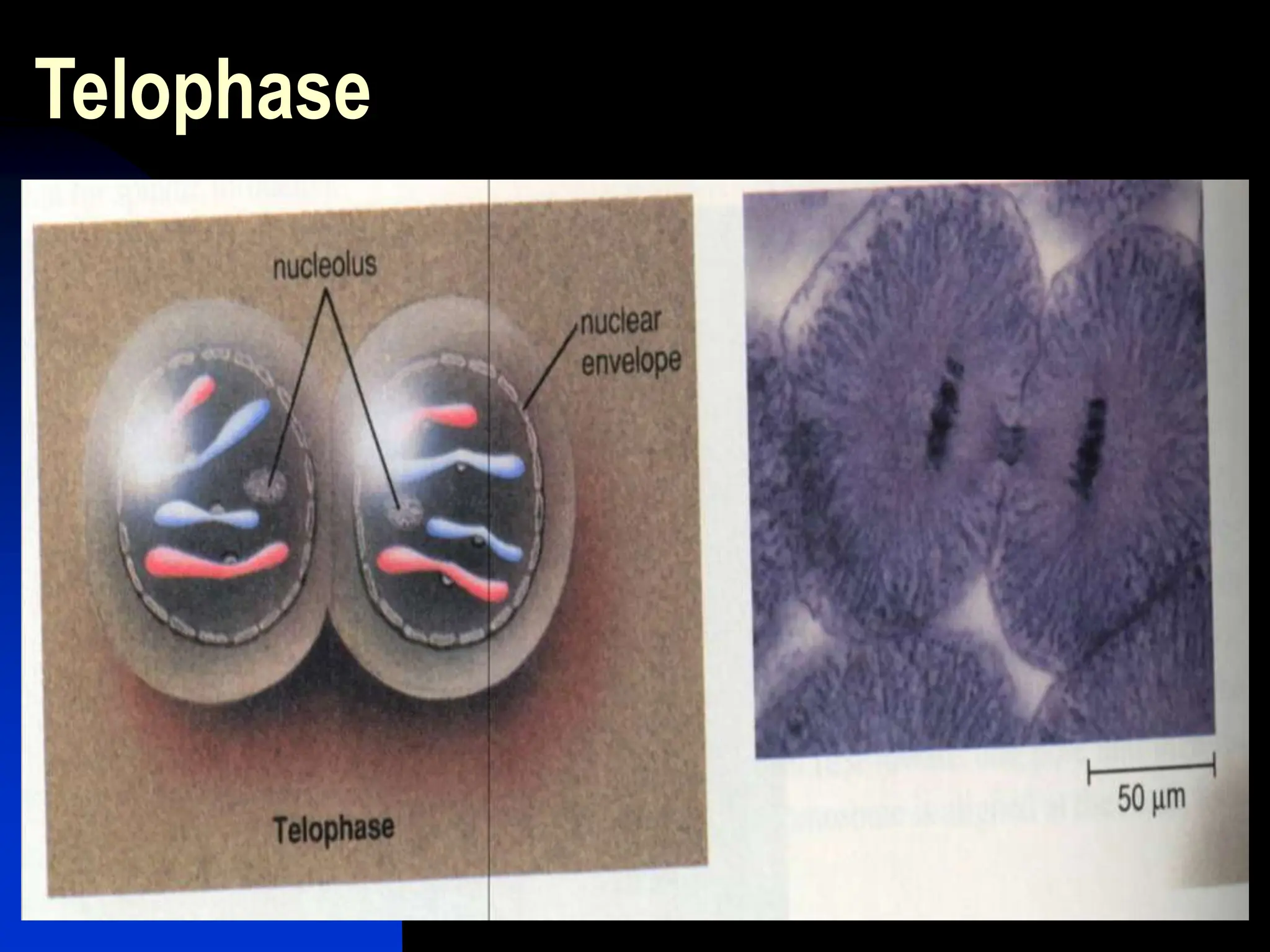
TELOPHASE
 When the chromosomes reach
opposite sides of the cell the
spindle fibers break up.
 The nuclear membrane begins to
reform.
 A furrow begins to develop
between the two sets of
chromosomes.
Telophase
CYTOKINESIS
The two identical cells
completely divide and
the cell membrane is
completely formed.
MEIOSIS
 Diploid (2n) - A cell with two of each kind
of chromosome.
 One chromosome from each parent.
 If two body cells were to combine nuclei,
the number of chromosomes would
double.
 In order for sexual reproduction to occur,
each cell involved must reduce its
chromosome number by half.
 Haploid (n)- A cell with one of each kind of
chromosome.
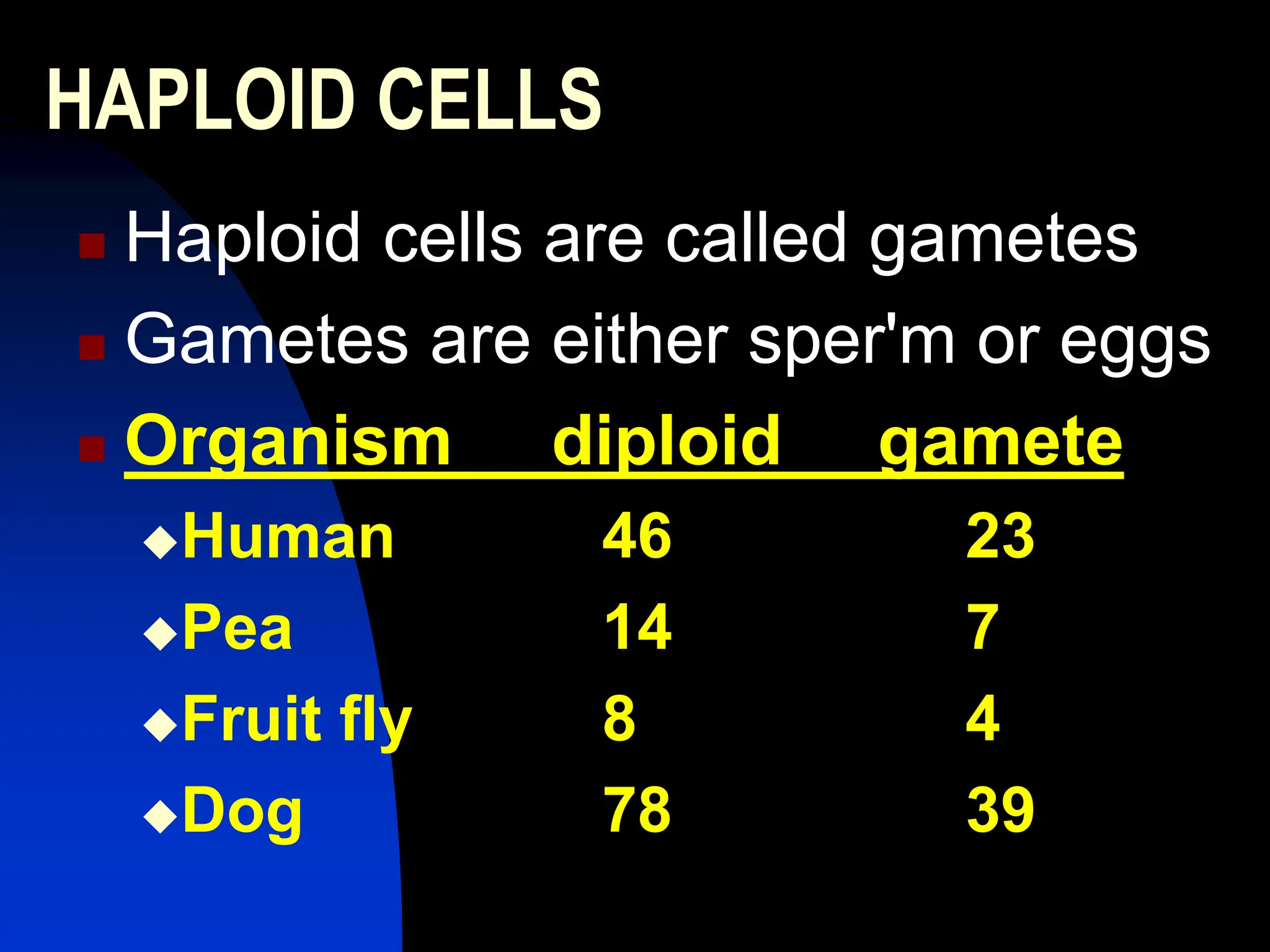
HAPLOID CELLS
 Haploid cells are called gametes
 Gametes are either sper'm or eggs
 Organism diploid gamete
Human 46 23
Pea 14 7
Fruit fly 8 4
Dog 78 39
HOMOLOGOUS CHROMOSOMES
 Are paired chromosomes with genes
for the same trait arranged in the
same order.
Ex. Eye color, hair color, height, one may
code for blue, blonde, tall, its homolog
may code for brown, blonde, short
 Homologous chromosomes may have
different alleles on them
 Allele- gene form for each variation of
a trait of an organism.
MEIOSIS
 Meiosis is the process of cell
division in which gametes are
formed and the number of
chromosomes is halved. So that
sexual reproduction and zygote
formation can occur.
 Zygote- Fertilized egg which has a
diploid number of chromosomes.
STAGES OF MEIOSIS
 Interphase-
Chromosomes replicate
Each chromosome consists of 2 identical
sister chromatids
 Prophase I
Each Pair of homologous chromosomes
come together to form a tetrad.
Tetrad- 2 homologous chromosomes
come together and the 4 chromatids
overlap.
CROSSING OVER
Tetrads are so tight that non-sister
chromatids from the homologous pair
actually exchange genetic material.
Crossing over- The exchange of
genetic material by non-sister
chromatids during late prophase I of
meiosis.
Results in a new combination of alleles
METAPHASE I
 Homologous chromosomes
line up together in pairs.
* In mitosis homologous
chromosomes line up in the
middle independently of
each other.
ANAPHASE I
 Spindle fibers attach to the
centromeres of each pair.
 Homologous chromosomes separate
and move to opposite ends of the cell.
 Centromeres DO NOT split like they
do in mitosis
 Now each cell will get one
chromosome from each homologous
pair.
TELOPHASE I
 Spindle fibers break down
 Chromosomes uncoil
 Cytoplasm divides
 Another cell division is needed because
the number of chromosomes has not been
reduced
 After telophase I there maybe a short
interphase, but not always. It is important
to note that if a cell does have a second
interphase, there is No replication of
chromosomes.
Meiosis I
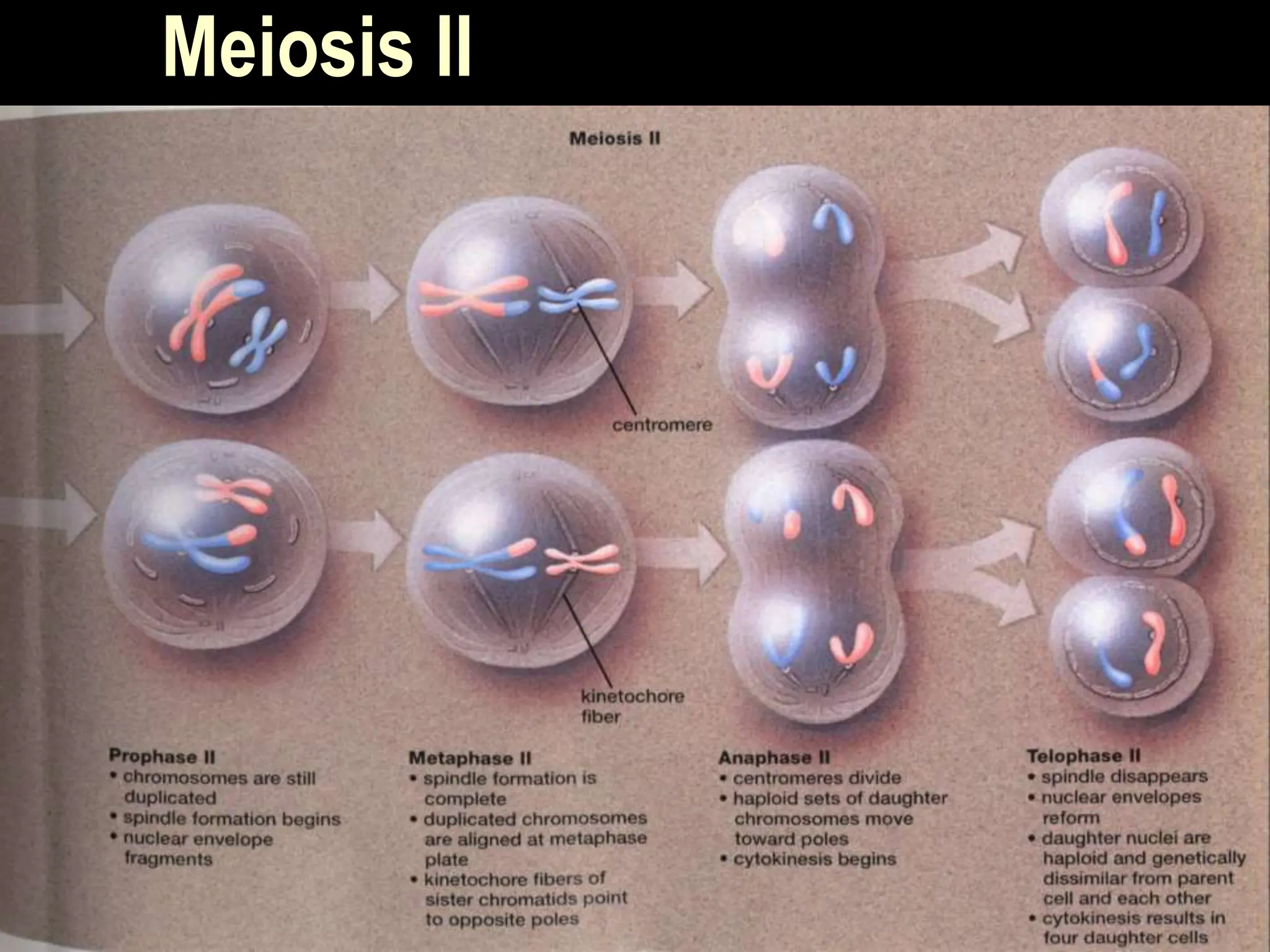
MEIOSIS II
 Is basically just like mitosis, but
remember the chromosomes did not
duplicate in interphase II.
 Prophase II
Chromosomes begin to line up in the
middle of the cell.
Spindle fibers begin to form
 Metaphase II
Chromosomes line up on the
metaphase plate
MEIOSIS II
 Anaphase II
 Centromeres split
 Sister chromatids separate and move to
opposite sides of the cell
 Telophase II
 Nuclei reform
 Spindle fibers disappear
 Cytoplasm divides into two.
 The number of chromosomes in each
daughter cell has now been reduced by
half.
Meiosis II
Malfunction
During
Cell Cycle
3-Cell-Cycle-Mitosis-and-Meiosis.ppt

3-Cell-Cycle-Mitosis-and-Meiosis.ppt

  • 1.
  • 2.
    The Cell Cycle The sequence of growth and division of a cell
  • 4.
    Interphase = G1,S, G2  Interphase is when the cell grows, and the organelles double prior to the actual splitting of the nucleus.  93% of a cell’s life is spent in interphase.  Interphase has three parts Growth 1 (G1) Synthesis (S) Growth 2 (G2)
  • 5.
    G1, S, G2 G1 is when organelles double. Remember each new cell needs a complete set of organelles.  S when DNA is replicated. Each cell needs a complete and identical set of DNA  G2 Proteins needed for Mitosis are produced.
  • 6.
    MITOSIS  The processby which the cell nucleus divides into two identical cell nuclei.  In some Human cells interphases lasts 15.3 hours, while mitosis lasts only .7 hours.  Occurs in a series of steps  Prophase  Metaphase  Anaphase  Telophase Cytokinesis
  • 7.
    CHROMOSOMES  Structures ofthe tightly packaged DNA  Must duplicate and separate during Mitosis  DNA is tangled up into a substance of chromatin  The chromatin is packaged on the chromosome
  • 8.
  • 9.
    PROPHASE  Chromosomes nowcalled chromatids because they doubled to form short thick rods which pair up and line up in the center of the nucleus.  A centromere connects the two halves of the doubled chromatids.  Spindle fibers begin to form.  Spindle fiber – a fibrous structure from the cytoplasm which forms to the centriole.  Centrioles move to opposite sides of the cell.  The nuclear membrane breaks down.
  • 10.
  • 11.
    METAPHASE  Centromeres ofthe chromatid pairs line up in the middle of the cell.  Metaphase plate- location where the centromeres line up in the center of the cell.  By the end of metaphase each chromatid has attached to spindle fibers.
  • 12.
  • 13.
    ANAPHASE  The spindlefibers pull the chromatids apart.  This separates each one from its duplicate. These move to opposite sides of the cell.  Now there are two identical sets of chromosomes.
  • 14.
  • 15.
    TELOPHASE  When thechromosomes reach opposite sides of the cell the spindle fibers break up.  The nuclear membrane begins to reform.  A furrow begins to develop between the two sets of chromosomes.
  • 16.
  • 17.
    CYTOKINESIS The two identicalcells completely divide and the cell membrane is completely formed.
  • 18.
    MEIOSIS  Diploid (2n)- A cell with two of each kind of chromosome.  One chromosome from each parent.  If two body cells were to combine nuclei, the number of chromosomes would double.  In order for sexual reproduction to occur, each cell involved must reduce its chromosome number by half.  Haploid (n)- A cell with one of each kind of chromosome.
  • 19.
    HAPLOID CELLS  Haploidcells are called gametes  Gametes are either sper'm or eggs  Organism diploid gamete Human 46 23 Pea 14 7 Fruit fly 8 4 Dog 78 39
  • 20.
    HOMOLOGOUS CHROMOSOMES  Arepaired chromosomes with genes for the same trait arranged in the same order. Ex. Eye color, hair color, height, one may code for blue, blonde, tall, its homolog may code for brown, blonde, short  Homologous chromosomes may have different alleles on them  Allele- gene form for each variation of a trait of an organism.
  • 21.
    MEIOSIS  Meiosis isthe process of cell division in which gametes are formed and the number of chromosomes is halved. So that sexual reproduction and zygote formation can occur.  Zygote- Fertilized egg which has a diploid number of chromosomes.
  • 22.
    STAGES OF MEIOSIS Interphase- Chromosomes replicate Each chromosome consists of 2 identical sister chromatids  Prophase I Each Pair of homologous chromosomes come together to form a tetrad. Tetrad- 2 homologous chromosomes come together and the 4 chromatids overlap.
  • 23.
    CROSSING OVER Tetrads areso tight that non-sister chromatids from the homologous pair actually exchange genetic material. Crossing over- The exchange of genetic material by non-sister chromatids during late prophase I of meiosis. Results in a new combination of alleles
  • 24.
    METAPHASE I  Homologouschromosomes line up together in pairs. * In mitosis homologous chromosomes line up in the middle independently of each other.
  • 25.
    ANAPHASE I  Spindlefibers attach to the centromeres of each pair.  Homologous chromosomes separate and move to opposite ends of the cell.  Centromeres DO NOT split like they do in mitosis  Now each cell will get one chromosome from each homologous pair.
  • 26.
    TELOPHASE I  Spindlefibers break down  Chromosomes uncoil  Cytoplasm divides  Another cell division is needed because the number of chromosomes has not been reduced  After telophase I there maybe a short interphase, but not always. It is important to note that if a cell does have a second interphase, there is No replication of chromosomes.
  • 27.
  • 28.
    MEIOSIS II  Isbasically just like mitosis, but remember the chromosomes did not duplicate in interphase II.  Prophase II Chromosomes begin to line up in the middle of the cell. Spindle fibers begin to form  Metaphase II Chromosomes line up on the metaphase plate
  • 29.
    MEIOSIS II  AnaphaseII  Centromeres split  Sister chromatids separate and move to opposite sides of the cell  Telophase II  Nuclei reform  Spindle fibers disappear  Cytoplasm divides into two.  The number of chromosomes in each daughter cell has now been reduced by half.
  • 30.
  • 31.