Mgmt. 308
Chapter 1
Change of Global Business
Globalization
It is trend away from distinct national
economic units and toward one
huge global market.
It is the international integration of
goods, technology, labor, and
capital; that is, firms implement
strategies that link and coordinate
their international activities on a
worldwide basis.
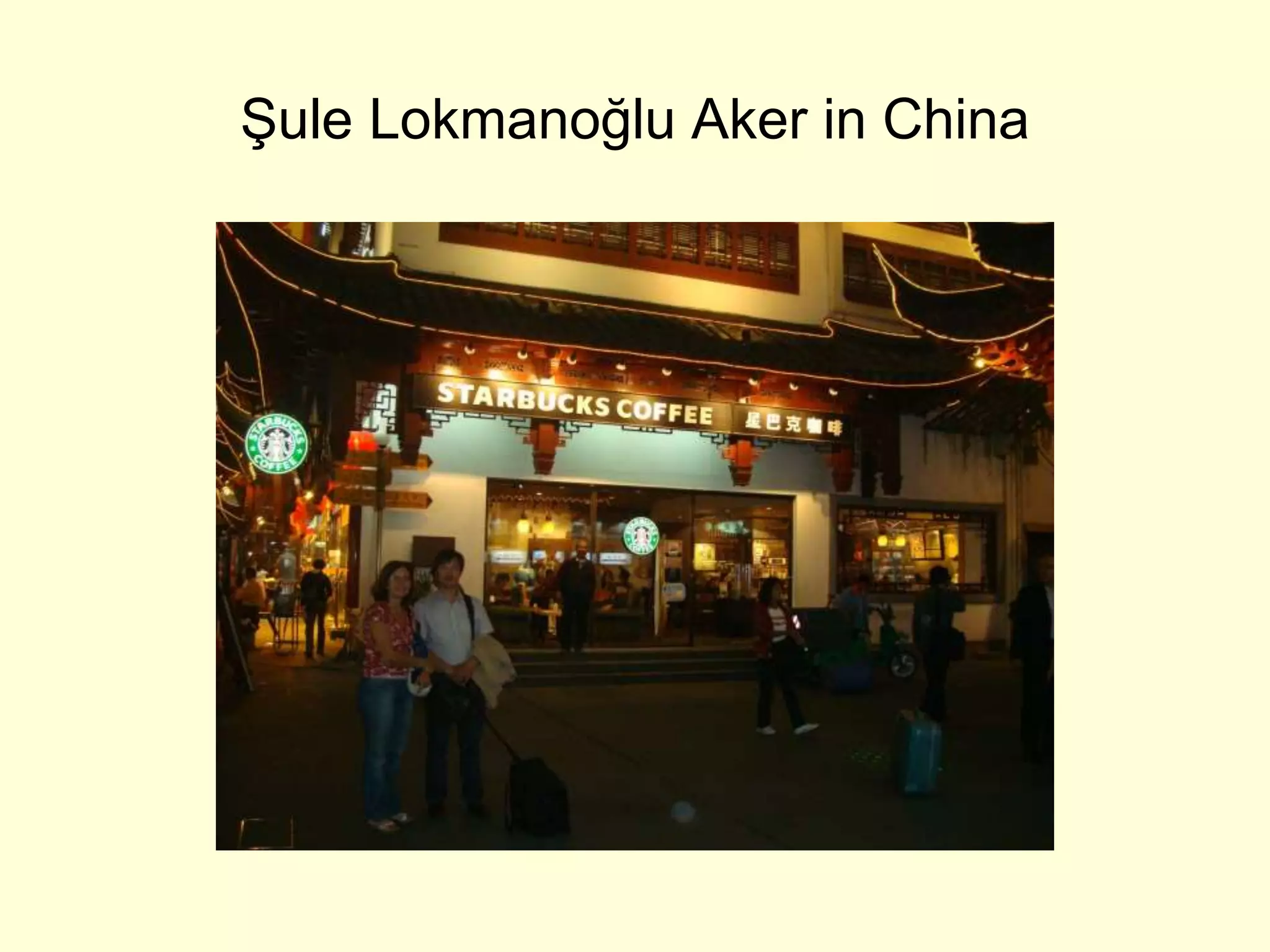
Şule Lokmanoğlu Aker in China
As a result of globalization;
1) 40% of the world output is produced by
500 largest companies in the world.
2) Only 22 nations have GNP greater than
the total annual sales of Mitsubishi.
3) Total money spent on Wal-Mart in the
world is greater than the sums of GNPs
of 161 nations.
1-5
Growth of International Firms and
International Business
International Companies
• 82,000 transnational
corporations account for:
• 25% of global output
• 2/3 of world trade
• 810,000 foreign
affiliates
• 78,000,000 employed
• 700% sales growth
since 1990
(UNCTAD estimates)
FDI and Export Growth
– World stock of outward FDI $19.0
trillion in 2010
– Growth of world merchandise
exports:
• $2.0 trillion in 1980
• $3.45 trillion in 1990
• $6.5 trillion in 2008
• $15.2 trillion in 2010
– Growth of world service exports
• $365 billion in 1980
• $780 billion in 1990
• $1.482 trillion in 2000
• $3.664 trillion in 2010
Global firm’s management;
1. Searches the world for;
(a) Market opportunities,
(b) Threats from competitors,
(c) Sources of products, raw materials, knowledge,
innovation, and financing,
(d) Personnel,
2. Seeks to maintain a presence in key markets,
3. Looks for similarities, not differences, among
markets.
Multidomestic company
It is an organization with multicountry
affiliates, each of which formulates its
own business strategy based on
perceived market differences.
Global company
It is an organization that attemps
to standardize and integrate
operations worldwide in all
functional areas.
Functional areas
They are economic activities that can be
separated from each other; such as
advertising, research and development,
production, asemblying, procurement, etc.
Example of a global company:
Procter and Gamble→
• Sells to 5 billion people around the world,
• Operates in more than 70 countries,
• Sells its products to more than 140
countries,
• Employs 103,000 people around the
globe.
A brief history of international
business
International business existed since very early
days. Phoenicians were famous tradespeople.
Marco Polo was the first man who went to China
and came back. Britain established East India
Company in 1600 AC.
Ford Motor Company (1920), Singer Sewing
Machine Company (1868), General Motors
(1920), Chrysler (1920), General Electric (1919)
were established around hundred years ago.
An Example from History
Exchange of Goods
East India Company
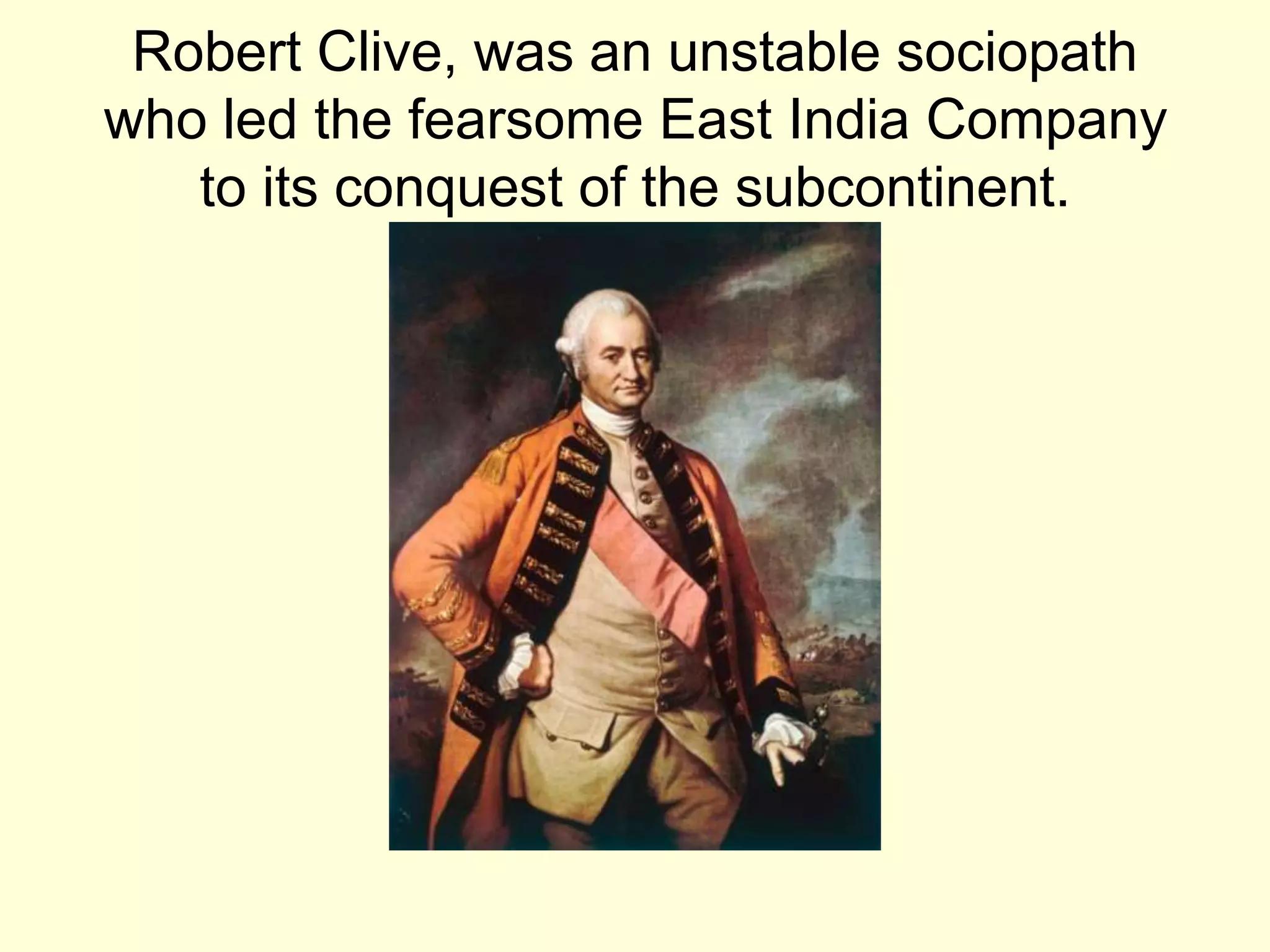
Robert Clive, was an unstable sociopath
who led the fearsome East India Company
to its conquest of the subcontinent.
First McDonald’s
FIRST McDonald's
Coca Cola in Time
Evolution of the Coca Cola
1-19
GLOBAL DEBATE
• The Pros
and Cons
of
Globalization
• What are the potential benefits of
globalization?
• What are the potential drawbacks of
globalization?
• After examining the arguments of
supporters and opponents of
globalization, are you convinced
one way or the other?
• Could we better manage
globalization in order to enhance
the welfare of the world and its
inhabitants? How?
Globalization forces:
• Political forces,
• Technological forces,
• Market forces,
• Cost pressures,
• Competitive forces.
Political forces:
1. Trend towards formation of economic blocks,
such as NAFTA, EU, ASEAN.
2. Trend towards global integration. This is
encouraged by;
(a) agreements like GATT,
(b) reduction of barriers to trade and foreign
investment by governments,
(c) privatization of many state enterprises,
even in ex-communist countries.
Technological forces:
Advances in computers, communication,
transportation, mass production
techniques made globalization easier.
First computer ever made
Ordering Pizza
• Is it Gordon Pizza?
• No. This is Google Pizza. We bought Gordon Pizza.
• Can I order you a pizza.
• Sure. The same as usual?
• How do you know what I buy?
• We can tell, because the last five times you bought pizza with mushrooms and sausages.
• Ok. I want the same, please.
• Well, maybe it is better if you have a pizza with domatoes and peppers.
• Why?
• Your collesterol is high, above 300.
• I still want my usual pizza, I am taking my medicines.
• No you don’t. You did not take your collesterol medicine for the last 90 days.
• It is non of your business. After that, I took my medicines again.
• No. You did’d do that kind of spending from your credit card and you did not cash any money from
your bank account.
• I am fed up. I will go to a place where there is no Google, there is no internet.
• It is a little bit difficult Sir.
• Why is that?
• Your passport’s is expired two weeks ago.
Market forces:
Customers are becoming more international.
Customer lifestyles, tastes, preferences
are becoming similar.
This way the market for global companies
are expanding.
Cost pressures
Economies of scale reduce the unit costs
which is one of the management goals.
Also the firm can place the production
wherever cost of production is lowest.
Competitive forces:
There is very tough global competition
among the global firms. Firms stemming
from the newly industrialized countries are
producing low-cost, high-quality products
with which firms from industrial countries
must compete.
Also firms should protect their home
markets. Thus they have to be very
efficient.
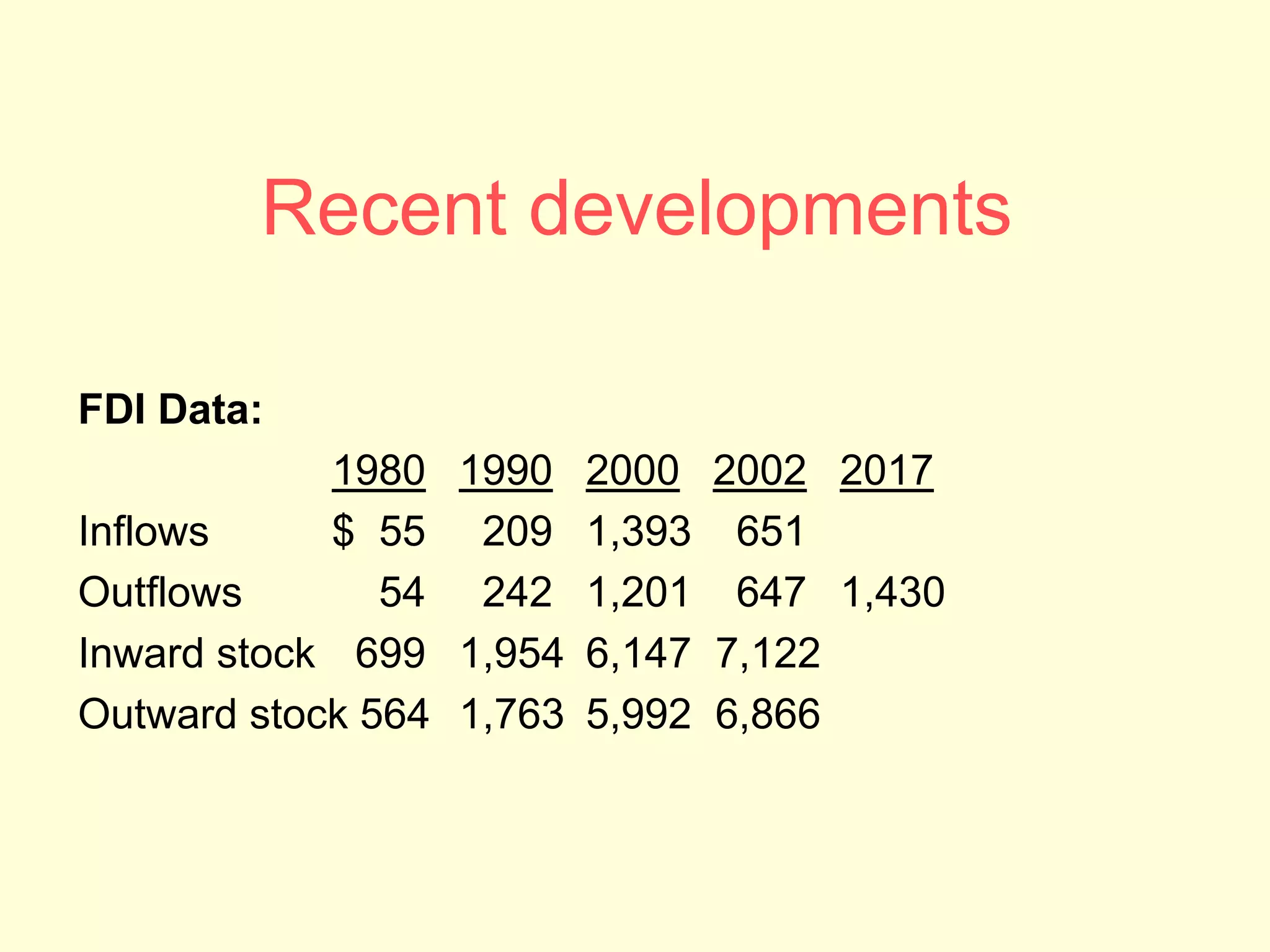
Recent developments
• There is an increase in foreign direct investment (FDI)
until 2000, and then it started decreasing.
FDI is direct investments into equipment, structures, and
organizations in a foreign country at a level that is
sufficient to obtain significant management control. It
does not include investments in the stock markets of
other countries (portfolio investment)
Management control can be achieved through;
golden share,
more than 50% ownership, and/or
appointing ther management team.
Recent developments
FDI Data:
1980 1990 2000 2002 2017
Inflows $ 55 209 1,393 651
Outflows 54 242 1,201 647 1,430
Inward stock 699 1,954 6,147 7,122
Outward stock 564 1,763 5,992 6,866
Recent developments
• There is an increase in the total assets of
the foreign affiliates:
Foreign affiliate data:
value annual growth rate
1996 2002 1996-2000 2002
Sales $ 9,372 17,685 10.9% 7.4%
Total assets 11,246 26,543 19.2 8.3
Exports 1,841 2,613 9.6 4.2
Emp. 30,941 53.094 14.2 5.7
(000s)
Recent developments
• After the Second World War, most of the
global companies were American, and
some European.
• In 1996, out of 100 largest companies, 57
are American, 24 European, and 13
Japanese.
• In 2009, the trend continues and American
share in global business is going down.
Mini-multinationals (mini-globals, or
micro-multinationals)
There are some small and medium size enterprises
becoming global companies. Their characteristics are:
1. Their annual sales are around $600 million, and they
grow very fast, like 20% a year.
2. International sales are 40-50% of their total sales.
3. Their product is often unique because of their
technology, design, cost, etc.
4. Their target customers are sharply focused.
5. They can take decisions very fastly. They have smaller
beurocracy and small number of manufacturing
locations.
6. They underline research.
7. They use foreigners in foreign operations and at the
headquarters.
Google when they started in 1999
Google in 1999, when they started.
Prof. Bartlett:
“Newcomers have the huge advantage of
starting fresh. They can develop much
more flexible structures.”
International firms are under the
influence of two forces:
• Uncontrollable forces: They are external
forces over which management has no
direct control, but sometimes they can
exert an influence.
• Controllable forces: They are internal
forces that management administers to
adapt to changes.
Uncontrollable forces
1. Competitive – kinds and numbers of competitors, their locations, their
activities.
2. Distributive – national and international agencies available for distributing
goods and services.
3. Economic – variables such as GNP, unit labor costs, personal
consumption expenditures that influence a firm’s ability to do business.
4. Socioeconomic – characteristics and distribution of the human
population.
5. Financial – variables like interest rates, inflatin rates, tax rates.
6. Legal – foreign and domestic laws by which international firms must
operate.
7. Physical – elements of nature such as climate, topography, natural
resources.
8. Political – nationalism, forms of government, international organizations.
9. Sociocultural – elements of culture, such as, attitudes, beliefs, opinions.
10. Labor – composition, skills, attitudes of labor.
11. Technological – the technical skills and equipment that affect how
resources are converted into products.

308-Ch.1-Change of Global Business.ppt

  • 1.
    Mgmt. 308 Chapter 1 Changeof Global Business
  • 2.
    Globalization It is trendaway from distinct national economic units and toward one huge global market. It is the international integration of goods, technology, labor, and capital; that is, firms implement strategies that link and coordinate their international activities on a worldwide basis.
  • 3.
  • 4.
    As a resultof globalization; 1) 40% of the world output is produced by 500 largest companies in the world. 2) Only 22 nations have GNP greater than the total annual sales of Mitsubishi. 3) Total money spent on Wal-Mart in the world is greater than the sums of GNPs of 161 nations.
  • 5.
    1-5 Growth of InternationalFirms and International Business International Companies • 82,000 transnational corporations account for: • 25% of global output • 2/3 of world trade • 810,000 foreign affiliates • 78,000,000 employed • 700% sales growth since 1990 (UNCTAD estimates) FDI and Export Growth – World stock of outward FDI $19.0 trillion in 2010 – Growth of world merchandise exports: • $2.0 trillion in 1980 • $3.45 trillion in 1990 • $6.5 trillion in 2008 • $15.2 trillion in 2010 – Growth of world service exports • $365 billion in 1980 • $780 billion in 1990 • $1.482 trillion in 2000 • $3.664 trillion in 2010
  • 6.
    Global firm’s management; 1.Searches the world for; (a) Market opportunities, (b) Threats from competitors, (c) Sources of products, raw materials, knowledge, innovation, and financing, (d) Personnel, 2. Seeks to maintain a presence in key markets, 3. Looks for similarities, not differences, among markets.
  • 8.
    Multidomestic company It isan organization with multicountry affiliates, each of which formulates its own business strategy based on perceived market differences.
  • 9.
    Global company It isan organization that attemps to standardize and integrate operations worldwide in all functional areas.
  • 10.
    Functional areas They areeconomic activities that can be separated from each other; such as advertising, research and development, production, asemblying, procurement, etc.
  • 11.
    Example of aglobal company: Procter and Gamble→ • Sells to 5 billion people around the world, • Operates in more than 70 countries, • Sells its products to more than 140 countries, • Employs 103,000 people around the globe.
  • 12.
    A brief historyof international business International business existed since very early days. Phoenicians were famous tradespeople. Marco Polo was the first man who went to China and came back. Britain established East India Company in 1600 AC. Ford Motor Company (1920), Singer Sewing Machine Company (1868), General Motors (1920), Chrysler (1920), General Electric (1919) were established around hundred years ago.
  • 13.
  • 14.
  • 15.
  • 16.
    Robert Clive, wasan unstable sociopath who led the fearsome East India Company to its conquest of the subcontinent.
  • 17.
  • 18.
    Coca Cola inTime Evolution of the Coca Cola
  • 19.
    1-19 GLOBAL DEBATE • ThePros and Cons of Globalization • What are the potential benefits of globalization? • What are the potential drawbacks of globalization? • After examining the arguments of supporters and opponents of globalization, are you convinced one way or the other? • Could we better manage globalization in order to enhance the welfare of the world and its inhabitants? How?
  • 20.
    Globalization forces: • Politicalforces, • Technological forces, • Market forces, • Cost pressures, • Competitive forces.
  • 21.
    Political forces: 1. Trendtowards formation of economic blocks, such as NAFTA, EU, ASEAN. 2. Trend towards global integration. This is encouraged by; (a) agreements like GATT, (b) reduction of barriers to trade and foreign investment by governments, (c) privatization of many state enterprises, even in ex-communist countries.
  • 23.
    Technological forces: Advances incomputers, communication, transportation, mass production techniques made globalization easier.
  • 24.
  • 25.
    Ordering Pizza • Isit Gordon Pizza? • No. This is Google Pizza. We bought Gordon Pizza. • Can I order you a pizza. • Sure. The same as usual? • How do you know what I buy? • We can tell, because the last five times you bought pizza with mushrooms and sausages. • Ok. I want the same, please. • Well, maybe it is better if you have a pizza with domatoes and peppers. • Why? • Your collesterol is high, above 300. • I still want my usual pizza, I am taking my medicines. • No you don’t. You did not take your collesterol medicine for the last 90 days. • It is non of your business. After that, I took my medicines again. • No. You did’d do that kind of spending from your credit card and you did not cash any money from your bank account. • I am fed up. I will go to a place where there is no Google, there is no internet. • It is a little bit difficult Sir. • Why is that? • Your passport’s is expired two weeks ago.
  • 26.
    Market forces: Customers arebecoming more international. Customer lifestyles, tastes, preferences are becoming similar. This way the market for global companies are expanding.
  • 27.
    Cost pressures Economies ofscale reduce the unit costs which is one of the management goals. Also the firm can place the production wherever cost of production is lowest.
  • 28.
    Competitive forces: There isvery tough global competition among the global firms. Firms stemming from the newly industrialized countries are producing low-cost, high-quality products with which firms from industrial countries must compete. Also firms should protect their home markets. Thus they have to be very efficient.
  • 29.
    Recent developments • Thereis an increase in foreign direct investment (FDI) until 2000, and then it started decreasing. FDI is direct investments into equipment, structures, and organizations in a foreign country at a level that is sufficient to obtain significant management control. It does not include investments in the stock markets of other countries (portfolio investment) Management control can be achieved through; golden share, more than 50% ownership, and/or appointing ther management team.
  • 30.
    Recent developments FDI Data: 19801990 2000 2002 2017 Inflows $ 55 209 1,393 651 Outflows 54 242 1,201 647 1,430 Inward stock 699 1,954 6,147 7,122 Outward stock 564 1,763 5,992 6,866
  • 31.
    Recent developments • Thereis an increase in the total assets of the foreign affiliates: Foreign affiliate data: value annual growth rate 1996 2002 1996-2000 2002 Sales $ 9,372 17,685 10.9% 7.4% Total assets 11,246 26,543 19.2 8.3 Exports 1,841 2,613 9.6 4.2 Emp. 30,941 53.094 14.2 5.7 (000s)
  • 32.
    Recent developments • Afterthe Second World War, most of the global companies were American, and some European. • In 1996, out of 100 largest companies, 57 are American, 24 European, and 13 Japanese. • In 2009, the trend continues and American share in global business is going down.
  • 33.
    Mini-multinationals (mini-globals, or micro-multinationals) Thereare some small and medium size enterprises becoming global companies. Their characteristics are: 1. Their annual sales are around $600 million, and they grow very fast, like 20% a year. 2. International sales are 40-50% of their total sales. 3. Their product is often unique because of their technology, design, cost, etc. 4. Their target customers are sharply focused. 5. They can take decisions very fastly. They have smaller beurocracy and small number of manufacturing locations. 6. They underline research. 7. They use foreigners in foreign operations and at the headquarters.
  • 34.
    Google when theystarted in 1999 Google in 1999, when they started.
  • 35.
    Prof. Bartlett: “Newcomers havethe huge advantage of starting fresh. They can develop much more flexible structures.”
  • 36.
    International firms areunder the influence of two forces: • Uncontrollable forces: They are external forces over which management has no direct control, but sometimes they can exert an influence. • Controllable forces: They are internal forces that management administers to adapt to changes.
  • 37.
    Uncontrollable forces 1. Competitive– kinds and numbers of competitors, their locations, their activities. 2. Distributive – national and international agencies available for distributing goods and services. 3. Economic – variables such as GNP, unit labor costs, personal consumption expenditures that influence a firm’s ability to do business. 4. Socioeconomic – characteristics and distribution of the human population. 5. Financial – variables like interest rates, inflatin rates, tax rates. 6. Legal – foreign and domestic laws by which international firms must operate. 7. Physical – elements of nature such as climate, topography, natural resources. 8. Political – nationalism, forms of government, international organizations. 9. Sociocultural – elements of culture, such as, attitudes, beliefs, opinions. 10. Labor – composition, skills, attitudes of labor. 11. Technological – the technical skills and equipment that affect how resources are converted into products.