

3 Tips for Conducting

Smarter Interviews
H

I’m a systems and strategic thinker.

Who likes to make things look pretty.
ello, I'm Raechel. And I write tips, tricks, and guides.

Not preparing for inventible growing pains and
nutritional requirements can lead to stretch marks.
Stretch marks within an organization can look like staff
member burnout; lapses in quality
or quantity of services.
This series highlights
topics that can help an
organization decrease
their risk of stretch
marks as they grow.
Choosing a candidate is a big decision.

Arguably, the decision
that helps your organization
move from point A to B.
1

Send a pre-interview questionnaire.
Resumes can only tell you so much.

To narrow down your top candidates before scheduling interviews,
consider sending a pre-interview questionnaire.

This provides you with an opportunity to get a better sense about
each person’s skills and experiences.
You can also ask what motivated them to apply.
Ask open ended questions or
request specific examples that
demonstrate the key skills
you’re looking for.

Skills like public speaking or
field-specific knowledge are
nearly impossible to assess
based on a resume.
2

Ask for a prepared demonstration.
Talk is cheap.

If you’re interested in a candidate, give them an opportunity to
show you what they’ve got. If the position requires public speaking,
ask them to prepare a short presentation on a relevant topic.
Or if it’s event planning, give them some parameters (purpose, audience,
budget) and ask them to prepare a brief proposal. With graphic design, give
them some specs and ask for a draft. And so on.
Having candidates demonstrate
their skills also offers insights
into their work style and
comprehension.

Don’t just ask candidates
questions about their skills
- provide an opportunity to
show their skills.
3

Don’t ask lame questions. Seriously.
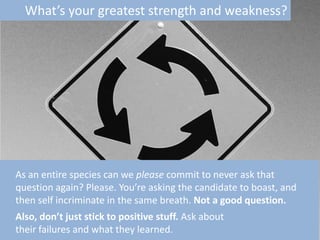
What’s your greatest strength and weakness?

As an entire species can we please commit to never ask that
question again? Please. You’re asking the candidate to boast, and
then self incriminate in the same breath. Not a good question.
Also, don’t just stick to positive stuff. Ask about
their failures and what they learned.
Really think about what you
need to know and how the
position will impact/grow your
organization.

Don’t ask questions that
recap what you should
have already gleaned from
their resume and/or
references.
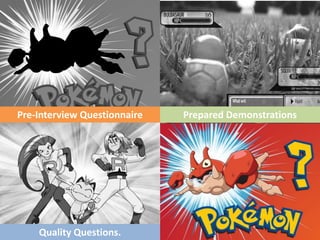
Pre-Interview Questionnaire

Quality Questions.

Prepared Demonstrations
This was just a taste. For the full post on this
topic as well as other spoonfuls, please visit:

goodhelpings.blogspot.com

3 Tips for Conducting Smarter Interviews

  • 1.
    3 Tips forConducting Smarter Interviews
  • 2.
    H I’m a systemsand strategic thinker. Who likes to make things look pretty. ello, I'm Raechel. And I write tips, tricks, and guides. Not preparing for inventible growing pains and nutritional requirements can lead to stretch marks. Stretch marks within an organization can look like staff member burnout; lapses in quality or quantity of services. This series highlights topics that can help an organization decrease their risk of stretch marks as they grow.
  • 3.
    Choosing a candidateis a big decision. Arguably, the decision that helps your organization move from point A to B.
  • 4.
    1 Send a pre-interviewquestionnaire.
  • 5.
    Resumes can onlytell you so much. To narrow down your top candidates before scheduling interviews, consider sending a pre-interview questionnaire. This provides you with an opportunity to get a better sense about each person’s skills and experiences. You can also ask what motivated them to apply.
  • 6.
    Ask open endedquestions or request specific examples that demonstrate the key skills you’re looking for. Skills like public speaking or field-specific knowledge are nearly impossible to assess based on a resume.
  • 7.
    2 Ask for aprepared demonstration.
  • 8.
    Talk is cheap. Ifyou’re interested in a candidate, give them an opportunity to show you what they’ve got. If the position requires public speaking, ask them to prepare a short presentation on a relevant topic. Or if it’s event planning, give them some parameters (purpose, audience, budget) and ask them to prepare a brief proposal. With graphic design, give them some specs and ask for a draft. And so on.
  • 9.
    Having candidates demonstrate theirskills also offers insights into their work style and comprehension. Don’t just ask candidates questions about their skills - provide an opportunity to show their skills.
  • 10.
    3 Don’t ask lamequestions. Seriously.
  • 11.
    What’s your greateststrength and weakness? As an entire species can we please commit to never ask that question again? Please. You’re asking the candidate to boast, and then self incriminate in the same breath. Not a good question. Also, don’t just stick to positive stuff. Ask about their failures and what they learned.
  • 12.
    Really think aboutwhat you need to know and how the position will impact/grow your organization. Don’t ask questions that recap what you should have already gleaned from their resume and/or references.
  • 13.
  • 14.
    This was justa taste. For the full post on this topic as well as other spoonfuls, please visit: goodhelpings.blogspot.com