ied
3G Wireless ~emystif

                          Lawrence Ha
                             Roman Ki-i
                           Richard Lev:


          NewYork Chicago San Fraricisco Lisbon Lo.
       Madrid Mexico Ct Milan New Delhi San Juan !
                      ly
                              Singapore Sydney To
Cataloging-in-PublicationData is on file with the Library of C o n g r e s s


                                                                                                                                    Dedication
McGraw -Hill
                  A Division o{~M&wHillCompanies

Copyright C 2002 by APDG.All rights reserved. Printed in the United States
ofAmerica. Except a s permitted under the United States Copyright Act of 1976,        "I dedicate this book to my love Tara and my children Lawrence, William, anc
no part of this publication may be reproduced or distributed in any form or by
any means, or stored in a data base or retrieval system, without the prior writ-      Danielle Elizabeth. To Tara, I love you to infinity and beyond."
ten permission of the publisher.                                                             Lawrence

                                                                                      "I dedicate this book to Robert J. Charles, a telecommunications industry veter-
ISBN 0-07-
         136301-7
                                                                                      an who's bringing xDSL broadband access services to the United Kingdom, fo
                                                                                      his p'trCcver~nce, dedication, and inspiration."
                                                                                              Roman
The sponsoring editor for this book cuas Steve Chapman, the editing superuisor
u-as Carol Lecine, a n d the production supervisor was Pamela Pelton.
                                                                                      "I dedicate this book to my wife Sara and the next generations: Naomi, Yossi
Printed a n d bound by QuebecorlMartinshurg.                                          Kyle, Kyle's forthcoming younger sister or brother, Susan, Earl, Rael, Annika
                                                                                      and David. May you all live in a still better world. Love and Thanks."
McGraw-Hill books are available a t special quantity discounts to use a s pre-               Richard
miums and sales promotions, o r for use in corporate training programs. For
more infornation, please write to the Director of Special Sales, Professional
Publishing, hfcGraw-Hill, Two Penn Plaza, New York, NY 10121-2298.Or
contact your local bookstore.


 neither McCraw-Hill nor its authors guarantee the accuracy or completeness
 of any information published herein and neither McGraw-Hill nor its authors
 shall be responsible for any errors, omissions, or damages arising out of use of
 this information. This work is published nith the understanding that McGraw-
 Hill and its authors are supplying information but are not attempting to ren-
 der engineering or other professional services. If such services are required, the
 assistance of an appropriate professional should be sought.
Table of Contents

FOREWORD   .............................................XIX
PREFACE ...............................................XXIII

CHAPTER 1.INTRODUCTION TO MOBILE WIRELESS ..........1
 WIRELESS   SYSTEMS . . . . . . . . . . . . . . . . . . . . . . . . . . . . . . . . . . . . . . . . . . 2
                     .
   Cellular and PCSPCN ......................................                                             3
   Wireless Office Telephone System (WOTS) . . . . . . . . . . . . . . . . . . . . . . 5
   Residential Cordless . . . . . . . . . . . . . . . . . . . . . . . . . . . . . . . . . . . . . . . .   6
   Wireless Local Area Network (WLAN) . . . . . . . . . . . . . . . . . . . . . . . . . . .8
   Satellite Systems . . . . . . . . . . . . . . . . . . . . . . . . . . . . . . . . . . . . . . . . . . .9
 FIRSTGENERATION    CELLULAR . . . . . . . . . . . . . . . . . . . . . . . . . . . . . . . . . 11
                                    .
 SECOND   GENERATION   CELLULAR PCSPCN . . . . . . . . . . . . . . . . . . . . . 11
                                      AND
 ENHANCEDN GENERATION
             ~    D             DIGITAL      CELLULAR PCSPCN (2.5G) ... 13
                                                              AND
   High-speed Circuit-Switched Data (HSCSD) . . . . . . . . . . . . . . . . . . . .13
   General Packet Radio Service (GPRS) ..........................                                       14
   Enhanced Data Rates for Global Evolution (EDGE) . . . . . . . . . . . . . . .16
 THIRD  GENERATION  REQUIREMENTS . . . . . . . . . . . . . . . . . . . . . . . . . . . . . . 17
   Multimedia Services . . . . . . . . . . . . . . . . . . . . . . . . . . . . . . . . . . . . . . . .19
   Multisystem Compatibility . . . . . . . . . . . . . . . . . . . . . . . . . . . . . . . . . . 20
   Increased System Efficiency . . . . . . . . . . . . . . . . . . . . . . . . . . . . . . . . . 20
 THIRD  GENERATION  WIRELESS      SYSTEMS. . . . . . . . . . . . . . . . . . . . . . . . . .23
                                                 .
   Wideband Code Division Multiple Access (WCDMA) . . . . . . . . . . . . .                            24
.
                                        .
L


           3G Wireless Demystified                                                                                                                                                                                 Table of Contents


               Time Division Duplex/Code Division Multiple Access (TDICDMA) ...          25                                       Modulation . . . . . . . . . . . . . . . . . . . . . . . . . . . . . . . . . . . . . . . . . . . . . . 80
               Code Division Multiple Access 2000 (CDMA2000) . . . . . . . . . . . . . . .
                                                                                         27                                       RFAmplification . . . . . . . . . . . . . . . . . . . . . . . . . . . . . . . . . . . . . . . . .81     .
                                                                                                                                  Signaling . . . . . . . . . . . . . . . . . . . . . . . . . . . . . . . . . . . . . . . . . . . . . . .82
                                                                                                                                                                                                                                          .
                             .
           CIUPTER 2 FIRST GENERATION ANALOG CELLULAR                                                    ........29               Control Channels . . . . . . . . . . . . . . . . . . . . . . . . . . . . . . . . . . . . . . . . .82    .
            HISTORY . . . . . . . . . . . . . . . . . . . . . . . . . . . . . . . . . . . . . . . . . . . . . . . . .
                     .                                                                                                     29     BlankandBurst . . . . . . . . . . . . . . . . . . . . . . . . . . . . . . . . . . . . . . . . . 83     ..
            MOBLETELEPHONE . . . . . . . . . . . . . . . . . . . . . . . . . . . . . . . . . . . . . . . 30
                                    ...                                                                                           DimandBurst . . . . . . . . . . . . . . . . . . . . . . . . . . . . . . . . . . . . . . . . . . .84    .
            CELLSITE . . . . . . . . . . . . . . . . . . . . . . . . . . . . . . . . . . . . . . . . . . . . . . . . 32
                       .                                                                                                         THIRD GENERATION    DIGITAL      TECHNOLOGIES . . . . . . . . . . . . . . . . . . . . . 85
                                                                                                                                                                                         ...
            MOBILE  SWITCHING      CENTER       (MSC) . . . . . . . . . . . . . . . . . . . . . . . . . . . . . . 34              Variable Rate Speech Coding . . . . . . . . . . . . . . . . . . . . . . . . . . . . . . . .            86
            SYSTEM  OVERVIEW        .......................................... 35                                                 PacketData ..............................................                                              87
              Frequency Duplex . . . . . . . . . . . . . . . . . . . . . . . . . . . . . . . . . . . . . . . . . 36               High-speed Data Transmission . . . . . . . . . . . . . . . . . . . . . . . . . . . . . . . 87
              FrequencyReuse . . . . . . . . . . . . . . . . . . . . . . . . . . . . . . . . . . . . . . . . . 37                 SoftHandover . . . . . . . . . . . . . . . . . . . . . . . . . . . . . . . . . . . . . . . . . . .87    .
              Capacity Expansion . . . . . . . . . . . . . . . . . . . . . . . . . . . . . . . . . . . . . . . . 38               Diversity Reception (Rake Reception) . . . . . . . . . . . . . . . . . . . . . . . . . . 89
              Radio Interference . . . . . . . . . . . . . . . . . . . . . . . . . . . . . . . . . . . . . . . . .41              RF Power Control ......................................... 90
            BASIC CELLULAR      OPERATION . . . . . . . . . . . . . . . . . . . . . . . . ..... . . . . 44
                                                   ..                                                       ...            .      Discontinuous Reception ....................................                                           93
              Access ..................................................46                                                         Softcapacity .............................................                                             95
              Paging . . . . . . . . . . . . . . . . . . . . . . . . . . . . . . . . . . . . . . . . . . . . . . . . . . . 48    THIRD GENERATION    SERVICES . . . . . . . . . . . . . . . . . . . . . . . . . . . . . . . . . 96
                                                                                                                                                                    ..
              Conversation . . . . . . . . . . . . . . . . . . . . . . . . . . . . . . . . . . . . . . . . . . . . .49            Conversational Class . . . . . . . . . . . . . . . . . . . . . . . . . . . . . . . . . . . . . . . 96
              Handoff . . . . . . . . . . . . . . . . . . . . . . . . . . . . . . . . . . . . . . . . . . . . . . . . .50         Streaming Class . . . . . . . . . . . . . . . . . . . . . . . . . . . . . . . . . . . . . . . . . . .97
              RFPowerControl .........................................53                                                          IuteractiveClass .......................................... 97
              Roaming . . . . . . . . . . . . . . . . . . . . . . . . . . . . . . . . . . . . . . . . . . . . . . . . 55          Background Class . . . . . . . . . . . . . . . . . . . . . . . . . . . . . . . . . . . . . . . . .98
            SIGNALING . . . . . . . . . . . . . . . . . . . . . . . . . . . . . . . . . . . . . . . . . . . . . . . 55
                       ..
              Radio Control Channels ......................................                                                55
                                                                                                                                                 .
                                                                                                                                CHAPTER 4 GPRS AND EDGE (2.5 GENERATION)                                        .............99
              Radio Voice Channels . . . . . . . . . . . . . . . . . . . . . . . . . . . . . . . . . . . . . . 57                HISTORY . . . . . . . . . . . . . . . . . . . . . . . . . . . . . . . . . . . . . . . . . . . . . . . . 100
                                                                                                                                          .
                                                                                                                                                                                                 (GSM) . . . . . . . . . . . . . . 102
                             .
           CHAPTER 3 DIGITAL CELLULAR RADIO TECHNOLOGY                                                       ......63            GLOBAL  SYSTEM MOBILE
                                                                                                                                                  FOR                 COMMUNICATION
                                                                                                                                   System Overview . . . . . . . . . . . . . . . . . . . . . . . . . . . . . . . . . . . . . . . . 102
            RADIOACCESS     TECHNOLOGY      BASICS . . . . . . . . . . . . . . . . . . . . . . . . . . . .64
                                                        .                                                                          System Attributes . . . . . . . . . . . . . . . . . . . . . . . . . . . . . . . . . . . . . . . . 103
              Frequency Division Multiple Access (FDMA) ....................                                       65             Physical Channels ........................................103
              Time Division Multiple Access (TDMA) . . . . . . . . . . . . . . . . . . . . . . . 66                .              Radio Channel Bandwidth and Frequency Spacing . . . . . . . . . . . . . . .104
              Code Division Multiple Access (CDMA) . . . . . . . . . . . . . . . . . . . . . . .68                  .
              Spatial Division Multiple Access (SDMA) ......................                                       70
              Duplex Operation ........................................                                           -72
            D I G ~ T E C H N O L O G Y A ~ B...............................73
                                                     UTES
              Digital Signal Regeneration ..................................                                       74
              Signal Digitization . . . . . . . . . . . . . . . . . . . . . . . . . . . . . . . . . . . . . . . . .75
              Digital Radio Channel Coding .................................                                       78


    viii
. .
   .


3G Wireless Demystified                                                                                                                                                                                Table of Contents


  Duplex Channels .........................................                                                  104      InitialRegistration . . . . . . . . . . . . . . . . . . . . . . . . . . . . . . . . . . . . . . . .154
  Modulation and Data Rate . . . . . . . . . . . . . . . . . . . . . . . . . . . . . . . . . .105                     Standby . . . . . . . . . . . . . . . . . . . . . . . . . . . . . . . . . . . . . . . . . . . . . . . . 155
  TDMA Slot Structure . . . . . . . . . . . . . . . . . . . . . . . . . . . . . . . . . . . . .107                    Regular Location Updates . . . . . . . . . . . . . . . . . . . . . . . . . . . . . . . . . . 155
  NormalBurst . . . . . . . . . . . . . . . . . . . . . . . . . . . . . . . . . . . . . . . . . . . .108              Monitoring the Paging Channel . . . . . . . . . . . . . . . . . . . . . . . . . . . . . .155
  Random Access (Shortened Burst) . . . . . . . . . . . . . . . . . . . . . . . . . . . .111                          Ready . . . . . . . . . . . . . . . . . . . . . . . . . . . . . . . . . . . . . . . . . . . . . . . . . 156
  Basic Frame Structure . . . . . . . . . . . . . . . . . . . . . . . . . . . . . . . . . . . . . 112                 Establishing a Logical Connection . . . . . . . . . . . . . . . . . . . . . . . . . . . . 157
  26 Frame Multiframe Structures . . . . . . . . . . . . . . . . . . . . . . . . . . . . . 113                        Data Transmission . . . . . . . . . . . . . . . . . . . . . . . . . . . . . . . . . . . . . . . . 159
  5 1-Frame Multiframe Structures . . . . . . . . . . . . . . . . . . . . . . . . . . . . . 115                       Responding to a Voice Call During a Data Transfer . . . . . . . . . . . . . . . 159
  Superframe . . . . . . . . . . . . . . . . . . . . . . . . . . . . . . . . . . . . . . . . . . . . . 115            Lnitiating Data Calls When on a Voice Call .....................                                        160
  Hyperframe . . . . . . . . . . . . . . . . . . . . . . . . . . . . . . . . . . . . . . . . . . . . . 116           Alerting of Voice and Data Calls from a Different System . . . . . . . . . . 161
  Other Multiframe Structures . . . . . . . . . . . . . . . . . . . . . . . . . . . . . . . .                117     Detaching from the Network . . . . . . . . . . . . . . . . . . . . . . . . . . . . . . . . 161
  Logical Channels . . . . . . . . . . . . . . . . . . . . . . . . . . . . . . . . . . . . . . . . . 117            ENHANCED FOR GLOBAL
                                                                                                                                DATA                      EVOLUTION         (EDGE) . . . . . . . . . . . . . . . . . 161
  Traffic Channel or Digital Traffic Channel (TCH or DTC) . . . . . . . . . .117                                     System Overview . . . . . . . . . . . . . . . . . . . . . . . . . . . . . . . . . . . . . . . .162
  Broadcast Channels (BCH) . . . . . . . . . . . . . . . . . . . . . . . . . . . . . . . . . 118                     System Attributes . . . . . . . . . . . . . . . . . . . . . . . . . . . . . . . . . . . . . . .163        .
  Common Control Channel (CCCH) . . . . . . . . . . . . . . . . . . . . . . . . . . .                        119     Modulation and Bit Rate .....................................                                            164
  Stand Alone Dedicated Control Channel (SDCCH) . . . . . . . . . . . . . . .120                                     Time Slot Structure . . . . . . . . . . . . . . . . . . . . . . . . . . . . . . . . . . . . . . . 166
  Slow Associated Control Channel (SACCH) . . . . . . . . . . . . . . . . . . . . 120                                Mixing GSM and EDGE Transmissions . . . . . . . . . . . . . . . . . . . . . . .166
  Fast Associated Control Channel (FACCH) . . . . . . . . . . . . . . . . . . . . . 122                              Variable Error Protection Coding Formats . . . . . . . . . . . . . . . . . . . . . . . 168
  Basic Operation . . . . . . . . . . . . . . . . . . . . . . . . . . . . . . . . . . . . . . . . . .123             Mobile Telephone Classes for EDGE and GPRS . . . . . . . . . . . . . . . . .                             169
  EndingaCall . . . . . . . . . . . . . . . . . . . . . . . . . . . . . . . . . . . . . . . . . . .          130     Radio Link Block Formats . . . . . . . . . . . . . . . . . . . . . . . . . . . . . . . . . .171
 GE~ERAL  PACKET      RADIO      SERVICE      (GPRS) . . . . . . . . . . . . . . . . . . . . . . . . 132             Basic Operation . . . . . . . . . . . . . . . . . . . . . . . . . . . . . . . . . . . . . . . . . .      174
  System Overview . . . . . . . . . . . . . . . . . . . . . . . . . . . . . . . . . . . . . . . . 132               EDGECOMPACT . . . . . . . . . . . . . . . . . . . . . . . . . . . . . . . . . . . . . . . t . . 175
                                                                                                                                       .
  System Attributes . . . . . . . . . . . . . . . . . . . . . . . . . . . . . . . . . . . . . . . .          136     System Overview . . . . . . . . . . . . . . . . . . . . . . . . . . . . . . . . . . . . . . . .176
  Modulation and Bit Rate . . . . . . . . . . . . . . . . . . . . . . . . . . . . . . . . . . .136                  SYSTEMAITRIBUTES . . . . . . . . . . . . . . . . . . . . . . . . . . . . . . . . . . . . . . 177
                                                                                                                                             ..
  Time Slot Interleaving . . . . . . . . . . . . . . . . . . . . . . . . . . . . . . . . . . . . .137                Scheduled Transmissions for Interference Reduction ..............                                        177
  Timing Adjustment of Packet Data . . . . . . . . . . . . . . . . . . . . . . . . . . . 138                         Compatible EDGE Compact and IS-136 Networks ...............179
  Packet Data Control Channels . . . . . . . . . . . . . . . . . . . . . . . . . . . . . . . 139                     Basic Operation .......................................... 180
  LogicalChannels . . . . . . . . . . . . . . . . . . . . . . . . . . . . . . . . . . . . . . . . . 140             UPGRADING    TO GPRS AND EDGE .............................. 182
  Logical Channel Division . . . . . . . . . . . . . . . . ; . . . . . . . . . . . . . . . . .144                                   .
                                                                                                                   CHAPTER 5 CODE DIVISION MULTIPLE ACCESS 2000
  Variable Error Protection Coding Formats . . . . . . . . . . . . . . . . . . . . . . 144
  Packet Medium Access Control (MAC) . . . . . . . . . . . . . . . . . . . . . . . . .147
                                                                                                                   (CDMA2000)           ..............................................187
  Frequency Hopping . . . . . . . . . . . . . . . . . . . . . . . . . . . . . . . . . . . . . . . 149               HISTORY . . . . . . . . . . . . . . . . . . . . . . . . . . . . . . . . . . . . . . . . . . . . . . . .187
                                                                                                                            .
  Basic Operation . . . . . . . . . . . . . . . . . . . . . . . . . . . . . . . . . . . . . . . . . . 150           CDMA2000 SYSTEM        OVERVIEW . . . . . . . . . . . . . . . . . . . . . . . . . . . . . 190
                                                                                                                                                             ..
  Idle . . . . . . . . . . . . . . . . . . . . . . . . . . . . . . . . . . . . . . . . . . . . . . . . . . . 152     IS-95 CDMA Core System ................................. 190
  Beacon Channel Selection ..................................                                                152
2 1.:
a * .
u : :
              d    .       .       .       .   .     '
              u .. . . .. .. :
              C . . . .
              w              :
                                                   . '
              m    .   .       .       .   :
              b
              *g :. :
               a                   :
                                       . : . : ...
        : 1

              3 . 2
              -uzu
                   me!
                   2
                                   ..
                           K g g.3 Q
                                   9

                                       . .. .
              P!
              d    -
              .m o.Umc 8 e u E O
                                           ,ag g
               x w m % G d y
              . 0.c a 0 a,
              c
              L d V W W r n ~
.
.3G   Wireless Demystified                                                                                                                                                                            Table of Contents


  ACCESSORIES ..............................................337                                                       WIRELESS   NETWORK  SYSTEM      INTERCONNECTION               .....................                   379
   Hands-Free Speakerphone . . . . . . . . . . . . . . . . . . . . . . . . . . . . . . . . . . 337                      Intersystem Handover . . . . . . . . . . . . . . . . . . . . . . . . . . . . . . . . . . . .380      .
   Data Transfer Adapters . . . . . . . . . . . . . . . . . . . . . . . . . . . . . . . . . . . 337                     Roamer Validation . . . . . . . . . . . . . . . . . . . . . . . . . . . . . . . . . . . . . . . . 381
   Voice Activation ......................................... 339                                                       Authentication .......................................... -383
   Battery Chargers .........................................339                                                        Automatic Call Delivery . . . . . . . . . . . . . . . . . . . . . . . . . . . . . . . . . . 385     .
   Software Download Transfer Equipment . . . . . . . . . . . . . . . . . . . . . . .340                                Network Planning ................; . . . . . . . . . . . . . . . . . . . . . . . 386
  UMTSTELEPHO~Z . . . . . . . . . . . . . . . . . . . . . . . . . . . . . . . . . . . . . . . 340
                    ..                                                                                                  Cell Site Placement . . . . . . . . . . . . . . . . . . . . . . . . . . . . . . . . . . . . . . . 387
                                                                                                                        Trafficplanning . . . . . . . . . . . . . . . . . . . . . . . . . . . . . . . . . . . . . . . . .388 .
                  .
CHAPTER 8 WIRELESS NETWORKS                                 ........................
                                                                                   345
                                                                                                                        Strategic Planning ........................................                                         388
 NODEB(BASESTATIONS). . . . . . . . . . . . . . . . . . . . . . . . . . . . . . . . .348
                                  ...                                                                                   Codeplanning . . . . . . . . . . . . . . . . . . . . . . . . . . . . . . . . . . . . . . . . . . . 390
   Radio Antenna Towers . . . . . . . . . . . . . . . . . . . . . . . . . . . . . . . . . . . . 349        .            Signal Propagation Simulation . . . . . . . . . . . . . . . . . . . . . . . . . . . . . . . 390
   Radio Equipment . . . . . . . . . . . . . . . . . . . . . . . . . . . . . . . . . . . . . . . .350       .           System Testing and Optimization . . . . . . . . . . . . . . . . . . . . . . . . . . . . . 396
   Receiver . . . . . . . . . . . . . . . . . . . . . . . . . . . . . . . . . . . . . . . . . . . . . . . 351           System Expansion . . . . . . . . . . . . . . . . . . . . . . . . . . . . . . . . . . . . . . . . 397
   RFCombiner ............................................351                                                         INTELLIGENT  NETWORK     .......................................                                      397
   Receiver Multicoupler ......................... . . . . . . . . . . .           ;                       352          Customized Applications for Mobile Network Enhanced Logic
   Communication Links . . . . . . . . . . . . . . . . . . . . . . . . . . . . . . . . . . . . . .352                   (CAMEL) . . . . . . . . . . . . . . . . . . . . . . . . . . . . . . . . . . . . . . . . . . . . . . 398
   Antenna Assembly . . . . . . . . . . . . . . . . . . . . . . . . . . . . . . . . . . . . . . . . 357    .
   Scanning or Locating Channel (Receiver) . . . . . . . . . . . . . . . . . . . . . 3 5 8
                                                                                                                                      .
                                                                                                                     CHAPTER 9 WIRELESS ECONOMICS                               .......................401
   Power Supplies and Backup Energy Sources . . . . . . . . . . . . . . . . . . . .359                                WIRELESS   TELEPHONE  COSTS. . . . . . . . . . . . . . . . . . . . . . . . . . . . . . . . . . 402
   Maintenance and Diagnostics . . . . . . . . . . . . . . . . . . . . . . . . . . . . . .3 6 0                          Development Costs . . . . . . . . . . . . . . . . . . . . . . . . . . . . . . . . . . . . . . .404
   Repeaters . . . . . . . . . . . . . . . . . . . . . . . . . . . . . . . . . . . . . . . . . . . . . . . 362           Cost of Production . . . . . . . . . . . . . . . . . . . . . . . . . . . . . . . . . . . . . . . . 405
 RADIO  NETWORK    CONTROLLER           (RNC) ...........................363                                             Patent Royalty Cost .......................................                                        407 .
 SWIKHIKGCEIYTERS. . . . . . . . . . . . . . . . . . . . . . . . . . . . . . . . . . . . . 364
                          ...                                                                                            Marketing Cost . . . . . . . . . . . . . . . . . . . . . . . . . . . . . . . . . . . . . . . . . . 407
   Mobile Switching Center (MSC) . . . . . . . . . . . . . . . . . . . . . . . . . . . . . 365                           PostsalesSupport . . . . . . . . . . . . . . . . . . . . . . . . . . . . . . . . . . . . . . . . . 409
   Tandem Free Operation (TFO) . . . . . . . . . . . . . . . . . . . . . . . . . . . . . . .368                          Manufacturers Profit . . . . . . . . . . . . . . . . . . . . . . . . . . . . . . . . . . . . . .409
   Soft Capacity . . . . . . . . . . . . . . . . . . . . . . . . . . . . . . . . . . . . . . . . . . . .37 1          SYSTEM   EQUIPMENT  COSTS ................................... 410
   Backup Energy Sources ....................................                                              372           Development Costs . . . . . . . . . . . . . . . . . . . . . . . . . . . . . . . . . . . . . .410   .
 NETWORKDATABASES . . . . . . . . . . . . . . . . . . . . . . . . . . . . . . . . . . . 372
                            ....                                                                                         Production Costs ......................................... 411
   Home Location Register (HLR) ...............................                                            372           Patent Royalty Cost .......................................                                        414
   Visitor Location Register (VLR) . . . . . . . . . . . . . . . . . . . . . . . . . . . . 373             .             Marketing Cost . . . . . . . . . . . . . . . . . . . . . . . . . . . . . . . . . . . . . . . . . . 415
   Equipment Identity Register (EIR) . . . . . . . . . . . . . . . . . . . . . . . . . . . .373                          Postsalessupport ......................................... 416
   Billing Center (BC) ....................................... 374                                                     . Manufacturer Profit . . . . . . . . . . . . . . . . . . . . . . . . . . . . . . . . . . . . . . . 416
   Authentication Center (AC) ................................. 374                                                   NETWORK    CAPITAL COSTS ....................................                                        416
 PUBLIC  SWITCHED    TELEPHONE (PSTN) . . . . . . . . . . . . . . . . . . . 374
                                       NETWORK                                                                           Cellsite ...............................................                                          417
 INTERNET.................................................                                                 377           Mobile Switching Center ...................................                                       421
3G Wireless Demystified                                                                                                                                                                            Table of Contents


        OPERATIONAL  COSTS........................................                                              421      Networked Games ........................................                                              457
         Leasing and Maintaining Communications Lines . . . . . . . . . . . . . . . . .                         422      Interactive Toys ..........................................                                           458
         Local and Long-Distance Tariffs . . . . . . . . . . . . . . . . . . . . . . . . . . . . .423                    Video Access and Movie Rental . . . . . . . . . . . . . . . . . . . . . . . . . . . . . 458
         Billing Services . . . . . . . . . . . . . . . . . . . . . . . . . . . . . . . . . . . . . . . . 424   ..       Music Content . . . . . . . . . . . . . . . . . . . . . . . . . . . . . . . . . . . . . . . . . . . 459
         Operations. Administration. and Maintenance . . . . . . . . . . . . . . . . . . .426                            Virtual Radio Stations . . . . . . . . . . . . . . . . . . . . . . . . . . . . . . . . . . . . .      460
         Land and Site Leasing . . . . . . . . . . . . . . . . . ; . . . . . . . . . . . . . . . . . . .427              Virtual Television Stations . . . . . . . . . . . . . . . . . . . . . . . . . . . . . . . . . . 461
         Cellular Fraud . . . . . . . . . . . . . . . . . . . . . . . . . . . . . . . . . . . . . . . . . . . 427        Virtual Books/ E-Books . . . . . . . . . . . . . . . . . . . . . . . . . . . . . . . . . . . .461
        M A R ~CONSIDERATIONS . . . . . . . . . . . . . . . . . . . . . . . . . . . . . . 429
                      G                     ....                                                                         Virtual Newspapers and Magazines . . . . . . . . . . . . . . . . . . . . . . . . . . . 462
         Service Revenue Potential . . . . . . . . : . . . . . . . . . . . . . . . . . . . . . . . . .430                Electronic Photo Album . . . . . . . . . . . . . . . . . . . . . . . . . . . . . . . . . . . .        463
         System Cost to the Service Provider . . . . . . . . . . . . . . . . . . . . . . . . . .431                      Personalized Communications . . . . . . . . . . . . . . . . . . . . . . . . . . . . . . . 464
         Voice Service Cost to the Consumer . . . . . . . . . . . . . . . . . . . . . . . . . .43 1                      News and Information . . . . . . . . . . . . . . . . . . . . . . . . . . . . . . . . . . . . . 464
         Data Sen-ice Cost to the Consumer . . . . . . . . . . . . . . . . . . . . . . . . . . . 431                     Location Based Information Services . . . . . . . . . . . . . . . . . . . . . . . . . . 464
         Wireless Telephone (Mobile Phone) Cost to the Consumer . . . . . . . . .432                                    BUSINESS APPLICATIONS . . . . . . . . . . . . . . . . . . . . . . . . . . . . . . . . . . . 464
                                                                                                                                                  ...
         Consumer Confidence .....................................434                                                    Video Conferencing .......................................                                            465
         NewFeatures ............................................                                               434      Remote Corporate Network Connections .......................                                          466
         Retrofitting . . . . . . . . . . . . . . . . . . . . . . . . . . . . . . . . . . . . . . . . . . . . . 435      Business Kiosks . . . . . . . . . . . . . . . . . . . . . . . . . . . . . . . . . . . . . . . . .466
         Chum . . . . . . . . . . . . . . . . . . . . . . . . . . . . . . . . . . . . . . . . . . . . . . . . .436       Documentation Management . . . . . . . . . . . . . . . . . . . . . . . . . . . . . . . . 467
         Distribution and Retail Channels . . . . . . . . . . . . . . . . . . . . . . . . . . . . -436                   Field Service . . . . . . . . . . . . . . . . . . . . . . . . . . . . . . . . . . . . . . . . . . . . 467
      CHAPTER 10.3RD GENERATION WIRELESS APPLICATIONS                                                      ..441         Customer Care ...........................................                                             468
                                                                                                                        MEDIAPRODUCTION. . . . . . . . . . . . . . . . . . . . . . . . . . . . . . . . . . . . . 468
                                                                                                                                            ....
       DISTANCELEARNING. . . . . . . . . . . . . . . . . . . . . . . . . . . . . . . . . . . . . 443
                                   ...                                                                                   Image and Video Production ................................468
          Public (K- 12) Education ...................................                                           445     Printing Press . . . . . . . . . . . . . . . . . . . . . . . . . . . . . . . . . . . . . . . . . . . 469
          College and University Education . . . . . . . . . . . . . . . . . . . . . . . . . . . .446                   SECURITY  VIDEO MONITORING. . . . . . . . . . . . . . . . . . . . . . . . . . . . . . . 469
                                                                                                                                                             ..
          Professional . . . . . . . . . . . . . . . . . . . . . . . . . . . . . . . . . . . . . . . . . . . . . 447    TELEMEDICINE . . . . . . . . . . . . . . . . . . . . . . . . . . . . . . . . . . . . . . . . . . 470
                                                                                                                                       ...
          Government . . . . . . . . . . . . . . . . . . . . . . . . . . . . . . . . . . . . . . . . . . . . . 447       Patient Record Management . . . . . . . . . . . . . . . . . . . . . . . . . . . . . . . . 471
       ONLINERET.~. . . . . . . . . . . . . . . . . . . . . . . . . . . . . . . . . . . . . . . . . . . 448
                           .                                                                                             Mobile Clinics ........................................... 471
         Travel . . . . . . . . . . . . . . . . . . . . . . . . . . . . . . . . . . . . . . . . . . . . . . . . . .
                                                                                                                 449    M A N U F A ~ ~ R. .N.G . . . . . . . . . . . . . . . . . . . . . . . . . . . . . . . . . . . . . .
                                                                                                                                          T. .                                                                                 473
         Books .................................................450                                                     TELEPHOST  NETWORK     BYPASS        .................................474
       MOBILE   COMMERCE        (M-COMMERCE). . . . . . . . . . . . . . . . . . . . . . . . . . 45 1
                                                        ...                                                             MOBILE  ELECTRONIC .................................... 474
                                                                                                                                             MAIL
         Online Trading . . . . . . . . . . . . . . . . . . . . . . . . . . . . . . . . . . . . . . . . . . 451         TARGEEDADVERTISING . . . . . . . . . . . . . . . . . . . . . . . . . . . . . . . . . .475
                                                                                                                                                  ....
         Mobile Banking . . . . . . . . . . . . . . . . . . . . . . . . . . . . . . . . . . . . . . . . . 452    ..
         Content Delivery . . . . . . . . . . . . . . . . . . . . . . . . . . . . . . . . . . . . . . . . . 454                       .
                                                                                                                       APPENDIX ACRONYMS AND ABBREVIATIONS       ...............477
       E , mR T ~ M E N TAND LIFESTYLE. . . . . . . . . . . . . . . . . . . . . . . . . . . . . .454
                                                  .                                                              .     INDEX.................................................... 489
         Music . . . . . . . . . . . . . . . . . . . . . . . . . . . . . . . . . . . . . . . . . . . . . . . . . 455
         Gambling . . . . . . . . . . . . . . . . . . . . . . . . . . . . . . . . . . . . . . . . . . . . .456   .

xvi
Foreword
At the beginning of.2001, almost 1 person in 7 worldwide had a wireless phone.
To connect people and improve the overall quality of life, new third generation
wireless systems have been developed that offer new multimedia capabilities,
better reliability, improved battery life, and efficient and more-cost-effective
solutions.

Since the first second generation mobile telephones were introduced into the
marketplace in 199 1, the demand for digital mobile telephones and service con-
tinues to grow at over 40% per year. At the end of 2000, there were more than
680 million mobile subscribers throughout the world. Third generation systems
will rapidly replace second generation systems as second generation digital
mobile telephone systems have rapidly replaced first generation analog systems.

Third generation (3G) wireless systems are an evolution of second generation
wireless technologies, and they will use much of the existing second generation
infrastructure and radio systems. 3G systems will become the leading communi-
cation. technology because they provide more cost effective solutions and new
1.-
   .     ---

3G -?reless Demystified                                                                                                                                      Foreword


broadband multimedia services. In comparison to second generation systems,          tions have participated in the development of third generation industry standards.
3G systems available in 2001 allow for a 70% increase in network capacity while     In an unprecedented move by the different national standards committees, a har-
reducing the cell sites needed by over 30%.                                         monization effort produced a single source of third generation standards. The
                                                                                    third generation partnership program (3GPP) was composed of national stan-
The main issues for both users and operators will be capacity and security.         dards committees that balanced their individual country's interests with the glob-
Revenue from radio airtime usage is declining. To increase the value of a cus-      al needs of the third generation systems. These groups worked together to create
tomer to a wireless operator, new services can be offered that will increase air-   the specification for the third generation universal mobile telecommunications
time usage, and content delivery and advertising revenues will supplement basic     system (UMTS).
service revenues. Creative mobile operators offer thousands of services through
Internet h!.permarketing that will prompt greater wireless usage.                   This book arrives at a fortunate time for the wireless industry. The amount of
                                                                                    new technology, human resources, and capital that will be invested in third gen-
Third generation systems were designed for secure, efficient interconnection        eration wireless technology is huge. While second generation digital wireless
with the Internet. By designing the network to take advantage of Internet           technology has been successful, to sustain the rapid growth and maintain a com-
Protocol (IPj. third generatic; iictworks provide cost savings for system opera-    petitive advantage, new third generation capabilities are essential for new emerg-
tors and end users. Third generation systems are less complex networks with         ing markets. A balanced understanding between market needs and technology
fewer nodes, with a single core network that allows standard Internet-based soft-   availability is required to achieve success. This book describes the new services
ware applications such as email and web browsing.                                   and technologies third generation digital systems can provide along with the
                                                                                    financial considerations for its deployment.
The twenty-first century will see new lifestyles that are enabled by the adGanced
capabilities of digital wireless communication. Third generation systems offer
the potential for many new content-based services to take advantage of efficient
high-speed data services that can reach up to 2 Mbps. The key applications can
be classified as person-to-person communications, mobile entertainment, wire-
less advertising, mobile transactions, location-based services, mobile informa-
tion, and business solutions. By focusing on these key applications and estab-
lishing partnerships with content providers, operators will be able to increase
profits and customers will improve their lifestyle.

Industry standards are necessary to allow common technology to be shared
among many manufacturers. Hundreds of manufacturers, carriers, and associa-
Preface
The cellular or PCS industry changed dramatically in the year 2001. Second gen-
eration cellular systems have begun to migrate into new multimedia wireless sys-
tems and new competing third generation wireless systems are being deployed.
These new changes allow cellular systems to provide new information content
services, high-speed wireless data services, digital video, advanced messaging,
and fixed wireless access, in addition to traditional mobile telephone services.

Since the first cellular telephones were introduced into the marketplace in 1979,
the market demand for mobile telephones and services continues to grow at over
20% per year. At the beginning of the year 2001, there were over 680 million cel-
lular and PCS telephones in use worldwide.

There have been many claims of advanced features and economic benefits for
third generation cellular technologies. The reality is that existing systems must
be changed to allow for advanced features, and new competitors will enter the
wireless marketplace. This book provides a semi-technical understanding of the
different third generation cellular systems, their economics, and the new
advanced services they can provide. Third generation cellular technologies offer
the advantages of traditional mobile telephone service with the added benefits of
high bandwidth and advanced intelligent network features.

Third generation systems offer new features but have limitations that result in
important choices for managers, technicians, and others involved with cellular
and PCS telephones and systems. 3G Wreless Demystijied provides a descrip-


                                                                                    xxiii
r
       3G Wireless Demystified                                                                                                                                         Preface


       tion of third generation wireless technologies, shows their economic benefits:      transition to this system. Included is the history of the original IS-54 TDMA
       and provides references of associations and industry specifications.                standard, its evolution to the IS-136 system, and how the transition to EDGE is
                                                                                           occurring. A system overview is provided and the new modulation and radio
       3G Wireless Demystified uses over 150 illustrations and tables to explain third     channel structure proposed for its evolution into a third generation system is pre-
       generation cellular and PCS technologies and their services. More than 100          sented.
       industry experts have helped create and reviewed the technical content of this
       book. Industry terminology is explained and chapters in this book are organized     Chapter 5. This chapter explains the CDMA2000 system and how it evolved
       to help find the needed detailed information quickly. These chapters are divided    from IS-95 Code Division Multiple Access (CDMA). Included is the history of
       to cover speclfic parts or applications of third generation technology and may be   CDMA, a system ovemiew, system attributes, and basic operation.
       read either consecutively or individually.
                                                                                           Chapter 6. Find out how the WCDMA system developed from the Global
       Chapter 1. Provides a basic introduction to third generation wireless technolo-     System for Mobile (GSM) communications system. This chapter includes
       gies including cellular, PCS, wireless office, cordless, messaging, wireless LAN    GSM's history, system overview, system attributes, basic operation, and 3rd gen-
       and high bandwidth services. Advanced wireless messaging and high bandwidth         eration enhancements.
       services such as advertising, digital video, imaging, and monitoring are identi-
       fied and explained. This chapter is an excellent introduction for newcomers to      Chapter 7. This chapter describes mobile telephones and wireless devices and
       mobile wireless technology.                                                         which devices will be used in third generation systems. These include mobile
                                                                                           telephones, video displays, telemetry monitoring devices, and others. The user
       Chapter 2. Covers first generation analog cellular systems. A history of world      interface, radio frequency section, signal processing, power supply, and acces-
       cellular systems is provided along with systems overview, basic cellular opera-     sories will be covered.
       tion, and descriptions of the leading cellular systems deployed throughout the
       world.     '                                                                        Chapter 8. This chapter describes third generation network systems. These
                                                                                           include base stations, network databases, intelligent networks, public switched
       Chapter 3. Explains digital wireless technology in simple terms. This chapter       telephone network, wireless system planning, and network options.
       teaches the basics of radio channel structures, signaling methods, system mea-
       surements (parameters), power control techniques, call transfers (handoffhan-       Chapter 9. Economics for third generation systems is different from traditional
       dover) ,modulation, frequency and time diversity techniques, digital speech cod-    cellular systems. Discover the costs of wireless telephones, system equipment
       ing, data compression, and other important aspects of digital wireless technolo-    costs, network capital costs, and operational costs in this chapter.
       gy.
                                                                                           Chapter 10. Covers key applications that benefit from third generation wireless.
       Chapter 4. Provides, an overview of enhanced data rates for global evolution        These applications require the high-speed (broadband) data transmission capa-
       (EDGE) and also describes how the North American IS-136 TDMA system is in           bility or mobility that third generation systems offer. Described are distance


xxiv
Wireless Demystified


       education. information services, entertainment, telemedicine, security monitor-
       ing, and many others.

       Appendix. Lists and defines third generation wireless related acronyms and
                                                                                                             Acknowledgments
       abbreviations that appear in this book.


                                                                                                 We thank the many gifted people who gave their technical and emotional support
                                                                                                 for the creation of this book. In many cases, published sources were not avaii-
                                                                                                 able on this subject area. Experts from manufacturers, service providers, trade
                                                                                                 associations, and other telecommunications-related companies gave their per-
                                                                                                 sonal precious time to help us and for this we sincerely thank and respect them.

                                                                                                 We thank the many manufacturing experts that helped us validate technology
                                                                                                 information including: Tom Margetis from Anritsu; Gursel Ilipinar from
                                                                                                 Bellsouth; Vijay Deokar from Californinia Polytechnic University; Yas
                                                                                                 Mochizuki with Casio; Pat Kennedy at CellPort Laboratories; Shahin Hatamian        '

                                                                                                 with Denso Wireless Communications; Gabriel Hilevitz of DSPC Israel Ltd.;
                                                                                                 Eric Stasik from Ericsson Radio Systems AB; Osmo Hautanen at Formus
                                                                                                 Communications; Richard Holder with HebCom; Beth Eurotas of Hewlett
                                                                                                 Packard; Bob Sarwacinski from Insight Technologies; Mat Kirimura at Japan
                                                                                                 Radio Company; Ronald Koppel and Vijay Garg, Ph.D. with Lucent
                                                                                                 Technologies; Greg Foss, Mark Worthey, Sherri Haupert, and YS Cho of Maxon;
                                                                                                 Brian Walker, Joshua Kiem, and Robert Dunnigan from Motorola; Kim Kennedy
                                                                                                 at NEC America, Inc.; Denise Borel with Nortel Networks; Mike Wise of Oki
                                                                                                 Telecom-GA; Bob Roth, Christine Trimble, Gill Harneet, Joanne Coleman,
                                                                                                 Kevin Kelly, and Michelle French from Qualcomm; Ram Velidi, Ph.D. at
                                                                                                 Raytheon TI Systems, Inc.; Kurt Siem and Rich Conlon with Repeater
                                                                                                 Technologies; Dawn McLain of Samsung; Dan Fowler at SCALA; Elliot
                                                                                                 Hamilton at Strategis; and Stuart Creed with Tektronix.

                                                                                                 Special thanks to the people who assisted with the production of this book
                                                                                         -   -   including Dave Richardson and Amy Case (project managers), Tom Pazderka


                                                                                                                                                                                        xxvii
xxvi
k
                        C)
o     m
              &Ahg
              A o s a
5 E . M r.a 2
      e n
25zs3zz
                    z
                         -
                        .l=
0 3 2   m
o m   gzzo
.s:ezz8;3
                         L
.c    a,.z      9   0 %
P .4 .?g .gj2
d
          C         rno
  5
.2$+ c z . z             a,
a,,
$2 o b a
  c:
          ,
       EYi-'0
              m g m s
               a
Egg     * g , c
0 m 2 4 s z         g
E a%-           a o a ,
              2 m m A
Roman Kikta is the Director, Strategy & Business                                      Richard Levine is the founder and principal engineer of
Creation, Nokia Ventures Organization. He is a seaqoned                               Beta Scientific Laboratory and is also Adjunct Professor of
wireless communications industry veteran, innovator, and                              Electrical Engineering at Southern Methodist University.
visionary.                                                                            He is active as a technology consultant to many firms
                                                                                      developing new cellular and PCS systems and products
During his 17+ years in wireless communications, he has                               used in Brazil, Canada, England, France, Germany, Israel,
held product planning & development, marketing, and                                   Korea, Mexico, and the United States.
market/business development positions with leading
wireless manufacturers including Nokia Mobile Phones,                                 Mr. Levine is a well-known teacher of cellular and PCS
Panasonic, Goldstar, and OK1 Telecom. Mr. Kikta has influenced several cellu-         technology to people in the industry. He was formerly the
lar mobile. transportable, and portable phone model designs, features, and func-      chairman of several working groups in the North American digital cellular stan-
tionality. His efforts have resulted in the first cellular payphone, first cellular   dards development.
PBX adjunct "Business Link," voice recognition dialers, as well as the first PCS
product launch in the U.S.                                                            Mr. Levine earned the Bachelor, Master, and Doctor of Science degrees from
                                                                                      M.I.T., is licensed as a Professional Engineer, and has earned both amateur and
Mr. Kikta possesses exceptional foresight and understanding of global market          professional radio operator licenses. He has been issued several patents on
needs, both from anthropological and psychological aspects, as well as the            telecommunications, computer systems, and related technologies.
opportunities provided by existing and future wireless communications, Internet
and related technologies. and businesses.

Mr. Kikta, a graduate of Rutgers University in New Jersey, is a co-author of the
books CDMA IS-95for- Cellular and PCS: Technology, Economics & Services;
Delivering .rDSL; 3G Cellular and PCS Demysrified; and WAP Demystified. He
has also written several articles published in industry magazines. Mr. Kikta has
been a speaker at several wireless communications and Internet conferences and
events, both in the U.S. and internationally.


                                                                                                                                                                        xxxi
Chapter 1

                      Introduction to Mobile Wireless


    At the beginning of 2001, more than one out of 10 people in the world (over 680
    million customers) had a mobile telephone [I]. Over the past 15 years, wireless
    telephony end-user' equipment size, weight, and costs have dropped 'over 20%
    per year. This incredible industry growth can be attributed to advancements in
    wireless communications technologies.

-   Mobile wireless technology and' products have evolved through multiple gener-
    ations. First generation (1G) technology was analog (many analog systems are
    being eliminated now). Second generation (2G) technology is digital (these sys-
    tems will likely remain operational until 2010). Third generation (3G) technolo-
    gy integrates mobile wireless communications with services traditionally offered
    by wired telecommunications systems.

    The use of the radio spectrum can be divided into licensed and unlicensed fre-
    quency bands. Licensed frequency bands require that the user (or service
    provider) apply for the right to transmit radio energy. Unlicensed frequency
    bands allow users (or service providers) to communicate without applying for a
    license. Unlicensed radio transmission must conform, however, to pre-estab-
    lished regulations that specify the frequency bands and amount of radio energy
    that can be used. Unlicensed users typically 'have very limited (or none at all)
    rights when they experience radio interference.
-
3G Wireless Demystified                                                                                                                                               Chapter 1


The ability to transmit information through the air is consideid a natural                   wireless is considered an integration of cellular, wireless office, cordless, ~vire-
resource and is, therefore, regulated by national government agencies.                       less local area network and satellite systems with the addition of advanced infor-
Frequency bands that are used by wireless communication devices are assigned                 mation services. Regardless of the type of system, wireless systems all use radio
by the International Telecommunications Union (ITU). The ITU is part of the                  channels to communicate with wireless telephones.
United Nations. Although the ITU coordinates the general frequency assign-
ments, it is up to the department of communication (DOC) in each country to
                                                                                             Cellular and PCSIPCN
regulate and assign the specific frequency bands to individual companies or
users.
                                                                                             The cellular concept originated at Bell Laboratories in 1947 [2]; the first auto-
Each country has its own regulatory agency. In the United States, Federal                    matic cellular system started operation in Japan in 1979; and the first cellular
Communications Commission (FCC) regulates the use of radio spectrum, while                   system in the United States started in Chicago in October 1983. All mobile radio
the Department of Communications (DOC) regulates it in Canada.                               systems use cellular technology, and this includes personal communication ser-
                                                                                             vices (PCS) and personal communications network (PCN) systems. PCSJPCN
                                                                                             systems are names that are used to refer to celIuIar systems that operate at high-
Wireless Systems                                                                             er frequency bands.

                                                                                             A single cellular system interconnects many small radio coverage areas (called
Wireless systems link customers and information services via a wireless com-
                                                                                             "cells") to serve hundreds of square miles. Radio frequencies in cellular systems
munication path o r channel. A typical wireless communications system uses
                                                                                             are reused in distant cells, and telephone calls are automatically switched
mobile or fixed radios that communicate with a fixed radio tower (called a base
                                                                                             between neighboring cell sites when the wireless telephone moves out of range
station),which connects to the public switched telephone network (PSTN) or a
                                                                                             of the serving cell. The wireless telephone is called user equipment (UE) in 3rd
data network (such as the Internet).
                                                                                             generation systems, is called mobile equipment (ME) or mobile station (MS) in
                                                                                             2nd generation systems, and mobile radio in some first generation systems.
Traditionally, different types of wireless systems have been used for different
types of services. Cellular systems provide radio coverage to a wide area, such
                                                                                             Neighboring cellular systems often allow customers from other cellular systems
as a city, through the use of many radio towers (25 to 500 per city). Wireless
                                                                                             to use their service, a practice called roaming. The basic goals for cellular sys-
office telephone systems (WOTS) typically use 5 to 20 small radio base stations
                                                                                             tems include affordability, nationwide (and possibly global) compatibility, the
to offer radio coverage in small areas such as a school campus or hospital build-
                                                                                             ability to provide efficient service to many customers, and the ability to sen7e
ing. Cordless telephones (often called "residential cordless" or "home cordless")
                                                                                             many types of telephones (fixed,'mobile and portable) at the same time.
usually allow one handset to communicate with a single radio base station with-
in a home. Wireless local area network (WLAN) systems allow computers and
                                                                                             The cellular concept employs a central switching office called a mobile-senrice
workstations to communicate with each other using radio signals to transfer
                                                                                             switching center (MSC) to interconnect the small radio coverage areas into a
high-speed digital information. Satellite systems provide low-speed digital voice
                                                                                             larger system. To maintain a call when the cellular telephone moves to another
 and high-speed broadcast services to a large geographic region. Third generation
                                                                                    --       coverage area, the cellular system switches the phone's radio channel frequency
                                                                                             to a frequency in use at an adjacent cell site. The cellular concept also allows a
C
                                                          --                               -                                                                                 -


    3G Wireless Demystified                                                                                                                                               Chapter 1


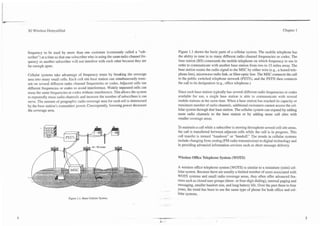
    frequency to be used by more than one customer (commonly called a "sub-                     Figure 1.1 shows the basic parts of a cellular system. The mobile telephone has
    scriber'') at a time so that one subscriber who is using the same radio channel fre-        the ability to tune in to many different radio channel frequencies or codes. The
    quency as another subscriber mill not interfere with each other because they are            base station (BS) commands the mobile telephone on which frequency to use in
    far enough apart.                                                                           order to communicate with another base station from two to 15 miles away. The
                                                                                                base station routes the radio signal to the MSC by either wire (e.g., a leased tele-
    Cellular systems take advantage of frequency reuse by breaking the coverage                 phone line), microwave radio link, or fiber-optic line. The MSC connects the call
    area into many small cells. Each cell site base station can simultaneously trans-           to the public switched telephone network (PSTN), and the PSTN then connects
    mit on several different radio channel frequencies or codes. Adjacent cells use             the call to its designation (e.g., office telephone.)
    different frequencies or codes to avoid interference. Widely separated cells can
    reuse the same frequencies or codes without interference. This allows the system            Since each base station typically has several different radio frequencies or codes
    to repeatedly reuse radio channels and increase the number of subscribers it can            available for use, a single base station is able to communicate with several
    serve. The amount of geographic radio coverage area for each cell is determined             mobile stations at the same time. When a base station has reached its capacity or
    by the base station's transmitter power. Consequently, lowering power decreases             maximum number of radio channels, additional customers cannot access the cel-
    the coverage area.                                                                          lular system through that base station. The cellular system can expand by adding
                                                                                                more radio channels to the base station or by adding more cell sites with
                                                                                                smaller coverage areas.

                                                                                                To maintain a call while a subscriber is moving throughout several cell site areas,
                                                                                                the call is transferred between adjacent cells while the call is in progress. This
                                                                                                call transfer is termed "handover" or "handoff." The trends in cellular systems
                                                                                                include changing from analog (FM radio transmission) to digital technology and
                                                                                                in providing advanced information services such as short message delivery.


                                                                                                Wireless Office Telephone System (WOTS)

                                                                                                A wireless office telephone system (WOTS) is similar to a miniature (mini) cel-
                                                                                                lular system. Because there are usually a limited number of users associated with
                                                                                                WOTS systems and small radio coverage areas, they often offer advanced fea-
                                                                                                tures such as closed user groups (three- or four-digit dialing), internal paging and
                                                                                                messaging, smaller handset size, and long battery life. Over the past three to four
                                                                                                years, the trend has been to use the same type of phone for both office and cel-
                                                                                                lular systems.
                                Figure 1.1. Basic Cellular System.                         .-
7
3G Wireless Demystified                                                                                                                                        Chapter 1


                                   Proprietary "Feature"                               used multiple channels that could be independently assigned and most used ana-
                                      ' ~elephones                                     log frequency modulation (FM) technology. This greatly improved voice quali-
          Standard                                                                     ty. Third generation cordless telephony systems improved by using digital radio
           Analog
         (Type 2500                                                                    and roaming into other public places (other home base stations). Multiple radio
       Extension Line)                                                                 channel capability and digital transmission have led to some cordless phones
                                                                                       being produced that allow customers to use the same phone in the home as in the
                                                                                       cellular system.

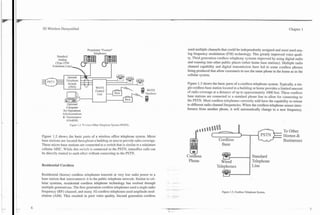
                                                                                       Figure 1.3 shows the basic parts of a cordless telephone system. Typically, a sin-
                                                                                       gle cordless base station located in a building or home provides a limited amount
                                                                            WOTS
                                                                            Handsets
                                                                                       of radio coverage at a distance of up to approximately 1000 feet. Tliese cordless
                                                                                       base stations are connected to a standard phone line to allow for connecting to
                                                                                       the PSTN. Most cordless telephones currently sold have the capability to retune
                  Optional                                                             to different radio channel frequencies. When the cordless telephone senses inter-
                 Computer                                                              ference from another phone, it will automatically change to a new frequency.
               for Operations
               Administrations
               & Maintenance
                 (OA&M)
                    Figure 1.2. LtL-eIess Office Telephone System (WOTS).

                                                                                                                                                           To Other
Figure 1.2 shows the basic parts of a wireless office telephone system. Micro                                                                              Homes &
base stations are located throughout a building or area to provide radio coverage.                                                                         Businesses
These micro base stations are connected to a switch that is similar to a miniature
cellular MSC. While this switch is connected to the PSTN, interoflice calls can
be directly routed to each other without connecting to the PSTN.
                                                                                       Cordless                                            Standard
                                                                                        Phone                                              Telephone
Residential Cordless                                                                                        Telephones                 I   Line
Residential (home) cordless telephones transmit at very low radio power to a
base station that interconnects it to the public telephone network. Similar to cel-
lular systems, residential cordless telephone technology has evolved through
multiple generations. The first generation cordless telephones used a single radio
frequency (RF) channel, and many 1G cordless telephones used amplitude mod-                                    Figure 1.3. Cordless Telephone System.
ulation (AM). This resulted in poor voice quality. Second generation cordless
3G Wireless Demystified                                                                                                                                                    Chapter 1


Because cordless telephones typically d o not have handoff capability, the call                  way network adapter. Qpical data rates for WLAN systems are around 2 Mbps'
will be disconnected when the cordless phone moves far enough away from its                      compared to 10 Mbps - 100 Mbps for wired LAN systems.
base station.
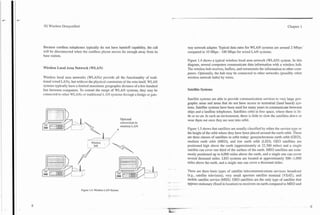
                                                                                                 Figure i.4 shows a typical wireless local area network (WLAN) system. In this
                                                                                                 diagram, several computers communicate data information with a wireless hub.
Wireless Local Area Network (WLAN)                                                               The wireless hub receives, buffers, and retransmits the information to other com-
                                                                                                 puters. Optionally, the hub may be connected to other networks (possibly other
Wireless local area networks (WLANs) provide all the functionality of tradi-                     wireless network hubs) by wires.
tional wired LANs, but without the physical constraints of the wire itself. WLAN
systems typically have a limited maximum geographic distance of a few hundred
feet between computers. To extend the range of WLAN systems, they may be                         Satellite Systems
connected to other WLANs or traditional L.4N systems through a bridge or gate-
                                                                                                 Satellite systems are able to provide communication services to very large geo-
                                                                                                 graphic areas and areas that do not have access to terrestrial (land based) sys-
                                                                                                 tems. Satellite systems have been used for many years to communicate between
                                                                                                 ships and a landline telephones. Satellites orbit in free space, where there is lit-
                                                                                                 tle or no air. In such an environment, there is little to slow the satellites down or
                                                           Optional                              wear them out once they are sent into orbit.
                                                           connection to
                                                           wireless LAN
            L1
             I
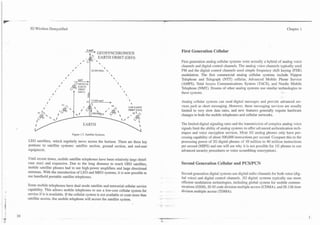
             y            ./                          <                                          Figure 1.5 shows that satellites are usually classified by either the service type or
                                                                                                 the height of the orbit where they have been placed around the earth orbit. There
                                                                                                 are three classes of satellites in orbit today: geosynchronous earth orbit (GEO),
                                 Wireless   ,                                                    medium earth orbit (MEO), and low earth orbit (LEO). GEO satellites are
                                                                                                 positioned high above the earth- (approximately at 22,300 miles) and a single
                                                                                                 satellite can cover one third of the surface of the earth. M E 0 satellites are com-
                                                                                                 monly positioned up to 6,000 miles above the earth, and a single one can cover
                                                                                                 several thousand miles. LEO systems are located at approximately 500--1,000
                                                                                                 miles above the earth, and a single one can cover a thousand miles.

                                                                                                 There are three basic types of satellite telecommunications services: broadcast
                                                                                                 (e.g., satellite television), very small aperture satellite terminal (VSAT), and
                                                                                                 mobile satellite service (MSS). GEO satellites are the only type of satellite that
                                                                                                 appears stationary (fixed in location) to receivers on earth compared to M E 0 and
                                                                                   .-   ..   -
                          Figure 1.4. Wiless U V System.
.
     -
F-                                                                                                 7


          3G Wireless Demystified                                                                                                                                             Chapter 1


                                                     0 mpH
                                                     -GEOSYNCHRONOUS
                                                                                                       First Generation Cellular
                                                     .       .       EARTH ORBIT (GEO)
                                                 /                                                    First generation analog cellular systems were actually a hybrid of analog voice
                                            0                          
                                                                                                       channels and digital control channels. The analog voice channels typically used
                                        0                 22,300 Miles                                FM and the digital control channels used simple frequency shift keying (FSK)
                                                                                                       modulation. The first commercial analog cellular systems include Nippon
                                                                                                       Telephone and Telegraph (NTT) cellular, Advanced Mobile Phone Service
                                                                                                       (AMPS), Total Access Communications System (TACS), and Nordic Mobile
                                                                                                       Telephone (NMT). Dozens of other analog systems use similar technologies to
                                                                                                       these systems.
                          /                               17,000 mpH               
                      /                              #3                                
                                                                                                       Analog cellular systems can send digital messages and provide advanced ser-
                                                                                   LOW EARTH           vices such as short messaging. However, these messaging senices are usually
                                                                                   ORBIT (LEO)         limited to very slow data rates, and new features generally require hardware
                                                          450 Milts,
                                                                                                       changes to both the mobile telephones and cellular networks.

                                                 EARTH                                                The limited digital signaling rates and the transmission of complex analog voice
                                                                                                       signals limit the ability of analog systems to offer advanced authentication tech-
                                        Figure 1.5. Satellite Systems.
                                                                                                       niques and voice encryption services. hlost 1G analog phones only have pro-
                                                                                                       cessing capability of about 500,000 instructions per second. Compare this to the
         LEO satellites, which regularly move across the horizon. There are three key                  processing power of 2G digital phones of 10 million to 40 million instructions
         portions to satellite systems: satellite section, ground section, and end-user                per second (MIPS) and one will see why it is not possible for 1G phones to use
         equipment.                                                                                    advanced security procedures or voice scrambling (encryption).

         Until recent times, mobile satellite telephones have been relatively large (brief-
         case size) and expensive. Due to the long distance to reach GEO satellites,                   Second Generation Cellular and PCSIPCN
         mobile satellite phones had to use high-power amplifiers and large directional
         antennas. With the introduction of LEO and M E 0 systems, it is now possible to               Second generation digital systems use digital radio channels for both voice (dig-
         use handheld portable satellite telephones.                                                   ital voice) and digital control channels. 2G digital systems typically use more
                                                                                                       efficient modulation technologies, including global system for mobile commu-
         Some mobile telephones have dual mode satellite and terrestrial cellular service              nications (GSM), IS-95 code division multiple access (CDMA), and IS-1 36 time
         capability. This allows mobile telephones to use a low-cost cellular system for               division multiple access (TDMA).
         service if it is available. If the cellular system is not available or costs more than
         satellite access, the mobile telephone will access the satellite system.
                                                                                           ,
--

 3G Wireless Demystified                                                                                                                                              Chapter 1


Digital radio channels offer a universal data transmission system, which can be
divided into many logical channels that can perform different services. Some of
these logical channels are used for control purposes and some channels for voice                Enhanced 2nd Generation Digital Cellular and PCS/PCN (2.5G)
and data transmission.
                                                                                                2.5G (also called "two and a half G") is a term that is commonly used to describe
Second generation systems use multiple access technologies to allow more cus-                   enhancements to 2nd generation cellular and PCSIPCN technologies that pro-
tomers to share individual radio channels or use narrow channels to allow more                  vide significantly new and improved capabilities but don't quite satisfy 3rd gen-
radio channels into a limited amount of radio spectrum band. There are three                    eration wireless requirements. The 2.5G systems use improved digital radio tech-
basic types of access technologies used in 2G systems: frequency division mul-                  nology to increase their data transmission rates and new packet-based technolo-
tiple access (FDMA), time division multiple access (TDMA), and code division                    gy to increase the system efficiency for data users. Some of these needs includ-
multiple access (CDMA). These technologies either reduce the RF channel                         ed high-speed data transmission service, efficient packet data transmission, and
bandwidth (FDMA), share a radio channel by assigning users to brief time slots,                 more efficient radio channel capacity through the use of new modulation tech-
or divide a wide RF channel into many different coded channels.                                 nology.

Because digital systems use a common data communication channel, this allows
advanced features to be added more easily. New features such as short messag-                   High-Speed Circuit-Switched Data (HSCSD)
ing service and web browsing (microbrowsers) can often be added by simple
software changes to the system or the wireless telephone. When the software of                  High-speed circuit-switched data (HSCSD) was developed to o.ercome the lim-
the wireless telephone requires updating, some of the software feature upgrades                 ited maximum user data transfer rate of 9.6 kbps in the original GSM system.
can be directly transmitted to the wireless telephone without involving the cus-                Higher data transfer speeds are achieved by combining more than one traffic
tomer.                                                                                          channel ( T o for data services. The maximum HSCSD data transfer rate on
                                                                                                the GSM system is 64 kbps but it is'possible to increase this by a factor of 2--4
All 2G systems have improved authentication and voice privacy capability. This                  through the added use of GSM data compression technology (using the V.42 bis
has dramatically reduced fraudulent use of mobile telephones and reduced the                    GSM algorithm).
incidents of media exploitation of unauthorized recording of private conversa-
tions. The advanced digital signal processing of digital mobile radios can easily               The HSCSD network primarily involves an upgrade to network software and the
process the authentication (identity validation) and encryption codes necessary                 addition of gateways that allow connection to data networks (such as the
to ensure that authorized customers are using the service and other people can-                 Internet). The required upgrades include enhancements to the mobile telephone's
not listen to conversations.                                                                    software, base station controller (BSC) software, and an interworking function
                                                                                                (IWF) between the MSC and the data network (e.g., the Internet).

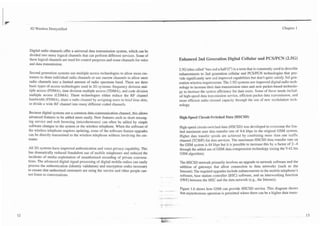
                                                                                    . . - ..,   Figure 1.6 shows how GSM can provide HSCSD service. This diagram shows
                                                                                                that asynchronous operation is permitted where there can be a higher data trans-
1   3G Wireless Demystified                                                                                                                                                                       Chapter 1


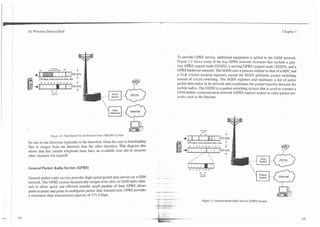
                                                                                                  To provide GPRS service, additional equipment is added to the GSM network.
                                                                                                  Figure 1.7 shows some of the key GPRS network elements that include a gate-
                                                                                                  way GPRS support node (GGSN), a serving GPRS support node (SGSN), and a
                                                                                                  GPRS backbone network. The SGSN uses a process similar to that of a MSC and
                                                                                                  a VLR (visited location register), except the SGSN performs packet switching
           270 kbps total channel data rate
            0   1   2   3   4   5   6   7   0   1   i                                             instead of circuit switching. The SGSN registers and maintains a list of active
                                                                                                  packet data radios in its network and coordinates the packet transfer between the
                        +.                          t
                                                                          Voice
                                                                                                  mobile radios. The GGSN is a packet-switching system that is used to connect a
                                                                                                  GSM mobile communication network (GPRS support nodes) to other packet net-
                                                                         Switch                   works such as the Internet.


                                                                                       lnternet


                        Figure 1.6. High-Speed Circuit-Switched Data (HSCSD) System.
                                                                                                                                  -*
                                                                                                                                       hsm
                                                                                                                                               Y-                       1
                                                                                                      +I I            ,       :f       i 1                  (       j 200k~z
    fer rate in one direction (typically in the downlink when the user is downloading                    270 kbps total channel data rate                               t
    files or images from the Internet) than the other direction. This diagram also                        0       1       2        3       4   5    6   7       0   1

    shows that this mobile telephone must have an available time slot to measure
                                                                                                      +       1       .
                                                                                                                      I       I
                                                                                                                                       1111 I I
                                                                                                                                       *
                                                                                                                                       ,            ,
                                                                                                                                                    ,                   A
    other channels for handoff.                                                                                           .,*-                                          I
                                                                                                                                                                                      Voice
                                                                                                                                                                                      Switch

    General Packet Radio Service (GPRS)
                                                                                                                                                                                      Packet
    General packet radio service provides high-speed packet data service on a GSM                                                                                                     Switch    Internet
    network. The GPRS system dynamically assigns time slots on GSM radio chan-
    nels to allow quick and efficient transfer small packets of data. GPRS allows
    point-to-point and point-to-multipoint packet data transmission. GPRS provides
    a maximum data transmission capacity of 171.2 kbps.
                                                                                                                                       Figure 1.7. General Packet Radio Service (GPRS)System.
3G Wireless Demystified                                                                                                                                                                 Chapter 1


                                                                                                              Figure 1.8 shows an EDGE system. This diagram shows that a standard GSM
Enhanced Data Rates for Global Evolution (EDGE)                                                               radio channel is modified to use a new, more efficient modulation technology.
                                                                                                              The quadrature phase shift keying (QPSK) modulation using EDGE modulation
The enhanced data rates for global evolution (EDGE) system is an evolved ver-                                 can be inserted on a slot-by-slot basis on the GSM channel. EDGE systems can
sion of the global system for mobile (GSM) radio channel that uses new phase                                  be mixed with existing GSM systems because standard GSM mobile telephones
modulation and packet transmission to provide for advanced high-speed data ser-                               will ignore the EDGE modulated time slots that they cannot demodulate and
vices. The EDGE system uses 8-level phase shift keying (8PSK) to allow one                                    decode.
symbol change to rzpresent 3 bits of information. This is three times the amount
of information that is transferred by a standard 2-level GlISK signal used by the                             EDGE compact is a version of EDGE that allows the close packing of GSM
first generation of GSM system. This results in a radio-channel data-transmis-                                radio channel frequencies to allow an overlay of GSM technology into other sys-
sion rate of 604.8 kbps and a net maximum delivered data transmission rate of                                 tems (such as IS-136 TDMA) with a minimum loss of existing channel frequen-
approximately 474 kbps. The advanced packet transmission control system                                       cies. Because EDGE compact reuses frequencies in nearby cells, the average
allows fo: csns:an:ly varying data transmission rates in either direction between                             interference level for each time slot is higher. Aiinough it is acceptable to discard
mobile radios.                                                                                                data packets that experience high levels of interference, discarding packets that
                                                                                                              contain control messages (such as handoff or packet-data paging messages) is
                                                                                                              unacceptable. To help ensure that most control messages reach their destination,
                                                                                                              EDGE compact inhibits the transmission of messages on the same frequency and
                                                                                                              time slot in nearby cellsites. As customers are converted from the other system
                                                                                                              (e.g., IS-136 TDMA) and radio channels become lightly loaded, more of those
                                                                                                              radio channels can be removed and additional EDGE channels can be added.
                                                                                                !             This allows the gradual conversion from one technology to compatible
                                                                                                              GSMIEDGE technology.


                                                                                                              Third Generation Requirements

                                                                                                              In the early 1990s, the success of 2G digital cellular and PCSPCN systems (dra-
                                                           1 Data
                                                            Gateway
                                                                            Internet   )       -              matic growth in the number of customers) led to demand for new features and
                                                                                                              more efficient services. It became apparent that robust high-capacity and lower-
                                                                                                              cost wireless systems were needed to better service customers that 2nd genera-
                                                                                                              tion systems could not easily provide. To satisfy these needs, a new 3rd genera-
                                                                                               ..      ..     tion wireless system was needed.
             Figure 1.8. Enhanced Data rates for Global Evolution (EDGE) System.           .-
                                                                                           ,
                                                                                                    . ...--
                                                                                                        .-
Chapter 1
3G Wireless Demystified


The 3rd generation system is called universal mobile telecommunications sys-               The creation of the UMTS system required the participation of many companies,
tem (UMTS). In 1992, the world administrative radio conference (WARC)                      Because the system specifications are global standards, the development of this
defined the frequency bands that would be used for 3rG generation systems. The            system was performed with the cooperation of the leading standards committees
ITU then defined new requirements for the 3rd generation systems. The origi-              of most countries. To help coordinate this process, a global committee was cre-
nal requirements for the 3rd generation system were defined in the international          ated called the Third Generation Partnership Program (3GPP). Some of the key
mobile telecommunications 2000 (IMT-2000) system. IMT-2000 key require-                   standard groups that are part of the 3GPP include European Telecommunications
 ments included high-speed (broadband) data services, multimedia suppofl                  Standards Institute (ETSI); Research Institute of Telecommunications
.(simultaneous voice and data), improved system efficiency (cost reduction), and
    -                                                                                     Transmission (RITT), China; Association of Radio Industry and Business
 backward compatibility with 2nd generation systems.                                      (ARIB), Japan; Telecommunications Technologies Association (TTA). Korea;
                                                                                          Telecommunications Industry Association (TIA), United States.
Figure 1.9 shows the different frequency bands that have been identified for
UMTS use. It is likely that additional frequency bands will be added in the              The basic structure of the UMTS system provides high capacity communication
future to allow increased competition and cost-effective system capacity expan-          service (up to 2 Mbps) for in-building users. As subscribers move into urban
sion. Some countries already use frequency bands that have been designated as            areas (pedestrian), they have access to medium capacity services (up to 384
UMTS. These include part of the personal communication service (PCS) sys-                kbps). Capacity is moderate (up to 144 kbps) in wide area mobile services. And
tems in the United States. These bands may be convened to UMTS systems.                  finally, in large geographic area systems (satellite), the data rates are variable.


                                                                                         Multimedia Services

                                                                                          Multimedia is a term that is used to describe the delivery of different types of
                                                                                          information such as voice, data, and video. Communication systems may deliv-
                                                                                          er media sewices separately or simultaneously. Second generation systems were
                                                                                         primarily limited to low-speed single channel (nonsimultaneous) communica-
                                                                                         tion. Third generation systems can provide simultaneous channels with data rates
                                                                                         up to 2 Mbps, and each of them can have a different quality of service (QoS)
                                                                                         capability. For example, a 3G handset can be participating in a video conference
                                                                                         call while downloading an email file from the Internet. The real time video clip
                                 I                                                       requires a high-speed data transfer rate that needs to be real time but can toler-
 'China has resewed
 part of IMT-2000 band
                         [
                         I
                                 I         I         I
                                                                                  i      ale e m n , while the email file download can tolerate large delays but errors are
 for PCSM'LL                   1900      1950      2000      2050      2100     2150     not acceptable.


         Figure 1.9. Universal Mobile Telecommunications System W S ) Frequency Bands.
L_
 I                                                                                                                                                                                           Chapter 1
 I       3G Wireless Demystified


                                                                                                                    time slots or unique codes to each call. These techniques reduce the amount of
                                                                                                                    radio spectrum needed and allow more subscribers to use a wireless service
                                                                                                                    provider's radio coverage area. In this way, 3rd generation UMTS reduces the
         Multisystem Compatibility
                                                                                                                    average system equipment cost per customer.
         The multisystem compatibility of 3rd generation systems allows customers to                                Wireless service providers can evaluate the potential system capacity factors of
         roam globally (different frequency bands) and be able to hand off to 2nd gener-                            the new cellular technologies by reviewing two types of efficiency: radio chan-
         ation systems (backward compatibility). It is possible for existing 2nd generation                         nel and infrastructure . Radio channel, or spectral, efficiency is measured by the
         service providers to upgrade their systems to 3rd generation technology and to                             number of conversations (voice paths) that can be assigned per frequency band-
         connect 2nd and 3rd generation systems together.                                                           width. Geographic spectral efficiency can be defined by measuring the number
                                                                                                                    of conversations per frequency bandwidth per unit of service area. Infrastructure
                                                                                                                    efficiency is measured by the wireless system equipment and operating costs,
         Increased System Efficiency
                                                                                                                    calculated on a per-subscriber basis, or per available channel per unit of service
         Third generation systems must be more cost effective than 2nd generation sys-                              area.               . .
     1
         tems. All of the advancements in technology and services have little chance of                             Figure 1.10 illustrates how wireless systems allow many users to share a single
     I
         achieving market success if the cost of 3G basic telecommunications services is                            cell site. The number of subscribers who can share a cell site is much greater than
     I   higher than that of 2nd generation systems. Third generation systems use the                               the number of available radio channels but, because not everyone places calls at
     I   available radio spectrum more efficiently, and the implementation offers cost
                                                                                                                    exactly the same time (except during traffic jams), many users can share a single
         savings through the reduction of cell sites and equipment and simplified opera-
     I                                                                                                              radio channel. For analog systems that can allow only one conversation per radio
         tional service support.                                                                                    channel, a typical analog system may add 20--32 customers to the svstem for
     I
                                                                                                                    each available voice/radio channel. If an analog cell site has 50 radio channels
          Most wireless service providers continually add new customers. As the number                              installed, this has enough capacity to serve about 1000 customers. Second gen-
          of subscribers increases, more communication channels will be needed. If the                              eration digital technologies can multipIy this number by 3--20 times. A single
          service provider's cell sites are not filled to capacity with radio 0     channels.                       2nd generation cell site can serve approximately 3,000 to 20,000 customers.
          (approximately 5--10 wide radio channels per site), the wireless service provider                         Third generation UMTS systems increase the overall efficiency by 2--4 times
          simply adds more radio channels. If cell sites are filled with radio channels, more                       Compared to 2nd generation systems. This means if a 2nd generation cell site is
          cell sites must be added to accommodate the increased capacity. Either way, to                            completely converted to UMTS channels, that cell site can serve approximately
          expand the system capacity, wireless service providers must add communication                             6,000 to 80,000 customers.
          channels.                                                                             -               -
                                                                                                                   The original viewpoint of the ITU for IMT-2000 (International Mobile
          Second and third generation digital cellular technologies allow for capacity                             Telephony) in 1986 was to develop a completely new system for UMTS. In
          increases by allowing more subscribers to share the same radio channel spec-          -       --IA       1996,this viewpoint changed to allow the existing networks developed to inte-
          tNm. The intensified use of radio spectrum is accomplished by allowing more           -
          subscribers to share the same radio channel. To simultaneously serve multiple         -
                                                                                                --  A   -"---
                                                                                                                   grate with UMTS systems. This is very important as it allows existing wireless
                                                                                                                -- Operators to cost-effectively upgrade their systems and network equipment man-
          subscribers on the same radio channel, new technologies assign either specific        &
                                                                                                ,   .@
                                                                                                    " -        ?=
3G Wireless Demystified
                                                                                                                                                                                         Chapter 1


                                                                                                                                                              - Limited Data
                                                                                                                                                              - Voice
                                                                                                                                                            (Rural)


                                                               --      (C) NEW P6.000 to 80.030 Max
    (.4) OLD' 1,000 Subscribers Max   (B) h ' =3,OW   to 20.000 htaa

             ANALOG                   2nd GWERATI0.W DIGITAL           3rd GEVERATI0.V DIGIT4L


1                                          Figure 1.10. Serving More Users.
I                                                                                                                                      Figure 1 . 1 1. 3rd Generation Wireless System.
    ufacturers to offer existing fieldiproven network equipment to new operators
    without having to invest billions of dollars into research and new product devel-
    opment.
                                                                                                                 Third Generation wireless Systems
    Figure 1.1 1 shows how a 3rd generation wireless system integrates several types
    of services. This system interconnects cellular, wireless ofice, cordless tele-                              Third generation wireless systems combine cellular, wireless office telephone
    phone, wireless LAN, and satellite systems through the use of flexible radio                                          cordless telephone systems, and advanced intelligent features into one
                                                                                                                 Ponable device. h 2001, there were three different system specifications for 3rd
    communication technology and an underlying advanced intelligent network
    (AIN).
                                                                                                      -.   ---   generation wireless systems: wideband code division multiple access
                                                                                                      -.    .    (WCDM~), division CDMA (TDICDMA), and CDMA2000.
                                                                                                                             time
Chapter 1
1       3G Wireless Demystified


                                                                                                                 Figure 1.12 shows a WCDMA system. This diagram shows the WCDMA sys-
I                                                                                                                tem has paired 5 MHz channels (FDD). Multiple physical channels can coexist
    1   Wideband Code Division Multiple Access (WCDMA)                                                           in the same frequency band by using different spreading codes (4--256). The
    I                                                                                                            spreading code is used to create several chips per bit of information. These codes
        The WCDMA system uses a wide RF channel, efficient coding, and multiple                                  are chosen to be orthogonal (noninterfering) with each other. The code chip rate
    '
    1

    I
        channels to provide for both low-speed circuit and high-speed packet services.
        The WCDMA system uses direct sequence code division multiple access (DS-
        CDMA) technology, efficient QPSK modulation, paired frequency division
                                                                                                                 is 3.84 Mcps, and each coded channel is divided into frames of 10 msec each.
                                                                                                                 The WCDMA system can dynamically change its spreading codes to provide
                                                                                                                 bandwidth on demand (BOD) services.
    1   duplex (FDD) RF channels, and variable bandwidth control.

                                                                                                                 Time Division DupledCode Division Multiple Access (TDICDMA)

                                                                                                                 TDD is a process of allowing two way communications between two devices by
                                                                                                                 timesharing. The TD/CDMA system uses time division duplex (TDD) technolo-
                                                                                                                 gy to overcome the requirement of paired frequencies that the WCDMA system
                                                                                                                 has. In some countries, paired frequencies are not available. When using TDD,
                                                                                                                 one device transmits (device I), then the other-device listens (device 2) for a
                                                                                                                 short period of time. After the transmission is complete. the devices reverse their
                                                                                                                 roles, so device I becomes a receiver and device 2 becomes a transmitter. The
                                                                                                                 process continually repeats itself, so data appears to flow in both directions
                                                                                                                 simultaneously.


                    3.84 Mcps Spreading
                                                                     -IF Voice                                   The TDICDMA system uses the same DS-CDMA channel-coding technology to
                                                                                                                 maintain compatibility with the WCDMA system. It is anticipated that
                                                                                                                 TDJCDMA systems will be used for indoor environments and WCDMA systems
                                                                                                                 will be used for wide area mobile operation.
                                                                                           Internet
                                                                                                                 Figure 1.13 shows a TDICDMA system. This diagram shows the TDICDMA
                                                                                                          ~--.
                                                                                                                 system divides the 5 MHz radio channel into short 666 msec time slots. Fifteen

                                                                                                      4


                     Figure 1.12. Wideband Code Division Multiple Access (WCDMA) System.
s
                                      5 g:,z z
                                      a a.
                                       , ,
                                      % .Es
                                      e Em's
                                      .2 2 e
                                      L: % = a
                                      p " s g
    .       d
z a,
0
m  a
a,Q
.€2:
 *
    -0
55;
s    2Q
 "i 0 s
 g 42
 2      -
        %
 ,a , s q
rr
  s
                              ~   ~
 2%
 a,
      2%
    E 7 3
.0- a , . 2 %
 @2"2
 e%zz
    sE.$",
 zszy
 I.se % ,
 on g
    0       " ,z E
    a .k
    g,,
    3

            9
            -52
                "
                '3   L-
    g,g 0s
            a "Y
             ,
    w w.G d
    2 .E
    m a
                ;.s
                o %
    g g - -
    - k2 %g
    &
    .+ E.&
     W C
     "a, 2 . 2
    2 s a,
     ;s u
       20    u b          0
-
3G Wireless Demystified


MHz wide bandwidth. To u p p d e 2nd generation IS-95 systems to 3rd genera-
                                                                                                                                                      Chapter 2
tion capability, IS-95 radio channels in the base station can be enhanced with
new protocols, and new 3rd generation mobile telephones are required.

References:
                                                                                                                  First Generation Analog Cellular
1. GSM MoU, www.GSMWorld.com, February 22. 2001.
2. Bell Systems Technical Journal. Vol. 58, No. 1, American Telephone and Telegraph
Company. Murray Hill, NJ, Januan 1979.


                                                                                                  The first generation of cellular systems used analog radio technology. Analog
                                                                                                  cellular systems consist of three basic elements: a mobile telephone (mobile
                                                                                                  radio), cell sites, and a mobile switching center (MSC). Figure 2.1 shows a basic
                                                                                                  cellular system in which a geographic service area such as a city is divided into
                                                                                                  smaller radio coverage area cells. A mobile telephone communicates by radio
                                                                                                  signals to the cell site within a radio coverage area. The cell site's base station
                                                                                                  (BS) converts these radio signals for transfer to thE MSC via wired (landline) or
                                                                                                  wireless (microwave) communications links. The MSC routes the call to anoth-
                                                                                                  er mobile telephone in the system or the appropriate landline facility. These three
                                                                                                  elements are integrated to form a ubiquitous coverage radio system that can con-
                                                                                                  nect to the public switched telephone network (PSTN).


                                                                                                  History

                                                                                                  Nippon Telephone and Telegraph (NTT)in Tokyo started the first commercial
                                                                                                  analog cellular system on December, 1979 [I]. In 1981, the commercial Nordic
                                                                                      -       -
                                                                                                  Mobile Telephone (NMT) system was started in the Nordic countries [2].
                                                                                                  Although there was an Advanced Mobile Phone Service (AMPS) test system

                                                                                      -
                                                                                      -.
                                                                                                  operating in 1979, the first commercial AMPS system was not introduced in the
                                                                                                  United States until 1983. By 1985, a commercial TACS system began in the
                                                                                      -
                                                                                      -- -
r
3G Wireless Demystified                                                                                                                                                        Chapter 2


                                                                                          allow the subscriber to communicate commands to the transceiver. The antenna
                                                                                          assembly couples RF energy between the electronics within the mobile tele-
                                                                Base Station
                                                                                          phone and the outside "air" for transmission and reception.

                                                               0Radio Coverage Area
                                                                                          Analog mobile cellular telephones have many industry names. These names
                                                                                          sometimes vary by the type of cellular radio. Handheld cellular radios are often
                                                                                          referred to as "portables." Cellular radios that are installed in cars are typically
                                                                                          called "mobiles." Cellular radios mounted in bags are often called "bag phones."
                                                                                          In most cases, these three types and sizes also correspond to three distinct max-
                                                                                          imum power levels: 600 milliwatts, 1.6 watts, and 3 watts, or classes I, 11, and
                                                                                          nr.
                                                                                          To make each mobile telephone unique, several types of information are stored
                                                                                          into its internal memory. This internal memory is called a number assignment


                                                                                                                        - - - - - - - - - - - I@E!l!TEK   I   '
                                                                                                                                                                   r-- -
                                                                                                                                 t                            I
                                                                                                                                                              I    I


                                                                                                                                I*)(;IC
                          Figure 2.1. Basic Cellular System,                                                                  ASSEMBLY


United Kingdom [3]. Since their introduction, these first generation analog cel-                                                                                                      I
                                                                                                                                                              I            ANTESNA ASSELIBLY
lular technologies have evolved to provide higher system capacity and advanced                                                                            I


features.
                                                                                                                             --- - - - - - -   XEEL!1EB_l    'I
                                                                                                                             _ _ _ _ _ _ _ _ _ _ _ _ _ _ _ _ I
                                                                                                                                                 TRNSCEI'ER UNIT
Mobile Telephone

A mobile telephone (commonly called a mobile station) contains a radio trans-
ceiver, user interface, and antenna assembly (see Figure 2.2) in one physical
package. The radio transceiver converts audio to radio frequency (RF) signals
                                                                                                                Figure 2.2. Mobile Telephone Block Diagram.
and RF signals into audio. A user interface provides the display and keypad that
3G Wireless Demystified
                                                                                                                                                                                                            Chapter 2


module (NAM). The NAM contains the mobile identification number (MIN),
                                                                                                                                                                  Receive #2           T   ~   i   '   dReceivc   =!
which is the telephone number, home system identifier, access classification, and
other customer features. The internal memory, which stores the telephone num-
ber and system features, can be modified by either changing a chip stored inside
the mobile telephone or programming the phone number into memory through
special keypad instructions.

Each mobile telephone also contains a unique electronic serial number (ESN),
which is not supposed to be changed. If the ESN could be easily changed, it
would be possible to duplicate another mobile telephone's identification (called
cloning) to make fraudulent calls. Because duplication of mobile telephone num-
bers and ESNs is technically possible, advanced authentication programs that
validate prestored information have been created to provide a more reliable
unique identification system.

Initially, information stored in a NAM was programmed into a standard pro-
grammable read only memory (PROM) chip. Because of the cost of the chips
and because special programming devices were required, manufacturers now
make the NAM information programmable via the handset keypad. The infor-
mation is stored internally in an electrically alterable PROM (EPROM). This is
also referred to as a nonvolatile memory, since the information contents stay
intact even if power is not available, such as when a battery is replaced.                                                         Figure 2.3. Cell Site and Base Station Block Diagram.

                                                                                                               antenna assembly (see Figure 2.3). The transceiver sections are similar to the
                                                                                                               mobile telephone transceiver as they convert audio to RF signals and RF to audio
Cell Site                                                                                                     signals. The transmitter output side of these radio transceivers is supplied to a
                                                                                                              high-power RF amplifier (typically 10 to 50 wafts). The RF combiner allows
A cell site is the link between the mobile telephone and the cellular mobile                                  Separate radio channels to be combined onto one or several antenna assemblies
switching center (MSC). A cell site consists of a base station (BS), transmission                             without interfering with each other. This combined RF signal is routed to the
tower, and antenna assembly. The base station is the radio portion of the cell site         --      --        transmitter antenna on top of the radio tower via low-energy-loss coaxial cable.
that converts radio signals to electrical signals for transfer to and from a switch-
ing center.
                                                                                            -
                                                                                            -   .    ~-


                                                                                                                Cell sites typically have two receiver antennas to allow for selection of the
A base station contains amplifiers, radio transceivers, RF combiners, control sec-
                                                                                       .-
                                                                                        .             ...       SVongest radio signal (minimizing radio signal fading). Receiver antennas are
                                                                                                --    ..        connected to the RF multicoupler via low-loss coaxial cable that splits the
tions, communications links, a scanning receiver, backup power supplies, and an                             . . received signals to multiple transceivers. The receiver portion of the transceiver
Chapter 2


converts the RF signal to an audio signal that is routed to the communication
links. Communication links route audio and control information between the
base station and an MSC. A scanning receiver measures the signal strength on
                                                                                                          AC Pov
any of the cellular channel frequencies. The scanning receiver is used to moni-
tor the signal level of mobile phones in adjacent cell sites. This signal level
information helps to determine if a call transfer to this cell site is a good choice.                                                                                    Database
The backup power supply maintains radio equipment and cooling system opera-
                                                                                                                                                           Controller
tion when primary power is interrupted. Many sections of the base station are
duplicated to maintain functioning if equipment fails.


Mobile Switching Center (MSC)                                                                        II                                I               I                . Control .
                                                                                                                                                                                        ~      ?
                                                                                                                                                                                    h'erwork
The MSC is the control center of the cellular system. It monitors the location and                                                                                      voice
call quality of mobile telephones, and it switches calls between mobile tele-
phones and the public switched telephone network (PSTN). The MSC is some-
times called by different names, such as mobile telephone switching office
(MTSO) or mobile telephone exchange (MTX).                                                                          Figure 2.4. Cellular Mobile Switching Center.


The MSC consists of controllers, switching assembly, communications links,                   mpted As with the base station, the MSC has many standby duplicate circuits
operator terminal, subscriber database, and backup energy sources (see Figure                and backup power sources to allow system operation to be maintained when s
2.4). The controllers, each of which are powerful computers: are the brains of the
                                                                                             failure occurs.
- , -
entire cellular system, guiding the MSC through the creation and interpretation
of              to and from the base stations. In addition to the main controller,
Secondary controllers devoted specifically to control of the cell sites (base sta-          System Overview
[ions) and to handling the signaling messages between the MSC and the Y"3   rJ .
                                                                             '
A switching assembly routes voice connections from the Cell Sites to each other             The            system provides telephone service to many customen through
or to the public telephone network. Communications links between cell sites and                           channels7 frequency reuse, cost-effective capacity expansion, and
the MSC may be copper wire, microwave, or fiber optic. An operator terminal             -                system control. To conserve the limited amount of radio spectmm,
allows operations, administration, and maintenance of the system. A subs~riber                      'ystemS reuse the same channels many times within a geographic cover-
database contains features the customer has requested, along with billing                   age area. The technique* called frequency reuse, m&es it possible to expand sys-
records. Backup energy sources provide power when primary Power is inter-               ,       capacity increasing the number of channels that are effectively
---
2
..-


            3G Wireless Demystified                                                                                                                                            Chapter 2


            for subscribers. As the subscriber moves through the system, the MSC centrally               base station transmitting to the mobile telephone at 875 MHz on the forward
            transfers calls from one cell to another and maintains call continuity. In fact,             channel. The mobile telephone then transmits to the base station at 830 MHz on
            without frequency reuse, it would not be economically feasible to provide cellu-             the reverse channel.
            lar or PCS service, unless all other radio frequency bands (broadcasting, emer-
            gency radio systems, ship-to-shore, military, etc.) were shut off and their spec-            Frequency Reuse
            trum capacity also used for cellularlPCS.
                                                                                                         In early mobile radio systems, one high-power transmitter served a large geo-
                                                                                                         graphic area. Because each radio channel requires a certain bandwidth, the
            Frequency Duplex                                                                             resulting limited number of radio channels kept the sewing capacity of such sys-

            TO allow simultaneous transmission and reception (no need for push to talk), the
            base stations transmit on one set of radio channels, called forward channels, and
                                                                                                                                          Basic Cellular System
            they receive on another set of channels, called the reverse channels. The trans-
            mitter and receiver radio channel frequencies tnat are assigned for a particular
            cell are separated by a fixed amount of frequency bandwidth. Figure 2.5 shows
            a system of radio channels that are separated by 45 MHz. Figure 2.5 displays a


                                         875 MHz
                                     FORWARD CHANNEL
                                             4

                                                   45 MHz


                              4         mmRs:crnwm
                                                  830 MHz


                                    Figure 2.5. Duplex Radio Channel Spacing.                                                         Figure 2.6. Frequency Reuse


                                                                                                -__._-"".---
                                                                                                 it-
--    -.-
                                                                                             't

     3G Wireless Demystified                                                                                                                                                    Chapter 2


     tems low. The customer demand for the few available channels was very high.
     For example, in 1976, New York City had only 12 radio channels to support 545
     subscribers (not all customers use 2 r2dio channel at the same time) and a two-
     year long waiting list of typically 3,700 [4].
                                                                                                                                        TOP VIEW
     To increase the number of radio channels in where the frequency spectrum allo-
     cation is limited, cellular providers must reuse frequencies. Because the rndio
     channel signal strength decreases exponentially with distance, subscribers who
     are far enough apart can use the same radio channel frequency without interfer-
     ence (see Figure 2.6).

     To minimize interference in this way, cellular system planners position the cell
     sites that use the same radio channel frequency far away from each other. The
     distances between sites are initially planned by general RF propagation rules, but
     it is difficult to account for enough propagation factors to precisely position the
     towers, so the cell site position and power levels are usually adjusted later.

     The acceptable distance between cell sites that use the same channel frequencies                     a) OLD OMNI                                     b) S E W SECTORIZED
     are determined by the distance to radius ( D R ) ratio. The D/R ratio is the ratio of
     the distance (D) between cells using the same radio frequency to the radius (R)
     of the cells. In analog systems, a typical D/R ratio is 4.6: a channel used in a cell
     with a 1 mile radius would not interfere with the same channel being reused at a
                                                                                                                               Figure 2.7. Cell Site Sectorization.
     cell 1.6 miles away.
                                                                                                  frequency reuse. Directional antennas can be used to sector a cell in to wedges
                                                                                                  so that only a portion of the cell area (e.g., 113, or 120 degrees) is used for a sin-
     Capacity Expansion
                                                                                                  gle radio channel. Such sectoring reduces interference with the other cells in the
                                                                                                  area. Figure 2.7 shows cells that are sectored into three 120-degree sectors.
     As cellular systems mature, they must serve more subscribers, by either adding
     more radio channels in a cell or adding new cells. To add radio channels, cellu-             Another technique, called cell splitting, helps to expand capacity gradually. The
     lar systems use several techniques in addition to strategically locating cell sites          radio coverage area of a cell site is split by adjusting the power level andlor using
     that use the same frequencies. Directional antennas and underlayloverlay trans-              reduced antenna height to cover a reduced area (see Figure 2.8). Reducing the
     mit patterns improve signal quality by focusing radio signals into one area and              radio coverage area of a cell site by changing the RF boundaries of a cell site has
     reducing the interference to other areas. The reduced interference allows more               the same effect as placing cells farther apart, and allows new cell sites to be
                                                                                                  added. However, the boundaries of a cell site vary with the terrain and land con-
3G Wireless Demystified                                                                                                                                                                         Chaper 2


                                                                                                                                                                                                                  -
                                                                                                                                      When a cellular system is first established, it can effectively serve only a limit-
                                                                                                                                      ed number of callers. When that limit is exceeded, callers experience too Inany
                                                                                                                                      system busy signals (known as blocking) and their calls cannot be completed.
                                                                                                                                      More callers can be served by adding more cells with smaller coverage areas--
                                                                                                                                      that is, by cell splitting. The increased number of smaller cells provides more
                                                                                                                                      available radio channels in a given area because it allows radio channels to be
              4
                                                                                           b                                          reused at closer geographical distances.
                           1                2                     3          4
                                                                                                                                      System planning must also account for present and future coverage require-
                                                                                                                                      ments. After a cellular service provider is granted a license, it typically has only
                                                                                                                                      a few years to provide coverage to almost all of its licensed territory 161. To
                                                                                                                                      accomplish this, and to ensure that the system will be efficient and com~etitive.
                                                                                                                                      cellular caniers must plan and design the system in advance.


                                                                                                                                      Radio Interference
                                                                                            b
              4                                                              4
                           1
                                                                                                                                  Radio interference limits the number of radio channels that can be used in a sin-
                                                 b) NEW                                                                           gle cell site and how close nearby cell sites that use the same frequency can be
                                                                                                                                  located. The main types of interference are co-channel, adjacent channel, and
                                                                                                                                  alternate channel interference.

                                            Figure 2.8. Cell Splitting.                                                               Co-channel Interference
              ditions, especially with seasonal variations in foliage. Coverage areas actually                                    Co-channel interference occurs when two nearby cellular radios operating on the
              increase in fall and winter as the leaves fall from the trees.
                                                                                                         -                        same radio channel interfere with each other. Co-channel interference at a par-
                                                                                                                                  titular location can be measured by comparing the received radio signal power
              Current analog systems serve only one subscriber at a time on a radio channel-             .         .
                                                                                                                                  (signal strength) from the desired signal, to the signal strength of the interfering
              so the system's serving capacity is influenced by the number of available radio            -     .
                                                                                                     .         .--      ..
                                                                                                                        .         signal. Today's analog Systems are designed to assure that interfering signal
              channels. However, a typical subscriber uses the system for only a few minutes
              a day so that, on a daily basis, many subscribers share a single channel.                  - -
                                                                                                         -             ..
                                                                                                                                            remains approximately less than 2% of desired signal strength. ~t this
                                                                                                                                  level. the desired signal is nearly undistorted.
              Typically, 20-32 subscribers share each radio channel 151, depending upon the
              average talk time per hour pn subscriber. Generally, a cell site that has 50         . +,-.--..~..
                                                                                                         ,...      -
              installed radio channels can support 1000--1600 subscribers.                           -
-
-.   ., . .
      . .                                                                                        . -- -
                                                                                                    --.
                                                                                                       .
                                                                                                     -..
                                                                                                                             -   ..
3G Wireless Demystified                                                                                                                                                               Chapter 2


                                                                                                    transmitted at low levels outside this band. A cellular radio operating at full
                                                                                                    power can produce enough low-level radio energy outside the channel bandwidth
                                                                                                    to interfere with cellular radios operating on adjacent channe!~.Because of alter-
          DESIRED SIGNAL                                          UNDESIRED   ,,                    nate channel interference, radio channels cannot be spaced adjacent to each other
                                                                   SIGNAL                           in a single cell site (e.g., channels 115 and 116). A channel separation of three
                                                                                                    channels is typically suficient to protect most radio channels from adjacent
                                                    MAXIMUM ALLOWED                                 channel interference. However, for frequency planning reasons (discussed in
                                                          - 2%(17dB)                                Chapter 9), the radio channel frequencies at each cell site are selected so they are
                                                                                                    typically separated by 21 channels from other radio channels in that base station
                                                                                                    or sector. Figure 2.10 displays adjacent channel interference.

                                                                                                    Alternate Chattrtel Interference

                                                                                                    Alternate channel interference occurs when radio energy from a transmitter fre-
                           Figure 2.9. Co-Channel Interference.                                     quency that is located two radio channel bandwidths away interferes with the
                                                                                                    desired signal.
To minimize interference, cellular carriers frequently monitor the received sig-
nal strength by regularly driving test equipment throughout the-system. This test-
ing determines whether the combined interference from cells using the same
channel exceeds the 2% level of the desired channel (which is 17 dB below the                                                                                             I                   I
                                                                                                                                                 I        Adjacent            ..:ernate
                                                                                                                                                                              I
desired signal). This information is used to determine whether radio channels                                                                    I        Channel         I   Channel         1
andlor power levels at each cell need to be changed. Figure 2.9 shows how co-                                                                                             I                   I
channe1.interference occurs.                                                                                                                                              1                   I
                                                                                                                                                                          I                   I
Using a radio technology that provides a higher tolerance to co-channel interfer-                                                                                         I                   I
                                                                                                                                                     A   %cent Channel
ence (i.e., exceeding 2% with no distortion) would allow system operators to
reuse the same frequencies more often, thus increasing the system capacity. This
higher tolerance is an advantage of next-generation digital cellular technologies.

Adjacent Channel Interference                                                                                        t1 Channel +
                                                                                                                                '
                                                                                                                                                                                          -
                                                                                                                            Bandwidth
                                                                                                                          (30 kHz AMPS,
~ d j a c e n channel interference occurs when one radio channel interferes with a
              t                                                                      - a
                                                                                                                        25 kHz TACSAJMT,
channel next to it (e.g., channel 412 interferes with 413). Each radio channel has                                       I0 kHz NAMPS)
                                                                                     -
a limited amount of bandwidth (10 kHz to 30 kHz), but some radio energy is           -.    .-   .                           Figure 2.10. Adjacent Channel Interference.
I
I   3G Wireless Demystified                                                                                                                                                      Chapter 2


    Interleaved Radio Channels
                                                                                                                                                                      Voice Channel
    Because a majority of the radio energy is in the center of the band, some cellu-
    lar systems allow radio channels to be interleaved (offset) at fi channel band-
    width (e.g., 12.5 kHz offset in a 25 kHz channel) to allow radio channel spacing
    to be as close as possible. Since a goal of the cellular system is to reuse as many
    radio channel frequencies as possible, placing more radio channels in each cell                                                                                   O ~ c c e s System
                                                                                                                                                                                  s        
    site increases the capacity of the cellular system. By careful frequency planning,
    the use of interleaved radio channels can increase system capacity by more than
    100% [ 7 ] .


    Basic Cellular Operation

    In early mobile radio systems, a mobile telephone scanned the limited number of
    available channels until it found an unused one that allowed it to initiate a call.
    Because analog cellular systems often have hundreds of radio channels, a mobile
    telephone cannot scan them all in a reasonable amount of time. To quickly direct
                                                                                                                 Figure 2.1 1. Control Channels and Voice Channels.
    a mobile telephone to an available channel, some of the available radio channels
    are dedicated as control channels. Most cellular systems use two different types
    of radio channels: control channels and voice channels. Control channels carry
    only digital messages and signals that allow the mobile telephone to retrieve sys-    When a mobile telephone is first powered on, it initializes itself by scanning a
    tem control information and compete for access. Control channels never carry          predetermined set of contml channels and then tuning to the strongest one.
    voice (in the AMPS system). Voice channels are primarily used to transfer voice       Figure 2.12 shows that during this initialization mode, it retrieves system identi-
    information, but also send and receive some digital control messages, and cer-        fication and setup information.
    tain super-audible tones used for call processing control. Figure 2.11 shows
    some channels that are dedicated as control channels to coordinate access to          After the mobile telephone initializes, it enters the idle mode where it waits to be
    the cellular system. After the access to a cellular system has been authorized, the   paged for an incoming call and continually senses the keypad to determine if the
    control channel sends out a channel assignment message that commands the              user has initiated (dialed) a call (access). When a call begins to be received or
    mobile telephone to tune (change frequency) to a voice channel (a different radio     initiated, the mobile telephone enters system access mode to try to access the
    channel).                                                                             System via a control channel. When it gains access. the contml channel sends an
3G Wireless Demystified                                                                                                                                                                        Chapter 2


                                                                                                                                  Conversation            Voice Channel
                                                                                                                                                           Designator


                                          NO RESPONSE

                                                                                                                           :             Attempt Access     Dialed Digits


                                                                                                                         Figure 2.13. Cellular System Call Originalion Radio Channel Access.

                      Figure 2.12. Cellular System Broadcast Information.
                                                                            -
                                                                                                          phone (such as a paging message indicating a call to be received) or as a result
                                                                                                          of a request from the user to place a call. The mobile telephone gains access by
 initial voice channel designation message indicating an open voice channel. The                          monitoring the busylidle status of the control channel both before and during
 mobile telephone then tunes to the designated voice channel and enters the con-       ,                  transmission of the access attempt message. If the channel is available, the
 versation mode. As the mobile telephone operates on a voice channel, the system                          mobile station begins to tiansmit and the base station simultaneously monitors
 uses frequency modulation (FM)     similar to commercial broadcast PM radio. TO                          the channel's busy status. Transmissions must begin within a prescribed time
 send control messages on the voice channel, the voice information is either                              limit after the mobile station finds that the control channel access is free, or the
            .
 rrnlaced bv a short burst (blank and burst) message or, in Some systems, control
  --r-- -
                                                                                                          access attempt is stopped on the assumption that another mobile telephone has
                                                                                                          possibly gained attention of the base station control channel receiver. Figure 2.13
  messages can be sent along with the audio signal.
                                                                                                          shows a sample access process.
                                                                                           - ---
                                                                                           --.-.-
  Access                                                                                   -    --       If the access attempt succeeds, the system sends out a channel assignment mes-
                                                                                           -              sage commanding the mobile telephone to tune to a cellular voice channel.
  A mobile              attempt to obtain service from a cellular system is referred                      Figure 2.14 displays the access pr0CeS.s when a call is placed from the mobile
  to as           ~ ~ btelephones compete on the control channel
                              i l ~                                           obtain       * "***                    to the cellular system (called "origination"). The access attempt
  access from a cellular system. Access is attempted when a Command is received        -
                                                                                       --                -Sage is called a Call Setup message and it contains the dialed digits and other
  by the mobile telephone indicating the system needs to service that
                                                                                           7.   -    7
-
3G Wireless Demystified                                                                                                                                                     Chapter 2


information. The system will assign a voice channel by sending a voice channel
designator message. If the access attempt fails, the mobile telephone waits a ran-
dom amount of time before trying again. The mobile station uses a random-num-
ber-generating algorithm internally to determine the random time to wait. The
design of the system minimizer the chance of repeated collisions between dif-
ferent mobile stations that are both trying to access the control channel, since                                                                        Number
each one waits a different random time interval before trying again if they have
already collided on their first, simultaneous attempt.

An access overload class (ACCOLC) code is stored in the mobile telephone's
memory, which can inhibit it from transmitting when the system gets too busy.
When an access overload class category is sent on the control channel that
matches its stored access overload class, the mobile telephone is inhibited from
attempting to access the cellular system. This process allows the cellular system
to selectively reduce the number of access attempts and only allow particular
groups of mobile telephones to access the system. The assignment of high-level                                               Figure 2.14. Cellular System Paging.
system access class codes to mobile telephones is reserved for emergency per-
sonnel.
                                                                                                 Discontinuous Reception
Paging
                                                                                                 The use of discontinuous reception allows the mobile telephone's receiver to turn
                                                                                                 itself off ("sleep") for brief periods of time (typically less than 2 seconds) to save
TO receive calls, a mobile telephone is notified of an incoming call by a process
called paging. A page is a control channel message that contains the telephone's                 battery energy. Because the cellular system coordinates discontinuous reception,
mobile identification number (MIN), and it responds automatically with a sys-                    it knows when the mobile telephone has turned the receiver off and will hold
                                                                                                 pages until it knows the mobile telephone's receiver is turned back on ("awake").
tem access message of a type called a Page Response. This indicates that an
incoming call is to be received. After the mobile telephone receives its own tele-
phone number, the mobile telephone begins to ring. When the customer answers                     Conversation
the call (user presses SEND), the mobile telephone transmits a service request to
the system to answer the call. It does this by sending the telephone number and      -     -
                                                                                                 After a mobile telephone has been commanded to tune to a radio voice channel,
an electronic serial number to provide the user's identity. Figure 2.14 shows that
if the mobile telephone is paged in the system and the customer wishes to receive                it sends mostly voice or other customer information. Periodically, control mes-
                                                                                     F    .-+-   sages may be sent between the base station and the mobile telephone. Control
the call (user presses SEND), it responds to the page by attempting access to the    --   -.--
                                                                                                 messages may command the mobile telephone to adjust its power level, change
system.                                                                              -- - - --   frequencies, or request a special service (such as three-way calling).
3G Wireless Demystified
                                                                                                                                                                           Chapter 2


Discontinuous Transmission

To consznle battery life, a mobile phone may be permitted by the base station to
only transmit when it senses the mobile telephone's user is talking. When there
is silence. the mobile telephone may stop transmitting for brief periods of time
(several seconds). When the mobile telephone user begins to talk again, the
transminer is turned on again.
                                                                                                                                      -&--
                                                                                                                                                    Cllannel 428
                                                                                                                                                         13
                                                                                                                                                        Voice
                                                                                                                                                                   15

                                                                                                                                                                Send SAT


Handoff

Handoff is a process where the cellular system automatically switches channels
to maintain voice transmission when a mobile telephone moves from one cell
radio coverage area to another. The MSC's switching equipment transfers calls                                   Figure 2.15. Cellular System Handoff.
from ccll to cell and connects the call to other mobile telephones or the landline    tinuously monitors the signal strength of the cellular radio. When the cellular
telephcne network. The MSC creates and interprets the necessary command sig-          radio's signal strength falls below a minimum level of signal strength, the serv-
nals to control mobile telephones via base stations. This allows he switching         ing base station requests adjacent base stations to measure that radio's signal
from channel to channel as the mobile telephone moves from one coverage area          strength (step I). The adjacent base stations tune to the cellular radio's current
to another.                                                                           operating channel and measure the signal strength. When a closer adjacent base
                                                                                     station measures sufficient signal strength (step 2), the serving base station com-
Figure 7.15 shows the cellular handoff process. Initially, base station #I is com-   mands the cellular radio to switch to the new base station (step 3). After the cel-
municzting with the mobile telephone (tl). Because the signal strength of the        lular radio starts communicating with the new base station, the communication
mobile telephone has decreased, it has become necessary to transfer the call to a    link carrying the landline voice path is switched to the new serving base station
neighboring cell, base station #2. This is accomplished by base station #I send-     to complete the handoff (step 4).
ing a handoff command to the mobile telephone (t2). The mobile telephone tunes
to the new radio channel (428) and begins to transmit a control tone, which indi-    Mobile Reporfed Inteference (MRI)
cates it is operating on the channel (t3). The system senses that the mobile tele-
phone is ready to communicate on channel 428 and the MSC switches the call to        Some mobile telephones can transmit their radio channel quality information
base station #2 (14). The conversation can then continue (t5). This entire process   back to the base station to assist with handoff decisions. The process, called
is usually accomplished in less than 114 of a second.                                mobile reported interference (MRI), sends channel quality information via the
When a cellular radio moves far away from the cell that is serving it, the cellu-
lar system must transfer service to a closer cell. Figure 2.16 illustrates the
process. To determine when handoff is necessary, the serving base station con-
-           .--


3G Wireless Demystified                                                                                                                                                                                             Chapter 2


                                                                                                                                         1) Base Station comands SL 10 signal
                                                                                                                                            if RSSl levels fall below threshold


                                                                                                                                                       Set MRI Level
                                                                                                                                                        to -85dBm


                                                                                                        0
  '       #    0 ' -
                                      /                               '+ / 0 ' - *
                                                                    Step 2, Adjacent base stations return
Step 1. W i n g base smion reqxsts adjacent b u e stations
        lo measurecellular ra&o sbgnal stren@.
                                                                                      -
                                                                            cellular radio signal level.


   '-        0 ' -
                                      0                                '-*           0 ' -       &
                                                                                                     0
                                                                     Step 4. Switch voice path. Handoffeomplete.
                                                                                                                                                                       Figure 2.17. Mobile Reported Interference.
 Step 3 Cnmmand mobll:     10   WSY   channel.
                                                                                                                                     signal strength indicator (RSSI) and the bit error rate (BER) of the sub-band dig-
                                                 Figure 2.16. Handoff Messaging.                                                     ital signaling channel until the threshold is reached (step 2). The BER is an indi-
                                                                                                                                      cator of co-channel interference. When the threshold is crossed, the mobile tele-
 sub-band digital audio channel. Radio channel quality is measured using mes-                                                        phone sends a single message to the base station indicating that the received sig-
 sage parity bits to count the bits on the sub-band digital audio channel that are                                 z
                                                                                                                                     nal strength and BER rates are beyond tolerance. The base station then uses the
 received in error. The base station sets a channel quality threshold level so that                                -      ..         information to assist the handoff decision. If the base station wants another mea-
 the mobile telephone can determine when the signal strength and interference                                                        surement from the mobile telephone, it sends a new message indicating a new
                                                                                                                   t                 threshold level.
 levels become unacceptable. When signal levels fall below the threshold. the                                      *
                                                                                                                   -
 mobile telephone informs the cellular system of poor radio channel conditions,                                    --     ~..

 and a handoff request is processed.                                                                               -
                                                                                                                   ~-..- .
                                                                                                                    ......
                                                                                                                     .
                                                                                                                                     RF Power Control
  Figure 2.17 illusrrates the MRI process. The process begins as the serving base                                  B-YN
  station sends the minimum acceptable signal strength level to the mobile tele-                                   -                 Mobile telephones are typically classified by their maximum amount of power
  phone. This information sets a minimum signal strength threshold in the mobile                                   - --
                                                                                                                   .            -.
                                                                                                                                 -   output, called the "power class." Mobile telephone power output is adjusted by
  telephone (step 1). The mobile telephone continues to monitor the received
Chapter 2


                                                                                        Roaming
commands receiyed from the base station to reduce the transmitted power from
the mobile telephone in smaller bells. This reduces interference to nearby cell         A home .system identifier code is stored in the mobile telephone's memory,
sires. As the mobile telephone moves closer to the cell site, less power is required    which allows it to compare the home system identifier code to the system iden-
from the mobile telephone, and it is commanded to reduce its transmitter output         tifier code that is transmitted on the serving control channel. If they do not
power level. The base station transmitter power level can also be reduced               match, it means the subscriber is operating in a visited system and the mobile
 although the base station RF output power is not typically reduced. While the          telephone will provide a ROAM indicator. The ROAM indicator display on the
 maximum output power varies for different classes of mobile telephones. typi-          mobile telephone is typically used by subscribers to determine if their billing
 cally they hare the same minimum power level. Figure 2.18 shows the power              rates have changed. Visited systems often charge a premium for service usage.
 control process.

                                                                                        Signaling

                                                                                       Signaling is the transferring of control messages between two points. There are
          Increase Power Control Message                                               basic two parts of signaling: the physical transport of the message and the acru-
                      /                                                               al content of the message. Control messages are sent on radio control channels
                                                                                       and radio voice channels, and between the network parts of the cellular and tele-
                                                                                       phone system.


                L                                                                      Radio Control Channels
                                                                  Low
                                                                                       Most cellular systems have dedicated control channels that carry several types of
                                                                                       messages to allow the mobile telephone to listen for pages and compete for
                                                                                       access. These messages include:

                                                                                        1. Overhead messages, which continuously communicate the system identifica-
                                                                                       tion (SID) number, power levels for initial transmissions, and other important
                                                                                       system registration information
                                                                                       2. Pages, which tell a particular mobile telephone that a call is to be received
                                                                                       3. Access information, which is the information exchanged between the mobile
                                                                                       telephone and the system to request service
                                                                                       4. Channel assignment commands, which establish the radio channels for voice
                                 Figure 2.18. RF Power Control.                        c~~unications.
r
I   3G Wireless Demystified                                                                                                                                        Chapter 2


    The control channel sends information by frequency shift keying (FSK). TO              Reverse Conh.01 Channel
    allow self-synchronization, the information is usually Manchester encoded.
    which forces a frequency shift (bit transition) for each bit input (81. Orders are
                                                                                           On the reverse control channel, words follow a dotting and synchronization word
    sent as messages composed of one or more words.                                        sequence. Because the reverse channel is randomly accessed by mobile tele-
                                                                                           phones, the dotting sequence in the reverse direction is typically longer than in
    To help coordinate multiple mobile telephones accessing the system, busy idle
                                                                                           the forward direction. Each reverse channel u,ord has error detection and cor-
    indicator bits are typically interlaced with the other message bits. Before a
                                                                                           rection bits. Messages are sent on the reverse channel in random order and typi-
    mobile telephone attempts access to the system, it checks the busylidle bits to see    cally coordinated using the busylidle status from a forward control channel.
    if the control channel is serving another mobile telephone. This system is called
    carrier sense multiple access (CSMA) and it helps to avoid collisions during
I   access attempts.
I                                                                                          Radio Voice Channels
    When a mobile telephone begins to listen to a control channel, it must find the
                                                                                          After a mobile telephone is assigned a voice channel, voice and control infor-
    beginning of messages so that they can be dccoded. Messages are preceded with
                                                                                          mation must share the same radio channel. Brief control messages that are sent
    an alternating pattern called a dotting sequence, which is easy to sense and iden-
                                                                                          on the voice channel include the following:
    tifies that a message will follow. Following the dotting sequence, a unique
    sequence of bits called a synchronization is sent, which allows the mobile tele-
                                                                                          1. Handoff messages instruct the mobile telephone to tune to a new channel.
    phone to match the exact start time of the message.
                                                                                          2. Alert messages tell the mobile telephone to ring when a call is to be received.
                                                                                          3. Maintenance command messages monitor the status of the mobile telephone.
     Radio channels can have rapid signal level fades that introduce errors, so the
                                                                                          4. Flashes request a special service from the sysrem (such as 3 way calling).
     message words are repeated several times to ensure reliability (except the NMT
     system). Of the repeated words, the mobile telephone can use a majority vote
                                                                                           The analog voice channel typically transfers .oice information between the
     system to eliminate corrupted messages. Message and signaling formats on the
                                                                                           mobile telephone and the base station. Signaling information must also be sent
     control channels vary between forward and reverse channels. The forward chan-
                                                                                           to allow base station control of the mobile telephone. Signaling on the voice
     nel is synchronous, and the reverse channel is asynchronous.
                                                                                          channel can be divided into in-band and out-of-band signaling. In-band signal-
                                                                                          ing occurs when audio signals between 300--3000 Hz either replace or occur
     Forward Control Channel
                                                                                          simultaneously with voice information. Out-of-band signals are above or below
                                                                                          the 300--3000 Hz range, and may be transferred irithout altering voice informa-
     On the forward control channel, several message words follow a dotting and syn-
                                                                                          tion. Signals sent on the voice channel include a pilot or supervisory audio tone
     chronization word sequence, Each word has error correctioddetection bits that
                                                                                          (SAT), signaling tone (ST), dual tone multi-frequency (DTMF), and blank and
     are included so that the data content can be verified and possibly corrected if
                                                                                          burst FSK digital messages.
     received in error.
Chapter 2
3G Wireless Demystified


                                                                                                 the call in progress. The incorrect supervisory tone alerts the mobile telephone
The supervisoq tone provides a reliable transdssion path between the mobile                      to mute the audio from the interfering signal.
telephone and base station, and is transmitted along with the voice to indicate a
closed loop. The tone functions are much like the cumnt/voltage functions used                  Retransmission of the supervisory tone can also be used to locate the mobile
in landline telephone systems to indicate that a phone is off the hookb]. The                   telephone's position. An approximate propagation time can be calculated by
supervisory tone may be one of the several frequencies (around 6 kHz for                        comparing the phase relationship between the transmitted and received supervi-
 AMPSITACS and 4 Wz for W I T ) , and this tone is different for nearby cell sites.             sory tones. This propagation time is correlated to the distance from the base sta-
 If the supervisory tone is intempted for l o n g r than about 5 seconds, the call is           tion. However, multipath propagation (radio signal reflections) makes this loca-
 terminated. In some systems such as NAMPS or NTACS, the SAT tone is                            tion feature inaccurate and only marginally useful [lo]. Only the retransmission
 replaced with a digital supefiisory signal, which is sent out of band on a sub-                of the supervisory tone as a pilot tone is critical to operation.
 hand dieital signaling channel. Figure 2.19 shows how a supervisory tone is
  -
  ~

         w       -
  transponded back to the base station.                                                         A signaling tone (ST) is used in some systems to indicate a call status change. It
                                                                                                confirms messages sent from the base station and is similar to a landline phone
 The use of different supervisory tone frequencies in adjacent cell sites is also               status change of going on or off hook [ l 11. Similar to the digital supervisory sig-
 used to mute the audio when co-channel interference occurs. Interfering signals                nal, in some systems such as NAMPS or NTACS, the signaling tone is replaced
 have a different supervisory frequency than the one designated by the system for               with a digital signaling tone, which is sent out of band on a sub-band digital sig-
                                                                                                naling channel.

                                                                                                Touch-Tone.(registered trademark of AT&T) signals may be sent over the voice
                                VOICE                                                           channel. DTMF signals are used to retrieve answering machine messages, direct
                                 'A    
                              ST                                                            automated PBX systems to extensions, and a variety of other control functions.
                   4
                                                                                                Bellcore specifies frequency, amplitude, and minimum tone duration for recog-
                                               7                                                nition of DTMF tones [12]. The voice channel can transmit DTMF tones, but
                                                                                                varying channel conditions can alter the expected results. In poor radio condi-
                                                                                                tions and a fading environment, the radio path may be briefly interrupted, some-
                                             2                                                  times sending a multiple of digits when a key was depressed only once.
                                  VOICE                                                         Blank-and-Burst Messages
                            $AX
                                                                                        i --    When signaling data is about to be sent on the voice channel, audio FM signals
                                                                                        -   -   are inhibited and replaced with digital messages. This interruption of the voice
                                                                                                signal is normally so short (less than 114 second) that the mobile telephone user


                                 Figure 2.19. Transponding SAT.
3G Wireless Demystified                                                                                                                                                             Chapter 2


                                                                                                                               AUDIO


             RF CHANNEL                                                    4
                               REPEAT
                VOICE         bIESSAGE        SI'SC    DOTTING            VOICE
                              1 Iessare      Time     Wake Up
                               repeated       .-Uign


            7                                                  /
                                     MUTE ALDIO                                                                                       Audio


                        ~ i $ u r e2.20. In Band Voice Channel Message.
                                                                                                                  per second
often does not notice it. Like control channel messages, these messages are typ-
ically repeated a multiple of times and a majority vote is taken to see which mes-                                                Figure 2.21. Sub-Band Signaling.
sages will be used.
                                                                                                   Sub-Band Digital Audio Signaling
To inform the receiver that a digital signaling message is coming, a bit dotting
sequence is sent preceding the message. After the dotting sequence gets the
                                                                                                   A unique signaling feature used by some cellular radio systems is the sub-band
attention of the receiver, a synchronization word follows that identifies the exact
                                                                                                   digital audio signaling. In most analog cellular phones, an audio bandpass filter
start of the message. Figure 2.20 shows how a voice channel message is sent.
                                                                                                   blocks the audio channel's lower range, but in mobile telephones that have sub-
 Blank-and-burst signaling differs on the forward and reverse voice channels. On                   band digital signaling capability, a low-speed digital signal replaces the lower
                                                                                                   audio range (below 300 Hz) with digital information. Figure 2.21 shows how
 the forward voice channel, messages are repeated more times to ensure control
                                                                                                 - sub-band digital and audio signals are combined with standard audio.
 information is reliable even in poor radio conditions. It is likely that messages
 will be sent in poor radio conditions as handoffs.                                   - ----
                                                                                      -
                                                                                      -
                                                                                          --
                                                                                          ,
                                                                                                  References

                                                                                      *' a'--.    I . Balston, D.M.,
                                                                                                                   "Cellular Radio Systems,"Artech House, MA, 1993, p. 135.
                                                                                      ----        2. Mehrotra. Asha, "Cellular Radio, Analog and Digital Systems:' Anech House, MA, 1994,
                                                                                      - -
                                                                                      ---         P. 177.
-
.-


     3G Wireless Dernystified


                                                                                                                                                              Chapter 3
           ,


     p. 2.
     5 Hane, Lawrence, &'Dual      Mode Cetlulx,'. P.T. Steiner publishing. PA 19919 P- 7-3.
         FCC ~          ~    pan 22, Subpan K,~
                             ~      ~       l      "Dornertic Public CellUl2J Radio Telecommunications
                                                        ~      i     ~      ~     ~       ,
     Service," 22.903, (June 1981).
                                                                                                                        Digital Cellular Radio Technology
                     D.M., ~ ,
     7 ~ ~ l ~ l o '$Cellular Radio Sustemr," Artech House, MA, 19939 P 89-
                                                                                                 and
      g ~h~ ~ ~ S y g m Tec/ltlical
                       1 1              ~ounldl.JanuaIy 1979. MI- 58. No.
      Telegraph Company, Murray Hill, Sew Jersey.
      9.w.       p. 47.
       10, ~ ~ h ~R O ~ ~ h ~n i k n i , u Ericsson Radio systems. October 7. 1g9O.
                            ~ personal i e e
                                ,
       I 1. f i e &rr aric,n ~ c h n i c oJournal. p. g.
                                          l             January 1979. Val. 58.      I . American
      ~elephone      Telegraph Cornpan). Innay Hill. s e w JefieY.                                      Digital cellular technology involves the combination of digital signal processing
                                                                                                         with cellular radio technology. Digital cellular radio technology was developed
                                                                                                         to allow more customers to be served by a reduced number of towers and to
                                                                                                         allow the addition of advanced features.

                                                                                                         Some of the key iechnologies associated with digital radio include the access
                                                                                                         tech~ologies used to coordinate multiple users in the network, digital signal pro-
                                                                                                         cessing, expanded cellular applications and different types of services.

                                                                                                         Access technologies allow multiple telephones to access the wireless systems.
                                                                                                         Mobile telephones compete for the services of a wireless system, and the access
                                                                                                         technologies coordinate the access and assign a portion of the system resources.
                                                                                                         Different types of access technologies include FDMA, TDMA, CDMA, and
                                                                                                         SDMA. The core digital signal processing technologies used by digital radio sys-
                                                                                                         tems include voice digitization, speech compression, control and data channel
                                                                                                         coding, phase modulation, radio signal amplification, and signaling control.

                                                                                                         Technology applications that are key to 3rd generation wireless communication
                                                                                                         include variable rate speech coding, high-speed packet data, diffeient classes of
                                                                                                         Service, simultaneous multimedia services, shared transfer of calls between cell
--
-

     1   3G Wireless Demystified                                                                                                                                                                   Chapter 3


                                                                                                                         of these technologies. There are also variations in the way radio technologies
                                                                                                                         allow duplex operation, called frequency division duplex (FDD), and time
                                                                                                                         division duplex (TDD).

                                            VOICE CHANNEL #2 )(;
                                                                 I
                                                                                                                         Frequency Division Multiple Access (FDMA)

                                            VOICECHANNEL # I         I
                                                                                   ,                                     FDMA systems divide a wide frequency band into smaller frequency bands that
                                                                      ,
                                                                      I
                                                                                              I
                                                                                                    /#

                                                                                                                         are assigned to specific users. All cellular systems use FDMA technology (inher-
                                                                      I                ;
                                                                                       /

                                                                          I
                                                                          I    '   I                2   ,xO             ent FDMA). Analog cellular systems use FDMA to allow for a single mobile
                                            CONTROL CHANNEL               ''                   '
                                                                                                                         telephone to call on a radio channel at a specific time, while digital systems
                                                                                                                         allow multiple users to share a single radio channel.

                                                                                                                         Typically, analog FDMA systems use analog FM radio modulation. Figure 3.1
                                                                                                                         illustrates that FDMA systems typically have two types of radio channels: a con-


          PSTN
                 4 ~,-g-'
                   Msc                               VO,"   ""
                                                            A
                                                            ""


                                                   CONTROL CHANNEL
                                                                                                                         trol channel that coordinates radio channel assignment and a voice channel to
                                                                                                                         allow voice communication. After the mobile telephone coordinates its access on
                                                                                                                         the control channel, the cellular system assigns it to a voice channel; however,
                                                                                                                         each voice channel can communicate with only one mobile telephone at a time.
                                BASE               SCANNING RECEIVER
                                                                                                                         It is possible to increase the number of communication channels that can be
                                    Figure 3.1. FDMA Cellular System.                                                    placed in a cell site by reducing the radio channel bandwidth. This allows more
                                                                                                                         communication channels to be installed in a single cell site (narrow band chan-
          sites (soft handover), diversity reception, coordinated W power control, and                                   nels). The limitation of using channels with a narrow bandwidth is their reduced
          sleep modes to extend the battery life. The different classes of services include                              limitation to interference. The degree to which radio channels change (deviate)
          conversation, streaming, interactive, and background.                                                          or shift their radio frequency in relation to the information signal they are trans-
                                                                                                                         mitting (called modulation) determines their resistance to electrical noise, fad-
                                                                                                                         ing, and interference from nearby radio channels. The modulation allowed for
                                                                                                                         very narrow radio channels is more susceptible to co-channel interference and
          Radio Access Technology Basics                                                                       -         noise.
                                                                                                               -


          There are four basic types of cellular radio access technology: frequency division                             To overcome some of the limitations of narrowband modulation, some analog
                                                                                                               *- -..-   cellular systems to improve their quality by using radio signal interference
          multiple access (FDMA), time division multiple access (TDMA), code division                          - --
          multiple access (CDMA), and spatial division multiple access (SDMA). Digital                         -         reporting by the mobile telephone to quickly detect when interfering signals
          cellular systems fall into these categories, and many systems use a combination
3G Wireless Demystified                                                                                                                                                                                                          Chapter 3


exist and request a change to another radio channel that has less interference.                             on each channel into time slots. Each time slot can be assigned to a different
This overcomes some of the effects of decreased modulation levels.                                          mobile telephone. Voice sounds and access control information messages are
                                                                                                            converted to digital signals that are sent and received during the time slots (may
FDMA mobile telephones are less complex than digital mobile telephones. They                                be only part of a single time slot).
are relatively simple to design (in comparison to digital telephones), and when
large quantities are produced, the cost is usually less than their digital counter-                         When a time slot is transmitted, it sends a burst of information. These bursts of
parts. However, with the continued integration of digital circuits, the cost to                             digital information can be encoded, transmitted, and decoded in a fraction of the
produce FDMA mobile telephones may eventually be equal to or even more                                      time required to produce the sound. The result is that only a fraction of the trans-
expensive than digital mobile telephones.                                                                   mission time is used by one communication channel, and other subscribers can
                                                                                                            use the remaining time on the radio channel.

Time Division Multiple Access (TDMA)

TDMA systems allow several mobile telephones to communicate
simultaneously on a single radio camer frequency by dividing their signals into
short time slots. Some TDMA systems assign time slots 'used by each mobile
telephone in sequence or they may be dynamically assigned.

Cellular TDMA systems divide the radio spectrum into radio camer frequencies
typically spaced 30 kHz to 200 kHz wide. TDMA systems typically have nar-                                                                                  /

                                                                                                                                           I   1       1   2    1 3d        4   1   5        6   1   30 kHz IS-136 VOICE CIRAFFIC) CHASSEL

                                                                                                                                                                                ..,
                                                                                                                                                                                        1)
rowband radio voice or traffic channels but can have wideband radio signals. For                                                                                                       I
                                                                                                                                                                    :
                                                                                                                                                                    ,
example, the digital enhanced cordless telephone (DECT) system is a wideband                                                                                                    .   I
                                                                                                                                                                                     I

TDMA system with 1.7 MHz wide radio channels.                                                                                              I   1   /       2    1   3   1   4       cXI6 1           3 0 m IS-136VOICE(TRAFFIC)CtWh.h.EL
                                                                                                                                                               COmoL sw

In TDMA systems, each radio channel (called carrier) is subdivided into several
communications channels. Each communication channel on a TDMA system
only uses part of the radio camer channel. Many documents that refer only to
analog or FDMA systems (and unfortunately also for some TDMA or CDMA
                                                                                                                                                                TRAFFIC CHANNELS
systems as well) use the word "channel" without distinguishing between the two.           - -                 PSrN
The reader must b e aware that the meaning of the word "channel" may refer to                                                                              SHARED CONTROL CHANNEL AND TRAFFIC CHAWEL
either the radio camer channel or an individual communication channel that is                                                                                     CAPABLE SCANNING RECEIVER

part of a radio camer channel.
                                                                                          - ..-      -.
The key distinguishing feature of TDMA systems is that they employ digital            -   .
                                                                                          - --- ---., - -                             Figure 3.2. TDMA Cellular System.
techniques at the base station and in the motile telephone to subdivide-the time
                                                                                          t   -L   :.
3G Wireless Demystified                                                                                                                                       Chapter 3


Most TDMA mobile telephones access a cellular system by communicating on               for control and access coordination, and others are used for voice communica-
a dedicated control channel time slot as compared to a dedicated RF carrier chan-      tions. The CDMA mobile telephone accesses the system either through an ana-
nel that is used by FDMA systems. Some TDMA systems (such as the IS-136                log control channel or coded channel on the CDMA RF signal waveform.
system) can use the existing analog control channel to assign a mobile telephone
to a digital traffic channel. Figure 3.2 illustrates the basic structure of a TDMA     When the mobile telephone obtains access on the CDMA system, the CDMA
cellular system.                                                                       control channel responds by assigning the CDMA mobile telephone to a new
                                                                                       coded channel. This is typically on the same RF carrier frequency. It is possible
Digital mobile telephones are much more complex than FDMA mobile tele-                 to use the same RF carrier frequency in all cells of a CDMA by differentiating
phones. When implemented in a digital signal processing system (DSP), a typi-          channels by codes. Because neighboring cell sites can use the exact same fre-
cal analog mobile telephone has signal processing capability of half a million         quency but different codes, this allows CDMA mobile telephones to simultane-
instructions per second (MIPS) while TDMA mobile telephones have over 50
MIPS processing capability. This added complexity, limited demand, and lower
production numbers of digital phones would have normally resulted in higher
costs for digital mobile telephones. However, a single digital signal processing
system used in a mobile telephone replaces several analog circuits resulting in
lower cost for digital mobile telephones. Digital systems allow more customers
to simultaneously use radio channels in the cell site, reducing the total number
of required cell sites and radio channels, and ultimately reducing the cellular sys-
tem infrastructure cost.


Code Division Multiple Access (CDMA)

CDMA technology differs from TDMA technology in that it divides the radio
spectrum into wideband digital radio signals with each signal waveform carry-
ing several different coded channels. Each coded channel is identified by a
                                                                                                                                  WIDE RF CHkWEL
unique channel code. Digital receivers separate the channels by correlating
(matching) signals with the proper channel code sequence and enhancing the                    PSM   -   MSC


correlated one without enhancing the others. The CDMA RF signal waveform
uses some of its coded channels as control channels. The control channels
                                                                                                    ACCESS/
include a pilot, synchronization, paging, and access channel.                                        CODE


Figure 3.3 illustrates a CDMA system and reveals several changes from an ana-                                   Figure 3.3. CDMA Cellular Stystem.
log system. The base station uses a wide CDMA RF signal waveform that pro-
vides for many ,different coded channels. Some of these coded channels are used
3G Wireless Demystified                                                                                                                                                                                                        Chapter 3


ously connect with two (or more) cell sites. This allows for more reliable recep-
tion as radio distortions that occur on one radio channel (such as signal fading)
may not occur on a radio channel that the mobile telephone has with another cell
site.

CDMA mobile telephones are similar to TDMA phones in complexity because
a CDMA system uses similar digital signal processing techniques.                                                                                                          II                    II                 q,;
                                                                                                                                                                           II               1!                /I                0

                                                                                                                                                                               I        #            '        ,            '

Spatial Division Multiple Access (SDMA)                                                                                                                        Phased
                                                                                                                                                                Array
                                                                                                                                                                               1
                                                                                                                                                                                I
                                                                                                                                                                                   ';
                                                                                                                                                                                   i
                                                                                                                                                                                    ;I,/
                                                                                                                                                                                        I
                                                                                                                                                                                        I
                                                                                                                                                                                                ;,'
                                                                                                                                                                                                 :,  /'


Spatial division multiple access (SDMA) is a system access technology that
                                                                                                                                                               Antenna         12-=----
                                                                                                                                                                                  -------_
                                                                                                                                                                      ---.*F c, -=.
                                                                                                                                                                                  ,I
allows a single transmitter location to provide multiple communication channels                                                                                                  I I '                              *
                                                                                                                                                                                I I
by dividing the radio coverage into focused radio beams that reuse the same fre-                                                                                               t        ;            
                                                                                                                                                                                                     ,        

quency. To allow multiple access, each mobile radio is assigned to a focused                                                                                              I
                                                                                                                                                                           ,'           I
                                                                                                                                                                                        I
                                                                                                                                                                                                                     ',
                                                                                                                                                                          I                                                  '
radio beam. These radio beams may dynamically change with the location of the                                                                             Radio Beams /                     :
                                                                                                                                                                                            I                                 I, '
                                                                                                                                                                                                                               's1
mobile radio. SDMA technology has been successfully used in satellite commu-                                                                          Follow Movement '
                                                                                                                                                       of Mobile Radio (
                                                                                                                                                                                    ,

                                                                                                                                                                                    .                              '.--+,
                                                                                                                                                                                                                   
                                                                                                                                                                                                                     IF'
nications for several years.                                                                                                                                                   :q ,'
                                                                                                                                                                               -->*
                                                                                                                                                                      t         fl
SDMA systems can dramatically increase the capacity of a u.ireless system. The
                                                                                                             A) 120 Sectured Radio Site                   B) Radio Site with SDMA Technology
ability to focus a radio beam to a very narrow area allows many customers to
serve in the same cell site on the same frequency. In addition to the increase in
system capacity, the system focusing energy into a narrow beam is increased
transmission gain. This gain can be used to extend the maximum distance to
communicate from the cell site to the mobile telephone.
                                                                                                                                  Figure 3.4. SDMA Cellular System.
Figure 3.4 shows an example of an SDMA system. Diagram (a) shows the con-
ventional sectored method for communicating from a cell site to a mobile                              multiple directional antennas or a phased array antenna system directs indepen-
telephone. This system transmits a specific frequency to a defined (sectorized)     -     .. .
                                                                                           .          dent radio beams to different directions. As the mobile telephone moves within
geographic area. Diagram (b) shows a top view of a cell site that uses SDMA                           the sector, the system either switches to an alternate beam (for a multibeam sys-
technology that is communicating with multiple mobile telephones.operating                            tem) or adjusts the beam to the new direction (in an adaptive system).
within the same geographic area on a single frequency. In the SDMA system,          *   . .>.<,   .
3G Wireless Demystified                                                                                                                                   Chapter 3


Duplex Operation                                                                  powering the receiver. This is made possible by either using two antennas sepa-
                                                                                  rated by a distance and/or having a filter connected to the receiver and transrnit-
To allow apparently simultaneous transmitting and receiving (no need to push to   ter to block the transmitter frequencies from being connected to the receiver.
talk), a mobile telephone uses frequency division duplex (FDD) or time division
duplex (TDD) systems.                                                             TDD uses separate transmit and receive time slots that do not overlap. When the
                                                                                  transmitter is operating, the receiver is off. TDD systems may be designed to use
FDD systems allow a transmitter and receiver to work simultaneously at differ-    the same radio frequency in both directions (such as the CT2 system) This sim-
ent frequencies. FDD systems must separate the transmitter energy from over-      plifies the design and reduces the number of components in the radio transceiv-
                                                                                  er. It also permits the base unit to use a sophisticated and complex adaptive
                                                                                  equalizer to optimize the performance of radio transmission in both directions,
                                                                                  without the need to put a similar capability into the mobile set. The disadvantage
                                                                                  of using the same frequency for transmit and receive is the coordination of time
                                                                                  slot periods. If the TDD system allows the mobile telephone to transmit directly
                                                                                  after it has received a time slot, the time delay could cause an overlap with other
                                                                                  time slots. The time delay for short-range systems (such as cordless telephones)
                     A) FREQUENCY DI'ISIOS UCPLFS                                is not a challenge. However, in systems with large cell sizes (e.g., above 2 to 3
                                                                                  km), the time delay could cause slots to interfere with each other. One method
                                                                                  used to address this problem is to design the mobile telephone to have an
                                                                                  adjustable transmit timing advance for radio burst transmission. Short-range
                                TRANSMIT       RECEIVE
                                                                                  TDD systems do not normally have this capability.

                                                                                  Most of the long-range TDMA cellular technologies combine FDD and TDD
                                                                                  operation. This keeps a similar frequency allocation (dual frequency) that is used
                     0 )TIME DIVISION DUPLEX
                                                                                  for analog cellular systems. Figure 3.5 shows the different types of duplex
                                                                                  systems.


                                                                                  Digital Technology Attributes
                                TRANSMIT                       *
                                                                                  Most of the new cellular technologies use digital voice technology to achieve the
                                                           .
                 C                             RECEIVE

                                               0
                                                   ,   b
                                                                                  goals of the next generation cellular technologies. Digital technology increases
                                                                                  system efficiency by voice digitization, speech compression (coding), channel
                     C)COMBINED FDD AND TDD                                       coding, and use of spectrally efficient modulation.
                            Figure 3.5. Duplex Systems.
-                          . -


    3G Wireless Demystified                                                                                                                                                                Chapter 3


                                                                                                        be regenerated (d). Provided that the signal is suEciently stronger than the noise,
                                                                                                        it can be received almost error-free despite the presence of noise.


                                                                                                        Signal Digitization

                                                                                                        Figure 3.7 illustrates the conversion from an analog signal to a digital one.
                                                                                                        Speech into the microphnne creates an analog signal. An audio bandpass filter is
                           (A)
                                                                                                        used to remove high and low frequencies that can interfere with the digitization
                    ORIGINAL S l G N L
                                                                                                        process. The filtered signal is then sampled 8,000 times per second. This sample
                                                                                                        rate is standard in the telephone industry. For each sample, an 8-bit digital value
                                                                                                        is created. The resulting 64,000 bits per second (64 kbps) represent the voice.

                                                                                                        About 64 kbps of data are required to reasonably digitize an analog voice wave-
                                                                                                        form. Because transmitting a digital signal via radio requires about 1 Hz of radio
                                                                                                        bandwidth for each bit per second (bps), an uncompressed digital voice signal
                                                                                                        would require more than 64 M I z of radio bandwidth. Without compression, this
                                                                                                        bandwidth would make digital transmission less efficient than analog FM cellu-
                           (0)                                       (D)                                lar, which uses only 25--30 kHz. Therefore, very high speech compression is
                          NOISE                             REGEHERATED SIGNAL
                                                                                                        necessary to increase cellula~system capacity. Speech compression removes
                                                                                                        redundancy in the digital signal and attempts to ignore data patterns that are not
                                  Figure 3.6. Digital Signal Regeneration.


    Digital Signal Regeneration

    As a radio signal passes through the air, distortion and noise enter the signal. A                                                                                                64,000bits


                                                                                                                                    - -
                                                                                                                                                                                      per second
    digital signal can be processed to enhance its resistance to distortion in three
    ways: signal regeneration, error detection, and error correction. Digital signal
    regeneration removes the added distortion and noise by creating a new signal
    without noise from a noisy one. Error detection determines if the channel impair-
    ments have exceeded distortion tolerances. Error correction uses extra bits pro-
    vided with the original signal to recreate correct bits from incorrect ones.
                                                                                         -   . ... .
                                                                                                                      niic
                                                                                                                                      +                                8,000samples
                                                                                                                                                                        pzr second

                                                                                                       /'
                                                                                             --..-
                                                                                              -I

    Figure 3.6 shows how noise (b) is added to a digital signal time waveform (a).       .
    By using ONIOFF threshold detection and conversion (c), the original signal can
                                                                                         - ---                                       Figure 3.7. Voice Digitization.
3G Wireless Demystified                                                                                                                                                                       Chapter 3


characteristic of the human voice. The result is a digital signal that represents the
voice audio frequency spectrum content, not a waveform.

Low bit-rate speech coders analyze the 64 kbps digitized speech signal and char-                                                 64,000 bits                         2,000 - 8,000 bits
                                                                                                                                 per second                             per second
acterizes the signal into spectrum, pitch, volume, and other parameters. Figure
3.8 illustrates the basic speech compression process. The speech coder examines
10--20 millisecond time windows of the speech signal. Mathematical analysis of                            From Analog                               Predictive
this sample of the waveform (which contains many cycles of the speech wave-                               To Digital Converter                       Coding                               TOChannel Coder
form) produces several numbers called the prediction coefficients. These num-
bers are used in a mathematical process called predictive coding. When a pulse
(in digital numerical representation form) is put into this predictive coder as
input, the resulting output is a waveform (also represented in digital form) that
has a similar audio frequency spectrum to the original speech. As the speech
coder characterizes the input signal, it looks up codes in a code book table that
represent various pulse patterns (rather than just a single pulse) to chose the pat-
                                                                                                                                                ~ l l o l l ~ l l l ~
tern that comes closest to matching the output of the predictive coder to the orig-
inal time window voice signal. The coding process requires a large number of                                                                       Code Book
mathematical calculations because the predictive coder output must be recalcu-
lated many times at a rate faster than real time in order to find the best match.
The coder system then sends the caefficients used in the predictive coder and the                                                       Figure 3.8. Speech Coding.
entry from the code book table to a decoder at the other end of the radio link. The
compression process may be fixed or variable. When variable, the compression                            as a human voice, the background noise is not in its code book. The speech coder
may vary from 4: 1 to 64: 1 depending on speech activity.                                               will find the code that comes closest to the sound that matches the combined
                                                                                         .   -
                                                                                                        background noise and the human voice. The result is usually distortion.
High bit-rate speech coders [(small amount of compression, such as 32 kbps
adaptive differential pulse code modulation (ADPCM)] typically convert the                              As a general rule, with the same amount of speech coding analysis, the fewer bits
waveform into a representative digital signal. Low bit-rate speech coders [high                         used to characterize the waveform, the lower the quality the speech-signal. If the
amount of compression such as VSELP or Qualcom code-excited linear predic-                              complexity (signal processing) of the speech coder can be increased, it is possi-
tion (QCELP)] analyze the waveform for key characteristics. In essence, low bit-                        ble to get improved voice quality with fewer bits. The speech coders used in the
rate speech coders model the source of the waveform while high bit-rate ones                            digital cellular phones typically require 8 MIPS to process the voice signal. It has
characterize the actual waveform. This process makes low bit-rate speech coders              -          been estimated that it will take four times the amount of processing to reduce the
more susceptible to distortion from background noise and bit errors, poorer voice                       number of bits by additional factor of two.
quality from a poor coding process model, and echoes from the speech coder                        /
processing time.                                                                             t-  -..-   Voice digitization and speech coding take processing time. Typically, speech
                                                                                             - _ ..     frames are digitized every 10--20 msec and input to the speech coder. The digi-
When there is a significant amount of background noise, distortion in the coding        ...- --*...

process occurs. Because the speech coder attempts to characterize the waveform
3G Wireless Demystified                                                                                                                                                                              Chapter 3


tal sampling, signal compression process, time alignment with the radio channel,                     Control signals must be either sent along side of voice signals or replace portions
and decompression process at the receiving, can add about 50--100 msec of                            of voice information to command the phone's communications with the base sta-
delay to the transmitted voice signal.                                                               tion. There are two basic types of control signaling, fast and slow. Slow signal-
                                                                                                     ing typically sends continuous channel quality measurements such as signal
                                                                                                     strength and a report stating the number of bits received in error in the last few
Digital Radio Channel Coding                                                                         frames. Fast signaling primarily sends channel assignment messages that must
                                                                                                     be acted on quickly. Fast messages replace the speech information for brief peri-
Once the digital speech information is compressed, control information bits must                     ods. Slow messages are transmitted slowly at a low bit rate and are multiplexed
be added along with extra bits to protect from errors that will be introduced dur-                   into the bit pattern of the speech frames. Figure 3.10 shows the process of fast
ing radio transmission. Three types of error protection coding are used in wire-                     and slow message signaling.
less systems: block coding, cyclic redundancy check (CRC) codes, and convolu-
tional (continuous) coding. Channel coding also combines control messages
(such as power control) with speech information. Control messages are either
time multiplexed (simultaneous) or they replace (blank and burst) the speech
information.
                                                                                                                                              DATA
                                                                                                                            1 1 1 1 1 1 1 1 1 1 1 1 1 1 1 1 1 J     -I           GENERATOR
                                                                                                                                                                                    cRc          I
Block coding and CRC append extra bits to the end of a data block of informa-
                                                                                                                                                T
tion. These bits allow the receiver to determine if all the information has been                                                                                         A   -
received correctly. Convolutional coding produces a new and longer string of bits                                           I 1 1 1 ~ 1 1 1 1 1 1 1 1 1 1 1 1 I                                  +
by combining the data with another predetermined string of bits in a process                                                                 DATA   -    +       CHECK BITS
analogous to numerical multiplication.                                                                                                        (A) BLOCK CODING


Convolutional coders are described by the relationship between the number of
bits entering and leaving the coder. For example, a 112 rate convolutional coder                                       DATA
                                                                                                       1 1 1 1 1 1 1 1 1 1 1 1 1 1 1 1 1 1
generates two bits for every one that enters. The larger the relationship, the more
redundancy and better error protection. A 114 rate convolutional coder has much
more error protection capability than a 112 rate coder.

CRC parity generation divides a given binary data value by a predefined binary                                                                                                        +
                                                                                                                                 Convolutional Coden are Characterized by B bits out : bits in
number. The remainder resulting from this division is appended to the data to                                                                                                    (eg. 2: 1)
allow comparison when received. The division-like process is repeated on the           ---.                                                   (B) CONVOLUTIONAL CODING
data at the receiver and the quotient is compared. If the quotients do not match,
                                                                                                                              Figure 3.9. Block Error Detection and Convolurional.
one can infer that a n error has occurred, and certain limited patterns of error can
be corrected. Figure 3.9 shows a block error detection and convolutional coding        +    .-
                                                                                        -   --
system.
                                                                                       --
                                                                                        -   -
                                                                                        ,   i    -
3G Wireless Demystified                                                                                                                                         Chapter 3


                                                                                      retarding the canier frequency waveform to introduce phase changes at specific
Modulation                                                                            points in time.

Modulation is the process of using an information signal (e.g., voice or data sig-    Figure 3.1 1. displays a basic digital modulation circuit. The digital signal is sup-
nal) to change the amplitude, frequency, or phase of a radio frequency carrier        plied to a pulse shaper. The pulse shaper adjusts (smoothes) the edges so the
signal (a camer). Analog cellular typically uses frequency modulation (FM), and       abrupt changes of the digital puises do not force the modulator to produce ener-
digital technologies often use a form of phase modulation (PM). Frequency mod-        gy outside the allowable bandwidth. The modulator converts these pulses to a
ulation is a process of shifting the radio frequency in proportion to the amplitude   low-level RF frequency that changes in phase which represent one or more dig-
(voltage) of the input signal. Phase modulation is a result of time advancing or      ital pulses.


                                                                                      RF Amplification

                                                                                      The RF amplifier increases (boosts) the low-level RF signal from the modulator
                                                                                      to a high power RF signal ready for transmission through the antenna. It is
                                                                                      acceptable for analog cellular technologies to use a very efficient RF amplifier
                                   "Lm                                                of a type called Class C, which may add some signal distortion to the amplifica-
                                                                                      tion process. Unfortunately, most digital cellular technologies cannot accept this
                                      (A) Fast (FACCH)                                type of distortion, and therefore they use a more linear amplifier. The battery-to
                                                                                      RF energy conversion efficiency for linear amplifiers is 30--40% compared with
                                                                                      40--55% RF amplifiers in most analog cellular phones. Linear amplifiers require


                                                                                         From
                                                                                         Oarmcl Coda                 hlx                       Modulator     bTO
                                                            One SACCH Message                                       S w r                                       RF Amplrfia


                       Figure 3.10. Fast and Slow Message Signaling.


                                                                                                               Figure 3.1 1. Radio Channel Modulation.
3G Wireless Demystified                                                                                                                                           Chapter 3


more battery power to produce the same RF energy output during transmission.
Digital technologies overcome this limitation by either transmitting for shorter
periods, or precisely controlling power to transmit at lower average output
power.


Signaling

Signaling is the physical process of transferring control information to and from
the mobile telephone. Control signals may be sent alongside user information in
separate logical or physical channels, by blank-and-burst or dim-and-burst sig-                                                                         SPEECH
naling.                                                                                                                                                 DISCARD


Control Channels
                                                                                                                    Figure 3.12. Blank-and-Bursr Signaling.
A control channel in a wireless system is a radio channel or portion of a radio
channel that is dedicated to the sending andlor receiving of controlling messages           Blank and Burst
between the base station and mobile telephones. The control messages may
include paging (alerting), access control (channel assignment) and system broad-
                                                                                            Blank-and-burst signaling replaces speech data with signal messages. For his-
cast information (access parameters and system identification). Control channels
                                                                                            torical reasons, this is called "in-band signaling." Blank-and-burst message
may be a separate physical or logical channel.
                                                                                            transmissions degrade speech quality because they replace speech frames with
                                                                                            signaling information. When blank-and-burst signaling is used, the speech will
Physical channels are created by dividing a wireless system resource (e.g., radio
                                                                                            repeat the sound generated by the previous good frame of digitally coded voice
spectrum) into separate frequencies or digital codes that are specifically struc-
                                                                                            if the current frame quality degradation for only one isolated replacement is
tured to exchange information between base stations and mobile telephones. A        -   -   almost imperceptible. Figure 3.12 illustrates blank-and-burst signaling.
logical channel is portion of a physical communications channel that is used for
a particular (logical) communications purpose. Third generation systems use
both dedicated physical control channels and logical channels to exchange con-
trol messages.
-
 3G Wireless Demystified                                                                    -                                                                         Chapter 3


                                                                                            f-
                                                                                                 Third Generation Digital Technologies

           (             VARIABLE NUMBER OF FR4h4ES *
                         a                          -
                                                    I
                                                    ,                                            The key improvements in 3G that are different than 2G cellular technologies
                                                                                                 include better packet data control, high-speed data transmission (up to 2 Mbps),
           b 2 0 msec +I
                                                                          CONTROL MESSAGE
                                                                                                 multiple radio channel bandwidths (narrow 2G and wide 3G), and multiple chan-
                                                                             DATA BITS           nel data rates (higher-speed data transmission when radio channel quality is
                                                                                                 good).
                                                                                 t
                  ...
             1
     VARI.-BLE
     USER DAT.4
                        .. .
                        J                                             I


        BITS


                                                       - . -.         I
                                                              .-.a
                                                            ONE COXROL MESSAGE


                            Figure 3.13. Dim-and-Burst Signaling.


Dim and Burst

Dim-and-burst inserts control messages when speech activity is low. It is possi-
ble to reduce the digital speech coder rate so that some of the unused bits can be
re-assigned for control messages. Because all of the speech bits are not available                 VOICE
                                                                                            =     ncrnw
for the control message, it may take several frames to send a single message.
However, with careful timing of sending of dim-and burst messages (e.g. during
low speech activity periods), the degrading effect of dim-and-burst messages on
speech is almost imperceptible. Figure 3.13 illustrates a dim-and-burst message.
                                                                                                                         Figure 3.14. Variable Rate Speech Coding.
3G Wireless Demystified                                                                                                                                          Chapter 3


Variable Rate Speech Coding                                                               Packet Data

Because 3rd generation systems are able to dynamically change data transfer               Packet data transmission is the sending of data through a network in small pack-
rates, it is possible to take advantage of variable rate speech coding. The name          ets (typically under 100 bytes of information). A packet data system divides large
for the speech coding process in 3rd generation systems is called adaptive mul-           quantities of data into small packets for transmission through a switching net-
tirate (AMR) coding. AMR coding is a variable-rate speech-coding process that             work that uses the addresses of the packets to dynamically route these packets
dynamically changes its speech data compression process based on voice activ-             through a switching network to their ultimate destination. When a data block is
ity detection (VAD), background noise level, and generation of comfort noise.             divided, the packets are given sequence numbers so that a packet assembler/dis-.
                                                                                          assembler (PAD) device can recombine the packets to the original data block
The variable rate coding process begins with an analog-to-digital converter dig-          after they have been transmitted through the network. Third generation systems
itizing the user's voice at a fixed sample rate of 8,000 samples per second or 64         use new packet data control channels that allow for rapid and efficient packet
kbps. The digitized voice is supplied to a speech coder, which encodes the                channel access.
speech by characterizing it into voice parameters. When voice activity is low, the
variable-rate speech coder represents speech by a digital signal with fewer bits.
This added coding efficiency may more than double the wireless system capac-              High-Speed Data Transmission
ity based on the ratio of silence to sound intervals in the speech (approximately
50%).                                                                                     High-speed data transmission is required to provide multimedia types of ser-
                                                                                          vices. Third generation systems can dynamically group multiple physical logical
Figure 3.14 shows how the speech coder compression rate varies with speech                channels to achieve data rates of more than 2 Mbps.
activity. The analog speech signal is sampled in short 10--20 msec intervals. The
speech coder produces data rates in the range of approximately 8 kbps to 1 kbps.
As the speech activity decreases, the bit rate decreases (speech compression          Soft Handover
increases). The speech coder bit rate is controlled by commands received by the
wireless network.                                                                     Soft handoff allows the mobile telephone to communicate simultaneously with
                                                                                      two or more cell sites to continuously select the best signal quality until handoff
                                                                                      is complete. In analog cellular systems, handoff occurs when the base station
                                                                                      detects a deterioration in signal strength from the mobile telephone. As analog
                                                                                     '1
                                                                                      mobile telephones approach hand-off, signal strength may vary abruptly, and the
                                                                                      voice is muted for at least 200 milliseconds in order to send control messages
                                                                                      and complete the handoff. In contrast, 3rd generation systems use "soft
                                                                                      handover," which is nearly undetectable and loses few if any information frames.
3G Wireless Demystified                                                                                                                                          Chapter 3


                                                                                         throughout the process. During soft handover, the base station receivers choose
                                                                                         the best frames of digitally coded speech from either base station. Figure 3.15
                                                                                         shows how CDMA systems use two base stations sir*u!taneously during
                                                                                         handoff.


                                                                                         Diversity Reception (Rake Reception)

                                                                                     -   Diversity reception is a method of processing whereby two signals are used in
                                                                                         the reception process. Traditionally, diversity reception is performed through the
                                      Same RF
                                      Frequency


                            code rl
            Cell = I                                         Cell 42


                                                                                                                             DELAYEDCHANNEL CODE .-I
                               Figure 3.15. Soft Handover.                                                               o   a n m n c o o E PI


To allow the soft handover process, 3rd generation mobile telephones measure
the signal strength from adjacent cells and transmit the measurements to the                                MASK D l
serving base station. When an adjacent base station's channel signal is strong
enough, the mobile telephone requests the adjacent cell to transmit the call in
progress. The serving base station also continues to transmit as well. Thus, prior                          MASK 111
                                                                                                          SHIFTED I S
to complete handoff, the mobile telephone is communicating with both base sta-                                 TI.IE
tions simultaneously. Using two base stations with the same frequency simulta-
neously during handoff maintains a much higher average signal strength


                                                                                                                    Figure 3.16. Diversity (Rake) Reception.
L


    3G Wireless Demystified                                                                                                                                                             Chapter 3


    use of two antennas. In the 3rd generation system, space (multiple transmitter
    sites) and time (multiple signal path) diversity methods are used.

    Diversity reception is primarily used to minimize the effects of radio signal fad-
    ing. As one of the received radio signals experiences a radio signal fade or inter-
    ference, the other received signal(s) may be of higher signal strength or better
    quality. The diversity reception system either combines the signals from the two
    signal sources or selects the strongest received signal.

    When multiple reflected (multipath) signals are received at slightly different
    times, 3rd generation systems can combine multipath signals, adding several
    weak multipath signals to construct a stronger one.. The gains from this process
    are similar to those obtained from antenna diversity. This process is called rake
    reception. m he result is better voice quality and fewer dropped calls than would
    otherwise be available.

    Figure 3.16 shows how a multipath signal can be added to the direct signal. The
    radio channel shows two code sequences. The shaded codes are time delayed
    because the original signal was reflected and received a few microseconds later.
    The original signal is decoded by mask #l. The mask is shifted in time until it
    matches the delayed signal. The output of each decoded channel is combined to
    produce a better quality signal.

    RF Power Control                                                                                                                    Figure 3.17. Open Loop RF Power Control.
                                                                                               *         ..
                                                                                                         - .-     To effectively separate the coded channels on CDMA systems, the received sig-
    Mobile telephones adjust their transmitter output as a result of commands they
    receive from the wireless network. For most wireless systems, the output power                         -    U~S    at the base station from all mobile telephones must be at almost the same
    is adjusted by a combination of the received signal strength (called open loop)                               level. If one received signal were much more powerful than the others, the
    and fine adjustment messages from the cell site (called closed loop). Figure 3.17          -
                                                                                               -         -.
                                                                                                        .---. -
                                                                                                                  receiver could not effectively decode the weaker ones, making it much less sen-
    shows that the RF power amplifier can vary its output power as it moves toward             -
                                                                                               -          ..
                                                                                                         -.       sitive to weaker channels. To accommodate this requirement for uniform signal
    and away from the cell site.                                                                                  levels, the CDMA system precisely controls mobile telephone power. The power
                                                                                          =*       -9
3G Wireless Demystified                                                                                                                                                Chapter 3


control system performs two simultaneous operations: open loop control and
closed loop control. The open loop control is a coarse adjustment, and the closed
loop control is a fine adjustment.

A CDMA mobile telephone's coarse (open loop) RF amplifier adjustment is con-
trolled by feedback from its receiver section. The mobile telephone continuous-
                                                                                                 n          LOW
ly measures the radio signal strength received from the base station to estimate
                                                                                                                           RECEIVED SIGNAL LEVEL
the signal strength loss between the base station and mobile telephone. Figure                  n
3.17 shows that as the mobile telephone moves away from the base station, the
received signal level decreases. When the received signal is stronger, the mobile
telephone reduces its own RF signal output; conversely, when the mobile                                     4 DOWN 4          4       t      t       t    4
received signal level is weaker, the mobile telephone increases the amplification
of its own RF signal output. The ex! result is that the signal received at the base                             4-
station from the mobile telephone remains at about at the same power level
regardless of the mobile telephone's distance.
                                                                                                                                                 -
Because the open loop power adjustment does not adequately control received
signal level by itself, the base station also fine-adjusts the mobile telephone's RF                                  Figure 3.18. Closed Loop RF Power Control.
amplifier gain by sending power level control commands to the mobile telephone
during short intervals (666 msec for WCDMA and 1.25 msec for CDMA2000).
                                                                                               Discontinuous Reception
The commands are determined by the base station's received signal strength. The
power control bit communicates the relative change from the previous transmit
level, commanding the mobile telephone to increase or decrease power from the /                Discontinuous reception (DRX) enables mobile telephones to extend the battery
previous level.                                                                                life (standby time) by powering off nonessential circuitry during brief periods
                                                                                               (sleep) when pages will not expected to be received. To provide for this sleep
Figure 3.18 illustrates closed loop power control. As the received signal power                mode, the paging channel is divided into paging subchannel groups.
sensed by the base station increases or decreases, the base station sends a power
control command that signals the mobile telephone to increase or reduce its                    Figure 3.19 shows the DRX (sleep mode) process. When the mobile telephone
transmit power level. The combined open and closed loop adjustments precisely          -   -   registers.on a wireless network, it informs the system of its sleep mode capabil-
control the received signal power at the base station.                                         ity. The system responds by assigning the mobile telephone to a paging group.
3G Wireless Demystified                                                                                                                                                                                                  Chapter 3


                                                                                                                                               Soft Capacity

                                                                                                                                               A cellular system is in a condition of over-capacity when more subscribers
      14                                 UP TO 128 SECONDS                                                                                      attempt to access the system than its radio interface can support at a desired qual-
     -1                     2 SECONDS                                                                                                          ity level. Third generation CDMA technology allows the system to operate in a
                                                                                                                                               condition of over-capacity by accepting a higher-than-average bit error rate, or
      I o ( 1 1 2 1
                  I         I       I       I   ~   I   (   ~ 8 1I   9   ~(   1   o   J   y   T
                                                                                                                                               reduced speech coding rate. As the number of subscribers increases beyond a
                                                                                                                                               threshold, voice quality begins to deteriorate, but subscribers can still gain access
                                                                                                                                               to the system.
                      I


    SLEEP

               APPROX+200
            b 4 0 0 msec            msec-d                                                                                                                     A
                                                                                                                                                     HIGH                                        OVER CAPACITY   t
   0REACQUlSiTlON OF CDMA SYSTEM
          PAGIKG CHANNEL SLOT
                                                                                                               *        ---
                                                                                               '--/            a        --                          'OlCE
                                                                                                                                                   QLJAI.ITY
                                                                                                               I -;
                                                                                                                  -             =.
                     F~gure
                          3.19. Discontinuous Reception (Sleep Mode).
                                                                                                               *        e        u

                                                                                                                .           .

                                                                                                               1        -?I
                                                                                                                         .-I

Paging groups are brief periods (typically 20--200 msec) that a mobile telephone
must be awake to mointor for its paging messages. There are usually 10 or more                                *-*-                   -               LOW
paging groups that allow the mobile telephone to sleep for up to 90% of the time.                             --- -- -
                                                                                                              -
                                                                                                              - .---        -
                                                                                                                                                                                                             b
                                                                                                                                                                    NUMBER OF SUBSCRIBERS           HIGH
                                                                                                              s I*qw                 --
The system can dynamically assign paging groups and may allow a maximum                                        --         --.-
sleep period of several minutes for nonvoice devices (e.g., pagers). For normal                       -       -         --

operation, about 10 groups can be used for a maximum delay of about 2 seconds.                                - ---
                                                                                                          .---<-...                       . .
                                                                                                                                           .
Shortly before the end of a sleep period (approximately 100--400 msec), the                                           -        ."
mobile telephone wakes up to allow reacquisition with the control channel.                                                  -   --
                                                                                                                                               -                         Figure 3.20. Soft Capacity Limit.
                                                                                                                  -     . .
                                                                                                                         -                --
                                                                                                              2     2   --"
                                                                                                          "   'C *,,$   -.la
                                                                                                                        % .          a*.< -.
3G Wireless Demystified                                                                                                                                                   Chapter 3


Figure 3.20 shows that as more users are added to the system, voice quality dete-                 The same data transfer rates in each transmit direction (symetric) are commonly
riorates. When voice qua!ity fa!ls below the al!owab!e m1nirnum (usua!!y deter-                   used in conversation class. Special attention is given to the maximum transmis-
mined by an acceptable bit error rate), the system is over capacity. Allowing                     sion delay. Just the speech compression and decompression time in the 3rd gen-
more subscribers on the system by trading off voice quality (or the subscribers                   eration system contributes approximately 50--100 msec. If a call is completed
data rate) creates a soft capacity limit.                                                         through several systems (one wireless network customer calling a different wire-
                                                                                                  less network customer), there may be two (or more) compression and decom-
                                                                                                  pression steps. Third generation systems address this challenge with a faster
Third Generation Services                                                                         speech coding system and tandem free operation (TFO).


Customers do not desire to purchase mobile telephones or data devices. They                       Streaming Class
desire to purchase the benefits and services these devices should provide. Third
generation services can be divided into different groups that have different char-                Streaming class of information involves :hc continuous transferring of informa-
acteristics. These characteristics include maximum delay, tolerance to errors,                    tion. Streaming class is primarily used in multimedia syrtems for the delivery of
changing data transmission rates, and two-way interactivity. There may be other                   real-time or near real-time audio and video. Some of the key characteristics for
criteria that define the quality of service (QoS) within each of these classes of                 streaming class include variable data rate, high peak data rates, and time relation
services.                                                                                         of media. Some delay of data is acceptable in the streaming class, and some
                                                                                                  errors may be tolerated.
Third generation digital access technology provides for many more types of ser-
vices than are possible in first and second generation wireless systems. The abil-   --          High data rates are required for digital video because additional data bandwidth
ity to offer these advanced services will likely capture more and more of the mar-                is required when images change (e.g., an action scene). The time relation of the
ket over time. These services can be divided into conversational class, streaming                 media (sequencing and time relation) is also required. This time relation may be
class, interactive class, and background class.                                                   a time stamp or a relative time stamp that is included with the transmitted data
                                                                                                  packet.
Conversational Class
                                                                                                  Interactive Class
Conversational class service is a circuit-switched (continuous) bearer service. It
is primarily used for voice and video conferencing (real-time) communications.         .    -
                                                                                                  Interactive class involves two-way communications between the network and the
The key characteristics for conversational class include a low transmission delay,                end user. Typical interactive services include product database browsing, gam-
symmetric or nearly symmetric service. The maximum end-to-end delay for                           ing, and information services management. This means interactive class service
voice signals is 300--400 msec.                                                        .   --",
3G Wireless Demystified


needs to have minimal round trip delay. Delay up to a few seconds may be
                                                                                                                                                    Chapter 4
acceptable. It also requires interactive class to have high reliability of data trans-
mission (data files error free).


Background Class                                                                                               GPRS and EDGE (2.5 Generation)
Background services do not require immediate actions by the customer.
Background class is used for email downloads or software updates that may
occur during voice conversation. Background class is tolerant to delays of sev-
eral seconds or even longer, and low data transfer rates may be acceptable.
                                                                                                  To meet the growing needs for efficient new wireless services without the
                                                                                                  upgrading of systems to 3rd generation technology, two new standards were cre-
                                                                                                  ated: general packet radio service (GPRS) and enhanced data for global evolu-
                                                                                                  tion (EDGE). GPRS and EDGE use enhanced GSM technology to provide for
                                                                                                  higher data transfer rates than are normally available in GSM systems. The com-
                                                                                                  bination of GPRS and EDGE is referred to as enhanced GPRS (EGPRS).
                                                                                                  EGPRS comprises the 43 series of specifications managed by the 3rd generation
                                                                                                  partnership project (3GPP) [I]

                                                                                                  EDGE and GPRS technologies are commonly called 2.5G because they offer
                                                                                                  capabilities that are above the present day 2G digital cellular systems (greater
                                                                                                  than 14 kbps) but do not achieve the performance of 3G systems (less than 2
                                                                                                  Mbps). Subscriber data transfer rates possible in 2.5G GPRS can achieve over
                                                                                                  170 kbps and EDGE technology may exceed 384 kbps if the quality of the radio
                                                                                                  transmission link is good.

                                                                                                  Two-and-a-half generation technology was developed partly to fill what some
                                                                                                  industry people see as a hole in the price-performance range of the overall 3G
                                                                                                  plan. For various reasons, some observers of the industry believe that the two
                                                                                                  most prominent service offerings of this 2.5G strategy may meet the price-per-
                                                                                          ,   -   formance needs of most subscribers sufficiently well that 2.5 G may effectively
                                                                                                  compete with 3G systems.
                                                                                         .-
IC


.   .
        3G Wireless Demystified                                                                                                                                          Chapter 4


        GPRS and EDGE systems are compatible with GSM networks. Mobile tele-                      such as data transmission and short messaging (phase 2), and progressed to offer
        phones that are that have GPRS or EDGE capability can easily provide GSM                  GPRS packet transmission service (phase 2+). A competing TDMA digital radio
        voice service. To upgrade GSM systems t9 offer GPRS and EDGE service, pack-               system that was originally developed in North America has also evolved from
        et-switching hardware is added to an existing GSM network. On the radio side,             basic digital voice services (IS-54), to enhanced digital services such as short
        little or no hardware changes are needed. Of course, new mobiIe telephones (or            messaging (IS-136), to a new high-speed data transmission system. The combi-
        upgraded models) that are capable of GPRS or EDGE data service are also                   nation of GSM radio channel structure (200 kHz), packet switching offered by
        required for the subscribers that want to use GPRS or EDGE services.                      GPRS, and efficient phase modulation (8QPSK) has been combined to produce
                                                                                                  the EDGE system.
        In a celI with a base station that supports both GSM voice and GPRS and/or
        EDGE, a subscriber with a suitable multimode mobile telephone can simultane-              GPRS and EDGE can coexist on a standard GSM system. Both GPRS and
        ously engage in a GSM voice conversation while transfemng data packets via                EDGE provide packet data transmission across the radio link between base sta-
        GPRS and/or EDGE. This is called dual transmission mode ( D m ) .                         tion and mobile telephone and also via packet switching infrastructure within the
                                                                                                  network facilities. GPRS and EDGE permit the mobile subscriber to communi-

        History

        GPRS and EDGE evolved from the GSM and IS-136 TDMA technology. The


                                                                              +
        GPRS system uses the same radio channel structure as the GSLI system while
        the EDGE system enhances the GSM radio channel with improed radio chan-
        nel modulation technology. EDGE systems are sometimes called GSM 84 to
        indicate that the EDGE system is capable of the UMTS outdoor trans ission
        requirement of 384 kbps.

        GPRS belongs to the phase 2+ of the GSM standard. Phase 2+ features (pro-
        nounced "two plus") are enhancements to the second phase of GSM technology.
        GPRS was developed to provide high-speed packet data access for the GSM net-
        work. EDGE evolved from contributions of the universal wireless consortium
        136 (UWC-136) for more efficient outdoor systems (wide area mobility). As a
        result, the standards for GPRS and EDGE are substantially the same as the        -   --
        UWC-136-HS-Outdoor standard for data evolution of IS-136 [2]

        Figure 4.1 shows the evolution of GPRS and EDGE standards. This diagram
        shows that the GSM system that was originally developed in Europe has evolved    -
                                                                                         - --                       Figure 4.1. Evolut~on GPRS and EDGE Standards.
                                                                                                                                         of
        from basic digital voice services (phase I), through enhanced digital services


                                                                                                                                                            - .
3G Wireless Demystified                                                                                                                                         Chapter 4


cate with IP networks (or X.25 networks) in their respective "native" packet data     phones. The GSM system separates the base station controlling function from
formats. This permits the subscriber to have mobile access to the Internet and all    the base station and moves it into a base station controller (BSC). A single BSC
its services such as electronic mail, data downloads, graphics, electronic com-       can serve several GSM base stations. GSM systems can serve mobile telephones
merce, voice over IP protocol, and so forth.                                          of two basic types: full rate and half rate. Figure 4.2 shows an overview of a
                                                                                      GSM radio system.

Global System for Mobile Communication (GSM)
                                                                                      System Attributes
Global system for mobile communication (GSM) is a digital cellular communi-
cations system that primarily provides voice, low-speed data, and short messag-       The GSM system is created from physical and logical channels. The physical
ing services (SMS). GSM technology involves communication between a mobile            channel is divided into time slots, which are grouped into frames. The physical
phone, using a radio interface, to the various parts of the GSM network. GSM          channel is divided into many logical channels for control messaging and data
technology allows for a wide range of services that are similar and compatible        transmission.
with different types of fixed networks including the public analog and public
data telephone networks (such as the Internet).
                                                                                      Physical Channels
One of the key attributes of the GSM technology is a standardized digital radio
canier channel that allows multiple users to simultaneously share the channel. In     The GSM system uses a single type of digital radio channel. This radio channel
historical analog radio and cellular systems, one radio carrier frequency carries     has a fixed bandwidth of 200 kHz and each radio camer channel is paired with
one conversation. Therefore. a channel for a conversation in an analog system i
synonymous with and corresponds one-to-one to a carrier frequency. HowevJ
in a digital radio system, it is possible to carry more than one conversation, on a
conversation and other types of digital information, by means of various types of
multiplexing. GSM uses time division multiplexing (TDM) to share one modu-
lated carrier frequency radio waveform among 8 to 16 conversations. Therefore,
documents related to GSM are careful to distinguish between a radio carrier and
a communication channel.


System Overview

The GSM system includes many of the same basic subsystems as other cellular
systems, including a switching network, base stations (BS), and mobile tele-
                                                                                                    Figure 4.2. Global System for Mobile Communications(GSM).
3G Wireless Demystified                                                                                                                                                        Chapter 4


another frequency to allow duplex operation. GSM radio channels have excellent                        channel division (transmit on one frequency and receive on a different frequen-
interference rejection to allow for frequency reuse in nearby cell sites. Radio                       cy), the mobile telephone receives and transmits at different times. With this time
channels are assigned channel and time slot numbers to identify each communi-                         separation, a simple radio switch can be used to connect the antenna to the trans-
cation channel. The data transfer rate of approximately 270 kbls and the small-                       mitter and receiver sections in hand portables. The radio frequency separation of
est time division of a radio channel are the time slot. Time slots are grouped into                   forward (downlink) and reverse (uplink) frequencies on the 900 MHz band is 45
frames, which are grouped into multiframes to allow the proper synchronization                        MHz (80 MHz for PCS-1900). The transmit band for the base station is 935--960
and creation of many scheduled logical channels for control and user data trans-                      MHz on the 900 MHz band (1805- 1880 MHz for UK DCS- 1800). The transmit
mission.                                                                                              band for the mobile telephone is 890-915 MHz (1710-1785 MHz for DCS 1800).
                                                                                                      For the North American PCS-1900 system, the downlink base transmitter uses
Typically, each cell site has several radio carrier frequencies. On one of these                      one of the six licensed sub-bands of the 1930-1990 MHz frequency range, and
radio camer frequencies, each cell site has a single time sIot dedicated as a con-                    the uplink uses the corresponding sub-band in the frequency range from 1850-
trol channel. This camer frequency is called the Beacon frequency. In some                            1910 MHz. GSM, PCS-1900 and DCS- 1800 use the same 200 kHz carrier wave-
cases, where there is a large amount of call setup or short message activity, other                   form bandwidth. Figure 4.3 shows the duplex radio channel structure.
time slots in that same carrier frequency signal are also used for these types of
setup activity in additionto the first dedicated channel. In GSM documents, the
                                                                                                      Modulation and Data Rate
first time slot is labeled with the number 0 (zero).
                                                                                                      GSM uses a particular type of two-level digital FM modulation called Gaussian
Radio Channel Bandwidth and Frequency Spacing                                                         minimum shift keying (GMSK) to produce a gross data transmission rate of
                                                                                                      approximately 270 kbps. This modulation was specifically invented for GSM by
The nominal bandwidth of a modulated GSM carrier frequency is 200                                     members of the Council on Science and Technology (COST). The objective of
hundred thousand cycles per second). All modulated radio signals                                      design for GMSK modulation was the optimum or near optimum combination of
frequency spectrum power emissions outside of their designated bands. This                            several desirable properties, which include small susceptibility to radio noise and
normally restricts the ability to use adjacent radio channel frequencies in adja-                     interference, small bandwidth and constant power level. The minimum suscepti-
cent cell sites. To overcome this limitation, GSM uses a special form of fre-                         bility to radio noise and interference allows for increased frequency reuse in the
quency shift keying (FSK) that has a low amount of adjacent frequency spectrum          .
                                                                                        -
                                                                                             -
                                                                                             -
                                                                                                      system (higher channel capacity) and lower distortion (higher voice quality). A
power emission. Consequently, in GSM systems there is no restriction on using                         small bandwidth allows for the division of large or small amounts of radio spec-
                                                                                        t    '
adjacent camer frequencies in adjacent cells.                                                         trum into multiple radio channel carriers (design flexibility) and higher data
                                                                                                      transfer rates (higher data transfer capacity). A constant power level ("constant
                                                                                       --
                                                                                                      envelope") allows for the use of more power-efficient RF amplifiers (resulting in
                                                                                         .   --
Duplex Channels                                                                                       longer battery life). Such an amplifier is called Class C in radio jargon. Most of

Although a GSM mobile station does not transmit and receive at the same time,
                                                                                      -+.-
                                                                                        -
                                                                                                  -   these criteria pull the radio system designer in opposite directions. The result
                                                                                                      was a balance between modulation properties and system design.
the radio channel structure is frequency division duplex (FDD). Using the FDD
                                                                         ,
.- ..                                             .-~


L
                                                                                                   --
                                                                                                    .


            3G Wireless Demystified                                                                                                                                                    Chapter 4


                                                                                                             TDMA Slot Structure


               T
                                                                                                             Time slots are the smallest individual time period available to each mobile sta-
                                             Downlink channel                                                tion when operating on a GSM radio carrier channel. The time period for a sin-
                                                                                                             gle time slot is 577 microsec.
                                                            I
                                                                                                             Each time slot normally contains 148 bits of information. Of the 148 bits, some
                                             45 MHz (900 MHz)                                                are used to carry data, others are dedicated as control, and still others are used
                                             80 MHz (19OOMHz)
                                             95 MHz V800MHz)                                                 for synchronization. Depending on the use of the time slot (data or control), the

                                                            *
                                                 Uplink channel
                                                                                                             purpose and structure (fields) of data bits contained in the time slot varies. The
                                                                                                             structure of the time slot can also vary dependent if the time slot is o n the uplink
                                                                                                             or downlink radio channel.


                                     Figure 4.3. GSM Duplex Radio Channels.
                                                                                  i                          When mobile stations transmit during a time slot, this is called a radio burst.
                                                                                                             There are four types of RF bursts used in the GSM system. Three of these types
                                                                                                             are in a category called "full duration," and the fourth is a shortened burst in time
                                                                                                             duration. The three full duration subtypes are: normal, frequency correction, and
                                                                                                             synchronization bursts. Both the base station and the mobile station use the nor-
            The total 270 kbps data transfer rate is shared by multiple users on a single radio              mal type. The remaining two subtypes, frequency correction and synchronization
            carrier channel. For a full rate system, up to eight different users share a single              bursts, are used only by the base transmitter, and when used, they only occur in
            channel. After all the noninformation bits are subtracted from this channel bit                  the first time slot (labeled slot zero) of a particular designated frequency in each
            rate, the actual assigned bit rate that the subscriber gets to use in each time slot             cell. That frequency is called the "beacon frequency." Only the mobile transrnit-
            is only 24.8 kbps. Not all of this is used for true "information" bits. Because of               ter uses the short burst, called the random access burst.
            fading and other problems on the radio channel, a portion of this gross delivered
            bit rate is devoted to data bits used to detect (and in some cases correct) e m -                Figure 4.4 shows that the transmit and receive time slots are offset by three time
            neous data bit values in other data bits. These extra error protection bits do not               slots. This eliminates the requirement for the mobile station to transmit and
            carry independent information. Their binary values are computed from the bina-                   receive at the same time. If the mobile station were required to simultaneously
            ry bit values of the "real" data. For digitally coded speech usin2 the original                  transmit and receive, this would require more expensive and bulky radio parts
            GSM digital speech coder, only 13 kbps of this 24.8 kbps is "real" data in the         .    .-   (duplex radio filter).
            original full rate speech coder.
-
~ & E 3 ~20.zG5
    4
    '                          D   E
     O    c   o   o   a   E
 E
,g   0.2 z b y o
     c o u c
     6.2 g p 2 %
*
v; > m u ,
2 ="
     w.9mr;;;
        w z    ,.>
                          $
       . G m Z s C
m                         a
$==               w   a $
s.2.0-sy,
             * 8;;
gTzI $ ZZ&' 'm B
z
rcr.y$%z        2
0.z c g ' s . 2 w
a.2";         32 ;5
$,%% E . z 2 . g  i
                  n
     4ZCE-O               on
h
 y2.g'. 2 5 s
     V)
 w
 E -m   O
.= a s. s~z S €m
        gG 4 3 a
 a273 2 w '
e 2 ,2$aY .s s~g z
E X
$
  : ~ . Pe                b)
-
s Da.gB
.- a w
-
a    5    c z as
     w m C Q


                      *
                      S   e
                          m
                          c
7 2 0.3.2
.Jv,ym                .- 5
                       5
.zss 2Y
.- w
      gm                 h
2 z g -, s E " - .
            o w
 u m s s T z g.g
S " e % s a ; z
z $ .m , e u m v
Q S p      c
-.


3G Wireless Demystified                                                                                                                                                                                 Chapter 4


At the end of the burst is a guard .period. A guard period is included to allow a
buffer time period to ensure transmitted bursts do not overlap as perceived at the                             Power profile                                ag bits (normal burst only) indic
base receiver with radio bursts received from other mobile stations due to their                                                                            f fast associated channel (FACC
                                                                                                                                                                                                                           b
distance from the base station (guard periods). During the guard period, the
                                                                                                            Normal and Dummy Burst-                                               RACCH) in both directions
mobile telephone transmitter is off. Figure 4.5 shows the normal burst field
structure.                                                                                      Normal   b(<rlInformation                 IFI      Training Bits            ]FI      Information         l ~ ( 2 ,GP
                                                                                                                                                                                                                  1    I
                                           /"
                                            ,-                                                     Bits 3                    57            1                26                1              57           3     8.25

Most of the radio transmission bursts used in GPRS and EDGE involve a normal            Synchronization TITI     Information      I         LongTraining Sequence                        1 Information IT^     GP'

burst. The 8.25 symbol "silent" time interval is known as the guard period, since                  Bits 3            39                                    64                                      39      3 8.25
                                                                                             Frequency
it helps to prevents time overlap (and thus mutual interference) of received sig-            correction T(1      binary bits all zero in F burst                                                          ~ 1 2 GP
                                                                                                                                                                                                                1

nals from two different mobile transmitters operating in consecutive time slots                    Bits 3                                                   142                                            3 8.25
when their radio signals arrive at the base receiver. When two mobile transmit-                               T(l) -Tail Bits (Ramp)                                -
                                                                                                                                                                   F Flag Bits
ters using two consecutive time slots are very different in their distance from the                                          -
                                                                                                              Information User or message data                     T(2) -Tail Bits
base station, the radio burst from the more distant transmitter will arrive at the
                                                                                                                        -
                                                                                                              Training Synchronization & training                       -
                                                                                                                                                                   GP Guard Period

base receiver later than the radio burst from the nearby transmitter. This is due to
the delay of approximately 3 microseconds per km (5 microsec per mile) from                                               Figure 4.5. Normal Burst Bit Field Structures.
travel of the radio wave through space. GSM, GMSK, and EDGE mobile radios
can be commanded by the base station to advance the time of a transmitted radio         design and structure of the mobile telephone , since there is no need for a fre-
burst. In this way. the signal from a distant mobile transmitter is properly time       quency filter to prevent the transmit signal from "leaking" back into the receiv-
aligned to fall in the correct time slot at the base receiver. The 8.25 symbol guard    er.
time allows for minor inaccuracies in the advance timing adjustment, or for the
presence of some delayed radio power that reflects off of objects in the cell (mul-
tipath transmission) and thus arrives later than the expected delay time.               Random Access (Shortened Burst)

The numbering identification of the eight time slots, from 0 to 7, used for pur-        Random access bursts are used when a mobile station attempts to access the cel-
poses of assignment of particular time slots to particular mobile subscribers dur-      lular system. Because the distance from a base station radio tower is not known
ing an individual communication, is the same in GPRS and EDGE as for GSM                when a mobile telephone requests access, the radio transmission travel time from
voice or circuit-switched data systems. The numbering identification is assigned        the mobile telephone to the base station can be excessive. This causes normal
to the base and mobile transmitter time slots with a physical difference of three       bursts to overlap in time with bursts that are received from other nearby mobile
time slots. A particular time slot interval is labeled time slot 4 at the base trans-   telephones. To overcome this challenge, initial bursts from mobile telephones are
mitter, and the same time interval is labeled time slot 1 at the mobile transmitter.    shorter than normal bursts. A shortened burst (access burst) is only 88 bits in
In this way, the mobile telephone assigned to use time slot 1 'does not physical-       duration. Most of these bits are used for preset binary synchronizing and train-
ly transmit and receive at the same time. This also permits simplification of the       ing bit patterns. The primary purpose of the access burst is to get the attention of
                                                                                        the base system to indicate an mobile telephone is requesting service. After the
.   .
. - .   3G Wireless Demystified                                                                                                                                                                                Chapter 4


        88 bits are transmitted, the mobile telephone does not transmit any radio power
        until it received further messages from the base transmitter.
                                                                                                26 Frame Multiframe Structures
        In addition to its use for the initial access from the mobile telephone to the base
        station, a shortened burst may also be used optionally inimediately after a             Groups of frames are combined in the GSM system to form multifrarnes.
        handover during a conversation. In theory, a handover may o c h r in a location         Multiframes are used to establish schedules for the predetermined use of the time
        where the distance between the mobile telephone and the target base station is          slots in various frames for specific purposes such as traffic (subscriber digitally
        not known, and therefore the shortened burst is transmitted once or more during         coded speech) in contrast to certain call processing information (such as the slow
        the first (or first few) conversation time slot(s) just after handover. The base sta-   associated control channel - SACCH - which is used primarily to provide hand-
        tion measures the timing relationship of the shortened burst compared to the            off-related information). GSM has several multiframe structures. The most basic
        proper timing for the base receiver time slot, and immediately sends a message          multiframe in the GSM system is the 26-frame multiframe, and all other multi-
        to the mobile telephone causing it to make an appropriate timing advance. Then          frame time intervals are referenced to it. This time interval corresponds to 120
        the base station and mobile telephone return to transmitting the digitally coded        msec, which is exactly the time needed for six blocks of digital speech coder
        speech for the conversation using normal bursts in both directions.                     data.

                                                                                                The designers of the GSM system recognized early in their efforts that they
        Basic Frame Structure                                                                   wanted to transmit mainly the digital output of the speech coder (now called the

        The basic GSM frame is composed of eight 577 microsec time slots to form a
        framz of a duration of 4.615 msec. The time slots within a frame are labeled from
        0 to 7. A typical GSM service assigns a user to one time slot per frame. This
        same numbered time slot is used in consecutive frames to allow continuous com-
        munication. The frame structure for the uplink and downlink radio channels is
        the same. However, the slot numbers are intentionally offset by three slots to
        eliminate the requirement of the mobile telephone from having to transmit and           Multifran       .    1   6   1        - 1                          I   LL   /   La   I   L9    I   LJ    ,
        receive at the same time. In one GSM system installation (typically a single city),                                                                                        __--
                                                                                                                *       Superframe
                                                                                                                                                 ---- - _ _ - -
                                                                                                                         1326 TDMA Frames (6.12 sewnds)
                                                                                                                                       _---__----
                                                                                                                                                                                                           b
        the slot, the frame, and all the other longer frame intervals such as the multi-
        frame, superframe, and hyperframe time occurrences are synchronized at all the                                          __--   __-- -
                                                                                                                                         --
        base stations.
                                                                                                                             __--
                                                                                                                0    1        2   3  4         I 2044 2045                         2046         2047

                                                                                                            4
                                                                                                                         Hyperframe
                                                                                                                                                                                                       b
        Figure 4.6 shows the basic frame structure. In this diagram, a single user is                                    2047 Supetframes (3 hours. 28 minutes. 53 sewnds)

        assigned to time slot 1. Notice in this diagram that there is a continuous stream
        of slots on the uplink and downlink direction. The bit stream is shown concep-
                                                                                                                              Figure 4.6. GSM Basic Frame Structure.
        tually as a helix. The data bits in one time specific time slot are shown in the part
        of the helix which is at the front (closest to the reader) in each tum of the helix.
3G Wireless Demystified                                                                                                                                                Chapter 4


      Traffic Channel - TCH) but also needed to continuously transmit a separate con-              51-Frame Multiframe Structures
      tinuous low-bit-rate digital message control signal. This control signal (now
      called SACCH) is used primarily for the mobile telephone to report signal con-               A 51-frame multiframe structure is used for the control channels (on the beacon
      ditions measured on other channels in preparation for possible ha dover. When                frequency). Control channels ALWAYS occur on the beacon frequency in time

                                                                      $'
      the data rate of each of these sources was considered, the desi ers found that
      the ratio of the gross bit rate for the speech coder was about 2 times as big as
      the data rate for the SACCH information (including the error protection coding).
                                                                                                   slot 0 and may also occur at the option of the GSM system administration on
                                                                                                   slots 2,4, or 6 of the beacon frequency as well. They also follow a pattern of
                                                                                                   scheduled use based on a 51-frame multiframe sequence. The 51-frame multi-
      Initially, that would suggest that a 25-frame sequence could be used, with 24 of             frame is subdivided into prescheduled logical channels. These logical channels
      the frames used for TCH and one used for SACCH. However, they also planned                   include the frequency correction burst, the synchronization burst, the broadcast
      on a future half-rate speech coder. This resulted in one of the frames having an             channel (BCH), the paging and access grant channel (PACCH), and the stand-
      idle period.                                                                                 alone dedicated control channel (SDCCH) used for call setup and SMS mes-
                                                                                                   sages. The SDCCH channel is also called the TCHl8 (118 rate traffic channel) in
      Another benefit of the superframe's idle period is that during that period, the              some documents.
      mobile telephone has the ability to scan other beacon frequencies in nearby cells
      to help determine the best target handoff cell. While the mobile telephone can
      scan some other time slots when it is communicating speech information with                  Superframe
      the base station, it cannot scan other channels during the time slots for which it
      is currently transmitting or receiving. The only time slot that is guaranteed to be          A superframe is composed of 5 1 of 26 multiframes (6.12 seconds). It is required
      transmitting in each and every frame is time slot zero of a beacon frequency. This           for an mobile telephone using slot 0 only once per 26-frame interval to eventu-
      is not a problem if the mobile telephone is involved in a conversation in which              ally scan all the different time frame types of a 51-frame multiframe once. Of
      the physical time slot is not slot zero, since it then has time slot zero free for           course, the mobile telephone cannot see every consecutive slot 0 transmission
      these other monitoring uses. But what about the case where the mobile telephone              from the neighboring base station Beacon frequency. But it will see one of them
      is using time slot zero on a nonbeacon frequency for traffic? One way to ensure              (for example, let us say the 51-frame idle slot to be specific), and then it will be
      that even such an mobile telephone has an occasional opportunity to receive dur-             busy for 25 frames, and then it will see another slot, namely the zero time slot,
      ing time slot 0 is to set up the schedule of operations so that there is an occa-            and so on. This pattern of actions will continue until, after 51 intervals of 26
      sional "idle" time frame when the mobile telephone does not need to transmit or              frames each, it is again looking at the same type of slot 0 data (the idle slot in
      receive. Then it can use this idle time slot to examine the transmissions on time            this example) as it was in the previous sentence. Aside from its physical signifi-
      slot 0 from other cells. The final design of the 26-frame multi-frame structure              cance as the interval needed to scan over the entire scope of 51 different kinds of
      allows the mobile telephone to do all these things.                                   -- .   slot zero beacon frequency transmission, the superframe is also a time interval
                                                                                                   which is used to define the hyperframe.


114
. .-   3G Wireless Demystified                                                                                                                                                       Chapter 4
. .


       Hyperframe                                                                                            Other Multiframe Structures

       The hyperframe is the largest time interval in the GSM system, and is composed                        Some logical chmnels in the GSM system use different multiple frame structures
       of 2048 superframes (approximately 3 112 hours). During a hypeeframe period,                          or they use no frame schedule at all. An example of a logical channel, which
                                                                        I
       every time slot has a unique sequential number composed of frame number and                           strictly speaking, has no schedule, is the random access channel (RACH). This
                                                                      /                                      is the name for the uplink timeslot zero on the beacon frequency. It is reserved
       time slot number.
                                                                                                             at all times during each and every frame for an mobile telephone to transmit a
       The hyperframe counter is used to synchronize several internal operations in the                      shortened access burst for the purpose of starting a communication between the
       GSM system, including the sequential transmission -of different types of                              mobile telephone and base station. Another nonscheduled logical channel is the
       prescheduled information at certain times, and the frequency hopping sequence                         FACCH.
       (which is an optional feature) pattern, and the synchronization of the encryption
       process for privacy of subscribers' conversations.
                                                                                                             Logical Channels
       The hyperframe is a convenient, long-time interval that pern~its proper syn-
                                                                            the
       chronization of the base system and the mobile stations operating in that system.                     A logical channel is a portion of a physical communications channel that is used
       The hyperframe time counter is used for ensuring proper operation of encryp-                          to for a particular (logical) communications purpose. The physical channel
       tion, frequency hopping, and some other functions. It is defined as 2048                              (radio or wired) may be divided in time, frequency or digital coding to provide
       Superframes. The decimal number 2048 is just 2 to the 1Ith power, which makes                         for these logical channels.
       it a convenient number to count using an 1I-bit binary counter device. The time
       interval corresponding to the complete cycle of a hyperframe is over three hours,                     The two main logical channels for the GSM system are the traffic channel (trans-
       which is much longer than the typical telephone connection. Thus, the encryp-                         fers voice or user data information) and the control channels (signaling). The
       tion process, which uses this counter, will not likely repeat itself during a call of                 GSM system subdivides (via time division) these two. basic types of channels
       reasonable duration, and privacy will not be compromised.                                             into many logical channels.

       Once a mobile telephone receives broadcast channel transmissions from a base
       station. and also a particular scheduled transmission called the synchronizing                        'Ikaffic Channel or Digital Traffic Channel (TCH or DTC)
       burst message, it can synchronize its own internal hyperframe counter with the
       base system's hyperframe counter. Then all the equipment, both base and                               A traffic channel is the combination of voice and data signals existing within a
       mobile, in the system is synchronized. It is not necessary that different systems                -    communication channel. There are three basic types of traffic channels: full rate,
       in different cities synchronize their various hyperframe counters.                                    half rate, and eighth rate. Variants of these channels also exist.

                                                                                                 .   a.. '
                                                                                                      .      A full rate traffic channel (TCWF) dedicates one slot per frame for a cornmuni-
                                                                                                             cation channel between a user and the cellular system. A half-rate traffic
                                                                                               .-- --
                                                                                                 - --        channel (TCWH) dedicates one slot per every two frames for a communication
3G Wireless Demystified                                                                                                                                                           Chapter 4


channel between a user and the cellular system. The eighth rate traffic channel                          The FCCH channel is a logical channel that provides a mobile radio with a fre-
(TCW8) is used only on the SDCCH for exchange of call setup and/or short mes-                            quency reference for the telephone system, and also allows the mobile telephone
sage service, to provide limited data transmission rates.                                                to find the Beacon frequency. For the GSM system, the FCCH only contain a fre-
                                                                                                         quency correction burst.

Broadcast Channels (BCH)
                                                                                                         Common Control Channel (CCCH)
The broadcast channel contains several logical channels that are multiplexed
onto one communications channel that is continuously broadcast from a cell site.                         The common control channel (CCCH) is the collective name in GSM documen-
The broadcast channel typically provides the mobile phone with system infor-                             tation for a group of logical control channels that support the establishment and
mation, lists of neighboring radio channels and other system configuration infor-                        maintenance of communication links between mobile telephones and .base sta-
mation. A cell broadcast channel (CBCH) transfers short messages.                                        tions. There are three types of CCCH used in the GSM system: paging channel
                                                                                                         (PCH), random access channel (RACH), and access grant channel (AGCH).
Each cell has a broadcast channel. By examining the signal strength of each
nearby broadcast channel, and using the error detecting codes which are incor-                           The paging channel (PCH) is used to transfer call setup pages to a mobile tele-
porated into the digital transmission from that base station, the GSM mobile tele-                       phone. The paging channel typically sends a page message that contains a tem-
phones that are not engaged in a conversation can measure the quality of nearby                          porary mobile telephone identity (TMSI) to alert a mobile telephone that a call
cell sites' radio channels. This is done to determine which is the optimal control                       is to be received. The TMSI was previously assigned to the mobile telephone by
channel to select. Once the mobile telephone has found the best broadcast chan-                          the base GSM system. When the mobile telephone detects a match of the TMSI
nel, it continues to receive that frequency and time slot until there is a reason to                     sent by the system to the TMSI stored in its memory, it will alert the user that an
choose another. The reasons to choose another include movement of the mobile                             incoming call is to be received. If the user decides to answer the call (typically
telephone into another cell, which will cause the mobile telephone to move away                          by pressing the SEND or TALK key), the mobile telephones ends an access
from the old base station, so the signal strength will decrease and the bit error                        request message to the system indicating it is responding to a page message. The
rate will increase. In that case, the mobile telephone again scans for the best                          PCH is usually present at prescheduled times on the downlink in time slot 0 of
broadcast channel all over again.                                                                        the beacon frequency, although additional channels in other frequencies may be
                                                                                                         assigned if heavy paging traffic is expected.
One of the most important parameters is the information about the sleep and
wake paging cycle. In order to conserve battery power, the base system sched-                            The random access channel carries random access bursts from mobile telephones
ules paging messages (which occur when someone else originates a call to a                     ---       so they can transmit their request for service to the base station when they begin
mobile telephone) s o that the mobile telephone does not need to keep its receiv-               --
                                                                                                         to set up a call. The RACH is a shared channel that is acknowledged through
er on all the time. The mobile telephone can "go to sleep" (turn off all its inter-                  .   shared control feedback (SCF). The RACH is usually in time slot 0 of the uplink
nal electronic circuits except the hyperframe counter) most of the time, and                             beacon frequency, although additional channels can be assigned by the system
                                                                                           , ----
"wake up" (turn on its receiver circuits) only periodically when it knows that                           administration on other frequencies in a GSM system that expects a high num-
pages destined for i t (if any) will occur.                                            -   _- ---        ber of RACH messages. The successful response to a random access service
                                                                                                         request is an acknowledgment message on the access grant channel (AGCH). If
                                                                                           :    -*
3G Wireless Demystified                                                                                                                                                 Chapter 4


the base GSM system does not detect the random access request, it will not               also used on the SDCCH channel but the details are not shown here. Because the
respond to the mobile telephone and the mobile telephone will automatically              SACCH data does not replace speech data, the SACCH channel is called "out-
wait for a randomly chosen time interval and then re-transmit a new request for          of-band" signaling.
senrice.
                                                                                         The SACCH channel is primarily used to transfer radio channel signal quality
The access grant channel is used to assign a mobile phone to a channel (SDCCH)           j,nformation measured by the mobile telephone back to the BS to assist in the
where it can begin to communicate with the system. An access grant channel               handover process. Because the SACCH channel dedicates a portion of the avail-
message is a base GSM system response after a random access channel (RACH)               able data transfer rate to signaling, a balance was maintained to allow the maxi-
sen-ice request message has been sent from the mobile telephone to the base sys-         mum number of bits to be devoted to speech, and to allocate a minimum number
tem. The AGCH is usually present at prescheduled times on the downlink in time           of bits to continuous signaling. Figure 4.7 illustrates the SACCH signaling
slot 0 of the beacon frequency, although additional channels in other frequencies        process.
may be assigned if heavy call setup and short message traffic is expected.


Stand Alone Dedicated Control Channel (SDCCH)
                                                                                               -
                                                                                               b                             104 slots
                                                                                                                                          ______1
Stand alone dedicated control channel (SDCCH) transfers control information
between the mobile telephone and the base station after the paging, access grant
                                                                                     .               26 slots   ----)(
and other starting processes, but before the TCH (voice or customer data chan-
nel) is used. The messages on the SDCCH channel may also include short
messages. The SDCCH is usually present on a time slot, such as 2,4, or 6, on
the beacon frequency, although certain additional time slots and frequencies may
also be assigned in a system that expects to have heavy call setup andlor SMS
traffic. The assigned SDCCH channel may be shared by as many as 8 mobile
telephones during the process of call setup or SMS data transfer. The logical
channel types, which are carried on the SDCCH, include the 118 rate traffic chan-
nel (TCHI8) and SACCH.
                                                                                                                                                             J-J
                                                                                                                                                            ONE SACCH MESSAGE
Slow Associated Control Channel (SACCH)
                                                                                             -
                                                                                             f                              480 mSec delay
                                                                                                                                              ___1
The slow associated control channel (SACCH) is a continuous dedicated stream
of signaling data sent at prescheduled times to allow the regular transfer of con-
                                                                                                                   Figure 4.7. SACCH Full Rate Signaling.
trol information between the mobile telephone and the BS. The SACCH infor-
mation is sent on frame 12 of the 26-frame multiframe. A SACCH channel is
-       .

3G $'ireless Demystified                                                                                                                                                                          Chapter 4


Fast Associated Control Channel (FACCH)
                                                                                                                          Insert
                                                                                                                       FACCH Message      -
                                                                                                                                          k                   ~         ~           ~   c     -         ~
The fast associated control channel (FACCH) is used to send urgent (msched-
uled) signaling control messages (such as a handoff or power control message).
F.'CCH message signaling is required because the data transmission rate for
S.'CCH messages is very low. A single SACCH message can take seconds to
transfer. For rapid message delivery, messages are sent via the FACCH channel                                                                                                          :     Discard   L -
                                                                                                                                                                                                         - l
instead of the SACCH channel. The FACCH channel sends messages by replac-
ing speech data with signaling data for short periods of time. FACCH messaging
is called "in band" signaling.                                                                                                                                               - . -.=    I


.Is many as one out of six speech frames may be stolen for FACCH messages,                                                                                                   ONE FACCH MESSAGE
b replacing speech frame(s) with signaling information, so FACCH messages
degrade speech quality slightly. When a frame of coded speech is lost due to
                                                                                                                                                     Figure 4.8. FACCH Signaling.
replacement by FACCH data (or due to serious radio channel errors), the GSM
speech coder can repeat the last good received frame of speech coder data. Under                                      To avoid complications with stealing control time slots during the 26 frame mul-
thzse circumstances, listeners in GSM systems hear a brief persistence of a                    -            A


                                                                                                                      tiframe, the interleaving process for TCH and FACCH "skips over" the SACCH
speech sound (for 20 milliseconds) rather than a silence, "click," or other gross
disturbance of speech. FACCH messages result in nonlinear degradation of
                                                                                               .       "4.            (frame 12) and the idle (frame 25) time frames in the 26-frame multi-frame.
                                                                                                                      FACCH data never is sent during a SACCH or idle slot. Figure 4.9 shows the
speech quality as the number of stolen frames increases. Because data is                                -.
                                                                                                         .
                                                                                                                      basic logical channels used in the GSM system.
bitinterleaved for radio transmission over eight consecutive channel bursts, the              -        *--


data bits for a F.ACCH message are transmitted piece by piece over eight sequen-
tial channel bursts (57 bits per channel burst). Figure 4.8 illustrates the FACCH             a.       :*--           Basic Operation
signaling process.
                                                                                              =        -
                                                                                                       -
Bzcause the FACCH messages replace user information (voice or data), the
                                                                                              - --
                                                                                              - ---
                                                                                                                 . There are many other processes a mobile telephone must perform to operate in a
                                                                                                       ---
                                                                                                        --         GSM network. The basic call processing operation of a mobile telephone
receiver of the FACCH message must be capable of determining the difference                    y       wm-,


between user data and a FACCH message. This is done by the use of two flag
                                                                                               . ...               incIudes initialization, call origination, call reception (paging), handover, and
                                                                                         -----                     ending a call.
bits in each time slot burst. Normally, these bits are set to 0 for user data. When     - --
                                                                                          -
FACCH data replaces user data, the appropriate flag bits are changed to 1.               - ---
                                                                                         -   -         - .

                                                                                                       -
                                                                                                        -
                                                                                                                     hfobile Telephone Initialization
Because the user data and FACCH information are interleaved, it is possible that
only half the bits in one time slot may be is used for FACCH data. This requires       - 7a                          When a GSM mobile telephone is first turned on, before it can make any type of
the use of tu7oflag bits.                                                                              -
                                                                                      - --    -                      - connection to a base station, it must initialize its processes with information from
                                                                                                       --            the System it intends to use for obtaining service. It initializes by first scanning
                                                                                          -C,      r        , -:'5
3G Wireless Demystified                                                                                                                                                                          Chapter 4


                                                                                                                         One aspect of this initialization process is to scan all the canier frequencies in
                                                                             c o m u
                                                                                                                        the operating band(s) in which the mobile telephone is capable of operating.
     Channel Name                       Where it is Used
                                                                             Tells MS which SDCCH channel               There may be 75 or more carrier frequencies used in a system, but typically only
 I   A ~ HA~~~~ ~ m n ;
              -                         Downlink Beacon hquency in
                                        specified frames of 51-frame         10 Use next.                               25 or less are used in a single cell. In general, the system operator has config-
                                                                                                                        ured (at least) one canier frequency in each ceIUsector as the "beacon frequen-
                                                                                                                        cy" for that cell or that sector. The beacon frequency uses its "first" time slot
                                                                                                                        (described as time slot zero) for special purposes. To simplify the call process-
                                                                                                                        ing steps for the m ~ e l e p h o n e time slot zero on the beacon frequency is
                                                                                                                                                               ,
                                                                                                                        never used for a voice, data, or packet channel. However, other time slots on the
                                                                                                                        beacon frequency may be used for voice, data, or packet channels.

                                                                                                                        When seeking a radio carrier signal with strong signal strength, it will typically
                                                                                                                        find several qualified (acceptable signal strength) frequencies. Having scanned
                                                                                                                       for radio carrier channeis, tine mobile telephone then goes back and examines
                                                                                                                       each frequency beginning with the strongest signals. It is seeking a radio carrier
                                                                                                                       channel that contains a control channel. After it has found a control channel, the
                                                                                                                       mobile telephone begins to receive and store certain system broadcast informa-
                                                                                                                       tion. This broadcast information includes data that identifies the system and con-
                                                                                                                       tains access control information (such as initial transmit power level) that allows
                                                                                                                       the mobile telephone to access to the system.
      SDCCH or DCCH-Standalone            UP and Downlink using, e.g., slot In general, other time slots and
                                          2 of the Beacon Frequency. t         OW    hequencies may be used as         Figure 4.10 shows the basic information that is continuously sent by the system.
      Dedicated Conuol Chznnel                                                 well.
                                                                               Provides most of the bits so MS         This information includes system identification, the initial access power level at
      SCH- SynchronizingChannel           Only on slot Ern downlink of the
                                          Beacon frequency in each cell.       can synchronize irs hyper-frame         which the mobile telephones should transmit when requesting service, locations
                                                                               counter to the base system.
                                                                               C r i s digimy coded voice. or
                                                                                are                                    of paging and messaging channels, and other information that coordinates access
       TCH or DTC- Traftic Channel or     Uses 26-frame multi-frame
       Digital Traffic C h m l            schedule on almost any channel.      fax or data, during 24 bunts of         to the GSM network.
                                          Up and downlink.                     the 26frame schedule (full rate).

                                                                                                                       Every installed GSM base service area has a unique mobile network code
                              Figure 4.9. Logical Channels Used in GSM Systems.                                        (MNC), a number that it broadcasts periodically and which identifies it distinct-
                                                                                                                   -   ly from other system operators in the same city or anywhere else in the world.
     the various base station carrier frequencies for the purpose of identifying certain                               The mobile telephone also has the MNC of its own home system stored in its
     properties of the base system. The mobile telephone stores this information in its
     subscriber identiry module (SIM).When the SIM is installed and the handset is
     powered up for the &-sttime, the set will "initialize" itself.
-
     3G Wireless Demystified                                                                                                                                                                     Chapter 4


                                                                                                                         dentally disconnected call (due to poor quality radio signals). If the system suc-
                                                                                                                         cessfully receives the access request message, it sends back the same random
                                                                                                                         number in the immediate assignment message, directing the subscriber unit to

                                                                                                                                              'A
                                                                                                                         tune to a specific radio hannel and time slot. After the mobile telephone tunes
                                                                                                                         to its assigned channel, e system typically requests authentication. If the sys-
                                                                                                                         tem authorizes service, conversation can begin.

                                                                                                                         Figure 4.11 shows a functional diagram of how a mobile telephone initiates a call
                                                                                                                         to a GSM network. In step 1, the mobile telephones ends the dialed digits along
                                                   with the
                                                                                                                         with the telephone's identification information to a nearby base station. After the
                                                                                                                         dialed digits have been receil~edand the mobile telephone has been authorized
                                                                                                                         for service, the MSC will seize an outside line (trunk) and dial the indicated
                                                                                                                         number (step 2). The GSM network will then command the mobile telephone to
                                                                                                                         tune to a specified radio canier frequency and time slot for which the call will
                              Figure 4.10. System Broadcast Information.                                                 be connected (step 3). The mobile telephone tunes to the new channel (step 4)
                                                                                                                         and conversation may begin (step 5). During the conversation, the base trans-
    subscriber identity module (SIM) chip. Using the list of qualified beacon chan-                                      ceiver station (BTS) is continually measuring the signal strength of the received
    nels (sufficient signal strength) and preferred system MNC code (home MNC                                            radio waves from the mobile transmitter to determine if a call handover is
    usually preferred), the mobile telephone chooses the "best" beacon frequency                                         required.
    and sends an identifying (system registration) message.
                                                                                                                         Call Handover
    Mobile Call Origination                                                                     *    A. . .        C .
                                                                                                                    .


                                                                                                                         Call handover is the process of transfemng a call between base stations.
    When a customer initiates a call from a mobile telephone, this is referred to as                          _-_--
                                                                                                I

                                                                                                                         (Handover is typically called "handoff' in North America.) Handover is neces-
                                                                                                                                        --
    call origination. This is usually accomplished when a subscriber enters a tele-
    phone number via the number buttons, and pressing the SEND button. When this                .             w,
                                                                                                               S
                                                                                                               .
                                                                                                               -
                                                                                                               .
                                                                                                                         sary because mobile telephones often move out of range of one base station and
                                                                                                                         into the radio coverage area of another base station.
                                                                                                - ---
    occurs, the mobile telephone attempts access to the system.                                 - -- .-
                                                                                                      .-
                                                                                                *
                                                                                                "
                                                                                                        .r**nA
                                                                                                              ....
                                                                                                                 .
                                                                                                                         Because the GSM network is digital and divided in time, the received radio sig-
    A mobile telephone attempts to gain service from the cellular system by trans-                                       nal strength and channel quality can be continually measured for multiple radio
    mitting a request after listening to the control channel to determine if the system    ----                          carrier channels. This allows the continual seeking of a better radio frequency
    is not busy. If the system is not busy, it attempts access by transmitting an access        -          ---
                                                                                                        --.-+            and time slot related to an adjacent cell. This is determined necessary when there
                                                                                                         - -
    burst on the W C H channel. The access burst contains a 5-bit random number                       .                  is either excessive bit error rate (BER) and/or received signal strength below
    that temporarily identifies the mobile telephone that is attempting the access.        -
                                                                                           +
                                                                                           --                            what is known to be adequate for this particular cell. This process of seeking a
    The access burst also contains a 3-bit code that identifies the type of access              --                       better target channel is the beginning of a handover.
                                                                                                --
                                                                                                               --


    requested, such a s page response, call origination, or reconnection of an acci-
Y
                                                                                        --

                                                                                                                                                                                     Chapter 4
3G Wireless Demystified


                                                                                                           odically in a special scheduled manner,that does not interfere with the transmis-
                                                                                                           sion of digitally coded speech sig d.This process of using reports from the
                                                                                                                                              9
                                                                                                           mobile telephone to assist in handover is called mobile assisted handover
                                                                                                           (MAHO).
                                       Conversationl         1    channel
                                                                 rl~r;nnatnr                                The base station is then in possession of a dynamically generated list showing
                                                                                                            the signal strength and BER of signals from all adjacent cells, as measured by
                                                                                                            the mobile telephone at its present location. The base system also knows which
                                                                                                            adjacent cells have idle radio channels available as a handover target, and which
                                                   Tune to                                                 do not. The control computer in the BSC (or in the MSC, as the case may be)
                                                                                                           selects the set of adjacent cells that have idle available channels, and from this
                                                                                                           set it selects that cell that has the best combination of signal strength and BER.
              O~uthorize
                 phone &
                                                                                                           A suitable channel (carrier frequency and time slot) is assigned in that cell as the
                 dial digits                                                                               target, and the mobile telephone is commanded to retune to use that channel. At
                                                                                                           the same time, the base or land portion of the conversation is simultaneously
                               Figure 4.11. Mobile Call Origination                                        switched over to that assigned target channel in the adjacent cell. When this is
                                                                                                           done properly, the retuning of the radio occurs during the previously mentioned
                                                                                                           idle time slots, so the mobile telephone is still in communication with the base
                                                                                                           stations on the regular schedule of one in eight for both transmit and receive.
In the GSM network, there are several additional items of information, which are
                                                                                                           There is no lost information, and no gap in the speech from the voice codec. This
not available in older analog cellular systems. Because the mobile telephone
                                                                                                           is called a "seamless" TDMA handover.
operates on a carrier frequency in a TDMA operating sequence during a conver-
sation, it only transmits for 118 of the total time, and receives a signal from the
                                                                                                     Figure 4.12 shows the basic call handover process. In this diagram, a mobile tele-
base station during another 118 of the time. During the remaining 618 (or 213) of
                                                                                                     phone is communicating with base station #1. Base station #I provides the
the total time, the mobile receiver is idle and can be used to monitor the signal
strength and quality from the beacon frequencies in adjacent radio cells. Keep in       .     ,
                                                                                                     mobile telephone with a list of radio carrier channels to measure of nearby base
                                                                                                     stations (step 1). After the mobile telephone measures the quality of the radio
mind that the mobile telephone receiver can be quickly re-tuned to other radio           - -.
                                                                                         - .-
                                                                                            -        carrier channels, it returns this information to the serving base station (step 2).
 carrier frequencies during each such time slot, and then tuned back to the fre-             --
                                                                                         *
                                                                                         - .         Using this information and information from neighboring base stations, the serv-
 quency needed to communicate with the current base station in adequate time t~
                                                                                        - ---        ing base station sends a handover message (step 3), which instructs the mobile
 keep up proper communication for support of the conversation. To facilitate this,               - telephone to tune to a new radio carrier channel of the adjacent base station #2.
 a control message is initially sent to each mobile telephone when it begins a con-   . - -- -- --
                                                                                         - ------ The mobile telephone begins transmission on the new channel by sending a short
 versation in a particular cell. That message contains a command to scan the bea-
                                                                                            ---      burst (step 4). The new base station uses this information to send a command to
 con frequencies of adjacent cells and then their frequency numbers are explicit-                    adjust the relative timing of the mobile telephone (step 5). After the mobile tele-
                                                                                       r s t h u a a m *

 ly listed. The mobile scans the listed frequencies during the otherwise idle          -
                                                                                      -"
                                                                                        -
                                                                                                     phone has adjusted, the voice channel from the MSC is switched from base sta-
 mobile receiver time slots, and measures and reports the signal strength and BER                 --
                                                                                            -- - tion #1 to base station #2 and voice conversation can continue (step 6).
 of each nearby cell. These reports are transmitted back to the base station peri-
3G Wireless Demystified
                                                                                       -        -


                                                                                                                                                                                                 Chapter 4


                                                                                                                        Receiving a Call on a Mobile ~ e l e ~ h /

                                                                                                                        Receiving a call on a mobile telephone is called call termination. A mobile ter-
                                                                                                                        minated call is essentially similar to the mobile originated call just described,
                                                                                                                        except for the beginning steps which involve alerting the mobile telephone of an
                                                                                                                        incoming call (called paging). The paging process begins when another caller
                                                                                                                        dials the telephone number of the mobile telephone. When the call is received at
                                                                                                                        the home system, an inquiry message is sent to the customer database to deter-
                                                                                                                        mine the present location of the mobile telephone. The customer database
                                                                                                                        responds with the identification number of last registered location of the mobile
                                                                                                                        telephone. If the mobile telephone is operating in a another (a visited) system,
                                                                                                                        the customer database response includes the system identification and routing
                                                                                                                        information of the visited system. The visited system uses the mobile telephone's
                                                                                                                        identification information to send a page message to the mobile telephone. The
                                                                                                                        page message is sent to the mobile telephone on a radio carrier channel of the
                                                                                                                        base station where it was last located.

                                                                                                                        The mobile telephone's identification information is called the international
                               Figure 4.12. Call Handover.
                                                                                                                        mobile subscriber identity (IMSI). Because the IMSI is composed of many dig-
                                                                                                                        its, systems typically use an abbreviated form of the paging message. The tem-
                                                                                                                        porary.identification number is assigned to the mobile phone when it first regis-
                                                                                                                        ters in a system (typically during initialization). This is called a temporary
 Ending a Call                                                                                                          mobile subscriber identity (TMSI). The TMSI is much shorter than an IMSI.

 Eventually, one of the two people involved in the telephone conversation hangs                                         Figure4.13 shows the basic process for receiving a call on the GSM network. In
 up the telephone (on the land end) or presses the END button on the mobiletele-                . . --
                                                                                                .. ~ - . - .
                                                                                                '      .        '

                                                                                                                        the first step, the mobile telephone receives the channel number of the paging
 phone end. This causes an exchange of messages Over the radio link thatrquests                 .           .
                                                                                                                        channel to monitor. The mobile telephone will listen to this channel until it hears
 the call to be disconnected along with an acknowledgment message for an inten-                   . . -. .
                                                                                                                        its identification number (step 2). The mobile telephone will then request service
 tional disconnection. m e system design is v e q paranoid in this situation, rquir-            .- .---.-
                                                                                                . .... .. .
                                                                                                .. ,                    from the GSM network indicating in its request that it is responding to a page
 ing repeated confirming messages in order to prevent an accidental disconnec-                                          message (step 3). After the system validates the mobile telephone's identification
 tion. After the call is disconnected, the mobile telephones starts scanning again                                                     it will assign it to a radio carrier channel (step 4).
 to find the best beacon frequency and be ready for xlother call. The base station                   *+-.           .       .

 marks the previous channel as free and ready for another use by another                        ..
 conversation.
                                                                                       ..
                                                                                                ---
                                                                                                ,           .
                                                                                                                        .'.. . .
                                                                                                                        .


                                                                                            .   ..    :.1 : . I
                                                                                                < -, : -
                                                                                                           : :
3G Wireless Demystified                                                                                                                                      Chapter 4


                                                                                    When that user finishes sending packets, the GPRS system can immediately
                                                                                    assign the channel to another packet user. This overall process is much more effi-
                                                                                    cient than a circuit switched connection that "wastes" the channel capacity by
                                                                                    leaving it assigned to the subscriber even when there is no data to transmit at cer-
                                     Assign           Page      PCH                 tain times.
                                     channel         Message allocation
                                                                                    Figure 4.14 shows some of the key GPRS network elements that include a gate-
                                                                                    way GPRS support node (GGSN), a serving GPRS support node (SGSN) and a
                                                                                    GPRS backbone network. The SGSN registers and maintains a list of active
                                                                                    packet data radios in its network and coordinates the packet transfer between the
                                                                                    mobile radios, local GPRS network, and the GPRS (may be a mobile data
                                                          I   response   I          device).

                                                                                    The GPRS system is packet based as packets can be randomly sent without the
                                                                                    need for continuous assignment of a particular time slot within a frame period.
                                                                                    GPRS uses the radio interface that is based on the same time division schedule,
                        Figure 4.13. Reisivinz a Call on a Mobile.                  originally established for GSM voice and circuit-switched data services. In fact,
                                                                                    a single camer frequency can be used to support a mixture of GSM voice (or cir-
                                                                                    cuit switched data) senlice on some of the eight time slots, while simultaneous-
General Packet Radio Service (GPRS)
                                                                                    ly supporting GPRS on other time slots.

General packet radio senrice provides high-speed packet data service on a GSM       Some of the key capabilities of the GPRS system include point-to-point data
netwoik. GPRS is part of the phase 2+ specifications for GSM, now under con-        transfer, Internet compatibility, quick SMS transfer, and X.25 interworking. The
trol of the 3rd generation partnership project (3GPP). The GPRS system dynam-       GPRS system is expected to progress to point-to-n~ultipoint (PTM), multicast
ically assigns time slots on a GSM radio channels to allow quick and efficient      and group call capability.
transfer small packets of data. GPRS allows point-to-point and point-to-multi-
point packet data transmission. GPRS provides a maximum data transmission           GPRS uses standard communication protocol structures such as the point-to-
capacity of 171.2 kbps.                                                             point protocol (PPP) used in the Internet. Packet-switching points in the GPRS
                                                                                    network are called service nodes. The key function of the service node is to
                                                                                    switch the.packets it receives toward their destination point. Switching nodes are
System Overview
                                                                                    intelligent switching points and the routes packets may take during a communi-
                                                                                    cations session (e.g. file transfer) can dynamically change. This is different than
TOuse the radio link most effectively for bursty data transmission, the GPRS sys-   traditional dedicated connections ("circuits") through a MSC for voice calls.
tem dynamically assigns a particular time slot on a particular carrier frequency
to a particular user who has packets to transmit in the appropriate direction.
3G Wireless Demystified                                                                                                                                       Chapter 4


                                                                                       also the primary gatekeeper for billing information from usage that is passed
                                                                                       between the mobile telephone and the data network throughout its session.

                                                                                       A border gateway interconnects the SGSN and GGSN nodes. This is called the
                                                                                       GPRS backbone network. The backbone network can be any circuit or packet-
                                                                                       connection-based network that is able to route packets based on Internet Protocol
                                                                                       (IP). IP only routes packets based on their destination address. An upper layer
                                                                                       (monitoring) protocol oversees the sequencing and delivery of packets between
                                                                                       the sender and the receiver. The protocols used in the GPRS system to connect


@
                                                                                       between SGSNs and GGSNs include transmission control protocol (TCP), user
                                                                                       datagram protocol (UDP), and GPRS tunneling protocol (GTP). TCP involves
GSM and GPRS                                                                           two-way confirmation of packets sent between two points. While TCP adds con-
                                                                                       firmation to packet transmission, it also adds delay and overhead information.
                                                                                       UDP adds a limited amount of overhead (e.g., sequence numbers for the pack-
                                                                                       ets) but does not provide delivery confirmation. GTP sits on top of the TCPNDP
                                                                                       protocols to manage connections and to add security for the tunneling between
                                                                                       the SGSN and GGSN.
                  Figure 4.14. General Packer Radio Service (GPRS) System.
                                                                                       To communicate between the SGSN and GGSN, a virtual path tunnel is created.
                                                                                       The SGSN and GGSN have their own unique address for the tunnel. As the
                                                                                       mobile telephone moves throughout the system, alternative SGSNs may be
The packet radio transmission resources (radio transmitters and time slot assign-      assigned. This means the path is changed so the new SGSN will communicate
ments) are managed by the serving GPRS service node (SGSN). The SGSN                   with the GGSN. The addresses of the SGSN and GGSN are independent of the
maintains the current conlnlunications status with the mobile telephone in a sim-      addresses of the packets sent between the mobile telephone and the data network
ilar process as a serving MSC manages communications with a mobile tele-               (e.g., Internet). When the mobile telephone sends an IP packet, it includes the
phone. The SGSN receives and processes registration requests, and maintains the        destination address for the packet. This packet, along with the destination
status of the mobile telephone that is operating within its territory (e.g., idle or   address, is encapsulated in a transmission packet that is routed between the
ready to receive data) in a temporary database.                                        SGSN and the GGSN.

The GGSN maintains the location information (anchor location) of the mobile            Figure 4.15 shows how the encapsulation process works. As the IP packet is sent
telephone that is using GPRS services. This allows the mobile telephone to             from the data device (e.g., portable computer) into the wireless device, packets
migrate to different SGSNs as it travels throughout the GPRS system. The               are individually addressed with their destination address (the web site host).
GGSN is also the gateway between the GPRS system and external data networks            When the packet is received at the SGSN, the packet is forwarded to the desti-
such as the Internet. The GGSN maintains a tunnel (protected virtual path)             nation GGSN on the virtual path (tunnel). The forwarding process involves
between the SGSN and the data network to which it is connected. The GGSN is            encapsulating the original IP data packet into a packet that is routed to the
--
 3G Wireless Demystified                                                                                                                                                        Chapter 4


GGSN. Both the SGSN and GGSN have their own IP address. The data packets                     that are unique to GSM voice and circuit-switched services. It has 116 bits of
that are sent and received between the computer A and the laptop computer B are              gross payload per radio burst, and the overall payload-related bit rate of GPRS
simply carried (encapsulated) in packets that are routed between the GGSN and                is thus 25.2 kbps for one time slot, or 201.1 kbps if all eight slots on the same
SGSN.                                                                                        carrier frequency are counted. In the GPRS design, some of the time frames are
                                                                                             reserved for other purposes than subscriber data, so no individual subscriber
The communication between the base station and the SGSN is based on frame                    realizes that full gross bit rate. Figure 4.16 shows the GPRS burst slot structure.
relay. For frame relation connections, virtual circuits (logical channels) can be
used to multiplex data from several mobile telephones into larger frame relay
packets. A specific protocol, base station subsystem GPRS protocol (BSSGP),                  Time Slot Interleaving
was developed to allow the efficient transfer of data and paging messages
between the base station and the SGSN. BSSGP protocol messages are only                      The packet data bits transmitted for one connection are transmitted in the four
transported by the frame relay connection.                                                   frames of a block, and the data bits are time interleaved by means of a rearrange-
                                                                                             ment of bits among the four frames composing a block (called T frames). Four-
The SGSN can interact with standard network databases including the HLR,                     frame interleaving is used to rapidly transfer packets of data. This is different
VLR, AuC, and EIR using SS7 messages. However, these databases are not                       than the &frame interleaving used for full-rate GSM voice service. Interleaving
required for routing data. They are only necessary to coordinate operation
between GPRS and other networks (e.g., short message transfer by GPRS rather
than by a GSM or an IS-136 system.
                                                                                                    IP Address A
                                                                                                 207 124 53 67

System Attributes
                                                                                                                             dl             Par ket
                                                                                                                                                           Ip Address of GGSN
The GPRS system allows dynamic assignment of time slots to users while using
the same modulation and radio channel structure as the GSM system. Some of
the field structures and new logical channels have been created for the GPRS
system.                                                                                                                                               Tunnel


                                                                                                                                                                                Internet
Modulation a n d Bit Rate                                                                                                                                                       w-
                                                                                                                                                               192 5647.22
                                                                                                                                                               Address 8
The GPRS system uses the same GMSK modulation that is used in the GSM sys-
tem. Because there is a change in the slot structure, there is a slight change in the
                                                                                        .-                            Figure 4.15. IP Datagram Encapsulation.
gross data transmission rate. GPRS does not use the two flag bits per radio burst
--   .


         3G Wireless Demystified
                                                                                                  -
                                                                                                  --

                                                                                                                                            /"                                           Chapter 4


         distributes the bits of data over several time slots to improve the performance of
         the error protection coding because radio links are more likely to have burst
         errors that destroy a single time slot as opposed to random errors over several
         time slots.
                                                                                                               t   Power profile

         Because it is not always possible (or desirable) to interleave bits (e.g., for a sin-
         gle data access), packets not always interleaved. When interleaving is not per-
         formed, special types of error protection codes are used (called the I frames.)                Normal TIII Infomiation                   Training Bits            Information    T(z)GP
                                                                                                       Symbols 3               58                          26                      58     3 8.25

         Timing Adjustment of Packet Data                                                                           T(l) -Tail Bits (Ramp)                        T(2) -Tail Bits
                                                                                                                    lnformation - User or message data            GP - Guard Period
                                                                                                                    Training - Synchronization &training
         Timing adjustment information is needed to ensure that the normal transmit burst
         from a mobile telephone is received by the base receiver in the "middle" of the
         time slot assigned to it. As the mobile telephone moves farther away from the                                             Figure 4.16. GPRS Radio Bunt Slot Structure.
         base station, the radio wave experiences more time delay before reaching the
         base receiver. This one-way delay is approximately 3 microsec per krn (or
         5 microsec per mile). If the radio burst arrives too late, it can overlap with the            the mobile telephone moves farther and farther away from the base station, the
         radio burst in the successive time slot and cause errors in the last few bits of the          base station sends such timing correction signals from time to time, thus keep-
         delayed time slot data and in the first few bits of data in that successive time slot.        ing the radio burst, as it is perceived at the base receiver, centered in the appro-
                                                                                                       priate time slot.
     When a mobile transmitter is transmitting normal radio bursts almost continu-
     ously in a particular time slot, adjustments can be made from time to time based
     on the measured arrival time of the radio burst at the base station. This situation               Packet Data Control Channeis
     occurs in traditional GSM when the mobile transmits during its assigned time
     slot in nearly every frame, or when a long sequence of packet data transmissions                  A time slot that is assigned by the base system as a packet data channel (PDCH)
     occur as part of a transmission to one of the time slots in the packet data chan-                 uses a 52-frame schedule called a multiframe. Figure 4.17 illustrates the
     nel. To adjust the mobile transmitter burst timing advance, the base receiver first               sequence of both frames and time slots on a GPRS radio channel by displaying
     continuously measures the time of arrival of every radio burst from the mobile                    the sequence of transmitted data as a ribbon that are wound into a helix. The rib-
     transmitter. When the radio burst amves slightly too late at the base receiver, the               bon is marked off into time slots, and at the left end of the upper helix, we see
     base station measures the delay and sends a timing control signal to the mobile                   some consecutive time slots numbered 3 , 4 , 5 , 6 , 7 , 8 , and then 0, 1, 2. The helix
     telephone commanding the mobile transmitter to advance the burst timing to a                      may be viewed as though the ribbon is wound around a cylinder of the proper
     particular advance value that compensates for the measured delay or lateness. As                  diameter so that one turn of the helix corresponds to one frame (eight time slots).
-                                                                                           7        -


    3G Wireless Demystified                                                                                                                                                          Chapter 4


    The duration of each time frame is 4.615 msec and the time duration of the entire
    52-frame multiframe is thus 240 msec.

    Although time slot number labels are not used throughout the diagram, the read-                                                       Frames
    er can see from the sequence of numbers preceding the first alphabetically                                        ~.."." -"-
                                                                                                                              ...
                                                                                                                      A l l 6 mcpr


    labeled time slot that the front-and-center time slot on each turn of the helix cor-               lime
                                                                                                       Slols
    responds to time slot 4. The purpose or use of each occurrence of time slot 3 in
    each frame is indicated by an alphabetic label. The letter D indicates that the
    schedule calls for data in this frame of slot 3. The letter T indicates that the                                            BO           81           82   T   83      84   85    1

    PTCCH signals will be used in this frame, for measuring (uplink) the time delay
    (related to distance) between the base and mobile telephones, and sending tim-
    ing advance signals (downlink). The letter I indicates an intentionally idle time
    frame for time slot 3, set aside to facilitate using the mobile receiver to measure
    signal strength and quality from other base stations in nearby ceiis to facilitate                 Symbols: D =data: T = PTCCH slot; I = idle frame
    MAHO.

    The 52-frame multiframe schedule comprises twelve blocks, and each block
    consists of four consecutive frames. The 12 blocks are labeled BO through B11.
    Tlie digital contents of these data blocks are used for the packet data traffic chan-                                             Figure 4.17. 52-Frame Multifrarne.
    nels (PDTCHs). In the case where messages are exchanged prior to connection
    setup, certain blocks are designated to carry other types of system packet data,
    namely the packet broadcast control channel (PBCCH), the packet common con-                  packet random access channel (PRACH) is used by the mobile telephone to
    trol channels (PCCCH), and the packet dedicated control channels (PDCCH).                    request access to the GPRS system for data transfer. The packet paging channel
                                                                                                 (PPCH) is used by the GPRS system to inform the mobile telephone there is data
                                                                                                 to be received. The packet access grant channel (PAGCH) is used by the system
    Logical Channels                                                                             to assign a packet traffic channel to specific mobile telephones. The packet noti-
                                                                                                 fication channel (PNCH) informs groups of mobile telephones that multicast
    The GPRS system uses new logical channels to coordinate, assign, and transfer                transmissions are about to occur.
    data on a GSM radio channel. The logical channels have similar functions to the
    broadcast, common control, and dedicated traffic channels used by the GSM                    A mobile telephone transmits data on the packet data traffic channel (PDTCH).
    system.                                                                                      Specific control commands (e.g., signaling messages) are exchanged with the
                                                                                                 specific mobile telephone during a datasession through a packet associated con-
    A packet broadcast control channel (PBCCH) provides system information to                    trol channel (PACCH).
    GPRS capable mobile telephones (used for initialization and access control). A          ~-
                                                                                             .
7
                                                                                                                          
                                                                                                                              J
3G Wireless Demystified                                                                                                                                              Chapter 4


The GPRS system defines many new logical channels, separate from their tradi-
tional GSM counterparts, are set aside for packet transactions. Packet data chan-            Packet associated control channel (PACCH). Although logically associated with
nel (PDCH) is a "category" term used in GPRS for physica! channels that may                  the PDCCH in documentation, it shares physical channel (time slot) resources
cany various more specific types of packet data. The names of the types of pack-             with the PDTCH. It is the counterpart of the traditional GSM FACCH or
et data channels that occur as subcategories of PDCH are                                     SACCH.

Packet broadcast control channel (PBCCH). This broadcasts information about                  Packet timing advance control channeYuplink (PTCCHIU) (uplink only). It is
the cell, similar to the cell and system information used in the traditional GSM             used by a test transmission from the mobile telephone to the base intended part-
BCCH.                                                                                        ly for estimation of proper timing advance setting. The uplink PTCCH channel
                                                                                             does not have a single unique logical channel counterpart in traditional GSM,
Packet common control channel (PCCCH). Like its counterpart the CCCH, it is                  since packets are transmitted intermittently in GPRS or EDGE, so a test trans-
a category name for a channel that may carry any one of several subcategories.               mission must be sent occasionally in the X time frame of the 52-frame schedule
This channel type is shared by messages addressed to particular users and broad-             for the purpose of testing the timing delay. When a mobile telephone is engaged
cast type messages. These subcategories are:                                                 in continual transmission of uplink data via one of the other logical channels, it
                                                                                             is not necesssary to use the PTCCWU separately since timing delay is measur-
Packet access grant channel (PACCH) (dounlink only). This carries access grant               able from those other uplink transmissions. In traditional GSM, radio bursts are
messages from the base to a mobile telephone following a request on the PRACH                transmitted continually, so no special channel is needed to determine the present
channel.                                                                                     timing delay.

Packet paging channel (PPCH) (downlink only). Alerts the mobile telephone that               Packet timing advance control channelldownlink (PTCCWD) (downlink only).
data is ready to be received.                                                                This is used to transmit a timing advance setting to one or more mobile tele-
                                                                                             phones. Typically one PTCCHD channel is paired with several PTCCWU chan-
PRACH (uplink only). Carries a shortened burst from mobile telephone to the                  nels. A sample of each distinct mobile telephone transmission is needed to mea-
base station when mobile telephone desires access to the base station.                       sure the delay time from that mobile, but a single downlink message can contain
                                                                                             data intended for several mobile telephone receivers at different locations in the
Packet notification channel (PNCH) (downlink only). This is used to notify a                 cell. The downlink message may be sent during the X time frame of the 52-frame
specific group of mobile telephones that a broadcast or point-to-multpoint trans-            schedule, but it may also be sent via other frames when the mobile telephone is
mission follows. I t has no exact counterpart in traditional GSM that does not sup-          engaged in receiving the appropriate physical channel. The downlink PTCCH
port broadcast messages for voice or subscriber circuit-switched data.                . -    channels have various counterparts in traditional GSM, since timing advance set-
                                                                                             ting messages in traditional GSM can be sent via various different logical chan-
Packet dedicated control channel (PDCCH) is used to transfer call processing                 nels.
data to a specific mobile telephone (not for subscriber data). Its subtypes have      .
several counterpart(s) in traditional GSM. It can be viewed as comprised of three            Packet data traffic channel (PDTCH) canies subscriber packet data and is anal-
distinct logical sub-types:                                                           . --
                                                                                      -
                                                                                      .
                                                                                             ogous to the TCH in GSM voice or circuit-switched data service.
3G Wireless Demystified                                                                                                                                          Chapter 4


Logical Channel Division                                                               the radio channel quality is good (high signal strength and little interference
                                                                                       from other cells), less error protection is required and high data transmission
The fact that there are so many different logical chamel types of GPRS does not        rates can be achieved. For non-real-time data transmission (e.g., Internet web
imply that an equally large number of separate and distinct physical channels are      browsing), retransmission of data can be performed reducing the need for high
used. All of these logical channels may share the very same physical channel (a        levels of error protection. For real-time data transmission (e.g., internet tele-
particular carrier frequency and time slot) at the option of the system operator.      phony or interactive communication), retransmission may not be possible and
In some cases certain different types of packet messages pass back and forth on        high levels of error protection may be required. Error protection can be in the
the same physical channel during certain scheduled time intervals. Because of          form of added bits that are transmitted between the mobile telephone and the sys-
this, we describe these messages as being sent in different logical channels.          tem andlor through the coordination and reduction of interference sources (e.g.,
                                                                                       inhibiting transmissions from neighboring cells).
Note that the system operator has the option of using either all, or only a part, of
these logical channel types in a specific physical PDCH (that is, a specific time      Different types of data packets are protected from interference to different
slot on a specific carrier frequency). One of the following three combinations is      degrees according to their relative importance. Those packets that would cause
permitted in a specific instance:                                                      system-wide problems if they were received incorrectly are transmitted at times
                                                                                       when all other co-carrier transmissions from nearby cells are prevented. Other
PDCH = PBCCH + PCCCH + PDTCH + PACCH + PTCCH                                           packets that are not of such global importance are transmitted without suppress-
PDCH =         PCCCH + PDTCH + PACCH + PTCCH                                           ing all co-carrier interference. Even in this latter case, the ratio of the underlying
PDCH =                 PDTCH + PACCH + FTCCH                                           data to the total amount of bits transmitted can be dynamically modified (as
                                                                                       explained below) according to the prevailing level of interference and fading.
The fact that all of these different types of logical channels can be accommodat-      When radio channel errors are not occumng, the system can dispense with error
ed on one physical time slot in one camer frequency is good news to a system           protection codes and use almost the total available bit rate for unprotected data.
operator who is just starting to offer GPRS or EDGE services on a legacy GSM           This would occur when the mobile telephone is stationary and is very close to
voice system. It is not necessary to set aside separate physical channels for the      the base station. Conversely, when the radio channel conditions are very severe,
PBCCH or PCCCH when there is very little overall packet traffic and very few           the strongest level of error protection coding will automatically be put into
packet data subscribers. Thus, ,there is little initial reduction in the number of     effect. These bad channel conditions would occur when the mobile telephone is
channels needed to support traditional GSM voice service, which is the source          moving rapidly so that fading is apparent and is near the outer boundary of the
of most of the system operators income at the beginning of packet data service         cell, so that radio signal strength is low. This flexibility in the use of different
offerings.                                                                             error protection codes will improve the probability of being able to receive the
                                                                                       data contained in each packet on the first try. Of course, a higher amount of error
                                                                                       protection bits reduces the portion of each transmission used for the net payload.
Variable Error Protection Coding Formats                                               And any packet that is not received correctly can be retransmitted, more than
                                                                                       once if necessary, until a correct and consistent message is received.
The GPRS system uses different error protection coding formats dependent on
the quality of the radio channel and data transmission needs of the subscriber. If     The capability of retransmitting a packet that was not received correctly on its
                                                                                       first transmission is not new-many other packet data systems do this aside from
3G Wireless Demystified                                                                                                                                                 Chapter 4


GPRS. However, GPRS cleverly uses so-called punctured error protection cod-
ing to increase the amount of error correcting information available at the receiv-
er after each additional retransmission. The result of this method is that the num-
ber of retransmissions typically required is minimized, even under very bad
interference and fading conditions.
                                                                                             I Coding          I Data Rate (kbps)            I Error Protection           1I
GPRS systems have different data protection coding schemes to allow higher
                                                                                             rC S ~            1 9.05                        I   % rate convolutional
                                                                                               CS2              13.4                             % rate punctured
data transmission rates when the radio channel transmission quality is good. The
                                                                                               CS3              15.6                             % rate punctured
system may chose from among four coding schemes, with coding rates ranging                    (-94              :1 4                             None
from 112 (1 bit of data for every 2 bits transmitted) to a high of 1 (no error pro-
tection). Figure 4.18 shows the different coding scheme formats. Coding scheme
one (CSl) allows for 9.05 kbps for each frame time slot. Coding schemes CS2
and CS3 use punctured 112 rate convolution codes. Coding scheme three (CS3)                                    Figure 4.18. GPRS Channel Coding Schemes.
has no error protection that allows a maximum data transmission rate of 21.4
kbps for each frame's time slot. If all eight time slots within a frame are used for
GPRS and a very good radio channel connection is maintained (which is a rare
condition), the maximum data transmission rate is 171.2 kbps.                           Packet Medium Access Control (MAC)
Error protection codes in general use a method (an algorithm) to produce redun-
                                                                                        One of the important differences of call processing for GPRS and EDGE as com-
dant data from the original net payload data bits. The overall set of bits thus gen-
                                                                                        pared to GSM is the message exchanges are all in the form of packets. Because
erated are transmitted over a communication channel that may be subject to
                                                                                        of this, all the channels used for both call setup messages and exchange of sub-
errors. At the receiving end of this channel, the overall set of bits thus produced
                                                                                        scriber packet data are not assigned to one subscriber exclusively (except for spe-
can be tested for internal consistency by means of a testing algorithm. When an
                                                                                        cial cases and for brief time intervals). Instead they use packet media access con-
inconsistency is detected, this indicates that one or more bit errors have occurred
                                                                                        trol (MAC) algorithms that are more efficient because individual logical chan-
during transmission. In certain cases, the nature of the inconsistency points to
                                                                                        nels are assigned based on present needs for data rate instead of using a fixed,
specific bit error(s) in specific place(s) in the string of bits. When this is so, we
                                                                                        long-term allocation. There are three packet medium access control (MAC)
can correct the indicated error(s) by reversing the value of the indicated erro-
                                                                                        modes used in the GPRS system: dynamic, extended dynamic, and fixed alloca-
neous binary bits (that is, replace a binary 1 by a 0, and vice versa). In this case,
                                                                                        tion.
the code is called an error-correcting code.
                                                                                        For short random burst, dynamic allocation mode is used to assign time slots on
The type error protection code used in GPRS is, convolutional coding with
optional puncturing. Convolutional coding is a process that generates multiple          an as needed basis. The base system can assign up to eight active mobile tele-
                                                                                        phones for each time slot. A bit field in every downlink packet transmission seen
output bits for each input data bit. The value of the output bits is calculated by
combining selected previous input bits over a time window of several consecu-
tive bits.                                                                 ,
3G Wireless Demystified                                                                                                                                                          Chapter 4


by that mobile telephone contains a 3 bit code called the uplink status flag                            time interval and try again, providing that the base receiver status is idle. Again,
(USF). When a mobile telephone sees that the downlink USF is equal to its own                           eventually the mobile telephone should succeed and act on a successful packet
internal USF value (assigned to that mobile telephone by the prior packet uplink                        uplink assignment.
assignment message), it then has permission to transmit in that PDCH channel.
                                                                                                        Frequency Hopping
When the transmission of data involves longer segments or high-bit rates of data,
extended dynamic allocation mode may be used that allows the mobile telephone
to transmit on multiple time slots. In this mode, the base station first assigns to                     Frequency hopping is a radio transmission process where a message or voice
the mobile telephone a set of time slots on the present camer frequency. For                            communications is sent on a radio.channe1 that regularly changes frequency
example, the base station may assign time slots 2, 3, and 7 to that particular                          (hops) according to a predetermined code sequence. The receiver of the message
mobile telephone for use in extended dynamic allocation. In time slot 2 that                            or voice information must also receive on the same set of frequencies using the
mobile telephone also uses USF code value, for example 5, (binary 101). When                            same frequency hopping sequence.
the mobile telephone sees USF code 101 in time slot 2 in a particular block, it
knows that it can also transmit more packet data in time slots 3 and 7 as well,                        Frequency hopping offers a significant benefit of interference averaging.
without the need to first examine the packets in downlink time slots 3 and 7. For                      Traditional cellular systems are designed for worst-case interference as frequen-
high-data-transmission rates, this process is faster and simpler to use than                           cies that are assigned to nearby cells are calculated and tested to have acceptable
dynamic allocation as less overhead management information is required.                                signal to interference levels at their boundaries. Many of the mobile telephones
                                                                                                       that are operating inside the cell's radio boundaries experience low levels of
When a consistent data transmission rate is required or reduced delay variation                        interference. For those mobile telephones, frequencies could be used more often,
in packet transmission is necessary, fixed allocation mode can be used to assign                       increasing the system capacity. Frequency hopping allows for more aggressive
repetitive time slots in advance. For fixed allocation mode, the base station                          frequency reuse as interference is averaged over multiple time slots. If hi,oh lev-
assigns a particular mobile telepfione a particular set of PDCHs for a fixed time                      els of interference occur, other slots will make up for the lost data.
interval (e.g., every 1400 msec). Multiple time slots may be assigned to the same
mobile telephone. When fixed allocation mode is used, the mobile telephone                             There are typically only six cells that produce most of the radio interference
does not need to monitor the uplink since it is the only mobile telephone with                         experienced by each data session or conversation. These cells are located near to
permission to transmit on that PDCH during that particular time interval. This is                      the cell that is providing the service and are assigned the same carrier frequen-
useful when data must be transmitted rapidly and simply.                                               cy. Other cells in the system also have the same carrier frequencies assigned but
                                                                                      .
                                                                                                       are so far away that they are over the horizon and thus are shielded by the earth
When a mobile telephone attempts access to the system, the request for service        -... -~ .        from the cell of interest.
may occur at the same time another mobile telephone is accessing the system. If       . -

the mobile telephone is so unfortunate as to transmit its packet channel request                       The system operator has the option of frequency hopping for GSM and GPRS,
at the same time as another mobile telephone, and cause a "collision" preventing                       and use of this option effectively increases the number of statistically indepen-
                                                                                      5   -    -
correct reception of the radio signal, there will be no response from the base sta-                    dent random interference sources, without increasing the average amount of
tion. In that case, the mobile telephone will wait a short but randomly chosen        .
                                                                                      -   --
                                                                                               -
                                                                                                   -   interference! Frequency hopping thus effectively reduces the amount of ff uctua-
3G Wireless Demystified                                                                                                                                           Chapter 4


tion in the interference level. Then the system performs almost as though the          Initially, the mobile telephone must capture information from a broadcast chan-
interference had been reduced u n i f o d y by a factor of 112 (for the case of 50%    nel. The broadcast channel may also contain a message indicating to any GPRS
average transmitter on time).                                                          mobile telephones u-here (carrier frequency and time slot) to find a channel that
                                                                                       handles packet data. Even when this message is not present, the GPRS mobile
Frequency hopping also provides for frequency diversity that reduces the effects       receiver can scan all the carrier frequencies and time slots and eventually, find
of fast radio signal fading. Fast fading is the result of multipath radio transmis-    which one(s) are carrying packet data.
sion. In a cluttered environment where multipath radio transmission occurs, a
portion of the radio power goes directly in a straight line from the transmitter to    To accomplish dynamic time slot assignment. a number of different GPRS users
the receiver. This is called a direct ray. Other portions of the power initially go    are assigned to share a particular channel and time slot at a particular time. The
off from the transmitting antenna in other directions and then reflect off of inter-   base station may transmit packet data to any one of a pre-designated group of
mediate objects. These reflected rays eventually reach the receiving antenna at a      eight of these users during each frame internal. Other mobile telephone receivers
later time than the direct ray. Due to their longer zig-zag path, they are delayed     assigned to this channel may also receive this data, but they will ignore it upon
in time compared to the directly received waveform. Therefore, the delayed ray         examination of the addressing information. When a particular mobile receiver
could, in the worst case, partially or even completely cancel out the directly         finds that a particular packet is not addressed to itself, that receiver will ignore
received signal.                                                                       the data. Furthermore, the "wrong" mobile receiver(s) cannot "comprehend"
                                                                                       packets intended for other users, because of the user-specific encryption that is
This worst case occurs only when there is one direct ray and just one delayed ray,     applied to payload data bits.
and the delayed ray has exactly the same power as the directly ray, and is also
exactly one-half cycle (180") out of phase (or any odd number of half-cycles). In      With regard to the uplink transmission of data. any one of the specified eight sub-
most realistic cases, there are many delayed rays, and the delayed ray(s) hasfhave     scribers who are currently in a designated user group may be assigned by the
lower power than the directly received waveform, so the sum of all the various         base station to be the next mobile unit to transmit in that particular time slot. The
component rays is reduced in total power, but it is not reduced to zero. However,      command code user status flag wSF), indicates which of the eight mobile units
it can typically be reduced by a ratio as low as 1/10 or 11100 (reduced by 10 or       should transmit next. The particular uplink time slot is contained in a particular
20 dB) compared to the directly received waveform acting alone. Some of the            data field in the downlink and is more heavily protected with error correction
names that define fast fading include "Rayleigh distribution" and "Ricean distri-      code than any of the payload data or other control data.
bution "
                                                                                       Some GPRS users may be assigned to multiple time slots (more than one time
                                                                                       slot per frame) of the same carrier frequency, when their requirements for bit rate
Basic Operation                                                                        are greater than what can be accommodated by a single time slot. It is permissi-
                                                                                       ble to assign different quantity of time slots to the same mobile in the uplink and
The basic states o f a GPRS mobile telephone are initialization with the system        downlink direction for GPRS. For example, for Internet browsing applications
information (idle), prepared to send and receive data (standby), and willing to        that involve receiving more download information (e.g., picture download), five
send and receive data (ready).                                                         downlink and 1 uplink time slot can be assigned to the same mobile telephone.
3G Wireless Demystified                                                                                                                                                         Chapter 4


Idle
                                                                                                    Once the appropriate mobile telephone has obtained a suitable beacon frequen-
                                                                                                    cy, and also has its internal hyperframe counter properly synchronized to the
In the idle mode, the mobile telephone initializes itself with the system infarma-
                                                                                                    base system, it can continue as is appropriate for its capabilities (e.g., voice, data,
tion. The mobile telephone initializes with the system by finding the beacon fre-                   or data and voice). If the mobile telephone only (or primarily) supports GSM
quency and receiving broadcast information. Time slot-0 on the beacon frequen-
                                                                                                    voice or circuit-switched data services, it will continue using traditional GSM
cy broadcasts certain information in the downlink direction according to a sched-
                                                                                                    processes. For a GPRS mobile telephone that is ready for packet data transmis-
ule. This schedule repeats in a time interval of 5 1 TDMA time frames numbered                      sion, the preliminary operations can be done using packet messages as packet
consecutively from 0 through 50. This time interval is known as a 51-frame
                                                                                                    data control channels. The GPRS mobile telephone can find the PBCCH chan-
multiframe.
                                                                                                    nel via a search, or find it faster aided by information broadcast in the tradition-
                                                                                                    al BCCH channel.
The schedule requires certain types of signals to be transmitted at certain times.
                                 --
The precise details or data values of these types of signals may vary from time
                                                                                                    Another special signal is transmitted by the base station on the beacon frequen-
to ti==, but only a particular type can be transmitted in a particular scheduled
                                                                                                    cy during time slot 0 in time frames 1, 11,21,31, and 41. This is a digitally mod-
time frame. All the base stations in a GSM and GPRS system are synchronized,
                                                                                                    ulated signaI called the synchronizing signal. The synchronizing signal an invari-
using time slot zero for all the carrier frequencies on all the base stations in this
                                                                                                    able binary pattern of 1s and 0s that is used to help synchronize the mobile tele-
particular system (or city).
                                                                                                    phone with the base station vis-2-vis time slot timing. The synchronizing chan-
                                                                                                -   nel also contains a binary number indicating the present value of the internal sys-
Beacon Channel Selection                                                                            tem clock called the hyperframe counter.

                                                                                                    Many events that occur according to a schedule in the GSM and GPRS systems
When a mobile telephone has identified several candidate base station beacon                        are based on the value of the system hyperframe counter, so it is important for
frequencies that have comparable signal strength as perceived at the mobile
                                                                                                    all the mobile telephones that are powered up in the cells of the system to know
receiver, the information regarding the requested mobile transmit level can be                      its present value. These things include the multiframe schedule itself, the fre-
used to refine the choice of the best beacon frequency to use. The broadcast mes-                   quency hopping schedule, the synchronization of the radio link encryption,
sages requesting the smallest mobile transmit power may indicate the best cell                      scheduled paging messages, and other scheduled processes. The hyperframe
(beacon frequency) to use because the mobile must be close to the center of a                       counter counts frames, from a starting value of zero up to 2,715,647 and then
small cell. This implies the mobile would use the lowest transmit power to com-
                                                                                                    starts again. Since each frame is 4.6 msec in duration, a time interval of 3 hours,
municate with that base station. Any other beacon frequency most likely comes                       28 minutes, 53 seconds and 760 msec is consumed to cycle the hyperframe
                                                                                        ..
from another larger cell, and it is likely that the mobile telephone is farther away
                                                                                                    counter through its complete counting range.
                                    -
from the base antenna of that larger cell. However, an alternative beacon chan-
nel may be selected if the identification information of the base station is pre-
ferred. For example, the more distant cell (lower beacon signal strength) is the
home system. and the closer cell (stronger beacon signal) is from a competing           --.--
carrier.
3G Wireless Demystified                                                                                                                                         Chapter 4


                                                                                         Standby
Initial Registration

                                                                                         In the standby mode, the mobile telephone continuously accesses the system to
At some point, before it can make or receive a c d l or sta? packet service, a
                                                                                         maintain its location and registration information with the system as it moves
"new" mobile telephone, not previously present with its power on in this panic-
                                                                                         between radio coverage areas (cells).
ular cellular system, must perform a 'location update" process. This involves an
exchange of messages with the base station so that the base system knows that
this particular mobile telephone is present in this cell.                                Regular Location Updates

First the mobile telephone will "get the attention" of the base station, by trans-
                                                                                        After a mobile telephone has recognized that the MNC of the base station is dif-
mitting a radio bunt to the base receiver on time slot zero of the beacon uplink
                                                                                        ferent from the MNC of the last base station it was receiving, the mobile tele-
frequency. This channel is called the random access channel (RACH). Because
                                                                                        phone must perform a location update. The mobile telephone will continuously
the mobile telephone does not know in advance of this transmission what the
precise distance is between itself (the mobile telephone) and the base station, it      perform location updates as it moves throughout different parts of the network.
uses a shortened burst. This transmitted burst contains data that temporarily iden-
tifies mobile telephone and indicates that the reason for transmining this burst is
                                                                                        Monitoring the Paging Channel
to perform a location update. Another bit field in the burst contains a temporary
identifier in the form of a 5-bit binary number that the mobile telephone select-
ed by means of a software random number generator. There are 32 specific                 Once a mobile telephone is registered with the network, it watches the PPCH for
 choices for this 5-bit binary code (that is, 25 = 32).                                  information that is specific to its operation (incoming page alert or broadcast
                                                                                         message.) In most installations, the base system establishes a paging schedule,
 Also, the first time that a "new" mobile telephone does a location update in a sys-     based on the last few digits of the TMSI or some other designated identifying
. tem, that system determinas if it is an authentic mobile telephone authorized to       number for the mobile telephone. The mobile telephone engages in a "wake and
  get senrice (in contrast to a fraudulent mobile-telephone presenting false identi-     sleep" cycle, only awakening during the scheduled time intervals when a paging
  fication). When a mobile telephone is roaming (requesting service from a system       message may be scheduled for this mobile telephone and others having the same
  other than its home system) and performs its first location update procedure in a     few last digits in their numbers. When a packet paging message does occur com-
  visited system, it also triggers terrestrial system messages via the transmission     prising the TMSI of this particular mobile telephone, it responds with a packet
  links between the home and visited systems. These messages are used to support        channel request message. The paging message may occur on several different
  identification and authentication of the mobile telephone, using data stored in the   camer frequencies in several cells, but the mobile telephone will respond on only
   HLR (home location register) data base associated with that mobile telephone's       one. This packet channel request message contains a parameter indicating that it
  home system. One result of the identification and authentication processes is that    is a paging response in contrast to the mobile telephone initiating the packet
   appropriate infcrrnation is stored in the VLR database associated with the visit-    channel request.
   ed system.
Chapter 4
3G Wireless Deniystified


                                                                                                                                                         Figure 4.19 shows the process used for GPRS radio channel assignment. This
Ready
                                                                                                                                                         diagram shows that when the mobile telephone first turns on, it senses that the
                                                                                                                                                         system has GPRS capability. The mobile telephone then retrieves system identi-
In the ready mode, the mobile telephone attaches itself to the system. To allow                                                                          fication and access information. After it has initialized, it may register with the
the mobile telephone to transfer data. the system creates a virtual connection                                                                           system as it moves between different radio coverage areas (cells). The system
between the SGSN and the GGSN. The GGSN adapts and routes the data to the                                                                                responds to the registration by authenticating the mobile telephone (checking
external data network (e.g., the Internet).                                                                                                              with the home location register) and assigning a temporary system identification
                                                                                                                                                         code called a tempoary logic link identifier (TLLI). The SGSN maintains a
                                                                                                                                                         record of which cell the mobile telephone is operating within its system. When
                                                                                                                                                         the mobile telephone has data to send. it enters the ready mode
                    Mobile Telephone                                                                  Base Station

                                                                                                                                                         Establishing a Logical Connection
(off or listen onlv)
 -  -            ,,       i
                                            Packet Channel Request
                                                                                                             b PRACH
                                                                                                              .                                          Merely being "attached" to the network does not imply that the mobile telephone
                           i             Packet Channel Assignment                                              .           (Access Channel)             is engaged in a voice call quite yet, nor does it imply that a packet mobile tele-
                           .-
        Standby            1

                           i
                                   Packet Resource Request (optional)

                                  Packet Resource Assignment (optional)
                                                                                                           *.   :
                                                                                                                    PACCH
                                                                                                                            (Shared Channel)
                                                                                                                                                         phone is ready for--or wants to-exchange packet data. The next step is the
                                                                                                                                                         resujt of the subscriber establishing a logical connection such as an Internet
                           4                                                                                    :   PACCH
                                                                                                                                                         access to a web page, or a request to get the subscriber's e-mail, using a portable
                                                                                                                                                         data terminal. When the mobile packet data station needs to transmit to the base


                           ' 7 1                                                                                                                         station, it already is continually receiving whatever the base station transmits on


                               -1                                                                     .I.
                               ,&;,:;~;~-;n~~~~;,.;;~2,i;L:;>;61':A                                                                                      the packet paging channel (PPCH). The mobile telephone may be engaged in a
                                                           ,.&c.7!?bc
                                                           .             *...               ..   --   . ;.                  (Packet Traffic'


                               r                                                q 7
                                                                                                       l

                                                                                                                                Channel)                 sleep--wake cycle of alternately receiving and then "sleeping" to conserve bat-
                                                                                                                    PDTCH                                tery power. The mobile may also use the PTCCH from time to time to send a
                                                           RLC ACWN                                                                                      shortened burst and have its timing advance corrected, so it is always prepared
          Ready                   .,*.<..*,..-.*.
                                               ,.   T., 7.- L. .---
                                                     .-7 :.> ,%...
                                                                      RLC B b ~ n
                                                                            ..          ,         ,                 PACCH
                                                                                                                    PAccH   ~pa~ketc~ntr~l)
                                                                                                                            (VaCKetLornmlJ
      (Data Transfer)
                                                           ..-..,.." -..                                                                                 to make a normal burst transmission without concern that the normal burst will
                                                           --
                                                           -- .
                                                          . .... . . . .. ... .. ..-. -.
                                                                   . ..             .
                                                                              .- ..-.-  ,    -
                                                                                             -
                                                                                                  ,                 PDTCH   (packet Traffic              arrive too early or too late at the base receiver.
                                                        +.: p$.fy$;; <-?; :.:; , .:
                                                        -:            .-.:                                                      Channel)
                                                        _ .._ . -
                                                                                    :

                                                                                                        ..
                                                                                                        ,           PTDCH
                               .- -- - ..
                                   .. .        -;;-*:-:-.. i n- a l . .~ .~.. ~
                                                         i              .     .                       ...-                                               When the subscriber makes the action that starts this process, the mobile tele-
                                                -.- .. - -,-.---I
                                                ,                                                     .-.. --       PACCH   (Packet Control)   .
                                                                                                                                                         phone will prepare to attempt to transmit a Packet Channel Request. This is done
                                                                                                                                                   . .
                                                                                                                                                   .
                                                                                                                                                         using the PRACH uplink channel. Of course, the mobile must do this when there
                                                                                                                                                         is no other mobile telephone attempting simultaneous uplink transmission on
                                                                                                                                                    -
                                                                                                                                                   *-

                                   Figure 4.19. GPRS Radio Channel Assignment.
3G Wireless Demystified                                                                                                                                         Chapter 4


                                                                                        Data Transmission
this channel. Every packet downlink transmission in the PCCCH channel (and
the PDCH channel in general) contains a status data bit field (SB) indicating the
status of the base receiver. This indicates whether it is presently busy receiving     To transmit data, the mobile telephone starts transmitting uplink packets as con-
a packet, or whether it is idle and ready to receive a mobile transmitted packet.      trolled by one of the media access control methods. Unless the mobile telephone
When the mobile determines from this bit field that the receiver is idle, it trans-    is operating in unacknowledged mode, each block of transmitted data will be
mits a packet channel request message. This message can specify several things         acknowledged by the base station. Acknowledgment may occur as a part of other
about the desired packet transmission: the desired data rate throughput, the radio     packets containing downlink data, or the base may send downlink packets for the
link control mode (RLC), whether the packet(s) are to be acknowledged by a par-        sole purpose of acknowledging. The acknowledgments may be on the same or
ticular ARQ protocol, and a priority code.                                             on another physical time slot. Access control methods described above relate
                                                                                       only to uplink (mobile transmit) situations where there is a potential conflict if
If the base receiver is not already in the midst of receiving packets from eight       multiple mobile telephones transmit simultaneously. In the downlink there is
different mobile telephones on every available PDCH, it will generally send a          only one base transmitter. Therefore, no corresponding downlink control is need-
packet uplink assignment message on the PAGCHD channel. This message will              ed to prevent multiple simultaneous transmissions.
tell the mobile the physical channel to use as the PDCH. This is for the case
where the system operator has configured the system so that the PAGCH is in a          In some cases, the base receiver is not ready. In that case, it may send back one
separate physical channel than the PDCH. The message will also tell the mobile         of the following messages:
telephone what mode of RLC control is to be used. One of the modes allows up
to 8 mobile telephones to share the uplink PDCH. To facilitate this, a 3-bit bina-     1. Packet access reject. In this case the mobile telephone may wait an indefinite
ry code called the USF is assigned to this particular mobile telephone. Each of        time interval and try again using the same PCCCH. The mobile telephone may
other n~obile  telephone (7 or fewer) has other binary values for their own USE        follow the same strategy if there is no response of any kind from the base station.
In another mode, called fixed allocation mode, the mobile will be assigned a           In some cases the mobile telephone may try to scan and find another cell signal
fixed set of time slots that it uses until the entire amount of data "uploaded." The   having another PCCCH so it can try again there.
fixed allocation mode is assigned usually when many packets are to be sent.            2. Packet queuing notification. The base receiver is expected to be available
                                                                                       soon, so the mobile telephone waits on that same PCCCH (or the PAGCHD to
The packet uplink assignment message only assigns an uplink channel. If the            be more specific) for further instructions.
mobile telephone needs a downlink channel to receive packet data, a separate
assignment will be performed for the downlink channel. The two channels may
                                                                                       Responding to a Voice Call During a Data Transfer
or may not use the same numbered time slot. One of the two, uplink or down-
link, may be assigned multiple time slots, or in general a different quantity of
time slots than its opposite direction.                                                A GPRS or EDGE mobile telephone may receive a voice call while already
                                                                                       engaged in a data transfer session. The MSC-SGSN "knows" that this mobile
                                                                                       telephone is engaged in the data transfer process. Therefore, unlike the tradi-
                                                                                       tional cellular paging and call setup, the MSC-SGSN sends a packet call alert
                                                                                       message directly to this mobile telephone on the data channel. If the mobile tele-
3G Wireless Demystified                                                                                                                                                     Chapter 4


                                                                                            i
phone is capable of both voice and data transmission on the same radio carrier,
                                                                                            I        Alerting of Voice and Data calls from a Different System
the customer may be informed of an incoming call (the phone may ring or screen
may display a message.)                                                                              It is possible to transfer voice and data calls between different types of systems
                                                                                                     (e.g., GPRS and IS-136). When a mobile telephone is in communication with
The same information (parameters) that would be exchanged in a traditional                           one type of system and an alternate communication process is requested, the
GSM call setup are transmitted in packet format, mixed in with the other ongo-                       communication link may be transferred. However, if the subscriber answers or a
ing packet exchanges involving this particular mobile telephone. The handset                         data session begins on another session, the previous session (e.g., voice or pack-
will ring or otherwise alert the subscriber. Caller ID information will appear on                    et session) must be either suspended or released via a packet TBF release mes-
the display panel of the handset. The subscriber can answer by pressing the                          sage. The radio portion of a B 136 handset cannot simultaneously handle the 30
SEND or TALK button, and the conversation begins. From the subscriber's point                        kHz IS-136 voice channel and the 200 kHz EDGE channel on a separate carrier
of view, the call begins and continues exactly like other voice calls. The result of                 frequency.
this exchange of messages is that a GSM voice connection is established using
another time slot on the same camer frequency as the time slot(s) used for pack-
et data transfers. A p a c ~ e data session using all eight time slots would preclude
                               t                                                                     Detaching from the Network
a voice conversation.
                                                                                                     Ultimately, the session ends because the subscriber no longer wants to "surf the
The voice conversation and the packet transactions can then continue, apparent-                      net" or get any more e-mail. The subscriber may end the process by closing a
ly simultaneously from the subscriber's point of view. Either the packet session                     window on the portable computer, and as a result the mobile telephone will send
or the voice conversation may be ended independently without affecting the                           a packet temporary block flow release message, which is acknowledged. The
other process. When a handover occurs, both processes hand over simultaneous-                        USF previously assigned to this mobile telephone is no longer meaningful for it,
ly.                                                                                                  and may in fact be assigned later to another mobile telephone. The mobile tele-
                                                                                                     phone is effectively "disconnected" with regard to this particular session. It is
                                                                                                     still attached to the GPRS or EDGE base system, and separate messages may be
Initiating Data Calls When on a Voice Call                                                           needed to detach it. The portable computer may automatically engage in a detach
                                                                                                     process when all the programs on that computer that use GPRS or EDGE data
The somewhat similar process of setting up a packet session when the subscriber                      communication are shut down.
is already engaged in a voice conversation is also permitted for the appropriate
mobile telephone classes. In this case, the FACCH channel is used to send a mes-
sage to the mobile telephone, causing it to open up another time slot on the same       --           Enhanced Data for Global Evolution (EDGE)
carrier frequency for packet exchange (PDCH) use or to utilize an previously
established PDCH channel on the same carrier frequency. If necessary, the                            EDGE is an evolved version of the global system for mobile (GSM) radio chan-
mobile telephone voice conversation can be handed over (without the subscriber          ,.. .        nels that uses new phase modulation and packet transmission to provide for
perceiving it!) to another carrier frequency in the cell that already has an under-     .. ..        advanced high-speed data services. The EDGE system uses eight level phase
utilized PDCH channel and a free time slot for voice conversation use on it.            -       .-   shift keying (8PSK) to allow one symbol change to represent 3 bits of informa-
3G Wireless Demystified                                                                                                                                                      Chapter 4


tion. t his is three times the amount of information that is transferred by a stan-                as well. Such EDGE base stations will thus ultimately support both EDGE and
dard two level GMSK signal used by first generation GSM systems. This results                      GPRS data rates. In the calendar plan for introduction of 2.5 G data services, it
in a gross radio channel data transmission rate of 604.8 kbps and a net maximum                    is important to provide some packet data s e n i c e to subscribers as soon as possi-
delivered data transmission rate of approximately 474 kbps. The GPRS advanced                      ble, even if it does not immediately support the highest feasible data rate and all
packet transmission control system allows for constantly varying data transmis-                    the elegant features of EDGE. Thus, GPRS is implemented first.
sion rates in either direction between mobile radios.
                                                                                                   Because EDGE radios have both GMSK and 8QPSK modulation capability, base
                                                                                                   stations will be able to continue the support of existing GSM and GPRS mobile
System Overview                                                                                    telephones. If a particular subscriber experiences a truly horrible channel (due,
                                                                                                   for example, to a combination of rapid movement of the mobile telephone andlor
The key changes to allow EDGE system operation are mobile telephones and                           high radio interference), this user will be given a data rate far lower than the
base station transceivers that are capable of transmitting and receiving using the                 maximum data rate. If this particular homble channel can only support the low-
new 8PSK modulation. The EDGE system allows for mixing both types of mod-                          est net channel data rate (about 10 kbps), that is what this particular subscriber
ulation on a single radio channel. This means one time slot may use 8PSK mod-                      will get, regardless of whether that subscriber is using a GPRS mobile telephone
ulation, and another time slot can use GMSK modulation. This mixing of tech-                       or a EDGE mobile telephone. This is an illustration of the fact that the lowest
nologies allows for existing GSM mobile telephones (non-EDGE compatible) to                        data rates provided by EDGE data service are similar to rhe data rates provided
access the system. Although it is possible that single-mode EDGE mobile tele-                      by GPRS.
phones may be built, most EDGE mobile telephones are capable of both GSM
and EDGE transmission.                                                                             Figure 4.20 shows an EDGE system. This diagram shows that EDGE uses the
                                                                                                   same GPRS packet-switching technology and a standard GSM radio channel that
The highest EDGE data rates are permitted only when the radio channel condi-                       is modified to use a new modulation technology. The 8-level quadrature phase
tions are optimum. Optimum radio channel performance usually occurs when                           shift keying (8QPSK) modulation using EDGE modulation can be inserted on a
the subscriber is close to the base station and is either stationary or moving only                slot-by-slot basis on the GSM channel. Existing GSM mobile telephones will
very slowly. Close proximity to the base station implies a strong desired radio                    ignore the EDGE 8QPSK time slots because they cannot demodulate and decode
signal from that base station, and weak interfering radio signal strength from the                 them.
other cells in the system. Low or zero velocity of movement implies that degra-
dation of channel quality due to variations in received signal stren,0 h from mul-
                                                                       t
                                                                                                   System Attributes
tipath fading will be minimal as well. I n e n the radio channel is less than opti-
mum, the subscriber will still obtain service, but the available data rate will be        --
less than the respective maximum figure just stated.                                               Some of the key system attributes of the EDGE system include new phase mod-
                                                                                                   ulation. mixed GSM and EDGE transmission, variable coding rates, and new
EDGE technology can be used for both voice (circuit-switched) and packet data                      classes of mobile telephones.
                                                                                          .
                                                                                          ,   4-
                                                                                               +

service. GPRS (packet data) is, in a sense, a subset of EDGE. Almost all base             -   -.
stations that have GPRS upgrade(s) installed as a first packet data service are           -.--
                                                                                          __
expected ultimately to be further upgraded to support EDGE in t h e ~ e a future
                                                                          r           .   ,   -.
--


3G Wireless Demystified                                                                                                                                                Chapter 4


                                                                                                                                  8PSK Constellation
                                                                                                            (d. Id .... 9 ,,..1
                                                                                                                        d                 (091,O)
                      a "set
                      7


                               Iframe


                        7 o l ? f r s s 7 o


8
GSV   a76   EDGE


                   Figure 4.20. Enhanced Data rates for Global Evolution (EDGE! System.


                                                                                                                         Figure 4.21. 8QPSK Differential Modulation.
Modulation and Bit Rate

The 8PSK modulation used in EDGE is differential phase modulation that has a                   symbols. A phase change of 1S degrees produces an almost instantaneous rever-
                                                                                                                             O
pre-defined phase angle change occurs in the carricr for each symbol. Each sym-                sal of thc camer waveform voltage, which is very undesirable because a wave-
bol has eight possible phase decision points. As a result, each symbol can repre-              form that has a voltage jump produced by an instantaneous phase reversal inher-
sent a three-bit binary value (23 = 8). This results in a payload bit rate for EDGE            ently produces a large amount of transmitter power outside the intended band
that is approximately three times as large as the corresponding bit rates for GSM              width of the normally modulated carrier. This type of excess momentary band-
and GPRS.                                                                                      width is called spurious emission.

The permitted phase angle changes are all multiples of 45 degrees. Figure 4.21            --
                                                                                               The symbol rate is sometimes stated using the unit name "baud" (Bd) rather than
shows that in addition to the phase changes shown in the figure, the phase is                  the equivalent term "symbols/second." The name baud commemorates Emile
changed by an angle of 22.5 degrees from one symbol to the next, to get contin-                Baudot, the 19th century French inventor of an early kind of teletypewriter. For
ual phase changes from symbol to symbol. The permitted phase changes are                  .-
                                                                                               any coding method having 2 bits per symbol, such as GMSK, the bit rate and
specifically designed to prevent a 180 degree phase change between consecutive
.   -   -                                                                                                                         -
3G Wireless Demystified                                                                                                                                                         Chapter 4


baud rate are the same, namely 270 kbps for GSM and GMSK. For any coding
method having more than 2 bits per symbol, the bit rate will be larger than the
baud rate.

Both GMSK and 8PSK are so-called constant envelope modulation methods.
                                                                                                  Parameter                           Using GPRS GMSK                Using EDGE 8PSK
This term describes the fact that the instantaneous power level of the transmitted                                                    modulation                     modulation
radio signal does not change by design during the transition from one symbol to                   Gross payload bits per time slot    1 16                           464
the next. Constant envelope waveforms are advantageous because they can be                        Gross payload bits per block (4     348                            1392
amplified without waveform distortion by so-called Class C radio frequency                        time slots)
power amplifiers. The term "Class C" describes a category of amplifier designs.
Class C amplifiers are very efficient: typically from 60 to 80% efficient in con-
                                                                                                                         Figure 4.22. GPRS and EDGE Slot Payloads.
verting dc power from the power supply into radio frequency power. Their high
efficiency occurs because they draw electric current from the dc power supply
for only a small fraction of each canier frequency cycle. But they can only                     GPRS packet data, and high-speed EDGE data transmission. The type of traffic
amplify without waveform distortion using a constant envelope sine wave.                        carried on a particular time slot may be reassigned dynamically on an entirely
                                                                                                flexible basis. This capability of the system design: to mix the three different
                                                                                                types of traffic in a flexible way, is economically very important. This flexibili-
Time Slot Structure                                                                             ty produces what is called high "trunking efficiency."

Although the time slot for EDGE is the same as GSX? and GPRS, the higher data                   It is also possible to support both voice and packet data users in a system that is
transmission rate results in a larger payload per time slot. Time slots cany dif-               IS-136 mixed with an EDGE compact. This would allow the system operator to
ferent payloads dependent on the modulation and grouping of blocks.                             migrate toward a completely flexible system by offering IS-136 voice, GSM
                                                                                                voice, high-speed EDGE andlor GPRS data services.
Figure 4.22 summarizes, for GPRS and for EDGE. the number of gross payload
bits per time slot and per block of four time slots (each time slot located in the              8PSK modulation is more sensitive to interference than GMSK modulation. In
same relative slot position, for example, slot 3. but each in a different frame of              EDGE systems, 8PSK modulation is used only when channel conditions are
the block). The purpose of the various modulation and coding schemes described                  good. When radio channel conditions are bad, EDGE systems automatically
later is to produce a block of data bits incorporating both appropriate heading                 change back to GMSK modulation.
information and error protection coding along with the net payload data bits.            .-

                                                                                                Use of 8PSK modulation in EDGE data service does not increase the radio band-
                                                                                                width compared to GSM GMSK modulation. It does increase the bit rate by
Mixing GSM a n d EDGE Transmissions
                                                                                     -   'W

                                                                                         --
It is possible to mix GSM, GPRS, and EDGE radio channel formats on the same          -    -
                                                                                         .-"-
radio carrier. These three formats allow for GSM voice or circuit-switched data,         -.
3G Wireless Demystified                                                                                                                                                   Chapter 4


increasing the number of different specific bit choices that can be transmitted in                The EDGE system design allows eight different distinct amounts of error cor-
each symbol-in other words, we get more bits per second per unit of radio band-                   rection code, corresponding to error correction code ratios ranging from a low of
width. (The unit of radio bandwidth is the cycle per second, or Hertz.) This                      approximately 113 to a high of 1. A channel code rate of 1 imp!ies that no error
increase in bit rate without increasing the bandwidth of the radio signal is some-                protection coding is used and the payload bit stream is 100% net data. Figure
times described as increasing the "spectral efficiency" of the radio signal. The                  4.23 shows the different channel coding formats used in the EDGE system.
bandwidth of an EDGE signal is still 200 kHz on a modulated carrier, but the
data bit rate is three times as great as that of GPRS or GSM. However, this comes
                                                                                                  Mobile Telephone Classes for EDGE and GPRS
at a price! An 8PSK signal is far more sensitive to noise and interference than a
GMSK signal of the same power level. For example, under typical fading condi-
tions, a GMSK radio signal can operate when the energy received from interfer-                    The radio channel access and modulation capability of the mobile telephone
ence signals (e.g., from nearby cell sites that are operating on the same frequen-                determines its potential classes of operation. The different classes of operation
cy) is approximately 10% of its received power level. This means the GMSK can                     are based on the ability of a mobile telephone to transmit and receive at the same
tolerate a carrier to noise plus interference ratio (C / (I + n) ratio) of about 10 dB            time (full duplex compared to half duplex) and types of transmission modes
(the C / (I + n) ratio is 10 to 1) and achieve about 1% gross BER most of the                     ("multimode") capability (e.g., GSM, GPRS, EDGE, and IS-136). . .
time.

The QPSK modulation used in EDGE can only tolerate approximately interfer-
ence of only 0.5% of its received power level to achieve a 1% gross BER. As a
result, 8PSK signal may require 23 dB gross C / (I + n) (a power ratio of 200 to
1) to achieve the same gross 1% BER. This implies that we need to exercise great
care in the geographic planning of a cellular system using 8PSK modulation.
This may result in an increased distance requirement between cells that use the                        Code Rate            Scheme               Modulation         Data Rate
same frequency (reduced frequency reuse).                                                                                                                             kbls
                                                                                                          1.
                                                                                                           O                MCS-9                   8PSK              59.2
                                                                                                         0.92               MCS-8                   8PSK              59.4
                                                                                                         0.76               MCS-7                   8PSK              44.8
Variable Error Protection Coding Formats                                                                 0.49               MCS-6                   8PSK              29.6
                                                                                                                                                                      27.2
EDGE can use the best coding rate for the present level of errors occumng on                             0.37               MCS-5                  8PSK               22.4
                                                                                                          1.
                                                                                                           O                MCS-4                  GMSK               17.6
the channel. Different error protection code formats are assigned based on the                           0.80               MCS-3                  GMSK               14.8
radio channel quality. The radio channel quality is estimated using present phys-                                                                                     13.6
ical channel bit error rate derived from counting the appearance of'detectable or
correctable errors in the received data.
                                                                                         ..-..           0.66
                                                                                                         0.53
                                                                                                                            MCS-2
                                                                                                                            MCS-1
                                                                                                                                                   GMSK
                                                                                                                                                   GMSK
                                                                                                                                                                      11.2
                                                                                                                                                                      8.8
                                                                                           --
                                                                                         -- ---
                                                                                         .                             Figure 4.23. EDGE Channel Coding Schemes.
                                                                                         --.
3G Wireless Demystified
                                                                                      -                                                                             Chapter 4


                                                                                             base station during every time slot of every time frame, then it cannot also make
Although all mobile telephones are capable of transmitting and receiving, some               the measurements needed for MAHO. To ensure that all mobile receivers have
mobile telephones cannot do this simultaneously and this restricts their ability to          an opportunity to measure signals for MAHO purposes, the schedule used for
simultaneously send and receive data. This may restrict the number of multiple               GPRS includes some intentional "idle" time frames. Thanks to these intention-
slots that can be assigned to a customer for each frame (highest data-rate trans-            ally idle time frames, each mobile telephone can scan other radio carrier chan-
mission).                                                                                    nels to acquire the needed MAHO data. It is possible to do this even when all
                                                                                             eight time slots of that mobile telephone are involved in communication with its
Each frame within a GSM or GPRS radio camer channel is composed of eight                     own base station. The multiframe schedule allows the mobile telephone to per-
time slots, and each communication channel is composed of two radio carriers;                form MAHO scanning at least twice during each 52 frames.
one frequency for a downlink (base to mobile telephone) and one frequency for
an uplink channel (mobile telephone to base). When multiple time slots (four or              Some mobile telephones have multiple transmission mode capability (e.g..
more), are assigned to the same mobile telephone, it must transmit and receive               GSM, EDGE, and IS- 136) and others do not. When the mobile telephone is capa-
simultaneously. Although is it possible for the system to simultaneously transmit            ble of multiple modes, it must be capable of receiving and processing messages
and receive, the mobile telephone must be physically designed to accommodate                 for each of the modes. This means messages may be received from one system
this. To do this, a frequency filter using passive electrical components (capaci-            indicating service is required from a different technology. For example, if the
tors, inductors, and the like) can be used to isolate the transmitter and receiver           mobile telephone is connected to the Internet on a data call via the EDGE sys-
sections by strongly attenuating the mobile transmitter signal from entering the             tem, a message may be received indicating a voice call is waiting on an IS-126
receiver section. A filter used for this purpose is called a duplexer or diplexer.           channel. The mobile telephone must then be capable of either terminating or sus-
                                                                                             pending the data call and responding (answering) the IS-136 voice call.
Assigning multiple time slots to a single user is also limited by the capability of
the mobile telephone's digital signal processing section and the need to measure             A mobile telephone may also be capable of both voice and data transmission
other radio channels for handover operations. During communications, the                     capability on the same radio system (e.g., GSM voice and GPRS data). This
mobile telephone performs many system functions such as decoding received                    would allow a subscriber to browse the web (Internet) while on a .oice call.
signals and encoding signals to be transmitted. In traditional operation, the                Because of the different situations that are anticipated as GPRS and EDGE are
mobile telephone has idle time within each frame to encode and decode infor-                 introduced into various existing networks, the following four types of mobile
mation. If the mobile telephone is required to simultaneously decode and encode              telephones are identified in the standards documents, in addition to voice hand-
data, this increases the digital signal processing requirements of the mobile tele-          sets served only by GSM or only by IS-136 base stations. Figure 4.24 shows the
phone.                                                                                       different classes of mobile telephones for GPRS and EDGE.
                                                                                      -
The mobile telephone must also periodically measure other radio camer chan-
nels when operating on a call or during data transfer to assist in handover deci-            Radio Link Block Formats
sions. Mobile assisted hand over (MAHO) requires the receiver to periodically
measure radio signal strength and signal quality from time slot 0 of beacon fre-      -      Packets on the radio link are grouped into block formats. In most cases the end
quencies on nearby base stations, and report that information to its own base sta-    --.
                                                                                      -- -   user is sending and receiving TCPAP or UDPAP packets over the Internet. These
tion periodically. If the mobile receiver is busy with communication from its own            Internet packets are usually much longer than one radio link packet payload, so
3G Wireless Demystified                                                                                                                                                                                                               Chapter 4


                                                                                                                          system to continually adjust itself to the optimum MCS choice, since that hap-
                                                                                                                          pens automatically as a result of the system design. Figure 4.25 summarizes the
                                                      Comments
                                                                                                                          choices and the details of the different EDGE channel coding formats.
       Class       Capability
       A           Simultaneous GSM voice with GPRS   Used in base systems supponing GSM with GPRS or
                   or EDGE.                           EDGE. Talk while you download an lntemet file!
                                                      Such a mobile station would typically use two (or
                                                                                                                          These nine MCS choices are also described as being members of three "families"
                                                      more) time slots on the same carrier frequency, one                 named A, B, and C. Family B comprises MCS-2, MCS-5 and MCS-7. If a radio
               I                                       I
                                                      for voice and the other(s) for packet & a
                                                                                             l.
       B       I Non-simultaneous GSM voice or GPRS ) Voice at some times, data at other times.                           block is transmitted using MCS-7 and is not acknowledged, it is also possible to
   I             or EDGE.
                                                      Voice at some times via IS-136. data at other times via
                                                                                                                          break up the data chunks in it and send them again, but this time as two MCS-5
       8136      Non-simultaneous IS-136 voice or
                                                                                                                          blocks, or four MCS-2 blocks. A similar relationship exists between the mem-
   I   C
                 EDGE Compact.                        EDGE Compact.
                 GPRS or EDGE data services only. No Example: Via a PCMCIA card in a ponablc computer.                    bers of family C, namely MCS-1 and MCS-4. Family A comprises MCS-3,
                                                                                                                          MCS-6, MCS-8, and MCS-9. Note that if an MCS-8 radio block is transmitted
                                                                                                                          and not acknowledged, it is also possible to pad out the 34 octet chunks into 37

                                     Figure 4.24. Mobile Telephone Classes.


it is necessary to chop up an end-user packet or message (or some kinds of
EDGE or GPRS system messages as well) into "chunks" that will fit conve-                                                     MCS Choice         Modu-         Net data bits per radio block     "Chunks"           Net data rate using one
niently into the various payload sizes. To make this cutting and slicing choice                                                                 lation                                          carried: nxL       lime slot, in kbiVs.
                                                                                                                                                                                                where L is
simpler, the system allows only five sizes of "chunks" (actually, one of the five
choices is a repeat of one of the other four with some dummy padding bits
appended in each chunk). The chunks are either 22, 28, 34, or 37 octets (bytes)
in size. It is also permitted to make up a 37-octet chunk directly from a piece of
the data to be encoded and transmitted, or to use a 34 byte chunk and pad it by
appending three dummy octets.

There are nine different modulation and coding (MCS) schemes for transmitting                                                Sote 1: One type of 37 octet chunk is made up of 34 data octets and 3 filler octets. In this case, the actual
packet data over the radio link in EDGE. Each one has a designation number,                                                  data throughput is lower than for m e 37 octet chunks. The lower bit rate is given in square brackcu [I.

written as MCS-n, where n ranges from 1 to 9. The 9 choices used in EDGE
allow different degrees of error protection (coding rate) and net data throughput
bit rate (bits per second). The system adaptively tries different MCS choices
from time to time s o that it is always obtaining the highest throughput with accu-
rate resulting data reception. The user does not need to do anything to get the                                 .-.   .
                                                                                                                                                             Figure 4.25. Radio Link Block Formats.
3G Wireless Demystified                                                                                                                                                  Chapter 4


octet chunks, and then transmit the data as two MCS-6 blocks. However, note                    first. If available, the mobile telephone will use EDGE 8QPSK modulation when
that changing to another MCS choice is not the only way to handle retransrnis-                 accessing the system. If EDGE is not available, the mobile telephone will use
sion when the first transmission is not acknowledged. The other way is repeated                standard GMSK modulation to access the system using GPRS technology. If
retransmission using incremental redundancy.                                                   GPRS is not available (no packet data channel), it will access the system using
                                                                                               standard GSM data transmission technology (slow speed data).

Basic Operation
                                                                                               EDGE Compact
The basic operation of EDGE is almost identical to GPRS. The key difference is
the use of new modulation technology that increases the data transmission rate.                EDGE compact is a version of EDGE that allows the close packing of GSM
                                                                                               radio channe1,frequencies (frequency reuse of three) to allow an overlay of GSM
Figure 4.26 shows how EDGE systems assign a radio channel. This diagram                        technology into other systems (such as IS-136 TDMA) with a minimum loss of
shows that the EDGE compatible mobile telephone looks for an EDGE channel                      existing channel frequencies. Because EDGE compact reuses frequencies in
                                                                                               nearby cells, the average interference level for each time slot is higher. Although
                                                                                               it is acceptable to discard data packets that experience high levels of interference,
           Base Station                                Mobile Telephone                        discarding packets that contain control messages (such as handoff or packet data
                                                                                               paging messages) is unacceptable. To help ensure most control messages reach
                                                                                               their destination, EDGE compact reduces interference to control packets by
                              EDGE QPSK Capable                                                inhibiting the transmission of messages on the same frequency and time slot in
                                                              r :                              nearby cell sites.
                                 Access EDGE                    i       Attempt Access EDGE
                  4
                  --
 If Unavailable                  GPRS Capable                                                  EDGE compact systems are expected to be converted back to use standard
                                                                                               EDGE technology (unscheduled channels) as more channels are made available
                      1
                             Attempt Access GPRS              5         A?tern?t Access GPRS   for EDGEIGPRSIGSM transmission. This is expected to occur when customers
                      T
 If Unavailable   i            GSM Data Capable
                                                                                               are converted from the other system (e.g., IS-136 TDMA) to
                                                                          Attempt Access       EDGEIGPRSIGSM. As the existing IS-136 radio channels become lightly
                             Attempt Access GSM Data            i            GSM Data          loaded, they can be removed from service and replaced with EDGE transceivers.
                  .   -                                                                        This allows the gradual conversion from one technology to compatible
 If Unavailable   i        No Service or GSM Voice Only
                                                                          No Data Service      GSMIGPRSlEDGE technology. The plan for integration of EDGE into existing
                                                                             Available         IS-136 networks is sometimes named "EDGE compact."

                                                                                               In a cell without GSM voice support, but one that supports IS-136 voice togeth-
                                                                                               er with EDGE compact, a subscriber with a suitable dual-mode, voice-data hand-
                          Figure 4.26. EDGE Radio Channel Assignment.
3G Wireless Demystified                                                                                                                                                    Chapter 4


set can engage in a voice call and receive notification (similar to call waiting)             The EDGE compact system uses the same basic network structure as the stan-
that there is data waiting for the subscriber in EDGE mode. Similarly, if the sub-            dard EDGE system. Because EDGE compact can be used with other systems
scriber is engaged in data communication via the EDGE mode, the subscriber                    (e.g., IS-136, the EDGE network infrastructure (MAP SS7 signaling) is adapted
can receive notification (via ringing) that a voice call is waiting. In either of these       to IS-136 network infrastructure (IS-41 signaling). Figure 4.27 shows an EDGE
cases, the subscriber has the option of ending the first communication mode and               compact system. This diagram shows that the key concept of EDGE compact is
immediately starting a second communication in the second mode.                               the coordination of control messages between nearby base stations. Standard
                                                                                              EDGE radio transceivers and EDGE capable mobile telephones are used in the
                                                                                              system. The primary change coordination is the inhibiting of transmission on
System Overview                                                                               control time slots in nearby (alternate) cells.

The key aspects of the EDGE compact system include coordinated radio trans-
mission for tighter frequency reuse and adaptation of GSM infrastructure for                  System Attributes
operation with IS-41 infrastructure (primarily used in the Americas).
                                                                                              Some of the key system attributes for the EDGE compact system include sched-
                                                                                              uled transmissions for interference reduction and compatibility of EDGE and IS-
                                                                                              136 network infrastructure.


                                                                                              Scheduled Transmissions for Interference Reduction

                                                                                              For EDGE compact, certain radio transmissions are scheduled to avoid co-cani-
                                                                                              er interference at the same time. The standards group recognized that the small-
                                                                                              est practical frequency plan for use with EDGE cells is n = 4. A frequency plan
                                                                                              characterized by n = 3 uses 113 of the allocated EDGE carrier frequencies in each
                                                                                              cell-possibly just one camer frequency at first in each cell, supporting several
                                                                                              EDGE users on its various time slots. This particular example, with one carrier
                                                                                              frequency per cell, would only require that 600 kHz of spectrum be assigned to
                               7 0 1 2 3 4 5 6 7 0   EDGE   '
                                                                0   EDGE Dam Slol             EDGE in the early installations. However, using a three-cell frequency plan for
                                                                                              EDGE presents a serious problem in configuration of a working system since the
                                                                                              c / ( i + n) ratio will be smaller than is desired. In the future, a more desirable fre-
                                                                [   EDGE Data Slot Rut
                                                                    Cannol Be UsRl For CMUM   quency plan for EDGE would use four or possibly seven cells. This is likely to
                                 --_..-     -                                                 be used only after the amount of EDGE (and likely also GSM voice) traffic in
                           Rgure 4.27. EDGE C o m p a c t System.
                                                                                              the system is very substantial so that the amount of radio spectrum devoted to
                                                                                              EDGE is no longer an issue.
3G Wireless Demystified                                                                                                                                                 Chapter 4


The initial use of a frequency reuse of n = 3 will produce more errors in all data,
but particularly for call-processing-related messages such as packet paging,
packet access grant, and the like, and thus slow down the system operation.
Therefore, some further system design steps are used in this type of installation,
called EDGE compact, to minimize the effects of strong co-carrier interference
arising from n = 3 cell clusters. The most significant measures are scheduled
transmissions to minimize co-carrier interference for highly important system
call processing messages.

To achieve this scheduling, EDGE compact systems establish typically four time
groups. Cells in the lz = 3 frequency plan that would be the closest ones to other
co-carrier cells are intentionally assigned to different and distinct time groups.
Figure 4.28 shows that the different time groups transmit and receive certain call
processing packets at distinct, scheduled times. This figure uses the convention-
al representation of each cell as a hexagon. This example shows omni-direction-
al cells, but the method illustrated can also be used for sectored cells as well even
though that alternative is not illustrated. This figure shows that any group of
three cells that meet a t a common point have three different carrier frequency                                     Figure 4.28. EDGE Conlpact Frequency Planning.
groups assigned. At the first installation of EDGE compact, there may be just one
EDGE carrier frequency in each cell, but later the symbol F1 may actually rep-                 this 12-cell group can be used as the basic building block to make other similar
resent two or more canier frequencies. For example, carrier frequencies 1.4, 7,                12-cell groups throughout the EDGE compact system. For example, the two cells
etc., may all be used in a cell labeled F1, while carrier frequencies 2, 5, 8, etc.,           at the upper right comer of the figure, labeled A and B, can be seen to be a small
may be used in a cell labeled F2, and so on.                                                   part of a another geographical installation of the 12-cell group pattern. They
                                                                                               match up with the two cells labeled D and C in the lower left boundary of the
Further examination of Figure 4.28 will disclose that each cell in a group of four             original 12-cell group.
clustered adjacent cells is labeled with one of the four time group numbers. You
can visualize this cluster geometrically in various ways, but one view is that
Time Group 1 is the label at the top center of a cluster, Time Group 2 is at the               Compatible EDGE Compact and IS-136 Networks
                                                                                        . "-
left, Time Group 3 at the right, and Time Group 4 at the bottom center. Since 12
is the least common multiple of 3 and 4, we can also identify a group of 12 cells              It is possible to mix EDGE compact and IS-136 networks. This allows a cus-
that have no internal repetition of the same frequency plan code and time group                tomer who is receiving a data transmission on an EDGE channel to be notified
                                                                                        . .
code in any one cell. Such a group of 12 cells is outlined with a dark line in the             that a call is incoming on an IS-136 channel. Unfortunately, because the infra-
                                                                                        . -.
figure. The combination of the frequency plan and time group plan contained in          --
                                                                                        - -
3G Wireless Demystified                                                                                                                                     Chapter 4


    structure is not directly compatible, some network changes had to occur to allow     from other cells on the same co-channel time slots. This time slot transmission
    this to happen.                                                                      coordination is primarily to protect call processing messages of the type that are
                                                                                         logically PBCCH or PCCCH.
    EDGE is a GSM technology that relies on mobile application part (MAP) for
    intersystem signaling, and IS-136 TDMA networks rely on interim standard 41          For example, when cells in Time Group 1 use time slot 1 for call processing mes-
    (IS-41) for intersystem signaling. Although the fundamental information trans-       sages, all other time groups are idle during time slot 1. When time group 2 uses,
    fer is the same, the intersystem signaling protocols are not compatible. To allow    for example, time slot 3 for call processing messages, all other time groups are
    compatibility. the intersystem signaling protocols must be translated. To simpli-    idle during time slot 3, and so forth. To allow mobile telephones to make MAHO
    fy network interconnection, a separate HLR may be used for GPRSJEDGE tech-           related measurements on the signals from other cells, we also "rotate" the time
    nology to minimize the messages that are transferred between the EDGE and IS-        groups through a cycle of four choices of time slots for call processing messages
    136 system.                                                                          for each 4 52-frame multiframes (208 frames).

                                                                                         The standard method is to use odd-numbered time slots in the following way. For
    Basic Operation                                                                      example, Time Group 1, time slot 1, is used for control messages during the first
                                                                                         52-frame multiframe. Time slot 7 is then used for call processing messages dur-
    The basic operation of the EDGE compact system involves adding channel time          ing the next multiframe. This is followed by time slot 5 is used during the next
    slot scheduling to the basic operation of the EDGE system. Scheduling can be a       multiframe, and then time slot 3 is used during the fourth multiframe. After this
    little complicated as logical channels can be divided into subchannels (e.g., pag-   sequence is complete, the rotation cycle begins again.
    ing and broadcast channels can be divided) and this involves different schedul-
    ing times.) The basic operation of EDGE compact also involves the sharing of         The identification of the four multiframes (actually nuinbered 0, 1, 2, 3 as is
    network resources between EDGE (GSM MAP SS7 signaling) and IS-136 (IS-               usual in these standards documents) is established with reference to the remain-
    41 signaling). This allows voice and data calls to be exchanged between the dif-     der produced by dividing the hyperframe counter count of 52-frame niultiframes
    ferent types of systems.                                                             by the constant 4. The three other time groups use other odd-numbered time slots
                                                                                         to avoid both time groups using the same time slot in the same multiframe for
    The system operator has the option of using a PDCH channel for all types of          call processing messages. Figure 4.29 shows the packet data channel transmis-
    packet messages, or alternatively the operator can separate the PBCCH and            sion on the 52-frame multifrarne.
    PCCCH logical channels from the PDTCH and its associated logical channels
    (PACCH and PTCCH). The PCCCH carries call processing messages (such as               This may sound complicated on paper, but its implementation is simple in the
    are in the PRACHIU messages) from mobile telephones that want attention from         system, merely requiring the use of some software or hardware counters. A sim-
    the base station, or PAGCWD messages from the base to a mobile telephone             ilar type of process is already used in GSM frequency hopping, for example.
    assigning a mobile telephone to a particular PDTCH for subscriber data trans-        When EDGE compact data traffic increases, the system operator will allocate
    fers. We place these PCCCH channels in particular time slots and schedule them       more radio spectrum bandwidth to EDGE, install multiple carrier frequencies in
*   in four different time schedules so that there are no simultaneous transmissions     each cell, and introduce frequency hopping. Frequency hopping can only be
                                                                                         implemented when there are three or more carrier frequencies installed in a cell.
                                                                                         When enough spectrum is devoted to EDGE, the frequency hopping can contin-
3G Wireless Demystified                                                                                                                                                               Chapter 4


ue to be used, but the overall cell frequency plan can be modified to use 12 = 4 or
n = 7 cell clusters. At this point, it is no longer necessary to use the scheduled
idle time slots as is the practice in establishing time groups. In typical cases,
there is a net gain in traffic capacity at this point. Remember that the overall
                                                                                         I1                                          52 TDMA Frames
throughput capacity of a system with time groups is somewhat reduced by                  t        4                                                                                          b

requiring some of the time slots to be idle part of the time to avoid interference.      I

In comparison, the use of an n = 4 frequency plan does not allow placing as many
carrier frequencies in each cell as n = 3, but for n = 4, all time slots can transmit                                                 X= Idle frame
at all times without the need to enforce scheduled idleness on some time slots at                                               T= Frame used for PTCCH
some times.                                                                                                                      BO - B l l = Radio blocks


Upgrading to GPRS and EDGE
                                                                                                              Figure 4.29. Packet Data Channel Transmission on 52-Frame Multiframe.
Beginning from an existing GSM circuit-switched voice base system network,
there are two hardware upgrades in the base system for GPRS and EDGE. The                         packet traffic. For most installations, it is more likely that an existing MSC will
first is a modification of the air (or Um) interface to support packet switching                  be upgraded to handle both circuit-switched voice traffic and packet traffic. This
instead of circuit switching. In GPRS this is essentially just a protocol change,                 may require the addition of one or more printed wiring cards in an existing MSC
since the hardware aspects related to modulation are the same as GSM. Both                        switch to provide packet switching, in addition to the circuit switching already
GSM and GPRS use the same GMSK modulation. EDGE may require limited                               provided for GSM voice service.
hardware changes in the base transceiver (depending on the specific internal
hardware design), since the type of modulation is changed from GMSK to 8PSK.                      To upgrade a base station, new packet-switching hardware may be required with-
                                                                                                  in the base station controller (BSC) or radio network controller (RNC), depend-
The second upgrade is a packet-network-switching capability in the system                         ing on the original design. GPRS and EDGE networks can handle both IP and
infrastructure. This packet-switching capability extends end-to-end from the                      X.25 packets, although the IP packet format is clearly more popular today.
packet oriented mobile telephone, via the base station in the cell with the mobile
data station, via the SGSN, through a suitable TCPIIP network, to the other par-                  For each installation of a GPRS or EDGE system, one or more specific GSGN
ticipant in the packet communication. The SGSN switch for packet data is anal-                    packet switch(es) in the backbone (the "private" network of GSGN switches) is
ogous to the MSC switch for voice. A packet-oriented mobile telephone may be            - --      used to provide an "anchor" public Internet network IP address for each mobile
a personal computer with a PCMCIA radio card, or a personal computer con-                    --   telephone. The gateway (GPSN) may be directly connected to radio base sta-
nected via a short data cable to a radio handset.                                                 tions, or it may be interfaced to another service node (SGSN). The SGSN, serves
                                                                                        .-..
                                                                                                  as an infrastructure network intermediate or transit switch node, located in
Various different configurations are permitted to install a gateway packet switch        -        between the land Internet and the "mobile service" network of GSGN switches.
(GGSN). In theory, a GGSN could be designed and used so that it only handles            --
                                                                                        - --
3G Wireless Demystified                                                                                                                                                 Chapter 4


                                                                                     I
It is hypothetically possible to construct a data network using only the compo-      !          uous data service simultaneously. The base station system (BSS) supports both
nent devices to support only GPRS and EDGE. An example of this application                      GSM voice and GPRSIEDGE packet data service, sometimes by assigning dif-
is the addition of a high-speed packet data network to an independent or incom-                 ferent time slots of the same carrier frequency to the two services. One of the
patible system. In this type of system, a mobile telephone is typically connected               previously noted advantages of GPRS and EDGE is the ease of using the same
to a data terminal device, such as a laptop computer or other type of portable       i
                                                                                                base radio transceivers for all these types of radio signals. The MSC-SGSN-
computer. A portable computer with a built-in mobile telephone radio (in the                    GGSN is a single switch that contains both circuit switching and packet switch-
form of a PCMCIA card, for example) uses the GPRS or EDGE radio link (Um                        ing hardware. In addition, it also acts as the gateway to the Internet in this fig-
interface) to transfer packet data information between the mobile telephone and                 ure, as well as connecting voice conversations to the PSTN. Of course. in a sys-
the base station system (BSS).                                                                  tem with multiple MSC-SGSN switches, they can be linked together to provide
                                                                                                the private packet data network mentioned above, and typically one of the mul-
The BSS comprises a base station controller (BSC) and, typically, multiple base                 tiple MSC-SGSN switches will also act as the GGSN gaten ay.
transceiver systems (BTSs). In general, multiple BSS devices are connected via
wire links to a central packet data switch, called a serving GPRS support node                  We have not shown explicitly the structure of an EDGE Compact system. It is
(SGSN). The SGSN in turn may be linked to otner SGSNs to form a private data                    typically built on a legacy IS-136 base system. In one base station there will be
network, called a "backbone." The use of the word "private" only indicates that                 distinct base station transceivers for the EDGE radio signals, in addition to the
some of the network addresses used for routing packets may be assigned with-                    preexisting IS-136 base transceivers. However, these distinct base transceivers
out concern that they duplicate the same number values already used somewhere                   will typically connect to the same base station antennas. They will typically use
in the public Internet network. Subscribers who are members of the public are                   the same base station controller, and will also share a single MSC-SGSN switch.
not prevented from using this private network. This backbone packet data net-                   This switch will connect to the PSTN for voice service, and to other packet data
work operates much like the public Internet. One or more of these SGSN switch-                  switches as well. Voice and packet data connections will t~picallyuse distinct
es islare equipped as a gateway GGSN to connect to the backbone network via                     wire ports on the switch. When there are multiple MSC-SGSN switches con-
some of its connection ports and also to the public Internet via other ports. In                nected via packet data links to make up a private packet data network, one of         '
practical networks, implementers are expected to take advantage of the high                     them will be designated as the GGSN. In a smaller network installation, a single
level of commonality and backward compatibility between GPRSIEDGE and                           switch may serve as the MSC-SGSN-GGSN, as in Figure 3.30 for the simple
GSM voice network hardware.                                                                     GSM-based system.

A typical system structure based on GSM hardware is shown in Figure 4.30. This                  Eventually, an all-digital packet data network could be used for both data and
structure will support both voice and data services. Two representative mobile                  packet voice transmission. With advances in voice over Internet protocol (VoIP)
telephone users are shown. One is using voice service, and another is using data          ---   systems, a simple gateway could be added to allow packetized voice transmis-
serrice. For certain classes of mobile telephones (described below), a subscriber              sion over the GPRS or EDGE network. However, packet voice transn~ission
may engage in a voice conversation while his or her computer is simultaneously                  requires very short transmission delays, and VoIP packets are typically short (10
engaged in packet data transfers via the same radio handset. Of course, on a time        -.
                                                                                          -.
                                                                                                msec) and often have excessive overhead for addressing and control messages.
scale of milliseconds, the radio is not transferring digitally coded speech and      .-
                                                                                                This will likely require enhancements to the EDGE system to allow for efficient
packet data simultaneously, but the two processes are interleaved via TDMA               -
                                                                                         -      compression technology and new quality of senlice (QoS) levels that allow rapid
technology so that the user perceives continuous voice and substantially contin-                packet delivery for packetized voice (real-time) systems.
3G Wireless Demystified


                                                                                                                                            Chapter 5

                                                                                                    Code Division Multiple Access 2000
                                                                                                                           (CDMA2000)
                    New GPRS
                    Packet Central     ModulatlOn


 GSV   8-6   GPRS


                                     'Possibiy                       w                    The code division multiple access 2000 (CDMA2000) system is a 3rd generation
                                     software Upgrade                'Update Subscribe!
                                                                     m.-c,..=
                                                                     r,",#u
                                                                                          (3G) wireless specification that is based on the IS-95 industry specification
                                        PCU. Packet Central Unil
                                                                                          developed in the United States. CDMA2000 radio transmission technology
                                                                                          (RTT) combines new wideband (up to 15 MHz) digital spread spectrum CDMA
                                                                                          channels with narrowband (I .25 MHz) IS-95 CDMA channels. The CDMA2000
                                                                                          specification is backward compatible with IS-95 as any type of CDMA channel
                             Figure 4.30. Integrating GSM with GPRS and EDGE.             can be used in 3G frequency or the standard cellular and PCSPCN frequency
                                                                                          bands.

 References:                                                                              CDMA systems differ from FDMA (analog) and TDMA systems through the use
                                                                                          of coded radio channels. In a CDMA system, users can operate on the same radio
 1. Digital Cellular Telemrnrnunications System (Phaw 2+) General Packet Radio Service    channel simultaneously by using different coded sequences.
 (GPRS), 3GPP TS 43.064 V4.0.0, January 2001, www.3GPP.org.
 2. "Enhanced Data-rates for Global Evolution (EDGE): An Overview," Universal Wireless
 Communications Consortium (UWCC), March 2001, wwa.uwcc.org.
                                                                                          History

                                                                                          Spread spectrum radio technology has been used for many years in military
                                                                                          applications. CDMA is a particular form of spread spectrum radio technology. In
                                                                                          1989 CDMA spread spectrum technology was presented to the
                                                                                          Telecommunications Industry Association (TIA) in the United States as a pro-
v
    .--. -- -. -
       -

                   3G ii5reless Demystificd                                                                                                                                Chapter 5


                    posal for the 2nd generation of mobile communications system. Unfortunately,         the CDMA system into the marketplace. IS-95 CDMA systems rapidly gained
                    it did not meet with immediate approval by the standards committee since it had      market share through the key benefits of spread spectrum technology.
                   just resolved a two-year debate between TDMA and FDMA and was not eager               Information about the history and standards for WCDMA can be found at
                   to consider another access technology. To prove the advantages of CDMA tech-          www.3GPP2.org.
                   nology. CDMA cellular service began testing in the United States in San Diego,
                   California, during 1991. As a result of continued persistence of CDMA propo-          Figure 5.1 shows the development of t h e ' c ~ ~ ~ 2 standard. This diagram
                                                                                                                                                               000
                   nents. in 1995, IS-95 CDMA commercial service began in Hong Kong, and a 1.9           shows that the CDMA2000 wireless standard was influenced by a variety of
                   -GHz all-digital system started service in the United States in October 1996.         standards including Advanced Mobile Phone System (AMPS), IS-54 TDMA, IS-
                                                                                                         136 TDMA, and GSM. The IS-95 CDMA standard also evolved through revi-
                   The development of CDMA was partially inspired by an attempt to satisfy the           sions A and B. Revision B provides for higher data transmission rates. The
                   goals of the Cellular Telecommunications Industry Association (CTIA) user per-        CDMA2000 standard is divided into two phases. Phase 1 enhances the 1.25
                   formance requirements (UPR) objectives for the next generation of cellular tech-      MHz radio channel (called IXRTT) to provide for higher data rates. Phase 2
                   nolog: particularly the goal of increasing capacity to 10 times that of analog cel-
                   lular technology. In response to these objectives, radio specifications were creat-
                   ed that CDMA proponents claimed would satisfy the requirements. A proprietary
                   specification was presented by Qualcomm to the Telecommunications Industry
                   Association (TIA) which modified and accepted it as the IS-95 CDMA specifi-
                   cation.

                   The CDMA2000 system was standardized by the Third Generation Partnership
                   Project 2 (3GPP2). The 3GPP2 group was formed to develop the necessary
                   extensions to the IS-95 CDMA standard to satisfy the IMT-2000 system require-
                   ments. X key factor for the development of CDMA2000 system was to allow the
                   upgrade of existing IS-95 CDMA systems and to use the IS-41 intersystem sig-
                   naling system (developed for the Americas). It is expected that the CDMA sys-
                   tem will also be compatible with the global system for mobile (GSM) commu-
                   nications system's mobile applications part (MAP) infrastructure. In October
                   2000, the first commercial third generation wireless system was started by SK
                   Telecom in Korea [I].

                   In 2001, IS-95 CDMA had over 11.8% global market share with more than 84.6
                   million subscribers [2]. This market share alas achieved despite the late entry of
                                                                                                                          Figure 5.1. Development of CDMA2000 Standard.
-"--   - -.   .                                 .-
                                                                                           .-

       3G Wireless Demystified                                                                                                                                           Chapter 5


       allows for multiples of 1.25 MHz to provide for higher data transmission rates           Figure 5.2 shows a basic IS-95 CDMA system. This diagram shows that there
       and options of multicanier transmission or direct sequence spreading.                    are several types of devices that can be used in the CDMA system. These include
                                                                                                IS-95 CDMA single-mode telephones, AMPS mobile telephones, and dual-
                                                                                                mode IS-95 CDMA and AMPS mobile telephones. The IS-95 CDMA cellular
       CDMA2000 System Overview                                                                 system can have three basic types of physical radio channels: 1.25 MHz IS-95
                                                                                                CDMA RF channels, 30 kHz AMPS control channels, and 30 kHz AMPS voice
                                                                                                channels. The single type of CDMA radio channel provides for both control and
       The CD31A2000 system is an enhancement of the IS-95 CDMA mobile com-
                                                                                                user information transfer. In many CDMA systems, analog channels are not
       munications system. The CDMA2000 system allows for voice or data commu-
                                                                                                used.
       nications on either a standard 1.25 MHz IS-95 CDMA radio channel or
       CDMA2000 channels that are multiples of the 1.25 MHz CDMA radio channel
       bandwidth. These multiples are 3.6,9 or 12 times (up to 15 MHz wide). The use
       of wider radio channels allows for user data transmission rates to reach over 2
       Mbps.
                                                                                                                       t :

       IS-95 CDMA Core System
                                                                                                                       +
                                                                                                                  1 25 MHz


                                                                                                                             1    2   8     8 MCPS
                                                                                                                                              IS95

                                                                                                                       t ,.
                                                                                                                          ."          -*        1
                                                                                                                                                .

                                                                                                                  1 25 MHz
       The IS-95 system defines a 1.25-MHz digital radio channel that allows multiple                                  4
                                                                                                IS95 CDMA
       mobile telephones to communicate on the same frequency at the same time by                                            -1           288 Mcps
                                                                                                                                              IS95
       special coding of their radio signals. This type of digital radio channel modula-
                                                                                                    I
       tion is called direct sequence code division multiple access (DS-CDMA). The
                                                                                                              30 kHz   $
       IS-95 CDMA system includes many of the same basic subsystems as other cel-
       lular systems, including a switching network, base stations (BS), and mobile                           Xlkiir   $
       telephones (officially called mobile stations).
                                                                                                Anaicg AMPS

       The IS-95 CDMA system was developed with dual mode capability. It allows for
       both CDhlA mobile radios and AMPS to access the system. When AMPS mobile
       telephone telephones access the system, they conform to the TIAIEIA-553 stan-
       dard. Hand off from IS-95 CDMA to AMPS channels is supported in the IS-95
       CDMA system.


                                                                                                                                  Figure 5.2. IS-95 CDMA Radio System.
- ..
 -.


       3G Wireless Demystified                                                                                                                                                                        Chapter 5


                                                                                                            I                  1      2       8         8 MWS
                                                                                                                                                         1595
                                                                                                                         t :                  ,.-          -
       The FDD/CDMA2000 (usually referred to as CDMA2000) system uses paired
       multiples of 1.25 MHz radio channels: one for the downlink (base to mobile tele-                                        1
                                                                                                                               -                  28a MWS
                                                                                                                                                         1595
       phone) and one for the uplink (mobile telephone to the base). These radio chan-
       nels are composed of multiple physical carriers, each having a unique code
                                                                                                                      1 2 5 MHz?';
                                                                                                                                -              -----
       (spreading sequence). Each of the physical radio channels are divided into 5 to                                               -.---
       20 msec frames and each frame is divided into 1.25 msec time slots. During a
                                                                                                                                          .    ..A?,.       ,
       voice conversation with the mobile telephone, the mobile telephone usually
       transmits and receives simultaneously on each of the time slots in both direc-
       tions. The mobile telephone can simultaneously decode other physical channels
                                                                                                      IS95 CDVA
                                                                                                                               -              CDMA ZOIKI

       on the same frequency by using their unique channel codes.

       The FDDICDMA 2000 system is unique as it can use variable spreading codes
       and combine multiple channels to produce a user-available data rate of up to
       307.2 kbps for each 1.25-MHz downlink channel and up to 1036.8 kbps for three                   CDVA 2MM                                                 ' m r Charnels. 7 5 MHz (6 X IS95)
                                                                                                                                                                   e
                                                                                                                                                                               11 5 MHz (9X IS95)
       combined channels in a 5-MHz bandwidth. It is also possible to allow several                                                                                            15 0 MHz (12 X 1595)

       physical (data traffic) channels to coexist on the same frequencies using Walsh                                             Figure 5.3. CDMA2000 Radio System.
       code multiplication.

       Figure 5.3 shows an overview of a CDMA2000 radio system. This diagram                          nels is identified by a unique code. When operating on a CDMA radio channel,
       shows that there are several types of devices that can be used in the CDMA2000                 each user is assigned to a different code for transmission and reception. Some
       system. These include CDMA2000 multiple bandwidth radios and IS-95                             codes in the TCH transfer control channel information, and some transfer voice
       CDMA-compatible mobile telephones. The CDMA2000 mobile telephone                               channel information.
       devices are usually capable of operating as IS-95 CDMA and CDMA2000
       mobile radios.

       CDMA2000 radio channels carry control, voice, and data functionality by divid-       -
                                                                                                ...
       ing a single traffic channel (TCH) into different subchannels. Each of these chan-             A time division duplex (TDD) version of the CDMA2000 system was proposed
                                                                                            .   -2:   to the ITU in June 1998 to allow a single 5-MHz physical radio channel to allow
3G Wireless Demystified                                                                                                                                         Chapter 5


two-way communications on systems that do not have two available frequency
bands [3]. Many of the attributes of the FDDlCDMA2000 system were main-
tained including the 1.25-MHz multiple radio channel width and base 1.228-
Mcps chip rate to easily allow inter-operation with the FDDlCDMA2000 sys-
tem.

The TDDICDMA system divides the radio channel into 20 msec or 5 msec
frames, and each frame is divided into 1.25-msec time slots. The time slots are
assigned at different times for transmit and receive to allow two-way communi-
cations between the mobile telephone and the system.

Figure 5.4 shows how the TDDlCDMA2000 system operates.
TDDlCDMA2000 full duplex radio channels are divided by code sequences and
time periods. TDDICDMA mobile telephones transmit and receive on one same
frequency. Separate time slots are assigned for transmit and receive, and multi-
ple time slots may be assigned to allow different data transmission rates for the
downlink and uplink. During usual operation, the mobile telephone receives a
burst of data, waits until its assigned transmit time slot, and transmits a burst on
the same frequency. This process is continually repeated, allowing data to steadi-
ly flow in both directions.
                                                                                                     Figure 5.4. 'Iime Division Duplex (TDD) CDMA2000 System.
A key challenge for TDD operation is the added requirement of guard times to
ensure bursts of data do not overlap. For mobile telephones that are used close
to the base station, the amount (percentage) of guard time allocated to transmis-      The IS-95 CDMA (usually refeired to as CDMA or IS-95) system uses two radio
sion bursts is small. However, as the distance from the cell site becomes larger,      channels: one for the downlink (base to mobile telephone) and one for the uplink
the amount of required guard time for each time slot becomes larger. This limits       (mobile telephone to base). Each of the radio channels is divided into 20 msec
the use of TDD to operation of within 7 km of the base station [4].                    frames, and each frame is divided into 15 time slots (1.25 msec each).

                                                                                       Although the IS-95 CDMA system uses a single type of digital radio carrier,
IS-95 CDMA System                                                                      there are several types of CDMA (coded) channels. These include a reference
                                                                                       channel identifier (pilot), timing reference (synchronization), an alerting channel
Code division multiple access is a form of spread spectrum communications              (paging), channel assignment coordination (access) and channels that transfer
                                                                                       user data such as voice (traffic channels).
which allows multiple users to share the same frequency band by spreading the
information signal (audio or data) for each user over a wide frequency band-
width.
3G Wireless Demystified                                                                                                                                               Chapter 5


Key system attributes for the IS-95 CDMA system include increased frequency                 There are 64 different Walsh codes used in the IS-95 CDMA system, each hav-
reuse, efficient variable rate speech compression, enhanced RF power control,               ing a fixed length of 64 bits. On the forward link, Walsh codes are used to sepa-
lower average transmit power, ability to simultaneously receive and combine                 rate the channels. The reverse link channel generation uses the Walsh code for
several signals to increase service reliability, seamless handoff, extended battery         orthogonal modulation, also known as orthogonal signaling. Orthogonal
life (power saving), and advanced information service features.                             describes the property of the code where the addition of each does not create
                                                                                            interference to other codes. However, in a multipath environment, perfect
                                                                                            orthogonality is difficult to achieve.
Spreading (Walsh) Codes in IS-95 CDMA
                                                                                            Figure 5.5 shows how CDMA channels share each radio channel. Digital signals
The spread spectrum encoding system in IS-95 CDMA systems use orthogonal                    are coded to produce multiple chips (radio energy) for each bit of infonnation to
codes, also referred to as a Walsh code (WC). Orthogonal coding is a system of              be transmitted. .S "chip" is a name for one of the bits in the PN bit sequence that
spreading codes that have no relationship to each other. The system also com-               is generated at a higher bit rate than the data rate to be coded. The receiver has
bines these orthogonal codes sith two pseudorandom noise (PN) sequences for                 an internal chip generator that can produce exactly the same PN chip sequence
each communication channel. There are different codes used for different types              as the one used for encoding at the transmitter. The time delayof this chip gen-
of channels. The overhead channels (control channels) have designated codes to              erator i n the receiver is adjustable to allow for the time that the radio signal
be used ~shile traffic channels codes are selected at the time the transmission or          requires to tralrel from the transmitter to the receiver. The receiver shifts the PN
when a call is originated.                                                                  chip pattern in time until it matches the coded pattern. The particular chip pat-      -
                                                                                            tern is illustrated symbolically by a combination of pictures such as circles,
The IS-95 CDMA system uses fixed length orthogonal codes (Walsh codes) to                   squares, and diamonds in Figure 5.5. Chips on the forward link are selected to
uniquely identify each physical channel. This allows a 1-25-MHz CDMA radio                  collide only infrequently with chips from other users. A chip collision occurs
channel to have 64 unique physical communication channels. Because each
                           -   -                                                            when the binary sequence of a chip pattern (such as 01 1010111000) matches that
physical channel experiences interference from nearby transmitting cell sites and           of another chip pattern for a short interval of time. When two chip-sequence pat-
mobile telephones (called interference limited), not all channels are used. As a            terns are designed so that there is no complete collision between the two during
result, the combined data throughput for all users cannot usually exceed 192                one data bit interval, this is known as orthogonal coding. The 64 chip or PN pat-
kbps [S]. To obtain a maximum of 64 communication channels for each CDMA                    terns used in CDlclA are perfectly orthogonal to each other, but each pattern is
radio channel, the average data rate for each user should approximate 3 kbps. If            combined with a pattern that is unique to the mobile telephone used for that
the average data rate is higher, less than 64 traffic channels can be used. CDMA            channel, and some codes are used in adjacent cells. As a result, chip patterns
systems can vary the data rate for each user dependent on voice activity (variable    .--   from many mobile radios may produce short-term collisions on the reverse chan-
rate speech coding), thereby decreasing the average number of bits per user to              nel.
about 3.8 kbps  [G.  Varying the data rate according to user requirement allows
more users to share the radio channel, but with slightly reduced voice quality.       -.-   Several chips are created for each bit of user information (speech or data), so if
This is called soft capacity limit.                                                   .-    some of them encounter interference form of code collisions shown in Figure
                                                                                       -    5.5, most of the remaining chips will still be received successfully. CDMA chan-
3G Wireless Demystified                                                                                                                                       Chapter 5


                                                                                    base station and uniquely identify the mobile telephone and base station chan-
                                   -
                       1.188b4dlion ClupspcSamL (MT)
                       134 to 536 chips I bil
                                                                                    nels. The process of time shifting the PN codes is referred to as masking.

                                                                                    The short code is 32,768 bits long and is used for quadrature spreading on both
                                                                                    the forward and reverse links. On the forward link, the short code is masked to
                                                                                    identify the cell or sector in addition to the quadrature spreading. This is mask-
                                                                                    ing of the short code is referred to as a pilot offset or PN offset.

                                                                                    The long code sequence is 4,400 billion bits long and is used for separating
                                                                                    reverse link channels and data scrambling on the forward link. The long code is
             0   Channel Codr e3                                                    masked by the electronic serial number (ESN) of the mobile telephone or a
                                                                                    unique cell address.
              0 Channel C&   21


                                                                                    Channel Coding and Modulation

                                                                                    There are different types of channel coding and modulation on the forward and
                                                                                    reverse channels. Channel coding involves speech data compression, error pro-
                                                                                    tection coding. and the addition of channel codes.

                       Figure 5.5. IS-95CDMA Radio Channel Codes.                   Forward Link Channel Coding

                                                                                    Figure 5.6 shows a basic block diagram of a forward link (base station to mobile
nels are designed using error-protection codes so that they can operate with some   telephone) voice channel modulation process. This diagram shows that an audio
limited amount of interference among users (chip collisions), so CDMA radio         signal is digitized to 64 kbps. This is supplied to the voice coder (Vocoder). Error
channels can tolerate a limited amount of interference without significantly        protection bits and repetition bits (discussed later) are then added. These bits are
reducing voice quality.                                                             then interleaved (alternated in time) to avoid the effects of group errors due to
                                                                                    radio signal distortion. The bits are then randomized by the PN code, primarily
Each IS-95 CDMA physical radio channel can be divided into many logical             for voice privacy. The error protection coded data signal is then spread (multi-
(Walsh coded) channels. A few of these channels are used for control, and the       plied) by the orthogonal codes to create a high speed data signal of 1.228 mil-
remaining channels cany voice information and data.                                 lion information bits per second. This information signal is spread again by the
                                                                                    long PN code. Finally, the data is sent to the modulator where it modulates the
The CDMA system uses two types of PN code sequences: long and short                 RF camer for radio transmission.
sequences. The PN codes help the mobile telephone to time-synchronize with the
,.. .
        3G Wireless Demystified                                                                                                                                          Chapter 5


        Reverse Link Channel Coding

        Figure 5.7 shows a basic block diagram of a reverse link (mobile radio to base)
        voice channel coding and modulation. This diagram shows that an audio signal
        is digitized to 64 kbps. This is supplied to the voice coder (vocoder). Error pro-
        tection bits are then added. These bits are then interleaved (alternated in time) to
        avoid the effects of group errors due to radio signal distortion. The bits are then
        randomized by the PN code, primarily for voice privacy. The error protection
        coded data signal is then spread (multiplied) by the orthogonal codes to create a
        high speed data signal of 1.228 million information bits per second. This infor-
        mation signal is spread again by the long PN code. A burst randomizer is used to
        repeat specific groups of data (discussed later). Finally, the data is sent to the
        modulator where it modulates the RF carrier for radio transmission.

        Voice Encoder/Decoder (Vocoder): Speech coding compresses the voice data
        samples into a 20-msec variable rate frames. The data rate is based on speech
        activity.

        Forward E r r o r Correction (FEC) and Repetition: FEC builds redundancy into                   Figure 5.7. CDMA Reverse Link Voice Channel Coding and Modulation.
        the data signal to reduce the errors at the receiver. The data from the FEC block
        is referred to as symbols and the data rate is now 28.8 ksps (kilo-symbols per
        second). The symbols are repeated to maintain a constant symbol rate through
        the remainder of the modulation. The amount of repetition depends on the out-          Spreading: Spreads each digit of user data with four digits of a pseudorandom
        put of the speech coder.                                                               noise (PN) code. This code separates the signal from other signals in the reverse
                                                                                               link. The spreading increases the data rate by a factor of 4. The data from the
        Interleaving: Repositions the sequence bits over the 20 msec of data in a prede-       spreading block is referred to as chips.
        termined manner to prevent the loss of consecutive data symbols.
                                                                                               Quadrature Spreading: Applies a pseudorandom noise (PN) code making the
        Orthogonal Signaling: Selects one of 64 orthogonal codes to be transmitted in          signal noise-like. This spreading process does not increase the data rate.
        place of six symbols of user data. The orthogonal signaling block increases the
        data rate by a factor of about 11. The data from the orthogonal signaling block        Burst Randomizer: Randomly selects which group of the repeated symbols will
        is referred to as a modulation symbol (Walsh chip), and the data rate is 307.2         be transmitted.                              ..I
        kcps.
-
.-       .   -


     3G Wireless Demystified                                                                                                                                                                 Chapter 5


                                                                                                                                                        -
                                                                                                                              FORU'ARD RADIO CHAhW,I,

     Reverse Link Modulation: The CDMA system uses a different type of modu-
     lation for the reverse link compared to the forward link. The reverse channel uses                                                                              b Sn'CHRONIWTIOS

     offset quadrature phase shift keying (0-QPSK). 0-QPSK differs from QPSK in
     that it does not require the transmitter to pass the signal through the 0 signal level
     when both the I and Q phase shifted s i p a l s are at zero levels. This allows the
                                                                                                                    0
                                                                                                                        0     O
                                                                                                                             = 0
                                                                                                                                   0   A
                                                                                                                                       0
                                                                                                                                           00

                                                                                                                                            0   -
                                                                                                                                                A   0
                                                                                                                                                    0
                                                                                                                                                        l23mM
                                                                                                                                                                     0 P.GII'G
                                                                                                                                                                     0   OTHER CltWTELS


     mobile telephone's RF amplifier to operate more efficiently with 0-QPSK
     because it does not need to amplify the signal as linearly (precisely) as it must                                                                          F'lLOT(STGSAL STRENGTH
                                                                                                                                                                     ASD CI.026 REITREXCE)
     with QPSK modulation.
                                                                                                               t
     RF Transmission: Converts the digital signal into a RF signal. Transmission is
     a 1.25-msec burst. The burst transmission is on a 1.25-MHz wideband RF sig-                                              /
                                                                                                                              -                                 ;CCESS C l  h E S
                                                                                                                                                                         I:S'L

     nal.


     CDMA Coded Channels

     There are four types of coded channels originating from the cell site: pilot, sync,
     paging, and traffic. There are two types of coded channels originating from the
     MS: access and traffic. Figure 5.8 illustrates the code channels and the associat-
                                                                                                                            Figure 5.8. Types of IS-95 CDMA Coded Channels.
     ed links. The pilot, sync, paging, and access channels carry the necessary control
     data while the traffic channels carry digital voice and same control data.

     ?ibt CIzanxe! (PC')                                                                             Sync Channel (SC)

     The pilot channel (PC) is an unmodulated spread spectrum signal that provides                   The sync channel (SC) provides the mobile telephone with critical time syn-
     the mobile telephone timing and phase reference information for coherent detec-                 chronization data. The message on the SC contains information necessary for the
     tion. The pilot channels also acts as a beacon signal that is used to measure the               mobile telephone to align its timing with the system's timing. The SC also con-
     received signal strength and provide for power control functions. The pilot chan-               tains information about the network air interface revision, system data, and pag-
                                                                                              --
     nel is the strongest signal transmitted from the cell and always uses Walsh code
                                                                                              -.     ing channel data rate.
     0. The mobile telephone first acquires the pilot channel. The pilot channel con-
     tains no message only the PN short code, which is time-shifted for cell identifi-
     cation.                                                                                  +,.-
r
3G Wireless Demystified                                                                                                                                             Chapter 5


The mobile telephone uses the sync channel for time alignment. Once the MS                9600 bps. Rate set 2 (RS2) is an optional rate set that uses a lower level of error
timing is aligned, it will not reuse the SC until after completion of a call or it        protection (112 rate convolutional coding instead of 113 rate convolutional cod-
powers on again. The sync channel message is broken into frames and transmit-             ing) to achieve higher data rates. The FTC frames are 20 msec long and contain
ted at 1200 bps. The frame is the length of the PN short code, and is time-aligned        varying rates of data. Because the Walsh coding processes is a fixed amount of
with the start of the pilot PN sequence.                                                  spreading, varying rates of data for the IS-95 system are accomplished by either
                                                                                          changing the channel coding (reduced error protection or puncturing) or through
The sync channel sends Walsh code 32 and the mobile telephone has one second              the use of repetition. For example, to achieve a data rate of 4800 bps, some bits
to acquire it. Frame alignment with the cell PN allows a mobile telephone to eas-         are transmitted two times. The transmitted channel (traffic channel) always
ily receive the sync channel.                                                             maintains the same data transmitted bit rate.

Paging Channe I (PgC)                                                                     When a l T C is setup the assigned WC will be sent to the mobile telephone using
                                                                                          the PgC. The WC is designated for a specific mobile telephone for the duration
The paging channel (PgC) contains messages with parameters that the mobile                of the call in that cell. The WC will be used in adjacent cells but the PN offset of
telephone needs for access and paging. The messages convey system parameters,             the short code will prevent the signals from interfering.
access parameters, neighbor list, mobile directed paging messages, mobile
directed orders. and channel assignment information to the mobile telephone.              Access Channel (AC)
This channel is used to communicate with the mobile telephone when there is no
call in progress.                                                                         The access channel (AC) is used to carry mobile telephone responses to paging
                                                                                          commands that are received from the base station and for messages that are cre-
The PgC is divided into 80 msec slots and grouped into 2048 slots. Each slot is           ated for call origination requests. The mobile telephone communicates with the
further divided into eight half-frames used to send a mobile telephone directed           base station when there is no reverse traffic channel (RTC) by using an access
message, such a s pages or service messages. It can be configured for either 4800         chanhel (AC).
or 9600 bps data rate. Each cell may be configured to have from one to seven
PgC. WC one is the default, while two through seven are optional. The mobile              There can be up to 32 ACs for each PgC, and each AC uses a unique time shift
telephone monitors only one PgC.                                                          of the PN long code. Each mobile telephone is assigned to a PgC but the AC will
                                                                                          be randomly selected each time an access attempt is made. AC messages are sent
Forward traflc Channel (FTC)                                                              at 4800 bps using a 20-msec frame containing 96 information bits.

The forward traffic channel (FTC) carries user voice and data information along           Reverse trafsic Channel (RTC)
with signaling messages. The base station multiplexes mobile telephone direct-
ed messages into the FTC frames.                                                          Like the FTC, the reverse traffic channel (RTC) is a variable rate channel capa-
                                                                                      r
                                                                                          ble of canying voice data, control data, or voice and control data together. The
FTC frames are variable rate frames with the maximum transmit rates of either             base station multiplexes mobile telephone directed messages into the FTC
9600 bps or 14.4 kbps. The maximum transmission rate for a traffic channel is
determined by the rate set (RS). Rate set 1 is a required rate set thatallows up to
3G Wireless Demystified                                                                                                                                      Chapter 5


frames. RTC frames are variable rate frames with the maximum transmit rates of        frequency. Figure 5.9 illustrates how the same frequency (fl) is being reused in
either 9600 bps (RS1) or 14.4 kbps (RS2). The RTC frames are 20 msec long and         the adjacent cells, known in the cellular and PCS industry as a frequency plan
contain varying rates of data.                                                        with n = 1. In the shaded area where interference is significant, chip collisions
                                                                                      from adjacent cells and other subscribers are more frequent, but this only reduces
Similar to the forward link, to achieve lower data rates when using fixed Walsh       the number of users that can share the radio channel.
codes (fixed spreading), the same bits are setup to be transmitted multiple times.
This allows the transmitted channel (traffic channel) to always maintain the same     Reusing the same frequency in every cell eliminates the need for frequency plan-
data transmitted bit rate. However, for the reverse link, the mobile telephone may    ning in a CDMA system. However, pilot PN offset planning must be done in
omit duplicate transmissions (shut its transmitter off) during the duplicate trans-   place of the frequency planning. Pilot PN offsets ensure that the received signal
mission to save battery power consumption.                                            from one cell does not correlate with the signal from a nearby cell.

When a RTC is setup, the public mask and the ESN of the mobile telephone              The CDMA standard specifies 512 PN offsets, which are 64 chips apart in time.
number are used to time shift the PN long code. The mobile telephone will use         That delay equates to approximately 10 miles of signal coverage. A PN offset of
the PN offset for the duration of the call. Private masks can be used in place of
the public mask providing an additional measure of privacy and security.


IS-95 CDMA System Attributes and Features

The CDMA system has several key attributes that differentiate it from other mul-
tiple accessing schemes. Among these attributes are, a wideband signal to miti-
gate the affects of fading, variable rate vocoders to reduce the level of interfer-
ence, dynamic power control to provide the correct amount of power, rake
receivers, soft handoff, dim-and-burst signaling, and a paging channel sleep
mode. In addition to these unique features built into the modulation scheme there
is the ability to employ a frequency reuse of n = 1, a higher capacity than other
technologies.                                                                                           PN Offset 204                     PN Offset 208

Frequency Reuse

Frequency reuse is the ability to reuse the same radio channel frequency at other
cell sites within a cellular system. Because the CDMA system uses of orthogo-
nal codes and a PN short code that have limited interference with other coded                                 Figure 5.9. CDMA Frequency Reuse.
channels, it is possible for adjacent cells to use the same CDMA radio channel
3G Wireless Demystified                                                                                                                                                             Chapter 5


3 corresponds to 3 * 64 (chips). PN offset planning is quickly and easily accom-                           data rate. The vocoder algorithm uses coded excited linear prediction (CELP),
plished using a CDMA network-planning tool. Figure 5.10 illustrates the PN off-                            and the CDMA specific algorithm is termed QCELP. This added coding effi-
set plan for cells.                                                                                        ciency increases CDMA system capacity by a factor related to the ratio of silence
                                                                                                           to sound intervals in the speech.
Variable Rate Speech Coder fl'ocoder)

The IS-95 CDMA system uses a speech coder (vocoder) that compresses the dig-
itized voice signal. The amount of compression varies based on the speech activ-
                                                                                               I           In addition to the variable rate encoding process, there is also a dynamic thresh-
                                                                                                           old adjustment in the vocoder. When the vocoder detects background noise, such
                                                                                                           as vehicle traffic or wind blowing, the vocoder raises the threshold for noise
ity. Speech activity can be divided into active (talking) and inactive (silence)                           encoding only active speech and not the background noise.

                                                                                               1
                                                                                               t

periods. In a typical full-duplex two-way voice conversation, the duty cycle
(talking compared to silence period) of each voice is about 35 to 40 %. When                               The vocoder outputs one voice frame every 20 msec. The data in the frame will
                                                                                               I
duty cycle is low, the variable-rate vocoder represents the speech with a lower                I           be either at the full, half, quarter, or eighth rate. The number of bits for each
                                                                                               i           voice frame rate depends on the vocoder used. The Vocoders used in CDMA

          -
              PN Offset 204    1                      PN Offset 208   fr
                                                                                               I
                                                                                               1
                                                                                                           have a maximum voice data rate of 8 kbps and 13 kbps. Each 20 msec voice
                                                                                                           frame will have overhead bits multiplexed into the frame, which increases the
                                                                                                           transmit rate. The transmit data rates for the 8 kbps vocoder, with overhead bits,
                                                                                                           are 9600 bps, 4800 bps, 2400 bps, and 1200 bps. Transmit data rates for the 13
                                                                                               i
                                                                                                       -   kbps vocoder, with overhead bits, are 14.4 kbps, 7.2 kbps, 3.6 kbps, and 1.8
                                                                                                           kbps. Due to the variable rate, encoding the average data rate is about 4 kbps and
                                                                                                           7 kbps. respectively.

                                                                                               1
                                                                                                           The voice encoding process begins with an analog-to-digital conversion of the
                                                                                                           user's voice, done at a fixed sample rate of 8,000 samples per second with 8 bits
                                                                                                           per sample. The resulting data rate is 64 kbps. The vocoder characterizes the
                                                                                                           speech into parameters that are placed into 20 msec frames.
                              i MdPN I                                : Remove an offset
      i        Neighbor
                 Set
                              ;offset 208 to; Add PN Offset 208
                              , Candidate 1     to Active Set
                                                                      (204frorn active set.;
                                                                      i     place in       i
                                                                                                           Figure 5.1 1 illustrates how the speech coder compression rate varies with speech
                                                                                                           activity. The speech signal is divided into 20 msec intervals. The bit rate increas-
                                   L Set                              ; Neighbor Set /
                                                                                               . -.        es and decreases as the speech activity increases and decreases.
                                            TIME
                                                                                                           At the receiver, the frame quality bits (CRC) will be used to aid in determining
                                                                                               ,   -       the frame rate. This is called blind rate detection as there are no signaling mes-
                              Figure 5.10. PN Offset Planning.
-.   --


           3G Wireless Demystified                                                                                                                                                        Chapter 5


                                                                                                                  to an earlier arriving signal. At cellular and PCS frequencies, these time delays
                                                                                                                  may create deep fades that are 2001300 kHz wide. The fading is a function of the
                                                                                                                  mobile telephone's position, speed, and signal bandwidth. Therefore, a small
                                                                                                                  change in the MS's physical location changes the delay associated with all paths.
                                                                                                                  In the 800-MHz cellular band a mobile telephone experiences one fade per sec-
                                                                                                                  ond per mile per hour. In the 1900 MHz PCS band, a mobile telephone experi-
                                                                                                                  ences two fades per second per mile per hour. Fading is very harmful to the com-

            2400
                                                                              AVERAGE
                                                                              DATA RATE = 3,800 bg
                                                                                                         I        munications channel and requires additional power to overcome.

                                                                                                                  The CDMA radio channel spreads the signal over a relatively wide 1.25-MHz
                                                                                                                  frequency range, making it less susceptible to radio signal fading that occurs
                                                                                                                  only over a specific narrow frequency range. As a result, radio signal fades affect
                                                                                                                  only a portion of the CDMA signal bandwidth, and most of the information gets
                                                                                                                  through successfully. With only a small portion of information corrupted, digital
           VOICE
          ACTIVITY                                                                                                information transmissions over a CDMA radio channel are relatively robust.

                                                                                                                  Power Corltrol

                                                                                                                  Power control is the adjustment of the transmitted power le.el of the mobile tele-
                                                                                                                  phone or base station transmitter. Power control is very important in CDMA. The
                                Figure 5.1 1. Variable Rate Speech Coding.
                                                                                                                  system limits both forward link and reverse link traffic channel communication
                                                                                                                  to the minimum transmitter power required for the receiving device to accurate-
          sages required to change the data transmission rate. If the frame quality bits do                       ly retrieve call data. This reduces the amount of interference that a traffic chan-
          not check for one data rate, decoding at another data rate will be attempted until                      nel imposes on other channels. Forward link power control is facilitated by the
          the correct data rate is determined. The receiving vocoder then decodes the
                                                                                                     L
                                                                                                                  cell site minimizing its transmit power by evaluating signal quality messages
          received speech packet into voice samples.                                                              from the mobile. Reverse link power control messages are mixed in with the
                                                                                                                  voice data on the traffic channel. They instruct the mobile to either increase or
                                                                                                     i
          Radio Channel                                                                                           decrease its transmitted power.

          A radio channel is typically characterized by path loss (the signal loss between                        The power level of the mobile telephone is continually adjusted. This allows the
          the mobile telephone and cells) and the amount of signal fading (dips in received                       mobile telephone to overcome the effects of pat11 loss and fading and the power
          levels due to signal cancellation). The physical environment reflects the trans-                        on the FTC, RTC, and AC, and to provide the correct power level needed to
                                                                                                     5       ".   obtain the desired signal quality. The objective of the reverse link power control
          mitted signal, causing multiple signals of varying strengths. Each signal will
          travel a different path to the receiver arriving with a time delay when referenced         . -.-
                                                                                                     - -          is to normalize all the signals received at the cell regardless of the mobile tele-
                                                                                                                  phone's position, or propagation loss. Therefore, the signals arrive at the cell
3G Wireless Demystified
                                                                                              -
                                                                                              -   ..


                                                                                                                                                                               Chapter 5


      with minimum required signal-to-interference ratio. Normalizing this helps to                    receiver section. The mobile telephone continuously measures the received sig-
      maximize the capacity of the CDMA system, in terms of the number of simulta-                     nal strength from the cell.
      neous users.
                                                                                                       The mobile estimates the loss between the mobile telephone and cell. Figure
      When the signal arrives at the cell with too low a received power level, the bit                 5.12 shows that as the mobile telephone moves away from the cell, the received
      error rate will be too high for quality co~munications.  When the signal amves                   signal strength at the MS decreases. When the received signal is strong, the
      at the cell with too high a received power level, the quality will be good but the               mobile telephone reduces its transmit power; conversely, when the received sig-
      interference to other mobile telephones will be too high. The capacity of the sys-               nal level is weaker, the mobile telephone increases its transmit power. The end
      tem will be degraded when there is too much interference for other mobiles,                      result is that the signal received at the cell from the mobile remains at about at
      sharing the same frequency.                                                                      the same power level regardless of the mobile's distance.

      TO accommodate this requirement for normalized signal levels, IS-95 CDMA                         The open loop power control is based primarily on the received power at the
      systems precisely control mobile telephone power. The power control performs                     mobile telephone. This is simple but is not very accurate because of the level of
      two simultaneous operations: an open loop estimate and a fast closed loop. The
      open loop estimate is a coarse adjustment and the closed loop is a fine adjust-
      ment. The power control system maintains received signals within 21 dB (33%)
      of each other. Demonstrations have also shown that a strong interfering signal
      reduces the number of users per radio channel in a serving cell site. When inter-
      ference is too great, mobiles are handed off to another cell.

      The open loop and fast closed loop power control is designed for the nominal
      cases. But there will be occasions for exceptions to the nominal case. For exam-
      ple, a small radius cell need not transmit a high power level as a large radius cell.
      However, when the mobile telephone is a certain distance from a low power cell,
      it receives a weaker signal than it does from a high power cell. The mobile tele-
      phone transmits with a higher power than is necessary for the short range.
      Because of this, each cell transmits a set of parameters designed to make adjust-
      ments to the MS's estimate to meet the characteristics of the celI.

      Reverse Open Loop Estimate

      Radio signal path loss changes slowly and is considered to be the same for both
      the forward and reverse link. Therefore an open loop estimate is used whenever                                    Figure 5.12. CDMA Open Loop RF Power Control.
      the mobile telephone transmits on the AC or RTC. A mobile's open loop estimate
( .   is a coarse adjustment of the RF amplifier and is controlled by feedback from its
-.--    .-
d'-
                                                                                                                                                                            Chapter 5
          3G Wireless Demystified


          interference at a mobile. To improve this process, the open loop power control
          algorithm was modified to consider the strength of the serving pilot.

          Fast Closed Loop

          Because the forward and reverse link channels fade differently a fast closed loop
          power control mechanism is employed to help overcome the fades not apparent
                                                                                                               .IGH
                                                                                                                LOW   H        RECEIVED SIGNAL LEVEL
      -   to the mobile telephone. The base station then fine-tunes the mobile's transmit
          power by sending power control commands to the mobile telephone during each
           1.25-msec time interval. The command is a single bit sent on a power control             nun
          subchannel on the FTC. The location of the power control bit within each 1.25-                        4 DOWN t             t         t            4
          rnrec time interval is randomly selected using the PN long code. This command
          adjusts the transmit power of the mobile telephone in 1-dB steps. The adjustment                         +
                                                                                                                   +

          is determined by the received signal strength at the cell. The power control bit                                It*l
                                                                                                                         1.25 msec
          communicates the relative change from the previous transmit level, commanding
          the mobile telephone to increase or decrease power from the previous level.                           FINE TUNE ADJUSTMENT RANGE      +_   24dB


          Figure 5.13 illustrates the closed loop power control. As the received signal
          strength is too high, the power control bit instructs the mobile telephone to
          reduce transmit power. When the received signal strength is lower than desired,                             Figure 5.13. CDMA Closed Loop RF Power Control.
          the power control bit instructs the mobile telephone to increase transmit power.
                                                                           *
          The closed loop adjustment range (relative to the open loop) is 24 dB mini-
          mum. The mobile telephone must adjust its output power to within 0.3 dB with-
          in 500 msec. The combined open and closed loop adjustments precisely control              When the cell enables FTC power control, the mobile telephone reports frame
          the received signal strength at the cell. The power control mechanism is analog           error rate (FER) statistics. When the mobile telephone senses an increase in
          in nature and has a combined dynamic range of 80 dB [7].
                                                                                                    received FER, it reports the increase by sending a message or setting a bit. The
                                                                                                    message or bit may be sent periodically or when the EER reaches a specified
          Forward Link Power Control
                                                                                                    threshold. The cell site responds by adjusting its power level that is dedicated to
                                                                                                    the mobile telephone on the FTC. The rate of change in transmit power is slow-
          In conjunction with the reverse link power control, there is also a forward link
                                                                                                    er than used for the mobile telephone. The adjustment can be made once every
          power control. The power for each FTC is dynamically controlled in response to            20 msec.
          information received from the mobile telephone listening to the FTC. In certain     -4.

          locations, the link from the cell to mobile telephone may be unusually disadvan-
          taged. This requires that the power being transmitted to this mobile telephone be
          increased or it will have unacceptable signal quality.
7


3G Wireless Demystified                                                                                                                                                      Chapter 5


Discontinuous Transmission (DTx)

CDMA reduces the average power transmitted on FTC by distributing the power
allocated to each bit across all the repeated symbols out of the repetition block.                                -b                       20 msec   +
                                                                                                                                                     -
                                                                                                                                                     I
On the reverse link, the mobile telephone is able to reduce the average power by                             ON
                                                                                                                  I
                                                                                                                  I
                                                                                                                       I
                                                                                                                       I
                                                                                                                                                                               I

employing a burst transmission scheme. The burst transmission reduces the aver-
                                                                                                                                                                                   600 bps
age power over time. To ensure that all mobile stations do not burst at the same                                                                              12   13   14   151
                                                                                                                  I    I
moment, each mobile's burst transmission period is randomized.                                                    I    I
                                                                                                                                                                               I


The use of a variable rate vocoder makes this burst transmission possible. The                               ON   1    I                                                      I
reverse link is the weaker of the two links and is therefore designed to random-          PREVIOUS
ly transmit one of the repeated frames of data but at the full power allocated by
the power control loops. This transmission burst is 1.25 msec in duration. This                                                                                               I
                                                                                                                                                                              I
period of time corresponds to the frequency of the fast closed loop power con-                         I
                                                                                                                                                                              I

tro1,enabling the mobile telephone to quickly adjust its transmit power to match
the conditions of the radio channel. Figure 5.14 shows how a 4800 bps channel                               BURST 11. TTERS
                                                                                                                    4
                                                                                                                CODE
transmits only half of the time.

Rake Receiver

In narrowband radio channels, such as those used for analog systems, the exis-                             Figure 5.14. CDMA mobile telephone Transmit Power Bursts.
tence of multipath signals causes severe fading. With wideband CDMA signals
however, the different paths may be discriminated against in the demodulation
process. The ability to discriminate greatly reduces the severity of the multipath        bines it with other weak multipath signals to construct a stronger one. This
fading. In a wideband signal, such as with CDMA, that have a 1-MHz PN chip                process is called Rake reception. The result is better voice quality and fewer
rate, multipath signals greater than one microsec apart are useful for demodula-          dropped calls than would otherwise be possible.
tion. However, multipath signals that are less than one rnicrosec apart will result
in a fading behavior.                                                                     Figure 5.15 illustrates how a multipath signal can be added to the direct signal.
                                                                                      -   The radio channel shows two code sequences. The shaded codes are time
Both the mobile and cell employ a rake receiver allowing the demodulation of              delayed because the original signal was reflected and received a few microsec-
multipath signals. When multipath signals are received at slightly different times,       onds later. The original signal is decoded by mask #l. The code is shifted in time
a receiver is assigned to the signal. The receiver demodulates the signal and com-        until it matches the delayed signal. The output of each receiver is coherently
-   .-


3G Wireless Demystified                                                                                                                                     Chapter 5


combined to produce a better quality signal. Because of CDMA's wideband sig-        As an analog mobile telephone approaches a handoff, signal strength may vary
nal, three receivers are used in both the mobile and cells.                         abruptly, and the voice is muted for at least 200 msec in order to send control
                                                                                    messages, give the mobile telephone time to change frequencies, and complete
Soft Handoff                                                                        the handoff. This is referred to as a "break-before-make" because the mobile
                                                                                    telephone must stop transmitting and change to a new frequency. In contrast,
Because each cell uses the same frequency and codes are used to separate users,     CDMA systems use a unique soft handoff while in the traffic state, in which
the mobile telephone can demodulate two or more FTCs simultaneously, this           handoff undetectable.
process is referred to as a soft handoff. A soft handoff provides a more reliable
and higher quality signal. This is different than "hard" handoffs in analog sys-.   Soft handoff allows the mobile telephone to communicate simultaneously with
tems. In analog cellular systems, a handoff occurs when the cell detects deterio-   two or more cells where the best signal quality is selected until the handoff is
ration in signal strength from the mobile telephone.                                complete. The standards allow for a soft handoff on up to six FTCs at the same
                                                                                    time.

                                                                                    The soft handoff is a mobile assisted process. Figure 5.16 illustrates the process
                                                                                    of a mobile assisted handoff. The-mobile telephone measures the PC signal
                                                                                    strength from surrounding cells. It then transmits the measurements to the serv-
                                                                                    ing cell. The serving cell obtains a WC from the cell #2 and sends it to the mobile
                                                                                    telephone.

                                                                                    Both the mobile telephone and the new cell begin receiving traffic, while the
                                                                                    mobile telephone continues to receive traffic from the original serving cell.
                              +   DELAYED CIIAh'NEL C O D W
                                                                                    Using multiple cells with the same frequency simultaneously during the handoff
                              0 CFl.ASSEL CODE * I                                  helps to maintain a much higher average received signal strength at the mobile
                                                                                    telephone. During soft handoff, each cell sends a vocoded frame of speech to the
                                                                                    vocoder where the best frame is selected for decoding. The mobile telephone
                                                                                    uses its rake receiver to optimally combine the cell signals, even if they do not
                                                                                    arrive at the mobile telephone synchronized due to varying distances from the
                                                                                    two cells.


                          Figure 5.15.CDMA Rake Reception.
--         - --

     3G Wireless Demystified                                                                                                                                                            Chapter 5


     the message capsule consists of a message and padding. Padding is used on some
     channels to make the message fit into a frame.

     Control messages that are sent on the traffic channel can be transferred by either
     blank-and-burst or dim-and-burst signaling. Blank-and-burst signaling replaces
     one or more frames of primary traffic data, typically vocoded voice, with sig-
                                                                                                                                  CONTRO
                                                                                                                                  MESSAGE
                                                                                                                                           P
     naling data. Dim-and-burst signaling sends control information in the unused
     portion of a vocoded frame during periods of low speech activity. Variable rate
     speech coding varies the coding rate allowing both voice and control messages
     to be sent during each 20 msec frame, permitting both fast or slow dim-and-burst
     si&aling.

     Blank and Burst

     Blank-and-burst signaling replaces speech data with signal messages. For his-
     torical reasons, this is called "in-band signaling." Blank-and-burst message
     transmissions degrade speech quality because they replace speech frames with
     signaling information. The quality degradation for only one isolated replacement                                               Figure 5.18. CDMA Blank-a~d-Burst
                                                                                                                                                                    Signaling.
     is almost imperceptible. Figure 5.18 illustrates 6lank-and-burst signaling.

     Dim and Burst                                                                                             When a vocoded frame has both voice and signaling data a mixed mode bit is set
                                                                                                               indicating to the receiver there is a mix of voice and signaling data in the frame.
     Dim-and-burst inserts control messages when speech activity is low. The                                   Additional flag bits include a traffic type and traffic mode flag for the 8-kbps
     QCELP vocoder is designed to produce a lower bit rate when the voice is silent,                           vocoder. For the 13 kbps vocoder there are additional mixed mode and frame
     between syllables and when there is only background noise, for example. As the                            mode flag bits. These bits indicate to the receiver whether the message is being
     vocoder changes the bit rate, the lower voice data rate and a portion of the over-                        sent via blank-and-burst or dim-and-burst, and give the proportional mix
     head message are multiplexed into a higher rate frame. The 8-kbps vocoder uses                            between voice and signaling data. Figure 5.19 illustrates a dim-and-burst mes-
     only the full rate frame of 9600 bps to multiplex voice and signaling data. The                           sage.
     13 kbps vocoder can use any vocoder frame for voice and signaling.
                                                                                                          .

     The number of required frames for sending the message varies according to                                 Registration
     speech activity, length, and priority of the message. The dim-and-burst messages
     have no effect on speech quality, but the message requires somewhat more time              I. -...        Registration is the process by which a mobile telephone notifies the base station
                                                                                               .     ..... .
     to be transmitted.                                                                        --.-.....       of its location. This allows the base station to more efficiently locate the mobile
                                                                                          -.    -- .
                                                                                          . ..- ..
                                                                                                 .
-   -            -   -
                                                                                                       -
                                                                                                     --.

3G Wireless Demystified                                                                                                                                                              Chapter 5


                                                                                                           The standard defines nine types of registration:

                                                                                                           Power-up registration: The mobile telephone registers whenever it powers on,
                                                                                                           when it switches from using an alternate system, the analog system, or a differ-
                                                                                                           ent frequency band class.
             I                I
                                                                                   CONTROL MESSAGE
                                                                                      DATA BITS            Power-down registration: The mobile telephone registers when powering off if
                                                                                                           it is registered in the current system.

                 4,               4          4            4          4
                                                                                        , t
                                                                                                           Timer-based registration: The mobile telephone registers when a timer expires.
 VARI.aLE
                      ~       ~


                                                                                                           The mobile telephone timer counts the paging slots to determine time.
 USER D.AT.4
    BITS
                                                                                                           Distance-based registration: The mobile telephone will register whenever it
                                                         -. . -.
                                                              +
                                                                               I
                                                                                                           moves more than a certain distance from where it last registered. The cells send
                                                                                                           their latitude and longitude, and a distance threshold. The mobile telephone
                                                                 -.a                                       determines it has moved a certain distance by computing a distance based on the
                                                                   ONE CONTROL MESSAGE                     difference in latitude and longitude between the current cell and the cell where
                                                                                                           it last registered. If the distance measured exceeds the threshold, a registration is
                                                                                                           sent.

                                  Figure 5.19. CDMA Dim-and-Burst Signaling.                               Zone-based registration:The mobile telephone registers when it enters a new
                                                                                                           zone. A mobile telephone may be registered in more than one zone. However, the
                                                                                                           base station controls the maximum number of zones in which a mobile telephone
telephone for paging. The mobile telephone uses the registration to notify the                             may be registered.
base station of its mobile identification number (MIN), PgC slot, Station Class
Mark (SCM), and mobile terminated call status.                                                             Parameter-change registration: The mobile telephone registers when certain
                                                                                                           stored parameters change, or when it enters a new system. The parameters that
There is a tradeoff between the rate of registrations and the paging of mobiles.                           will initiate a registration are a change in MIN, band class, slot cycle, operating
When a mobile telephone does not register, the base station does not know                                  mode, or call termination indicators.
whether the mobile telephone is on, off, or where it is located. Therefore the sys-
tem must page the entire network, placing a heavy load on the PgC. If frequent                             Ordered registration: The mobile telephone registers when instructed to by the
registrations are used, then the system will know where the mobile telephone is                            base station.
located with a high degree of accuracy. However, this places a high load on the
AC and a moderate load on the PgC, since the system must acknowledge each
registration.
-.


3G Wireless Demystified                                                                                                                                               Chapter 5


Implicit registration: The mobile telephone is registered when it makes a call                 Idle Handoff
attempt or responds to a message. The base station can infer the MS's location.
                                                                                               The idle handoff will occur in the idle state and will take place when a mobile
Traffic channel registration: When the base station has registration information               telephone has moved from the coverage area of one cell into the coverage area
for a mobile telephone that has been assigned to a traffic channel, the base sta-              of another cell. When the mobile telephone detects that a PC from a new cell is
tion notifies the mobile telephone that it is registered.                                      twice as strong (3 dB) than the current PC, the mobile telephone starts listening
                                                                                               to the PgC of the new cell.
The first five methods of registration are called autonomous registration and are
initiated in response to an event. The base station can enable or disable any of               Access Hand08
the various types of registration. It is expected that combinations of registration
methods will be the most effective.                                                            Access handoffs are similar to idle handoffs. All are hard handoffs from one PgC
                                                                                               to another. The access handoffs may occur before the mobile telephone begins
                                                                                               sending access probes, during access probes, and after receiving an acknowl-
Data Transfer                                                                                  edgment to a probe.

Both circuit and packet data transmission can be provided for in the IS-95                     The access entry handoff allows mobile telephone to perform an idle handoff to
CDMA system. To provide for high-speed circuit-switched data, TIAIEIA-95 is                    the best cell. This handoff would occur just after entering the access state but
designed to satisfy the growing data requirements with an optional medium data                 before updating the information from the PgC.
rate (MDR). The MDR allows up to eight FTCs to be used together. To allow for
simultaneous voice and data communication, there is a fundamental channel and                  After the mobile telephone begins making access probes, a new and stronger
supplemental traffic channels defined. The fundamental channel will be used to                 pilot may provide a better chance of service. The mobile telephone can then per-
carry primary (voice), secondary, and or signaling traffic. Signaling wiil only                form an access probe handoff to prevent the access attempt from failing.
occur on the fundamental channel. Supplemental channels may cany voice or
secondary data, but not both. The supplemental channel must be the same rate as                After the mobile telephone has received an acknowledgment to a probe, the
the fundamental channel and will only operate at the full data rate.                           access attempt is complete. A handoff to a new and stronger pilot may be possi-
                                                                                               ble and necessary to prevent an access failure.

Handoffs                                                                                       Soft Handoff
                                                                                      *. . -
The IS-95 CDMA standard defines three mobile telephone states when a hand-                     A soft handoff is when new cells or a sector of the existing cell communicates
off may occur. These states are the idle state, access state, and traffic state.               on a FTC with the mobile telephone without interrupting the FTC of the old cell
                                                                                      ,. .     or sector. The base station can direct the mobile telephone to perform a soft
3G Wireless Demystified                                                                                                                                                 Chapter 5


handoff only when the n C of the new cell or sector has the same frequency,                     Remain Set: The set of a11 possible pilots in the current system, excluding the
band classes, and frame offset.                                                                 pilots in the neighbor set, candidate set, and active set.

During the soft handoff while in the traffic state, the mobile telephone receives               Hard Handoff
a list of neighboring cells from the PgC. This list of neighboring sites is a list of
PN offsets for neighboring cells' pilot channels. These PN offsets are the most                 A CDMA-to-CDMA hard handoff occurs when a base station commands a
likely candidates for handoff. When the PC of new cell has sufficient energy at                 mobile telephone to transition between disjointed sets of networks, different fre-
the mobile telephone for handoff, the mobile telephone requests simultaneous                    quency assignments, different frame offsets, or different band classes.
transmission from that channel. The system then assigns the new channel to
transmit simultaneously from both the current cell and the new cell. The mobile                 A CDMA-to-analog hard handoff occurs when the base station commands a
telephone decodes both channels (different codes on the same frequency) and                     mobile telephone to change from a FTC to an 800 MHz analog voice channel.
optimally combining the received information. When the signal strength of the                   The hard handoff can occur on a IS-95 CDMA system operating in the cellular
original channel falls below a threshold, the mobile telephone requests release of              or PCS bands. A hard handoff from PCS band to cellular band analog mode
the original channel ending the communication with the cell. The mobile tele-                   requires the mobile to support the analog-operating mode. Since IS-95 CDMA
phone is capable of simultaneously communicating with two or more cells at the                  is a migration from AMPS the need for AMPS to CDMA hard handoff is not nec-
same time.                                                                                      essary. Because there are no AMPS to CDMA handoffs, the signaling format of
                                                                                                the AMPS voice channel is unchanged.
A soft handoff is initiated when a pilot strength goes above the threshold for
adding a pilot (called T-ADD). The pilot will be considered usable until it drops
below and stays below a defined drop threshold (T-DROP) for more than a                         CDMA2000 System
defined amount of time ('IT-DROP). The soft handoff is based on the threshold
level of the received pilot. Although this is a simple method for determining                   The CDMA2000 cellular system has several key attributes that are different from
when to perform a handoff to a new cell it is possible for a mobile telephone to                other FDMA (analog) and 2nd generation (digital) cellular systems. The
obtain more FTC than would be necessary, thus adding to the level of interfer-                  CDMA2000 system uses wide 5-MHz         radio camers that can be reused in adja-
ence. Therefore dynamic thresholds parameters have been added to the soft                       cent cell sites. This eliminates the need for frequency planning and the wide-
handoff process. These dynamic thresholds are used to trigger handoff based on                  band radio channel provides less severe fading, which results in more consistent
a comparison of pilots to the combined pilot energy. To aid the mobile telephone                quality voice transmission under varying radio signal conditions.
in the search, parameters and process for sending messages, there are four pilot
sets defined.
                                                                                                Band Class
Active Set: All pilots associated with assigned FTC.
Candidate Set: Pilots with sufficient signal strength to indicate that a FTC could              ;The CDMA2000 system can be used in existing wireless systems in addition to
be demodulated but have not been assigned to an FTC.                                            frequencies assigned to the IMT-2000 system. The CDMA2000 system defines
Neighbor Set: Pilots that are likely candidates for handoff.                            - .--   specific channel numbers for use in each specific wireless system. Because
..
                   -


3G Wireless Demystified                                                                                                                                                                      Chapter 5


CDMA2000 radio channels are relatively wide compared to 1st and 2nd genera-                                          CDMA2000 Radio Channels
tion systems, a CDMA2000 mobile telephone may only be able to operate in
parts of these bands. Some channels may be restricted for use as transmission of                                     Each CDMA radio channel is logically divided into several different types of
a wideband CDMA radio channel may interfere with radios that are operating in                                        control and voice channels by the use of different channel codes. The
adjacent frequency bands from other systems. In addition, some of these fre-                                         CDMA2000 system divides the radio spectrum into multiples of 1.25 MHz dig-
quency bands are divided into smaller portions that are assigned to specific ser-                                    ital radio channels, in groups of three. CDMA radio channels differ from other
vice providers ("carriers"). As a result, the band class of a CDMA2000 telephone                                     technologies in that it multiplies (and therefore spreads the spectrum bandwidth
may also include subclass identifiers. Figure 5.20 shows the different types of                                      of) each signal with a unique pseudo-random noise (PN) code that identifies each
systems and their approximate frequency range.                                                                       user within a radio channel. Each CDMA2000 radio channel transmits digitized
                                                                                                                     voice and control signals on the same frequency band. Each CDMA2000 radio
                                                                                                                     channel contains the signals of many ongoing calls (voice channels) together
                                                                                                                     with pilot, synchronization, paging, and access (control) channels. Digital
                                                                                                                     mobile telephones select the signal they are receiving by correlating (matching)
                         0     I      Nonh Amencan Cellular
                                                                           (MHz)
                                                                          824-849
                                                                                                (MHz)
                                                                                               869.894
                                                                                                                     the received signal with the proper PN sequence. The correlation enhances the
                         1
                         2
                               1
                               /
                                       Nonh AmaiunPCS
                                    Toul Acccrr Cornmun~sadonr
                                                                         1850-1910
                                                                          872-915
                                                                                              1930-1990
                                                                                               917.960
                                                                                                                     power level of the selected signal and leaves others unenhanced.
               I               I              syam                I                     I
               1

               /
                         3

                         3
                               1i   Com~:z::       : z 11
                                                    G
                                        Jnoan Total Access
                                                           (Al)
                                                                         887-889

                                                                         893.898        1
                                                                                               632-834

                                                                                               838-843
                                                                                                                     The CDMA radio channel is constructed of coded signals on the same frequen-
               1               1                                                                                     cy, so if adjacent cells use different codes they may reuse the same radio fre-
               ,                    ~omrn;nra!onr S>nem (A3)
                                        Japan Tolal Accclr                898.501              843-846
               1               !    Commun~ulnenr   System (A21                                                      quency. Interference from neighboring cells appears only as chip collisions when
                         3              Jzpan Toal A c c m               915-92s               860-870
                                                                                                                     the PN chip codes for the two conversations are not completely orthogonal. The
                                                                                                                     effect of chip collision interference is to reduce system capacity.
               I               I             450 (A)
                        5(1)   1     Nordic Mobile Trlqhone -         452.W56.475           462.000466.475
                               1
              j         5(2)
                                             450 (B)
                                     Nordic Mobtlc Tclqhone-          45O.WMUdW             460.000-4M.8W            Multicarrier (MC) Transmission
                                             4501C)
              /         S(3)   I     Nordle Mebtlc Tclcphone-         41 1 675415.850       421 675425 850

              .          -.    .                                                                                     Each most basic CDMA2000 radio carrier transmits at a chip rate of 1.228 mil-
                                             450 (E)              I                     I                            lion chips per second (Mcps). To increase the data transmission capacity of the
              !         5(5)   I     Nordic Msbdc Telrphoae-      1   479.W83.480       1   489.W0493.480
                                             450 (F)
                                                                                                                     channel, radio channels with wider bandwidths are used. There are two options
                                          450 (G)
                        ((7)     Nofdic Mobile Te!ephone    -         451.31W55.730         461.310465.730           for creating wider radio channels: direct sequence spread spectrum modulation
                                          450 (HI                                                            -
                         6              IMT-20W                          1920-1960            2110.2170      .-.     on a single radio carrier or the combination of multiple RF channels. When mul-
                         7     , SonhAmmun700                             776-794              746-764
                                                                                                                     tiple carriers are combined, this is called multicanier (MC) transmission. In
                         8     '        1800 MHz                         171&1785             1805.1880
              9                          9W MH2                           880-915              925.960               either process, the resulting chip rate is increased by multiplying the 1.228 Mcps

                        Figure 5.20. CDMA2000 Frequency Band Classes.
                                                                                                             -   -   rate by the number of combined radio carriers.
3G Wireless Demystified                                                                                                                                    Chapter 5


Figure 5.21 shows how the 5 MHz RF channel bandwidth has the option to use           of the CDMA2000 system will allow up to 12 1.25-MHz radio channels to be
multicarrier (MC) channels or direct sequence spread spectrum modulation. This       combined (15 MHz).
diagram shows that either three independent 1.25 MHz downlink channels can
be combined to produce 3.684 Mcps or one 3.75 MHz channel can be created.            The CDMA2000 system can have multiples of 1.25 MHz channels, including
                                                                                     1.25 MHz, 3.75 MHz, 7.5 MHz, 11.25 MHz, and 15 MHz. When operated as
Spreading Rates (SR)                                                                 part of the CDMA2000 system, these channelscan be positioned adjacent to
                                                                                     each other. When used adjacent to other systems, a guard band of 625 kHz is typ-
The CDMA2000 system allows multiples radio channel bandwidth in multiples            ically required 181. Figure 5.22 shows that 1.228 MHz-radio channels can be
of three: 1 , 3 , 6 , 9 , 12. Phase 1 of the CDMA2000 system uses n = 1 (1.25 MHz)   combined to produce larger channels with higher data transmission rates.
channels. Phase 2 allows spreading rates of three (3.75 MHz). Future evolution
                                                                                            Guard                                                      Guard
                                                                                            6.25 kHz
                                                                                             r    =:
                                                                                                                          3.75Mhz                     -. kHz
                                                                                                                                                       6.25
                                                                                                                                                           I
                                                                                             I
                                                                                             I         1.25Mhz                                             I
                                                                                             I     W
                                                                                                                                                           I


Guard                                                                    Guard
6.25 kHz
 I
                                 7.5 Mhz
                                                                       -
                                                                       r"
                                                                         6.25 kHz
                                                                               I
 II   1.25 Mhz
      W
                          3.75 Mhz
                                            W
                                                                               I
                                                                               I
                                                                               I
                                                                                                                       A) Multi Corner
 !                                                                             I
                                                                                            Guard
                                                                                            6.25kHz                       3.75 Mhz                    -6.25kHz
                                                                                                                                                      -
                                                                                                                                                       Guard

                                                                                             I                                                             I
                                                                                             I                                                             I
                                                                                             I                                                             I


                                                                                                                      6)Direct Spreading


                                                                                                             Figure 5.22. Multiple Spreading Rates.
                        Figure 5.21. Multicanier (MC) Mode.
Y
                                                                                  .-


 3G Wireless Demystified                                                                                                                                              Chapter 5


Large Number of Walsh Codes                                                            For the forward radio configuration, RC1 is the basic IS-95 radio channel struc-
                                                                                       ture. RC2 is the enhanced IS-95 radio channel that uses punctured convolution-
The CDMA2000 system has a total of 128 orthogonal Walsh codes compared to              al coding coding to increase the traffic channel data rates by 50%. RC3-RC9 all
the IS-95 CDMA system which has a maximum of 64 coded (logical) traffic                use the new QPSK walsh code modulation with various levels of channel cod-
channels. The increase of the number of available Walsh codes comes from               ing. RC3-5 use the n = 1 fundamental channel bandwidth of 1.23 MHz (1.228
QPSK channel spreading (4 level) as opposed to BPSK channel spreading (2               Mcps) while RC6-9 use the wider iz = 3 channel bandwidth (3.684 Mcps). The
level) used in IS-95.                                                                  data rates are not exactly proportional to the modulation, and spreading ratio and
                                                                                       channel coding vary due to the use of puncturing codes and error correction
Variable Length Walsh Codes                                                            codes. It is not allowed to mix radio configurations 1 or 2 with radio configura-
                                                                                       tions 3 or above on the same radio channel. Figure 5.23 shows the different types
Thz CDMA2000 system can use Walsh codes of different length to achieve a dif-          of radio configurations for the forward channel.
ferent amount of spreading. This allows for variable bandwidth. The IS-95
CDMA system achieved variable bandwidth by repeating the data multiple times           For the reverse radio configuration, RCl is the basic IS-95 radio channel struc-
within each frame.                                                                     ture. RC2 is the enhanced IS-95 radio channel that uses 112-rate convolutional
                                                                                       coding instead of 113-rate convolutional coding to increase the traffic channel
Quasi-Orthogonal Walsh Code Multiplication

It is possible to increase the number of Walsh codes to increase the number of
                                                                                             Radio        Spreading      Spreading      Chip Rate      Channel      Data Rates
available channels in single radio channel (beyond 128). If the system limited            Configuration   Modulation       Ratio       (SR)/Mcps       Coding         (kbps)
by the number of Walsh codes (as opposed by interference limited), it is possi-                 1           BPSK             1            1.228           1I 2        1.2 - 9.6
ble to increase the number of Walsh codes by masking functions. These masked                    2           BPSK             1            1.228           1I 2       1.8 - 14.4
4-alsh codes are called quasi-orthogonal functions as they are not completely                                                                         punctured                    I
                                                                                                3           QPSK             1            1.228           1I 4      1.2 - 153.6
orthogonal. This can more than double the number of available Walsh codes.                     4            QPSK             1            1.228           1I 2      1.2 - 307.2
                                                                                               5             .
                                                                                                            OPSK             1            1.228           114
                                                                                                                                                      punctured
                                                                                                                                                                    1.8 - 230.4

Radio Configurations (RC)                                                                      6            QPSK             3            3.684           116        1.2 - 307.2
                                                                                               7            QPSK             3            3.684           113        1.2 - 614.4
                                                                                               8            QPSK             3            3.684        114 or 113    1.8 - 460.8
There are presently six radio configurations (RC) for the reverse radio channel                9            QPSK             3            3.684        112 or 113   1.8 - 1036.8
and nine radio configurations for the forward radio channel used in the
CD31A2000 system. Radio configurations are a mixture of spreading modula-
tion (BPSK compared to QPSK), spreading ratio (1, 3, or more 1.23-MHz chan-
nels), and channel coding rates (112- to 116-rate convolutional coding). Some
configurations use punctured channel coding (dual convolutional coding that                               Figure 5.23. Forward Channel Radio Configurations.
uses let bits) to increase the data transmission rate by up to 50 percent.
~---        .. -..-. ..   ..   ~.-


       3G Wireless Demystified                                                                                                                                                                     Chapter 5


       data rates by 50%. RC3-6 all use the new QPSK Walsh code modulation with                                             of receiving the forward channel in configurations 8 or 9, it must be capable of
       various levels of channel coding. RC3 and RC4 use the rz = 1 fundamental chan-                                       transmitting on the reverse channel in radio configurations 4 or 6.
       nel bandwidth of 1.23 MHz (1.228 Mcps) while RC5-RC6 use the wider n = 3
       channel bandwidth (3.684 Mcps). The data rates are not exactly proportional to
       the modulation, and spreading ratio and channel coding vary due to the use of                                        Physical Radio Carriers (Channels)
       puncturing codes and error correction codes. It is not allowed to mix radio con-
       figurations 1 or 2 with radio configurations 3 or above on the same radio chan-                                      There are different types of physical channels that are used for specific purpos-
       nel. Figure 5.24 shows the different types of radio configurations for the reverse                                   es. They are designed so they cycle through a prescheduled sequence of opera-
       channel.                                                                                                             tions, and different types of information are transmitted on each time slot during
                                                                                                                            this cycle. These physical channels include shared and dedicated control chan-
       Because the radio channel configurations are different on the forward channel                                        nels. In the CDMA2000 system specifications, physical channels are character-
       and reverse channel, mobile telephones must be capable of specific pairs of radio                                    ized by the use of acronyms using uppercase letters.
       channel configurations. If the mobile telephone is capable of receiving the for-
       ward channel in configurations 6 or 7, it must be capable of transmitting on the                                     Some physical radio channels are exclusively used as control channels, and other
       reverse channel in radio configurations 3 or 5. If the mobile telephone is capable                                   data channels share control and user information on the same physical channel.
                                                                                                                            For the dedicated physical control channels, a specific fixed spreading sequence
                                                                                                                            is typically used to uniquely identify each channel. This allows the mobile tele-
                                                                                                                            phone to more easily discover and decode the control channel.

                                                                                                                            Forward Pilot Channel (F-PICH)
               Radio              Spreading        Spreading       Chip Rate      Channel      Data Rates
            Configuration        3lodulation         Ratio        (SR)/ Mcps      Coding        (kbps)
                          1         BPSK                1            1.228           113         1.2 - 9.6
                                                                                                                            The CDMA2000 system uses a forward pilot channel (F-PICH) to assist the
        I
                          -
                          7         BPSK                1            1.228           1I 2       1.8 - 14.4                  mobile telephone in demodulating the CDMA camer and to help the mobile tele-
                          3         QPSK                1            1.228        114 or 112   1.2 - 153.6                  phone in the initial cell searching (channel scanning) process. The pilot channel
        1                           QPSK                1            1.228           1I 4      1.2 - 307.2                  provides a known sequence of information that the mobile telephone can easily
                                                                                 punctured
                          5           QPSK              3           3.684            1I3       1.8 - 230.4
                                                                                                                            identify and measure.
                          6           QPSK              3           3.684            1I 2      1.2 - 307.2
                                                                                                                            The pilot channel is distinguished from other coded channels by a particular PN
                                                                                                                            code. CDMA2000 mobile telephones simultaneously measure the pilot signal
                                                                                                             .
                                                                                                                            strengths of all neighboring base stations in the system.
                                                                                                                 . ..
                                                                                                                 .      .


                                     Figure 5.24. Reverse Channel Radio Configurations.
-~
                                                                                          7


3G Wireless Demystified                                                                                                                                              Chapter 5


Forward Paging Channel (F-PCH)                                                                 may be set to 5, 10 , or 20 msec which provides for data rates of 9.6, 19.2, and
                                                                                               38.4 kbps respectively.
A forward paging channel (F-PCH) carries paging or alert messages to the
mobile telephone. The data rate for the F-PCH is either 4.8 kbps or 9.6 kbps with              Forward Common Auxiliary Pilot Channel (F-CAPZCH)
a 20 msec frame size. The paging channel only uses spreading rate 1 (1.228
Mcps). The paging channel is divided into paging channel slots that are 80 msec                The forward common auxiliary pilot channel (F-CAPICH) is a downlink chan-
long.                                                                                          nel that carries pilot reference information that can be used for beam forming
                                                                                               applications. This allows the system to use spot beams to localize transmission
At least one paging channel is the minimum system configuration. However,                      to specific area (such as to a home using wireless local loop).
multiple paging channels can be allocated based on the paging and control needs
of the system.                                                                                 Forward Quick Paging Channel (F-QPCH)

One of the most important parameters is the information about the sleep and                    A forward quick paging channel (F-QPCH) provides information to the mobile
wake paging cycle. In order to conserve battery power, the base system sched-                  telephone that can be used for slotted reception ("sleep") mode on the paging
ules paging messages (which occur when someone else originates a call to a                     channel or on the forward control channel. This allows the mobile telephone to
mobile telephone) so that the mobile telephone does not need to keep its receiv-               sleep between pages and dramatically increase the battery life.
er on all the time. The mobile telephone can "go to sleep" (turn off all its inter-
nal electronic circuits except the hyperframe counter) most of the time, and          -        Forward Broadcast Common Channel (F-BCCH)
"wake up" (turn on its receiver circuits) only periodically when it knows that
pages destined for it (if any) will occur.                                                     The forward broadcast common channel (F-BCCH) provides continuous system
                                                                                               related information. The F-BCCH uses a fixed Walsh code that is provided to the
Forward Sync Channel (F-sync)                                                                  mobile on the F-Sync channel. The F-BCCH can also be used to transmit broad-
                                                                                               cast short messages.
The synchronization channel is used to allow the mobile telephone to initially
synchronize its timing information with the system's timing information. There                 Forward Dedicated Auxiliary Pilot Channel (F-DAPZCH)
are type types of F-sync channels used in CDMA2000: shared F-sync and wide-
band F-sync. The shared F-sync provide service to both IS-95 CDMA and                          A dedicated auxiliary pilot channel (F-CAPICH) is a downlink channel that can
CDMA2000 mobile telephones. The wideband F-Sync is transmitted across the                      provide pilot reference information that can be used for beam forming applica-
entire wideband channel.                                                                       tions while the motile telephone is communicating with the system. This allows
                                                                                               the system to use spot beams to localize transmission to specific area (such as
Forward Common Control Channel (F-CCCH)                                                        used through a smart antenna system) where the mobile telephone is located and
                                                                                               assist in the redirecting of the beam as the mobile telephone changes location.
The forward common control channel (F-CCCH) is a downlink channel that
transmits messages that are to be received by a specific mobile telephone that is
known to be operating within its coverage area. The frame sizes for the F-CCCH
3G Wireless Demystified                                                                                                                                                               Chapter 5


Forward Dedicated Common Control Channel (F-DCCH)                                              Forward Supplementary Coded Channel (F-SCH)

The fonvard dedicated control channel (F-DCCH) transfers control information                   A forward supplementary coded traffic channel (F-SCH) can carry voice or data
between the system and the mobile telephone.                                                   information. Up to seven supplemental channels can be used with a fundamen-
                                                                                               tal channel. The supplementary coded traffic channel is only used in radio con-
Forward Fuizda~nentalTrafic Channel (F-FCH)                                                    figurations 1 and 2 (BPSK for Walsh code spreading and 1.228 Mcps). The rel-
                                                                                               ative timing of the supplementary channel compared to the fundamental channel
The fonvard fundamental traffic channel (F-FCH) is a dedicated physical data                   can be offset by 1.25 msec (time slots). Figure 5.26 shows supplementary coded
channel that transfers user data on the downlink channel. The fundamental chan-                channel code rates.
nel uses a fixed amount of spreading. Variable data rates are achieved by repeat-
ing the data symbols. Figure 5.25 shows the reverse fundamental channel data                   Forward Supplemental Channel
rates.
                                                                                               The forward supplemental channel provides user data rates that vary from 1200
                                                                                               bps to 1,036,800 bps. The supplemental channel uses variable length Walsh                '


                                                                                               codes to provide for variable data rates.


    Radio      I     Spreading    1   Data Transmission Rates   I Frame Size I   Channel   I


                                                                                                 1      Radio        I   Spreading     I   Data Transmission Rates   I   Frame Size
                                                                                                     Configuration
                                                                                                           1             1.228 3fcps                9600                  20 msec
                                                                                                          2              1.228 Vms                  14400                 20 msec


                   Figure 5.25. Reverse Fundamental Channel Data Rates.                                        Figure 5.26. CDMA2000 Supplementary Coded Channel Data Rates.
.--   .                                                                                                                                                                  .    --
1
-

          3G Wireless Demystified                                                                                                                                    Chapter 5


          The forward supplemental channel applies only to radio configurations that use     requests are randomly received by the system, to help the base station to disco.-
          quadrature spreading (RC3-9). Up to two supplemental channels can be used          er and decode the service request messages, random access attempts are per-
          with a fundamental channel. The supplemental channel frames can be 20,40, or       formed during specific time periods (slots).
          80 msec in duration. The longer the frames, the lower the user data transmission
          rates. Figure 5.27 shows the forward supplemental channel code rates for the 20-   Each CDMA2000 radio channel can have up to 32 separate (coded) access chan-
          msec frame size.                                                                   nels. Each access channel is associated with a single paging channel. Access
                                                                                             channel messages are grouped into 20-msec frames of 88 information bits. The
          Reverse Access Channel (R-ACH)                                                     gross channel rate for the access channel is 9600 bps. Access channel messages
                                                                                             are repeated twice, reducing the effective channel rate to 4800 bps.
          The reverse random access channel (R-ACH) is an uplink channel that allows a
          mobile telephone to randomly transmit access requests (bursts) when a mobile       Reverse Enhanced Access Channel
          telephone attempts to access the cellular system. Because these service access
                                                                                             The enhanced access channel allows mobile telephones to randomly request
                                                                                             access and transmit small amounts of data the base station. The enhanced access
                                                                                             channel can have frame sizes of 5 , 10 and 20 msec. This provides data trans-
                                                                                             mission rates of 9.6, 19.2 and 38.4 kbps. respectively.

                                                                                             Reverse Common Control Channel (R-CCCH)

                                                                                             The reverse common control channel (R-CCCH) is a mobile access channel
                                                                                             (MAC) that offers extended packet access to the CDMA2000 system. The R-
                                                                                             CCCH provides faster access (reduced latency) for packet access. In addition to
                                                                                             the 20-msec, 9.6-kbps channel (identical to the R-ACH channel), the R-CCCH
                                                                                             channel has the option to use new 5-msec and 10-msec frames that offer data
                                                                                             transmission rates of 19.2 and 38.4 kbps. The reverse common control channel
                                                                                             can be used in reservation access or designated access mode. There is at least one
                                                                                             reverse common control channel for each forward common control channel.

                                                                                             Reverse P l t Channel (R-PICH)
                                                                                                      io

                                                                                             A reverse pilot channel (R-PICH) provides a fixed reference value that can be
                                                                                             used to assist initial system acquisition and channel recovery. The R-PICH chan-
                  Figure 5.27. Forward Supplemental Channel Data Rates (20 msec frames).     nel also includes power control information (power control subchannel) that can
                                                                                             be used to adjust the transmission power of the forward link.
P         - -     - -
                       .    -   -
I

    3G i3TirelessDemystified                                                                                                                                           Chapter 5


    Reverse Dedicated Control Channel (R-DCCH)                                       rates without the need for repeated transmissions. Figure 5.28 shows the reverse
                                                                                     fundamental channel data rates in their associated radio configurations.
    The reverse dedicated control channel (R-DCCH) transfers control information
    between the system and the mobile telephone. When the R-DCCH channel is          Reverse Supplementary Code Channel (R-SCH)
    present (the R-DCCH may not be included at all times), it is mixed with the
    reverse pilot channel (that is always used).                                     A forward supplementary coded traffic channel (R-SCH) can carry voice or data
                                                                                     information. Up to seven supplemental channels can be used with a fundamen-
    Reverse Fundamental Channel (R-FCH)                                              tal channel. The supplementary coded traffic channel is only used in radio con-
                                                                                     figurations 1 and 2 (BPSK for Walsh code and 1.228 Mcps). The relative timing
    The reverse fundamental channel (R-FCH) is a dedicated physical data channel     of the supplementary channel compared to the fundamental channel can be off-
    transfers user data on the uplink channel. The R-FCH allows for 5-msec and 20-   set by 1.25 msec (time slots). Figure 5.29 shows supplementary coded channel
    msec frame periods. The smaller frame sizes allow for lower data transmission    code rates.


                                                                                           Radio        I   Spreading    I    Data Transmission Rates   I   Frame Size       I
                                                                                        Configuration               -    I(           9600
                                                                                             1              1.228 Mcps                                       20 msec         I
                                                                                             2              1.228 Mcps   I            14400                  20 msec


                                                                                                 Figure 5.29. CDMA2000 Supplementary Coded Channel Data Rates.
                     Figure 5.28. Reverse Fundamental Channel Data Rates.
-        -


3G Wireless Demystified                                                                                                                                               Chapter 5


Reverse Supplemental Channel                                                                   Physical Downlink Shared Channel (PDSCH)

The reverse supplemental channel provides user data rates that vary from 1200                  The physical downlink shared channel provides (shares) control information to
bps to 1,036,800 bps. The supplemental channel uses variable length Walsh                      mobile telephones operating within its coverage area. The PDSCH is always
codes to provide for variable data rates.                                                      associated with a downlink dedicated channel (DCH).

The reverse supplemental channel applies only to radio configurations that use                 Acquisition Indication Channel (AICH)
quadrature spreading (RC3-RC6). Up to two supplemental channels can be used
with a fundamental channel. The supplemental channel frames can be 20,40, or                   The AICH channel is used to assign a mobile telephone to a data channel (DCH)
80 msec in duration. The longer the frames, the lower the user data transmission               where it can begin to communicate with the system. A channel assignment mes-
rates. Figure 5.30 shows the reverse supplemental channel code rates for the 20-               sage is a system response after a random access channel (RACH) service request
msec frame size.                                                                               message has been sent from the mobile telephone to the base system.

                                                                                               Page Indication Channel (PICH)

                                                                                               The page indicator channel (PICH) is used to coordinate the mobile telephone's
                                                                                               receiver sleep modes. The PICH works with the paging channel (PCH) to assign
         Radio      I      Spreading        Data Transmission Rates      Frame Size            the mobile telephone to a paging repetition ratio that determines how often a
      Configuration
              3        i
                       I
                           1.228 Mcps   1     307209. 153600,76800,
                                            38400. :9200.9600,4800.
                                                                          20 msec
                                                                                               mobile telephone must "wakeup" to receive its paging messages.
 i
                       i                            2700, 1500
              4            1.228 Mcps        460800. 230400, 115200,      20 ma:               Logical Channels
 iI                    '


                       i                    57600, ZSSOO, 14400,7200.
                                                    3600, 1800
              5        '   3.684 Mcps        61440~~,307200.153600,       20 msec              CDMA2000 uses a single type of radio camer frequency waveform to transfer

              6
                       !   3.684 Mcps
                                            76800,33400,19200,9600,
                                                 48%),2700, 1500
                                             10368@~,460800,230400,       20 r w
                                                                             n
                                                                                               data between the base station and mobile telephone. The data on this radio chan-
                                                                                               nel is divided into transport (logical) channels that perform specific functions.
                                                                                               These transport ("logical") channels carry control and user data information.
                       !                       11520,57600,28800,
                                              14400,7200,3600,1800                             Control channels transfer broadcast, paging, and access control. Data channels
                                                                                       .-.-.   transfer voice and data (e.g., fax) information. These logical channels are
                                                                                               assigned to one or more physical (coded) channels.


              Figure 5.30. Reverse Supplemental Channel Data Rates (20 msec frames).
3G Wireless Demystified                                                                                                                                               Chapter 5


Dedicated D a m Channel (DTCH)                                                              Dedicated Signalirzg Chamel (DSCH)

The dedicated traffic channel (DTCH) is a bidirectional channel that is used to             The dedicated signaling channel (DSCH) transfers signaling control messages
transfer user data. It is a point-to-point channel.                                         with a mobile telephone during conversation.

Common T r a m Channel (CTCH)
                                                                                            Channel Structure
A common traffic channel (ctch) is a shared access channel that can carry short
messages that are designated to specific mobile telephones known to be operat-              The different transport (logical) channels are assigned (mapped) to physical
ing within the cell site's radio coverage area.                                             channels. Some transport channels can be assigned to several different physical
                                                                                            channels dependent on the system. This is called physical layer-dependent con-
Forward and Reverse Dedicated MAC Channel (DMCH)                                            vergence function (PLDCF). Other logical channels provide data transport with-
                                                                                            out being dependent on the underlying physical layer. This is called physical
The dedicated MAC channel (DMCH) is a control channel that coordinates                      layer-independent convergence function (PLICF).
medium access control (channel access and assignment) to information between
the system and a specific mobile telephone during communication. The DMCH                   Forward Link Clian~zel
                                                                                                                 Structure
carries messages to a specific mobile telephone.
                                                                                            Figure 5.31 shows the channel structure for the forward channel. This diagram
Reverse Common MAC Channel (R-CMCH)                                                         shows that forward link channel structure includes pilot channels, system infor-
                                                                                            mation channels. paging and comlnon control channels, and various traffic chan-
A reverse common MAC channel (R-CMCH) is a reverse control channel that is                  nels that are used to transfer user data.
shared by groups of users (active mobile telephones) when they want to obtain
access to the system.                                                                       In addition to the forward pilot channel, other pilot channels can be used to assist
                                                                                            in the demodulation of forward link channels. Multiple auxiliary pilot channels
Forward Common MAC Channel (F-CMCH)                                                         can be used to assist in helping mobile telephones find localized coverage areas
                                                                                            ("beam forming"). System information channels include a sync channel for tim-
The forward common MAC channel (F-CMCH) is a control channel that is used                   ing information and broadcast channels for system identification and access con-
to transfer medium access control messages to groups of mobile telephones that              trol information. Paging and common control channels are used to provide pag-
are unregistered or idle in the system.                                                     ing alert messages and to send data messages to specific mobile telephones oper-
                                                                                            ating within the cell's radio coverage area. The different types of traffic channels
Cornmoiz SignaZing Channel (CSCH)                                                           include a dedicated control channel (for control messages), fundamental channel
                                                                                            (primarily for voice), supplemental code channel (slow speed-data), and supple-
The common signaling channel (CSCH) transfers signaling messages with                .-
                                                                                            mentary channel (high-speed data). For radio configurations RC1 and RC2, the
groups of mobile telephones.                                                      _ --- -   system can include up to seven supplemental code channels for each fundamen-
                                                                                            tal channel. Up to two supplemental channels can be used with a fundamental
.- .-..----

              3G Wireless Demystified                                                                                                                                                                                                    Chapter 5


                                                                                                                                                          Channel Type                                    Channel Use
                                                                                                                                                       Forward pilot channel                Demodulation reference and beacon for
                                                                                                                                                                                                   signal strength estimation
                                                                                                                                                Transmit divcnity pilot channel                Providcs a rcfcrcnce for multiple
                                                                                                                                                                                                      transmission sources
                                                                                                                                                      Auxiliav pilot channel               Used for focused beam pattems for sman
                                                                                                                                                                                                         antenna systems
                                                                                                                                             Auxiliary transmit diversity pilot channel    Used during communicalion for adaptive
                                                                                                                                                                                                         antenna systems
                                                                                                                                                     Synchronizationchannel                 Provides system timing information to
                                                                                                Rcl or Rc2                                                                                              mobile tclcphones
                                                                                                                                                          Paging channel                   Alens a mobile telephone oran incoming
                                                                                   Forward
                                                                                                 Forward        Forward                                                                                   call or service
                                             Pilot             Sync                Common
                                                                                                 Fundamental    Fundamental                         Broadcast control channel              Provides system identification and access
                                             Channel           Channel             Control                                                                                              __Cpa~a_mc!er~nformal!on mob!lc telephones
                                                                                                                                                                                                                   to
                                                                                                 Channel        Channel
                                                                                   Channel                                                            Qu~ck paglng channcl                 Lnablc extended hattcry l ? c b y e n a G q
                                                                                                                                           I                                                               sleep mode
                                         I      '      ,
                                     I                     ,,                      Broadcast                    Fonvard                    /   Fonvard common control channcl               Provides paging or data messages to a
                                 I                           , ,                   Control       Supplemental   Supplemental               I                                                      specific mobile telephone.
                             /
                         /                                        -.,
                                                                  ,                Channel       Code           Channel                    I   Forward dedicated control channcl
                                                                                                                                                                                       ,1   Used l o send sianal~np,  mcssares to the

                 I
                     I
                                                                          .                      Channel
                                                                                                                Forward                    I      Forward fundamental channel
                                                                                                                                                                                           mobtlc telephone dun& comnTunlcatlon
                                                                                                                                                                                           Bastc commun~caltons      channcl for volce

                                                                                                                Dedicated
                                                                                                                                                            and RC2)                         voice o f data communication (max 14.4
                                                                                                                Channel                                                                     kbps). Up to 7 channels can be combined
                                                                                                                Fonvard
                                                                              Transmit                          Power                                                                       voice or data communicalion (max 1036.8
               Pilot                                                                                            Control
                                                               Channels

                                                                                                                                                      Figure 5.32. CDMA2000 Forward Channel 'Qpes.
                                                           Figure 5.31. Forward Link Channel Structure.


                                                                                                                               The CDMA2000 reverse traffic channel includes a pilot channel to allow the
              channel when operating in RC3 and above. Figure 5.32 shows the different types
                                                                                                                               base station to more accurately decode the reverse channel. It also includes a
              of forward channels that are used in the CDMA2000 system.
                                                                                                                               dedicated control channel to allow control messaging to be transmitting from the
                                                                                                                               mobile telephone and the base station while the mobile telephone is in conver-
              Reverse Link Chanriel Structure
                                                                                                                               sation mode. There are two types of user data transmission channels on the
                                                                                                                               reverse traffic channel: fundamental channel (primarily for low-speed voice) and
              Figure 5.33 shows the channel structure for the reverse channel. This diagram
                                                                                                                               supplemental channels (primarily for high-speed data). Up to two supplemental
              shows that there are two types of access channel, standard access and enhanced
                                                                                                                               channels can be used with a fundamental channel. Figure 5.34 shows a summa-
              access. The enhanced access allows for packet data and includes a pilot channel
                                                                                                                               ry of the different types of reverse channels that are used in the CDMA2000 sys-
              to allow the base station to more easily detect and decode its messages.
                                                                                                                               tem.
-- - ---.   --

                                                                                                                                                                              Chapter 5
3G Wireless Demystified


                                                                                                   Transmit diversity pilot channel                Provides a reference for multiple
                                                                                                                                                         transmission sources
                                                                                                          Access channel                        Standard IS-95 C D M 4 access channel
                                                                                                      Enhanced access channel                 Enhanced access channel that allows fast
                                                                                                                                                        access for packet data
                                                                                                  Reverse common control channel             Coordinates extended packet access and
                                     Reverse                                                                                                 data transmission
                   Enhanced                           Reverse        Reverse
    Access          Access           Common           Fundamental    Fundamental
    Channel                          Control                                                      Reverse dedicated control channel       Used to send signaling messages to the
                    Channel                           Channel        Channel
                                     Channel                                                                                                 base station during communication
                                                      Reverse        Reverse                        Reverse fundamental channel          Basic communications channel for voice
                    Reverse           Reverse         Supplemental   Supplemental                                                             communications (max 13.4 kbps)            I

                    Pilot             Pilot           Code           Channel                  Reverse supplemental coded channel (RCI
                                      Channel                                                                                            ~ d d i t i o n a communication channel(s) for
                                                                                                                                                           l
                                                      Channel                                                and RC2)                     voice of data communication (max 14.4 1
                                                                     Reverse
                                                                     Dedicated            I                                           I kbps). Up to 7 channels can be used with a 1
                                                                                                                                                         fundamental channel
                                                                     Control
                                                                     Channel
                                                                                              Forward supplemental channel (RC3-RC6)     1
                                                                                                                                         Additional communication channel(s) for
                                                                                                                                        voice or data communication (max 1 0 x x . x ~
                                                                                                                                        kbps). Up to 2 channels can be used with a
                                                                      Power
                                                                      Control                                                                            fundamental channel
                                                                      Channel
                                                                                                                 Figure 5.34. CDMA2000 Reverse Channel Types.
                     Figure 5.33. Reverse Link Channel Structure.


 Speech Coding                                                                           in system capacity by using the lower encoding rates of SMV [9]. The SMV
                                                                                         operational mode can be controlled by the operator or on a dynamic basis. The
                                                                                         SMV standardization process was started at the beginning of 1999 by the
 The CDMA2000 system is able to use a new type of speech coder called a selec-           3GPP2. It was completed in February 2001.
 table mode vocoder (SMV). SMV is a relatively new technology that provides
 quality gains while reducing the average data transmission rate (increased speech
 compression) below 4 kbps on IS-95 and CDMA2000 systems while achieving                 Soft Capacity
 excellent voice quality. The 3GPP2, with suppon from the CDG, developed the
                                                                                     .
 SMV algorithm. The SMV algorithm allows the continual adjustment of encod-
                                                                                         A cellular system is in a condition of overcapacity when more subscribers
 ing rates based on speech characteristics. This helps to ensure the quality of
                                                                                         attempt to access the system than its radio interface can support at a desired qual-
 sound to remain high, even in dynamically changing bandwidth conditions. The        C

                                                                                     -   ity level. CDMA2000 technology allows the system to operate in a condition of
 use of SMV allows carriers to trade off small quality losses in speech quality to   -
                                                                                     -   over capacity (allowing more mobile telephones to communicate with the sys-
  gain increased system capacity. Wireless operators may gain up to 75% increase
                                                                                     -
7


3G Wireless Demystified                                                                                                                                                 Chapter 5


tem) by accepting a higher-than-average bit error rate, or reduced speech-coding
                                                                                              Beam Forming
rate. As the number of subscribers increases beyond a threshold, voice quality
begins to deteriorate, but subscribers can still gain access to and use the system.           The CDMA2000 system has been preplanned to allow for smart antenna sys-
                                                                                              tems. New auxiliary pilot channels have been created to allow mobile telephones
Figure 5.35 shows that as more users are added to the system, voice quality dete-             to distinguish between common system control channels and control and traffic
riorates. When voice quality falls below the allowable minimum (usually deter-                channels that are associated with a specific beam pattern. By using multiple
mined by an acceptable bit error rate), the system is over capacity. Allowing                 beam patterns, the CDMA2000 system can reuse the same code andlor frequen-
more subscribers on the system by trading off voice quality (or the subscriber's              cy within the system more often. This offers a dramatic increase in the capacity
data rate) creates a soft capacity limit.                                                     of the system.

                                                                                              Figure 5.36 shows that a single cell site can have multiple pilot channels. The
                                                                                              primary pilot channel is used by the mobile telephone to first acquire the system.
                                                                                              The auxiliary pilot channel is then used to synchronize the mobile telephone to
                                                                                              a specific radio beam pattern. There may be several auxiliary channels within a
                                                                                              single cell.
                                                         OVER CAPACITY            W


                                                                                              Basic Operation

                                                                                              When a CDMA2000 mobile telephone is first powered on, it initializes by scan-
 VOICE
                                                                                              ning for pilot channels, synchronization channel, and broadcast channel. After
QUALITY                                                                                       initially finding more than one pilot channel, it usually tunes to the channel with
                                                                                              the strongest or best quality signal. It will then initialize with the system.

                                                                                              During initialization, it acquires all of the system information needed to monitor
                                                                                              for paging messages and information about how to access the system. After the
                                                                                              mobile telephone has initialized with the system, it will register its presence with
   LOW                                                                                        the system. This allows the serving cell site to inform the system of its location
                                                                           b                  so incoming calls and messages can be redirected to that particular cell. The
              LOW         NUMBER OF SUBSCRIBERS               HIGH                            mobile telephone will then continually register with the system as it moves and
                                                                                              detects that it has entered into a new cell site's radio coverage area.
                                                                                      . --
                      Figure 5.35. CDMA2000 Soft Capacity Limit.                          .   After the mobile telephone has initialized and registered with the system, it
                                                                                      .   -   enters an idle mode and waits either to be paged for an incoming call (page alert)
-
                                                                                                                                                                                         Chapter 5
3G Wireless Demystified


                                                                                                                 During the conversation, the mobile telephone may move throughout the system
                                            -- --            .
                                                            ,,,
                                                            <:
                                                                  Auxiliary Pilot 1
                                                                      /---               .   
                                                                                                 
                                                                                                                 and require the transfer (handoff) of the radio link from one cell (going out of
                                                                                                                 radio coverage range) to another cell (going into radio coverage range).
                                                            /                                       
                                                                                                         I       Eventually, the conversation or data communications session is ended by either
                                                                                                    /
                                                        /                                       /               party or sending a call termination message. The other device (or system) con-
                                                    /
                                                                                                                 firms the disconnection with an acknowledgment message.
                                        /
                                            /
                                                /
                                                                        /'
                                                                                 '   >
                                                                                     ,;
                                                                    0                            
                                /
                                    /
                                                            0
                                                                , I
                                                                                                  
                            /           ,HO--                                                                   Access
                       '.
                        /                                                                            I

                                                                                                                 A CDMA2000 mobile telephone attempts to gain service from the cellular sys-
                                                                                                                 tem by transmitting a request on an access channel. If the system is not busy, the
                                                                                                                 mobile telephone attempts access by transmitting access bursts on the access
                                                                                                                 channel. The access bursts are coordinated into specific access time slots.

                                                                                                                 There are three channels that can be used when accessing the CDhfA2000 sys-
                                                                                                                 tem: standard access channel, enhanced access channel, and common control
                      Pilot                                                                                      channel. The standard access channel is the IS-95 CDMA access channel. The
                                                                                                                 enhanced access channel allows for access control and some packet data trans-
                Figure 5.36. Beam Forming using Auxiliary Pilot Channels.                                        mission. The common control channel is used to send signaling messages and
                                                                                                                 user data to the base station when reverse traffic channels are not in use.

 or for the user to place a call (call origination). When a call is to be received or                            The access request burst will initially start at a low power level and gradually
 placed, the mobile telephone enters system access mode to t' to access the sys-
                                                               r)                                                increase to a maximum allowable level. If the system does not respond to the
 tem via the access channel (regular), enhanced access channel, or common                                        access request within a specific period of time, the mobile telephone will stop
 (packet data) control channel.                                                                                  transmitting and will wait a random amount of time before attempting access
                                                                                                                 again.
 When access is granted, the control channel commands the mobile telephone to
 tune to a fundamental channel where further call setup messages are transmitted
 . .--
  .
                                                                                                                 When the system has acknowledged the service request, the system sends a com-
 back and forth, and then ultimately conversation can begin.                                                     mand message on the forward control channel to the mobile telephone that com-
                                                                                                                 mands it to tune to a specific radio frequency and channel code and conversation
                                                                                                                 can begin. Figure 5.37 illustrates the system access process.
3G Wireless Demystified                                                                                                                                              Chapter 5


                                                                                               Paging

                                                                                               Paging is the process of sending a page message to the mobile telephone to indi-
                                @ No Rrsponw                        0 SF"
                                                                      Rcspands                 cate that a call is to be received. Paging and other messages can be sent to the
   Conml
                                                                                               mobile telephone on the paging channel or forward control channel.
                                                       Bun.             Channel
                                                                        Assign
   Channel

                                                                                               CDMA2000 paging channels and forward control channels can send paging

                      -
                           -
                                                                I
                                                                I
                                                                I               -              messages in groups (called "slotted mode") to aIIow the mobile telephone to
                                                                                               sleep between specific paging groups. The paging channel uses spreading rate 1


                                                                                      L
                                        Random Delay                                           (1.228 Mcps) only [lo]. The primary paging channel is paging channel number
                                                                                               1.

               nnrrnpl Access
                                                              a       .ncmpt
                                                                      ACCCSI
                                                                                  t
                                                                                  I
                                                                                               Because the CDMA mobile telephone can simultaneously decode more than one
                                                                                  I
                                                                                  I
                                                                                               coded channel, it can monitor multiple paging channels. When the mobile tele-
                                                                                               phone determines that a neighboring cell site has a higher quality paging chan-
                                                                                               nel, it initiates handoff (registers) to the new paging channel.

                                                                                               The basic paging process involves the mobi!e telephone receiving a paging mes-
                                                                                               sage from the system on the paging channel or forward control channel. The
                                                                                               mobile telephone then transmits an access request message on the access chan-
                         Figure 5.37. CDMA2000 System Access.
                                                                                               nel along with an indication the access request is in response to a paging (or
                                                                                               other types of alert) message. When the system responds, it assigns the mobile
                                                                                               telephone to a specific data channel and conversation may begin.
For enhanced access, there are three modes; basic access, power controlled
access, and reservation access. The basic access procedure includes transmitting
an enhanced access preamble prior to the enhanced access data transmission.                    Handoff (Handover)
The power controlled access and reservation access procedures include an
enhanced access header message. The reverse pilot channel is transmitted when
                                                                                               Handoff (called handover in other sytsems) is the process of transferring a call
the enhanced access channel is sending header or access data information.
                                                                                          --
                                                                                               between cell sites. The CDMA2000 system enhances the handoff process by
                                                                                               allowing the mobile telephone to transfer calls to different types of systems
                                                                                               including IS-95 CDMA. The CDMA2000 system can perform soft handoff
                                                                                               (same frequency and system) and hard handoff.
3G Wireless Demystified                                                                                                                                                Chapter 5


Soft handoff requires the simultaneous reception of communication with two cell                 mobile telephone requests simultaneous transmission from that channel (time 3).
sites (two communication channels). Hard handoff is the process transferring a                  The system then assigns the new channel for the mobile telephone to transmit
call between other frequencies or systems where simultaneous transmission                       simult;!~?eous!y from cell #I and cell #2 (time 4). The mobile telephone contin-
(multiple channels) is not possible.                                                            ues to decode both channels (different codes on the same frequency) using the
                                                                                                channel with the best signal quality level. When the signal strength of the origi-
The soft handoff process is usually undetectable and loses few, if any, informa-                nal channel falls below a threshold, the mobile telephone requests release of the
tion frames. Soft handoff allows the mobile telephone to communicate simulta-                   original channel (time 5) and voice transmissions from cell #l ends (time 6). The
neously with two or more cell sites to continuously select the best signal quality              illustration shows the mobile telephone simultaneously communicating with
until handoff is complete.                                                                      only two base stations, but simultaneous communication with more than two
                                                                                                base stations is possible.
During soft handoff, the CDMA mobile telephone measures the pilot channel
signal strength from adjacent cells and transmits the measurements to the serv-
ing base station. When an adjacent base station's pilot channel signal is strong
enough, the mobile telephone requests the adjacent cell to transmit the call in
progress. The serving base station also continues to transmit as well. Thus, prior
to complete handoff, the mobile telephone is communicating with both base sta-
tions simultaneously. Using two base stations with the same frequency and the
same PN chip code simultan~ouslyduring handoff maintains a much higher
average signal strength throughout the process. During soft handoff, the base
receivers choose the best frames of digitally coded speech from either base sta-
tion by sending both frames to the MSC via digital links and having the MSC                                                            Same RF
evaluate the errors disclosed via the error protection coding used with the digi-                                                      Frequency

tally coded speech. The mobile telephone uses its RAKE receiver (multiple
channel decoder) to add or optimally combine the two base transmitter signals,
even if they do not arrive at the mobile telephone in synchronism due to differ-
ent distances from the two base stations. As a result, soft handoff produces
almost no perceptible interruption in voice communications, and does not lose
any data bits for modems, credit card machines, and other services transferring
digital data.

Figure 5.38 illustrates CDMA2000 system handoff. Before handoff, the mobile                                                     Simultaneous Base Station
                                                                                                                                    Communication
telephone has received a list of neighboring cells' pilot channels that are candi-
                                                                                      .   -4-

dates for handoff from the serving cell (#I, time 1). The mobile telephone con-                                        Figure 5.38.CDMA2000 Soft Handoff.
tinuously measures the signal strength of the candidate radio channels (time 2).       - -
                                                                                     - - --
When the pilot channel of a neighboring cell #2 is sufficient for handoff, the
3G Wireless Demystified


                                                                                                                                                  Chapter 6
References:

1. www.cdg.org, 14 May 2001.
2. w w w . ~ ~ ~ m o b i l e . c o mDec 2000.
                                 31 ,
3. Telecommunications Industry Association (TIA), "The CDMA2000 ITU-R RTT Candidate
Submission," TR.45.5.4198.06.15.04, 1998, pp. 154-175.
                                                                                                                         Wideband CDMA (WCDMA)
4. TelecommunicationsIndustry Association (TIA), "The CDMA2000 ITU-R R l T Candidate
Submission," ~~.45.5.4198.06.i5.04,        1998, pp. 154.
5. CDMA maximum data rate for RF channel
6. CDMA average speech coding data rate
7. ANSI J-STD-008; par. 2.1.2.3.1
8. Vijay K. Garg, "IS-95 CDMA and CDMA2000," Prentice Hall, NJ, 2000, pp. 387.
     ..
9. www.cdg.or~,14 May 2001.                                                                    Wideband CDMA is system is 3rd generation digital radio system that uses a
10. 3rd Generation Partnership Project 2, "Physical Layer Standard for cdma2000 spread spec-   combination of code division multiple access (CDMA) and time division multi-
tmm.systems," 3GPP2 C.SO002-0-2, version 1.13, April 24,2001, pp. 3-1 11.                      ple access (TDMA) technology to provide for multimedia data services and cost-
                                                                                               effective voice services. WCDMA emerged from a group of companies that
                                                                                               desired to develop a global standard for the 3rd generation mobile communica-
                                                                                               tion system.


                                                                                               History

                                                                                               WCDMA is a digital cellular specification that was initially created to provide a
                                                                                               single global cellular system. WCDMA began development in 1996, and the
                                                                                               first commercial WCDMA digital cellular system was activated in 2001 in Japan.
                                                                                               Because the specification was created by representatives from many countries, it
                                                                                               is accepted as the next generation digital standard by more than 75 countries.

                                                                                               In 2001, GSM was the world leader in digital cellular systems with global mar-
                                                                                               ket share of over 60% [I]. This market share dominance was achieved despite the
                                                                                               GSM system having limited advanced features and less efficient use of radio
                                                                                               spectrum when compared to other digital wireless systems. The GSM systems
                                                                                               gained worldwide market domination through detailed standardization, coopera-
                                                                                               tion between multiple manufacturers, and aggressive (low-cost) pricing of sys-
. .-
.


  3G Wireless Demystified                                                                                                                                  Chapter 6


  tems and mobile telephones. Information about the history and standards for      channel structure allows multiple mobile telephones to communicate on the
  WCDMA can be found at www.3GPP.org.                                              same frequency by using different codes on the radio channel.

  Figure 6.1 shows the development of the WCDMA standard. This diagram             The WCDMA system includes many of the same basic subsystems as 2nd gen-
  shows that the 3rd. generation wireless standard was influenced from a variety   eration wireless systems. However, some of the network parts have been
  of standards, including nontraditional standards such as paging, land mobile     renamed and a few of the functions (switching) have been enhanced. There are
  radio, and cordless telephone technology.                                        three basic parts to the WCDMA system: user equipment (UE), UMTS terrestri-
                                                                                   al access network (UTRAN), and the core system network.

  System Overview                                                                  The WCDMA network includes mobile telephones (sometimes called mobile
                                                                                   stations), radio base stations (called Node B), radio network controllers, circuit-
  The WCDMA cellular system allows over 100 mobile telephones (voice) and          and packet-switching systems, gateways that adapt the WCDMA system to pub-
  many more data devices to simultaneously share a single 5-MHz bandwidth          lic voice and data networks, and a variety of databases and protocols that con-
  radio carrier .channel for voice or data communications. The WCDMA radio         nect the network elements together. The WCDMA system separates the base sta-
                                                                                   tion controlling function and moves it into a radio network controller (RNC). A
                                                                                   single RNC can serve several WCDh4.i base stations. WCDMA systems can
                                                                                   serve mobile telephones with a variety of data rates and services.

                                                                                   Figure 6.2 shows the basic functions of the WCDMA radio system. This diagram
                                                                                   shows user equipment (UE) communisates with the UTRAN network. The
                                                                                   UTRAN network is interconnected by the core network (CN). This diagram
                                                                                   shows that the UTRAN network provides for WCDMA and GSM operation.

                                                                                   A WCDMA system uses a single type of radio channel to transfer for voice, data,
                                                                                   and control inforrnation. This radio channel is divided into overlapping physical
                                                                                   and logical (transport) channels. The physical channels are uniquely defined by
                                                                                   spreading codes, and the logical (functional) channels (e.g., control, voice, and
                                                                                   data) are composed of groups of bits (frames and fields). The basic physical
                                                                                   channel is organized into 10-msec frames that have 15 time-slot bursts of 666
                                                                                   usec each. From each frame, each user may be assigned to one or more time slots
                                                                                   burst for reception, and a particular corresponding burst for transmission. Some
                                                                                   slots in the data transport channel may be temporarily assigned for control infor-
                       Figure 6.1. develop men^ of WCDMA Standard.                 mation, and some for voice channel inforrnation.
-              -      -   -   A
                                                                                                                                                                    -      -   -

    3G Wireless Demystified                                                                                                                                   Chapter 6


                                                                                       on analog systems. The WCDMA digital control channels have many more capa-
                                                                                       bilities than GSM control channels such as the coordination of multimedia, high-
                                                                                       speed packet data, broadcast messaging, and fast power control. Because the
                                                                                       WCDMA control channels can use different spreading codes, they coexist on the
                                                                                       same carrier frequency with traffic channels that are used for voice and data
                                                                                       communication.

                                                                                       WCDMA systems allow several users to share each radio channel carrier fre-
                                       -


                              Modulattrrn OPSK
                                          3 84 Mcps
                                                      I                                quency by dedicating a specific spreading code sequence from individual users.
                                                                                       Voice channels can be either full rate or half rate. Full rate WCDMA systems
                                                                                       assign one time slot per frame to each user, allowing up to 100 users to simulta-
                                                                                       neously share a radio channel. WCDMA is designed so that it can easily accom-
    GSM a73 itsCDMA
                                                      4
                                                                                       modate a variable bit rate and lower bit rate speech coder. The variable bit-rate
                                                                                       speech coder is called adaptive multirate (AMR) speech coding. Lower bit-rate
                                                                                       speech coders may also be used (approximately 6.5 kbps for each user), allow-
                                                                                       ing up to 200 users to simultaneously share a radio channel.

        WiDh4A
                                                .
                                       dual channel OPSK
                              Modulat~on
                                                                                       There are two types of WCDMA systems: frequency division duplex (FDD)
                                                                                       wideband code division multiple access (FDDWCDMA) and time division
                                                                                       duplex (TDD) wideband code division multiple access (TDDlWCDMA).
                                           Figure 6.2. Basic WCDMA System.
                                                                                       FDDtWCDMA uses two frequencies to allow for separate transmission and
                                                                                       reception on two different frequencies. TDDIWCDMA allows for duplex trans-
    WCDMA voice communications are usually conducted on two 5-MHz carrier              mission on the same frequency by assigning different time slots in a single frame
    frequency waveforms, a downlink or forward camer (from the cell site to the        for transmission and reception.
    mobile telephone), and an uplink or reverse carrier (from the mobile telephone
    to the cell site). The time slots between downlinWfonvard and uplinWreverse
                                                                                       FDDIWCDMA
    channels are related so that the mobile telephone does not simultaneously trans-
    mit and receive. This simplifies the design of the mobile telephone.
                                                                                       The FDDIWCDMA system uses two 5-MHz radio channels; one for the down-
    The WCDMA system has several types of control channels that are used in con-       link (base to mobile telephone) and one for the uplink (mobile telephone to the
    junction with the digital traffic channel. Each camer frequency that is used in    base). Each of the radio channels are divided into 10-msec frames, and each
    each cell or sector cames control channels. These digital control channels carry   frame is divided into 15 time slots. During a voice conversation at the mobile
    system and paging information, and coordinates access like the control channels    telephone, one or more time slots are dedicated for transmitting, one or more for
3G Wireless Demystified                                                                                                                                                          Chapter 6


receiving, and several remain idle. The mobile telephone uses the idle time slots
to measure the signal strength of surrounding cell carrier channels. These mea-
surements assist in channel selection and handoff.

Variable spreading codes and time-slot sharing results in a user-available data                                       5 Mr:
                                                                                                                                      A
rate of up to 960 kbps for each downlink channel and up to 480 kbps for each
uplink transmission (assumes each channel uses half-rate convolutional coding
for error protection). Several physical (data traffic) channels (four to six) can                                             0

                                                                                                                              3 84 Mcps Spread~ng
coexist on the same frequencies using different spreading codes and may be
                                                                                                   CDMA 2OW
combined to provide user data rates in excess of 2 Mbps.
                                                                                                  lXRTT     2xRTT
Subscribers talk and listen at the same time, so the mobile telephone must func-
tion as if it is simultaneously sending and receiving (called full duplex). When
in conversation mode (called dedicated mode), WCDMA mobile telephones do
not normally transmit and receive simultaneously when examined on a detailed                         IS95
time scale, but only appear to do so. Speech data bursts alternate between trans-
mitting and receiving, and when received, the compressed speech bursts are
                                                                                                                                  -
                                                                                                                      5 Msec Developed lor
                                                                                                                          last packet access
expanded in time to create a continuous audio signal.

Figure 6.3 shows how FDDNCDMA full duplex radio channels are divided                                          Figure 6.3. Frequency Division Duplex (FDD) WCDMA - FDDNCDMA System.
using two frequencies, code sequences, and time periods. WCDMA mobile tele-
phones transmit on one frequency and receive on another frequency that is 190
MHz higher. When it transmits and receives, it uses a code sequence that is
uniquely identifiable so that other mobile telephones and base stations do not
receive the information. During usual operation, the mobile telephone transmits                   The TDDIWCDMA system allows a single 5-MHz physical radio channel to
a burst of data on one frequency in a specific time slot (or time slots), then                    serve users. Each radio channel is divided into 10-msec frame, and each frame
receives a burst on another frequency and time slot (or time slots), and is briefly               is divided into 15 time slots (666 usec). The time slots are assigned at different
idle before repeating the process.                                                                times for transmit and receive to allow two-way communications between the
                                                                                      .-
                                                                                      .           mobile telephone and the system.
                                                                                          -   -
                                                                                                  The TDDIWCDMA system was created to allow two way communications on
                                                                                      .           systems that do not have two available frequency bands. Many of the attributes
--   -


3G Wireless Demystified                                                                                                                                                 Chapter 6


of the FDDNCDMA system were maintained, including the 5-MHz radio chan-
nel width, frame size, and time-slot size to allow interoperation with the
FDDlWCDMA system.

Figure 6.4 shows how the TDDlWCDMA system operates. This diagram shows
how TDDNCDMA full duplex radio channels are divided by code sequences,
and time periods. TDDIWCDMA mobile telephones transmit and receive on one
same frequency. Separate time slots are assigned for transmit and receive and                 +
multiple time slots may be assigned to allow different data transmission rates for
the downlink and uplink. During usual operation, the mobile telephone receives
a burst of data, lvaits until its assigned transmit time slot and transmits a burst on            *--U
                                                                                                                     -..
                                                                                                         Guard Per~ods
                                                                                                                         H

the same frequency. This process is continually repeated allowing data to steadi-
   flow in both directions.

A key disadvantage of TDD operation is the added requirement of guard times
to ensure bursts of data do not overlap. For near distances, the amount (percent-
age) of guard time is small. However, as the distance from the cell site becomes
larger, the percentage of guard time becomes excessive limiting the use of TDD
to use in smaller areas (e.g., inside office buildings).
                                                                                                     Figure 6.4. Time Division DupIex (TDD) WCDMA - TDDIWCDMA System.

System Attributes
                                                                                         carrier bandwidth allows for reduced signal fading and has the potential for
The key attributes of a WCDMA system include a wide bandwidth CDMA radio                 much higher data rates than are possible in earlier systems. The WCDMA sys-
channel, the coexistence of multiple physical channels on the same frequency,            tem includes a new set of control channels and features that allow the wireless
many logical (transport) channels, multiple signaling methods, increased fre-            telephone to perform advanced functions such as packet data that had been
quency reuse, multiple speech coding technologies, improved paging methods,              unavailable or inefficiently performed by earlier wireless systems.
mulisystem operation, and other advanced operational features.
                                                                                         The WCDMA system uses direct sequence code division multiple access tech-
                                                                                         nology that represents user data in the form of many bits of coded signal. To pro-
Radio Channel Spreading, Scrambling and Modulation                                       duce a high bit-rate digital signal, this digital signal is uniquely coded (called

The WCDMA radio carrier frequency bandwidth is relatively wide when com-
pared to first and second generation wireless systems. The 5-MHz wide radio
3G Wireless Demystified
                                                                                                                                                                                            Chapter 6


spreading) to identify it from other sequences that are operating on the system,
and this digital signal is imposed on a radio carrier by modulating (changing) the
characteristics (phase and amplitude) of the radio wave.                                                                            I                            ;    Dual Channel      1
                                                                                                                User                I

Modulation
                                                                                                                Data
                                                                                                                (DPDCH)
                                                                                                                                    i
                                                                                                                                    Li
                                                                                                                                         DTX        b
                                                                                                                                                    1
                                                                                                                                                                 I
                                                                                                                                                                 'I
                                                                                                                                                                 i
                                                                                                                                                                      QPSK
                                                                                                                                                                      Modulator
                                                                                                                                                                                     L 1L
The radio carrier in the WCDMA system is modulated differently on the down-
                                                                                                                Control                                 >
link and uplink. The downlink modulation uses quadrature phase shift keying                                     (DPCCH)                                          --
(QPSK) modulation for all transport channels. The uplink uses dual channel
modulation. one channel for the data channel and one for the control channel.
The downlink is continuous, while the uplink slow-speed data channel may be
cycled on during discontinuous transmission. Uplink modulation uses two trans-
mission channels: one for data and the other for control. Two separate physical
channels are used so the cycling of the transmitter on and of during time slots
does not cause substantial audible interference. Audible interference due to
pulsed RF transmission results was discovered during the introduction of second
generation mobile systems (e.g., GSM, IS-95 CDMA, and IS-136 TDMA).                                                 (DPDCH)                             (DPCCH)
Although the RF power level will be reduced when DTX operation is off, a low                                        15kbps-960kbps                      15kbpsfixed
                                                                                                                    variable
level continuous RF signal of control information (pilot signal and power con-
trol) remains on.
                                                                                                                Figure 6.5. Dual Channel Quadrature Phase Shift Keying (QPSK) Modulation.

Figure 6.5 shows dual channel quadrature phase shift keying (QPSK) modula-            .

tion that is used in the uplink. This diagram shows that the user data is channel                    tion. Because each bit of data is represented by several chips of information, if a
coded and applied to the I channel of the DQPSK modulator, and the control data                      few of the chips are lost due to collisions with other signals, a majority will get
is channel coded (different code) and applied to the Q channel of the modulator.                     through and the correct user data can be recreated.
Radio Channel Spreading and Scrambling                                                               The higher the spreading factor, the more protection from interference (less sus-
The digital infomation (data) from the user (digital voice or data) is multipled               -
                                                                                                     ceptibility) a transmitted signal has. But using higher amounts of spreading
                                                                                              --     results in a lower data-transmission rate. Thus, spread spectrum communications
(spread) by a code to produce a long sequence for each digital bit of information.
                                                                                                     is a fairly robust communications method.
The result is several chips of transmitted signal for each a single bit of informa-
                                                                                              --
                                                                                          I   4-7.
                                                                                                     TO achieve bandwidth on demand (BOD). the number of chips representing each
                                                                                              --     bit of information is changed. Each physical communication channel on the
                                                                                          . ----
                                                                                          -
.----.       --           --


         3G Wireless Demystified                                                                                                                                                               Chapter 6


         WCDMA system is identified by a unique spreading sequence. By changing the
         amount of spreading, the amount of data represented can change.

         Figure 6.6 shows the downlink radio channel spreading and scrambling process.
         This diagram shows that user data is multiplied (spread) by a combination of a                        Spreading factor            Channel data rate (kbps)          Net data rate (kbps)
                                                                                                                                                                           (with 112 rate convolutional
         channelization code and a scrambling code. The channelization code spreads the                                                                                I       coding + overhead)
         channel, producing a wide radio camer from a lower data-rate signal. This high-                    4 (minimum spreading)      I             1920                              936
         speed wide channel is then modified by a scrambling code that uniquely identi-
         fies the signal from other users that are operating on the same frequency.

         The downlink channel uses QPSK modulation that is transmitted at a symbol rate
         of 3.84 million symbols per second. Each symbol represents 2 bits of informa-
         tion (four levels). Using the minimum spreading factor of 4, this provides a gross
         (unprotected) channel data rate of 1920 kbps. Adding error protection (half rate
         convolution coding) and some overhead signaling information (data and control                    Note 1: Up to 6 traffic channels can be combined with a spreading factor of 4 to provide a
         share the same downlink channel), this results in a maximum net data rate of 936                 maximum gross data transmission rate of 5760 kbps and a net data transmission rate of
                                                                                                          2880 kbps.
         kbps.

         To achieve the higher data rates required by IMT-2000, up to three downlink
         physical channels can be combined on the same cell and frequency. Using a
         spreading factor of 4, this provides a maximum gross data transmission rate of                                          Figure 6.6. Downlink Radio Channel Spreading.
         5760 kbps and a net data transmission rate of 2300 kbps. The addition of multi-
         ple physical channels on the same cell and frequency increases the interference
         level and reduces the effective cell size.                                                     Up to six uplink physical channels can be combined on the same cell and fre-
                                                                                                        quency. Using a spreading factor of 4, this provides a maximum gross data trans-
         The uplink channel uses dual channel modulation where each symbol equals 1                     mission rate of 5760 kbps and a net data transmission rate of 2880 kbps. See
         bit of information. Transmitting at a symbol rate of 3.84 million symbols per                  Figure 6.7.
         second, and using a minimum spreading factor of 4, this provides a gross (unpro-
         tected) channel data rate of 960 kbps. Adding error protection (half rate convo-      ..   .   Clzarznelizatiorz Code Trees
                                                                                              --.

         lution coding) this results in a maximum net data rate of 480 kbps. For the uplink   .-

         channel, control and data information are sent on separate channels.                           Each communication channel is uniquely identified by a channelization code.
                                                                                                        The channelization codes selected for each channel are part of a special set
                                                                                               .p '
                                                                                               -
                                                                                                        (called orthogonal codes) that do not interfere with each other during transmis-
                                                                                               ---      sion. Grouping the orthogonal codes into sets allows multiple spreading codes to
--.


3G Wireless Demystified                                                                                                                                                   Chapter 6


                                                                                                  The channelization codes have a hierarchical structure where low-level code
                                                                                                  spreading factors are subsets of higher-level codes. The higher-level codes relate
                                                                                                  to higher data-transfer rates. When a higher-level code is used, lower-level codes
                                                                                                  cannot be used. Figure 6.8 shows the channelization code process and the sam-
                                                                                                  ple code tree. This diagram shows the channel is first composed by the channel
                                                                     with 112 rate con            scrambling code and modified by the channelization code. Once a high-level
                                                                                                  code is used (small amount of spreading factor), lower-level codes that are denv-
                                                                                                  atives of that code cannot be used. Figure 6.8 shows that the code tree extends
                                                                                                  all the way down to the largest spreading factors, 512 for the downlink and 256
                                                                                                  for the uplink.


                                                                                                                                      Scramblina Code
  luote I : Up to 6 traffic channels can be combined with a spreading factor of 4. to provide a
                                . .          - -- - . .
                                                 <                            .
  rnaxlrnum gross data transm~ssionrate of 3760 Icbps and a net data transrnlsslon rate ot
  2880 kbps. Figure 6.x shows the uplink radio channel spreading.


                            Figure 6.7. Uplink Radio Channel Spreading.


be used on the same RF channel without interfering with each other. This is
called orthogonal variable spreading factor (OVSF).

The channelization codes do not change the amount of spreading. They only
modify the signal that has been spread to uniquely identify it among other chan-
nels that have different channelization codes that are operating on the same fre-
quency.


                                                                                                                              Figure 6.8. Channel Code Tree.
L
                                                                                      7


3G Wireless Demystified                                                                                                                                                       Chapter 6


Frame and Slot Structure                                                                             The channel chip rate of 3.84 Mcps and the number of bits per time slot depend
                                                                                                     on the amount of channel spreading. This diagram shows two different time slots
                                                                                                     for the uplink. This is because the dual channel modulation has two simultane-
Figure 6.9 shows the uplink dedicated channel structure. This diagram shows
                                                                                                     ous channels. The control time slot contains a pilot signal, transport format com-
that the the physical channel is divided into 10-msec frames and each frame has
                                                                                                     bination identifier (TFCI), feedback information (FBI), and transmission power
15 time slots of 666 usec each. Each time slot contains groups of bits called
                                                                                                     control (TPC). The dedicated channel uses different spreading codes, and the
fields. Fields serve a specific purpose such as to hold control messages or user
data. There are several slot structures dependent on the physical and logical                        control channels typically use fixed spreading amounts. The diagram shows that
channels. The number of bits contained within a time slot depends on the chan-                       the downlink channel time slots are divided into control and data.
nel data rate (determined by the spreading factor). A message that is transferred
on a logical channel may extend over several time slots.                                             Multisystem Operation

                                                                                                     Although the WCDMA system uses a single type of wideband digital-only chan-

               -               10 msec frame
                                                                                                     nel, the system was designed to be backward-compatible with other established
                                                                                                     cellular systems. This allows the gradual transition between legacy systems such
                                                                                                     as GSM and the advanced WCDMA system.
          +
          14    0,;'      .--.                              14   0
                                                                                                     Physical Radio Carriers (Channels)
               r
                1   Control   Data    1
               + 666 msec +
                -                                                                                    WCDMA radio carriers use a complex radio waveform that is divided into coded
                                                                                                     signals where many frequency elements called "chips" are used to identify data
               DPDCH :        Data                        Transmitted together
                                                                                                     that is intended for a specific wireless telephone or groups of wireless tele-
                                                          on Dual Channel Modulator
               DPCCH      :   Control                                                                phones. Wireless telephones constantly decode (correlate) the code sequences
                                                                                                     that are assigned for its operation.

                                                                                                     Each WCDMA radio carrier is divided into several different types of control and
                                                                                                     voice channels by the use of different codes and time slots. On an analog cellu-
                                                                                      -   --
                                                                                                     lar system, there is one carrier frequency for each voice channel, so the two terms
               . 10 msec frame --------*
                -
                                                                                                     are used synonymously. In a TDMA system such as GSM, the standard termi-
                                                                                                     nology established in the GSM standards documents distinguishes clearly
                                                                                                     between a carrier frequency waveform and the time-divided channels that com-
                                                                                      $   L     .*
                                     Figure 6.9. Frame and Slot Structure.                -- -       pose it. For the GSM system, voice and control signals can share the same chan-
                                                                                          --*    -
3G Wireless Demystified                                                                                                                                                  Chapter 6


nel, but they are divided into different time periods. For the WCDMA system,                                 3.84 hfillion Chips p k o n d s n ~ p s )
different channels can use different code sequences but they are also assigned to
specific time slots.

WCDMA control channels continually provide information to mobile telephones
that are operating in the system but not engaged in a conversation, and coordi-
nate their access to the system. Each WCDMA camer has a dedicated transport
(logical) system broadcast control channel.

The WCDMX radio system multiplexes several users onto a single radio carrier
waveform through the use of code sequences and assignment to time slots. A
WCDMA carrier transmits at a chip rate of 3.84 Mcps. However, based on the
spreading sequence (4-512 chips per bit), number of assigned time slots (1-15),                      .   .
                                                                                                                                                          I
and error protection coding (1 to 114-rate convolutional coding), the data rate for
                                                                                                                                                              Mark u2
each user can vary from under 1 kbps to 1920 kbps (downlink) and 960 kbps
(uplink). Multiple physical channels can be combined to produce much higher
data rates. Up to three parallel channels can be combined on the downlink, and
up to six physical channels can be combined on the uplink.                                                                                                    Mark ti3


Figure 6.10 shows how one 5-MHz W channel can be shared by multiple phys-                             Figure 6.10. Multiple Physical Channels on Ihe Same Frequency.
ical channels. Because each RF channel has a unique scrambled spreading
sequence. This diagram shows that while each of these channels can cause some
interference to the other physical channels, it is minimal.                           Primary Common Control Physical Channel (PCCPCH)

Some physical radio channels are exclusively used as control channels, and other      The primary common control physical channel is a downlink channel that con-
data channels share control and user information on the same physical channel.        tinuously transmits (broadcasts) the system's identification and access control
For the dedicated physical control channels, a specific fixed spreading sequence      information. Its spreading code i s permanently allocated to 256 to provide a
is typically used to uniquely identify each channel. This allows the mobile tele-     gross data transmission rate of 30 kbps. To protect the critical broadcast infor-
phone to more easily discover and decode the control channel.                         mation, half rate convolutional coding is used, and interleaving is performed
                                                                                      over two consecutive frames (20 msec interleaving).
There are different types of physical channels used for specific purposes. They
are designed so they cycle through a prescheduled sequence of operations, and
different types of information are transmitted on each time slot during this cycle.
These physical channels include shared and dedicated control channels.
3G Wireless Demystified                                                                                                                                                                         Chapter 6


Secondary Common Control Physical Channel (SCCPCH)                                                               The dedicated physical data channel for the uplink uses dual channel VQ (phase)
                                                                                                                 modulation. This allows each symbol (phase change) to represent bits from two
The secondary common control physical channel is a downlink channel that car-                                    different data sources. One of the data sources in the dual channel modulation is
ries forward access channel (FACH) information (control) along with paging                                       from user data, and the other is the control signal. This allows the simultaneous
channel (PACH) messages for mobile telephones that have registered with the                                      sending of data and control information. Figure 6.1 1 shows the slot structure for
system. The spreading factor is fixed according to the mobile telephone recep-                                   the two communication channels.
tion capabilities. The spreading code is changed to allow the maximum (fastest)
data transmission rate that the mobile telephone can process.                                                    Dedicated Physical Control Channel (DPCCH)

Minimum system configuration is at least one secondary control channel.                                          The dedicated downlink physical control channel (DPCCH) transfers control
However, multiple secondary control channels can be allocated based on the pag-                                  information between the system and the mobile telephone. Both the uplink and
ing and control needs of the system and the capability of mobile telephones that                                 downlink DPCCH carry pilot bits and the transport format combination identifi-
are operating within the system.

Plzysical Rartdom Access Channel (PRACH)

The physical random access channel is an uplink channel that allows a mobile                                               le------       Time Slot
telephone to randomly transmit access requests (bursts) when a mobile telephone                                                           666 Msec
attempts to access the cellular system. Because these service access requests are
randomly received by the system, to help the base station to discover and decode
                                                                                                                 DPDCH                      Data
the service request messages, a fixed spreading factor is used. The basic data                                                                                                 Simultaneous
transmission rate on the RACH channel is 16 kbps.                                                                                                                           ' Modulator Channel
                                                                                                                                                                          ; /
                                                                                                                                                                               h m Dual

Dedicated Plzysical Data Channel (DPDCH)                                                                         DPCCH        Pilot     TFCI        FBI         TPC
The dedicated physical data channel transfers user data on the uplink and down-
link channels. Because the uplink and downlink channels use different modula-                                            TFCI- Transport Format Combination Indicator
tions, the amount of spreading that the dedicated physical channel can use dif-                                          FBI- Feedback Information
fers between the uplink and downlink channel. The DPDCH uses a spreading                ..~                              TPC- Transmitter Power Control
factor that can range from 4 to 256 for the downlink and from 4 to 512 for the               ...
                                                                                               .
uplink. The spreading for the data channel can change on a frame-by-frame
basis.                                                                                           -.
                                                                                                  :-
                                                                                             .     ,

                                                                                         .          .
                                                                                             ..- ....                             Figure 6.1 1 . Uplink Physical Data Channel Slot Structure.
                                                                                    . . .-
                                                                                    - - .    -    -   .   . ..
.


3G Wireless Demystified                                                                                                                                                         Chapter 6


er (TFCI). The pilot bits help the recovery of the control and data channel, and
the TFCI determines if multiple physical channels are combined. The downlink
control channel must also include transmission power control (TPC) and feed-                                                                    Time Slot
back information (FBI) bits.
                                                                                                                           nn              --    666 msec      - - - - -
                                                                                                                                                                - - - - A


                                                                                                                   -
Figure 6.12 shows the downlink physical data channel slot structure. Unlike the                      DPCCH
                                                                                                                                I                                         I
dual channel signals used in the uplink data channel, the downlink channel is
subdivided into logical data and control channels by time slots. The control por-
tion of the slot includes pilot bits, the TFCI, and TPC.

Physical Dow~tlink
                 Shared Channel (PDSCH)

The physical downlink shared channel provides (shares) control information to                        DPDCH
mobile telephones operating within its coverage area. The PDSCH is always
associated with a downlink dedicated channel (DCH). The spreading factor of                                           TFCI- Transport Format Combination Indicator
the PDSCH is allowed to vary from 4 to 256.
                                                                                                                      TPC- Transmitter Power Control
Pltysical Colnmon Packet Channel (PCPCH)

The physical common packet channel (PCPCH) is specifically designed to carry
packet data. The operation of the PCPCH channel is similar to the RACH chan-
                                                                                                                  Figure 6.12. Downlink Physical Data Channel Slot Structure.
nel. To gain the attention of the system, the mobile telephone monitors the sys-
tem to see if it is not busy, transmits brief access request bursts, and gradually
increases the power of each burst until the system responds to its request. Unlike               sequence that is identical in every cell. The secondary channel provides frame
the RACH channel, the PCPCH channel continues to transmit data on the com-                       and time-slot synchronization timing reference for that particular cell.
mon channel after the system acknowledges the transmission of the mobile tele-
phone.                                                                                           Common Pilot Channel (CPZCH)

Sy~tcltronizationChannel (SCH)                                                                   Each WCDMA cell site transceiver transmits a pilot signal for reference timing
                                                                                         .-
                                                                                                 signal for demodulating the signal. The pilot channel can be also used to estimate
The synchronization channel (SCH) assists in the cell searching process and is                   the received signal strength to indicate which cell site can best communicate
divided into primary and secondary channels. The primary channel uses a 256                      with the mobile telephone. The CPICH uses a spreading factor of 256 that pro-
                                                                                         ..-,-   duces a data transmission rate of 30 kbps.
                                                                                         --
                                                                                     -   --
3G Wireless Demystified                                                                                                                                              Chapter 6


The pilot channel is distinguished from other coded channels by a particular                 Broadcast Channel (BCH)
scrambling code. WCDMA mobile telephones simultaneously measure the pilot
signal strengths of all neighboring base stations in the system.                             The broadcast channel (BCH) is a downlink channel that transmits information
                                                                                             that is specific to that system and cell that can be used to identify and assist
There are two types of pilot channels: primary and secondary. There is only one              mobile telephones that are operating with their system. The broadcast channel
primary channel code for each cell (or sector). The secondary pilot channel may              typically provides the mobile phone with system information, lists of neighbor-
have other codes. The secondary pilot channel may assist with directional                    ing radio channels, and other system configuration information. The broadcast
(smart) antenna systems.                                                                     channel identifies the available random access channels and their scrambling
                                                                                             codes.
Acquisition Indication Channel (AICH)
                                                                                            Each cell has a broadcast channel. By examining the signal strength of each
The AICH channel is used to assign a mobile telephone to a data channel (DCH)               nearby broadcast channel, and using the error detecting codes that are incorpo-
where it can begin to communicate with the system. A channel assignment mes-                rated into the digital transmission from that base station, the WCDMA mobile
sage is a system response after a random access channel (RACH) service request              telephones that are not engaged in a conversation can measure the quality of
message has been sent from the mobile telephone to the base system.                         nearby cell sites' radio channels. This is done to determine which is the optimal
                                                                                            control channel to select. Once the mobile telephone has found the best broad-
Page Indication Channel (PICH)                                                              cast channel, it continues to receive that code and time slot until there is a rea-
                                                                                            son to choose another.
The page indicator channel (PICH) is used to coordinate the mobile telephone's
receiver sleep modes. The PICH works with the paging channel (PCH) to assign                Forward Access Channel (FACH)
the mobile telephone to a paging repetition ratio that determines how often a
mobile telkphone must "wake up" to receive its paging messages.                             The forward access channel (FACH) is a downlink channel that can-ies control
                                                                                            information to terminals that have registered with the system. The FACH chan-
                                                                                            nel may also carry packet data, and there can be more than one FACH in a cell.
Transport (Logical) Channels                                                                However, at least one FACH channel must have a low data-transmission rate to
                                                                                            allow all mobiles to be able to receive FACH messages. If multiple FACH chan-
WCDMA uses a single type of radio carrier frequency waveform to transfer data               nels are used in the cell, the additional FACH messages can have a higher data-
between the base station and mobile telephone. The data on this radio channel is            transmission rate.
divided into transport (logical) channels that perform specific functions. The        -..   Paging Channel (PCH)
transport channels cany control and user data information. Control channels
transfer broadcast, paging, and access control. Data channels transfer voice and
data (e.g., fax) information. These logical channels are assigned to physical               The paging channel (PCH) is a downlink channel that cames messages that alert
                                                                                   - -4-
                                                                                       1-


(coded) channels.                                                                     ---
                                                                                            mobile telephones of an impending event, often a call page. The paging channel
                                                                                   - --
                                                                                      --.
~-             -
3G Wireless Demystified                                                                                                                                        Chapter 6


is also used to alert a mobile telephone of a short message, data session, or         Downlink Shared Channel (DSCH)
required maintenance service (e.g., location registration).
                                                                                      The downlink shared channel allows multiple users to share the same physical
One of the most important parameters is the information about the sleep and           channel code sequence by time sharing. To use the radio link most effectively for
wake paging cycle. In order ro conserve battery power, the base system sched-         bursty data transmission, the UMTS packet scheduling system dynamically
ules paging messages (which occur when someone else originates a call to a            assigns a particular time slot on a particular carrier frequency and code to a par-
mobile telephone) so that the mobile telephone does not need to keep its receiv-      ticular user who has packets to transmit in the appropriate direction. When that
er on all the time. The mobile telephone can "go to sleep" (turn off all its inter-   user finishes sending packets, the packet scheduling system can immediately
nal electronic circuits except the hyperframe counter) most of the time, and          assign the channel to another packet user.
"wake up" (turn on its receiver circuits) only periodically when it knows that
pages destined for it (if any) will occur.
                                                                                      Mapping Transport Channels onto Physical Channels
Rartdorn Access Channel (RACH)
                                                                                      The different transport (logical) channels are assigned (mapped) to physical
The random access channel (RACH) is an uplink channel that carries requests           channels. Some transport channels can be assigned to several different physical
for service from mobile telephones to the base stations when they begin to set up     channels dependent on the system needs, and several transport channels are
a call. The RACH is a shared channel that is acknowledged through acquisition         specifically assigned to their own type of physical channels. Figure 6.13 shows
indicator channel (AICH) channel.                                                     the logical channels and the physical channels they can be mapped to.

An advanced feature of the RACH channel for WCDMA is the ability of the
mobile telephone to send small amounts of data with the RACH message. This            Frequency Reuse (Code Planning)
is an efficient packet data-transmission system because the mobile telephone will
not have to be assigned to a dedicated data channel when it only needs to send        Capacity expansion in the WCDMA system is primarily a result of allowing sev-
small amounts of data.                                                                eral users to simultaneously share a single radio carrier frequency through the
                                                                                      use of multiple coded channels. A secondary improvement in capacity arises
Uplink Cornmon Packet Channel (CPCH)                                                  from the ability of WCDMA to reuse frequencies in every cell (n = 1). The abil-
                                                                                      ity to reuse frequencies in every cell is due to the coordinated use of spreading
Uplink channel that expands the capability of the RACH to allow for packet ser-       codes that average the interference of other radio channels operating on the same
vices. When the mobile telephone has small amounts of data to transmit, and if        frequency that use different spreading codes.
the system supports the CPCH channel, the mobile telephone can access the sys-
tem using the CPCH channel. The key difference between the RACH and CPCH
channel is that the mobile telephone continues transmitting data on the CPCH
after it attempts access. It is also possible for the system to control the power
level of the CPCH channel.
-.-   - -. -"   -

                3G Wireless Demystified                                                                                                                                              Chapter 6


                                                                                                             transport channel is to be used for each user's packet data, and monitors and
                                                                                                             coordinates the packet data allocations on the system.

                                                                                                             Packet data on the WCDMA system improves on the general packet radio ser-
                                                                                                             vice (GPRS) that is used by GSM systems. It improves this senrice by allowing
                                                                                                             packet data to be sent on common channels in addition to dedicated channels.

                              Transpon                                                DCH                    The packet scheduler can assign different codes and/or different time slots
                              Cl~annils
                                                                                                             dependent on the needs of the users. Packet data users may share the same code
                                                                                                             andlor time slots as other users, or they may be assigned a dedicated resource
                                                            Downlink                                         (code channel or time slots).
                               Logical
                              Chal~ncls
                                                                                                             The packet scheduler is usually located on the RNC. This allows packet data
                                                                                                             transmission to be coordinated among several cells. There are three types of
                                                                                                             transport channels used for packet data: common, dedicated, and shared trans-
                                                                                                             port.

                                                                                                             The common channels are the RACH (for the uplink) and the FACH (for the
                                                                                                             dovnlink). The channels normally carry signaling data; however. they are also
                              Tapr
                               rcot
                              Channels                                                                       able to carry small amounts of packet data. Unfortunately, common channels do
                                                                                                             not have the ability to offer feedback for packet data transmission.
                                                              Uplink

                           Figure 6.13. Mapping of Transport (Logical) Channels to Physical Channels.
                                                                                                             Packet and circuit-switched data can be sent on the dedicated channels. Although
                                                                                                             sending data on dedicated channels does involve additional setup time, it does
                WCD?rlA uses a wider bandwidth radio carrier waveform than its first and sec-                have the capability for high-speed data transmission and soft handovers.
                ond generation cellular predecessors. It uses digital error protection coding and
                modulation to better reject interfering radio signals. These factors allow the radio         Shared channels are well suited to transfer short data packets of data. For shared
                channel frequencies to be reused in all cells within the system.                             channels, a single orthogonal code may be assigned to many packet data users.
                                                                                                             When this occurs, each user must share the channel by time division (time slots).

                Packet Data                                                                                  The common packet channel (CPCH) is similar to a shared channel. Several
                                                                                                             users can share this channel by time division. There can be several CPCHs per
                                                                                                        --
                                                                                                         ,
                Packet transmission in the WCDMA is controlled by the packet scheduler (PS).                 cell, and each can have different bit rates.
                The PS divides the air interface capacity between multiple users, decides which
--
                                                                                     -
                                                                                     P

3G Wireless Demystified                                                                                                                                                   Chapter 6


Speech Coding                                                                                    In the case of several frames that are lost due to errors, previous speech frames
                                                                                                 can be repeated or muted. This is called error concealment. The AMR speech
To allow many users to share a single 5-MHz wide radio carrier, voice signals                    codec can tolerate about 1% frame error rate (FER) [2] without any degradation
are digitally coded and compressed (speech coding) before transmission.                          of speech quality.
Because the medium of transmission is digital and many different data trans-
mission rates can be allowed, different types of speech coding processes can be                  The speech-coding process can be combined with a voice activity detector
used. The lower the data transmission rate is (higher speech compression), the                   (VAD) to allow discontinuous transmission (DTX). When there is no speech
higher the system capacity can be (more users can simultaneously share each                      activity (e.g., when a user temporarily stops talking to listen to the other user),
radio channel).                                                                                  the speech compression may be temporarily suspended and the transmitter may
                                                                                                 be shut off. When this occurs, the talker would not hear any sound from the user
The speech coding in the WCDMA system can use multiple source rates. These                       and may become concerned that the connection is lost ("are you still there?'). To
include the standard 12.2-kbps GSM enhanced full rate (EFR), 10.2-kbps, 7.95-                    overcome this challenge, a silence descriptor (SID) frame is periodically sent to
kbps, 7.4-kbps interim standard 641 (IS-641), 6.7-kbps Pacific digital cellular                  allow for the realistic creation of comfort noise (background noise) at the receiv-
(PDC) EFR, 5.9-kbps, 5.15-kbps, and 4.75-kbps. Other types of speech coders                      ing end when no voice activity is present.
may be added as advances in speech coding technology are improved.

The selection of the speech coder is determined by the system. The combination                   Discontinuous Reception (Sleep Mode)
of these different data rates is called adaptive multirate (AMR) speech coding.
By using adaptive speech coding technology, the data transmission rate for each                  To increase the time until battery recharge of a WCDMA mobile telephone, the
user can be reduced when necessary, thus increasing the capacity of the system                   system was designed to allow the mobile telephone to power off nonessential cir-
or extending the boundaries of the cell size.                                                    cuitry (sleep) during periods when paging messages will not be received. This is
                                                                                                 known as discontinuous reception (DRX). To provide for DRX capability, the
The adaptive multirate speech coding that is used in the UMTS system is based                    paging channel is divided into paging subchannel groups. The number of the
on the multirate algebraic code excited linear predictive coding (MR-ACELP).                     paging sub-channel is determined by the system assigning the mobile telephone
The maximum coding rate is specified by the system and is not dependent on                       to a paging group.
speech activity. The speech coding rate can be switched every 20 msec.
                                                                                                 The paging indicator channel (PICH) is divided into 10-msec frames. Each 10-
The UMTS system protects speech-coding bits according to their level of impor-                   msec paging indicator channel (PICH) slot is composed of 300 bits (288 bits for
tance. There are three classes of bits: A, B, and C. Class A bits are the most           -..     the paging data, and 12 bits are idle). At the beginning of the paging channel
important, as errors that occur in class A bits results in dramatic changes in the               frame is a paging indicator (PI) that identifies the paging group. The system
sound. Thus, class A bits receive a higher level of error protection than B class,               assigns the mobile telephone to specific paging indicators that are scheduled for
and the B class receives more error protection than the C class of bits.                         repetition. The repetition ratios can be set to a cycle of 18,36, 72, or 144. Figure
                                                                                         ..#,*
                                                                                         -       6.14 shows the DRX (sleep mode) process. Mobile telephones can sleep during
                                                                                     -
                                                                                     .--..
.... -   -   .-


                  3G Wireless Demystified                                                                                                                                                                       Chapter 6


                                                                                                                                          K-bl                                   Send Back Cheantl
                                                                                                                  "E    High                                                     Q d i 8 an Contml Chnncl
                                                                                                                                  I
                                                                                                                        y ......... .........I
                                                                                                                       W C D M A ~ I I I I I I II II I I I I I I I I I I I I I I I I I I I H I I I I
                                                                                                                                                         *   I        A
                                      .....
                                : .....
                                i ...
                                                                         ... .....
                                L
                                                                         : ....
                                                                                                                                                     '                      1    1
                                                                                            ...                              GSM CONTROLCIIANNEL/I
                                                                                                                                                              I
                                                                                                                                                                  1
                                                                                                                                                                       I
                                                                                                                                                                       !     1    1
                   PICH
                                    I                 I                                           I                                                               1;         ! I                            


                                                                                                                        (1   GSM CONTKOLCHANNEL13
                       Awake              ........... +
                                                 '.
                                                 t        Listen for
                          Off   f         !
                                          t


                                                                                                                                       Figure 6.15. Compressed Mode and Inter-System Handover.

                                              Figure 6.14. Discontinuous Reception (Sleep Mode)
                                                                                                                Performing the handover of calls between the 5-MHz WCDMA RF channel to a
                                                                                                                200-kHz TDMA channel has unique challenges. These include different fre-
                  paging groups that are not part of its paging indicator. In the sleep mode, only a
                                                                                                                quency, and particular time-slot periods. The WCDMA system usually continu-
                  simple electronic timer is operating in the mobile telephone set, and the receiv-
                                                                                                                ously transmits a data signal. This would normally not allow the WCDMA tele-
                  er and transmitter circuits are off and are not using power.
                                                                                                                phone to tune to another RF channel while communicating with the WCDMA
                                                                                                                system. To allow the WCDMA telephone to monitor GSM channels, a special
                  Intersystem Handover                                                                          compressed transmission mode was created. This compressed mode allows the
                                                                                                                mobile telephone to adapt its transmission rate to allow for brief pauses in data
                                                                                                                transmission so the mobile telephone can monitor the transmission and transfer
                  The WCDMA system has the capability to handover to the GSM system. This
                                                                                                                to GSM (and possibly other types) radio channels.
                  allows WCDMA mobile telephones to have access to established GSM systems             .   .
                  while the WCDMA systems are being constructed.
                                                                                                       -
                                                                                                       .   --
.
                                   .
                                                                                    '-
                                                                                    .
                                                                                                                                                                                           -
3G Wireless Demystified                                                                                                                                                        Chapter 6


In the compressed mode (also called the slotted mode), transmission and recep-
tion of the WCDMA signal is stopped for a few milliseconds to allow the
WCDMA system to perform measurements of other radio channels. These small
time periods are called transmission gap lengths (TGLs). These TGLs are creat-
ed by either lowering the data rate (e.g. changing the speech coder rate), reduc-
ing the spreading factor (increasing the channel data rate), or puncturing the


                                                                                                                                                                       >
error protection code (reducing the amount of error protection).
                                                                                                                                    RECEIVED SIGXAL LEVEL
Figure 6.15 shows how compressed mode enables the intersystem handover
process. This diagram shows that during a conversation, the speech compression
process is accelerated to allow gaps in data transmission. These gaps allow the                                    t UP
mobile telephone to scan and retune to the radio channels of other systems (e.g.,
                                                                                                                   4 DOSW t                  t           t     4
GSM). This information can be used by the UMTS system to determine if hand-                  Initial Power Level
                                                                                             Set by Base Slation    +
off to the other system is necessary.                                                         Control Message
                                                                                                                   I"
                                                                                                                   +
                                                                                                                   '         666 usec

                                                                                                                        Adjustment Steps: +I- 1 , 2 or 3 d B
RF Power Control

The WCDMA uses RF power control on both he base station and mobile tele-
phone. hlobile telephones and base stations require only enough radio energy to
maintain a quality radio link to the nearest base station. Minimizing the trans-                                   Figure 6.16. Open and Closed Loop WCDMA RF Power Control.
mitted energy allows the same radio frequencies and codes to be reused in near-
by cell sites with less interference. The advantages of RF power control include:
                                                                                             tion. Closed-loop power control involves continually adjusting the power level of
-It minimizes changes in base receiver RF signal strength from slot to slot                  the mobile telephone using messages that are received from the base station.
-It minimizes interference to nearby cell sites operating on the same radio
channel                                                                                      Open-loop power control can result from a maximum transmitter power level
-It increases the time interval until battery recharge for portable mobile tele-             setting that the mobile telephone has discovered from the broadcast channel in
phones                                                                               -       that cell. It can also be estimated based on the received signal level from the base
-It reduces out-of-band radiation.                                                           station transmitter.

RF power control in the WCDMA system is a coinbination of open-loop and                      The WCDMA system also uses closed-loop power control where the base station
                                                                                     .+-..
closed-loop power control. Open-loop power control is based on the mobile tele-      -.      command-react cycle occurs at 1,500 times per second. When in closed loop
phone determining its transmitted power level from various sources of informa-      --
                                                                                     --      operation, the mobile telephone is able to change its output power in 1, 2, or 3
L

    3(; Wireless Demystified                                                                                                                                                                   Chapter 6


                                                                                                                     Combining Channel Codes

                                                                                                                     The UMTS is capable of combining multiple physical channels to provide for
                                                                                                                     higher data-transmission rates. The combining of multiple channel codes
                                                                                                                     (inverse multiplexing) allows for data rates that are higher than 2 Llbps. To com-
                                                                                                                     bine multiple channels, the system coordinates the data supplied to each physi-
                                                                                                                     cal channel and transmits a control message that identifies how the independent
                                                                                                                     physical channels and their associated logical channels are combined or divided.

                                                                                                                     Figure 6.18 shows how the WCDMA system combines multiple physical chan-
                                                                                                                     nels to provide high-speed data bandwidth on demand (BOD) senices. This dia-
                                                                                                                     gram shows that the 5-MHz channel can share its space with several RF carriers.
                                                                                                                     Each RF carrier is differentiated by a different scrambling code. These physical
                                                                                                                     channels are given a transport format combination indicator (TFCI) code. The
                                                                                                                     TFCI is decoded to provide a transport format indicator (TFI) for each transport
               Figure 6.17. Mobile Telephone User Equipment (WE) Power Classification.                               (logical channel).

              andits power level is controlled by the base station. When closed loop
    '113 s~cps,
    ~ ~ n  : ~ r is used, the power level can be adjusted 1500 times per second
               control                                                                                               Basic Operation
    (c*cry666 usec time slot). Figure 6.16 shows that both open-loop power control
    i ~ n t closed-loop power control is used in the WCDMA system.
            l                                                                                                        When a WCDMA mobile telephone is first powered on, it initializes by scanning
                                                                                                                     for pilot frequencies, synchronisation channel (SCH), and broadcast channels
    Mobile telephones in the WCDMA system are grouped into user equipment                                            (BCH). After initially find'ing more than one broadcast channel. it usually tunes
    (111:) power classes. The maximum power level allowed for mobile telephones                                      to the channel with the strongest or best quality signal. The mobile telephone
    tl~,l~-ndds the type of device. For example, mobile telephones mounted in cars
              on                                                                                                     may tune to an alternate broadcast channel if the signal quality is acceptable and
    1li;ly have a higher maximum power level than portable mobile telephones.                                        the broadcast channel is from a preferred system (e.g., home system as compared
    DilSkrenttypes of mobile telephones are grouped into maximum power classes                                       to a visited system). It will then initialize with the system.
     1-4. Figure 6.17 shows the different power levels associated with each type of
    ~iit~hiletelephone.                                                                                     ..       During initialization, it acquires all of the system information it needs to moni-
                                                                                                   .   . . .~.       tor for paging messages and information about how to access the system. After
                                                                                                                     the mobile telephone has initialized with the system, it will register its presence
                                                                                         ....,,.                     with the system. This allows the serving cell site to inform the system of its loca-
                                                                                                            .        tion so incoming calls and messages can be redirected to that particular cell. The
                                                                                                                 .
                                                                                               .--.          ~
3G Wireless Demystified
                                                                                     -
                                                                                     ---

                                                                                                                                                                       Chapter 6
                                                                                                                                                                                       L


                                                                                           During the conversation, the mobile telephone may move throughout the system
                                                                                           and require the transfer (handover) of the radio link from one cell (going out of
                                                                                           radio coverage range) to another cell (going into radio coverage range). There
                                                                                           are three options for handover: soft handover, softer handover and hard han-
                                                                                           dover.

                                                                                           Eventually, the conversation or data communications session is ended by either
                                                                                           party or sending a call termination message. The other device (or system) con-
                                                                                           f m s the disconnection with an acknowledgment message.


                                                                                           Access

                                                                                           A mobile telephone attempts to gain service from the cellular system by trans-
                                                                                           mitting a request on the random access channel (RACH). If the system is not
                                                                                           busy, the mobile telephone attempts access by transmitting access bursts on the
                                                                                           RACH channel. The access bursts are coordinated into specific access time slots.

                                                                                           The access 6urst will initially start at a low power level and gradually increase to
                                                                                           a maximum allowable level. If the svstem doe< nnt r~r-nnrl tn the access,rt=auest

                                                                                                                                                              +,,.
                          Figure 6.18. Combining Coded Channels.
                                                                                                                   ,R                                                 < .,             I
                                                                                           within a spe~:'         i.
                                                                                                                    i      I;( .- 8        I                  ''bO i
                                                                                           will wait , .all                                                                        ,       'I
                                                                                                                                                  -..,.
                                                                                                                    i                                                                      1    ' 4

mobile telephone will continually register with the system as it detects it has            burst contains a short :dentriLLali~i,     L.u..L,,.     ... r - ~t
                                                                                                                                                     ,.        -, '
                                                                                                                                                                .:-,

entered into a new cell site radio coverage area.                                          mobile telephone attempting the access. If the system detects the access rEquest                I*.

                                                                                           message, it will acknowledge by sending a confirmation message on the acqui-
After the mobile telephone has initialized and registered with the system, it              sition indicator channel (AICH).
enters an idle mode and waits either to be paged for an incoming call or for the
user to place a call (access). When a call is to be received or placed, the mobile         When the system has acknowledged the service request,,the mobile telephone
telephone enters system access mode to try to access the system via the RACH               will then continue to transmit its request for service (and a small data packet it
(regular) or CPCH (packet) control channel.                                                may have) on the RACH channel. The access request will contain a code that
                                                                                           identifies the type of access requested, such as page response, call origination, or
When access is granted, the control channel commands the mobile telephone to               reconnection of an accidentally disconnected call (due to poor quality radio sig-
tune to a dedicated data channel where further call setup messages are transmit-           nals). If the system successfully receives the access request message, it sends a
ted back and forth, and then ultimately conversation can begin.                            command message on the control channel to the mobile telephone that com-
..-.
----
7
                                                                                             -
       3G Wireless Demystified                                                                                                                                                                                  Chapter 6


       mands it to tune to a specific radio frequency and channel code and conversation
       can begin. Figure 6.19 illustrates the system access process.


       Paging

       Paging is the process of sending a page message to the mobile telephone to indi-
                                                                                                                                                      ' ''
       cate that a call is to be received. Page messages are sent on the paging channel
       (PCH) in specific paging group that are identified by a paging indicator (PI)
                                                                                                            AICH
                                                                                                       Control Channel     I   span
                                                                                                                               B"?       I   "
                                                                                                                                             I
                                                                                                                                                  I
                                                                                                                                                      :   II
                                                                                                                                                           I     NoReY
                                                                                                                                                                                11
                                                                                                                                                                                ,I
                                                                                                                                                                                       I
                                                                                                                                                                                                       Asllgn
                                                                                                                                                                                                       Chncl


       code. After the mobile telephone has discovered it has been paged, it attempts
       access to the system with an indication that the access attempt is the result of a                                                                 -                                7   -   A
                                                                                                                                                                                                   -
       paging request.                                                                                      RACH          4-B""      +                         +Rmdm Delay -+                  Rqsm
                                                                                                                                                                                                   Ma
                                                                                                        Control Channel
       The basic paging process involves the mobile telephone receivirig a paging mes-                    Mmik Tnnrmil

       sage from the system on the PCH. The mobile telephone then transmits an access                                                        A m -                               -*-
       request message on the RACH channel along with an indication that the access
       request is in response to a paging (or other types of alert) message. When the sys-
       tem responds, it assigns the mobile telephone to a specific data channel and con-
       versation may begih.

                                                                                                                                                 Figure 6.19. System Access.
       Packet Access

       Packet access involves the sending packets of data between the mobile telephone               is not busy, the mobile telephone attempts access by transmitting access bursts
       and the UMTS network. Mobile telephones can send packets of data to the sys-                  on the CPCH channel. The access bursts are coordinated into specific access
       tem through the RACH or CPCH channel. When the amount of data to be trans-                    time slots.
       mitted is very small, the mobile telephone can send the data directly through the
       RACH channel. When the data packets are a little larger, it can send them                     The access request bursts start at a low power level and gradually increase to a
       through the CPCH channel. If the amount of data is very large, the mobile tele-               maximum allowable level. If the system does not respond to the access request
                                                                                             ----
       phone can request channel assignment through the RACH channel and transmit                    within a specific period of time, the mobile telephone will stop transmitting and
       the data on the dedicated data channel (DCH).                                                 will wait a random amount of time before attempting access again. The access
                                                                                                     attempt message contains a short identification number that temporarily identi-
       To send packets on the CPCH channel, the mobile telephone attempts access on          -. 4.


                                                                                             - --
       the CPCH in a similar method to accessing on the RACH channel. If the system          --
                                                                                             --...
..


     3G Wireless Demystified                                                                                                                                                                         Chapter G


     fies the mobile telephone attempting the access. If the system detects the access
     request message, it will acknowledge by sending a confirmation message on the
     CPCH AP-AICH.

     After the mobile telephone has determined the system has noticed its presence,                                                                                                sptm
                                                                                                                                                                                   R a p &
     it will continue to transmit additional information that is necessary to set up the                  CDICA-ICH                                                                 A111gn

     packet data transmission session. This continued transmission is confirmed and                      Control Cllannel                                                           armel

     coordinated by CDICA-ICH channel. The CDICA-ICH channel helps to coordi-
     nate the shared packet access channel of the WCDMA system.

     When the system has acknowledged the service request, the mobile telephone
     will then continue to transmit packet data on the CPCH. For extended packet
                                                                                                                                      -                                 -      -             Adjtm
                                                                                                                                                                                             Power        II

                                                                                                                                                                                                          I
     data transmission, the mobile telephone transmission power level may be con-                                                                                              Aaces

     trolled by the system.                                                                                   CPCH                        tFandm B i a )   -+                  Rcqu~st
                                                                                                                                                                                   Data
                                                                                                                                                                                          - -
                                                                                                          Control Channel
                                                                                                            Mobile T r m n
     Figure 6.20 shows the basic options for mobile telephone to send data through                                           A n ~ m p ACEUS
                                                                                                                                       l                        Anempi Acorn
     the WCDMA system on the CPCH. In this diagram, the mobile telephone
     attempts access to the system on the CPCH. This request is acknowledged on the
     AP-AICH and the mobile telephone continues to transmit packet data access
     request information. The CDICA-ICH channel coordinates the access, and the
     mobile telephone continues to send data on the CPCH channel. As the mobile
                                                                                                                                                Figure 6.20. Packet Access.
     telephone transmits data, its power is adjusted up and down by commands
     received from the system.
                                                                                                      The WCDMA system has three basic types of handover: soft handover, softer
                                                                                                      handover, and hard handover. Soft handover requires the simultaneous reception
     Handover                                                                                         of communication with two cell sites (two communication channels). Softer han-
                                                                                                      dover involves the coordination of handover between two sites, but only one of
     Handover (sometimes called handoff) is the process of transferring a call                        the radio links has power control. Hard handover is the process of call transfer
     between cell sites. First generation analog systems rely entirely upon receivers                 between other frequencies or systems where simultaneous transmission (multi-
     in the base stations to measure the signal strength of mobiles and determine                     ple channels) is not possible.
     when a handover is required. Second generation systems use information col-
     lected by the mobile telephone to assist in the handover process. The 3rd gener-                 A radio communication is handed over when the RNC determines that channel
     ation WCDMA system enhances the handover process by allowing the mobile
                                                                                           -4.,


                                                                                           --         quality has fallen below a desired level, and another better radio channel is avail-
     telephone to transfer calls to different types of systems.                            --
                                                                                           -          able. The RNC continuously receives radio channel quality information from the
                                                                                                      base station and the mobile telephone. The RNC also can receive continuous
                                                                                           -"     .
Chapter 7

                                                     Wireless Telephones


             Wireless telephones connect the end user (or communication device) with the
             pubic telephone or data network. Mobile telephone design and product perfor-
             mance requirements will change dramatically over the next five years as the
             industry evolves to its third generation (3G) multimedia content and entertain-
             ment driven future.

             Third generation wireless will present the broadest offering of wireless handset
             terminalldevice diversity, interface methods (inputloutput) - large color dis-
             plays, various keyboards, including pen-based input, touch screen, and speech
             recognition technologies. It is expected that various consumer electronic and
             computing companies will also enter the field. Each of these manufacturers will
             bring in their ideas to the many shapes that the future of handsets and devices
             may take. Second generation mobile devices are optimized for voice (cellular
             phones), organization (personal digital assistants, -or PDAs) and portable com-
             puting functionality. These will be fundamentally redesigned to meet the evolv-
             ing information, communication and entertainment needs of 3G wireless users.
             The user interface design of 3G terminals will be key to the handling of data and
    --   .   multimedia files in a technology-efficient, cost-effective and user-friendly way.
             This interface will center on the ability to meet users' needs for applications
             access, be it fun, security, messaging, database access, or plain old connectivity.
    PLY'..

         .   Wireless telephones may be mobile radios mounted in motor vehicles, trans-
.
.   .    .   portable radios (mobile radios configured with batteries for out-of-the-car use),
3G Wireless Demystified                                                                                                                                             Chapter 7


or self-contained portable units. Whether mobiles, transportables, or portables,           User Interface
their functions are almost identical. Because all wireless telephone equipment
provides benefits to the subscriber of the service, we refer to all types of wire-         Customers control and receive status information from their mobile phone via
less telephones by the same name, as wireless telephones, called user equipment            the user interface. This interface consists of audio input (microphone) and out-
(UE) in the 3rd generation system.                                                         put (speaker), display device, keypad, and an accessory connector to allow
                                                                                           optional devices to be connected to the mobile phone. The mobile phone's soft-
Wireless telephones can be divided into the following parts: user interface, radio         ware coordinates all these assemblies.
section. signal-processing section, power supply, and accessories. The user inter-
face, sometimes called a man machine interface (MMI), allows the user to orig-
inate and respond to calls and messages. The radio frequency (RF) assembly                 Audio Interface
converts the baseband signal (analog or digitally coded voice) into RF signals for
transfer between the base station and the wireless telephone. The signal-proces-          The audio interface assembly consists of a speaker and microphone that allow
sor section conditions the voice (audio and digital compression) and controls the         customers to talk and listen on their wireless telephones. While the audio assem-
internal operations of the wireless telephone (logic). The power supply provides          blies are located in a handset, they can be temporarily disabled and replaced by
the energy to operate the mobile telephone.                                               a hands-free accessory.

In addition to the key assemblies contained in a wireless telephone, accessories          The microphone in small portable telephones is very sensitive. It allows the
are often connected to adapt the wireless telephone to perform an optional fea-           mobile phone to detect normal conversation even when the microphone is not
ture such as hands free operation. The user interface, radio section, signal pro-         placed directly in front of the speaker's mouth. This is especially important for
cessing, power supply, and any attached accessories must work together as a sys-          the rnicroportable phones that have a length smaller that the distance between a
tem. For example, when a portable wireless telephone is connected to a hands-             customer's ear and mouth.
free accessory, the wireless telephone must sense the accessory is connected, dis-
able its microphone and speaker, and route the hands-free accessory (micro-               Because of their small size, portable units have microphone systems with a sub-
phone and speaker) to the signal-processing section.                                       stantial amount of gain. This allows the microphone to still pick up normal con-
                                                                                          versation even when it is not placed directly in front of the speaker's mouth. This
CDMA systems basically use a single type of digital radio channel to provide              is especially important for the smaller portable units that have a length smaller
many types of radio services. Optionally, UMTS wireless telephones may access             that the distance between a person's ear and mouth. Similar to the public tele-
2nd generation (and possibly 1st generation) systems using other forms of radio           phone system, a sidetone is generated to allow users the capability to hear what
channels if UMTS channels are not available.                                         --   they are saying into the microphone. Figure 7.1 shows an audio interface block
                                                                                          diagram.
There are several different frequencies used by 3rd generation wireless tele-
phones. Second generation systems operate on different frequency bands than
3G systems. To provide for universal availability of service, some UMTS wire-
less telephones have the capability to operate as dual mode (multiple technolo-
gies) and dual frequencies (900 MHz and 2000 MHz).
-     -


     3G Wireless Demystified                                                                                                                                        Chapter 7


                                                                                           USE or TRANSMIT) that is displayed when a call is initiated or received, indi-
                                                                                           cating that RF power is being transmitted. Other common display information
                                                                                           includes a received signal strength indicator (RSSI), call timer, or other services.
                                                                                           In recent years, the display has been used to implement advanced service fea-
                                                                                           tures, which include calling number identification (caller ID or calling line ID,
                                                                                           known as CLID), name and number storage, and selecting preferences for the
                                                                                           mobile telephone operation.

                                                                                           Most wireless telephones have the capability to store and manipulate small
                                                                                           amounts of information in an electronic phonebook. In addition to storing phone
                                                                                           numbers, some models allow the storage of a name tag along with the number.
                                                                                           Because most displays are small and can only display 8 to 12 characters across,
                                                                                           name tags are typically limited to only a few letters.

                                                                                           The UMTS system is capable of sending text messages to wireless telephones.
                                                                                           There are several creative approaches to displaying these alphanumeric mes-
                                                                                           sages. Some phones show messages in "pages" one screen at a time. Other
                                                                                           phones use a technique known as marquee scrolling, in which a message is
                                                                                           stepped across the screen. To display lengthy messages to the customer, the
                                                                                           mobile phone can display only a few characters per line.
                                   Figure 7. I . Audio Interface.

    Display                                                                                There are two basic types of displays used in wireless te1ephones:liquid crystal
                                                                                           display (LCD) and light emitting diode (LED). LCD require a minimal amount
                                                                                           of power to operate and can be masked to create custom icons. However, LCD
    Traditional wireless telephones have a display assembly that allows the customer
                                                                                           do not operate as well as LEDs in the cold, and require a backlight for use in
    to see their dialed digits, status information, stored information, messages, and
                                                                                           dimly lit situations. Unfortunately, LED have a moderate amount of power con-
    call status information such as radio signal strength. For UMTS mobile phones,
                                                                                           sumption and are thus required to be turned off when they are not in use.
    dialed digits are displayed and can be changed before the call is initiated. This is
    known as preorigination dialing.

    The display allows the customer to decide if they want to change the dialed dig-
    its before the call is initiated. The user is also provided with a symbol (e.g., IN
-
                                                                                       7
                                                                                           -


3G Wireless Demystified                                                                                                                                                 Chapter 7


secondary (hidden) keypads. Figure 7.2 shows how a keypad varies for a UMTS                     Radio Frequency Section
telephone that may provide for home cordless and wide area mobile operation.
                                                                                               The mobile phone's radio frequency (RF) section consists of a transmitter,
                                                                                               receiver, and antenna assemblies. The transmitter converts low-level audio sig-
Accessory Interface                                                                            nals to modulated shifts in the RF carrier frequency. The receiver amplifies and
                                                                                               demodulates low-level RF signals into their original audio form. The antenna
Accessories for mobile telephones can be attached via an optional electrical con-              section converts RF energy to and from electromagnetic signals.
nector (plug), infrared or other wireless interface. The accessory interface con-
nector typically provides control lines (for dialing and display information), data             Most wireless telephone designs today use the microprocessor and digital signal
signals (for connection to computers), audio lines (for hands free), antenna con-               processors (DSPs) to initialize and control the RF section of the mobile tele-
nection (for an external antenna), and power lines (in and out) to connect to and               phone. RF amplifiers vary in their type and conversion efficiency. Analog mobile
from accessory devices. No standard accessory interface connection exists for                   telephones and some digital units use nonlinear (class C) amplifiers, and most
wireless telephones. Each manufacturer, and often each model, will have a                       digital mobile telephones use linear (class A or AB) amplifiers. The efficiency of
unique accessory interface. The accessory connector is normally on the bottom                   the RF amplifier is the rating of energy conversion (typically from a battery) to
or end of the wireless telephone. Figure 7.3 shows a sample accessory connec-                   RF energy. Because the RF amplifier typically is the largest power consuming
tion diagram.                                                                                   section during transmit, the higher the conversion efficiency, the longer the bat-
                                                                                               tery recharge life during conversation (transmission). While class C amplifiers
A popular new accessory interface is a short-range wireless connection called                  add some distortion to the radio signal and may be a b v e 50% efficient, linear
"Bluetooth." If the wireless telephone has Bluetooth capability, it allows the tele-           amplifiers add very little distortion and are sometimes only 30-40% efficient.
phone to connect to accessory devices without wires. These devices include                     The terms class A, B, AB, and C refer to categories of amplifier design widely
printers, external keyboards, personal digital assistants, and laptop computers.               used in the electronics industry. class A, B and AB amplifiers draw battery cur-
                                                                                               rent throughout all of the time of each cycle of the RF waveform. Class B or AB
The types of accessories vary from active devices such as computer modems to                   amplifiers use two complementary sections, which each amplify a part of the
passive devices like external antennas. A hands-free kit includes an external                  waveform (one section amplifies the positive voltage half-cycles of the wave-
microphone and speaker to allow the subscriber to talk on the telephone without                form, while the other section amplifies the negative half-cycle). Class C ampli-
using the handset, usually in a vehicle. An external power supply (such as a car               fiers draw only a single short pulse of current from the battery during each cycle,
battery) may be used to charge the battery. The wireless telephone may provide                 which is why they are more efficient.
power from the phone's battery to external devices such as computer modems.
An antenna connection allows the use of high-gain, external antennas that may
be mounted on a car. When a data device such as a modem is used, it typically
requires an audio or digital signal connection (for the data) and a control con-
nection (to dial and automatically set the wireless telephone's features). Other
smart accessories (such as a voice dialer) may require audio and control line con-
nection.
--- -

        3G Wireless Demystified                                                                                                                                                               Chapter 7


        Transmitter                                                                                                 The transmitter is capable of adjusting its transmitted power up and down in
                                                                                                                    small steps dependent on its received signal strength (course adjustment) and
                                                                                                                    commands it receives from its serving base station (fine adjustment). This allows
        The transmitter section contains a modulator, a frequency synthesizer, and an RF
                                                                                                                    the mobile phone to transmit only the necessary power level to be received at the
        amplifier. The modulator converts audio signals to low-level radio frequency
                                                                                                                    serving base station, and this reduces interference to nearby base stations that
        (modulated radio signals) on the assigned channel. A frequency synthesizer cre-
                                                                                                                    may be operating on the same frequency.
        ates the specific RF frequency the cellular phone will use to transmit the RF sig-
        nal. The RF amplifier boosts the signal to a level necessary to be received by the
                                                                                                                    The CDMA digital radio channel phase modulation requires the use of linear
        base station.
                                                                                                                    (precision) amplifiers. The frequency accuracy for CDMA mobile phone trans-
                                                                                                                    mitters requires the use of more precise frequency control than is used for ana-
                                                                                                                    log phones. To maintain accurate frequency control, the frequency synthesizer
                                                                                                   Antenna          (signal generators) is locked to the incoming radio signal of the base station. If
                                                                                                                    the mobile phone has the capability for dual bands of frequencies, additional fil-
                                                                                                                    ters must be used for the transmitter section to allow for both 900-MHz and
                                                                                                                    2000- MHz channels.

                                                                                                                    Figure 7.4 displays a typical transmitter section block diagram. The RF section


                                                                                     7
                                                                                                                    receives its low-level input signal from the modulator. The RF amplifier is capa-
                                                                                        Duplexer                    ble of adjusting its output level as a result of commands sent by the base station.
                                                                                                                    To inhibit the RF transmitter from accidental transmission in the event of a fail-
                                                                                                                    ure of the wireless telephone, a safety, or watchdog, timer is used. The timer is
                                                                                                                    periodically reset to allow transmission. If the time expires, in the event of equip-
                                                                                    To
                                                                                                                    ment failure, the time will run to its final count value, expire, and inhibit the
                                                       Timer                      Receiver                          transmitter. Power level detectors control the transmitted energy to a precise
                                                                                                                    transmission level sample a portion of the output radio energy signal. Some wire-
                                               RF Power Control
                                                                           I                                        less telephones (usually high-power mobile telephones) use an isolator that pre-
                                                                                                                    vents radio energy from being reflected back into the transmitter in the event that
                                                                                                                    the antenna becomes disconnected. The high-power radio signal is then passed
                                                                                                             - --   through a duplex filter (duplexer) or transmitlreceive (TIR) switch that prevents
                                                                                                                    the transmitter energy from entering into the receiver assembly.
                               F i y r e 7.4. Transminer Section Block Diagram.
-

..   . . .   3G Wireless Demystified                                                                                                                                                            Chapter 7


                                                                                                                     to a RF mixer assembly. The mixer converts the frequency to a lower frequency
                                                                                                                     that is either directly provided to a demodulator or sent to another mixer to con-
                                                                                                                     vert the frequency even lower (dual-stage converter). The demodulator converts
                                                                                                 Antenna             the proportional frequency or phase changes into low level analog or digital sig-


                                                                          From
                                                                       Transmitter
                                                                                                  Y                  nals. If the wireless telephone has the capability for dual bands of frequencies,
                                                                                                                     additional filters and a high frequency mixer must be used to allow for both 900-
                                                                                                                     MHz and 2000-MHz channels.
                              IF                      Synthesizer
                           Oscillator                                                                                Figure 7.5 shows that the low-level RF signal is first passed to a filter (part of the


                             P                          ?               Automatic
                                                                          Gain        Duplexer
                                                                                                                     duplexer in some cases), which removes unwanted radio signals outside the band
                                                                                                                     of channels designated for the wireless telephone. Radio signals within the
                                                                                                                     desired band of channels are amplified and converted to a lower frequency by the
                                                                                                                     first mixer. A frequency synthesizer (frequency generator) tunes to a frequency
                                                                                                                     that converts the desired radio channel to a fixed intermediate frequency (typi-
                                                                                                                     cally 45 or 70 MHz). The output of the first IF amplifier is passed through a fil-
                                                                                                                     ter so only the desired channel within the allowable band of channels can be sup-
                                                                                                                     plied to the second frequency mixer. The second frequency mixer is used to con-
                                                                                                                     vert the fust IF frequency to a lower frequency, which allows signal demodula-
                                                                                                                     tion.


                                        Figure 7.5. Receiver Section Block Diagram.                                  Antenna Section
             Receiver
                                                                                                                     An antenna section converts electrical energy into electromagnetic energy.
                                                                                                                     Although antennas are passive devices (no signal amplification possible), they
             The receiver section processes the low-power level received RF signals into a                           can provide a signal gain by focusing the transmission in a desired direction.
             low-frequency signal that can be demodulated into the original audio signal. The
             receiver contains a receiver amplifier with automatic gain control (AGC), fre-                          The antenna may be an integral part of the mobile phone (in a handheld portable
             quency down-converting RF mixers, intermediate frequency amplifying and fre-                  -   --*   phone) or may be externally mounted (on the top of a car). Antennas can have a
             quency-filtering sections, and a local oscillator signal source for the mixers.                         gain where energy is focused into a beamwidth area. This focused energy gives
                                                                                                                     the ability to communicate over greater distances, but as the angle of the anten-
             The receiver section contains a bandpass filter, low-level RF amplifier, RF mixer,                      na changes, the direction of the beam also changes, reducing performance. For
             and a demodulator. RF signals, from the antenna, are first filtered to eliminate
                                                                                                               --
                                                                                                               -.    example, car-mounted antennas that have been tilted to match the style lines of
             radio signals that are not in the UMTS or cellular bands (such as television sig-                 --
                                                                                                               .     the automobile often result in extremely poor performance.
             nals). The remaining signals are sent to a low-level RF amplifier and are routed
-
I
I   3G Wireless Demystified                                                                                                                                                      Chapter 7


    The antenna section consists of an antenna, cabling, duplexer or TR switch, and                   seat. An antenna cable is routed to the trunk and up to the rear window where it
    possibly a coupling device for antenna connection through glass. The perfor-                      can be connected to the coupling box of a glass mounted antenna. The coupling
    mance of the antenna system can enhance or seriously reduce the performance                       box of the glass-mounted antenna operates like a capacitor that allows the signal
    of the ireless telephone. The antenna may be an integral part of the transceiver                to pass through the glass to the base of the antenna. The antenna then converts
    section (such as a portable handset) or externally mounted (on the top of a car).                 the electrical energy into radio waves that are transmitted to and from the cell
    Antennas can have a signal gain characteristic that describes the ability of the                  site.
    antenna to focus or concentrate the radiated energy into a particular direction
    (narrov beam width) area rather than radiate it in all directions indiscriminately.              q p i c a l antennas are a quarter-wavelength long. Wavelength is the distance a sig-
    This focused energy gives the wireless telephone the ability to communicate over                  nal travels at the speed of light in on signal cycle. Because the speed of light is
    greater distances. Unfortunately, as the angle of the antenna changes, the direc-                 300 million meters per second, a 300-MHz signal has a wavelength of 1 meter.
    tion of the beam also changes, reducing performance. For example, car-mount-                      A 2000-MHz signal has a wavelength 15 cm (5.9 inches), and a 900-MHz signal
    ed antennas that have been tilted to match the style lines of the automobile often                has a wavelength of 33 cm (13 inches). Wireless telephones may have the capa-
    result in extremely poor performance.

    In early vehicle-mounted wireless telephones, separate antennas were used for
    transmitters and receivers to prevent the high-power transmitters from overpow-
    ering rhe receiver. A duplexer or a transmitlreceive (TR) switch allows a single                                                              Coupling
    antenna to serve both the transmitter and receiver. A duplexer consists of two RF                                                                Box
                                                                                                                                                                  I +--Antenna
    filters: one for transmission, one for reception. A duplexer is required for the                                                                              3
    WCDMA and CDMA2000 transmission system. It is possible to use a simple TR
    swirch for the TD/CDMA system. The TR switch connects either the transmitter
    or the receiver to the antenna. but never at the same time.

    For vehicle-mounted mobile telephones, the cabling connects the transmitter to
    the external antenna experiences signal attenuation (losses) that reduces the per-
    formance of the antenna assembly. This loss ranges from approximately 0.01 to
    0.1 dB per foot of cable. High-gain antennas may be used to overcome these
    losses and possibly allow for a lower power output [I].                                                            control
                                                                                                                        Cable
                                                                                                                                                        LCable
                                                                                                                                                         Antenna

    Figure 7.6 shows a vehicle-mounted mobile telephone antenna system. The
    mobile radio transceiver is typically mounted in the trunk of the car or under a


                                                                                           -   - -.
                                                                                                                            Figure 7.6. Mobile Telephone Antenna System.
3G Wireless Demystified                                                                                                                                      Chapter 7


bility to operate on dual bands of frequencies, 2000-MHz for UMTS and 900-          To process the digital signals, UMTS telephones typically use high-speed digital
MHz for 2nd generation systems. Therefore, a quarter-wavelength dual band           signal processors (DSPs) or application specific integrated circuits (ASICs).
antenna will be approximately 8 cm tall (3 inches), 4 cm for 2000-MHz and 8         UMTS telephones require over 40-60 MIPS, compared to the less than 1 MIPS
cm for 900-MHz. Figure 7.7 shows an example of a dual-band antenna.                 system processing required by analog cellular phones.

                                                                                    The power consumption of high-speed digital signal processors (DSPs) are
Signal Processing                                                                   roughly proportional to the operating voltage and processing speed of the DSP.
                                                                                    The first DSPs consumed well over 20 to 30 mW per MIP, which was a challenge
Signal processing is the manipulation of electrical signals from one form to        for extended battery life in portable wireless telephones. The newest commercial
another. Signal processing can be analog signal processing (e.g., high-frequency    DSPs technologies consume less than 5 mW per MIPS.
filtering) or digital signal processing (e.g., data compression). Once an analog
signal is digitized, many of the traditional analog signal processing functions
(such as filtering) can be performed by software manipulation. As a result, a       Speech Coding
majority of the signal processing for UMTS phones is digital.
                                                                                    Speech coding is the process of analyzing and compressing a digitized audio sig-
                                                                                    nal, transmitting that compressed digital signal to another point, and decoding
                                                                                    the compressed signal to recreate the original (or approximate of the original)
                                                                                    signal. A significant portion of the digital signal processing that is used in UMTS
                                                                                    CDMA phones involves digital speech compression and expansion that is called
                                                                                    speech coding.
                                                             A14 = 8 cm (3")
                                                               I Cellular 900 MHz   The speech coding process involves the conversion of analog (audio) signals into
                                                                                    digital signals (analog to digital conversion). The digitized voice signal is then
                                                                                    further processed by a speech-coding program to create a characteristic repre-
                                                                                    sentation of the original voice signal (key parameters). The UMTS system uses
                                                                                    adaptive multirate coding (AMR) that changes the compression ratio dependent
                                                                                    on the voice activity and available capacity of the wireless system. This com-
                                                                                    pressed speech signal is then sent to the channel coding process where error pro-
                                                                                    tection is added.

                                                                                    When the compressed speech coded signal is received, it is recreated to the orig-
                                                                                    inal analog signal by decoding the information using a speech-decoding pro-

                            Figure 7.7. Dual Band Antenna.
*
    3G Wireless Demystified                                                                                                                                                      Chapter 7


    gram. The UMTS system can use various types of speech coding to maintain sys-                        Echo is a particular problem for audio signals in digital systems. Echo can be
    tem backward compatibility and at the same time, offering enhanced voice qual-                       introduced by the delay involved in the speech compression algorithm or through
    ity to customers.                                                                                    normal speakerphone operation. The echo signals can be removed by sampling
                                                                                                         the audio signal in brief time periods and looking for previous audio signal pat-
                                                                                                         terns. If the echo canceller finds a matched signal, it is subtracted, thus remov-
    Channel Coding                                                                                       ing the echo. While this sounds simple, there may be several sources and levels
                                                                                                         of echo and they may change over the duration of the call that complicates this
    Channel coding is the process of adding error protection, detection bits, and mul-                   process.
    tiplexing control signals with the transmitted information. Error protection and
    detection bits (they may be the same bits) are used to detect and correct errors
    that occur on the radio channel during transmission. The output of the speech                        Logic Control Section
    coder is encoded with additional error protection and detection bits, according to
    the channel coding rules for its particular specification. This extra information                    The logic control section usually contains a simple microprocessor or micro-
    allows the receiver to determine if distortion from the radio transmission has                       processor section stored in a portion of an ASIC. The logic section coordinates
    caused errors in the received signal. Control signals such as power control, tim-                    the overall operation of the transmitter and receiver sections by extracting, pro-
    ing advances, and frequency handoff must also be merged into the digital infor-                      cessing, and inserting control messages. The logic control section operates from
    mation to be transmitted. The control information may have a more reliable type                      a program that is stored in the mobile phone's memory.
    of error protection and detection process that is different than the speech data.     .
    This is because control messages are more important to the operation of the                          There are various types of memory storage that are used in UMTS telephones.
    mobile phone than voice signals. The tradeoff for added error protection and                         Part of the memory holds the operating software for the logic control section.
    detection bits is the reduced amount of data that is available for voice signals or                  Most telephones use flash (erasable) memory to allow the upgrading of this oper-
    control messages. The ability to detect and correct errors has a big advantage of                    ating software to allow software correction or the addition of new features.
    digital coding formats over analog formats but it does come at the cost of the                       Typical amounts of memory for UMTS phones are 1-8 megabytes or more.
    additional data required.                                                                            While the operating software is typically loaded into the telephone at the facto-
                                                                                                  .--    ry, some mobile telephones have the capability to have their memory updated in
                                                                                                 -. -    the field. This is discussed later in the software download section.
    Audio Processing
                                                                                                         Read only memory (ROM) is used to hold information that should not be
                                                                                                --       changed in the phone, such as the startup processing procedures. Random access
    In addition to the digital signal processing for speech coding and channel cod-           - ----.-
    ing, a digital mobile phone can do other audio processing to enhance its overall           --
                                                                                                         memory (RAM) is used to hold the temporary information (such as channel
    quality. Audio processing may include detecting speech among background                              number and temporary mobile system identifier or TMSI). Flash memory is typ-
                                                                                                                         -     -
    noise, noise cancellation, or echo cancellation.                                                     ically used to hold the operating program and user information (such as names
                                                                                                ?sX*.
                                                                                              - ..---    and stored phone numbers).
.
                                 -


3G Wireless Demystified                                                                                                                                                 Chapter 7


Digital wireless telephones typically use DSPs or application specific integrated              In addition to the identification information that is stored in the USIM (that can
circuits (ASICs) to process all types of signals. If the wireless telephone has                be changed), there is also a unique electronic equipment serial number that is
multi-mode capability (such as WCDMA, GSM, or AMPS), the same DSP can                          assigned to each UMTS wireless telephone. The mobile equipment identifier is
be used to process all types of analog and digital signals. DSPs are high perfor-              an electronic serial number that is contained in the UMTS wireless telephone
mance computing devices that are specifically designed to allow rapid signal                   that cannot be altered. This number allows service providers to decline service
processing. Advances in DSP technology allow increased signal processing abil-                 to unauthorized, stolen, or defective telephones.
ity of 40 to 60 MIPS, lower operating battery voltage (3 volts vs 5 volts), and
reduced cost. ASICs are custom designed integrated circuits and are typically                  The USIM is programmed with a access priority control classes to allow differ-
created to combine several functional assemblies. For example, a single ASIC                   ent types of users to have higher priority levels when accessing the system. There
could contain all the control circuits necessary to connect the display and key-               are 15 different access priority classes. Classes 0-9 are assigned for regular cus-
pad to the DSP. By replacing several components with one ASIC, cost and size                   tomers and classes 10-14 are assigned to high priority customers (such as police
are reduced.                                                                                   or public safety personnel).

                                                                                               In addition to basic customer identification information, the SIM card can store
Universal Subscriber Identity Module (USIM)                                                    other unique identification and processing information. This includes the pre-
                                                                                               ferred features such as speed dialing numbers, stored information (e.g., short
Each UhllTS telephone must contain identification information to provide a                     messages), and processed information such as privacy encryption codes.
unique identification to wireless systems. UMTS telephones have several unique
identifying codes to control access for different types of senrices. Identification            The USIM card holds the preferred languages for the user in order of priority.
and other profile information is stored in a removable universal subscriber iden-              The user may visit systems that use more than one language. USIMS also hold
tity module (USIM) card.                                                                       cipher (encryption) codes and processes that are used to ensure the privacy of
                                                                                               digitized voice and packet data.
The USIM contains information specific to a subscriber, such as its telephone
number, unique serial number, and home system identification information. The                  The USIM also holds a list of preferred and prohibited public land mobile net-
information is used to identify the UMTS telephone user to a base station and                  works (PLMNs) in order of priority and the amount of time allocated to the
mobile switching center (MSC). The unique identification number includes the                   search of preferred networks. If there are several systems available, the user may
mobile station international ISDN number (MSISDN) and international mobile                     prefer to operate on a specific system even if the quality of the received signal is
subscriber identity (IMSI) number. A new feature for UMTS telephones is the                    a lower level than others that are available. A prohibited PLMN list ensures the
group identification information for dispatch (e.g., trunked radio) type operation.        .   customer will avoid accessing unwanted or high cost systems.
The USIM may store more than one MSISDN telephone number (e.g. business
number, residential number, and data number). When operating in a UMTS wire-                   The USIM contains an extensive list of authorized services such as short mes-
less network, the wireless telephone is also assigned a temporary mobile sub-         -L   -   sage service (SMS), advice of charge (AoC), 2nd generation system access capa-
scriber identity (TMSI). The TMSI is an abbreviated identifier that is assigned
when the mobile telephone registers with the system.
3G Wireless Demystified                                                                                                                                                   Chapter 7


                                                                                                going call information including the numbers dialed or received along with the
                                                                                                call duration is stored on the USIM card. Dialing codes may be stored that
                                                                                                include emergency call codes that can be used even with the telephone is locked.

                        L
                                                        ------I
                                                        Operating                               An important function of the USIM card is the authentication procedure. The
                                                         software       I                       authentication process -uses various sources of information to create responses to
                                                        ----- --I
                                                         (ROM)    I
                                                                                                identify validation requests (authentication requests). There may be several dif-
                                                        Working   I                             ferent authentication procedures stored on a USIM, as different systems may use
                             I
                                              I
                                              I
                                                        i"R"A"fiy II
                                                        -----                                   different authentication procedures.
                             I Microprocessor I                         I
                             I                           Data store     I
                             I                I          (Eprom)        I                       The USIM is actually an integrated circuit assembly that is called the USIM inte-

                                                                            I                   grated circuit card (UICC). The card stores information in elementary files
                                                                        I
                                                      &------I

                                                          Memory                                (EFs). The UICC cards come in three varieties: 5V, 3V, and 1.8V cards. Voltage
                                                                                                is supplied on pin 1, pin 2 is a reset line, clock reference signal is applied to pin
                                                                                                3, and pin 7 is used for data inputfoutput. Figure 7.8 shows a basic block diagram
                                                                                                for a USIM card.

                                                                                                Power Supply
                 Figure 7.8. UMTS SIM (USIM) Card Functional Diagram.
                                                                                                All wireless telephones require power to operate. Power may be supplied to the
bility, and image (IMG) transfer. Even though the system may be capable of                      telephone by an internal battery, power line voltage, or other source such as a car
advanced services, the user may desire not to receive the services or be unable                 battery or cigarette lighter socket. Initially, almost all mobile telephones were
to process the information (e.g., receiving an image file when no image display                 wired directly to a car battery. Some car telephones were converted to trans-
is available).                                                                                  portable phones that operated from a battery (usually 12 volts) or were plugged
                                                                                                into a cigarette lighter. A majority of wireless telephones today are portable tele-
The USIM card contains a short message storage area. This allows SMS mes-                       phones that operate from small rechargeable batteries. The first few portable
sages to stay with the customer as the USIM is moved from telephone to tele-                    telephones operated from 7.2 volt batteries, and the trend is towards lower volt-
phone. This allows the customer to use another telephone capable of reading the                 age batteries.
USIM card to receive and send their personal messages.                             -- -
                                                                                                There are a variety of power supply options that include batteries, converters and
Other forms of information are regularly stored in the USIM card. The USIM                      chargers. Several sizes (capacities) of batteries are usually available for each
card holds the charging rates (for prepaid and AoC service). Incoming and out-                  model of wireless telephone made by a manufacturer. The capacity of the battery
                                                                                  - -.
                                                                                  Au
                                                                                                varies dependent on its size and battery technology. Most mobile phone models
                                                                                         ---.
                                                                                                also have available a "battery eliminator" that is used to directly connect a
3G Wireless Demystified                                                                                                                                    Chapter 7


mobile phone to a cigarette lighter in the car. When connected to the cigarette
lighter, battery eliminators may also be able to charge the battery of the tele-     Nickel cadmium (NiCd) batteries are rechargeable batteries that are constructed
phone.                                                                               of two metal plates made of nickel and cadmium placed in a chemical solution.
                                                                                     A NiCd cell can typically be cycled (charged and discharged) 500 to 1000 times
There are several types of batteries used in mobile phones: alkaline, nickel cad-    and is capable of providing high power (current) demands required by the radio
mium (NiCd), nickel metal hydride (NiMH) and lithium ion (Li-Ion). A new type        transmitter sections of portable wireless telephones. While NiCd cells are avail-
of battery technology, zinc air, has been introduced that has increased energy       able in many standard cell sizes such as AAA and AA. the battery packs used in
storage capacity.                                                                    cellular phones are typically uniquely designed for particular models of mobile
                                                                                     phones. Early versions of NiCd batteries developed a memory of their charging
Battery packs are composed of cells. Each battery cell has a specific operating      and discharging cycles and their useful life was considerably shortened if they
voltage range. To achieve the necessary voltage that is used by the wireless tele-   were correctly discharged. This is known as the "memory effect," where the bat-
phone, several cells are connected together in series.                               tery remembers a certain charge level and won't pro,ide more energy even if
                                                                                     completely charged. Newer NiCd batteries use different materials and designs
With the introduction of portable cellular phones in the mid-1980s. battery tech-    that reduce the memory effect.
nology became one of the key technologies for users of cellular phones. In the
mid-1990s, over 80% of all cellular phones sold were portable or transportable       Nickel metal-hydride (NiMH) batteries are rechargeable batteries that use a
models rather than fixed installation car phones. Battery technology is a key fac-   hydrogen adsorbing metal electrode instead of the cadmium plate. NiMH batter-
tor in determining portable phones' size, talk time, and standby time.               ies can provide up to 30% more capacity than a similarly sized NiCd battery.
                                                                                     However, for the same energy and weight performance, NiMH batteries cost
Batteries are categorized as primary or secondary. Primary batteries must be dis-    about twice as much as NiCd batteries.
posed of once they have been discharged while secondary batteries can be dis-
charged and recharged for several cycles. Primary cells (disposable batteries),      Li-Ion batteries are either disposable or rechargeable batteries. Li-Ion is the
which include carbon, alkaline, and lithium have a limited use in wireless tele-     newest technology that is being used in portable telephones. They provide
phones.                                                                              increased capacity versus weight and size. A typical Li-Ion cell pro-ides 3.6
                                                                                     volts versus 1.2 volts for NiCd and NiMH cells. This means that only one-third
                                                                                     the number of cells is needed to provide the same voltage. Figure 7.9 shows the
Batteries                                                                            relative capacity of different battery types.

Alkaline batteries are disposable batteries that are rarely used for mobile tele-
phones. This is because, although alkaline batteries are readily available, they
must be replaced after several hours of use and are more expensive than the cost
of a rechargeable a battery. However, disposable batteries have the advantages of
a very long shelf life and no need for a charging system.
3G Wireless Demystified                                                                                                                                  Chapter 7


                                                                                  Accessories     .
                                   Battery Storage Capacity
                                                                                  Accessories are optional devices that may be connected to wireless telephones to
                  zinc Air                                                        increase their functionality. Accessory devices include hands-free speaker-
                                                                                  phones, smart accessories (modems), voice activation devices, battery chargers,
       Rechargable Lithium
                                                                                  high-gain antennas, and many others.
                    NiMH                         2


                New NiCd                Is
                                                                                  Hands-Free Speakerphone
  8
  c"
                 Old NiCd                                                         Hands-free car kits typically include a microphone and speaker to allow the sub-
                                                                                  scriber to listen and talk to the telephone without using the handset. The hands-
        DisposableLithium                                                4
                                                                                  free speaker is usually located in the cradle assembly, while the microphone is
                  Alkaline
                                                                                  typically installed in a remote location (usually located near the visor). Because
                                                                                  digital cellular systems take time to process and convert audio signals, this adds
                  Carbon                                                          delay to audio signals and multiple delayed echoes caused by hands-free opera-
                                             2            3          4       S
                                                                                  tion can be very annoying to the user. The wireless telephone andlor wireless net-
                                                     Hour Capacity                work may contain sophisticated echo cancellers-to help reduce the effects of
                                                                                  delayed echo. Figure 7.10 shows a hands-free car kit.
                             Figure 7.9.Battery Storage Capacity.
                                                                                  Data lkansfer Adapters

Standby and Talk Time                                                             Subscribers sometimes want to send digital (data) information via their wireless
                                                                                  telephones. The wireless telephone can offer optional connections for a facsimi-
UMTS technology provides unique tools for decreasing the phone power con-         le, modem, or a standard plain old telephone service (POTS) dial tone to the
sumption and increasing the standby time of batteries. The grouping of messages   wireless phone.
on digital control channel into paging groups allows UMTS telephones to sleep
when they do not expect to receive the paging information. Since the telephone    Digital wireless transmission allows new possibilities for data transmission.
and system are synchronized together, the phone can power off some of its cir-    Instead of converting digital bits (pulses) into audio tones that are sent on the
cuitry while waiting between messages. This means that typically only a few       radio channel, the digital bits are sent directly into the phase modulator of the
messages of information have to be read on the control channel each second -      wireless telephones digital transmitter. This allows much higher data transmis-
drastically increasing the battery life from hours to days (or more).             sion rates. Unfortunately, when the digital bits are received on the other end at
3G Wireless Demystified                                                                                                                                       Chapter 7


                                                                                     Voice Activation

                                                                                     Another optional feature is voice activation which allows calls to be dialed and
                                                                                     controlled by voice commands. To improve driving safety, it is recommended
                                                                                     that a call should not be dialed by a handset keypad while driving [2]. However.
                                                                                     it may be possible to via voice activation without significant distraction.

                                                                                     Two types of speech recognition exist-speaker dependent and speaker inde-
                                                                                     pendent. Speaker-dependent recognition requires the user to store (program)
                                                                                     their voice commands that are to be associated with a particular command. These
                                                                                     recorded commands are used to match words spoken during operation. Speaker-
                                                                                     independent recognition allon-s multiple users to control the telephone without
                                                                                     the recording of a particular .oice. Speaker-independent recognition is general-
                                                                                     ly less accurate than speaker-dependent recognition, and often may require the
                                                                                     user to repeat the command if not recognized the first time. To prevent acciden-
                                                                                     tal operation of the cellular telephone by words in normal conversation, key
                                                                                     words such as "phone start" are used to indicate a voice command..


                                                                                     Battery Chargers
                          Figure 7.10. Hands-Free Speakerphone
Source: Cellport                                                                     There are two types of battery chargers: trickle and rapid charge. A trickle charg-
                                                                                     er will slowly charge up a battery by only allowing a small amount of current to
the base station, they must be converted to a format that can be transmitted
                                                                                     be sent to the wireless telephone. The battery charger may also be used to keep
through the public switched telephone network (PSTN).
                                                                                     a charged battery at full capacity if the telephone is regularly connected to an
                                                                                     external power source (such as a car's cigarette lighter socket). Rapid chargers
To connect a UMTS wireless telephone to a computer, a data transfer adapter is
                                                                                     allow a large amount of current to be sent to the battery to fully charge it as soon
required. This data transfer adapter plugs into the bottom of a wireless telephone
                                                                                     as possible. The limitation on the rate of charging is often the amount of heat
and connects to a personal computer memory card adapter (PCMCIA) slot or
                                                                                     generated. That is, the larger the amount of current sent to the battery, the larger
serial port on a computer or data device.
                                                                                     the amount of heat.
3G Wireless Demystified                                                                                                                                                  Chapter 7


The charging process is controlled by either the telephone itself or by circuits in
the charging device. For some batteries, rapid charging reduces the amount of
charge and discharge cycles. A battery charger isill supply current for a period
of time, until a voltage transient occurs (called a knee voltage). The charging cir-
cuit usually checks for temperature of the battery to protect it from overcharg-
ing. The full charge is indicated by a couple of different conditions. Either the
temperature of the battery has reached a level where the charging must be turned
off (the voltage level will reach its peak value for that battery type) or the volt-
age level will stop increasing. Most chargers ill then enter a trickle charge
mode to keep the battery fully charged. Some chargers for NiCd batteries dis-
charge the battery before charging to reduce the memory effect. This is called
battery reconditioning.


Software Download Ransfer Equipment
                                                                                                             P
                                                                                                       Wireless
                                                                                                       Telephone
                                                                                                       Software
Some wireless telephones have the capability of reprogramming their operating
system memory after leaving the factor (in the field) to allow new or upgraded                                             Figure 7.1 1 . Software Downloading.-
software to add feature enhancements or to correct software errors. The new
operating software is typically downloaded using a service accessory that nor-                   telephone. In this diagram, the transmitter audio section samples sound pressure
mally contains an adapter box connected to a portable computer and a software                    from the mobile phone's microphone into a 64 kbps digital signal. The digital
disk. The new software is transferred from the computer through the adapter box                  signal is then divided into 10-msec groups that are sent to the speech coder for
to the mobile phone. Optionally, an adapter box can contain a memory chip with                   analysis and compression. The speech coder compresses the 64 kbps signal to a
the new software that eliminates the need for the portable computer. Changes can                variable data rate of up to 8 kbps. Data compression rate varies with the speech
be made easily in the field without opening the case of the wireless telephone.                  activity. The lower the speech activity (e.g., silence period), the lower the data
Figure 7.1 1 shows how software downloading can occur from a personal com-                      rate from the speech coder (e.g., 2 kbps compared to 8 kbps). The channel coder
puter to a mobile telephone.                                                                    then adds error protection to some of the data bits using convolutional coding
                                                                                                and control information is added. This combined data signal is multiplied by the
                                                                                                channel code (signal spreading), which increases the data transfer rate to the 5-
                                                                                       .
UMTS Telephone                                                                                  MHz channel. The signal is supplied to the modulator that mixes the digital with
                                                                                                the output of the RF synthesizer to produce an RF channel at the desired fre-
                                                                                                quency. The RF amplifier boosts the signal for transmission. When transmitting.
The complexity of a UMTS wireless telephone is much greater than an analog
                                                                                                the RF amplifier power gain is continuously adjusted by the microprocessor con-
mobile telephone due primarily to the more advanced signal processing that is              --

required. Figure 7.12 shows a basic block diagram for a WCDMA UMTS mobile              --
                                                                                       .   --
-
     3G Wireless Demystified                                                                                                                                         Chapter 7


                                                                                           a demodulator, or down-converted by a second IF mixer to reduce the frequency
                                                                                           even lower. A rake receiver is used to decode delayed signals and combined them
                                                                                           with the desired signal. This increases the quality of the received signal.

                                                                                           The channel decoder then extracts the data and control information and supplies
                                                                                           the control information to the microprocessor and the speech data to the speech
                                                                                           decoder. The speech decoder converts the data slots into 64 kbps PCM signal that
                                                                                           is then converted back to its original analog (audio) form.

                                                                                           The microprocessor section controls the overall operation of the mobile phone.
                                                                                           It receives commands from a keypad (or other control device), provides status
                                                                                           indication to the display (or other alert device); and receives, processes, and
                                                                                           transmits control commands to various functional assemblies in the mobile
                                                                                           phone.

                                                                                           References:

                                                                                           1. MRT editorial staff, "Why Cellular Mobiles Use 'High-Gain' Antennas," Mobile Radio
                                                                                           Technology, pp.44-46, Volume 5, Issue 5, May 1987.
                                                                                           2. CTIA, winter exposition, "Safety," San Diego, 1981.


                     Figure 7.12. WCDMA Mobile Phone Detailed Block Diagram.

    trol section in inverse proportion to the received'radio signal strength (open loop)
    and by continuous adjustments received from the base station (closed loop).

    A received UMTS radio signal is down-converted and amplified by the R F
    receiver and amplifier section. Because the incoming radio signal is related to the
    transmitted signal, a frequency synthesizer (variable frequency) produces the
    fixed frequency for down-conversion. The down-conversion mixer produces a
    first intermediate frequency (IF) signal which is either digitized and supplied to
Chapter 8

                                            Wireless Networks


Wireless networks interconnect wireless telephones with nearby radio towers
(base stations) that route calls through switching systems to other wireless tele-
phone to other telephone or data networks. Creating and managing a wireless
network involves equipment selection and installation, implementation methods,
inter-connection to the public switched telephone network (PTSN) and other net-
works such as the Internet, and system planning.

Wireless networks consist of cell site radio towers (called "node Bs" in 3G sys-
tems), communication links, switching center, network databases, and link to
public telephone and data networks.

The main switching system in the universal mobile telephone service (UMTS)
wireless network is the mobile switching center (MSC). The MSC coordinates
the overall allocation and routing of calls throughout the wireless system. Inter-
system connections can link different wireless network systems to allow wireless
telephones to move from cell site to cell site and system to system. The UMTS
system defines intersystem connections in detail to allow universal and uniform
service availability for 3rd generation wireless devices.
3G Wireless Demystified                                                                                                                                    Chapter 8


                                                                                    between base stations in its area. The RNC controls calls as they are transferred
Figure 8.1 illustrates the fundamental parts and interconnections in a UMTS net-
                                                                                    between cells within the system are called handovers (European terminology) or
work. The user equipment (UE) is a wireless telephone. The UE is the combina-
                                                                                    handoffs (America's terminology). When calls are transferred between cell sites
tion of the physical mobile equipment (ME) and the UMTS subscriber identity
                                                                                    in adjacent systems, they are called intersystem handovers.
module (USIM). The network radio parts of the UMTS system is called UMTS
terrestrial radio access network (UTRAN). The UTRAN is composed of node
                                                                                    The core network (CN) is the backbone network that interconnects the UTRAN.
Bs and radio network controllers (RNCs). The base stations convert radio signals    The CN consists of mobile switching centers (circuit switches) and general pack-
from wireless telephones to a form suitable for transfer to the telephone or data
                                                                                    et radio services switches (packet routers). The MSC coordinates a majority of
network.
                                                                                    the voice service processes. Regardless of the type of radio transmission, the
                                                                                    MSC routes calls to and from cell sites and the PSTN.
All of the radio parts are part of the radio network subsystem (RNS). The RNS
may be composed of third generation (e.g., WCDMA or CDMA2000) or other              The UMTS system has added a packet switching network as an integrated part
technologies (e.g., GSM, IS-95 CDMA, or IS-136 TDMA). The UMTS system
                                                                                    of its network. A general packet radio service (GPRS) switch is connected to the
uses a radio network controller (a small switch) that manages and switches calls    RNS. The serving GPRS service node (SGSN) coordinates the active wireless
                                                                                    data devices (may be a wireless telephone with data capability) in its area. A
                                                                                    gateway GPRS service node routes the packets between the UTRAN and other
                                                                                    data networks (such as the Internet). The combination of all the user, radio net-
                                                                                    work and core network forms the public land mobile network (PLMN).

                                                                                    The UMTS system specifically defines the interfaces between network parts.
                                                                                    These open interfaces are defined in such detail and precision that network
                                                                                    equipment that is produced by different manufacturers can interoperate with
                                                                                    each other. Open interfaces are successfully used in the GSM system, and, as a
                                                                                    result, there are more manufacturers of network equipment parts and lower
                                                                                    equipment costs due to market competition.


                  Figure 8.1.3'* Generation System Network Block Diagram.
-                    . .   ~.


    3G Wireless Demystified                                                                                                                                                 Chapter 8


    Node B (Base Stations)                                                                         and channel quality during handover. The UMTS handover process has the
                                                                                                   advantage of using both base station receiver channel monitoring and radio chan-
                                                                                                   nel quality information provided back to the system by the wireless telephones
    Node Bs (base stations) may be stand-alone transmission systems or part of a                   (radio signal strength and bit error rate) to assist in the handover process. This
    cell site, and is composed of an antenna system (typically a radio tower), a build-            information greatly improves the RNC's handoff decisions.
    ing, and base station radio equipment. Node B radio equipment consists of RF
    equipment (transceivers and antenna interface equipment), controllers, and
    power supplies. Node B transceivers have many of the same functional elements                  Radio Antenna Towers
    as a wireless telephone. However, base station radios are coordinated by the
    UMTS system's RNC and have many additional functions than a mobile tele-                       Wireless base station antenna heights can vary from a few feet to more than 300
    phone.                                                                                         feet. Radio towers raise the height of antennas to provide greater area coverage.
                                                                                                   There may be several different antenna systems mounted on the same radio
    The radio transceiver section is divided into transmitter and receiver assemblies.             tower. These other antennas may be used for paging systems, point-to-point
    The transmitter section converts a voice signal to RF for transmission to wireless             microwave communication links, or land mobile radio (LMR) dispatch systems.
    telephones and the receiver section converts RF from the wireless telephone to                 Shared use of towers by different types of radio systems in this way is very com-
    voice signals routed to the MSC or packet-switching network. The controller                    mon, due to the economies realized by sharing the cost of the tower and shelter.
    section commands insertion and extraction of signaling information.                            However, great care must be taken in the installation and testing to avoid mutu-
                                                                                                   al radio interference between the various systems.
    Unlike the wireless telephone, the transmit, receive, and control sections of a
    node B are usually grouped into equipment racks. For example, a single equip-                  A typical cell site antenna system has multiple antennas. One antenna is used for
    ment rack may contain all of the RF amplifiers or voice channel cards. Unlike                  transmitting, and two are used for reception for each radio coverage sector. In
    analog or early-version digital cellular systems that dedicated one transceiver in             some cases, where space or other limitations prevent the use of three separate
    each base station for a control channel, the UMTS system combines control                      antennas, two antennas may be used, with one of the two serving as both a trans-
    channels and voice channels on a single physical radio channel.                                mit and receive antenna, and the other as a receive antenna only. Special radio
                                                                                                   frequency filters are used with the shared antenna to prevent the strong transmit
    The components of a base station include transceiver assemblies, usually mount-                signal from causing deleterious effects on the receiver.
    ed in an equipment rack, each containing multiple assemblies or modules, one
    for each 5-MHz RF channel. Base station components include the voice or data                   The basic antenna options are monopole-mount, guy-wire, freestanding, or man-
    cards (sometimes called line cards), radio transmitters and receivers, power sup-              made structures such as water towers, office buildings, and church steeples.
    plies, and antenna assemblies.                                                        . -      Monopole heights range from 30-70 feet; freestanding towers range from 20- 100
                                                                                                   feet; and guy wire towers can exceed 300 feet. Cell site radio antennas can also
    Analog base stations are equipped with a radio channel scanning receiver (some-                be disguised to fit in with the surroundings. Figure 8.2 illustrates several anten-
    times called a locating receiver) to measure wireless telephones' signal strength              na systems. Figure 8.2(a) shows a freestanding single pole antenna called a
                                                                                          . --
                                                                                          - ----
                                                                                          - .-.
7
.   .
                                                                                              . .

        3G Wireless Demystified                                                                                                                                                Chapter 8


        monopole. Figure 8.2(b) is a tower supported by guy wires. Freestanding anten-                The RF power amplifier boosts the signal to much higher power levels. This is
        na towers as shown in Figure 8.2(c) are self-supporting structures with three or              typically several watts per RF communication channel compared to the low
        four legs. Cellular system antennas can also be located on building or disguised              power of the wireless telephone (typically much less than 1 watt).
        inside a building as shown in Figure 8.2(d).
                                                                                                      In the UMTS system, the transmitter power level for the control channel is usu-
                                                                                                      ally fixed to define the cell boundaries (e.g., a control channel). The power level
        Radio Equipment                                                                               of dedicated (individual) channels may dynamically change to the lowest level
                                                                                                      possible that allows quality communication with the wireless telephone. This
        A radio transmitter in the base station contains audio processing, modulation,                reduction in energy level reduces the o-era11interference to other wireless tele-
        and RF power amplifier assemblies. An audio processing section converts digi-                 phones that are operating in neighboring cells.
        tal audio signals from the communications link to channel-coded and phase-shift
        modulated signals. The transmitter audio section also inszrts control information
                                                                                                      Receiver
        such as power control messages to the wireless telephone. A modulation section
        converts the audio signals into proportional phase shifts at the carrier frequency.
                                                                                                      The base station receiver sections consist of a sensitive low-noise RF amplifier,
                                                                                                      demodulator, and audio processor. The RF amplifier boosts the low-level signals
                                                                                                      received from wireless telephones to a level appropriate for input to the demod-
                                                                                                      ulator/correlator. The demodulatorlcorrelator section converts the 5-MHz RF
                                                                                                      signal to its baseband digital signal. This digital signal is processed to extract
                                                                                                      control information (e.g., power level control and channel assignment) and to
                                                                                                      forward the digitized voice signal to the speech decoder. In addition to all of
                                                                                              ,   -   these functions, most receivers are also able to select or combine the strongest
                                                                                                      radio signals that are received on the two different receive antennas or from
                                                                                                      delayed signals. This process called diversity rake reception.


                                                                                                      RF Combiner

                                                                                                      The RF combiner has certain similarities to the duplexer in a wireless telephone.
          A) Monopole          B) Guyed Wire          C) Free Standing    D) Disguised                Each of a base stations many radio channels are usually served by a dedicated
                                                                                                      RF amplifier. The RF combiner allows multiple RF amplifiers to share one
                                                                                                      antenna without their signals interfering with each other. RF combiners are band-
                                                                                                      pass filters with directional couplers that allow only one specified frequency to
                                    Figure 8.2. Cell Site Radio Towers.                               pass through. The filtering and directional coupling prohibits signals from one
                                                                                                      amplifier from leaking into another. A         filter is a tuned chamber or cavity
-

I   3G Wireless Demy stified                                                                                                                                              Chapter 8


    which is designed to produce a special internal electromagnetic field pattern
    called a standing wave, with dimensions that allow only a specific range of fre-
    quencies (and their corresponding wavelengths) to pass. To change the resonant
    frequency, the chamber's dimensions can be changed by moving a threaded
    metal rod inside it either manually by a screw device or automatically changed
    by a senro motor (for autotune combiners). Turning the rod to extend it further
    into the cavity produces resonance and a peak bandpass frequency that is lower
    (and corresponds to a longer wavelength), while shortening the length of the rod
    inside the cavity raises the resonant frequency (corresponding to a shorter wave-
    length).


    Receiver Multicoupler                                                                           AI      LOW NOISE
                                                                                                              PREAMP
                                                                                                                            m l                   SPLITTER
                                                                                                                                                    LOSS


    To allow one antenna to serve several receivers, a receiver multicoupler must be                                                                                       TO
    attached to each receiving antenna. Figure 8.3 illustrates a receiver multicoupler                                                                  4       -
                                                                                                                                                                -
                                                                                                                                                                    b
                                                                                                                                                                        RECEIVER
    assembly. Because a receiver multicoupler output is provided for each receiver                    CABLE LOSS                                     WAY
    antenna input, the splitting of received signal reduces its total available power to                                  2nd PREAMP
    each individual receiver. By increasing the number of receivers, the signal to                                          (+lOdBJ
    noise ratio to each receiver section is reduced. Low-noise RF preamplifiers are                                        Figure 8.3. Receiver Multicoupler.
    included with the multicoupler to boost the low-level received signals prior to the
    RF multicoupler splitter.

                                                                                               Regardless of the physical type of communication link, the channel format is
    Communication Links                                                                        usually the same. Communication links are typically digital time-multiplexed to
                                                                                               increase the efficiency of the communication line. The standard format for time-
    Communication links carry both data and voice information between the MSC,             '   multiplexing communication channels between cell sites in North America is the
    GSN, RNCs. and the base stations. Options for the physical connections include             24-channel T I line, or multiple TI channels. The standard format outside of
    wire, microwave, or fiber-optic links. Alternate communication links are some-             North America is the 32-channel (30 useable channels) El line.
    times provided to prevent a single communication link failure from disabling
    communication [I]. Some terrain conditions may prohibit the use of one type of             Figure 8.4 illustrates T1 (North American) and E l (European) standard cornmu-
    communication link. For example, microwave systems are not usually used in                 nication links. ~ h T I communication link is divided into time frames that con-
                                                                                                                    k
    extremely earthquake-prone areas because they require precise line-of-sight con-
    nection. Small shifts in the earth can misalign microwave transceivers to break
    communications.
-   -   A


    3G b5reless Demystified                                                                                                                                                                                                                    Chapter 8


    tain 24 time slots plus a framing bit. To allow for control signaling in standard                                                                                 times per second and converted to an &bit PCM digital word. The 8000 samples
    telephone systems, the last of the 8 bits are "stolen" from various slots in one out                                                                              x 8 bits per sample results in a data rate of 64 kbls, and it is called a DSO or PCM
    of eyery six consecutive frames. This has a negligible effect on the quality of                                                                                   (one channel).
    speech transmitted. In cellular base station links, signaling is usually accom-
    plished by setting aside one channel for control signaling instead of voice, so the                                                                               For T I communication lines, 24 DSO's plus a framing bit are time multiplexed
    "stolen" or "robbed" bit method need not be used. An E l communication link is                                                                                    onto the high speed T1 channel frame. Therefore, with a frame length of 193 bits,
    divided into time frames that contain 32 time slots. Two of the E l time slots are                                                                                the data rate is 8000 x 193 = 1.544 Mbps. For El communication lines, 32 PChl
    dedicated as synchronization and signaling control slots, leaving 30 for voice.                                                                                   channels are time multiplexed, resulting in a gross data rate of 2.048 Mbps.

Each time slot in the communication link contains 8 bits of information. For                                                                                          Because of the high-speed data transmission capability of the UMTS system,
standard landline voice transn~ission,each analog voice channel is sampled 8000                                                                                       much of the infrastructure equipment is expected to use asynchronous transfer
                                                                                                                                                                      mode (ATM) transmission. ATM is a high-speed packet data transmission and
                                                                                                                                                                      switching system that rapidly transfers information by using fixed length 53-byte
                                          TI Gross Data Rate: 1.544 Mbps
                                                               24 channels                                                                                            cells and high-speed communication links.

                                                                                                                                                                      The ATM switching system is connection based. When an ATM communication
                                                                                                                                                                      circuit is first established, a path through multiple switches is set up and remains
         $8           bits each slot                   l Frame                                                                                                        in place until the connection is completed. ATM service was developed to allow
                                                       193 b-
                                                            t
                                                            i
                                                            s
                                                       24 slots                                                                                               . .,    one communication medium (high-speed packet data) to provide for voice, data,
                                                                    A) TI                                                                                             and video service.
                                          El Gross Data Rate: 2.048 Mbps                                                                                       - --
                                                                                                                                                                      As of the 1990s, ATM has become a standard for high-speed digital backbone
                                                          32 channels
                                                      (30 Voice, 2 Control)                                                                                           networks. ATM networks are widely used by large telecommunications service
                                                                                                                                                                      providers to interconnect their network parts (e.g., RNCs, GMSCs, and GGSN).

~    ~   1    ~   1   ~   ~   ~   ~   3   ~   ~   ~    5   ~    6   ~   7   ~   8 1~1 ~91 " 1 m 1 2 ~ 1 ~ 1 B 1 2 ~ 2 1 1 2 ~~ 71 23~ 2~9 1 1 ' q 1 " 1
                                                                                 ~         ~ 1 0 ~            ~ q 5 2 2 1                 0 4 ~ 1
                                                                                                                                           1              ~           The ATM switch rapidly transfers and routes packets to the predesignated desti-

     3       8 bits cash slot                          l Frame
                                                       256 bits
                                                       32 slots
                                                                                                                                    b
                                                                                                                                                                      nations. The basic transmission rate for an ATM system is 155 Mbps, and some
                                                                                                                                                                      interconnecting channels may be many multiples of 155 Mbps. These high-speed
                                                                                                                                                                      channels are divided into 53-byte packets (5 bytes for circuit identification and
                                                                                                                                                                      48 bytes for user data). Fast ATM packet switches interconnect these high-speed
                                                                    B) El
                                                                                                                                                                      transmission lines.

                                          Figure 8.4. T and El Communication Links.
                                                       I                                                                                                              TO transfer packets to their destination, each ATM switch maintains a database
                                                                                                                                                                      (called a routing table). The routing table instructs the ATM switch which chan-
. ..


                                                                                   -
    Wireless Demystified                                                                                                                                          Chapter 8


                                                                                       Figure 8.5 shows a functional diagram of an ATM packet switching system. This
                                                                                       diagram shows that there are three signal sources going through an ATM network
                                                                                       to different destinations. The first signal source (signal 1) is a 64-kbps voice cir-
                                                                                       cuit. The data from the voice circuit is divided into short packets and sent to ATM
                                                                                       switch 1. ATM switch 1 looks in its routing table and determines the packet is
                                                                                       destined for ATM switch 4, and ATM switch 4 adapts (slows down the transmis-
                                                                                       sion speed) and routes it to it destination voice circuit. The routing from ATM
                                                                                       switch 1 to ATM switch 4 is accomplished by assigning the ATM packet a virtu-
                                                                                       al circuit identifier (VCI) that the ATM switch can understand (the packet rout-
                                                                                       ing address). This VCI code remains for the duration of the con~munication.      The
                                                                                       second signal source (signal 2) is an 384-kbps Internet session. ATM switch 1
                                                                                       determines that the destination of these packets is ATM switch 3, and ATM
                                                                                       switch 3 routes these packets to the Internet data network. The third signal source
                                                                                       (signal 3) is a 1 Mbps digital video signal from a digital camera. ATM switch 1
                                                                                       determines this signal is destined for ATM switch 2, and ATM switch 2 routes
                                                                                       this signal to a digital television.


                                                                                       Antenna Assembly

                                                                                       When a wide area cellular system is first established, base station antenna assem-
                                                                                       blies usually employ horizontally omnidirectional antennas [2]. As the system
                           Figure 8.5. ATM Packet Switching.
                                                                                       matures, directional (sectored) antennas replace the original antennas to reduce
                                                                                       interference. An antenna assembly in each sector usually consists of one trans-
nel to transfer the incoming packet to and what priority should be given to the        mitting antenna and two receiving antennas.
packet. The routing table is updated each time a connection is set up or discon-
nected. This allows the ATM switch to forward packets to the next ATM switch           Separate transmit and receive antennas are used to keep excessive amounts of the
or destination point without spending much processing time.                            transmitter's RF energy from being coupled into receive antennas. The few feet
                                                                                       of separation between the antennas provide more than 40 dB of isolation. In
The ATM switch also may prioritize or discard packets based on network avail-          some installations, where antenna tower platform space is limited. and three
ability (congestion). The ATM switch determines the prioritization and discard         antennas cannot be used, one antenna must also be used for transmitting. In this
options by the type of channels and packets within the channels that are being         case, a very deep notch isolatio'n filter is used to prevent the transmit signal from
switched by the ATM switch.                                                            leaking into receivers on the shared antenna.
3G Wireless Demystified                                                                                                                                                                   Chapter 8


Two receive antennas may be used to provide spatial diversity reception to min-                                  be necessary. The information from wireless telephones also reduces the data-
imize the effects of Rayleigh signal fading. Raleigh signal fading is position (dis-                             communications traffic burden of communications between adjacent base sta-
tance) sensitive and results when two signals are received from the same source                                  tions while coordinating (passing signal quality information) the handover
and one of these signals is slightly delayed resulting in signals canceling. Using                               process.
two receiving antennas enables diversity reception that allows the selection (or
signal combining) from the antenna that is receiving the stronger signal. The
technique improves power reception up to 6 dB or more, improves the signal to                                    Power Supplies and Backup Energy Sources
noise ratio (S/N) up to 3 dB or more, and reduces the effects of fading signals.
                                                                                                                 Power supplies convert the base station power source to regulated and filtered
                                                                                                                 AC and DC voltage levels required by the base station electronics assemblies.
Scanning or Locating Channel (Receiver)                                                                          Batteries and generators are used to power a base station when primary power is
                                                                                                                 interrupted. Backup power is also needed for radio equipment and cooling sys-
UMTS systems have a frequency reuse of one that allows existing base station                                     tems.
equipment to monitor the signal quality level of wireless telephones that are
operating on nearby cell sites. This information is used for the handover process.                               Backup power supplies are critical for disaster situations where power may not.
When the signal strength falls below a level or the bit error rate (BER) increas-                                be available for several days or even weeks. A good example of the requirements
e s beyond a specific limit, the base station signals the RNC that a handover will                               for short- and long-term backup power sources is the hurricane in 1989 that
be necessary soon. The RNC then commands one or more adjacent cell sites to                                      destroyed almost all land line communications in parts of Puerto Rico. Due to
monitor the wireless telephone's radio channel code and continually measure                                      good planning, wireless communications were unaffected and became the pri-
and report the signal strength. The RNC (or other base station controller) com-                                  mary communication link [3].
pares the reported signal strength with other signal levels to decide handoff.
                                                                                                                 Backup power supplies are also required to ensure the equipment environment
For first generation cellular systems, a scanning or locating receiver is used to                                can be maintained. In most climates, the heat generated by the radio equipment
measure wireless telephone signal strength for handoff decisions. Because first                                  in the base station shelter will require installation of air-conditioning equipment
and second generation systems used 'different frequencies in adjacent cells, a         :   .,                    to prevent excessively high temperature in the shelter. If the base radio equip-
scanning receiver can tune to any channel and measure the received signal              .    ..                   ment is permitted to operate at higher than rated temperature (for example, due
strength, from which it determines a wireless telephone's approximate distance         .        .
                                                                                                                 to a failure of the cooling equipment), it may malfunction temporarily (until the
                                                                                       ,            ,
from the base station.                                                                                           shelter temperature is lowered). Operating at excessive temperatures can
                                                                                       .                         increase the long-term costs due to higher failure rates. Operating at high tem-
                                                                                       - --.
The 3rd generation UMTS system allows for handover decisions to be assisted                                      peratures can result in significantly shortening the "burn out" lifetime of many
                                                                                       . ...
by information reported by the wireless telephone and by simultaneous trans-           .            .
                                                                                                    .            of the components, particularly the RF power amplifiers.
missions during soft handover. Using signal and interference levels measured by                         ~


                                                                                           "*PBii..
wireless telephones, the UMTS system can better decide when a handovers may                                 ..
                                                                                       -. --..
                                                                                       .-
                                                                                        -
--
                                                                                       -
                                                                                       7-
                                                                                                                                                                                                             -
 3G Wireless Demystified                                                                                                                                                                         Chapter 8


                                                                                                  and base station, the MSC sends an audio test signal to the base station on a voice
Maintenance a n d Diagnostics                                                                     channel (path 1). The line card then returns the test signal to the MSC via anoth-
                                                                                                  er voice path. If the return is unsuccessful, the fault is in one of the two voice
Base station radio equipment must be maintained and repaired as equipment                         channels or the voice channel card interface. To determine if the radio transmit-
assemblies fail, and cell sites are often remote and scattered throughout a wire-                 ter and receiver are working correctly, a second test path (path 2) routes a test
less network. In response to maintenance needs, advanced maintenance and                          audio signal through transmission and reception equipment. The test samples a
diagnostic tools have been created.                                                               portion of the output signal. shifts the frequency, and then redirects the signal to
                                                                                                  the receiver section. If the MSC receives the test signal, the RF transmission and
Base stations require software to operate and can be installed at the factory or                  reception equipment assemblies are assumed to be operational. Other loop-back
loaded by the maintenance technicians after the cell site's radio equipment has                   paths can isolate other network equipment assemblies.
been installed. As base station software improves, the updated version of the
software must be installed into the base station controllers and network switch-
ing equipment. Most systems allow downloading new software via the commu-
nication links. During the software download process, one or more communica-
tion link voice channels (time slots) are dedicated to transfer software programs
instead of voice or data transmission.
                                                                                                                                                                                      ,--a
                                                                                                                                                                                  /       c-0
The base station continuously monitors the status of its own operation and per-                                                                                           ,
                                                                                                                                                                              /
                                                                                                                                                                                  I
                                                                                                                                                                                      I    '
                                                                                                                                                                                                Digital
formance and sends report messages to the RNC and MSC. If spare equipment
is available when a specific piece of base station equipment fails (e.g., backup
controller or alternate radio channel), the controller can reconfigure to continue                                       Transminer
service. Other maintenance tasks include routine testing to detect faults before                                                                  ,------- /

they affect service. Routine test functions operate in a background mode and are
suspended when faults are detected. Diagnostics begin and status reports may be
continuously printed to inform system operators that maintenance may be
required.                                                                                  .. .
                                                                                                                I


                                                                                                                .
                                                                                                                '   --
                                                                                                                          Receiver    _   I
                                                                                                                                          ,
                                                                                                                                              I


                                                                                                                                                                                      MSC
                                                                                                                                                                                                   BER

                                                                                                                                                    Base station
If a system network equipment fails (e.g., radio transceiver), the suspect equip-
ment assemblies must be tested to isolate faults. To verify equipment perfor-              -
                                                                                       .   -*"
mance and monitor operational status, test signals are inserted at various points.
                                                                                           -
Loop-back testing inserts test signals on one path (such as the forward direction)
of the system and monitors the response of the signals on a return path.
                                                                                       .-
                                                                                       --                                Figure 8.6. Wireless Setwork Loop-BackTesting.
Figure 8.6 illustrates two processes of loop-back test paths that are used to test a   .-.-.-
                                                                                       ----
base station from the hlSC. To test the communication link between the MSC
                                                                                       ; a.
                                                                                          ,.
..                                                          -                                                                                                        -.   ---


 3G Wireless Demystified                                                                                                                                                                      Chapter 8


Base stations can be equipped with a test transceiver (wireless telephone). This                             Radio Network Controller (RNC)
test transceiver can perform the same functions as a wireless telephone, but it is
remotely controlled from a central test control location, usually at a MSC. A
                                                                                                             Tine RNC coordinates the overall operation of each of its base station equipmcn:.
voice channel usually used for one of the normal base transceivers is temporari-
                                                                                                             The RNC also manages the connections of UEs that are operating within its
ly reassigned to pzrrnit a conversation to be routed through the test transceiver.                           radio subsystem. This means tracking the channel codes and assigning new
A technician or operator at the test desk can then place or receive a call at the
                                                                                                             codes when handoff is necessary.
cell site in question without the delay or requirement to first send a person to that
site with a field test set. This will quickly indicate if there is no base transmitter
                                                                                                             The radio network controller (RNC) coordinates the radio resources of the base
signal, or if a particular base transmit carrier frequency is not functioning, and
                                                                                                             stations within its radio network subsystem. The RNCs perform control signal
similar problems can be quickly diagnosed. When the test transceiver is operat-
                                                                                                             routing and message processing from commands that are received from the MSC
ed remotely (possibly via a standard telephone voice channel), test signals that
are transmitted by the base station can be sampled and verified (path 3).


Repeaters
                                                                                                                                   Frequency 1
Repeaters are radio amplifiers that can be used to extend or redirect radio cover-
age. Repeaters can be a simple remote amplifier or an intelligent device.                                                                                                                    Frequency 3
Repeaters are located within the radio coverage area of another base station. The
repeater amplifies desired incoming signals and retransmits the signal. The
advantages are that the antennas can be located a longer distance from the base                              To MSC
station and repeaters can also provide a greater link budget advantage. This             S   .   "   .   :
                                                                                                                                                    .              8

translates into greater coverage - fewer cell sites required. A portion of the RF                                                     - Transceiver :J Transceiver
energy is received, processed and retransmitted.                                                                                      j j~re~uency l~re~uency
                                                                                                                                                11         3   '
                                                                                                                                      n
                                                                                                                                       i Transceiver      Transceiver
                                                                                                                                          ,Frequency 2 i ,Frequency 4
Figure 8.7 shows a block diagram of an intelligent UTMS repeater. In this dia-                                                        .   .                . ,.
                                                                                                                                      ,
gram, a receiver samples the radio signal from an adjacent base station (or anoth-
er repeater). The intelligent repeater actually decodes the incoming signal, trans-
                                                                                                                                          b


                                                                                                                                              Controller   1 4: Controller
                                                                                                                                                           I
lates control commands, and remodulates the signals on another carrier frequen-
cy.                                                                                                                                                   Repeater


                                                                                                                                 Figure 8.7. Intelligent UMTS Repeater Block Diagram.
-- . -.       -- -                                                                                                                                                                                    -- -


          3G Wireless Demystified                                                                                                                                                               Chapter 8


          (e.g., call setup). The RNC also adds additional control commands such as hand-
          off messages. Base station controllers insert control channel signaling messages,            1) Store slot of data                                                     4) Retreive slot of data
          set up dedicated channels (for voice and data), and monitor the channels for                    in original order                                                           in new slot order
          channel quality le-els that may indicate a need for handover. In addition, con-
          trollers monitor equipment status and report operational and failure status to the
                                                                                                           Input
          MSC.
                                                                                                                                                                         0       I

          An advanced feature of the UMTS system is to allow RNCs to communicate
          with other without the direct involvement of the MSC. This allows for distrib-                                                        PCM Memop
                                                                                                                                                  (DATA)
          uted call processing that reduces the burden on the MSC, especially 'during the
          soft handover process.                                                               2) Detern~ine connection
                                                                                                  address and load
                                                                                                                               I                 -
                                                                                                                                                 -    3
                                                                                                                                                                                 I

                                                                                                  into CRAM                            0
                                                                                                                                       -0
                                                                                                                                                  -   1
                                                                                                                                                      4
          Switching Centers                                                                        Switch                               -
                                                                                                                                        0             5                                          Address
                                                                                                   Matrix                                             2     A                        S4          Decoder
                                                                                                  Controller
                                                                                                                          S3            -
                                                                                                                                        0
                                                                                                                                        0       -- - -
                                                                                                                                                -- --                    0
          A switching center coordinates all communication channels and processes.
                                                                                                                                   0
                                                                                                                                       0         -     m
                                                                                                                                                                         0
                                                                                                                                                                             0            3 ) Decode Address
          There are two types of switches used in the UMTS system: a mobile switching                                                       Control Menlor) (CR4M)
          center (MSC) and a packet switching system.                                                                                         (Switching Address)


          The switching assembly connects the base stations and other networks such as         Nore: S~virchss(SI-S3) are e[ectronic and do nor u.re n~eckanicalpav~s.

          the PSTN or the Internet with either a physical connection (analog) or a logical
          path (digital). Early analog switches required a physical connection between                                     Figure 8.8. Time Slot Interchange (TSI) Block Diagram.
          switch paths. Toda1's switches use digital switching assemblies that are high-
          speed matrix memory storage and retrieval systems. These systems provide con-
          nections between incoming and outgoing communication lines.                          together (e.g., all at position 1). The address in the control memory determines
                                                                                               the position of switch 2 (S2). The switch matrix controller determines which
          Figure 8.8 illustrates a simplified switching matrix system. Time slots of voice     addresses to store in control memory slots. This address system matches input
          channel information are input through switch S 1 to be sequentially stored in the    and output time slots.
          PCM data memory- Time slots that are stored in the PCM memory are retrieved
          and output through S2 to the slots that are routed to another network connection
          (such as a particular PSTN voice channel). Switch 1 (Sl) is linked to switch 3       Mobile Switching Center (MSC)
          (S3) and switch 4 (S4), so that each moves to predetermined memory locations
                                                                                               The mobile switching center (MSC), formerly called the mobile telephone
                                                                                               switching office (MTSO), processes requests for service from wireless tele-
                                                                                               phones and landline callers and routes calls between the base stations and the
--

           3G Wireless Demystified                                                                                                                                     Chapter 8


           PSTN. The MSC receives the dialed digits, creates and interprets call processing    A system controller coordinates the MSC's operations. A communications con-
           tones, and routes the call paths.                                                   troller adapts voice signals and controls the communication links. The switching
                                                                                               assembly connects the !inks between the base station and PSTN. Operator ter-
           Figure 8.9 illustrates an MSC's basic components: system and communication          minals are used to enter commands and display system information. Power sup-
           controllers, switching assembly, operator terminals, primary and backup power       plies and backup energy sources power the equipment. Subscriber databases
           supplies, wireless telephone database registers, and, in some cases, an authenti-   include a home location register (HLR), used to track home wireless telephones,
           cation (subscriber validation) center.                                              and a visitor location register (VLR) for wireless telephones temporarily visiting
                                                                                               or permanently operating in the system. The authentication center (AC) stores
                            L'alidation                  .---.---..--..--------.....----..
                                                         i  Subscriber Database 1              and processes secret keys required to validate the identity of wireless telephones.
                              center

                                                                                               The UMTS system defines two types of MSC: the serving mobile switching cen-
                              : AuC)                                                           ter (SMSC) and the gateway mobile switching center (GMSC). This is the logi-
                                                                                               cal separation of the MSC for directly controlling the mobile telephone and pro-
                                                                                               viding a bridge between other networks.

                                                                                               Servirtg Mobile Switching Center (SMSC)

                                                                                               The serving mobile switching center (SMSC) is the switch that is connected to
                                                                                               the RNC that is providing service directly to the mobile telephone. The SMSC is
                                                                                               responsible for coordinating the transfer of calls between different RNCs. When
                                                                                               the call is transferred to RNCs that are connected to a different MSC, the role of
                                                                                               SMSC will be transferred to the new MSC.

                                                                                               Gateway Mobile Switching Center (GMSC)

                                                                                               The gateway MSC (GMSC) is the point where the UMTS network is connected
                                                                                               to the public circuit switched networks (typically the PSTN). A11 PSTN call con-
                                                                                               nections must enter or leave through the GMSC. The GMSC maintains commu-
                                                                                               nication with the SMSC as calls are transferred from one system (or different
                                                                                               MSCs within a system) to another.

                                                                                               General Packet Radio Service (GPRS) Support Node
                               Figure 8.9. Mobile Switching Cenler Block Diagram.
                                                                                               A separate switching system is used for the transfer of packet data. This packet-
                                                                                               switching network is composed of different types of support nodes that receive        .


     366
.   A
-
.


         3G Wireless Demystified                                                                                                                                  Chapter 8


        and transfer packets towards their destination. The general packet radio service   with another MSC. The TRAU is also responsible for disabling TFO if the call
        (GPRS) support node performs a similar function as the MSC except it switches      is transferred to another MSC or system that is not capable of TFO.
        packets instead of maintaining a specific connection path. Packet nodes used in
        the network are divided into serving support nodes and gateway support nodes.      Figure 8.10 shows tandem free operation. This diagram shows mobile telephone
                                                                                           1 communicating with another mobile telephone 2 in a different UMTS system.
        Serving GPRS Support Node (SGSN)                                                   When the call is first established between systems, MSC 1 sends a message to
                                                                                           MSC 2 indicating TFO is desired. MSC 2 responds and accepts the TFO request,
        The serving GPRS service node maintains packet data communication with the         and a dedicated data connection is created between MSC 1 and MSC 2 that
        mobile telephone via the radio network. The SGSN will sense, register and main-    allows coded speech information to be directly transferred.
        tain information about packet data radios operating in its radio network. As the
        mobile telephone moves through the system, the SGSN will ensure packets are
        routed to the new base stations.

        Gateway General Packet Radio Service (GGSN) Support rhde

        The gateway GPRS service node (GGSN) is a packet switch that routes packets
        between the UMTS core network and external data networks such as the
    -   Internet. The GGSN is the interworking function that is responsible for adapting
        and buffering the information between the systems.                                    -        13 kbps          -           64 kbps
                                                                                                                                                       -
                                                                                                                                                       -     13 kbps   -
                                                                                                                             A) Traditional
        Tandem Free Operation (TFO)

        Mobile switching centers in the UMTS system have the capability of tandem free
        operation (TFO) to allow direct connection between MSCs without the need to
        decompress and recompress (transcoding) speech information. TFO overcomes
        the challenges of cascading the speech-coding process. Each time speech infor-
        mation is compressed and decompressed, some audio distortion occurs and time
        delay is added.
                                                                                                                                                                       u
        The logical function for coordinating TFO is the transcoder rate adaption unit                                               13 kbps
        (TRAU). The TRAU is usually located in the MSC (it is possible to put the                                    B) Tandem Free Operations
        TRAU in the base station) and it negotiates the ability of the MSC to use TFO
                                                                                                                 Figure 8.10. Tandem Free Operation (TFO).
3G Wireless Demystified                                                                                                                                           Chapter 8


One of the advantages of TFO is subrate multiplexing. Subrate multiplexing
                                                                                        I
                                                                                            bandwidth allocated to an ATM channel is an important potential system cost
combines multiple compressed voice channels on a single communication chan-                 reduction.
nel. For example, four 12.2-kbps speech coder signals can share a 64-kbps DSO.
Whatever transmission medium is used between cell sites and the MSC, main-                  For analog cellular systems, the using 32 kbps ADPCM digital voice coding on
taining the network's voice and data communication links is costly. Various                 each voice communications channel combines two conversations on each
methods, such as subrate multiplexing, can improve the efficiency of these links.           DSOPCM channel. This increases the number of voice channels per comrnuni-
Figure 8.1 1 illustrates how several subrate multiplexed channels can share a sin-          cation link to 48 for T l links and 60 for E l links. Other systems use the VSELP
gle DSO channel.                                                                            coder at the MSC end to encode each voice channel at 13 kbps, and thus three
                                                                                            voice channels can be combined in one DSO channel over the T1 link (with some
Since the cost of the communication links between the MSC and cell sites can                unused bits left over in each DSO channel). It is not advisable to use ADPCM on
be a significant part of the system cost. More efficient use of each channel in a           the MSC-BS link and then convert it into another form of low bit-rate coding
TI or El communication link or increasing the number of channels on a given                 such as VSELP, since the quality of the speech is degraded due to the double
                                                                                            transcoding digital coding conversion. Howe-er, 32 kbps ADPCM on the MSC-
                                                                                            BS link is quite good for use with analog cellular.


                                                                                            Soft Capacity

                                                                                            Carriers frequently experience unexpected spikes in traffic levels and operators
13 Kbps            52 Kbps                                          52 Kbps   13 Kbps
                                                                                            need to be able to respond immediately to relieve congestion. The Ah4R speech
                                                                                            coder used in the UMTS is capable of adjusting its data rates that can maximize
                                                                                            the capacity of their networks at the expense of reduced voice quality.

                       Multiplexer   12Multl~le
                                              channels

                                     J I 1 1 1 1 1 1
                                                          Demultiplexer
                                                                          -
                                                                          -
                                                                          -
                                                                                            Political conventions, sporting events and natural disasters create traffic surges
                                         TI or El Link                                      that temporarily exceed an operator's planned network performance. The UMTS
                                                                                            system can change the speech coding process to a higher compression level (e.g.,
                                                                                            from the 12.2-kbps EHI; speech coder to a 4.75-kbps speech coder). This allows
                                                                                            operators to temporarily boost capacity on their systems by altering the system-
                                                                                            wide vocoding rate. This also allows the service provider to balance the rela-
                                                                                            tionship between voice quality and capacity.


                             Figure 8.1 1. Subrate Multiplexing.
3G Wireless Demystified                                                                                                                                      Chapter 8


Backup Energy Sources                                                                 options. The subscriber can change and store the changes for some feature
                                                                                      options in the HLR (such as call forwarding). The MSC system controller uses
Backup energy sources are required to operats the UMTS network system equip-          this information to authorize system access and process individual call billing.
ment when the primary power is interrupted. Backup power that must be pro-
vided to switching equipment, subscriber databases, and cooling systems is usu-       The HLR is a magnetic storage device for a computer (commonly called a hard
ally a combination of batteries and diesel generators. During normal operations,      disk). Subscriber databases are critical, so they are usually regularly backed up,
batteries are charged with a charger using primary power. The batteries are           typically on tape or CDROM, to restore the information if the HLR system fails.
directly connected to the UMTS system, and when outside power is interrupted,
they immediately and continuously power the system. After a short period of
power loss, a diesel generator automatically begins to power the battery charger.     Visitor Location Register (VLR)

                                                                                      The visitor location register (VLR) contains a subset of a subscriber's HLR
Network Databases                                                                     information for use urhile a mobile telephone is active on a particular MSC. The
                                                                                      VLR holds both visiting and home customer's information. The VLR eliminates
There are many network databases in the UMTS network. Some of the key net-            the need for the MSC to continually check with the mobile telephone's HLR
work databases include a master subscriber database (home location register),         each time access is attempted. The user's required HLR information is tem-
temporary active user subscriber database (visitor location resister), unautho-       porarily stored in the VLR memory, and then erased either when the wireless
rized or suspect user database (equipment identity register), billing database, and   telephone registers with another MSC or in another system or after a specified
authorization and validation center (authentication).                                 period of inactivity.


Home Location Register (HLR)                                                          Equipment Identity Register (EIR)


The home location register (HLR) is a subscriber database containing each cus-        The equipment identity register is a database that contains the identity of
tomer's international mobile subscriber identity (IMSI) and international mobile      telecommunications devices (such as wireless telephones) and the status of these
equipment identifier (IMEI) to uniquely identify each customer. There is usual-       devices in the network (such as authorized or not authorized). The EIR is pri-
ly only one HLR for each carrier, even though each carrier may have many              marily used to identify wireless telephones that may have been stolen or have
MSCs.                                                                                 questionable usage patterns that may indicate fraudulent use. The EIR has three
                                                                                      types of lists: white, black, and gray. The white list holds known good IMEIs.
The HLR holds each customer's user profile which includes the selected long           The black list holds invalid (barred) IMEIs; and the gray list holds IMEIs that
distance carrier, calling restrictions, service rates, and other selected network     may be suspect for fraud or are being tested for validation.
.-   -
                                                                                                 7
                                                                                                 -


         3G Tireless Demystified                                                                                                                                        Chapter 8


         Billing Center (BC)                                                                     capabilities. Unfortunately, some control messages (such as calling line indica-
                                                                                                 tor) cannot be sent between the wireless telephone and different telephone net-
                                                                                                 works, prohibiting some advanced features that digital systems could offer.
         A separate database, called the billing center, keeps records on bi!ling. The
         billing center receives individual call records from PIlSCs and other network
                                                                                                 Figure 8.12 is an overview of the PSTN system. Two types of connections are
         equipment. The switching records (connection and data transfer records) are
                                                                                                 shown: voice and signaling. End office (EO) or central office (CO) and tandem
         converted into call detail records (CDRs) that hold the time, type of service, con-
                                                                                                 office (TO) switches route voice connections. The CO switch is nearest to the
         nection points, and other details about the network usage that are associated with
                                                                                                 customer terminal (telephone) equipment. Tandem ofice switching systems con-
         a specific user identification code. The format of these CDRs is transferred
                                                                                                 nect CO switches when direct connection to an end office is not economically
         account procedure (TAP) format. The TAP format CDR has evolved into the
                                                                                                 justified. Tandem office switches can be connected to other tandem office
         flexible TAP3 system. The TAP3 system (3rd generation TAP protocol) includes
                                                                                                 switches. Signaling connections are routed through a separate signaling network
         flexible billing record formats for voice and data usage. These billing records are
                                                                                                 called signaling system number 7 (SS7). The SS7 network is composed of sig-
         then transferred via tape or data link to a separate computer typically by elec-
                                                                                                 naling transfer points (STPs) and signaling control points (SCPs). A STP is a
         tronic data interchange (EDI) to a billing system or company that can settle bills
                                                                                                 telephone packet network switching point that routes control messages to other
         between different service providers (a clearinghouse company).
                                                                                                 switching points. SCPs are databases that allow messages to be processed as they
                                                                                                 pass through the network (such as calling card information). SS7 messages are
         Authentication Center (AC)                                                              usually sent in a reserved voice grade channel (64 kbps) between the STP, SCP
                                                                                                 and other parts of the system. The messages in SS7 have the form of data pack-
                                                                                                 ets similar to d a b packets used in other data communications systems such as
         The authentication center (AC) stores and processes information that is required
                                                                                                 X.25. SS7 messages permit control of a wide variety of network functions and
         to validate of the identity (authenticate) of a {#irelesstelephone before service is
                                                                                                 are normally very reliable in their operation.
         provided. During the authentication procedure, the ,4C processes information
         from the wireless telephone (e.g., IMSI, secret keys) along with a random num-
                                                                                                 Two types of landline networks are shown: a local exchange carrier (LEC) and
         ber that is also used by the mobile telephone to produce an authentication              inter-exchange canier (IXC) network. LEC providers furnish local telephone
         response. The AC compares its authentication response results to the authentica-        service to end-users. An interexchange carrier (IXC) is the long-distance service
         tion response received from the mobile telephone. If the processed information
                                                                                                 provider. In some countries, local and long distance providers are operated by the
         matches, the wireless telephone passes.
                                                                                                 same company or government agency.

                                                                                                 In the United States, the LEC and IEX businesses were legally separated due to
         Public Switched Telephone Network (PSTN)
                                                                                                 an anti-trust legal settlement that took effect in 1984. Then the
                                                                                                 Telecommunications Act of 1996 has again permitted the same company to oper-
         The public switched telephone network (PSTX) is the,landline telephone system           ate both IXC and LEC services, with a more open competition in both types of
         connecting a wireless telephone to any telephone that is connected to it. Wireless      markets. It also allowed for the creation of competitive local exchange providers
         telephones, landline plain old telephone senrice (POTS) dial tone, and other net-       (CLECs) that can compete with incumbent LECs (ILECs). Before that new law
         works such as private automatic branch exchanges (PABX) all have different              became effective in the United States, government regulations prohibited direct-
3G Wireless Demystified                                                                                                                                    Chapter 8


                                                                                 Internet

                                                                                 The !nternet is a network of networks that can understand a common data com-
                                                                                 munication language. Although each network within the Internet may talk a dif-
                                                                                 ferent language between their elements (data nodes and switching points), they
                                                                                 can receive and forward packets through their network to their destination. This
                                                                                 is accomplished by a standard set of addressing and routing rules (protocols).

                                                                                 The most basic protocols used in the Internet are Transaction Capabilities
                                                                                 Protocol/Intemet Protocol (TCPDP). TCP involves the tracking and confirmation
                                                                                 of packets sent and received through the Internet. IP is only concerned with
                                                                                 addressing and routing packets.

                                                                                 The Internet is primarily composed of routers that receive and forward packets
                                                                                 towards their destination. Routers are smart switches that dynamically learn
                                                                                 where to send packets they receive. Routers are initially programmed with rout-
                                                                                 ing tables that indicate where to send packets. After the router is connected to
                                                                                 other routers, it informs its neighbors of its presence and the addresses of other
                                                                                 routers that it is connected to. Neighboring routers update their routing tables
                                   Long distance                                 with the information and begin to broadcast their new information to other
                                                                                 routers. Over short period of time, many routers in the network have updated
                                                                                 their routing table information, and packets will be more efficiently forwarded to
                      8.12. Public Switched Telephone Network (PSTN).
                 Fi~ure
                                                                                 their destinations.

ly connecting an IXC to some end-user equipment, requiring a point-of-presence   Figure 8.13 shows a basic diagram of the Internet. This diagram shows that three
(POP) connection. The POP connection is a location within a local access and     packets are received from a UMTS wireless telephone have an Internet protocol
transport area (LATA) designated to connect a LEC and M C . LATA is typically    (IP) destination address of 209.12.26.61. Each router in the network has its own
a geographic service area boundary for the Local Exchange Camers (LECs). At      unique IP address. Router 1 at the edge of the network determines that this pack-
the end of the 1990as,a global trend of telecommunications deregulation began.   et can be routed through router 4 to its destination port on router 2. When router
                                                                                 1 receives the second packet, the link between router 1 and router 4 is temporar-
                                                                                 ily busy. Router 1 makes the decision to forward the packet to router 3, which it
                                                                                 knows is on an alternate path to router 2. When router 3 receives the packet, it
                                                                                 forwards it on to router 5, and then it is forwarded to router 2. When packet 3 is
                                                                                 received by router 1, the connection is available to router 4 and the packet is for-
-        -..           -    -


    3G Wireless Demystified                                                                                                                                                    Chapter 8


                                                                                                    Wireless Network System Interconnection

                                                                                                    Subscribers can only visit different wireless systcins (roam) if the systems com-
                                                                                                    municate with each other to use handover hctvecn Systems, verify roamers,
                                                                                                    automatically deliver calls, and operate featurcs unifi~rml!;.Fortunately, cellular
                                                                                                    systems can use standard protocols to directly communicate with each other.
                                                                                                    These intersystem communications use brief par.kcts of data sent via the X.25

                                       //pJ
                                To Addr ss: 209.12.26.61
                                                                          )
                                                                                                    packet data network (PDN) or the SS7 PSTN sign~iling      network. SS7 and X.25
                                                                                                    are essentially private data communication nct,ork~. is available only to
                                                                                                                                                             SS7
                                                                                                    telephone companies for direct routing using telephone numbers. The X.25 net-
                                                                                                    work does not route directly using telephone nunihcrs. Some MSCs also use
                                                                                                    other proprietary data connections. No voice inl;~r~ii:~tionsent on the SS7 or
                                                                                                                                                                is
                                                                                                    X.25 networks. Only intersystem signaling, sucll :is SS7 mobile applications part
                                                                                                    (MAP) and intersystem signaling standard 41 (IS-JI), is sent between networks
                                                                                                    to establish, authenticate, and maintain comrnunic.;~tionpaths.

                                                                                                    Ideally, intersystem signaling is independent of t.cllul:lr net.ork radio technolo-
                                                                                                    gy, but this can be difficult between systems IICIX radio technologies differ.
                                                                                                    Consider intersystem handoff between a uMTS-~.;~pable a GSM-capable cell
                                                                                                                                                                and
                                                                                                    site (assuming the wireless telephone capable 01' both). The UMTS system uses
                                                                                                    soft handover while GSM does not. As new fc;lfurcs in wireless networks are
                                                                                                    added, intersystem signaling messages, stantlards that define them, and equip-
                                                                                                    ment that processes them must change.

                                        Figure 8.13. Internet.                                      Communication between MSCs is performed eithrr by a proprietary or standard
                                                                                                    protocol. Standard protocols such as SS7 mobile applications part (MAP) or
                                                                                                    IS41 allow MSCs of different makes to communical~        with few or no changes to
    warded through router 4 to router 2. This diagram also shows that, although the                 the MSC. Regardless of whether a standard (e.g.. IS-41) protocol or a manufac-
    IP protocol has performed its job in full (all the packets arrived at their destina-   .-       turer's private (proprietary) protocol is used, thc uriderlyin_rdata transferred via
    tion), packet 3 amves before packet 2. In this example, the higher level TCP pro-               inter-system signaling is the same. If changes are rcquired to communicate with
    tocol automatically reorganizes the packets back into their correct order.                      a different protocol, an interface (protocol con~rrter)changes the proprietary
                                                                                           .   A
                                                                                               "
                                                                                               ,.   protocol to standard protocol. The interface has a buffer that temporarily stores
- .


      3G Wireless Demystified                                                                                                                                                  Chapter 8


      data elements being sent by the MSC and reformats it to the SS7 MAP or IS-41                                                                        System A

      protocol. Another buffer stores data until it can be sent via the control signaling
      network.


      Intersystem Handover

      Intersystem handover links the MSCs of adjacent cellular systems during the
                                                                                                                            System B
      handover process. During intersystem handover, the MSCs involved continuous-                                                --                      System A

      ly communicate their radio channel parameters with each other. Figure 8.14
                                                                                                                       ,
                                                                                                                       ,/

                                                                                                                              .&
                                                                                                                              -
                                                                                                                                , A
                                                                                                                                 - :
                                                                                                                                    .           ,    ,~
                                                                                                                                                      : -
                                                                                                                                                         -cC;.
                                                                                                                                                                ..


      illustrates intersystem handover between two different manufacturers' MSCs.
      The process begins when the serving base station (#I) informs the MSC (system
      A) that a handover is required. The MSC determines that a base station in an
      adjacent system is a potential candidate for handover. The MSC requests the
      adjacent MSC (system B) to measure the wireless telephone's signal quality.
      Both base stations (#1 and #2) measure the wireless telephone's signal quality
                                                                                                                            System B
      until handover. In many cases, handover may be immediate. The serving MSC                                             --   -~~..
                                                                                                                                   .
                                                                                                                                   .   -            ..
                                                                                                                                                          System A
                                                                                                                                                               ...

      (system A) compares its measured signal strength with the signal strength that                                                                       ',
      the MSC in system B measures. When the system B MSC measures a sufficient
      signal, the system A MSC requests the handover. Base station #1 issues the han-
      dover command, informing the wireless telephone to tune to another frequency,
      and base station #2 begins communicating to the wireless telephone on the new                               

      frequency. The voice path is then connected from the anchor (original) MSC to
      the system B MSC, and the call continues. After the anchor MSC receives a con-
      firmation message that the wireless telephone is successfully operating in system                                                Figure 8.14. Intersyaem Handover.
      B, the radio resources in the original cell site become available.
                                                                                                     Roamer Validation
      During intersystem handover, adjacent MSCs are typically connected by a TI or
      El link or by fast ATM packet-switching system, providing both intersystem            . --
      messaging and voice communications. An external landline connection between                    Roamer validation is the verification of a wireless telephone's identity using reg-
                                                                                                --
      the MSCs is technically possible, but the setup time between them is slower.                   istered subscriber information. Validation is necessary to limit fraudulent use of
                                                                                                -    cellular service. The two types of roamer validation are postcall and precall.
                                                                                                     Postcall validation occurs after a call is complete, and precall validation occurs
                                                                                            -
                                                                                            -
                                                                                                     before granting access to the system.
Chapter 8
3G Wireless Demystified


                                                                                                                      Using the wireless telephone's ID (phone number), the visited cellular system
During the early deployment of cellular systems, the limited connections                                              sends a message to the wireless telephone's home system requesting validation
between systems resulted in delays of minutes or even hours before roaming cel-                                       (step 3). The HLR and AC compares the IMSI and authentication information to
lular subscribers could be validated. To allow customers to use the phone imme-                                       determine if it is valid (step 4). If the subscriber proves valid, the HLR responds
diately, early systems used postcall validation. Precall validation became possi-                                     to MSC-A to indicate that validation was successful (step 5). After MSC-A
ble when improved intersystem interconnection greatly reduced validation time.                                        receives confirmation that the ,kiting wireless telephone is valid, the call is
                                                                                                                      processed (step 6). MSC-A's VLR may then temporarily store the wireless tele-
Figure 8.15 illustrates roamer validation. When a wireless telephone initiates a                                      phone's registration information to validate the subscriber's identity rather than
call in a visited system (step I), the cellular system attempts to find the wireless                                  requesting validation from the home system again for the next call. After a pre-
telephone's ID in its visitor location register (VLR). In this case, the visited sys-                                 determined period of wireless telephone inactivity, the information stored in the
tem determines that the wireless telephone is not registered in its system (step 2).                                  VLR will be erased. If the wireless telephone was recently operating in another
                                                                                                                      cellular system, the home system informs the old visited system that the wireless
                                                                                     7                                telephone has left. This allows the old visited system to erase the wireless tele-
                                                                                     ,   1) Subscriber dials diyits
                                                                                           to inidare call            phone's identification information.


                                                                                                                      Authentication

                                                                                                                      Authentication is the exchange and processing of stored information to confirm
                                                                                                                      a wireless telephone's identity. Authentication is significant because roamer val-
                                                                                                                      idation cannot detect illegally cloned (telephones not owned by the authentic
                                              MSC-A
                                                                                                                      customer but containing duplicated identification) wireless telephones.

                                               2) M CA determinesfha: this
                                                    S-                                                                Ncw technologies offer a new authentication process to verify a subscriber's
                                                 subscriber is not in its database
                                                                                                                      identity. The new process transfers stored information between the wireless tele-
                                                                                                                      phone and an authentication center (AC). The two primary options for intersys-
                                                                                                                      tem authentication are: (1) the visited MSC can use a temporary key, or (2) the
                                                                                                                      MSC can request the AC to validate wireless telephones each time. If the AC Val-


6'+a
 MSC-B
  4) hSC-B validates subscriberis in

     its HLR database
                                                                                                                      idates the mobile telephone each time, the visited MSC must send all the authen-
                                                                                                                      tication parameters. If the AC provides a temporary key, the visited MSC can use
                                                                                                                      the key without validation from the home system for each call while the sub-
                                                                                                                      scriber is in the system.

                                       Figure 8.15. Roamer Validation.
- .--         -   .-       -

        3G Wireless Demystified                                                                                                                                               Chapter 8


                                                  1
                                                  -)
                                                            -                                  -
                                                              Mobile Station (h4S) Detects it is
                                                              operating in a new system (by the MNC)
                                                               and registers
                                                                                                       A's VLR then temporarily stores the subscriber's registration information (step
                                                                                                       6) for future authentication without contacting the subscriber's home HLR for
                                                                                                       the next call. After a predetermined period of inactivity, the temporary authenti-
                                                                                                       cation information stored in the VLR will be erased.


                                                                                                       Automatic Call Delivery

                                                                                                       Ideally, call delivery is completely automatic whether the wireless telephone is
                                        MSC-A                                                          in its home system or visiting another system. Such automatic delivery requires
3 g-wireless-demystified

3 g-wireless-demystified

  • 1.
    ied 3G Wireless ~emystif Lawrence Ha Roman Ki-i Richard Lev: NewYork Chicago San Fraricisco Lisbon Lo. Madrid Mexico Ct Milan New Delhi San Juan ! ly Singapore Sydney To
  • 2.
    Cataloging-in-PublicationData is onfile with the Library of C o n g r e s s Dedication McGraw -Hill A Division o{~M&wHillCompanies Copyright C 2002 by APDG.All rights reserved. Printed in the United States ofAmerica. Except a s permitted under the United States Copyright Act of 1976, "I dedicate this book to my love Tara and my children Lawrence, William, anc no part of this publication may be reproduced or distributed in any form or by any means, or stored in a data base or retrieval system, without the prior writ- Danielle Elizabeth. To Tara, I love you to infinity and beyond." ten permission of the publisher. Lawrence "I dedicate this book to Robert J. Charles, a telecommunications industry veter- ISBN 0-07- 136301-7 an who's bringing xDSL broadband access services to the United Kingdom, fo his p'trCcver~nce, dedication, and inspiration." Roman The sponsoring editor for this book cuas Steve Chapman, the editing superuisor u-as Carol Lecine, a n d the production supervisor was Pamela Pelton. "I dedicate this book to my wife Sara and the next generations: Naomi, Yossi Printed a n d bound by QuebecorlMartinshurg. Kyle, Kyle's forthcoming younger sister or brother, Susan, Earl, Rael, Annika and David. May you all live in a still better world. Love and Thanks." McGraw-Hill books are available a t special quantity discounts to use a s pre- Richard miums and sales promotions, o r for use in corporate training programs. For more infornation, please write to the Director of Special Sales, Professional Publishing, hfcGraw-Hill, Two Penn Plaza, New York, NY 10121-2298.Or contact your local bookstore. neither McCraw-Hill nor its authors guarantee the accuracy or completeness of any information published herein and neither McGraw-Hill nor its authors shall be responsible for any errors, omissions, or damages arising out of use of this information. This work is published nith the understanding that McGraw- Hill and its authors are supplying information but are not attempting to ren- der engineering or other professional services. If such services are required, the assistance of an appropriate professional should be sought.
  • 3.
    Table of Contents FOREWORD .............................................XIX PREFACE ...............................................XXIII CHAPTER 1.INTRODUCTION TO MOBILE WIRELESS ..........1 WIRELESS SYSTEMS . . . . . . . . . . . . . . . . . . . . . . . . . . . . . . . . . . . . . . . . . . 2 . Cellular and PCSPCN ...................................... 3 Wireless Office Telephone System (WOTS) . . . . . . . . . . . . . . . . . . . . . . 5 Residential Cordless . . . . . . . . . . . . . . . . . . . . . . . . . . . . . . . . . . . . . . . . 6 Wireless Local Area Network (WLAN) . . . . . . . . . . . . . . . . . . . . . . . . . . .8 Satellite Systems . . . . . . . . . . . . . . . . . . . . . . . . . . . . . . . . . . . . . . . . . . .9 FIRSTGENERATION CELLULAR . . . . . . . . . . . . . . . . . . . . . . . . . . . . . . . . . 11 . SECOND GENERATION CELLULAR PCSPCN . . . . . . . . . . . . . . . . . . . . . 11 AND ENHANCEDN GENERATION ~ D DIGITAL CELLULAR PCSPCN (2.5G) ... 13 AND High-speed Circuit-Switched Data (HSCSD) . . . . . . . . . . . . . . . . . . . .13 General Packet Radio Service (GPRS) .......................... 14 Enhanced Data Rates for Global Evolution (EDGE) . . . . . . . . . . . . . . .16 THIRD GENERATION REQUIREMENTS . . . . . . . . . . . . . . . . . . . . . . . . . . . . . . 17 Multimedia Services . . . . . . . . . . . . . . . . . . . . . . . . . . . . . . . . . . . . . . . .19 Multisystem Compatibility . . . . . . . . . . . . . . . . . . . . . . . . . . . . . . . . . . 20 Increased System Efficiency . . . . . . . . . . . . . . . . . . . . . . . . . . . . . . . . . 20 THIRD GENERATION WIRELESS SYSTEMS. . . . . . . . . . . . . . . . . . . . . . . . . .23 . Wideband Code Division Multiple Access (WCDMA) . . . . . . . . . . . . . 24
  • 4.
    . . L 3G Wireless Demystified Table of Contents Time Division Duplex/Code Division Multiple Access (TDICDMA) ... 25 Modulation . . . . . . . . . . . . . . . . . . . . . . . . . . . . . . . . . . . . . . . . . . . . . . 80 Code Division Multiple Access 2000 (CDMA2000) . . . . . . . . . . . . . . . 27 RFAmplification . . . . . . . . . . . . . . . . . . . . . . . . . . . . . . . . . . . . . . . . .81 . Signaling . . . . . . . . . . . . . . . . . . . . . . . . . . . . . . . . . . . . . . . . . . . . . . .82 . . CIUPTER 2 FIRST GENERATION ANALOG CELLULAR ........29 Control Channels . . . . . . . . . . . . . . . . . . . . . . . . . . . . . . . . . . . . . . . . .82 . HISTORY . . . . . . . . . . . . . . . . . . . . . . . . . . . . . . . . . . . . . . . . . . . . . . . . . . 29 BlankandBurst . . . . . . . . . . . . . . . . . . . . . . . . . . . . . . . . . . . . . . . . . 83 .. MOBLETELEPHONE . . . . . . . . . . . . . . . . . . . . . . . . . . . . . . . . . . . . . . . 30 ... DimandBurst . . . . . . . . . . . . . . . . . . . . . . . . . . . . . . . . . . . . . . . . . . .84 . CELLSITE . . . . . . . . . . . . . . . . . . . . . . . . . . . . . . . . . . . . . . . . . . . . . . . . 32 . THIRD GENERATION DIGITAL TECHNOLOGIES . . . . . . . . . . . . . . . . . . . . . 85 ... MOBILE SWITCHING CENTER (MSC) . . . . . . . . . . . . . . . . . . . . . . . . . . . . . . 34 Variable Rate Speech Coding . . . . . . . . . . . . . . . . . . . . . . . . . . . . . . . . 86 SYSTEM OVERVIEW .......................................... 35 PacketData .............................................. 87 Frequency Duplex . . . . . . . . . . . . . . . . . . . . . . . . . . . . . . . . . . . . . . . . . 36 High-speed Data Transmission . . . . . . . . . . . . . . . . . . . . . . . . . . . . . . . 87 FrequencyReuse . . . . . . . . . . . . . . . . . . . . . . . . . . . . . . . . . . . . . . . . . 37 SoftHandover . . . . . . . . . . . . . . . . . . . . . . . . . . . . . . . . . . . . . . . . . . .87 . Capacity Expansion . . . . . . . . . . . . . . . . . . . . . . . . . . . . . . . . . . . . . . . . 38 Diversity Reception (Rake Reception) . . . . . . . . . . . . . . . . . . . . . . . . . . 89 Radio Interference . . . . . . . . . . . . . . . . . . . . . . . . . . . . . . . . . . . . . . . . .41 RF Power Control ......................................... 90 BASIC CELLULAR OPERATION . . . . . . . . . . . . . . . . . . . . . . . . ..... . . . . 44 .. ... . Discontinuous Reception .................................... 93 Access ..................................................46 Softcapacity ............................................. 95 Paging . . . . . . . . . . . . . . . . . . . . . . . . . . . . . . . . . . . . . . . . . . . . . . . . . . . 48 THIRD GENERATION SERVICES . . . . . . . . . . . . . . . . . . . . . . . . . . . . . . . . . 96 .. Conversation . . . . . . . . . . . . . . . . . . . . . . . . . . . . . . . . . . . . . . . . . . . . .49 Conversational Class . . . . . . . . . . . . . . . . . . . . . . . . . . . . . . . . . . . . . . . 96 Handoff . . . . . . . . . . . . . . . . . . . . . . . . . . . . . . . . . . . . . . . . . . . . . . . . .50 Streaming Class . . . . . . . . . . . . . . . . . . . . . . . . . . . . . . . . . . . . . . . . . . .97 RFPowerControl .........................................53 IuteractiveClass .......................................... 97 Roaming . . . . . . . . . . . . . . . . . . . . . . . . . . . . . . . . . . . . . . . . . . . . . . . . 55 Background Class . . . . . . . . . . . . . . . . . . . . . . . . . . . . . . . . . . . . . . . . .98 SIGNALING . . . . . . . . . . . . . . . . . . . . . . . . . . . . . . . . . . . . . . . . . . . . . . . 55 .. Radio Control Channels ...................................... 55 . CHAPTER 4 GPRS AND EDGE (2.5 GENERATION) .............99 Radio Voice Channels . . . . . . . . . . . . . . . . . . . . . . . . . . . . . . . . . . . . . . 57 HISTORY . . . . . . . . . . . . . . . . . . . . . . . . . . . . . . . . . . . . . . . . . . . . . . . . 100 . (GSM) . . . . . . . . . . . . . . 102 . CHAPTER 3 DIGITAL CELLULAR RADIO TECHNOLOGY ......63 GLOBAL SYSTEM MOBILE FOR COMMUNICATION System Overview . . . . . . . . . . . . . . . . . . . . . . . . . . . . . . . . . . . . . . . . 102 RADIOACCESS TECHNOLOGY BASICS . . . . . . . . . . . . . . . . . . . . . . . . . . . .64 . System Attributes . . . . . . . . . . . . . . . . . . . . . . . . . . . . . . . . . . . . . . . . 103 Frequency Division Multiple Access (FDMA) .................... 65 Physical Channels ........................................103 Time Division Multiple Access (TDMA) . . . . . . . . . . . . . . . . . . . . . . . 66 . Radio Channel Bandwidth and Frequency Spacing . . . . . . . . . . . . . . .104 Code Division Multiple Access (CDMA) . . . . . . . . . . . . . . . . . . . . . . .68 . Spatial Division Multiple Access (SDMA) ...................... 70 Duplex Operation ........................................ -72 D I G ~ T E C H N O L O G Y A ~ B...............................73 UTES Digital Signal Regeneration .................................. 74 Signal Digitization . . . . . . . . . . . . . . . . . . . . . . . . . . . . . . . . . . . . . . . . .75 Digital Radio Channel Coding ................................. 78 viii
  • 5.
    . . . 3G Wireless Demystified Table of Contents Duplex Channels ......................................... 104 InitialRegistration . . . . . . . . . . . . . . . . . . . . . . . . . . . . . . . . . . . . . . . .154 Modulation and Data Rate . . . . . . . . . . . . . . . . . . . . . . . . . . . . . . . . . .105 Standby . . . . . . . . . . . . . . . . . . . . . . . . . . . . . . . . . . . . . . . . . . . . . . . . 155 TDMA Slot Structure . . . . . . . . . . . . . . . . . . . . . . . . . . . . . . . . . . . . .107 Regular Location Updates . . . . . . . . . . . . . . . . . . . . . . . . . . . . . . . . . . 155 NormalBurst . . . . . . . . . . . . . . . . . . . . . . . . . . . . . . . . . . . . . . . . . . . .108 Monitoring the Paging Channel . . . . . . . . . . . . . . . . . . . . . . . . . . . . . .155 Random Access (Shortened Burst) . . . . . . . . . . . . . . . . . . . . . . . . . . . .111 Ready . . . . . . . . . . . . . . . . . . . . . . . . . . . . . . . . . . . . . . . . . . . . . . . . . 156 Basic Frame Structure . . . . . . . . . . . . . . . . . . . . . . . . . . . . . . . . . . . . . 112 Establishing a Logical Connection . . . . . . . . . . . . . . . . . . . . . . . . . . . . 157 26 Frame Multiframe Structures . . . . . . . . . . . . . . . . . . . . . . . . . . . . . 113 Data Transmission . . . . . . . . . . . . . . . . . . . . . . . . . . . . . . . . . . . . . . . . 159 5 1-Frame Multiframe Structures . . . . . . . . . . . . . . . . . . . . . . . . . . . . . 115 Responding to a Voice Call During a Data Transfer . . . . . . . . . . . . . . . 159 Superframe . . . . . . . . . . . . . . . . . . . . . . . . . . . . . . . . . . . . . . . . . . . . . 115 Lnitiating Data Calls When on a Voice Call ..................... 160 Hyperframe . . . . . . . . . . . . . . . . . . . . . . . . . . . . . . . . . . . . . . . . . . . . . 116 Alerting of Voice and Data Calls from a Different System . . . . . . . . . . 161 Other Multiframe Structures . . . . . . . . . . . . . . . . . . . . . . . . . . . . . . . . 117 Detaching from the Network . . . . . . . . . . . . . . . . . . . . . . . . . . . . . . . . 161 Logical Channels . . . . . . . . . . . . . . . . . . . . . . . . . . . . . . . . . . . . . . . . . 117 ENHANCED FOR GLOBAL DATA EVOLUTION (EDGE) . . . . . . . . . . . . . . . . . 161 Traffic Channel or Digital Traffic Channel (TCH or DTC) . . . . . . . . . .117 System Overview . . . . . . . . . . . . . . . . . . . . . . . . . . . . . . . . . . . . . . . .162 Broadcast Channels (BCH) . . . . . . . . . . . . . . . . . . . . . . . . . . . . . . . . . 118 System Attributes . . . . . . . . . . . . . . . . . . . . . . . . . . . . . . . . . . . . . . .163 . Common Control Channel (CCCH) . . . . . . . . . . . . . . . . . . . . . . . . . . . 119 Modulation and Bit Rate ..................................... 164 Stand Alone Dedicated Control Channel (SDCCH) . . . . . . . . . . . . . . .120 Time Slot Structure . . . . . . . . . . . . . . . . . . . . . . . . . . . . . . . . . . . . . . . 166 Slow Associated Control Channel (SACCH) . . . . . . . . . . . . . . . . . . . . 120 Mixing GSM and EDGE Transmissions . . . . . . . . . . . . . . . . . . . . . . .166 Fast Associated Control Channel (FACCH) . . . . . . . . . . . . . . . . . . . . . 122 Variable Error Protection Coding Formats . . . . . . . . . . . . . . . . . . . . . . . 168 Basic Operation . . . . . . . . . . . . . . . . . . . . . . . . . . . . . . . . . . . . . . . . . .123 Mobile Telephone Classes for EDGE and GPRS . . . . . . . . . . . . . . . . . 169 EndingaCall . . . . . . . . . . . . . . . . . . . . . . . . . . . . . . . . . . . . . . . . . . . 130 Radio Link Block Formats . . . . . . . . . . . . . . . . . . . . . . . . . . . . . . . . . .171 GE~ERAL PACKET RADIO SERVICE (GPRS) . . . . . . . . . . . . . . . . . . . . . . . . 132 Basic Operation . . . . . . . . . . . . . . . . . . . . . . . . . . . . . . . . . . . . . . . . . . 174 System Overview . . . . . . . . . . . . . . . . . . . . . . . . . . . . . . . . . . . . . . . . 132 EDGECOMPACT . . . . . . . . . . . . . . . . . . . . . . . . . . . . . . . . . . . . . . . t . . 175 . System Attributes . . . . . . . . . . . . . . . . . . . . . . . . . . . . . . . . . . . . . . . . 136 System Overview . . . . . . . . . . . . . . . . . . . . . . . . . . . . . . . . . . . . . . . .176 Modulation and Bit Rate . . . . . . . . . . . . . . . . . . . . . . . . . . . . . . . . . . .136 SYSTEMAITRIBUTES . . . . . . . . . . . . . . . . . . . . . . . . . . . . . . . . . . . . . . 177 .. Time Slot Interleaving . . . . . . . . . . . . . . . . . . . . . . . . . . . . . . . . . . . . .137 Scheduled Transmissions for Interference Reduction .............. 177 Timing Adjustment of Packet Data . . . . . . . . . . . . . . . . . . . . . . . . . . . 138 Compatible EDGE Compact and IS-136 Networks ...............179 Packet Data Control Channels . . . . . . . . . . . . . . . . . . . . . . . . . . . . . . . 139 Basic Operation .......................................... 180 LogicalChannels . . . . . . . . . . . . . . . . . . . . . . . . . . . . . . . . . . . . . . . . . 140 UPGRADING TO GPRS AND EDGE .............................. 182 Logical Channel Division . . . . . . . . . . . . . . . . ; . . . . . . . . . . . . . . . . .144 . CHAPTER 5 CODE DIVISION MULTIPLE ACCESS 2000 Variable Error Protection Coding Formats . . . . . . . . . . . . . . . . . . . . . . 144 Packet Medium Access Control (MAC) . . . . . . . . . . . . . . . . . . . . . . . . .147 (CDMA2000) ..............................................187 Frequency Hopping . . . . . . . . . . . . . . . . . . . . . . . . . . . . . . . . . . . . . . . 149 HISTORY . . . . . . . . . . . . . . . . . . . . . . . . . . . . . . . . . . . . . . . . . . . . . . . .187 . Basic Operation . . . . . . . . . . . . . . . . . . . . . . . . . . . . . . . . . . . . . . . . . . 150 CDMA2000 SYSTEM OVERVIEW . . . . . . . . . . . . . . . . . . . . . . . . . . . . . 190 .. Idle . . . . . . . . . . . . . . . . . . . . . . . . . . . . . . . . . . . . . . . . . . . . . . . . . . . 152 IS-95 CDMA Core System ................................. 190 Beacon Channel Selection .................................. 152
  • 6.
    2 1.: a *. u : : d . . . . . ' u .. . . .. .. : C . . . . w : . ' m . . . . : b *g :. : a : . : . : ... : 1 3 . 2 -uzu me! 2 .. K g g.3 Q 9 . .. . P! d - .m o.Umc 8 e u E O ,ag g x w m % G d y . 0.c a 0 a, c L d V W W r n ~
  • 7.
    . .3G Wireless Demystified Table of Contents ACCESSORIES ..............................................337 WIRELESS NETWORK SYSTEM INTERCONNECTION ..................... 379 Hands-Free Speakerphone . . . . . . . . . . . . . . . . . . . . . . . . . . . . . . . . . . 337 Intersystem Handover . . . . . . . . . . . . . . . . . . . . . . . . . . . . . . . . . . . .380 . Data Transfer Adapters . . . . . . . . . . . . . . . . . . . . . . . . . . . . . . . . . . . 337 Roamer Validation . . . . . . . . . . . . . . . . . . . . . . . . . . . . . . . . . . . . . . . . 381 Voice Activation ......................................... 339 Authentication .......................................... -383 Battery Chargers .........................................339 Automatic Call Delivery . . . . . . . . . . . . . . . . . . . . . . . . . . . . . . . . . . 385 . Software Download Transfer Equipment . . . . . . . . . . . . . . . . . . . . . . .340 Network Planning ................; . . . . . . . . . . . . . . . . . . . . . . . 386 UMTSTELEPHO~Z . . . . . . . . . . . . . . . . . . . . . . . . . . . . . . . . . . . . . . . 340 .. Cell Site Placement . . . . . . . . . . . . . . . . . . . . . . . . . . . . . . . . . . . . . . . 387 Trafficplanning . . . . . . . . . . . . . . . . . . . . . . . . . . . . . . . . . . . . . . . . .388 . . CHAPTER 8 WIRELESS NETWORKS ........................ 345 Strategic Planning ........................................ 388 NODEB(BASESTATIONS). . . . . . . . . . . . . . . . . . . . . . . . . . . . . . . . .348 ... Codeplanning . . . . . . . . . . . . . . . . . . . . . . . . . . . . . . . . . . . . . . . . . . . 390 Radio Antenna Towers . . . . . . . . . . . . . . . . . . . . . . . . . . . . . . . . . . . . 349 . Signal Propagation Simulation . . . . . . . . . . . . . . . . . . . . . . . . . . . . . . . 390 Radio Equipment . . . . . . . . . . . . . . . . . . . . . . . . . . . . . . . . . . . . . . . .350 . System Testing and Optimization . . . . . . . . . . . . . . . . . . . . . . . . . . . . . 396 Receiver . . . . . . . . . . . . . . . . . . . . . . . . . . . . . . . . . . . . . . . . . . . . . . . 351 System Expansion . . . . . . . . . . . . . . . . . . . . . . . . . . . . . . . . . . . . . . . . 397 RFCombiner ............................................351 INTELLIGENT NETWORK ....................................... 397 Receiver Multicoupler ......................... . . . . . . . . . . . ; 352 Customized Applications for Mobile Network Enhanced Logic Communication Links . . . . . . . . . . . . . . . . . . . . . . . . . . . . . . . . . . . . . .352 (CAMEL) . . . . . . . . . . . . . . . . . . . . . . . . . . . . . . . . . . . . . . . . . . . . . . 398 Antenna Assembly . . . . . . . . . . . . . . . . . . . . . . . . . . . . . . . . . . . . . . . . 357 . Scanning or Locating Channel (Receiver) . . . . . . . . . . . . . . . . . . . . . 3 5 8 . CHAPTER 9 WIRELESS ECONOMICS .......................401 Power Supplies and Backup Energy Sources . . . . . . . . . . . . . . . . . . . .359 WIRELESS TELEPHONE COSTS. . . . . . . . . . . . . . . . . . . . . . . . . . . . . . . . . . 402 Maintenance and Diagnostics . . . . . . . . . . . . . . . . . . . . . . . . . . . . . .3 6 0 Development Costs . . . . . . . . . . . . . . . . . . . . . . . . . . . . . . . . . . . . . . .404 Repeaters . . . . . . . . . . . . . . . . . . . . . . . . . . . . . . . . . . . . . . . . . . . . . . . 362 Cost of Production . . . . . . . . . . . . . . . . . . . . . . . . . . . . . . . . . . . . . . . . 405 RADIO NETWORK CONTROLLER (RNC) ...........................363 Patent Royalty Cost ....................................... 407 . SWIKHIKGCEIYTERS. . . . . . . . . . . . . . . . . . . . . . . . . . . . . . . . . . . . . 364 ... Marketing Cost . . . . . . . . . . . . . . . . . . . . . . . . . . . . . . . . . . . . . . . . . . 407 Mobile Switching Center (MSC) . . . . . . . . . . . . . . . . . . . . . . . . . . . . . 365 PostsalesSupport . . . . . . . . . . . . . . . . . . . . . . . . . . . . . . . . . . . . . . . . . 409 Tandem Free Operation (TFO) . . . . . . . . . . . . . . . . . . . . . . . . . . . . . . .368 Manufacturers Profit . . . . . . . . . . . . . . . . . . . . . . . . . . . . . . . . . . . . . .409 Soft Capacity . . . . . . . . . . . . . . . . . . . . . . . . . . . . . . . . . . . . . . . . . . . .37 1 SYSTEM EQUIPMENT COSTS ................................... 410 Backup Energy Sources .................................... 372 Development Costs . . . . . . . . . . . . . . . . . . . . . . . . . . . . . . . . . . . . . .410 . NETWORKDATABASES . . . . . . . . . . . . . . . . . . . . . . . . . . . . . . . . . . . 372 .... Production Costs ......................................... 411 Home Location Register (HLR) ............................... 372 Patent Royalty Cost ....................................... 414 Visitor Location Register (VLR) . . . . . . . . . . . . . . . . . . . . . . . . . . . . 373 . Marketing Cost . . . . . . . . . . . . . . . . . . . . . . . . . . . . . . . . . . . . . . . . . . 415 Equipment Identity Register (EIR) . . . . . . . . . . . . . . . . . . . . . . . . . . . .373 Postsalessupport ......................................... 416 Billing Center (BC) ....................................... 374 . Manufacturer Profit . . . . . . . . . . . . . . . . . . . . . . . . . . . . . . . . . . . . . . . 416 Authentication Center (AC) ................................. 374 NETWORK CAPITAL COSTS .................................... 416 PUBLIC SWITCHED TELEPHONE (PSTN) . . . . . . . . . . . . . . . . . . . 374 NETWORK Cellsite ............................................... 417 INTERNET................................................. 377 Mobile Switching Center ................................... 421
  • 8.
    3G Wireless Demystified Table of Contents OPERATIONAL COSTS........................................ 421 Networked Games ........................................ 457 Leasing and Maintaining Communications Lines . . . . . . . . . . . . . . . . . 422 Interactive Toys .......................................... 458 Local and Long-Distance Tariffs . . . . . . . . . . . . . . . . . . . . . . . . . . . . .423 Video Access and Movie Rental . . . . . . . . . . . . . . . . . . . . . . . . . . . . . 458 Billing Services . . . . . . . . . . . . . . . . . . . . . . . . . . . . . . . . . . . . . . . . 424 .. Music Content . . . . . . . . . . . . . . . . . . . . . . . . . . . . . . . . . . . . . . . . . . . 459 Operations. Administration. and Maintenance . . . . . . . . . . . . . . . . . . .426 Virtual Radio Stations . . . . . . . . . . . . . . . . . . . . . . . . . . . . . . . . . . . . . 460 Land and Site Leasing . . . . . . . . . . . . . . . . . ; . . . . . . . . . . . . . . . . . . .427 Virtual Television Stations . . . . . . . . . . . . . . . . . . . . . . . . . . . . . . . . . . 461 Cellular Fraud . . . . . . . . . . . . . . . . . . . . . . . . . . . . . . . . . . . . . . . . . . . 427 Virtual Books/ E-Books . . . . . . . . . . . . . . . . . . . . . . . . . . . . . . . . . . . .461 M A R ~CONSIDERATIONS . . . . . . . . . . . . . . . . . . . . . . . . . . . . . . 429 G .... Virtual Newspapers and Magazines . . . . . . . . . . . . . . . . . . . . . . . . . . . 462 Service Revenue Potential . . . . . . . . : . . . . . . . . . . . . . . . . . . . . . . . . .430 Electronic Photo Album . . . . . . . . . . . . . . . . . . . . . . . . . . . . . . . . . . . . 463 System Cost to the Service Provider . . . . . . . . . . . . . . . . . . . . . . . . . .431 Personalized Communications . . . . . . . . . . . . . . . . . . . . . . . . . . . . . . . 464 Voice Service Cost to the Consumer . . . . . . . . . . . . . . . . . . . . . . . . . .43 1 News and Information . . . . . . . . . . . . . . . . . . . . . . . . . . . . . . . . . . . . . 464 Data Sen-ice Cost to the Consumer . . . . . . . . . . . . . . . . . . . . . . . . . . . 431 Location Based Information Services . . . . . . . . . . . . . . . . . . . . . . . . . . 464 Wireless Telephone (Mobile Phone) Cost to the Consumer . . . . . . . . .432 BUSINESS APPLICATIONS . . . . . . . . . . . . . . . . . . . . . . . . . . . . . . . . . . . 464 ... Consumer Confidence .....................................434 Video Conferencing ....................................... 465 NewFeatures ............................................ 434 Remote Corporate Network Connections ....................... 466 Retrofitting . . . . . . . . . . . . . . . . . . . . . . . . . . . . . . . . . . . . . . . . . . . . . 435 Business Kiosks . . . . . . . . . . . . . . . . . . . . . . . . . . . . . . . . . . . . . . . . .466 Chum . . . . . . . . . . . . . . . . . . . . . . . . . . . . . . . . . . . . . . . . . . . . . . . . .436 Documentation Management . . . . . . . . . . . . . . . . . . . . . . . . . . . . . . . . 467 Distribution and Retail Channels . . . . . . . . . . . . . . . . . . . . . . . . . . . . -436 Field Service . . . . . . . . . . . . . . . . . . . . . . . . . . . . . . . . . . . . . . . . . . . . 467 CHAPTER 10.3RD GENERATION WIRELESS APPLICATIONS ..441 Customer Care ........................................... 468 MEDIAPRODUCTION. . . . . . . . . . . . . . . . . . . . . . . . . . . . . . . . . . . . . 468 .... DISTANCELEARNING. . . . . . . . . . . . . . . . . . . . . . . . . . . . . . . . . . . . . 443 ... Image and Video Production ................................468 Public (K- 12) Education ................................... 445 Printing Press . . . . . . . . . . . . . . . . . . . . . . . . . . . . . . . . . . . . . . . . . . . 469 College and University Education . . . . . . . . . . . . . . . . . . . . . . . . . . . .446 SECURITY VIDEO MONITORING. . . . . . . . . . . . . . . . . . . . . . . . . . . . . . . 469 .. Professional . . . . . . . . . . . . . . . . . . . . . . . . . . . . . . . . . . . . . . . . . . . . . 447 TELEMEDICINE . . . . . . . . . . . . . . . . . . . . . . . . . . . . . . . . . . . . . . . . . . 470 ... Government . . . . . . . . . . . . . . . . . . . . . . . . . . . . . . . . . . . . . . . . . . . . . 447 Patient Record Management . . . . . . . . . . . . . . . . . . . . . . . . . . . . . . . . 471 ONLINERET.~. . . . . . . . . . . . . . . . . . . . . . . . . . . . . . . . . . . . . . . . . . . 448 . Mobile Clinics ........................................... 471 Travel . . . . . . . . . . . . . . . . . . . . . . . . . . . . . . . . . . . . . . . . . . . . . . . . . . 449 M A N U F A ~ ~ R. .N.G . . . . . . . . . . . . . . . . . . . . . . . . . . . . . . . . . . . . . . T. . 473 Books .................................................450 TELEPHOST NETWORK BYPASS .................................474 MOBILE COMMERCE (M-COMMERCE). . . . . . . . . . . . . . . . . . . . . . . . . . 45 1 ... MOBILE ELECTRONIC .................................... 474 MAIL Online Trading . . . . . . . . . . . . . . . . . . . . . . . . . . . . . . . . . . . . . . . . . . 451 TARGEEDADVERTISING . . . . . . . . . . . . . . . . . . . . . . . . . . . . . . . . . .475 .... Mobile Banking . . . . . . . . . . . . . . . . . . . . . . . . . . . . . . . . . . . . . . . . . 452 .. Content Delivery . . . . . . . . . . . . . . . . . . . . . . . . . . . . . . . . . . . . . . . . . 454 . APPENDIX ACRONYMS AND ABBREVIATIONS ...............477 E , mR T ~ M E N TAND LIFESTYLE. . . . . . . . . . . . . . . . . . . . . . . . . . . . . .454 . . INDEX.................................................... 489 Music . . . . . . . . . . . . . . . . . . . . . . . . . . . . . . . . . . . . . . . . . . . . . . . . . 455 Gambling . . . . . . . . . . . . . . . . . . . . . . . . . . . . . . . . . . . . . . . . . . . . .456 . xvi
  • 9.
    Foreword At the beginningof.2001, almost 1 person in 7 worldwide had a wireless phone. To connect people and improve the overall quality of life, new third generation wireless systems have been developed that offer new multimedia capabilities, better reliability, improved battery life, and efficient and more-cost-effective solutions. Since the first second generation mobile telephones were introduced into the marketplace in 199 1, the demand for digital mobile telephones and service con- tinues to grow at over 40% per year. At the end of 2000, there were more than 680 million mobile subscribers throughout the world. Third generation systems will rapidly replace second generation systems as second generation digital mobile telephone systems have rapidly replaced first generation analog systems. Third generation (3G) wireless systems are an evolution of second generation wireless technologies, and they will use much of the existing second generation infrastructure and radio systems. 3G systems will become the leading communi- cation. technology because they provide more cost effective solutions and new
  • 10.
    1.- . --- 3G -?reless Demystified Foreword broadband multimedia services. In comparison to second generation systems, tions have participated in the development of third generation industry standards. 3G systems available in 2001 allow for a 70% increase in network capacity while In an unprecedented move by the different national standards committees, a har- reducing the cell sites needed by over 30%. monization effort produced a single source of third generation standards. The third generation partnership program (3GPP) was composed of national stan- The main issues for both users and operators will be capacity and security. dards committees that balanced their individual country's interests with the glob- Revenue from radio airtime usage is declining. To increase the value of a cus- al needs of the third generation systems. These groups worked together to create tomer to a wireless operator, new services can be offered that will increase air- the specification for the third generation universal mobile telecommunications time usage, and content delivery and advertising revenues will supplement basic system (UMTS). service revenues. Creative mobile operators offer thousands of services through Internet h!.permarketing that will prompt greater wireless usage. This book arrives at a fortunate time for the wireless industry. The amount of new technology, human resources, and capital that will be invested in third gen- Third generation systems were designed for secure, efficient interconnection eration wireless technology is huge. While second generation digital wireless with the Internet. By designing the network to take advantage of Internet technology has been successful, to sustain the rapid growth and maintain a com- Protocol (IPj. third generatic; iictworks provide cost savings for system opera- petitive advantage, new third generation capabilities are essential for new emerg- tors and end users. Third generation systems are less complex networks with ing markets. A balanced understanding between market needs and technology fewer nodes, with a single core network that allows standard Internet-based soft- availability is required to achieve success. This book describes the new services ware applications such as email and web browsing. and technologies third generation digital systems can provide along with the financial considerations for its deployment. The twenty-first century will see new lifestyles that are enabled by the adGanced capabilities of digital wireless communication. Third generation systems offer the potential for many new content-based services to take advantage of efficient high-speed data services that can reach up to 2 Mbps. The key applications can be classified as person-to-person communications, mobile entertainment, wire- less advertising, mobile transactions, location-based services, mobile informa- tion, and business solutions. By focusing on these key applications and estab- lishing partnerships with content providers, operators will be able to increase profits and customers will improve their lifestyle. Industry standards are necessary to allow common technology to be shared among many manufacturers. Hundreds of manufacturers, carriers, and associa-
  • 11.
    Preface The cellular orPCS industry changed dramatically in the year 2001. Second gen- eration cellular systems have begun to migrate into new multimedia wireless sys- tems and new competing third generation wireless systems are being deployed. These new changes allow cellular systems to provide new information content services, high-speed wireless data services, digital video, advanced messaging, and fixed wireless access, in addition to traditional mobile telephone services. Since the first cellular telephones were introduced into the marketplace in 1979, the market demand for mobile telephones and services continues to grow at over 20% per year. At the beginning of the year 2001, there were over 680 million cel- lular and PCS telephones in use worldwide. There have been many claims of advanced features and economic benefits for third generation cellular technologies. The reality is that existing systems must be changed to allow for advanced features, and new competitors will enter the wireless marketplace. This book provides a semi-technical understanding of the different third generation cellular systems, their economics, and the new advanced services they can provide. Third generation cellular technologies offer the advantages of traditional mobile telephone service with the added benefits of high bandwidth and advanced intelligent network features. Third generation systems offer new features but have limitations that result in important choices for managers, technicians, and others involved with cellular and PCS telephones and systems. 3G Wreless Demystijied provides a descrip- xxiii
  • 12.
    r 3G Wireless Demystified Preface tion of third generation wireless technologies, shows their economic benefits: transition to this system. Included is the history of the original IS-54 TDMA and provides references of associations and industry specifications. standard, its evolution to the IS-136 system, and how the transition to EDGE is occurring. A system overview is provided and the new modulation and radio 3G Wireless Demystified uses over 150 illustrations and tables to explain third channel structure proposed for its evolution into a third generation system is pre- generation cellular and PCS technologies and their services. More than 100 sented. industry experts have helped create and reviewed the technical content of this book. Industry terminology is explained and chapters in this book are organized Chapter 5. This chapter explains the CDMA2000 system and how it evolved to help find the needed detailed information quickly. These chapters are divided from IS-95 Code Division Multiple Access (CDMA). Included is the history of to cover speclfic parts or applications of third generation technology and may be CDMA, a system ovemiew, system attributes, and basic operation. read either consecutively or individually. Chapter 6. Find out how the WCDMA system developed from the Global Chapter 1. Provides a basic introduction to third generation wireless technolo- System for Mobile (GSM) communications system. This chapter includes gies including cellular, PCS, wireless office, cordless, messaging, wireless LAN GSM's history, system overview, system attributes, basic operation, and 3rd gen- and high bandwidth services. Advanced wireless messaging and high bandwidth eration enhancements. services such as advertising, digital video, imaging, and monitoring are identi- fied and explained. This chapter is an excellent introduction for newcomers to Chapter 7. This chapter describes mobile telephones and wireless devices and mobile wireless technology. which devices will be used in third generation systems. These include mobile telephones, video displays, telemetry monitoring devices, and others. The user Chapter 2. Covers first generation analog cellular systems. A history of world interface, radio frequency section, signal processing, power supply, and acces- cellular systems is provided along with systems overview, basic cellular opera- sories will be covered. tion, and descriptions of the leading cellular systems deployed throughout the world. ' Chapter 8. This chapter describes third generation network systems. These include base stations, network databases, intelligent networks, public switched Chapter 3. Explains digital wireless technology in simple terms. This chapter telephone network, wireless system planning, and network options. teaches the basics of radio channel structures, signaling methods, system mea- surements (parameters), power control techniques, call transfers (handoffhan- Chapter 9. Economics for third generation systems is different from traditional dover) ,modulation, frequency and time diversity techniques, digital speech cod- cellular systems. Discover the costs of wireless telephones, system equipment ing, data compression, and other important aspects of digital wireless technolo- costs, network capital costs, and operational costs in this chapter. gy. Chapter 10. Covers key applications that benefit from third generation wireless. Chapter 4. Provides, an overview of enhanced data rates for global evolution These applications require the high-speed (broadband) data transmission capa- (EDGE) and also describes how the North American IS-136 TDMA system is in bility or mobility that third generation systems offer. Described are distance xxiv
  • 13.
    Wireless Demystified education. information services, entertainment, telemedicine, security monitor- ing, and many others. Appendix. Lists and defines third generation wireless related acronyms and Acknowledgments abbreviations that appear in this book. We thank the many gifted people who gave their technical and emotional support for the creation of this book. In many cases, published sources were not avaii- able on this subject area. Experts from manufacturers, service providers, trade associations, and other telecommunications-related companies gave their per- sonal precious time to help us and for this we sincerely thank and respect them. We thank the many manufacturing experts that helped us validate technology information including: Tom Margetis from Anritsu; Gursel Ilipinar from Bellsouth; Vijay Deokar from Californinia Polytechnic University; Yas Mochizuki with Casio; Pat Kennedy at CellPort Laboratories; Shahin Hatamian ' with Denso Wireless Communications; Gabriel Hilevitz of DSPC Israel Ltd.; Eric Stasik from Ericsson Radio Systems AB; Osmo Hautanen at Formus Communications; Richard Holder with HebCom; Beth Eurotas of Hewlett Packard; Bob Sarwacinski from Insight Technologies; Mat Kirimura at Japan Radio Company; Ronald Koppel and Vijay Garg, Ph.D. with Lucent Technologies; Greg Foss, Mark Worthey, Sherri Haupert, and YS Cho of Maxon; Brian Walker, Joshua Kiem, and Robert Dunnigan from Motorola; Kim Kennedy at NEC America, Inc.; Denise Borel with Nortel Networks; Mike Wise of Oki Telecom-GA; Bob Roth, Christine Trimble, Gill Harneet, Joanne Coleman, Kevin Kelly, and Michelle French from Qualcomm; Ram Velidi, Ph.D. at Raytheon TI Systems, Inc.; Kurt Siem and Rich Conlon with Repeater Technologies; Dawn McLain of Samsung; Dan Fowler at SCALA; Elliot Hamilton at Strategis; and Stuart Creed with Tektronix. Special thanks to the people who assisted with the production of this book - - including Dave Richardson and Amy Case (project managers), Tom Pazderka xxvii xxvi
  • 14.
    k C) o m &Ahg A o s a 5 E . M r.a 2 e n 25zs3zz z - .l= 0 3 2 m o m gzzo .s:ezz8;3 L .c a,.z 9 0 % P .4 .?g .gj2 d C rno 5 .2$+ c z . z a, a,, $2 o b a c: , EYi-'0 m g m s a Egg * g , c 0 m 2 4 s z g E a%- a o a , 2 m m A
  • 15.
    Roman Kikta isthe Director, Strategy & Business Richard Levine is the founder and principal engineer of Creation, Nokia Ventures Organization. He is a seaqoned Beta Scientific Laboratory and is also Adjunct Professor of wireless communications industry veteran, innovator, and Electrical Engineering at Southern Methodist University. visionary. He is active as a technology consultant to many firms developing new cellular and PCS systems and products During his 17+ years in wireless communications, he has used in Brazil, Canada, England, France, Germany, Israel, held product planning & development, marketing, and Korea, Mexico, and the United States. market/business development positions with leading wireless manufacturers including Nokia Mobile Phones, Mr. Levine is a well-known teacher of cellular and PCS Panasonic, Goldstar, and OK1 Telecom. Mr. Kikta has influenced several cellu- technology to people in the industry. He was formerly the lar mobile. transportable, and portable phone model designs, features, and func- chairman of several working groups in the North American digital cellular stan- tionality. His efforts have resulted in the first cellular payphone, first cellular dards development. PBX adjunct "Business Link," voice recognition dialers, as well as the first PCS product launch in the U.S. Mr. Levine earned the Bachelor, Master, and Doctor of Science degrees from M.I.T., is licensed as a Professional Engineer, and has earned both amateur and Mr. Kikta possesses exceptional foresight and understanding of global market professional radio operator licenses. He has been issued several patents on needs, both from anthropological and psychological aspects, as well as the telecommunications, computer systems, and related technologies. opportunities provided by existing and future wireless communications, Internet and related technologies. and businesses. Mr. Kikta, a graduate of Rutgers University in New Jersey, is a co-author of the books CDMA IS-95for- Cellular and PCS: Technology, Economics & Services; Delivering .rDSL; 3G Cellular and PCS Demysrified; and WAP Demystified. He has also written several articles published in industry magazines. Mr. Kikta has been a speaker at several wireless communications and Internet conferences and events, both in the U.S. and internationally. xxxi
  • 16.
    Chapter 1 Introduction to Mobile Wireless At the beginning of 2001, more than one out of 10 people in the world (over 680 million customers) had a mobile telephone [I]. Over the past 15 years, wireless telephony end-user' equipment size, weight, and costs have dropped 'over 20% per year. This incredible industry growth can be attributed to advancements in wireless communications technologies. - Mobile wireless technology and' products have evolved through multiple gener- ations. First generation (1G) technology was analog (many analog systems are being eliminated now). Second generation (2G) technology is digital (these sys- tems will likely remain operational until 2010). Third generation (3G) technolo- gy integrates mobile wireless communications with services traditionally offered by wired telecommunications systems. The use of the radio spectrum can be divided into licensed and unlicensed fre- quency bands. Licensed frequency bands require that the user (or service provider) apply for the right to transmit radio energy. Unlicensed frequency bands allow users (or service providers) to communicate without applying for a license. Unlicensed radio transmission must conform, however, to pre-estab- lished regulations that specify the frequency bands and amount of radio energy that can be used. Unlicensed users typically 'have very limited (or none at all) rights when they experience radio interference.
  • 17.
    - 3G Wireless Demystified Chapter 1 The ability to transmit information through the air is consideid a natural wireless is considered an integration of cellular, wireless office, cordless, ~vire- resource and is, therefore, regulated by national government agencies. less local area network and satellite systems with the addition of advanced infor- Frequency bands that are used by wireless communication devices are assigned mation services. Regardless of the type of system, wireless systems all use radio by the International Telecommunications Union (ITU). The ITU is part of the channels to communicate with wireless telephones. United Nations. Although the ITU coordinates the general frequency assign- ments, it is up to the department of communication (DOC) in each country to Cellular and PCSIPCN regulate and assign the specific frequency bands to individual companies or users. The cellular concept originated at Bell Laboratories in 1947 [2]; the first auto- Each country has its own regulatory agency. In the United States, Federal matic cellular system started operation in Japan in 1979; and the first cellular Communications Commission (FCC) regulates the use of radio spectrum, while system in the United States started in Chicago in October 1983. All mobile radio the Department of Communications (DOC) regulates it in Canada. systems use cellular technology, and this includes personal communication ser- vices (PCS) and personal communications network (PCN) systems. PCSJPCN systems are names that are used to refer to celIuIar systems that operate at high- Wireless Systems er frequency bands. A single cellular system interconnects many small radio coverage areas (called Wireless systems link customers and information services via a wireless com- "cells") to serve hundreds of square miles. Radio frequencies in cellular systems munication path o r channel. A typical wireless communications system uses are reused in distant cells, and telephone calls are automatically switched mobile or fixed radios that communicate with a fixed radio tower (called a base between neighboring cell sites when the wireless telephone moves out of range station),which connects to the public switched telephone network (PSTN) or a of the serving cell. The wireless telephone is called user equipment (UE) in 3rd data network (such as the Internet). generation systems, is called mobile equipment (ME) or mobile station (MS) in 2nd generation systems, and mobile radio in some first generation systems. Traditionally, different types of wireless systems have been used for different types of services. Cellular systems provide radio coverage to a wide area, such Neighboring cellular systems often allow customers from other cellular systems as a city, through the use of many radio towers (25 to 500 per city). Wireless to use their service, a practice called roaming. The basic goals for cellular sys- office telephone systems (WOTS) typically use 5 to 20 small radio base stations tems include affordability, nationwide (and possibly global) compatibility, the to offer radio coverage in small areas such as a school campus or hospital build- ability to provide efficient service to many customers, and the ability to sen7e ing. Cordless telephones (often called "residential cordless" or "home cordless") many types of telephones (fixed,'mobile and portable) at the same time. usually allow one handset to communicate with a single radio base station with- in a home. Wireless local area network (WLAN) systems allow computers and The cellular concept employs a central switching office called a mobile-senrice workstations to communicate with each other using radio signals to transfer switching center (MSC) to interconnect the small radio coverage areas into a high-speed digital information. Satellite systems provide low-speed digital voice larger system. To maintain a call when the cellular telephone moves to another and high-speed broadcast services to a large geographic region. Third generation -- coverage area, the cellular system switches the phone's radio channel frequency to a frequency in use at an adjacent cell site. The cellular concept also allows a
  • 18.
    C -- - - 3G Wireless Demystified Chapter 1 frequency to be used by more than one customer (commonly called a "sub- Figure 1.1 shows the basic parts of a cellular system. The mobile telephone has scriber'') at a time so that one subscriber who is using the same radio channel fre- the ability to tune in to many different radio channel frequencies or codes. The quency as another subscriber mill not interfere with each other because they are base station (BS) commands the mobile telephone on which frequency to use in far enough apart. order to communicate with another base station from two to 15 miles away. The base station routes the radio signal to the MSC by either wire (e.g., a leased tele- Cellular systems take advantage of frequency reuse by breaking the coverage phone line), microwave radio link, or fiber-optic line. The MSC connects the call area into many small cells. Each cell site base station can simultaneously trans- to the public switched telephone network (PSTN), and the PSTN then connects mit on several different radio channel frequencies or codes. Adjacent cells use the call to its designation (e.g., office telephone.) different frequencies or codes to avoid interference. Widely separated cells can reuse the same frequencies or codes without interference. This allows the system Since each base station typically has several different radio frequencies or codes to repeatedly reuse radio channels and increase the number of subscribers it can available for use, a single base station is able to communicate with several serve. The amount of geographic radio coverage area for each cell is determined mobile stations at the same time. When a base station has reached its capacity or by the base station's transmitter power. Consequently, lowering power decreases maximum number of radio channels, additional customers cannot access the cel- the coverage area. lular system through that base station. The cellular system can expand by adding more radio channels to the base station or by adding more cell sites with smaller coverage areas. To maintain a call while a subscriber is moving throughout several cell site areas, the call is transferred between adjacent cells while the call is in progress. This call transfer is termed "handover" or "handoff." The trends in cellular systems include changing from analog (FM radio transmission) to digital technology and in providing advanced information services such as short message delivery. Wireless Office Telephone System (WOTS) A wireless office telephone system (WOTS) is similar to a miniature (mini) cel- lular system. Because there are usually a limited number of users associated with WOTS systems and small radio coverage areas, they often offer advanced fea- tures such as closed user groups (three- or four-digit dialing), internal paging and messaging, smaller handset size, and long battery life. Over the past three to four years, the trend has been to use the same type of phone for both office and cel- lular systems. Figure 1.1. Basic Cellular System. .-
  • 19.
    7 3G Wireless Demystified Chapter 1 Proprietary "Feature" used multiple channels that could be independently assigned and most used ana- ' ~elephones log frequency modulation (FM) technology. This greatly improved voice quali- Standard ty. Third generation cordless telephony systems improved by using digital radio Analog (Type 2500 and roaming into other public places (other home base stations). Multiple radio Extension Line) channel capability and digital transmission have led to some cordless phones being produced that allow customers to use the same phone in the home as in the cellular system. Figure 1.3 shows the basic parts of a cordless telephone system. Typically, a sin- gle cordless base station located in a building or home provides a limited amount WOTS Handsets of radio coverage at a distance of up to approximately 1000 feet. Tliese cordless base stations are connected to a standard phone line to allow for connecting to the PSTN. Most cordless telephones currently sold have the capability to retune Optional to different radio channel frequencies. When the cordless telephone senses inter- Computer ference from another phone, it will automatically change to a new frequency. for Operations Administrations & Maintenance (OA&M) Figure 1.2. LtL-eIess Office Telephone System (WOTS). To Other Figure 1.2 shows the basic parts of a wireless office telephone system. Micro Homes & base stations are located throughout a building or area to provide radio coverage. Businesses These micro base stations are connected to a switch that is similar to a miniature cellular MSC. While this switch is connected to the PSTN, interoflice calls can be directly routed to each other without connecting to the PSTN. Cordless Standard Phone Telephone Residential Cordless Telephones I Line Residential (home) cordless telephones transmit at very low radio power to a base station that interconnects it to the public telephone network. Similar to cel- lular systems, residential cordless telephone technology has evolved through multiple generations. The first generation cordless telephones used a single radio frequency (RF) channel, and many 1G cordless telephones used amplitude mod- Figure 1.3. Cordless Telephone System. ulation (AM). This resulted in poor voice quality. Second generation cordless
  • 20.
    3G Wireless Demystified Chapter 1 Because cordless telephones typically d o not have handoff capability, the call way network adapter. Qpical data rates for WLAN systems are around 2 Mbps' will be disconnected when the cordless phone moves far enough away from its compared to 10 Mbps - 100 Mbps for wired LAN systems. base station. Figure i.4 shows a typical wireless local area network (WLAN) system. In this diagram, several computers communicate data information with a wireless hub. Wireless Local Area Network (WLAN) The wireless hub receives, buffers, and retransmits the information to other com- puters. Optionally, the hub may be connected to other networks (possibly other Wireless local area networks (WLANs) provide all the functionality of tradi- wireless network hubs) by wires. tional wired LANs, but without the physical constraints of the wire itself. WLAN systems typically have a limited maximum geographic distance of a few hundred feet between computers. To extend the range of WLAN systems, they may be Satellite Systems connected to other WLANs or traditional L.4N systems through a bridge or gate- Satellite systems are able to provide communication services to very large geo- graphic areas and areas that do not have access to terrestrial (land based) sys- tems. Satellite systems have been used for many years to communicate between ships and a landline telephones. Satellites orbit in free space, where there is lit- tle or no air. In such an environment, there is little to slow the satellites down or Optional wear them out once they are sent into orbit. connection to wireless LAN L1 I y ./ < Figure 1.5 shows that satellites are usually classified by either the service type or the height of the orbit where they have been placed around the earth orbit. There are three classes of satellites in orbit today: geosynchronous earth orbit (GEO), Wireless , medium earth orbit (MEO), and low earth orbit (LEO). GEO satellites are positioned high above the earth- (approximately at 22,300 miles) and a single satellite can cover one third of the surface of the earth. M E 0 satellites are com- monly positioned up to 6,000 miles above the earth, and a single one can cover several thousand miles. LEO systems are located at approximately 500--1,000 miles above the earth, and a single one can cover a thousand miles. There are three basic types of satellite telecommunications services: broadcast (e.g., satellite television), very small aperture satellite terminal (VSAT), and mobile satellite service (MSS). GEO satellites are the only type of satellite that appears stationary (fixed in location) to receivers on earth compared to M E 0 and .- .. - Figure 1.4. Wiless U V System.
  • 21.
    . - F- 7 3G Wireless Demystified Chapter 1 0 mpH -GEOSYNCHRONOUS First Generation Cellular . . EARTH ORBIT (GEO) / First generation analog cellular systems were actually a hybrid of analog voice 0 channels and digital control channels. The analog voice channels typically used 0 22,300 Miles FM and the digital control channels used simple frequency shift keying (FSK) modulation. The first commercial analog cellular systems include Nippon Telephone and Telegraph (NTT) cellular, Advanced Mobile Phone Service (AMPS), Total Access Communications System (TACS), and Nordic Mobile Telephone (NMT). Dozens of other analog systems use similar technologies to these systems. / 17,000 mpH / #3 Analog cellular systems can send digital messages and provide advanced ser- LOW EARTH vices such as short messaging. However, these messaging senices are usually ORBIT (LEO) limited to very slow data rates, and new features generally require hardware 450 Milts, changes to both the mobile telephones and cellular networks. EARTH The limited digital signaling rates and the transmission of complex analog voice signals limit the ability of analog systems to offer advanced authentication tech- Figure 1.5. Satellite Systems. niques and voice encryption services. hlost 1G analog phones only have pro- cessing capability of about 500,000 instructions per second. Compare this to the LEO satellites, which regularly move across the horizon. There are three key processing power of 2G digital phones of 10 million to 40 million instructions portions to satellite systems: satellite section, ground section, and end-user per second (MIPS) and one will see why it is not possible for 1G phones to use equipment. advanced security procedures or voice scrambling (encryption). Until recent times, mobile satellite telephones have been relatively large (brief- case size) and expensive. Due to the long distance to reach GEO satellites, Second Generation Cellular and PCSIPCN mobile satellite phones had to use high-power amplifiers and large directional antennas. With the introduction of LEO and M E 0 systems, it is now possible to Second generation digital systems use digital radio channels for both voice (dig- use handheld portable satellite telephones. ital voice) and digital control channels. 2G digital systems typically use more efficient modulation technologies, including global system for mobile commu- Some mobile telephones have dual mode satellite and terrestrial cellular service nications (GSM), IS-95 code division multiple access (CDMA), and IS-1 36 time capability. This allows mobile telephones to use a low-cost cellular system for division multiple access (TDMA). service if it is available. If the cellular system is not available or costs more than satellite access, the mobile telephone will access the satellite system. ,
  • 22.
    -- 3G WirelessDemystified Chapter 1 Digital radio channels offer a universal data transmission system, which can be divided into many logical channels that can perform different services. Some of these logical channels are used for control purposes and some channels for voice Enhanced 2nd Generation Digital Cellular and PCS/PCN (2.5G) and data transmission. 2.5G (also called "two and a half G") is a term that is commonly used to describe Second generation systems use multiple access technologies to allow more cus- enhancements to 2nd generation cellular and PCSIPCN technologies that pro- tomers to share individual radio channels or use narrow channels to allow more vide significantly new and improved capabilities but don't quite satisfy 3rd gen- radio channels into a limited amount of radio spectrum band. There are three eration wireless requirements. The 2.5G systems use improved digital radio tech- basic types of access technologies used in 2G systems: frequency division mul- nology to increase their data transmission rates and new packet-based technolo- tiple access (FDMA), time division multiple access (TDMA), and code division gy to increase the system efficiency for data users. Some of these needs includ- multiple access (CDMA). These technologies either reduce the RF channel ed high-speed data transmission service, efficient packet data transmission, and bandwidth (FDMA), share a radio channel by assigning users to brief time slots, more efficient radio channel capacity through the use of new modulation tech- or divide a wide RF channel into many different coded channels. nology. Because digital systems use a common data communication channel, this allows advanced features to be added more easily. New features such as short messag- High-Speed Circuit-Switched Data (HSCSD) ing service and web browsing (microbrowsers) can often be added by simple software changes to the system or the wireless telephone. When the software of High-speed circuit-switched data (HSCSD) was developed to o.ercome the lim- the wireless telephone requires updating, some of the software feature upgrades ited maximum user data transfer rate of 9.6 kbps in the original GSM system. can be directly transmitted to the wireless telephone without involving the cus- Higher data transfer speeds are achieved by combining more than one traffic tomer. channel ( T o for data services. The maximum HSCSD data transfer rate on the GSM system is 64 kbps but it is'possible to increase this by a factor of 2--4 All 2G systems have improved authentication and voice privacy capability. This through the added use of GSM data compression technology (using the V.42 bis has dramatically reduced fraudulent use of mobile telephones and reduced the GSM algorithm). incidents of media exploitation of unauthorized recording of private conversa- tions. The advanced digital signal processing of digital mobile radios can easily The HSCSD network primarily involves an upgrade to network software and the process the authentication (identity validation) and encryption codes necessary addition of gateways that allow connection to data networks (such as the to ensure that authorized customers are using the service and other people can- Internet). The required upgrades include enhancements to the mobile telephone's not listen to conversations. software, base station controller (BSC) software, and an interworking function (IWF) between the MSC and the data network (e.g., the Internet). . . - .., Figure 1.6 shows how GSM can provide HSCSD service. This diagram shows that asynchronous operation is permitted where there can be a higher data trans-
  • 23.
    1 3G Wireless Demystified Chapter 1 To provide GPRS service, additional equipment is added to the GSM network. Figure 1.7 shows some of the key GPRS network elements that include a gate- way GPRS support node (GGSN), a serving GPRS support node (SGSN), and a GPRS backbone network. The SGSN uses a process similar to that of a MSC and a VLR (visited location register), except the SGSN performs packet switching 270 kbps total channel data rate 0 1 2 3 4 5 6 7 0 1 i instead of circuit switching. The SGSN registers and maintains a list of active packet data radios in its network and coordinates the packet transfer between the +. t Voice mobile radios. The GGSN is a packet-switching system that is used to connect a GSM mobile communication network (GPRS support nodes) to other packet net- Switch works such as the Internet. lnternet Figure 1.6. High-Speed Circuit-Switched Data (HSCSD) System. -* hsm Y- 1 +I I , :f i 1 ( j 200k~z fer rate in one direction (typically in the downlink when the user is downloading 270 kbps total channel data rate t files or images from the Internet) than the other direction. This diagram also 0 1 2 3 4 5 6 7 0 1 shows that this mobile telephone must have an available time slot to measure + 1 . I I 1111 I I * , , , A other channels for handoff. .,*- I Voice Switch General Packet Radio Service (GPRS) Packet General packet radio service provides high-speed packet data service on a GSM Switch Internet network. The GPRS system dynamically assigns time slots on GSM radio chan- nels to allow quick and efficient transfer small packets of data. GPRS allows point-to-point and point-to-multipoint packet data transmission. GPRS provides a maximum data transmission capacity of 171.2 kbps. Figure 1.7. General Packet Radio Service (GPRS)System.
  • 24.
    3G Wireless Demystified Chapter 1 Figure 1.8 shows an EDGE system. This diagram shows that a standard GSM Enhanced Data Rates for Global Evolution (EDGE) radio channel is modified to use a new, more efficient modulation technology. The quadrature phase shift keying (QPSK) modulation using EDGE modulation The enhanced data rates for global evolution (EDGE) system is an evolved ver- can be inserted on a slot-by-slot basis on the GSM channel. EDGE systems can sion of the global system for mobile (GSM) radio channel that uses new phase be mixed with existing GSM systems because standard GSM mobile telephones modulation and packet transmission to provide for advanced high-speed data ser- will ignore the EDGE modulated time slots that they cannot demodulate and vices. The EDGE system uses 8-level phase shift keying (8PSK) to allow one decode. symbol change to rzpresent 3 bits of information. This is three times the amount of information that is transferred by a standard 2-level GlISK signal used by the EDGE compact is a version of EDGE that allows the close packing of GSM first generation of GSM system. This results in a radio-channel data-transmis- radio channel frequencies to allow an overlay of GSM technology into other sys- sion rate of 604.8 kbps and a net maximum delivered data transmission rate of tems (such as IS-136 TDMA) with a minimum loss of existing channel frequen- approximately 474 kbps. The advanced packet transmission control system cies. Because EDGE compact reuses frequencies in nearby cells, the average allows fo: csns:an:ly varying data transmission rates in either direction between interference level for each time slot is higher. Aiinough it is acceptable to discard mobile radios. data packets that experience high levels of interference, discarding packets that contain control messages (such as handoff or packet-data paging messages) is unacceptable. To help ensure that most control messages reach their destination, EDGE compact inhibits the transmission of messages on the same frequency and time slot in nearby cellsites. As customers are converted from the other system (e.g., IS-136 TDMA) and radio channels become lightly loaded, more of those radio channels can be removed and additional EDGE channels can be added. ! This allows the gradual conversion from one technology to compatible GSMIEDGE technology. Third Generation Requirements In the early 1990s, the success of 2G digital cellular and PCSPCN systems (dra- 1 Data Gateway Internet ) - matic growth in the number of customers) led to demand for new features and more efficient services. It became apparent that robust high-capacity and lower- cost wireless systems were needed to better service customers that 2nd genera- tion systems could not easily provide. To satisfy these needs, a new 3rd genera- .. .. tion wireless system was needed. Figure 1.8. Enhanced Data rates for Global Evolution (EDGE) System. .- , . ...-- .-
  • 25.
    Chapter 1 3G WirelessDemystified The 3rd generation system is called universal mobile telecommunications sys- The creation of the UMTS system required the participation of many companies, tem (UMTS). In 1992, the world administrative radio conference (WARC) Because the system specifications are global standards, the development of this defined the frequency bands that would be used for 3rG generation systems. The system was performed with the cooperation of the leading standards committees ITU then defined new requirements for the 3rd generation systems. The origi- of most countries. To help coordinate this process, a global committee was cre- nal requirements for the 3rd generation system were defined in the international ated called the Third Generation Partnership Program (3GPP). Some of the key mobile telecommunications 2000 (IMT-2000) system. IMT-2000 key require- standard groups that are part of the 3GPP include European Telecommunications ments included high-speed (broadband) data services, multimedia suppofl Standards Institute (ETSI); Research Institute of Telecommunications .(simultaneous voice and data), improved system efficiency (cost reduction), and - Transmission (RITT), China; Association of Radio Industry and Business backward compatibility with 2nd generation systems. (ARIB), Japan; Telecommunications Technologies Association (TTA). Korea; Telecommunications Industry Association (TIA), United States. Figure 1.9 shows the different frequency bands that have been identified for UMTS use. It is likely that additional frequency bands will be added in the The basic structure of the UMTS system provides high capacity communication future to allow increased competition and cost-effective system capacity expan- service (up to 2 Mbps) for in-building users. As subscribers move into urban sion. Some countries already use frequency bands that have been designated as areas (pedestrian), they have access to medium capacity services (up to 384 UMTS. These include part of the personal communication service (PCS) sys- kbps). Capacity is moderate (up to 144 kbps) in wide area mobile services. And tems in the United States. These bands may be convened to UMTS systems. finally, in large geographic area systems (satellite), the data rates are variable. Multimedia Services Multimedia is a term that is used to describe the delivery of different types of information such as voice, data, and video. Communication systems may deliv- er media sewices separately or simultaneously. Second generation systems were primarily limited to low-speed single channel (nonsimultaneous) communica- tion. Third generation systems can provide simultaneous channels with data rates up to 2 Mbps, and each of them can have a different quality of service (QoS) capability. For example, a 3G handset can be participating in a video conference call while downloading an email file from the Internet. The real time video clip I requires a high-speed data transfer rate that needs to be real time but can toler- 'China has resewed part of IMT-2000 band [ I I I I i ale e m n , while the email file download can tolerate large delays but errors are for PCSM'LL 1900 1950 2000 2050 2100 2150 not acceptable. Figure 1.9. Universal Mobile Telecommunications System W S ) Frequency Bands.
  • 26.
    L_ I Chapter 1 I 3G Wireless Demystified time slots or unique codes to each call. These techniques reduce the amount of radio spectrum needed and allow more subscribers to use a wireless service provider's radio coverage area. In this way, 3rd generation UMTS reduces the Multisystem Compatibility average system equipment cost per customer. The multisystem compatibility of 3rd generation systems allows customers to Wireless service providers can evaluate the potential system capacity factors of roam globally (different frequency bands) and be able to hand off to 2nd gener- the new cellular technologies by reviewing two types of efficiency: radio chan- ation systems (backward compatibility). It is possible for existing 2nd generation nel and infrastructure . Radio channel, or spectral, efficiency is measured by the service providers to upgrade their systems to 3rd generation technology and to number of conversations (voice paths) that can be assigned per frequency band- connect 2nd and 3rd generation systems together. width. Geographic spectral efficiency can be defined by measuring the number of conversations per frequency bandwidth per unit of service area. Infrastructure efficiency is measured by the wireless system equipment and operating costs, Increased System Efficiency calculated on a per-subscriber basis, or per available channel per unit of service Third generation systems must be more cost effective than 2nd generation sys- area. . . 1 tems. All of the advancements in technology and services have little chance of Figure 1.10 illustrates how wireless systems allow many users to share a single I achieving market success if the cost of 3G basic telecommunications services is cell site. The number of subscribers who can share a cell site is much greater than I higher than that of 2nd generation systems. Third generation systems use the the number of available radio channels but, because not everyone places calls at I available radio spectrum more efficiently, and the implementation offers cost exactly the same time (except during traffic jams), many users can share a single savings through the reduction of cell sites and equipment and simplified opera- I radio channel. For analog systems that can allow only one conversation per radio tional service support. channel, a typical analog system may add 20--32 customers to the svstem for I each available voice/radio channel. If an analog cell site has 50 radio channels Most wireless service providers continually add new customers. As the number installed, this has enough capacity to serve about 1000 customers. Second gen- of subscribers increases, more communication channels will be needed. If the eration digital technologies can multipIy this number by 3--20 times. A single service provider's cell sites are not filled to capacity with radio 0 channels. 2nd generation cell site can serve approximately 3,000 to 20,000 customers. (approximately 5--10 wide radio channels per site), the wireless service provider Third generation UMTS systems increase the overall efficiency by 2--4 times simply adds more radio channels. If cell sites are filled with radio channels, more Compared to 2nd generation systems. This means if a 2nd generation cell site is cell sites must be added to accommodate the increased capacity. Either way, to completely converted to UMTS channels, that cell site can serve approximately expand the system capacity, wireless service providers must add communication 6,000 to 80,000 customers. channels. - - The original viewpoint of the ITU for IMT-2000 (International Mobile Second and third generation digital cellular technologies allow for capacity Telephony) in 1986 was to develop a completely new system for UMTS. In increases by allowing more subscribers to share the same radio channel spec- - --IA 1996,this viewpoint changed to allow the existing networks developed to inte- tNm. The intensified use of radio spectrum is accomplished by allowing more - subscribers to share the same radio channel. To simultaneously serve multiple - -- A -"--- grate with UMTS systems. This is very important as it allows existing wireless -- Operators to cost-effectively upgrade their systems and network equipment man- subscribers on the same radio channel, new technologies assign either specific & , .@ " - ?=
  • 27.
    3G Wireless Demystified Chapter 1 - Limited Data - Voice (Rural) -- (C) NEW P6.000 to 80.030 Max (.4) OLD' 1,000 Subscribers Max (B) h ' =3,OW to 20.000 htaa ANALOG 2nd GWERATI0.W DIGITAL 3rd GEVERATI0.V DIGIT4L 1 Figure 1.10. Serving More Users. I Figure 1 . 1 1. 3rd Generation Wireless System. ufacturers to offer existing fieldiproven network equipment to new operators without having to invest billions of dollars into research and new product devel- opment. Third Generation wireless Systems Figure 1.1 1 shows how a 3rd generation wireless system integrates several types of services. This system interconnects cellular, wireless ofice, cordless tele- Third generation wireless systems combine cellular, wireless office telephone phone, wireless LAN, and satellite systems through the use of flexible radio cordless telephone systems, and advanced intelligent features into one Ponable device. h 2001, there were three different system specifications for 3rd communication technology and an underlying advanced intelligent network (AIN). -. --- generation wireless systems: wideband code division multiple access -. . (WCDM~), division CDMA (TDICDMA), and CDMA2000. time
  • 28.
    Chapter 1 1 3G Wireless Demystified Figure 1.12 shows a WCDMA system. This diagram shows the WCDMA sys- I tem has paired 5 MHz channels (FDD). Multiple physical channels can coexist 1 Wideband Code Division Multiple Access (WCDMA) in the same frequency band by using different spreading codes (4--256). The I spreading code is used to create several chips per bit of information. These codes The WCDMA system uses a wide RF channel, efficient coding, and multiple are chosen to be orthogonal (noninterfering) with each other. The code chip rate ' 1 I channels to provide for both low-speed circuit and high-speed packet services. The WCDMA system uses direct sequence code division multiple access (DS- CDMA) technology, efficient QPSK modulation, paired frequency division is 3.84 Mcps, and each coded channel is divided into frames of 10 msec each. The WCDMA system can dynamically change its spreading codes to provide bandwidth on demand (BOD) services. 1 duplex (FDD) RF channels, and variable bandwidth control. Time Division DupledCode Division Multiple Access (TDICDMA) TDD is a process of allowing two way communications between two devices by timesharing. The TD/CDMA system uses time division duplex (TDD) technolo- gy to overcome the requirement of paired frequencies that the WCDMA system has. In some countries, paired frequencies are not available. When using TDD, one device transmits (device I), then the other-device listens (device 2) for a short period of time. After the transmission is complete. the devices reverse their roles, so device I becomes a receiver and device 2 becomes a transmitter. The process continually repeats itself, so data appears to flow in both directions simultaneously. 3.84 Mcps Spreading -IF Voice The TDICDMA system uses the same DS-CDMA channel-coding technology to maintain compatibility with the WCDMA system. It is anticipated that TDJCDMA systems will be used for indoor environments and WCDMA systems will be used for wide area mobile operation. Internet Figure 1.13 shows a TDICDMA system. This diagram shows the TDICDMA ~--. system divides the 5 MHz radio channel into short 666 msec time slots. Fifteen 4 Figure 1.12. Wideband Code Division Multiple Access (WCDMA) System.
  • 29.
    s 5 g:,z z a a. , , % .Es e Em's .2 2 e L: % = a p " s g . d z a, 0 m a a,Q .€2: * -0 55; s 2Q "i 0 s g 42 2 - % ,a , s q rr s ~ ~ 2% a, 2% E 7 3 .0- a , . 2 % @2"2 e%zz sE.$", zszy I.se % , on g 0 " ,z E a .k g,, 3 9 -52 " '3 L- g,g 0s a "Y , w w.G d 2 .E m a ;.s o % g g - - - k2 %g & .+ E.& W C "a, 2 . 2 2 s a, ;s u 20 u b 0
  • 30.
    - 3G Wireless Demystified MHzwide bandwidth. To u p p d e 2nd generation IS-95 systems to 3rd genera- Chapter 2 tion capability, IS-95 radio channels in the base station can be enhanced with new protocols, and new 3rd generation mobile telephones are required. References: First Generation Analog Cellular 1. GSM MoU, www.GSMWorld.com, February 22. 2001. 2. Bell Systems Technical Journal. Vol. 58, No. 1, American Telephone and Telegraph Company. Murray Hill, NJ, Januan 1979. The first generation of cellular systems used analog radio technology. Analog cellular systems consist of three basic elements: a mobile telephone (mobile radio), cell sites, and a mobile switching center (MSC). Figure 2.1 shows a basic cellular system in which a geographic service area such as a city is divided into smaller radio coverage area cells. A mobile telephone communicates by radio signals to the cell site within a radio coverage area. The cell site's base station (BS) converts these radio signals for transfer to thE MSC via wired (landline) or wireless (microwave) communications links. The MSC routes the call to anoth- er mobile telephone in the system or the appropriate landline facility. These three elements are integrated to form a ubiquitous coverage radio system that can con- nect to the public switched telephone network (PSTN). History Nippon Telephone and Telegraph (NTT)in Tokyo started the first commercial analog cellular system on December, 1979 [I]. In 1981, the commercial Nordic - - Mobile Telephone (NMT) system was started in the Nordic countries [2]. Although there was an Advanced Mobile Phone Service (AMPS) test system - -. operating in 1979, the first commercial AMPS system was not introduced in the United States until 1983. By 1985, a commercial TACS system began in the - -- -
  • 31.
    r 3G Wireless Demystified Chapter 2 allow the subscriber to communicate commands to the transceiver. The antenna assembly couples RF energy between the electronics within the mobile tele- Base Station phone and the outside "air" for transmission and reception. 0Radio Coverage Area Analog mobile cellular telephones have many industry names. These names sometimes vary by the type of cellular radio. Handheld cellular radios are often referred to as "portables." Cellular radios that are installed in cars are typically called "mobiles." Cellular radios mounted in bags are often called "bag phones." In most cases, these three types and sizes also correspond to three distinct max- imum power levels: 600 milliwatts, 1.6 watts, and 3 watts, or classes I, 11, and nr. To make each mobile telephone unique, several types of information are stored into its internal memory. This internal memory is called a number assignment - - - - - - - - - - - I@E!l!TEK I ' r-- - t I I I I*)(;IC Figure 2.1. Basic Cellular System, ASSEMBLY United Kingdom [3]. Since their introduction, these first generation analog cel- I I ANTESNA ASSELIBLY lular technologies have evolved to provide higher system capacity and advanced I features. --- - - - - - - XEEL!1EB_l 'I _ _ _ _ _ _ _ _ _ _ _ _ _ _ _ _ I TRNSCEI'ER UNIT Mobile Telephone A mobile telephone (commonly called a mobile station) contains a radio trans- ceiver, user interface, and antenna assembly (see Figure 2.2) in one physical package. The radio transceiver converts audio to radio frequency (RF) signals Figure 2.2. Mobile Telephone Block Diagram. and RF signals into audio. A user interface provides the display and keypad that
  • 32.
    3G Wireless Demystified Chapter 2 module (NAM). The NAM contains the mobile identification number (MIN), Receive #2 T ~ i ' dReceivc =! which is the telephone number, home system identifier, access classification, and other customer features. The internal memory, which stores the telephone num- ber and system features, can be modified by either changing a chip stored inside the mobile telephone or programming the phone number into memory through special keypad instructions. Each mobile telephone also contains a unique electronic serial number (ESN), which is not supposed to be changed. If the ESN could be easily changed, it would be possible to duplicate another mobile telephone's identification (called cloning) to make fraudulent calls. Because duplication of mobile telephone num- bers and ESNs is technically possible, advanced authentication programs that validate prestored information have been created to provide a more reliable unique identification system. Initially, information stored in a NAM was programmed into a standard pro- grammable read only memory (PROM) chip. Because of the cost of the chips and because special programming devices were required, manufacturers now make the NAM information programmable via the handset keypad. The infor- mation is stored internally in an electrically alterable PROM (EPROM). This is also referred to as a nonvolatile memory, since the information contents stay intact even if power is not available, such as when a battery is replaced. Figure 2.3. Cell Site and Base Station Block Diagram. antenna assembly (see Figure 2.3). The transceiver sections are similar to the mobile telephone transceiver as they convert audio to RF signals and RF to audio Cell Site signals. The transmitter output side of these radio transceivers is supplied to a high-power RF amplifier (typically 10 to 50 wafts). The RF combiner allows A cell site is the link between the mobile telephone and the cellular mobile Separate radio channels to be combined onto one or several antenna assemblies switching center (MSC). A cell site consists of a base station (BS), transmission without interfering with each other. This combined RF signal is routed to the tower, and antenna assembly. The base station is the radio portion of the cell site -- -- transmitter antenna on top of the radio tower via low-energy-loss coaxial cable. that converts radio signals to electrical signals for transfer to and from a switch- ing center. - - . ~- Cell sites typically have two receiver antennas to allow for selection of the A base station contains amplifiers, radio transceivers, RF combiners, control sec- .- . ... SVongest radio signal (minimizing radio signal fading). Receiver antennas are -- .. connected to the RF multicoupler via low-loss coaxial cable that splits the tions, communications links, a scanning receiver, backup power supplies, and an . . received signals to multiple transceivers. The receiver portion of the transceiver
  • 33.
    Chapter 2 converts theRF signal to an audio signal that is routed to the communication links. Communication links route audio and control information between the base station and an MSC. A scanning receiver measures the signal strength on AC Pov any of the cellular channel frequencies. The scanning receiver is used to moni- tor the signal level of mobile phones in adjacent cell sites. This signal level information helps to determine if a call transfer to this cell site is a good choice. Database The backup power supply maintains radio equipment and cooling system opera- Controller tion when primary power is interrupted. Many sections of the base station are duplicated to maintain functioning if equipment fails. Mobile Switching Center (MSC) II I I . Control . ~ ? h'erwork The MSC is the control center of the cellular system. It monitors the location and voice call quality of mobile telephones, and it switches calls between mobile tele- phones and the public switched telephone network (PSTN). The MSC is some- times called by different names, such as mobile telephone switching office (MTSO) or mobile telephone exchange (MTX). Figure 2.4. Cellular Mobile Switching Center. The MSC consists of controllers, switching assembly, communications links, mpted As with the base station, the MSC has many standby duplicate circuits operator terminal, subscriber database, and backup energy sources (see Figure and backup power sources to allow system operation to be maintained when s 2.4). The controllers, each of which are powerful computers: are the brains of the failure occurs. - , - entire cellular system, guiding the MSC through the creation and interpretation of to and from the base stations. In addition to the main controller, Secondary controllers devoted specifically to control of the cell sites (base sta- System Overview [ions) and to handling the signaling messages between the MSC and the Y"3 rJ . ' A switching assembly routes voice connections from the Cell Sites to each other The system provides telephone service to many customen through or to the public telephone network. Communications links between cell sites and channels7 frequency reuse, cost-effective capacity expansion, and the MSC may be copper wire, microwave, or fiber optic. An operator terminal - system control. To conserve the limited amount of radio spectmm, allows operations, administration, and maintenance of the system. A subs~riber 'ystemS reuse the same channels many times within a geographic cover- database contains features the customer has requested, along with billing age area. The technique* called frequency reuse, m&es it possible to expand sys- records. Backup energy sources provide power when primary Power is inter- , capacity increasing the number of channels that are effectively
  • 34.
    --- 2 ..- 3G Wireless Demystified Chapter 2 for subscribers. As the subscriber moves through the system, the MSC centrally base station transmitting to the mobile telephone at 875 MHz on the forward transfers calls from one cell to another and maintains call continuity. In fact, channel. The mobile telephone then transmits to the base station at 830 MHz on without frequency reuse, it would not be economically feasible to provide cellu- the reverse channel. lar or PCS service, unless all other radio frequency bands (broadcasting, emer- gency radio systems, ship-to-shore, military, etc.) were shut off and their spec- Frequency Reuse trum capacity also used for cellularlPCS. In early mobile radio systems, one high-power transmitter served a large geo- graphic area. Because each radio channel requires a certain bandwidth, the Frequency Duplex resulting limited number of radio channels kept the sewing capacity of such sys- TO allow simultaneous transmission and reception (no need for push to talk), the base stations transmit on one set of radio channels, called forward channels, and Basic Cellular System they receive on another set of channels, called the reverse channels. The trans- mitter and receiver radio channel frequencies tnat are assigned for a particular cell are separated by a fixed amount of frequency bandwidth. Figure 2.5 shows a system of radio channels that are separated by 45 MHz. Figure 2.5 displays a 875 MHz FORWARD CHANNEL 4 45 MHz 4 mmRs:crnwm 830 MHz Figure 2.5. Duplex Radio Channel Spacing. Figure 2.6. Frequency Reuse -__._-"".--- it-
  • 35.
    -- -.- 't 3G Wireless Demystified Chapter 2 tems low. The customer demand for the few available channels was very high. For example, in 1976, New York City had only 12 radio channels to support 545 subscribers (not all customers use 2 r2dio channel at the same time) and a two- year long waiting list of typically 3,700 [4]. TOP VIEW To increase the number of radio channels in where the frequency spectrum allo- cation is limited, cellular providers must reuse frequencies. Because the rndio channel signal strength decreases exponentially with distance, subscribers who are far enough apart can use the same radio channel frequency without interfer- ence (see Figure 2.6). To minimize interference in this way, cellular system planners position the cell sites that use the same radio channel frequency far away from each other. The distances between sites are initially planned by general RF propagation rules, but it is difficult to account for enough propagation factors to precisely position the towers, so the cell site position and power levels are usually adjusted later. The acceptable distance between cell sites that use the same channel frequencies a) OLD OMNI b) S E W SECTORIZED are determined by the distance to radius ( D R ) ratio. The D/R ratio is the ratio of the distance (D) between cells using the same radio frequency to the radius (R) of the cells. In analog systems, a typical D/R ratio is 4.6: a channel used in a cell with a 1 mile radius would not interfere with the same channel being reused at a Figure 2.7. Cell Site Sectorization. cell 1.6 miles away. frequency reuse. Directional antennas can be used to sector a cell in to wedges so that only a portion of the cell area (e.g., 113, or 120 degrees) is used for a sin- Capacity Expansion gle radio channel. Such sectoring reduces interference with the other cells in the area. Figure 2.7 shows cells that are sectored into three 120-degree sectors. As cellular systems mature, they must serve more subscribers, by either adding more radio channels in a cell or adding new cells. To add radio channels, cellu- Another technique, called cell splitting, helps to expand capacity gradually. The lar systems use several techniques in addition to strategically locating cell sites radio coverage area of a cell site is split by adjusting the power level andlor using that use the same frequencies. Directional antennas and underlayloverlay trans- reduced antenna height to cover a reduced area (see Figure 2.8). Reducing the mit patterns improve signal quality by focusing radio signals into one area and radio coverage area of a cell site by changing the RF boundaries of a cell site has reducing the interference to other areas. The reduced interference allows more the same effect as placing cells farther apart, and allows new cell sites to be added. However, the boundaries of a cell site vary with the terrain and land con-
  • 36.
    3G Wireless Demystified Chaper 2 - When a cellular system is first established, it can effectively serve only a limit- ed number of callers. When that limit is exceeded, callers experience too Inany system busy signals (known as blocking) and their calls cannot be completed. More callers can be served by adding more cells with smaller coverage areas-- that is, by cell splitting. The increased number of smaller cells provides more available radio channels in a given area because it allows radio channels to be 4 b reused at closer geographical distances. 1 2 3 4 System planning must also account for present and future coverage require- ments. After a cellular service provider is granted a license, it typically has only a few years to provide coverage to almost all of its licensed territory 161. To accomplish this, and to ensure that the system will be efficient and com~etitive. cellular caniers must plan and design the system in advance. Radio Interference b 4 4 1 Radio interference limits the number of radio channels that can be used in a sin- b) NEW gle cell site and how close nearby cell sites that use the same frequency can be located. The main types of interference are co-channel, adjacent channel, and alternate channel interference. Figure 2.8. Cell Splitting. Co-channel Interference ditions, especially with seasonal variations in foliage. Coverage areas actually Co-channel interference occurs when two nearby cellular radios operating on the increase in fall and winter as the leaves fall from the trees. - same radio channel interfere with each other. Co-channel interference at a par- titular location can be measured by comparing the received radio signal power Current analog systems serve only one subscriber at a time on a radio channel- . . (signal strength) from the desired signal, to the signal strength of the interfering so the system's serving capacity is influenced by the number of available radio - . . .-- .. . signal. Today's analog Systems are designed to assure that interfering signal channels. However, a typical subscriber uses the system for only a few minutes a day so that, on a daily basis, many subscribers share a single channel. - - - .. remains approximately less than 2% of desired signal strength. ~t this level. the desired signal is nearly undistorted. Typically, 20-32 subscribers share each radio channel 151, depending upon the average talk time per hour pn subscriber. Generally, a cell site that has 50 . +,-.--..~.. ,... - installed radio channels can support 1000--1600 subscribers. - - -. ., . . . . . -- - --. . -.. - ..
  • 37.
    3G Wireless Demystified Chapter 2 transmitted at low levels outside this band. A cellular radio operating at full power can produce enough low-level radio energy outside the channel bandwidth to interfere with cellular radios operating on adjacent channe!~.Because of alter- DESIRED SIGNAL UNDESIRED ,, nate channel interference, radio channels cannot be spaced adjacent to each other SIGNAL in a single cell site (e.g., channels 115 and 116). A channel separation of three channels is typically suficient to protect most radio channels from adjacent MAXIMUM ALLOWED channel interference. However, for frequency planning reasons (discussed in - 2%(17dB) Chapter 9), the radio channel frequencies at each cell site are selected so they are typically separated by 21 channels from other radio channels in that base station or sector. Figure 2.10 displays adjacent channel interference. Alternate Chattrtel Interference Alternate channel interference occurs when radio energy from a transmitter fre- Figure 2.9. Co-Channel Interference. quency that is located two radio channel bandwidths away interferes with the desired signal. To minimize interference, cellular carriers frequently monitor the received sig- nal strength by regularly driving test equipment throughout the-system. This test- ing determines whether the combined interference from cells using the same channel exceeds the 2% level of the desired channel (which is 17 dB below the I I I Adjacent ..:ernate I desired signal). This information is used to determine whether radio channels I Channel I Channel 1 andlor power levels at each cell need to be changed. Figure 2.9 shows how co- I I channe1.interference occurs. 1 I I I Using a radio technology that provides a higher tolerance to co-channel interfer- I I A %cent Channel ence (i.e., exceeding 2% with no distortion) would allow system operators to reuse the same frequencies more often, thus increasing the system capacity. This higher tolerance is an advantage of next-generation digital cellular technologies. Adjacent Channel Interference t1 Channel + ' - Bandwidth (30 kHz AMPS, ~ d j a c e n channel interference occurs when one radio channel interferes with a t - a 25 kHz TACSAJMT, channel next to it (e.g., channel 412 interferes with 413). Each radio channel has I0 kHz NAMPS) - a limited amount of bandwidth (10 kHz to 30 kHz), but some radio energy is -. .- . Figure 2.10. Adjacent Channel Interference.
  • 38.
    I I 3G Wireless Demystified Chapter 2 Interleaved Radio Channels Voice Channel Because a majority of the radio energy is in the center of the band, some cellu- lar systems allow radio channels to be interleaved (offset) at fi channel band- width (e.g., 12.5 kHz offset in a 25 kHz channel) to allow radio channel spacing to be as close as possible. Since a goal of the cellular system is to reuse as many radio channel frequencies as possible, placing more radio channels in each cell O ~ c c e s System s site increases the capacity of the cellular system. By careful frequency planning, the use of interleaved radio channels can increase system capacity by more than 100% [ 7 ] . Basic Cellular Operation In early mobile radio systems, a mobile telephone scanned the limited number of available channels until it found an unused one that allowed it to initiate a call. Because analog cellular systems often have hundreds of radio channels, a mobile telephone cannot scan them all in a reasonable amount of time. To quickly direct Figure 2.1 1. Control Channels and Voice Channels. a mobile telephone to an available channel, some of the available radio channels are dedicated as control channels. Most cellular systems use two different types of radio channels: control channels and voice channels. Control channels carry only digital messages and signals that allow the mobile telephone to retrieve sys- When a mobile telephone is first powered on, it initializes itself by scanning a tem control information and compete for access. Control channels never carry predetermined set of contml channels and then tuning to the strongest one. voice (in the AMPS system). Voice channels are primarily used to transfer voice Figure 2.12 shows that during this initialization mode, it retrieves system identi- information, but also send and receive some digital control messages, and cer- fication and setup information. tain super-audible tones used for call processing control. Figure 2.11 shows some channels that are dedicated as control channels to coordinate access to After the mobile telephone initializes, it enters the idle mode where it waits to be the cellular system. After the access to a cellular system has been authorized, the paged for an incoming call and continually senses the keypad to determine if the control channel sends out a channel assignment message that commands the user has initiated (dialed) a call (access). When a call begins to be received or mobile telephone to tune (change frequency) to a voice channel (a different radio initiated, the mobile telephone enters system access mode to try to access the channel). System via a control channel. When it gains access. the contml channel sends an
  • 39.
    3G Wireless Demystified Chapter 2 Conversation Voice Channel Designator NO RESPONSE : Attempt Access Dialed Digits Figure 2.13. Cellular System Call Originalion Radio Channel Access. Figure 2.12. Cellular System Broadcast Information. - phone (such as a paging message indicating a call to be received) or as a result of a request from the user to place a call. The mobile telephone gains access by initial voice channel designation message indicating an open voice channel. The monitoring the busylidle status of the control channel both before and during mobile telephone then tunes to the designated voice channel and enters the con- , transmission of the access attempt message. If the channel is available, the versation mode. As the mobile telephone operates on a voice channel, the system mobile station begins to tiansmit and the base station simultaneously monitors uses frequency modulation (FM) similar to commercial broadcast PM radio. TO the channel's busy status. Transmissions must begin within a prescribed time send control messages on the voice channel, the voice information is either limit after the mobile station finds that the control channel access is free, or the . rrnlaced bv a short burst (blank and burst) message or, in Some systems, control --r-- - access attempt is stopped on the assumption that another mobile telephone has possibly gained attention of the base station control channel receiver. Figure 2.13 messages can be sent along with the audio signal. shows a sample access process. - --- --.-.- Access - -- If the access attempt succeeds, the system sends out a channel assignment mes- - sage commanding the mobile telephone to tune to a cellular voice channel. A mobile attempt to obtain service from a cellular system is referred Figure 2.14 displays the access pr0CeS.s when a call is placed from the mobile to as ~ ~ btelephones compete on the control channel i l ~ obtain * "*** to the cellular system (called "origination"). The access attempt access from a cellular system. Access is attempted when a Command is received - -- -Sage is called a Call Setup message and it contains the dialed digits and other by the mobile telephone indicating the system needs to service that 7. - 7
  • 40.
    - 3G Wireless Demystified Chapter 2 information. The system will assign a voice channel by sending a voice channel designator message. If the access attempt fails, the mobile telephone waits a ran- dom amount of time before trying again. The mobile station uses a random-num- ber-generating algorithm internally to determine the random time to wait. The design of the system minimizer the chance of repeated collisions between dif- ferent mobile stations that are both trying to access the control channel, since Number each one waits a different random time interval before trying again if they have already collided on their first, simultaneous attempt. An access overload class (ACCOLC) code is stored in the mobile telephone's memory, which can inhibit it from transmitting when the system gets too busy. When an access overload class category is sent on the control channel that matches its stored access overload class, the mobile telephone is inhibited from attempting to access the cellular system. This process allows the cellular system to selectively reduce the number of access attempts and only allow particular groups of mobile telephones to access the system. The assignment of high-level Figure 2.14. Cellular System Paging. system access class codes to mobile telephones is reserved for emergency per- sonnel. Discontinuous Reception Paging The use of discontinuous reception allows the mobile telephone's receiver to turn itself off ("sleep") for brief periods of time (typically less than 2 seconds) to save TO receive calls, a mobile telephone is notified of an incoming call by a process called paging. A page is a control channel message that contains the telephone's battery energy. Because the cellular system coordinates discontinuous reception, mobile identification number (MIN), and it responds automatically with a sys- it knows when the mobile telephone has turned the receiver off and will hold pages until it knows the mobile telephone's receiver is turned back on ("awake"). tem access message of a type called a Page Response. This indicates that an incoming call is to be received. After the mobile telephone receives its own tele- phone number, the mobile telephone begins to ring. When the customer answers Conversation the call (user presses SEND), the mobile telephone transmits a service request to the system to answer the call. It does this by sending the telephone number and - - After a mobile telephone has been commanded to tune to a radio voice channel, an electronic serial number to provide the user's identity. Figure 2.14 shows that if the mobile telephone is paged in the system and the customer wishes to receive it sends mostly voice or other customer information. Periodically, control mes- F .-+- sages may be sent between the base station and the mobile telephone. Control the call (user presses SEND), it responds to the page by attempting access to the -- -.-- messages may command the mobile telephone to adjust its power level, change system. -- - - -- frequencies, or request a special service (such as three-way calling).
  • 41.
    3G Wireless Demystified Chapter 2 Discontinuous Transmission To consznle battery life, a mobile phone may be permitted by the base station to only transmit when it senses the mobile telephone's user is talking. When there is silence. the mobile telephone may stop transmitting for brief periods of time (several seconds). When the mobile telephone user begins to talk again, the transminer is turned on again. -&-- Cllannel 428 13 Voice 15 Send SAT Handoff Handoff is a process where the cellular system automatically switches channels to maintain voice transmission when a mobile telephone moves from one cell radio coverage area to another. The MSC's switching equipment transfers calls Figure 2.15. Cellular System Handoff. from ccll to cell and connects the call to other mobile telephones or the landline tinuously monitors the signal strength of the cellular radio. When the cellular telephcne network. The MSC creates and interprets the necessary command sig- radio's signal strength falls below a minimum level of signal strength, the serv- nals to control mobile telephones via base stations. This allows he switching ing base station requests adjacent base stations to measure that radio's signal from channel to channel as the mobile telephone moves from one coverage area strength (step I). The adjacent base stations tune to the cellular radio's current to another. operating channel and measure the signal strength. When a closer adjacent base station measures sufficient signal strength (step 2), the serving base station com- Figure 7.15 shows the cellular handoff process. Initially, base station #I is com- mands the cellular radio to switch to the new base station (step 3). After the cel- municzting with the mobile telephone (tl). Because the signal strength of the lular radio starts communicating with the new base station, the communication mobile telephone has decreased, it has become necessary to transfer the call to a link carrying the landline voice path is switched to the new serving base station neighboring cell, base station #2. This is accomplished by base station #I send- to complete the handoff (step 4). ing a handoff command to the mobile telephone (t2). The mobile telephone tunes to the new radio channel (428) and begins to transmit a control tone, which indi- Mobile Reporfed Inteference (MRI) cates it is operating on the channel (t3). The system senses that the mobile tele- phone is ready to communicate on channel 428 and the MSC switches the call to Some mobile telephones can transmit their radio channel quality information base station #2 (14). The conversation can then continue (t5). This entire process back to the base station to assist with handoff decisions. The process, called is usually accomplished in less than 114 of a second. mobile reported interference (MRI), sends channel quality information via the When a cellular radio moves far away from the cell that is serving it, the cellu- lar system must transfer service to a closer cell. Figure 2.16 illustrates the process. To determine when handoff is necessary, the serving base station con-
  • 42.
    - .-- 3G Wireless Demystified Chapter 2 1) Base Station comands SL 10 signal if RSSl levels fall below threshold Set MRI Level to -85dBm 0 ' # 0 ' - / '+ / 0 ' - * Step 2, Adjacent base stations return Step 1. W i n g base smion reqxsts adjacent b u e stations lo measurecellular ra&o sbgnal stren@. - cellular radio signal level. '- 0 ' - 0 '-* 0 ' - & 0 Step 4. Switch voice path. Handoffeomplete. Figure 2.17. Mobile Reported Interference. Step 3 Cnmmand mobll: 10 WSY channel. signal strength indicator (RSSI) and the bit error rate (BER) of the sub-band dig- Figure 2.16. Handoff Messaging. ital signaling channel until the threshold is reached (step 2). The BER is an indi- cator of co-channel interference. When the threshold is crossed, the mobile tele- sub-band digital audio channel. Radio channel quality is measured using mes- phone sends a single message to the base station indicating that the received sig- sage parity bits to count the bits on the sub-band digital audio channel that are z nal strength and BER rates are beyond tolerance. The base station then uses the received in error. The base station sets a channel quality threshold level so that - .. information to assist the handoff decision. If the base station wants another mea- the mobile telephone can determine when the signal strength and interference surement from the mobile telephone, it sends a new message indicating a new t threshold level. levels become unacceptable. When signal levels fall below the threshold. the * - mobile telephone informs the cellular system of poor radio channel conditions, -- ~.. and a handoff request is processed. - ~-..- . ...... . RF Power Control Figure 2.17 illusrrates the MRI process. The process begins as the serving base B-YN station sends the minimum acceptable signal strength level to the mobile tele- - Mobile telephones are typically classified by their maximum amount of power phone. This information sets a minimum signal strength threshold in the mobile - -- . -. - output, called the "power class." Mobile telephone power output is adjusted by telephone (step 1). The mobile telephone continues to monitor the received
  • 43.
    Chapter 2 Roaming commands receiyed from the base station to reduce the transmitted power from the mobile telephone in smaller bells. This reduces interference to nearby cell A home .system identifier code is stored in the mobile telephone's memory, sires. As the mobile telephone moves closer to the cell site, less power is required which allows it to compare the home system identifier code to the system iden- from the mobile telephone, and it is commanded to reduce its transmitter output tifier code that is transmitted on the serving control channel. If they do not power level. The base station transmitter power level can also be reduced match, it means the subscriber is operating in a visited system and the mobile although the base station RF output power is not typically reduced. While the telephone will provide a ROAM indicator. The ROAM indicator display on the maximum output power varies for different classes of mobile telephones. typi- mobile telephone is typically used by subscribers to determine if their billing cally they hare the same minimum power level. Figure 2.18 shows the power rates have changed. Visited systems often charge a premium for service usage. control process. Signaling Signaling is the transferring of control messages between two points. There are Increase Power Control Message basic two parts of signaling: the physical transport of the message and the acru- / al content of the message. Control messages are sent on radio control channels and radio voice channels, and between the network parts of the cellular and tele- phone system. L Radio Control Channels Low Most cellular systems have dedicated control channels that carry several types of messages to allow the mobile telephone to listen for pages and compete for access. These messages include: 1. Overhead messages, which continuously communicate the system identifica- tion (SID) number, power levels for initial transmissions, and other important system registration information 2. Pages, which tell a particular mobile telephone that a call is to be received 3. Access information, which is the information exchanged between the mobile telephone and the system to request service 4. Channel assignment commands, which establish the radio channels for voice Figure 2.18. RF Power Control. c~~unications.
  • 44.
    r I 3G Wireless Demystified Chapter 2 The control channel sends information by frequency shift keying (FSK). TO Reverse Conh.01 Channel allow self-synchronization, the information is usually Manchester encoded. which forces a frequency shift (bit transition) for each bit input (81. Orders are On the reverse control channel, words follow a dotting and synchronization word sent as messages composed of one or more words. sequence. Because the reverse channel is randomly accessed by mobile tele- phones, the dotting sequence in the reverse direction is typically longer than in To help coordinate multiple mobile telephones accessing the system, busy idle the forward direction. Each reverse channel u,ord has error detection and cor- indicator bits are typically interlaced with the other message bits. Before a rection bits. Messages are sent on the reverse channel in random order and typi- mobile telephone attempts access to the system, it checks the busylidle bits to see cally coordinated using the busylidle status from a forward control channel. if the control channel is serving another mobile telephone. This system is called carrier sense multiple access (CSMA) and it helps to avoid collisions during I access attempts. I Radio Voice Channels When a mobile telephone begins to listen to a control channel, it must find the After a mobile telephone is assigned a voice channel, voice and control infor- beginning of messages so that they can be dccoded. Messages are preceded with mation must share the same radio channel. Brief control messages that are sent an alternating pattern called a dotting sequence, which is easy to sense and iden- on the voice channel include the following: tifies that a message will follow. Following the dotting sequence, a unique sequence of bits called a synchronization is sent, which allows the mobile tele- 1. Handoff messages instruct the mobile telephone to tune to a new channel. phone to match the exact start time of the message. 2. Alert messages tell the mobile telephone to ring when a call is to be received. 3. Maintenance command messages monitor the status of the mobile telephone. Radio channels can have rapid signal level fades that introduce errors, so the 4. Flashes request a special service from the sysrem (such as 3 way calling). message words are repeated several times to ensure reliability (except the NMT system). Of the repeated words, the mobile telephone can use a majority vote The analog voice channel typically transfers .oice information between the system to eliminate corrupted messages. Message and signaling formats on the mobile telephone and the base station. Signaling information must also be sent control channels vary between forward and reverse channels. The forward chan- to allow base station control of the mobile telephone. Signaling on the voice nel is synchronous, and the reverse channel is asynchronous. channel can be divided into in-band and out-of-band signaling. In-band signal- ing occurs when audio signals between 300--3000 Hz either replace or occur Forward Control Channel simultaneously with voice information. Out-of-band signals are above or below the 300--3000 Hz range, and may be transferred irithout altering voice informa- On the forward control channel, several message words follow a dotting and syn- tion. Signals sent on the voice channel include a pilot or supervisory audio tone chronization word sequence, Each word has error correctioddetection bits that (SAT), signaling tone (ST), dual tone multi-frequency (DTMF), and blank and are included so that the data content can be verified and possibly corrected if burst FSK digital messages. received in error.
  • 45.
    Chapter 2 3G WirelessDemystified the call in progress. The incorrect supervisory tone alerts the mobile telephone The supervisoq tone provides a reliable transdssion path between the mobile to mute the audio from the interfering signal. telephone and base station, and is transmitted along with the voice to indicate a closed loop. The tone functions are much like the cumnt/voltage functions used Retransmission of the supervisory tone can also be used to locate the mobile in landline telephone systems to indicate that a phone is off the hookb]. The telephone's position. An approximate propagation time can be calculated by supervisory tone may be one of the several frequencies (around 6 kHz for comparing the phase relationship between the transmitted and received supervi- AMPSITACS and 4 Wz for W I T ) , and this tone is different for nearby cell sites. sory tones. This propagation time is correlated to the distance from the base sta- If the supervisory tone is intempted for l o n g r than about 5 seconds, the call is tion. However, multipath propagation (radio signal reflections) makes this loca- terminated. In some systems such as NAMPS or NTACS, the SAT tone is tion feature inaccurate and only marginally useful [lo]. Only the retransmission replaced with a digital supefiisory signal, which is sent out of band on a sub- of the supervisory tone as a pilot tone is critical to operation. hand dieital signaling channel. Figure 2.19 shows how a supervisory tone is - ~ w - transponded back to the base station. A signaling tone (ST) is used in some systems to indicate a call status change. It confirms messages sent from the base station and is similar to a landline phone The use of different supervisory tone frequencies in adjacent cell sites is also status change of going on or off hook [ l 11. Similar to the digital supervisory sig- used to mute the audio when co-channel interference occurs. Interfering signals nal, in some systems such as NAMPS or NTACS, the signaling tone is replaced have a different supervisory frequency than the one designated by the system for with a digital signaling tone, which is sent out of band on a sub-band digital sig- naling channel. Touch-Tone.(registered trademark of AT&T) signals may be sent over the voice VOICE channel. DTMF signals are used to retrieve answering machine messages, direct 'A ST automated PBX systems to extensions, and a variety of other control functions. 4 Bellcore specifies frequency, amplitude, and minimum tone duration for recog- 7 nition of DTMF tones [12]. The voice channel can transmit DTMF tones, but varying channel conditions can alter the expected results. In poor radio condi- tions and a fading environment, the radio path may be briefly interrupted, some- 2 times sending a multiple of digits when a key was depressed only once. VOICE Blank-and-Burst Messages $AX i -- When signaling data is about to be sent on the voice channel, audio FM signals - - are inhibited and replaced with digital messages. This interruption of the voice signal is normally so short (less than 114 second) that the mobile telephone user Figure 2.19. Transponding SAT.
  • 46.
    3G Wireless Demystified Chapter 2 AUDIO RF CHANNEL 4 REPEAT VOICE bIESSAGE SI'SC DOTTING VOICE 1 Iessare Time Wake Up repeated .-Uign 7 / MUTE ALDIO Audio ~ i $ u r e2.20. In Band Voice Channel Message. per second often does not notice it. Like control channel messages, these messages are typ- ically repeated a multiple of times and a majority vote is taken to see which mes- Figure 2.21. Sub-Band Signaling. sages will be used. Sub-Band Digital Audio Signaling To inform the receiver that a digital signaling message is coming, a bit dotting sequence is sent preceding the message. After the dotting sequence gets the A unique signaling feature used by some cellular radio systems is the sub-band attention of the receiver, a synchronization word follows that identifies the exact digital audio signaling. In most analog cellular phones, an audio bandpass filter start of the message. Figure 2.20 shows how a voice channel message is sent. blocks the audio channel's lower range, but in mobile telephones that have sub- Blank-and-burst signaling differs on the forward and reverse voice channels. On band digital signaling capability, a low-speed digital signal replaces the lower audio range (below 300 Hz) with digital information. Figure 2.21 shows how the forward voice channel, messages are repeated more times to ensure control - sub-band digital and audio signals are combined with standard audio. information is reliable even in poor radio conditions. It is likely that messages will be sent in poor radio conditions as handoffs. - ---- - - -- , References *' a'--. I . Balston, D.M., "Cellular Radio Systems,"Artech House, MA, 1993, p. 135. ---- 2. Mehrotra. Asha, "Cellular Radio, Analog and Digital Systems:' Anech House, MA, 1994, - - --- P. 177.
  • 47.
    - .- 3G Wireless Dernystified Chapter 3 , p. 2. 5 Hane, Lawrence, &'Dual Mode Cetlulx,'. P.T. Steiner publishing. PA 19919 P- 7-3. FCC ~ ~ pan 22, Subpan K,~ ~ ~ l "Dornertic Public CellUl2J Radio Telecommunications ~ i ~ ~ ~ , Service," 22.903, (June 1981). Digital Cellular Radio Technology D.M., ~ , 7 ~ ~ l ~ l o '$Cellular Radio Sustemr," Artech House, MA, 19939 P 89- and g ~h~ ~ ~ S y g m Tec/ltlical 1 1 ~ounldl.JanuaIy 1979. MI- 58. No. Telegraph Company, Murray Hill, Sew Jersey. 9.w. p. 47. 10, ~ ~ h ~R O ~ ~ h ~n i k n i , u Ericsson Radio systems. October 7. 1g9O. ~ personal i e e , I 1. f i e &rr aric,n ~ c h n i c oJournal. p. g. l January 1979. Val. 58. I . American ~elephone Telegraph Cornpan). Innay Hill. s e w JefieY. Digital cellular technology involves the combination of digital signal processing with cellular radio technology. Digital cellular radio technology was developed to allow more customers to be served by a reduced number of towers and to allow the addition of advanced features. Some of the key iechnologies associated with digital radio include the access tech~ologies used to coordinate multiple users in the network, digital signal pro- cessing, expanded cellular applications and different types of services. Access technologies allow multiple telephones to access the wireless systems. Mobile telephones compete for the services of a wireless system, and the access technologies coordinate the access and assign a portion of the system resources. Different types of access technologies include FDMA, TDMA, CDMA, and SDMA. The core digital signal processing technologies used by digital radio sys- tems include voice digitization, speech compression, control and data channel coding, phase modulation, radio signal amplification, and signaling control. Technology applications that are key to 3rd generation wireless communication include variable rate speech coding, high-speed packet data, diffeient classes of Service, simultaneous multimedia services, shared transfer of calls between cell
  • 48.
    -- - 1 3G Wireless Demystified Chapter 3 of these technologies. There are also variations in the way radio technologies allow duplex operation, called frequency division duplex (FDD), and time division duplex (TDD). VOICE CHANNEL #2 )(; I Frequency Division Multiple Access (FDMA) VOICECHANNEL # I I , FDMA systems divide a wide frequency band into smaller frequency bands that , I I /# are assigned to specific users. All cellular systems use FDMA technology (inher- I ; / I I ' I 2 ,xO ent FDMA). Analog cellular systems use FDMA to allow for a single mobile CONTROL CHANNEL '' ' telephone to call on a radio channel at a specific time, while digital systems allow multiple users to share a single radio channel. Typically, analog FDMA systems use analog FM radio modulation. Figure 3.1 illustrates that FDMA systems typically have two types of radio channels: a con- PSTN 4 ~,-g-' Msc VO," "" A "" CONTROL CHANNEL trol channel that coordinates radio channel assignment and a voice channel to allow voice communication. After the mobile telephone coordinates its access on the control channel, the cellular system assigns it to a voice channel; however, each voice channel can communicate with only one mobile telephone at a time. BASE SCANNING RECEIVER It is possible to increase the number of communication channels that can be Figure 3.1. FDMA Cellular System. placed in a cell site by reducing the radio channel bandwidth. This allows more communication channels to be installed in a single cell site (narrow band chan- sites (soft handover), diversity reception, coordinated W power control, and nels). The limitation of using channels with a narrow bandwidth is their reduced sleep modes to extend the battery life. The different classes of services include limitation to interference. The degree to which radio channels change (deviate) conversation, streaming, interactive, and background. or shift their radio frequency in relation to the information signal they are trans- mitting (called modulation) determines their resistance to electrical noise, fad- ing, and interference from nearby radio channels. The modulation allowed for very narrow radio channels is more susceptible to co-channel interference and Radio Access Technology Basics - noise. - There are four basic types of cellular radio access technology: frequency division To overcome some of the limitations of narrowband modulation, some analog *- -..- cellular systems to improve their quality by using radio signal interference multiple access (FDMA), time division multiple access (TDMA), code division - -- multiple access (CDMA), and spatial division multiple access (SDMA). Digital - reporting by the mobile telephone to quickly detect when interfering signals cellular systems fall into these categories, and many systems use a combination
  • 49.
    3G Wireless Demystified Chapter 3 exist and request a change to another radio channel that has less interference. on each channel into time slots. Each time slot can be assigned to a different This overcomes some of the effects of decreased modulation levels. mobile telephone. Voice sounds and access control information messages are converted to digital signals that are sent and received during the time slots (may FDMA mobile telephones are less complex than digital mobile telephones. They be only part of a single time slot). are relatively simple to design (in comparison to digital telephones), and when large quantities are produced, the cost is usually less than their digital counter- When a time slot is transmitted, it sends a burst of information. These bursts of parts. However, with the continued integration of digital circuits, the cost to digital information can be encoded, transmitted, and decoded in a fraction of the produce FDMA mobile telephones may eventually be equal to or even more time required to produce the sound. The result is that only a fraction of the trans- expensive than digital mobile telephones. mission time is used by one communication channel, and other subscribers can use the remaining time on the radio channel. Time Division Multiple Access (TDMA) TDMA systems allow several mobile telephones to communicate simultaneously on a single radio camer frequency by dividing their signals into short time slots. Some TDMA systems assign time slots 'used by each mobile telephone in sequence or they may be dynamically assigned. Cellular TDMA systems divide the radio spectrum into radio camer frequencies typically spaced 30 kHz to 200 kHz wide. TDMA systems typically have nar- / I 1 1 2 1 3d 4 1 5 6 1 30 kHz IS-136 VOICE CIRAFFIC) CHASSEL .., 1) rowband radio voice or traffic channels but can have wideband radio signals. For I : , example, the digital enhanced cordless telephone (DECT) system is a wideband . I I TDMA system with 1.7 MHz wide radio channels. I 1 / 2 1 3 1 4 cXI6 1 3 0 m IS-136VOICE(TRAFFIC)CtWh.h.EL COmoL sw In TDMA systems, each radio channel (called carrier) is subdivided into several communications channels. Each communication channel on a TDMA system only uses part of the radio camer channel. Many documents that refer only to analog or FDMA systems (and unfortunately also for some TDMA or CDMA TRAFFIC CHANNELS systems as well) use the word "channel" without distinguishing between the two. - - PSrN The reader must b e aware that the meaning of the word "channel" may refer to SHARED CONTROL CHANNEL AND TRAFFIC CHAWEL either the radio camer channel or an individual communication channel that is CAPABLE SCANNING RECEIVER part of a radio camer channel. - ..- -. The key distinguishing feature of TDMA systems is that they employ digital - . - --- ---., - - Figure 3.2. TDMA Cellular System. techniques at the base station and in the motile telephone to subdivide-the time t -L :.
  • 50.
    3G Wireless Demystified Chapter 3 Most TDMA mobile telephones access a cellular system by communicating on for control and access coordination, and others are used for voice communica- a dedicated control channel time slot as compared to a dedicated RF carrier chan- tions. The CDMA mobile telephone accesses the system either through an ana- nel that is used by FDMA systems. Some TDMA systems (such as the IS-136 log control channel or coded channel on the CDMA RF signal waveform. system) can use the existing analog control channel to assign a mobile telephone to a digital traffic channel. Figure 3.2 illustrates the basic structure of a TDMA When the mobile telephone obtains access on the CDMA system, the CDMA cellular system. control channel responds by assigning the CDMA mobile telephone to a new coded channel. This is typically on the same RF carrier frequency. It is possible Digital mobile telephones are much more complex than FDMA mobile tele- to use the same RF carrier frequency in all cells of a CDMA by differentiating phones. When implemented in a digital signal processing system (DSP), a typi- channels by codes. Because neighboring cell sites can use the exact same fre- cal analog mobile telephone has signal processing capability of half a million quency but different codes, this allows CDMA mobile telephones to simultane- instructions per second (MIPS) while TDMA mobile telephones have over 50 MIPS processing capability. This added complexity, limited demand, and lower production numbers of digital phones would have normally resulted in higher costs for digital mobile telephones. However, a single digital signal processing system used in a mobile telephone replaces several analog circuits resulting in lower cost for digital mobile telephones. Digital systems allow more customers to simultaneously use radio channels in the cell site, reducing the total number of required cell sites and radio channels, and ultimately reducing the cellular sys- tem infrastructure cost. Code Division Multiple Access (CDMA) CDMA technology differs from TDMA technology in that it divides the radio spectrum into wideband digital radio signals with each signal waveform carry- ing several different coded channels. Each coded channel is identified by a WIDE RF CHkWEL unique channel code. Digital receivers separate the channels by correlating (matching) signals with the proper channel code sequence and enhancing the PSM - MSC correlated one without enhancing the others. The CDMA RF signal waveform uses some of its coded channels as control channels. The control channels ACCESS/ include a pilot, synchronization, paging, and access channel. CODE Figure 3.3 illustrates a CDMA system and reveals several changes from an ana- Figure 3.3. CDMA Cellular Stystem. log system. The base station uses a wide CDMA RF signal waveform that pro- vides for many ,different coded channels. Some of these coded channels are used
  • 51.
    3G Wireless Demystified Chapter 3 ously connect with two (or more) cell sites. This allows for more reliable recep- tion as radio distortions that occur on one radio channel (such as signal fading) may not occur on a radio channel that the mobile telephone has with another cell site. CDMA mobile telephones are similar to TDMA phones in complexity because a CDMA system uses similar digital signal processing techniques. II II q,; II 1! /I 0 I # ' , ' Spatial Division Multiple Access (SDMA) Phased Array 1 I '; i ;I,/ I I ;,' :, /' Spatial division multiple access (SDMA) is a system access technology that Antenna 12-=---- -------_ ---.*F c, -=. ,I allows a single transmitter location to provide multiple communication channels I I ' * I I by dividing the radio coverage into focused radio beams that reuse the same fre- t ; , quency. To allow multiple access, each mobile radio is assigned to a focused I ,' I I ', I ' radio beam. These radio beams may dynamically change with the location of the Radio Beams / : I I, ' 's1 mobile radio. SDMA technology has been successfully used in satellite commu- Follow Movement ' of Mobile Radio ( , . '.--+, IF' nications for several years. :q ,' -->* t fl SDMA systems can dramatically increase the capacity of a u.ireless system. The A) 120 Sectured Radio Site B) Radio Site with SDMA Technology ability to focus a radio beam to a very narrow area allows many customers to serve in the same cell site on the same frequency. In addition to the increase in system capacity, the system focusing energy into a narrow beam is increased transmission gain. This gain can be used to extend the maximum distance to communicate from the cell site to the mobile telephone. Figure 3.4. SDMA Cellular System. Figure 3.4 shows an example of an SDMA system. Diagram (a) shows the con- ventional sectored method for communicating from a cell site to a mobile multiple directional antennas or a phased array antenna system directs indepen- telephone. This system transmits a specific frequency to a defined (sectorized) - .. . . dent radio beams to different directions. As the mobile telephone moves within geographic area. Diagram (b) shows a top view of a cell site that uses SDMA the sector, the system either switches to an alternate beam (for a multibeam sys- technology that is communicating with multiple mobile telephones.operating tem) or adjusts the beam to the new direction (in an adaptive system). within the same geographic area on a single frequency. In the SDMA system, * . .>.<, .
  • 52.
    3G Wireless Demystified Chapter 3 Duplex Operation powering the receiver. This is made possible by either using two antennas sepa- rated by a distance and/or having a filter connected to the receiver and transrnit- To allow apparently simultaneous transmitting and receiving (no need to push to ter to block the transmitter frequencies from being connected to the receiver. talk), a mobile telephone uses frequency division duplex (FDD) or time division duplex (TDD) systems. TDD uses separate transmit and receive time slots that do not overlap. When the transmitter is operating, the receiver is off. TDD systems may be designed to use FDD systems allow a transmitter and receiver to work simultaneously at differ- the same radio frequency in both directions (such as the CT2 system) This sim- ent frequencies. FDD systems must separate the transmitter energy from over- plifies the design and reduces the number of components in the radio transceiv- er. It also permits the base unit to use a sophisticated and complex adaptive equalizer to optimize the performance of radio transmission in both directions, without the need to put a similar capability into the mobile set. The disadvantage of using the same frequency for transmit and receive is the coordination of time slot periods. If the TDD system allows the mobile telephone to transmit directly after it has received a time slot, the time delay could cause an overlap with other time slots. The time delay for short-range systems (such as cordless telephones) A) FREQUENCY DI'ISIOS UCPLFS is not a challenge. However, in systems with large cell sizes (e.g., above 2 to 3 km), the time delay could cause slots to interfere with each other. One method used to address this problem is to design the mobile telephone to have an adjustable transmit timing advance for radio burst transmission. Short-range TRANSMIT RECEIVE TDD systems do not normally have this capability. Most of the long-range TDMA cellular technologies combine FDD and TDD operation. This keeps a similar frequency allocation (dual frequency) that is used 0 )TIME DIVISION DUPLEX for analog cellular systems. Figure 3.5 shows the different types of duplex systems. Digital Technology Attributes TRANSMIT * Most of the new cellular technologies use digital voice technology to achieve the . C RECEIVE 0 , b goals of the next generation cellular technologies. Digital technology increases system efficiency by voice digitization, speech compression (coding), channel C)COMBINED FDD AND TDD coding, and use of spectrally efficient modulation. Figure 3.5. Duplex Systems.
  • 53.
    - . - 3G Wireless Demystified Chapter 3 be regenerated (d). Provided that the signal is suEciently stronger than the noise, it can be received almost error-free despite the presence of noise. Signal Digitization Figure 3.7 illustrates the conversion from an analog signal to a digital one. Speech into the microphnne creates an analog signal. An audio bandpass filter is (A) used to remove high and low frequencies that can interfere with the digitization ORIGINAL S l G N L process. The filtered signal is then sampled 8,000 times per second. This sample rate is standard in the telephone industry. For each sample, an 8-bit digital value is created. The resulting 64,000 bits per second (64 kbps) represent the voice. About 64 kbps of data are required to reasonably digitize an analog voice wave- form. Because transmitting a digital signal via radio requires about 1 Hz of radio bandwidth for each bit per second (bps), an uncompressed digital voice signal would require more than 64 M I z of radio bandwidth. Without compression, this bandwidth would make digital transmission less efficient than analog FM cellu- (0) (D) lar, which uses only 25--30 kHz. Therefore, very high speech compression is NOISE REGEHERATED SIGNAL necessary to increase cellula~system capacity. Speech compression removes redundancy in the digital signal and attempts to ignore data patterns that are not Figure 3.6. Digital Signal Regeneration. Digital Signal Regeneration As a radio signal passes through the air, distortion and noise enter the signal. A 64,000bits - - per second digital signal can be processed to enhance its resistance to distortion in three ways: signal regeneration, error detection, and error correction. Digital signal regeneration removes the added distortion and noise by creating a new signal without noise from a noisy one. Error detection determines if the channel impair- ments have exceeded distortion tolerances. Error correction uses extra bits pro- vided with the original signal to recreate correct bits from incorrect ones. - . ... . niic + 8,000samples pzr second /' --..- -I Figure 3.6 shows how noise (b) is added to a digital signal time waveform (a). . By using ONIOFF threshold detection and conversion (c), the original signal can - --- Figure 3.7. Voice Digitization.
  • 54.
    3G Wireless Demystified Chapter 3 characteristic of the human voice. The result is a digital signal that represents the voice audio frequency spectrum content, not a waveform. Low bit-rate speech coders analyze the 64 kbps digitized speech signal and char- 64,000 bits 2,000 - 8,000 bits per second per second acterizes the signal into spectrum, pitch, volume, and other parameters. Figure 3.8 illustrates the basic speech compression process. The speech coder examines 10--20 millisecond time windows of the speech signal. Mathematical analysis of From Analog Predictive this sample of the waveform (which contains many cycles of the speech wave- To Digital Converter Coding TOChannel Coder form) produces several numbers called the prediction coefficients. These num- bers are used in a mathematical process called predictive coding. When a pulse (in digital numerical representation form) is put into this predictive coder as input, the resulting output is a waveform (also represented in digital form) that has a similar audio frequency spectrum to the original speech. As the speech coder characterizes the input signal, it looks up codes in a code book table that represent various pulse patterns (rather than just a single pulse) to chose the pat- ~ l l o l l ~ l l l ~ tern that comes closest to matching the output of the predictive coder to the orig- inal time window voice signal. The coding process requires a large number of Code Book mathematical calculations because the predictive coder output must be recalcu- lated many times at a rate faster than real time in order to find the best match. The coder system then sends the caefficients used in the predictive coder and the Figure 3.8. Speech Coding. entry from the code book table to a decoder at the other end of the radio link. The compression process may be fixed or variable. When variable, the compression as a human voice, the background noise is not in its code book. The speech coder may vary from 4: 1 to 64: 1 depending on speech activity. will find the code that comes closest to the sound that matches the combined . - background noise and the human voice. The result is usually distortion. High bit-rate speech coders [(small amount of compression, such as 32 kbps adaptive differential pulse code modulation (ADPCM)] typically convert the As a general rule, with the same amount of speech coding analysis, the fewer bits waveform into a representative digital signal. Low bit-rate speech coders [high used to characterize the waveform, the lower the quality the speech-signal. If the amount of compression such as VSELP or Qualcom code-excited linear predic- complexity (signal processing) of the speech coder can be increased, it is possi- tion (QCELP)] analyze the waveform for key characteristics. In essence, low bit- ble to get improved voice quality with fewer bits. The speech coders used in the rate speech coders model the source of the waveform while high bit-rate ones digital cellular phones typically require 8 MIPS to process the voice signal. It has characterize the actual waveform. This process makes low bit-rate speech coders - been estimated that it will take four times the amount of processing to reduce the more susceptible to distortion from background noise and bit errors, poorer voice number of bits by additional factor of two. quality from a poor coding process model, and echoes from the speech coder / processing time. t- -..- Voice digitization and speech coding take processing time. Typically, speech - _ .. frames are digitized every 10--20 msec and input to the speech coder. The digi- When there is a significant amount of background noise, distortion in the coding ...- --*... process occurs. Because the speech coder attempts to characterize the waveform
  • 55.
    3G Wireless Demystified Chapter 3 tal sampling, signal compression process, time alignment with the radio channel, Control signals must be either sent along side of voice signals or replace portions and decompression process at the receiving, can add about 50--100 msec of of voice information to command the phone's communications with the base sta- delay to the transmitted voice signal. tion. There are two basic types of control signaling, fast and slow. Slow signal- ing typically sends continuous channel quality measurements such as signal strength and a report stating the number of bits received in error in the last few Digital Radio Channel Coding frames. Fast signaling primarily sends channel assignment messages that must be acted on quickly. Fast messages replace the speech information for brief peri- Once the digital speech information is compressed, control information bits must ods. Slow messages are transmitted slowly at a low bit rate and are multiplexed be added along with extra bits to protect from errors that will be introduced dur- into the bit pattern of the speech frames. Figure 3.10 shows the process of fast ing radio transmission. Three types of error protection coding are used in wire- and slow message signaling. less systems: block coding, cyclic redundancy check (CRC) codes, and convolu- tional (continuous) coding. Channel coding also combines control messages (such as power control) with speech information. Control messages are either time multiplexed (simultaneous) or they replace (blank and burst) the speech information. DATA 1 1 1 1 1 1 1 1 1 1 1 1 1 1 1 1 1 J -I GENERATOR cRc I Block coding and CRC append extra bits to the end of a data block of informa- T tion. These bits allow the receiver to determine if all the information has been A - received correctly. Convolutional coding produces a new and longer string of bits I 1 1 1 ~ 1 1 1 1 1 1 1 1 1 1 1 1 I + by combining the data with another predetermined string of bits in a process DATA - + CHECK BITS analogous to numerical multiplication. (A) BLOCK CODING Convolutional coders are described by the relationship between the number of bits entering and leaving the coder. For example, a 112 rate convolutional coder DATA 1 1 1 1 1 1 1 1 1 1 1 1 1 1 1 1 1 1 generates two bits for every one that enters. The larger the relationship, the more redundancy and better error protection. A 114 rate convolutional coder has much more error protection capability than a 112 rate coder. CRC parity generation divides a given binary data value by a predefined binary + Convolutional Coden are Characterized by B bits out : bits in number. The remainder resulting from this division is appended to the data to (eg. 2: 1) allow comparison when received. The division-like process is repeated on the ---. (B) CONVOLUTIONAL CODING data at the receiver and the quotient is compared. If the quotients do not match, Figure 3.9. Block Error Detection and Convolurional. one can infer that a n error has occurred, and certain limited patterns of error can be corrected. Figure 3.9 shows a block error detection and convolutional coding + .- - -- system. -- - - , i -
  • 56.
    3G Wireless Demystified Chapter 3 retarding the canier frequency waveform to introduce phase changes at specific Modulation points in time. Modulation is the process of using an information signal (e.g., voice or data sig- Figure 3.1 1. displays a basic digital modulation circuit. The digital signal is sup- nal) to change the amplitude, frequency, or phase of a radio frequency carrier plied to a pulse shaper. The pulse shaper adjusts (smoothes) the edges so the signal (a camer). Analog cellular typically uses frequency modulation (FM), and abrupt changes of the digital puises do not force the modulator to produce ener- digital technologies often use a form of phase modulation (PM). Frequency mod- gy outside the allowable bandwidth. The modulator converts these pulses to a ulation is a process of shifting the radio frequency in proportion to the amplitude low-level RF frequency that changes in phase which represent one or more dig- (voltage) of the input signal. Phase modulation is a result of time advancing or ital pulses. RF Amplification The RF amplifier increases (boosts) the low-level RF signal from the modulator to a high power RF signal ready for transmission through the antenna. It is acceptable for analog cellular technologies to use a very efficient RF amplifier "Lm of a type called Class C, which may add some signal distortion to the amplifica- tion process. Unfortunately, most digital cellular technologies cannot accept this (A) Fast (FACCH) type of distortion, and therefore they use a more linear amplifier. The battery-to RF energy conversion efficiency for linear amplifiers is 30--40% compared with 40--55% RF amplifiers in most analog cellular phones. Linear amplifiers require From Oarmcl Coda hlx Modulator bTO One SACCH Message S w r RF Amplrfia Figure 3.10. Fast and Slow Message Signaling. Figure 3.1 1. Radio Channel Modulation.
  • 57.
    3G Wireless Demystified Chapter 3 more battery power to produce the same RF energy output during transmission. Digital technologies overcome this limitation by either transmitting for shorter periods, or precisely controlling power to transmit at lower average output power. Signaling Signaling is the physical process of transferring control information to and from the mobile telephone. Control signals may be sent alongside user information in separate logical or physical channels, by blank-and-burst or dim-and-burst sig- SPEECH naling. DISCARD Control Channels Figure 3.12. Blank-and-Bursr Signaling. A control channel in a wireless system is a radio channel or portion of a radio channel that is dedicated to the sending andlor receiving of controlling messages Blank and Burst between the base station and mobile telephones. The control messages may include paging (alerting), access control (channel assignment) and system broad- Blank-and-burst signaling replaces speech data with signal messages. For his- cast information (access parameters and system identification). Control channels torical reasons, this is called "in-band signaling." Blank-and-burst message may be a separate physical or logical channel. transmissions degrade speech quality because they replace speech frames with signaling information. When blank-and-burst signaling is used, the speech will Physical channels are created by dividing a wireless system resource (e.g., radio repeat the sound generated by the previous good frame of digitally coded voice spectrum) into separate frequencies or digital codes that are specifically struc- if the current frame quality degradation for only one isolated replacement is tured to exchange information between base stations and mobile telephones. A - - almost imperceptible. Figure 3.12 illustrates blank-and-burst signaling. logical channel is portion of a physical communications channel that is used for a particular (logical) communications purpose. Third generation systems use both dedicated physical control channels and logical channels to exchange con- trol messages.
  • 58.
    - 3G WirelessDemystified - Chapter 3 f- Third Generation Digital Technologies ( VARIABLE NUMBER OF FR4h4ES * a - I , The key improvements in 3G that are different than 2G cellular technologies include better packet data control, high-speed data transmission (up to 2 Mbps), b 2 0 msec +I CONTROL MESSAGE multiple radio channel bandwidths (narrow 2G and wide 3G), and multiple chan- DATA BITS nel data rates (higher-speed data transmission when radio channel quality is good). t ... 1 VARI.-BLE USER DAT.4 .. . J I BITS - . -. I .-.a ONE COXROL MESSAGE Figure 3.13. Dim-and-Burst Signaling. Dim and Burst Dim-and-burst inserts control messages when speech activity is low. It is possi- ble to reduce the digital speech coder rate so that some of the unused bits can be re-assigned for control messages. Because all of the speech bits are not available VOICE = ncrnw for the control message, it may take several frames to send a single message. However, with careful timing of sending of dim-and burst messages (e.g. during low speech activity periods), the degrading effect of dim-and-burst messages on speech is almost imperceptible. Figure 3.13 illustrates a dim-and-burst message. Figure 3.14. Variable Rate Speech Coding.
  • 59.
    3G Wireless Demystified Chapter 3 Variable Rate Speech Coding Packet Data Because 3rd generation systems are able to dynamically change data transfer Packet data transmission is the sending of data through a network in small pack- rates, it is possible to take advantage of variable rate speech coding. The name ets (typically under 100 bytes of information). A packet data system divides large for the speech coding process in 3rd generation systems is called adaptive mul- quantities of data into small packets for transmission through a switching net- tirate (AMR) coding. AMR coding is a variable-rate speech-coding process that work that uses the addresses of the packets to dynamically route these packets dynamically changes its speech data compression process based on voice activ- through a switching network to their ultimate destination. When a data block is ity detection (VAD), background noise level, and generation of comfort noise. divided, the packets are given sequence numbers so that a packet assembler/dis-. assembler (PAD) device can recombine the packets to the original data block The variable rate coding process begins with an analog-to-digital converter dig- after they have been transmitted through the network. Third generation systems itizing the user's voice at a fixed sample rate of 8,000 samples per second or 64 use new packet data control channels that allow for rapid and efficient packet kbps. The digitized voice is supplied to a speech coder, which encodes the channel access. speech by characterizing it into voice parameters. When voice activity is low, the variable-rate speech coder represents speech by a digital signal with fewer bits. This added coding efficiency may more than double the wireless system capac- High-Speed Data Transmission ity based on the ratio of silence to sound intervals in the speech (approximately 50%). High-speed data transmission is required to provide multimedia types of ser- vices. Third generation systems can dynamically group multiple physical logical Figure 3.14 shows how the speech coder compression rate varies with speech channels to achieve data rates of more than 2 Mbps. activity. The analog speech signal is sampled in short 10--20 msec intervals. The speech coder produces data rates in the range of approximately 8 kbps to 1 kbps. As the speech activity decreases, the bit rate decreases (speech compression Soft Handover increases). The speech coder bit rate is controlled by commands received by the wireless network. Soft handoff allows the mobile telephone to communicate simultaneously with two or more cell sites to continuously select the best signal quality until handoff is complete. In analog cellular systems, handoff occurs when the base station detects a deterioration in signal strength from the mobile telephone. As analog '1 mobile telephones approach hand-off, signal strength may vary abruptly, and the voice is muted for at least 200 milliseconds in order to send control messages and complete the handoff. In contrast, 3rd generation systems use "soft handover," which is nearly undetectable and loses few if any information frames.
  • 60.
    3G Wireless Demystified Chapter 3 throughout the process. During soft handover, the base station receivers choose the best frames of digitally coded speech from either base station. Figure 3.15 shows how CDMA systems use two base stations sir*u!taneously during handoff. Diversity Reception (Rake Reception) - Diversity reception is a method of processing whereby two signals are used in the reception process. Traditionally, diversity reception is performed through the Same RF Frequency code rl Cell = I Cell 42 DELAYEDCHANNEL CODE .-I Figure 3.15. Soft Handover. o a n m n c o o E PI To allow the soft handover process, 3rd generation mobile telephones measure the signal strength from adjacent cells and transmit the measurements to the MASK D l serving base station. When an adjacent base station's channel signal is strong enough, the mobile telephone requests the adjacent cell to transmit the call in progress. The serving base station also continues to transmit as well. Thus, prior MASK 111 SHIFTED I S to complete handoff, the mobile telephone is communicating with both base sta- TI.IE tions simultaneously. Using two base stations with the same frequency simulta- neously during handoff maintains a much higher average signal strength Figure 3.16. Diversity (Rake) Reception.
  • 61.
    L 3G Wireless Demystified Chapter 3 use of two antennas. In the 3rd generation system, space (multiple transmitter sites) and time (multiple signal path) diversity methods are used. Diversity reception is primarily used to minimize the effects of radio signal fad- ing. As one of the received radio signals experiences a radio signal fade or inter- ference, the other received signal(s) may be of higher signal strength or better quality. The diversity reception system either combines the signals from the two signal sources or selects the strongest received signal. When multiple reflected (multipath) signals are received at slightly different times, 3rd generation systems can combine multipath signals, adding several weak multipath signals to construct a stronger one.. The gains from this process are similar to those obtained from antenna diversity. This process is called rake reception. m he result is better voice quality and fewer dropped calls than would otherwise be available. Figure 3.16 shows how a multipath signal can be added to the direct signal. The radio channel shows two code sequences. The shaded codes are time delayed because the original signal was reflected and received a few microseconds later. The original signal is decoded by mask #l. The mask is shifted in time until it matches the delayed signal. The output of each decoded channel is combined to produce a better quality signal. RF Power Control Figure 3.17. Open Loop RF Power Control. * .. - .- To effectively separate the coded channels on CDMA systems, the received sig- Mobile telephones adjust their transmitter output as a result of commands they receive from the wireless network. For most wireless systems, the output power - U~S at the base station from all mobile telephones must be at almost the same is adjusted by a combination of the received signal strength (called open loop) level. If one received signal were much more powerful than the others, the and fine adjustment messages from the cell site (called closed loop). Figure 3.17 - - -. .---. - receiver could not effectively decode the weaker ones, making it much less sen- shows that the RF power amplifier can vary its output power as it moves toward - - .. -. sitive to weaker channels. To accommodate this requirement for uniform signal and away from the cell site. levels, the CDMA system precisely controls mobile telephone power. The power =* -9
  • 62.
    3G Wireless Demystified Chapter 3 control system performs two simultaneous operations: open loop control and closed loop control. The open loop control is a coarse adjustment, and the closed loop control is a fine adjustment. A CDMA mobile telephone's coarse (open loop) RF amplifier adjustment is con- trolled by feedback from its receiver section. The mobile telephone continuous- n LOW ly measures the radio signal strength received from the base station to estimate RECEIVED SIGNAL LEVEL the signal strength loss between the base station and mobile telephone. Figure n 3.17 shows that as the mobile telephone moves away from the base station, the received signal level decreases. When the received signal is stronger, the mobile telephone reduces its own RF signal output; conversely, when the mobile 4 DOWN 4 4 t t t 4 received signal level is weaker, the mobile telephone increases the amplification of its own RF signal output. The ex! result is that the signal received at the base 4- station from the mobile telephone remains at about at the same power level regardless of the mobile telephone's distance. - Because the open loop power adjustment does not adequately control received signal level by itself, the base station also fine-adjusts the mobile telephone's RF Figure 3.18. Closed Loop RF Power Control. amplifier gain by sending power level control commands to the mobile telephone during short intervals (666 msec for WCDMA and 1.25 msec for CDMA2000). Discontinuous Reception The commands are determined by the base station's received signal strength. The power control bit communicates the relative change from the previous transmit level, commanding the mobile telephone to increase or decrease power from the / Discontinuous reception (DRX) enables mobile telephones to extend the battery previous level. life (standby time) by powering off nonessential circuitry during brief periods (sleep) when pages will not expected to be received. To provide for this sleep Figure 3.18 illustrates closed loop power control. As the received signal power mode, the paging channel is divided into paging subchannel groups. sensed by the base station increases or decreases, the base station sends a power control command that signals the mobile telephone to increase or reduce its Figure 3.19 shows the DRX (sleep mode) process. When the mobile telephone transmit power level. The combined open and closed loop adjustments precisely - - registers.on a wireless network, it informs the system of its sleep mode capabil- control the received signal power at the base station. ity. The system responds by assigning the mobile telephone to a paging group.
  • 63.
    3G Wireless Demystified Chapter 3 Soft Capacity A cellular system is in a condition of over-capacity when more subscribers 14 UP TO 128 SECONDS attempt to access the system than its radio interface can support at a desired qual- -1 2 SECONDS ity level. Third generation CDMA technology allows the system to operate in a condition of over-capacity by accepting a higher-than-average bit error rate, or I o ( 1 1 2 1 I I I I ~ I ( ~ 8 1I 9 ~( 1 o J y T reduced speech coding rate. As the number of subscribers increases beyond a threshold, voice quality begins to deteriorate, but subscribers can still gain access to the system. I SLEEP APPROX+200 b 4 0 0 msec msec-d A HIGH OVER CAPACITY t 0REACQUlSiTlON OF CDMA SYSTEM PAGIKG CHANNEL SLOT * --- '--/ a -- 'OlCE QLJAI.ITY I -; - =. F~gure 3.19. Discontinuous Reception (Sleep Mode). * e u . . 1 -?I .-I Paging groups are brief periods (typically 20--200 msec) that a mobile telephone must be awake to mointor for its paging messages. There are usually 10 or more *-*- - LOW paging groups that allow the mobile telephone to sleep for up to 90% of the time. --- -- - - - .--- - b NUMBER OF SUBSCRIBERS HIGH s I*qw -- The system can dynamically assign paging groups and may allow a maximum -- --.- sleep period of several minutes for nonvoice devices (e.g., pagers). For normal - - -- operation, about 10 groups can be used for a maximum delay of about 2 seconds. - --- .---<-... . . . Shortly before the end of a sleep period (approximately 100--400 msec), the - ." mobile telephone wakes up to allow reacquisition with the control channel. - -- - Figure 3.20. Soft Capacity Limit. - . . - -- 2 2 --" " 'C *,,$ -.la % . a*.< -.
  • 64.
    3G Wireless Demystified Chapter 3 Figure 3.20 shows that as more users are added to the system, voice quality dete- The same data transfer rates in each transmit direction (symetric) are commonly riorates. When voice qua!ity fa!ls below the al!owab!e m1nirnum (usua!!y deter- used in conversation class. Special attention is given to the maximum transmis- mined by an acceptable bit error rate), the system is over capacity. Allowing sion delay. Just the speech compression and decompression time in the 3rd gen- more subscribers on the system by trading off voice quality (or the subscribers eration system contributes approximately 50--100 msec. If a call is completed data rate) creates a soft capacity limit. through several systems (one wireless network customer calling a different wire- less network customer), there may be two (or more) compression and decom- pression steps. Third generation systems address this challenge with a faster Third Generation Services speech coding system and tandem free operation (TFO). Customers do not desire to purchase mobile telephones or data devices. They Streaming Class desire to purchase the benefits and services these devices should provide. Third generation services can be divided into different groups that have different char- Streaming class of information involves :hc continuous transferring of informa- acteristics. These characteristics include maximum delay, tolerance to errors, tion. Streaming class is primarily used in multimedia syrtems for the delivery of changing data transmission rates, and two-way interactivity. There may be other real-time or near real-time audio and video. Some of the key characteristics for criteria that define the quality of service (QoS) within each of these classes of streaming class include variable data rate, high peak data rates, and time relation services. of media. Some delay of data is acceptable in the streaming class, and some errors may be tolerated. Third generation digital access technology provides for many more types of ser- vices than are possible in first and second generation wireless systems. The abil- -- High data rates are required for digital video because additional data bandwidth ity to offer these advanced services will likely capture more and more of the mar- is required when images change (e.g., an action scene). The time relation of the ket over time. These services can be divided into conversational class, streaming media (sequencing and time relation) is also required. This time relation may be class, interactive class, and background class. a time stamp or a relative time stamp that is included with the transmitted data packet. Conversational Class Interactive Class Conversational class service is a circuit-switched (continuous) bearer service. It is primarily used for voice and video conferencing (real-time) communications. . - Interactive class involves two-way communications between the network and the The key characteristics for conversational class include a low transmission delay, end user. Typical interactive services include product database browsing, gam- symmetric or nearly symmetric service. The maximum end-to-end delay for ing, and information services management. This means interactive class service voice signals is 300--400 msec. . --",
  • 65.
    3G Wireless Demystified needsto have minimal round trip delay. Delay up to a few seconds may be Chapter 4 acceptable. It also requires interactive class to have high reliability of data trans- mission (data files error free). Background Class GPRS and EDGE (2.5 Generation) Background services do not require immediate actions by the customer. Background class is used for email downloads or software updates that may occur during voice conversation. Background class is tolerant to delays of sev- eral seconds or even longer, and low data transfer rates may be acceptable. To meet the growing needs for efficient new wireless services without the upgrading of systems to 3rd generation technology, two new standards were cre- ated: general packet radio service (GPRS) and enhanced data for global evolu- tion (EDGE). GPRS and EDGE use enhanced GSM technology to provide for higher data transfer rates than are normally available in GSM systems. The com- bination of GPRS and EDGE is referred to as enhanced GPRS (EGPRS). EGPRS comprises the 43 series of specifications managed by the 3rd generation partnership project (3GPP) [I] EDGE and GPRS technologies are commonly called 2.5G because they offer capabilities that are above the present day 2G digital cellular systems (greater than 14 kbps) but do not achieve the performance of 3G systems (less than 2 Mbps). Subscriber data transfer rates possible in 2.5G GPRS can achieve over 170 kbps and EDGE technology may exceed 384 kbps if the quality of the radio transmission link is good. Two-and-a-half generation technology was developed partly to fill what some industry people see as a hole in the price-performance range of the overall 3G plan. For various reasons, some observers of the industry believe that the two most prominent service offerings of this 2.5G strategy may meet the price-per- , - formance needs of most subscribers sufficiently well that 2.5 G may effectively compete with 3G systems. .-
  • 66.
    IC . . 3G Wireless Demystified Chapter 4 GPRS and EDGE systems are compatible with GSM networks. Mobile tele- such as data transmission and short messaging (phase 2), and progressed to offer phones that are that have GPRS or EDGE capability can easily provide GSM GPRS packet transmission service (phase 2+). A competing TDMA digital radio voice service. To upgrade GSM systems t9 offer GPRS and EDGE service, pack- system that was originally developed in North America has also evolved from et-switching hardware is added to an existing GSM network. On the radio side, basic digital voice services (IS-54), to enhanced digital services such as short little or no hardware changes are needed. Of course, new mobiIe telephones (or messaging (IS-136), to a new high-speed data transmission system. The combi- upgraded models) that are capable of GPRS or EDGE data service are also nation of GSM radio channel structure (200 kHz), packet switching offered by required for the subscribers that want to use GPRS or EDGE services. GPRS, and efficient phase modulation (8QPSK) has been combined to produce the EDGE system. In a celI with a base station that supports both GSM voice and GPRS and/or EDGE, a subscriber with a suitable multimode mobile telephone can simultane- GPRS and EDGE can coexist on a standard GSM system. Both GPRS and ously engage in a GSM voice conversation while transfemng data packets via EDGE provide packet data transmission across the radio link between base sta- GPRS and/or EDGE. This is called dual transmission mode ( D m ) . tion and mobile telephone and also via packet switching infrastructure within the network facilities. GPRS and EDGE permit the mobile subscriber to communi- History GPRS and EDGE evolved from the GSM and IS-136 TDMA technology. The + GPRS system uses the same radio channel structure as the GSLI system while the EDGE system enhances the GSM radio channel with improed radio chan- nel modulation technology. EDGE systems are sometimes called GSM 84 to indicate that the EDGE system is capable of the UMTS outdoor trans ission requirement of 384 kbps. GPRS belongs to the phase 2+ of the GSM standard. Phase 2+ features (pro- nounced "two plus") are enhancements to the second phase of GSM technology. GPRS was developed to provide high-speed packet data access for the GSM net- work. EDGE evolved from contributions of the universal wireless consortium 136 (UWC-136) for more efficient outdoor systems (wide area mobility). As a result, the standards for GPRS and EDGE are substantially the same as the - -- UWC-136-HS-Outdoor standard for data evolution of IS-136 [2] Figure 4.1 shows the evolution of GPRS and EDGE standards. This diagram shows that the GSM system that was originally developed in Europe has evolved - - -- Figure 4.1. Evolut~on GPRS and EDGE Standards. of from basic digital voice services (phase I), through enhanced digital services - .
  • 67.
    3G Wireless Demystified Chapter 4 cate with IP networks (or X.25 networks) in their respective "native" packet data phones. The GSM system separates the base station controlling function from formats. This permits the subscriber to have mobile access to the Internet and all the base station and moves it into a base station controller (BSC). A single BSC its services such as electronic mail, data downloads, graphics, electronic com- can serve several GSM base stations. GSM systems can serve mobile telephones merce, voice over IP protocol, and so forth. of two basic types: full rate and half rate. Figure 4.2 shows an overview of a GSM radio system. Global System for Mobile Communication (GSM) System Attributes Global system for mobile communication (GSM) is a digital cellular communi- cations system that primarily provides voice, low-speed data, and short messag- The GSM system is created from physical and logical channels. The physical ing services (SMS). GSM technology involves communication between a mobile channel is divided into time slots, which are grouped into frames. The physical phone, using a radio interface, to the various parts of the GSM network. GSM channel is divided into many logical channels for control messaging and data technology allows for a wide range of services that are similar and compatible transmission. with different types of fixed networks including the public analog and public data telephone networks (such as the Internet). Physical Channels One of the key attributes of the GSM technology is a standardized digital radio canier channel that allows multiple users to simultaneously share the channel. In The GSM system uses a single type of digital radio channel. This radio channel historical analog radio and cellular systems, one radio carrier frequency carries has a fixed bandwidth of 200 kHz and each radio camer channel is paired with one conversation. Therefore. a channel for a conversation in an analog system i synonymous with and corresponds one-to-one to a carrier frequency. HowevJ in a digital radio system, it is possible to carry more than one conversation, on a conversation and other types of digital information, by means of various types of multiplexing. GSM uses time division multiplexing (TDM) to share one modu- lated carrier frequency radio waveform among 8 to 16 conversations. Therefore, documents related to GSM are careful to distinguish between a radio carrier and a communication channel. System Overview The GSM system includes many of the same basic subsystems as other cellular systems, including a switching network, base stations (BS), and mobile tele- Figure 4.2. Global System for Mobile Communications(GSM).
  • 68.
    3G Wireless Demystified Chapter 4 another frequency to allow duplex operation. GSM radio channels have excellent channel division (transmit on one frequency and receive on a different frequen- interference rejection to allow for frequency reuse in nearby cell sites. Radio cy), the mobile telephone receives and transmits at different times. With this time channels are assigned channel and time slot numbers to identify each communi- separation, a simple radio switch can be used to connect the antenna to the trans- cation channel. The data transfer rate of approximately 270 kbls and the small- mitter and receiver sections in hand portables. The radio frequency separation of est time division of a radio channel are the time slot. Time slots are grouped into forward (downlink) and reverse (uplink) frequencies on the 900 MHz band is 45 frames, which are grouped into multiframes to allow the proper synchronization MHz (80 MHz for PCS-1900). The transmit band for the base station is 935--960 and creation of many scheduled logical channels for control and user data trans- MHz on the 900 MHz band (1805- 1880 MHz for UK DCS- 1800). The transmit mission. band for the mobile telephone is 890-915 MHz (1710-1785 MHz for DCS 1800). For the North American PCS-1900 system, the downlink base transmitter uses Typically, each cell site has several radio carrier frequencies. On one of these one of the six licensed sub-bands of the 1930-1990 MHz frequency range, and radio camer frequencies, each cell site has a single time sIot dedicated as a con- the uplink uses the corresponding sub-band in the frequency range from 1850- trol channel. This camer frequency is called the Beacon frequency. In some 1910 MHz. GSM, PCS-1900 and DCS- 1800 use the same 200 kHz carrier wave- cases, where there is a large amount of call setup or short message activity, other form bandwidth. Figure 4.3 shows the duplex radio channel structure. time slots in that same carrier frequency signal are also used for these types of setup activity in additionto the first dedicated channel. In GSM documents, the Modulation and Data Rate first time slot is labeled with the number 0 (zero). GSM uses a particular type of two-level digital FM modulation called Gaussian Radio Channel Bandwidth and Frequency Spacing minimum shift keying (GMSK) to produce a gross data transmission rate of approximately 270 kbps. This modulation was specifically invented for GSM by The nominal bandwidth of a modulated GSM carrier frequency is 200 members of the Council on Science and Technology (COST). The objective of hundred thousand cycles per second). All modulated radio signals design for GMSK modulation was the optimum or near optimum combination of frequency spectrum power emissions outside of their designated bands. This several desirable properties, which include small susceptibility to radio noise and normally restricts the ability to use adjacent radio channel frequencies in adja- interference, small bandwidth and constant power level. The minimum suscepti- cent cell sites. To overcome this limitation, GSM uses a special form of fre- bility to radio noise and interference allows for increased frequency reuse in the quency shift keying (FSK) that has a low amount of adjacent frequency spectrum . - - - system (higher channel capacity) and lower distortion (higher voice quality). A power emission. Consequently, in GSM systems there is no restriction on using small bandwidth allows for the division of large or small amounts of radio spec- t ' adjacent camer frequencies in adjacent cells. trum into multiple radio channel carriers (design flexibility) and higher data transfer rates (higher data transfer capacity). A constant power level ("constant -- envelope") allows for the use of more power-efficient RF amplifiers (resulting in . -- Duplex Channels longer battery life). Such an amplifier is called Class C in radio jargon. Most of Although a GSM mobile station does not transmit and receive at the same time, -+.- - - these criteria pull the radio system designer in opposite directions. The result was a balance between modulation properties and system design. the radio channel structure is frequency division duplex (FDD). Using the FDD ,
  • 69.
    .- .. .-~ L -- . 3G Wireless Demystified Chapter 4 TDMA Slot Structure T Time slots are the smallest individual time period available to each mobile sta- Downlink channel tion when operating on a GSM radio carrier channel. The time period for a sin- gle time slot is 577 microsec. I Each time slot normally contains 148 bits of information. Of the 148 bits, some 45 MHz (900 MHz) are used to carry data, others are dedicated as control, and still others are used 80 MHz (19OOMHz) 95 MHz V800MHz) for synchronization. Depending on the use of the time slot (data or control), the * Uplink channel purpose and structure (fields) of data bits contained in the time slot varies. The structure of the time slot can also vary dependent if the time slot is o n the uplink or downlink radio channel. Figure 4.3. GSM Duplex Radio Channels. i When mobile stations transmit during a time slot, this is called a radio burst. There are four types of RF bursts used in the GSM system. Three of these types are in a category called "full duration," and the fourth is a shortened burst in time duration. The three full duration subtypes are: normal, frequency correction, and synchronization bursts. Both the base station and the mobile station use the nor- The total 270 kbps data transfer rate is shared by multiple users on a single radio mal type. The remaining two subtypes, frequency correction and synchronization carrier channel. For a full rate system, up to eight different users share a single bursts, are used only by the base transmitter, and when used, they only occur in channel. After all the noninformation bits are subtracted from this channel bit the first time slot (labeled slot zero) of a particular designated frequency in each rate, the actual assigned bit rate that the subscriber gets to use in each time slot cell. That frequency is called the "beacon frequency." Only the mobile transrnit- is only 24.8 kbps. Not all of this is used for true "information" bits. Because of ter uses the short burst, called the random access burst. fading and other problems on the radio channel, a portion of this gross delivered bit rate is devoted to data bits used to detect (and in some cases correct) e m - Figure 4.4 shows that the transmit and receive time slots are offset by three time neous data bit values in other data bits. These extra error protection bits do not slots. This eliminates the requirement for the mobile station to transmit and carry independent information. Their binary values are computed from the bina- receive at the same time. If the mobile station were required to simultaneously ry bit values of the "real" data. For digitally coded speech usin2 the original transmit and receive, this would require more expensive and bulky radio parts GSM digital speech coder, only 13 kbps of this 24.8 kbps is "real" data in the . .- (duplex radio filter). original full rate speech coder.
  • 70.
    - ~ & E3 ~20.zG5 4 ' D E O c o o a E E ,g 0.2 z b y o c o u c 6.2 g p 2 % * v; > m u , 2 =" w.9mr;;; w z ,.> $ . G m Z s C m a $== w a $ s.2.0-sy, * 8;; gTzI $ ZZ&' 'm B z rcr.y$%z 2 0.z c g ' s . 2 w a.2"; 32 ;5 $,%% E . z 2 . g i n 4ZCE-O on h y2.g'. 2 5 s V) w E -m O .= a s. s~z S €m gG 4 3 a a273 2 w ' e 2 ,2$aY .s s~g z E X $ : ~ . Pe b) - s Da.gB .- a w - a 5 c z as w m C Q * S e m c 7 2 0.3.2 .Jv,ym .- 5 5 .zss 2Y .- w gm h 2 z g -, s E " - . o w u m s s T z g.g S " e % s a ; z z $ .m , e u m v Q S p c
  • 71.
    -. 3G Wireless Demystified Chapter 4 At the end of the burst is a guard .period. A guard period is included to allow a buffer time period to ensure transmitted bursts do not overlap as perceived at the Power profile ag bits (normal burst only) indic base receiver with radio bursts received from other mobile stations due to their f fast associated channel (FACC b distance from the base station (guard periods). During the guard period, the Normal and Dummy Burst- RACCH) in both directions mobile telephone transmitter is off. Figure 4.5 shows the normal burst field structure. Normal b(<rlInformation IFI Training Bits ]FI Information l ~ ( 2 ,GP 1 I /" ,- Bits 3 57 1 26 1 57 3 8.25 Most of the radio transmission bursts used in GPRS and EDGE involve a normal Synchronization TITI Information I LongTraining Sequence 1 Information IT^ GP' burst. The 8.25 symbol "silent" time interval is known as the guard period, since Bits 3 39 64 39 3 8.25 Frequency it helps to prevents time overlap (and thus mutual interference) of received sig- correction T(1 binary bits all zero in F burst ~ 1 2 GP 1 nals from two different mobile transmitters operating in consecutive time slots Bits 3 142 3 8.25 when their radio signals arrive at the base receiver. When two mobile transmit- T(l) -Tail Bits (Ramp) - F Flag Bits ters using two consecutive time slots are very different in their distance from the - Information User or message data T(2) -Tail Bits base station, the radio burst from the more distant transmitter will arrive at the - Training Synchronization & training - GP Guard Period base receiver later than the radio burst from the nearby transmitter. This is due to the delay of approximately 3 microseconds per km (5 microsec per mile) from Figure 4.5. Normal Burst Bit Field Structures. travel of the radio wave through space. GSM, GMSK, and EDGE mobile radios can be commanded by the base station to advance the time of a transmitted radio design and structure of the mobile telephone , since there is no need for a fre- burst. In this way. the signal from a distant mobile transmitter is properly time quency filter to prevent the transmit signal from "leaking" back into the receiv- aligned to fall in the correct time slot at the base receiver. The 8.25 symbol guard er. time allows for minor inaccuracies in the advance timing adjustment, or for the presence of some delayed radio power that reflects off of objects in the cell (mul- tipath transmission) and thus arrives later than the expected delay time. Random Access (Shortened Burst) The numbering identification of the eight time slots, from 0 to 7, used for pur- Random access bursts are used when a mobile station attempts to access the cel- poses of assignment of particular time slots to particular mobile subscribers dur- lular system. Because the distance from a base station radio tower is not known ing an individual communication, is the same in GPRS and EDGE as for GSM when a mobile telephone requests access, the radio transmission travel time from voice or circuit-switched data systems. The numbering identification is assigned the mobile telephone to the base station can be excessive. This causes normal to the base and mobile transmitter time slots with a physical difference of three bursts to overlap in time with bursts that are received from other nearby mobile time slots. A particular time slot interval is labeled time slot 4 at the base trans- telephones. To overcome this challenge, initial bursts from mobile telephones are mitter, and the same time interval is labeled time slot 1 at the mobile transmitter. shorter than normal bursts. A shortened burst (access burst) is only 88 bits in In this way, the mobile telephone assigned to use time slot 1 'does not physical- duration. Most of these bits are used for preset binary synchronizing and train- ly transmit and receive at the same time. This also permits simplification of the ing bit patterns. The primary purpose of the access burst is to get the attention of the base system to indicate an mobile telephone is requesting service. After the
  • 72.
    . . . - . 3G Wireless Demystified Chapter 4 88 bits are transmitted, the mobile telephone does not transmit any radio power until it received further messages from the base transmitter. 26 Frame Multiframe Structures In addition to its use for the initial access from the mobile telephone to the base station, a shortened burst may also be used optionally inimediately after a Groups of frames are combined in the GSM system to form multifrarnes. handover during a conversation. In theory, a handover may o c h r in a location Multiframes are used to establish schedules for the predetermined use of the time where the distance between the mobile telephone and the target base station is slots in various frames for specific purposes such as traffic (subscriber digitally not known, and therefore the shortened burst is transmitted once or more during coded speech) in contrast to certain call processing information (such as the slow the first (or first few) conversation time slot(s) just after handover. The base sta- associated control channel - SACCH - which is used primarily to provide hand- tion measures the timing relationship of the shortened burst compared to the off-related information). GSM has several multiframe structures. The most basic proper timing for the base receiver time slot, and immediately sends a message multiframe in the GSM system is the 26-frame multiframe, and all other multi- to the mobile telephone causing it to make an appropriate timing advance. Then frame time intervals are referenced to it. This time interval corresponds to 120 the base station and mobile telephone return to transmitting the digitally coded msec, which is exactly the time needed for six blocks of digital speech coder speech for the conversation using normal bursts in both directions. data. The designers of the GSM system recognized early in their efforts that they Basic Frame Structure wanted to transmit mainly the digital output of the speech coder (now called the The basic GSM frame is composed of eight 577 microsec time slots to form a framz of a duration of 4.615 msec. The time slots within a frame are labeled from 0 to 7. A typical GSM service assigns a user to one time slot per frame. This same numbered time slot is used in consecutive frames to allow continuous com- munication. The frame structure for the uplink and downlink radio channels is the same. However, the slot numbers are intentionally offset by three slots to eliminate the requirement of the mobile telephone from having to transmit and Multifran . 1 6 1 - 1 I LL / La I L9 I LJ , receive at the same time. In one GSM system installation (typically a single city), __-- * Superframe ---- - _ _ - - 1326 TDMA Frames (6.12 sewnds) _---__---- b the slot, the frame, and all the other longer frame intervals such as the multi- frame, superframe, and hyperframe time occurrences are synchronized at all the __-- __-- - -- base stations. __-- 0 1 2 3 4 I 2044 2045 2046 2047 4 Hyperframe b Figure 4.6 shows the basic frame structure. In this diagram, a single user is 2047 Supetframes (3 hours. 28 minutes. 53 sewnds) assigned to time slot 1. Notice in this diagram that there is a continuous stream of slots on the uplink and downlink direction. The bit stream is shown concep- Figure 4.6. GSM Basic Frame Structure. tually as a helix. The data bits in one time specific time slot are shown in the part of the helix which is at the front (closest to the reader) in each tum of the helix.
  • 73.
    3G Wireless Demystified Chapter 4 Traffic Channel - TCH) but also needed to continuously transmit a separate con- 51-Frame Multiframe Structures tinuous low-bit-rate digital message control signal. This control signal (now called SACCH) is used primarily for the mobile telephone to report signal con- A 51-frame multiframe structure is used for the control channels (on the beacon ditions measured on other channels in preparation for possible ha dover. When frequency). Control channels ALWAYS occur on the beacon frequency in time $' the data rate of each of these sources was considered, the desi ers found that the ratio of the gross bit rate for the speech coder was about 2 times as big as the data rate for the SACCH information (including the error protection coding). slot 0 and may also occur at the option of the GSM system administration on slots 2,4, or 6 of the beacon frequency as well. They also follow a pattern of scheduled use based on a 51-frame multiframe sequence. The 51-frame multi- Initially, that would suggest that a 25-frame sequence could be used, with 24 of frame is subdivided into prescheduled logical channels. These logical channels the frames used for TCH and one used for SACCH. However, they also planned include the frequency correction burst, the synchronization burst, the broadcast on a future half-rate speech coder. This resulted in one of the frames having an channel (BCH), the paging and access grant channel (PACCH), and the stand- idle period. alone dedicated control channel (SDCCH) used for call setup and SMS mes- sages. The SDCCH channel is also called the TCHl8 (118 rate traffic channel) in Another benefit of the superframe's idle period is that during that period, the some documents. mobile telephone has the ability to scan other beacon frequencies in nearby cells to help determine the best target handoff cell. While the mobile telephone can scan some other time slots when it is communicating speech information with Superframe the base station, it cannot scan other channels during the time slots for which it is currently transmitting or receiving. The only time slot that is guaranteed to be A superframe is composed of 5 1 of 26 multiframes (6.12 seconds). It is required transmitting in each and every frame is time slot zero of a beacon frequency. This for an mobile telephone using slot 0 only once per 26-frame interval to eventu- is not a problem if the mobile telephone is involved in a conversation in which ally scan all the different time frame types of a 51-frame multiframe once. Of the physical time slot is not slot zero, since it then has time slot zero free for course, the mobile telephone cannot see every consecutive slot 0 transmission these other monitoring uses. But what about the case where the mobile telephone from the neighboring base station Beacon frequency. But it will see one of them is using time slot zero on a nonbeacon frequency for traffic? One way to ensure (for example, let us say the 51-frame idle slot to be specific), and then it will be that even such an mobile telephone has an occasional opportunity to receive dur- busy for 25 frames, and then it will see another slot, namely the zero time slot, ing time slot 0 is to set up the schedule of operations so that there is an occa- and so on. This pattern of actions will continue until, after 51 intervals of 26 sional "idle" time frame when the mobile telephone does not need to transmit or frames each, it is again looking at the same type of slot 0 data (the idle slot in receive. Then it can use this idle time slot to examine the transmissions on time this example) as it was in the previous sentence. Aside from its physical signifi- slot 0 from other cells. The final design of the 26-frame multi-frame structure cance as the interval needed to scan over the entire scope of 51 different kinds of allows the mobile telephone to do all these things. -- . slot zero beacon frequency transmission, the superframe is also a time interval which is used to define the hyperframe. 114
  • 74.
    . .- 3G Wireless Demystified Chapter 4 . . Hyperframe Other Multiframe Structures The hyperframe is the largest time interval in the GSM system, and is composed Some logical chmnels in the GSM system use different multiple frame structures of 2048 superframes (approximately 3 112 hours). During a hypeeframe period, or they use no frame schedule at all. An example of a logical channel, which I every time slot has a unique sequential number composed of frame number and strictly speaking, has no schedule, is the random access channel (RACH). This / is the name for the uplink timeslot zero on the beacon frequency. It is reserved time slot number. at all times during each and every frame for an mobile telephone to transmit a The hyperframe counter is used to synchronize several internal operations in the shortened access burst for the purpose of starting a communication between the GSM system, including the sequential transmission -of different types of mobile telephone and base station. Another nonscheduled logical channel is the prescheduled information at certain times, and the frequency hopping sequence FACCH. (which is an optional feature) pattern, and the synchronization of the encryption process for privacy of subscribers' conversations. Logical Channels The hyperframe is a convenient, long-time interval that pern~its proper syn- the chronization of the base system and the mobile stations operating in that system. A logical channel is a portion of a physical communications channel that is used The hyperframe time counter is used for ensuring proper operation of encryp- to for a particular (logical) communications purpose. The physical channel tion, frequency hopping, and some other functions. It is defined as 2048 (radio or wired) may be divided in time, frequency or digital coding to provide Superframes. The decimal number 2048 is just 2 to the 1Ith power, which makes for these logical channels. it a convenient number to count using an 1I-bit binary counter device. The time interval corresponding to the complete cycle of a hyperframe is over three hours, The two main logical channels for the GSM system are the traffic channel (trans- which is much longer than the typical telephone connection. Thus, the encryp- fers voice or user data information) and the control channels (signaling). The tion process, which uses this counter, will not likely repeat itself during a call of GSM system subdivides (via time division) these two. basic types of channels reasonable duration, and privacy will not be compromised. into many logical channels. Once a mobile telephone receives broadcast channel transmissions from a base station. and also a particular scheduled transmission called the synchronizing 'Ikaffic Channel or Digital Traffic Channel (TCH or DTC) burst message, it can synchronize its own internal hyperframe counter with the base system's hyperframe counter. Then all the equipment, both base and A traffic channel is the combination of voice and data signals existing within a mobile, in the system is synchronized. It is not necessary that different systems - communication channel. There are three basic types of traffic channels: full rate, in different cities synchronize their various hyperframe counters. half rate, and eighth rate. Variants of these channels also exist. . a.. ' . A full rate traffic channel (TCWF) dedicates one slot per frame for a cornmuni- cation channel between a user and the cellular system. A half-rate traffic .-- -- - -- channel (TCWH) dedicates one slot per every two frames for a communication
  • 75.
    3G Wireless Demystified Chapter 4 channel between a user and the cellular system. The eighth rate traffic channel The FCCH channel is a logical channel that provides a mobile radio with a fre- (TCW8) is used only on the SDCCH for exchange of call setup and/or short mes- quency reference for the telephone system, and also allows the mobile telephone sage service, to provide limited data transmission rates. to find the Beacon frequency. For the GSM system, the FCCH only contain a fre- quency correction burst. Broadcast Channels (BCH) Common Control Channel (CCCH) The broadcast channel contains several logical channels that are multiplexed onto one communications channel that is continuously broadcast from a cell site. The common control channel (CCCH) is the collective name in GSM documen- The broadcast channel typically provides the mobile phone with system infor- tation for a group of logical control channels that support the establishment and mation, lists of neighboring radio channels and other system configuration infor- maintenance of communication links between mobile telephones and .base sta- mation. A cell broadcast channel (CBCH) transfers short messages. tions. There are three types of CCCH used in the GSM system: paging channel (PCH), random access channel (RACH), and access grant channel (AGCH). Each cell has a broadcast channel. By examining the signal strength of each nearby broadcast channel, and using the error detecting codes which are incor- The paging channel (PCH) is used to transfer call setup pages to a mobile tele- porated into the digital transmission from that base station, the GSM mobile tele- phone. The paging channel typically sends a page message that contains a tem- phones that are not engaged in a conversation can measure the quality of nearby porary mobile telephone identity (TMSI) to alert a mobile telephone that a call cell sites' radio channels. This is done to determine which is the optimal control is to be received. The TMSI was previously assigned to the mobile telephone by channel to select. Once the mobile telephone has found the best broadcast chan- the base GSM system. When the mobile telephone detects a match of the TMSI nel, it continues to receive that frequency and time slot until there is a reason to sent by the system to the TMSI stored in its memory, it will alert the user that an choose another. The reasons to choose another include movement of the mobile incoming call is to be received. If the user decides to answer the call (typically telephone into another cell, which will cause the mobile telephone to move away by pressing the SEND or TALK key), the mobile telephones ends an access from the old base station, so the signal strength will decrease and the bit error request message to the system indicating it is responding to a page message. The rate will increase. In that case, the mobile telephone again scans for the best PCH is usually present at prescheduled times on the downlink in time slot 0 of broadcast channel all over again. the beacon frequency, although additional channels in other frequencies may be assigned if heavy paging traffic is expected. One of the most important parameters is the information about the sleep and wake paging cycle. In order to conserve battery power, the base system sched- The random access channel carries random access bursts from mobile telephones ules paging messages (which occur when someone else originates a call to a --- so they can transmit their request for service to the base station when they begin mobile telephone) s o that the mobile telephone does not need to keep its receiv- -- to set up a call. The RACH is a shared channel that is acknowledged through er on all the time. The mobile telephone can "go to sleep" (turn off all its inter- . shared control feedback (SCF). The RACH is usually in time slot 0 of the uplink nal electronic circuits except the hyperframe counter) most of the time, and beacon frequency, although additional channels can be assigned by the system , ---- "wake up" (turn on its receiver circuits) only periodically when it knows that administration on other frequencies in a GSM system that expects a high num- pages destined for i t (if any) will occur. - _- --- ber of RACH messages. The successful response to a random access service request is an acknowledgment message on the access grant channel (AGCH). If : -*
  • 76.
    3G Wireless Demystified Chapter 4 the base GSM system does not detect the random access request, it will not also used on the SDCCH channel but the details are not shown here. Because the respond to the mobile telephone and the mobile telephone will automatically SACCH data does not replace speech data, the SACCH channel is called "out- wait for a randomly chosen time interval and then re-transmit a new request for of-band" signaling. senrice. The SACCH channel is primarily used to transfer radio channel signal quality The access grant channel is used to assign a mobile phone to a channel (SDCCH) j,nformation measured by the mobile telephone back to the BS to assist in the where it can begin to communicate with the system. An access grant channel handover process. Because the SACCH channel dedicates a portion of the avail- message is a base GSM system response after a random access channel (RACH) able data transfer rate to signaling, a balance was maintained to allow the maxi- sen-ice request message has been sent from the mobile telephone to the base sys- mum number of bits to be devoted to speech, and to allocate a minimum number tem. The AGCH is usually present at prescheduled times on the downlink in time of bits to continuous signaling. Figure 4.7 illustrates the SACCH signaling slot 0 of the beacon frequency, although additional channels in other frequencies process. may be assigned if heavy call setup and short message traffic is expected. Stand Alone Dedicated Control Channel (SDCCH) - b 104 slots ______1 Stand alone dedicated control channel (SDCCH) transfers control information between the mobile telephone and the base station after the paging, access grant . 26 slots ----)( and other starting processes, but before the TCH (voice or customer data chan- nel) is used. The messages on the SDCCH channel may also include short messages. The SDCCH is usually present on a time slot, such as 2,4, or 6, on the beacon frequency, although certain additional time slots and frequencies may also be assigned in a system that expects to have heavy call setup andlor SMS traffic. The assigned SDCCH channel may be shared by as many as 8 mobile telephones during the process of call setup or SMS data transfer. The logical channel types, which are carried on the SDCCH, include the 118 rate traffic chan- nel (TCHI8) and SACCH. J-J ONE SACCH MESSAGE Slow Associated Control Channel (SACCH) - f 480 mSec delay ___1 The slow associated control channel (SACCH) is a continuous dedicated stream of signaling data sent at prescheduled times to allow the regular transfer of con- Figure 4.7. SACCH Full Rate Signaling. trol information between the mobile telephone and the BS. The SACCH infor- mation is sent on frame 12 of the 26-frame multiframe. A SACCH channel is
  • 77.
    - . 3G $'ireless Demystified Chapter 4 Fast Associated Control Channel (FACCH) Insert FACCH Message - k ~ ~ ~ c - ~ The fast associated control channel (FACCH) is used to send urgent (msched- uled) signaling control messages (such as a handoff or power control message). F.'CCH message signaling is required because the data transmission rate for S.'CCH messages is very low. A single SACCH message can take seconds to transfer. For rapid message delivery, messages are sent via the FACCH channel : Discard L - - l instead of the SACCH channel. The FACCH channel sends messages by replac- ing speech data with signaling data for short periods of time. FACCH messaging is called "in band" signaling. - . -.= I .Is many as one out of six speech frames may be stolen for FACCH messages, ONE FACCH MESSAGE b replacing speech frame(s) with signaling information, so FACCH messages degrade speech quality slightly. When a frame of coded speech is lost due to Figure 4.8. FACCH Signaling. replacement by FACCH data (or due to serious radio channel errors), the GSM speech coder can repeat the last good received frame of speech coder data. Under To avoid complications with stealing control time slots during the 26 frame mul- thzse circumstances, listeners in GSM systems hear a brief persistence of a - A tiframe, the interleaving process for TCH and FACCH "skips over" the SACCH speech sound (for 20 milliseconds) rather than a silence, "click," or other gross disturbance of speech. FACCH messages result in nonlinear degradation of . "4. (frame 12) and the idle (frame 25) time frames in the 26-frame multi-frame. FACCH data never is sent during a SACCH or idle slot. Figure 4.9 shows the speech quality as the number of stolen frames increases. Because data is -. . basic logical channels used in the GSM system. bitinterleaved for radio transmission over eight consecutive channel bursts, the - *-- data bits for a F.ACCH message are transmitted piece by piece over eight sequen- tial channel bursts (57 bits per channel burst). Figure 4.8 illustrates the FACCH a. :*-- Basic Operation signaling process. = - - Bzcause the FACCH messages replace user information (voice or data), the - -- - --- . There are many other processes a mobile telephone must perform to operate in a --- -- GSM network. The basic call processing operation of a mobile telephone receiver of the FACCH message must be capable of determining the difference y wm-, between user data and a FACCH message. This is done by the use of two flag . ... incIudes initialization, call origination, call reception (paging), handover, and ----- ending a call. bits in each time slot burst. Normally, these bits are set to 0 for user data. When - -- - FACCH data replaces user data, the appropriate flag bits are changed to 1. - --- - - - . - - hfobile Telephone Initialization Because the user data and FACCH information are interleaved, it is possible that only half the bits in one time slot may be is used for FACCH data. This requires - 7a When a GSM mobile telephone is first turned on, before it can make any type of the use of tu7oflag bits. - - -- - - connection to a base station, it must initialize its processes with information from -- the System it intends to use for obtaining service. It initializes by first scanning -C, r , -:'5
  • 78.
    3G Wireless Demystified Chapter 4 One aspect of this initialization process is to scan all the canier frequencies in c o m u the operating band(s) in which the mobile telephone is capable of operating. Channel Name Where it is Used Tells MS which SDCCH channel There may be 75 or more carrier frequencies used in a system, but typically only I A ~ HA~~~~ ~ m n ; - Downlink Beacon hquency in specified frames of 51-frame 10 Use next. 25 or less are used in a single cell. In general, the system operator has config- ured (at least) one canier frequency in each ceIUsector as the "beacon frequen- cy" for that cell or that sector. The beacon frequency uses its "first" time slot (described as time slot zero) for special purposes. To simplify the call process- ing steps for the m ~ e l e p h o n e time slot zero on the beacon frequency is , never used for a voice, data, or packet channel. However, other time slots on the beacon frequency may be used for voice, data, or packet channels. When seeking a radio carrier signal with strong signal strength, it will typically find several qualified (acceptable signal strength) frequencies. Having scanned for radio carrier channeis, tine mobile telephone then goes back and examines each frequency beginning with the strongest signals. It is seeking a radio carrier channel that contains a control channel. After it has found a control channel, the mobile telephone begins to receive and store certain system broadcast informa- tion. This broadcast information includes data that identifies the system and con- tains access control information (such as initial transmit power level) that allows the mobile telephone to access to the system. SDCCH or DCCH-Standalone UP and Downlink using, e.g., slot In general, other time slots and 2 of the Beacon Frequency. t OW hequencies may be used as Figure 4.10 shows the basic information that is continuously sent by the system. Dedicated Conuol Chznnel well. Provides most of the bits so MS This information includes system identification, the initial access power level at SCH- SynchronizingChannel Only on slot Ern downlink of the Beacon frequency in each cell. can synchronize irs hyper-frame which the mobile telephones should transmit when requesting service, locations counter to the base system. C r i s digimy coded voice. or are of paging and messaging channels, and other information that coordinates access TCH or DTC- Traftic Channel or Uses 26-frame multi-frame Digital Traffic C h m l schedule on almost any channel. fax or data, during 24 bunts of to the GSM network. Up and downlink. the 26frame schedule (full rate). Every installed GSM base service area has a unique mobile network code Figure 4.9. Logical Channels Used in GSM Systems. (MNC), a number that it broadcasts periodically and which identifies it distinct- - ly from other system operators in the same city or anywhere else in the world. the various base station carrier frequencies for the purpose of identifying certain The mobile telephone also has the MNC of its own home system stored in its properties of the base system. The mobile telephone stores this information in its subscriber identiry module (SIM).When the SIM is installed and the handset is powered up for the &-sttime, the set will "initialize" itself.
  • 79.
    - 3G Wireless Demystified Chapter 4 dentally disconnected call (due to poor quality radio signals). If the system suc- cessfully receives the access request message, it sends back the same random number in the immediate assignment message, directing the subscriber unit to 'A tune to a specific radio hannel and time slot. After the mobile telephone tunes to its assigned channel, e system typically requests authentication. If the sys- tem authorizes service, conversation can begin. Figure 4.11 shows a functional diagram of how a mobile telephone initiates a call to a GSM network. In step 1, the mobile telephones ends the dialed digits along with the with the telephone's identification information to a nearby base station. After the dialed digits have been receil~edand the mobile telephone has been authorized for service, the MSC will seize an outside line (trunk) and dial the indicated number (step 2). The GSM network will then command the mobile telephone to tune to a specified radio canier frequency and time slot for which the call will Figure 4.10. System Broadcast Information. be connected (step 3). The mobile telephone tunes to the new channel (step 4) and conversation may begin (step 5). During the conversation, the base trans- subscriber identity module (SIM) chip. Using the list of qualified beacon chan- ceiver station (BTS) is continually measuring the signal strength of the received nels (sufficient signal strength) and preferred system MNC code (home MNC radio waves from the mobile transmitter to determine if a call handover is usually preferred), the mobile telephone chooses the "best" beacon frequency required. and sends an identifying (system registration) message. Call Handover Mobile Call Origination * A. . . C . . Call handover is the process of transfemng a call between base stations. When a customer initiates a call from a mobile telephone, this is referred to as _-_-- I (Handover is typically called "handoff' in North America.) Handover is neces- -- call origination. This is usually accomplished when a subscriber enters a tele- phone number via the number buttons, and pressing the SEND button. When this . w, S . - . sary because mobile telephones often move out of range of one base station and into the radio coverage area of another base station. - --- occurs, the mobile telephone attempts access to the system. - -- .- .- * " .r**nA .... . Because the GSM network is digital and divided in time, the received radio sig- A mobile telephone attempts to gain service from the cellular system by trans- nal strength and channel quality can be continually measured for multiple radio mitting a request after listening to the control channel to determine if the system ---- carrier channels. This allows the continual seeking of a better radio frequency is not busy. If the system is not busy, it attempts access by transmitting an access - --- --.-+ and time slot related to an adjacent cell. This is determined necessary when there - - burst on the W C H channel. The access burst contains a 5-bit random number . is either excessive bit error rate (BER) and/or received signal strength below that temporarily identifies the mobile telephone that is attempting the access. - + -- what is known to be adequate for this particular cell. This process of seeking a The access burst also contains a 3-bit code that identifies the type of access -- better target channel is the beginning of a handover. -- -- requested, such a s page response, call origination, or reconnection of an acci-
  • 80.
    Y -- Chapter 4 3G Wireless Demystified odically in a special scheduled manner,that does not interfere with the transmis- sion of digitally coded speech sig d.This process of using reports from the 9 mobile telephone to assist in handover is called mobile assisted handover (MAHO). Conversationl 1 channel rl~r;nnatnr The base station is then in possession of a dynamically generated list showing the signal strength and BER of signals from all adjacent cells, as measured by the mobile telephone at its present location. The base system also knows which adjacent cells have idle radio channels available as a handover target, and which Tune to do not. The control computer in the BSC (or in the MSC, as the case may be) selects the set of adjacent cells that have idle available channels, and from this set it selects that cell that has the best combination of signal strength and BER. O~uthorize phone & A suitable channel (carrier frequency and time slot) is assigned in that cell as the dial digits target, and the mobile telephone is commanded to retune to use that channel. At the same time, the base or land portion of the conversation is simultaneously Figure 4.11. Mobile Call Origination switched over to that assigned target channel in the adjacent cell. When this is done properly, the retuning of the radio occurs during the previously mentioned idle time slots, so the mobile telephone is still in communication with the base stations on the regular schedule of one in eight for both transmit and receive. In the GSM network, there are several additional items of information, which are There is no lost information, and no gap in the speech from the voice codec. This not available in older analog cellular systems. Because the mobile telephone is called a "seamless" TDMA handover. operates on a carrier frequency in a TDMA operating sequence during a conver- sation, it only transmits for 118 of the total time, and receives a signal from the Figure 4.12 shows the basic call handover process. In this diagram, a mobile tele- base station during another 118 of the time. During the remaining 618 (or 213) of phone is communicating with base station #1. Base station #I provides the the total time, the mobile receiver is idle and can be used to monitor the signal strength and quality from the beacon frequencies in adjacent radio cells. Keep in . , mobile telephone with a list of radio carrier channels to measure of nearby base stations (step 1). After the mobile telephone measures the quality of the radio mind that the mobile telephone receiver can be quickly re-tuned to other radio - -. - .- - carrier channels, it returns this information to the serving base station (step 2). carrier frequencies during each such time slot, and then tuned back to the fre- -- * - . Using this information and information from neighboring base stations, the serv- quency needed to communicate with the current base station in adequate time t~ - --- ing base station sends a handover message (step 3), which instructs the mobile keep up proper communication for support of the conversation. To facilitate this, - telephone to tune to a new radio carrier channel of the adjacent base station #2. a control message is initially sent to each mobile telephone when it begins a con- . - -- -- -- - ------ The mobile telephone begins transmission on the new channel by sending a short versation in a particular cell. That message contains a command to scan the bea- --- burst (step 4). The new base station uses this information to send a command to con frequencies of adjacent cells and then their frequency numbers are explicit- adjust the relative timing of the mobile telephone (step 5). After the mobile tele- r s t h u a a m * ly listed. The mobile scans the listed frequencies during the otherwise idle - -" - phone has adjusted, the voice channel from the MSC is switched from base sta- mobile receiver time slots, and measures and reports the signal strength and BER -- -- - tion #1 to base station #2 and voice conversation can continue (step 6). of each nearby cell. These reports are transmitted back to the base station peri-
  • 81.
    3G Wireless Demystified - - Chapter 4 Receiving a Call on a Mobile ~ e l e ~ h / Receiving a call on a mobile telephone is called call termination. A mobile ter- minated call is essentially similar to the mobile originated call just described, except for the beginning steps which involve alerting the mobile telephone of an incoming call (called paging). The paging process begins when another caller dials the telephone number of the mobile telephone. When the call is received at the home system, an inquiry message is sent to the customer database to deter- mine the present location of the mobile telephone. The customer database responds with the identification number of last registered location of the mobile telephone. If the mobile telephone is operating in a another (a visited) system, the customer database response includes the system identification and routing information of the visited system. The visited system uses the mobile telephone's identification information to send a page message to the mobile telephone. The page message is sent to the mobile telephone on a radio carrier channel of the base station where it was last located. The mobile telephone's identification information is called the international Figure 4.12. Call Handover. mobile subscriber identity (IMSI). Because the IMSI is composed of many dig- its, systems typically use an abbreviated form of the paging message. The tem- porary.identification number is assigned to the mobile phone when it first regis- ters in a system (typically during initialization). This is called a temporary Ending a Call mobile subscriber identity (TMSI). The TMSI is much shorter than an IMSI. Eventually, one of the two people involved in the telephone conversation hangs Figure4.13 shows the basic process for receiving a call on the GSM network. In up the telephone (on the land end) or presses the END button on the mobiletele- . . -- .. ~ - . - . ' . ' the first step, the mobile telephone receives the channel number of the paging phone end. This causes an exchange of messages Over the radio link thatrquests . . channel to monitor. The mobile telephone will listen to this channel until it hears the call to be disconnected along with an acknowledgment message for an inten- . . -. . its identification number (step 2). The mobile telephone will then request service tional disconnection. m e system design is v e q paranoid in this situation, rquir- .- .---.- . .... .. . .. , from the GSM network indicating in its request that it is responding to a page ing repeated confirming messages in order to prevent an accidental disconnec- message (step 3). After the system validates the mobile telephone's identification tion. After the call is disconnected, the mobile telephones starts scanning again it will assign it to a radio carrier channel (step 4). to find the best beacon frequency and be ready for xlother call. The base station *+-. . . marks the previous channel as free and ready for another use by another .. conversation. .. --- , . .'.. . . . . .. :.1 : . I < -, : - : :
  • 82.
    3G Wireless Demystified Chapter 4 When that user finishes sending packets, the GPRS system can immediately assign the channel to another packet user. This overall process is much more effi- cient than a circuit switched connection that "wastes" the channel capacity by leaving it assigned to the subscriber even when there is no data to transmit at cer- Assign Page PCH tain times. channel Message allocation Figure 4.14 shows some of the key GPRS network elements that include a gate- way GPRS support node (GGSN), a serving GPRS support node (SGSN) and a GPRS backbone network. The SGSN registers and maintains a list of active packet data radios in its network and coordinates the packet transfer between the mobile radios, local GPRS network, and the GPRS (may be a mobile data I response I device). The GPRS system is packet based as packets can be randomly sent without the need for continuous assignment of a particular time slot within a frame period. GPRS uses the radio interface that is based on the same time division schedule, Figure 4.13. Reisivinz a Call on a Mobile. originally established for GSM voice and circuit-switched data services. In fact, a single camer frequency can be used to support a mixture of GSM voice (or cir- cuit switched data) senlice on some of the eight time slots, while simultaneous- General Packet Radio Service (GPRS) ly supporting GPRS on other time slots. General packet radio senrice provides high-speed packet data service on a GSM Some of the key capabilities of the GPRS system include point-to-point data netwoik. GPRS is part of the phase 2+ specifications for GSM, now under con- transfer, Internet compatibility, quick SMS transfer, and X.25 interworking. The trol of the 3rd generation partnership project (3GPP). The GPRS system dynam- GPRS system is expected to progress to point-to-n~ultipoint (PTM), multicast ically assigns time slots on a GSM radio channels to allow quick and efficient and group call capability. transfer small packets of data. GPRS allows point-to-point and point-to-multi- point packet data transmission. GPRS provides a maximum data transmission GPRS uses standard communication protocol structures such as the point-to- capacity of 171.2 kbps. point protocol (PPP) used in the Internet. Packet-switching points in the GPRS network are called service nodes. The key function of the service node is to switch the.packets it receives toward their destination point. Switching nodes are System Overview intelligent switching points and the routes packets may take during a communi- cations session (e.g. file transfer) can dynamically change. This is different than TOuse the radio link most effectively for bursty data transmission, the GPRS sys- traditional dedicated connections ("circuits") through a MSC for voice calls. tem dynamically assigns a particular time slot on a particular carrier frequency to a particular user who has packets to transmit in the appropriate direction.
  • 83.
    3G Wireless Demystified Chapter 4 also the primary gatekeeper for billing information from usage that is passed between the mobile telephone and the data network throughout its session. A border gateway interconnects the SGSN and GGSN nodes. This is called the GPRS backbone network. The backbone network can be any circuit or packet- connection-based network that is able to route packets based on Internet Protocol (IP). IP only routes packets based on their destination address. An upper layer (monitoring) protocol oversees the sequencing and delivery of packets between the sender and the receiver. The protocols used in the GPRS system to connect @ between SGSNs and GGSNs include transmission control protocol (TCP), user datagram protocol (UDP), and GPRS tunneling protocol (GTP). TCP involves GSM and GPRS two-way confirmation of packets sent between two points. While TCP adds con- firmation to packet transmission, it also adds delay and overhead information. UDP adds a limited amount of overhead (e.g., sequence numbers for the pack- ets) but does not provide delivery confirmation. GTP sits on top of the TCPNDP protocols to manage connections and to add security for the tunneling between the SGSN and GGSN. Figure 4.14. General Packer Radio Service (GPRS) System. To communicate between the SGSN and GGSN, a virtual path tunnel is created. The SGSN and GGSN have their own unique address for the tunnel. As the mobile telephone moves throughout the system, alternative SGSNs may be The packet radio transmission resources (radio transmitters and time slot assign- assigned. This means the path is changed so the new SGSN will communicate ments) are managed by the serving GPRS service node (SGSN). The SGSN with the GGSN. The addresses of the SGSN and GGSN are independent of the maintains the current conlnlunications status with the mobile telephone in a sim- addresses of the packets sent between the mobile telephone and the data network ilar process as a serving MSC manages communications with a mobile tele- (e.g., Internet). When the mobile telephone sends an IP packet, it includes the phone. The SGSN receives and processes registration requests, and maintains the destination address for the packet. This packet, along with the destination status of the mobile telephone that is operating within its territory (e.g., idle or address, is encapsulated in a transmission packet that is routed between the ready to receive data) in a temporary database. SGSN and the GGSN. The GGSN maintains the location information (anchor location) of the mobile Figure 4.15 shows how the encapsulation process works. As the IP packet is sent telephone that is using GPRS services. This allows the mobile telephone to from the data device (e.g., portable computer) into the wireless device, packets migrate to different SGSNs as it travels throughout the GPRS system. The are individually addressed with their destination address (the web site host). GGSN is also the gateway between the GPRS system and external data networks When the packet is received at the SGSN, the packet is forwarded to the desti- such as the Internet. The GGSN maintains a tunnel (protected virtual path) nation GGSN on the virtual path (tunnel). The forwarding process involves between the SGSN and the data network to which it is connected. The GGSN is encapsulating the original IP data packet into a packet that is routed to the
  • 84.
    -- 3G WirelessDemystified Chapter 4 GGSN. Both the SGSN and GGSN have their own IP address. The data packets that are unique to GSM voice and circuit-switched services. It has 116 bits of that are sent and received between the computer A and the laptop computer B are gross payload per radio burst, and the overall payload-related bit rate of GPRS simply carried (encapsulated) in packets that are routed between the GGSN and is thus 25.2 kbps for one time slot, or 201.1 kbps if all eight slots on the same SGSN. carrier frequency are counted. In the GPRS design, some of the time frames are reserved for other purposes than subscriber data, so no individual subscriber The communication between the base station and the SGSN is based on frame realizes that full gross bit rate. Figure 4.16 shows the GPRS burst slot structure. relay. For frame relation connections, virtual circuits (logical channels) can be used to multiplex data from several mobile telephones into larger frame relay packets. A specific protocol, base station subsystem GPRS protocol (BSSGP), Time Slot Interleaving was developed to allow the efficient transfer of data and paging messages between the base station and the SGSN. BSSGP protocol messages are only The packet data bits transmitted for one connection are transmitted in the four transported by the frame relay connection. frames of a block, and the data bits are time interleaved by means of a rearrange- ment of bits among the four frames composing a block (called T frames). Four- The SGSN can interact with standard network databases including the HLR, frame interleaving is used to rapidly transfer packets of data. This is different VLR, AuC, and EIR using SS7 messages. However, these databases are not than the &frame interleaving used for full-rate GSM voice service. Interleaving required for routing data. They are only necessary to coordinate operation between GPRS and other networks (e.g., short message transfer by GPRS rather than by a GSM or an IS-136 system. IP Address A 207 124 53 67 System Attributes dl Par ket Ip Address of GGSN The GPRS system allows dynamic assignment of time slots to users while using the same modulation and radio channel structure as the GSM system. Some of the field structures and new logical channels have been created for the GPRS system. Tunnel Internet Modulation a n d Bit Rate w- 192 5647.22 Address 8 The GPRS system uses the same GMSK modulation that is used in the GSM sys- tem. Because there is a change in the slot structure, there is a slight change in the .- Figure 4.15. IP Datagram Encapsulation. gross data transmission rate. GPRS does not use the two flag bits per radio burst
  • 85.
    -- . 3G Wireless Demystified - -- /" Chapter 4 distributes the bits of data over several time slots to improve the performance of the error protection coding because radio links are more likely to have burst errors that destroy a single time slot as opposed to random errors over several time slots. t Power profile Because it is not always possible (or desirable) to interleave bits (e.g., for a sin- gle data access), packets not always interleaved. When interleaving is not per- formed, special types of error protection codes are used (called the I frames.) Normal TIII Infomiation Training Bits Information T(z)GP Symbols 3 58 26 58 3 8.25 Timing Adjustment of Packet Data T(l) -Tail Bits (Ramp) T(2) -Tail Bits lnformation - User or message data GP - Guard Period Training - Synchronization &training Timing adjustment information is needed to ensure that the normal transmit burst from a mobile telephone is received by the base receiver in the "middle" of the time slot assigned to it. As the mobile telephone moves farther away from the Figure 4.16. GPRS Radio Bunt Slot Structure. base station, the radio wave experiences more time delay before reaching the base receiver. This one-way delay is approximately 3 microsec per krn (or 5 microsec per mile). If the radio burst arrives too late, it can overlap with the the mobile telephone moves farther and farther away from the base station, the radio burst in the successive time slot and cause errors in the last few bits of the base station sends such timing correction signals from time to time, thus keep- delayed time slot data and in the first few bits of data in that successive time slot. ing the radio burst, as it is perceived at the base receiver, centered in the appro- priate time slot. When a mobile transmitter is transmitting normal radio bursts almost continu- ously in a particular time slot, adjustments can be made from time to time based on the measured arrival time of the radio burst at the base station. This situation Packet Data Control Channeis occurs in traditional GSM when the mobile transmits during its assigned time slot in nearly every frame, or when a long sequence of packet data transmissions A time slot that is assigned by the base system as a packet data channel (PDCH) occur as part of a transmission to one of the time slots in the packet data chan- uses a 52-frame schedule called a multiframe. Figure 4.17 illustrates the nel. To adjust the mobile transmitter burst timing advance, the base receiver first sequence of both frames and time slots on a GPRS radio channel by displaying continuously measures the time of arrival of every radio burst from the mobile the sequence of transmitted data as a ribbon that are wound into a helix. The rib- transmitter. When the radio burst amves slightly too late at the base receiver, the bon is marked off into time slots, and at the left end of the upper helix, we see base station measures the delay and sends a timing control signal to the mobile some consecutive time slots numbered 3 , 4 , 5 , 6 , 7 , 8 , and then 0, 1, 2. The helix telephone commanding the mobile transmitter to advance the burst timing to a may be viewed as though the ribbon is wound around a cylinder of the proper particular advance value that compensates for the measured delay or lateness. As diameter so that one turn of the helix corresponds to one frame (eight time slots).
  • 86.
    - 7 - 3G Wireless Demystified Chapter 4 The duration of each time frame is 4.615 msec and the time duration of the entire 52-frame multiframe is thus 240 msec. Although time slot number labels are not used throughout the diagram, the read- Frames er can see from the sequence of numbers preceding the first alphabetically ~.."." -"- ... A l l 6 mcpr labeled time slot that the front-and-center time slot on each turn of the helix cor- lime Slols responds to time slot 4. The purpose or use of each occurrence of time slot 3 in each frame is indicated by an alphabetic label. The letter D indicates that the schedule calls for data in this frame of slot 3. The letter T indicates that the BO 81 82 T 83 84 85 1 PTCCH signals will be used in this frame, for measuring (uplink) the time delay (related to distance) between the base and mobile telephones, and sending tim- ing advance signals (downlink). The letter I indicates an intentionally idle time frame for time slot 3, set aside to facilitate using the mobile receiver to measure signal strength and quality from other base stations in nearby ceiis to facilitate Symbols: D =data: T = PTCCH slot; I = idle frame MAHO. The 52-frame multiframe schedule comprises twelve blocks, and each block consists of four consecutive frames. The 12 blocks are labeled BO through B11. Tlie digital contents of these data blocks are used for the packet data traffic chan- Figure 4.17. 52-Frame Multifrarne. nels (PDTCHs). In the case where messages are exchanged prior to connection setup, certain blocks are designated to carry other types of system packet data, namely the packet broadcast control channel (PBCCH), the packet common con- packet random access channel (PRACH) is used by the mobile telephone to trol channels (PCCCH), and the packet dedicated control channels (PDCCH). request access to the GPRS system for data transfer. The packet paging channel (PPCH) is used by the GPRS system to inform the mobile telephone there is data to be received. The packet access grant channel (PAGCH) is used by the system Logical Channels to assign a packet traffic channel to specific mobile telephones. The packet noti- fication channel (PNCH) informs groups of mobile telephones that multicast The GPRS system uses new logical channels to coordinate, assign, and transfer transmissions are about to occur. data on a GSM radio channel. The logical channels have similar functions to the broadcast, common control, and dedicated traffic channels used by the GSM A mobile telephone transmits data on the packet data traffic channel (PDTCH). system. Specific control commands (e.g., signaling messages) are exchanged with the specific mobile telephone during a datasession through a packet associated con- A packet broadcast control channel (PBCCH) provides system information to trol channel (PACCH). GPRS capable mobile telephones (used for initialization and access control). A ~- .
  • 87.
    7 J 3G Wireless Demystified Chapter 4 The GPRS system defines many new logical channels, separate from their tradi- tional GSM counterparts, are set aside for packet transactions. Packet data chan- Packet associated control channel (PACCH). Although logically associated with nel (PDCH) is a "category" term used in GPRS for physica! channels that may the PDCCH in documentation, it shares physical channel (time slot) resources cany various more specific types of packet data. The names of the types of pack- with the PDTCH. It is the counterpart of the traditional GSM FACCH or et data channels that occur as subcategories of PDCH are SACCH. Packet broadcast control channel (PBCCH). This broadcasts information about Packet timing advance control channeYuplink (PTCCHIU) (uplink only). It is the cell, similar to the cell and system information used in the traditional GSM used by a test transmission from the mobile telephone to the base intended part- BCCH. ly for estimation of proper timing advance setting. The uplink PTCCH channel does not have a single unique logical channel counterpart in traditional GSM, Packet common control channel (PCCCH). Like its counterpart the CCCH, it is since packets are transmitted intermittently in GPRS or EDGE, so a test trans- a category name for a channel that may carry any one of several subcategories. mission must be sent occasionally in the X time frame of the 52-frame schedule This channel type is shared by messages addressed to particular users and broad- for the purpose of testing the timing delay. When a mobile telephone is engaged cast type messages. These subcategories are: in continual transmission of uplink data via one of the other logical channels, it is not necesssary to use the PTCCWU separately since timing delay is measur- Packet access grant channel (PACCH) (dounlink only). This carries access grant able from those other uplink transmissions. In traditional GSM, radio bursts are messages from the base to a mobile telephone following a request on the PRACH transmitted continually, so no special channel is needed to determine the present channel. timing delay. Packet paging channel (PPCH) (downlink only). Alerts the mobile telephone that Packet timing advance control channelldownlink (PTCCWD) (downlink only). data is ready to be received. This is used to transmit a timing advance setting to one or more mobile tele- phones. Typically one PTCCHD channel is paired with several PTCCWU chan- PRACH (uplink only). Carries a shortened burst from mobile telephone to the nels. A sample of each distinct mobile telephone transmission is needed to mea- base station when mobile telephone desires access to the base station. sure the delay time from that mobile, but a single downlink message can contain data intended for several mobile telephone receivers at different locations in the Packet notification channel (PNCH) (downlink only). This is used to notify a cell. The downlink message may be sent during the X time frame of the 52-frame specific group of mobile telephones that a broadcast or point-to-multpoint trans- schedule, but it may also be sent via other frames when the mobile telephone is mission follows. I t has no exact counterpart in traditional GSM that does not sup- engaged in receiving the appropriate physical channel. The downlink PTCCH port broadcast messages for voice or subscriber circuit-switched data. . - channels have various counterparts in traditional GSM, since timing advance set- ting messages in traditional GSM can be sent via various different logical chan- Packet dedicated control channel (PDCCH) is used to transfer call processing nels. data to a specific mobile telephone (not for subscriber data). Its subtypes have . several counterpart(s) in traditional GSM. It can be viewed as comprised of three Packet data traffic channel (PDTCH) canies subscriber packet data and is anal- distinct logical sub-types: . -- - . ogous to the TCH in GSM voice or circuit-switched data service.
  • 88.
    3G Wireless Demystified Chapter 4 Logical Channel Division the radio channel quality is good (high signal strength and little interference from other cells), less error protection is required and high data transmission The fact that there are so many different logical chamel types of GPRS does not rates can be achieved. For non-real-time data transmission (e.g., Internet web imply that an equally large number of separate and distinct physical channels are browsing), retransmission of data can be performed reducing the need for high used. All of these logical channels may share the very same physical channel (a levels of error protection. For real-time data transmission (e.g., internet tele- particular carrier frequency and time slot) at the option of the system operator. phony or interactive communication), retransmission may not be possible and In some cases certain different types of packet messages pass back and forth on high levels of error protection may be required. Error protection can be in the the same physical channel during certain scheduled time intervals. Because of form of added bits that are transmitted between the mobile telephone and the sys- this, we describe these messages as being sent in different logical channels. tem andlor through the coordination and reduction of interference sources (e.g., inhibiting transmissions from neighboring cells). Note that the system operator has the option of using either all, or only a part, of these logical channel types in a specific physical PDCH (that is, a specific time Different types of data packets are protected from interference to different slot on a specific carrier frequency). One of the following three combinations is degrees according to their relative importance. Those packets that would cause permitted in a specific instance: system-wide problems if they were received incorrectly are transmitted at times when all other co-carrier transmissions from nearby cells are prevented. Other PDCH = PBCCH + PCCCH + PDTCH + PACCH + PTCCH packets that are not of such global importance are transmitted without suppress- PDCH = PCCCH + PDTCH + PACCH + PTCCH ing all co-carrier interference. Even in this latter case, the ratio of the underlying PDCH = PDTCH + PACCH + FTCCH data to the total amount of bits transmitted can be dynamically modified (as explained below) according to the prevailing level of interference and fading. The fact that all of these different types of logical channels can be accommodat- When radio channel errors are not occumng, the system can dispense with error ed on one physical time slot in one camer frequency is good news to a system protection codes and use almost the total available bit rate for unprotected data. operator who is just starting to offer GPRS or EDGE services on a legacy GSM This would occur when the mobile telephone is stationary and is very close to voice system. It is not necessary to set aside separate physical channels for the the base station. Conversely, when the radio channel conditions are very severe, PBCCH or PCCCH when there is very little overall packet traffic and very few the strongest level of error protection coding will automatically be put into packet data subscribers. Thus, ,there is little initial reduction in the number of effect. These bad channel conditions would occur when the mobile telephone is channels needed to support traditional GSM voice service, which is the source moving rapidly so that fading is apparent and is near the outer boundary of the of most of the system operators income at the beginning of packet data service cell, so that radio signal strength is low. This flexibility in the use of different offerings. error protection codes will improve the probability of being able to receive the data contained in each packet on the first try. Of course, a higher amount of error protection bits reduces the portion of each transmission used for the net payload. Variable Error Protection Coding Formats And any packet that is not received correctly can be retransmitted, more than once if necessary, until a correct and consistent message is received. The GPRS system uses different error protection coding formats dependent on the quality of the radio channel and data transmission needs of the subscriber. If The capability of retransmitting a packet that was not received correctly on its first transmission is not new-many other packet data systems do this aside from
  • 89.
    3G Wireless Demystified Chapter 4 GPRS. However, GPRS cleverly uses so-called punctured error protection cod- ing to increase the amount of error correcting information available at the receiv- er after each additional retransmission. The result of this method is that the num- ber of retransmissions typically required is minimized, even under very bad interference and fading conditions. I Coding I Data Rate (kbps) I Error Protection 1I GPRS systems have different data protection coding schemes to allow higher rC S ~ 1 9.05 I % rate convolutional CS2 13.4 % rate punctured data transmission rates when the radio channel transmission quality is good. The CS3 15.6 % rate punctured system may chose from among four coding schemes, with coding rates ranging (-94 :1 4 None from 112 (1 bit of data for every 2 bits transmitted) to a high of 1 (no error pro- tection). Figure 4.18 shows the different coding scheme formats. Coding scheme one (CSl) allows for 9.05 kbps for each frame time slot. Coding schemes CS2 and CS3 use punctured 112 rate convolution codes. Coding scheme three (CS3) Figure 4.18. GPRS Channel Coding Schemes. has no error protection that allows a maximum data transmission rate of 21.4 kbps for each frame's time slot. If all eight time slots within a frame are used for GPRS and a very good radio channel connection is maintained (which is a rare condition), the maximum data transmission rate is 171.2 kbps. Packet Medium Access Control (MAC) Error protection codes in general use a method (an algorithm) to produce redun- One of the important differences of call processing for GPRS and EDGE as com- dant data from the original net payload data bits. The overall set of bits thus gen- pared to GSM is the message exchanges are all in the form of packets. Because erated are transmitted over a communication channel that may be subject to of this, all the channels used for both call setup messages and exchange of sub- errors. At the receiving end of this channel, the overall set of bits thus produced scriber packet data are not assigned to one subscriber exclusively (except for spe- can be tested for internal consistency by means of a testing algorithm. When an cial cases and for brief time intervals). Instead they use packet media access con- inconsistency is detected, this indicates that one or more bit errors have occurred trol (MAC) algorithms that are more efficient because individual logical chan- during transmission. In certain cases, the nature of the inconsistency points to nels are assigned based on present needs for data rate instead of using a fixed, specific bit error(s) in specific place(s) in the string of bits. When this is so, we long-term allocation. There are three packet medium access control (MAC) can correct the indicated error(s) by reversing the value of the indicated erro- modes used in the GPRS system: dynamic, extended dynamic, and fixed alloca- neous binary bits (that is, replace a binary 1 by a 0, and vice versa). In this case, tion. the code is called an error-correcting code. For short random burst, dynamic allocation mode is used to assign time slots on The type error protection code used in GPRS is, convolutional coding with optional puncturing. Convolutional coding is a process that generates multiple an as needed basis. The base system can assign up to eight active mobile tele- phones for each time slot. A bit field in every downlink packet transmission seen output bits for each input data bit. The value of the output bits is calculated by combining selected previous input bits over a time window of several consecu- tive bits. ,
  • 90.
    3G Wireless Demystified Chapter 4 by that mobile telephone contains a 3 bit code called the uplink status flag time interval and try again, providing that the base receiver status is idle. Again, (USF). When a mobile telephone sees that the downlink USF is equal to its own eventually the mobile telephone should succeed and act on a successful packet internal USF value (assigned to that mobile telephone by the prior packet uplink uplink assignment. assignment message), it then has permission to transmit in that PDCH channel. Frequency Hopping When the transmission of data involves longer segments or high-bit rates of data, extended dynamic allocation mode may be used that allows the mobile telephone to transmit on multiple time slots. In this mode, the base station first assigns to Frequency hopping is a radio transmission process where a message or voice the mobile telephone a set of time slots on the present camer frequency. For communications is sent on a radio.channe1 that regularly changes frequency example, the base station may assign time slots 2, 3, and 7 to that particular (hops) according to a predetermined code sequence. The receiver of the message mobile telephone for use in extended dynamic allocation. In time slot 2 that or voice information must also receive on the same set of frequencies using the mobile telephone also uses USF code value, for example 5, (binary 101). When same frequency hopping sequence. the mobile telephone sees USF code 101 in time slot 2 in a particular block, it knows that it can also transmit more packet data in time slots 3 and 7 as well, Frequency hopping offers a significant benefit of interference averaging. without the need to first examine the packets in downlink time slots 3 and 7. For Traditional cellular systems are designed for worst-case interference as frequen- high-data-transmission rates, this process is faster and simpler to use than cies that are assigned to nearby cells are calculated and tested to have acceptable dynamic allocation as less overhead management information is required. signal to interference levels at their boundaries. Many of the mobile telephones that are operating inside the cell's radio boundaries experience low levels of When a consistent data transmission rate is required or reduced delay variation interference. For those mobile telephones, frequencies could be used more often, in packet transmission is necessary, fixed allocation mode can be used to assign increasing the system capacity. Frequency hopping allows for more aggressive repetitive time slots in advance. For fixed allocation mode, the base station frequency reuse as interference is averaged over multiple time slots. If hi,oh lev- assigns a particular mobile telepfione a particular set of PDCHs for a fixed time els of interference occur, other slots will make up for the lost data. interval (e.g., every 1400 msec). Multiple time slots may be assigned to the same mobile telephone. When fixed allocation mode is used, the mobile telephone There are typically only six cells that produce most of the radio interference does not need to monitor the uplink since it is the only mobile telephone with experienced by each data session or conversation. These cells are located near to permission to transmit on that PDCH during that particular time interval. This is the cell that is providing the service and are assigned the same carrier frequen- useful when data must be transmitted rapidly and simply. cy. Other cells in the system also have the same carrier frequencies assigned but . are so far away that they are over the horizon and thus are shielded by the earth When a mobile telephone attempts access to the system, the request for service -... -~ . from the cell of interest. may occur at the same time another mobile telephone is accessing the system. If . - the mobile telephone is so unfortunate as to transmit its packet channel request The system operator has the option of frequency hopping for GSM and GPRS, at the same time as another mobile telephone, and cause a "collision" preventing and use of this option effectively increases the number of statistically indepen- 5 - - correct reception of the radio signal, there will be no response from the base sta- dent random interference sources, without increasing the average amount of tion. In that case, the mobile telephone will wait a short but randomly chosen . - -- - - interference! Frequency hopping thus effectively reduces the amount of ff uctua-
  • 91.
    3G Wireless Demystified Chapter 4 tion in the interference level. Then the system performs almost as though the Initially, the mobile telephone must capture information from a broadcast chan- interference had been reduced u n i f o d y by a factor of 112 (for the case of 50% nel. The broadcast channel may also contain a message indicating to any GPRS average transmitter on time). mobile telephones u-here (carrier frequency and time slot) to find a channel that handles packet data. Even when this message is not present, the GPRS mobile Frequency hopping also provides for frequency diversity that reduces the effects receiver can scan all the carrier frequencies and time slots and eventually, find of fast radio signal fading. Fast fading is the result of multipath radio transmis- which one(s) are carrying packet data. sion. In a cluttered environment where multipath radio transmission occurs, a portion of the radio power goes directly in a straight line from the transmitter to To accomplish dynamic time slot assignment. a number of different GPRS users the receiver. This is called a direct ray. Other portions of the power initially go are assigned to share a particular channel and time slot at a particular time. The off from the transmitting antenna in other directions and then reflect off of inter- base station may transmit packet data to any one of a pre-designated group of mediate objects. These reflected rays eventually reach the receiving antenna at a eight of these users during each frame internal. Other mobile telephone receivers later time than the direct ray. Due to their longer zig-zag path, they are delayed assigned to this channel may also receive this data, but they will ignore it upon in time compared to the directly received waveform. Therefore, the delayed ray examination of the addressing information. When a particular mobile receiver could, in the worst case, partially or even completely cancel out the directly finds that a particular packet is not addressed to itself, that receiver will ignore received signal. the data. Furthermore, the "wrong" mobile receiver(s) cannot "comprehend" packets intended for other users, because of the user-specific encryption that is This worst case occurs only when there is one direct ray and just one delayed ray, applied to payload data bits. and the delayed ray has exactly the same power as the directly ray, and is also exactly one-half cycle (180") out of phase (or any odd number of half-cycles). In With regard to the uplink transmission of data. any one of the specified eight sub- most realistic cases, there are many delayed rays, and the delayed ray(s) hasfhave scribers who are currently in a designated user group may be assigned by the lower power than the directly received waveform, so the sum of all the various base station to be the next mobile unit to transmit in that particular time slot. The component rays is reduced in total power, but it is not reduced to zero. However, command code user status flag wSF), indicates which of the eight mobile units it can typically be reduced by a ratio as low as 1/10 or 11100 (reduced by 10 or should transmit next. The particular uplink time slot is contained in a particular 20 dB) compared to the directly received waveform acting alone. Some of the data field in the downlink and is more heavily protected with error correction names that define fast fading include "Rayleigh distribution" and "Ricean distri- code than any of the payload data or other control data. bution " Some GPRS users may be assigned to multiple time slots (more than one time slot per frame) of the same carrier frequency, when their requirements for bit rate Basic Operation are greater than what can be accommodated by a single time slot. It is permissi- ble to assign different quantity of time slots to the same mobile in the uplink and The basic states o f a GPRS mobile telephone are initialization with the system downlink direction for GPRS. For example, for Internet browsing applications information (idle), prepared to send and receive data (standby), and willing to that involve receiving more download information (e.g., picture download), five send and receive data (ready). downlink and 1 uplink time slot can be assigned to the same mobile telephone.
  • 92.
    3G Wireless Demystified Chapter 4 Idle Once the appropriate mobile telephone has obtained a suitable beacon frequen- cy, and also has its internal hyperframe counter properly synchronized to the In the idle mode, the mobile telephone initializes itself with the system infarma- base system, it can continue as is appropriate for its capabilities (e.g., voice, data, tion. The mobile telephone initializes with the system by finding the beacon fre- or data and voice). If the mobile telephone only (or primarily) supports GSM quency and receiving broadcast information. Time slot-0 on the beacon frequen- voice or circuit-switched data services, it will continue using traditional GSM cy broadcasts certain information in the downlink direction according to a sched- processes. For a GPRS mobile telephone that is ready for packet data transmis- ule. This schedule repeats in a time interval of 5 1 TDMA time frames numbered sion, the preliminary operations can be done using packet messages as packet consecutively from 0 through 50. This time interval is known as a 51-frame data control channels. The GPRS mobile telephone can find the PBCCH chan- multiframe. nel via a search, or find it faster aided by information broadcast in the tradition- al BCCH channel. The schedule requires certain types of signals to be transmitted at certain times. -- The precise details or data values of these types of signals may vary from time Another special signal is transmitted by the base station on the beacon frequen- to ti==, but only a particular type can be transmitted in a particular scheduled cy during time slot 0 in time frames 1, 11,21,31, and 41. This is a digitally mod- time frame. All the base stations in a GSM and GPRS system are synchronized, ulated signaI called the synchronizing signal. The synchronizing signal an invari- using time slot zero for all the carrier frequencies on all the base stations in this able binary pattern of 1s and 0s that is used to help synchronize the mobile tele- particular system (or city). phone with the base station vis-2-vis time slot timing. The synchronizing chan- - nel also contains a binary number indicating the present value of the internal sys- Beacon Channel Selection tem clock called the hyperframe counter. Many events that occur according to a schedule in the GSM and GPRS systems When a mobile telephone has identified several candidate base station beacon are based on the value of the system hyperframe counter, so it is important for frequencies that have comparable signal strength as perceived at the mobile all the mobile telephones that are powered up in the cells of the system to know receiver, the information regarding the requested mobile transmit level can be its present value. These things include the multiframe schedule itself, the fre- used to refine the choice of the best beacon frequency to use. The broadcast mes- quency hopping schedule, the synchronization of the radio link encryption, sages requesting the smallest mobile transmit power may indicate the best cell scheduled paging messages, and other scheduled processes. The hyperframe (beacon frequency) to use because the mobile must be close to the center of a counter counts frames, from a starting value of zero up to 2,715,647 and then small cell. This implies the mobile would use the lowest transmit power to com- starts again. Since each frame is 4.6 msec in duration, a time interval of 3 hours, municate with that base station. Any other beacon frequency most likely comes 28 minutes, 53 seconds and 760 msec is consumed to cycle the hyperframe .. from another larger cell, and it is likely that the mobile telephone is farther away counter through its complete counting range. - from the base antenna of that larger cell. However, an alternative beacon chan- nel may be selected if the identification information of the base station is pre- ferred. For example, the more distant cell (lower beacon signal strength) is the home system. and the closer cell (stronger beacon signal) is from a competing --.-- carrier.
  • 93.
    3G Wireless Demystified Chapter 4 Standby Initial Registration In the standby mode, the mobile telephone continuously accesses the system to At some point, before it can make or receive a c d l or sta? packet service, a maintain its location and registration information with the system as it moves "new" mobile telephone, not previously present with its power on in this panic- between radio coverage areas (cells). ular cellular system, must perform a 'location update" process. This involves an exchange of messages with the base station so that the base system knows that this particular mobile telephone is present in this cell. Regular Location Updates First the mobile telephone will "get the attention" of the base station, by trans- After a mobile telephone has recognized that the MNC of the base station is dif- mitting a radio bunt to the base receiver on time slot zero of the beacon uplink ferent from the MNC of the last base station it was receiving, the mobile tele- frequency. This channel is called the random access channel (RACH). Because phone must perform a location update. The mobile telephone will continuously the mobile telephone does not know in advance of this transmission what the precise distance is between itself (the mobile telephone) and the base station, it perform location updates as it moves throughout different parts of the network. uses a shortened burst. This transmitted burst contains data that temporarily iden- tifies mobile telephone and indicates that the reason for transmining this burst is Monitoring the Paging Channel to perform a location update. Another bit field in the burst contains a temporary identifier in the form of a 5-bit binary number that the mobile telephone select- ed by means of a software random number generator. There are 32 specific Once a mobile telephone is registered with the network, it watches the PPCH for choices for this 5-bit binary code (that is, 25 = 32). information that is specific to its operation (incoming page alert or broadcast message.) In most installations, the base system establishes a paging schedule, Also, the first time that a "new" mobile telephone does a location update in a sys- based on the last few digits of the TMSI or some other designated identifying . tem, that system determinas if it is an authentic mobile telephone authorized to number for the mobile telephone. The mobile telephone engages in a "wake and get senrice (in contrast to a fraudulent mobile-telephone presenting false identi- sleep" cycle, only awakening during the scheduled time intervals when a paging fication). When a mobile telephone is roaming (requesting service from a system message may be scheduled for this mobile telephone and others having the same other than its home system) and performs its first location update procedure in a few last digits in their numbers. When a packet paging message does occur com- visited system, it also triggers terrestrial system messages via the transmission prising the TMSI of this particular mobile telephone, it responds with a packet links between the home and visited systems. These messages are used to support channel request message. The paging message may occur on several different identification and authentication of the mobile telephone, using data stored in the camer frequencies in several cells, but the mobile telephone will respond on only HLR (home location register) data base associated with that mobile telephone's one. This packet channel request message contains a parameter indicating that it home system. One result of the identification and authentication processes is that is a paging response in contrast to the mobile telephone initiating the packet appropriate infcrrnation is stored in the VLR database associated with the visit- channel request. ed system.
  • 94.
    Chapter 4 3G WirelessDeniystified Figure 4.19 shows the process used for GPRS radio channel assignment. This Ready diagram shows that when the mobile telephone first turns on, it senses that the system has GPRS capability. The mobile telephone then retrieves system identi- In the ready mode, the mobile telephone attaches itself to the system. To allow fication and access information. After it has initialized, it may register with the the mobile telephone to transfer data. the system creates a virtual connection system as it moves between different radio coverage areas (cells). The system between the SGSN and the GGSN. The GGSN adapts and routes the data to the responds to the registration by authenticating the mobile telephone (checking external data network (e.g., the Internet). with the home location register) and assigning a temporary system identification code called a tempoary logic link identifier (TLLI). The SGSN maintains a record of which cell the mobile telephone is operating within its system. When the mobile telephone has data to send. it enters the ready mode Mobile Telephone Base Station Establishing a Logical Connection (off or listen onlv) - - ,, i Packet Channel Request b PRACH . Merely being "attached" to the network does not imply that the mobile telephone i Packet Channel Assignment . (Access Channel) is engaged in a voice call quite yet, nor does it imply that a packet mobile tele- .- Standby 1 i Packet Resource Request (optional) Packet Resource Assignment (optional) *. : PACCH (Shared Channel) phone is ready for--or wants to-exchange packet data. The next step is the resujt of the subscriber establishing a logical connection such as an Internet 4 : PACCH access to a web page, or a request to get the subscriber's e-mail, using a portable data terminal. When the mobile packet data station needs to transmit to the base ' 7 1 station, it already is continually receiving whatever the base station transmits on -1 .I. ,&;,:;~;~-;n~~~~;,.;;~2,i;L:;>;61':A the packet paging channel (PPCH). The mobile telephone may be engaged in a ,.&c.7!?bc . *... .. -- . ;. (Packet Traffic' r q 7 l Channel) sleep--wake cycle of alternately receiving and then "sleeping" to conserve bat- PDTCH tery power. The mobile may also use the PTCCH from time to time to send a RLC ACWN shortened burst and have its timing advance corrected, so it is always prepared Ready .,*.<..*,..-.*. ,. T., 7.- L. .--- .-7 :.> ,%... RLC B b ~ n .. , , PACCH PAccH ~pa~ketc~ntr~l) (VaCKetLornmlJ (Data Transfer) ..-..,.." -.. to make a normal burst transmission without concern that the normal burst will -- -- . . .... . . . .. ... .. ..-. -. . .. . .- ..-.- , - - , PDTCH (packet Traffic arrive too early or too late at the base receiver. +.: p$.fy$;; <-?; :.:; , .: -: .-.: Channel) _ .._ . - : .. , PTDCH .- -- - .. .. . -;;-*:-:-.. i n- a l . .~ .~.. ~ i . . ...- When the subscriber makes the action that starts this process, the mobile tele- -.- .. - -,-.---I , .-.. -- PACCH (Packet Control) . phone will prepare to attempt to transmit a Packet Channel Request. This is done . . . using the PRACH uplink channel. Of course, the mobile must do this when there is no other mobile telephone attempting simultaneous uplink transmission on - *- Figure 4.19. GPRS Radio Channel Assignment.
  • 95.
    3G Wireless Demystified Chapter 4 Data Transmission this channel. Every packet downlink transmission in the PCCCH channel (and the PDCH channel in general) contains a status data bit field (SB) indicating the status of the base receiver. This indicates whether it is presently busy receiving To transmit data, the mobile telephone starts transmitting uplink packets as con- a packet, or whether it is idle and ready to receive a mobile transmitted packet. trolled by one of the media access control methods. Unless the mobile telephone When the mobile determines from this bit field that the receiver is idle, it trans- is operating in unacknowledged mode, each block of transmitted data will be mits a packet channel request message. This message can specify several things acknowledged by the base station. Acknowledgment may occur as a part of other about the desired packet transmission: the desired data rate throughput, the radio packets containing downlink data, or the base may send downlink packets for the link control mode (RLC), whether the packet(s) are to be acknowledged by a par- sole purpose of acknowledging. The acknowledgments may be on the same or ticular ARQ protocol, and a priority code. on another physical time slot. Access control methods described above relate only to uplink (mobile transmit) situations where there is a potential conflict if If the base receiver is not already in the midst of receiving packets from eight multiple mobile telephones transmit simultaneously. In the downlink there is different mobile telephones on every available PDCH, it will generally send a only one base transmitter. Therefore, no corresponding downlink control is need- packet uplink assignment message on the PAGCHD channel. This message will ed to prevent multiple simultaneous transmissions. tell the mobile the physical channel to use as the PDCH. This is for the case where the system operator has configured the system so that the PAGCH is in a In some cases, the base receiver is not ready. In that case, it may send back one separate physical channel than the PDCH. The message will also tell the mobile of the following messages: telephone what mode of RLC control is to be used. One of the modes allows up to 8 mobile telephones to share the uplink PDCH. To facilitate this, a 3-bit bina- 1. Packet access reject. In this case the mobile telephone may wait an indefinite ry code called the USF is assigned to this particular mobile telephone. Each of time interval and try again using the same PCCCH. The mobile telephone may other n~obile telephone (7 or fewer) has other binary values for their own USE follow the same strategy if there is no response of any kind from the base station. In another mode, called fixed allocation mode, the mobile will be assigned a In some cases the mobile telephone may try to scan and find another cell signal fixed set of time slots that it uses until the entire amount of data "uploaded." The having another PCCCH so it can try again there. fixed allocation mode is assigned usually when many packets are to be sent. 2. Packet queuing notification. The base receiver is expected to be available soon, so the mobile telephone waits on that same PCCCH (or the PAGCHD to The packet uplink assignment message only assigns an uplink channel. If the be more specific) for further instructions. mobile telephone needs a downlink channel to receive packet data, a separate assignment will be performed for the downlink channel. The two channels may Responding to a Voice Call During a Data Transfer or may not use the same numbered time slot. One of the two, uplink or down- link, may be assigned multiple time slots, or in general a different quantity of time slots than its opposite direction. A GPRS or EDGE mobile telephone may receive a voice call while already engaged in a data transfer session. The MSC-SGSN "knows" that this mobile telephone is engaged in the data transfer process. Therefore, unlike the tradi- tional cellular paging and call setup, the MSC-SGSN sends a packet call alert message directly to this mobile telephone on the data channel. If the mobile tele-
  • 96.
    3G Wireless Demystified Chapter 4 i phone is capable of both voice and data transmission on the same radio carrier, I Alerting of Voice and Data calls from a Different System the customer may be informed of an incoming call (the phone may ring or screen may display a message.) It is possible to transfer voice and data calls between different types of systems (e.g., GPRS and IS-136). When a mobile telephone is in communication with The same information (parameters) that would be exchanged in a traditional one type of system and an alternate communication process is requested, the GSM call setup are transmitted in packet format, mixed in with the other ongo- communication link may be transferred. However, if the subscriber answers or a ing packet exchanges involving this particular mobile telephone. The handset data session begins on another session, the previous session (e.g., voice or pack- will ring or otherwise alert the subscriber. Caller ID information will appear on et session) must be either suspended or released via a packet TBF release mes- the display panel of the handset. The subscriber can answer by pressing the sage. The radio portion of a B 136 handset cannot simultaneously handle the 30 SEND or TALK button, and the conversation begins. From the subscriber's point kHz IS-136 voice channel and the 200 kHz EDGE channel on a separate carrier of view, the call begins and continues exactly like other voice calls. The result of frequency. this exchange of messages is that a GSM voice connection is established using another time slot on the same camer frequency as the time slot(s) used for pack- et data transfers. A p a c ~ e data session using all eight time slots would preclude t Detaching from the Network a voice conversation. Ultimately, the session ends because the subscriber no longer wants to "surf the The voice conversation and the packet transactions can then continue, apparent- net" or get any more e-mail. The subscriber may end the process by closing a ly simultaneously from the subscriber's point of view. Either the packet session window on the portable computer, and as a result the mobile telephone will send or the voice conversation may be ended independently without affecting the a packet temporary block flow release message, which is acknowledged. The other process. When a handover occurs, both processes hand over simultaneous- USF previously assigned to this mobile telephone is no longer meaningful for it, ly. and may in fact be assigned later to another mobile telephone. The mobile tele- phone is effectively "disconnected" with regard to this particular session. It is still attached to the GPRS or EDGE base system, and separate messages may be Initiating Data Calls When on a Voice Call needed to detach it. The portable computer may automatically engage in a detach process when all the programs on that computer that use GPRS or EDGE data The somewhat similar process of setting up a packet session when the subscriber communication are shut down. is already engaged in a voice conversation is also permitted for the appropriate mobile telephone classes. In this case, the FACCH channel is used to send a mes- sage to the mobile telephone, causing it to open up another time slot on the same -- Enhanced Data for Global Evolution (EDGE) carrier frequency for packet exchange (PDCH) use or to utilize an previously established PDCH channel on the same carrier frequency. If necessary, the EDGE is an evolved version of the global system for mobile (GSM) radio chan- mobile telephone voice conversation can be handed over (without the subscriber ,.. . nels that uses new phase modulation and packet transmission to provide for perceiving it!) to another carrier frequency in the cell that already has an under- .. .. advanced high-speed data services. The EDGE system uses eight level phase utilized PDCH channel and a free time slot for voice conversation use on it. - .- shift keying (8PSK) to allow one symbol change to represent 3 bits of informa-
  • 97.
    3G Wireless Demystified Chapter 4 tion. t his is three times the amount of information that is transferred by a stan- as well. Such EDGE base stations will thus ultimately support both EDGE and dard two level GMSK signal used by first generation GSM systems. This results GPRS data rates. In the calendar plan for introduction of 2.5 G data services, it in a gross radio channel data transmission rate of 604.8 kbps and a net maximum is important to provide some packet data s e n i c e to subscribers as soon as possi- delivered data transmission rate of approximately 474 kbps. The GPRS advanced ble, even if it does not immediately support the highest feasible data rate and all packet transmission control system allows for constantly varying data transmis- the elegant features of EDGE. Thus, GPRS is implemented first. sion rates in either direction between mobile radios. Because EDGE radios have both GMSK and 8QPSK modulation capability, base stations will be able to continue the support of existing GSM and GPRS mobile System Overview telephones. If a particular subscriber experiences a truly horrible channel (due, for example, to a combination of rapid movement of the mobile telephone andlor The key changes to allow EDGE system operation are mobile telephones and high radio interference), this user will be given a data rate far lower than the base station transceivers that are capable of transmitting and receiving using the maximum data rate. If this particular homble channel can only support the low- new 8PSK modulation. The EDGE system allows for mixing both types of mod- est net channel data rate (about 10 kbps), that is what this particular subscriber ulation on a single radio channel. This means one time slot may use 8PSK mod- will get, regardless of whether that subscriber is using a GPRS mobile telephone ulation, and another time slot can use GMSK modulation. This mixing of tech- or a EDGE mobile telephone. This is an illustration of the fact that the lowest nologies allows for existing GSM mobile telephones (non-EDGE compatible) to data rates provided by EDGE data service are similar to rhe data rates provided access the system. Although it is possible that single-mode EDGE mobile tele- by GPRS. phones may be built, most EDGE mobile telephones are capable of both GSM and EDGE transmission. Figure 4.20 shows an EDGE system. This diagram shows that EDGE uses the same GPRS packet-switching technology and a standard GSM radio channel that The highest EDGE data rates are permitted only when the radio channel condi- is modified to use a new modulation technology. The 8-level quadrature phase tions are optimum. Optimum radio channel performance usually occurs when shift keying (8QPSK) modulation using EDGE modulation can be inserted on a the subscriber is close to the base station and is either stationary or moving only slot-by-slot basis on the GSM channel. Existing GSM mobile telephones will very slowly. Close proximity to the base station implies a strong desired radio ignore the EDGE 8QPSK time slots because they cannot demodulate and decode signal from that base station, and weak interfering radio signal strength from the them. other cells in the system. Low or zero velocity of movement implies that degra- dation of channel quality due to variations in received signal stren,0 h from mul- t System Attributes tipath fading will be minimal as well. I n e n the radio channel is less than opti- mum, the subscriber will still obtain service, but the available data rate will be -- less than the respective maximum figure just stated. Some of the key system attributes of the EDGE system include new phase mod- ulation. mixed GSM and EDGE transmission, variable coding rates, and new EDGE technology can be used for both voice (circuit-switched) and packet data classes of mobile telephones. . , 4- + service. GPRS (packet data) is, in a sense, a subset of EDGE. Almost all base - -. stations that have GPRS upgrade(s) installed as a first packet data service are -.-- __ expected ultimately to be further upgraded to support EDGE in t h e ~ e a future r . , -.
  • 98.
    -- 3G Wireless Demystified Chapter 4 8PSK Constellation (d. Id .... 9 ,,..1 d (091,O) a "set 7 Iframe 7 o l ? f r s s 7 o 8 GSV a76 EDGE Figure 4.20. Enhanced Data rates for Global Evolution (EDGE! System. Figure 4.21. 8QPSK Differential Modulation. Modulation and Bit Rate The 8PSK modulation used in EDGE is differential phase modulation that has a symbols. A phase change of 1S degrees produces an almost instantaneous rever- O pre-defined phase angle change occurs in the carricr for each symbol. Each sym- sal of thc camer waveform voltage, which is very undesirable because a wave- bol has eight possible phase decision points. As a result, each symbol can repre- form that has a voltage jump produced by an instantaneous phase reversal inher- sent a three-bit binary value (23 = 8). This results in a payload bit rate for EDGE ently produces a large amount of transmitter power outside the intended band that is approximately three times as large as the corresponding bit rates for GSM width of the normally modulated carrier. This type of excess momentary band- and GPRS. width is called spurious emission. The permitted phase angle changes are all multiples of 45 degrees. Figure 4.21 -- The symbol rate is sometimes stated using the unit name "baud" (Bd) rather than shows that in addition to the phase changes shown in the figure, the phase is the equivalent term "symbols/second." The name baud commemorates Emile changed by an angle of 22.5 degrees from one symbol to the next, to get contin- Baudot, the 19th century French inventor of an early kind of teletypewriter. For ual phase changes from symbol to symbol. The permitted phase changes are .- any coding method having 2 bits per symbol, such as GMSK, the bit rate and specifically designed to prevent a 180 degree phase change between consecutive
  • 99.
    . - - - 3G Wireless Demystified Chapter 4 baud rate are the same, namely 270 kbps for GSM and GMSK. For any coding method having more than 2 bits per symbol, the bit rate will be larger than the baud rate. Both GMSK and 8PSK are so-called constant envelope modulation methods. Parameter Using GPRS GMSK Using EDGE 8PSK This term describes the fact that the instantaneous power level of the transmitted modulation modulation radio signal does not change by design during the transition from one symbol to Gross payload bits per time slot 1 16 464 the next. Constant envelope waveforms are advantageous because they can be Gross payload bits per block (4 348 1392 amplified without waveform distortion by so-called Class C radio frequency time slots) power amplifiers. The term "Class C" describes a category of amplifier designs. Class C amplifiers are very efficient: typically from 60 to 80% efficient in con- Figure 4.22. GPRS and EDGE Slot Payloads. verting dc power from the power supply into radio frequency power. Their high efficiency occurs because they draw electric current from the dc power supply for only a small fraction of each canier frequency cycle. But they can only GPRS packet data, and high-speed EDGE data transmission. The type of traffic amplify without waveform distortion using a constant envelope sine wave. carried on a particular time slot may be reassigned dynamically on an entirely flexible basis. This capability of the system design: to mix the three different types of traffic in a flexible way, is economically very important. This flexibili- Time Slot Structure ty produces what is called high "trunking efficiency." Although the time slot for EDGE is the same as GSX? and GPRS, the higher data It is also possible to support both voice and packet data users in a system that is transmission rate results in a larger payload per time slot. Time slots cany dif- IS-136 mixed with an EDGE compact. This would allow the system operator to ferent payloads dependent on the modulation and grouping of blocks. migrate toward a completely flexible system by offering IS-136 voice, GSM voice, high-speed EDGE andlor GPRS data services. Figure 4.22 summarizes, for GPRS and for EDGE. the number of gross payload bits per time slot and per block of four time slots (each time slot located in the 8PSK modulation is more sensitive to interference than GMSK modulation. In same relative slot position, for example, slot 3. but each in a different frame of EDGE systems, 8PSK modulation is used only when channel conditions are the block). The purpose of the various modulation and coding schemes described good. When radio channel conditions are bad, EDGE systems automatically later is to produce a block of data bits incorporating both appropriate heading change back to GMSK modulation. information and error protection coding along with the net payload data bits. .- Use of 8PSK modulation in EDGE data service does not increase the radio band- width compared to GSM GMSK modulation. It does increase the bit rate by Mixing GSM a n d EDGE Transmissions - 'W -- It is possible to mix GSM, GPRS, and EDGE radio channel formats on the same - - .-"- radio carrier. These three formats allow for GSM voice or circuit-switched data, -.
  • 100.
    3G Wireless Demystified Chapter 4 increasing the number of different specific bit choices that can be transmitted in The EDGE system design allows eight different distinct amounts of error cor- each symbol-in other words, we get more bits per second per unit of radio band- rection code, corresponding to error correction code ratios ranging from a low of width. (The unit of radio bandwidth is the cycle per second, or Hertz.) This approximately 113 to a high of 1. A channel code rate of 1 imp!ies that no error increase in bit rate without increasing the bandwidth of the radio signal is some- protection coding is used and the payload bit stream is 100% net data. Figure times described as increasing the "spectral efficiency" of the radio signal. The 4.23 shows the different channel coding formats used in the EDGE system. bandwidth of an EDGE signal is still 200 kHz on a modulated carrier, but the data bit rate is three times as great as that of GPRS or GSM. However, this comes Mobile Telephone Classes for EDGE and GPRS at a price! An 8PSK signal is far more sensitive to noise and interference than a GMSK signal of the same power level. For example, under typical fading condi- tions, a GMSK radio signal can operate when the energy received from interfer- The radio channel access and modulation capability of the mobile telephone ence signals (e.g., from nearby cell sites that are operating on the same frequen- determines its potential classes of operation. The different classes of operation cy) is approximately 10% of its received power level. This means the GMSK can are based on the ability of a mobile telephone to transmit and receive at the same tolerate a carrier to noise plus interference ratio (C / (I + n) ratio) of about 10 dB time (full duplex compared to half duplex) and types of transmission modes (the C / (I + n) ratio is 10 to 1) and achieve about 1% gross BER most of the ("multimode") capability (e.g., GSM, GPRS, EDGE, and IS-136). . . time. The QPSK modulation used in EDGE can only tolerate approximately interfer- ence of only 0.5% of its received power level to achieve a 1% gross BER. As a result, 8PSK signal may require 23 dB gross C / (I + n) (a power ratio of 200 to 1) to achieve the same gross 1% BER. This implies that we need to exercise great care in the geographic planning of a cellular system using 8PSK modulation. This may result in an increased distance requirement between cells that use the Code Rate Scheme Modulation Data Rate same frequency (reduced frequency reuse). kbls 1. O MCS-9 8PSK 59.2 0.92 MCS-8 8PSK 59.4 0.76 MCS-7 8PSK 44.8 Variable Error Protection Coding Formats 0.49 MCS-6 8PSK 29.6 27.2 EDGE can use the best coding rate for the present level of errors occumng on 0.37 MCS-5 8PSK 22.4 1. O MCS-4 GMSK 17.6 the channel. Different error protection code formats are assigned based on the 0.80 MCS-3 GMSK 14.8 radio channel quality. The radio channel quality is estimated using present phys- 13.6 ical channel bit error rate derived from counting the appearance of'detectable or correctable errors in the received data. ..-.. 0.66 0.53 MCS-2 MCS-1 GMSK GMSK 11.2 8.8 -- -- --- . Figure 4.23. EDGE Channel Coding Schemes. --.
  • 101.
    3G Wireless Demystified - Chapter 4 base station during every time slot of every time frame, then it cannot also make Although all mobile telephones are capable of transmitting and receiving, some the measurements needed for MAHO. To ensure that all mobile receivers have mobile telephones cannot do this simultaneously and this restricts their ability to an opportunity to measure signals for MAHO purposes, the schedule used for simultaneously send and receive data. This may restrict the number of multiple GPRS includes some intentional "idle" time frames. Thanks to these intention- slots that can be assigned to a customer for each frame (highest data-rate trans- ally idle time frames, each mobile telephone can scan other radio carrier chan- mission). nels to acquire the needed MAHO data. It is possible to do this even when all eight time slots of that mobile telephone are involved in communication with its Each frame within a GSM or GPRS radio camer channel is composed of eight own base station. The multiframe schedule allows the mobile telephone to per- time slots, and each communication channel is composed of two radio carriers; form MAHO scanning at least twice during each 52 frames. one frequency for a downlink (base to mobile telephone) and one frequency for an uplink channel (mobile telephone to base). When multiple time slots (four or Some mobile telephones have multiple transmission mode capability (e.g.. more), are assigned to the same mobile telephone, it must transmit and receive GSM, EDGE, and IS- 136) and others do not. When the mobile telephone is capa- simultaneously. Although is it possible for the system to simultaneously transmit ble of multiple modes, it must be capable of receiving and processing messages and receive, the mobile telephone must be physically designed to accommodate for each of the modes. This means messages may be received from one system this. To do this, a frequency filter using passive electrical components (capaci- indicating service is required from a different technology. For example, if the tors, inductors, and the like) can be used to isolate the transmitter and receiver mobile telephone is connected to the Internet on a data call via the EDGE sys- sections by strongly attenuating the mobile transmitter signal from entering the tem, a message may be received indicating a voice call is waiting on an IS-126 receiver section. A filter used for this purpose is called a duplexer or diplexer. channel. The mobile telephone must then be capable of either terminating or sus- pending the data call and responding (answering) the IS-136 voice call. Assigning multiple time slots to a single user is also limited by the capability of the mobile telephone's digital signal processing section and the need to measure A mobile telephone may also be capable of both voice and data transmission other radio channels for handover operations. During communications, the capability on the same radio system (e.g., GSM voice and GPRS data). This mobile telephone performs many system functions such as decoding received would allow a subscriber to browse the web (Internet) while on a .oice call. signals and encoding signals to be transmitted. In traditional operation, the Because of the different situations that are anticipated as GPRS and EDGE are mobile telephone has idle time within each frame to encode and decode infor- introduced into various existing networks, the following four types of mobile mation. If the mobile telephone is required to simultaneously decode and encode telephones are identified in the standards documents, in addition to voice hand- data, this increases the digital signal processing requirements of the mobile tele- sets served only by GSM or only by IS-136 base stations. Figure 4.24 shows the phone. different classes of mobile telephones for GPRS and EDGE. - The mobile telephone must also periodically measure other radio camer chan- nels when operating on a call or during data transfer to assist in handover deci- Radio Link Block Formats sions. Mobile assisted hand over (MAHO) requires the receiver to periodically measure radio signal strength and signal quality from time slot 0 of beacon fre- - Packets on the radio link are grouped into block formats. In most cases the end quencies on nearby base stations, and report that information to its own base sta- --. -- - user is sending and receiving TCPAP or UDPAP packets over the Internet. These tion periodically. If the mobile receiver is busy with communication from its own Internet packets are usually much longer than one radio link packet payload, so
  • 102.
    3G Wireless Demystified Chapter 4 system to continually adjust itself to the optimum MCS choice, since that hap- pens automatically as a result of the system design. Figure 4.25 summarizes the Comments choices and the details of the different EDGE channel coding formats. Class Capability A Simultaneous GSM voice with GPRS Used in base systems supponing GSM with GPRS or or EDGE. EDGE. Talk while you download an lntemet file! Such a mobile station would typically use two (or These nine MCS choices are also described as being members of three "families" more) time slots on the same carrier frequency, one named A, B, and C. Family B comprises MCS-2, MCS-5 and MCS-7. If a radio I I for voice and the other(s) for packet & a l. B I Non-simultaneous GSM voice or GPRS ) Voice at some times, data at other times. block is transmitted using MCS-7 and is not acknowledged, it is also possible to I or EDGE. Voice at some times via IS-136. data at other times via break up the data chunks in it and send them again, but this time as two MCS-5 8136 Non-simultaneous IS-136 voice or blocks, or four MCS-2 blocks. A similar relationship exists between the mem- I C EDGE Compact. EDGE Compact. GPRS or EDGE data services only. No Example: Via a PCMCIA card in a ponablc computer. bers of family C, namely MCS-1 and MCS-4. Family A comprises MCS-3, MCS-6, MCS-8, and MCS-9. Note that if an MCS-8 radio block is transmitted and not acknowledged, it is also possible to pad out the 34 octet chunks into 37 Figure 4.24. Mobile Telephone Classes. it is necessary to chop up an end-user packet or message (or some kinds of EDGE or GPRS system messages as well) into "chunks" that will fit conve- MCS Choice Modu- Net data bits per radio block "Chunks" Net data rate using one niently into the various payload sizes. To make this cutting and slicing choice lation carried: nxL lime slot, in kbiVs. where L is simpler, the system allows only five sizes of "chunks" (actually, one of the five choices is a repeat of one of the other four with some dummy padding bits appended in each chunk). The chunks are either 22, 28, 34, or 37 octets (bytes) in size. It is also permitted to make up a 37-octet chunk directly from a piece of the data to be encoded and transmitted, or to use a 34 byte chunk and pad it by appending three dummy octets. There are nine different modulation and coding (MCS) schemes for transmitting Sote 1: One type of 37 octet chunk is made up of 34 data octets and 3 filler octets. In this case, the actual packet data over the radio link in EDGE. Each one has a designation number, data throughput is lower than for m e 37 octet chunks. The lower bit rate is given in square brackcu [I. written as MCS-n, where n ranges from 1 to 9. The 9 choices used in EDGE allow different degrees of error protection (coding rate) and net data throughput bit rate (bits per second). The system adaptively tries different MCS choices from time to time s o that it is always obtaining the highest throughput with accu- rate resulting data reception. The user does not need to do anything to get the .-. . Figure 4.25. Radio Link Block Formats.
  • 103.
    3G Wireless Demystified Chapter 4 octet chunks, and then transmit the data as two MCS-6 blocks. However, note first. If available, the mobile telephone will use EDGE 8QPSK modulation when that changing to another MCS choice is not the only way to handle retransrnis- accessing the system. If EDGE is not available, the mobile telephone will use sion when the first transmission is not acknowledged. The other way is repeated standard GMSK modulation to access the system using GPRS technology. If retransmission using incremental redundancy. GPRS is not available (no packet data channel), it will access the system using standard GSM data transmission technology (slow speed data). Basic Operation EDGE Compact The basic operation of EDGE is almost identical to GPRS. The key difference is the use of new modulation technology that increases the data transmission rate. EDGE compact is a version of EDGE that allows the close packing of GSM radio channe1,frequencies (frequency reuse of three) to allow an overlay of GSM Figure 4.26 shows how EDGE systems assign a radio channel. This diagram technology into other systems (such as IS-136 TDMA) with a minimum loss of shows that the EDGE compatible mobile telephone looks for an EDGE channel existing channel frequencies. Because EDGE compact reuses frequencies in nearby cells, the average interference level for each time slot is higher. Although it is acceptable to discard data packets that experience high levels of interference, Base Station Mobile Telephone discarding packets that contain control messages (such as handoff or packet data paging messages) is unacceptable. To help ensure most control messages reach their destination, EDGE compact reduces interference to control packets by EDGE QPSK Capable inhibiting the transmission of messages on the same frequency and time slot in r : nearby cell sites. Access EDGE i Attempt Access EDGE 4 -- If Unavailable GPRS Capable EDGE compact systems are expected to be converted back to use standard EDGE technology (unscheduled channels) as more channels are made available 1 Attempt Access GPRS 5 A?tern?t Access GPRS for EDGEIGPRSIGSM transmission. This is expected to occur when customers T If Unavailable i GSM Data Capable are converted from the other system (e.g., IS-136 TDMA) to Attempt Access EDGEIGPRSIGSM. As the existing IS-136 radio channels become lightly Attempt Access GSM Data i GSM Data loaded, they can be removed from service and replaced with EDGE transceivers. . - This allows the gradual conversion from one technology to compatible If Unavailable i No Service or GSM Voice Only No Data Service GSMIGPRSlEDGE technology. The plan for integration of EDGE into existing Available IS-136 networks is sometimes named "EDGE compact." In a cell without GSM voice support, but one that supports IS-136 voice togeth- er with EDGE compact, a subscriber with a suitable dual-mode, voice-data hand- Figure 4.26. EDGE Radio Channel Assignment.
  • 104.
    3G Wireless Demystified Chapter 4 set can engage in a voice call and receive notification (similar to call waiting) The EDGE compact system uses the same basic network structure as the stan- that there is data waiting for the subscriber in EDGE mode. Similarly, if the sub- dard EDGE system. Because EDGE compact can be used with other systems scriber is engaged in data communication via the EDGE mode, the subscriber (e.g., IS-136, the EDGE network infrastructure (MAP SS7 signaling) is adapted can receive notification (via ringing) that a voice call is waiting. In either of these to IS-136 network infrastructure (IS-41 signaling). Figure 4.27 shows an EDGE cases, the subscriber has the option of ending the first communication mode and compact system. This diagram shows that the key concept of EDGE compact is immediately starting a second communication in the second mode. the coordination of control messages between nearby base stations. Standard EDGE radio transceivers and EDGE capable mobile telephones are used in the system. The primary change coordination is the inhibiting of transmission on System Overview control time slots in nearby (alternate) cells. The key aspects of the EDGE compact system include coordinated radio trans- mission for tighter frequency reuse and adaptation of GSM infrastructure for System Attributes operation with IS-41 infrastructure (primarily used in the Americas). Some of the key system attributes for the EDGE compact system include sched- uled transmissions for interference reduction and compatibility of EDGE and IS- 136 network infrastructure. Scheduled Transmissions for Interference Reduction For EDGE compact, certain radio transmissions are scheduled to avoid co-cani- er interference at the same time. The standards group recognized that the small- est practical frequency plan for use with EDGE cells is n = 4. A frequency plan characterized by n = 3 uses 113 of the allocated EDGE carrier frequencies in each cell-possibly just one camer frequency at first in each cell, supporting several EDGE users on its various time slots. This particular example, with one carrier frequency per cell, would only require that 600 kHz of spectrum be assigned to 7 0 1 2 3 4 5 6 7 0 EDGE ' 0 EDGE Dam Slol EDGE in the early installations. However, using a three-cell frequency plan for EDGE presents a serious problem in configuration of a working system since the c / ( i + n) ratio will be smaller than is desired. In the future, a more desirable fre- [ EDGE Data Slot Rut Cannol Be UsRl For CMUM quency plan for EDGE would use four or possibly seven cells. This is likely to --_..- - be used only after the amount of EDGE (and likely also GSM voice) traffic in Rgure 4.27. EDGE C o m p a c t System. the system is very substantial so that the amount of radio spectrum devoted to EDGE is no longer an issue.
  • 105.
    3G Wireless Demystified Chapter 4 The initial use of a frequency reuse of n = 3 will produce more errors in all data, but particularly for call-processing-related messages such as packet paging, packet access grant, and the like, and thus slow down the system operation. Therefore, some further system design steps are used in this type of installation, called EDGE compact, to minimize the effects of strong co-carrier interference arising from n = 3 cell clusters. The most significant measures are scheduled transmissions to minimize co-carrier interference for highly important system call processing messages. To achieve this scheduling, EDGE compact systems establish typically four time groups. Cells in the lz = 3 frequency plan that would be the closest ones to other co-carrier cells are intentionally assigned to different and distinct time groups. Figure 4.28 shows that the different time groups transmit and receive certain call processing packets at distinct, scheduled times. This figure uses the convention- al representation of each cell as a hexagon. This example shows omni-direction- al cells, but the method illustrated can also be used for sectored cells as well even though that alternative is not illustrated. This figure shows that any group of three cells that meet a t a common point have three different carrier frequency Figure 4.28. EDGE Conlpact Frequency Planning. groups assigned. At the first installation of EDGE compact, there may be just one EDGE carrier frequency in each cell, but later the symbol F1 may actually rep- this 12-cell group can be used as the basic building block to make other similar resent two or more canier frequencies. For example, carrier frequencies 1.4, 7, 12-cell groups throughout the EDGE compact system. For example, the two cells etc., may all be used in a cell labeled F1, while carrier frequencies 2, 5, 8, etc., at the upper right comer of the figure, labeled A and B, can be seen to be a small may be used in a cell labeled F2, and so on. part of a another geographical installation of the 12-cell group pattern. They match up with the two cells labeled D and C in the lower left boundary of the Further examination of Figure 4.28 will disclose that each cell in a group of four original 12-cell group. clustered adjacent cells is labeled with one of the four time group numbers. You can visualize this cluster geometrically in various ways, but one view is that Time Group 1 is the label at the top center of a cluster, Time Group 2 is at the Compatible EDGE Compact and IS-136 Networks . "- left, Time Group 3 at the right, and Time Group 4 at the bottom center. Since 12 is the least common multiple of 3 and 4, we can also identify a group of 12 cells It is possible to mix EDGE compact and IS-136 networks. This allows a cus- that have no internal repetition of the same frequency plan code and time group tomer who is receiving a data transmission on an EDGE channel to be notified . . code in any one cell. Such a group of 12 cells is outlined with a dark line in the that a call is incoming on an IS-136 channel. Unfortunately, because the infra- . -. figure. The combination of the frequency plan and time group plan contained in -- - -
  • 106.
    3G Wireless Demystified Chapter 4 structure is not directly compatible, some network changes had to occur to allow from other cells on the same co-channel time slots. This time slot transmission this to happen. coordination is primarily to protect call processing messages of the type that are logically PBCCH or PCCCH. EDGE is a GSM technology that relies on mobile application part (MAP) for intersystem signaling, and IS-136 TDMA networks rely on interim standard 41 For example, when cells in Time Group 1 use time slot 1 for call processing mes- (IS-41) for intersystem signaling. Although the fundamental information trans- sages, all other time groups are idle during time slot 1. When time group 2 uses, fer is the same, the intersystem signaling protocols are not compatible. To allow for example, time slot 3 for call processing messages, all other time groups are compatibility. the intersystem signaling protocols must be translated. To simpli- idle during time slot 3, and so forth. To allow mobile telephones to make MAHO fy network interconnection, a separate HLR may be used for GPRSJEDGE tech- related measurements on the signals from other cells, we also "rotate" the time nology to minimize the messages that are transferred between the EDGE and IS- groups through a cycle of four choices of time slots for call processing messages 136 system. for each 4 52-frame multiframes (208 frames). The standard method is to use odd-numbered time slots in the following way. For Basic Operation example, Time Group 1, time slot 1, is used for control messages during the first 52-frame multiframe. Time slot 7 is then used for call processing messages dur- The basic operation of the EDGE compact system involves adding channel time ing the next multiframe. This is followed by time slot 5 is used during the next slot scheduling to the basic operation of the EDGE system. Scheduling can be a multiframe, and then time slot 3 is used during the fourth multiframe. After this little complicated as logical channels can be divided into subchannels (e.g., pag- sequence is complete, the rotation cycle begins again. ing and broadcast channels can be divided) and this involves different schedul- ing times.) The basic operation of EDGE compact also involves the sharing of The identification of the four multiframes (actually nuinbered 0, 1, 2, 3 as is network resources between EDGE (GSM MAP SS7 signaling) and IS-136 (IS- usual in these standards documents) is established with reference to the remain- 41 signaling). This allows voice and data calls to be exchanged between the dif- der produced by dividing the hyperframe counter count of 52-frame niultiframes ferent types of systems. by the constant 4. The three other time groups use other odd-numbered time slots to avoid both time groups using the same time slot in the same multiframe for The system operator has the option of using a PDCH channel for all types of call processing messages. Figure 4.29 shows the packet data channel transmis- packet messages, or alternatively the operator can separate the PBCCH and sion on the 52-frame multifrarne. PCCCH logical channels from the PDTCH and its associated logical channels (PACCH and PTCCH). The PCCCH carries call processing messages (such as This may sound complicated on paper, but its implementation is simple in the are in the PRACHIU messages) from mobile telephones that want attention from system, merely requiring the use of some software or hardware counters. A sim- the base station, or PAGCWD messages from the base to a mobile telephone ilar type of process is already used in GSM frequency hopping, for example. assigning a mobile telephone to a particular PDTCH for subscriber data trans- When EDGE compact data traffic increases, the system operator will allocate fers. We place these PCCCH channels in particular time slots and schedule them more radio spectrum bandwidth to EDGE, install multiple carrier frequencies in * in four different time schedules so that there are no simultaneous transmissions each cell, and introduce frequency hopping. Frequency hopping can only be implemented when there are three or more carrier frequencies installed in a cell. When enough spectrum is devoted to EDGE, the frequency hopping can contin-
  • 107.
    3G Wireless Demystified Chapter 4 ue to be used, but the overall cell frequency plan can be modified to use 12 = 4 or n = 7 cell clusters. At this point, it is no longer necessary to use the scheduled idle time slots as is the practice in establishing time groups. In typical cases, there is a net gain in traffic capacity at this point. Remember that the overall I1 52 TDMA Frames throughput capacity of a system with time groups is somewhat reduced by t 4 b requiring some of the time slots to be idle part of the time to avoid interference. I In comparison, the use of an n = 4 frequency plan does not allow placing as many carrier frequencies in each cell as n = 3, but for n = 4, all time slots can transmit X= Idle frame at all times without the need to enforce scheduled idleness on some time slots at T= Frame used for PTCCH some times. BO - B l l = Radio blocks Upgrading to GPRS and EDGE Figure 4.29. Packet Data Channel Transmission on 52-Frame Multiframe. Beginning from an existing GSM circuit-switched voice base system network, there are two hardware upgrades in the base system for GPRS and EDGE. The packet traffic. For most installations, it is more likely that an existing MSC will first is a modification of the air (or Um) interface to support packet switching be upgraded to handle both circuit-switched voice traffic and packet traffic. This instead of circuit switching. In GPRS this is essentially just a protocol change, may require the addition of one or more printed wiring cards in an existing MSC since the hardware aspects related to modulation are the same as GSM. Both switch to provide packet switching, in addition to the circuit switching already GSM and GPRS use the same GMSK modulation. EDGE may require limited provided for GSM voice service. hardware changes in the base transceiver (depending on the specific internal hardware design), since the type of modulation is changed from GMSK to 8PSK. To upgrade a base station, new packet-switching hardware may be required with- in the base station controller (BSC) or radio network controller (RNC), depend- The second upgrade is a packet-network-switching capability in the system ing on the original design. GPRS and EDGE networks can handle both IP and infrastructure. This packet-switching capability extends end-to-end from the X.25 packets, although the IP packet format is clearly more popular today. packet oriented mobile telephone, via the base station in the cell with the mobile data station, via the SGSN, through a suitable TCPIIP network, to the other par- For each installation of a GPRS or EDGE system, one or more specific GSGN ticipant in the packet communication. The SGSN switch for packet data is anal- packet switch(es) in the backbone (the "private" network of GSGN switches) is ogous to the MSC switch for voice. A packet-oriented mobile telephone may be - -- used to provide an "anchor" public Internet network IP address for each mobile a personal computer with a PCMCIA radio card, or a personal computer con- -- telephone. The gateway (GPSN) may be directly connected to radio base sta- nected via a short data cable to a radio handset. tions, or it may be interfaced to another service node (SGSN). The SGSN, serves .-.. as an infrastructure network intermediate or transit switch node, located in Various different configurations are permitted to install a gateway packet switch - between the land Internet and the "mobile service" network of GSGN switches. (GGSN). In theory, a GGSN could be designed and used so that it only handles -- - --
  • 108.
    3G Wireless Demystified Chapter 4 I It is hypothetically possible to construct a data network using only the compo- ! uous data service simultaneously. The base station system (BSS) supports both nent devices to support only GPRS and EDGE. An example of this application GSM voice and GPRSIEDGE packet data service, sometimes by assigning dif- is the addition of a high-speed packet data network to an independent or incom- ferent time slots of the same carrier frequency to the two services. One of the patible system. In this type of system, a mobile telephone is typically connected previously noted advantages of GPRS and EDGE is the ease of using the same to a data terminal device, such as a laptop computer or other type of portable i base radio transceivers for all these types of radio signals. The MSC-SGSN- computer. A portable computer with a built-in mobile telephone radio (in the GGSN is a single switch that contains both circuit switching and packet switch- form of a PCMCIA card, for example) uses the GPRS or EDGE radio link (Um ing hardware. In addition, it also acts as the gateway to the Internet in this fig- interface) to transfer packet data information between the mobile telephone and ure, as well as connecting voice conversations to the PSTN. Of course. in a sys- the base station system (BSS). tem with multiple MSC-SGSN switches, they can be linked together to provide the private packet data network mentioned above, and typically one of the mul- The BSS comprises a base station controller (BSC) and, typically, multiple base tiple MSC-SGSN switches will also act as the GGSN gaten ay. transceiver systems (BTSs). In general, multiple BSS devices are connected via wire links to a central packet data switch, called a serving GPRS support node We have not shown explicitly the structure of an EDGE Compact system. It is (SGSN). The SGSN in turn may be linked to otner SGSNs to form a private data typically built on a legacy IS-136 base system. In one base station there will be network, called a "backbone." The use of the word "private" only indicates that distinct base station transceivers for the EDGE radio signals, in addition to the some of the network addresses used for routing packets may be assigned with- preexisting IS-136 base transceivers. However, these distinct base transceivers out concern that they duplicate the same number values already used somewhere will typically connect to the same base station antennas. They will typically use in the public Internet network. Subscribers who are members of the public are the same base station controller, and will also share a single MSC-SGSN switch. not prevented from using this private network. This backbone packet data net- This switch will connect to the PSTN for voice service, and to other packet data work operates much like the public Internet. One or more of these SGSN switch- switches as well. Voice and packet data connections will t~picallyuse distinct es islare equipped as a gateway GGSN to connect to the backbone network via wire ports on the switch. When there are multiple MSC-SGSN switches con- some of its connection ports and also to the public Internet via other ports. In nected via packet data links to make up a private packet data network, one of ' practical networks, implementers are expected to take advantage of the high them will be designated as the GGSN. In a smaller network installation, a single level of commonality and backward compatibility between GPRSIEDGE and switch may serve as the MSC-SGSN-GGSN, as in Figure 3.30 for the simple GSM voice network hardware. GSM-based system. A typical system structure based on GSM hardware is shown in Figure 4.30. This Eventually, an all-digital packet data network could be used for both data and structure will support both voice and data services. Two representative mobile packet voice transmission. With advances in voice over Internet protocol (VoIP) telephone users are shown. One is using voice service, and another is using data --- systems, a simple gateway could be added to allow packetized voice transmis- serrice. For certain classes of mobile telephones (described below), a subscriber sion over the GPRS or EDGE network. However, packet voice transn~ission may engage in a voice conversation while his or her computer is simultaneously requires very short transmission delays, and VoIP packets are typically short (10 engaged in packet data transfers via the same radio handset. Of course, on a time -. -. msec) and often have excessive overhead for addressing and control messages. scale of milliseconds, the radio is not transferring digitally coded speech and .- This will likely require enhancements to the EDGE system to allow for efficient packet data simultaneously, but the two processes are interleaved via TDMA - - compression technology and new quality of senlice (QoS) levels that allow rapid technology so that the user perceives continuous voice and substantially contin- packet delivery for packetized voice (real-time) systems.
  • 109.
    3G Wireless Demystified Chapter 5 Code Division Multiple Access 2000 (CDMA2000) New GPRS Packet Central ModulatlOn GSV 8-6 GPRS 'Possibiy w The code division multiple access 2000 (CDMA2000) system is a 3rd generation software Upgrade 'Update Subscribe! m.-c,..= r,",#u (3G) wireless specification that is based on the IS-95 industry specification PCU. Packet Central Unil developed in the United States. CDMA2000 radio transmission technology (RTT) combines new wideband (up to 15 MHz) digital spread spectrum CDMA channels with narrowband (I .25 MHz) IS-95 CDMA channels. The CDMA2000 specification is backward compatible with IS-95 as any type of CDMA channel Figure 4.30. Integrating GSM with GPRS and EDGE. can be used in 3G frequency or the standard cellular and PCSPCN frequency bands. References: CDMA systems differ from FDMA (analog) and TDMA systems through the use of coded radio channels. In a CDMA system, users can operate on the same radio 1. Digital Cellular Telemrnrnunications System (Phaw 2+) General Packet Radio Service channel simultaneously by using different coded sequences. (GPRS), 3GPP TS 43.064 V4.0.0, January 2001, www.3GPP.org. 2. "Enhanced Data-rates for Global Evolution (EDGE): An Overview," Universal Wireless Communications Consortium (UWCC), March 2001, wwa.uwcc.org. History Spread spectrum radio technology has been used for many years in military applications. CDMA is a particular form of spread spectrum radio technology. In 1989 CDMA spread spectrum technology was presented to the Telecommunications Industry Association (TIA) in the United States as a pro-
  • 110.
    v .--. -- -. - - 3G ii5reless Demystificd Chapter 5 posal for the 2nd generation of mobile communications system. Unfortunately, the CDMA system into the marketplace. IS-95 CDMA systems rapidly gained it did not meet with immediate approval by the standards committee since it had market share through the key benefits of spread spectrum technology. just resolved a two-year debate between TDMA and FDMA and was not eager Information about the history and standards for WCDMA can be found at to consider another access technology. To prove the advantages of CDMA tech- www.3GPP2.org. nology. CDMA cellular service began testing in the United States in San Diego, California, during 1991. As a result of continued persistence of CDMA propo- Figure 5.1 shows the development of t h e ' c ~ ~ ~ 2 standard. This diagram 000 nents. in 1995, IS-95 CDMA commercial service began in Hong Kong, and a 1.9 shows that the CDMA2000 wireless standard was influenced by a variety of -GHz all-digital system started service in the United States in October 1996. standards including Advanced Mobile Phone System (AMPS), IS-54 TDMA, IS- 136 TDMA, and GSM. The IS-95 CDMA standard also evolved through revi- The development of CDMA was partially inspired by an attempt to satisfy the sions A and B. Revision B provides for higher data transmission rates. The goals of the Cellular Telecommunications Industry Association (CTIA) user per- CDMA2000 standard is divided into two phases. Phase 1 enhances the 1.25 formance requirements (UPR) objectives for the next generation of cellular tech- MHz radio channel (called IXRTT) to provide for higher data rates. Phase 2 nolog: particularly the goal of increasing capacity to 10 times that of analog cel- lular technology. In response to these objectives, radio specifications were creat- ed that CDMA proponents claimed would satisfy the requirements. A proprietary specification was presented by Qualcomm to the Telecommunications Industry Association (TIA) which modified and accepted it as the IS-95 CDMA specifi- cation. The CDMA2000 system was standardized by the Third Generation Partnership Project 2 (3GPP2). The 3GPP2 group was formed to develop the necessary extensions to the IS-95 CDMA standard to satisfy the IMT-2000 system require- ments. X key factor for the development of CDMA2000 system was to allow the upgrade of existing IS-95 CDMA systems and to use the IS-41 intersystem sig- naling system (developed for the Americas). It is expected that the CDMA sys- tem will also be compatible with the global system for mobile (GSM) commu- nications system's mobile applications part (MAP) infrastructure. In October 2000, the first commercial third generation wireless system was started by SK Telecom in Korea [I]. In 2001, IS-95 CDMA had over 11.8% global market share with more than 84.6 million subscribers [2]. This market share alas achieved despite the late entry of Figure 5.1. Development of CDMA2000 Standard.
  • 111.
    -"-- - -. . .- .- 3G Wireless Demystified Chapter 5 allows for multiples of 1.25 MHz to provide for higher data transmission rates Figure 5.2 shows a basic IS-95 CDMA system. This diagram shows that there and options of multicanier transmission or direct sequence spreading. are several types of devices that can be used in the CDMA system. These include IS-95 CDMA single-mode telephones, AMPS mobile telephones, and dual- mode IS-95 CDMA and AMPS mobile telephones. The IS-95 CDMA cellular CDMA2000 System Overview system can have three basic types of physical radio channels: 1.25 MHz IS-95 CDMA RF channels, 30 kHz AMPS control channels, and 30 kHz AMPS voice channels. The single type of CDMA radio channel provides for both control and The CD31A2000 system is an enhancement of the IS-95 CDMA mobile com- user information transfer. In many CDMA systems, analog channels are not munications system. The CDMA2000 system allows for voice or data commu- used. nications on either a standard 1.25 MHz IS-95 CDMA radio channel or CDMA2000 channels that are multiples of the 1.25 MHz CDMA radio channel bandwidth. These multiples are 3.6,9 or 12 times (up to 15 MHz wide). The use of wider radio channels allows for user data transmission rates to reach over 2 Mbps. t : IS-95 CDMA Core System + 1 25 MHz 1 2 8 8 MCPS IS95 t ,. ." -* 1 . 1 25 MHz The IS-95 system defines a 1.25-MHz digital radio channel that allows multiple 4 IS95 CDMA mobile telephones to communicate on the same frequency at the same time by -1 288 Mcps IS95 special coding of their radio signals. This type of digital radio channel modula- I tion is called direct sequence code division multiple access (DS-CDMA). The 30 kHz $ IS-95 CDMA system includes many of the same basic subsystems as other cel- lular systems, including a switching network, base stations (BS), and mobile Xlkiir $ telephones (officially called mobile stations). Anaicg AMPS The IS-95 CDMA system was developed with dual mode capability. It allows for both CDhlA mobile radios and AMPS to access the system. When AMPS mobile telephone telephones access the system, they conform to the TIAIEIA-553 stan- dard. Hand off from IS-95 CDMA to AMPS channels is supported in the IS-95 CDMA system. Figure 5.2. IS-95 CDMA Radio System.
  • 112.
    - .. -. 3G Wireless Demystified Chapter 5 I 1 2 8 8 MWS 1595 t : ,.- - The FDD/CDMA2000 (usually referred to as CDMA2000) system uses paired multiples of 1.25 MHz radio channels: one for the downlink (base to mobile tele- 1 - 28a MWS 1595 phone) and one for the uplink (mobile telephone to the base). These radio chan- nels are composed of multiple physical carriers, each having a unique code 1 2 5 MHz?'; - ----- (spreading sequence). Each of the physical radio channels are divided into 5 to -.--- 20 msec frames and each frame is divided into 1.25 msec time slots. During a . ..A?,. , voice conversation with the mobile telephone, the mobile telephone usually transmits and receives simultaneously on each of the time slots in both direc- tions. The mobile telephone can simultaneously decode other physical channels IS95 CDVA - CDMA ZOIKI on the same frequency by using their unique channel codes. The FDDICDMA 2000 system is unique as it can use variable spreading codes and combine multiple channels to produce a user-available data rate of up to 307.2 kbps for each 1.25-MHz downlink channel and up to 1036.8 kbps for three CDVA 2MM ' m r Charnels. 7 5 MHz (6 X IS95) e 11 5 MHz (9X IS95) combined channels in a 5-MHz bandwidth. It is also possible to allow several 15 0 MHz (12 X 1595) physical (data traffic) channels to coexist on the same frequencies using Walsh Figure 5.3. CDMA2000 Radio System. code multiplication. Figure 5.3 shows an overview of a CDMA2000 radio system. This diagram nels is identified by a unique code. When operating on a CDMA radio channel, shows that there are several types of devices that can be used in the CDMA2000 each user is assigned to a different code for transmission and reception. Some system. These include CDMA2000 multiple bandwidth radios and IS-95 codes in the TCH transfer control channel information, and some transfer voice CDMA-compatible mobile telephones. The CDMA2000 mobile telephone channel information. devices are usually capable of operating as IS-95 CDMA and CDMA2000 mobile radios. CDMA2000 radio channels carry control, voice, and data functionality by divid- - ... ing a single traffic channel (TCH) into different subchannels. Each of these chan- A time division duplex (TDD) version of the CDMA2000 system was proposed . -2: to the ITU in June 1998 to allow a single 5-MHz physical radio channel to allow
  • 113.
    3G Wireless Demystified Chapter 5 two-way communications on systems that do not have two available frequency bands [3]. Many of the attributes of the FDDlCDMA2000 system were main- tained including the 1.25-MHz multiple radio channel width and base 1.228- Mcps chip rate to easily allow inter-operation with the FDDlCDMA2000 sys- tem. The TDDICDMA system divides the radio channel into 20 msec or 5 msec frames, and each frame is divided into 1.25-msec time slots. The time slots are assigned at different times for transmit and receive to allow two-way communi- cations between the mobile telephone and the system. Figure 5.4 shows how the TDDlCDMA2000 system operates. TDDlCDMA2000 full duplex radio channels are divided by code sequences and time periods. TDDICDMA mobile telephones transmit and receive on one same frequency. Separate time slots are assigned for transmit and receive, and multi- ple time slots may be assigned to allow different data transmission rates for the downlink and uplink. During usual operation, the mobile telephone receives a burst of data, waits until its assigned transmit time slot, and transmits a burst on the same frequency. This process is continually repeated, allowing data to steadi- ly flow in both directions. Figure 5.4. 'Iime Division Duplex (TDD) CDMA2000 System. A key challenge for TDD operation is the added requirement of guard times to ensure bursts of data do not overlap. For mobile telephones that are used close to the base station, the amount (percentage) of guard time allocated to transmis- The IS-95 CDMA (usually refeired to as CDMA or IS-95) system uses two radio sion bursts is small. However, as the distance from the cell site becomes larger, channels: one for the downlink (base to mobile telephone) and one for the uplink the amount of required guard time for each time slot becomes larger. This limits (mobile telephone to base). Each of the radio channels is divided into 20 msec the use of TDD to operation of within 7 km of the base station [4]. frames, and each frame is divided into 15 time slots (1.25 msec each). Although the IS-95 CDMA system uses a single type of digital radio carrier, IS-95 CDMA System there are several types of CDMA (coded) channels. These include a reference channel identifier (pilot), timing reference (synchronization), an alerting channel Code division multiple access is a form of spread spectrum communications (paging), channel assignment coordination (access) and channels that transfer user data such as voice (traffic channels). which allows multiple users to share the same frequency band by spreading the information signal (audio or data) for each user over a wide frequency band- width.
  • 114.
    3G Wireless Demystified Chapter 5 Key system attributes for the IS-95 CDMA system include increased frequency There are 64 different Walsh codes used in the IS-95 CDMA system, each hav- reuse, efficient variable rate speech compression, enhanced RF power control, ing a fixed length of 64 bits. On the forward link, Walsh codes are used to sepa- lower average transmit power, ability to simultaneously receive and combine rate the channels. The reverse link channel generation uses the Walsh code for several signals to increase service reliability, seamless handoff, extended battery orthogonal modulation, also known as orthogonal signaling. Orthogonal life (power saving), and advanced information service features. describes the property of the code where the addition of each does not create interference to other codes. However, in a multipath environment, perfect orthogonality is difficult to achieve. Spreading (Walsh) Codes in IS-95 CDMA Figure 5.5 shows how CDMA channels share each radio channel. Digital signals The spread spectrum encoding system in IS-95 CDMA systems use orthogonal are coded to produce multiple chips (radio energy) for each bit of infonnation to codes, also referred to as a Walsh code (WC). Orthogonal coding is a system of be transmitted. .S "chip" is a name for one of the bits in the PN bit sequence that spreading codes that have no relationship to each other. The system also com- is generated at a higher bit rate than the data rate to be coded. The receiver has bines these orthogonal codes sith two pseudorandom noise (PN) sequences for an internal chip generator that can produce exactly the same PN chip sequence each communication channel. There are different codes used for different types as the one used for encoding at the transmitter. The time delayof this chip gen- of channels. The overhead channels (control channels) have designated codes to erator i n the receiver is adjustable to allow for the time that the radio signal be used ~shile traffic channels codes are selected at the time the transmission or requires to tralrel from the transmitter to the receiver. The receiver shifts the PN when a call is originated. chip pattern in time until it matches the coded pattern. The particular chip pat- - tern is illustrated symbolically by a combination of pictures such as circles, The IS-95 CDMA system uses fixed length orthogonal codes (Walsh codes) to squares, and diamonds in Figure 5.5. Chips on the forward link are selected to uniquely identify each physical channel. This allows a 1-25-MHz CDMA radio collide only infrequently with chips from other users. A chip collision occurs channel to have 64 unique physical communication channels. Because each - - when the binary sequence of a chip pattern (such as 01 1010111000) matches that physical channel experiences interference from nearby transmitting cell sites and of another chip pattern for a short interval of time. When two chip-sequence pat- mobile telephones (called interference limited), not all channels are used. As a terns are designed so that there is no complete collision between the two during result, the combined data throughput for all users cannot usually exceed 192 one data bit interval, this is known as orthogonal coding. The 64 chip or PN pat- kbps [S]. To obtain a maximum of 64 communication channels for each CDMA terns used in CDlclA are perfectly orthogonal to each other, but each pattern is radio channel, the average data rate for each user should approximate 3 kbps. If combined with a pattern that is unique to the mobile telephone used for that the average data rate is higher, less than 64 traffic channels can be used. CDMA channel, and some codes are used in adjacent cells. As a result, chip patterns systems can vary the data rate for each user dependent on voice activity (variable .-- from many mobile radios may produce short-term collisions on the reverse chan- rate speech coding), thereby decreasing the average number of bits per user to nel. about 3.8 kbps [G. Varying the data rate according to user requirement allows more users to share the radio channel, but with slightly reduced voice quality. -.- Several chips are created for each bit of user information (speech or data), so if This is called soft capacity limit. .- some of them encounter interference form of code collisions shown in Figure - 5.5, most of the remaining chips will still be received successfully. CDMA chan-
  • 115.
    3G Wireless Demystified Chapter 5 base station and uniquely identify the mobile telephone and base station chan- - 1.188b4dlion ClupspcSamL (MT) 134 to 536 chips I bil nels. The process of time shifting the PN codes is referred to as masking. The short code is 32,768 bits long and is used for quadrature spreading on both the forward and reverse links. On the forward link, the short code is masked to identify the cell or sector in addition to the quadrature spreading. This is mask- ing of the short code is referred to as a pilot offset or PN offset. The long code sequence is 4,400 billion bits long and is used for separating reverse link channels and data scrambling on the forward link. The long code is 0 Channel Codr e3 masked by the electronic serial number (ESN) of the mobile telephone or a unique cell address. 0 Channel C& 21 Channel Coding and Modulation There are different types of channel coding and modulation on the forward and reverse channels. Channel coding involves speech data compression, error pro- tection coding. and the addition of channel codes. Figure 5.5. IS-95CDMA Radio Channel Codes. Forward Link Channel Coding Figure 5.6 shows a basic block diagram of a forward link (base station to mobile nels are designed using error-protection codes so that they can operate with some telephone) voice channel modulation process. This diagram shows that an audio limited amount of interference among users (chip collisions), so CDMA radio signal is digitized to 64 kbps. This is supplied to the voice coder (Vocoder). Error channels can tolerate a limited amount of interference without significantly protection bits and repetition bits (discussed later) are then added. These bits are reducing voice quality. then interleaved (alternated in time) to avoid the effects of group errors due to radio signal distortion. The bits are then randomized by the PN code, primarily Each IS-95 CDMA physical radio channel can be divided into many logical for voice privacy. The error protection coded data signal is then spread (multi- (Walsh coded) channels. A few of these channels are used for control, and the plied) by the orthogonal codes to create a high speed data signal of 1.228 mil- remaining channels cany voice information and data. lion information bits per second. This information signal is spread again by the long PN code. Finally, the data is sent to the modulator where it modulates the The CDMA system uses two types of PN code sequences: long and short RF camer for radio transmission. sequences. The PN codes help the mobile telephone to time-synchronize with the
  • 117.
    ,.. . 3G Wireless Demystified Chapter 5 Reverse Link Channel Coding Figure 5.7 shows a basic block diagram of a reverse link (mobile radio to base) voice channel coding and modulation. This diagram shows that an audio signal is digitized to 64 kbps. This is supplied to the voice coder (vocoder). Error pro- tection bits are then added. These bits are then interleaved (alternated in time) to avoid the effects of group errors due to radio signal distortion. The bits are then randomized by the PN code, primarily for voice privacy. The error protection coded data signal is then spread (multiplied) by the orthogonal codes to create a high speed data signal of 1.228 million information bits per second. This infor- mation signal is spread again by the long PN code. A burst randomizer is used to repeat specific groups of data (discussed later). Finally, the data is sent to the modulator where it modulates the RF carrier for radio transmission. Voice Encoder/Decoder (Vocoder): Speech coding compresses the voice data samples into a 20-msec variable rate frames. The data rate is based on speech activity. Forward E r r o r Correction (FEC) and Repetition: FEC builds redundancy into Figure 5.7. CDMA Reverse Link Voice Channel Coding and Modulation. the data signal to reduce the errors at the receiver. The data from the FEC block is referred to as symbols and the data rate is now 28.8 ksps (kilo-symbols per second). The symbols are repeated to maintain a constant symbol rate through the remainder of the modulation. The amount of repetition depends on the out- Spreading: Spreads each digit of user data with four digits of a pseudorandom put of the speech coder. noise (PN) code. This code separates the signal from other signals in the reverse link. The spreading increases the data rate by a factor of 4. The data from the Interleaving: Repositions the sequence bits over the 20 msec of data in a prede- spreading block is referred to as chips. termined manner to prevent the loss of consecutive data symbols. Quadrature Spreading: Applies a pseudorandom noise (PN) code making the Orthogonal Signaling: Selects one of 64 orthogonal codes to be transmitted in signal noise-like. This spreading process does not increase the data rate. place of six symbols of user data. The orthogonal signaling block increases the data rate by a factor of about 11. The data from the orthogonal signaling block Burst Randomizer: Randomly selects which group of the repeated symbols will is referred to as a modulation symbol (Walsh chip), and the data rate is 307.2 be transmitted. ..I kcps.
  • 118.
    - .- . - 3G Wireless Demystified Chapter 5 - FORU'ARD RADIO CHAhW,I, Reverse Link Modulation: The CDMA system uses a different type of modu- lation for the reverse link compared to the forward link. The reverse channel uses b Sn'CHRONIWTIOS offset quadrature phase shift keying (0-QPSK). 0-QPSK differs from QPSK in that it does not require the transmitter to pass the signal through the 0 signal level when both the I and Q phase shifted s i p a l s are at zero levels. This allows the 0 0 O = 0 0 A 0 00 0 - A 0 0 l23mM 0 P.GII'G 0 OTHER CltWTELS mobile telephone's RF amplifier to operate more efficiently with 0-QPSK because it does not need to amplify the signal as linearly (precisely) as it must F'lLOT(STGSAL STRENGTH ASD CI.026 REITREXCE) with QPSK modulation. t RF Transmission: Converts the digital signal into a RF signal. Transmission is a 1.25-msec burst. The burst transmission is on a 1.25-MHz wideband RF sig- / - ;CCESS C l h E S I:S'L nal. CDMA Coded Channels There are four types of coded channels originating from the cell site: pilot, sync, paging, and traffic. There are two types of coded channels originating from the MS: access and traffic. Figure 5.8 illustrates the code channels and the associat- Figure 5.8. Types of IS-95 CDMA Coded Channels. ed links. The pilot, sync, paging, and access channels carry the necessary control data while the traffic channels carry digital voice and same control data. ?ibt CIzanxe! (PC') Sync Channel (SC) The pilot channel (PC) is an unmodulated spread spectrum signal that provides The sync channel (SC) provides the mobile telephone with critical time syn- the mobile telephone timing and phase reference information for coherent detec- chronization data. The message on the SC contains information necessary for the tion. The pilot channels also acts as a beacon signal that is used to measure the mobile telephone to align its timing with the system's timing. The SC also con- received signal strength and provide for power control functions. The pilot chan- tains information about the network air interface revision, system data, and pag- -- nel is the strongest signal transmitted from the cell and always uses Walsh code -. ing channel data rate. 0. The mobile telephone first acquires the pilot channel. The pilot channel con- tains no message only the PN short code, which is time-shifted for cell identifi- cation. +,.-
  • 119.
    r 3G Wireless Demystified Chapter 5 The mobile telephone uses the sync channel for time alignment. Once the MS 9600 bps. Rate set 2 (RS2) is an optional rate set that uses a lower level of error timing is aligned, it will not reuse the SC until after completion of a call or it protection (112 rate convolutional coding instead of 113 rate convolutional cod- powers on again. The sync channel message is broken into frames and transmit- ing) to achieve higher data rates. The FTC frames are 20 msec long and contain ted at 1200 bps. The frame is the length of the PN short code, and is time-aligned varying rates of data. Because the Walsh coding processes is a fixed amount of with the start of the pilot PN sequence. spreading, varying rates of data for the IS-95 system are accomplished by either changing the channel coding (reduced error protection or puncturing) or through The sync channel sends Walsh code 32 and the mobile telephone has one second the use of repetition. For example, to achieve a data rate of 4800 bps, some bits to acquire it. Frame alignment with the cell PN allows a mobile telephone to eas- are transmitted two times. The transmitted channel (traffic channel) always ily receive the sync channel. maintains the same data transmitted bit rate. Paging Channe I (PgC) When a l T C is setup the assigned WC will be sent to the mobile telephone using the PgC. The WC is designated for a specific mobile telephone for the duration The paging channel (PgC) contains messages with parameters that the mobile of the call in that cell. The WC will be used in adjacent cells but the PN offset of telephone needs for access and paging. The messages convey system parameters, the short code will prevent the signals from interfering. access parameters, neighbor list, mobile directed paging messages, mobile directed orders. and channel assignment information to the mobile telephone. Access Channel (AC) This channel is used to communicate with the mobile telephone when there is no call in progress. The access channel (AC) is used to carry mobile telephone responses to paging commands that are received from the base station and for messages that are cre- The PgC is divided into 80 msec slots and grouped into 2048 slots. Each slot is ated for call origination requests. The mobile telephone communicates with the further divided into eight half-frames used to send a mobile telephone directed base station when there is no reverse traffic channel (RTC) by using an access message, such a s pages or service messages. It can be configured for either 4800 chanhel (AC). or 9600 bps data rate. Each cell may be configured to have from one to seven PgC. WC one is the default, while two through seven are optional. The mobile There can be up to 32 ACs for each PgC, and each AC uses a unique time shift telephone monitors only one PgC. of the PN long code. Each mobile telephone is assigned to a PgC but the AC will be randomly selected each time an access attempt is made. AC messages are sent Forward traflc Channel (FTC) at 4800 bps using a 20-msec frame containing 96 information bits. The forward traffic channel (FTC) carries user voice and data information along Reverse trafsic Channel (RTC) with signaling messages. The base station multiplexes mobile telephone direct- ed messages into the FTC frames. Like the FTC, the reverse traffic channel (RTC) is a variable rate channel capa- r ble of canying voice data, control data, or voice and control data together. The FTC frames are variable rate frames with the maximum transmit rates of either base station multiplexes mobile telephone directed messages into the FTC 9600 bps or 14.4 kbps. The maximum transmission rate for a traffic channel is determined by the rate set (RS). Rate set 1 is a required rate set thatallows up to
  • 120.
    3G Wireless Demystified Chapter 5 frames. RTC frames are variable rate frames with the maximum transmit rates of frequency. Figure 5.9 illustrates how the same frequency (fl) is being reused in either 9600 bps (RS1) or 14.4 kbps (RS2). The RTC frames are 20 msec long and the adjacent cells, known in the cellular and PCS industry as a frequency plan contain varying rates of data. with n = 1. In the shaded area where interference is significant, chip collisions from adjacent cells and other subscribers are more frequent, but this only reduces Similar to the forward link, to achieve lower data rates when using fixed Walsh the number of users that can share the radio channel. codes (fixed spreading), the same bits are setup to be transmitted multiple times. This allows the transmitted channel (traffic channel) to always maintain the same Reusing the same frequency in every cell eliminates the need for frequency plan- data transmitted bit rate. However, for the reverse link, the mobile telephone may ning in a CDMA system. However, pilot PN offset planning must be done in omit duplicate transmissions (shut its transmitter off) during the duplicate trans- place of the frequency planning. Pilot PN offsets ensure that the received signal mission to save battery power consumption. from one cell does not correlate with the signal from a nearby cell. When a RTC is setup, the public mask and the ESN of the mobile telephone The CDMA standard specifies 512 PN offsets, which are 64 chips apart in time. number are used to time shift the PN long code. The mobile telephone will use That delay equates to approximately 10 miles of signal coverage. A PN offset of the PN offset for the duration of the call. Private masks can be used in place of the public mask providing an additional measure of privacy and security. IS-95 CDMA System Attributes and Features The CDMA system has several key attributes that differentiate it from other mul- tiple accessing schemes. Among these attributes are, a wideband signal to miti- gate the affects of fading, variable rate vocoders to reduce the level of interfer- ence, dynamic power control to provide the correct amount of power, rake receivers, soft handoff, dim-and-burst signaling, and a paging channel sleep mode. In addition to these unique features built into the modulation scheme there is the ability to employ a frequency reuse of n = 1, a higher capacity than other technologies. PN Offset 204 PN Offset 208 Frequency Reuse Frequency reuse is the ability to reuse the same radio channel frequency at other cell sites within a cellular system. Because the CDMA system uses of orthogo- nal codes and a PN short code that have limited interference with other coded Figure 5.9. CDMA Frequency Reuse. channels, it is possible for adjacent cells to use the same CDMA radio channel
  • 121.
    3G Wireless Demystified Chapter 5 3 corresponds to 3 * 64 (chips). PN offset planning is quickly and easily accom- data rate. The vocoder algorithm uses coded excited linear prediction (CELP), plished using a CDMA network-planning tool. Figure 5.10 illustrates the PN off- and the CDMA specific algorithm is termed QCELP. This added coding effi- set plan for cells. ciency increases CDMA system capacity by a factor related to the ratio of silence to sound intervals in the speech. Variable Rate Speech Coder fl'ocoder) The IS-95 CDMA system uses a speech coder (vocoder) that compresses the dig- itized voice signal. The amount of compression varies based on the speech activ- I In addition to the variable rate encoding process, there is also a dynamic thresh- old adjustment in the vocoder. When the vocoder detects background noise, such as vehicle traffic or wind blowing, the vocoder raises the threshold for noise ity. Speech activity can be divided into active (talking) and inactive (silence) encoding only active speech and not the background noise. 1 t periods. In a typical full-duplex two-way voice conversation, the duty cycle (talking compared to silence period) of each voice is about 35 to 40 %. When The vocoder outputs one voice frame every 20 msec. The data in the frame will I duty cycle is low, the variable-rate vocoder represents the speech with a lower I be either at the full, half, quarter, or eighth rate. The number of bits for each i voice frame rate depends on the vocoder used. The Vocoders used in CDMA - PN Offset 204 1 PN Offset 208 fr I 1 have a maximum voice data rate of 8 kbps and 13 kbps. Each 20 msec voice frame will have overhead bits multiplexed into the frame, which increases the transmit rate. The transmit data rates for the 8 kbps vocoder, with overhead bits, are 9600 bps, 4800 bps, 2400 bps, and 1200 bps. Transmit data rates for the 13 i - kbps vocoder, with overhead bits, are 14.4 kbps, 7.2 kbps, 3.6 kbps, and 1.8 kbps. Due to the variable rate, encoding the average data rate is about 4 kbps and 7 kbps. respectively. 1 The voice encoding process begins with an analog-to-digital conversion of the user's voice, done at a fixed sample rate of 8,000 samples per second with 8 bits per sample. The resulting data rate is 64 kbps. The vocoder characterizes the speech into parameters that are placed into 20 msec frames. i MdPN I : Remove an offset i Neighbor Set ;offset 208 to; Add PN Offset 208 , Candidate 1 to Active Set (204frorn active set.; i place in i Figure 5.1 1 illustrates how the speech coder compression rate varies with speech activity. The speech signal is divided into 20 msec intervals. The bit rate increas- L Set ; Neighbor Set / . -. es and decreases as the speech activity increases and decreases. TIME At the receiver, the frame quality bits (CRC) will be used to aid in determining , - the frame rate. This is called blind rate detection as there are no signaling mes- Figure 5.10. PN Offset Planning.
  • 122.
    -. -- 3G Wireless Demystified Chapter 5 to an earlier arriving signal. At cellular and PCS frequencies, these time delays may create deep fades that are 2001300 kHz wide. The fading is a function of the mobile telephone's position, speed, and signal bandwidth. Therefore, a small change in the MS's physical location changes the delay associated with all paths. In the 800-MHz cellular band a mobile telephone experiences one fade per sec- ond per mile per hour. In the 1900 MHz PCS band, a mobile telephone experi- ences two fades per second per mile per hour. Fading is very harmful to the com- 2400 AVERAGE DATA RATE = 3,800 bg I munications channel and requires additional power to overcome. The CDMA radio channel spreads the signal over a relatively wide 1.25-MHz frequency range, making it less susceptible to radio signal fading that occurs only over a specific narrow frequency range. As a result, radio signal fades affect only a portion of the CDMA signal bandwidth, and most of the information gets through successfully. With only a small portion of information corrupted, digital VOICE ACTIVITY information transmissions over a CDMA radio channel are relatively robust. Power Corltrol Power control is the adjustment of the transmitted power le.el of the mobile tele- phone or base station transmitter. Power control is very important in CDMA. The Figure 5.1 1. Variable Rate Speech Coding. system limits both forward link and reverse link traffic channel communication to the minimum transmitter power required for the receiving device to accurate- sages required to change the data transmission rate. If the frame quality bits do ly retrieve call data. This reduces the amount of interference that a traffic chan- not check for one data rate, decoding at another data rate will be attempted until nel imposes on other channels. Forward link power control is facilitated by the the correct data rate is determined. The receiving vocoder then decodes the L cell site minimizing its transmit power by evaluating signal quality messages received speech packet into voice samples. from the mobile. Reverse link power control messages are mixed in with the voice data on the traffic channel. They instruct the mobile to either increase or i Radio Channel decrease its transmitted power. A radio channel is typically characterized by path loss (the signal loss between The power level of the mobile telephone is continually adjusted. This allows the the mobile telephone and cells) and the amount of signal fading (dips in received mobile telephone to overcome the effects of pat11 loss and fading and the power levels due to signal cancellation). The physical environment reflects the trans- on the FTC, RTC, and AC, and to provide the correct power level needed to 5 ". obtain the desired signal quality. The objective of the reverse link power control mitted signal, causing multiple signals of varying strengths. Each signal will travel a different path to the receiver arriving with a time delay when referenced . -.- - - is to normalize all the signals received at the cell regardless of the mobile tele- phone's position, or propagation loss. Therefore, the signals arrive at the cell
  • 123.
    3G Wireless Demystified - - .. Chapter 5 with minimum required signal-to-interference ratio. Normalizing this helps to receiver section. The mobile telephone continuously measures the received sig- maximize the capacity of the CDMA system, in terms of the number of simulta- nal strength from the cell. neous users. The mobile estimates the loss between the mobile telephone and cell. Figure When the signal arrives at the cell with too low a received power level, the bit 5.12 shows that as the mobile telephone moves away from the cell, the received error rate will be too high for quality co~munications. When the signal amves signal strength at the MS decreases. When the received signal is strong, the at the cell with too high a received power level, the quality will be good but the mobile telephone reduces its transmit power; conversely, when the received sig- interference to other mobile telephones will be too high. The capacity of the sys- nal level is weaker, the mobile telephone increases its transmit power. The end tem will be degraded when there is too much interference for other mobiles, result is that the signal received at the cell from the mobile remains at about at sharing the same frequency. the same power level regardless of the mobile's distance. TO accommodate this requirement for normalized signal levels, IS-95 CDMA The open loop power control is based primarily on the received power at the systems precisely control mobile telephone power. The power control performs mobile telephone. This is simple but is not very accurate because of the level of two simultaneous operations: an open loop estimate and a fast closed loop. The open loop estimate is a coarse adjustment and the closed loop is a fine adjust- ment. The power control system maintains received signals within 21 dB (33%) of each other. Demonstrations have also shown that a strong interfering signal reduces the number of users per radio channel in a serving cell site. When inter- ference is too great, mobiles are handed off to another cell. The open loop and fast closed loop power control is designed for the nominal cases. But there will be occasions for exceptions to the nominal case. For exam- ple, a small radius cell need not transmit a high power level as a large radius cell. However, when the mobile telephone is a certain distance from a low power cell, it receives a weaker signal than it does from a high power cell. The mobile tele- phone transmits with a higher power than is necessary for the short range. Because of this, each cell transmits a set of parameters designed to make adjust- ments to the MS's estimate to meet the characteristics of the celI. Reverse Open Loop Estimate Radio signal path loss changes slowly and is considered to be the same for both the forward and reverse link. Therefore an open loop estimate is used whenever Figure 5.12. CDMA Open Loop RF Power Control. the mobile telephone transmits on the AC or RTC. A mobile's open loop estimate ( . is a coarse adjustment of the RF amplifier and is controlled by feedback from its
  • 124.
    -.-- .- d'- Chapter 5 3G Wireless Demystified interference at a mobile. To improve this process, the open loop power control algorithm was modified to consider the strength of the serving pilot. Fast Closed Loop Because the forward and reverse link channels fade differently a fast closed loop power control mechanism is employed to help overcome the fades not apparent .IGH LOW H RECEIVED SIGNAL LEVEL - to the mobile telephone. The base station then fine-tunes the mobile's transmit power by sending power control commands to the mobile telephone during each 1.25-msec time interval. The command is a single bit sent on a power control nun subchannel on the FTC. The location of the power control bit within each 1.25- 4 DOWN t t t 4 rnrec time interval is randomly selected using the PN long code. This command adjusts the transmit power of the mobile telephone in 1-dB steps. The adjustment + + is determined by the received signal strength at the cell. The power control bit It*l 1.25 msec communicates the relative change from the previous transmit level, commanding the mobile telephone to increase or decrease power from the previous level. FINE TUNE ADJUSTMENT RANGE +_ 24dB Figure 5.13 illustrates the closed loop power control. As the received signal strength is too high, the power control bit instructs the mobile telephone to reduce transmit power. When the received signal strength is lower than desired, Figure 5.13. CDMA Closed Loop RF Power Control. the power control bit instructs the mobile telephone to increase transmit power. * The closed loop adjustment range (relative to the open loop) is 24 dB mini- mum. The mobile telephone must adjust its output power to within 0.3 dB with- in 500 msec. The combined open and closed loop adjustments precisely control When the cell enables FTC power control, the mobile telephone reports frame the received signal strength at the cell. The power control mechanism is analog error rate (FER) statistics. When the mobile telephone senses an increase in in nature and has a combined dynamic range of 80 dB [7]. received FER, it reports the increase by sending a message or setting a bit. The message or bit may be sent periodically or when the EER reaches a specified Forward Link Power Control threshold. The cell site responds by adjusting its power level that is dedicated to the mobile telephone on the FTC. The rate of change in transmit power is slow- In conjunction with the reverse link power control, there is also a forward link er than used for the mobile telephone. The adjustment can be made once every power control. The power for each FTC is dynamically controlled in response to 20 msec. information received from the mobile telephone listening to the FTC. In certain -4. locations, the link from the cell to mobile telephone may be unusually disadvan- taged. This requires that the power being transmitted to this mobile telephone be increased or it will have unacceptable signal quality.
  • 125.
    7 3G Wireless Demystified Chapter 5 Discontinuous Transmission (DTx) CDMA reduces the average power transmitted on FTC by distributing the power allocated to each bit across all the repeated symbols out of the repetition block. -b 20 msec + - I On the reverse link, the mobile telephone is able to reduce the average power by ON I I I I I employing a burst transmission scheme. The burst transmission reduces the aver- 600 bps age power over time. To ensure that all mobile stations do not burst at the same 12 13 14 151 I I moment, each mobile's burst transmission period is randomized. I I I The use of a variable rate vocoder makes this burst transmission possible. The ON 1 I I reverse link is the weaker of the two links and is therefore designed to random- PREVIOUS ly transmit one of the repeated frames of data but at the full power allocated by the power control loops. This transmission burst is 1.25 msec in duration. This I I period of time corresponds to the frequency of the fast closed loop power con- I I tro1,enabling the mobile telephone to quickly adjust its transmit power to match the conditions of the radio channel. Figure 5.14 shows how a 4800 bps channel BURST 11. TTERS 4 CODE transmits only half of the time. Rake Receiver In narrowband radio channels, such as those used for analog systems, the exis- Figure 5.14. CDMA mobile telephone Transmit Power Bursts. tence of multipath signals causes severe fading. With wideband CDMA signals however, the different paths may be discriminated against in the demodulation process. The ability to discriminate greatly reduces the severity of the multipath bines it with other weak multipath signals to construct a stronger one. This fading. In a wideband signal, such as with CDMA, that have a 1-MHz PN chip process is called Rake reception. The result is better voice quality and fewer rate, multipath signals greater than one microsec apart are useful for demodula- dropped calls than would otherwise be possible. tion. However, multipath signals that are less than one rnicrosec apart will result in a fading behavior. Figure 5.15 illustrates how a multipath signal can be added to the direct signal. - The radio channel shows two code sequences. The shaded codes are time Both the mobile and cell employ a rake receiver allowing the demodulation of delayed because the original signal was reflected and received a few microsec- multipath signals. When multipath signals are received at slightly different times, onds later. The original signal is decoded by mask #l. The code is shifted in time a receiver is assigned to the signal. The receiver demodulates the signal and com- until it matches the delayed signal. The output of each receiver is coherently
  • 126.
    - .- 3G Wireless Demystified Chapter 5 combined to produce a better quality signal. Because of CDMA's wideband sig- As an analog mobile telephone approaches a handoff, signal strength may vary nal, three receivers are used in both the mobile and cells. abruptly, and the voice is muted for at least 200 msec in order to send control messages, give the mobile telephone time to change frequencies, and complete Soft Handoff the handoff. This is referred to as a "break-before-make" because the mobile telephone must stop transmitting and change to a new frequency. In contrast, Because each cell uses the same frequency and codes are used to separate users, CDMA systems use a unique soft handoff while in the traffic state, in which the mobile telephone can demodulate two or more FTCs simultaneously, this handoff undetectable. process is referred to as a soft handoff. A soft handoff provides a more reliable and higher quality signal. This is different than "hard" handoffs in analog sys-. Soft handoff allows the mobile telephone to communicate simultaneously with tems. In analog cellular systems, a handoff occurs when the cell detects deterio- two or more cells where the best signal quality is selected until the handoff is ration in signal strength from the mobile telephone. complete. The standards allow for a soft handoff on up to six FTCs at the same time. The soft handoff is a mobile assisted process. Figure 5.16 illustrates the process of a mobile assisted handoff. The-mobile telephone measures the PC signal strength from surrounding cells. It then transmits the measurements to the serv- ing cell. The serving cell obtains a WC from the cell #2 and sends it to the mobile telephone. Both the mobile telephone and the new cell begin receiving traffic, while the mobile telephone continues to receive traffic from the original serving cell. + DELAYED CIIAh'NEL C O D W Using multiple cells with the same frequency simultaneously during the handoff 0 CFl.ASSEL CODE * I helps to maintain a much higher average received signal strength at the mobile telephone. During soft handoff, each cell sends a vocoded frame of speech to the vocoder where the best frame is selected for decoding. The mobile telephone uses its rake receiver to optimally combine the cell signals, even if they do not arrive at the mobile telephone synchronized due to varying distances from the two cells. Figure 5.15.CDMA Rake Reception.
  • 128.
    -- - -- 3G Wireless Demystified Chapter 5 the message capsule consists of a message and padding. Padding is used on some channels to make the message fit into a frame. Control messages that are sent on the traffic channel can be transferred by either blank-and-burst or dim-and-burst signaling. Blank-and-burst signaling replaces one or more frames of primary traffic data, typically vocoded voice, with sig- CONTRO MESSAGE P naling data. Dim-and-burst signaling sends control information in the unused portion of a vocoded frame during periods of low speech activity. Variable rate speech coding varies the coding rate allowing both voice and control messages to be sent during each 20 msec frame, permitting both fast or slow dim-and-burst si&aling. Blank and Burst Blank-and-burst signaling replaces speech data with signal messages. For his- torical reasons, this is called "in-band signaling." Blank-and-burst message transmissions degrade speech quality because they replace speech frames with signaling information. The quality degradation for only one isolated replacement Figure 5.18. CDMA Blank-a~d-Burst Signaling. is almost imperceptible. Figure 5.18 illustrates 6lank-and-burst signaling. Dim and Burst When a vocoded frame has both voice and signaling data a mixed mode bit is set indicating to the receiver there is a mix of voice and signaling data in the frame. Dim-and-burst inserts control messages when speech activity is low. The Additional flag bits include a traffic type and traffic mode flag for the 8-kbps QCELP vocoder is designed to produce a lower bit rate when the voice is silent, vocoder. For the 13 kbps vocoder there are additional mixed mode and frame between syllables and when there is only background noise, for example. As the mode flag bits. These bits indicate to the receiver whether the message is being vocoder changes the bit rate, the lower voice data rate and a portion of the over- sent via blank-and-burst or dim-and-burst, and give the proportional mix head message are multiplexed into a higher rate frame. The 8-kbps vocoder uses between voice and signaling data. Figure 5.19 illustrates a dim-and-burst mes- only the full rate frame of 9600 bps to multiplex voice and signaling data. The sage. 13 kbps vocoder can use any vocoder frame for voice and signaling. . The number of required frames for sending the message varies according to Registration speech activity, length, and priority of the message. The dim-and-burst messages have no effect on speech quality, but the message requires somewhat more time I. -... Registration is the process by which a mobile telephone notifies the base station . ..... . to be transmitted. --.-..... of its location. This allows the base station to more efficiently locate the mobile -. -- . . ..- .. .
  • 129.
    - - - - - --. 3G Wireless Demystified Chapter 5 The standard defines nine types of registration: Power-up registration: The mobile telephone registers whenever it powers on, when it switches from using an alternate system, the analog system, or a differ- ent frequency band class. I I CONTROL MESSAGE DATA BITS Power-down registration: The mobile telephone registers when powering off if it is registered in the current system. 4, 4 4 4 4 , t Timer-based registration: The mobile telephone registers when a timer expires. VARI.aLE ~ ~ The mobile telephone timer counts the paging slots to determine time. USER D.AT.4 BITS Distance-based registration: The mobile telephone will register whenever it -. . -. + I moves more than a certain distance from where it last registered. The cells send their latitude and longitude, and a distance threshold. The mobile telephone -.a determines it has moved a certain distance by computing a distance based on the ONE CONTROL MESSAGE difference in latitude and longitude between the current cell and the cell where it last registered. If the distance measured exceeds the threshold, a registration is sent. Figure 5.19. CDMA Dim-and-Burst Signaling. Zone-based registration:The mobile telephone registers when it enters a new zone. A mobile telephone may be registered in more than one zone. However, the base station controls the maximum number of zones in which a mobile telephone telephone for paging. The mobile telephone uses the registration to notify the may be registered. base station of its mobile identification number (MIN), PgC slot, Station Class Mark (SCM), and mobile terminated call status. Parameter-change registration: The mobile telephone registers when certain stored parameters change, or when it enters a new system. The parameters that There is a tradeoff between the rate of registrations and the paging of mobiles. will initiate a registration are a change in MIN, band class, slot cycle, operating When a mobile telephone does not register, the base station does not know mode, or call termination indicators. whether the mobile telephone is on, off, or where it is located. Therefore the sys- tem must page the entire network, placing a heavy load on the PgC. If frequent Ordered registration: The mobile telephone registers when instructed to by the registrations are used, then the system will know where the mobile telephone is base station. located with a high degree of accuracy. However, this places a high load on the AC and a moderate load on the PgC, since the system must acknowledge each registration.
  • 130.
    -. 3G Wireless Demystified Chapter 5 Implicit registration: The mobile telephone is registered when it makes a call Idle Handoff attempt or responds to a message. The base station can infer the MS's location. The idle handoff will occur in the idle state and will take place when a mobile Traffic channel registration: When the base station has registration information telephone has moved from the coverage area of one cell into the coverage area for a mobile telephone that has been assigned to a traffic channel, the base sta- of another cell. When the mobile telephone detects that a PC from a new cell is tion notifies the mobile telephone that it is registered. twice as strong (3 dB) than the current PC, the mobile telephone starts listening to the PgC of the new cell. The first five methods of registration are called autonomous registration and are initiated in response to an event. The base station can enable or disable any of Access Hand08 the various types of registration. It is expected that combinations of registration methods will be the most effective. Access handoffs are similar to idle handoffs. All are hard handoffs from one PgC to another. The access handoffs may occur before the mobile telephone begins sending access probes, during access probes, and after receiving an acknowl- Data Transfer edgment to a probe. Both circuit and packet data transmission can be provided for in the IS-95 The access entry handoff allows mobile telephone to perform an idle handoff to CDMA system. To provide for high-speed circuit-switched data, TIAIEIA-95 is the best cell. This handoff would occur just after entering the access state but designed to satisfy the growing data requirements with an optional medium data before updating the information from the PgC. rate (MDR). The MDR allows up to eight FTCs to be used together. To allow for simultaneous voice and data communication, there is a fundamental channel and After the mobile telephone begins making access probes, a new and stronger supplemental traffic channels defined. The fundamental channel will be used to pilot may provide a better chance of service. The mobile telephone can then per- carry primary (voice), secondary, and or signaling traffic. Signaling wiil only form an access probe handoff to prevent the access attempt from failing. occur on the fundamental channel. Supplemental channels may cany voice or secondary data, but not both. The supplemental channel must be the same rate as After the mobile telephone has received an acknowledgment to a probe, the the fundamental channel and will only operate at the full data rate. access attempt is complete. A handoff to a new and stronger pilot may be possi- ble and necessary to prevent an access failure. Handoffs Soft Handoff *. . - The IS-95 CDMA standard defines three mobile telephone states when a hand- A soft handoff is when new cells or a sector of the existing cell communicates off may occur. These states are the idle state, access state, and traffic state. on a FTC with the mobile telephone without interrupting the FTC of the old cell ,. . or sector. The base station can direct the mobile telephone to perform a soft
  • 131.
    3G Wireless Demystified Chapter 5 handoff only when the n C of the new cell or sector has the same frequency, Remain Set: The set of a11 possible pilots in the current system, excluding the band classes, and frame offset. pilots in the neighbor set, candidate set, and active set. During the soft handoff while in the traffic state, the mobile telephone receives Hard Handoff a list of neighboring cells from the PgC. This list of neighboring sites is a list of PN offsets for neighboring cells' pilot channels. These PN offsets are the most A CDMA-to-CDMA hard handoff occurs when a base station commands a likely candidates for handoff. When the PC of new cell has sufficient energy at mobile telephone to transition between disjointed sets of networks, different fre- the mobile telephone for handoff, the mobile telephone requests simultaneous quency assignments, different frame offsets, or different band classes. transmission from that channel. The system then assigns the new channel to transmit simultaneously from both the current cell and the new cell. The mobile A CDMA-to-analog hard handoff occurs when the base station commands a telephone decodes both channels (different codes on the same frequency) and mobile telephone to change from a FTC to an 800 MHz analog voice channel. optimally combining the received information. When the signal strength of the The hard handoff can occur on a IS-95 CDMA system operating in the cellular original channel falls below a threshold, the mobile telephone requests release of or PCS bands. A hard handoff from PCS band to cellular band analog mode the original channel ending the communication with the cell. The mobile tele- requires the mobile to support the analog-operating mode. Since IS-95 CDMA phone is capable of simultaneously communicating with two or more cells at the is a migration from AMPS the need for AMPS to CDMA hard handoff is not nec- same time. essary. Because there are no AMPS to CDMA handoffs, the signaling format of the AMPS voice channel is unchanged. A soft handoff is initiated when a pilot strength goes above the threshold for adding a pilot (called T-ADD). The pilot will be considered usable until it drops below and stays below a defined drop threshold (T-DROP) for more than a CDMA2000 System defined amount of time ('IT-DROP). The soft handoff is based on the threshold level of the received pilot. Although this is a simple method for determining The CDMA2000 cellular system has several key attributes that are different from when to perform a handoff to a new cell it is possible for a mobile telephone to other FDMA (analog) and 2nd generation (digital) cellular systems. The obtain more FTC than would be necessary, thus adding to the level of interfer- CDMA2000 system uses wide 5-MHz radio camers that can be reused in adja- ence. Therefore dynamic thresholds parameters have been added to the soft cent cell sites. This eliminates the need for frequency planning and the wide- handoff process. These dynamic thresholds are used to trigger handoff based on band radio channel provides less severe fading, which results in more consistent a comparison of pilots to the combined pilot energy. To aid the mobile telephone quality voice transmission under varying radio signal conditions. in the search, parameters and process for sending messages, there are four pilot sets defined. Band Class Active Set: All pilots associated with assigned FTC. Candidate Set: Pilots with sufficient signal strength to indicate that a FTC could ;The CDMA2000 system can be used in existing wireless systems in addition to be demodulated but have not been assigned to an FTC. frequencies assigned to the IMT-2000 system. The CDMA2000 system defines Neighbor Set: Pilots that are likely candidates for handoff. - .-- specific channel numbers for use in each specific wireless system. Because
  • 132.
    .. - 3G Wireless Demystified Chapter 5 CDMA2000 radio channels are relatively wide compared to 1st and 2nd genera- CDMA2000 Radio Channels tion systems, a CDMA2000 mobile telephone may only be able to operate in parts of these bands. Some channels may be restricted for use as transmission of Each CDMA radio channel is logically divided into several different types of a wideband CDMA radio channel may interfere with radios that are operating in control and voice channels by the use of different channel codes. The adjacent frequency bands from other systems. In addition, some of these fre- CDMA2000 system divides the radio spectrum into multiples of 1.25 MHz dig- quency bands are divided into smaller portions that are assigned to specific ser- ital radio channels, in groups of three. CDMA radio channels differ from other vice providers ("carriers"). As a result, the band class of a CDMA2000 telephone technologies in that it multiplies (and therefore spreads the spectrum bandwidth may also include subclass identifiers. Figure 5.20 shows the different types of of) each signal with a unique pseudo-random noise (PN) code that identifies each systems and their approximate frequency range. user within a radio channel. Each CDMA2000 radio channel transmits digitized voice and control signals on the same frequency band. Each CDMA2000 radio channel contains the signals of many ongoing calls (voice channels) together with pilot, synchronization, paging, and access (control) channels. Digital mobile telephones select the signal they are receiving by correlating (matching) 0 I Nonh Amencan Cellular (MHz) 824-849 (MHz) 869.894 the received signal with the proper PN sequence. The correlation enhances the 1 2 1 / Nonh AmaiunPCS Toul Acccrr Cornmun~sadonr 1850-1910 872-915 1930-1990 917.960 power level of the selected signal and leaves others unenhanced. I I syam I I 1 / 3 3 1i Com~:z:: : z 11 G Jnoan Total Access (Al) 887-889 893.898 1 632-834 838-843 The CDMA radio channel is constructed of coded signals on the same frequen- 1 1 cy, so if adjacent cells use different codes they may reuse the same radio fre- , ~omrn;nra!onr S>nem (A3) Japan Tolal Accclr 898.501 843-846 1 ! Commun~ulnenr System (A21 quency. Interference from neighboring cells appears only as chip collisions when 3 Jzpan Toal A c c m 915-92s 860-870 the PN chip codes for the two conversations are not completely orthogonal. The effect of chip collision interference is to reduce system capacity. I I 450 (A) 5(1) 1 Nordic Mobile Trlqhone - 452.W56.475 462.000466.475 1 j 5(2) 450 (B) Nordic Mobtlc Tclqhone- 45O.WMUdW 460.000-4M.8W Multicarrier (MC) Transmission 4501C) / S(3) I Nordle Mebtlc Tclcphone- 41 1 675415.850 421 675425 850 . -. . Each most basic CDMA2000 radio carrier transmits at a chip rate of 1.228 mil- 450 (E) I I lion chips per second (Mcps). To increase the data transmission capacity of the ! 5(5) I Nordic Msbdc Telrphoae- 1 479.W83.480 1 489.W0493.480 450 (F) channel, radio channels with wider bandwidths are used. There are two options 450 (G) ((7) Nofdic Mobile Te!ephone - 451.31W55.730 461.310465.730 for creating wider radio channels: direct sequence spread spectrum modulation 450 (HI - 6 IMT-20W 1920-1960 2110.2170 .-. on a single radio carrier or the combination of multiple RF channels. When mul- 7 , SonhAmmun700 776-794 746-764 tiple carriers are combined, this is called multicanier (MC) transmission. In 8 ' 1800 MHz 171&1785 1805.1880 9 9W MH2 880-915 925.960 either process, the resulting chip rate is increased by multiplying the 1.228 Mcps Figure 5.20. CDMA2000 Frequency Band Classes. - - rate by the number of combined radio carriers.
  • 133.
    3G Wireless Demystified Chapter 5 Figure 5.21 shows how the 5 MHz RF channel bandwidth has the option to use of the CDMA2000 system will allow up to 12 1.25-MHz radio channels to be multicarrier (MC) channels or direct sequence spread spectrum modulation. This combined (15 MHz). diagram shows that either three independent 1.25 MHz downlink channels can be combined to produce 3.684 Mcps or one 3.75 MHz channel can be created. The CDMA2000 system can have multiples of 1.25 MHz channels, including 1.25 MHz, 3.75 MHz, 7.5 MHz, 11.25 MHz, and 15 MHz. When operated as Spreading Rates (SR) part of the CDMA2000 system, these channelscan be positioned adjacent to each other. When used adjacent to other systems, a guard band of 625 kHz is typ- The CDMA2000 system allows multiples radio channel bandwidth in multiples ically required 181. Figure 5.22 shows that 1.228 MHz-radio channels can be of three: 1 , 3 , 6 , 9 , 12. Phase 1 of the CDMA2000 system uses n = 1 (1.25 MHz) combined to produce larger channels with higher data transmission rates. channels. Phase 2 allows spreading rates of three (3.75 MHz). Future evolution Guard Guard 6.25 kHz r =: 3.75Mhz -. kHz 6.25 I I I 1.25Mhz I I W I Guard Guard 6.25 kHz I 7.5 Mhz - r" 6.25 kHz I II 1.25 Mhz W 3.75 Mhz W I I I A) Multi Corner ! I Guard 6.25kHz 3.75 Mhz -6.25kHz - Guard I I I I I I 6)Direct Spreading Figure 5.22. Multiple Spreading Rates. Figure 5.21. Multicanier (MC) Mode.
  • 134.
    Y .- 3G Wireless Demystified Chapter 5 Large Number of Walsh Codes For the forward radio configuration, RC1 is the basic IS-95 radio channel struc- ture. RC2 is the enhanced IS-95 radio channel that uses punctured convolution- The CDMA2000 system has a total of 128 orthogonal Walsh codes compared to al coding coding to increase the traffic channel data rates by 50%. RC3-RC9 all the IS-95 CDMA system which has a maximum of 64 coded (logical) traffic use the new QPSK walsh code modulation with various levels of channel cod- channels. The increase of the number of available Walsh codes comes from ing. RC3-5 use the n = 1 fundamental channel bandwidth of 1.23 MHz (1.228 QPSK channel spreading (4 level) as opposed to BPSK channel spreading (2 Mcps) while RC6-9 use the wider iz = 3 channel bandwidth (3.684 Mcps). The level) used in IS-95. data rates are not exactly proportional to the modulation, and spreading ratio and channel coding vary due to the use of puncturing codes and error correction Variable Length Walsh Codes codes. It is not allowed to mix radio configurations 1 or 2 with radio configura- tions 3 or above on the same radio channel. Figure 5.23 shows the different types Thz CDMA2000 system can use Walsh codes of different length to achieve a dif- of radio configurations for the forward channel. ferent amount of spreading. This allows for variable bandwidth. The IS-95 CDMA system achieved variable bandwidth by repeating the data multiple times For the reverse radio configuration, RCl is the basic IS-95 radio channel struc- within each frame. ture. RC2 is the enhanced IS-95 radio channel that uses 112-rate convolutional coding instead of 113-rate convolutional coding to increase the traffic channel Quasi-Orthogonal Walsh Code Multiplication It is possible to increase the number of Walsh codes to increase the number of Radio Spreading Spreading Chip Rate Channel Data Rates available channels in single radio channel (beyond 128). If the system limited Configuration Modulation Ratio (SR)/Mcps Coding (kbps) by the number of Walsh codes (as opposed by interference limited), it is possi- 1 BPSK 1 1.228 1I 2 1.2 - 9.6 ble to increase the number of Walsh codes by masking functions. These masked 2 BPSK 1 1.228 1I 2 1.8 - 14.4 4-alsh codes are called quasi-orthogonal functions as they are not completely punctured I 3 QPSK 1 1.228 1I 4 1.2 - 153.6 orthogonal. This can more than double the number of available Walsh codes. 4 QPSK 1 1.228 1I 2 1.2 - 307.2 5 . OPSK 1 1.228 114 punctured 1.8 - 230.4 Radio Configurations (RC) 6 QPSK 3 3.684 116 1.2 - 307.2 7 QPSK 3 3.684 113 1.2 - 614.4 8 QPSK 3 3.684 114 or 113 1.8 - 460.8 There are presently six radio configurations (RC) for the reverse radio channel 9 QPSK 3 3.684 112 or 113 1.8 - 1036.8 and nine radio configurations for the forward radio channel used in the CD31A2000 system. Radio configurations are a mixture of spreading modula- tion (BPSK compared to QPSK), spreading ratio (1, 3, or more 1.23-MHz chan- nels), and channel coding rates (112- to 116-rate convolutional coding). Some configurations use punctured channel coding (dual convolutional coding that Figure 5.23. Forward Channel Radio Configurations. uses let bits) to increase the data transmission rate by up to 50 percent.
  • 135.
    ~--- .. -..-. .. .. ~.- 3G Wireless Demystified Chapter 5 data rates by 50%. RC3-6 all use the new QPSK Walsh code modulation with of receiving the forward channel in configurations 8 or 9, it must be capable of various levels of channel coding. RC3 and RC4 use the rz = 1 fundamental chan- transmitting on the reverse channel in radio configurations 4 or 6. nel bandwidth of 1.23 MHz (1.228 Mcps) while RC5-RC6 use the wider n = 3 channel bandwidth (3.684 Mcps). The data rates are not exactly proportional to the modulation, and spreading ratio and channel coding vary due to the use of Physical Radio Carriers (Channels) puncturing codes and error correction codes. It is not allowed to mix radio con- figurations 1 or 2 with radio configurations 3 or above on the same radio chan- There are different types of physical channels that are used for specific purpos- nel. Figure 5.24 shows the different types of radio configurations for the reverse es. They are designed so they cycle through a prescheduled sequence of opera- channel. tions, and different types of information are transmitted on each time slot during this cycle. These physical channels include shared and dedicated control chan- Because the radio channel configurations are different on the forward channel nels. In the CDMA2000 system specifications, physical channels are character- and reverse channel, mobile telephones must be capable of specific pairs of radio ized by the use of acronyms using uppercase letters. channel configurations. If the mobile telephone is capable of receiving the for- ward channel in configurations 6 or 7, it must be capable of transmitting on the Some physical radio channels are exclusively used as control channels, and other reverse channel in radio configurations 3 or 5. If the mobile telephone is capable data channels share control and user information on the same physical channel. For the dedicated physical control channels, a specific fixed spreading sequence is typically used to uniquely identify each channel. This allows the mobile tele- phone to more easily discover and decode the control channel. Forward Pilot Channel (F-PICH) Radio Spreading Spreading Chip Rate Channel Data Rates Configuration 3lodulation Ratio (SR)/ Mcps Coding (kbps) 1 BPSK 1 1.228 113 1.2 - 9.6 The CDMA2000 system uses a forward pilot channel (F-PICH) to assist the I - 7 BPSK 1 1.228 1I 2 1.8 - 14.4 mobile telephone in demodulating the CDMA camer and to help the mobile tele- 3 QPSK 1 1.228 114 or 112 1.2 - 153.6 phone in the initial cell searching (channel scanning) process. The pilot channel 1 QPSK 1 1.228 1I 4 1.2 - 307.2 provides a known sequence of information that the mobile telephone can easily punctured 5 QPSK 3 3.684 1I3 1.8 - 230.4 identify and measure. 6 QPSK 3 3.684 1I 2 1.2 - 307.2 The pilot channel is distinguished from other coded channels by a particular PN code. CDMA2000 mobile telephones simultaneously measure the pilot signal . strengths of all neighboring base stations in the system. . .. . . Figure 5.24. Reverse Channel Radio Configurations.
  • 136.
    -~ 7 3G Wireless Demystified Chapter 5 Forward Paging Channel (F-PCH) may be set to 5, 10 , or 20 msec which provides for data rates of 9.6, 19.2, and 38.4 kbps respectively. A forward paging channel (F-PCH) carries paging or alert messages to the mobile telephone. The data rate for the F-PCH is either 4.8 kbps or 9.6 kbps with Forward Common Auxiliary Pilot Channel (F-CAPZCH) a 20 msec frame size. The paging channel only uses spreading rate 1 (1.228 Mcps). The paging channel is divided into paging channel slots that are 80 msec The forward common auxiliary pilot channel (F-CAPICH) is a downlink chan- long. nel that carries pilot reference information that can be used for beam forming applications. This allows the system to use spot beams to localize transmission At least one paging channel is the minimum system configuration. However, to specific area (such as to a home using wireless local loop). multiple paging channels can be allocated based on the paging and control needs of the system. Forward Quick Paging Channel (F-QPCH) One of the most important parameters is the information about the sleep and A forward quick paging channel (F-QPCH) provides information to the mobile wake paging cycle. In order to conserve battery power, the base system sched- telephone that can be used for slotted reception ("sleep") mode on the paging ules paging messages (which occur when someone else originates a call to a channel or on the forward control channel. This allows the mobile telephone to mobile telephone) so that the mobile telephone does not need to keep its receiv- sleep between pages and dramatically increase the battery life. er on all the time. The mobile telephone can "go to sleep" (turn off all its inter- nal electronic circuits except the hyperframe counter) most of the time, and - Forward Broadcast Common Channel (F-BCCH) "wake up" (turn on its receiver circuits) only periodically when it knows that pages destined for it (if any) will occur. The forward broadcast common channel (F-BCCH) provides continuous system related information. The F-BCCH uses a fixed Walsh code that is provided to the Forward Sync Channel (F-sync) mobile on the F-Sync channel. The F-BCCH can also be used to transmit broad- cast short messages. The synchronization channel is used to allow the mobile telephone to initially synchronize its timing information with the system's timing information. There Forward Dedicated Auxiliary Pilot Channel (F-DAPZCH) are type types of F-sync channels used in CDMA2000: shared F-sync and wide- band F-sync. The shared F-sync provide service to both IS-95 CDMA and A dedicated auxiliary pilot channel (F-CAPICH) is a downlink channel that can CDMA2000 mobile telephones. The wideband F-Sync is transmitted across the provide pilot reference information that can be used for beam forming applica- entire wideband channel. tions while the motile telephone is communicating with the system. This allows the system to use spot beams to localize transmission to specific area (such as Forward Common Control Channel (F-CCCH) used through a smart antenna system) where the mobile telephone is located and assist in the redirecting of the beam as the mobile telephone changes location. The forward common control channel (F-CCCH) is a downlink channel that transmits messages that are to be received by a specific mobile telephone that is known to be operating within its coverage area. The frame sizes for the F-CCCH
  • 137.
    3G Wireless Demystified Chapter 5 Forward Dedicated Common Control Channel (F-DCCH) Forward Supplementary Coded Channel (F-SCH) The fonvard dedicated control channel (F-DCCH) transfers control information A forward supplementary coded traffic channel (F-SCH) can carry voice or data between the system and the mobile telephone. information. Up to seven supplemental channels can be used with a fundamen- tal channel. The supplementary coded traffic channel is only used in radio con- Forward Fuizda~nentalTrafic Channel (F-FCH) figurations 1 and 2 (BPSK for Walsh code spreading and 1.228 Mcps). The rel- ative timing of the supplementary channel compared to the fundamental channel The fonvard fundamental traffic channel (F-FCH) is a dedicated physical data can be offset by 1.25 msec (time slots). Figure 5.26 shows supplementary coded channel that transfers user data on the downlink channel. The fundamental chan- channel code rates. nel uses a fixed amount of spreading. Variable data rates are achieved by repeat- ing the data symbols. Figure 5.25 shows the reverse fundamental channel data Forward Supplemental Channel rates. The forward supplemental channel provides user data rates that vary from 1200 bps to 1,036,800 bps. The supplemental channel uses variable length Walsh ' codes to provide for variable data rates. Radio I Spreading 1 Data Transmission Rates I Frame Size I Channel I 1 Radio I Spreading I Data Transmission Rates I Frame Size Configuration 1 1.228 3fcps 9600 20 msec 2 1.228 Vms 14400 20 msec Figure 5.25. Reverse Fundamental Channel Data Rates. Figure 5.26. CDMA2000 Supplementary Coded Channel Data Rates.
  • 138.
    .-- . . -- 1 - 3G Wireless Demystified Chapter 5 The forward supplemental channel applies only to radio configurations that use requests are randomly received by the system, to help the base station to disco.- quadrature spreading (RC3-9). Up to two supplemental channels can be used er and decode the service request messages, random access attempts are per- with a fundamental channel. The supplemental channel frames can be 20,40, or formed during specific time periods (slots). 80 msec in duration. The longer the frames, the lower the user data transmission rates. Figure 5.27 shows the forward supplemental channel code rates for the 20- Each CDMA2000 radio channel can have up to 32 separate (coded) access chan- msec frame size. nels. Each access channel is associated with a single paging channel. Access channel messages are grouped into 20-msec frames of 88 information bits. The Reverse Access Channel (R-ACH) gross channel rate for the access channel is 9600 bps. Access channel messages are repeated twice, reducing the effective channel rate to 4800 bps. The reverse random access channel (R-ACH) is an uplink channel that allows a mobile telephone to randomly transmit access requests (bursts) when a mobile Reverse Enhanced Access Channel telephone attempts to access the cellular system. Because these service access The enhanced access channel allows mobile telephones to randomly request access and transmit small amounts of data the base station. The enhanced access channel can have frame sizes of 5 , 10 and 20 msec. This provides data trans- mission rates of 9.6, 19.2 and 38.4 kbps. respectively. Reverse Common Control Channel (R-CCCH) The reverse common control channel (R-CCCH) is a mobile access channel (MAC) that offers extended packet access to the CDMA2000 system. The R- CCCH provides faster access (reduced latency) for packet access. In addition to the 20-msec, 9.6-kbps channel (identical to the R-ACH channel), the R-CCCH channel has the option to use new 5-msec and 10-msec frames that offer data transmission rates of 19.2 and 38.4 kbps. The reverse common control channel can be used in reservation access or designated access mode. There is at least one reverse common control channel for each forward common control channel. Reverse P l t Channel (R-PICH) io A reverse pilot channel (R-PICH) provides a fixed reference value that can be used to assist initial system acquisition and channel recovery. The R-PICH chan- Figure 5.27. Forward Supplemental Channel Data Rates (20 msec frames). nel also includes power control information (power control subchannel) that can be used to adjust the transmission power of the forward link.
  • 139.
    P - - - - . - - I 3G i3TirelessDemystified Chapter 5 Reverse Dedicated Control Channel (R-DCCH) rates without the need for repeated transmissions. Figure 5.28 shows the reverse fundamental channel data rates in their associated radio configurations. The reverse dedicated control channel (R-DCCH) transfers control information between the system and the mobile telephone. When the R-DCCH channel is Reverse Supplementary Code Channel (R-SCH) present (the R-DCCH may not be included at all times), it is mixed with the reverse pilot channel (that is always used). A forward supplementary coded traffic channel (R-SCH) can carry voice or data information. Up to seven supplemental channels can be used with a fundamen- Reverse Fundamental Channel (R-FCH) tal channel. The supplementary coded traffic channel is only used in radio con- figurations 1 and 2 (BPSK for Walsh code and 1.228 Mcps). The relative timing The reverse fundamental channel (R-FCH) is a dedicated physical data channel of the supplementary channel compared to the fundamental channel can be off- transfers user data on the uplink channel. The R-FCH allows for 5-msec and 20- set by 1.25 msec (time slots). Figure 5.29 shows supplementary coded channel msec frame periods. The smaller frame sizes allow for lower data transmission code rates. Radio I Spreading I Data Transmission Rates I Frame Size I Configuration - I( 9600 1 1.228 Mcps 20 msec I 2 1.228 Mcps I 14400 20 msec Figure 5.29. CDMA2000 Supplementary Coded Channel Data Rates. Figure 5.28. Reverse Fundamental Channel Data Rates.
  • 140.
    - - 3G Wireless Demystified Chapter 5 Reverse Supplemental Channel Physical Downlink Shared Channel (PDSCH) The reverse supplemental channel provides user data rates that vary from 1200 The physical downlink shared channel provides (shares) control information to bps to 1,036,800 bps. The supplemental channel uses variable length Walsh mobile telephones operating within its coverage area. The PDSCH is always codes to provide for variable data rates. associated with a downlink dedicated channel (DCH). The reverse supplemental channel applies only to radio configurations that use Acquisition Indication Channel (AICH) quadrature spreading (RC3-RC6). Up to two supplemental channels can be used with a fundamental channel. The supplemental channel frames can be 20,40, or The AICH channel is used to assign a mobile telephone to a data channel (DCH) 80 msec in duration. The longer the frames, the lower the user data transmission where it can begin to communicate with the system. A channel assignment mes- rates. Figure 5.30 shows the reverse supplemental channel code rates for the 20- sage is a system response after a random access channel (RACH) service request msec frame size. message has been sent from the mobile telephone to the base system. Page Indication Channel (PICH) The page indicator channel (PICH) is used to coordinate the mobile telephone's receiver sleep modes. The PICH works with the paging channel (PCH) to assign Radio I Spreading Data Transmission Rates Frame Size the mobile telephone to a paging repetition ratio that determines how often a Configuration 3 i I 1.228 Mcps 1 307209. 153600,76800, 38400. :9200.9600,4800. 20 msec mobile telephone must "wakeup" to receive its paging messages. i i 2700, 1500 4 1.228 Mcps 460800. 230400, 115200, 20 ma: Logical Channels iI ' i 57600, ZSSOO, 14400,7200. 3600, 1800 5 ' 3.684 Mcps 61440~~,307200.153600, 20 msec CDMA2000 uses a single type of radio camer frequency waveform to transfer 6 ! 3.684 Mcps 76800,33400,19200,9600, 48%),2700, 1500 10368@~,460800,230400, 20 r w n data between the base station and mobile telephone. The data on this radio chan- nel is divided into transport (logical) channels that perform specific functions. These transport ("logical") channels carry control and user data information. ! 11520,57600,28800, 14400,7200,3600,1800 Control channels transfer broadcast, paging, and access control. Data channels .-.-. transfer voice and data (e.g., fax) information. These logical channels are assigned to one or more physical (coded) channels. Figure 5.30. Reverse Supplemental Channel Data Rates (20 msec frames).
  • 141.
    3G Wireless Demystified Chapter 5 Dedicated D a m Channel (DTCH) Dedicated Signalirzg Chamel (DSCH) The dedicated traffic channel (DTCH) is a bidirectional channel that is used to The dedicated signaling channel (DSCH) transfers signaling control messages transfer user data. It is a point-to-point channel. with a mobile telephone during conversation. Common T r a m Channel (CTCH) Channel Structure A common traffic channel (ctch) is a shared access channel that can carry short messages that are designated to specific mobile telephones known to be operat- The different transport (logical) channels are assigned (mapped) to physical ing within the cell site's radio coverage area. channels. Some transport channels can be assigned to several different physical channels dependent on the system. This is called physical layer-dependent con- Forward and Reverse Dedicated MAC Channel (DMCH) vergence function (PLDCF). Other logical channels provide data transport with- out being dependent on the underlying physical layer. This is called physical The dedicated MAC channel (DMCH) is a control channel that coordinates layer-independent convergence function (PLICF). medium access control (channel access and assignment) to information between the system and a specific mobile telephone during communication. The DMCH Forward Link Clian~zel Structure carries messages to a specific mobile telephone. Figure 5.31 shows the channel structure for the forward channel. This diagram Reverse Common MAC Channel (R-CMCH) shows that forward link channel structure includes pilot channels, system infor- mation channels. paging and comlnon control channels, and various traffic chan- A reverse common MAC channel (R-CMCH) is a reverse control channel that is nels that are used to transfer user data. shared by groups of users (active mobile telephones) when they want to obtain access to the system. In addition to the forward pilot channel, other pilot channels can be used to assist in the demodulation of forward link channels. Multiple auxiliary pilot channels Forward Common MAC Channel (F-CMCH) can be used to assist in helping mobile telephones find localized coverage areas ("beam forming"). System information channels include a sync channel for tim- The forward common MAC channel (F-CMCH) is a control channel that is used ing information and broadcast channels for system identification and access con- to transfer medium access control messages to groups of mobile telephones that trol information. Paging and common control channels are used to provide pag- are unregistered or idle in the system. ing alert messages and to send data messages to specific mobile telephones oper- ating within the cell's radio coverage area. The different types of traffic channels Cornmoiz SignaZing Channel (CSCH) include a dedicated control channel (for control messages), fundamental channel (primarily for voice), supplemental code channel (slow speed-data), and supple- The common signaling channel (CSCH) transfers signaling messages with .- mentary channel (high-speed data). For radio configurations RC1 and RC2, the groups of mobile telephones. _ --- - system can include up to seven supplemental code channels for each fundamen- tal channel. Up to two supplemental channels can be used with a fundamental
  • 142.
    .- .-..---- 3G Wireless Demystified Chapter 5 Channel Type Channel Use Forward pilot channel Demodulation reference and beacon for signal strength estimation Transmit divcnity pilot channel Providcs a rcfcrcnce for multiple transmission sources Auxiliav pilot channel Used for focused beam pattems for sman antenna systems Auxiliary transmit diversity pilot channel Used during communicalion for adaptive antenna systems Synchronizationchannel Provides system timing information to Rcl or Rc2 mobile tclcphones Paging channel Alens a mobile telephone oran incoming Forward Forward Forward call or service Pilot Sync Common Fundamental Fundamental Broadcast control channel Provides system identification and access Channel Channel Control __Cpa~a_mc!er~nformal!on mob!lc telephones to Channel Channel Channel Qu~ck paglng channcl Lnablc extended hattcry l ? c b y e n a G q I sleep mode I ' , I ,, Broadcast Fonvard / Fonvard common control channcl Provides paging or data messages to a I , , Control Supplemental Supplemental I specific mobile telephone. / / -., , Channel Code Channel I Forward dedicated control channcl ,1 Used l o send sianal~np, mcssares to the I I . Channel Forward I Forward fundamental channel mobtlc telephone dun& comnTunlcatlon Bastc commun~caltons channcl for volce Dedicated and RC2) voice o f data communication (max 14.4 Channel kbps). Up to 7 channels can be combined Fonvard Transmit Power voice or data communicalion (max 1036.8 Pilot Control Channels Figure 5.32. CDMA2000 Forward Channel 'Qpes. Figure 5.31. Forward Link Channel Structure. The CDMA2000 reverse traffic channel includes a pilot channel to allow the channel when operating in RC3 and above. Figure 5.32 shows the different types base station to more accurately decode the reverse channel. It also includes a of forward channels that are used in the CDMA2000 system. dedicated control channel to allow control messaging to be transmitting from the mobile telephone and the base station while the mobile telephone is in conver- Reverse Link Chanriel Structure sation mode. There are two types of user data transmission channels on the reverse traffic channel: fundamental channel (primarily for low-speed voice) and Figure 5.33 shows the channel structure for the reverse channel. This diagram supplemental channels (primarily for high-speed data). Up to two supplemental shows that there are two types of access channel, standard access and enhanced channels can be used with a fundamental channel. Figure 5.34 shows a summa- access. The enhanced access allows for packet data and includes a pilot channel ry of the different types of reverse channels that are used in the CDMA2000 sys- to allow the base station to more easily detect and decode its messages. tem.
  • 143.
    -- - ---. -- Chapter 5 3G Wireless Demystified Transmit diversity pilot channel Provides a reference for multiple transmission sources Access channel Standard IS-95 C D M 4 access channel Enhanced access channel Enhanced access channel that allows fast access for packet data Reverse common control channel Coordinates extended packet access and Reverse data transmission Enhanced Reverse Reverse Access Access Common Fundamental Fundamental Channel Control Reverse dedicated control channel Used to send signaling messages to the Channel Channel Channel Channel base station during communication Reverse Reverse Reverse fundamental channel Basic communications channel for voice Reverse Reverse Supplemental Supplemental communications (max 13.4 kbps) I Pilot Pilot Code Channel Reverse supplemental coded channel (RCI Channel ~ d d i t i o n a communication channel(s) for l Channel and RC2) voice of data communication (max 14.4 1 Reverse Dedicated I I kbps). Up to 7 channels can be used with a 1 fundamental channel Control Channel Forward supplemental channel (RC3-RC6) 1 Additional communication channel(s) for voice or data communication (max 1 0 x x . x ~ kbps). Up to 2 channels can be used with a Power Control fundamental channel Channel Figure 5.34. CDMA2000 Reverse Channel Types. Figure 5.33. Reverse Link Channel Structure. Speech Coding in system capacity by using the lower encoding rates of SMV [9]. The SMV operational mode can be controlled by the operator or on a dynamic basis. The SMV standardization process was started at the beginning of 1999 by the The CDMA2000 system is able to use a new type of speech coder called a selec- 3GPP2. It was completed in February 2001. table mode vocoder (SMV). SMV is a relatively new technology that provides quality gains while reducing the average data transmission rate (increased speech compression) below 4 kbps on IS-95 and CDMA2000 systems while achieving Soft Capacity excellent voice quality. The 3GPP2, with suppon from the CDG, developed the . SMV algorithm. The SMV algorithm allows the continual adjustment of encod- A cellular system is in a condition of overcapacity when more subscribers ing rates based on speech characteristics. This helps to ensure the quality of attempt to access the system than its radio interface can support at a desired qual- sound to remain high, even in dynamically changing bandwidth conditions. The C - ity level. CDMA2000 technology allows the system to operate in a condition of use of SMV allows carriers to trade off small quality losses in speech quality to - - over capacity (allowing more mobile telephones to communicate with the sys- gain increased system capacity. Wireless operators may gain up to 75% increase -
  • 144.
    7 3G Wireless Demystified Chapter 5 tem) by accepting a higher-than-average bit error rate, or reduced speech-coding Beam Forming rate. As the number of subscribers increases beyond a threshold, voice quality begins to deteriorate, but subscribers can still gain access to and use the system. The CDMA2000 system has been preplanned to allow for smart antenna sys- tems. New auxiliary pilot channels have been created to allow mobile telephones Figure 5.35 shows that as more users are added to the system, voice quality dete- to distinguish between common system control channels and control and traffic riorates. When voice quality falls below the allowable minimum (usually deter- channels that are associated with a specific beam pattern. By using multiple mined by an acceptable bit error rate), the system is over capacity. Allowing beam patterns, the CDMA2000 system can reuse the same code andlor frequen- more subscribers on the system by trading off voice quality (or the subscriber's cy within the system more often. This offers a dramatic increase in the capacity data rate) creates a soft capacity limit. of the system. Figure 5.36 shows that a single cell site can have multiple pilot channels. The primary pilot channel is used by the mobile telephone to first acquire the system. The auxiliary pilot channel is then used to synchronize the mobile telephone to a specific radio beam pattern. There may be several auxiliary channels within a single cell. OVER CAPACITY W Basic Operation When a CDMA2000 mobile telephone is first powered on, it initializes by scan- VOICE ning for pilot channels, synchronization channel, and broadcast channel. After QUALITY initially finding more than one pilot channel, it usually tunes to the channel with the strongest or best quality signal. It will then initialize with the system. During initialization, it acquires all of the system information needed to monitor for paging messages and information about how to access the system. After the mobile telephone has initialized with the system, it will register its presence with LOW the system. This allows the serving cell site to inform the system of its location b so incoming calls and messages can be redirected to that particular cell. The LOW NUMBER OF SUBSCRIBERS HIGH mobile telephone will then continually register with the system as it moves and detects that it has entered into a new cell site's radio coverage area. . -- Figure 5.35. CDMA2000 Soft Capacity Limit. . After the mobile telephone has initialized and registered with the system, it . - enters an idle mode and waits either to be paged for an incoming call (page alert)
  • 145.
    - Chapter 5 3G Wireless Demystified During the conversation, the mobile telephone may move throughout the system -- -- . ,,, <: Auxiliary Pilot 1 /--- . and require the transfer (handoff) of the radio link from one cell (going out of radio coverage range) to another cell (going into radio coverage range). / I Eventually, the conversation or data communications session is ended by either / / / party or sending a call termination message. The other device (or system) con- / firms the disconnection with an acknowledgment message. / / / /' ' > ,; 0 / / 0 , I / ,HO-- Access '. / I A CDMA2000 mobile telephone attempts to gain service from the cellular sys- tem by transmitting a request on an access channel. If the system is not busy, the mobile telephone attempts access by transmitting access bursts on the access channel. The access bursts are coordinated into specific access time slots. There are three channels that can be used when accessing the CDhfA2000 sys- tem: standard access channel, enhanced access channel, and common control Pilot channel. The standard access channel is the IS-95 CDMA access channel. The enhanced access channel allows for access control and some packet data trans- Figure 5.36. Beam Forming using Auxiliary Pilot Channels. mission. The common control channel is used to send signaling messages and user data to the base station when reverse traffic channels are not in use. or for the user to place a call (call origination). When a call is to be received or The access request burst will initially start at a low power level and gradually placed, the mobile telephone enters system access mode to t' to access the sys- r) increase to a maximum allowable level. If the system does not respond to the tem via the access channel (regular), enhanced access channel, or common access request within a specific period of time, the mobile telephone will stop (packet data) control channel. transmitting and will wait a random amount of time before attempting access again. When access is granted, the control channel commands the mobile telephone to tune to a fundamental channel where further call setup messages are transmitted . .-- . When the system has acknowledged the service request, the system sends a com- back and forth, and then ultimately conversation can begin. mand message on the forward control channel to the mobile telephone that com- mands it to tune to a specific radio frequency and channel code and conversation can begin. Figure 5.37 illustrates the system access process.
  • 146.
    3G Wireless Demystified Chapter 5 Paging Paging is the process of sending a page message to the mobile telephone to indi- @ No Rrsponw 0 SF" Rcspands cate that a call is to be received. Paging and other messages can be sent to the Conml mobile telephone on the paging channel or forward control channel. Bun. Channel Assign Channel CDMA2000 paging channels and forward control channels can send paging - - I I I - messages in groups (called "slotted mode") to aIIow the mobile telephone to sleep between specific paging groups. The paging channel uses spreading rate 1 L Random Delay (1.228 Mcps) only [lo]. The primary paging channel is paging channel number 1. nnrrnpl Access a .ncmpt ACCCSI t I Because the CDMA mobile telephone can simultaneously decode more than one I I coded channel, it can monitor multiple paging channels. When the mobile tele- phone determines that a neighboring cell site has a higher quality paging chan- nel, it initiates handoff (registers) to the new paging channel. The basic paging process involves the mobi!e telephone receiving a paging mes- sage from the system on the paging channel or forward control channel. The mobile telephone then transmits an access request message on the access chan- Figure 5.37. CDMA2000 System Access. nel along with an indication the access request is in response to a paging (or other types of alert) message. When the system responds, it assigns the mobile telephone to a specific data channel and conversation may begin. For enhanced access, there are three modes; basic access, power controlled access, and reservation access. The basic access procedure includes transmitting an enhanced access preamble prior to the enhanced access data transmission. Handoff (Handover) The power controlled access and reservation access procedures include an enhanced access header message. The reverse pilot channel is transmitted when Handoff (called handover in other sytsems) is the process of transferring a call the enhanced access channel is sending header or access data information. -- between cell sites. The CDMA2000 system enhances the handoff process by allowing the mobile telephone to transfer calls to different types of systems including IS-95 CDMA. The CDMA2000 system can perform soft handoff (same frequency and system) and hard handoff.
  • 147.
    3G Wireless Demystified Chapter 5 Soft handoff requires the simultaneous reception of communication with two cell mobile telephone requests simultaneous transmission from that channel (time 3). sites (two communication channels). Hard handoff is the process transferring a The system then assigns the new channel for the mobile telephone to transmit call between other frequencies or systems where simultaneous transmission simult;!~?eous!y from cell #I and cell #2 (time 4). The mobile telephone contin- (multiple channels) is not possible. ues to decode both channels (different codes on the same frequency) using the channel with the best signal quality level. When the signal strength of the origi- The soft handoff process is usually undetectable and loses few, if any, informa- nal channel falls below a threshold, the mobile telephone requests release of the tion frames. Soft handoff allows the mobile telephone to communicate simulta- original channel (time 5) and voice transmissions from cell #l ends (time 6). The neously with two or more cell sites to continuously select the best signal quality illustration shows the mobile telephone simultaneously communicating with until handoff is complete. only two base stations, but simultaneous communication with more than two base stations is possible. During soft handoff, the CDMA mobile telephone measures the pilot channel signal strength from adjacent cells and transmits the measurements to the serv- ing base station. When an adjacent base station's pilot channel signal is strong enough, the mobile telephone requests the adjacent cell to transmit the call in progress. The serving base station also continues to transmit as well. Thus, prior to complete handoff, the mobile telephone is communicating with both base sta- tions simultaneously. Using two base stations with the same frequency and the same PN chip code simultan~ouslyduring handoff maintains a much higher average signal strength throughout the process. During soft handoff, the base receivers choose the best frames of digitally coded speech from either base sta- tion by sending both frames to the MSC via digital links and having the MSC Same RF evaluate the errors disclosed via the error protection coding used with the digi- Frequency tally coded speech. The mobile telephone uses its RAKE receiver (multiple channel decoder) to add or optimally combine the two base transmitter signals, even if they do not arrive at the mobile telephone in synchronism due to differ- ent distances from the two base stations. As a result, soft handoff produces almost no perceptible interruption in voice communications, and does not lose any data bits for modems, credit card machines, and other services transferring digital data. Figure 5.38 illustrates CDMA2000 system handoff. Before handoff, the mobile Simultaneous Base Station Communication telephone has received a list of neighboring cells' pilot channels that are candi- . -4- dates for handoff from the serving cell (#I, time 1). The mobile telephone con- Figure 5.38.CDMA2000 Soft Handoff. tinuously measures the signal strength of the candidate radio channels (time 2). - - - - -- When the pilot channel of a neighboring cell #2 is sufficient for handoff, the
  • 148.
    3G Wireless Demystified Chapter 6 References: 1. www.cdg.org, 14 May 2001. 2. w w w . ~ ~ ~ m o b i l e . c o mDec 2000. 31 , 3. Telecommunications Industry Association (TIA), "The CDMA2000 ITU-R RTT Candidate Submission," TR.45.5.4198.06.15.04, 1998, pp. 154-175. Wideband CDMA (WCDMA) 4. TelecommunicationsIndustry Association (TIA), "The CDMA2000 ITU-R R l T Candidate Submission," ~~.45.5.4198.06.i5.04, 1998, pp. 154. 5. CDMA maximum data rate for RF channel 6. CDMA average speech coding data rate 7. ANSI J-STD-008; par. 2.1.2.3.1 8. Vijay K. Garg, "IS-95 CDMA and CDMA2000," Prentice Hall, NJ, 2000, pp. 387. .. 9. www.cdg.or~,14 May 2001. Wideband CDMA is system is 3rd generation digital radio system that uses a 10. 3rd Generation Partnership Project 2, "Physical Layer Standard for cdma2000 spread spec- combination of code division multiple access (CDMA) and time division multi- tmm.systems," 3GPP2 C.SO002-0-2, version 1.13, April 24,2001, pp. 3-1 11. ple access (TDMA) technology to provide for multimedia data services and cost- effective voice services. WCDMA emerged from a group of companies that desired to develop a global standard for the 3rd generation mobile communica- tion system. History WCDMA is a digital cellular specification that was initially created to provide a single global cellular system. WCDMA began development in 1996, and the first commercial WCDMA digital cellular system was activated in 2001 in Japan. Because the specification was created by representatives from many countries, it is accepted as the next generation digital standard by more than 75 countries. In 2001, GSM was the world leader in digital cellular systems with global mar- ket share of over 60% [I]. This market share dominance was achieved despite the GSM system having limited advanced features and less efficient use of radio spectrum when compared to other digital wireless systems. The GSM systems gained worldwide market domination through detailed standardization, coopera- tion between multiple manufacturers, and aggressive (low-cost) pricing of sys-
  • 149.
    . .- . 3G Wireless Demystified Chapter 6 tems and mobile telephones. Information about the history and standards for channel structure allows multiple mobile telephones to communicate on the WCDMA can be found at www.3GPP.org. same frequency by using different codes on the radio channel. Figure 6.1 shows the development of the WCDMA standard. This diagram The WCDMA system includes many of the same basic subsystems as 2nd gen- shows that the 3rd. generation wireless standard was influenced from a variety eration wireless systems. However, some of the network parts have been of standards, including nontraditional standards such as paging, land mobile renamed and a few of the functions (switching) have been enhanced. There are radio, and cordless telephone technology. three basic parts to the WCDMA system: user equipment (UE), UMTS terrestri- al access network (UTRAN), and the core system network. System Overview The WCDMA network includes mobile telephones (sometimes called mobile stations), radio base stations (called Node B), radio network controllers, circuit- The WCDMA cellular system allows over 100 mobile telephones (voice) and and packet-switching systems, gateways that adapt the WCDMA system to pub- many more data devices to simultaneously share a single 5-MHz bandwidth lic voice and data networks, and a variety of databases and protocols that con- radio carrier .channel for voice or data communications. The WCDMA radio nect the network elements together. The WCDMA system separates the base sta- tion controlling function and moves it into a radio network controller (RNC). A single RNC can serve several WCDh4.i base stations. WCDMA systems can serve mobile telephones with a variety of data rates and services. Figure 6.2 shows the basic functions of the WCDMA radio system. This diagram shows user equipment (UE) communisates with the UTRAN network. The UTRAN network is interconnected by the core network (CN). This diagram shows that the UTRAN network provides for WCDMA and GSM operation. A WCDMA system uses a single type of radio channel to transfer for voice, data, and control inforrnation. This radio channel is divided into overlapping physical and logical (transport) channels. The physical channels are uniquely defined by spreading codes, and the logical (functional) channels (e.g., control, voice, and data) are composed of groups of bits (frames and fields). The basic physical channel is organized into 10-msec frames that have 15 time-slot bursts of 666 usec each. From each frame, each user may be assigned to one or more time slots burst for reception, and a particular corresponding burst for transmission. Some slots in the data transport channel may be temporarily assigned for control infor- Figure 6.1. develop men^ of WCDMA Standard. mation, and some for voice channel inforrnation.
  • 150.
    - - - - A - - - 3G Wireless Demystified Chapter 6 on analog systems. The WCDMA digital control channels have many more capa- bilities than GSM control channels such as the coordination of multimedia, high- speed packet data, broadcast messaging, and fast power control. Because the WCDMA control channels can use different spreading codes, they coexist on the same carrier frequency with traffic channels that are used for voice and data communication. WCDMA systems allow several users to share each radio channel carrier fre- - Modulattrrn OPSK 3 84 Mcps I quency by dedicating a specific spreading code sequence from individual users. Voice channels can be either full rate or half rate. Full rate WCDMA systems assign one time slot per frame to each user, allowing up to 100 users to simulta- neously share a radio channel. WCDMA is designed so that it can easily accom- GSM a73 itsCDMA 4 modate a variable bit rate and lower bit rate speech coder. The variable bit-rate speech coder is called adaptive multirate (AMR) speech coding. Lower bit-rate speech coders may also be used (approximately 6.5 kbps for each user), allow- ing up to 200 users to simultaneously share a radio channel. WiDh4A . dual channel OPSK Modulat~on There are two types of WCDMA systems: frequency division duplex (FDD) wideband code division multiple access (FDDWCDMA) and time division duplex (TDD) wideband code division multiple access (TDDlWCDMA). Figure 6.2. Basic WCDMA System. FDDtWCDMA uses two frequencies to allow for separate transmission and reception on two different frequencies. TDDIWCDMA allows for duplex trans- WCDMA voice communications are usually conducted on two 5-MHz carrier mission on the same frequency by assigning different time slots in a single frame frequency waveforms, a downlink or forward camer (from the cell site to the for transmission and reception. mobile telephone), and an uplink or reverse carrier (from the mobile telephone to the cell site). The time slots between downlinWfonvard and uplinWreverse FDDIWCDMA channels are related so that the mobile telephone does not simultaneously trans- mit and receive. This simplifies the design of the mobile telephone. The FDDIWCDMA system uses two 5-MHz radio channels; one for the down- The WCDMA system has several types of control channels that are used in con- link (base to mobile telephone) and one for the uplink (mobile telephone to the junction with the digital traffic channel. Each camer frequency that is used in base). Each of the radio channels are divided into 10-msec frames, and each each cell or sector cames control channels. These digital control channels carry frame is divided into 15 time slots. During a voice conversation at the mobile system and paging information, and coordinates access like the control channels telephone, one or more time slots are dedicated for transmitting, one or more for
  • 151.
    3G Wireless Demystified Chapter 6 receiving, and several remain idle. The mobile telephone uses the idle time slots to measure the signal strength of surrounding cell carrier channels. These mea- surements assist in channel selection and handoff. Variable spreading codes and time-slot sharing results in a user-available data 5 Mr: A rate of up to 960 kbps for each downlink channel and up to 480 kbps for each uplink transmission (assumes each channel uses half-rate convolutional coding for error protection). Several physical (data traffic) channels (four to six) can 0 3 84 Mcps Spread~ng coexist on the same frequencies using different spreading codes and may be CDMA 2OW combined to provide user data rates in excess of 2 Mbps. lXRTT 2xRTT Subscribers talk and listen at the same time, so the mobile telephone must func- tion as if it is simultaneously sending and receiving (called full duplex). When in conversation mode (called dedicated mode), WCDMA mobile telephones do not normally transmit and receive simultaneously when examined on a detailed IS95 time scale, but only appear to do so. Speech data bursts alternate between trans- mitting and receiving, and when received, the compressed speech bursts are - 5 Msec Developed lor last packet access expanded in time to create a continuous audio signal. Figure 6.3 shows how FDDNCDMA full duplex radio channels are divided Figure 6.3. Frequency Division Duplex (FDD) WCDMA - FDDNCDMA System. using two frequencies, code sequences, and time periods. WCDMA mobile tele- phones transmit on one frequency and receive on another frequency that is 190 MHz higher. When it transmits and receives, it uses a code sequence that is uniquely identifiable so that other mobile telephones and base stations do not receive the information. During usual operation, the mobile telephone transmits The TDDIWCDMA system allows a single 5-MHz physical radio channel to a burst of data on one frequency in a specific time slot (or time slots), then serve users. Each radio channel is divided into 10-msec frame, and each frame receives a burst on another frequency and time slot (or time slots), and is briefly is divided into 15 time slots (666 usec). The time slots are assigned at different idle before repeating the process. times for transmit and receive to allow two-way communications between the .- . mobile telephone and the system. - - The TDDIWCDMA system was created to allow two way communications on . systems that do not have two available frequency bands. Many of the attributes
  • 152.
    -- - 3G Wireless Demystified Chapter 6 of the FDDNCDMA system were maintained, including the 5-MHz radio chan- nel width, frame size, and time-slot size to allow interoperation with the FDDlWCDMA system. Figure 6.4 shows how the TDDlWCDMA system operates. This diagram shows how TDDNCDMA full duplex radio channels are divided by code sequences, and time periods. TDDIWCDMA mobile telephones transmit and receive on one same frequency. Separate time slots are assigned for transmit and receive and + multiple time slots may be assigned to allow different data transmission rates for the downlink and uplink. During usual operation, the mobile telephone receives a burst of data, lvaits until its assigned transmit time slot and transmits a burst on *--U -.. Guard Per~ods H the same frequency. This process is continually repeated allowing data to steadi- flow in both directions. A key disadvantage of TDD operation is the added requirement of guard times to ensure bursts of data do not overlap. For near distances, the amount (percent- age) of guard time is small. However, as the distance from the cell site becomes larger, the percentage of guard time becomes excessive limiting the use of TDD to use in smaller areas (e.g., inside office buildings). Figure 6.4. Time Division DupIex (TDD) WCDMA - TDDIWCDMA System. System Attributes carrier bandwidth allows for reduced signal fading and has the potential for The key attributes of a WCDMA system include a wide bandwidth CDMA radio much higher data rates than are possible in earlier systems. The WCDMA sys- channel, the coexistence of multiple physical channels on the same frequency, tem includes a new set of control channels and features that allow the wireless many logical (transport) channels, multiple signaling methods, increased fre- telephone to perform advanced functions such as packet data that had been quency reuse, multiple speech coding technologies, improved paging methods, unavailable or inefficiently performed by earlier wireless systems. mulisystem operation, and other advanced operational features. The WCDMA system uses direct sequence code division multiple access tech- nology that represents user data in the form of many bits of coded signal. To pro- Radio Channel Spreading, Scrambling and Modulation duce a high bit-rate digital signal, this digital signal is uniquely coded (called The WCDMA radio carrier frequency bandwidth is relatively wide when com- pared to first and second generation wireless systems. The 5-MHz wide radio
  • 153.
    3G Wireless Demystified Chapter 6 spreading) to identify it from other sequences that are operating on the system, and this digital signal is imposed on a radio carrier by modulating (changing) the characteristics (phase and amplitude) of the radio wave. I ; Dual Channel 1 User I Modulation Data (DPDCH) i Li DTX b 1 I 'I i QPSK Modulator L 1L The radio carrier in the WCDMA system is modulated differently on the down- Control > link and uplink. The downlink modulation uses quadrature phase shift keying (DPCCH) -- (QPSK) modulation for all transport channels. The uplink uses dual channel modulation. one channel for the data channel and one for the control channel. The downlink is continuous, while the uplink slow-speed data channel may be cycled on during discontinuous transmission. Uplink modulation uses two trans- mission channels: one for data and the other for control. Two separate physical channels are used so the cycling of the transmitter on and of during time slots does not cause substantial audible interference. Audible interference due to pulsed RF transmission results was discovered during the introduction of second generation mobile systems (e.g., GSM, IS-95 CDMA, and IS-136 TDMA). (DPDCH) (DPCCH) Although the RF power level will be reduced when DTX operation is off, a low 15kbps-960kbps 15kbpsfixed variable level continuous RF signal of control information (pilot signal and power con- trol) remains on. Figure 6.5. Dual Channel Quadrature Phase Shift Keying (QPSK) Modulation. Figure 6.5 shows dual channel quadrature phase shift keying (QPSK) modula- . tion that is used in the uplink. This diagram shows that the user data is channel tion. Because each bit of data is represented by several chips of information, if a coded and applied to the I channel of the DQPSK modulator, and the control data few of the chips are lost due to collisions with other signals, a majority will get is channel coded (different code) and applied to the Q channel of the modulator. through and the correct user data can be recreated. Radio Channel Spreading and Scrambling The higher the spreading factor, the more protection from interference (less sus- The digital infomation (data) from the user (digital voice or data) is multipled - ceptibility) a transmitted signal has. But using higher amounts of spreading -- results in a lower data-transmission rate. Thus, spread spectrum communications (spread) by a code to produce a long sequence for each digital bit of information. is a fairly robust communications method. The result is several chips of transmitted signal for each a single bit of informa- -- I 4-7. TO achieve bandwidth on demand (BOD). the number of chips representing each -- bit of information is changed. Each physical communication channel on the . ---- -
  • 154.
    .----. -- -- 3G Wireless Demystified Chapter 6 WCDMA system is identified by a unique spreading sequence. By changing the amount of spreading, the amount of data represented can change. Figure 6.6 shows the downlink radio channel spreading and scrambling process. This diagram shows that user data is multiplied (spread) by a combination of a Spreading factor Channel data rate (kbps) Net data rate (kbps) (with 112 rate convolutional channelization code and a scrambling code. The channelization code spreads the I coding + overhead) channel, producing a wide radio camer from a lower data-rate signal. This high- 4 (minimum spreading) I 1920 936 speed wide channel is then modified by a scrambling code that uniquely identi- fies the signal from other users that are operating on the same frequency. The downlink channel uses QPSK modulation that is transmitted at a symbol rate of 3.84 million symbols per second. Each symbol represents 2 bits of informa- tion (four levels). Using the minimum spreading factor of 4, this provides a gross (unprotected) channel data rate of 1920 kbps. Adding error protection (half rate convolution coding) and some overhead signaling information (data and control Note 1: Up to 6 traffic channels can be combined with a spreading factor of 4 to provide a share the same downlink channel), this results in a maximum net data rate of 936 maximum gross data transmission rate of 5760 kbps and a net data transmission rate of 2880 kbps. kbps. To achieve the higher data rates required by IMT-2000, up to three downlink physical channels can be combined on the same cell and frequency. Using a spreading factor of 4, this provides a maximum gross data transmission rate of Figure 6.6. Downlink Radio Channel Spreading. 5760 kbps and a net data transmission rate of 2300 kbps. The addition of multi- ple physical channels on the same cell and frequency increases the interference level and reduces the effective cell size. Up to six uplink physical channels can be combined on the same cell and fre- quency. Using a spreading factor of 4, this provides a maximum gross data trans- The uplink channel uses dual channel modulation where each symbol equals 1 mission rate of 5760 kbps and a net data transmission rate of 2880 kbps. See bit of information. Transmitting at a symbol rate of 3.84 million symbols per Figure 6.7. second, and using a minimum spreading factor of 4, this provides a gross (unpro- tected) channel data rate of 960 kbps. Adding error protection (half rate convo- .. . Clzarznelizatiorz Code Trees --. lution coding) this results in a maximum net data rate of 480 kbps. For the uplink .- channel, control and data information are sent on separate channels. Each communication channel is uniquely identified by a channelization code. The channelization codes selected for each channel are part of a special set .p ' - (called orthogonal codes) that do not interfere with each other during transmis- --- sion. Grouping the orthogonal codes into sets allows multiple spreading codes to
  • 155.
    --. 3G Wireless Demystified Chapter 6 The channelization codes have a hierarchical structure where low-level code spreading factors are subsets of higher-level codes. The higher-level codes relate to higher data-transfer rates. When a higher-level code is used, lower-level codes cannot be used. Figure 6.8 shows the channelization code process and the sam- ple code tree. This diagram shows the channel is first composed by the channel with 112 rate con scrambling code and modified by the channelization code. Once a high-level code is used (small amount of spreading factor), lower-level codes that are denv- atives of that code cannot be used. Figure 6.8 shows that the code tree extends all the way down to the largest spreading factors, 512 for the downlink and 256 for the uplink. Scramblina Code luote I : Up to 6 traffic channels can be combined with a spreading factor of 4. to provide a . . - -- - . . < . rnaxlrnum gross data transm~ssionrate of 3760 Icbps and a net data transrnlsslon rate ot 2880 kbps. Figure 6.x shows the uplink radio channel spreading. Figure 6.7. Uplink Radio Channel Spreading. be used on the same RF channel without interfering with each other. This is called orthogonal variable spreading factor (OVSF). The channelization codes do not change the amount of spreading. They only modify the signal that has been spread to uniquely identify it among other chan- nels that have different channelization codes that are operating on the same fre- quency. Figure 6.8. Channel Code Tree.
  • 156.
    L 7 3G Wireless Demystified Chapter 6 Frame and Slot Structure The channel chip rate of 3.84 Mcps and the number of bits per time slot depend on the amount of channel spreading. This diagram shows two different time slots for the uplink. This is because the dual channel modulation has two simultane- Figure 6.9 shows the uplink dedicated channel structure. This diagram shows ous channels. The control time slot contains a pilot signal, transport format com- that the the physical channel is divided into 10-msec frames and each frame has bination identifier (TFCI), feedback information (FBI), and transmission power 15 time slots of 666 usec each. Each time slot contains groups of bits called control (TPC). The dedicated channel uses different spreading codes, and the fields. Fields serve a specific purpose such as to hold control messages or user data. There are several slot structures dependent on the physical and logical control channels typically use fixed spreading amounts. The diagram shows that channels. The number of bits contained within a time slot depends on the chan- the downlink channel time slots are divided into control and data. nel data rate (determined by the spreading factor). A message that is transferred on a logical channel may extend over several time slots. Multisystem Operation Although the WCDMA system uses a single type of wideband digital-only chan- - 10 msec frame nel, the system was designed to be backward-compatible with other established cellular systems. This allows the gradual transition between legacy systems such as GSM and the advanced WCDMA system. + 14 0,;' .--. 14 0 Physical Radio Carriers (Channels) r 1 Control Data 1 + 666 msec + - WCDMA radio carriers use a complex radio waveform that is divided into coded signals where many frequency elements called "chips" are used to identify data DPDCH : Data Transmitted together that is intended for a specific wireless telephone or groups of wireless tele- on Dual Channel Modulator DPCCH : Control phones. Wireless telephones constantly decode (correlate) the code sequences that are assigned for its operation. Each WCDMA radio carrier is divided into several different types of control and voice channels by the use of different codes and time slots. On an analog cellu- - -- lar system, there is one carrier frequency for each voice channel, so the two terms . 10 msec frame --------* - are used synonymously. In a TDMA system such as GSM, the standard termi- nology established in the GSM standards documents distinguishes clearly between a carrier frequency waveform and the time-divided channels that com- $ L .* Figure 6.9. Frame and Slot Structure. -- - pose it. For the GSM system, voice and control signals can share the same chan- --* -
  • 157.
    3G Wireless Demystified Chapter 6 nel, but they are divided into different time periods. For the WCDMA system, 3.84 hfillion Chips p k o n d s n ~ p s ) different channels can use different code sequences but they are also assigned to specific time slots. WCDMA control channels continually provide information to mobile telephones that are operating in the system but not engaged in a conversation, and coordi- nate their access to the system. Each WCDMA camer has a dedicated transport (logical) system broadcast control channel. The WCDMX radio system multiplexes several users onto a single radio carrier waveform through the use of code sequences and assignment to time slots. A WCDMA carrier transmits at a chip rate of 3.84 Mcps. However, based on the spreading sequence (4-512 chips per bit), number of assigned time slots (1-15), . . I and error protection coding (1 to 114-rate convolutional coding), the data rate for Mark u2 each user can vary from under 1 kbps to 1920 kbps (downlink) and 960 kbps (uplink). Multiple physical channels can be combined to produce much higher data rates. Up to three parallel channels can be combined on the downlink, and up to six physical channels can be combined on the uplink. Mark ti3 Figure 6.10 shows how one 5-MHz W channel can be shared by multiple phys- Figure 6.10. Multiple Physical Channels on Ihe Same Frequency. ical channels. Because each RF channel has a unique scrambled spreading sequence. This diagram shows that while each of these channels can cause some interference to the other physical channels, it is minimal. Primary Common Control Physical Channel (PCCPCH) Some physical radio channels are exclusively used as control channels, and other The primary common control physical channel is a downlink channel that con- data channels share control and user information on the same physical channel. tinuously transmits (broadcasts) the system's identification and access control For the dedicated physical control channels, a specific fixed spreading sequence information. Its spreading code i s permanently allocated to 256 to provide a is typically used to uniquely identify each channel. This allows the mobile tele- gross data transmission rate of 30 kbps. To protect the critical broadcast infor- phone to more easily discover and decode the control channel. mation, half rate convolutional coding is used, and interleaving is performed over two consecutive frames (20 msec interleaving). There are different types of physical channels used for specific purposes. They are designed so they cycle through a prescheduled sequence of operations, and different types of information are transmitted on each time slot during this cycle. These physical channels include shared and dedicated control channels.
  • 158.
    3G Wireless Demystified Chapter 6 Secondary Common Control Physical Channel (SCCPCH) The dedicated physical data channel for the uplink uses dual channel VQ (phase) modulation. This allows each symbol (phase change) to represent bits from two The secondary common control physical channel is a downlink channel that car- different data sources. One of the data sources in the dual channel modulation is ries forward access channel (FACH) information (control) along with paging from user data, and the other is the control signal. This allows the simultaneous channel (PACH) messages for mobile telephones that have registered with the sending of data and control information. Figure 6.1 1 shows the slot structure for system. The spreading factor is fixed according to the mobile telephone recep- the two communication channels. tion capabilities. The spreading code is changed to allow the maximum (fastest) data transmission rate that the mobile telephone can process. Dedicated Physical Control Channel (DPCCH) Minimum system configuration is at least one secondary control channel. The dedicated downlink physical control channel (DPCCH) transfers control However, multiple secondary control channels can be allocated based on the pag- information between the system and the mobile telephone. Both the uplink and ing and control needs of the system and the capability of mobile telephones that downlink DPCCH carry pilot bits and the transport format combination identifi- are operating within the system. Plzysical Rartdom Access Channel (PRACH) The physical random access channel is an uplink channel that allows a mobile le------ Time Slot telephone to randomly transmit access requests (bursts) when a mobile telephone 666 Msec attempts to access the cellular system. Because these service access requests are randomly received by the system, to help the base station to discover and decode DPDCH Data the service request messages, a fixed spreading factor is used. The basic data Simultaneous transmission rate on the RACH channel is 16 kbps. ' Modulator Channel ; / h m Dual Dedicated Plzysical Data Channel (DPDCH) DPCCH Pilot TFCI FBI TPC The dedicated physical data channel transfers user data on the uplink and down- link channels. Because the uplink and downlink channels use different modula- TFCI- Transport Format Combination Indicator tions, the amount of spreading that the dedicated physical channel can use dif- FBI- Feedback Information fers between the uplink and downlink channel. The DPDCH uses a spreading ..~ TPC- Transmitter Power Control factor that can range from 4 to 256 for the downlink and from 4 to 512 for the ... . uplink. The spreading for the data channel can change on a frame-by-frame basis. -. :- . , . . ..- .... Figure 6.1 1 . Uplink Physical Data Channel Slot Structure. . . .- - - . - - . . ..
  • 159.
    . 3G Wireless Demystified Chapter 6 er (TFCI). The pilot bits help the recovery of the control and data channel, and the TFCI determines if multiple physical channels are combined. The downlink control channel must also include transmission power control (TPC) and feed- Time Slot back information (FBI) bits. nn -- 666 msec - - - - - - - - - A - Figure 6.12 shows the downlink physical data channel slot structure. Unlike the DPCCH I I dual channel signals used in the uplink data channel, the downlink channel is subdivided into logical data and control channels by time slots. The control por- tion of the slot includes pilot bits, the TFCI, and TPC. Physical Dow~tlink Shared Channel (PDSCH) The physical downlink shared channel provides (shares) control information to DPDCH mobile telephones operating within its coverage area. The PDSCH is always associated with a downlink dedicated channel (DCH). The spreading factor of TFCI- Transport Format Combination Indicator the PDSCH is allowed to vary from 4 to 256. TPC- Transmitter Power Control Pltysical Colnmon Packet Channel (PCPCH) The physical common packet channel (PCPCH) is specifically designed to carry packet data. The operation of the PCPCH channel is similar to the RACH chan- Figure 6.12. Downlink Physical Data Channel Slot Structure. nel. To gain the attention of the system, the mobile telephone monitors the sys- tem to see if it is not busy, transmits brief access request bursts, and gradually increases the power of each burst until the system responds to its request. Unlike sequence that is identical in every cell. The secondary channel provides frame the RACH channel, the PCPCH channel continues to transmit data on the com- and time-slot synchronization timing reference for that particular cell. mon channel after the system acknowledges the transmission of the mobile tele- phone. Common Pilot Channel (CPZCH) Sy~tcltronizationChannel (SCH) Each WCDMA cell site transceiver transmits a pilot signal for reference timing .- signal for demodulating the signal. The pilot channel can be also used to estimate The synchronization channel (SCH) assists in the cell searching process and is the received signal strength to indicate which cell site can best communicate divided into primary and secondary channels. The primary channel uses a 256 with the mobile telephone. The CPICH uses a spreading factor of 256 that pro- ..-,- duces a data transmission rate of 30 kbps. -- - --
  • 160.
    3G Wireless Demystified Chapter 6 The pilot channel is distinguished from other coded channels by a particular Broadcast Channel (BCH) scrambling code. WCDMA mobile telephones simultaneously measure the pilot signal strengths of all neighboring base stations in the system. The broadcast channel (BCH) is a downlink channel that transmits information that is specific to that system and cell that can be used to identify and assist There are two types of pilot channels: primary and secondary. There is only one mobile telephones that are operating with their system. The broadcast channel primary channel code for each cell (or sector). The secondary pilot channel may typically provides the mobile phone with system information, lists of neighbor- have other codes. The secondary pilot channel may assist with directional ing radio channels, and other system configuration information. The broadcast (smart) antenna systems. channel identifies the available random access channels and their scrambling codes. Acquisition Indication Channel (AICH) Each cell has a broadcast channel. By examining the signal strength of each The AICH channel is used to assign a mobile telephone to a data channel (DCH) nearby broadcast channel, and using the error detecting codes that are incorpo- where it can begin to communicate with the system. A channel assignment mes- rated into the digital transmission from that base station, the WCDMA mobile sage is a system response after a random access channel (RACH) service request telephones that are not engaged in a conversation can measure the quality of message has been sent from the mobile telephone to the base system. nearby cell sites' radio channels. This is done to determine which is the optimal control channel to select. Once the mobile telephone has found the best broad- Page Indication Channel (PICH) cast channel, it continues to receive that code and time slot until there is a rea- son to choose another. The page indicator channel (PICH) is used to coordinate the mobile telephone's receiver sleep modes. The PICH works with the paging channel (PCH) to assign Forward Access Channel (FACH) the mobile telephone to a paging repetition ratio that determines how often a mobile telkphone must "wake up" to receive its paging messages. The forward access channel (FACH) is a downlink channel that can-ies control information to terminals that have registered with the system. The FACH chan- nel may also carry packet data, and there can be more than one FACH in a cell. Transport (Logical) Channels However, at least one FACH channel must have a low data-transmission rate to allow all mobiles to be able to receive FACH messages. If multiple FACH chan- WCDMA uses a single type of radio carrier frequency waveform to transfer data nels are used in the cell, the additional FACH messages can have a higher data- between the base station and mobile telephone. The data on this radio channel is transmission rate. divided into transport (logical) channels that perform specific functions. The -.. Paging Channel (PCH) transport channels cany control and user data information. Control channels transfer broadcast, paging, and access control. Data channels transfer voice and data (e.g., fax) information. These logical channels are assigned to physical The paging channel (PCH) is a downlink channel that cames messages that alert - -4- 1- (coded) channels. --- mobile telephones of an impending event, often a call page. The paging channel - -- --.
  • 161.
    ~- - 3G Wireless Demystified Chapter 6 is also used to alert a mobile telephone of a short message, data session, or Downlink Shared Channel (DSCH) required maintenance service (e.g., location registration). The downlink shared channel allows multiple users to share the same physical One of the most important parameters is the information about the sleep and channel code sequence by time sharing. To use the radio link most effectively for wake paging cycle. In order ro conserve battery power, the base system sched- bursty data transmission, the UMTS packet scheduling system dynamically ules paging messages (which occur when someone else originates a call to a assigns a particular time slot on a particular carrier frequency and code to a par- mobile telephone) so that the mobile telephone does not need to keep its receiv- ticular user who has packets to transmit in the appropriate direction. When that er on all the time. The mobile telephone can "go to sleep" (turn off all its inter- user finishes sending packets, the packet scheduling system can immediately nal electronic circuits except the hyperframe counter) most of the time, and assign the channel to another packet user. "wake up" (turn on its receiver circuits) only periodically when it knows that pages destined for it (if any) will occur. Mapping Transport Channels onto Physical Channels Rartdorn Access Channel (RACH) The different transport (logical) channels are assigned (mapped) to physical The random access channel (RACH) is an uplink channel that carries requests channels. Some transport channels can be assigned to several different physical for service from mobile telephones to the base stations when they begin to set up channels dependent on the system needs, and several transport channels are a call. The RACH is a shared channel that is acknowledged through acquisition specifically assigned to their own type of physical channels. Figure 6.13 shows indicator channel (AICH) channel. the logical channels and the physical channels they can be mapped to. An advanced feature of the RACH channel for WCDMA is the ability of the mobile telephone to send small amounts of data with the RACH message. This Frequency Reuse (Code Planning) is an efficient packet data-transmission system because the mobile telephone will not have to be assigned to a dedicated data channel when it only needs to send Capacity expansion in the WCDMA system is primarily a result of allowing sev- small amounts of data. eral users to simultaneously share a single radio carrier frequency through the use of multiple coded channels. A secondary improvement in capacity arises Uplink Cornmon Packet Channel (CPCH) from the ability of WCDMA to reuse frequencies in every cell (n = 1). The abil- ity to reuse frequencies in every cell is due to the coordinated use of spreading Uplink channel that expands the capability of the RACH to allow for packet ser- codes that average the interference of other radio channels operating on the same vices. When the mobile telephone has small amounts of data to transmit, and if frequency that use different spreading codes. the system supports the CPCH channel, the mobile telephone can access the sys- tem using the CPCH channel. The key difference between the RACH and CPCH channel is that the mobile telephone continues transmitting data on the CPCH after it attempts access. It is also possible for the system to control the power level of the CPCH channel.
  • 162.
    -.- - -. -" - 3G Wireless Demystified Chapter 6 transport channel is to be used for each user's packet data, and monitors and coordinates the packet data allocations on the system. Packet data on the WCDMA system improves on the general packet radio ser- vice (GPRS) that is used by GSM systems. It improves this senrice by allowing packet data to be sent on common channels in addition to dedicated channels. Transpon DCH The packet scheduler can assign different codes and/or different time slots Cl~annils dependent on the needs of the users. Packet data users may share the same code andlor time slots as other users, or they may be assigned a dedicated resource Downlink (code channel or time slots). Logical Chal~ncls The packet scheduler is usually located on the RNC. This allows packet data transmission to be coordinated among several cells. There are three types of transport channels used for packet data: common, dedicated, and shared trans- port. The common channels are the RACH (for the uplink) and the FACH (for the dovnlink). The channels normally carry signaling data; however. they are also Tapr rcot Channels able to carry small amounts of packet data. Unfortunately, common channels do not have the ability to offer feedback for packet data transmission. Uplink Figure 6.13. Mapping of Transport (Logical) Channels to Physical Channels. Packet and circuit-switched data can be sent on the dedicated channels. Although sending data on dedicated channels does involve additional setup time, it does WCD?rlA uses a wider bandwidth radio carrier waveform than its first and sec- have the capability for high-speed data transmission and soft handovers. ond generation cellular predecessors. It uses digital error protection coding and modulation to better reject interfering radio signals. These factors allow the radio Shared channels are well suited to transfer short data packets of data. For shared channel frequencies to be reused in all cells within the system. channels, a single orthogonal code may be assigned to many packet data users. When this occurs, each user must share the channel by time division (time slots). Packet Data The common packet channel (CPCH) is similar to a shared channel. Several users can share this channel by time division. There can be several CPCHs per -- , Packet transmission in the WCDMA is controlled by the packet scheduler (PS). cell, and each can have different bit rates. The PS divides the air interface capacity between multiple users, decides which
  • 163.
    -- - P 3G Wireless Demystified Chapter 6 Speech Coding In the case of several frames that are lost due to errors, previous speech frames can be repeated or muted. This is called error concealment. The AMR speech To allow many users to share a single 5-MHz wide radio carrier, voice signals codec can tolerate about 1% frame error rate (FER) [2] without any degradation are digitally coded and compressed (speech coding) before transmission. of speech quality. Because the medium of transmission is digital and many different data trans- mission rates can be allowed, different types of speech coding processes can be The speech-coding process can be combined with a voice activity detector used. The lower the data transmission rate is (higher speech compression), the (VAD) to allow discontinuous transmission (DTX). When there is no speech higher the system capacity can be (more users can simultaneously share each activity (e.g., when a user temporarily stops talking to listen to the other user), radio channel). the speech compression may be temporarily suspended and the transmitter may be shut off. When this occurs, the talker would not hear any sound from the user The speech coding in the WCDMA system can use multiple source rates. These and may become concerned that the connection is lost ("are you still there?'). To include the standard 12.2-kbps GSM enhanced full rate (EFR), 10.2-kbps, 7.95- overcome this challenge, a silence descriptor (SID) frame is periodically sent to kbps, 7.4-kbps interim standard 641 (IS-641), 6.7-kbps Pacific digital cellular allow for the realistic creation of comfort noise (background noise) at the receiv- (PDC) EFR, 5.9-kbps, 5.15-kbps, and 4.75-kbps. Other types of speech coders ing end when no voice activity is present. may be added as advances in speech coding technology are improved. The selection of the speech coder is determined by the system. The combination Discontinuous Reception (Sleep Mode) of these different data rates is called adaptive multirate (AMR) speech coding. By using adaptive speech coding technology, the data transmission rate for each To increase the time until battery recharge of a WCDMA mobile telephone, the user can be reduced when necessary, thus increasing the capacity of the system system was designed to allow the mobile telephone to power off nonessential cir- or extending the boundaries of the cell size. cuitry (sleep) during periods when paging messages will not be received. This is known as discontinuous reception (DRX). To provide for DRX capability, the The adaptive multirate speech coding that is used in the UMTS system is based paging channel is divided into paging subchannel groups. The number of the on the multirate algebraic code excited linear predictive coding (MR-ACELP). paging sub-channel is determined by the system assigning the mobile telephone The maximum coding rate is specified by the system and is not dependent on to a paging group. speech activity. The speech coding rate can be switched every 20 msec. The paging indicator channel (PICH) is divided into 10-msec frames. Each 10- The UMTS system protects speech-coding bits according to their level of impor- msec paging indicator channel (PICH) slot is composed of 300 bits (288 bits for tance. There are three classes of bits: A, B, and C. Class A bits are the most -.. the paging data, and 12 bits are idle). At the beginning of the paging channel important, as errors that occur in class A bits results in dramatic changes in the frame is a paging indicator (PI) that identifies the paging group. The system sound. Thus, class A bits receive a higher level of error protection than B class, assigns the mobile telephone to specific paging indicators that are scheduled for and the B class receives more error protection than the C class of bits. repetition. The repetition ratios can be set to a cycle of 18,36, 72, or 144. Figure ..#,* - 6.14 shows the DRX (sleep mode) process. Mobile telephones can sleep during - .--..
  • 164.
    .... - - .- 3G Wireless Demystified Chapter 6 K-bl Send Back Cheantl "E High Q d i 8 an Contml Chnncl I y ......... .........I W C D M A ~ I I I I I I II II I I I I I I I I I I I I I I I I I I I H I I I I * I A ..... : ..... i ... ... ..... L : .... ' 1 1 ... GSM CONTROLCIIANNEL/I I 1 I ! 1 1 PICH I I I 1; ! I (1 GSM CONTKOLCHANNEL13 Awake ........... + '. t Listen for Off f ! t Figure 6.15. Compressed Mode and Inter-System Handover. Figure 6.14. Discontinuous Reception (Sleep Mode) Performing the handover of calls between the 5-MHz WCDMA RF channel to a 200-kHz TDMA channel has unique challenges. These include different fre- paging groups that are not part of its paging indicator. In the sleep mode, only a quency, and particular time-slot periods. The WCDMA system usually continu- simple electronic timer is operating in the mobile telephone set, and the receiv- ously transmits a data signal. This would normally not allow the WCDMA tele- er and transmitter circuits are off and are not using power. phone to tune to another RF channel while communicating with the WCDMA system. To allow the WCDMA telephone to monitor GSM channels, a special Intersystem Handover compressed transmission mode was created. This compressed mode allows the mobile telephone to adapt its transmission rate to allow for brief pauses in data transmission so the mobile telephone can monitor the transmission and transfer The WCDMA system has the capability to handover to the GSM system. This to GSM (and possibly other types) radio channels. allows WCDMA mobile telephones to have access to established GSM systems . . while the WCDMA systems are being constructed. - . --
  • 165.
    . . '- . - 3G Wireless Demystified Chapter 6 In the compressed mode (also called the slotted mode), transmission and recep- tion of the WCDMA signal is stopped for a few milliseconds to allow the WCDMA system to perform measurements of other radio channels. These small time periods are called transmission gap lengths (TGLs). These TGLs are creat- ed by either lowering the data rate (e.g. changing the speech coder rate), reduc- ing the spreading factor (increasing the channel data rate), or puncturing the > error protection code (reducing the amount of error protection). RECEIVED SIGXAL LEVEL Figure 6.15 shows how compressed mode enables the intersystem handover process. This diagram shows that during a conversation, the speech compression process is accelerated to allow gaps in data transmission. These gaps allow the t UP mobile telephone to scan and retune to the radio channels of other systems (e.g., 4 DOSW t t t 4 GSM). This information can be used by the UMTS system to determine if hand- Initial Power Level Set by Base Slation + off to the other system is necessary. Control Message I" + ' 666 usec Adjustment Steps: +I- 1 , 2 or 3 d B RF Power Control The WCDMA uses RF power control on both he base station and mobile tele- phone. hlobile telephones and base stations require only enough radio energy to maintain a quality radio link to the nearest base station. Minimizing the trans- Figure 6.16. Open and Closed Loop WCDMA RF Power Control. mitted energy allows the same radio frequencies and codes to be reused in near- by cell sites with less interference. The advantages of RF power control include: tion. Closed-loop power control involves continually adjusting the power level of -It minimizes changes in base receiver RF signal strength from slot to slot the mobile telephone using messages that are received from the base station. -It minimizes interference to nearby cell sites operating on the same radio channel Open-loop power control can result from a maximum transmitter power level -It increases the time interval until battery recharge for portable mobile tele- setting that the mobile telephone has discovered from the broadcast channel in phones - that cell. It can also be estimated based on the received signal level from the base -It reduces out-of-band radiation. station transmitter. RF power control in the WCDMA system is a coinbination of open-loop and The WCDMA system also uses closed-loop power control where the base station .+-.. closed-loop power control. Open-loop power control is based on the mobile tele- -. command-react cycle occurs at 1,500 times per second. When in closed loop phone determining its transmitted power level from various sources of informa- -- -- operation, the mobile telephone is able to change its output power in 1, 2, or 3
  • 166.
    L 3(; Wireless Demystified Chapter 6 Combining Channel Codes The UMTS is capable of combining multiple physical channels to provide for higher data-transmission rates. The combining of multiple channel codes (inverse multiplexing) allows for data rates that are higher than 2 Llbps. To com- bine multiple channels, the system coordinates the data supplied to each physi- cal channel and transmits a control message that identifies how the independent physical channels and their associated logical channels are combined or divided. Figure 6.18 shows how the WCDMA system combines multiple physical chan- nels to provide high-speed data bandwidth on demand (BOD) senices. This dia- gram shows that the 5-MHz channel can share its space with several RF carriers. Each RF carrier is differentiated by a different scrambling code. These physical channels are given a transport format combination indicator (TFCI) code. The TFCI is decoded to provide a transport format indicator (TFI) for each transport Figure 6.17. Mobile Telephone User Equipment (WE) Power Classification. (logical channel). andits power level is controlled by the base station. When closed loop '113 s~cps, ~ ~ n : ~ r is used, the power level can be adjusted 1500 times per second control Basic Operation (c*cry666 usec time slot). Figure 6.16 shows that both open-loop power control i ~ n t closed-loop power control is used in the WCDMA system. l When a WCDMA mobile telephone is first powered on, it initializes by scanning for pilot frequencies, synchronisation channel (SCH), and broadcast channels Mobile telephones in the WCDMA system are grouped into user equipment (BCH). After initially find'ing more than one broadcast channel. it usually tunes (111:) power classes. The maximum power level allowed for mobile telephones to the channel with the strongest or best quality signal. The mobile telephone tl~,l~-ndds the type of device. For example, mobile telephones mounted in cars on may tune to an alternate broadcast channel if the signal quality is acceptable and 1li;ly have a higher maximum power level than portable mobile telephones. the broadcast channel is from a preferred system (e.g., home system as compared DilSkrenttypes of mobile telephones are grouped into maximum power classes to a visited system). It will then initialize with the system. 1-4. Figure 6.17 shows the different power levels associated with each type of ~iit~hiletelephone. .. During initialization, it acquires all of the system information it needs to moni- . . . .~. tor for paging messages and information about how to access the system. After the mobile telephone has initialized with the system, it will register its presence ....,,. with the system. This allows the serving cell site to inform the system of its loca- . tion so incoming calls and messages can be redirected to that particular cell. The . .--. ~
  • 167.
    3G Wireless Demystified - --- Chapter 6 L During the conversation, the mobile telephone may move throughout the system and require the transfer (handover) of the radio link from one cell (going out of radio coverage range) to another cell (going into radio coverage range). There are three options for handover: soft handover, softer handover and hard han- dover. Eventually, the conversation or data communications session is ended by either party or sending a call termination message. The other device (or system) con- f m s the disconnection with an acknowledgment message. Access A mobile telephone attempts to gain service from the cellular system by trans- mitting a request on the random access channel (RACH). If the system is not busy, the mobile telephone attempts access by transmitting access bursts on the RACH channel. The access bursts are coordinated into specific access time slots. The access 6urst will initially start at a low power level and gradually increase to a maximum allowable level. If the svstem doe< nnt r~r-nnrl tn the access,rt=auest +,,. Figure 6.18. Combining Coded Channels. ,R < ., I within a spe~:' i. i I;( .- 8 I ''bO i will wait , .all , 'I -..,. i 1 ' 4 mobile telephone will continually register with the system as it detects it has burst contains a short :dentriLLali~i, L.u..L,,. ... r - ~t ,. -, ' .:-, entered into a new cell site radio coverage area. mobile telephone attempting the access. If the system detects the access rEquest I*. message, it will acknowledge by sending a confirmation message on the acqui- After the mobile telephone has initialized and registered with the system, it sition indicator channel (AICH). enters an idle mode and waits either to be paged for an incoming call or for the user to place a call (access). When a call is to be received or placed, the mobile When the system has acknowledged the service request,,the mobile telephone telephone enters system access mode to try to access the system via the RACH will then continue to transmit its request for service (and a small data packet it (regular) or CPCH (packet) control channel. may have) on the RACH channel. The access request will contain a code that identifies the type of access requested, such as page response, call origination, or When access is granted, the control channel commands the mobile telephone to reconnection of an accidentally disconnected call (due to poor quality radio sig- tune to a dedicated data channel where further call setup messages are transmit- nals). If the system successfully receives the access request message, it sends a ted back and forth, and then ultimately conversation can begin. command message on the control channel to the mobile telephone that com-
  • 168.
    ..-. ---- 7 - 3G Wireless Demystified Chapter 6 mands it to tune to a specific radio frequency and channel code and conversation can begin. Figure 6.19 illustrates the system access process. Paging Paging is the process of sending a page message to the mobile telephone to indi- ' '' cate that a call is to be received. Page messages are sent on the paging channel (PCH) in specific paging group that are identified by a paging indicator (PI) AICH Control Channel I span B"? I " I I : II I NoReY 11 ,I I Asllgn Chncl code. After the mobile telephone has discovered it has been paged, it attempts access to the system with an indication that the access attempt is the result of a - 7 - A - paging request. RACH 4-B"" + +Rmdm Delay -+ Rqsm Ma Control Channel The basic paging process involves the mobile telephone receivirig a paging mes- Mmik Tnnrmil sage from the system on the PCH. The mobile telephone then transmits an access A m - -*- request message on the RACH channel along with an indication that the access request is in response to a paging (or other types of alert) message. When the sys- tem responds, it assigns the mobile telephone to a specific data channel and con- versation may begih. Figure 6.19. System Access. Packet Access Packet access involves the sending packets of data between the mobile telephone is not busy, the mobile telephone attempts access by transmitting access bursts and the UMTS network. Mobile telephones can send packets of data to the sys- on the CPCH channel. The access bursts are coordinated into specific access tem through the RACH or CPCH channel. When the amount of data to be trans- time slots. mitted is very small, the mobile telephone can send the data directly through the RACH channel. When the data packets are a little larger, it can send them The access request bursts start at a low power level and gradually increase to a through the CPCH channel. If the amount of data is very large, the mobile tele- maximum allowable level. If the system does not respond to the access request ---- phone can request channel assignment through the RACH channel and transmit within a specific period of time, the mobile telephone will stop transmitting and the data on the dedicated data channel (DCH). will wait a random amount of time before attempting access again. The access attempt message contains a short identification number that temporarily identi- To send packets on the CPCH channel, the mobile telephone attempts access on -. 4. - -- the CPCH in a similar method to accessing on the RACH channel. If the system -- --...
  • 169.
    .. 3G Wireless Demystified Chapter G fies the mobile telephone attempting the access. If the system detects the access request message, it will acknowledge by sending a confirmation message on the CPCH AP-AICH. After the mobile telephone has determined the system has noticed its presence, sptm R a p & it will continue to transmit additional information that is necessary to set up the CDICA-ICH A111gn packet data transmission session. This continued transmission is confirmed and Control Cllannel armel coordinated by CDICA-ICH channel. The CDICA-ICH channel helps to coordi- nate the shared packet access channel of the WCDMA system. When the system has acknowledged the service request, the mobile telephone will then continue to transmit packet data on the CPCH. For extended packet - - - Adjtm Power II I data transmission, the mobile telephone transmission power level may be con- Aaces trolled by the system. CPCH tFandm B i a ) -+ Rcqu~st Data - - Control Channel Mobile T r m n Figure 6.20 shows the basic options for mobile telephone to send data through A n ~ m p ACEUS l Anempi Acorn the WCDMA system on the CPCH. In this diagram, the mobile telephone attempts access to the system on the CPCH. This request is acknowledged on the AP-AICH and the mobile telephone continues to transmit packet data access request information. The CDICA-ICH channel coordinates the access, and the mobile telephone continues to send data on the CPCH channel. As the mobile Figure 6.20. Packet Access. telephone transmits data, its power is adjusted up and down by commands received from the system. The WCDMA system has three basic types of handover: soft handover, softer handover, and hard handover. Soft handover requires the simultaneous reception Handover of communication with two cell sites (two communication channels). Softer han- dover involves the coordination of handover between two sites, but only one of Handover (sometimes called handoff) is the process of transferring a call the radio links has power control. Hard handover is the process of call transfer between cell sites. First generation analog systems rely entirely upon receivers between other frequencies or systems where simultaneous transmission (multi- in the base stations to measure the signal strength of mobiles and determine ple channels) is not possible. when a handover is required. Second generation systems use information col- lected by the mobile telephone to assist in the handover process. The 3rd gener- A radio communication is handed over when the RNC determines that channel ation WCDMA system enhances the handover process by allowing the mobile -4., -- quality has fallen below a desired level, and another better radio channel is avail- telephone to transfer calls to different types of systems. -- - able. The RNC continuously receives radio channel quality information from the base station and the mobile telephone. The RNC also can receive continuous -" .
  • 171.
    Chapter 7 Wireless Telephones Wireless telephones connect the end user (or communication device) with the pubic telephone or data network. Mobile telephone design and product perfor- mance requirements will change dramatically over the next five years as the industry evolves to its third generation (3G) multimedia content and entertain- ment driven future. Third generation wireless will present the broadest offering of wireless handset terminalldevice diversity, interface methods (inputloutput) - large color dis- plays, various keyboards, including pen-based input, touch screen, and speech recognition technologies. It is expected that various consumer electronic and computing companies will also enter the field. Each of these manufacturers will bring in their ideas to the many shapes that the future of handsets and devices may take. Second generation mobile devices are optimized for voice (cellular phones), organization (personal digital assistants, -or PDAs) and portable com- puting functionality. These will be fundamentally redesigned to meet the evolv- ing information, communication and entertainment needs of 3G wireless users. The user interface design of 3G terminals will be key to the handling of data and -- . multimedia files in a technology-efficient, cost-effective and user-friendly way. This interface will center on the ability to meet users' needs for applications access, be it fun, security, messaging, database access, or plain old connectivity. PLY'.. . Wireless telephones may be mobile radios mounted in motor vehicles, trans- . . . . portable radios (mobile radios configured with batteries for out-of-the-car use),
  • 172.
    3G Wireless Demystified Chapter 7 or self-contained portable units. Whether mobiles, transportables, or portables, User Interface their functions are almost identical. Because all wireless telephone equipment provides benefits to the subscriber of the service, we refer to all types of wire- Customers control and receive status information from their mobile phone via less telephones by the same name, as wireless telephones, called user equipment the user interface. This interface consists of audio input (microphone) and out- (UE) in the 3rd generation system. put (speaker), display device, keypad, and an accessory connector to allow optional devices to be connected to the mobile phone. The mobile phone's soft- Wireless telephones can be divided into the following parts: user interface, radio ware coordinates all these assemblies. section. signal-processing section, power supply, and accessories. The user inter- face, sometimes called a man machine interface (MMI), allows the user to orig- inate and respond to calls and messages. The radio frequency (RF) assembly Audio Interface converts the baseband signal (analog or digitally coded voice) into RF signals for transfer between the base station and the wireless telephone. The signal-proces- The audio interface assembly consists of a speaker and microphone that allow sor section conditions the voice (audio and digital compression) and controls the customers to talk and listen on their wireless telephones. While the audio assem- internal operations of the wireless telephone (logic). The power supply provides blies are located in a handset, they can be temporarily disabled and replaced by the energy to operate the mobile telephone. a hands-free accessory. In addition to the key assemblies contained in a wireless telephone, accessories The microphone in small portable telephones is very sensitive. It allows the are often connected to adapt the wireless telephone to perform an optional fea- mobile phone to detect normal conversation even when the microphone is not ture such as hands free operation. The user interface, radio section, signal pro- placed directly in front of the speaker's mouth. This is especially important for cessing, power supply, and any attached accessories must work together as a sys- the rnicroportable phones that have a length smaller that the distance between a tem. For example, when a portable wireless telephone is connected to a hands- customer's ear and mouth. free accessory, the wireless telephone must sense the accessory is connected, dis- able its microphone and speaker, and route the hands-free accessory (micro- Because of their small size, portable units have microphone systems with a sub- phone and speaker) to the signal-processing section. stantial amount of gain. This allows the microphone to still pick up normal con- versation even when it is not placed directly in front of the speaker's mouth. This CDMA systems basically use a single type of digital radio channel to provide is especially important for the smaller portable units that have a length smaller many types of radio services. Optionally, UMTS wireless telephones may access that the distance between a person's ear and mouth. Similar to the public tele- 2nd generation (and possibly 1st generation) systems using other forms of radio phone system, a sidetone is generated to allow users the capability to hear what channels if UMTS channels are not available. -- they are saying into the microphone. Figure 7.1 shows an audio interface block diagram. There are several different frequencies used by 3rd generation wireless tele- phones. Second generation systems operate on different frequency bands than 3G systems. To provide for universal availability of service, some UMTS wire- less telephones have the capability to operate as dual mode (multiple technolo- gies) and dual frequencies (900 MHz and 2000 MHz).
  • 173.
    - - 3G Wireless Demystified Chapter 7 USE or TRANSMIT) that is displayed when a call is initiated or received, indi- cating that RF power is being transmitted. Other common display information includes a received signal strength indicator (RSSI), call timer, or other services. In recent years, the display has been used to implement advanced service fea- tures, which include calling number identification (caller ID or calling line ID, known as CLID), name and number storage, and selecting preferences for the mobile telephone operation. Most wireless telephones have the capability to store and manipulate small amounts of information in an electronic phonebook. In addition to storing phone numbers, some models allow the storage of a name tag along with the number. Because most displays are small and can only display 8 to 12 characters across, name tags are typically limited to only a few letters. The UMTS system is capable of sending text messages to wireless telephones. There are several creative approaches to displaying these alphanumeric mes- sages. Some phones show messages in "pages" one screen at a time. Other phones use a technique known as marquee scrolling, in which a message is stepped across the screen. To display lengthy messages to the customer, the mobile phone can display only a few characters per line. Figure 7. I . Audio Interface. Display There are two basic types of displays used in wireless te1ephones:liquid crystal display (LCD) and light emitting diode (LED). LCD require a minimal amount of power to operate and can be masked to create custom icons. However, LCD Traditional wireless telephones have a display assembly that allows the customer do not operate as well as LEDs in the cold, and require a backlight for use in to see their dialed digits, status information, stored information, messages, and dimly lit situations. Unfortunately, LED have a moderate amount of power con- call status information such as radio signal strength. For UMTS mobile phones, sumption and are thus required to be turned off when they are not in use. dialed digits are displayed and can be changed before the call is initiated. This is known as preorigination dialing. The display allows the customer to decide if they want to change the dialed dig- its before the call is initiated. The user is also provided with a symbol (e.g., IN
  • 175.
    - 7 - 3G Wireless Demystified Chapter 7 secondary (hidden) keypads. Figure 7.2 shows how a keypad varies for a UMTS Radio Frequency Section telephone that may provide for home cordless and wide area mobile operation. The mobile phone's radio frequency (RF) section consists of a transmitter, receiver, and antenna assemblies. The transmitter converts low-level audio sig- Accessory Interface nals to modulated shifts in the RF carrier frequency. The receiver amplifies and demodulates low-level RF signals into their original audio form. The antenna Accessories for mobile telephones can be attached via an optional electrical con- section converts RF energy to and from electromagnetic signals. nector (plug), infrared or other wireless interface. The accessory interface con- nector typically provides control lines (for dialing and display information), data Most wireless telephone designs today use the microprocessor and digital signal signals (for connection to computers), audio lines (for hands free), antenna con- processors (DSPs) to initialize and control the RF section of the mobile tele- nection (for an external antenna), and power lines (in and out) to connect to and phone. RF amplifiers vary in their type and conversion efficiency. Analog mobile from accessory devices. No standard accessory interface connection exists for telephones and some digital units use nonlinear (class C) amplifiers, and most wireless telephones. Each manufacturer, and often each model, will have a digital mobile telephones use linear (class A or AB) amplifiers. The efficiency of unique accessory interface. The accessory connector is normally on the bottom the RF amplifier is the rating of energy conversion (typically from a battery) to or end of the wireless telephone. Figure 7.3 shows a sample accessory connec- RF energy. Because the RF amplifier typically is the largest power consuming tion diagram. section during transmit, the higher the conversion efficiency, the longer the bat- tery recharge life during conversation (transmission). While class C amplifiers A popular new accessory interface is a short-range wireless connection called add some distortion to the radio signal and may be a b v e 50% efficient, linear "Bluetooth." If the wireless telephone has Bluetooth capability, it allows the tele- amplifiers add very little distortion and are sometimes only 30-40% efficient. phone to connect to accessory devices without wires. These devices include The terms class A, B, AB, and C refer to categories of amplifier design widely printers, external keyboards, personal digital assistants, and laptop computers. used in the electronics industry. class A, B and AB amplifiers draw battery cur- rent throughout all of the time of each cycle of the RF waveform. Class B or AB The types of accessories vary from active devices such as computer modems to amplifiers use two complementary sections, which each amplify a part of the passive devices like external antennas. A hands-free kit includes an external waveform (one section amplifies the positive voltage half-cycles of the wave- microphone and speaker to allow the subscriber to talk on the telephone without form, while the other section amplifies the negative half-cycle). Class C ampli- using the handset, usually in a vehicle. An external power supply (such as a car fiers draw only a single short pulse of current from the battery during each cycle, battery) may be used to charge the battery. The wireless telephone may provide which is why they are more efficient. power from the phone's battery to external devices such as computer modems. An antenna connection allows the use of high-gain, external antennas that may be mounted on a car. When a data device such as a modem is used, it typically requires an audio or digital signal connection (for the data) and a control con- nection (to dial and automatically set the wireless telephone's features). Other smart accessories (such as a voice dialer) may require audio and control line con- nection.
  • 176.
    --- - 3G Wireless Demystified Chapter 7 Transmitter The transmitter is capable of adjusting its transmitted power up and down in small steps dependent on its received signal strength (course adjustment) and commands it receives from its serving base station (fine adjustment). This allows The transmitter section contains a modulator, a frequency synthesizer, and an RF the mobile phone to transmit only the necessary power level to be received at the amplifier. The modulator converts audio signals to low-level radio frequency serving base station, and this reduces interference to nearby base stations that (modulated radio signals) on the assigned channel. A frequency synthesizer cre- may be operating on the same frequency. ates the specific RF frequency the cellular phone will use to transmit the RF sig- nal. The RF amplifier boosts the signal to a level necessary to be received by the The CDMA digital radio channel phase modulation requires the use of linear base station. (precision) amplifiers. The frequency accuracy for CDMA mobile phone trans- mitters requires the use of more precise frequency control than is used for ana- log phones. To maintain accurate frequency control, the frequency synthesizer Antenna (signal generators) is locked to the incoming radio signal of the base station. If the mobile phone has the capability for dual bands of frequencies, additional fil- ters must be used for the transmitter section to allow for both 900-MHz and 2000- MHz channels. Figure 7.4 displays a typical transmitter section block diagram. The RF section 7 receives its low-level input signal from the modulator. The RF amplifier is capa- Duplexer ble of adjusting its output level as a result of commands sent by the base station. To inhibit the RF transmitter from accidental transmission in the event of a fail- ure of the wireless telephone, a safety, or watchdog, timer is used. The timer is periodically reset to allow transmission. If the time expires, in the event of equip- To ment failure, the time will run to its final count value, expire, and inhibit the Timer Receiver transmitter. Power level detectors control the transmitted energy to a precise transmission level sample a portion of the output radio energy signal. Some wire- RF Power Control I less telephones (usually high-power mobile telephones) use an isolator that pre- vents radio energy from being reflected back into the transmitter in the event that the antenna becomes disconnected. The high-power radio signal is then passed - -- through a duplex filter (duplexer) or transmitlreceive (TIR) switch that prevents the transmitter energy from entering into the receiver assembly. F i y r e 7.4. Transminer Section Block Diagram.
  • 177.
    - .. . . . 3G Wireless Demystified Chapter 7 to a RF mixer assembly. The mixer converts the frequency to a lower frequency that is either directly provided to a demodulator or sent to another mixer to con- vert the frequency even lower (dual-stage converter). The demodulator converts Antenna the proportional frequency or phase changes into low level analog or digital sig- From Transmitter Y nals. If the wireless telephone has the capability for dual bands of frequencies, additional filters and a high frequency mixer must be used to allow for both 900- MHz and 2000-MHz channels. IF Synthesizer Oscillator Figure 7.5 shows that the low-level RF signal is first passed to a filter (part of the P ? Automatic Gain Duplexer duplexer in some cases), which removes unwanted radio signals outside the band of channels designated for the wireless telephone. Radio signals within the desired band of channels are amplified and converted to a lower frequency by the first mixer. A frequency synthesizer (frequency generator) tunes to a frequency that converts the desired radio channel to a fixed intermediate frequency (typi- cally 45 or 70 MHz). The output of the first IF amplifier is passed through a fil- ter so only the desired channel within the allowable band of channels can be sup- plied to the second frequency mixer. The second frequency mixer is used to con- vert the fust IF frequency to a lower frequency, which allows signal demodula- tion. Figure 7.5. Receiver Section Block Diagram. Antenna Section Receiver An antenna section converts electrical energy into electromagnetic energy. Although antennas are passive devices (no signal amplification possible), they The receiver section processes the low-power level received RF signals into a can provide a signal gain by focusing the transmission in a desired direction. low-frequency signal that can be demodulated into the original audio signal. The receiver contains a receiver amplifier with automatic gain control (AGC), fre- The antenna may be an integral part of the mobile phone (in a handheld portable quency down-converting RF mixers, intermediate frequency amplifying and fre- - --* phone) or may be externally mounted (on the top of a car). Antennas can have a quency-filtering sections, and a local oscillator signal source for the mixers. gain where energy is focused into a beamwidth area. This focused energy gives the ability to communicate over greater distances, but as the angle of the anten- The receiver section contains a bandpass filter, low-level RF amplifier, RF mixer, na changes, the direction of the beam also changes, reducing performance. For and a demodulator. RF signals, from the antenna, are first filtered to eliminate -- -. example, car-mounted antennas that have been tilted to match the style lines of radio signals that are not in the UMTS or cellular bands (such as television sig- -- . the automobile often result in extremely poor performance. nals). The remaining signals are sent to a low-level RF amplifier and are routed
  • 178.
    - I I 3G Wireless Demystified Chapter 7 The antenna section consists of an antenna, cabling, duplexer or TR switch, and seat. An antenna cable is routed to the trunk and up to the rear window where it possibly a coupling device for antenna connection through glass. The perfor- can be connected to the coupling box of a glass mounted antenna. The coupling mance of the antenna system can enhance or seriously reduce the performance box of the glass-mounted antenna operates like a capacitor that allows the signal of the ireless telephone. The antenna may be an integral part of the transceiver to pass through the glass to the base of the antenna. The antenna then converts section (such as a portable handset) or externally mounted (on the top of a car). the electrical energy into radio waves that are transmitted to and from the cell Antennas can have a signal gain characteristic that describes the ability of the site. antenna to focus or concentrate the radiated energy into a particular direction (narrov beam width) area rather than radiate it in all directions indiscriminately. q p i c a l antennas are a quarter-wavelength long. Wavelength is the distance a sig- This focused energy gives the wireless telephone the ability to communicate over nal travels at the speed of light in on signal cycle. Because the speed of light is greater distances. Unfortunately, as the angle of the antenna changes, the direc- 300 million meters per second, a 300-MHz signal has a wavelength of 1 meter. tion of the beam also changes, reducing performance. For example, car-mount- A 2000-MHz signal has a wavelength 15 cm (5.9 inches), and a 900-MHz signal ed antennas that have been tilted to match the style lines of the automobile often has a wavelength of 33 cm (13 inches). Wireless telephones may have the capa- result in extremely poor performance. In early vehicle-mounted wireless telephones, separate antennas were used for transmitters and receivers to prevent the high-power transmitters from overpow- ering rhe receiver. A duplexer or a transmitlreceive (TR) switch allows a single Coupling antenna to serve both the transmitter and receiver. A duplexer consists of two RF Box I +--Antenna filters: one for transmission, one for reception. A duplexer is required for the 3 WCDMA and CDMA2000 transmission system. It is possible to use a simple TR swirch for the TD/CDMA system. The TR switch connects either the transmitter or the receiver to the antenna. but never at the same time. For vehicle-mounted mobile telephones, the cabling connects the transmitter to the external antenna experiences signal attenuation (losses) that reduces the per- formance of the antenna assembly. This loss ranges from approximately 0.01 to 0.1 dB per foot of cable. High-gain antennas may be used to overcome these losses and possibly allow for a lower power output [I]. control Cable LCable Antenna Figure 7.6 shows a vehicle-mounted mobile telephone antenna system. The mobile radio transceiver is typically mounted in the trunk of the car or under a - - -. Figure 7.6. Mobile Telephone Antenna System.
  • 179.
    3G Wireless Demystified Chapter 7 bility to operate on dual bands of frequencies, 2000-MHz for UMTS and 900- To process the digital signals, UMTS telephones typically use high-speed digital MHz for 2nd generation systems. Therefore, a quarter-wavelength dual band signal processors (DSPs) or application specific integrated circuits (ASICs). antenna will be approximately 8 cm tall (3 inches), 4 cm for 2000-MHz and 8 UMTS telephones require over 40-60 MIPS, compared to the less than 1 MIPS cm for 900-MHz. Figure 7.7 shows an example of a dual-band antenna. system processing required by analog cellular phones. The power consumption of high-speed digital signal processors (DSPs) are Signal Processing roughly proportional to the operating voltage and processing speed of the DSP. The first DSPs consumed well over 20 to 30 mW per MIP, which was a challenge Signal processing is the manipulation of electrical signals from one form to for extended battery life in portable wireless telephones. The newest commercial another. Signal processing can be analog signal processing (e.g., high-frequency DSPs technologies consume less than 5 mW per MIPS. filtering) or digital signal processing (e.g., data compression). Once an analog signal is digitized, many of the traditional analog signal processing functions (such as filtering) can be performed by software manipulation. As a result, a Speech Coding majority of the signal processing for UMTS phones is digital. Speech coding is the process of analyzing and compressing a digitized audio sig- nal, transmitting that compressed digital signal to another point, and decoding the compressed signal to recreate the original (or approximate of the original) signal. A significant portion of the digital signal processing that is used in UMTS CDMA phones involves digital speech compression and expansion that is called speech coding. A14 = 8 cm (3") I Cellular 900 MHz The speech coding process involves the conversion of analog (audio) signals into digital signals (analog to digital conversion). The digitized voice signal is then further processed by a speech-coding program to create a characteristic repre- sentation of the original voice signal (key parameters). The UMTS system uses adaptive multirate coding (AMR) that changes the compression ratio dependent on the voice activity and available capacity of the wireless system. This com- pressed speech signal is then sent to the channel coding process where error pro- tection is added. When the compressed speech coded signal is received, it is recreated to the orig- inal analog signal by decoding the information using a speech-decoding pro- Figure 7.7. Dual Band Antenna.
  • 180.
    * 3G Wireless Demystified Chapter 7 gram. The UMTS system can use various types of speech coding to maintain sys- Echo is a particular problem for audio signals in digital systems. Echo can be tem backward compatibility and at the same time, offering enhanced voice qual- introduced by the delay involved in the speech compression algorithm or through ity to customers. normal speakerphone operation. The echo signals can be removed by sampling the audio signal in brief time periods and looking for previous audio signal pat- terns. If the echo canceller finds a matched signal, it is subtracted, thus remov- Channel Coding ing the echo. While this sounds simple, there may be several sources and levels of echo and they may change over the duration of the call that complicates this Channel coding is the process of adding error protection, detection bits, and mul- process. tiplexing control signals with the transmitted information. Error protection and detection bits (they may be the same bits) are used to detect and correct errors that occur on the radio channel during transmission. The output of the speech Logic Control Section coder is encoded with additional error protection and detection bits, according to the channel coding rules for its particular specification. This extra information The logic control section usually contains a simple microprocessor or micro- allows the receiver to determine if distortion from the radio transmission has processor section stored in a portion of an ASIC. The logic section coordinates caused errors in the received signal. Control signals such as power control, tim- the overall operation of the transmitter and receiver sections by extracting, pro- ing advances, and frequency handoff must also be merged into the digital infor- cessing, and inserting control messages. The logic control section operates from mation to be transmitted. The control information may have a more reliable type a program that is stored in the mobile phone's memory. of error protection and detection process that is different than the speech data. . This is because control messages are more important to the operation of the There are various types of memory storage that are used in UMTS telephones. mobile phone than voice signals. The tradeoff for added error protection and Part of the memory holds the operating software for the logic control section. detection bits is the reduced amount of data that is available for voice signals or Most telephones use flash (erasable) memory to allow the upgrading of this oper- control messages. The ability to detect and correct errors has a big advantage of ating software to allow software correction or the addition of new features. digital coding formats over analog formats but it does come at the cost of the Typical amounts of memory for UMTS phones are 1-8 megabytes or more. additional data required. While the operating software is typically loaded into the telephone at the facto- .-- ry, some mobile telephones have the capability to have their memory updated in -. - the field. This is discussed later in the software download section. Audio Processing Read only memory (ROM) is used to hold information that should not be -- changed in the phone, such as the startup processing procedures. Random access In addition to the digital signal processing for speech coding and channel cod- - ----.- ing, a digital mobile phone can do other audio processing to enhance its overall -- memory (RAM) is used to hold the temporary information (such as channel quality. Audio processing may include detecting speech among background number and temporary mobile system identifier or TMSI). Flash memory is typ- - - noise, noise cancellation, or echo cancellation. ically used to hold the operating program and user information (such as names ?sX*. - ..--- and stored phone numbers).
  • 181.
    . - 3G Wireless Demystified Chapter 7 Digital wireless telephones typically use DSPs or application specific integrated In addition to the identification information that is stored in the USIM (that can circuits (ASICs) to process all types of signals. If the wireless telephone has be changed), there is also a unique electronic equipment serial number that is multi-mode capability (such as WCDMA, GSM, or AMPS), the same DSP can assigned to each UMTS wireless telephone. The mobile equipment identifier is be used to process all types of analog and digital signals. DSPs are high perfor- an electronic serial number that is contained in the UMTS wireless telephone mance computing devices that are specifically designed to allow rapid signal that cannot be altered. This number allows service providers to decline service processing. Advances in DSP technology allow increased signal processing abil- to unauthorized, stolen, or defective telephones. ity of 40 to 60 MIPS, lower operating battery voltage (3 volts vs 5 volts), and reduced cost. ASICs are custom designed integrated circuits and are typically The USIM is programmed with a access priority control classes to allow differ- created to combine several functional assemblies. For example, a single ASIC ent types of users to have higher priority levels when accessing the system. There could contain all the control circuits necessary to connect the display and key- are 15 different access priority classes. Classes 0-9 are assigned for regular cus- pad to the DSP. By replacing several components with one ASIC, cost and size tomers and classes 10-14 are assigned to high priority customers (such as police are reduced. or public safety personnel). In addition to basic customer identification information, the SIM card can store Universal Subscriber Identity Module (USIM) other unique identification and processing information. This includes the pre- ferred features such as speed dialing numbers, stored information (e.g., short Each UhllTS telephone must contain identification information to provide a messages), and processed information such as privacy encryption codes. unique identification to wireless systems. UMTS telephones have several unique identifying codes to control access for different types of senrices. Identification The USIM card holds the preferred languages for the user in order of priority. and other profile information is stored in a removable universal subscriber iden- The user may visit systems that use more than one language. USIMS also hold tity module (USIM) card. cipher (encryption) codes and processes that are used to ensure the privacy of digitized voice and packet data. The USIM contains information specific to a subscriber, such as its telephone number, unique serial number, and home system identification information. The The USIM also holds a list of preferred and prohibited public land mobile net- information is used to identify the UMTS telephone user to a base station and works (PLMNs) in order of priority and the amount of time allocated to the mobile switching center (MSC). The unique identification number includes the search of preferred networks. If there are several systems available, the user may mobile station international ISDN number (MSISDN) and international mobile prefer to operate on a specific system even if the quality of the received signal is subscriber identity (IMSI) number. A new feature for UMTS telephones is the a lower level than others that are available. A prohibited PLMN list ensures the group identification information for dispatch (e.g., trunked radio) type operation. . customer will avoid accessing unwanted or high cost systems. The USIM may store more than one MSISDN telephone number (e.g. business number, residential number, and data number). When operating in a UMTS wire- The USIM contains an extensive list of authorized services such as short mes- less network, the wireless telephone is also assigned a temporary mobile sub- -L - sage service (SMS), advice of charge (AoC), 2nd generation system access capa- scriber identity (TMSI). The TMSI is an abbreviated identifier that is assigned when the mobile telephone registers with the system.
  • 182.
    3G Wireless Demystified Chapter 7 going call information including the numbers dialed or received along with the call duration is stored on the USIM card. Dialing codes may be stored that include emergency call codes that can be used even with the telephone is locked. L ------I Operating An important function of the USIM card is the authentication procedure. The software I authentication process -uses various sources of information to create responses to ----- --I (ROM) I identify validation requests (authentication requests). There may be several dif- Working I ferent authentication procedures stored on a USIM, as different systems may use I I I i"R"A"fiy II ----- different authentication procedures. I Microprocessor I I I Data store I I I (Eprom) I The USIM is actually an integrated circuit assembly that is called the USIM inte- I grated circuit card (UICC). The card stores information in elementary files I &------I Memory (EFs). The UICC cards come in three varieties: 5V, 3V, and 1.8V cards. Voltage is supplied on pin 1, pin 2 is a reset line, clock reference signal is applied to pin 3, and pin 7 is used for data inputfoutput. Figure 7.8 shows a basic block diagram for a USIM card. Power Supply Figure 7.8. UMTS SIM (USIM) Card Functional Diagram. All wireless telephones require power to operate. Power may be supplied to the bility, and image (IMG) transfer. Even though the system may be capable of telephone by an internal battery, power line voltage, or other source such as a car advanced services, the user may desire not to receive the services or be unable battery or cigarette lighter socket. Initially, almost all mobile telephones were to process the information (e.g., receiving an image file when no image display wired directly to a car battery. Some car telephones were converted to trans- is available). portable phones that operated from a battery (usually 12 volts) or were plugged into a cigarette lighter. A majority of wireless telephones today are portable tele- The USIM card contains a short message storage area. This allows SMS mes- phones that operate from small rechargeable batteries. The first few portable sages to stay with the customer as the USIM is moved from telephone to tele- telephones operated from 7.2 volt batteries, and the trend is towards lower volt- phone. This allows the customer to use another telephone capable of reading the age batteries. USIM card to receive and send their personal messages. -- - There are a variety of power supply options that include batteries, converters and Other forms of information are regularly stored in the USIM card. The USIM chargers. Several sizes (capacities) of batteries are usually available for each card holds the charging rates (for prepaid and AoC service). Incoming and out- model of wireless telephone made by a manufacturer. The capacity of the battery - -. Au varies dependent on its size and battery technology. Most mobile phone models ---. also have available a "battery eliminator" that is used to directly connect a
  • 183.
    3G Wireless Demystified Chapter 7 mobile phone to a cigarette lighter in the car. When connected to the cigarette lighter, battery eliminators may also be able to charge the battery of the tele- Nickel cadmium (NiCd) batteries are rechargeable batteries that are constructed phone. of two metal plates made of nickel and cadmium placed in a chemical solution. A NiCd cell can typically be cycled (charged and discharged) 500 to 1000 times There are several types of batteries used in mobile phones: alkaline, nickel cad- and is capable of providing high power (current) demands required by the radio mium (NiCd), nickel metal hydride (NiMH) and lithium ion (Li-Ion). A new type transmitter sections of portable wireless telephones. While NiCd cells are avail- of battery technology, zinc air, has been introduced that has increased energy able in many standard cell sizes such as AAA and AA. the battery packs used in storage capacity. cellular phones are typically uniquely designed for particular models of mobile phones. Early versions of NiCd batteries developed a memory of their charging Battery packs are composed of cells. Each battery cell has a specific operating and discharging cycles and their useful life was considerably shortened if they voltage range. To achieve the necessary voltage that is used by the wireless tele- were correctly discharged. This is known as the "memory effect," where the bat- phone, several cells are connected together in series. tery remembers a certain charge level and won't pro,ide more energy even if completely charged. Newer NiCd batteries use different materials and designs With the introduction of portable cellular phones in the mid-1980s. battery tech- that reduce the memory effect. nology became one of the key technologies for users of cellular phones. In the mid-1990s, over 80% of all cellular phones sold were portable or transportable Nickel metal-hydride (NiMH) batteries are rechargeable batteries that use a models rather than fixed installation car phones. Battery technology is a key fac- hydrogen adsorbing metal electrode instead of the cadmium plate. NiMH batter- tor in determining portable phones' size, talk time, and standby time. ies can provide up to 30% more capacity than a similarly sized NiCd battery. However, for the same energy and weight performance, NiMH batteries cost Batteries are categorized as primary or secondary. Primary batteries must be dis- about twice as much as NiCd batteries. posed of once they have been discharged while secondary batteries can be dis- charged and recharged for several cycles. Primary cells (disposable batteries), Li-Ion batteries are either disposable or rechargeable batteries. Li-Ion is the which include carbon, alkaline, and lithium have a limited use in wireless tele- newest technology that is being used in portable telephones. They provide phones. increased capacity versus weight and size. A typical Li-Ion cell pro-ides 3.6 volts versus 1.2 volts for NiCd and NiMH cells. This means that only one-third the number of cells is needed to provide the same voltage. Figure 7.9 shows the Batteries relative capacity of different battery types. Alkaline batteries are disposable batteries that are rarely used for mobile tele- phones. This is because, although alkaline batteries are readily available, they must be replaced after several hours of use and are more expensive than the cost of a rechargeable a battery. However, disposable batteries have the advantages of a very long shelf life and no need for a charging system.
  • 184.
    3G Wireless Demystified Chapter 7 Accessories . Battery Storage Capacity Accessories are optional devices that may be connected to wireless telephones to zinc Air increase their functionality. Accessory devices include hands-free speaker- phones, smart accessories (modems), voice activation devices, battery chargers, Rechargable Lithium high-gain antennas, and many others. NiMH 2 New NiCd Is Hands-Free Speakerphone 8 c" Old NiCd Hands-free car kits typically include a microphone and speaker to allow the sub- scriber to listen and talk to the telephone without using the handset. The hands- DisposableLithium 4 free speaker is usually located in the cradle assembly, while the microphone is Alkaline typically installed in a remote location (usually located near the visor). Because digital cellular systems take time to process and convert audio signals, this adds Carbon delay to audio signals and multiple delayed echoes caused by hands-free opera- 2 3 4 S tion can be very annoying to the user. The wireless telephone andlor wireless net- Hour Capacity work may contain sophisticated echo cancellers-to help reduce the effects of delayed echo. Figure 7.10 shows a hands-free car kit. Figure 7.9.Battery Storage Capacity. Data lkansfer Adapters Standby and Talk Time Subscribers sometimes want to send digital (data) information via their wireless telephones. The wireless telephone can offer optional connections for a facsimi- UMTS technology provides unique tools for decreasing the phone power con- le, modem, or a standard plain old telephone service (POTS) dial tone to the sumption and increasing the standby time of batteries. The grouping of messages wireless phone. on digital control channel into paging groups allows UMTS telephones to sleep when they do not expect to receive the paging information. Since the telephone Digital wireless transmission allows new possibilities for data transmission. and system are synchronized together, the phone can power off some of its cir- Instead of converting digital bits (pulses) into audio tones that are sent on the cuitry while waiting between messages. This means that typically only a few radio channel, the digital bits are sent directly into the phase modulator of the messages of information have to be read on the control channel each second - wireless telephones digital transmitter. This allows much higher data transmis- drastically increasing the battery life from hours to days (or more). sion rates. Unfortunately, when the digital bits are received on the other end at
  • 185.
    3G Wireless Demystified Chapter 7 Voice Activation Another optional feature is voice activation which allows calls to be dialed and controlled by voice commands. To improve driving safety, it is recommended that a call should not be dialed by a handset keypad while driving [2]. However. it may be possible to via voice activation without significant distraction. Two types of speech recognition exist-speaker dependent and speaker inde- pendent. Speaker-dependent recognition requires the user to store (program) their voice commands that are to be associated with a particular command. These recorded commands are used to match words spoken during operation. Speaker- independent recognition allon-s multiple users to control the telephone without the recording of a particular .oice. Speaker-independent recognition is general- ly less accurate than speaker-dependent recognition, and often may require the user to repeat the command if not recognized the first time. To prevent acciden- tal operation of the cellular telephone by words in normal conversation, key words such as "phone start" are used to indicate a voice command.. Battery Chargers Figure 7.10. Hands-Free Speakerphone Source: Cellport There are two types of battery chargers: trickle and rapid charge. A trickle charg- er will slowly charge up a battery by only allowing a small amount of current to the base station, they must be converted to a format that can be transmitted be sent to the wireless telephone. The battery charger may also be used to keep through the public switched telephone network (PSTN). a charged battery at full capacity if the telephone is regularly connected to an external power source (such as a car's cigarette lighter socket). Rapid chargers To connect a UMTS wireless telephone to a computer, a data transfer adapter is allow a large amount of current to be sent to the battery to fully charge it as soon required. This data transfer adapter plugs into the bottom of a wireless telephone as possible. The limitation on the rate of charging is often the amount of heat and connects to a personal computer memory card adapter (PCMCIA) slot or generated. That is, the larger the amount of current sent to the battery, the larger serial port on a computer or data device. the amount of heat.
  • 186.
    3G Wireless Demystified Chapter 7 The charging process is controlled by either the telephone itself or by circuits in the charging device. For some batteries, rapid charging reduces the amount of charge and discharge cycles. A battery charger isill supply current for a period of time, until a voltage transient occurs (called a knee voltage). The charging cir- cuit usually checks for temperature of the battery to protect it from overcharg- ing. The full charge is indicated by a couple of different conditions. Either the temperature of the battery has reached a level where the charging must be turned off (the voltage level will reach its peak value for that battery type) or the volt- age level will stop increasing. Most chargers ill then enter a trickle charge mode to keep the battery fully charged. Some chargers for NiCd batteries dis- charge the battery before charging to reduce the memory effect. This is called battery reconditioning. Software Download Ransfer Equipment P Wireless Telephone Software Some wireless telephones have the capability of reprogramming their operating system memory after leaving the factor (in the field) to allow new or upgraded Figure 7.1 1 . Software Downloading.- software to add feature enhancements or to correct software errors. The new operating software is typically downloaded using a service accessory that nor- telephone. In this diagram, the transmitter audio section samples sound pressure mally contains an adapter box connected to a portable computer and a software from the mobile phone's microphone into a 64 kbps digital signal. The digital disk. The new software is transferred from the computer through the adapter box signal is then divided into 10-msec groups that are sent to the speech coder for to the mobile phone. Optionally, an adapter box can contain a memory chip with analysis and compression. The speech coder compresses the 64 kbps signal to a the new software that eliminates the need for the portable computer. Changes can variable data rate of up to 8 kbps. Data compression rate varies with the speech be made easily in the field without opening the case of the wireless telephone. activity. The lower the speech activity (e.g., silence period), the lower the data Figure 7.1 1 shows how software downloading can occur from a personal com- rate from the speech coder (e.g., 2 kbps compared to 8 kbps). The channel coder puter to a mobile telephone. then adds error protection to some of the data bits using convolutional coding and control information is added. This combined data signal is multiplied by the channel code (signal spreading), which increases the data transfer rate to the 5- . UMTS Telephone MHz channel. The signal is supplied to the modulator that mixes the digital with the output of the RF synthesizer to produce an RF channel at the desired fre- quency. The RF amplifier boosts the signal for transmission. When transmitting. The complexity of a UMTS wireless telephone is much greater than an analog the RF amplifier power gain is continuously adjusted by the microprocessor con- mobile telephone due primarily to the more advanced signal processing that is -- required. Figure 7.12 shows a basic block diagram for a WCDMA UMTS mobile -- . --
  • 187.
    - 3G Wireless Demystified Chapter 7 a demodulator, or down-converted by a second IF mixer to reduce the frequency even lower. A rake receiver is used to decode delayed signals and combined them with the desired signal. This increases the quality of the received signal. The channel decoder then extracts the data and control information and supplies the control information to the microprocessor and the speech data to the speech decoder. The speech decoder converts the data slots into 64 kbps PCM signal that is then converted back to its original analog (audio) form. The microprocessor section controls the overall operation of the mobile phone. It receives commands from a keypad (or other control device), provides status indication to the display (or other alert device); and receives, processes, and transmits control commands to various functional assemblies in the mobile phone. References: 1. MRT editorial staff, "Why Cellular Mobiles Use 'High-Gain' Antennas," Mobile Radio Technology, pp.44-46, Volume 5, Issue 5, May 1987. 2. CTIA, winter exposition, "Safety," San Diego, 1981. Figure 7.12. WCDMA Mobile Phone Detailed Block Diagram. trol section in inverse proportion to the received'radio signal strength (open loop) and by continuous adjustments received from the base station (closed loop). A received UMTS radio signal is down-converted and amplified by the R F receiver and amplifier section. Because the incoming radio signal is related to the transmitted signal, a frequency synthesizer (variable frequency) produces the fixed frequency for down-conversion. The down-conversion mixer produces a first intermediate frequency (IF) signal which is either digitized and supplied to
  • 188.
    Chapter 8 Wireless Networks Wireless networks interconnect wireless telephones with nearby radio towers (base stations) that route calls through switching systems to other wireless tele- phone to other telephone or data networks. Creating and managing a wireless network involves equipment selection and installation, implementation methods, inter-connection to the public switched telephone network (PTSN) and other net- works such as the Internet, and system planning. Wireless networks consist of cell site radio towers (called "node Bs" in 3G sys- tems), communication links, switching center, network databases, and link to public telephone and data networks. The main switching system in the universal mobile telephone service (UMTS) wireless network is the mobile switching center (MSC). The MSC coordinates the overall allocation and routing of calls throughout the wireless system. Inter- system connections can link different wireless network systems to allow wireless telephones to move from cell site to cell site and system to system. The UMTS system defines intersystem connections in detail to allow universal and uniform service availability for 3rd generation wireless devices.
  • 189.
    3G Wireless Demystified Chapter 8 between base stations in its area. The RNC controls calls as they are transferred Figure 8.1 illustrates the fundamental parts and interconnections in a UMTS net- between cells within the system are called handovers (European terminology) or work. The user equipment (UE) is a wireless telephone. The UE is the combina- handoffs (America's terminology). When calls are transferred between cell sites tion of the physical mobile equipment (ME) and the UMTS subscriber identity in adjacent systems, they are called intersystem handovers. module (USIM). The network radio parts of the UMTS system is called UMTS terrestrial radio access network (UTRAN). The UTRAN is composed of node The core network (CN) is the backbone network that interconnects the UTRAN. Bs and radio network controllers (RNCs). The base stations convert radio signals The CN consists of mobile switching centers (circuit switches) and general pack- from wireless telephones to a form suitable for transfer to the telephone or data et radio services switches (packet routers). The MSC coordinates a majority of network. the voice service processes. Regardless of the type of radio transmission, the MSC routes calls to and from cell sites and the PSTN. All of the radio parts are part of the radio network subsystem (RNS). The RNS may be composed of third generation (e.g., WCDMA or CDMA2000) or other The UMTS system has added a packet switching network as an integrated part technologies (e.g., GSM, IS-95 CDMA, or IS-136 TDMA). The UMTS system of its network. A general packet radio service (GPRS) switch is connected to the uses a radio network controller (a small switch) that manages and switches calls RNS. The serving GPRS service node (SGSN) coordinates the active wireless data devices (may be a wireless telephone with data capability) in its area. A gateway GPRS service node routes the packets between the UTRAN and other data networks (such as the Internet). The combination of all the user, radio net- work and core network forms the public land mobile network (PLMN). The UMTS system specifically defines the interfaces between network parts. These open interfaces are defined in such detail and precision that network equipment that is produced by different manufacturers can interoperate with each other. Open interfaces are successfully used in the GSM system, and, as a result, there are more manufacturers of network equipment parts and lower equipment costs due to market competition. Figure 8.1.3'* Generation System Network Block Diagram.
  • 190.
    - . . ~. 3G Wireless Demystified Chapter 8 Node B (Base Stations) and channel quality during handover. The UMTS handover process has the advantage of using both base station receiver channel monitoring and radio chan- nel quality information provided back to the system by the wireless telephones Node Bs (base stations) may be stand-alone transmission systems or part of a (radio signal strength and bit error rate) to assist in the handover process. This cell site, and is composed of an antenna system (typically a radio tower), a build- information greatly improves the RNC's handoff decisions. ing, and base station radio equipment. Node B radio equipment consists of RF equipment (transceivers and antenna interface equipment), controllers, and power supplies. Node B transceivers have many of the same functional elements Radio Antenna Towers as a wireless telephone. However, base station radios are coordinated by the UMTS system's RNC and have many additional functions than a mobile tele- Wireless base station antenna heights can vary from a few feet to more than 300 phone. feet. Radio towers raise the height of antennas to provide greater area coverage. There may be several different antenna systems mounted on the same radio The radio transceiver section is divided into transmitter and receiver assemblies. tower. These other antennas may be used for paging systems, point-to-point The transmitter section converts a voice signal to RF for transmission to wireless microwave communication links, or land mobile radio (LMR) dispatch systems. telephones and the receiver section converts RF from the wireless telephone to Shared use of towers by different types of radio systems in this way is very com- voice signals routed to the MSC or packet-switching network. The controller mon, due to the economies realized by sharing the cost of the tower and shelter. section commands insertion and extraction of signaling information. However, great care must be taken in the installation and testing to avoid mutu- al radio interference between the various systems. Unlike the wireless telephone, the transmit, receive, and control sections of a node B are usually grouped into equipment racks. For example, a single equip- A typical cell site antenna system has multiple antennas. One antenna is used for ment rack may contain all of the RF amplifiers or voice channel cards. Unlike transmitting, and two are used for reception for each radio coverage sector. In analog or early-version digital cellular systems that dedicated one transceiver in some cases, where space or other limitations prevent the use of three separate each base station for a control channel, the UMTS system combines control antennas, two antennas may be used, with one of the two serving as both a trans- channels and voice channels on a single physical radio channel. mit and receive antenna, and the other as a receive antenna only. Special radio frequency filters are used with the shared antenna to prevent the strong transmit The components of a base station include transceiver assemblies, usually mount- signal from causing deleterious effects on the receiver. ed in an equipment rack, each containing multiple assemblies or modules, one for each 5-MHz RF channel. Base station components include the voice or data The basic antenna options are monopole-mount, guy-wire, freestanding, or man- cards (sometimes called line cards), radio transmitters and receivers, power sup- made structures such as water towers, office buildings, and church steeples. plies, and antenna assemblies. . - Monopole heights range from 30-70 feet; freestanding towers range from 20- 100 feet; and guy wire towers can exceed 300 feet. Cell site radio antennas can also Analog base stations are equipped with a radio channel scanning receiver (some- be disguised to fit in with the surroundings. Figure 8.2 illustrates several anten- times called a locating receiver) to measure wireless telephones' signal strength na systems. Figure 8.2(a) shows a freestanding single pole antenna called a . -- - ---- - .-.
  • 191.
    7 . . . . 3G Wireless Demystified Chapter 8 monopole. Figure 8.2(b) is a tower supported by guy wires. Freestanding anten- The RF power amplifier boosts the signal to much higher power levels. This is na towers as shown in Figure 8.2(c) are self-supporting structures with three or typically several watts per RF communication channel compared to the low four legs. Cellular system antennas can also be located on building or disguised power of the wireless telephone (typically much less than 1 watt). inside a building as shown in Figure 8.2(d). In the UMTS system, the transmitter power level for the control channel is usu- ally fixed to define the cell boundaries (e.g., a control channel). The power level Radio Equipment of dedicated (individual) channels may dynamically change to the lowest level possible that allows quality communication with the wireless telephone. This A radio transmitter in the base station contains audio processing, modulation, reduction in energy level reduces the o-era11interference to other wireless tele- and RF power amplifier assemblies. An audio processing section converts digi- phones that are operating in neighboring cells. tal audio signals from the communications link to channel-coded and phase-shift modulated signals. The transmitter audio section also inszrts control information Receiver such as power control messages to the wireless telephone. A modulation section converts the audio signals into proportional phase shifts at the carrier frequency. The base station receiver sections consist of a sensitive low-noise RF amplifier, demodulator, and audio processor. The RF amplifier boosts the low-level signals received from wireless telephones to a level appropriate for input to the demod- ulator/correlator. The demodulatorlcorrelator section converts the 5-MHz RF signal to its baseband digital signal. This digital signal is processed to extract control information (e.g., power level control and channel assignment) and to forward the digitized voice signal to the speech decoder. In addition to all of , - these functions, most receivers are also able to select or combine the strongest radio signals that are received on the two different receive antennas or from delayed signals. This process called diversity rake reception. RF Combiner The RF combiner has certain similarities to the duplexer in a wireless telephone. A) Monopole B) Guyed Wire C) Free Standing D) Disguised Each of a base stations many radio channels are usually served by a dedicated RF amplifier. The RF combiner allows multiple RF amplifiers to share one antenna without their signals interfering with each other. RF combiners are band- pass filters with directional couplers that allow only one specified frequency to Figure 8.2. Cell Site Radio Towers. pass through. The filtering and directional coupling prohibits signals from one amplifier from leaking into another. A filter is a tuned chamber or cavity
  • 192.
    - I 3G Wireless Demy stified Chapter 8 which is designed to produce a special internal electromagnetic field pattern called a standing wave, with dimensions that allow only a specific range of fre- quencies (and their corresponding wavelengths) to pass. To change the resonant frequency, the chamber's dimensions can be changed by moving a threaded metal rod inside it either manually by a screw device or automatically changed by a senro motor (for autotune combiners). Turning the rod to extend it further into the cavity produces resonance and a peak bandpass frequency that is lower (and corresponds to a longer wavelength), while shortening the length of the rod inside the cavity raises the resonant frequency (corresponding to a shorter wave- length). Receiver Multicoupler AI LOW NOISE PREAMP m l SPLITTER LOSS To allow one antenna to serve several receivers, a receiver multicoupler must be TO attached to each receiving antenna. Figure 8.3 illustrates a receiver multicoupler 4 - - b RECEIVER assembly. Because a receiver multicoupler output is provided for each receiver CABLE LOSS WAY antenna input, the splitting of received signal reduces its total available power to 2nd PREAMP each individual receiver. By increasing the number of receivers, the signal to (+lOdBJ noise ratio to each receiver section is reduced. Low-noise RF preamplifiers are Figure 8.3. Receiver Multicoupler. included with the multicoupler to boost the low-level received signals prior to the RF multicoupler splitter. Regardless of the physical type of communication link, the channel format is Communication Links usually the same. Communication links are typically digital time-multiplexed to increase the efficiency of the communication line. The standard format for time- Communication links carry both data and voice information between the MSC, ' multiplexing communication channels between cell sites in North America is the GSN, RNCs. and the base stations. Options for the physical connections include 24-channel T I line, or multiple TI channels. The standard format outside of wire, microwave, or fiber-optic links. Alternate communication links are some- North America is the 32-channel (30 useable channels) El line. times provided to prevent a single communication link failure from disabling communication [I]. Some terrain conditions may prohibit the use of one type of Figure 8.4 illustrates T1 (North American) and E l (European) standard cornmu- communication link. For example, microwave systems are not usually used in nication links. ~ h T I communication link is divided into time frames that con- k extremely earthquake-prone areas because they require precise line-of-sight con- nection. Small shifts in the earth can misalign microwave transceivers to break communications.
  • 193.
    - - A 3G b5reless Demystified Chapter 8 tain 24 time slots plus a framing bit. To allow for control signaling in standard times per second and converted to an &bit PCM digital word. The 8000 samples telephone systems, the last of the 8 bits are "stolen" from various slots in one out x 8 bits per sample results in a data rate of 64 kbls, and it is called a DSO or PCM of eyery six consecutive frames. This has a negligible effect on the quality of (one channel). speech transmitted. In cellular base station links, signaling is usually accom- plished by setting aside one channel for control signaling instead of voice, so the For T I communication lines, 24 DSO's plus a framing bit are time multiplexed "stolen" or "robbed" bit method need not be used. An E l communication link is onto the high speed T1 channel frame. Therefore, with a frame length of 193 bits, divided into time frames that contain 32 time slots. Two of the E l time slots are the data rate is 8000 x 193 = 1.544 Mbps. For El communication lines, 32 PChl dedicated as synchronization and signaling control slots, leaving 30 for voice. channels are time multiplexed, resulting in a gross data rate of 2.048 Mbps. Each time slot in the communication link contains 8 bits of information. For Because of the high-speed data transmission capability of the UMTS system, standard landline voice transn~ission,each analog voice channel is sampled 8000 much of the infrastructure equipment is expected to use asynchronous transfer mode (ATM) transmission. ATM is a high-speed packet data transmission and switching system that rapidly transfers information by using fixed length 53-byte TI Gross Data Rate: 1.544 Mbps 24 channels cells and high-speed communication links. The ATM switching system is connection based. When an ATM communication circuit is first established, a path through multiple switches is set up and remains $8 bits each slot l Frame in place until the connection is completed. ATM service was developed to allow 193 b- t i s 24 slots . ., one communication medium (high-speed packet data) to provide for voice, data, A) TI and video service. El Gross Data Rate: 2.048 Mbps - -- As of the 1990s, ATM has become a standard for high-speed digital backbone 32 channels (30 Voice, 2 Control) networks. ATM networks are widely used by large telecommunications service providers to interconnect their network parts (e.g., RNCs, GMSCs, and GGSN). ~ ~ 1 ~ 1 ~ ~ ~ ~ 3 ~ ~ ~ 5 ~ 6 ~ 7 ~ 8 1~1 ~91 " 1 m 1 2 ~ 1 ~ 1 B 1 2 ~ 2 1 1 2 ~~ 71 23~ 2~9 1 1 ' q 1 " 1 ~ ~ 1 0 ~ ~ q 5 2 2 1 0 4 ~ 1 1 ~ The ATM switch rapidly transfers and routes packets to the predesignated desti- 3 8 bits cash slot l Frame 256 bits 32 slots b nations. The basic transmission rate for an ATM system is 155 Mbps, and some interconnecting channels may be many multiples of 155 Mbps. These high-speed channels are divided into 53-byte packets (5 bytes for circuit identification and 48 bytes for user data). Fast ATM packet switches interconnect these high-speed B) El transmission lines. Figure 8.4. T and El Communication Links. I TO transfer packets to their destination, each ATM switch maintains a database (called a routing table). The routing table instructs the ATM switch which chan-
  • 194.
    . .. - Wireless Demystified Chapter 8 Figure 8.5 shows a functional diagram of an ATM packet switching system. This diagram shows that there are three signal sources going through an ATM network to different destinations. The first signal source (signal 1) is a 64-kbps voice cir- cuit. The data from the voice circuit is divided into short packets and sent to ATM switch 1. ATM switch 1 looks in its routing table and determines the packet is destined for ATM switch 4, and ATM switch 4 adapts (slows down the transmis- sion speed) and routes it to it destination voice circuit. The routing from ATM switch 1 to ATM switch 4 is accomplished by assigning the ATM packet a virtu- al circuit identifier (VCI) that the ATM switch can understand (the packet rout- ing address). This VCI code remains for the duration of the con~munication. The second signal source (signal 2) is an 384-kbps Internet session. ATM switch 1 determines that the destination of these packets is ATM switch 3, and ATM switch 3 routes these packets to the Internet data network. The third signal source (signal 3) is a 1 Mbps digital video signal from a digital camera. ATM switch 1 determines this signal is destined for ATM switch 2, and ATM switch 2 routes this signal to a digital television. Antenna Assembly When a wide area cellular system is first established, base station antenna assem- blies usually employ horizontally omnidirectional antennas [2]. As the system Figure 8.5. ATM Packet Switching. matures, directional (sectored) antennas replace the original antennas to reduce interference. An antenna assembly in each sector usually consists of one trans- nel to transfer the incoming packet to and what priority should be given to the mitting antenna and two receiving antennas. packet. The routing table is updated each time a connection is set up or discon- nected. This allows the ATM switch to forward packets to the next ATM switch Separate transmit and receive antennas are used to keep excessive amounts of the or destination point without spending much processing time. transmitter's RF energy from being coupled into receive antennas. The few feet of separation between the antennas provide more than 40 dB of isolation. In The ATM switch also may prioritize or discard packets based on network avail- some installations, where antenna tower platform space is limited. and three ability (congestion). The ATM switch determines the prioritization and discard antennas cannot be used, one antenna must also be used for transmitting. In this options by the type of channels and packets within the channels that are being case, a very deep notch isolatio'n filter is used to prevent the transmit signal from switched by the ATM switch. leaking into receivers on the shared antenna.
  • 195.
    3G Wireless Demystified Chapter 8 Two receive antennas may be used to provide spatial diversity reception to min- be necessary. The information from wireless telephones also reduces the data- imize the effects of Rayleigh signal fading. Raleigh signal fading is position (dis- communications traffic burden of communications between adjacent base sta- tance) sensitive and results when two signals are received from the same source tions while coordinating (passing signal quality information) the handover and one of these signals is slightly delayed resulting in signals canceling. Using process. two receiving antennas enables diversity reception that allows the selection (or signal combining) from the antenna that is receiving the stronger signal. The technique improves power reception up to 6 dB or more, improves the signal to Power Supplies and Backup Energy Sources noise ratio (S/N) up to 3 dB or more, and reduces the effects of fading signals. Power supplies convert the base station power source to regulated and filtered AC and DC voltage levels required by the base station electronics assemblies. Scanning or Locating Channel (Receiver) Batteries and generators are used to power a base station when primary power is interrupted. Backup power is also needed for radio equipment and cooling sys- UMTS systems have a frequency reuse of one that allows existing base station tems. equipment to monitor the signal quality level of wireless telephones that are operating on nearby cell sites. This information is used for the handover process. Backup power supplies are critical for disaster situations where power may not. When the signal strength falls below a level or the bit error rate (BER) increas- be available for several days or even weeks. A good example of the requirements e s beyond a specific limit, the base station signals the RNC that a handover will for short- and long-term backup power sources is the hurricane in 1989 that be necessary soon. The RNC then commands one or more adjacent cell sites to destroyed almost all land line communications in parts of Puerto Rico. Due to monitor the wireless telephone's radio channel code and continually measure good planning, wireless communications were unaffected and became the pri- and report the signal strength. The RNC (or other base station controller) com- mary communication link [3]. pares the reported signal strength with other signal levels to decide handoff. Backup power supplies are also required to ensure the equipment environment For first generation cellular systems, a scanning or locating receiver is used to can be maintained. In most climates, the heat generated by the radio equipment measure wireless telephone signal strength for handoff decisions. Because first in the base station shelter will require installation of air-conditioning equipment and second generation systems used 'different frequencies in adjacent cells, a : ., to prevent excessively high temperature in the shelter. If the base radio equip- scanning receiver can tune to any channel and measure the received signal . .. ment is permitted to operate at higher than rated temperature (for example, due strength, from which it determines a wireless telephone's approximate distance . . to a failure of the cooling equipment), it may malfunction temporarily (until the , , from the base station. shelter temperature is lowered). Operating at excessive temperatures can . increase the long-term costs due to higher failure rates. Operating at high tem- - --. The 3rd generation UMTS system allows for handover decisions to be assisted peratures can result in significantly shortening the "burn out" lifetime of many . ... by information reported by the wireless telephone and by simultaneous trans- . . . of the components, particularly the RF power amplifiers. missions during soft handover. Using signal and interference levels measured by ~ "*PBii.. wireless telephones, the UMTS system can better decide when a handovers may .. -. --.. .- -
  • 196.
    -- - 7- - 3G Wireless Demystified Chapter 8 and base station, the MSC sends an audio test signal to the base station on a voice Maintenance a n d Diagnostics channel (path 1). The line card then returns the test signal to the MSC via anoth- er voice path. If the return is unsuccessful, the fault is in one of the two voice Base station radio equipment must be maintained and repaired as equipment channels or the voice channel card interface. To determine if the radio transmit- assemblies fail, and cell sites are often remote and scattered throughout a wire- ter and receiver are working correctly, a second test path (path 2) routes a test less network. In response to maintenance needs, advanced maintenance and audio signal through transmission and reception equipment. The test samples a diagnostic tools have been created. portion of the output signal. shifts the frequency, and then redirects the signal to the receiver section. If the MSC receives the test signal, the RF transmission and Base stations require software to operate and can be installed at the factory or reception equipment assemblies are assumed to be operational. Other loop-back loaded by the maintenance technicians after the cell site's radio equipment has paths can isolate other network equipment assemblies. been installed. As base station software improves, the updated version of the software must be installed into the base station controllers and network switch- ing equipment. Most systems allow downloading new software via the commu- nication links. During the software download process, one or more communica- tion link voice channels (time slots) are dedicated to transfer software programs instead of voice or data transmission. ,--a / c-0 The base station continuously monitors the status of its own operation and per- , / I I ' Digital formance and sends report messages to the RNC and MSC. If spare equipment is available when a specific piece of base station equipment fails (e.g., backup controller or alternate radio channel), the controller can reconfigure to continue Transminer service. Other maintenance tasks include routine testing to detect faults before ,------- / they affect service. Routine test functions operate in a background mode and are suspended when faults are detected. Diagnostics begin and status reports may be continuously printed to inform system operators that maintenance may be required. .. . I . ' -- Receiver _ I , I MSC BER Base station If a system network equipment fails (e.g., radio transceiver), the suspect equip- ment assemblies must be tested to isolate faults. To verify equipment perfor- - . -*" mance and monitor operational status, test signals are inserted at various points. - Loop-back testing inserts test signals on one path (such as the forward direction) of the system and monitors the response of the signals on a return path. .- -- Figure 8.6. Wireless Setwork Loop-BackTesting. Figure 8.6 illustrates two processes of loop-back test paths that are used to test a .-.-.- ---- base station from the hlSC. To test the communication link between the MSC ; a. ,.
  • 197.
    .. - -. --- 3G Wireless Demystified Chapter 8 Base stations can be equipped with a test transceiver (wireless telephone). This Radio Network Controller (RNC) test transceiver can perform the same functions as a wireless telephone, but it is remotely controlled from a central test control location, usually at a MSC. A Tine RNC coordinates the overall operation of each of its base station equipmcn:. voice channel usually used for one of the normal base transceivers is temporari- The RNC also manages the connections of UEs that are operating within its ly reassigned to pzrrnit a conversation to be routed through the test transceiver. radio subsystem. This means tracking the channel codes and assigning new A technician or operator at the test desk can then place or receive a call at the codes when handoff is necessary. cell site in question without the delay or requirement to first send a person to that site with a field test set. This will quickly indicate if there is no base transmitter The radio network controller (RNC) coordinates the radio resources of the base signal, or if a particular base transmit carrier frequency is not functioning, and stations within its radio network subsystem. The RNCs perform control signal similar problems can be quickly diagnosed. When the test transceiver is operat- routing and message processing from commands that are received from the MSC ed remotely (possibly via a standard telephone voice channel), test signals that are transmitted by the base station can be sampled and verified (path 3). Repeaters Frequency 1 Repeaters are radio amplifiers that can be used to extend or redirect radio cover- age. Repeaters can be a simple remote amplifier or an intelligent device. Frequency 3 Repeaters are located within the radio coverage area of another base station. The repeater amplifies desired incoming signals and retransmits the signal. The advantages are that the antennas can be located a longer distance from the base To MSC station and repeaters can also provide a greater link budget advantage. This S . " . : . 8 translates into greater coverage - fewer cell sites required. A portion of the RF - Transceiver :J Transceiver energy is received, processed and retransmitted. j j~re~uency l~re~uency 11 3 ' n i Transceiver Transceiver ,Frequency 2 i ,Frequency 4 Figure 8.7 shows a block diagram of an intelligent UTMS repeater. In this dia- . . . ,. , gram, a receiver samples the radio signal from an adjacent base station (or anoth- er repeater). The intelligent repeater actually decodes the incoming signal, trans- b Controller 1 4: Controller I lates control commands, and remodulates the signals on another carrier frequen- cy. Repeater Figure 8.7. Intelligent UMTS Repeater Block Diagram.
  • 198.
    -- . -. -- - -- - 3G Wireless Demystified Chapter 8 (e.g., call setup). The RNC also adds additional control commands such as hand- off messages. Base station controllers insert control channel signaling messages, 1) Store slot of data 4) Retreive slot of data set up dedicated channels (for voice and data), and monitor the channels for in original order in new slot order channel quality le-els that may indicate a need for handover. In addition, con- trollers monitor equipment status and report operational and failure status to the Input MSC. 0 I An advanced feature of the UMTS system is to allow RNCs to communicate with other without the direct involvement of the MSC. This allows for distrib- PCM Memop (DATA) uted call processing that reduces the burden on the MSC, especially 'during the soft handover process. 2) Detern~ine connection address and load I - - 3 I into CRAM 0 -0 - 1 4 Switching Centers Switch - 0 5 Address Matrix 2 A S4 Decoder Controller S3 - 0 0 -- - - -- -- 0 A switching center coordinates all communication channels and processes. 0 0 - m 0 0 3 ) Decode Address There are two types of switches used in the UMTS system: a mobile switching Control Menlor) (CR4M) center (MSC) and a packet switching system. (Switching Address) The switching assembly connects the base stations and other networks such as Nore: S~virchss(SI-S3) are e[ectronic and do nor u.re n~eckanicalpav~s. the PSTN or the Internet with either a physical connection (analog) or a logical path (digital). Early analog switches required a physical connection between Figure 8.8. Time Slot Interchange (TSI) Block Diagram. switch paths. Toda1's switches use digital switching assemblies that are high- speed matrix memory storage and retrieval systems. These systems provide con- nections between incoming and outgoing communication lines. together (e.g., all at position 1). The address in the control memory determines the position of switch 2 (S2). The switch matrix controller determines which Figure 8.8 illustrates a simplified switching matrix system. Time slots of voice addresses to store in control memory slots. This address system matches input channel information are input through switch S 1 to be sequentially stored in the and output time slots. PCM data memory- Time slots that are stored in the PCM memory are retrieved and output through S2 to the slots that are routed to another network connection (such as a particular PSTN voice channel). Switch 1 (Sl) is linked to switch 3 Mobile Switching Center (MSC) (S3) and switch 4 (S4), so that each moves to predetermined memory locations The mobile switching center (MSC), formerly called the mobile telephone switching office (MTSO), processes requests for service from wireless tele- phones and landline callers and routes calls between the base stations and the
  • 199.
    -- 3G Wireless Demystified Chapter 8 PSTN. The MSC receives the dialed digits, creates and interprets call processing A system controller coordinates the MSC's operations. A communications con- tones, and routes the call paths. troller adapts voice signals and controls the communication links. The switching assembly connects the !inks between the base station and PSTN. Operator ter- Figure 8.9 illustrates an MSC's basic components: system and communication minals are used to enter commands and display system information. Power sup- controllers, switching assembly, operator terminals, primary and backup power plies and backup energy sources power the equipment. Subscriber databases supplies, wireless telephone database registers, and, in some cases, an authenti- include a home location register (HLR), used to track home wireless telephones, cation (subscriber validation) center. and a visitor location register (VLR) for wireless telephones temporarily visiting or permanently operating in the system. The authentication center (AC) stores L'alidation .---.---..--..--------.....----.. i Subscriber Database 1 and processes secret keys required to validate the identity of wireless telephones. center The UMTS system defines two types of MSC: the serving mobile switching cen- : AuC) ter (SMSC) and the gateway mobile switching center (GMSC). This is the logi- cal separation of the MSC for directly controlling the mobile telephone and pro- viding a bridge between other networks. Servirtg Mobile Switching Center (SMSC) The serving mobile switching center (SMSC) is the switch that is connected to the RNC that is providing service directly to the mobile telephone. The SMSC is responsible for coordinating the transfer of calls between different RNCs. When the call is transferred to RNCs that are connected to a different MSC, the role of SMSC will be transferred to the new MSC. Gateway Mobile Switching Center (GMSC) The gateway MSC (GMSC) is the point where the UMTS network is connected to the public circuit switched networks (typically the PSTN). A11 PSTN call con- nections must enter or leave through the GMSC. The GMSC maintains commu- nication with the SMSC as calls are transferred from one system (or different MSCs within a system) to another. General Packet Radio Service (GPRS) Support Node Figure 8.9. Mobile Switching Cenler Block Diagram. A separate switching system is used for the transfer of packet data. This packet- switching network is composed of different types of support nodes that receive . 366
  • 200.
    . A - . 3G Wireless Demystified Chapter 8 and transfer packets towards their destination. The general packet radio service with another MSC. The TRAU is also responsible for disabling TFO if the call (GPRS) support node performs a similar function as the MSC except it switches is transferred to another MSC or system that is not capable of TFO. packets instead of maintaining a specific connection path. Packet nodes used in the network are divided into serving support nodes and gateway support nodes. Figure 8.10 shows tandem free operation. This diagram shows mobile telephone 1 communicating with another mobile telephone 2 in a different UMTS system. Serving GPRS Support Node (SGSN) When the call is first established between systems, MSC 1 sends a message to MSC 2 indicating TFO is desired. MSC 2 responds and accepts the TFO request, The serving GPRS service node maintains packet data communication with the and a dedicated data connection is created between MSC 1 and MSC 2 that mobile telephone via the radio network. The SGSN will sense, register and main- allows coded speech information to be directly transferred. tain information about packet data radios operating in its radio network. As the mobile telephone moves through the system, the SGSN will ensure packets are routed to the new base stations. Gateway General Packet Radio Service (GGSN) Support rhde The gateway GPRS service node (GGSN) is a packet switch that routes packets between the UMTS core network and external data networks such as the - Internet. The GGSN is the interworking function that is responsible for adapting and buffering the information between the systems. - 13 kbps - 64 kbps - - 13 kbps - A) Traditional Tandem Free Operation (TFO) Mobile switching centers in the UMTS system have the capability of tandem free operation (TFO) to allow direct connection between MSCs without the need to decompress and recompress (transcoding) speech information. TFO overcomes the challenges of cascading the speech-coding process. Each time speech infor- mation is compressed and decompressed, some audio distortion occurs and time delay is added. u The logical function for coordinating TFO is the transcoder rate adaption unit 13 kbps (TRAU). The TRAU is usually located in the MSC (it is possible to put the B) Tandem Free Operations TRAU in the base station) and it negotiates the ability of the MSC to use TFO Figure 8.10. Tandem Free Operation (TFO).
  • 201.
    3G Wireless Demystified Chapter 8 One of the advantages of TFO is subrate multiplexing. Subrate multiplexing I bandwidth allocated to an ATM channel is an important potential system cost combines multiple compressed voice channels on a single communication chan- reduction. nel. For example, four 12.2-kbps speech coder signals can share a 64-kbps DSO. Whatever transmission medium is used between cell sites and the MSC, main- For analog cellular systems, the using 32 kbps ADPCM digital voice coding on taining the network's voice and data communication links is costly. Various each voice communications channel combines two conversations on each methods, such as subrate multiplexing, can improve the efficiency of these links. DSOPCM channel. This increases the number of voice channels per comrnuni- Figure 8.1 1 illustrates how several subrate multiplexed channels can share a sin- cation link to 48 for T l links and 60 for E l links. Other systems use the VSELP gle DSO channel. coder at the MSC end to encode each voice channel at 13 kbps, and thus three voice channels can be combined in one DSO channel over the T1 link (with some Since the cost of the communication links between the MSC and cell sites can unused bits left over in each DSO channel). It is not advisable to use ADPCM on be a significant part of the system cost. More efficient use of each channel in a the MSC-BS link and then convert it into another form of low bit-rate coding TI or El communication link or increasing the number of channels on a given such as VSELP, since the quality of the speech is degraded due to the double transcoding digital coding conversion. Howe-er, 32 kbps ADPCM on the MSC- BS link is quite good for use with analog cellular. Soft Capacity Carriers frequently experience unexpected spikes in traffic levels and operators 13 Kbps 52 Kbps 52 Kbps 13 Kbps need to be able to respond immediately to relieve congestion. The Ah4R speech coder used in the UMTS is capable of adjusting its data rates that can maximize the capacity of their networks at the expense of reduced voice quality. Multiplexer 12Multl~le channels J I 1 1 1 1 1 1 Demultiplexer - - - Political conventions, sporting events and natural disasters create traffic surges TI or El Link that temporarily exceed an operator's planned network performance. The UMTS system can change the speech coding process to a higher compression level (e.g., from the 12.2-kbps EHI; speech coder to a 4.75-kbps speech coder). This allows operators to temporarily boost capacity on their systems by altering the system- wide vocoding rate. This also allows the service provider to balance the rela- tionship between voice quality and capacity. Figure 8.1 1. Subrate Multiplexing.
  • 202.
    3G Wireless Demystified Chapter 8 Backup Energy Sources options. The subscriber can change and store the changes for some feature options in the HLR (such as call forwarding). The MSC system controller uses Backup energy sources are required to operats the UMTS network system equip- this information to authorize system access and process individual call billing. ment when the primary power is interrupted. Backup power that must be pro- vided to switching equipment, subscriber databases, and cooling systems is usu- The HLR is a magnetic storage device for a computer (commonly called a hard ally a combination of batteries and diesel generators. During normal operations, disk). Subscriber databases are critical, so they are usually regularly backed up, batteries are charged with a charger using primary power. The batteries are typically on tape or CDROM, to restore the information if the HLR system fails. directly connected to the UMTS system, and when outside power is interrupted, they immediately and continuously power the system. After a short period of power loss, a diesel generator automatically begins to power the battery charger. Visitor Location Register (VLR) The visitor location register (VLR) contains a subset of a subscriber's HLR Network Databases information for use urhile a mobile telephone is active on a particular MSC. The VLR holds both visiting and home customer's information. The VLR eliminates There are many network databases in the UMTS network. Some of the key net- the need for the MSC to continually check with the mobile telephone's HLR work databases include a master subscriber database (home location register), each time access is attempted. The user's required HLR information is tem- temporary active user subscriber database (visitor location resister), unautho- porarily stored in the VLR memory, and then erased either when the wireless rized or suspect user database (equipment identity register), billing database, and telephone registers with another MSC or in another system or after a specified authorization and validation center (authentication). period of inactivity. Home Location Register (HLR) Equipment Identity Register (EIR) The home location register (HLR) is a subscriber database containing each cus- The equipment identity register is a database that contains the identity of tomer's international mobile subscriber identity (IMSI) and international mobile telecommunications devices (such as wireless telephones) and the status of these equipment identifier (IMEI) to uniquely identify each customer. There is usual- devices in the network (such as authorized or not authorized). The EIR is pri- ly only one HLR for each carrier, even though each carrier may have many marily used to identify wireless telephones that may have been stolen or have MSCs. questionable usage patterns that may indicate fraudulent use. The EIR has three types of lists: white, black, and gray. The white list holds known good IMEIs. The HLR holds each customer's user profile which includes the selected long The black list holds invalid (barred) IMEIs; and the gray list holds IMEIs that distance carrier, calling restrictions, service rates, and other selected network may be suspect for fraud or are being tested for validation.
  • 203.
    .- - 7 - 3G Tireless Demystified Chapter 8 Billing Center (BC) capabilities. Unfortunately, some control messages (such as calling line indica- tor) cannot be sent between the wireless telephone and different telephone net- works, prohibiting some advanced features that digital systems could offer. A separate database, called the billing center, keeps records on bi!ling. The billing center receives individual call records from PIlSCs and other network Figure 8.12 is an overview of the PSTN system. Two types of connections are equipment. The switching records (connection and data transfer records) are shown: voice and signaling. End office (EO) or central office (CO) and tandem converted into call detail records (CDRs) that hold the time, type of service, con- office (TO) switches route voice connections. The CO switch is nearest to the nection points, and other details about the network usage that are associated with customer terminal (telephone) equipment. Tandem ofice switching systems con- a specific user identification code. The format of these CDRs is transferred nect CO switches when direct connection to an end office is not economically account procedure (TAP) format. The TAP format CDR has evolved into the justified. Tandem office switches can be connected to other tandem office flexible TAP3 system. The TAP3 system (3rd generation TAP protocol) includes switches. Signaling connections are routed through a separate signaling network flexible billing record formats for voice and data usage. These billing records are called signaling system number 7 (SS7). The SS7 network is composed of sig- then transferred via tape or data link to a separate computer typically by elec- naling transfer points (STPs) and signaling control points (SCPs). A STP is a tronic data interchange (EDI) to a billing system or company that can settle bills telephone packet network switching point that routes control messages to other between different service providers (a clearinghouse company). switching points. SCPs are databases that allow messages to be processed as they pass through the network (such as calling card information). SS7 messages are Authentication Center (AC) usually sent in a reserved voice grade channel (64 kbps) between the STP, SCP and other parts of the system. The messages in SS7 have the form of data pack- ets similar to d a b packets used in other data communications systems such as The authentication center (AC) stores and processes information that is required X.25. SS7 messages permit control of a wide variety of network functions and to validate of the identity (authenticate) of a {#irelesstelephone before service is are normally very reliable in their operation. provided. During the authentication procedure, the ,4C processes information from the wireless telephone (e.g., IMSI, secret keys) along with a random num- Two types of landline networks are shown: a local exchange carrier (LEC) and ber that is also used by the mobile telephone to produce an authentication inter-exchange canier (IXC) network. LEC providers furnish local telephone response. The AC compares its authentication response results to the authentica- service to end-users. An interexchange carrier (IXC) is the long-distance service tion response received from the mobile telephone. If the processed information provider. In some countries, local and long distance providers are operated by the matches, the wireless telephone passes. same company or government agency. In the United States, the LEC and IEX businesses were legally separated due to Public Switched Telephone Network (PSTN) an anti-trust legal settlement that took effect in 1984. Then the Telecommunications Act of 1996 has again permitted the same company to oper- The public switched telephone network (PSTX) is the,landline telephone system ate both IXC and LEC services, with a more open competition in both types of connecting a wireless telephone to any telephone that is connected to it. Wireless markets. It also allowed for the creation of competitive local exchange providers telephones, landline plain old telephone senrice (POTS) dial tone, and other net- (CLECs) that can compete with incumbent LECs (ILECs). Before that new law works such as private automatic branch exchanges (PABX) all have different became effective in the United States, government regulations prohibited direct-
  • 204.
    3G Wireless Demystified Chapter 8 Internet The !nternet is a network of networks that can understand a common data com- munication language. Although each network within the Internet may talk a dif- ferent language between their elements (data nodes and switching points), they can receive and forward packets through their network to their destination. This is accomplished by a standard set of addressing and routing rules (protocols). The most basic protocols used in the Internet are Transaction Capabilities Protocol/Intemet Protocol (TCPDP). TCP involves the tracking and confirmation of packets sent and received through the Internet. IP is only concerned with addressing and routing packets. The Internet is primarily composed of routers that receive and forward packets towards their destination. Routers are smart switches that dynamically learn where to send packets they receive. Routers are initially programmed with rout- ing tables that indicate where to send packets. After the router is connected to other routers, it informs its neighbors of its presence and the addresses of other routers that it is connected to. Neighboring routers update their routing tables Long distance with the information and begin to broadcast their new information to other routers. Over short period of time, many routers in the network have updated their routing table information, and packets will be more efficiently forwarded to 8.12. Public Switched Telephone Network (PSTN). Fi~ure their destinations. ly connecting an IXC to some end-user equipment, requiring a point-of-presence Figure 8.13 shows a basic diagram of the Internet. This diagram shows that three (POP) connection. The POP connection is a location within a local access and packets are received from a UMTS wireless telephone have an Internet protocol transport area (LATA) designated to connect a LEC and M C . LATA is typically (IP) destination address of 209.12.26.61. Each router in the network has its own a geographic service area boundary for the Local Exchange Camers (LECs). At unique IP address. Router 1 at the edge of the network determines that this pack- the end of the 1990as,a global trend of telecommunications deregulation began. et can be routed through router 4 to its destination port on router 2. When router 1 receives the second packet, the link between router 1 and router 4 is temporar- ily busy. Router 1 makes the decision to forward the packet to router 3, which it knows is on an alternate path to router 2. When router 3 receives the packet, it forwards it on to router 5, and then it is forwarded to router 2. When packet 3 is received by router 1, the connection is available to router 4 and the packet is for-
  • 205.
    - -.. - - 3G Wireless Demystified Chapter 8 Wireless Network System Interconnection Subscribers can only visit different wireless systcins (roam) if the systems com- municate with each other to use handover hctvecn Systems, verify roamers, automatically deliver calls, and operate featurcs unifi~rml!;.Fortunately, cellular systems can use standard protocols to directly communicate with each other. These intersystem communications use brief par.kcts of data sent via the X.25 //pJ To Addr ss: 209.12.26.61 ) packet data network (PDN) or the SS7 PSTN sign~iling network. SS7 and X.25 are essentially private data communication nct,ork~. is available only to SS7 telephone companies for direct routing using telephone numbers. The X.25 net- work does not route directly using telephone nunihcrs. Some MSCs also use other proprietary data connections. No voice inl;~r~ii:~tionsent on the SS7 or is X.25 networks. Only intersystem signaling, sucll :is SS7 mobile applications part (MAP) and intersystem signaling standard 41 (IS-JI), is sent between networks to establish, authenticate, and maintain comrnunic.;~tionpaths. Ideally, intersystem signaling is independent of t.cllul:lr net.ork radio technolo- gy, but this can be difficult between systems IICIX radio technologies differ. Consider intersystem handoff between a uMTS-~.;~pable a GSM-capable cell and site (assuming the wireless telephone capable 01' both). The UMTS system uses soft handover while GSM does not. As new fc;lfurcs in wireless networks are added, intersystem signaling messages, stantlards that define them, and equip- ment that processes them must change. Figure 8.13. Internet. Communication between MSCs is performed eithrr by a proprietary or standard protocol. Standard protocols such as SS7 mobile applications part (MAP) or IS41 allow MSCs of different makes to communical~ with few or no changes to warded through router 4 to router 2. This diagram also shows that, although the the MSC. Regardless of whether a standard (e.g.. IS-41) protocol or a manufac- IP protocol has performed its job in full (all the packets arrived at their destina- .- turer's private (proprietary) protocol is used, thc uriderlyin_rdata transferred via tion), packet 3 amves before packet 2. In this example, the higher level TCP pro- inter-system signaling is the same. If changes are rcquired to communicate with tocol automatically reorganizes the packets back into their correct order. a different protocol, an interface (protocol con~rrter)changes the proprietary . A " ,. protocol to standard protocol. The interface has a buffer that temporarily stores
  • 206.
    - . 3G Wireless Demystified Chapter 8 data elements being sent by the MSC and reformats it to the SS7 MAP or IS-41 System A protocol. Another buffer stores data until it can be sent via the control signaling network. Intersystem Handover Intersystem handover links the MSCs of adjacent cellular systems during the System B handover process. During intersystem handover, the MSCs involved continuous- -- System A ly communicate their radio channel parameters with each other. Figure 8.14 , ,/ .& - , A - : . , ,~ : - -cC;. .. illustrates intersystem handover between two different manufacturers' MSCs. The process begins when the serving base station (#I) informs the MSC (system A) that a handover is required. The MSC determines that a base station in an adjacent system is a potential candidate for handover. The MSC requests the adjacent MSC (system B) to measure the wireless telephone's signal quality. Both base stations (#1 and #2) measure the wireless telephone's signal quality System B until handover. In many cases, handover may be immediate. The serving MSC -- -~~.. . . - .. System A ... (system A) compares its measured signal strength with the signal strength that ', the MSC in system B measures. When the system B MSC measures a sufficient signal, the system A MSC requests the handover. Base station #1 issues the han- dover command, informing the wireless telephone to tune to another frequency, and base station #2 begins communicating to the wireless telephone on the new frequency. The voice path is then connected from the anchor (original) MSC to the system B MSC, and the call continues. After the anchor MSC receives a con- firmation message that the wireless telephone is successfully operating in system Figure 8.14. Intersyaem Handover. B, the radio resources in the original cell site become available. Roamer Validation During intersystem handover, adjacent MSCs are typically connected by a TI or El link or by fast ATM packet-switching system, providing both intersystem . -- messaging and voice communications. An external landline connection between Roamer validation is the verification of a wireless telephone's identity using reg- -- the MSCs is technically possible, but the setup time between them is slower. istered subscriber information. Validation is necessary to limit fraudulent use of - cellular service. The two types of roamer validation are postcall and precall. Postcall validation occurs after a call is complete, and precall validation occurs - - before granting access to the system.
  • 207.
    Chapter 8 3G WirelessDemystified Using the wireless telephone's ID (phone number), the visited cellular system During the early deployment of cellular systems, the limited connections sends a message to the wireless telephone's home system requesting validation between systems resulted in delays of minutes or even hours before roaming cel- (step 3). The HLR and AC compares the IMSI and authentication information to lular subscribers could be validated. To allow customers to use the phone imme- determine if it is valid (step 4). If the subscriber proves valid, the HLR responds diately, early systems used postcall validation. Precall validation became possi- to MSC-A to indicate that validation was successful (step 5). After MSC-A ble when improved intersystem interconnection greatly reduced validation time. receives confirmation that the ,kiting wireless telephone is valid, the call is processed (step 6). MSC-A's VLR may then temporarily store the wireless tele- Figure 8.15 illustrates roamer validation. When a wireless telephone initiates a phone's registration information to validate the subscriber's identity rather than call in a visited system (step I), the cellular system attempts to find the wireless requesting validation from the home system again for the next call. After a pre- telephone's ID in its visitor location register (VLR). In this case, the visited sys- determined period of wireless telephone inactivity, the information stored in the tem determines that the wireless telephone is not registered in its system (step 2). VLR will be erased. If the wireless telephone was recently operating in another cellular system, the home system informs the old visited system that the wireless 7 telephone has left. This allows the old visited system to erase the wireless tele- , 1) Subscriber dials diyits to inidare call phone's identification information. Authentication Authentication is the exchange and processing of stored information to confirm a wireless telephone's identity. Authentication is significant because roamer val- idation cannot detect illegally cloned (telephones not owned by the authentic MSC-A customer but containing duplicated identification) wireless telephones. 2) M CA determinesfha: this S- Ncw technologies offer a new authentication process to verify a subscriber's subscriber is not in its database identity. The new process transfers stored information between the wireless tele- phone and an authentication center (AC). The two primary options for intersys- tem authentication are: (1) the visited MSC can use a temporary key, or (2) the MSC can request the AC to validate wireless telephones each time. If the AC Val- 6'+a MSC-B 4) hSC-B validates subscriberis in its HLR database idates the mobile telephone each time, the visited MSC must send all the authen- tication parameters. If the AC provides a temporary key, the visited MSC can use the key without validation from the home system for each call while the sub- scriber is in the system. Figure 8.15. Roamer Validation.
  • 208.
    - .-- - .- - 3G Wireless Demystified Chapter 8 1 -) - - Mobile Station (h4S) Detects it is operating in a new system (by the MNC) and registers A's VLR then temporarily stores the subscriber's registration information (step 6) for future authentication without contacting the subscriber's home HLR for the next call. After a predetermined period of inactivity, the temporary authenti- cation information stored in the VLR will be erased. Automatic Call Delivery Ideally, call delivery is completely automatic whether the wireless telephone is MSC-A in its home system or visiting another system. Such automatic delivery requires