CHAPTER 2:
SOLAR ENERGY
Prepared by:
Engr. Jane M. Tecson
Course Instructor
Objectives:
1. Present the different types of solar power.
2. Explain the source of solar energy.
3. Estimate the available solar power.
4. Describe the design of solar energy collectors
and its components.
5. Estimate the PV system size.
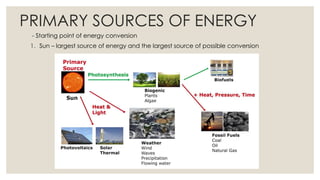
PRIMARY SOURCES OF ENERGY
- Starting point of energy conversion
1. Sun – largest source of energy and the largest source of possible conversion
PRIMARY SOURCES OF ENERGY
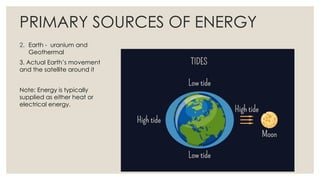
2. Earth - uranium and
Geothermal
3. Actual Earth’s movement
and the satellite around it
Note: Energy is typically
supplied as either heat or
electrical energy.
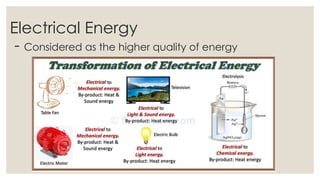
Electrical Energy
- Considered as the higher quality of energy
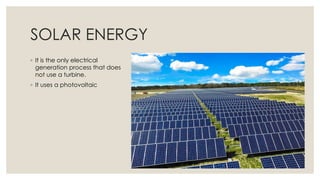
SOLAR ENERGY
◦ It is the only electrical
generation process that does
not use a turbine.
◦ It uses a photovoltaic
What is a PHOTOVOLTAIC?
◦ devices convert sunlight into electrical energy.
◦ It is derived from the Greek word “photo” which means light, and from "volt", the unit of
electromotive force, the volt, which in turn comes from the last name of
the Italian physicist Alessandro Volta, inventor of the battery (electrochemical cell).
◦ It is also known as Solar Panel.
Components of a Solar Panel
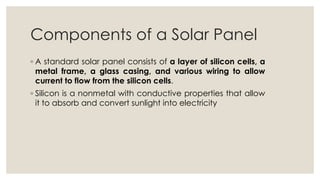
◦ A standard solar panel consists of a layer of silicon cells, a
metal frame, a glass casing, and various wiring to allow
current to flow from the silicon cells.
◦ Silicon is a nonmetal with conductive properties that allow
it to absorb and convert sunlight into electricity
Solar Cell
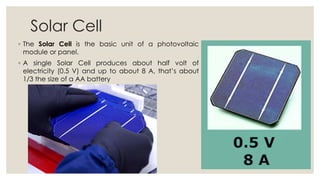
◦ The Solar Cell is the basic unit of a photovoltaic
module or panel.
◦ A single Solar Cell produces about half volt of
electricity (0.5 V) and up to about 8 A, that’s about
1/3 the size of a AA battery
Solar Modules
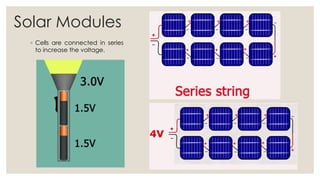
◦ Cells are connected in series
to increase the voltage.
Solar Modules
◦ The series string is laminated to backing material, sealed in a
weather coat plastic coating and then a cover glass is
placed on top often with an aluminum frame around the
edges.
◦ This assembly is called the PV module, also referred to as a
solar panel.
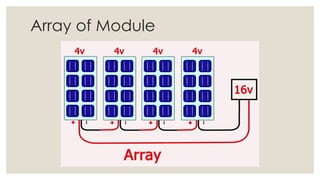
Array of Module
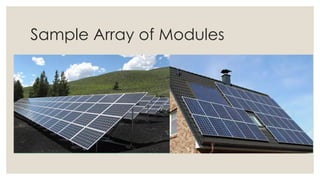
Sample Array of Modules
How do Solar Cells Work?
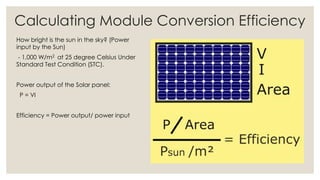
Calculating Module Conversion Efficiency
How bright is the sun in the sky? (Power
input by the Sun)
- 1,000 W/m2 at 25 degree Celsius Under
Standard Test Condition (STC).
Power output of the Solar panel:
P = VI
Efficiency = Power output/ power input
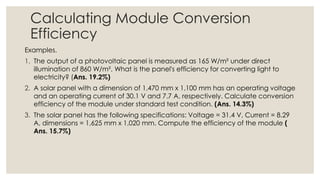
Calculating Module Conversion
Efficiency
Examples.
1. The output of a photovoltaic panel is measured as 165 W/m² under direct
illumination of 860 W/m². What is the panel's efficiency for converting light to
electricity? (Ans. 19.2%)
2. A solar panel with a dimension of 1,470 mm x 1,100 mm has an operating voltage
and an operating current of 30.1 V and 7.7 A, respectively. Calculate conversion
efficiency of the module under standard test condition. (Ans. 14.3%)
3. The solar panel has the following specifications: Voltage = 31.4 V, Current = 8.29
A, dimensions = 1,625 mm x 1,020 mm. Compute the efficiency of the module (
Ans. 15.7%)
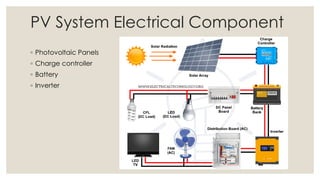
PV System Electrical Component
◦ Photovoltaic Panels
◦ Charge controller
◦ Battery
◦ Inverter
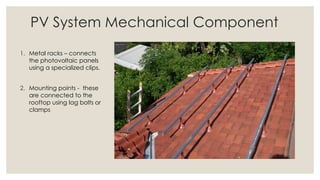
PV System Mechanical Component
1. Metal racks – connects
the photovoltaic panels
using a specialized clips.
2. Mounting points - these
are connected to the
rooftop using lag bolts or
clamps
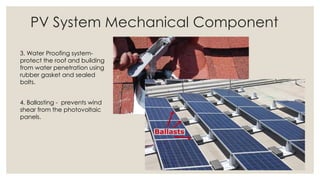
PV System Mechanical Component
3. Water Proofing system-
protect the roof and building
from water penetration using
rubber gasket and sealed
bolts.
4. Ballasting - prevents wind
shear from the photovoltaic
panels.
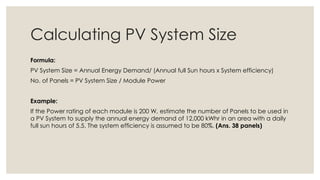
Calculating PV System Size
Formula:
PV System Size = Annual Energy Demand/ (Annual full Sun hours x System efficiency)
No. of Panels = PV System Size / Module Power
Example:
If the Power rating of each module is 200 W, estimate the number of Panels to be used in
a PV System to supply the annual energy demand of 12,000 kWhr in an area with a daily
full sun hours of 5.5. The system efficiency is assumed to be 80%. (Ans. 38 panels)
THANK YOU FOR YOUR ATTENTION!
-----Ma’am Jane

2.-SOLAR-ENERGY (2).pdf

  • 1.
    CHAPTER 2: SOLAR ENERGY Preparedby: Engr. Jane M. Tecson Course Instructor
  • 2.
    Objectives: 1. Present thedifferent types of solar power. 2. Explain the source of solar energy. 3. Estimate the available solar power. 4. Describe the design of solar energy collectors and its components. 5. Estimate the PV system size.
  • 3.
    PRIMARY SOURCES OFENERGY - Starting point of energy conversion 1. Sun – largest source of energy and the largest source of possible conversion
  • 4.
    PRIMARY SOURCES OFENERGY 2. Earth - uranium and Geothermal 3. Actual Earth’s movement and the satellite around it Note: Energy is typically supplied as either heat or electrical energy.
  • 5.
    Electrical Energy - Consideredas the higher quality of energy
  • 6.
    SOLAR ENERGY ◦ Itis the only electrical generation process that does not use a turbine. ◦ It uses a photovoltaic
  • 7.
    What is aPHOTOVOLTAIC? ◦ devices convert sunlight into electrical energy. ◦ It is derived from the Greek word “photo” which means light, and from "volt", the unit of electromotive force, the volt, which in turn comes from the last name of the Italian physicist Alessandro Volta, inventor of the battery (electrochemical cell). ◦ It is also known as Solar Panel.
  • 8.
    Components of aSolar Panel ◦ A standard solar panel consists of a layer of silicon cells, a metal frame, a glass casing, and various wiring to allow current to flow from the silicon cells. ◦ Silicon is a nonmetal with conductive properties that allow it to absorb and convert sunlight into electricity
  • 9.
    Solar Cell ◦ TheSolar Cell is the basic unit of a photovoltaic module or panel. ◦ A single Solar Cell produces about half volt of electricity (0.5 V) and up to about 8 A, that’s about 1/3 the size of a AA battery
  • 10.
    Solar Modules ◦ Cellsare connected in series to increase the voltage.
  • 11.
    Solar Modules ◦ Theseries string is laminated to backing material, sealed in a weather coat plastic coating and then a cover glass is placed on top often with an aluminum frame around the edges. ◦ This assembly is called the PV module, also referred to as a solar panel.
  • 12.
  • 13.
  • 14.
    How do SolarCells Work?
  • 15.
    Calculating Module ConversionEfficiency How bright is the sun in the sky? (Power input by the Sun) - 1,000 W/m2 at 25 degree Celsius Under Standard Test Condition (STC). Power output of the Solar panel: P = VI Efficiency = Power output/ power input
  • 16.
    Calculating Module Conversion Efficiency Examples. 1.The output of a photovoltaic panel is measured as 165 W/m² under direct illumination of 860 W/m². What is the panel's efficiency for converting light to electricity? (Ans. 19.2%) 2. A solar panel with a dimension of 1,470 mm x 1,100 mm has an operating voltage and an operating current of 30.1 V and 7.7 A, respectively. Calculate conversion efficiency of the module under standard test condition. (Ans. 14.3%) 3. The solar panel has the following specifications: Voltage = 31.4 V, Current = 8.29 A, dimensions = 1,625 mm x 1,020 mm. Compute the efficiency of the module ( Ans. 15.7%)
  • 17.
    PV System ElectricalComponent ◦ Photovoltaic Panels ◦ Charge controller ◦ Battery ◦ Inverter
  • 18.
    PV System MechanicalComponent 1. Metal racks – connects the photovoltaic panels using a specialized clips. 2. Mounting points - these are connected to the rooftop using lag bolts or clamps
  • 19.
    PV System MechanicalComponent 3. Water Proofing system- protect the roof and building from water penetration using rubber gasket and sealed bolts. 4. Ballasting - prevents wind shear from the photovoltaic panels.
  • 20.
    Calculating PV SystemSize Formula: PV System Size = Annual Energy Demand/ (Annual full Sun hours x System efficiency) No. of Panels = PV System Size / Module Power Example: If the Power rating of each module is 200 W, estimate the number of Panels to be used in a PV System to supply the annual energy demand of 12,000 kWhr in an area with a daily full sun hours of 5.5. The system efficiency is assumed to be 80%. (Ans. 38 panels)
  • 21.
    THANK YOU FORYOUR ATTENTION! -----Ma’am Jane