“Not all patients are as well as they
appear and not all patients are as
sick as they think.”
Triage
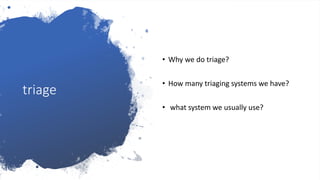
triage
• Why we do triage?
• How many triaging systems we have?
• what system we usually use?
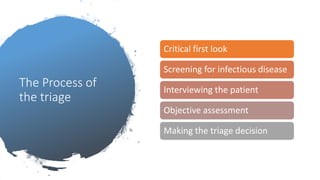
The Process of
the triage
Critical first look
Screening for infectious disease
Interviewing the patient
Objective assessment
Making the triage decision
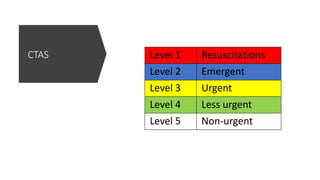
CTAS Level 1 Resuscitations
Level 2 Emergent
Level 3 Urgent
Level 4 Less urgent
Level 5 Non-urgent
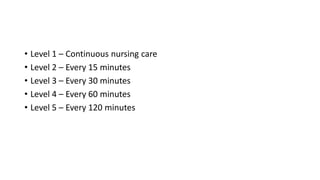
• Level 1 – Continuous nursing care
• Level 2 – Every 15 minutes
• Level 3 – Every 30 minutes
• Level 4 – Every 60 minutes
• Level 5 – Every 120 minutes
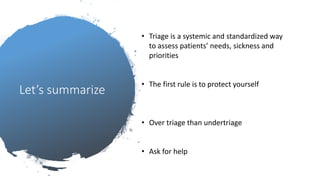
Let’s summarize
• Triage is a systemic and standardized way
to assess patients’ needs, sickness and
priorities
• The first rule is to protect yourself
• Over triage than undertriage
• Ask for help
Disaster
• Do the most good for the most
Questions?

2-Introduction to emergency and triage.pdf

  • 1.
    “Not all patientsare as well as they appear and not all patients are as sick as they think.” Triage
  • 2.
    triage • Why wedo triage? • How many triaging systems we have? • what system we usually use?
  • 3.
    The Process of thetriage Critical first look Screening for infectious disease Interviewing the patient Objective assessment Making the triage decision
  • 4.
    CTAS Level 1Resuscitations Level 2 Emergent Level 3 Urgent Level 4 Less urgent Level 5 Non-urgent
  • 5.
    • Level 1– Continuous nursing care • Level 2 – Every 15 minutes • Level 3 – Every 30 minutes • Level 4 – Every 60 minutes • Level 5 – Every 120 minutes
  • 6.
    Let’s summarize • Triageis a systemic and standardized way to assess patients’ needs, sickness and priorities • The first rule is to protect yourself • Over triage than undertriage • Ask for help
  • 7.
    Disaster • Do themost good for the most
  • 9.