Thank God!
Win-Win
Situation
?
程可安
Anna Ann
政大財管大三
Taiwan-VYA
Personal Project
Abu Dhabi /
Kuala Lumpur
18 hours transfer
FINALLY!!!!
KVDA, Nairobi
Emmutsa Primary School.
WHAT Happens?!
A founder of
“Shoes to Kenya”
2Primary Schools
600Pairs of Shoes
$75,000 FlyingV &Stall Funds
Insight.
Research.
"dead yovo"
"broni wa wo."
“dead white person clothing.”
Dr. Andrew Brooks
King's College, London
"The long-term effect is that
countries can't really
establish or protect their
own clothing industries if
they are importing second-
hand goods."
Dependence
Business Crush
Culture
Colonization
3 Facts!
Look behind the PROBLEM.
$10$50
?
Fact 1
Business Crush
Undercut
Undermine
Entire textile
and garment
business
in Africa
True Case
Uganda
Nigeria
Malawi
Mozambique
3 textile factories close
2,500
textile workers lost jobs(Nigeria)
Hundreds of thousands of
African workers lost jobs(Kenya)
Strikes by textile workers
Heading to Bankruptcy
Shutoff
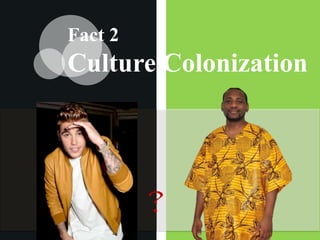
Fact 2
Culture Colonization
Teenagers…
Movie
Music
Another way of
Colonized
True Case
Ghana
National Friday Wear
Encourage citizens to dress
in traditional clothes.
Fact 3
Dependence
Empower Give out
Job is less
+
People is unwilling to work
= Poverty
High
Unemployment
Rate
“Want to Help Africa?
Do Business Here.”
Ngozi
Okonjo
Iweala
The First
Finance Minister
in Nigeria
Managing
director of
World Bank
The Africa Poverty
The Africa Malaria
The Africa HIV
The Africa Conflict
The Africa Disaster
“Look behind the Problem.”
Dr. Andrew Brooks
King's College, London
"It doesn't help the poor get
richer, it just keeps things as
they are at the moment."
Donating…
Short-term gain,
long-term pain.
A Lovely Country
Understand.
從非洲看見台灣

創人物2015.4月 - 程可安 - 大”鞋”生了沒? 創辦人

Editor's Notes

  • #4 On the surface, the recycling of used clothes, often charitably donated, means old garments don't go to waste, while new owners get a bargain. It seems like a "win-win" situation. Western charities receive much-needed revenue, African buyers with weak purchasing power get low-priced, well-made clothing, and merchants find eager customers for their merchandise.
  • #16 Especially telling are the various names, phrases and labels attached to the industry. In Togo, the garments are referred to as "dead yovo" clothing. Translation: “dead white person clothing.” Across the border, in Ghana, my native country, the used clothing is called "broni wa wo." Literally translated, this expression means: “a white man has died.” After all, only death could separate a white person from such wonderful clothing: jeans—skinny, bootleg, stonewashed, stretch; faux Burberry dresses, trousers, scarves;
  • #17 Lecturer in Development Geography and Undergraduate Tutor in Kings college Clothing, Fashion and Textile Industries  Economic and Social Change in Southern Africa  Second-hand Geographies Geographies of Consumption and Production BRICS in Africa Andrew Brooks, lecturer at King's College London and co-author of a study called "Unravelling the Relationships between Used-Clothing Imports and the Decline of African Clothing Industries."
  • #20 Those clothes are imported throughout the African continent and then sold cheaply in African marketplaces. These low prices undercut local retailers and undermine the entire textile and garment business in Africa.   The importing is sometimes done by enterprising individuals, but, more often than not, this huge, multimillion-dollar industry is orchestrated by charitable multinational organizations. These aid agencies' primary mission  is, ostensibly, to provide various forms of relief to residents—not only in the harrowing face of disaster, but also through the challenging facts of day-to-day life. That’s one major aspect of the controversy surrounding the industry. 
  • #21 About 2,500 textile workers have lost their jobs following the closure of three textile factories bringing to the total number of thirty-eight, with the closure of International Textile Industry in Isolo and its processing house in Ikorodu, First Spinners Limited and Reliance Textile Industry In some countries, the preference for used clothes has all but killed the local textile industry. The used-clothing industry is Kenya’s seventh largest import, raking in well over 60 million euros per year. Hundreds of thousands of African workers have lost their jobs as a result of these imports. In Malawi, the largest textile company had to close its doors. Other such companies in Mozambique and Uganda are headed toward bankruptcy. Zambian textile workers have staged several strikes in an effort to promote national and international awareness of their plight.
  • #22 Part of the problem is that younger generations no longer want to wear "outdated" traditional attire; instead, they crave the sort of sophistication and modernity promised in the pages of American and European magazines.
  • #23 They covet the styles they see on the latest television shows—Hollywood sitcoms and celebrity gossip shows imported by a fast-paced cable market. And the controversial used-clothing trade is quick in its attempt to fill each and every one of those fashion desires. 
  • #24 In Ghana, the government has tried to rejuvenate their local textile industry by announcing a program called National Friday Wear, which encourages all citizens to dress in traditional clothes in hopes that the trend will spill over into other days. http://www.csmonitor.com/2004/1227/p04s01-woaf.html African designers have mounted a spirited defense. Many are biting back at the Western world and revitalizing the fashion industries in their own countries, industries which had nearly been brought to a grinding halt by the demands of a changing market.
  • #26 http://www.economist.com/node/18233702
  • #27 As the first female Finance Minister in Nigeria, Ngozi Okonjo-Iweala attacks corruption to make the country more desirable for investment and jobs. As a managing director of the World Bank, she worked for change in all of Africa. During her two stints as Finance Minister, she has worked to combat corruption, make Nigeria's finances more transparent, and institute reforms to make the nation's economy more hospitable to foreign investment. The government unlinked its budget from the price of oil, its main export, to lessen perennial cashflow crises, and got oil companies topublish how much they pay the government.  Since 2003 -- when watchdog group Transparency International rated Nigeria "the most corrupt place on Earth" -- the nation has made headway recovering stolen assets and jailing hundreds of people engaged in international Internet 419 scams.
  • #30 Used t-shirts, jeans and dresses can satisfy a basic need for affordable clothing, they ultimately help keep people in poverty. Lecturer in Development Geography and Undergraduate Tutor in Kings college Clothing, Fashion and Textile Industries  Economic and Social Change in Southern Africa  Second-hand Geographies Geographies of Consumption and Production BRICS in Africa Andrew Brooks, lecturer at King's College London and co-author of a study called "Unravelling the Relationships between Used-Clothing Imports and the Decline of African Clothing Industries."