Download as PDF, PPTX


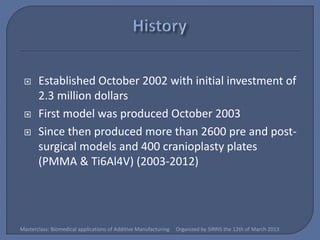
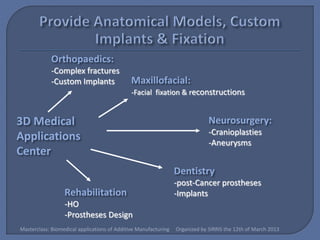
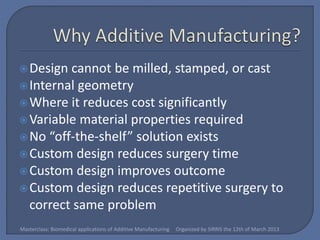
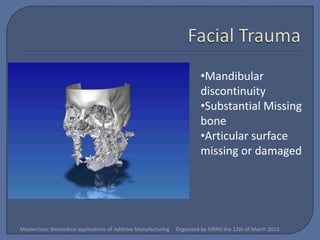
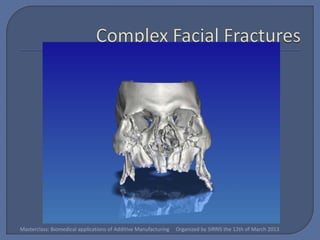
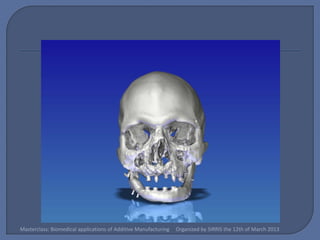
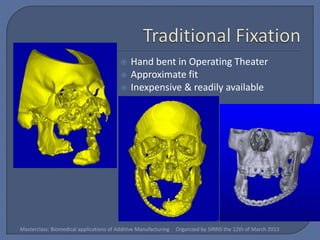
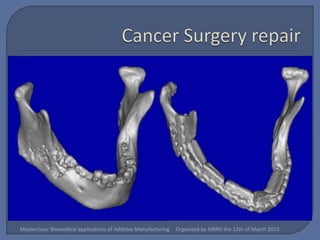
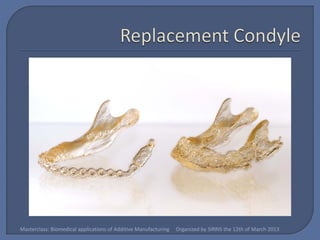
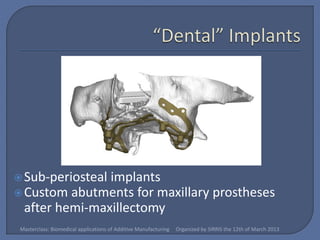
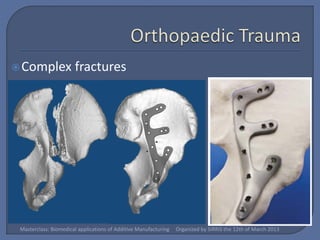
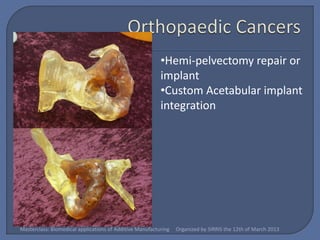
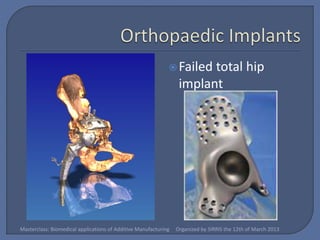
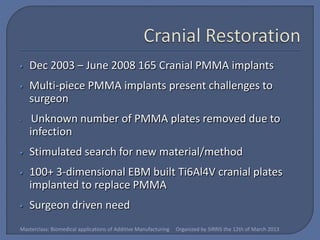
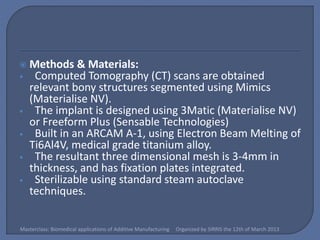
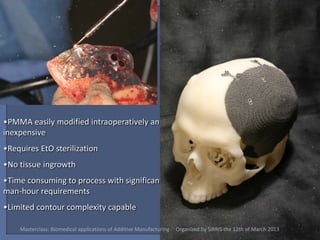
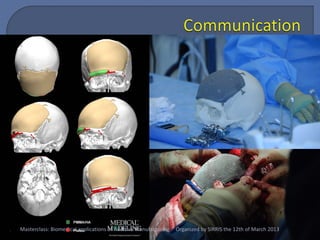
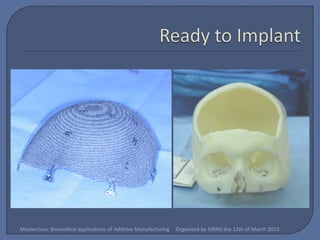
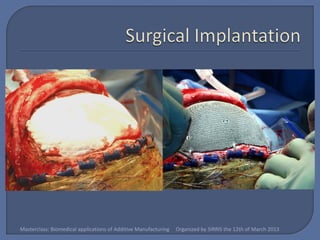
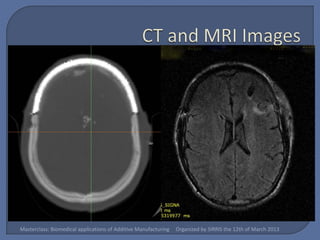
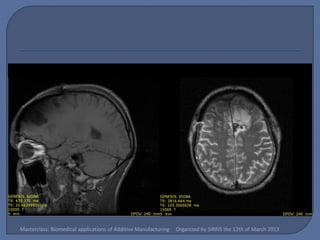
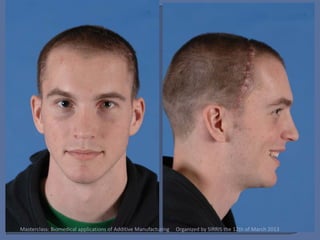
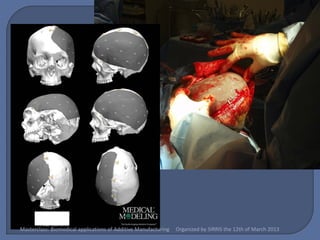
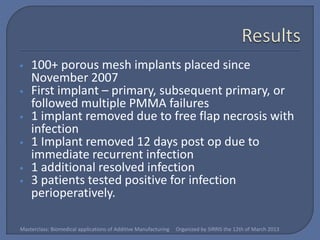


The document discusses the role of additive manufacturing in trauma and reconstructive surgery based on lessons learned at the 3D Medical Applications Center. It summarizes that over 2600 pre- and post-surgical models and 400 cranioplasty plates were produced between 2003-2012. Challenges with existing solutions and benefits of custom designs for complex cases are outlined. The transition from PMMA to Ti6Al4V cranial plates is described, noting reduced challenges and improved outcomes. Requirements for ensuring quality and collaborating closely with surgeons are emphasized.


