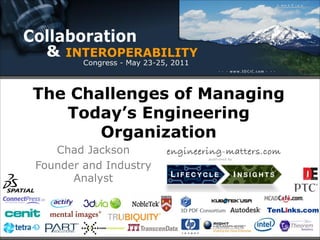
The Challenges of Managing
   Today’s Engineering
       Organization
   Chad Jackson
Founder and Industry
      Analyst
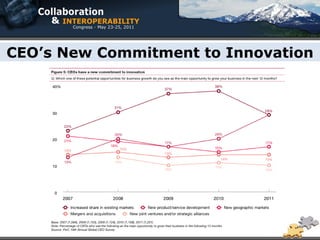
CEO’s New Commitment to Innovation
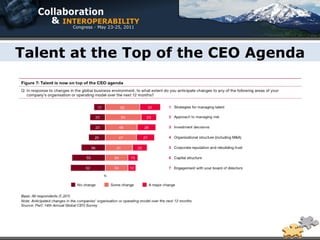
Talent at the Top of the CEO Agenda
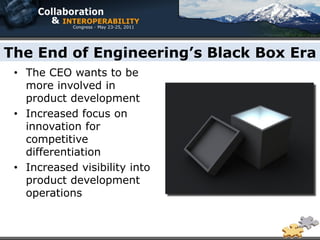
The End of Engineering’s Black Box Era
 • The CEO wants to be
   more involved in
   product development
 • Increased focus on
   innovation for
   competitive
   differentiation
 • Increased visibility into
   product development
   operations
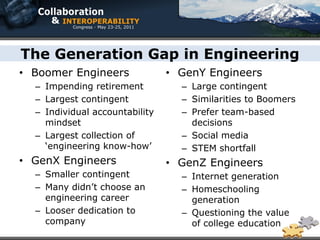
The Generation Gap in Engineering
• Boomer Engineers              • GenY Engineers
  – Impending retirement          – Large contingent
  – Largest contingent            – Similarities to Boomers
  – Individual accountability     – Prefer team-based
    mindset                         decisions
  – Largest collection of         – Social media
    ‘engineering know-how’        – STEM shortfall
• GenX Engineers                • GenZ Engineers
  – Smaller contingent            – Internet generation
  – Many didn’t choose an         – Homeschooling
    engineering career              generation
  – Looser dedication to          – Questioning the value
    company                         of college education
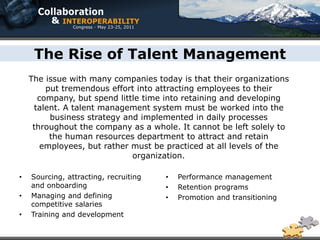
The Rise of Talent Management
    The issue with many companies today is that their organizations
        put tremendous effort into attracting employees to their
      company, but spend little time into retaining and developing
     talent. A talent management system must be worked into the
         business strategy and implemented in daily processes
     throughout the company as a whole. It cannot be left solely to
         the human resources department to attract and retain
       employees, but rather must be practiced at all levels of the
                             organization.

•   Sourcing, attracting, recruiting   •   Performance management
    and onboarding                     •   Retention programs
•   Managing and defining              •   Promotion and transitioning
    competitive salaries
•   Training and development
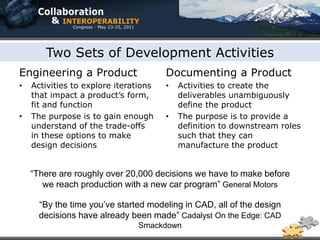
Two Sets of Development Activities
Engineering a Product                  Documenting a Product
•   Activities to explore iterations   •   Activities to create the
    that impact a product’s form,          deliverables unambiguously
    fit and function                       define the product
•   The purpose is to gain enough      •   The purpose is to provide a
    understand of the trade-offs           definition to downstream roles
    in these options to make               such that they can
    design decisions                       manufacture the product


    “There are roughly over 20,000 decisions we have to make before
       we reach production with a new car program” General Motors

      “By the time you’ve started modeling in CAD, all of the design
      decisions have already been made” Cadalyst On the Edge: CAD
                                Smackdown
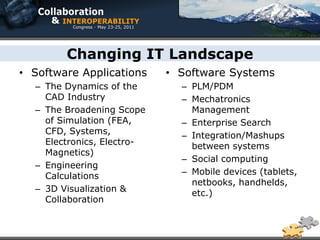
Changing IT Landscape
• Software Applications     • Software Systems
  – The Dynamics of the       – PLM/PDM
    CAD Industry              – Mechatronics
  – The Broadening Scope        Management
    of Simulation (FEA,       – Enterprise Search
    CFD, Systems,             – Integration/Mashups
    Electronics, Electro-       between systems
    Magnetics)
                              – Social computing
  – Engineering
    Calculations              – Mobile devices (tablets,
                                netbooks, handhelds,
  – 3D Visualization &          etc.)
    Collaboration
Panel Discussion: Getting the Most Out of Your Engineering
                       Organization
Panelists (3): Kiho Sohn, Chief Knowledge Officer at Pratt &
Whitney Rocketdyne, Robert Deragisch, Director
Engineering Services at Parker Hannifin and Tom Crume,
Senior Manager of CAD/CAM Services at Boeing

Has managing an engineering organization ever been more
difficult? Most projects are understaffed and on shorter
schedules. The generation differences from Baby Boomers
to GenX and GenY are a source of friction. And product
complexity is only rising. This panelist discussion will share
best practices and approaches on how to get the most out
of today's engineering organization.
Mitigating the Risk in PLM Migration
Speaker: Vijay Vasandani, Nobletek

Many companies, often as a result of merger, acquisition,
or consolidation, are forced into a situation where they
must deal with multiple systems managing their product
data. From an enterprise level IT perspective, there are
obvious challenges to maintaining multiple PLM systems
but migrating the enterprise to a single PLM system can
also be a daunting task. An approach that stages PLM
migration through federation during transition from a
legacy system to a new system can help mitigate the risk
of failure. The merits of this approach and when it can be
used effectively will be discussed along with successful
case studies to demonstrate the viability of the concept in
real world scenarios.
Panel Discussion: Empowering Engineering Decision Making
Engineering Management Panelists (3): Rick Mihelic, Engineering Systems
Manager at Peterbilt Motors Company, Robert Deragisch, Director
Engineering Services at Parker Hannifin and Nate Nalven, Engineering
Director at Northrup Grumman

Software Provider Panelists (5): Bob Merlo, Right Hemisphere, Bill
Barnes, Lattice 3D, Doug Halliday, Trubiquity, Ed Martin, Autodesk and Ed
Ladzinkski, Dassault Systemes

We all know the age old adage: early engineering decisions dramatically
affect the cost, schedule and quality of the product downstream. So given
that, how do you go enable your engineers to make the right decisions
fast? This panel discussion will address that issue in the context of three
challenges. First, product information is often scattered across many
enterprise systems such as PLM, ERP, SCM and the like. Second, that
product information is often not in the context of the product or part to
which it applies. And third, engineers have lifecycle responsibilities that pull
them far and wide across the company, undermining their ability to become
experts in any software application or enterprise system.
The Challenges of Managing
   Today’s Engineering
       Organization
   Chad Jackson
Founder and Industry
      Analyst

2011 3DCIC Management Forum Opening

  • 1.
    The Challenges ofManaging Today’s Engineering Organization Chad Jackson Founder and Industry Analyst
  • 2.
  • 3.
    Talent at theTop of the CEO Agenda
  • 4.
    The End ofEngineering’s Black Box Era • The CEO wants to be more involved in product development • Increased focus on innovation for competitive differentiation • Increased visibility into product development operations
  • 5.
    The Generation Gapin Engineering • Boomer Engineers • GenY Engineers – Impending retirement – Large contingent – Largest contingent – Similarities to Boomers – Individual accountability – Prefer team-based mindset decisions – Largest collection of – Social media ‘engineering know-how’ – STEM shortfall • GenX Engineers • GenZ Engineers – Smaller contingent – Internet generation – Many didn’t choose an – Homeschooling engineering career generation – Looser dedication to – Questioning the value company of college education
  • 6.
    The Rise ofTalent Management The issue with many companies today is that their organizations put tremendous effort into attracting employees to their company, but spend little time into retaining and developing talent. A talent management system must be worked into the business strategy and implemented in daily processes throughout the company as a whole. It cannot be left solely to the human resources department to attract and retain employees, but rather must be practiced at all levels of the organization. • Sourcing, attracting, recruiting • Performance management and onboarding • Retention programs • Managing and defining • Promotion and transitioning competitive salaries • Training and development
  • 7.
    Two Sets ofDevelopment Activities Engineering a Product Documenting a Product • Activities to explore iterations • Activities to create the that impact a product’s form, deliverables unambiguously fit and function define the product • The purpose is to gain enough • The purpose is to provide a understand of the trade-offs definition to downstream roles in these options to make such that they can design decisions manufacture the product “There are roughly over 20,000 decisions we have to make before we reach production with a new car program” General Motors “By the time you’ve started modeling in CAD, all of the design decisions have already been made” Cadalyst On the Edge: CAD Smackdown
  • 8.
    Changing IT Landscape •Software Applications • Software Systems – The Dynamics of the – PLM/PDM CAD Industry – Mechatronics – The Broadening Scope Management of Simulation (FEA, – Enterprise Search CFD, Systems, – Integration/Mashups Electronics, Electro- between systems Magnetics) – Social computing – Engineering Calculations – Mobile devices (tablets, netbooks, handhelds, – 3D Visualization & etc.) Collaboration
  • 9.
    Panel Discussion: Gettingthe Most Out of Your Engineering Organization Panelists (3): Kiho Sohn, Chief Knowledge Officer at Pratt & Whitney Rocketdyne, Robert Deragisch, Director Engineering Services at Parker Hannifin and Tom Crume, Senior Manager of CAD/CAM Services at Boeing Has managing an engineering organization ever been more difficult? Most projects are understaffed and on shorter schedules. The generation differences from Baby Boomers to GenX and GenY are a source of friction. And product complexity is only rising. This panelist discussion will share best practices and approaches on how to get the most out of today's engineering organization.
  • 10.
    Mitigating the Riskin PLM Migration Speaker: Vijay Vasandani, Nobletek Many companies, often as a result of merger, acquisition, or consolidation, are forced into a situation where they must deal with multiple systems managing their product data. From an enterprise level IT perspective, there are obvious challenges to maintaining multiple PLM systems but migrating the enterprise to a single PLM system can also be a daunting task. An approach that stages PLM migration through federation during transition from a legacy system to a new system can help mitigate the risk of failure. The merits of this approach and when it can be used effectively will be discussed along with successful case studies to demonstrate the viability of the concept in real world scenarios.
  • 11.
    Panel Discussion: EmpoweringEngineering Decision Making Engineering Management Panelists (3): Rick Mihelic, Engineering Systems Manager at Peterbilt Motors Company, Robert Deragisch, Director Engineering Services at Parker Hannifin and Nate Nalven, Engineering Director at Northrup Grumman Software Provider Panelists (5): Bob Merlo, Right Hemisphere, Bill Barnes, Lattice 3D, Doug Halliday, Trubiquity, Ed Martin, Autodesk and Ed Ladzinkski, Dassault Systemes We all know the age old adage: early engineering decisions dramatically affect the cost, schedule and quality of the product downstream. So given that, how do you go enable your engineers to make the right decisions fast? This panel discussion will address that issue in the context of three challenges. First, product information is often scattered across many enterprise systems such as PLM, ERP, SCM and the like. Second, that product information is often not in the context of the product or part to which it applies. And third, engineers have lifecycle responsibilities that pull them far and wide across the company, undermining their ability to become experts in any software application or enterprise system.
  • 12.
    The Challenges ofManaging Today’s Engineering Organization Chad Jackson Founder and Industry Analyst