20 Reasons B2B Loves
Account-Based Marketing
Phil Hollrah
VP of Product Marketing, Demandbase
@Philhollrah
John Dering
Director, Marketing Prorgams, Demandbase
@D_Rang
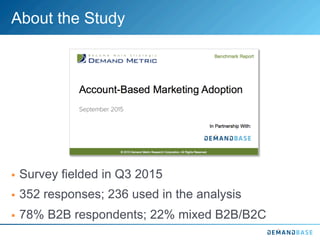
About the Study
§  Survey fielded in Q3 2015
§  352 responses; 236 used in the analysis
§  78% B2B respondents; 22% mixed B2B/B2C
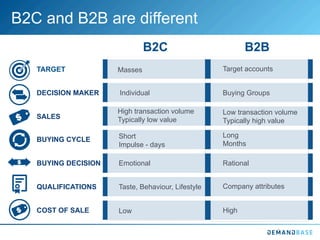
B2C and B2B are different
TARGET
DECISION MAKER
SALES
BUYING CYCLE
BUYING DECISION
QUALIFICATIONS
COST OF SALE
Target accounts
Buying Groups
Low transaction volume
Typically high value
Long
Months
Rational
Company attributes
High
Masses
Individual
High transaction volume
Typically low value
Short
Impulse - days
Emotional
Taste, Behaviour, Lifestyle
Low
B2C B2B
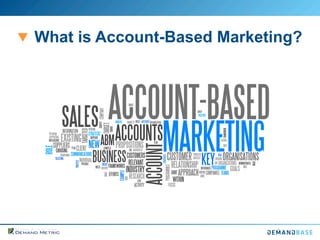
What is Account-Based Marketing?
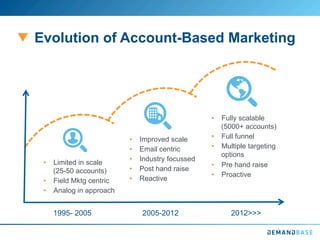
Evolution of Account-Based Marketing
1995- 2005 2005-2012 2012>>>
•  Limited in scale
(25-50 accounts)
•  Field Mktg centric
•  Analog in approach
•  Improved scale
•  Email centric
•  Industry focussed
•  Post hand raise
•  Reactive
•  Fully scalable
(5000+ accounts)
•  Full funnel
•  Multiple targeting
options
•  Pre hand raise
•  Proactive
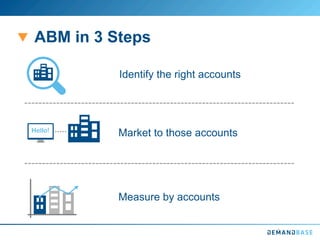
ABM in 3 Steps
Identify the right accounts
Market to those accounts
Measure by accounts
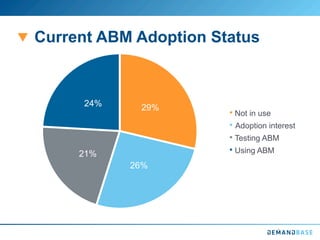
Current ABM Adoption Status
29%
26%
21%
24%
Not in use
Adoption interest
Testing ABM
Using ABM
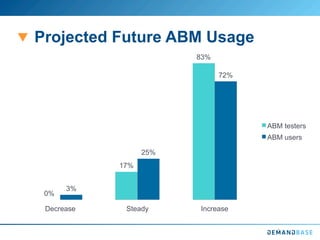
Projected Future ABM Usage
0%
17%
83%
3%
25%
72%
Decrease Steady Increase
ABM testers
ABM users
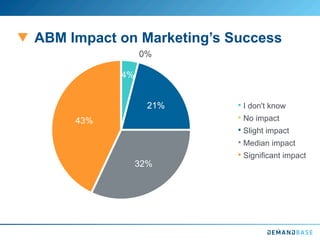
ABM Impact on Marketing’s Success
4%
0%
21%
32%
43%
I don't know
No impact
Slight impact
Median impact
Significant impact
Revenue Increase from ABM*
40%
0%
23%
18%
5%
9%
5%
No impact
1 to 9%
10 to 19%
20 to 29%
30 to 39%
40 to 49%
50% or more
* ABM in use for 1 year or more
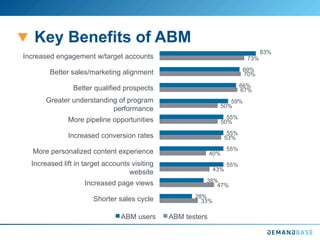
Key Benefits of ABM
33%
47%
43%
40%
53%
50%
50%
67%
70%
73%
28%
38%
55%
55%
55%
55%
59%
66%
69%
83%
Shorter sales cycle
Increased page views
Increased lift in target accounts visiting
website
More personalized content experience
Increased conversion rates
More pipeline opportunities
Greater understanding of program
performance
Better qualified prospects
Better sales/marketing alignment
Increased engagement w/target accounts
ABM users ABM testers
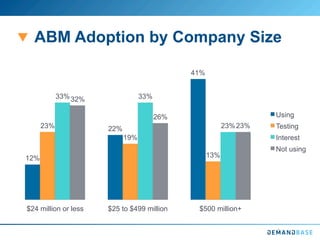
ABM Adoption by Company Size
12%
22%
41%
23%
19%
13%
33% 33%
23%
32%
26%
23%
$24 million or less $25 to $499 million $500 million+
Using
Testing
Interest
Not using
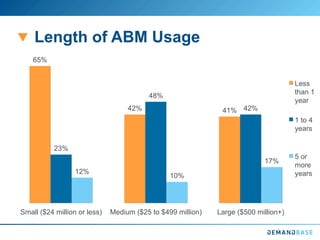
Length of ABM Usage
65%
42% 41%
23%
48%
42%
12%
10%
17%
Small ($24 million or less) Medium ($25 to $499 million) Large ($500 million+)
Less
than 1
year
1 to 4
years
5 or
more
years
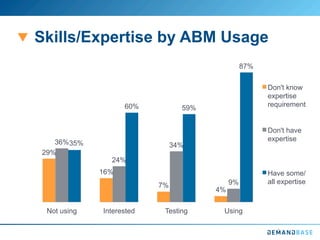
Skills/Expertise by ABM Usage
29%
16%
7%
4%
36%
24%
34%
9%
35%
60% 59%
87%
0%
10%
20%
30%
40%
50%
60%
70%
80%
90%
100%
Not using Interested Testing Using
Don't know
expertise
requirement
Don't have
expertise
Have some/
all expertise
Technology Readiness for ABM
35%
16%
24%
25%
10%
5%
27%
58%
Don't know what is needed
Don't have it, not investing
Don't have it, but investing
Have the needed technology
Using ABM Not using ABM
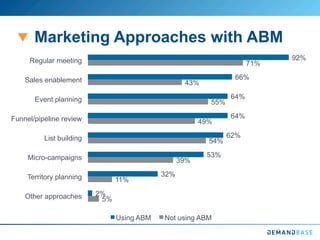
Marketing Approaches with ABM
5%
11%
39%
54%
49%
55%
43%
71%
2%
32%
53%
62%
64%
64%
66%
92%
Other approaches
Territory planning
Micro-campaigns
List building
Funnel/pipeline review
Event planning
Sales enablement
Regular meeting
Using ABM Not using ABM
What to Think About Next
§  Evaluate your current situation
§  Start small, test and learn
§  Measure your results
§  Download additional resources
§  “Account-Based Marketing Adoption” research study
§  “Account-Based Marketing: Fundamentals Every B2B
Marketer Must Know” eBook
Thank you!
Phil Hollrah
VP of Product Marketing, Demandbase
@Philhollrah
John Dering
Director, Marketing Programs, Demandbase
@D_Rang
23 Feb | Hotel Du Vin, Henley-On-Thames, Reading
24 Feb | Eight Club Moorgate, London
Register: Demandbase.com/ABMImpactUK

20 Reasons B2B Loves ABM

  • 1.
    20 Reasons B2BLoves Account-Based Marketing Phil Hollrah VP of Product Marketing, Demandbase @Philhollrah John Dering Director, Marketing Prorgams, Demandbase @D_Rang
  • 2.
    About the Study § Survey fielded in Q3 2015 §  352 responses; 236 used in the analysis §  78% B2B respondents; 22% mixed B2B/B2C
  • 3.
    B2C and B2Bare different TARGET DECISION MAKER SALES BUYING CYCLE BUYING DECISION QUALIFICATIONS COST OF SALE Target accounts Buying Groups Low transaction volume Typically high value Long Months Rational Company attributes High Masses Individual High transaction volume Typically low value Short Impulse - days Emotional Taste, Behaviour, Lifestyle Low B2C B2B
  • 4.
  • 5.
    Evolution of Account-BasedMarketing 1995- 2005 2005-2012 2012>>> •  Limited in scale (25-50 accounts) •  Field Mktg centric •  Analog in approach •  Improved scale •  Email centric •  Industry focussed •  Post hand raise •  Reactive •  Fully scalable (5000+ accounts) •  Full funnel •  Multiple targeting options •  Pre hand raise •  Proactive
  • 6.
    ABM in 3Steps Identify the right accounts Market to those accounts Measure by accounts
  • 7.
    Current ABM AdoptionStatus 29% 26% 21% 24% Not in use Adoption interest Testing ABM Using ABM
  • 8.
    Projected Future ABMUsage 0% 17% 83% 3% 25% 72% Decrease Steady Increase ABM testers ABM users
  • 9.
    ABM Impact onMarketing’s Success 4% 0% 21% 32% 43% I don't know No impact Slight impact Median impact Significant impact
  • 10.
    Revenue Increase fromABM* 40% 0% 23% 18% 5% 9% 5% No impact 1 to 9% 10 to 19% 20 to 29% 30 to 39% 40 to 49% 50% or more * ABM in use for 1 year or more
  • 11.
    Key Benefits ofABM 33% 47% 43% 40% 53% 50% 50% 67% 70% 73% 28% 38% 55% 55% 55% 55% 59% 66% 69% 83% Shorter sales cycle Increased page views Increased lift in target accounts visiting website More personalized content experience Increased conversion rates More pipeline opportunities Greater understanding of program performance Better qualified prospects Better sales/marketing alignment Increased engagement w/target accounts ABM users ABM testers
  • 12.
    ABM Adoption byCompany Size 12% 22% 41% 23% 19% 13% 33% 33% 23% 32% 26% 23% $24 million or less $25 to $499 million $500 million+ Using Testing Interest Not using
  • 13.
    Length of ABMUsage 65% 42% 41% 23% 48% 42% 12% 10% 17% Small ($24 million or less) Medium ($25 to $499 million) Large ($500 million+) Less than 1 year 1 to 4 years 5 or more years
  • 14.
    Skills/Expertise by ABMUsage 29% 16% 7% 4% 36% 24% 34% 9% 35% 60% 59% 87% 0% 10% 20% 30% 40% 50% 60% 70% 80% 90% 100% Not using Interested Testing Using Don't know expertise requirement Don't have expertise Have some/ all expertise
  • 15.
    Technology Readiness forABM 35% 16% 24% 25% 10% 5% 27% 58% Don't know what is needed Don't have it, not investing Don't have it, but investing Have the needed technology Using ABM Not using ABM
  • 16.
    Marketing Approaches withABM 5% 11% 39% 54% 49% 55% 43% 71% 2% 32% 53% 62% 64% 64% 66% 92% Other approaches Territory planning Micro-campaigns List building Funnel/pipeline review Event planning Sales enablement Regular meeting Using ABM Not using ABM
  • 17.
    What to ThinkAbout Next §  Evaluate your current situation §  Start small, test and learn §  Measure your results §  Download additional resources §  “Account-Based Marketing Adoption” research study §  “Account-Based Marketing: Fundamentals Every B2B Marketer Must Know” eBook
  • 18.
    Thank you! Phil Hollrah VPof Product Marketing, Demandbase @Philhollrah John Dering Director, Marketing Programs, Demandbase @D_Rang 23 Feb | Hotel Du Vin, Henley-On-Thames, Reading 24 Feb | Eight Club Moorgate, London Register: Demandbase.com/ABMImpactUK