Purposive Communication
The Nature of Communication
_
As we all know, human
communication is vital for survival and it
is one thing in life that we cannot avoid to do.
Express our
thoughts Exchange
ideas &
information
feelings to
others
emotions
Communication
Whatis
Communication?
-is the process of exchanging ideas,
thoughts, feelings and emotions from one
person to another with the use of symbols
which may be verbal and/or non-verbal and
aims for understanding.
Whystudy Communication?
1. To understand ourselves as a social being
2. To understand ourselves as a person
3. To gain professional competence
4. To preserve cultural values
Elements of
Human Communication
-Sender
-Receiver
-Message
-Channel
-Noise
-Context
-Feedback
Sender
-is the one who initiates
the communication.
Receiver
-provides the sender with feedback
which may prompt the sender to
clarify the message or signal to carry
on as planned.
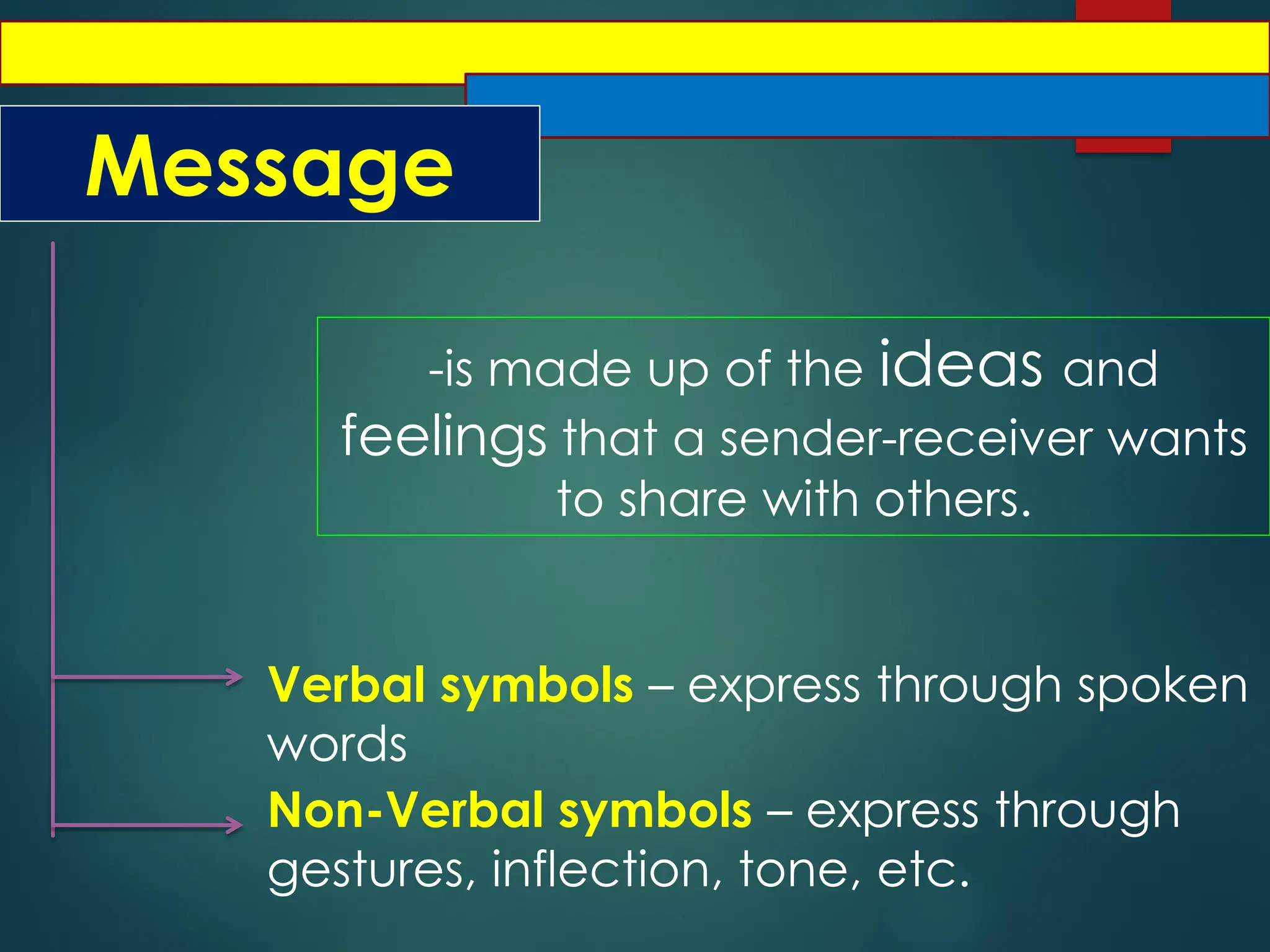
Message
-is made up of the ideas and
feelings that a sender-receiver wants
to share with others.
Verbal symbols – express through spoken
words
Non-Verbal symbols – express through
gestures, inflection, tone, etc.
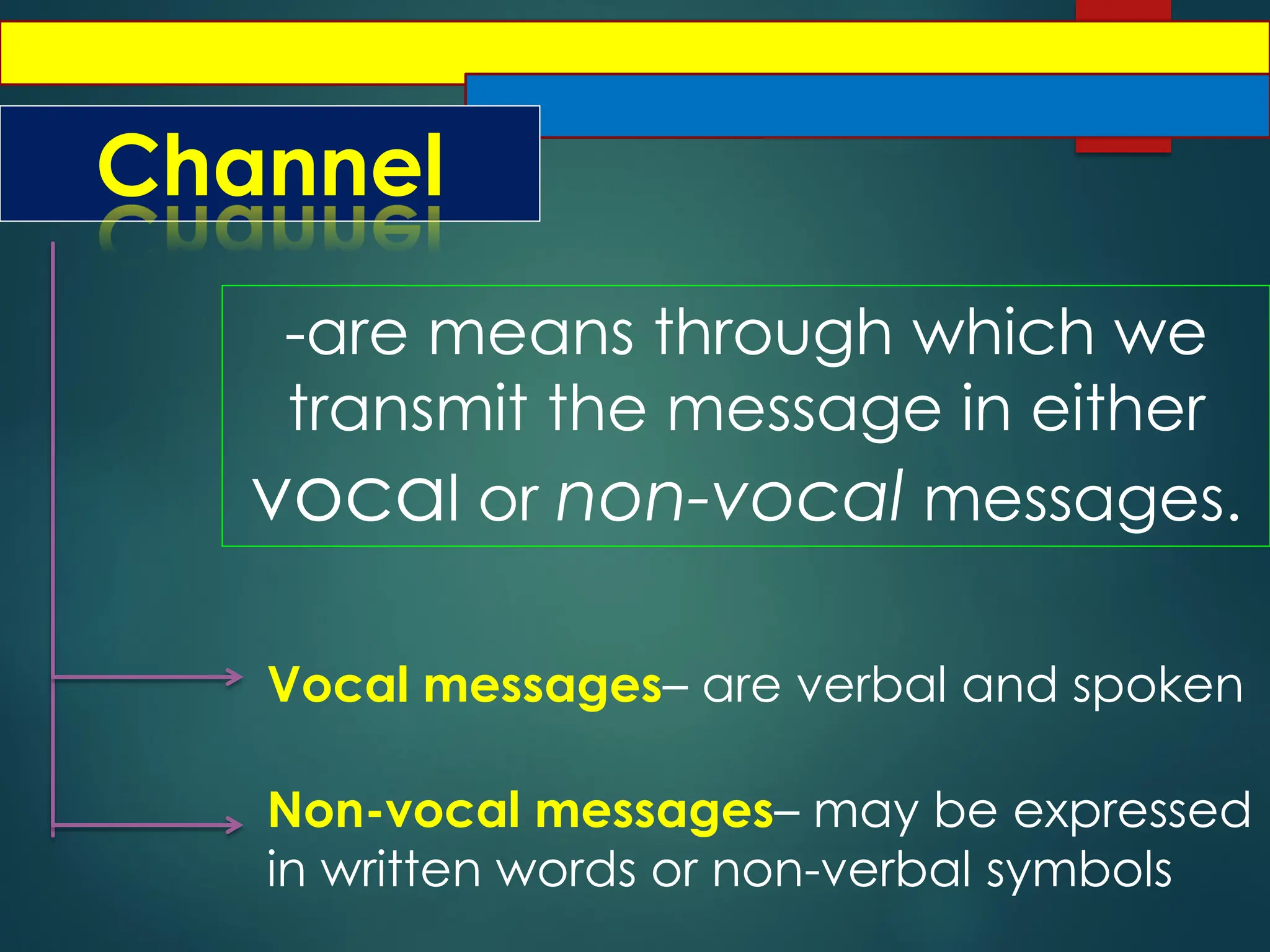
Channel
-are means through which we
transmit the message in either
vocal or non-vocal messages.
Vocal messages– are verbal and spoken
Non-vocal messages– may be expressed
in written words or non-verbal symbols
Feedback
-the behavioral response of the
sender and receiver to each other. It
is the information that comes
back to the sender of the message
and informs how well the message is
getting through.
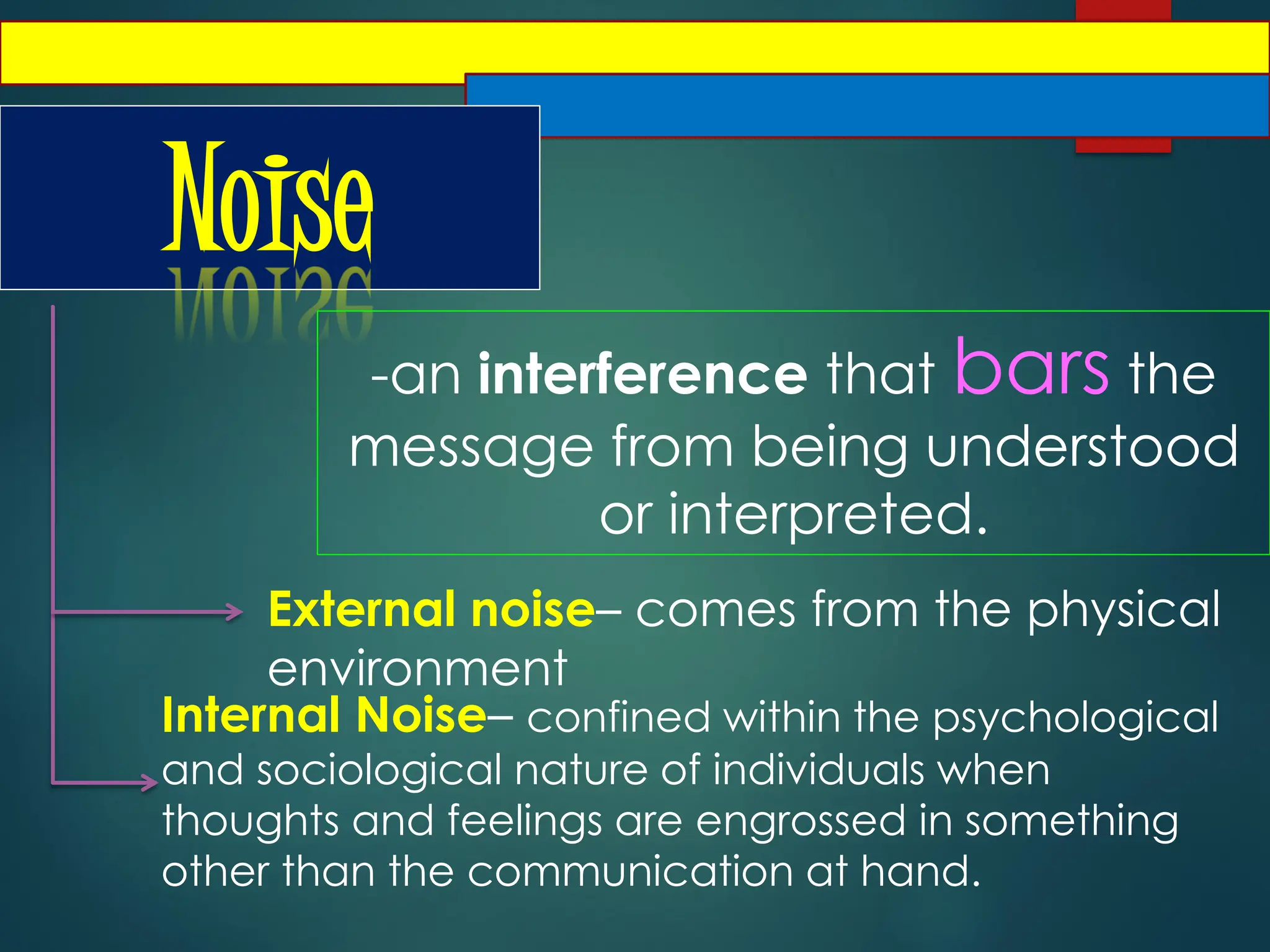
Noise
-an interference that bars the
message from being understood
or interpreted.
External noise– comes from the physical
environment
Internal Noise– confined within the psychological
and sociological nature of individuals when
thoughts and feelings are engrossed in something
other than the communication at hand.
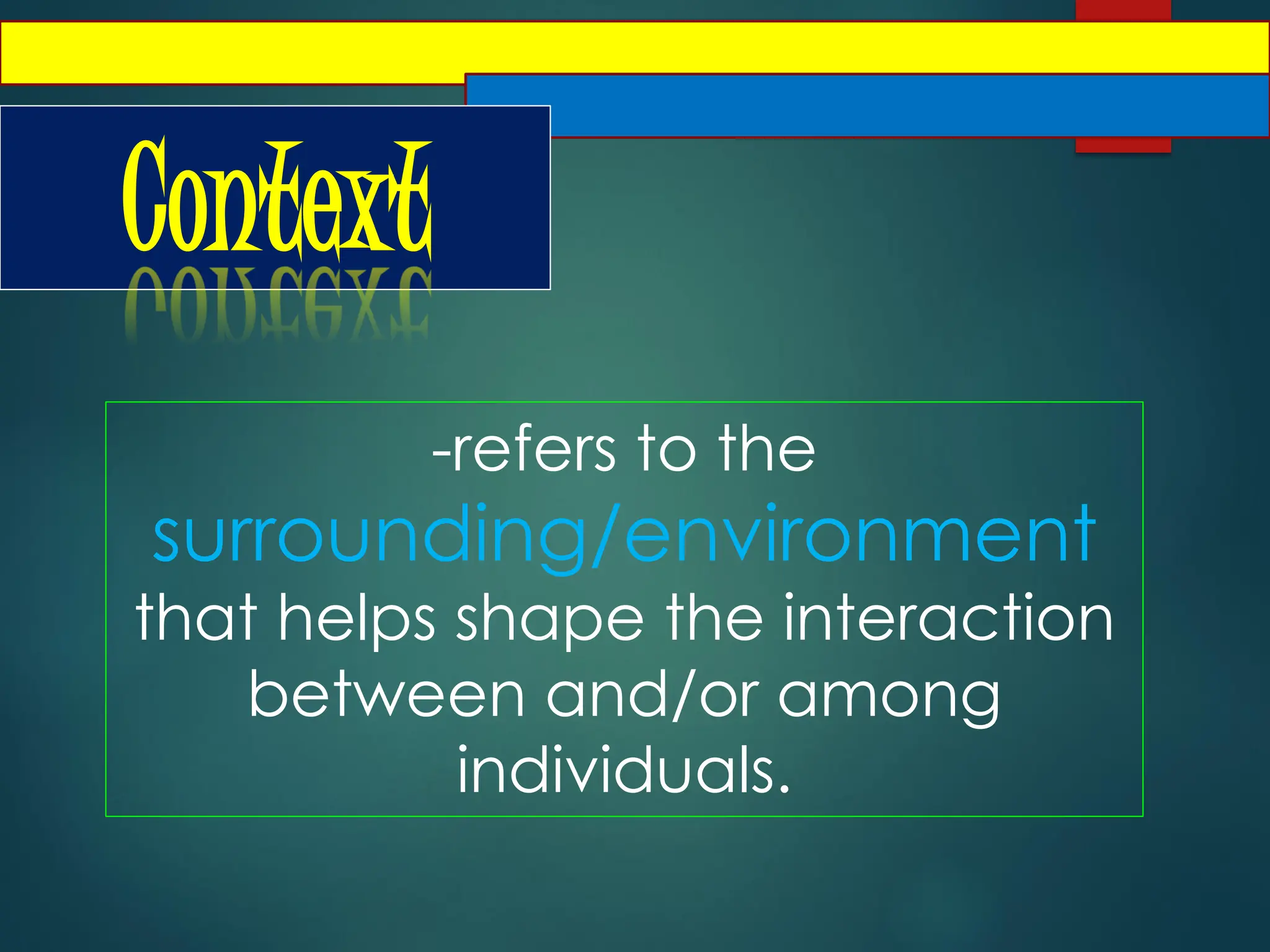
Context
-refers to the
surrounding/environment
that helps shape the interaction
between and/or among
individuals.
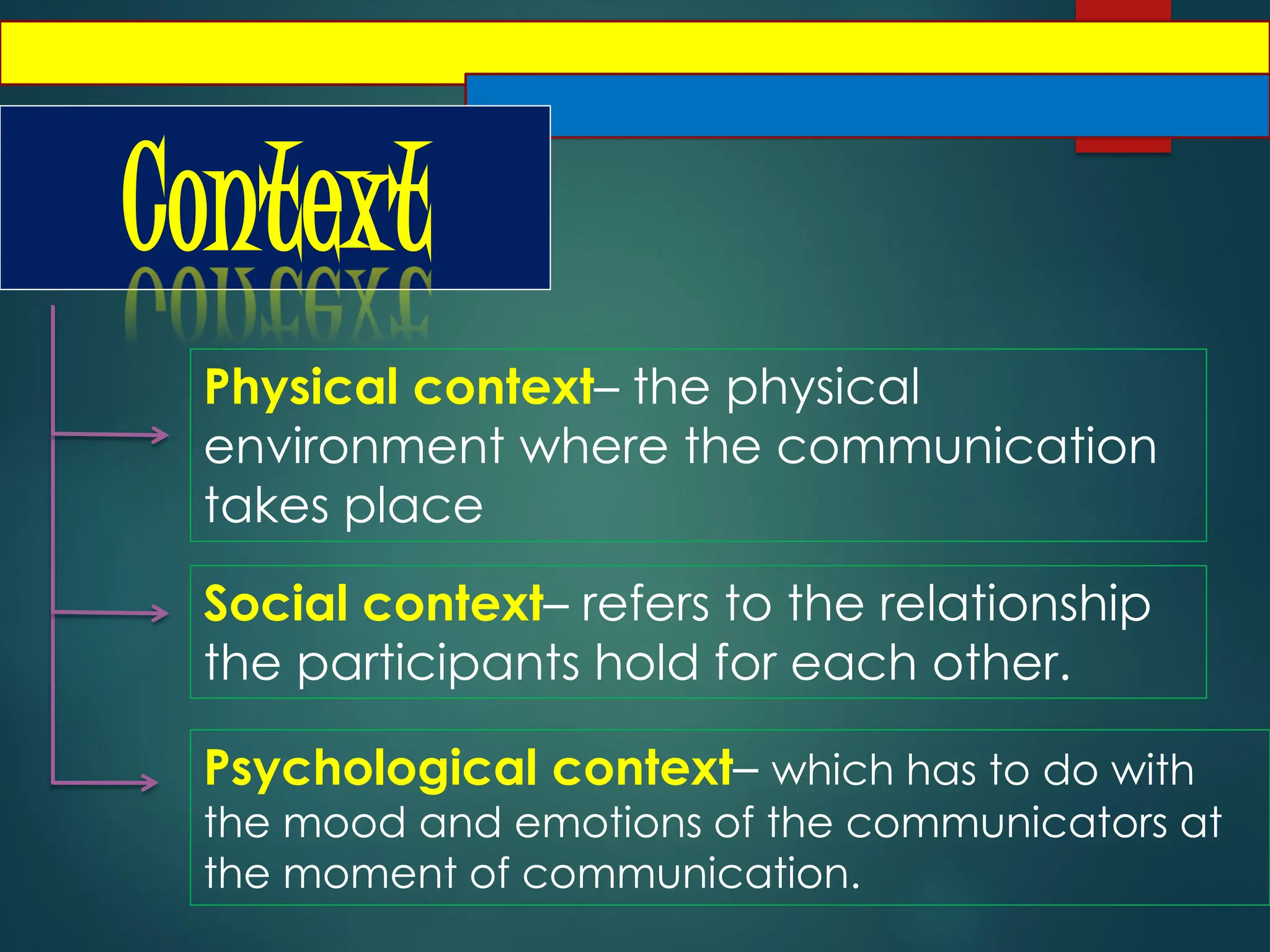
Context
Physical context– the physical
environment where the communication
takes place
Social context– refers to the relationship
the participants hold for each other.
Psychological context– which has to do with
the mood and emotions of the communicators at
the moment of communication.
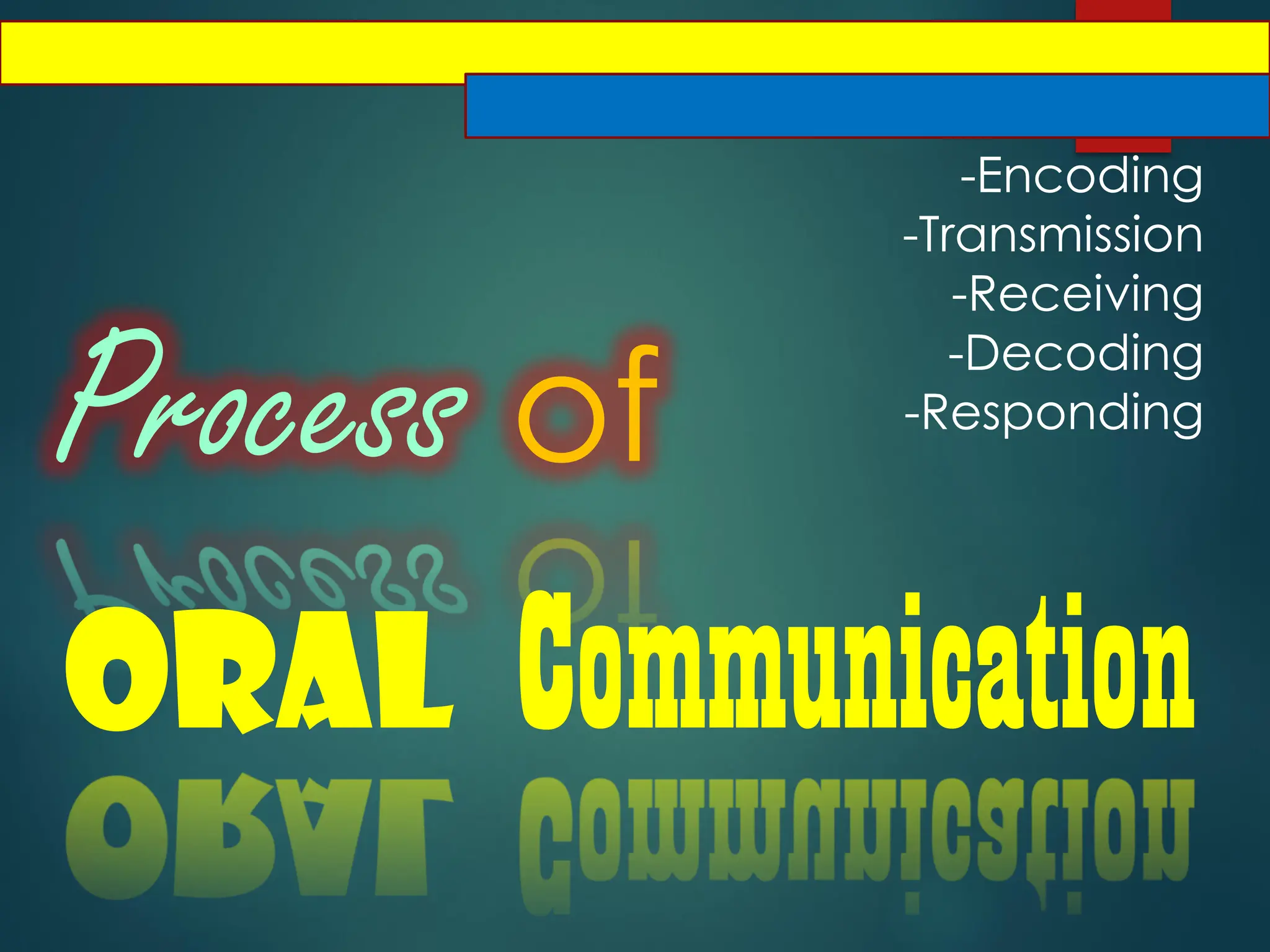
Process of
Oral Communication
-Encoding
-Transmission
-Receiving
-Decoding
-Responding
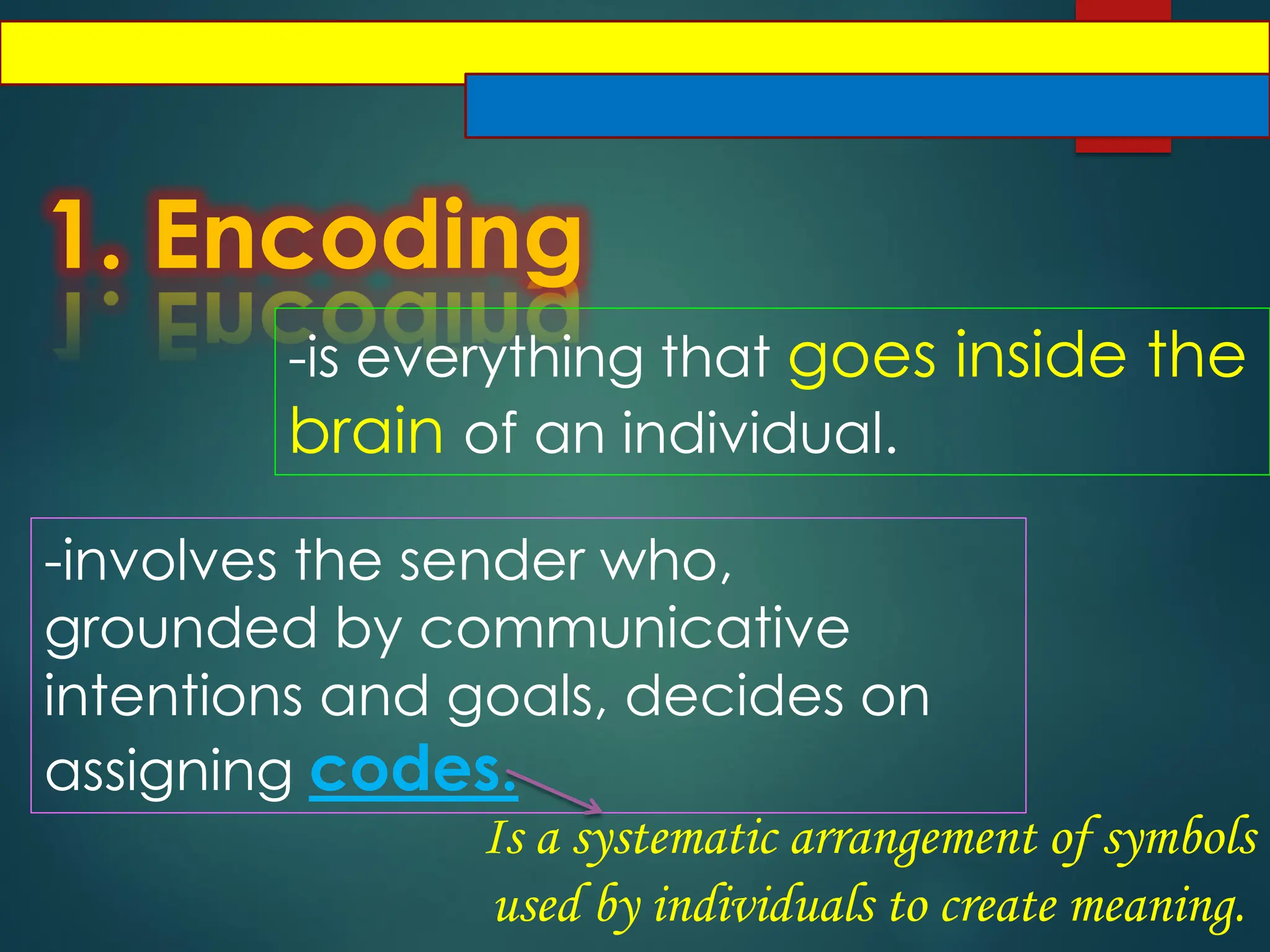
1. Encoding
-is everything that goes inside the
brain of an individual.
-involves the sender who,
grounded by communicative
intentions and goals, decides on
assigning codes.
Is a systematic arrangement of symbols
used by individuals to create meaning.
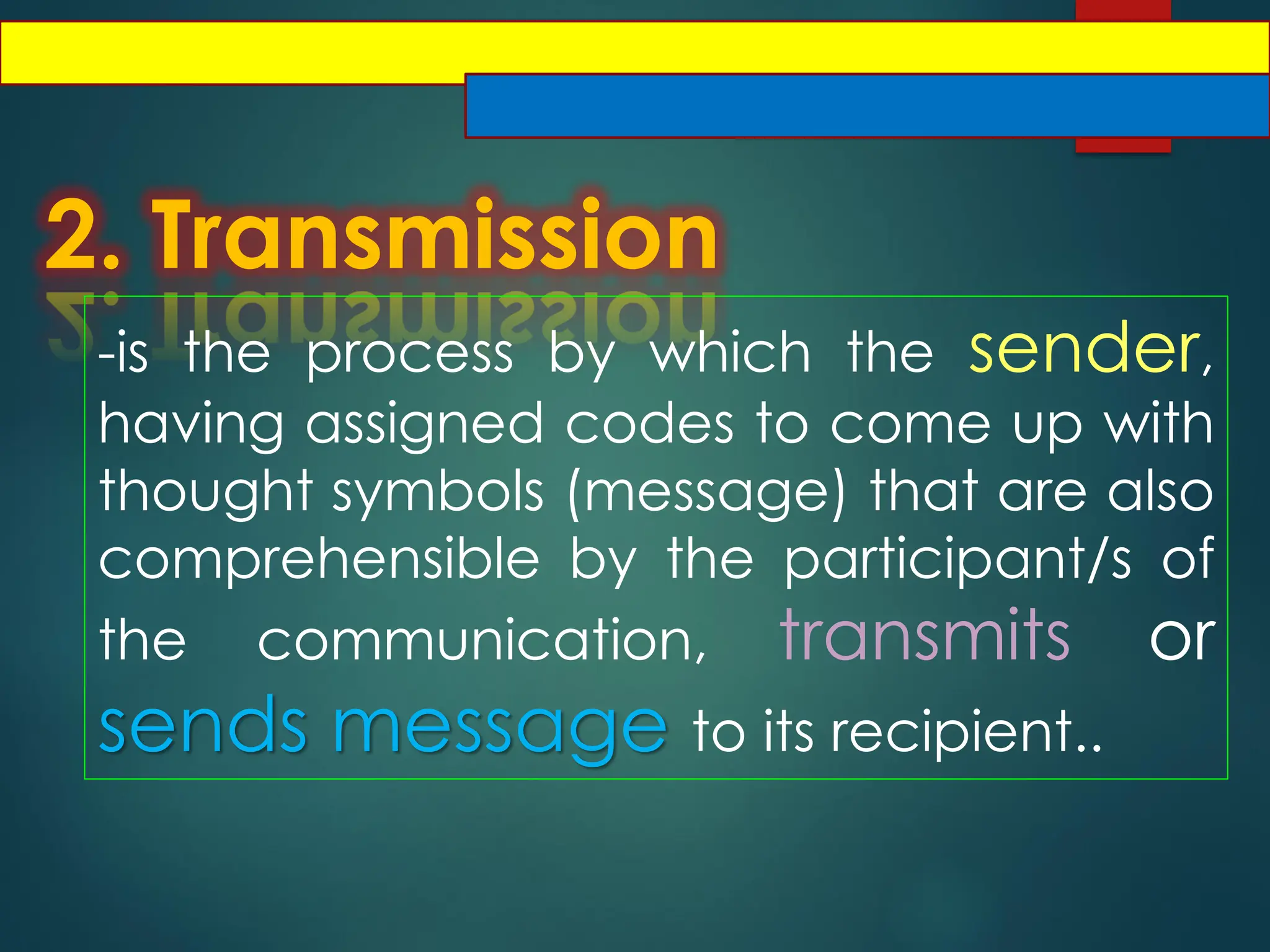
2. Transmission
-is the process by which the sender,
having assigned codes to come up with
thought symbols (message) that are also
comprehensible by the participant/s of
the communication, transmits or
sends message to its recipient..
3. Receiving
Having been submitted through sound
waves and light waves, the message
comes from the sender and then reaches
the receiver.
It is assumed that the receiver’s attention is
focused on the communication at hand to
facilitate better understanding of
the message transported by the sender.
4. Decoding
-is the process by which the receiver
interprets or assigns meanings to
the codes transported by the source.
The receiver tries to give meanings to
these symbols which may be literal or may give
associations depending on knowledge
and/or experience.
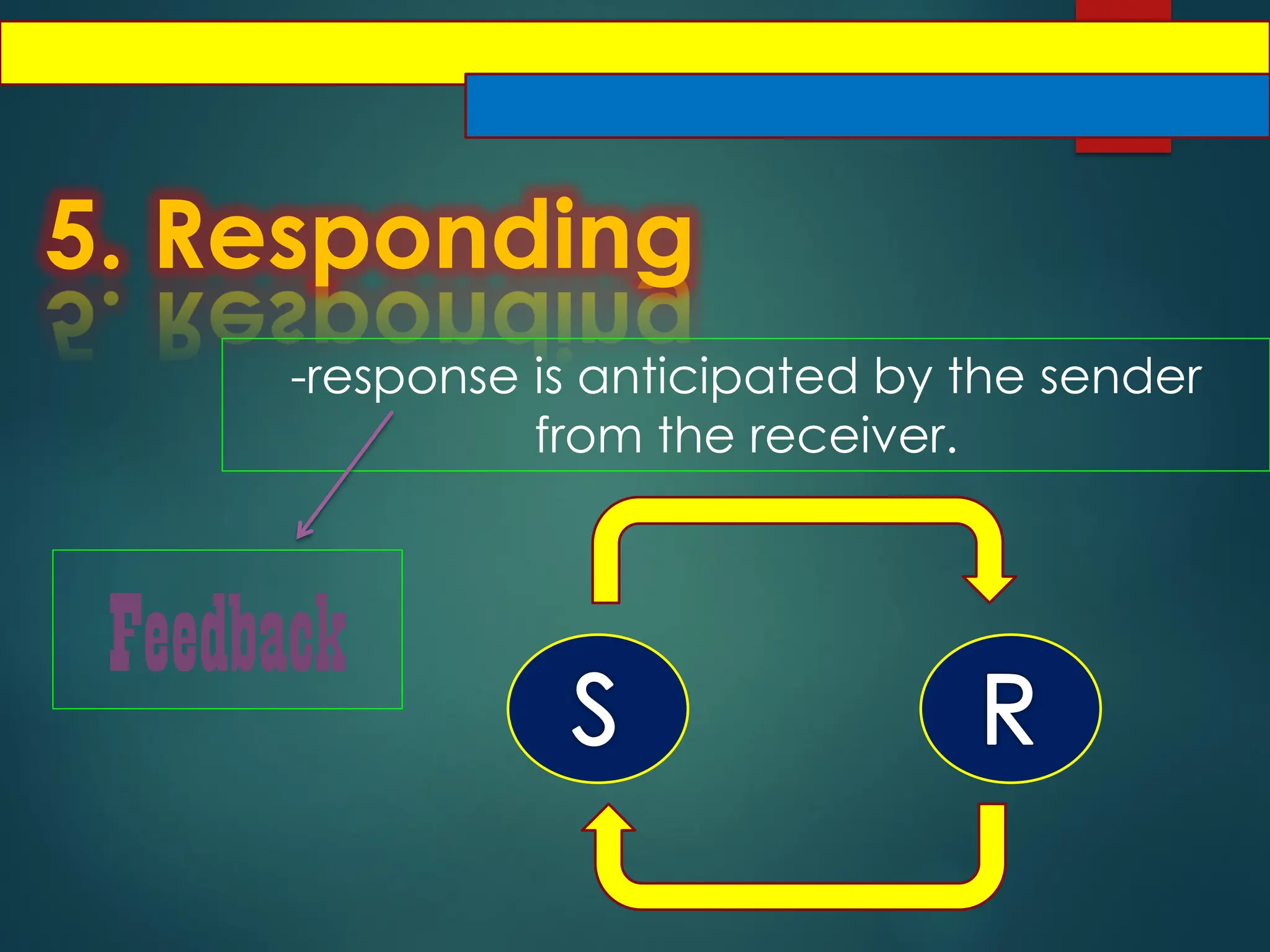
5. Responding
-response is anticipated by the sender
from the receiver.
Feedback
S R
Types of
Communication
-Intrapersonal
-Interpersonal
-Public
-Mass Communication
-Technology-Mediated
1. Intrapersonal
Communication
-operates within the communicator.
what to wear for
the day
what activities
to engage in
reflecting
different situations
talking to
oneself
2. Interpersonal
Communication
-occurs between two or more people.
private
conversations
with friends
interview with
prospective
employer
simple group
meeting
Types of Interpersonal Communication
a. Dyadic or face-to-face Interaction
-is a conversation between two
person which usually occurs in an
informal interaction. This interaction
provides a great deal of feedback
as compared to other types of
communication.
Types of Interpersonal Communication
b. Small Group Communication
-occurs when each member or
participant speaks out or is actively
participating in the process to come
up with a consensus.
Degree of formality may range from intimate to
formal
3. Public
Communication
-an enlarged form of group
communication that involves a
resource person addressing a specific
audience
The speaker or the resource person has a
message about a certain topic which
he/she has prepared beforehand and
delivers nit before an audience.
Feedback is limited.
4. Mass
Communication
-has highly structured
messages and able to reach a
larger number of audiences at the
same time through the use of
electronic devices or print media like
newspapers and magazines.
5. Technology-Mediated
Communication
-from electronic emails, texting,
instant messaging, social
networking, tweeting, blogs
and video conferencing-they all
share one thing in common.
MADISON D. PORAZO, LPT
End. ☺

2.-Nature-Elements-Types-of-Communication.pdf

  • 1.
  • 2.
    As we allknow, human communication is vital for survival and it is one thing in life that we cannot avoid to do. Express our thoughts Exchange ideas & information feelings to others emotions Communication
  • 3.
    Whatis Communication? -is the processof exchanging ideas, thoughts, feelings and emotions from one person to another with the use of symbols which may be verbal and/or non-verbal and aims for understanding.
  • 4.
    Whystudy Communication? 1. Tounderstand ourselves as a social being 2. To understand ourselves as a person 3. To gain professional competence 4. To preserve cultural values
  • 5.
  • 6.
    Sender -is the onewho initiates the communication. Receiver -provides the sender with feedback which may prompt the sender to clarify the message or signal to carry on as planned.
  • 7.
    Message -is made upof the ideas and feelings that a sender-receiver wants to share with others. Verbal symbols – express through spoken words Non-Verbal symbols – express through gestures, inflection, tone, etc.
  • 8.
    Channel -are means throughwhich we transmit the message in either vocal or non-vocal messages. Vocal messages– are verbal and spoken Non-vocal messages– may be expressed in written words or non-verbal symbols
  • 9.
    Feedback -the behavioral responseof the sender and receiver to each other. It is the information that comes back to the sender of the message and informs how well the message is getting through.
  • 10.
    Noise -an interference thatbars the message from being understood or interpreted. External noise– comes from the physical environment Internal Noise– confined within the psychological and sociological nature of individuals when thoughts and feelings are engrossed in something other than the communication at hand.
  • 11.
    Context -refers to the surrounding/environment thathelps shape the interaction between and/or among individuals.
  • 12.
    Context Physical context– thephysical environment where the communication takes place Social context– refers to the relationship the participants hold for each other. Psychological context– which has to do with the mood and emotions of the communicators at the moment of communication.
  • 13.
  • 14.
    1. Encoding -is everythingthat goes inside the brain of an individual. -involves the sender who, grounded by communicative intentions and goals, decides on assigning codes. Is a systematic arrangement of symbols used by individuals to create meaning.
  • 15.
    2. Transmission -is theprocess by which the sender, having assigned codes to come up with thought symbols (message) that are also comprehensible by the participant/s of the communication, transmits or sends message to its recipient..
  • 16.
    3. Receiving Having beensubmitted through sound waves and light waves, the message comes from the sender and then reaches the receiver. It is assumed that the receiver’s attention is focused on the communication at hand to facilitate better understanding of the message transported by the sender.
  • 17.
    4. Decoding -is theprocess by which the receiver interprets or assigns meanings to the codes transported by the source. The receiver tries to give meanings to these symbols which may be literal or may give associations depending on knowledge and/or experience.
  • 18.
    5. Responding -response isanticipated by the sender from the receiver. Feedback S R
  • 19.
  • 20.
    1. Intrapersonal Communication -operates withinthe communicator. what to wear for the day what activities to engage in reflecting different situations talking to oneself
  • 21.
    2. Interpersonal Communication -occurs betweentwo or more people. private conversations with friends interview with prospective employer simple group meeting
  • 22.
    Types of InterpersonalCommunication a. Dyadic or face-to-face Interaction -is a conversation between two person which usually occurs in an informal interaction. This interaction provides a great deal of feedback as compared to other types of communication.
  • 23.
    Types of InterpersonalCommunication b. Small Group Communication -occurs when each member or participant speaks out or is actively participating in the process to come up with a consensus. Degree of formality may range from intimate to formal
  • 24.
    3. Public Communication -an enlargedform of group communication that involves a resource person addressing a specific audience The speaker or the resource person has a message about a certain topic which he/she has prepared beforehand and delivers nit before an audience. Feedback is limited.
  • 25.
    4. Mass Communication -has highlystructured messages and able to reach a larger number of audiences at the same time through the use of electronic devices or print media like newspapers and magazines.
  • 26.
    5. Technology-Mediated Communication -from electronicemails, texting, instant messaging, social networking, tweeting, blogs and video conferencing-they all share one thing in common.
  • 27.
    MADISON D. PORAZO,LPT End. ☺