SUSTAINABILITY EDUCATION FOR
CULINARY PROFESSIONAL
FEED THE
PLANET
Founded by WORLDCHEFS
Powered by Electrolux & AIESEC
Part 2: Agriculture
Food from the Soil
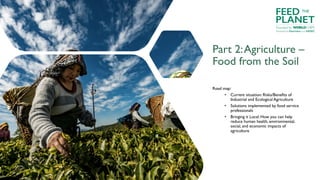
Part 2:Agriculture –
Food from the Soil
Road map:
• Current situation: Risks/Benefits of
Industrial and Ecological Agriculture
• Solutions implemented by food service
professionals
• Bringing it Local: How you can help
reduce human health, environmental,
social, and economic impacts of
agriculture
FEED
PLANET
Founded by WORLDCHEFS
THE
Powered by Electrolux and AIESEC
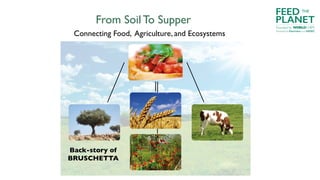
From Soil To Supper
Connecting Food, Agriculture, and Ecosystems
FEED
PLANET
Founded by WORLDCHEFS
THE
Powered by Electrolux and AIESEC
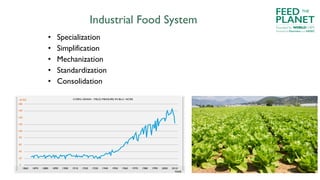
Industrial Food System
• Specialization
• Simplification
• Mechanization
• Standardization
• Consolidation
FEED
PLANET
Founded by WORLDCHEFS
THE
Powered by Electrolux and AIESEC
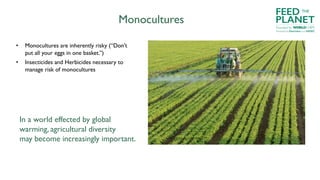
Monocultures
• Monocultures are inherently risky (“Don’t
put all your eggs in one basket.”)
• Insecticides and Herbicides necessary to
manage risk of monocultures
In a world effected by global
warming, agricultural diversity
may become increasingly important.
FEED
PLANET
Founded by WORLDCHEFS
THE
Powered by Electrolux and AIESEC
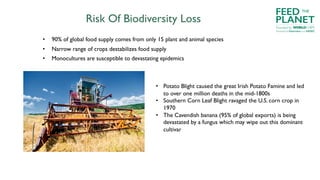
Risk Of Biodiversity Loss
• 90% of global food supply comes from only 15 plant and animal species
• Narrow range of crops destabilizes food supply
• Monocultures are susceptible to devastating epidemics
• Potato Blight caused the great Irish Potato Famine and led
to over one million deaths in the mid-1800s
• Southern Corn Leaf Blight ravaged the U.S. corn crop in
1970
• The Cavendish banana (95% of global exports) is being
devastated by a fungus which may wipe out this dominant
cultivar
FEED
PLANET
Founded by WORLDCHEFS
THE
Powered by Electrolux and AIESEC
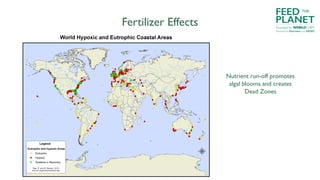
Fertilizer Effects
Nutrient run-off promotes
algal blooms and creates
Dead Zones
FEED
PLANET
Founded by WORLDCHEFS
THE
Powered by Electrolux and AIESEC
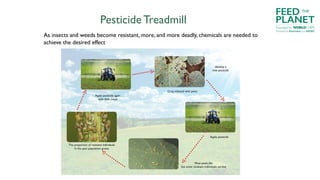
Pesticide Treadmill
As insects and weeds become resistant, more, and more deadly, chemicals are needed to
achieve the desired effect
FEED
PLANET
Founded by WORLDCHEFS
THE
Powered by Electrolux and AIESEC
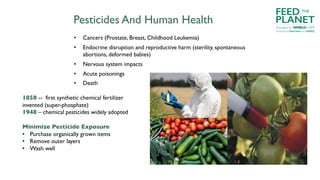
Pesticides And Human Health
• Cancers (Prostate, Breast, Childhood Leukemia)
• Endocrine disruption and reproductive harm (sterility, spontaneous
abortions, deformed babies)
• Nervous system impacts
• Acute poisonings
• Death
Minimize Pesticide Exposure
• Purchase organically grown items
• Remove outer layers
• Wash well
1850 -- first synthetic chemical fertilizer
invented (super-phosphate)
1948 – chemical pesticides widely adopted
FEED
PLANET
Founded by WORLDCHEFS
THE
Powered by Electrolux and AIESEC
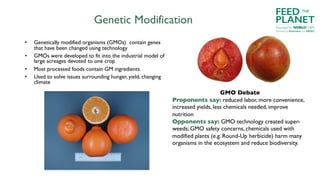
Genetic Modification
• Genetically modified organisms (GMOs) contain genes
that have been changed using technology
• GMOs were developed to fit into the industrial model of
large acreages devoted to one crop
• Most processed foods contain GM ingredients
• Used to solve issues surrounding hunger, yield, changing
climate
GMO Debate
Proponents say: reduced labor, more convenience,
increased yields, less chemicals needed, improve
nutrition
Opponents say: GMO technology created super-
weeds; GMO safety concerns, chemicals used with
modified plants (e.g. Round-Up herbicide) harm many
organisms in the ecosystem and reduce biodiversity.
FEED
PLANET
Founded by WORLDCHEFS
THE
Powered by Electrolux and AIESEC
Resource Depletion
Agriculture necessities at risk
• Fertile soil
• Fresh water
• Fossil fuels
• Nutrients
• Stable Climate
• Stable national and international
politics and economics
FEED
PLANET
Founded by WORLDCHEFS
THE
Powered by Electrolux and AIESEC
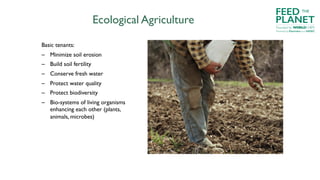
Ecological Agriculture
Basic tenants:
– Minimize soil erosion
– Build soil fertility
– Conserve fresh water
– Protect water quality
– Protect biodiversity
– Bio-systems of living organisms
enhancing each other (plants,
animals, microbes)
FEED
PLANET
Founded by WORLDCHEFS
THE
Powered by Electrolux and AIESEC
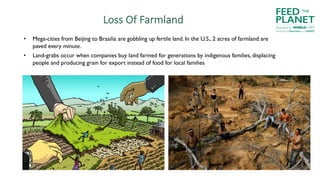
Loss Of Farmland
• Mega-cities from Beijing to Brasilia are gobbling up fertile land. In the U.S., 2 acres of farmland are
paved every minute.
• Land-grabs occur when companies buy land farmed for generations by indigenous families, displacing
people and producing grain for export instead of food for local families
FEED
PLANET
Founded by WORLDCHEFS
THE
Powered by Electrolux and AIESEC
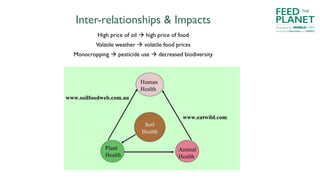
Inter-relationships & Impacts
High price of oil à high price of food
Volatile weather à volatile food prices
Monocropping à pesticide use à decreased biodiversity
FEED
PLANET
Founded by WORLDCHEFS
THE
Powered by Electrolux and AIESEC
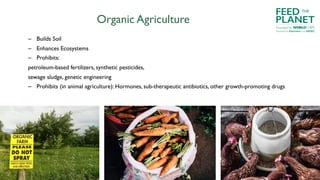
Organic Agriculture
– Builds Soil
– Enhances Ecosystems
– Prohibits:
petroleum-based fertilizers, synthetic pesticides,
sewage sludge, genetic engineering
– Prohibits (in animal agriculture): Hormones, sub-therapeutic antibiotics, other growth-promoting drugs
FEED
PLANET
Founded by WORLDCHEFS
THE
Powered by Electrolux and AIESEC
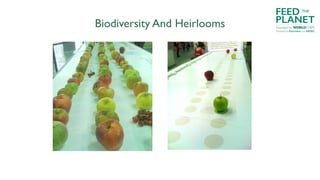
Biodiversity And Heirlooms
FEED
PLANET
Founded by WORLDCHEFS
THE
Powered by Electrolux and AIESEC
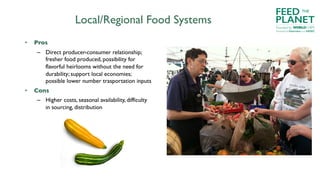
Local/Regional Food Systems
• Pros
– Direct producer-consumer relationship;
fresher food produced, possibility for
flavorful heirlooms without the need for
durability; support local economies;
possible lower number trasportation inputs
• Cons
– Higher costs, seasonal availability, difficulty
in sourcing, distribution
FEED
PLANET
Founded by WORLDCHEFS
THE
Powered by Electrolux and AIESEC
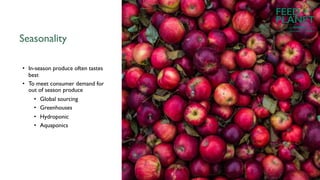
Seasonality
• In-season produce often tastes
best
• To meet consumer demand for
out of season produce
• Global sourcing
• Greenhouses
• Hydroponic
• Aquaponics
FEED
PLANET
Founded by WORLDCHEFS
THE
Powered by Electrolux and AIESEC
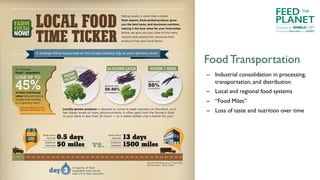
Food Transportation
– Industrial consolidation in processing,
transportation, and distribution
– Local and regional food systems
– “Food Miles”
– Loss of taste and nutrition over time
FEED
PLANET
Founded by WORLDCHEFS
THE
Powered by Electrolux and AIESEC
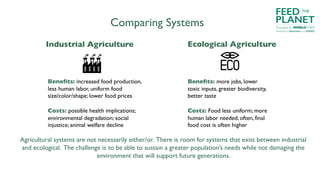
Comparing Systems
Industrial Agriculture
Costs: possible health implications;
environmental degradation; social
injustice; animal welfare decline
Ecological Agriculture
Costs: Food less uniform; more
human labor needed; often, final
food cost is often higher
Agricultural systems are not necessarily either/or. There is room for systems that exist between industrial
and ecological. The challenge is to be able to sustain a greater population’s needs while not damaging the
environment that will support future generations.
FEED
PLANET
Founded by WORLDCHEFS
THE
Powered by Electrolux and AIESEC
Benefits: increased food production,
less human labor, uniform food
size/color/shape; lower food prices
Benefits: more jobs, lower
toxic inputs, greater biodiversity,
better taste
WhatYou Can Do
• Don't fear technology and what is new. Instead, be
informed.
• Grow your own food
• Limit packaging
• Feature foods could are produced locally. Get to know
the producers and their commitment to sustainable
agriculture
• Find trustworthy producers who seek out local,
sustainable products—and are fair to the growers
• Help spark change by creating demand for these
products
• Create menus that feature and call out local
agriculture. Educate your clients.
• Beware of always looking to buy the most inexpensive
products. Paying more for unique and well-raised
produce can help marketing and attract customers.
• Seek out a diversity of products
• Ask questions about commodity foods that you are
purchasing. Be informed.
• USEYOUR CHEF SKILLS TO FEATUREVEGETABLES
AND FRUITS...make them the stars!
FEED
PLANET
Founded by WORLDCHEFS
THE
Powered by Electrolux and AIESEC

2 agriculture

  • 1.
    SUSTAINABILITY EDUCATION FOR CULINARYPROFESSIONAL FEED THE PLANET Founded by WORLDCHEFS Powered by Electrolux & AIESEC Part 2: Agriculture Food from the Soil
  • 2.
    Part 2:Agriculture – Foodfrom the Soil Road map: • Current situation: Risks/Benefits of Industrial and Ecological Agriculture • Solutions implemented by food service professionals • Bringing it Local: How you can help reduce human health, environmental, social, and economic impacts of agriculture FEED PLANET Founded by WORLDCHEFS THE Powered by Electrolux and AIESEC
  • 3.
    From Soil ToSupper Connecting Food, Agriculture, and Ecosystems FEED PLANET Founded by WORLDCHEFS THE Powered by Electrolux and AIESEC
  • 4.
    Industrial Food System •Specialization • Simplification • Mechanization • Standardization • Consolidation FEED PLANET Founded by WORLDCHEFS THE Powered by Electrolux and AIESEC
  • 5.
    Monocultures • Monocultures areinherently risky (“Don’t put all your eggs in one basket.”) • Insecticides and Herbicides necessary to manage risk of monocultures In a world effected by global warming, agricultural diversity may become increasingly important. FEED PLANET Founded by WORLDCHEFS THE Powered by Electrolux and AIESEC
  • 6.
    Risk Of BiodiversityLoss • 90% of global food supply comes from only 15 plant and animal species • Narrow range of crops destabilizes food supply • Monocultures are susceptible to devastating epidemics • Potato Blight caused the great Irish Potato Famine and led to over one million deaths in the mid-1800s • Southern Corn Leaf Blight ravaged the U.S. corn crop in 1970 • The Cavendish banana (95% of global exports) is being devastated by a fungus which may wipe out this dominant cultivar FEED PLANET Founded by WORLDCHEFS THE Powered by Electrolux and AIESEC
  • 7.
    Fertilizer Effects Nutrient run-offpromotes algal blooms and creates Dead Zones FEED PLANET Founded by WORLDCHEFS THE Powered by Electrolux and AIESEC
  • 8.
    Pesticide Treadmill As insectsand weeds become resistant, more, and more deadly, chemicals are needed to achieve the desired effect FEED PLANET Founded by WORLDCHEFS THE Powered by Electrolux and AIESEC
  • 9.
    Pesticides And HumanHealth • Cancers (Prostate, Breast, Childhood Leukemia) • Endocrine disruption and reproductive harm (sterility, spontaneous abortions, deformed babies) • Nervous system impacts • Acute poisonings • Death Minimize Pesticide Exposure • Purchase organically grown items • Remove outer layers • Wash well 1850 -- first synthetic chemical fertilizer invented (super-phosphate) 1948 – chemical pesticides widely adopted FEED PLANET Founded by WORLDCHEFS THE Powered by Electrolux and AIESEC
  • 10.
    Genetic Modification • Geneticallymodified organisms (GMOs) contain genes that have been changed using technology • GMOs were developed to fit into the industrial model of large acreages devoted to one crop • Most processed foods contain GM ingredients • Used to solve issues surrounding hunger, yield, changing climate GMO Debate Proponents say: reduced labor, more convenience, increased yields, less chemicals needed, improve nutrition Opponents say: GMO technology created super- weeds; GMO safety concerns, chemicals used with modified plants (e.g. Round-Up herbicide) harm many organisms in the ecosystem and reduce biodiversity. FEED PLANET Founded by WORLDCHEFS THE Powered by Electrolux and AIESEC
  • 11.
    Resource Depletion Agriculture necessitiesat risk • Fertile soil • Fresh water • Fossil fuels • Nutrients • Stable Climate • Stable national and international politics and economics FEED PLANET Founded by WORLDCHEFS THE Powered by Electrolux and AIESEC
  • 12.
    Ecological Agriculture Basic tenants: –Minimize soil erosion – Build soil fertility – Conserve fresh water – Protect water quality – Protect biodiversity – Bio-systems of living organisms enhancing each other (plants, animals, microbes) FEED PLANET Founded by WORLDCHEFS THE Powered by Electrolux and AIESEC
  • 13.
    Loss Of Farmland •Mega-cities from Beijing to Brasilia are gobbling up fertile land. In the U.S., 2 acres of farmland are paved every minute. • Land-grabs occur when companies buy land farmed for generations by indigenous families, displacing people and producing grain for export instead of food for local families FEED PLANET Founded by WORLDCHEFS THE Powered by Electrolux and AIESEC
  • 14.
    Inter-relationships & Impacts Highprice of oil à high price of food Volatile weather à volatile food prices Monocropping à pesticide use à decreased biodiversity FEED PLANET Founded by WORLDCHEFS THE Powered by Electrolux and AIESEC
  • 15.
    Organic Agriculture – BuildsSoil – Enhances Ecosystems – Prohibits: petroleum-based fertilizers, synthetic pesticides, sewage sludge, genetic engineering – Prohibits (in animal agriculture): Hormones, sub-therapeutic antibiotics, other growth-promoting drugs FEED PLANET Founded by WORLDCHEFS THE Powered by Electrolux and AIESEC
  • 16.
    Biodiversity And Heirlooms FEED PLANET Foundedby WORLDCHEFS THE Powered by Electrolux and AIESEC
  • 17.
    Local/Regional Food Systems •Pros – Direct producer-consumer relationship; fresher food produced, possibility for flavorful heirlooms without the need for durability; support local economies; possible lower number trasportation inputs • Cons – Higher costs, seasonal availability, difficulty in sourcing, distribution FEED PLANET Founded by WORLDCHEFS THE Powered by Electrolux and AIESEC
  • 18.
    Seasonality • In-season produceoften tastes best • To meet consumer demand for out of season produce • Global sourcing • Greenhouses • Hydroponic • Aquaponics FEED PLANET Founded by WORLDCHEFS THE Powered by Electrolux and AIESEC
  • 19.
    Food Transportation – Industrialconsolidation in processing, transportation, and distribution – Local and regional food systems – “Food Miles” – Loss of taste and nutrition over time FEED PLANET Founded by WORLDCHEFS THE Powered by Electrolux and AIESEC
  • 20.
    Comparing Systems Industrial Agriculture Costs:possible health implications; environmental degradation; social injustice; animal welfare decline Ecological Agriculture Costs: Food less uniform; more human labor needed; often, final food cost is often higher Agricultural systems are not necessarily either/or. There is room for systems that exist between industrial and ecological. The challenge is to be able to sustain a greater population’s needs while not damaging the environment that will support future generations. FEED PLANET Founded by WORLDCHEFS THE Powered by Electrolux and AIESEC Benefits: increased food production, less human labor, uniform food size/color/shape; lower food prices Benefits: more jobs, lower toxic inputs, greater biodiversity, better taste
  • 21.
    WhatYou Can Do •Don't fear technology and what is new. Instead, be informed. • Grow your own food • Limit packaging • Feature foods could are produced locally. Get to know the producers and their commitment to sustainable agriculture • Find trustworthy producers who seek out local, sustainable products—and are fair to the growers • Help spark change by creating demand for these products • Create menus that feature and call out local agriculture. Educate your clients. • Beware of always looking to buy the most inexpensive products. Paying more for unique and well-raised produce can help marketing and attract customers. • Seek out a diversity of products • Ask questions about commodity foods that you are purchasing. Be informed. • USEYOUR CHEF SKILLS TO FEATUREVEGETABLES AND FRUITS...make them the stars! FEED PLANET Founded by WORLDCHEFS THE Powered by Electrolux and AIESEC