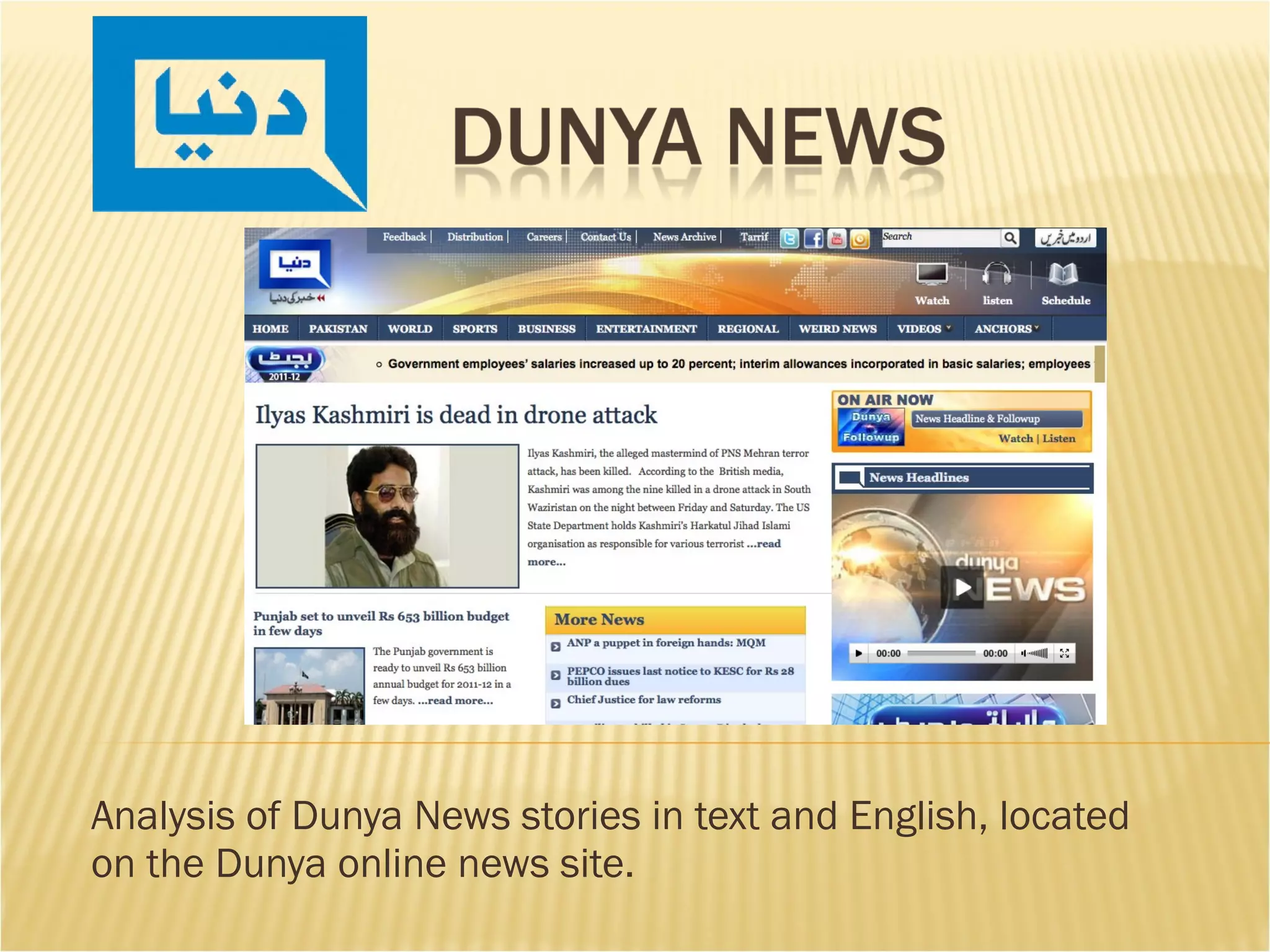
Analysis of Dunya News stories in text and English, located on the Dunya online news site.
 
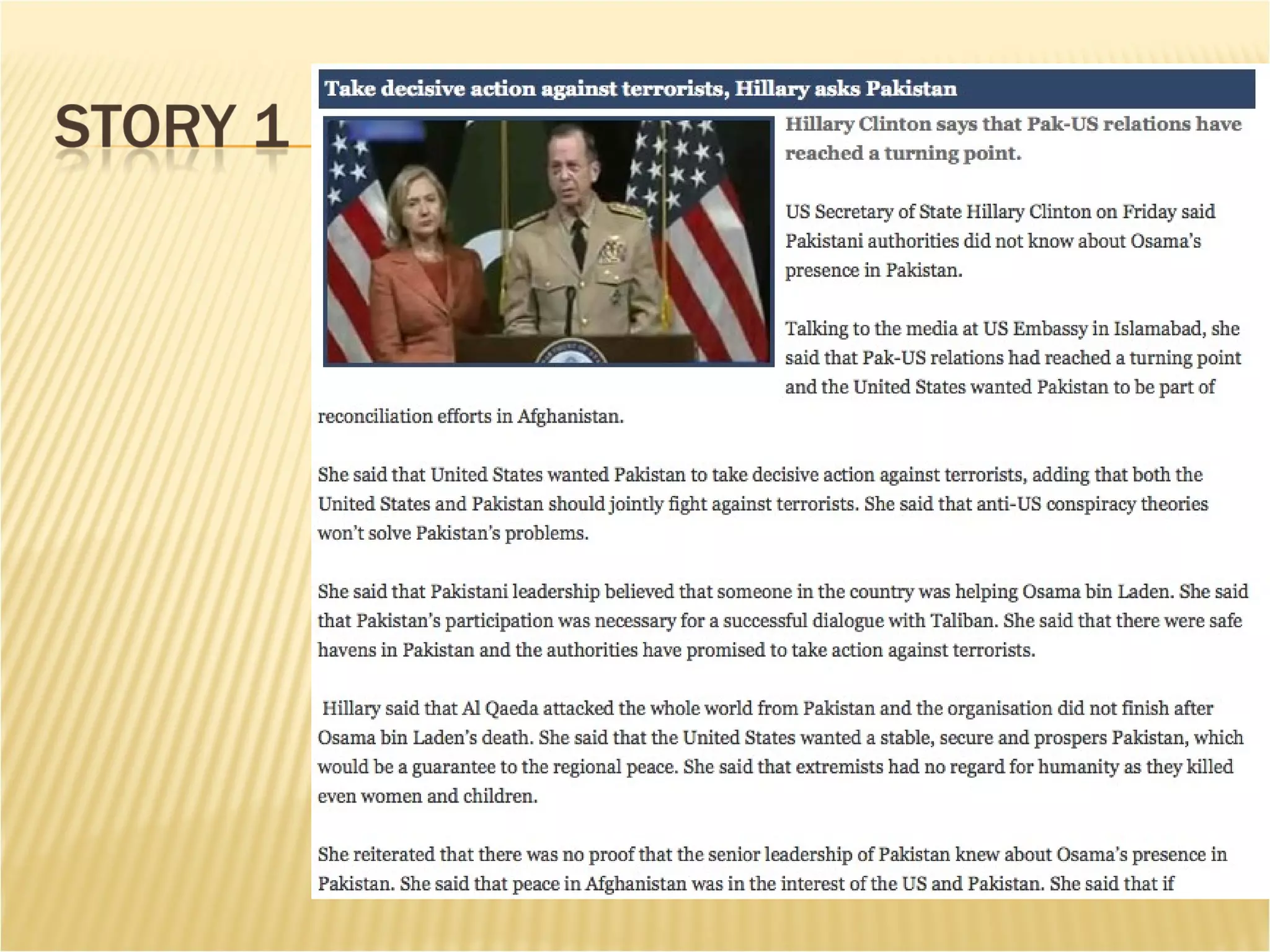
Content Characteristics:  Optimistic tone (“Pakistani authorities did not know about Osama’s presence in Pakistan”, “the US wanted a stable, secure and prosperous Pakistan”) Bias towards US, contains only US sources Sources: US Secretary Hillary Clinton, Mike Mullen (Admiral, US Joint Chiefs of Staff) Audience views/Public Opinion: quotes Hillary acknowledging “differences exist with Pakistan on some issues”, states US wants Pakistan to aid in fight against terrorism.
 
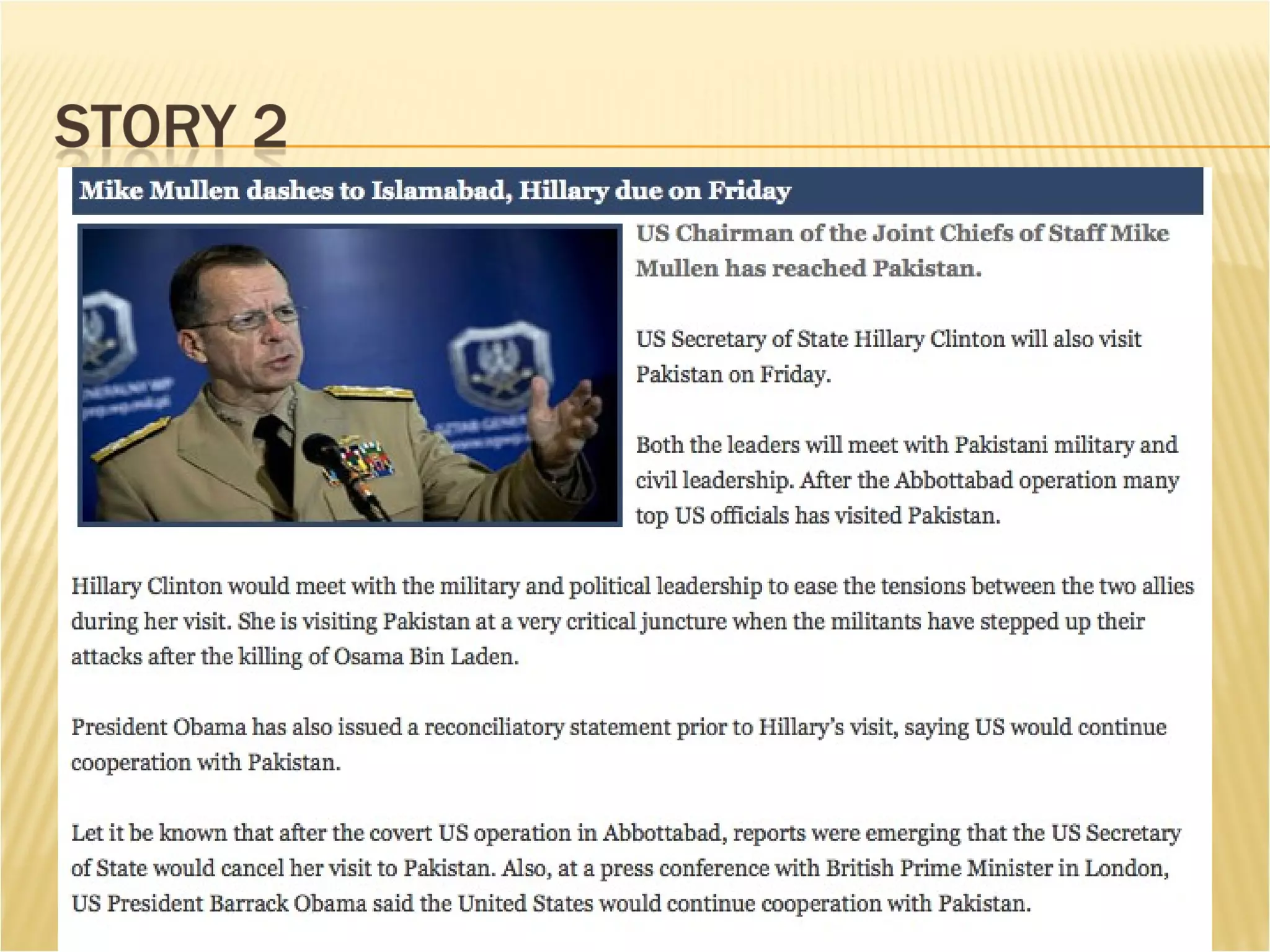
Content Characteristics Language: “dashes” evokes urgency, “reconciliatory” statement implies US is attempting to right a wrong Bias: fairly objective Sources: President Barack Obama, unspecified “reports” Audience Views/Public Opinion: Hillary is said to be coming to Pakistan to “ease the tensions”, evokes idea of strife between US/PAK relationship
 
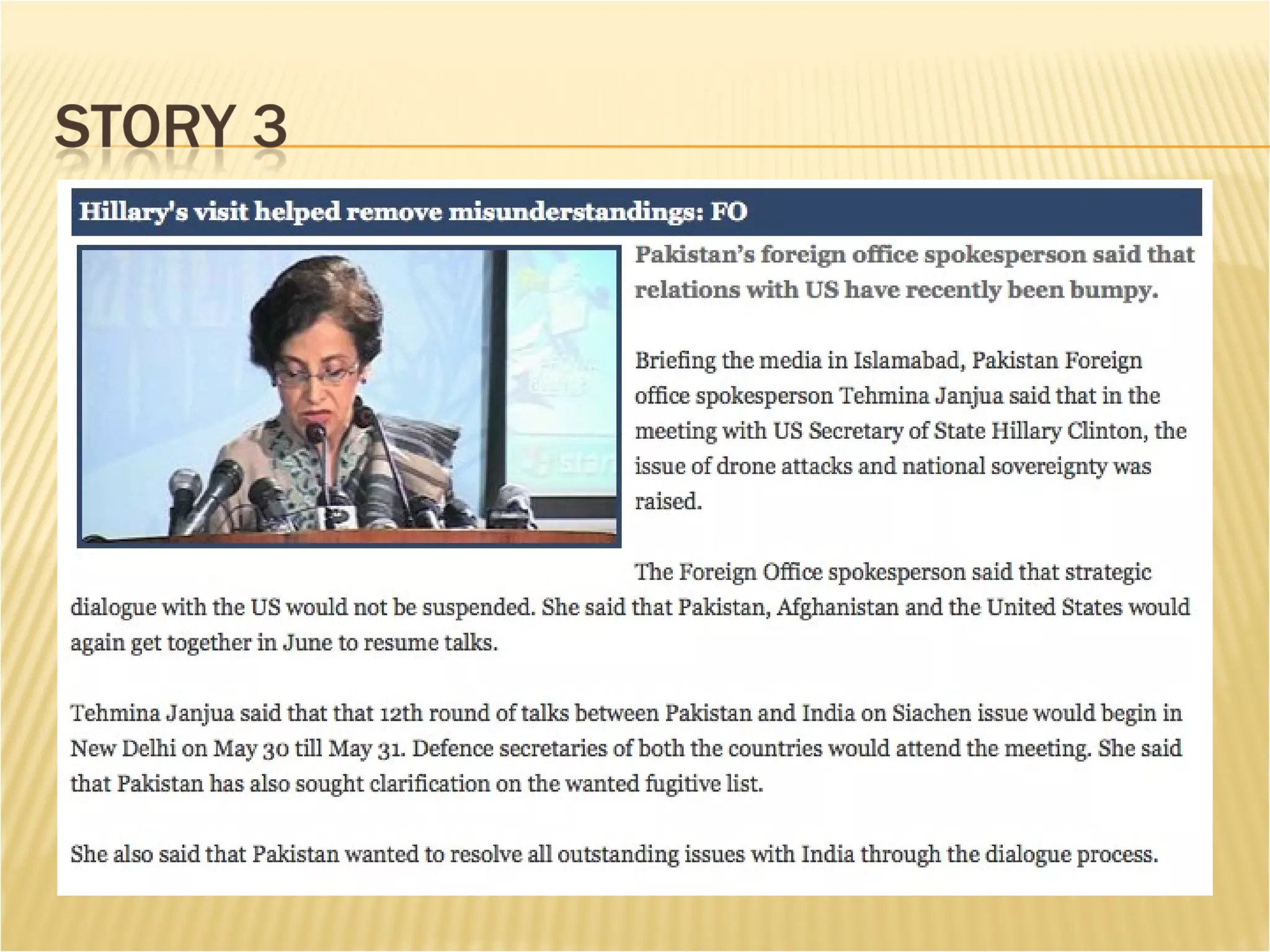
Content Characteristics: Misleading lead- Story does not mention any clarification of misunderstandings, rather the topic of the visit (drone attacks, national sovereignty) is mentioned  Sources: Pakistan Foreign office spokesperson Tehmina Janjua Audience Views/Public Opinion: Story says “relations with US have recently been bumpy,” evokes idea that relationship is strained
The 3 news stories are fairly objective, relying on mainly US sources.  This could be due to the fact that the stories are in English and reach either English-speaking natives or Western audiences.  These news stories seem to reflect the result of the “Pakistani Public Opinion on Democracy” study by the Institute of Peace and WorldPublicOpinion.org where a majority of Pakistanis don’t believe the US can be trusted to act responsibly.  The longer lasting affects of US/Pak talks will remain to be seen post Osama bin Laden.

2

  • 1.
    Analysis of DunyaNews stories in text and English, located on the Dunya online news site.
  • 2.
  • 3.
    Content Characteristics: Optimistic tone (“Pakistani authorities did not know about Osama’s presence in Pakistan”, “the US wanted a stable, secure and prosperous Pakistan”) Bias towards US, contains only US sources Sources: US Secretary Hillary Clinton, Mike Mullen (Admiral, US Joint Chiefs of Staff) Audience views/Public Opinion: quotes Hillary acknowledging “differences exist with Pakistan on some issues”, states US wants Pakistan to aid in fight against terrorism.
  • 4.
  • 5.
    Content Characteristics Language:“dashes” evokes urgency, “reconciliatory” statement implies US is attempting to right a wrong Bias: fairly objective Sources: President Barack Obama, unspecified “reports” Audience Views/Public Opinion: Hillary is said to be coming to Pakistan to “ease the tensions”, evokes idea of strife between US/PAK relationship
  • 6.
  • 7.
    Content Characteristics: Misleadinglead- Story does not mention any clarification of misunderstandings, rather the topic of the visit (drone attacks, national sovereignty) is mentioned Sources: Pakistan Foreign office spokesperson Tehmina Janjua Audience Views/Public Opinion: Story says “relations with US have recently been bumpy,” evokes idea that relationship is strained
  • 8.
    The 3 newsstories are fairly objective, relying on mainly US sources. This could be due to the fact that the stories are in English and reach either English-speaking natives or Western audiences. These news stories seem to reflect the result of the “Pakistani Public Opinion on Democracy” study by the Institute of Peace and WorldPublicOpinion.org where a majority of Pakistanis don’t believe the US can be trusted to act responsibly. The longer lasting affects of US/Pak talks will remain to be seen post Osama bin Laden.