Environmental Pollution,
Protective Measures &
Management
FCPH 231/NUR213 โ€“ Module 2
Mr. Emmanuel Kwang
MSc. Health Services Planning & Management
Outline
โ€ข Pollution and Pollutant
โ€ข Types of Pollution
โ€ข Air Pollution
โ€ข Water Pollution
โ€ข Soil/Land Pollution
โ€ข Noise Pollution
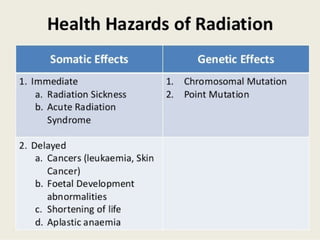
โ€ข Radiation & Nuclear Hazards
โ€ข Role of Individual in Prevention of Pollution
Difinition
โ€ข โ€œPollution is the effects of undesirable changes in
our surroundings that have harmful effects on
plants, animals and human beingsโ€
Pollutant
โ€ข Anything (solid, liquid or gas) that cause pollution
is called Pollutant. e.g. Lead, sulphuric acid and
carbon monoxide
Types of Pollution
โ€ข Degradable: Those can readily be broken down by
natural pocesses
E.g. Discareded vegetable
โ€ข Non-degradable: Those can not be degraded by
natural processes
Types of Pollution
โ€ข Air Pollution
โ€ข Water Pollution
โ€ข Land or Soil Pollution
โ€ข Noise Pollution
โ€ข Thermal Pollution
โ€ข Nuclear Pollution
Air Pollution
โ€ข Air pollution occurs due to the presence of
undesirable solid or gaseous particles in the air in
quantities that are harmful to human health and
environment
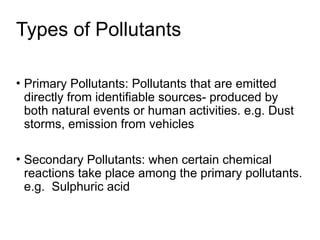
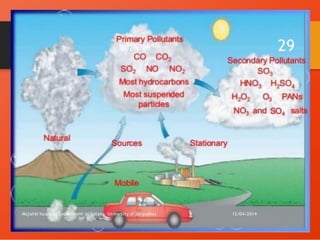
Types of Pollutants
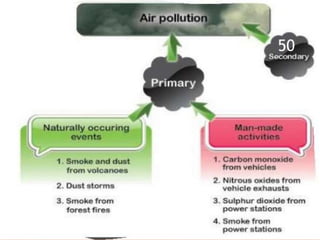
โ€ข Primary Pollutants: Pollutants that are emitted
directly from identifiable sources- produced by
both natural events or human activities. e.g. Dust
storms, emission from vehicles
โ€ข Secondary Pollutants: when certain chemical
reactions take place among the primary pollutants.
e.g. Sulphuric acid
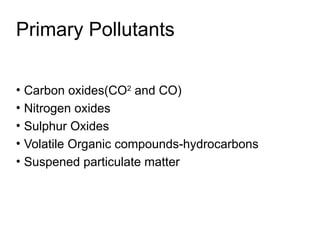
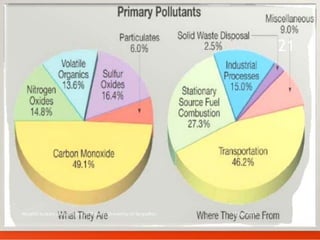
Primary Pollutants
โ€ข Carbon oxides(CO2
and CO)
โ€ข Nitrogen oxides
โ€ข Sulphur Oxides
โ€ข Volatile Organic compounds-hydrocarbons
โ€ข Suspened particulate matter
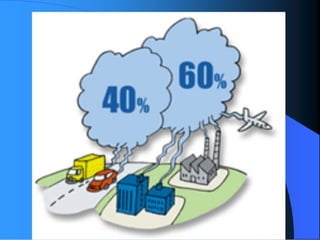
Sources of Air Pollution
โ€ข Vehicles
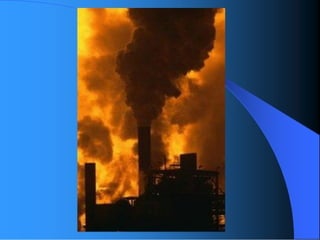
โ€ข Industries
โ€ข Dust and Storm
โ€ข Air crafts, jet
Courses of Air Pollution/Sources
of Air Pollution
โ€ข The sources of air pollution may be classified into
two groups:
1. Natural Sources
2. Man-made Sources
Effects of Air Pollution
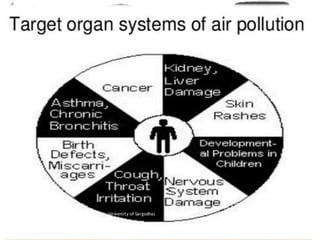
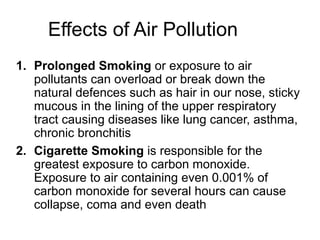
1. Prolonged Smoking or exposure to air
pollutants can overload or break down the
natural defences such as hair in our nose, sticky
mucous in the lining of the upper respiratory
tract causing diseases like lung cancer, asthma,
chronic bronchitis
2. Cigarette Smoking is responsible for the
greatest exposure to carbon monoxide.
Exposure to air containing even 0.001% of
carbon monoxide for several hours can cause
collapse, coma and even death
Effects of Air Pollution
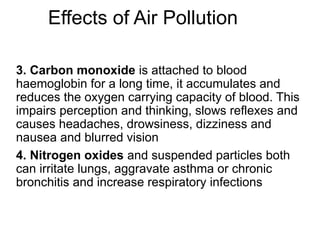
3. Carbon monoxide is attached to blood
haemoglobin for a long time, it accumulates and
reduces the oxygen carrying capacity of blood. This
impairs perception and thinking, slows reflexes and
causes headaches, drowsiness, dizziness and
nausea and blurred vision
4. Nitrogen oxides and suspended particles both
can irritate lungs, aggravate asthma or chronic
bronchitis and increase respiratory infections
Effects of Air Pollution
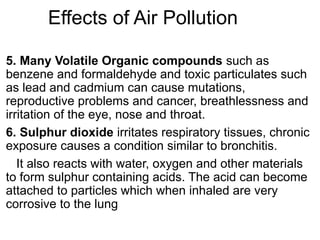
5. Many Volatile Organic compounds such as
benzene and formaldehyde and toxic particulates such
as lead and cadmium can cause mutations,
reproductive problems and cancer, breathlessness and
irritation of the eye, nose and throat.
6. Sulphur dioxide irritates respiratory tissues, chronic
exposure causes a condition similar to bronchitis.
It also reacts with water, oxygen and other materials
to form sulphur containing acids. The acid can become
attached to particles which when inhaled are very
corrosive to the lung
Effects of Air Pollution
โ€ข 7. Chronic exposure of the leaves to air pollutants
can break down waxy coating that helps prevent
excessive water loss and leads to damage from
diseases, pests, drought and frost. It also affects
photosynthesis, respiration and other metabolisms
โ€ข 8. Other Effects includes: Global warming, acid
rain, smog, ozone depletion, mortality, cancer,
reduced energy and irritation of eyes, nose, mouth
and throat
Control Measures on Air Pollution
โ€ข Proper fuel and exhaust system in vehicles
โ€ข Use of dry and wet collectors, filters, electrostatic
precipitators
โ€ข Providing greater height to the stacks- discard
pollutants away from ground
โ€ข Substitution of raw materials that cause more pollution
โ€ข Air pollution management- aims at the elimination, or
reduction to acceptable levels, of airborne gaseous
pollutants, suspended particulate matter and physical
and, to a certain extent, biological agents whose
presence in the atmosphere can cause adverse
effects on human health
Control Measures- Air Pollution
Management
1. Reducing Air Pollution
a. at home, conserving energy and
reducing production emission
b. burn green electricity/use solar
lightening/wash clothes with warm
or cold water instead of hot
c. choose not to smoke in your home,
especially if you have children
Control Measures- Air Pollution
Management
2. Buy Smart
a. Buy ENERGY STAR products
b. Choose efficient low-polluting
models of vehicles
c. Choose products that are reusable
d. Shop with a canvas bag instead of
using paper and plastic bags
e. Buy rechargeable batteries for
devices used frequently
Control Measures- Air Pollution
Management
3. Drive Wise
a. plan trip to save gasoline and reduce air pollution
b. Fill gas tank during cooler evening hours to cut
down on evaporation
c. avoid waiting in long drive-through lines
d. use public transportation, walk, or ride on bike,
when possible
e. Get regular engine tune ups and care maintenance
checks
f. Use energy-conserving grade motor oil
Environmental Health and Safety; air pollution
Nursing role / Air pollution
Community health nurses can influence air quality
through detection, community education, and
lobbying for appropriate legislation.
Water Pollution-Introduction
โ€ข 71% of earthโ€™s surface is covered by water-but
only a tiny fraction is available as fresh water
โ€ข 97% of total water is found in oceans and 3% is
fresh water.
โ€ข Out of this 2.997%is locked in ice caps. The only
0.003% of total volume is available as soil
moisture, ground water in lakes, seams, rivers and
wetlands
Definition of Water Pollution
โ€ข When the quality or composition of water changes
directly or indirectly as a result of manโ€™s activities
such that it becomes unfit for any purpose it is
said to be polluted
Types of Water
โ€ข Surface water:- water found in streams, rivers, and
lakes, etc.
โ€ข Ground water:- that percolates into ground
โ€ข Aquifers:- porous water-saturated layers of sand
grave or bedrock through which graound water
flows. It is replenished naturally by rainfall
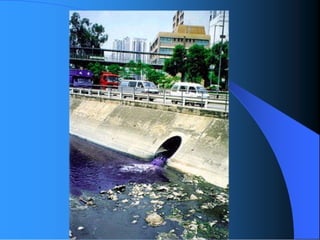
โ€ข Point source:- source is known- e.g. Municipal and
industrial discharge pipes
โ€ข Non-point source:- source is unknown- e.g.
agricultural runoff, acid rain.
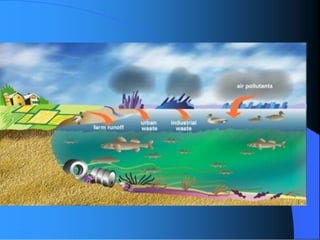
Source of Water Pollution
โ€ข Water soluble radioactive isotopes-radioactive wastes-
ionizing radiation cause birth defects, cancer and
genetic disorders
โ€ข Hot water- thermal plants, nuclear power stations,
power plants release water
โ€ข Oil Leakage
โ€ข Water soluble inorganic chemicals- acids, salts and
compounds of toxic metals such as lead and mercury
โ€ข Organic compunds- oils, gasoline, plastics, pesticides,
cleaning solvents, detergents, etc.
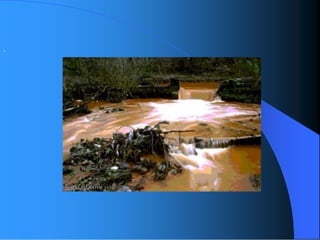
Source of Water Pollution
โ€ข Sediment of suspended water- insoluble particles of
soil and other solids that become suspended in water
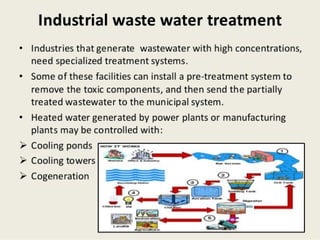
โ€ข Industrial effluents- Water is discharged from
indusries after having been used in production
processes. This waste water may contain acids,
alkalis, salts, poisons, oils and in some cases harmful
bacteria
โ€ข Mining and Agricultural wastes- Mines, especial gold
and coal mines are responsible for large quantities of
acid water
Source of Water Pollution
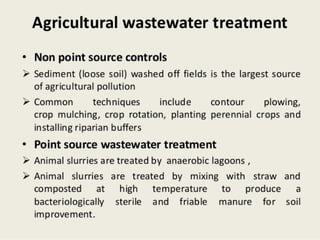
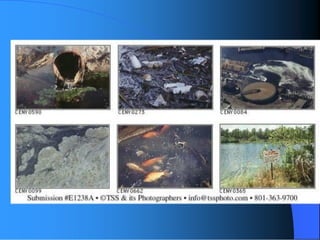
โ€ข Agricultural pesticides, fertilizers and herbicides
may wash into rivers and stagnant water bodies
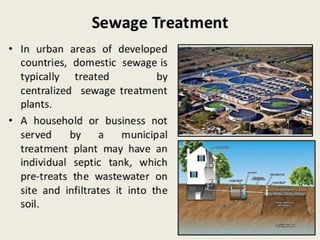
โ€ข Sewage Disposal and Domestic wastes- Sewage
as well as domestic and farm wastes were often
allowed to pollute rivers and dams
Causes of Water Pollution
โ€ข Disease causing agents- Bacteria, viruses,
protozoa and other parasitic worms enter water
from domestic sewage and untreated human and
animal wastes
โ€ข Oxygen depleting wastes- Large populations of
bacteria use up the oxygen present in water to
degrade waste. The amount of oxygen required to
breake down a certain amount of organic matter
is called Biological Oxygen Demand (BOD)
Causes of Water Pollution
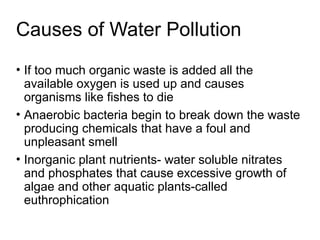
โ€ข If too much organic waste is added all the
available oxygen is used up and causes
organisms like fishes to die
โ€ข Anaerobic bacteria begin to break down the waste
producing chemicals that have a foul and
unpleasant smell
โ€ข Inorganic plant nutrients- water soluble nitrates
and phosphates that cause excessive growth of
algae and other aquatic plants-called
euthrophication
Causes of Water Pollution
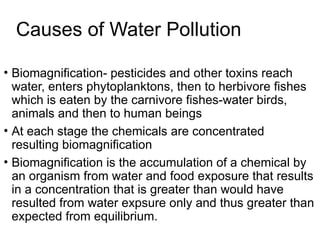
โ€ข Biomagnification- pesticides and other toxins reach
water, enters phytoplanktons, then to herbivore fishes
which is eaten by the carnivore fishes-water birds,
animals and then to human beings
โ€ข At each stage the chemicals are concentrated
resulting biomagnification
โ€ข Biomagnification is the accumulation of a chemical by
an organism from water and food exposure that results
in a concentration that is greater than would have
resulted from water expsure only and thus greater than
expected from equilibrium.
Environmental Health: Deforestation, Wetlands Destruction,
and Desertification
Nurseโ€™s Role
Community health nurses can make a difference in this
area. Perhaps no other person knows a community more
intimately than the community health nurse. This role
gives a valid voice of concern at the local level. By using
leadership and collaborative skills, the nurse can initiate
grassroots efforts to save wetlands and forests in the
community.
Soil Pollution
โ€ข Soil is thin covering over the land consisting a
mixture of minerals, organic materials, living
organisms, air and water.
โ€ข Under ideal climatic conditions soft parent
materials may develop into a centimeter of soil in
15 years
Soil Profile
โ€ข The Top Layer- O Horizen- freshly fallen and
decomposed leaves, twigs, animal wastes, fungus and
other organic materials-brown or black in colour.
โ€ข Uppermost Layer- A Horizen- partially decomposed
organic matter and inorganic mineral particles-darker
and looser
โ€ข B Horizen- subsoil contains less aquatic materials and
fewer organisms than A zone.
โ€ข C Horizen- Weathered parent material
Causes of Soil Degredation
โ€ข Soil Erosion- caused by wind and water accelerated
by human activities such as farming, construction,
overgrazing by livestocks, burning of grass cover,
deforestation
โ€ข Excess use of Fertilizers- fertilizers, herbicides,
insecticides, pesticides, fungicides and rodenticides
use contributes to soil fertility loss; and kills beneficial
insects
Control of Soil Degradation
โ€ข Integrated Treatment Methods-These methods
includes
1 Continuous contour trenches or benches
2 Live check dams- planting grasses, shrubs
and trees, etc.
3. Bund constructed out of stones
4. Earthen check bund-local soil, across the
stream
Control of Soil Degradation
โ€ข Integrated Pest Control- through
1 Organic Farming
2 Use of biofertilizers
3 Earthworms- vermicomposting
4 Pest control through microbes- Bacillus
thrungiensis, Azadirachta indica-Neem
Noise Pollution
โ€ข Noise is unwanted and undesirable sound
โ€ข Permitted sound level is 125 decibels
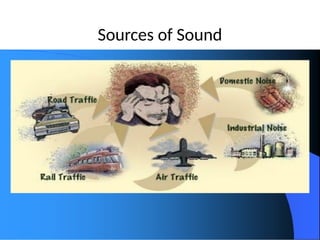
Sources of Sound
Control Techniques
โ€ข Reduce noise at source
โ€ข Block the path of noise
โ€ข Increase the path length
โ€ข protect the receipient
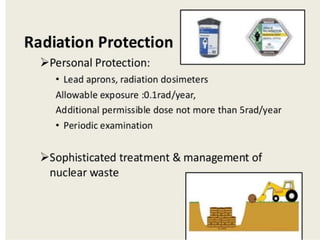
Nuclear Hazards
โ€ข Nuclear Fission-splitting of the nucleus of atom-
resulting energy is used for a variety of purposes
โ€ข Uranium waste- ionizing material
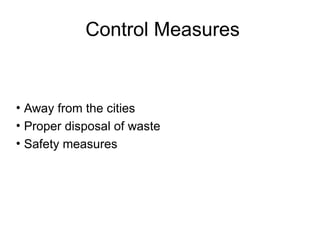
Control Measures
โ€ข Away from the cities
โ€ข Proper disposal of waste
โ€ข Safety measures
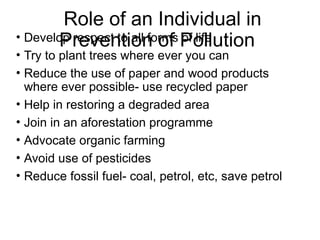
Role of an Individual in
Prevention of Pollution
โ€ข Develop respect to all forms of life
โ€ข Try to plant trees where ever you can
โ€ข Reduce the use of paper and wood products
where ever possible- use recycled paper
โ€ข Help in restoring a degraded area
โ€ข Join in an aforestation programme
โ€ข Advocate organic farming
โ€ข Avoid use of pesticides
โ€ข Reduce fossil fuel- coal, petrol, etc, save petrol
Role of an Individual in
Prevention of Pollution
โ€ข Shut of the lights and fans when not needed- save
electricity
โ€ข Do not use aerosol spray products
โ€ข Use rechargeable batteries
โ€ข Recycle paper, aluminium, plastics
โ€ข Set up compost bin in your garden
โ€ข Start community composting
โ€ข Keep you and your place clean

2.0 Environmental Pollution, Protective Measures & Management.pptx

  • 1.
    Environmental Pollution, Protective Measures& Management FCPH 231/NUR213 โ€“ Module 2 Mr. Emmanuel Kwang MSc. Health Services Planning & Management
  • 2.
    Outline โ€ข Pollution andPollutant โ€ข Types of Pollution โ€ข Air Pollution โ€ข Water Pollution โ€ข Soil/Land Pollution โ€ข Noise Pollution โ€ข Radiation & Nuclear Hazards โ€ข Role of Individual in Prevention of Pollution
  • 4.
    Difinition โ€ข โ€œPollution isthe effects of undesirable changes in our surroundings that have harmful effects on plants, animals and human beingsโ€
  • 5.
    Pollutant โ€ข Anything (solid,liquid or gas) that cause pollution is called Pollutant. e.g. Lead, sulphuric acid and carbon monoxide
  • 6.
    Types of Pollution โ€ขDegradable: Those can readily be broken down by natural pocesses E.g. Discareded vegetable โ€ข Non-degradable: Those can not be degraded by natural processes
  • 7.
    Types of Pollution โ€ขAir Pollution โ€ข Water Pollution โ€ข Land or Soil Pollution โ€ข Noise Pollution โ€ข Thermal Pollution โ€ข Nuclear Pollution
  • 8.
    Air Pollution โ€ข Airpollution occurs due to the presence of undesirable solid or gaseous particles in the air in quantities that are harmful to human health and environment
  • 9.
    Types of Pollutants โ€ขPrimary Pollutants: Pollutants that are emitted directly from identifiable sources- produced by both natural events or human activities. e.g. Dust storms, emission from vehicles โ€ข Secondary Pollutants: when certain chemical reactions take place among the primary pollutants. e.g. Sulphuric acid
  • 10.
    Primary Pollutants โ€ข Carbonoxides(CO2 and CO) โ€ข Nitrogen oxides โ€ข Sulphur Oxides โ€ข Volatile Organic compounds-hydrocarbons โ€ข Suspened particulate matter
  • 13.
    Sources of AirPollution โ€ข Vehicles โ€ข Industries โ€ข Dust and Storm โ€ข Air crafts, jet
  • 14.
    Courses of AirPollution/Sources of Air Pollution โ€ข The sources of air pollution may be classified into two groups: 1. Natural Sources 2. Man-made Sources
  • 18.
    Effects of AirPollution 1. Prolonged Smoking or exposure to air pollutants can overload or break down the natural defences such as hair in our nose, sticky mucous in the lining of the upper respiratory tract causing diseases like lung cancer, asthma, chronic bronchitis 2. Cigarette Smoking is responsible for the greatest exposure to carbon monoxide. Exposure to air containing even 0.001% of carbon monoxide for several hours can cause collapse, coma and even death
  • 19.
    Effects of AirPollution 3. Carbon monoxide is attached to blood haemoglobin for a long time, it accumulates and reduces the oxygen carrying capacity of blood. This impairs perception and thinking, slows reflexes and causes headaches, drowsiness, dizziness and nausea and blurred vision 4. Nitrogen oxides and suspended particles both can irritate lungs, aggravate asthma or chronic bronchitis and increase respiratory infections
  • 20.
    Effects of AirPollution 5. Many Volatile Organic compounds such as benzene and formaldehyde and toxic particulates such as lead and cadmium can cause mutations, reproductive problems and cancer, breathlessness and irritation of the eye, nose and throat. 6. Sulphur dioxide irritates respiratory tissues, chronic exposure causes a condition similar to bronchitis. It also reacts with water, oxygen and other materials to form sulphur containing acids. The acid can become attached to particles which when inhaled are very corrosive to the lung
  • 21.
    Effects of AirPollution โ€ข 7. Chronic exposure of the leaves to air pollutants can break down waxy coating that helps prevent excessive water loss and leads to damage from diseases, pests, drought and frost. It also affects photosynthesis, respiration and other metabolisms โ€ข 8. Other Effects includes: Global warming, acid rain, smog, ozone depletion, mortality, cancer, reduced energy and irritation of eyes, nose, mouth and throat
  • 25.
    Control Measures onAir Pollution โ€ข Proper fuel and exhaust system in vehicles โ€ข Use of dry and wet collectors, filters, electrostatic precipitators โ€ข Providing greater height to the stacks- discard pollutants away from ground โ€ข Substitution of raw materials that cause more pollution โ€ข Air pollution management- aims at the elimination, or reduction to acceptable levels, of airborne gaseous pollutants, suspended particulate matter and physical and, to a certain extent, biological agents whose presence in the atmosphere can cause adverse effects on human health
  • 26.
    Control Measures- AirPollution Management 1. Reducing Air Pollution a. at home, conserving energy and reducing production emission b. burn green electricity/use solar lightening/wash clothes with warm or cold water instead of hot c. choose not to smoke in your home, especially if you have children
  • 27.
    Control Measures- AirPollution Management 2. Buy Smart a. Buy ENERGY STAR products b. Choose efficient low-polluting models of vehicles c. Choose products that are reusable d. Shop with a canvas bag instead of using paper and plastic bags e. Buy rechargeable batteries for devices used frequently
  • 28.
    Control Measures- AirPollution Management 3. Drive Wise a. plan trip to save gasoline and reduce air pollution b. Fill gas tank during cooler evening hours to cut down on evaporation c. avoid waiting in long drive-through lines d. use public transportation, walk, or ride on bike, when possible e. Get regular engine tune ups and care maintenance checks f. Use energy-conserving grade motor oil
  • 29.
    Environmental Health andSafety; air pollution Nursing role / Air pollution Community health nurses can influence air quality through detection, community education, and lobbying for appropriate legislation.
  • 31.
    Water Pollution-Introduction โ€ข 71%of earthโ€™s surface is covered by water-but only a tiny fraction is available as fresh water โ€ข 97% of total water is found in oceans and 3% is fresh water. โ€ข Out of this 2.997%is locked in ice caps. The only 0.003% of total volume is available as soil moisture, ground water in lakes, seams, rivers and wetlands
  • 32.
    Definition of WaterPollution โ€ข When the quality or composition of water changes directly or indirectly as a result of manโ€™s activities such that it becomes unfit for any purpose it is said to be polluted
  • 33.
    Types of Water โ€ขSurface water:- water found in streams, rivers, and lakes, etc. โ€ข Ground water:- that percolates into ground โ€ข Aquifers:- porous water-saturated layers of sand grave or bedrock through which graound water flows. It is replenished naturally by rainfall โ€ข Point source:- source is known- e.g. Municipal and industrial discharge pipes โ€ข Non-point source:- source is unknown- e.g. agricultural runoff, acid rain.
  • 34.
    Source of WaterPollution โ€ข Water soluble radioactive isotopes-radioactive wastes- ionizing radiation cause birth defects, cancer and genetic disorders โ€ข Hot water- thermal plants, nuclear power stations, power plants release water โ€ข Oil Leakage โ€ข Water soluble inorganic chemicals- acids, salts and compounds of toxic metals such as lead and mercury โ€ข Organic compunds- oils, gasoline, plastics, pesticides, cleaning solvents, detergents, etc.
  • 35.
    Source of WaterPollution โ€ข Sediment of suspended water- insoluble particles of soil and other solids that become suspended in water โ€ข Industrial effluents- Water is discharged from indusries after having been used in production processes. This waste water may contain acids, alkalis, salts, poisons, oils and in some cases harmful bacteria โ€ข Mining and Agricultural wastes- Mines, especial gold and coal mines are responsible for large quantities of acid water
  • 36.
    Source of WaterPollution โ€ข Agricultural pesticides, fertilizers and herbicides may wash into rivers and stagnant water bodies โ€ข Sewage Disposal and Domestic wastes- Sewage as well as domestic and farm wastes were often allowed to pollute rivers and dams
  • 40.
    Causes of WaterPollution โ€ข Disease causing agents- Bacteria, viruses, protozoa and other parasitic worms enter water from domestic sewage and untreated human and animal wastes โ€ข Oxygen depleting wastes- Large populations of bacteria use up the oxygen present in water to degrade waste. The amount of oxygen required to breake down a certain amount of organic matter is called Biological Oxygen Demand (BOD)
  • 41.
    Causes of WaterPollution โ€ข If too much organic waste is added all the available oxygen is used up and causes organisms like fishes to die โ€ข Anaerobic bacteria begin to break down the waste producing chemicals that have a foul and unpleasant smell โ€ข Inorganic plant nutrients- water soluble nitrates and phosphates that cause excessive growth of algae and other aquatic plants-called euthrophication
  • 42.
    Causes of WaterPollution โ€ข Biomagnification- pesticides and other toxins reach water, enters phytoplanktons, then to herbivore fishes which is eaten by the carnivore fishes-water birds, animals and then to human beings โ€ข At each stage the chemicals are concentrated resulting biomagnification โ€ข Biomagnification is the accumulation of a chemical by an organism from water and food exposure that results in a concentration that is greater than would have resulted from water expsure only and thus greater than expected from equilibrium.
  • 52.
    Environmental Health: Deforestation,Wetlands Destruction, and Desertification Nurseโ€™s Role Community health nurses can make a difference in this area. Perhaps no other person knows a community more intimately than the community health nurse. This role gives a valid voice of concern at the local level. By using leadership and collaborative skills, the nurse can initiate grassroots efforts to save wetlands and forests in the community.
  • 53.
    Soil Pollution โ€ข Soilis thin covering over the land consisting a mixture of minerals, organic materials, living organisms, air and water. โ€ข Under ideal climatic conditions soft parent materials may develop into a centimeter of soil in 15 years
  • 54.
    Soil Profile โ€ข TheTop Layer- O Horizen- freshly fallen and decomposed leaves, twigs, animal wastes, fungus and other organic materials-brown or black in colour. โ€ข Uppermost Layer- A Horizen- partially decomposed organic matter and inorganic mineral particles-darker and looser โ€ข B Horizen- subsoil contains less aquatic materials and fewer organisms than A zone. โ€ข C Horizen- Weathered parent material
  • 55.
    Causes of SoilDegredation โ€ข Soil Erosion- caused by wind and water accelerated by human activities such as farming, construction, overgrazing by livestocks, burning of grass cover, deforestation โ€ข Excess use of Fertilizers- fertilizers, herbicides, insecticides, pesticides, fungicides and rodenticides use contributes to soil fertility loss; and kills beneficial insects
  • 56.
    Control of SoilDegradation โ€ข Integrated Treatment Methods-These methods includes 1 Continuous contour trenches or benches 2 Live check dams- planting grasses, shrubs and trees, etc. 3. Bund constructed out of stones 4. Earthen check bund-local soil, across the stream
  • 57.
    Control of SoilDegradation โ€ข Integrated Pest Control- through 1 Organic Farming 2 Use of biofertilizers 3 Earthworms- vermicomposting 4 Pest control through microbes- Bacillus thrungiensis, Azadirachta indica-Neem
  • 58.
    Noise Pollution โ€ข Noiseis unwanted and undesirable sound โ€ข Permitted sound level is 125 decibels
  • 59.
  • 61.
    Control Techniques โ€ข Reducenoise at source โ€ข Block the path of noise โ€ข Increase the path length โ€ข protect the receipient
  • 63.
    Nuclear Hazards โ€ข NuclearFission-splitting of the nucleus of atom- resulting energy is used for a variety of purposes โ€ข Uranium waste- ionizing material
  • 66.
    Control Measures โ€ข Awayfrom the cities โ€ข Proper disposal of waste โ€ข Safety measures
  • 68.
    Role of anIndividual in Prevention of Pollution โ€ข Develop respect to all forms of life โ€ข Try to plant trees where ever you can โ€ข Reduce the use of paper and wood products where ever possible- use recycled paper โ€ข Help in restoring a degraded area โ€ข Join in an aforestation programme โ€ข Advocate organic farming โ€ข Avoid use of pesticides โ€ข Reduce fossil fuel- coal, petrol, etc, save petrol
  • 69.
    Role of anIndividual in Prevention of Pollution โ€ข Shut of the lights and fans when not needed- save electricity โ€ข Do not use aerosol spray products โ€ข Use rechargeable batteries โ€ข Recycle paper, aluminium, plastics โ€ข Set up compost bin in your garden โ€ข Start community composting โ€ข Keep you and your place clean